Trump has taken a wrecking ball to environmental regulation. Who benefits?
INTERVIEW
By C.J. Polychroniou ,

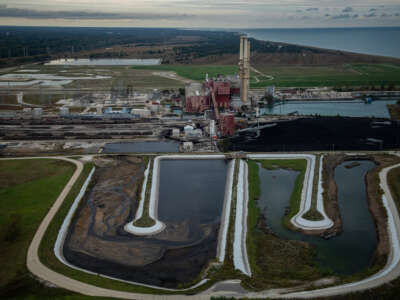
Trump’s Coal-Friendly EPA Rolls Back Rules Meant to Prevent Water Contamination
The move delays base-level reporting and monitoring, and actual cleanup will be punted even further into the future. By Schuyler Mitchell , Truthout July 23, 2025
Shockingly enough, the Trump administration has rolled back limits on PFAS chemicals, which are linked to cancer and immune dysfunction. Why would Trump engage in an all-out assault on chemical regulations? Is it because the chemical industry is allegedly a struggling sector?
The rollback of rules on PFAS “forever chemicals” in drinking water is only one front in a broader assault on environmental protection. It is part and parcel of the Trump administration’s policy of Making America Poisoned Again. This is driven primarily by across-the-board antipathy to regulations and the agencies that administer them, not by the impacts of specific rules on corporate balance sheets. For the moment, U.S. chemical manufacturers are in good shape relative to their European competitors by virtue of access to cheap natural gas and petroleum, the feedstocks for many products. Chemical manufacturers in China and India similarly have received a boost from discounted prices for Russian oil and gas due to the Ukraine war sanctions.
The U.S. is lagging behind Europe, however, in terms of chemicals innovation, and this bodes ill for its competitiveness in years ahead. The innovation gap in part reflects different regulatory environments. The European Union’s REACH Regulation requires companies to test existing products and encourages them to come up with less toxic alternatives. U.S. regulation under the Toxics Substances Control Act mandates testing for new chemicals but continues allowing old ones into the market by exempting them from the same scrutiny, with the perverse result that innovation is discouraged.
The costs of hazardous emissions are inflicted disproportionately on minority and low-income communities, sparing communities with greater political influence. This makes it easier for this administration to gut environmental protection. Indifference to the human costs of its policy decisions — when the humans in question are the wrong sort — is a hallmark of the meanness agenda being pursued by key Trump officials.
Trump has withdrawn support for research that mentions “climate,” called wind and solar the “scam of the century,” and blamed renewable energy for rising electricity prices. I don’t think he is unaware of the risks of climate change, although he has ignored every warning about the climate crisis and continues to use the “flood the zone with shit” strategy for the environment. Be that as it may, can one man stop the energy transition?
The short answer is “No.” But he can do a lot of damage in the meantime.
The cost of renewable energy has fallen quickly, faster than most observers predicted a few years ago. Solar, wind, and battery storage together will account for 93 percent of new electricity generation capacity added in the U.S. this year. The Trump administration’s manipulation of subsidies and regulations in favor of fossil fuels will delay the advance of renewables but not halt it.
Meanwhile, the energy transition is gathering momentum in the rest of world. Clean energy is now estimated to account for one-quarter of China’s economic growth. It is no more likely that the U.S. economy will still have a fossil fuel-based economy at the close of this century than it was that we’d be driving horses and buggies at the end of the last one. The difference is that the U.S. led the transportation revolution of the 20th century, whereas today it seems determined to bring up the rear.
It is vital to understand that every extra ton of carbon emissions is more damaging than the ton before. In the language of economics, their marginal cost is rising. This means it is never “too late” to take action on climate change. The climate crisis is not like a cliff — once you fall off, it’s game over. Instead, it is an ongoing cascade of damages that rise exponentially over time. The longer we delay the clean energy transition, the worse the extreme weather events will become, and the more urgent the need for mitigation and adaptation.
Geopolitical conflicts increase carbon emissions, hinder climate action, and jeopardize global sustainability. How would you assess the likely convergence of geopolitics and climate change in the 21st century?
That’s a big question, and an unsettling one. Broadly we can envision two polar-opposite scenarios: in the first, the people of the world come together to address the global challenge of climate destabilization; in the second, we come apart in fighting over what remains on a damaged planet.
Which scenario prevails will depend on balances of power between those who benefit from the status quo and those who bear the costs, and on whether those with more power feel compassion for others or regard them as less than fully human. The impacts of climate change and war are terribly unequal: it is the poorest people within countries, and the poorest countries in the world, that are most at risk from both. The choice before humankind is between a politics of belonging and a politics of cruelty.
Dehumanization of others is the oldest trick in the playbook of bullies and tyrants. Anyone who recalls their early teenage school years will know that the mean kids were the ones who told others they did not belong.
The meanness agenda at home has its foreign-policy counterpart in wars abroad. Xenophobia is a fertile breeding ground for imperialism. Yet the triumph of cruelty politics is by no means certain.
Today many voters in the United States are deeply disillusioned with foreign wars. The costly wars in Iraq and Afghanistan, and in Vietnam before them, were terrible not only for the people of those countries but also for the U.S., distorting the nation’s economy and sacrificing the health and lives of its soldiers. A 2019 Pew Research Center poll found that 64 percent of U.S. military veterans believe that the war in Iraq was not worth fighting. Ironically, it was Trump rather than the Democrats who tapped into the public’s aversion to more “forever wars.”
Another reason to be hopeful is that it is hard to demonize others when you interact with them as real people. Detentions and deportations of immigrants in the United States are provoking a backlash because so many of the victims are friends and neighbors.
Most importantly, the overwhelming majority of people throughout the world today share the experience of watching the rich get richer, flaunting their wealth while working families struggle to make ends meet. The recent mayoral election in New York City points to the political salience of this great economic divide. It offers hope that working people can overcome differences of background and belief to unite for a more fair and just economic order.
As we confront the choice between a politics of belonging and a politics of cruelty, there is no question which will be better for humankind. But it is an open question which will win the day. Neither is inevitable. The future depends on all of us.
By C.J. Polychroniou ,
November 18, 2025
Flames and smoke rise from the Chevron refinery in El Segundo, California,
on October 2, 2025.
DAVID PASHAEE / Middle East Images / AFP via Getty Images
Support justice-driven, accurate and transparent news — make a quick donation to Truthout today!
In 2020, Noam Chomsky raised eyebrows by declaring Donald Trump “the worst criminal in human history” on account of the fact that, as president of the most powerful nation in the world, he was pursuing environmental policies that would lead to the destruction of “organized life on earth.” That statement was made during Trump’s first presidency. The second Trump presidency is now much worse. In the exclusive interview for Truthout that follows, world-renowned economist and environmental policy expert James K. Boyce unravels Trump’s ideological stance and catastrophic policies on climate and the environment during his second term in the White House — but also argues that the future still depends on us. Boyce is professor emeritus of economics and senior fellow of the Political Economy Research Institute (PERI) at the University of Massachusetts Amherst. He is the author of many books and the recipient of the 2024 Global Inequality Research Award and the 2017 Leontief Prize for Advancing the Frontiers of Economic Thought.
C. J. Polychroniou: Trump’s second-term environmental policies, which include significant weakening and even elimination of environmental safeguards, canceling funds for clean energy projects, and firing hundreds of climate specialists, are proving to be far more extreme and dangerous than his first. Can you make sense of the rationale behind these reckless policies? Is it purely economic reasoning or the enforcement of an ideological agenda in reaction to green activism?
James K. Boyce: I think it’s both. There are short-term economic benefits to some of Trump’s corporate backers, and I suppose you can call this “economic reasoning” — if you’re thinking not about the well-being of the country but about their bottom lines. But there’s an ideological agenda at play too: words like “green” and even “climate” are regarded by many Trump supporters as smokescreens for elite privilege and government overreach.
The payoff for the fossil fuel companies has been evident. In April 2024, at a dinner for top oil and gas executives that he hosted at his Mar-a-Lago club, Trump reportedly asked them to contribute $1 billion to his election campaign, saying it would be a “deal” in light of what they would get back when he was elected. The companies contributed only $75 million in the end, according to a New York Times analysis. But in less than a year the Trump administration has rolled out $18 billion in new subsidies to the fossil fuel industry. These come on top of billions in pre-existing subsidies. The administration has also cut $6 billion from royalties that companies pay for oil and gas extraction on public lands. By any measure, the industry has reaped a very generous return on its investment.
Ideologically, what we are seeing today has some overlaps with the traditional “small government” agenda of right-wing libertarians who chafed at government regulation — a strand of conservatism as concerned about power as profits. The decimation of government services and many agency budgets is in line with this tradition. But at the same time, we are seeing lavish handouts to favored sectors like fossil fuels and a metastatic growth of state power in domains like immigration and the control of academia. The downsizing of some functions of the state is fused with its aggrandizement in other respects. What holds this bundle together is a war against the “other,” where “other” includes foreigners, minorities, and “woke” elites. What we’re seeing is the emergence of a mean state, not a small state.
Related Story
Support justice-driven, accurate and transparent news — make a quick donation to Truthout today!
In 2020, Noam Chomsky raised eyebrows by declaring Donald Trump “the worst criminal in human history” on account of the fact that, as president of the most powerful nation in the world, he was pursuing environmental policies that would lead to the destruction of “organized life on earth.” That statement was made during Trump’s first presidency. The second Trump presidency is now much worse. In the exclusive interview for Truthout that follows, world-renowned economist and environmental policy expert James K. Boyce unravels Trump’s ideological stance and catastrophic policies on climate and the environment during his second term in the White House — but also argues that the future still depends on us. Boyce is professor emeritus of economics and senior fellow of the Political Economy Research Institute (PERI) at the University of Massachusetts Amherst. He is the author of many books and the recipient of the 2024 Global Inequality Research Award and the 2017 Leontief Prize for Advancing the Frontiers of Economic Thought.
C. J. Polychroniou: Trump’s second-term environmental policies, which include significant weakening and even elimination of environmental safeguards, canceling funds for clean energy projects, and firing hundreds of climate specialists, are proving to be far more extreme and dangerous than his first. Can you make sense of the rationale behind these reckless policies? Is it purely economic reasoning or the enforcement of an ideological agenda in reaction to green activism?
James K. Boyce: I think it’s both. There are short-term economic benefits to some of Trump’s corporate backers, and I suppose you can call this “economic reasoning” — if you’re thinking not about the well-being of the country but about their bottom lines. But there’s an ideological agenda at play too: words like “green” and even “climate” are regarded by many Trump supporters as smokescreens for elite privilege and government overreach.
The payoff for the fossil fuel companies has been evident. In April 2024, at a dinner for top oil and gas executives that he hosted at his Mar-a-Lago club, Trump reportedly asked them to contribute $1 billion to his election campaign, saying it would be a “deal” in light of what they would get back when he was elected. The companies contributed only $75 million in the end, according to a New York Times analysis. But in less than a year the Trump administration has rolled out $18 billion in new subsidies to the fossil fuel industry. These come on top of billions in pre-existing subsidies. The administration has also cut $6 billion from royalties that companies pay for oil and gas extraction on public lands. By any measure, the industry has reaped a very generous return on its investment.
Ideologically, what we are seeing today has some overlaps with the traditional “small government” agenda of right-wing libertarians who chafed at government regulation — a strand of conservatism as concerned about power as profits. The decimation of government services and many agency budgets is in line with this tradition. But at the same time, we are seeing lavish handouts to favored sectors like fossil fuels and a metastatic growth of state power in domains like immigration and the control of academia. The downsizing of some functions of the state is fused with its aggrandizement in other respects. What holds this bundle together is a war against the “other,” where “other” includes foreigners, minorities, and “woke” elites. What we’re seeing is the emergence of a mean state, not a small state.
Related Story
Trump’s Coal-Friendly EPA Rolls Back Rules Meant to Prevent Water Contamination
The move delays base-level reporting and monitoring, and actual cleanup will be punted even further into the future. By Schuyler Mitchell , Truthout July 23, 2025
Shockingly enough, the Trump administration has rolled back limits on PFAS chemicals, which are linked to cancer and immune dysfunction. Why would Trump engage in an all-out assault on chemical regulations? Is it because the chemical industry is allegedly a struggling sector?
The rollback of rules on PFAS “forever chemicals” in drinking water is only one front in a broader assault on environmental protection. It is part and parcel of the Trump administration’s policy of Making America Poisoned Again. This is driven primarily by across-the-board antipathy to regulations and the agencies that administer them, not by the impacts of specific rules on corporate balance sheets. For the moment, U.S. chemical manufacturers are in good shape relative to their European competitors by virtue of access to cheap natural gas and petroleum, the feedstocks for many products. Chemical manufacturers in China and India similarly have received a boost from discounted prices for Russian oil and gas due to the Ukraine war sanctions.
The U.S. is lagging behind Europe, however, in terms of chemicals innovation, and this bodes ill for its competitiveness in years ahead. The innovation gap in part reflects different regulatory environments. The European Union’s REACH Regulation requires companies to test existing products and encourages them to come up with less toxic alternatives. U.S. regulation under the Toxics Substances Control Act mandates testing for new chemicals but continues allowing old ones into the market by exempting them from the same scrutiny, with the perverse result that innovation is discouraged.
The costs of hazardous emissions are inflicted disproportionately on minority and low-income communities, sparing communities with greater political influence. This makes it easier for this administration to gut environmental protection. Indifference to the human costs of its policy decisions — when the humans in question are the wrong sort — is a hallmark of the meanness agenda being pursued by key Trump officials.
Trump has withdrawn support for research that mentions “climate,” called wind and solar the “scam of the century,” and blamed renewable energy for rising electricity prices. I don’t think he is unaware of the risks of climate change, although he has ignored every warning about the climate crisis and continues to use the “flood the zone with shit” strategy for the environment. Be that as it may, can one man stop the energy transition?
The short answer is “No.” But he can do a lot of damage in the meantime.
The cost of renewable energy has fallen quickly, faster than most observers predicted a few years ago. Solar, wind, and battery storage together will account for 93 percent of new electricity generation capacity added in the U.S. this year. The Trump administration’s manipulation of subsidies and regulations in favor of fossil fuels will delay the advance of renewables but not halt it.
Meanwhile, the energy transition is gathering momentum in the rest of world. Clean energy is now estimated to account for one-quarter of China’s economic growth. It is no more likely that the U.S. economy will still have a fossil fuel-based economy at the close of this century than it was that we’d be driving horses and buggies at the end of the last one. The difference is that the U.S. led the transportation revolution of the 20th century, whereas today it seems determined to bring up the rear.
It is vital to understand that every extra ton of carbon emissions is more damaging than the ton before. In the language of economics, their marginal cost is rising. This means it is never “too late” to take action on climate change. The climate crisis is not like a cliff — once you fall off, it’s game over. Instead, it is an ongoing cascade of damages that rise exponentially over time. The longer we delay the clean energy transition, the worse the extreme weather events will become, and the more urgent the need for mitigation and adaptation.
Geopolitical conflicts increase carbon emissions, hinder climate action, and jeopardize global sustainability. How would you assess the likely convergence of geopolitics and climate change in the 21st century?
That’s a big question, and an unsettling one. Broadly we can envision two polar-opposite scenarios: in the first, the people of the world come together to address the global challenge of climate destabilization; in the second, we come apart in fighting over what remains on a damaged planet.
Which scenario prevails will depend on balances of power between those who benefit from the status quo and those who bear the costs, and on whether those with more power feel compassion for others or regard them as less than fully human. The impacts of climate change and war are terribly unequal: it is the poorest people within countries, and the poorest countries in the world, that are most at risk from both. The choice before humankind is between a politics of belonging and a politics of cruelty.
Dehumanization of others is the oldest trick in the playbook of bullies and tyrants. Anyone who recalls their early teenage school years will know that the mean kids were the ones who told others they did not belong.
The meanness agenda at home has its foreign-policy counterpart in wars abroad. Xenophobia is a fertile breeding ground for imperialism. Yet the triumph of cruelty politics is by no means certain.
Today many voters in the United States are deeply disillusioned with foreign wars. The costly wars in Iraq and Afghanistan, and in Vietnam before them, were terrible not only for the people of those countries but also for the U.S., distorting the nation’s economy and sacrificing the health and lives of its soldiers. A 2019 Pew Research Center poll found that 64 percent of U.S. military veterans believe that the war in Iraq was not worth fighting. Ironically, it was Trump rather than the Democrats who tapped into the public’s aversion to more “forever wars.”
Another reason to be hopeful is that it is hard to demonize others when you interact with them as real people. Detentions and deportations of immigrants in the United States are provoking a backlash because so many of the victims are friends and neighbors.
Most importantly, the overwhelming majority of people throughout the world today share the experience of watching the rich get richer, flaunting their wealth while working families struggle to make ends meet. The recent mayoral election in New York City points to the political salience of this great economic divide. It offers hope that working people can overcome differences of background and belief to unite for a more fair and just economic order.
As we confront the choice between a politics of belonging and a politics of cruelty, there is no question which will be better for humankind. But it is an open question which will win the day. Neither is inevitable. The future depends on all of us.
A Month After Trump Doubles Down on Atrazine, WHO Dubs It ‘Probably Carcinogenic to Humans’
“It is outrageously irresponsible that we still allow use of this dangerous poison in the United States,” said the Center for Biological Diversity’s environmental health science director.
“It is outrageously irresponsible that we still allow use of this dangerous poison in the United States,” said the Center for Biological Diversity’s environmental health science director.
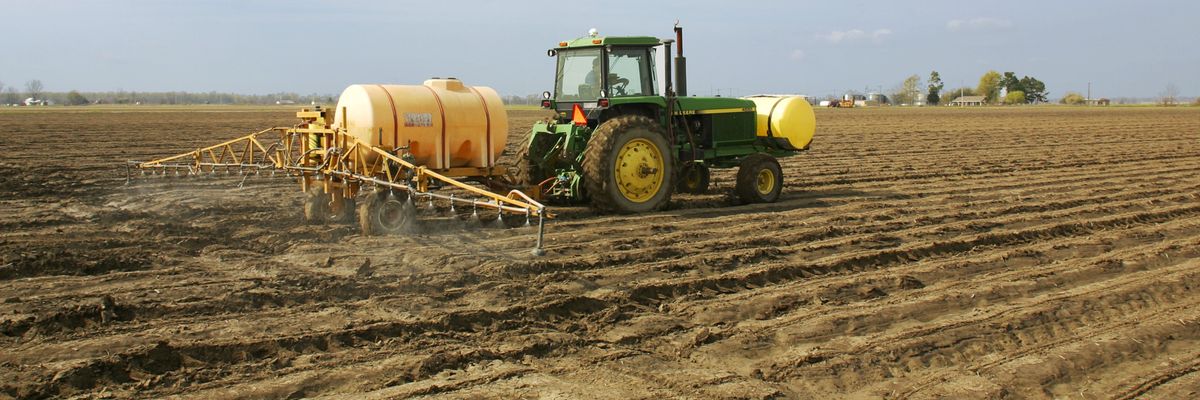
A tractor equipped with a sprayer applies a pre-plant herbicide to a field before planting a corn crop in Mississippi
(Photo by Debra Ferguson/Design Pics Editorial/Universal Images Group via Getty Images)
Jessica Corbett
Nov 21, 2025
COMMON DREAMS
Just a month after the Trump administration doubled down on the alleged safety of atrazine, a United Nations agency said on Friday that the pesticide—which is banned by dozens of countries but commonly used on corn, sugarcane, and sorghum in the United States—probably causes cancer.
“It is outrageously irresponsible that we still allow use of this dangerous poison in the United States,” said Nathan Donley, the Center for Biological Diversity’s environmental health science director, in a Friday statement. “This finding is just the latest indictment of the industry-controlled US pesticide oversight process that is failing to protect people and wildlife from chemicals linked to numerous health harms.”
Research into and alarm over atrazine have mounted since the World Health Organization’s International Agency for Research on Cancer initially concluded in 1999 that it was not classifiable as carcinogenic to humans. IACR has now announced new findings for atrazine and alachlor, another herbicide widely used on crops, as well as the agricultural fungicide vinclozolin.
Of the three, only atrazine was previously examined by IARC. From October 28 to November 4, a working group of 22 international experts from a dozen countries met in France to evaluate the carcinogenicity of pesticides. They classified vinclozolin as “possibly carcinogenic to humans, and both alachlor and atrazine as ”probably carcinogenic to humans.“
The latter two decisions were based on a combination of limited evidence for cancer in humans, sufficient evidence for cancer in animals, and strong mechanistic evidence in experimental systems. IARC said that “for atrazine, positive associations have been observed for non-Hodgkin lymphoma that is positive for the chromosomal translocation t(14;18).”
A couple of weeks before that IARC meeting, the Trump administration sparked outrage with a US Fish and Wildlife Service (USFWS) draft opinion claiming that atrazine does not pose an extinction risk to a single protected animal or plant.
That draft opinion came as President Donald Trump and Health and Human Services Secretary Robert F. Kennedy Jr. were already under fire for the second Make America Healthy Again report. After the first MAHA publication noted concerns regarding pesticides, even naming atrazine, agribusiness lobbyists confronted the administration, and the following document ultimately featured pesticide industry talking points.
The second report’s “only mention of pesticides is an Orwellian promise to ensure ‘confidence in EPA’s robust pesticide review procedures’—procedures courts have repeatedly found unlawful and that frontline communities know cannot be trusted,” the Center for Food Safety said after its September release. “Instead, it says that it will speed up pesticide approval and it will ‘partner’ with the pesticide industry to ‘educate’ the public about the ‘robust review’ of EPA’s regulation of pesticides to provide the public with ‘confidence.’”
Then came the USFWS draft, which Center for Food Safety senior attorney Sylvia Wu said “makes clear that despite the rhetoric of MAHA, there will be no robust review of the dangers of pesticides by the Trump administration... Instead, a toxic poison like atrazine will continue to contaminate our lands and waters, making our children sick for decades to come.”
Wu’s group has long been critical of atrazine. During the first Trump administration, it was part of a coalition that sued over the Environmental Protection Agency’s (EPA) 2020 reapproval of the herbicide. So was the Center for Biological Diversity—which was also angered by the USFWS document, with Donley calling it “an absolute joke.”
Donley took aim at the Trump administration again on Friday, after IACR announced its new classification for atrazine.
“Despite its rhetoric to the contrary, there is no better friend of atrazine than the Trump administration,” he said. “Hiding behind the rhetoric of MAHA, EPA reapproval of a poison that’s likely to keep Americans sick for generations is moving ahead full steam.”
Nov 21, 2025
COMMON DREAMS
Just a month after the Trump administration doubled down on the alleged safety of atrazine, a United Nations agency said on Friday that the pesticide—which is banned by dozens of countries but commonly used on corn, sugarcane, and sorghum in the United States—probably causes cancer.
“It is outrageously irresponsible that we still allow use of this dangerous poison in the United States,” said Nathan Donley, the Center for Biological Diversity’s environmental health science director, in a Friday statement. “This finding is just the latest indictment of the industry-controlled US pesticide oversight process that is failing to protect people and wildlife from chemicals linked to numerous health harms.”
Research into and alarm over atrazine have mounted since the World Health Organization’s International Agency for Research on Cancer initially concluded in 1999 that it was not classifiable as carcinogenic to humans. IACR has now announced new findings for atrazine and alachlor, another herbicide widely used on crops, as well as the agricultural fungicide vinclozolin.
Of the three, only atrazine was previously examined by IARC. From October 28 to November 4, a working group of 22 international experts from a dozen countries met in France to evaluate the carcinogenicity of pesticides. They classified vinclozolin as “possibly carcinogenic to humans, and both alachlor and atrazine as ”probably carcinogenic to humans.“
The latter two decisions were based on a combination of limited evidence for cancer in humans, sufficient evidence for cancer in animals, and strong mechanistic evidence in experimental systems. IARC said that “for atrazine, positive associations have been observed for non-Hodgkin lymphoma that is positive for the chromosomal translocation t(14;18).”
A couple of weeks before that IARC meeting, the Trump administration sparked outrage with a US Fish and Wildlife Service (USFWS) draft opinion claiming that atrazine does not pose an extinction risk to a single protected animal or plant.
That draft opinion came as President Donald Trump and Health and Human Services Secretary Robert F. Kennedy Jr. were already under fire for the second Make America Healthy Again report. After the first MAHA publication noted concerns regarding pesticides, even naming atrazine, agribusiness lobbyists confronted the administration, and the following document ultimately featured pesticide industry talking points.
The second report’s “only mention of pesticides is an Orwellian promise to ensure ‘confidence in EPA’s robust pesticide review procedures’—procedures courts have repeatedly found unlawful and that frontline communities know cannot be trusted,” the Center for Food Safety said after its September release. “Instead, it says that it will speed up pesticide approval and it will ‘partner’ with the pesticide industry to ‘educate’ the public about the ‘robust review’ of EPA’s regulation of pesticides to provide the public with ‘confidence.’”
Then came the USFWS draft, which Center for Food Safety senior attorney Sylvia Wu said “makes clear that despite the rhetoric of MAHA, there will be no robust review of the dangers of pesticides by the Trump administration... Instead, a toxic poison like atrazine will continue to contaminate our lands and waters, making our children sick for decades to come.”
Wu’s group has long been critical of atrazine. During the first Trump administration, it was part of a coalition that sued over the Environmental Protection Agency’s (EPA) 2020 reapproval of the herbicide. So was the Center for Biological Diversity—which was also angered by the USFWS document, with Donley calling it “an absolute joke.”
Donley took aim at the Trump administration again on Friday, after IACR announced its new classification for atrazine.
“Despite its rhetoric to the contrary, there is no better friend of atrazine than the Trump administration,” he said. “Hiding behind the rhetoric of MAHA, EPA reapproval of a poison that’s likely to keep Americans sick for generations is moving ahead full steam.”


No comments:
Post a Comment