Robert Reich
November 22, 2025
RAW STORY
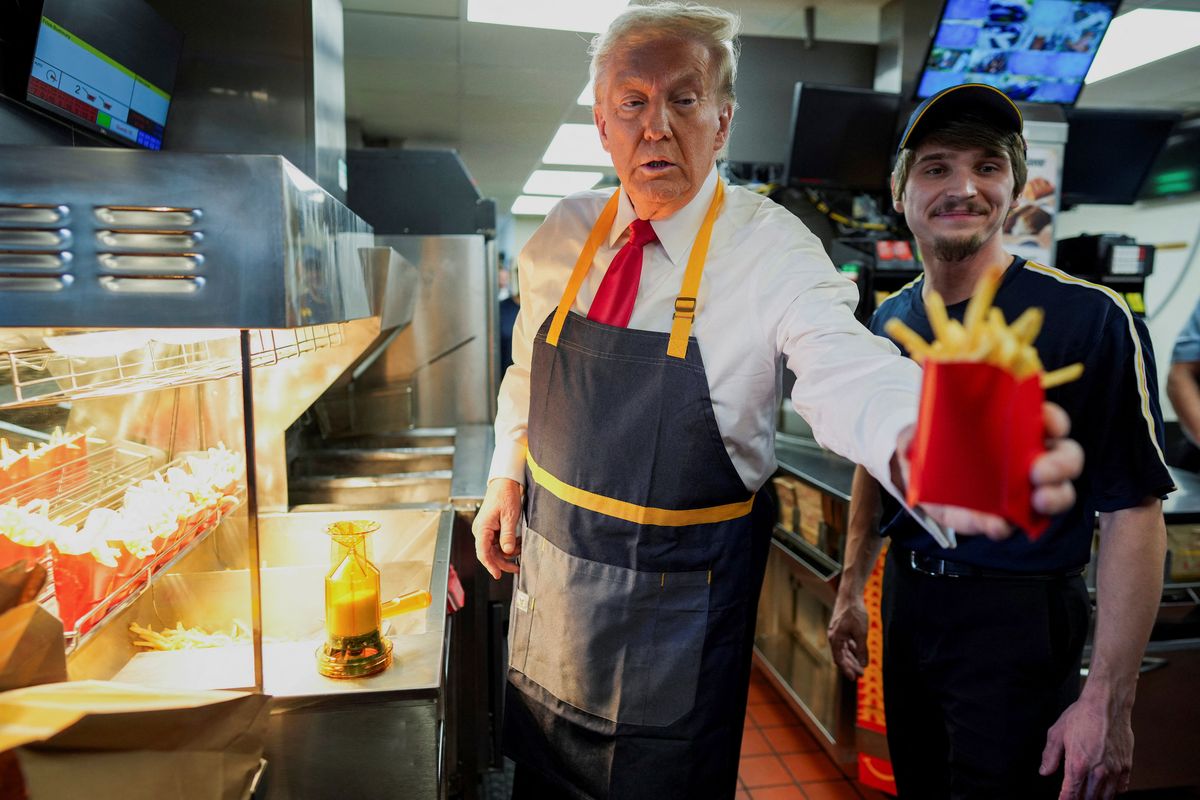
Donald Trump during a visit to McDonald's in Feasterville-Trevose, PennsylvaniaDoug Mills/REUTERS
The Big Mac has a big problem. According to the CEO of McDonald’s, fast food chains saw a double-digit dip in visits from lower- and middle-income customers in the first quarter of 2025.
The reason? He says we’re becoming a two-tiered economy, and lower- and middle-income customers can no longer afford fast food.
While the stock market is riding high and the Trump administration is slashing taxes for corporations and the rich, nothing is “trickling down” to everyday Americans.
Frankly, it’s a little galling to hear the CEO of McDonald’s complaining about income inequality, because corporations like McDonald’s are making the problem worse.
They pay their workers so little that many have to rely on food stamps and Medicaid to make ends meet — for which the rest of us pay in our taxes.
Meanwhile, their CEOs are paid roughly 1,000 times more than their typical employee.
Big corporations have a history of union busting, further reducing the power of their workers to negotiate a living wage.
Finally, they make the entire economy fragile. As wealth concentrates in the richest 10 percent, the rest of America can’t afford to buy enough to keep the economy running.
So what can we do about this? End the trickle-down hoax once and for all: Tax cuts for the wealthy make the rest of us worse off, not better.
Fight for unions. In the 1950s, when America had the biggest middle class the world had ever seen, a third of all private-sector workers were unionized. Now, it’s 6 percent.
Raise the minimum wage to $20 an hour (and higher for big corporations with billions in profits that pay their CEOs more than $20 million a year).
Bust up big monopolies with the power to keep prices high.
Demand corporations share their profits with workers, so that when corporations do better, their workers do, too.
In sum: Build an economy that works for everyone, not just those at the top. Because if we don’t, we’re all cooked.
***
Please watch our video — and share.
Robert Reich was a professor of public policy at Berkeley and former secretary of labor. His writings can be found at https://robertreich.substack.com/.
Robert Reich's new memoir, Coming Up Short, can be found wherever you buy books. You can also support local bookstores
Trump reverses course in 'remarkable admission’ of failed policy: economist
Alexander Willis
November 22, 2025
Alexander Willis
November 22, 2025
RAW STORY
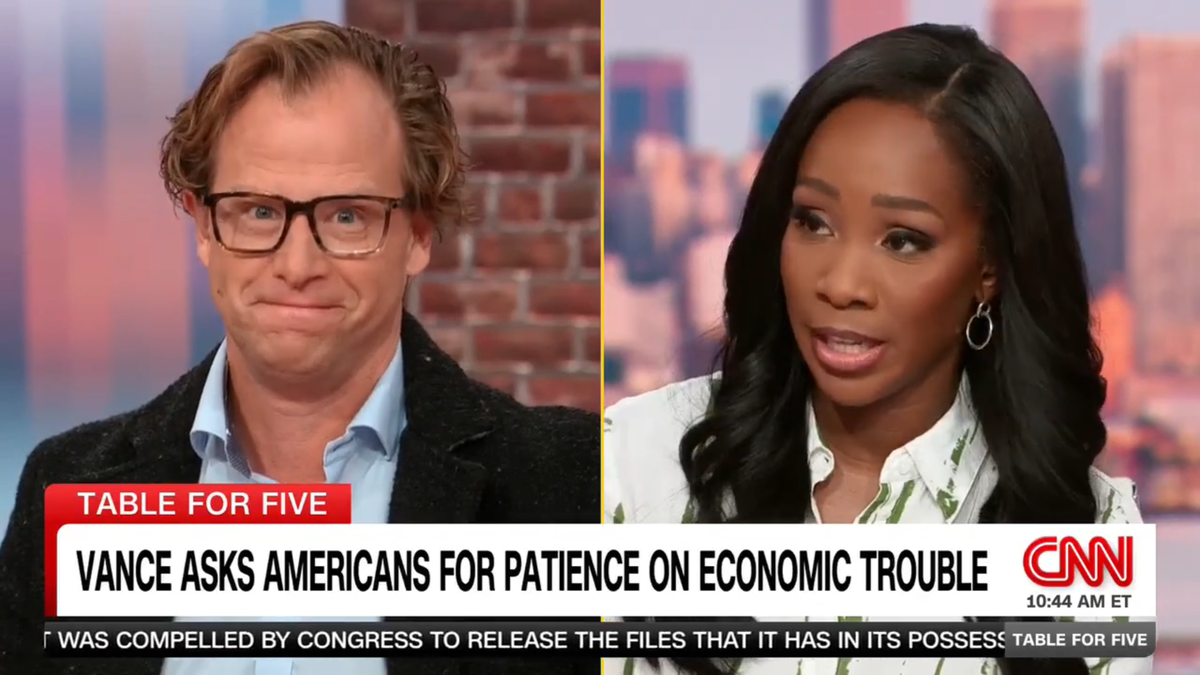
Economist Justin Wolfers (left) appears on CNN's "Table for Five,"
Economist Justin Wolfers (left) appears on CNN's "Table for Five,"
Nov. 22, 2025. (Screengrab / CNN)
President Donald Trump reversed course this week after excluding certain Brazilian goods from his so-called reciprocal tariffs, a reversal that left one economist stunned on Saturday over what he called a “remarkable admission.”
“‘'I tried a policy, and oh, everyone tells me I want the cost of living to be lower, let me reverse it,’” said economist Justin Wolfers, appearing on CNN’s “Table for Five” on Saturday. “The only implication is that he's learned what [we] learned in Econ 101: tariffs raise prices!”
Trump had initially levied high tariffs on Brazil in part over its prosecution of former Brazilian President Jair Bolsonaro, who has since been sentenced to nearly three decades in prison over his role in an attempted coup after his election loss in 2023. Bolsonaro has long been an ally to Trump, and his arrest was met poorly in the White Hous
And, with Trump’s reversal on tariffs, the president had also delivered a major “political victory” to Brazil’s current left-wing president Luiz Inácio Lula da Silva.
“Trump’s decision to remove many tariffs on Brazilian products is a significant political victory for the Lula administration ahead of next year’s presidential elections – and a vindication of Brazil’s choice to pursue a calm and pragmatic negotiation strategy vis-à-vis Trump,” wrote Brazilian professor Iliver Stuenkel in a social media post this week on X.
Trump’s decision to roll back select tariffs on Brazil was made via an executive order
on Thursday, and will impact goods such as beef, fruit, coffee and coca, all of which saw prices soar in the United States in recent months.
President Donald Trump reversed course this week after excluding certain Brazilian goods from his so-called reciprocal tariffs, a reversal that left one economist stunned on Saturday over what he called a “remarkable admission.”
“‘'I tried a policy, and oh, everyone tells me I want the cost of living to be lower, let me reverse it,’” said economist Justin Wolfers, appearing on CNN’s “Table for Five” on Saturday. “The only implication is that he's learned what [we] learned in Econ 101: tariffs raise prices!”
Trump had initially levied high tariffs on Brazil in part over its prosecution of former Brazilian President Jair Bolsonaro, who has since been sentenced to nearly three decades in prison over his role in an attempted coup after his election loss in 2023. Bolsonaro has long been an ally to Trump, and his arrest was met poorly in the White Hous
And, with Trump’s reversal on tariffs, the president had also delivered a major “political victory” to Brazil’s current left-wing president Luiz Inácio Lula da Silva.
“Trump’s decision to remove many tariffs on Brazilian products is a significant political victory for the Lula administration ahead of next year’s presidential elections – and a vindication of Brazil’s choice to pursue a calm and pragmatic negotiation strategy vis-à-vis Trump,” wrote Brazilian professor Iliver Stuenkel in a social media post this week on X.
Trump’s decision to roll back select tariffs on Brazil was made via an executive order
on Thursday, and will impact goods such as beef, fruit, coffee and coca, all of which saw prices soar in the United States in recent months.
‘The Main Course Is Inflation’: Thanksgiving Costs Surge Under Trump
Stephen Prager,
Common Dreams
November 22, 2025

FILE PHOTO: Republican presidential nominee and former U.S. President Donald Trump reacts during a rally in Greensboro, North Carolina, U.S. October 22, 2024. REUTERS/Carlos Barria/File Photo
As President Donald Trump attempts to claim the mantle of “affordability” and boasts that grocery prices are “way down,” a new report tracking the price of several Thanksgiving staples showed they have increased by 10% over the last year, more than three times the rate of inflation.
On social media, the president recently trumpeted that “2025 Thanksgiving dinner under Trump is 25% lower than 2024 Thanksgiving dinner under [President Joe] Biden, according to Walmart.” Claiming that grocery prices are down this year, he added: “AFFORDABILITY is a Republican Stronghold. Hopefully, Republicans will use this irrefutable fact!”
Trump was technically correct that Walmart had reduced the cost of its Thanksgiving dinner by about 25%. What he neglected to mention, however, was that it had also considerably reduced the meal’s size, down from 29 individual items to 22.
The most recent Consumer Price Index (CPI) data published in September by the Bureau of Labor Statistics, meanwhile, shows that at-home grocery prices have actually risen by 2.7%. That, not the spin coming from the White House, is what voters appear to be absorbing as Thanksgiving approaches.
In a poll conducted last week by Data for Progress, 53% said they felt it would be harder to afford a typical Thanksgiving meal than last year, while just 13% said it would be easier. Meanwhile, over a third said they were compensating for rising costs by buying fewer items.
That survey was done in collaboration with the Groundwork Collaborative, the Century Foundation, and the American Federation of Teachers (AFT), which published a report on Friday showing the skyrocketing cost of several holiday staples over the past year, in large part due to Trump’s aggressive tariff regime.
While the cost of a 15-lb. frozen turkey has remained roughly steady, the report notes that this is a bit of a mirage.
“Typically, retailers use frozen turkeys as a loss leader, discounting them to get customers in the door to purchase the rest of their Thanksgiving meal, so it’s no surprise that frozen turkey prices are steady,” it explains. “However, wholesale prices for frozen turkeys have soared 75% over the past year, according to research from Purdue University, and fresh turkey prices are up 36% and likely to continue rising.”
The report attributes these sharp increases to a perfect storm of Trump policies. Tariffs have driven up the cost of feed and avian flu,“ which has worsened as a result of mass firings at the US Department of Agriculture, ”has further thinned an already shrinking flock, now at its lowest level in four decades, squeezing American farmers and consumers alike.“
Those who prefer pork or beef to turkey will not be so lucky: The price of an 8-lb. smoked bone-in spiral ham has jumped from $7.69 last year up to $11.48, a nearly 50% increase, while beef roasts are up 20%.
But many agree that the sides are what truly make a Thanksgiving meal great, and that’s where Americans’ pocketbooks will take the most significant hits.
The cost of sweet onions, an essential ingredient in stuffing, has spiked by 56% since last year. Ocean Spray jellied cranberry sauce and Seneca Foods’ creamed corn have each jumped by over 20%. And elbow macaroni from De Cecco and the Sargento cheese to put on top have each increased by double digits.
Pie fillings like pecans, apples, and the refrigerated crusts they’re served in have also all lept several times the rate of inflation. And even storing leftovers will be more costly, with heavy-duty aluminum foil from Reynolds up 40%.
The report chalks this up to Trump’s 50% tariffs on imported steel, which affect around 4 in 5 canned goods. Canned fruits and vegetables have increased by 5% over the past year, faster than the overall rate of inflation. These price hikes, meanwhile, have given companies cover to raise the prices of goods made with domestic steel, too.
Making Thanksgiving dinner with fresh fruit and vegetables may skirt some of the hikes, but tariffs on fertilizer and herbicides have also driven prices up by about 2.5%.
Tariffs on aluminum, meanwhile, have caused Reynolds’ CEO to increase the prices not just of foil, but also of other products to help absorb the cost.
The report by Groundwork, the Century Foundation, and AFT is not the only one to examine the cost of Thanksgiving foods, which are often used as a shorthand for the state of inflation.
While estimates vary based on methodology—for instance, the American Farm Bureau notes that the loss leader pricing of turkey is enough to reduce the price of a Thanksgiving meal on the whole from last year—reports across the board have found that the prices for most Thanksgiving staples are rising in tandem with food prices more broadly.
“This Thanksgiving, the main course is inflation as Trump’s policies force families to carve up their shrinking budgets,” said Lindsay Owens, Groundwork’s executive director.
Rising food prices are just the tip of the iceberg for a mounting affordability crisis: Data shows similar hikes to housing and energy costs. Meanwhile, the cost of health insurance premiums is expected to more than double next year for over 20 million Americans and increase across the board after Republicans voted not to renew a tax credit for the Affordable Care Act.
“This administration’s policies made the cost of living higher than the year before,” said AFT president Randi Weingarten. “We must do everything we can to make it easier, not harder, for working Americans to afford groceries, housing, and healthcare.”
November 22, 2025
FILE PHOTO: Republican presidential nominee and former U.S. President Donald Trump reacts during a rally in Greensboro, North Carolina, U.S. October 22, 2024. REUTERS/Carlos Barria/File Photo
As President Donald Trump attempts to claim the mantle of “affordability” and boasts that grocery prices are “way down,” a new report tracking the price of several Thanksgiving staples showed they have increased by 10% over the last year, more than three times the rate of inflation.
On social media, the president recently trumpeted that “2025 Thanksgiving dinner under Trump is 25% lower than 2024 Thanksgiving dinner under [President Joe] Biden, according to Walmart.” Claiming that grocery prices are down this year, he added: “AFFORDABILITY is a Republican Stronghold. Hopefully, Republicans will use this irrefutable fact!”
Trump was technically correct that Walmart had reduced the cost of its Thanksgiving dinner by about 25%. What he neglected to mention, however, was that it had also considerably reduced the meal’s size, down from 29 individual items to 22.
The most recent Consumer Price Index (CPI) data published in September by the Bureau of Labor Statistics, meanwhile, shows that at-home grocery prices have actually risen by 2.7%. That, not the spin coming from the White House, is what voters appear to be absorbing as Thanksgiving approaches.
In a poll conducted last week by Data for Progress, 53% said they felt it would be harder to afford a typical Thanksgiving meal than last year, while just 13% said it would be easier. Meanwhile, over a third said they were compensating for rising costs by buying fewer items.
That survey was done in collaboration with the Groundwork Collaborative, the Century Foundation, and the American Federation of Teachers (AFT), which published a report on Friday showing the skyrocketing cost of several holiday staples over the past year, in large part due to Trump’s aggressive tariff regime.
While the cost of a 15-lb. frozen turkey has remained roughly steady, the report notes that this is a bit of a mirage.
“Typically, retailers use frozen turkeys as a loss leader, discounting them to get customers in the door to purchase the rest of their Thanksgiving meal, so it’s no surprise that frozen turkey prices are steady,” it explains. “However, wholesale prices for frozen turkeys have soared 75% over the past year, according to research from Purdue University, and fresh turkey prices are up 36% and likely to continue rising.”
The report attributes these sharp increases to a perfect storm of Trump policies. Tariffs have driven up the cost of feed and avian flu,“ which has worsened as a result of mass firings at the US Department of Agriculture, ”has further thinned an already shrinking flock, now at its lowest level in four decades, squeezing American farmers and consumers alike.“
Those who prefer pork or beef to turkey will not be so lucky: The price of an 8-lb. smoked bone-in spiral ham has jumped from $7.69 last year up to $11.48, a nearly 50% increase, while beef roasts are up 20%.
But many agree that the sides are what truly make a Thanksgiving meal great, and that’s where Americans’ pocketbooks will take the most significant hits.
The cost of sweet onions, an essential ingredient in stuffing, has spiked by 56% since last year. Ocean Spray jellied cranberry sauce and Seneca Foods’ creamed corn have each jumped by over 20%. And elbow macaroni from De Cecco and the Sargento cheese to put on top have each increased by double digits.
Pie fillings like pecans, apples, and the refrigerated crusts they’re served in have also all lept several times the rate of inflation. And even storing leftovers will be more costly, with heavy-duty aluminum foil from Reynolds up 40%.
The report chalks this up to Trump’s 50% tariffs on imported steel, which affect around 4 in 5 canned goods. Canned fruits and vegetables have increased by 5% over the past year, faster than the overall rate of inflation. These price hikes, meanwhile, have given companies cover to raise the prices of goods made with domestic steel, too.
Making Thanksgiving dinner with fresh fruit and vegetables may skirt some of the hikes, but tariffs on fertilizer and herbicides have also driven prices up by about 2.5%.
Tariffs on aluminum, meanwhile, have caused Reynolds’ CEO to increase the prices not just of foil, but also of other products to help absorb the cost.
The report by Groundwork, the Century Foundation, and AFT is not the only one to examine the cost of Thanksgiving foods, which are often used as a shorthand for the state of inflation.
While estimates vary based on methodology—for instance, the American Farm Bureau notes that the loss leader pricing of turkey is enough to reduce the price of a Thanksgiving meal on the whole from last year—reports across the board have found that the prices for most Thanksgiving staples are rising in tandem with food prices more broadly.
“This Thanksgiving, the main course is inflation as Trump’s policies force families to carve up their shrinking budgets,” said Lindsay Owens, Groundwork’s executive director.
Rising food prices are just the tip of the iceberg for a mounting affordability crisis: Data shows similar hikes to housing and energy costs. Meanwhile, the cost of health insurance premiums is expected to more than double next year for over 20 million Americans and increase across the board after Republicans voted not to renew a tax credit for the Affordable Care Act.
“This administration’s policies made the cost of living higher than the year before,” said AFT president Randi Weingarten. “We must do everything we can to make it easier, not harder, for working Americans to afford groceries, housing, and healthcare.”

No comments:
Post a Comment