Could Northeast States Trade Pipeline Access for Offshore Wind Permits?
Any deal requires honesty about costs, infrastructure realities, domestic energy availability, and past policy decisions.
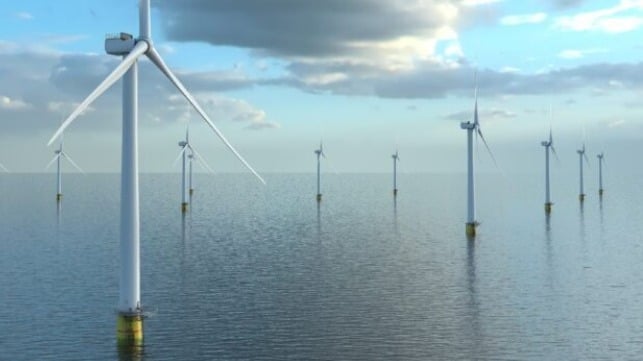
In mid-December 2025, the Trump Administration halted offshore wind projects from New England to Virginia, placing development on an indefinite pause. Just weeks earlier, I spoke at a conference in New England and had numerous side conversations with officials and stakeholders from across New England and New York about the outlook for maritime and energy policy.
The timing was telling. The Northeast is arguably the center of the universe for offshore wind, and the perspectives expressed in those discussions ran the full spectrum from thoughtful and informed to, frankly, detached from reality.
In my opening remarks, I made one point unmistakably clear: we have never seen more sustained focus on U.S. maritime policy, including the Jones Act, from both the White House and Congress in the lifetime of anyone attending that conference. That reality framed the discussions that followed.
A common refrain on the sidelines was: “Trump’s a dealmaker — don’t you think he’ll make a deal on offshore wind?” I reminded folks that a deal requires two parties coming together, with each side offering something and giving something. I am not suggesting that the Trump Administration will or will not make a deal on offshore wind, but it is worth examining what is actually on the table.
Electricity Prices
The offshore wind industry has not provided an accurate picture when discussing pricing. The European multinationals behind these projects provided states with project costs and electricity rates that were never going to hold. The truth is straightforward: in the U.S., offshore wind is not a cheaper alternative for ratepayers today, and it is not going to be cheaper in the foreseeable future.
If developers were honest with governors’ offices and public utility commissions about costs upfront, things would go a lot better. Transparency matters.
As of December 2025, the U.S. national average residential electricity price is about 18¢ per kilowatt-hour. Compare that to the approximate rates for the Northeast:
Massachusetts: 30¢ /kWh
Connecticut: 30¢ /kWh
Rhode Island: 29¢ /kWh
Maine: 28¢ /kWh
New York: 27¢ /kWh
New Hampshire: 25¢ /kWh
Vermont: 23¢ /kWh
New England electricity prices run roughly 60–70 percent above the national average. Vermont and New Hampshire are lower largely because they rely more heavily on nuclear power and hydroelectricity, including imports from Canada.
Energy Policy in New York and New England
This is not a Jones Act problem.
Over the past decade, New York and multiple New England states took deliberate actions that halted or cancelled major natural gas pipeline projects. Those decisions continue to shape the region’s energy landscape and have direct implications for maritime commerce, dredging, port infrastructure, and U.S.-flag energy transportation. Understanding this history is essential as policymakers revisit energy security, offshore wind integration, and domestic maritime supply chains.
New York has been the most consequential state in halting interstate pipeline expansion into the Northeast. The Constitution Pipeline, proposed by Williams and its partners, would have moved Marcellus natural gas from Pennsylvania into New York and New England. The Northeast Supply Enhancement Project was designed to supply additional gas to downstate New York and Long Island. The Northern Access Project was intended to increase deliveries into western New York. In all three cases, New York denied state-level permits.
Massachusetts policy opposition significantly affected regional pipeline proposals intended to alleviate winter gas shortages. The Northeast Energy Direct Pipeline was a major interstate proposal to deliver Marcellus gas into Massachusetts and New Hampshire. The Access Northeast Project was a regional expansion involving Massachusetts, Connecticut, and Rhode Island. Massachusetts opposition to proposed cost-recovery mechanisms and pipeline financing effectively halted the project in 2017.
In New Hampshire, both the Northeast Energy Direct Pipeline and the Granite Bridge Pipeline were ultimately cancelled following state-level opposition. Rhode Island similarly opposed the regional Access Northeast expansion, eliminating a potential source of additional gas supply.
Connecticut provides one of the clearest examples of policy contradiction. The state opposed regional pipeline expansion through Access Northeast and, at the same time, publicly blamed the Jones Act for natural gas shortfalls and high winter energy costs. That narrative ignores several inconvenient facts: Connecticut does not have a single LNG receiving terminal at any of its ports, and in the 2000s the state actively opposed offshore floating storage and regasification units (FSRUs) that would have delivered natural gas directly to Connecticut.
In other words, the state rejected both pipeline and maritime LNG supply options and then blamed federal maritime law for the resulting constraints.
Offshore Wind Developers and the Jones Act Narrative
Against this backdrop, another unhelpful pattern emerged during offshore wind development: European offshore wind developers repeatedly blamed the Jones Act for project delays and cost overruns. These criticisms were not confined to private conversations. Executives and industry representatives publicly cited Jones Act compliance and the limited availability of U.S.-flag installation vessels as obstacles to offshore wind development off the East Coast, despite the fact that the Jones Act has been settled U.S. law for more than a century and was fully known to developers when they entered the U.S. market and bid on federal lease areas. What was often omitted from those critiques is that the Jones Act did not change, but rather it was the business case assumptions did.
At the same time, U.S. shipyards, U.S.-flag vessel operators, and traditional Jones Act companies fully embraced offshore wind as a new line of business. They invested heavily in vessels, port infrastructure, workforce development, and long-term capacity in good faith, responding directly to the demand signals sent by developers and government policymakers.
Unfortunately, Jones Act–centric trade associations were repeatedly forced into a defensive posture, having to rebut ill-advised and sometimes inaccurate public statements made by C-suite European developers blaming the Jones Act for their own planning and execution challenges. This dynamic was counterproductive. It diverted attention away from legitimate infrastructure and policy issues and undermined the collaborative environment offshore wind development required to succeed in the United States.
Blaming the Jones Act may have been convenient, but it ignored the broader reality: offshore wind delays and cost overruns were driven by unrealistic pricing assumptions, immature supply chains, permitting complexity, and conflicting state energy policies — not U.S. maritime law.
Is There a Deal to Be Made?
Is there a deal that could be made between the states and the Trump Administration with respect to offshore wind and natural gas? Possibly. But deals require both sides giving a little to get a little. It also requires honesty about costs, infrastructure realities, domestic energy availability, and past policy decisions.
If there has ever been a moment to have that conversation seriously, with domestic energy production, maritime policy, and grid reliability aligned, 2026 is as good a time as any.
William P. Doyle is CEO of the Dredging Contractors of America. He previously served as Executive Director of the Port of Baltimore and as a U.S. Federal Maritime Commissioner. A graduate of Massachusetts Maritime Academy and Widener University Commonwealth Law School, he is a licensed officer in the U.S. merchant marine and a member of the Marine Engineers’ Beneficial Association. ?
The opinions expressed herein are the author's and not necessarily those of The Maritime Executive.

No comments:
Post a Comment