Syria: 8 killed in first major mosque attack since Assad
What do we know?
The Interior Ministry labeled the explosion at the Imam Ali Mosque in Homs, Syria's third‑largest city, a "terrorist bombing."
According to the Syrian Observatory for Human Rights, the mosque is attended primarily by members of the Alawite community.
State news agency SANA, citing a security source, reported that the blast was caused by explosives planted inside the mosque.
A government official said the devices detonated during the crowded Friday prayer service.
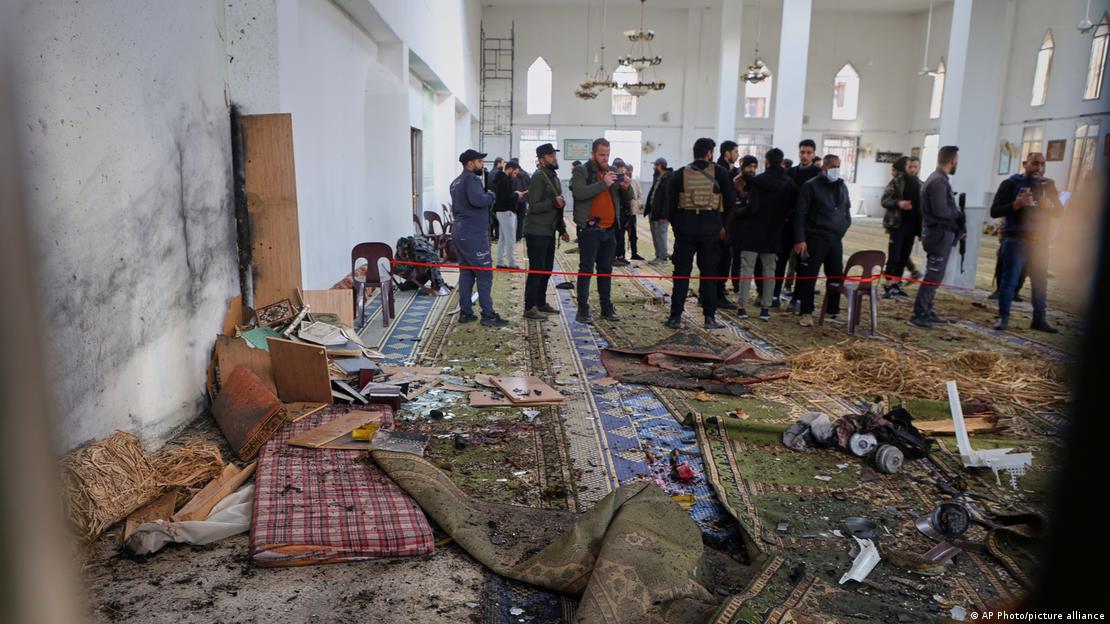
Photos released by SANA showed extensive destruction and bloodstains inside the prayer hall.
In addition to the eight fatalities, Health Ministry official Najib al‑Naasan told SANA that 18 people were injured.
The official said the figures were not final, indicating that the death toll could rise.
Islamist group claims responsibility
A local security official told SANA that investigators had not yet identified the attacker or confirmed any link to armed groups.
However, in a statement on Telegram, the Islamist militant group Saraya Ansar al-Sunna said later Friday that its fighters had "detonated a number of explosive devices" at the mosque.
The group was formed after the ouster of Assad, who is a member of the Alawite community.
Syria has faced multiple episodes of sectarian bloodshed since Assad was driven from power by a rebel offensive last year and replaced by a Sunni‑led interim government.
After his ouster, Assad fled to Russia, and since then, Alawite communities have faced a series of crackdowns.
The Syrian government has recently stepped up security campaigns against Assad loyalists and the self-declared Islamic State (IS) terrorist group.
On December 19, the United States launched strikes aimed at IS targets in Syria, not the Syrian state, in retaliation for an attack which killed two American servicemen and an interpreter a few days earlier.
Edited by: Dmytro Hubenko
Nik Martin is one of DW's team of business reporters.
DW with AFP, AP, dpa, Reuters
26/12/2025
A deadly blast tore through an Alawite mosque during Friday prayers in the western city of Homs. A little-known militant group has claimed responsibility as Syria's sectarian tensions erupt again.

A deadly blast tore through an Alawite mosque during Friday prayers in the western city of Homs. A little-known militant group has claimed responsibility as Syria's sectarian tensions erupt again.

An Alawite group labeled the blast "a continuation of the organized extremist terrorism specifically targeting the Alawite community"
Image: SANA/AP Photo/picture alliance
At least eight people were killed on Friday when an explosion struck a mosque used by Syria's Alawite minority in Homs, state media reported.
The blast, believed to be the first attack on a mosque since the overthrow last year of longtime leader Bashar Assad, himself an Alawite.
The blast was claimed by an Islamist militant group formed shortly after Assad's ouster.
At least eight people were killed on Friday when an explosion struck a mosque used by Syria's Alawite minority in Homs, state media reported.
The blast, believed to be the first attack on a mosque since the overthrow last year of longtime leader Bashar Assad, himself an Alawite.
The blast was claimed by an Islamist militant group formed shortly after Assad's ouster.
What do we know?
The Interior Ministry labeled the explosion at the Imam Ali Mosque in Homs, Syria's third‑largest city, a "terrorist bombing."
According to the Syrian Observatory for Human Rights, the mosque is attended primarily by members of the Alawite community.
State news agency SANA, citing a security source, reported that the blast was caused by explosives planted inside the mosque.
A government official said the devices detonated during the crowded Friday prayer service.
Photos released by SANA showed extensive destruction and bloodstains inside the prayer hall.
In addition to the eight fatalities, Health Ministry official Najib al‑Naasan told SANA that 18 people were injured.
The official said the figures were not final, indicating that the death toll could rise.
The Syrian government blamed the church attack on a cell of the Islamic State (IS) group
Image: AP Photo/picture alliance
Islamist group claims responsibility
A local security official told SANA that investigators had not yet identified the attacker or confirmed any link to armed groups.
However, in a statement on Telegram, the Islamist militant group Saraya Ansar al-Sunna said later Friday that its fighters had "detonated a number of explosive devices" at the mosque.
The group was formed after the ouster of Assad, who is a member of the Alawite community.
Syria has faced multiple episodes of sectarian bloodshed since Assad was driven from power by a rebel offensive last year and replaced by a Sunni‑led interim government.
After his ouster, Assad fled to Russia, and since then, Alawite communities have faced a series of crackdowns.
The Syrian government has recently stepped up security campaigns against Assad loyalists and the self-declared Islamic State (IS) terrorist group.
On December 19, the United States launched strikes aimed at IS targets in Syria, not the Syrian state, in retaliation for an attack which killed two American servicemen and an interpreter a few days earlier.
Edited by: Dmytro Hubenko
Nik Martin is one of DW's team of business reporters.
Homs (Syria) (AFP) – An explosion killed at least eight worshippers at a mosque in a predominantly Alawite area of Syria's Homs on Friday, state media said, with an Islamist militant group claiming responsibility.
Issued on: 26/12/2025 - RFI
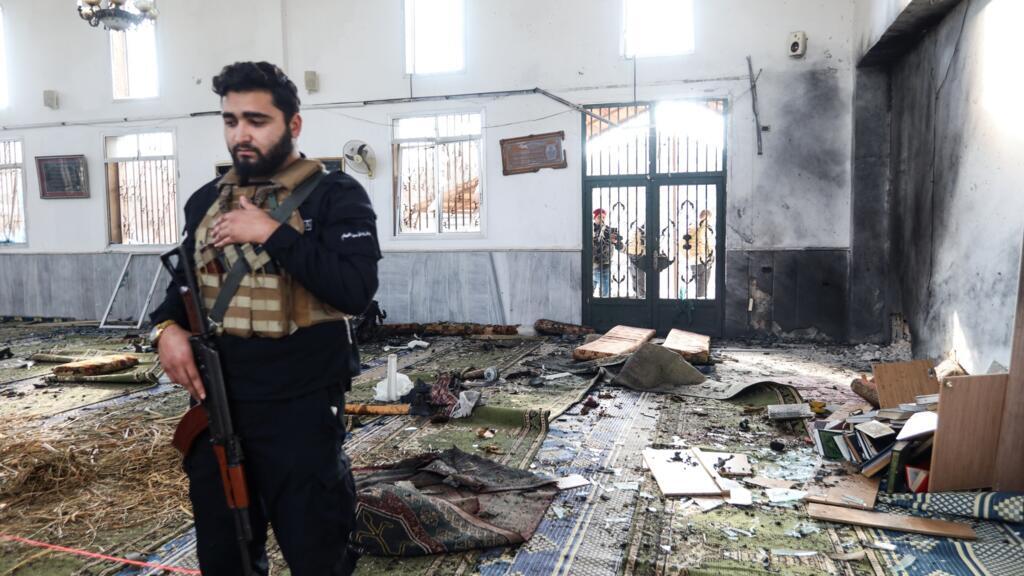
Authorities said at least eight people were killed in the blast at the Imam Ali Bin Abi Talib Mosque in the central Syrian city of Homs
© Omar HAJ KADOUR / AFP
The attack during Friday prayers is the latest on the Alawite community, and the second blast in a place of worship since Islamist authorities took power a year ago, after a suicide bombing in a Damascus church killed 25 people in June.
In a statement on Telegram, extremist group Saraya Ansar al-Sunna said its fighters "detonated a number of explosive devices" in the Imam Ali Bin Abi Talib Mosque in the central Syrian city.
The group formed after the ouster last year of longtime ruler Bashar al-Assad, himself a member of the Alawite community, and had claimed responsibility for the June church bombing, though authorities blamed the Islamic State group.
State news agency SANA reported an explosion in the mosque in Homs's Wadi al-Dahab neighbourhood and gave a preliminary toll of at least eight dead and 18 wounded, citing a health ministry official.
An AFP photographer saw security forces cordoning off the area around the mosque while inside, personnel stood guard as red tape encircled the blackened, debris-strewn corner where the blast went off.
Usama Ibrahim, 47, who was being treated in hospital for shrapnel wounds to his head and back, said he was at Friday prayers when he heard was a loud explosion.
"The world turned red... and I fell to the ground. Then I saw blood flowing from my head," he told AFP.
The attack during Friday prayers is the latest on the Alawite community, and the second blast in a place of worship since Islamist authorities took power a year ago, after a suicide bombing in a Damascus church killed 25 people in June.
In a statement on Telegram, extremist group Saraya Ansar al-Sunna said its fighters "detonated a number of explosive devices" in the Imam Ali Bin Abi Talib Mosque in the central Syrian city.
The group formed after the ouster last year of longtime ruler Bashar al-Assad, himself a member of the Alawite community, and had claimed responsibility for the June church bombing, though authorities blamed the Islamic State group.
State news agency SANA reported an explosion in the mosque in Homs's Wadi al-Dahab neighbourhood and gave a preliminary toll of at least eight dead and 18 wounded, citing a health ministry official.
An AFP photographer saw security forces cordoning off the area around the mosque while inside, personnel stood guard as red tape encircled the blackened, debris-strewn corner where the blast went off.
Usama Ibrahim, 47, who was being treated in hospital for shrapnel wounds to his head and back, said he was at Friday prayers when he heard was a loud explosion.
"The world turned red... and I fell to the ground. Then I saw blood flowing from my head," he told AFP.
'Shrapnel all around'
Syria's interior ministry said in a statement that "a terrorist explosion" targeted the mosque and that authorities had "begun investigating and collecting evidence to pursue the perpetrators of this criminal act".
SANA quoted a security source as saying that initial investigations indicated that "explosive devices planted inside the mosque" caused the blast.
As victims' families gathered at the hospital, wounded bookseller Ghadi Maarouf, 38, told AFP that the explosion occurred "just before the imam was to ascend the minbar to deliver the sermon", referring to the imam's raised platform.
"It was a huge explosion, and I saw shrapnel flying all around me," said Maarouf, whose leg was wounded in the blast.
Syria's foreign ministry condemned a "cowardly criminal act", saying it came "in the context of repeated desperate attempts to undermine security and stability and spread chaos among the Syrian people".
The ministry statement reiterated its "firm stance in combating terrorism in all its forms", vowing to hold the attackers accountable.
Several countries including Saudi Arabia, Lebanon, Turkey and Jordan condemned the attack.
Most Syrians are Sunni Muslim, and Homs city is home to a Sunni majority but also has several predominantly Alawite areas, a community whose faith stems from Shiite Islam.
Since Assad's fall, the Syrian Observatory for Human Rights monitor and Homs province residents have reported kidnappings and killings targeting members of the minority community, while the country has seen several bloody sectarian episodes.
Detainees released
Syria's coastal areas saw the massacre of Alawite civilians in March, with authorities accusing armed Assad supporters of sparking the violence by attacking security forces.
A national commission of inquiry said at least 1,426 members of the minority were killed, while the Syrian Observatory for Human Rights monitor put the toll at more than 1,700.
Late last month, thousands of people demonstrated on the coast in protest at fresh attacks targeting Alawites in Homs and other regions.
Before and after the March bloodshed, authorities carried out a massive arrest campaign in predominantly Alawite areas, which are also former Assad strongholds.
On Friday, Syrian state television reported the release of 70 detainees in the coastal city of Latakia "after it was proven that they were not involved in war crimes", saying more releases would follow.
Despite assurances from Damascus that all Syria's communities will be protected, the country's minorities remain largely wary of their future under the new Islamist authorities.
In July, sectarian clashes in southern Syria's Druze-majority Sweida province saw more than 2,000 people killed, including hundreds of Druze civilians who the Observatory said were "summarily executed by defence and interior ministry personnel".
In a speech this month marking a year since the fall of Assad, Syrian President Ahmed al-Sharaa emphasised the importance of all Syrians unifying efforts to "to build a strong Syria".
Despite major achievements in relaunching Syria's foreign standing, Sharaa faces the major domestic challenge of maintaining security and unity nationwide.
Trust issues: 'Islamic State' supporters in the Syrian army? In retaliation for an attack on Americans by a supporter of the 'Islamic State' group, the US conducted Operation Hawkeye Strike in Syria, using fighter jets, attack helicopters and artillery against the group
One question continues to arise after the recent killing of two US soldiers and a civilian translator in central Syria by a follower of the extremist "Islamic State" group.
The killer had infiltrated the Syrian security forces. How many others in the Syrian security forces might hold similarly extreme opinions?
The attack "exposes holes in the Syrian government's intelligence capabilities, a known vulnerability given the shortages of personnel and resources, and the country's geographic instability," Syrian researcher and journalist Subhi Franjieh wrote for London-based media outlet Al Majalla shortly afterward.
"The Palmyra attack may be used to argue that the Syrian government is compromised and cannot be trusted in key areas like counterterrorism."
Franjieh points out that, although Syria joined the US-led global coalition fighting the "Islamic State" in November, the international coalition is so far only cooperating with the Syrian Ministry of Interior, not the local Ministry of Defense. The latter is seen as not yet fully established and secure.
Just under a week after the killings of the Americans in Palmyra, the "IS" group published a message on its Telegram channel describing the deaths as a "blow" to the US and to any Syrians opposed to it. It did not, however, claim direct responsibility, and it seems that — similarly to the two men who recently targeted a Jewish gathering in Australia — the attack may have been "inspired" by the extremist group.
Soldiers who sympathize with 'IS'?
Experts agree that there could be more individuals in the Syrian security forces who sympathize with or are inspired by the "IS" group.
They say one of the main problems is that the Syrian government has been trying to establish a new military at speed following the ouster of the country's Bashar Assad dictatorship in December 2024.
Shortly after the Palmyra attack, a spokesperson for the Interior Ministry said that 5,000 new recruits were added to its forces in the area where the attack happened. When the "IS" group was at the height of its power, it controlled large swathes of Syria and Iraq, including Palmyra.
The spokesperson also said there were weekly evaluations of those personnel and that the "IS" supporter who killed the Americans and a Syrian officer had already been on a watchlist. He was to be dismissed the day after the attack.
All these "create fertile ground for 'IS' to exploit governance voids and public unrest, positioning itself as an alternative form of governance and expanding its influence," notes Al Hakari.
"IS" attacks on government areas have increased since the change of government, and other experts note that the group's followers now seem to want to deliberately undermine the new authorities.
For example, Syrian security forces say that in late November, they found an "IS" cell in Latakia. Latakia is actually populated mainly by the Alawite minority, a group "IS" followers might usually classify as infidels. The Alawites are perceived as linked to the former dictatorship because the Assad family was also Alawite and has been targeted as a result of that. Alawite neighborhoods remain volatile and ripe for unrest.
Over the past weekend, two gunmen randomly fired at people on a street in a fairly remote village in central Syria, near Salamiyah city. The area is home mainly to another minority, the Ismailis, and although nobody knows who was responsible, Salamiyah's mayor said he thought the "IS" group could have done it.
However, it will take time to extinguish the threat posed by the "IS" group in Syria altogether, if indeed it is possible to wipe out the extremist ideology at all.
"The threat posed by 'IS' militants in Syria is more severe than in any other country in the region," Al Hakari says.
Cathrin Schaer Author for the Middle East desk.
DW
12/23/2025
The attack on US troops by a Syrian security forces member who was a supporter of the extremist "Islamic State" group in mid-December has consequences well beyond the four deaths that resulted.
The attack on US troops by a Syrian security forces member who was a supporter of the extremist "Islamic State" group in mid-December has consequences well beyond the four deaths that resulted.

U.S. Air Force/Getty Images
One question continues to arise after the recent killing of two US soldiers and a civilian translator in central Syria by a follower of the extremist "Islamic State" group.
The killer had infiltrated the Syrian security forces. How many others in the Syrian security forces might hold similarly extreme opinions?
The attack "exposes holes in the Syrian government's intelligence capabilities, a known vulnerability given the shortages of personnel and resources, and the country's geographic instability," Syrian researcher and journalist Subhi Franjieh wrote for London-based media outlet Al Majalla shortly afterward.
"The Palmyra attack may be used to argue that the Syrian government is compromised and cannot be trusted in key areas like counterterrorism."
Franjieh points out that, although Syria joined the US-led global coalition fighting the "Islamic State" in November, the international coalition is so far only cooperating with the Syrian Ministry of Interior, not the local Ministry of Defense. The latter is seen as not yet fully established and secure.
Just under a week after the killings of the Americans in Palmyra, the "IS" group published a message on its Telegram channel describing the deaths as a "blow" to the US and to any Syrians opposed to it. It did not, however, claim direct responsibility, and it seems that — similarly to the two men who recently targeted a Jewish gathering in Australia — the attack may have been "inspired" by the extremist group.
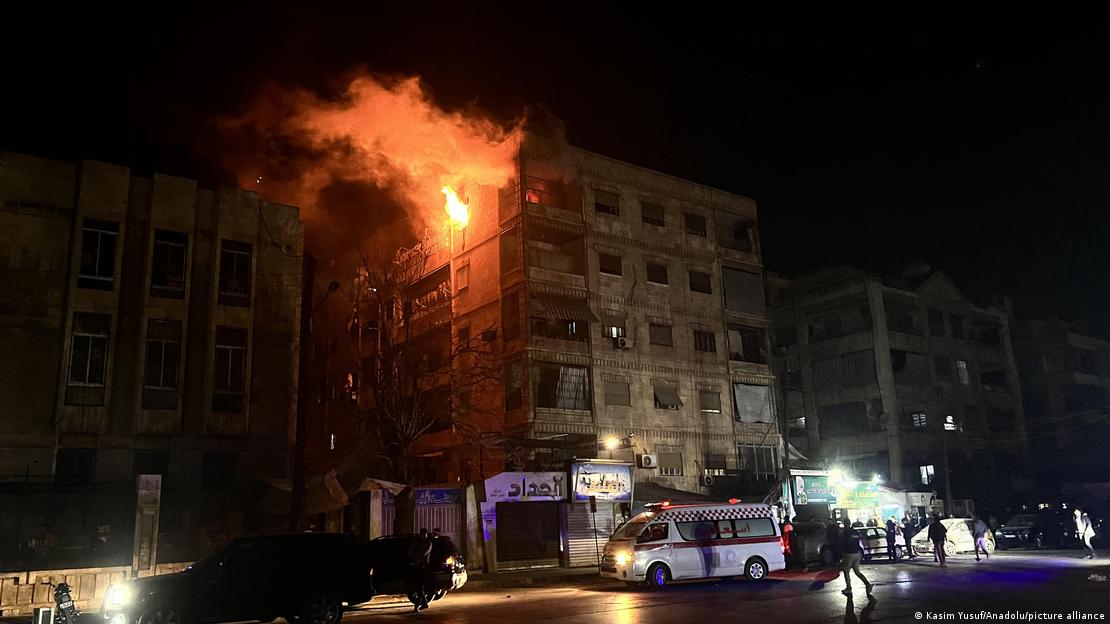
Security issues and violence, such as that which occurred between Syrian Kurds and Syrian security forces over the weekend in Aleppo (pictured), has been exploited by the 'IS' group in the past, experts sayI
mage: Kasim Yusuf/Anadolu/picture alliance
Soldiers who sympathize with 'IS'?
Experts agree that there could be more individuals in the Syrian security forces who sympathize with or are inspired by the "IS" group.
They say one of the main problems is that the Syrian government has been trying to establish a new military at speed following the ouster of the country's Bashar Assad dictatorship in December 2024.
Shortly after the Palmyra attack, a spokesperson for the Interior Ministry said that 5,000 new recruits were added to its forces in the area where the attack happened. When the "IS" group was at the height of its power, it controlled large swathes of Syria and Iraq, including Palmyra.
The spokesperson also said there were weekly evaluations of those personnel and that the "IS" supporter who killed the Americans and a Syrian officer had already been on a watchlist. He was to be dismissed the day after the attack.
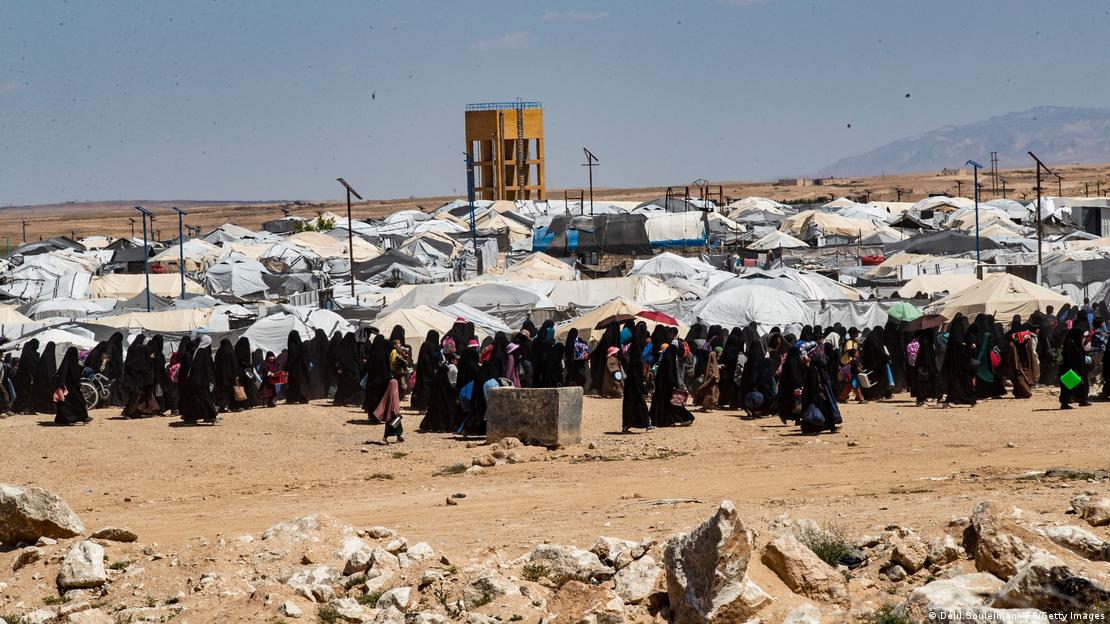
There are several camps in Syria where members of the 'Islamic State' group and their families are interred; they're acknowledged as very dangerous places
Delil Souleiman/AFP/Getty Images
The new Syrian authorities were forced to choose between recruiting more people fast or undertaking a slower, more intensive vetting process, Jerome Drevon, an expert on Islamist militancy the International Crisis Group, a think tank, explained last week. The authorities went for the faster option, but, as Drevon told UK-based publication The Arab Weekly, some of their recruits may be "more radical, willing to fight US troops, because they oppose the government's decision to reach out to Western countries."
Additionally, as Masood Al Hakari, a researcher at the Peace Research Institute Frankfurt, wrote earlier this year, Hayat Tahrir al-Sham, or HTS, the militia Syria's Interim President Ahmad al-Sharaa headed, was previously linked to both the "IS" group and al-Qaeda. Over time, HTS severed links with those groups and even fought "IS" in the territory it controlled, but, as Al Hakari says, HTS likely "still harbors extremists with sympathies for 'IS' ideology."
'IS' hiding in Syrian desert
There are estimated to still be around 2,500 "IS" fighters in Iraq and Syria, mostly in hiding or in sleeper cells. Because of the difficulty of ensuring security, the remote Syrian desert has long been a favored location for them.
Over the weekend, the US conducted over 70 strikes in Syria, mostly on remote areas north of Palmyra. The US raids were a "very serious retaliation" for the Palmyra attack, US President Donald Trump said. Reports say five people were killed as result.
There are thousands of former "IS" members in prison camps in northern Syria who pose a danger, PRIF's Al Hakari explains. But the most significant factor that makes the "IS" group such a threat is the economic, political and security environment in the country, he and other experts say.
The Syrian dictatorship was toppled after 14 years of civil war, and the new Syrian authorities don't yet have complete control of security in the country. In some areas, there's been fighting between the new authorities and minority communities, which has added to the security issues. The very difficult economic environment also creates discontent.
The new Syrian authorities were forced to choose between recruiting more people fast or undertaking a slower, more intensive vetting process, Jerome Drevon, an expert on Islamist militancy the International Crisis Group, a think tank, explained last week. The authorities went for the faster option, but, as Drevon told UK-based publication The Arab Weekly, some of their recruits may be "more radical, willing to fight US troops, because they oppose the government's decision to reach out to Western countries."
Additionally, as Masood Al Hakari, a researcher at the Peace Research Institute Frankfurt, wrote earlier this year, Hayat Tahrir al-Sham, or HTS, the militia Syria's Interim President Ahmad al-Sharaa headed, was previously linked to both the "IS" group and al-Qaeda. Over time, HTS severed links with those groups and even fought "IS" in the territory it controlled, but, as Al Hakari says, HTS likely "still harbors extremists with sympathies for 'IS' ideology."
'IS' hiding in Syrian desert
There are estimated to still be around 2,500 "IS" fighters in Iraq and Syria, mostly in hiding or in sleeper cells. Because of the difficulty of ensuring security, the remote Syrian desert has long been a favored location for them.
Over the weekend, the US conducted over 70 strikes in Syria, mostly on remote areas north of Palmyra. The US raids were a "very serious retaliation" for the Palmyra attack, US President Donald Trump said. Reports say five people were killed as result.
There are thousands of former "IS" members in prison camps in northern Syria who pose a danger, PRIF's Al Hakari explains. But the most significant factor that makes the "IS" group such a threat is the economic, political and security environment in the country, he and other experts say.
The Syrian dictatorship was toppled after 14 years of civil war, and the new Syrian authorities don't yet have complete control of security in the country. In some areas, there's been fighting between the new authorities and minority communities, which has added to the security issues. The very difficult economic environment also creates discontent.
All these "create fertile ground for 'IS' to exploit governance voids and public unrest, positioning itself as an alternative form of governance and expanding its influence," notes Al Hakari.
"IS" attacks on government areas have increased since the change of government, and other experts note that the group's followers now seem to want to deliberately undermine the new authorities.
For example, Syrian security forces say that in late November, they found an "IS" cell in Latakia. Latakia is actually populated mainly by the Alawite minority, a group "IS" followers might usually classify as infidels. The Alawites are perceived as linked to the former dictatorship because the Assad family was also Alawite and has been targeted as a result of that. Alawite neighborhoods remain volatile and ripe for unrest.
Over the past weekend, two gunmen randomly fired at people on a street in a fairly remote village in central Syria, near Salamiyah city. The area is home mainly to another minority, the Ismailis, and although nobody knows who was responsible, Salamiyah's mayor said he thought the "IS" group could have done it.
However, it will take time to extinguish the threat posed by the "IS" group in Syria altogether, if indeed it is possible to wipe out the extremist ideology at all.
"The threat posed by 'IS' militants in Syria is more severe than in any other country in the region," Al Hakari says.
Cathrin Schaer Author for the Middle East desk.

No comments:
Post a Comment