
From Kathmandu to Lima, Generation Z took to the streets in 2025 to denounce inequality, corruption and political exclusion. Across the Global South, young people turned scattered local protests into a shared moment of mobilisation. FRANCE 24 looks back on a pivotal year for a generational movement set to remain in the spotlight in 2026.
Issued on: 27/12/2025 -
FRANCE24
A contagion effect
The movement began in Indonesia at the end of the summer. In Jakarta, the announcement of housing allowances for MPs – nearly ten times the minimum wage – acted as a trigger, prompting students to take to the streets.
One symbol quickly emerged from the marches: the pirate flag from the world’s best-selling manga, "One Piece", which became the emblem of the Gen Z revolt.
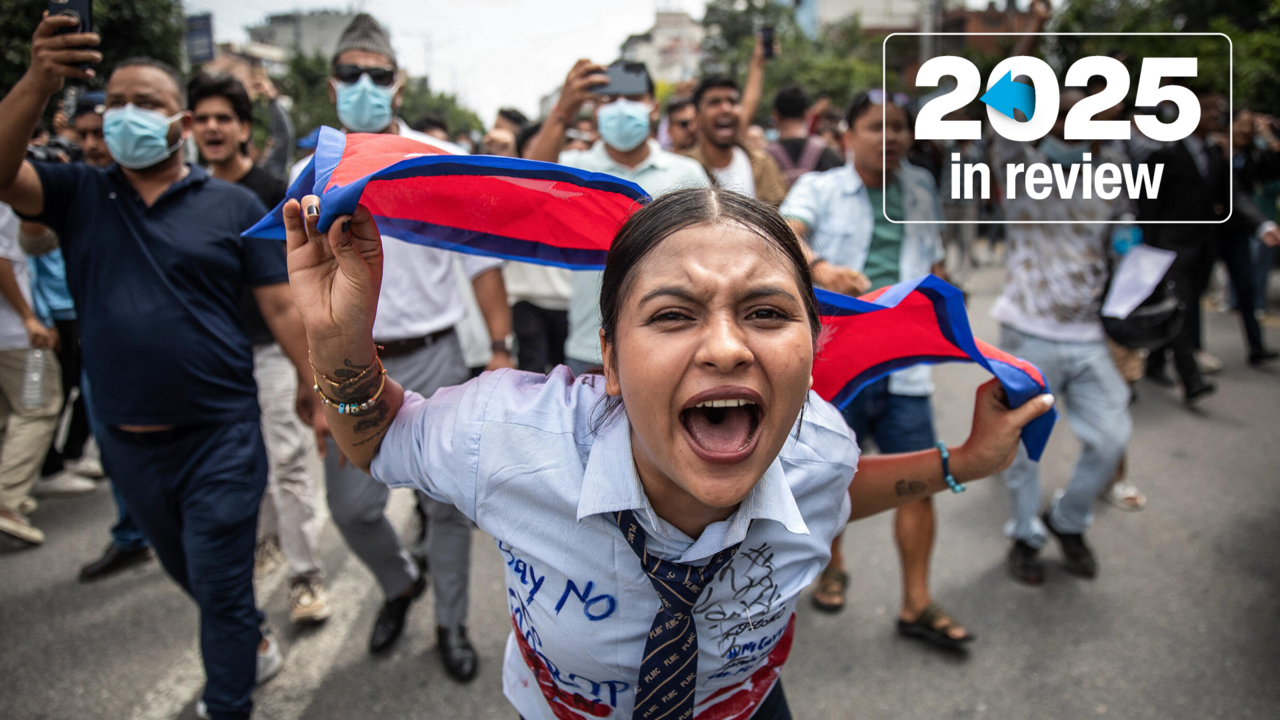
In September, the movement gained dramatic momentum in Nepal. Viral videos on Instagram and TikTok exposed the lavish lifestyles of “nepo-kids”, while the government blocked around twenty digital platforms.
Anger erupted in Kathmandu, where parliament was set on fire. For two days, the country was gripped by violent riots.
READ MORENepal's parliament burns as PM gives in to protesters' call to resign
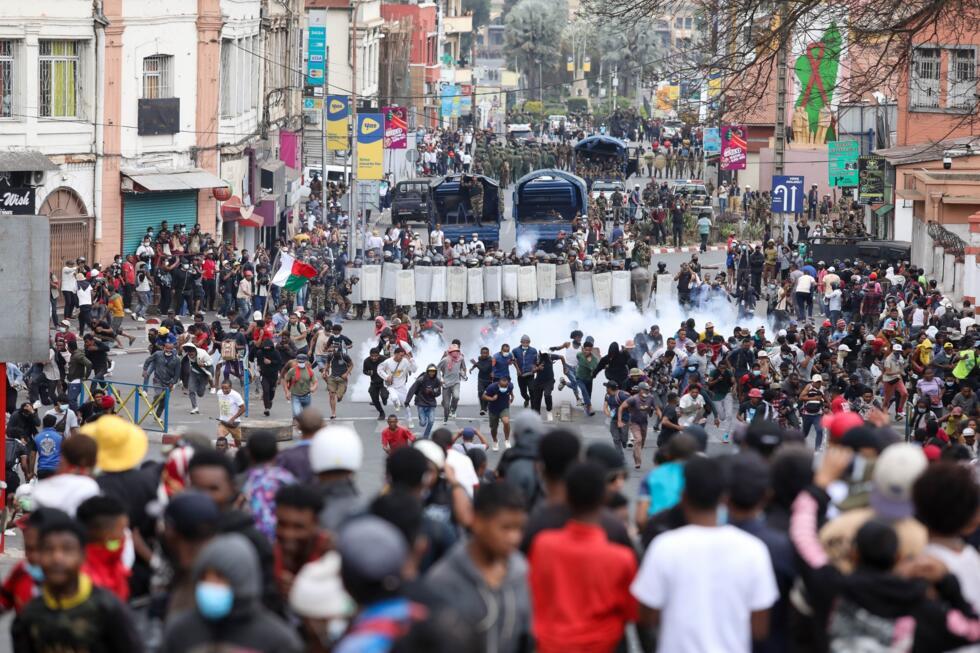
The shockwave then reached Africa. In Madagascar’s capital Antananarivo, youth-led protests no longer denounced only water and power cuts but also demanded the resignation of the president.
"We are not asking for luxury, just the means to live with dignity," demonstrators chanted, many of them students or young precarious workers.
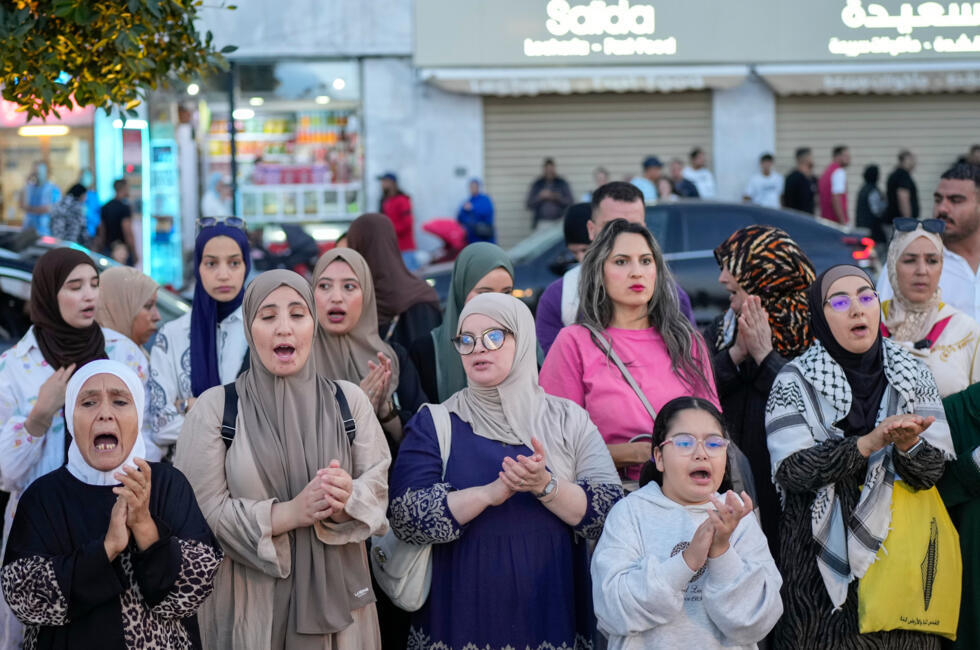
In Morocco, mobilisation took a different form. The Gen Z 212 collective – a reference to the country’s telephone code – organised on Discord, coordinating calls to demonstrate and pushing its priorities, including school reform, access to healthcare and social justice.
On the American continent, Peruvian youth mobilised from Lima to Cusco against political instability, corruption and record levels of insecurity.
READ MOREPeru to impose state of emergency in Lima after Gen Z protests turn deadly
While demands differed, the broader context was similar.
"These are countries where democracy, if it exists, remains illiberal or weakly liberal," Wieviorka said. "They are also more or less authoritarian regimes, where power responds with repression, fuelling a spiral of violence."
The toll was heavy: a dozen people were killed in Indonesia, at least three in Morocco and five in Madagascar. In Nepal, at least 76 people died and more than 2,000 were injured, according to police.
By: Barbara GABEL
In this file photo, a demonstrator shouts slogans during a protest outside the Parliament in Kathmandu Nepal on September 8, 2025. © Prabin Ranabhat, AFP
Across continents and cultures, young people faced very different daily realities, from experiencing insecurity in Lima to living with rolling power cuts in Antananarivo. Yet in 2025, one experience brought them together: protests. Generation Z – born between the late 1990s and early 2010s – shared frustration and anger at elites seen as out of touch, and a determination to be heard.
Across countries separated by thousands of kilometres, similar scenes unfolded, featuring young crowds, hand-painted placards, viral slogans born on platforms like TikTok or Discord and simple demands.
"This is a generation that is not acting only for itself, but so that everyone has access to education, healthcare and housing, and to put an end to corruption in power," said sociologist Michel Wieviorka, director of studies at the School for Advanced Studies in the Social Sciences (EHESS). “It is a protest driven by universal values.”
Gen Z: How social media fuel this generation's global revolt
Across continents and cultures, young people faced very different daily realities, from experiencing insecurity in Lima to living with rolling power cuts in Antananarivo. Yet in 2025, one experience brought them together: protests. Generation Z – born between the late 1990s and early 2010s – shared frustration and anger at elites seen as out of touch, and a determination to be heard.
Across countries separated by thousands of kilometres, similar scenes unfolded, featuring young crowds, hand-painted placards, viral slogans born on platforms like TikTok or Discord and simple demands.
"This is a generation that is not acting only for itself, but so that everyone has access to education, healthcare and housing, and to put an end to corruption in power," said sociologist Michel Wieviorka, director of studies at the School for Advanced Studies in the Social Sciences (EHESS). “It is a protest driven by universal values.”
Gen Z: How social media fuel this generation's global revolt
EN Gen Z thumbnail © France 24
02:18
02:18
A contagion effect
The movement began in Indonesia at the end of the summer. In Jakarta, the announcement of housing allowances for MPs – nearly ten times the minimum wage – acted as a trigger, prompting students to take to the streets.
One symbol quickly emerged from the marches: the pirate flag from the world’s best-selling manga, "One Piece", which became the emblem of the Gen Z revolt.
In September, the movement gained dramatic momentum in Nepal. Viral videos on Instagram and TikTok exposed the lavish lifestyles of “nepo-kids”, while the government blocked around twenty digital platforms.
Anger erupted in Kathmandu, where parliament was set on fire. For two days, the country was gripped by violent riots.
READ MORENepal's parliament burns as PM gives in to protesters' call to resign
The shockwave then reached Africa. In Madagascar’s capital Antananarivo, youth-led protests no longer denounced only water and power cuts but also demanded the resignation of the president.
"We are not asking for luxury, just the means to live with dignity," demonstrators chanted, many of them students or young precarious workers.
In Morocco, mobilisation took a different form. The Gen Z 212 collective – a reference to the country’s telephone code – organised on Discord, coordinating calls to demonstrate and pushing its priorities, including school reform, access to healthcare and social justice.
On the American continent, Peruvian youth mobilised from Lima to Cusco against political instability, corruption and record levels of insecurity.
READ MOREPeru to impose state of emergency in Lima after Gen Z protests turn deadly
While demands differed, the broader context was similar.
"These are countries where democracy, if it exists, remains illiberal or weakly liberal," Wieviorka said. "They are also more or less authoritarian regimes, where power responds with repression, fuelling a spiral of violence."
The toll was heavy: a dozen people were killed in Indonesia, at least three in Morocco and five in Madagascar. In Nepal, at least 76 people died and more than 2,000 were injured, according to police.
This file photo shows demonstrators protesting against chronic electricity and water cuts confront riot police in Antananarivo, Madagascar, on September 30, 2025. © Mamyrael, AP
Victories and disappointments
Despite repression, Generation Z made gains. In Nepal, the protest movement led to the fall of the government.
In an unprecedented move, an interim prime minister – former Supreme Court chief justice Sushila Karki – was appointed following a vote organised on Discord.
A commission of inquiry was tasked with shedding light on the deaths of protesters.
For Nepal’s youth, this marked a victory: for the first time, a mobilisation born online and on the streets resulted in a tangible political transition.
In Madagascar, the outcome left a bitter taste. After several weeks of demonstrations, President Andry Rajoelina was overthrown in a military coup.
READ MOREWho is Michael Randrianirina, the colonel who toppled Madagascar's president?
The government that followed, however, remained in the hands of a familiar actor in the country’s political life: the army.
"The military hijacked a protest that had failed to constitute itself as a political force," Wieviorka said.
In Morocco, the protest did not shake the monarchy but forced the authorities to respond.
The royal cabinet announced modernisation measures and investments in hospitals and schools, implicitly acknowledging the legitimacy of the demands.
READ MOREMorocco vows social reforms after youth-led protests shake government
Repression nevertheless tempered the momentum. According to official figures, 1,473 young people remain detained, including 330 minors.
Lasting momentum or fleeting wave?
In Nepal, mobilisation has not subsided. Early legislative elections are scheduled for March 2026.
"We are in the second phase of the movement," protester Yujan Rajbhandari told AFP.
The focus has shifted to voter registration and the fight against corruption.
"We won’t stop," he said.
READ MOREAfter toppling a government, young Nepalis drive a new wave of voters and candidates
Elsewhere, the future remains uncertain.
"This movement can endure and produce lasting effects, or on the contrary, fade away as a whole," Wieviorka said. "There are no rules."
Victories and disappointments
Despite repression, Generation Z made gains. In Nepal, the protest movement led to the fall of the government.
In an unprecedented move, an interim prime minister – former Supreme Court chief justice Sushila Karki – was appointed following a vote organised on Discord.
A commission of inquiry was tasked with shedding light on the deaths of protesters.
For Nepal’s youth, this marked a victory: for the first time, a mobilisation born online and on the streets resulted in a tangible political transition.
In Madagascar, the outcome left a bitter taste. After several weeks of demonstrations, President Andry Rajoelina was overthrown in a military coup.
READ MOREWho is Michael Randrianirina, the colonel who toppled Madagascar's president?
The government that followed, however, remained in the hands of a familiar actor in the country’s political life: the army.
"The military hijacked a protest that had failed to constitute itself as a political force," Wieviorka said.
In Morocco, the protest did not shake the monarchy but forced the authorities to respond.
The royal cabinet announced modernisation measures and investments in hospitals and schools, implicitly acknowledging the legitimacy of the demands.
READ MOREMorocco vows social reforms after youth-led protests shake government
Repression nevertheless tempered the momentum. According to official figures, 1,473 young people remain detained, including 330 minors.
Lasting momentum or fleeting wave?
In Nepal, mobilisation has not subsided. Early legislative elections are scheduled for March 2026.
"We are in the second phase of the movement," protester Yujan Rajbhandari told AFP.
The focus has shifted to voter registration and the fight against corruption.
"We won’t stop," he said.
READ MOREAfter toppling a government, young Nepalis drive a new wave of voters and candidates
Elsewhere, the future remains uncertain.
"This movement can endure and produce lasting effects, or on the contrary, fade away as a whole," Wieviorka said. "There are no rules."
People take part in a youth-led protest calling for education and healthcare reforms, in Tangier, Morocco on October 18, 2025. © Mosa'ab Elshamy, AP
Recent history urges caution. From the Arab Spring to Spain’s “indignados”, from Occupy Wall Street to France’s Nuit debout, movements have emerged, lost momentum and sometimes left lasting traces, sometimes not.
"Social movements are not eternal," Wieviorka said.
One feature nevertheless distinguishes Generation Z: its ability to organise, impose its themes and extract concessions without immediately seeking to take power.
"They do not have a fully formed political platform,” Wieviorka said. “But they do have a clear horizon: that of profound change."
This article was translated from the original in French by Anaëlle Jonah.
Recent history urges caution. From the Arab Spring to Spain’s “indignados”, from Occupy Wall Street to France’s Nuit debout, movements have emerged, lost momentum and sometimes left lasting traces, sometimes not.
"Social movements are not eternal," Wieviorka said.
One feature nevertheless distinguishes Generation Z: its ability to organise, impose its themes and extract concessions without immediately seeking to take power.
"They do not have a fully formed political platform,” Wieviorka said. “But they do have a clear horizon: that of profound change."
This article was translated from the original in French by Anaëlle Jonah.


No comments:
Post a Comment