Saturday, February 08, 2020

Scientists reveal whole new world of chemistry by stepping indoors

WHEN YOU SMELL BLEACH IT AIN'T CLEAN ITS CHLORINE
INDOOR ENVIRONMENTAL AIR QUALITY IS KEY TO HEALTHY CLEANING
USE VIROX INSTEAD (ACTIVATED HYDROGEN PEROXIDE)

Scientists reveal whole new world of chemistry by stepping indoors

Scientists reveal whole new world of chemistry by stepping indoors
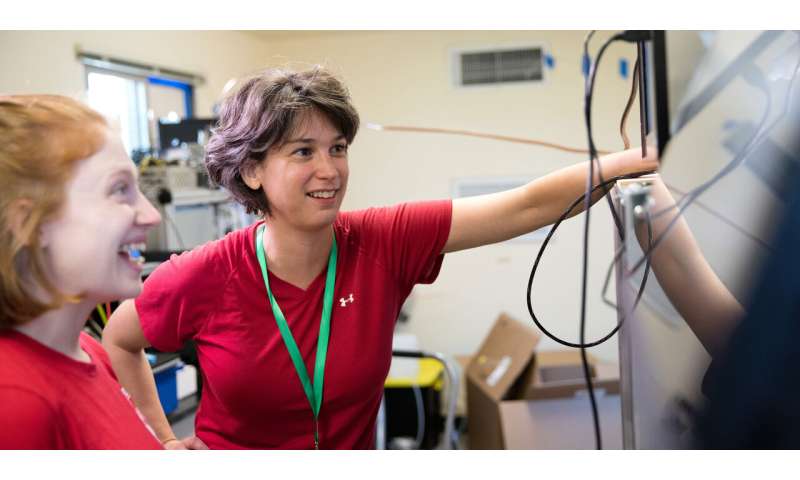
HOMEChem lead researcher Delphine Farmer, right, and graduate student Erin Boedicker, look at a droplet-measurement instrument. Credit: Callie Richmond
Colorado State University atmospheric chemist Delphine Farmer had spent her entire career probing the complexities of outdoor air—how gases and particles in the atmosphere move, interact and change, and how human activities perturb the air we breathe.


Then, she went inside.
That is, the Department of Chemistry associate professor turned her attention to the less-studied realm of indoor air. And she's come to discover that the  inside can be vastly more complex than that of outdoor air systems.
More than two years ago, Farmer and over 60 collaborators from 13 universities set in motion a first-of-its-kind experiment attempting to map the airborne chemistry of a typical home, subjected to typical home activities like cooking and cleaning. The effort was dubbed HOMEChem—House Observations of Microbial and Environmental Chemistry—and was led by Farmer and Marina Vance, a mechanical engineer at University of Colorado Boulder.
Now, as the team sifts through the reams of data they collected, Farmer and her CSU research team have published their first major study from HOMEChem. The paper, appearing in Environmental Science and Technology, reports what they learned about chemical reactions that occurred while mopping floors with a common bleach solution.
On HOMEChem, her first foray into indoor chemistry, Farmer "became a convert when I heard the statistic that we spend 90 percent of our lives indoors."
"It's puzzling, really, that all our health outcomes are tied to outdoor air," Farmer said. "It made me curious as a scientist when I realized just how little we know about chemistry indoors."
Her team of graduate students and postdocs is now busy crunching more data and compiling potential follow-up studies.
In the Test House
Backed by $1.1 million from the Sloan Foundation's Chemistry of Indoor Environments program, the HOMEChem team descended on the perfect location for their experiments: the Test House at University of Texas at Austin, a full-size, manufactured "home" that serves as a kind of blank slate for scientific experiments. The team occupied the house for most of June 2018, simulating activities in an average Western home. Their efforts are detailed in an overview paper in Environmental Science: Processes & Impacts.
Their experimental run-of-show, which read very much like a family chore list, included things like cooking vegetable stir-fry, scrubbing surfaces with household products, and wet-mopping floors. One session was even dedicated to cooking a typical Thanksgiving meal while recording resulting emissions. All this, while operating hundreds of thousands of dollars' worth of sensitive equipment that could detect everything in the air from single-nanometer particles, to hundreds of different volatile organic compounds.
Farmer's team from CSU included graduate students Jimmy Mattila, Matson Pothier and Erin Boedicker, and postdoctoral researchers Yong Zhou and Andy Abeleira. The team deployed 12 separate instruments for tracking three broad categories of compounds: organics, oxidants and particles. Postdoctoral researcher and data scientist Anna Hodshire recently joined Farmer's team and will be responsible for managing the large datasets the researchers gathered over the course of HOMEChem.
Scientists reveal whole new world of chemistry by stepping indoors
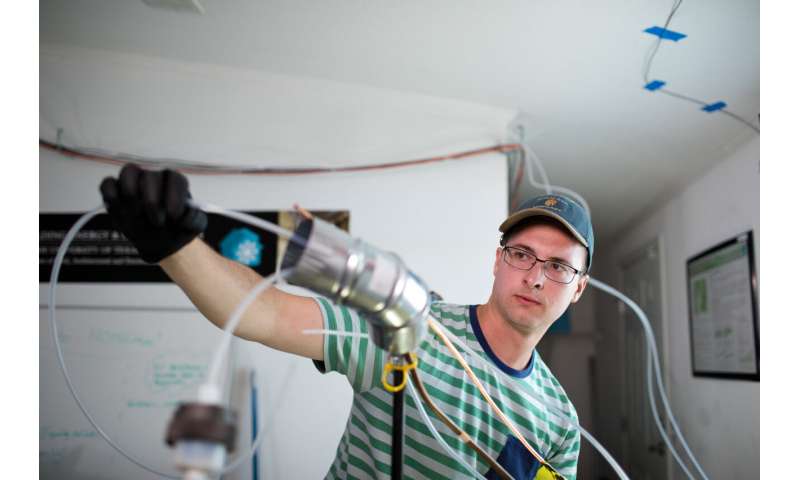
Graduate student HOMEChem researcher Jimmy Mattila with the inlet setup for a chemical ionization mass spectrometer. Credit: Colorado State University
Bleach cleaning results
For the bleach-cleaning study, Farmer's team recorded the airborne and aqueous chemistry from several consecutive days of mopping a floor with bleach, diluted to manufacturer's specifications. On some days, they also observed how that chemistry was affected when floors were mopped following a cooking session.
According to the paper, the researchers observed sharp, albeit short-lived, spikes in hypochlorous acid, chlorine and nitryl chloride in the air, which are compounds more typically associated, at lower levels, with the outdoor air of coastal cities.
Mattila, the paper's first author and graduate student who operated a chemical ionization mass spectrometer during HOMEChem, said the team was surprised to learn that multi-phase chemistry—not just the gas phase—controls the production and removal of inorganic compounds in the air during bleach cleaning. The bleach in the mop water, applied to the floor, would react with the molecules in the house's surfaces and walls to create new compounds. It turns out such surfaces—and the layer of muck many homes accumulate from years of living—can act as reservoirs for a wide variety of acidic and basic molecules that can then interact with substances like bleach.
"You would intuitively think that since we're making these fumes in the air, and there's other stuff in the air, they're probably just reacting," Mattila said. "It turns out that indoor multiphase chemistry, in the bleach solution and on various indoor surfaces, is what's actually driving the observations."
The group collaborated with scientists at UC Irvine to develop a model for understanding how the aqueous and surface molecules lead to secondary chemistry.
When they mopped after cooking, they also observed interactions of nitrogen and ammonia emissions from the food with the cleaning products. They saw low levels of chloramines, considered harmful to human health, which are made when chlorine mixes with ammonia. Humans also breathe out trace amounts of ammonia.
"If you look on any bottle of bleach, you'll see a serious warning not to mix chlorine and ammonia, because it will make a dangerous set of compounds called chloramines," Farmer said. "What we found is there was enough ambient ammonia to still make some of these compounds, even without mixing them. Not to the point where it was dangerous, but it was interesting to see that chemistry happening."
An obvious takeaway from the researchers: When cleaning with bleach, open a window or use a fan to increase ventilation. And always appropriately dilute the solution; cleaning with straight bleach could create dangerous breathable compounds, depending on what else is in the air or on the walls.
A baseline for future studies
The entire HOMEChem experiment was unprecedented in its scope. The study is an attempt at establishing a baseline understanding of what a person at home, doing typical home activities, can expect to be breathing. Among the key takeaways from the experiments as a whole was that combining different indoor activities leads to very different chemistry in the house.
"For example, we see that cleaning with bleach after you clean indoors with a terpene solution, like Pine Sol, can actually lead to some chemistry you wouldn't normally see with bleach alone," Mattila said. "That was kind of unexpected, and could be potentially harmful, because it could lead to the production of secondary organic aerosols."
HOMEChem was a measurement experiment and did not involve epidemiologists. The researchers believe their data will serve as a useful starting point for inquiries into human health outcomes tied to indoor air environments.


Explore further
Cleaning with bleach could create indoor air pollutants

More information: James M. Mattila et al, Multiphase Chemistry Controls Inorganic Chlorinated and Nitrogenated Compounds in Indoor Air during Bleach Cleaning, Environmental Science & Technology (2020). DOI: 10.1021/acs.est.9b05767

Majority of US adults believe climate change is most important issue today

Majority of US adults believe climate change is most important issue today
Infographic: Majority of U.S. Adults believe climate change is most important issue today. Credit: American Psychological Association
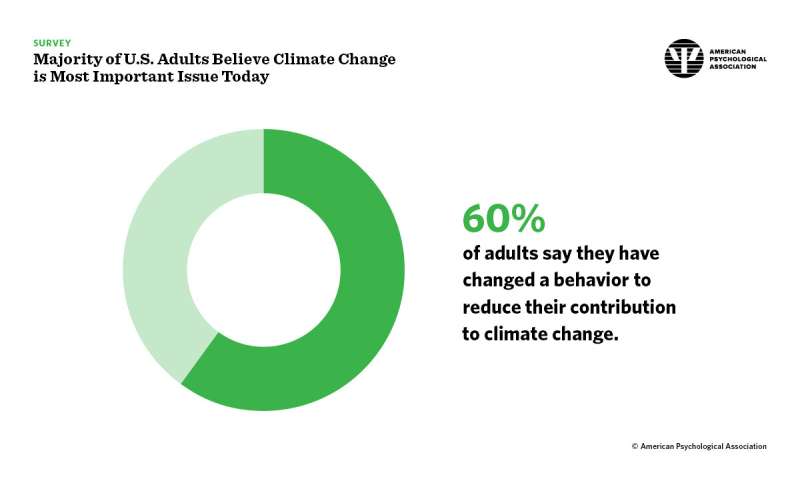
As the effects of climate change become more evident, more than half of U.S. adults (56%) say climate change is the most important issue facing society today, yet 4 in 10 have not made any changes in their behavior to reduce their contribution to climate change, according to a new poll by the American Psychological Association.
While 7 in 10 say they wish there were more they could do to combat , 51% of U.S. adults say they don't know where to start. And as the election race heats up, 62% say they are willing to vote for a candidate because of his or her position on  change.
The survey was conducted online from Dec. 12-16, 2019, by The Harris Poll on behalf of the American Psychological Association.
People are taking some steps to combat climate change, with 6 in 10 saying they have changed a behavior to reduce their contribution to climate change. Nearly three-quarters (72%) say they are very or somewhat motivated to make changes.
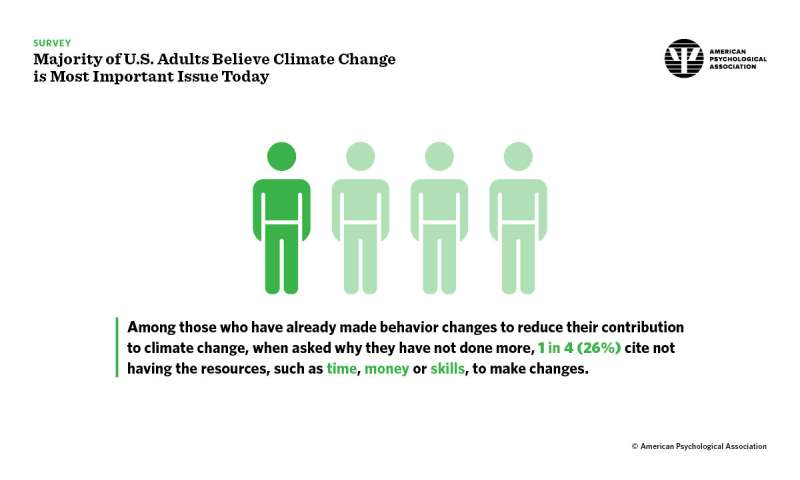
Among those who have already made behavior changes to reduce their contribution to climate change, when asked why they have not done more, 1 in 4 (26%) cite not having the resources, such as time, money or skills, to make changes. Some people are unwilling to make any changes in their behavior to reduce their contribution to climate change. When those who have not changed their behavior were asked if anything would motivate them to reduce their contribution to climate change, 29% said nothing would motivate them to do so.
Majority of US adults believe climate change is most important issue today
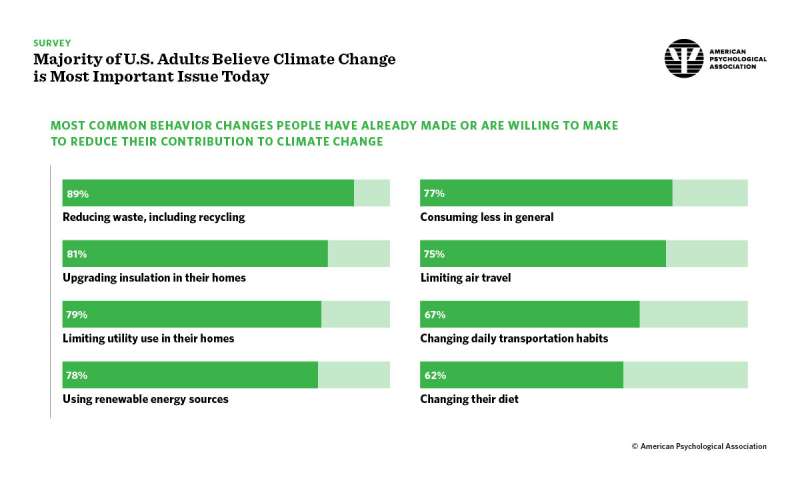
Infographic: Most common behavioral changes people have made or are willing to make to reduce their contribution to climate change. Credit: American Psychological Association
Concern about climate change may be having an impact on , with more than two-thirds of adults (68%) saying that they have at least a little "eco-anxiety," defined as any anxiety or worry about climate change and its effects. These effects may be disproportionately having an impact on the country's youngest adults; nearly half of those age 18-34 (47%) say the stress they feel about climate change affects their daily lives.
"The health, economic, political and environmental implications of climate change affect all of us. The tolls on our mental health are far reaching," said Arthur C. Evans Jr., Ph.D., APA's chief executive officer. "As climate change is created largely by , psychologists are continuing to study ways in which we can encourage people to make —both large and small—so that collectively we can help our planet."
Psychological research shows us that when people learn about and experience local climate impacts, their understanding of the effects of climate change increases. A quarter of those who have not yet made a behavior change to reduce their contribution to climate change say personally experiencing environmental impacts of climate change (e.g., ) (25%) or seeing environmental impacts of climate change in their community (24%) would make them want to try to reduce their contribution to climate change.
Majority of US adults believe climate change is most important issue today
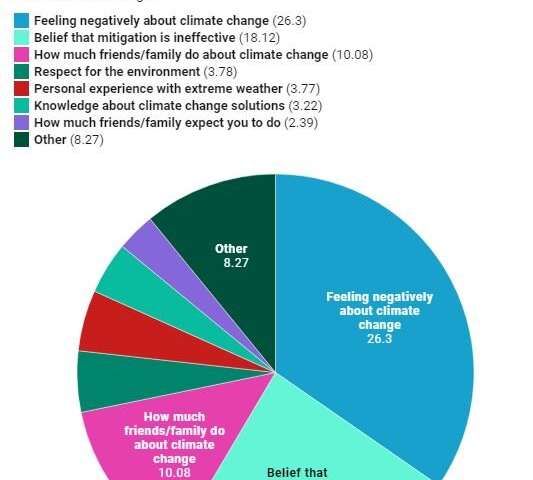
Infographic: Reasons people report for not doing more to address climate change Credit: American Psychological Association
The most common behavior changes people have already made or are willing to make include: reducing waste, including recycling (89%); upgrading insulation in their homes (81%); limiting utility use in their homes (79%); using , such as solar panels or purchasing electricity from a renewable energy supplier (78%); consuming less in general (77%); or limiting air travel (75%).
Adults are less likely to say they have changed or are willing to change daily transportation habits (e.g., carpool, drive an electric or hybrid vehicle, use public transportation, walk or bike) (67%) or their diet (e.g., eat less red meat or switch to a vegetarian or vegan diet) (62%).
A majority (70%) also say that they have already or are willing to take action such as working with their community to reduce emissions, for example by installing bike paths, hosting farmers markets, or using community . And nearly 6 in 10 (57%) say that they have already or are willing to write or lobby elected officials about climate change action with a similar proportion (57%) saying they already have or are willing to join an organization or committee working on climate change action.
The most common motivations for behavior changes among those who have taken action to reduce their contribution to climate change are wanting to preserve the planet for future generations (52%), followed by hearing about climate change and its impacts in the news (43%).
Scientists seek urgent action on impacts of climate change on reptiles and amphibians

Multiple eco-crises could trigger 'systemic collapse': scientists

Scientists worry especially that rising temperatures could tip the planet's climate system into a self-perpetuating spiral of gl
Scientists worry especially that rising temperatures could tip the planet's climate system into a self-perpetuating spiral of global warming
Overlapping environmental crises could tip the planet into "global systemic collapse," more than 200 top scientists warned Wednesday.
Climate change, extreme weather events from hurricanes to heatwaves, the decline of life-sustaining ecosystems,  and dwindling stores of fresh water—each poses a monumental challenge to humanity in the 21st century.
Out of 30 global-scale risks, these five topped the list both in terms of likelihood and impact, according to scientists surveyed by Future Earth, an international research organisation.
In combination, they "have the potential to impact and amplify one another in ways that might cascade to create global systemic collapse," a team led by Maria Ivanova, a professor at the Center for Governance and Sustainability at the University of Massachusetts, said in a 50-page report.
Extreme heat waves, for example, speed  by releasing planet-warming gases from , even as they intensify water crises and food scarcity.
Biodiversity loss, meanwhile, weakens the capacity of natural and agricultural systems to cope with climate extremes, also putting food supplies at risk.
Scientists worry especially that rising temperatures could tip the planet's climate system into a self-perpetuating spiral of global warming.
As it is, humanity is struggling—so far unsuccessfully—to cap CO2 and , mostly from burning fossil fuels.
If at the same time a warming Earth also begins to emit large amounts of these gases from, say, thawing permafrost, such efforts could be overwhelmed.
Heat waves are a direct threat to human live and can cause food shortages as well
"Many scientists and policymakers are embedded in institutions that are used to thinking and acting on isolated risks, one at a time," the report said.
"We call on the world's academics, business leaders and  to pay attention to these five global risks and ensure they are treated as interacting systems."
Nearly 1,000 decision makers and top CEOs highlighted the same threats in a similar survey last month ahead of the World Economic Forum meeting in Davos, Switzerland.
"2020 is a critical time to look at these issues," said Amy Luers, Executive Director of Future Earth.
"Our actions in the next decade will determine our collective future."
Far West free-for-all
In October, the world's nations are set to gather for a major United Nations meeting in Kunming, China to try to stanch the destruction of ecosystems and the decline of biodiversity.
Scientists agree that Earth is at the outset of a mass extinction event—only the 6th in half-a-billion years—which could drive a million species, or one-in-eight, into oblivion over the coming decades or centuries.
The following month, a critical UN climate summit in Glasgow will reveal whether the world's major economies are willing to ramp up carbon cutting pledges that fall far short of what is needed to keep the planet hospitable for our species.
In the future, humanity will face the devastating combined impacts of multiple interacting climate hazards
2020 is also a critical year in ongoing negotiations over the high seas, where a Far West free-for-all has led to overfishing and unrestrained resource extraction.
Some scientists have begun to look at the likelihood and impacts of cascading environmental crises.
Recent research has shown, for example, that some parts of the world may soon be coping with up to six  at once, ranging from heat waves and wildfires to diluvian rains and deadly storm surges.
"Human society will be faced with the devastating combined impacts of multiple interacting climate hazards," Erik Franklin, a researcher at the University of Hawaii's Institute of Marine Biology and co-author of a key study in late 2018, told AFP.
"They are happening now and will continue to get worse."
That is true even in optimistic emissions reduction scenarios.
If, for example, humanity caps global warming at two degrees Celsius (3.6 degrees Fahrenheit) above preindustrial levels, New York City will likely face one major climate hazard every year, on average, by 2100.
The 2015 Paris climate treaty calls for holding the rise in temperature to "well below" 2C.
If, however, carbon pollution continues unabated, the Big Apple could be hit by up to four such calamities at once, including extreme rain, sea level rise and storm surges.
In all such scenarios, tropical coastal areas suffer the most.
Climate change could turn oceans from friend to foe, UN report warns

A study shows growth trends in female homicide victims in Spain spanning over a century

spain
Credit: CC0 Public Domain
In a groundbreaking study, research carried out between the Universitat Oberta de Catalunya (UOC) and the University of Lausanne (UNIL, Switzerland) has compiled data on homicide victims in Spain, disaggregated by gender, from 1910 to 2014. Unlike previous studies, which have focused on particular regions of the country or shorter time periods, this study gathers and analyses data corresponding to more than a century in Spain. Although it takes a look at both male and female victimization, the analysis has centred particularly on female victims. Among its most salient results, the analysis shows an increase in female homicide victims starting in the 1960s and associates it with the evolution of women's role and status in society.
The study "Female Homicide Victimization in Spain from 1910 to 2014: the Price of Equality?", published in the European Journal on Criminal Policy and Research, is the work of Antonia Linde, director of the UOC Bachelor's Degree in Criminology. Linde studied the documentation in depth and analysed the trends in female homicide victimization, irrespective of the gender of the perpetrator. In other words, the data used include women who have been victims of homicides committed by both men and women. "This is because there are no public data available on female homicide victims in which the perpetrator's sex is specified until the late 1990s," said the researcher.
Female homicide mortality does not follow a steady line over the century; the study identifies an upward trend starting in the 1960s. It was in this decade that women's daily routines started a process of rapid change. Women began to spend more time out of the home, either studying or working, and remained single and childless until later ages. And it is also from this decade that the likelihood of becoming homicide victims increases. "These new activities would have increased their exposure to the risk of victimization (they spend more time out of the home, they interact with more people, etc)", Linde pointed out.
Evolution of women's role and status in Spain
The study reveals associations between the evolution of female homicide victims and six indicators of women's role and social status in Spain: enrolment in higher education, entry in the job market, average age when the first child is born, marriage, divorce and abortion.
The data reveal that, starting in the 1960s, the number of women enrolled in higher education institutions increased very significantly. In 1915-1916, women accounted for 2% of the total student population; by the early 1960s, this percentage had increased to 25% and, from the 1980s onwards, there were more female students than male students. In addition, the number of marriages fell 50% during the period analysed (from 7 marriages per 1,000 inhabitants in 1910 to 3.4 in 2014).
The other indicators, although available for shorter time periods, also confirmed women's transition from traditional to non-traditional roles. There were more divorces (between 1982 and 2014, the number of divorces per 100 marriages increased six-fold) and abortions (in 1990, there were 4 abortions per 1,000 women—in the 15-44 age group—and 10.5 in 2014), women's presence in the job market grew (in 1976, there were 2.7 men working for every woman but only 1.2 men for every woman in 2014) and women were older when they had their first child (the average age was 25 in 1975 and 31 in 2014).
The behaviour of mortality is different in men and women
During the century analysed, the overall trend in the number of homicide victims followed the trend in the number of male homicide . However, when the number of murdered women was compared with the overall trend, the two did not track each other so closely. "Male and female victimization followed different trends during several periods. This gives a variable gender gap in homicide victimization in Spain over time," Linde remarked.
The ratio between male and female  narrowed between the early 20th century and the early 21st century. In the 1910s, 7-9 men were killed for every woman, in the late 1960s, it fell to 2.7 men for every women and, in the early 2010s, it was less than 2 men per woman.
Another noteworthy result is that, while male victimization decreased after the mid-1980s, female victimization increased. "This is interesting because during this period most countries in our region show a decrease in  victimization in general after the 1960s, including female victimization," the expert underscored.
Before the 1960s
The study shows that there is an increase in the number of  who were killed during the 1910s, a drop during the 1920s and a spike during the 1930s, up until the Spanish Civil War. After the war, homicides fell steadily until they reached their lowest ever values in the early 1960s. "The analysis shows a consistent  from the early 20th century, with dips during the two dictatorships that ruled the country between 1923 and 1930 and between 1939 and 1975. The lower death rates during these years are probably due to the restrictions on personal freedom," the researcher suggested.
To conclude, the article raises a considerable number of questions because many more analyses can be performed on the data compiled. "I have published these data now for reasons of research ethics, so that other colleagues can use them in future studies," Linde said.

Study shows acceleration of global mean ocean circulation since 1990s

**Study Shows Acceleration of Global Mean Ocean Circulation since 1990s
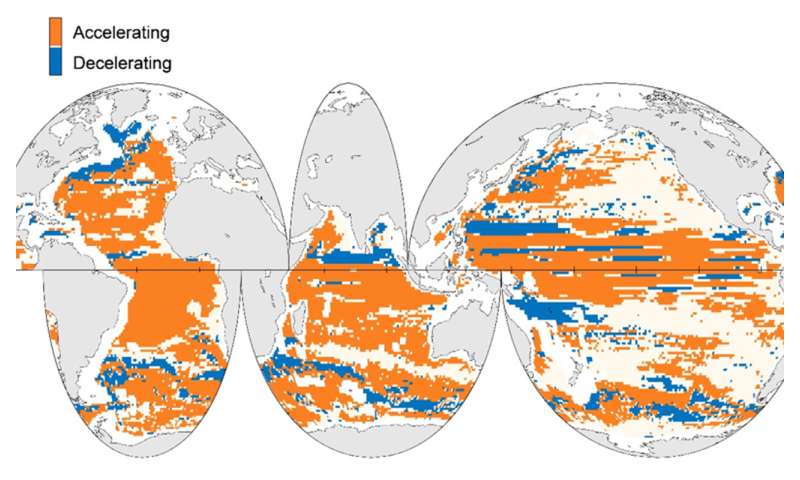
Areas of ocean shown in orange have experienced positive trends in kinetic energy in the past 30 years. Credit: Shijian Hu
A study published today in the journal Science Advances, suggests global ocean circulation has accelerated during the past two decades. The research team found that oceanic kinetic energy shows a statistically significant increase since early 1990s, calculating a 36-percent acceleration of global mean ocean circulation.
The trend is particularly prominent in the global tropical oceans, reaching depths of thousands of meters. The deep-reaching acceleration of the   is mainly induced by a planetary intensification of surface winds, authors said.
The study was led by Shijian Hu, who performed the work as a postdoctoral researcher in the laboratory of Janet Sprintall, an oceanographer at Scripps Institution of Oceanography at the University of California San Diego who is a co-author of the paper. Hu is now a scientist at the CAS Key Laboratory of Ocean Circulation and Waves, at the Institute of Oceanology (IOCAS) in Qingdao, China.
"The magnitude and extent of the acceleration in  we detected throughout the global ocean and to 2000-meter (6,560 foot) depth was quite surprising," said Sprintall. "While we expected some response to the increased winds over the past two decades, that the acceleration was above and beyond that was an unexpected response that is likely due to global climate change."
Large-scale ocean circulation is the main dynamic process that redistributes ocean water mass and heat and plays an important role in Earth's environment and climate system. It regulates land temperatures, most notably in regions such as western Europe where a flow of relatively  makes the climate of cities such as Madrid warmer than cities such as New York, despite being at the same latitude.
Because of internal dynamic processes and natural variability, ocean circulation in different regions has different responses to global climate warming. And there is still a lack of systematic and continuous direct observations of the earth's ocean circulation. Hence circulation trends have not been well-understood, study authors said.
A growing body of evidence suggests, though, that continuous greenhouse gas emissions due to human activities give rise to Earth's energy imbalance and continuous ocean warming. Thus, it is essential to know what large-scale ocean circulation is going to be under the background of global warming, said study co-authors.
An international team of scientists from IOCAS, Scripps, NOAA and the Commonwealth Scientific and Industrial Research Organization in Australia used ocean circulation and wind speed data from multiple sources, including observations from the global Argo network of robotic floats and numerical simulations, to investigate global mean ocean circulation and global mean sea surface wind speed. They concluded that the recent acceleration is far greater than what would be explained by natural variability. The rest is induced by the influence of continuous greenhouse gas emissions.
The intensified surface winds since the early 1990s, the authors said, spurs ocean circulation. The acceleration may lead to enhanced heat and water mass transport, so additional energy would be redistributed more evenly and the water cycle in the ocean may be intensified as well. Heat in upper ocean layers may be transferred into the  more efficiently due to the deep reach of this acceleration. Further research is needed to explore the implications of this study, the authors said.
Atlantic Ocean may get a jump-start from the other side of the world

More information: https://advances.sciencemag.org/content/6/6/eaax7727 Shijian Hu et al. Deep-reaching acceleration of global mean ocean circulation over the past two decades, Science Advances (2020). DOI: 10.1126/sciadv.aax7727

Climate change denialism is something we all suffer from

Climate change denialism is something we all suffer from
The Australian bushfires 2019-20 are unprecedented and are strengthening calls for government action on climate change. Credit: Shutterstock
Climate change denialism is something that applies to more than just diehard non-believers, a UNSW Sydney researcher argues.
The unprecedented bushfire crisis has strengthened demand for government action on  and galvanized Australians to take to the streets protesting against the nation's reliance on fossil fuels.
Some Australians have taken more drastic action, such as actor Yael Stone who gave up the permanent right to work in the US.
But for many people, such action seems unrealistic.
"While we may know it is better for the environment to give up our car for public transport, stop using single-use plastics, or eat less meat—we do not always do all these things all the time.
"It's almost impossible to live with zero impact on the planet, but it's what we do when we recognize this that matters," Belinda Xie asserts.
The UNSW Scientia Ph.D. candidate specializes in cognitive science and researches the psychology of climate change.
"It's important that we acknowledge we are all climate deniers, to some extent, and then understand how and why we reached this point," Ms Xie said.
"It's not simply because humans are bad or selfish people: there are a lot of external factors out of our control, such as the information we consume that can encourage denialism, or the way our economy is set up.
"So, we then need to ask ourselves: how do we overcome this denialism—what action can we take as a community and what can government and business do?"
Ms Xie said psychologists' interest in  ramped up when climate scientist James E. Hansen told the US Senate in 1988 that the greenhouse effect had been detected and was changing the climate.
"Climate scientists have been doing their research and communicating it for many decades, but achieving behavioral change has been difficult," she said.
"So, psychologists have been trying to find out why—for example, psychologists discovered that emotions and shared values, not facts, more easily resonate with people.
"People also feel psychologically distant from climate change: they think it's not going to happen to them, it's going to happen in the future, or it's going to happen overseas.
"There has also been the emergence of mental health issues stemming from climate change which is another concern to psychologists."
The denialism spectrum
Ms Xie said researchers defined denialism as a "construct" in the context of climate change and environmental psychology.
"To know that something is real but to actively say it's not—that's denialism," she said. "Sociologist Stanley Cohen's well-known categorization system refers to three types of denial: Literal, Interpretive and Implicatory denial.
"Using climate change as an example, Literal denial is: 'the climate is not changing.' The second level, Interpretive denial, is: 'the climate is changing but it's not caused by humans.'"
"The last one, Implicatory denial, is: 'I accept the climate is changing and that humans are causing it, but whether we need to do anything about it is debatable.'"
Ms Xie said a famous study led by Yale University examined denialism in relation to people's climate change beliefs.
"The study identified six distinct groups of Americans on a spectrum from climate action to climate denialism, and found three subcategories of deniers," she said.
Climate change denialism is something we all suffer from
Survey conducted in 2016. Credit: UNSW Psychology
"The deniers were: Dismissive—global warming is not happening, Doubtful—I don't know if global warming is happening but I'm not concerned about it, and Disengaged—I don't know if global warming is happening but because I don't know enough, I could change my mind.
"Since the original study, the researchers have monitored the size of these six groups and found that most Americans now believe climate change is happening, while a minority remain in the denialist categories."
Factors behind denialism
Ms Xie said there were a multitude of psychological factors and motivations which contributed to climate denialism, from motivated reasoning, free-market ideology and social norms, to pluralistic ignorance and inefficacy.
"In motivated reasoning, you reach a conclusion first and then you interpret and seek out information that's consistent with that; for example, you might decide climate change is an obstacle to you enjoying your way of life, so in order to not worry about it you deny its existence," she said.
"There are also social factors and norms; so, if all your friends are denying something and you still want to be friends with them, then you will probably also deny it.
"Climate change is also a political issue—people affiliate with political parties, their people and policies—and there is a lot of institutional and systematic denial disseminated through fossil fuel companies and parts of the media, so all this information influences people's beliefs, even if they don't actively seek it."
Ms Xie said free market ideology was another key factor in climate change denialism.
"This concept is popular amongst people who are politically conservative: the belief that free markets should be left to function without government intervention," she said.
"If people believe in free market ideology, it's more difficult for them to accept climate action, such as government carbon emissions policies."
The idea of "pluralistic ignorance" was a further important factor in denialism, Ms Xie said.
"This is where a majority of people think their beliefs are in the minority, while a vocal minority thinks their beliefs reflect the majority," she said.
"For example, climate deniers have loud voices that are publicised through a host of major media outlets.
"But, according to many surveys and pollsmost Australians accept that climate change is happening and underestimate the rate at which they think other Australians also believe the same thing."
Ms Xie said that as a result, many Australians could feel uncomfortable expressing their climate change views without knowing their views are, in fact, popular.
"In the case of climate change then, it could well be that the so-called 'quiet Australians' are those who support climate action," she said.
Recognising climate denialism
Ms Xie said it was important to recognise that we are all on the spectrum of climate denialism.
"The alternative, to be constantly thinking about and acting on the climate crisis, would be debilitating," she said.
"We are all hypocrites to some extent, including the celebrities who signed the controversial letter supporting environmental group Extinction Rebellion.
"The letter acknowledged the undersigned were hypocrites for wanting climate action while leading high emissions lifestyles."
Ms Xie said the letter showed how denial could be one contributor to people continuing their high emissions lifestyles.
Climate change denialism is something we all suffer from
Extreme weather events in Australia, such as floods, heighten calls for the government to take action to mitigate climate change. Credit: Shutterstock
"There are, however, a lot of other obstacles discouraging people from taking action," she said.
"In behavior change psychology there's a spectrum of activity: risk perception leading to behavioural intention, leading to actual behavior.
"For example, you think climate change is a problem, you plan to do something about climate change and then you take action."
Ms Xie's research on predicting climate change risk perception and willingness to act was published in the Journal of Environmental Psychology last year.
"In the context of promoting climate mitigation, we proposed behavioral willingness as a more important outcome variable than risk perception," she said.
"We noted, however, that behavioral willingness is ultimately different from actual behavior.
"So, by identifying how much other factors influence behavioral willingness and actual behavior, researchers will be better positioned to advise policymakers and communicators on how to increase climate action."
Overcoming climate denialism
Ms Xie said it was a challenge to live without having an impact on the environment and even she could be a denier at times.
"I sometimes deny it in order to live, for example, I felt terrible taking a plane trip back home for Christmas, but I denied it to keep on living," she said.
"Australia is a wealthy nation with high emissions, so it's difficult to live here without being some sort of hypocrite and engaging in action that involves emissions.
"For a modern society to function there will be some denial involved."
Ms Xie said it was important to recognize this and take action to move beyond our own climate denialism and then urge others to do the same.
"It could be as simple as starting a conversation with friends and family, writing to MPs, donating to a climate action organization, or becoming a more environmentally conscious consumer," she said.
"You might even attend a rally—we argued that striking to support climate action can promote the psychological factors most important for fighting climate change.
"Based on our research, decreasing inefficacy—the belief that "I can't make a difference' – and promoting social norms, are some of the most effective ways to encourage action on climate."
Ms Xie said appealing to emotions and shared values was also key to fostering action, because researchers in psychology agreed that facts were not always a good strategy for changing minds.
"For example, even if you provide people with the facts about climate change, not everyone is going to interpret them in the way that you intend," she said.
"So, there is an increasing focus on engaging people's values through interesting stories and having those stories told through diverse sources to encourage connections and ultimately, action on climate.
"Making behavioral change at an individual level is important, but it's just as important for the people and institutions at the top to inspire and implement change for the good of our planet and future generations."
Belinda Xie's research paper, "Predicting  change risk perception and willingness to act," is available in the Journal of Environmental Psychology.
Majority of US adults believe climate change is most important issue today

More information: Belinda Xie et al. Predicting climate change risk perception and willingness to act, Journal of Environmental Psychology (2019). DOI: 10.1016/j.jenvp.2019.101331

Next generation of greenhouses may be fully solar powered

Next generation of greenhouses may be fully solar powered
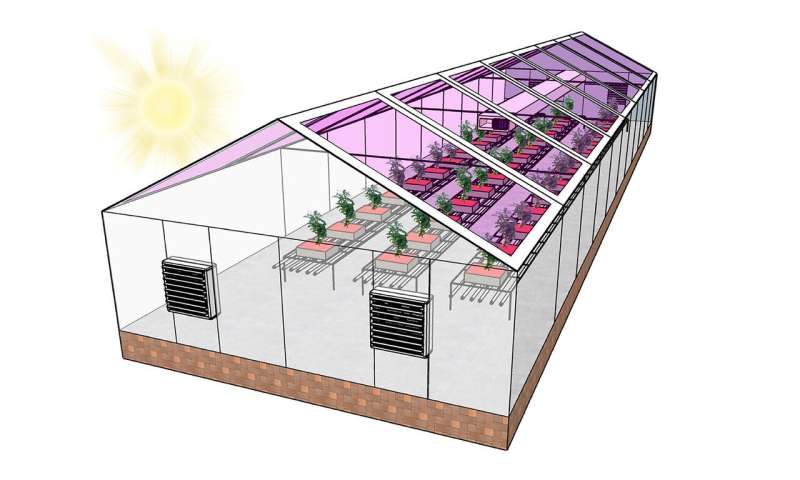
Credit: North Carolina State University
Many greenhouses could become energy neutral by using see-through solar panels to harvest energy—primarily from the wavelengths of light that plants don't use for photosynthesis. Those are the findings of a new modeling study conducted by engineering, plant biology and physics researchers at North Carolina State University.
"Plants only use some wavelengths of light for photosynthesis, and the idea is to create greenhouses that make energy from that unused light while allowing most of the photosynthetic band of light to pass through," says Brendan O'Connor, corresponding author of the study and an associate professor of mechanical and aerospace engineering at NC State. "We're able to do this by using organic , because they allow us to tune the spectrum of light that the solar cell absorbs—so we can focus on using mostly  that plants don't use. However, until now it wasn't clear how much energy a greenhouse could capture if it was using these semitransparent, wavelength selective, organic solar cells."
To address that question, researchers used a  to estimate how much energy a greenhouse could produce if it had semitransparent  on its roof—and whether that would be enough energy to offset the amount of energy the greenhouse required to operate effectively. The model was developed to estimate energy use for greenhouses growing tomatoes at locations in Arizona, North Carolina and Wisconsin.
"A lot of the  in greenhouses comes from heating and cooling, so our model focused on calculating the energy load needed to maintain the optimal temperature range for tomato growth," O'Connor says. "The model also calculated the amount of energy a greenhouse would produce at each location when solar cells were placed on its roof."
The modeling is complex because there's a complicated trade-off between the amount of power the solar cells generate and the amount of light in the photosynthetic band that they allow to pass through. Basically, if growers are willing to sacrifice larger amounts of photosynthetic growth, they can generate more power.
What's more, the solar cells used for this analysis are effective insulators, because they reflect infrared light. This helps to keep greenhouses cooler in the summer, while trapping more warmth in the winter.
The end result is that, for many greenhouse operators, the trade-off could be a small one. Particularly for greenhouses in warm or temperate climates.
For example, in Arizona, the greenhouses could become energy neutral—requiring no outside source of power—while blocking only 10% of the photosynthetic band of light. However, if growers are willing to block more photosynthetic light, they could generate twice as much energy as they required to operate the greenhouse. In North Carolina, a greenhouse could become energy neutral while blocking 20% of the photosynthetic light. In Wisconsin, greenhouses couldn't become energy neutral using the semitransparent solar cells—keeping the greenhouse warm in winter requires too much energy. However, the solar cells could meet up to 46% of the 's  demand.
"While the technology does use some of the light plants rely on, we think the impact will be negligible on plant growth—and that the trade-off will make financial sense to growers," O'Connor says.
The paper, "Achieving Net Zero Energy Greenhouses by Integrating Semitransparent Organic Solar Cells," is published in the journal Joule.
This solar greenhouse could change the way we eat

More information: Eshwar Ravishankar et al. Achieving Net Zero Energy Greenhouses by Integrating Semitransparent Organic Solar Cells, Joule (2020). DOI: 10.1016/j.joule.2019.12.018