Saturday, April 11, 2020

10 shocking things that Trump's new press secretary Kayleigh McEnany has actually said
Picture: Zach Boyden-Holmes/AP


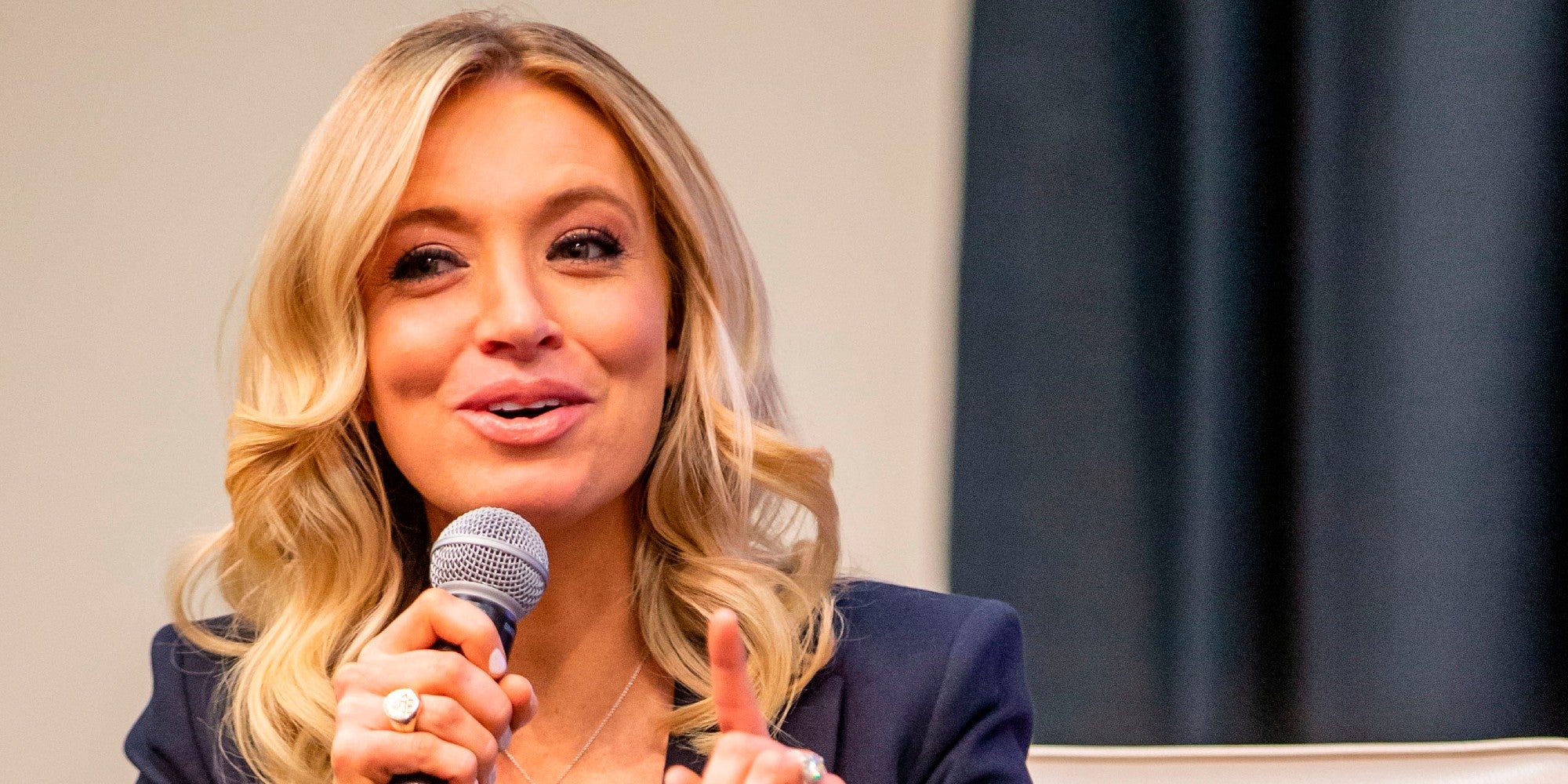
Donald Trump has shaken up his White House press team by replacing Stephanie Grisham with Kayleigh McEnany as his press secretary.

The 31-year-old was a spokesperson for Trump's re-election campaign has contributed to CNN and is a graduate from the prestigious Harvard Law School. 
PROVING THAT WHITE FOLKS GOING TO HARVARD IS ALL ABOUT $$$$$$$$$$$$ NOT SMARTS

You would hope that with some of those credentials that McEnany would be a considerable step up from the likes of Sean Spicer, Sarah Sanders and Stephanie Grisham who have proceeded her in the job.

Unfortunately, we are saddened to report that judging by her history and Twitter account McEnany is possibly just as bad as her predecessors.

Despite being in her role for less than a day, many historic tweets and eye-opening quotes from McEnany have already resurfaced, ranging from subjects such as racism, birtherism, Islamophobia, coronavirus and pizza, lots of pizza.

One of McEnany's prime obsessions is with Barack Obama and, like Trump, she is in doubt as to where the former president was born.

Throughout 2012, McEnany engaged with conspiracy theories that Obama was born in Kenya, rather than his actual birthplace of Hawaii, resulting in several tweets of an offensive nature.

Speaking of Obama, she once falsely accused him of going to play golf after the death of journalist Daniel Pearl, who was executed after being abducted while reporting in Pakistan in 2002. At the time, Obama was still a senator and wasn't elected to the White House until 2008.

She has also used Obama as a scapegoat for Islamophobia. In 2016 she attacked his claimed that Islam was a peaceful religion by falsely claiming that Muslims were responsible for a 'genocide' against Christians in Iraq.

As Middle East Eye reports the drop in Iraqi Christians was mostly down to the unrest created by the 2003 Iraq war and sectarian violence.

Following on from that, in an article for The Hill, shortly after the 2017 London Bridge terror attack, she said that although most Muslims were peaceful, a 'political correctness' in Western Europe had allowed extremism to thrive.

A toxic and deadly political correctness has enveloped Western Europe and enabled an unending wave of terrorist attacks. Refusing to utter the words 'radical Islamic extremism,' opening the door to millions of half-vetted refugees and decrying the concepts of borders and assimilation have resulted in a culture in crisis – a culture without democratic, freedom-loving identity and constantly under murderous attack from cancers within.

The article also attacked the incumbent mayor of London, Sadiq Kahn, who has a long-running feud with Donald Trump.

Moving on to more current topics and you might not be shocked to learn that McEnany has some pretty interesting views about coronavirus and like the president, has mostly downplayed the pandemic.

During an appearance on Fox Business in April, McEnany claimed that Trump was the 'best authority' to deal with the crisis and not somebody like National Institute of Allergy and Infectious Diseases Director Dr. Anthony Fauci.

If that wasn't alarming enough, on February 25 she appeared on Fox News' Trish Regan Primetime, to defiantly say that Covid-19 would never arrive in the United States. To date, the country has recorded more than 330,000 cases of the disease, more than any other nation in the world.
By now, it would appear to be pretty obvious that McEnany is willing to defend Trump on any issue, even when he has blatantly lied to the US public. In August 2019, she appeared on CNN to claim with a straight face, that the president had told any fibs to the American public.


On slightly less controversial topics (depending on your political persuasion) McEnany has a lot of things to say about pizza. Like, loads.

In tweets ranging from 2011 to 2013, she would regularly give her approval to Dominos pizza, claiming that it was better than any pizza in New York City.

In fact, she just seems to love everything about Dominos.

All in all, after reading these tweets, it's little wonder her new boss hired her.


TAKES ONE TO KNOW ONE
Trump raves about coronavirus being a 'genius', says a
ntibiotics don't work because it's 'too brilliant'
PERFECTLY STABLE GENIUS COMPLEMENTS MICROBE

Posted 4/11/2020 Sirena Bergman in news

At a coronavirus briefing yesterday, Donald Trump went on a bizarre rant in which he seemed to be... bragging (?!) about how intelligent coronavirus is, saying the virus is "so brilliant" it's outsmarted antibiotics.

It was a strange way to describe a non-IQ-having virus, but more importantly, betrayed a worrying lack of understanding of even basic biology: as most of us know, antibiotics are used to treat bacterial infections. They are – and have always been – useless against viruses, regardless of how "smart" they are.

A widely circulated clip shows an even-more-confused-than-usual Trump raving about the virus's ability to stand up to antibiotics, which he claims "used to solve every problem".

These are his words exactly. And no, we haven't got confused in our transcription. This ridiculous word salad of nonsense is what the actual president said.

"This is a very brilliant enemy, you know. It's a brilliant enemy. They develop drugs like the antibiotics, you see? Antibiotics used to solve every problem. Now one of the biggest problems the world has is... the germ has gotten so brilliant that the antibiotic can't keep up with it!"

"And they're constantly trying to come up with a new... people go to a hospital and they catch... they go for a heart operation – that's no problem – but they end up dying from... from... problems! You know the problems I'm talking about."

"There's a whole genius to it! We're fighting... not only is it hidden but it's very smart, OK? It's invisible! And it's hidden! But it's very smart."


While it's true that antibiotic-resistant bacteria is a cause for concern, this has absolutely nothing to do with coronavirus, which – you may have gathered from its name – is a virus, not a bacteria.

No need to take our word for it, people on Twitter jumped at the chance to fact-check Trump's latest nonsense:

Trump has repeatedly appeared to get the basic facts of coronavirus confused, spreading such dangerous misinformation during his briefings that some TV networks have even decided to stop airing them live in order to be able to fact-check them.
Seems nothing is changing.
More AboutDonald TrumpCoronavirusAntibiotics

White people are discovering what police harassment feels like for the first time

4/11/2020 Moya Lothian-McLean 

iStock

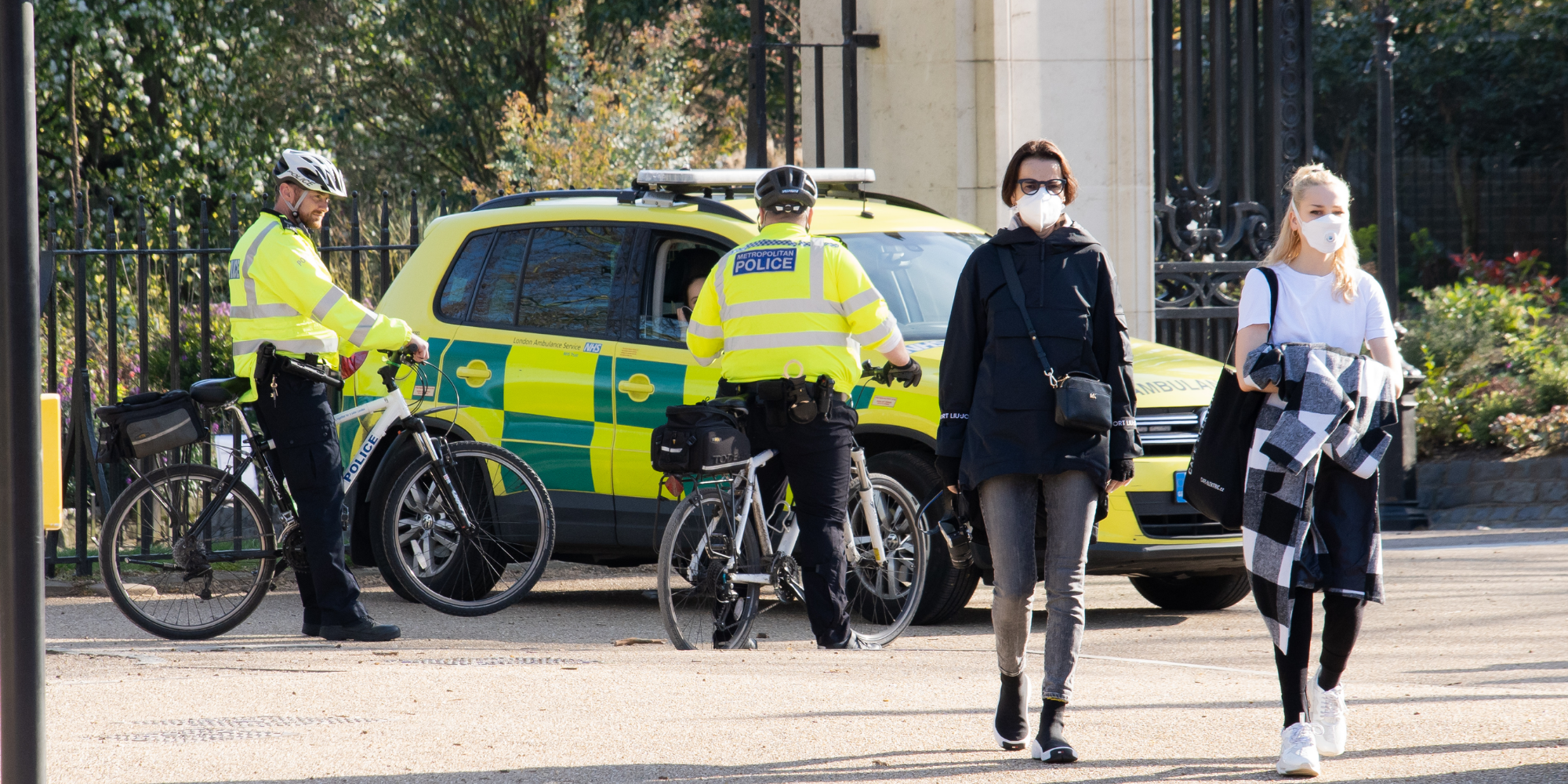
Last week, the UK’s police forces were issued a stark warning against “overreaching” in the use of new lockdown enforcement powers.

“This is what a police state is like,” remarked former supreme court judge Lord Sumpton after reports of officers curtailing (perfectly legal) exercise and quibbling over the definition of an “essential” item. “It is a state in which a government can issue orders or express preferences with no legal authority and the police will enforce ministers’ wishes.”

In particular, Sumpton singled out Derbyshire Police, who filmed hikers in the Peak District and uploaded the footage to Twitter. Their actions had “shamed our policing traditions” Sumpton said.

Except what Derbyshire Police did was actually very in keeping with certain traditions – they just happen to be ones that almost 86 per cent of the UK don’t tend to experience on a regular basis.

Overpolicing, unfairly targeted harassment, arbitrary searches; these are all far more common experiences at the hands of those charged with keeping the peace if you’re a member of an ethnic minority, particularly if you are a young, black man.

But under coronavirus regulations, white people are finally getting a taste en masse of what it feels like to be automatically seen as a suspect. And it’s a sour medicine.

This week, Cambridgeshire Police were met by outcry after they tweeted about patrolling a local Tesco.

“Good to see everyone was abiding by social distancing measures and the non essential aisles were empty,” they wrote.

The backlash was swift and furious, with thousands outraged at the thought of officers sifting through their baskets to arrest them on suspicion of buying Hob Knobs.

“There is no law which prevents retailers selling 'non essential' items,” wrote human rights barrister Adam Wagner. “There is a list of retailers which can stay open and they can sell what they sell. And even if there were, who defines 'non-essential'?”

Who indeed? Quite the infringement on our basic individual liberties. And people are right to oppose it.

But this sort of overzealous policing is familiar knowledge in the UK to Bame communities, with black people bearing the brunt of it (who can forget Bristol Police tasing their own race relations adviser?).

You’re nearly 10 times more likely to be subject to an intrusive police stop and search in England and Wales if you’re black. And if a Section 60 order – which allows officers in an area to conduct “suspicionless” searches for a limited period – is in place, that rises to a shocking 40 times more likely. Figures from London also show that black individuals are 12 times more likely to suffer through more intrusive searches, which meant they were forced to remove more than just a coat or jacket.

Despite this overrepresentation, outcome rates are similar whatever someone’s ethnicity: 25 per cent of searches result in action being taken. And although the use of Section 60 orders was expanded in order to specifically tackle knife crime, a recent investigation by The Times discovered that increased stop and search showed no consistent correlation with reduction in knife crime.

Moreover, the yawning racial chasm regarding who stop and search targets has not improved in recent years – it’s actually got worse. Not to mention the racial disparity in those on the receiving end of police violence; from 2017 to 2018, black people experienced 12 per cent of police force incidents, despite only accounting for 3.33 per cent of the population. It’s massively disproportionate.

As many are discovering for the first time under lockdown, being treated with constant suspicion by the police is a harrowing and psychologically stressful ordeal.

A report by StopWatch, a UK organisation campaigning for fairer policing, collected the experiences of black and Asian individuals who’d been subjected to stop and search. Participants spoke of feeling fear, anger and helplessness during and after the experience.

“The impact it had on me was huge, huge; and it was negative,” said Paul Mortimer, a former footballer and anti-racism campaigner who has been stopped more than 20 times.

“I felt that I needed a shower after. I felt really inadequate, I felt dirty. You’re looked at a certain way, you are treated a certain way, as if you are actually guilty”.

Others in the report remarked on the lingering distrust they felt towards the police as a body.

“If you’re an eight-year-old child and you go to play football, and [a] police officer stops and searches you, if you experience that from the age of eight, all the way through your secondary school career, then you’re not going to have a positive view of the police. You will not invest faith in the police if something happens to you,” said Kwabena Oduro-Ayim. “For my entire childhood I would never have turned to the police for any assistance."

It’s a point we’re seeing reflected now in current lockdown discourse. “Genuinely bemused some police officers straying so clearly beyond their powers,” tweeted Gavin Phillipson, professor of Law at Bristol University, referring to the Cambridgeshire Police shopping debacle.

“First don't they have enough on their plates just enforcing the actual, legal restrictions? Second, don't they realise this kind of thing undermines public trust and thus hampers policing by consent?

Well clearly not, because they’ve been doing it to minority communities for years. It’s only now that police officers are starting to be held to account by a large swathe of the general public, and not just dedicated action groups, that they’re having to backtrack so publicly to avoid swinging a wrecking ball through their relations with the UK population at a time when they’re requesting more cooperation than ever.

Clearly, it should not have taken a pandemic to wake a nation up to the reality of targeted and often unlawful harassment at the hands of the police

A problem as persistent as this one should be top of the agenda, whether it affects white people or not. But now that so many understand what it’s like to carry the terrible, crushing weight of being viewed as a suspect for simply going about their (perfectly lawful) daily business, it must spark action.

Because empathy isn’t enough when human rights are being erased.
Trump escalates battle with World Health Organization over coronavirus response

Alexander Nazaryan National Correspondent,Yahoo News•April 10, 2020


Trump says U.S. may cut funding for WHO because it’s ‘China-centric’

At Friday’s coronavirus task force press briefing, President Trump explained why the U.S. is looking at cutting funding for the World Health Organization, accusing the global body of being “China-centric.”

WASHINGTON — Reprising the skeptical tone he has applied to the United Nations and the North Atlantic Treaty Organization, President Trump accused the World Health Organization of helping China conceal the number of its citizens that have been infected by the coronavirus.

“I do believe they knew,” the president said at Friday’s briefing of the coronavirus task force, suggesting that the WHO was aware that China was not being truthful about the scope of COVID-19 infections. “But they didn’t want to tell the world. And we’re gonna get to the bottom of it.”

Trump did not provide evidence to support his assertion, but he made clear that the international public health organization would remain a primary target in the coming days. “We're going to talk about the WHO next week in great detail. I didn't want to do it today, Good Friday. I didn't want to do it before Easter, and also didn't want to do it before we have all the facts,” he said.

Friday’s comments came during a week in which Trump has repeatedly blamed the WHO for improperly handling the coronavirus pandemic. On Tuesday, he said that the WHO was “very biased toward China.”

Trump has said he wants to put a hold on U.S. funding to the WHO, although when or how he intends to do so remains unclear (funding is appropriated by Congress). The United States contributed $893 million to the WHO for its current two-year funding period, while China’s latest contribution was $86 million.

“We’re paying them more than 10 times more than China,” the president said. “And they are very, very China-centric.”
President Trump and WHO Director-General Tedros 
Adhanom Ghebreyesus. (Jim Watson/AFP via
 Getty Images, WHO video via AFP/Getty Images)

The source of Trump’s irritation appears to be that the WHO did not endorse his restriction on travel from China to the United States, which he implemented on Jan. 31. Four days before that, a WHO guidance advised against “unnecessary restrictions of international traffic.”

More broadly, the president appears to be annoyed that the WHO has generally praised China’s response to the pandemic, which originated within its borders, in the southeastern city of Wuhan. Praise for China has indeed been fulsome from WHO officials. Dr. Bruce Aylward, a Canadian epidemiologist who led the WHO team in China, told Yahoo News that if he were to get infected by the coronavirus, he would seek treatment in China.

“They know how to keep people alive,” he said.

Aylward added, however, that Chinese epidemiologists learned much of what they know from American counterparts at the Centers for Disease Control and Prevention.

Praise for China has irked some in the United States, Trump’s allies in particular. They believe that Trump has been unfairly maligned while China has been unfairly celebrated. “Instead of acting in the best interest of our global health, the WHO has served as a propaganda arm for the Chinese government,” Sen. Martha McSally, R-Ariz., wrote on Twitter earlier this week. She said she supported a funding freeze.

Sen. Ted Cruz, R-Texas, has also criticized the WHO for what he perceives as its overly solicitous attitude towards China.

Earlier this week, Trump also charged that the WHO “minimized the threat very strongly.” That appears to be a reference to a Jan. 14 tweet from the WHO that declared that “Chinese authorities have found no clear evidence of human-to-human transmission.” That would prove an incorrect assertion. Trump has also made false assertions about the coronavirus, including that it would vanish of its own accord.

Experts warn that there is no proof the coronavirus will stop spreading in warmer weather


Haven Orecchio-Egresitz,Business Insider•April 9, 2020

Some have hoped that warmer weather would slow or stop the spread of the coronavirus.

Health experts warn that we don't know yet what the virus will do.

A recently released report indicates that the studies published so far on potential seasonal effects have conflicting results and are hampered by weak data.

While springtime may bring hope of life returning to normal in the Northern Hemisphere, scientists don't think people should bet on warm weather alone being enough to stop the coronavirus from spreading at alarming rates.

There have been several studies on how a change in temperature could affect the coronavirus. However, the results have been conflicted and hampered by weak data, a report released by the National Academies of Sciences, Engineering and Medicine said.

"One should not assume that we are going to be rescued by a change in the weather" Anthony Fauci, director of the U.S. National Institute of Allergy and Infectious Diseases said Thursday on Good Morning America. "You must assume that the virus will continue to do its thing."

There has been some precedent of other coronaviruses and influenza not thriving in warmer temperatures, but at this time there is no proof that COVID-19 will respond similarly.

Some studies outlined in the report did find that that an increase in temperature or humidity led to a drop in the transmission of the virus. Still, the data it was based on was not without its flaws, the report said.

One early study out of China's Hubei province suggested that for every 1 degree C increase in atmospheric temperature at relatively high levels of humidity, daily confirmed cases decreased 36-57%, but the results didn't hold up across mainland China.

A different study found that 90% of global transmission through March 22 occurred when temperatures were 3-17 degrees C. That study, though, didn't figure in variables like a country's testing capacities or policy responses.

"Some limited data support a potential waning of cases in warmer and more humid seasons, yet none are without major limitations," the report says. "Given that countries currently in 'summer' climates, such as Australia and Iran, are experiencing rapid virus spread, a decrease in cases with increases in the humidity and temperature elsewhere should not be assumed."

The conflicting studies don't necessarily mean that summer vacations are entirely off the table, though.

Fauci told CBS This Morning that getaways "can be in the cards."

"And I say that with some caution, because as I said, when we do that, when we pull back and try to open up the country, as we often use that terminology, we have to be prepared that when the infections start to rear their heads again that we have it in place a very aggressive and effective way to identify, isolate, contract trace and make sure we don't have those spikes we have now," Fauci said. "So, the answer to your question is yes, if we do the things that we need to do to prevent the resurgence."
Bill Gates warns that a coronavirus-like outbreak will probably happen 'every 20 years or so'

(Rosie Perper),Business Insider•April 9, 2020
Bill Gates spoke to the Financial Times via a video chat on April 2.\
Screenshot/Financial Times


Microsoft co-founder Bill Gates said that people are now realizing that a viral outbreak similar to COVID-19 will likely happen "every 20 years or so."

Speaking to the Financial Times earlier this month, Gates said that COVID-19 was the "biggest event that people will experience in their entire lives" and said world leaders and global policymakers have "paid many trillions of dollars more than we might have had to if we'd been properly ready."

The 67-year-old billionaire has been warning about the risk of a pandemic disease for years, stating that a global health crisis like coronavirus could wipe out 30 million people in less than a year.


Microsoft co-founder Bill Gates said that this coronavirus pandemic was the "biggest event that people will experience in their entire lives," and warned that a viral outbreak will likely happen "every 20 years or so."

Gates discussed the global fight against the novel coronavirus with the Financial Times via Skype on April 2. FT posted the interview and transcript online on April 8.

He said world leaders and global policymakers have "paid many trillions of dollars more than we might have had to if we'd been properly ready."

"This is the biggest event that people will experience in their entire lives," Gates told FT.

He said that in response to this outbreak, future governments will have "standby diagnostics, deep antiviral libraries, and early warning systems."

"The cost of doing all those things well is very small compared to what we're going through here," he said. "And so now people realize, 'OK, there really is a meaningful probability every 20 years or so with lots of world travel that one of these [viruses] will come along.' And so the citizens expect the government to make it a priority."

He said he was confident that lessons learned from this outbreak will encourage people to better prepare for next time, but lamented that the cost this time around was too high.

"It shouldn't have required a many trillions of dollars loss to get there," he said. "The science is there. Countries will step forward."

The 67-year-old billionaire has been warning about the risk of a pandemic disease for years, stating that a global health crisis like coronavirus could wipe out 30 million people in less than a year.

In 2015, Gates gave a Ted Talk warning that the world was "not ready" for an impending pandemic.

"There's no need to panic ... but we need to get going," he said in 2015.

In February, the Bill and Melinda Gates Foundation pledged $100 million last month to fight the coronavirus outbreak, designating money towards vaccine research, frontline responders, prevention measures, and treatment efforts around the world.

Business Insider
THIRD WORLD USA
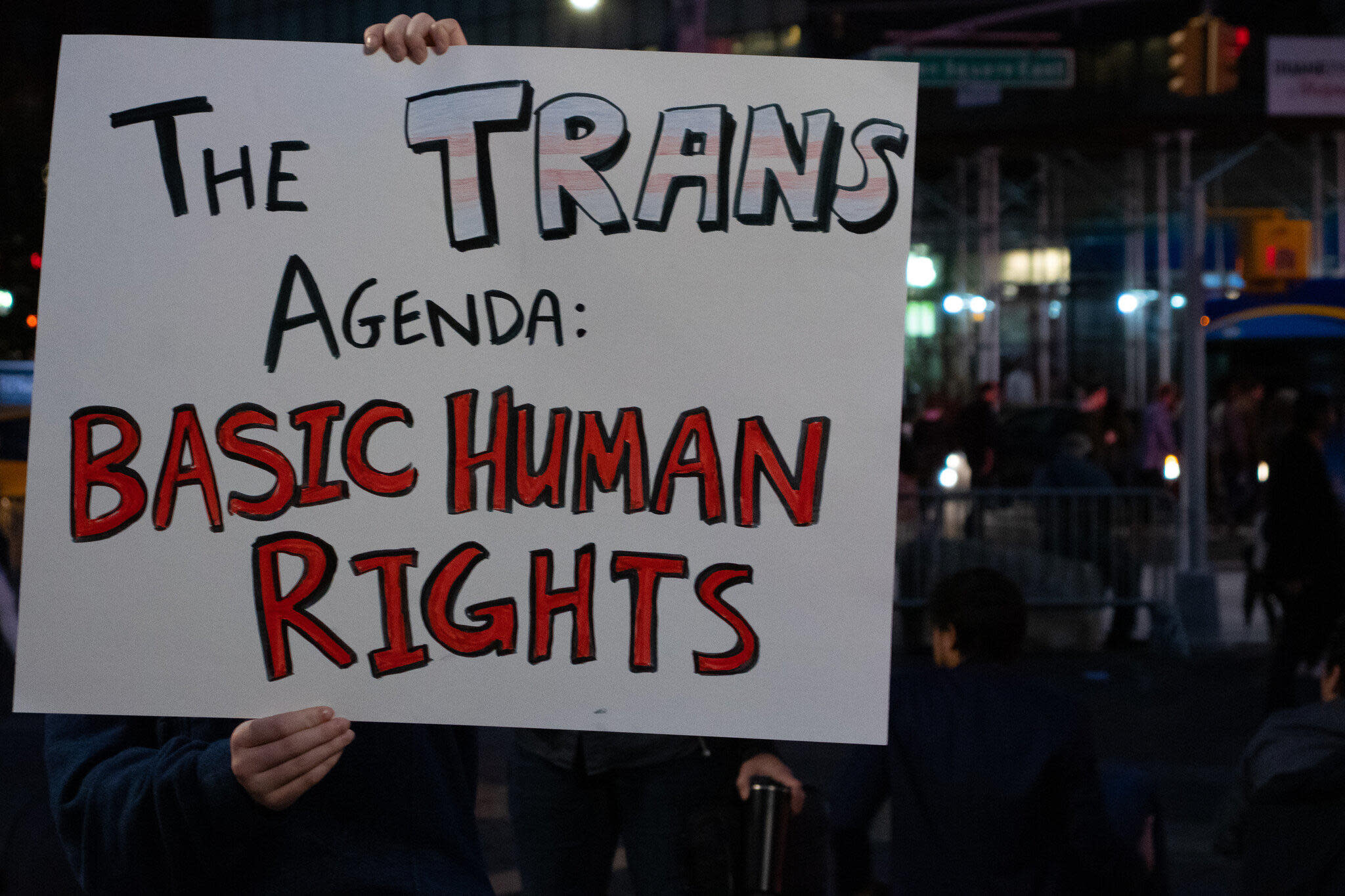
"It's been torture": LGBTQ health care suffers amid coronavirus


Li Cohen,CBS News•April 10, 2020


The coronavirus pandemic has disrupted life for billions of people, forcing the world to deal with a sudden loss of jobs, security, and regular health care. But for those who identify as .

"If someone is transphobic, if someone is anti-black, if someone is anti-immigrant, if someone is anti-queer, and they have to make a choice between a patient who is visibly gender non-conforming, and someone who is gender conforming ... it actually doesn't matter whether something is scientifically sound or not," Swadhin said. "If the health care provider has that bias then that is what's going to steer their hand in the moment of making decisions."

Tori Cooper, director of community engagement for the Transgender Justice Initiative at the Human Rights Campaign, said, "Out of all the folks under the LGBTQ spectrum, trans folks are going to fare even worse" throughout the pandemic. She added, "I don't think that we can rely on the federal government to provide any protections in favor of trans folks."

In the more than 300 pages that comprise the Coronavirus Aid, Relief, and Economic Security (CARES) Act passed by Congress, there is no mention of the LGBT community. On March 31, the International Transgender Day of Visibility, the governor of Idaho signed two anti-transgender bills into law, one of which bans people from changing the sex listed on their birth certificates.

"A lot of our lawmakers don't represent the communities that they serve," Cooper said. They represent a small part of the community, but they don't represent the fullness and the color and the vibrancy and the diversity that exists within so many of our communities across the country."
German minister criticises U.S. coronavirus response as too slow: Spiegel

Reuters•April 10, 2020

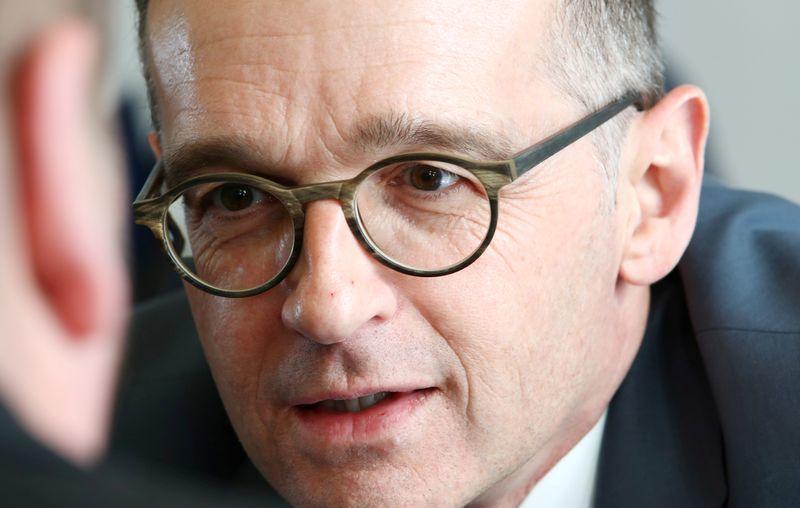
FILE PHOTO: German Foreign Minister Heiko Maas
DON'T FORGET HE IS A CONSERVATIVE CHRISTIAN DEMOCRAT

FRANKFURT (Reuters) - German Foreign Minister Heiko Maas has criticised the United States' handling of the coronavirus outbreak as too slow, the latest sign of tensions between the two allies as they respond to the crisis.

China took "very authoritarian measures, while in the U.S., the virus was played down for a long time," Maas said in an interview with Der Spiegel magazine in a preview sent to the media on Friday.

"These are two extremes, neither of which can be a model for Europe," he said.

Germany was among countries that last week accused the United States of "Wild West" tactics in outbidding or blocking shipments to buyers who had already signed deals for vital medical supplies. [nL8N2BR5O2] THEY CALLED IT PIRACY

Maas told Der Spiegel that he hoped the United States would rethink its international relationships in light of the coronavirus crisis.

"Let's see to what extent the actions of the American government will lead to discussions in the U.S. about whether the 'America First' model really works," he said, adding that aggressive trade policies may have hurt the country's ability to procure protective equipment.

A spokesman for the U.S. embassy in Berlin was not immediately able to respond to a request for comment.


'How Do I Get Help?' Dying Coronavirus Patient Asked Alexa
HORROR OF AMERICA'S FOR PROFIT NURSING CARE 
IN THE AGE OF CORONAVIRUS

Neil Vigdor, The New York Times•April 10, 2020


'How Do I Get Help?' Dying Coronavirus Patient Asked AlexaMore

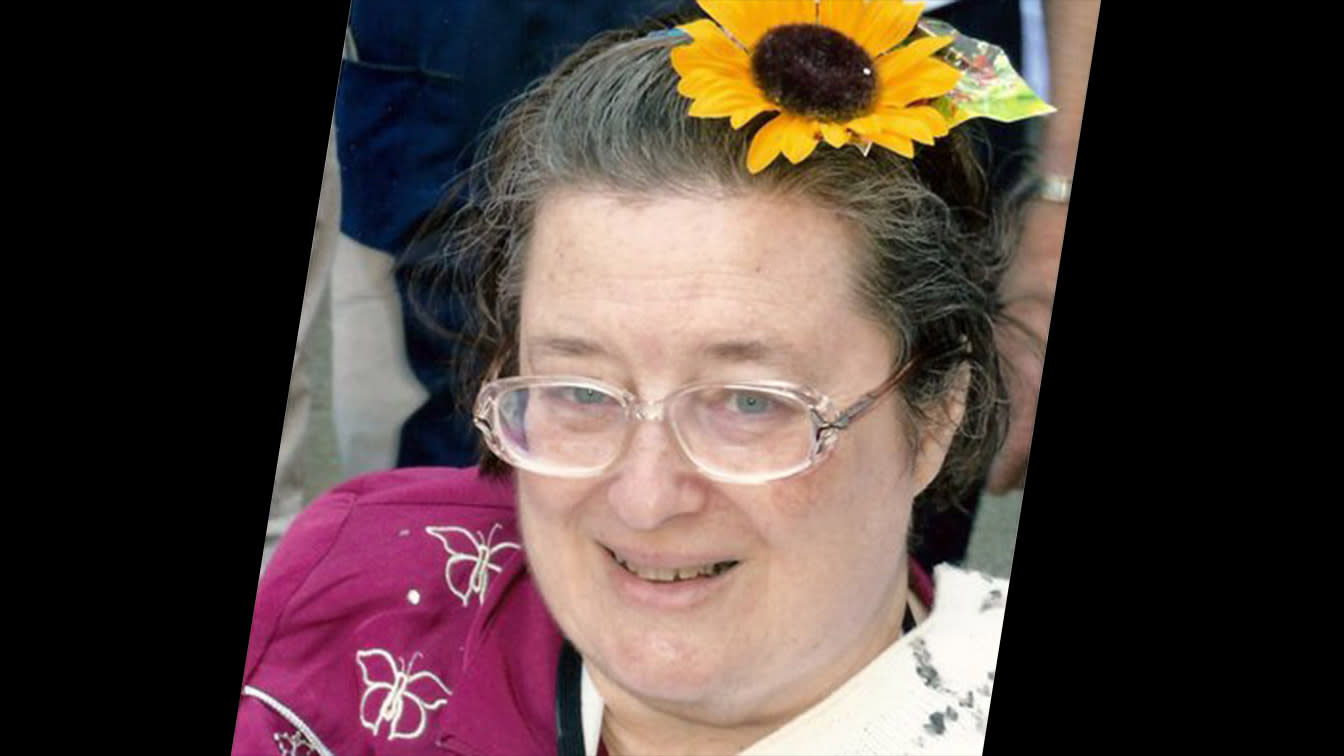
They lived about 20 minutes apart in Michigan, but when a cousin gave the sisters Lou Ann Dagen and Penny Dagen each an Amazon Echo Show last year to make video calls, they would keep each other company for hours on end.

The virtual assistant Alexa connected them during meals and discussions about what was on television.

“I think she just wanted to know that I was there,” Penny Dagen, 74, said of her sister, who lived in a nursing home.

And when Lou Ann Dagen, 66, became gravely ill with COVID-19, the illness caused by the coronavirus, she turned once again to Alexa, Penny Dagen said in an interview Thursday.

Penny Dagen discovered voice recordings of her sister pleading with Alexa to intervene as her health worsened. She said she found the recordings Monday, two days after Lou Ann Dagen died of complications from the virus.

“‘How do I get help?’” her sister asked in the recording. “‘How do I get to the police?’”

Lou Ann Dagen was one of six residents of the nursing home, Metron of Cedar Springs, who died after being stricken with the virus, a spokesman for the center confirmed. Thirty-one residents and five staff members at the nursing home, which is about 20 miles north of Grand Rapids, Michigan, have tested positive for the virus, according to the nursing home.


“I was surprised how much she had cried for help on there,” Penny Dagen said. “She was hurting so bad.”
Dagen said she and her sister were aware of the limitations of Alexa, the ubiquitous voice-activated assistant.

“It won’t call 911,” she said. “Alexa won’t do that.”

Amazon officials noted that smart devices like the Echo Show are not meant as a replacement for life safety services and are unable to contact emergency services.

“We were saddened to hear about this news, and our hearts go out to the family,” a company spokeswoman said Thursday night in a statement. “Today, customers can ask Alexa to call family or friends, or set up skills like Ask My Buddy, which lets you alert someone in your Personal Alert Network that you need them to check on you. We continue to build more features to help our customers.”

Dagen said that her sister had diabetes and high blood pressure, which also contributed to her death. She lived at the nursing home for about 10 years after having two strokes that caused paralysis on the left side of her body, Dagen added. Her oxygen levels plummeted because of the virus, which she contracted several weeks ago, said Dagen, who lives in Sparta, Michigan.

“It was like she couldn’t breathe,” she said of her sister, who died at Mercy Health St. Mary’s in Grand Rapids on Saturday, shortly after being hospitalized.

A nursing home executive said that the center took appropriate action and that Lou Ann Dagen’s condition deteriorated rapidly.

“We can share that Lou Ann was getting excellent care and that our team was following both her advanced directives and clinical practice guidelines to manage her pain and symptoms,” Paul Pruitt, the nursing home’s director of operations, said in a statement. “Once those symptoms progressed rapidly, and at the advice of her medical team, she was immediately sent to the hospital.”

Pruitt said the nursing home encouraged the sisters’ regular video calls.

“Alexa was Lou Ann’s primary communication tool with her sister, who was unable to get to our facility,” he said. “It was a very positive part of her life, which we supported fully.”

Penny Dagen described her sister, who never married, as multitalented, and said that she played the organ, piano and guitar. She also sang and was an artist who wrote a children’s book, Dagen said.

The last time she spoke with her sister was on a video call Saturday morning before she went to the hospital, Dagen said. She added that she had the recordings of her sister asking Alexa for help on her iPad, but that she did not plan on keeping them.

“I don’t want to keep that memory of her,” she said. “I just wish they could have taken the pain away. She isn’t in any pain any more.”

This article originally appeared in The New York Times.

© 2020 The New York Times Company
Coronavirus Was Slow to Spread to Rural America. Not Anymore.


Jack Healy, Sabrina Tavernise, Robert Gebeloff and Weiyi Cai,
The New York Times•April 10, 20203,693 Comments

Coronavirus cases spread through U.S. rural pockets, and communities fear they may not be able to handle it

Grace Rhodes was getting worried last month as she watched the coronavirus tear through New York and Chicago. But her 8,000-person hometown in southern Illinois still had no reported cases, and her boss at her pharmacy job assured her: “It’ll never get here.”

Now it has. A new wave of coronavirus cases is spreading deep into rural corners of the country where people once hoped their communities might be shielded because of their isolation from hard-hit urban centers and the natural social distancing of life in the countryside.

The coronavirus has officially reached nearly three-quarters of the country’s rural counties, with 1 in 7 reporting at least one death. Doctors and elected officials are warning that a late-arriving wave of illness could overwhelm rural communities that are older, poorer and sicker than much of the country, and already dangerously short on medical help.

“Everybody never really thought it would get to us,” said Rhodes, 18, who is studying to become a nurse. “A lot of people are in denial.”
Downtown Fairmont, W.V., April 2, 2020. (Kristian Thacker/The New York Times)

With 42 states now urging people to stay at home, the last holdouts are the Republican governors of North Dakota, South Dakota, Nebraska, Iowa and Arkansas. Gov. Kristi Noem of South Dakota has suggested that the stricter measures violated personal liberties, and she said her state’s rural character made it better positioned to handle the outbreak.

“South Dakota is not New York City,” Noem said at a news conference last week.

But many rural doctors, leaders and health experts worry that is exactly where their communities are heading, and that they will have fewer hospital beds, ventilators and nurses to handle the onslaught.

“We’re behind the curve in rural America,” said Sen. Jon Tester, D-Mont., who said his state needs hundreds of thousands of masks, visors and gowns. “If they don’t have the protective equipment and somebody goes down and gets sick, that could close the hospital.”

Rural nurses and doctors, scarce in normal times, are already calling out sick and being quarantined. Clinics are scrambling to find couriers who can speed their coronavirus tests to labs hundreds of miles away. The loss of 120 rural hospitals over the past decade has left many towns defenseless, and more hospitals are closing even as the pandemic spreads.

Coronavirus illnesses and deaths are still overwhelmingly concentrated in cities and suburbs, and new rural cases have not exploded at the same rate as in some cities. But they are growing fast. This week, the case rate in rural areas was nearly double what it was six days earlier.

Deaths are being reported in small farming and manufacturing towns that barely had a confirmed case a week ago. Fourteen infections have been reported in the county encompassing Rhodes’ southern Illinois hometown, Murphysboro, and she recently quarantined with her parents, who are nurses, as a precaution after they got sick.

Rich ski towns like Sun Valley, Idaho, and Vail, Colorado, have some of the highest infection rates in the country, and are discouraging visitors and second homeowners from seeking refuge in the mountains. Indian reservations, which grapple daily with high poverty and inadequate medical services, are now confronting soaring numbers of cases.

In some places, the virus has rushed in so suddenly that even leaders are falling ill. In the tiny county of Early in southwest Georgia, five people have died. And the mayor and the police chief of the county seat, Blakely, are among the county’s 97 confirmed cases. It has been a shock for the rural county of fewer than 11,000 people.

“Being from a small town, you think it’s not going to touch us,” Blakely’s assistant police chief, Tonya Tinsley, said. “We are so small and tucked away. You have a perception that it’s in bigger cities.”

That is all gone now.

“You say, wait a minute, I know them!” she said. “It’s, like, oh my God, I knew them. I used to talk to them. I knew their family. Their kids. It’s a blow to the community each time.”

Even a single local case has been enough to jolt some people out of the complacency of the earliest days of the virus, when President Donald Trump spent weeks playing down the threat and many conservative leaders brushed it aside as politically driven hysteria.

In Letcher County, Kentucky, which got its first case on Sunday, waiting for the disease to arrive has been unnerving. Brian Bowan, 48, likes the daily briefings by Gov. Andy Beshear, a Democrat, and he is glad for the governor’s relatively early actions to close nonessential businesses. Without them, Bowan said, “we could have a really bad pandemic. We could be like California or New York.”

In Mississippi, a mostly rural state, the virus had spread to nearly every county by April, causing health care workers to wonder, nervously, when the governor would issue a stay-at-home order. Last week, he finally did, and doctors at the University of Mississippi Medical Center in Jackson breathed a sigh of relief. The state now has more than 2,000 cases.

“There was this chatter today at the medical center, people saying ‘Oh thank goodness — we need this to get people to realize how serious this is,’” said Dr. LouAnn Woodward, the hospital’s top executive.

While Americans are still divided on whether they approve of how Trump has handled the crisis, the virus is uniting nearly everyone in the country with worry — urban and rural, liberal and conservative. More than 90% of Americans said the virus posed a threat to the country’s economy and public health, according to a Pew Research Center poll conducted from March 19-24.

“Some of the petty things that would be in the news and on social media before have sort of fallen away,” said David Graybeal, a Methodist pastor in Athens, Tennessee. “There’s a sense that we are really in this together. Now it’s, ‘How can we pull through this and support one another in this social distancing?’”

In Mangum, Oklahoma, a town of 6,000 in the western part of the state, it all started with a visit. A pastor from Tulsa appeared at a local church, but got sick shortly thereafter and became the state’s first COVID-19 fatality.

Then somebody at the local church started to feel unwell — a person who eventually tested positive for coronavirus.

“Then it was just a matter of time,” said Mangum’s mayor, Mary Jane Scott. Before realizing they were infected, several people who eventually tested positive for the virus had moved about widely through the city, including to the local nursing home, which now has a cluster of cases.

Overall in the town, there were four deaths and 32 residents had tested positive for the coronavirus as of Wednesday — one of the highest infection rates in rural America.

“You’d think in rural Oklahoma, that we all live so far apart, but there’s one place where people congregate, and that’s at the nursing home,” Scott said. “I thought I was safe here in southwest Oklahoma, I didn’t think there would be a big issue with it, and all of a sudden, bam.”

Mangum now has an emergency shelter-in-place order and a curfew — just like larger towns and cities around the United States.

Just as New Yorkers have gotten accustomed to Gov. Andrew Cuomo’s daily televised briefings, residents of Mangum have turned to the mayor’s Facebook page, where she livecasts status updates and advisories. On Monday night, it was the recommendation that residents use curbside pickup when going to Walmart, a broadcast that garnered more than 1,000 views in the hour after she posted it.

“Since we have no newspaper, it’s the only way I know to get the word out,” she told viewers, after inviting them to contact her personally with any questions or concerns.

She also has encouraged residents to step out onto their lawns each night at 7 p.m. where she leads them in a chorus of “God Bless America.”

The virus has complicated huge swaths of rural life. Darvin Bentlage, a Missouri rancher, says he is having trouble selling his cattle because auctions have been canceled. In areas without reliable internet access, adults are struggling to work remotely and children are having to get assignments and school updates delivered to their door.

The financial strain of gearing up to fight the coronavirus has put much pressure on cash-strapped rural hospitals. Many have canceled all nonemergency care like the colonoscopies, minor surgeries and physical therapy sessions that are a critical source of income.

Last month, one hospital in West Virginia and another in Kansas shut their doors altogether.

“It’s just absolutely crazy,” said Michael Caputo, a state delegate in Fairmont, West Virginia, where the Fairmont Regional Medical Center, the only hospital in the county, closed in mid-March. “Across the country, they’re turning hotels and sports complexes into temporary hospitals. And here we’ve got a hospital where the doors are shut.”

For now, there is an ambulance posted outside the emergency room, in case sick people show up looking for help.

Michael Angelucci, a state delegate and the administrator of the Marion County Rescue Squad, said the hospital’s closure during the pandemic is already being felt.

On March 23, emergency medics were called to take an 88-year-old woman with the coronavirus to the hospital, Angelucci said. Instead of making a quick drive to Fairmont Regional, about two minutes away, Angelucci said that the medics had to drive to the next-nearest hospital, about 25 minutes away. A few days later, she became West Virginia’s first reported coronavirus death.

This article originally appeared in The New York Times.

© 2020 The New York Times Company

View reactions (3,693)Sign in to post a message.