Wednesday, December 23, 2020

 The Sick Man of Europe Again

Peter Jukes and Hardeep Matharu argue that the Coronavirus itself is the main beneficiary of Boris Johnson’s neo-imperial policies leading to the inevitable ‘cordon sanitaire’ around Britain even before a hard Brex

Having initially joined the European Union as the ‘Sick Man of Europe’ – as Britain’s dire financial straits were characterised throughout the 1960s and 70s – the metaphor of a diseased nation has turned into a cold, hard clinical reality as Britain prepares to leave the EU this winter. 

Boris Johnson’s announcement on Saturday of tier four restrictions for London and the south-east and stricter Christmas gatherings due to a much more infectious variant of the Coronavirus spreading through the population triggered the closing of many borders in Europe and beyond to British travellers. Days from Christmas and Brexit, Britain is cut off. The end of free movement has arrived and the dreams of a self-isolating nation longed for by Brexiters have been achieved.

Johnson’s announcement may have been sudden, but the British Government’s laissez faire attitude to lockdowns, poor tracking and tracing and its late ramping-up of testing – infused with a deadly exceptionalism – always ran this risk. 

While you can’t sing Rule Britannia to a virus, as Musa Okwonga observed early on in these pages, this is precisely what Boris Johnson and his Brexiters saw fit to do by citing our ‘world-beating’ innovations.

It now seems that the virus did listen to the absurd siren calls of an Empire ruling the waves – and took advantage of the combination of arrogance and ignorance. 


Herded Out of Immunity 

The more the Coronavirus was allowed to run riot through Britain’s densely populated and highly mobile regions, the more likely an adaptive mutation was to occur. 

The highly infectious new variant – one of thousands – was initially sampled in September when it was named ‘Variant B.1.1.7’. However, it wasn’t deemed significant enough to be tracked until late October and a full investigation into its genomic sequencing began in early December under the name ‘VUI-202012-01’.

According to a report on Sunday by the Government’s New and Emerging Respiratory Virus Threats Advisory Group, it “demonstrated exponential growth during a period when lockdown measures were in place”. By the second week of December, more than 60% of all cases in London were ascribed to the new variant and around half of all cases in the south-east. 

Though there is no sign that this variant is more deadly, the rate of mutation has taken scientists by surprise. Of the 23 mutations, 17 were acquired all at once. This variant could have arisen in a chronically infected patient undergoing antibody therapy, but there are also reports that the prison system in Kent was a catalyst for the rise of infections. 

Whether the source was Britain’s overstretched, underfunded and dehumanising prison system or not, the reality of neglect and negligence in Johnson’s Coronavirus response made some such mutation mathematically much more likely.

Byline Times has spent the past eight months cataloguing the failures of Britain’s pandemic response which led to the highest death toll in Europe, the largest number of health and care worker deaths, and the worst economic performance of the G7.  

Its lax approach was evident from the very beginning, with the first lockdown in mid-March introduced late, after a ‘herd immunity’ approach towards the virus was explored – including by the Government’s Chief Scientific Officer Sir Patrick Vallance who spoke of it on national television. Johnson himself had already told the Italian Prime Minister that he wanted herd immunity – a fact that only emerged after an investigation by Channel 4’s Dispatches many months on.

When it seemed as if this dangerous idea – which is not advocated in epidemiology except in the context of a vaccine – had been put to bed, it emerged again. Reports suggest that Johnson dismissed a recommendation from the Government’s Scientific Advisory Group for Emergencies to introduce a ‘circuit-breaker’ lockdown in September after meeting three proponents of herd immunity: Anders Tegnell, the man behind Sweden’s disastrous COVID-19 approach and academics Professor Sunetra Gupta and Professor Carl Heneghan. 

Why during a serious health emergency have such fringe views taken hold in the highest positions of Government? 


The Rule of Exceptionalism – Exceptionally Bad

Britain has one of the most efficient healthcare systems in the world and is a global centre of both pharmaceuticals and genomics. Along with the US, its ‘pandemic preparedness’ was rated highly by the World Health Organisation. So there was no lack of prior capacity or medical knowhow in the UK. 

The failures have been of policy and attitude, and – as the twin disasters of Brexit and our Coronavirus response collide – there is a clear pathological path for this new British disease: the Etonian variant of English Exceptionalism.

From Johnson’s early suggestion that Britain could take on the Coronavirus by being “ready to take off its Clark Kent spectacles and leap into the phone booth and emerge with its cloak flowing as the supercharged champion” to his more recent claims that Britain’s COVID-19 rates are higher than those in Italy and Germany because its people are too “freedom-loving”, a delusional sense of supremacy has reigned.

But this is just ideology. In the same way that the closed minds of Soviet ideology led to the nuclear disaster of Chernobyl, the propaganda and libertarian obsessions of  Johnson’s Vote Leave Government have exacerbated every wrong – from the herd immunity anathema to the scandal of procurement contracts handed out to Conservative Party donors. 

However, the Coronavirus doesn’t care about the phantoms of a vanished imperial past. What Britain was actually once renowned for – a pragmatic attitude to fact and an empiricist emphasis on evidence and science – would have been the greatest threat to the propagation and persistence of the Coronavirus. 

But, as with our exit from the EU, the voices of reason have been drowned out by bigotry and arrogance. We have only become ‘world-beating’ by beating ourselves up. We are only exceptional in our failures. And, as the country faces a hard Brexit more physically isolated than at any time since the Second World War, with no real enemies to blame but ourselves and having alienated all our allies, a final reckoning has come. 


AL JAZEERA journalists reportedly hacked with Israeli-made spyware

Thirty-six Al Jazeera staff members were targeted in an attack that some have blamed on Saudi Arabia and the United Arab Emirates.
 
A picture taken on Dec. 5, 2019, shows a general view of the headquarters of Al Jazeera Media Network, in the Qatari capital, Doha. Photo by KARIM JAAFAR/AFP via Getty Images.

Al-Monitor Staff


Dec 21, 2020

Dozens of journalists working for Al Jazeera were hacked with spyware sold by an Israeli technology firm, in what a watchdog group says is possibly the work of hackers in Saudi Arabia and the United Arab Emirates.

Citizen Lab, a watchdog organization at the University of Toronto, says the phones of 36 Al Jazeera journalists, anchors, producers and executives, as well as a London-based journalist for Al Araby TV, were targeted. Researchers traced the hacks to mobile phone spyware known as Pegasus, which is developed and sold by Israeli-based NSO Group.

The hackers reportedly deployed a so-called “zero-click” attack, likely using the iPhone's iMessage function, the Citizen Lab report says. These interaction-less exploits don’t require victims to click on a suspicious link in order for NSO’s clients to break into their phones.

“The shift toward zero-click attacks by an industry and customers already steeped in secrecy increases the likelihood of abuse going undetected,” said the report, referencing a 2019 WhatsApp attack that targeted at least 1,400 phones through a missed voice call.

The Al Jazeera investigation was launched after one of the network’s investigative journalists, Tamer Almisshal, began receiving death threats on his phone. In January 2020, he gave his phone to Citizen Lab, which began monitoring the phone’s metadata


Citizen Lab concluded “with medium confidence” that the operators were linked to Saudi Arabia and the UAE, whose governments are both reported customers of NSO Group.

Saudi Arabia and the United Arab Emirates accuse Qatar of supporting terrorism and backing their regional rival, Iran. The two Gulf allies, along with Bahrain and Egypt, maintain an economic and diplomatic blockade on the energy-rich peninsula. As a condition for lifting the restrictions, the so-called Anti-Terror Quartet has demanded the tiny, oil-rich peninsula shut down the Qatari-funded Al Jazeera.

NSO Group, which must obtain the Israeli government’s approval before selling its sweeping surveillance tool to foreign governments, says its technology is built to “prevent and investigate terrorism and crime.” In the past, the cyber firm has pledged to prevent governments from using its products to carry out human rights abuses.

When reached by The Guardian newspaper for comment, a spokesperson for NSO Group said they were unaware of the most recent allegations involving Al Jazeera.

“We do not have access to any information with respect to the identities of individuals our system is used to conduct surveillance on,” the spokesperson said. “However, where we receive credible evidence of misuse, combined with the basic identifiers of the alleged targets and timeframes, we take all necessary steps in accordance with our product misuse investigation procedure to review the allegations.”

Citizen Lab said it has shared its findings with Apple, which confirmed that it is looking into the issue. In a statement to TechCrunch, the company urged customers to download the latest version of iPhone’s software to protect their data against such attacks.

This isn’t the first time Pegasus has been linked to the targeting of journalists by foreign governments. Saudi Arabia reportedly used software to spy on Washington Post columnist Jamal Khashoggi before his murder at the Saudi consulate in Istanbul in 2018. New York Times journalist Ben Hubbard, who covers the kingdom and extensively reported on Khashoggi’s death, was reportedly targeted by the same spyware, Citizen Lab said earlier this year.

In June, Amnesty International accused Morocco’s government of using Pegasus to hack the phone of Omar Radi, a Moroccan journalist who has drawn the ire of Rabat for his critical reporting. In 2018, the London-based rights group said Saudi Arabia had deployed Pegasus to digitally spy on one of Amnesty’s staff members.

Read more: https://www.al-monitor.com/pulse/originals/2020/12/al-jazeera-spyware-israel-spyware-nso-group-zero-click.html#ixzz6hTazta7V
Trump's coup goes beyond a grift: The president is desperately seeking any path to stay in power

New reporting shows that Trump really still thinks he can steal this election

By AMANDA MARCOTTE
DECEMBER 21, 2020 


For weeks now, Donald Trump's hopes of stealing the 2020 presidential election from the winner, Joe Biden, have been fading. Nonetheless, the dumbest and worst president in American history continued sending out fundraising appeals to his endlessly gullible supporters, giving birth to the theory — to which I, personally, subscribed — that Trump's coup is little more than another one of his many schemes to defraud people. After all, the Trump campaign spent very little on the actual legal efforts to challenge the election and redirected most of the cash into what is likely going to be used as a slush fund for Trump and his family.

And yet, as Maggie Haberman and Zolan Kanno-Youngs reported in the New York Times on Saturday, Trump is deep in talks with an increasingly unhinged cast of characters, all of whom believe there must be a way to steal the election even though the Electoral College made Biden's win official last week. The president invited conspiracy theorists like his former lawyer Sidney Powell and former national security advisor Gen. Michael Flynn to the White House on Friday to discuss a potential declaration of martial law as a last-ditch effort to force a second vote in some swing states. That suggestion came from the disgraced Flynn, who has been involved in violently oppressive work on behalf of Turkey's authoritarian leader, Recep Tayyip Erdogan

The group also discussed "an executive order to take control of voting machines to examine them," though it's unclear what that would accomplish. There's no reason to think the voting machines were hacked and it's unlikely that Trump's team has the technical know-how to alter the machines to generate vote tallies more pleasing to Trump.

The chattering politicos of Twitter responded to news of such a bizarre spectacle by arguing about the odd placement of the article on page A28 in the New York Times print edition, with one side arguing that the president considering a military coup is major news no matter what, and the other side arguing that because Trump isn't going to pull it off there's no reason to get fussed about it. The latter group is wrong, of course, as Trump is still incredibly successful at undermining democracy, even if he's failing to steal the White House.

The story isn't just alarming because Trump is flirting with violence, either. It's alarming because it's proof that Trump is continuing to push these idiotic conspiracy theories because he really, truly does think there's still a way for him to steal this election.
Advertisement:

Democrats must face the lasting damage of Trump's coup attempt
Go To Video Page

That isn't to say this coup is not a fundraising grift. Of course, it is. With Trump, everything is a cash grab. This one is apparently a desperate effort to stay one step ahead of the creditors he's quite likely up to a billion dollars in debt to. But the fact that he's actually taking meetings with wild-eyed conspiracy theorists like Sidney Powell, the head of his coup operations, and otherwise putting effort into this suggests that Trump really does think there's a "Get Out Of Democracy Free" card, and it's just a matter of finding the person who has it.

Similarly, Anita Kumar and Gabby Orr at Politico published a piece detailing Trump's weeks of making phone calls to various Republican officials, hoping they would just clear up this nagging "lost the election" problem for him, only to be rebuffed. (Not because these officials wanted to rebuff him, to be clear. It's just that there was no way for most of them to help him without opening themselves up to legal consequences.) Orr and Kumar document 31 different state and local officials Trump leaned on to steal the election for him — and that's not counting the House Republicans Trump pressured into signing an amicus brief supporting a petition to the Supreme Court to simply throw out the results in three swing states that went to Trump.

"There was always this feeling of supreme confidence that no matter how it looks it's all going to work out for him," Scott Jennings, a longtime GOP operative who is close to Trump's team, told Politico.


In particular, Trump's relentless abuse of Georgia's Republican governor, Brian Kemp, suggests he really does believe that it's just a matter of applying the right combination of bribes and blackmail before someone finally 'fesses up and admits that they actually do know how to make that nasty election just go away.

"Your governor could stop it very easily if he knew what the hell he was doing," Trump told the crowd at a Georgia rally. "So far we haven't been able to find the people in Georgia willing to do the right thing."

Where Trump got this idea that there's always a guy who knows his way around the rules isn't a mystery. Trump's mentor was the inarguably evil but definitely skilled lawyer/fixer Roy Cohn. Cohn really did have a talent for leveraging bribes and blackmailing anyone to help his clients, like Trump, evade the law or other obstacles. It's likely no coincidence that Trump's business went from successful to bankrupt after Cohn died. Cohn's influence is also seen in Trump's strategy to cheat in the election by leaning on the Ukrainian president for help using threats to withhold U.S. military aid.

But even Cohn didn't have the power to make an election just disappear with a few well-placed phone calls. Trump is just unburdened by Cohn's intelligence. He is not bright enough to see that this isn't one of those "I know a guy who can fix that for you" situations.

Of course, as neuroscientist Dr. Seth Norrholm told Salon's Chauncey DeVega, a huge part of the problem here is that Trump is surrounded by enablers. "The worst thing one can do for a malignant narcissist or an abuser like Donald Trump is to tell him or her that they are correct or to otherwise validate the lies and false persona," Norrholm explained.
Advertisement:


It's clear from the reporting that Trump has a nice, soft cushion of people around him — such as Rudy Giuliani or Michael Flynn — feeding his lies and encouraging him to believe that the magic wand Trump can wave to stop Biden's presidency is out there, somewhere.

Why does it matter whether Trump actually believes he can win? Well, it makes him more dangerous. If this was just a grift, it would be enough for Trump to keep sending fundraising emails and tweeting, but otherwise retiring to the golf course. But he's still actively looking for buttons to push — and entertaining violence as a way to get his way — and he still has many weeks left in office in which he can use his existing power to continue undermining democracy.

AMANDA MARCOTTE
Amanda Marcotte is a senior politics writer at Salon and the author of "Troll Nation: How The Right Became Trump-Worshipping Monsters Set On Rat-F*cking Liberals, America, and Truth Itself." Follow her on Twitter @AmandaMarcotte and sign up for her biweekly politics newsletter, Standing Room Only.


MURDER INC. TRUMP & CO.

Sara Weinberger: 

Shining a light on the federal government’s killing spree  

Published: 12/21/2020 12:52:32 PM


In June, Attorney General William Barr ordered the resumption of federal executions. Like a kid let loose in a candy store, Barr wasted no time.

On July 14, Daniel Lee Lewis, according to his lawyer, spent the last four hours of his life strapped to a gurney, waiting for the Supreme Court to decide his fate. On July 13, a federal judge had delayed his execution on the grounds that the constitutionality of Barr’s procedure for lethal injections had not been fully litigated. The Justice Department immediately appealed to the Supreme Court. Ultimately, Lewis was executed shortly after the court, in a 5-4 ruling, paved the way for 10 people to be executed by the federal government by year’s end.

The Supreme Court also rejected a petition by Lee’s family asking for a delay, because the coronavirus made it risky for them to attend his execution. The dangers associated with COVID-19 routinely deprive family members, spiritual advisers and attorneys from being present.

Wesley Ira Purkey and Dustin Lee Honken were executed that same week. According to his lawyers, Mr. Purkey had schizophrenia, Alzheimer’s disease and brain damage, leaving him unable to understand the reasons for his death sentence. A federal district judge delayed his execution in order for the court to determine his fitness for execution, as well as whether lethal injection procedures violated his constitutional rights.

Again, the Supreme Court rejected the delays. Purkey was executed on July 16, without his spiritual adviser, a Buddhist priest, who was medically vulnerable to COVID. The Supreme Court rejected a lawsuit by Purkey and Honken’s spiritual advisers claiming violation of the Religious Freedom Restoration Act.

Lezmond Mitchell, who is Navajo and the only Native American on federal death row, was executed Aug. 26. The Navajo Nation fought his execution. For the first time in modern history, the federal government, which has jurisdiction over capital crimes occurring on reservations, carried out an execution for a crime committed on tribal land.

William Emmett LeCroy told a psychiatrist he believed that a nurse acquaintance was a former babysitter he called “Tinkerbell,” who sexually molested and cast a spell on him 20 years earlier. Killing her, he believed, was the only way to reverse the spell.

His lawyers appealed his death sentence on the grounds that his trial lawyers hadn’t adequately emphasized his mental illness and upbringing, which might have prevented his death sentence. Mr. LeCroy was executed on Sept. 22.

Christopher Andre Vialva, executed Sept. 24, and Brandon Bernard, executed Dec. 10, were the first two men in more than 70 years sentenced to death for crimes committed as teenagers. Both men were Black. The victims were white. There was only one Black person on the jury that convicted Vialva.

Brandon Bernard’s attorney requested a hearing regarding new evidence showing he played a lesser role in the crime. Alan Dershowitz and Ken Starr took the case, requesting two weeks to prepare. Five of the original jurors stated they would not have sentenced him to death had this evidence been presented. Twenty-three prosecutors filed an amicus brief supporting the appeal. The Supreme Court denied the attorneys’ requests. Pleas to President Trump from Kim Kardashian, Jesse Jackson and AyannaPressley fell on Trump’s deaf ears.

Alfred Bourgeois received only 21 days’ notice of his execution, not enough time, according to his lawyers, to exhaust his legal options. Mr. Bourgeois is intellectually disabled, with an IQ between 70 and 75. A 2002 Supreme Court decision made it unconstitutional to execute a mentally disabled person. The court denied Bourgeois’ appeal. He was executed on Dec. 11.

The execution of Orlando Hall, a Black man convicted by an all-white jury, and executed Nov. 19 for the murder of a Black teenage girl, was the first federal execution under a lame-duck administration in over a century. His court-appointed trial attorneys made many mistakes that contributed to his death sentence.

The federal government’s killing spree hasn’t made front page headlines. Each of the brief descriptions above points to violations of rights accorded by our legal system to all human beings, regardless of their crimes. Supreme Court decisions ignoring mental illness, intellectual disabilities, age, racism, Native American sovereignty and the consequences of COVID are deeply troubling.

Most disturbing is the rush to execute people who have lingered on death row for years. William Barr exploited human lives as a vehicle to help his boss win the election by portraying him as a man who stands for law and order. The Trump administration has killed more prisoners sine July than any other administration has done in a full year since 1896.

Lisa Montgomery, possibly the first woman executed by the feds since 1953, Corey Johnson and Dustin Higgs are scheduled for execution before the Trump administration’s serial killings end … for now.

Sara Weinberger of Easthampton is a professor emerita of social work and writes a monthly column. She can be reached at opinion@gazettenet.com.

Nigeria: Tobacco Industry 'Front' Rejected By WHO, Others, Finds Footing in Nigeria

20 DECEMBER 2020
Premium Times (Abuja)

By Ben Ezeamalu

To bypass the provisions of the WHO-FCTC, the tobacco industry established a public health foundation.

As the four students of Whitesands College, Lekki, posed for the camera after emerging winners of the 2018 Conrad Challenge, the name of an entity screamed from a roll-up banner behind them: Foundation for a Smoke-Free World.

The Junior Secondary School Two (JSS2) students had won the Smoke-Free World category of the Conrad Foundation Spirit of Innovation challenge held at the Kennedy Space Centre, USA.

With the World Health Organisation Framework for Tobacco Control (WHO-FCTC) urging Parties to ban or restrict all forms of tobacco advertising, promotion, and sponsorship, particularly ones targeting youth populations, the companies found a subtle way.

The FCTC is a legally binding treaty that requires countries bound by the treaty -- or Parties -- to implement evidence-based measures to reduce tobacco use and exposure to tobacco smoke. There are 182 Parties to the FCTC as of May 2020.

The Foundation for a Smoke-Free World, the sponsors of the challenge, is a foundation funded by Philip Morris International (PMI), one of the biggest tobacco manufacturing companies in the world.

Bypassing an obstacle

Tobacco kills more than eight million people each year, with more than seven million of the deaths due to direct tobacco use, according to the World Health Organisation. About 1.2 million of the deaths are the result of non-smokers being exposed to second-hand smoke.

To check the interference of the tobacco industry in countries' public health policies, the WHO-FCTC in Article 5.3 stated that, "In setting and implementing their public health policies with respect to tobacco control, Parties shall act to protect these policies from commercial and other vested interests of the tobacco industry in accordance with national law."

To bypass this provision, PMI established, in September 2017, the Foundation for a Smoke-Free World (FSFW), a not-for-profit organisation with a mission to "solving the global health crisis and ending smoking in this generation." PMI initially pledged to, starting from 2018, support the Foundation with $80 million annually over 12 years.

Two weeks after its launch, the WHO issued a statement saying there are a number of clear conflicts of interest involved with a tobacco company funding a purported health foundation.

"WHO will not partner with the Foundation. Governments should not partner with the Foundation and the public health community should follow the lead," the UN agency stated.

Several other renowned public health bodies, including the John Hopkins Bloomberg School of Public Health, also distanced themselves from any proposed partnership with FSFW. In January 2019, 279 global health organisations and public health leaders urged the WHO to reject any affiliation with the Foundation.

With millions of dollars in its coffers and the chances of partnership with notable public health organisations becoming a mirage by the day, FSFW found another way: give money to a foundation involved with young people. Enter the Conrad Foundation, which holds the annual Conrad Challenge, an innovation and entrepreneurship competition that encourages "young adults to participate in designing the future through purpose-driven education," according to information on its website. Other sponsors of the challenge include Dell Technologies, Bezos Family Foundation, and Kennedy Space Centre, among others.

But it is the involvement of the Foundation for a Smoke-free World that had raised eyebrows among tobacco-control advocates and other public health professionals.

"There is generally a difference between the provisions of the FCTC and the ways in which parties are legally obligated to adhere to those provisions," said Michél Legendre, Associate Campaign Director at Corporate Accountability.

"But there is no doubt that groups like the Conrad Foundation, which are affiliated with the industry, can be considered as advertising and promotion. This is clearly laid out in Article 5.3. More broadly, the FCTC seeks to protect children and adolescents, so any targeting of these groups by industry affiliates like the Conrad Foundation is in violation of the treaty."

The FSFW's 2019 tax return shows that PMI has continued to be the sole funder for its activities. An analysis of the tax return by Tobacco Tactics reveals that the grants and contributions for the year 2019 are not primarily focused on funding scientific research but appear to be in line with the Foundation's public relations and advocacy strategies.

"Only one in six of the grantees listed in this tax return (seven out of a total of 45) appear to be based within academic institutions."

Since it was introduced in Nigeria two years ago, 248 secondary school students have participated in the Conrad Challenge across four categories comprising aerospace and aviation, cyber technology and security, energy and environment, and food and nutrition. For the 2020-21 challenge, the Foundation for a Smoke-Free World has introduced a new 'special category' named 'Repurposed Farmlands and Tobacco Crops.'

"A reduced demand of tobacco could bring devastating consequences to smallholder tobacco farmers who are economically dependent on tobacco crops for their livelihood," the Conrad Foundation said in a statement. "We challenge you to develop 21st-century agricultural technology solutions to increase smallholder agriculture efficiency and productivity to either repurpose tobacco farmlands for a different crop, or utilise farmlands for a different crop, or utilise the tobacco plant for a different purpose."

When contacted, the Conrad Challenge Nigeria denied any links with the tobacco industry.

"Conrad Challenge in Nigeria is currently only sponsored by the Conrad Foundation and through scholarships from Clarkson University New York," the foundation said in an e-mailed response.

In a follow-up email from the Conrad Foundation, the organisation said its funder, the FSFW, is independent of the tobacco industry.

"This is a misrepresentation of the Foundation for a Smoke-Free World (FSFW), which is an independent, nonprofit, private foundation committed to reducing deaths and diseases caused by smoking.

"For three years, FSFW has sponsored Conrad Challenge categories through grants that were aimed at eliminating and reducing e-cigarette usage and waste, as well as helping smallholder tobacco farmers who are seeking alternative livelihoods."

Prior to beginning the Conrad Foundation's relationship with FSFW, the organisation continued, the Conrad Foundation carefully examined FSFW's organizational documents to ensure its independence from any influence by the tobacco industry.

"Confirming FSFW's independence was vital to the Conrad Foundation's decision to accept FSFW funding."

After its initial funding promise, PMI amended its agreement with FSFW this year by adjusting its pledge thus: $80 million for 2018 and 2019; $45 million in 2020; $40 million in 2021; and $35 million from 2022 to 2029.

A FSFW spokesperson said the Foundation supports the full implementation of the FCTC and had authored and published papers that cite the need to fill gaps in its implementation.

"However, the Foundation does not agree with a biased interpretation of Article 5.3, which focuses on the governments who are the FCTC signatories and is not meant for nonprofit organisations like the Foundation," the organisation said in an e-mailed statement.

The statement reiterated that FSFW is independent of PMI and operates in a manner that ensures its independence from the influence of any commercial entity.

Drafting government's policy

The 2020 edition of Global State of Tobacco Harm Reduction, published by the Foundation for a Smoke-Free World-funded Knowledge Action Change, called for Tobacco Harm Reduction (THR) to be regarded as complementary, rather than inimical to reducing the global death and disease from smoking.

Although it noted that "there is no such thing as absolute safety," the report stated that the newer Safer Nicotine Products (SNP) have been in circulation for more than a decade, with evidence that they are much less risky than combustibles.

The report accused tobacco-control advocates of making misleading claims about the SNP which has led to an increase in the number of smokers who now believe that SNP are no safer or may even be more dangerous than cigarettes. This action, it stated, has allowed "activist NGOs" and academics to attract substantial funding from billionaire Michael Bloomberg, through Bloomberg Philanthropies. These NGOs, the report continued, had done nothing but spread bad science and misinformation, undermining the promise of THR products by putting governments under pressure to ban their use.

More than 16,000 people are killed by tobacco-caused diseases in Nigeria every year, according to the Tobacco Atlas.

Last July, the Nigeria Tobacco Control Alliance (NTCA) petitioned the Industry, Trade and Investment ministry accusing the tobacco industry of using agencies of government to draft a 'Policy on Conventional Tobacco and Non-Combusted Alternatives to Cigarette Smoking' in clear contravention of the National Tobacco Control (NTC) Act, 2015, its regulations; and the WHO-FCTC which Nigeria ratified in 2015.

The 19-page draft document listed the benefits from the tobacco sector to include employment creation, a significant contribution to Nigeria's GDP, and a significant increase in government revenue.

It also noted that there would be more than one billion smokers globally by 2025 and "it makes sense to offer less harmful, yet satisfying non-combusted alternatives for those smokers who would otherwise continue to smoke." It encouraged the switch to alternative products that do not combust tobacco but produce aerosol with potential to present less risk of harm compared to those found in cigarette smoke. Some of these alternatives include Electrically Heated Tobacco, Carbon Heated Tobacco Product, and E-Vapour Products.

"Epidemiologically, it has been clearly established that smoking increases the risk of developing a smoking-related disease. It has equally been demonstrated that if a smoker quits, the risk of developing a smoking-related disease decreases.

"So, it is wise to make available these alternatives to cigarettes for adult smokers who would otherwise continue to smoke."

PREMIUM TIMES learnt that the draft document was sponsored by PMI and sent to the ministry of industry, trade and investment. Both PMI and the ministry did not respond to requests for comments.

It was not the first time the tobacco industry in Nigeria had attempted to flout the provisions of the WHO-FCTC. In 2014, the British American Tobacco Nigeria organised a training for police officers in Lagos on the enforcement of the then newly-passed tobacco control legislation in the state.

In its petition, the NTCA said such "outdated ploys" have been used by the tobacco industry in low- and middle-income countries like Nigeria to undermine their tobacco control policies and open up the market to "unproven safer alternatives." The group advocated that every novel tobacco product, including heated tobacco products and e-cigarettes, be banned in Nigeria while every new product be subjected to thorough regulatory scrutiny.

"Many countries have seen the gimmick [of the tobacco industry] and have taken strict measures against all kinds of tobacco products in the interest of public health and safety," said Akinbode Oluwafemi, who signed the petition on behalf of the NTCA, a network of frontline civil society organisations, NGOs, and professional groups working on tobacco control, public health and cancer control in Nigeria.

One of the most recent gimmicks by the tobacco industry was the action by Philip Morris, in July, after the U.S Food and Drug Administration (FDA) published the outcome of PMI's 2016 application to market its flagship heated tobacco product, IQOS, as a "modified risk tobacco risk product" in the U.S. In its ruling, the FDA noted that although the data submitted by PMI showed that IQOS may reduce exposure to harmful substances, it does not reduce the risk of disease and death when compared to cigarette smoking.

PMI immediately responded to the ruling, describing it as a "historic public health milestone." The company's managing director. sub-Saharan Africa, Bahman Safakish, told Nigerian journalists that providing smokers with science-based less harmful alternatives is a "commonsense solution to improve public health."

Anna Gilmore, a Professor of Public Health, described Philip Morris action in the aftermath of the FDA ruling as "worrying," and noted that, ultimately, the company is focused on profitability and not the well-being of tobacco users.

"There is a couple of things that might be worth flagging, one is that it's not just that Philip Morris is misrepresenting this decision but that, actually, in doing that, they try to push governments down a room for tobacco control that is not the most effective."

IQOS - which contains both tobacco and nicotine - was launched in South Africa in 2017, and plans are underfoot to extend the product to other African countries as soon as possible, Mr Safakish told the Nigerian Tribune in an interview last August.

Ms Gilmore, who is also the Director of the Tobacco Control Research Group at the University of Bath, UK, said while independent research on IQOS showed that exposure to some chemicals was reduced, there was an increased exposure to other chemicals.

"And the critics also looked at the risk issue and showed that there really is no evidence that the risk of diseases is reduced and disease markers, if you like, are not reduced."


Read the original article on Premium Times.
Journalist arrested after exposing the plight of Palestinians in Israeli prisons

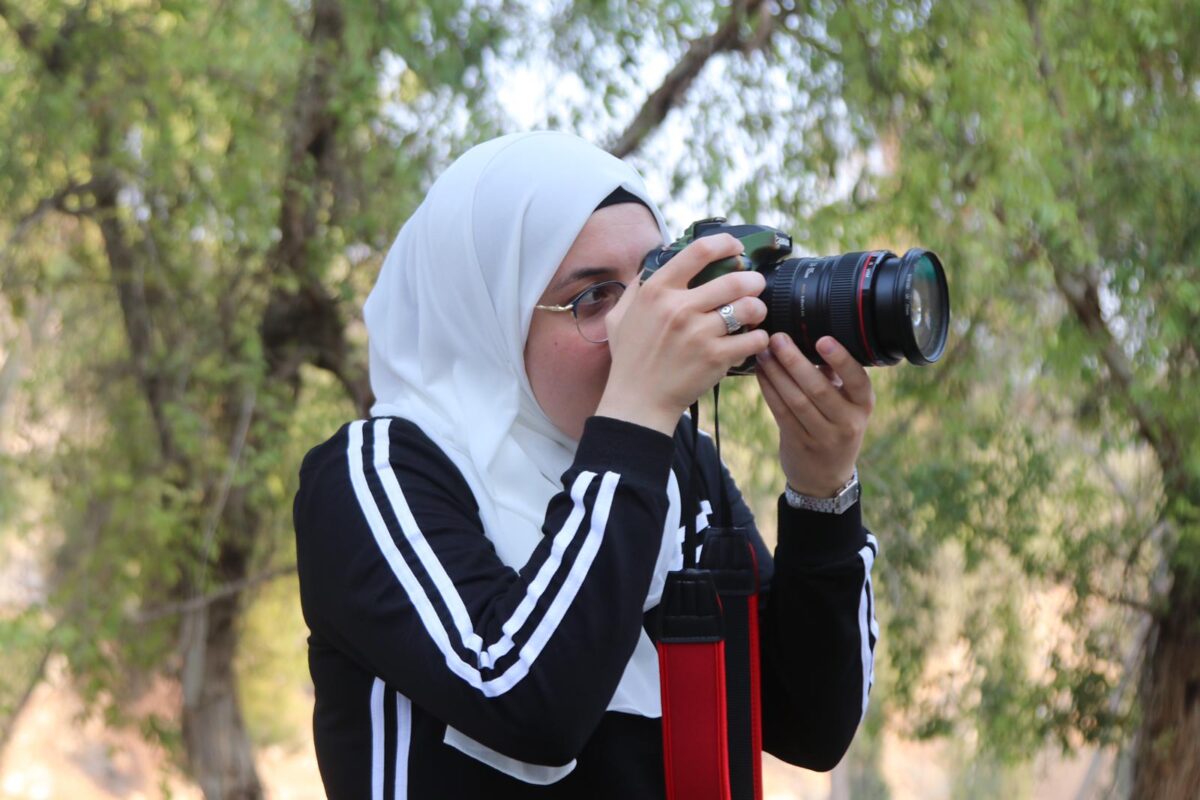
Bushra Al-Taweel, 27, was detained on 8 November while going home from Jenin via an Israeli military checkpoint near the illegal Yitzhar settlement

Laila Ahmet
Anjuman Rahman
December 1, 2020 

A Palestinian journalist and activist has been detained for the fifth time by the Israeli authorities after being released earlier this year from an eight-month term of administrative detention, when she was held with neither charge nor trial. Bushra Al-Taweel, 27, was detained on 8 November while going home from Jenin via an Israeli military checkpoint near the illegal Yitzhar settlement.

Palestinian journalists face growing threats, intimidation and violence as their freedoms are curtailed by the Israeli occupation. Journalism is a crucial pillar of democracy that holds those in power to account, so it comes as no surprise that Israel takes extreme measures to block any accurate reporting of the rights violations and crimes committed by its security forces in the occupied Palestinian territories.

According to Al-Taweel's mother, Muntaha, she was facing a lot of harassment and could neither move freely between cities in Palestine nor get a job to have an income to live on. "She is also, of course, prohibited from travelling abroad and cannot establish any commercial or economic project to develop, nor achieve her ambitions and goals as a professional journalist working with freedom and independence."

Al-Taweel is being held in Hasharon Prison in northern Israel where, her mother claims, she is being "tortured" by Israeli interrogators who are attempting to get "baseless confessions" from her. Palestinian journalists frequently report abuse by Israeli security forces and prison officers.

Palestinian woman detained by Israel soldiers at military checkpoint

Bushra Al-Taweel is the latest in a long line of Palestinian journalists who the Israeli occupation forces have harmed or killed, but the authorities have been unable to silence their criticism of the Israeli occupation and its unjust prison system. Soldiers rarely face legal consequences for their actions, and there is no sign that this will change anytime soon.

"There is no freedom for journalists to cover or publish what is newsworthy," explained Al-Taweel's mother. "They confiscated her cameras more than once, and she has borne insults and abuse from Israeli soldiers out in the field to cover events. They often fire tear gas and stun grenades at journalists to prevent them from filming."

Last year, Israeli soldiers arrested Al-Taweel in Al-Bireh, near Ramallah, following the release of her father, a former leader of the local municipality in the town, Jamal Al-Taweel. She was first arrested when she was just 17, serving five months of an 18-month sentence before being released as part of a 2011 prisoner swap deal.

The fourth time that she was arrested was due to her coverage of issues affecting Palestinian detainees and prisoners held by the Israelis. "She covered things like the suffering that they and their families go through; the stopping of prisoners' stipends, and the use of administrative detention," said Mrs Al-Taweel.

The frequent arrest and harassment of Bushra Al-Taweel is symptomatic of the Israeli government's intention to discredit anyone who dares to speak out about the reality for Palestinians living under occupation and siege. Such brave individuals are silenced and, if necessary, taken out of the equation by Israel.

Bushra Al-Taweel, 27, was detained on 8 November while going home from Jenin via an Israeli military checkpoint near the illegal Yitzhar settlement


After graduating from Modern University College in Ramallah in 2013, Bushra launched the Aneen Al-Qaid Network, a media platform run by ex-prisoners, journalists, lawyers and humanitarian activists, who highlight the plight of Palestinian prisoners. She wanted to give voice to the suffering, especially of the mothers and children held by the Israelis, letting the world know what is happening through the media.

Israel has killed 46 Palestinian journalists since the outbreak of the Aqsa Intifada in 2000, the Palestinian Journalists' Syndicate revealed in early November. The announcement was made during a rally outside the UNRWA headquarters in the Gaza Strip on the International Day to End Impunity for Crimes Against Journalists. Tahseen Al-Astal, the deputy head of the syndicate, called on the UN to assume its responsibility to protect journalists and bring to account the Israelis who commit crimes against Palestinians.

"The Syndicate records between 500 and 700 [Israeli] occupation attacks and crimes against Palestinian journalists every year," he pointed out. "It's time for these crimes to stop and to hold accountable those who committed them and those who issued the orders."

Muntaha Al-Taweel is concerned about the effect that the latest arrest will have on her daughter. "It will affect her psychologically because freedom is the most valuable thing that a person possesses. Prison is difficult and cruel, especially in light of the coronavirus. If she is infected, the prison authorities will not provide any medical treatment."

'They Tried to Freeze Me to Death': Torture and Resistance in Israeli Prisons

Even brief detentions during the Covid-19 pandemic can mean a death sentence. The majority of Palestinian prisoners are held in very cramped conditions, where social distancing is impossible. Moreover, they are left without the necessary sanitising, cleaning equipment and medical care to help to protect themselves.

There are currently around 4,500 Palestinian prisoners inside Israeli jails, 700 of whom require medical care. Israel has consistently failed to provide prisoners with basic precautionary measures during the pandemic, and even withdrew some food and hygiene products from prison canteens so that they couldn't buy them. "Families send money to prisoners so that they can make essential purchases of food and personal hygiene items," said Mrs Taweel. "If they are taken off the shelves by the Israelis, what can the prisoners do? Why aren't governments around the world holding Israel to account for such injustice?"

Bushra Al-Taweel was subjected to an administrative detention order yet again this week for a period of four months. No charges have been made against her. The detention order is renewable indefinitely.

"My daughter, Bushra al-Taweel, was arrested simply because she is a journalist with the credibility to expose the crimes of Israel and its occupation," said Muntaha Al-Taweel. "The world needs to sit up and take notice of what the occupation state is doing, especially against women and children."
Palestinian-American director Hind Shoufani tells MEMO about her new documentary


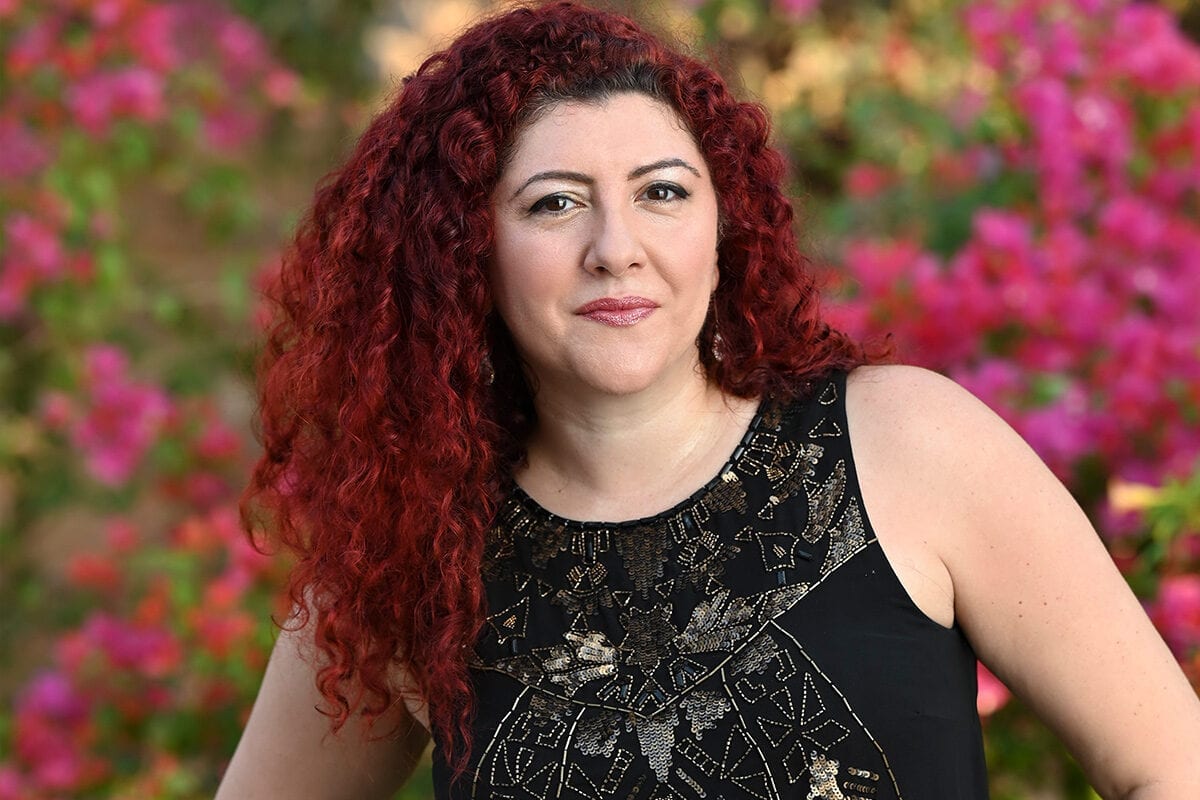
Artist, director and poet Hind Shoufani, 14 October 2017 [Ammar Abd Rabbo]

Naima Morelli
naimamorelli

December 16, 2020 

Artist, director and poet Hind Shoufani insists that her Palestinian-ness is a political act. "It is a choice to be on this side of history," she tells me, "whether we triumph or not, whether I carry some piece of identification paper with blue colours on it, or green colours on it, or rainbow glitter tie-dye on it."

Born in the Palestinian diaspora in Sidon in 1978 to Palestinian parents, both of whom were activists, Shoufani has for years explored her Palestinian identity through different expressions of her art: "In this life I have chosen to use my language and my camera, and my body performing on stage, and my angry throat dialectics, to commemorate our regional experience, to add to this arsenal of cultural memory, communal histories and personal perspectives."

A passionate storyteller, Shoufani has lived in a number of countries and cities: Damascus, Amman, Beirut, New York and Dubai. "When I was about 8 years old my dad, in his infinite lovely wisdom, told me it was a great thing to combine in me so much of the world. 'This is a gift and a good thing,' he told me. 'Embrace it', and so I have."

She started to work at eighteen, and for the past 24 years or so the red-haired powerhouse artist has moved around juggling freelance gigs. "I mixed my innate linguistic skills that are part DNA, part my mother and father's literary interests, and partly the fact that we read immense amounts of books growing up — there was little else to do in Damascus in the 80s — with my film studies to create a 'career' that straddles the worlds of language and video, in many capacities," she explains. "Some for clients, others for love. And some, for both."

With strong ties to Palestine, Shoufani was only able to go back in 2017, after 20 years of absence. "I am not someone attached to the idea of home," she says. "Home is wherever my contact lens solution, walking shoes, glitter eyeshadow and laptop are. But I wanted to experience the Galilee. I wanted something exquisite to ease my spirit. It was time to summon the witchcraft needed to cross those borders and ask some questions and tell some stories."

With an undefined idea for making a new movie, Shoufani, cameraman Nick Zajicek and producer Ossama Bawardi from Philistine Films began to do some research into Christian minorities, and found out that only a limited number of engaged and political communities were aware of the situation of Palestinians in the Christian Arab villages in Galilee. This research led to a visit to her large extended family in Nazareth and Miilya, without a precise plan in mind.


Trip Along Exodus (TAE)


"That first year we spent a month there in the gorgeous summer," she recalls. "Every day was a spell of exuberant overwhelmed senses and tears and laughter and drinking and smoking and eating plenty, and telling stories, and asking millions of questions, and touching a thousand succulents, and feeling a breeze to die for and dancing and dancing."

When filmmaking took over, the family introduced her to characters in the community, rituals, rites, locations, histories, events and experiences. Bit by bit, Hind and Nick visited eight different towns and cities over the course of the following three years, developing a relationship with a cast of characters who allowed them to gain an insight into their minds, homes and histories.

"My most profound takeaway from all this, before the film is edited and released, is gratitude that I was allowed such intimate access to these communities. I have a huge responsibility to do justice to the experiences I was invited to share and document."

The result of that experience is her new documentary, They Planted Strange Trees. It is focused on beauty as an act of will and resistance. "I wanted to make a film about the love I feel, and not the hate. I have perhaps given enough time for the hate, and it is a moment to remind myself of love, so that I, myself, can remain soft, open to the senses and ready to see beyond the anger."


She thinks that occupation is first and foremost a dulling of mind and will, and beauty counters this. "I cannot belittle the occupation's atrocious impact on the lives of millions, but we still move through the mountains and immerse ourselves in the sea, we still enjoy our coffees and touching the hair of our grandchildren. This is beautiful. The quotidian, the taken-for-granted is so heightened for me in Palestine."

She stresses that every time a Palestinian laughs, dances, makes love, gets wildly drunk and hugs a friend, performs a poem on stage, or gets a standing ovation at a concert, the occupation is a little less powerful in its sting. "We have in our skin, in our food, in our eyes and in our spirits enough beauty to see us through the harshness."

Palestine as a subject matter has been explored by the director before from different angles. In her debut film Trip Along Exodus, she looked at 70 years of Palestinian history through the experience of her father, activist Elias Shoufani. She believes that that film is the opposite of They Planted Strange Trees.

Trip Along Exodus was a film edited completely inorganically, combining different footage from over 20 sources shot over a period of 60 years. "Nothing was left as pure observation," Shoufani points out. "We made a film from a collage concept, like a child sticking random things into a sketchbook."

The new documentary, meanwhile, is almost pure observational work, with one camera and one camera person. "Everything was filmed by our star Nick Zajicek, who is essentially the person who made this film possible by offering his craft, time and dedication. No images from the past. No archive, no multimedia, no outside influences. The film is one unit, with one look, and through one central journey."


Trip Along Exodus (TAE)

The other difference is that Trip Along Exodus is about one man, and through him we see a lot of the regional dynamics. In They Planted Strange Trees, a dozen people all intertwine to speak of the central entity which is the land and the ecosystems that live within it: human, flora and fauna. "So it's from the outside heading inwards, whereas with my dad, I tried to work from within pointing outwards to the region and its history."

While the post-production of the new film was pushed back further and further because of Covid-19 — much to Shoufani's frustration – she has a plethora or projects to develop. There is a TV series about four female Arab poets; a short utopian, futuristic novella about Palestine in the year 2078; and a book about her mother's life and death in Amman and Damascus in the 1990s, to mention but a few.

Shoufani is also committed to nurture Arab art and poetry in the Middle East. Last month she launched the Barjeel Poetry Prize, inviting poets from around the world to respond to 20 works of 20th-century Arabic art from the UAE-based Barjeel Art Foundation collection. She was one of the three team members organising the competition. The idea was conceived by the founder of Barjeel Art Foundation, Sultan Sooud Al-Qassemi, who is an avid collector of Arab art, and curator Suheyla Takesh.

She counts herself fortunate to be asked to take part. "And I am grateful to be partnered up with my dear friends Zeina Hashem Beck, the poet, and publisher Marcia Lynx Qualey. We have received over 500 submissions of dual language poems as they relate to 20 pieces of Arab art from the Barjeel collection. What an inspired way to get people all over the world to engage with Arab paintings, and to think about what their artists have been through over the past century, and to recreate that ethos in poetic language."

The results are due to come out later this month, and the judges are really pleased with the range and diversity of the winning poets. This was the inaugural year, and Shoufani doesn't know what future plans there are for the prize, but she sees it as a gift in the "apocalyptic year of despair known as 2020."

The artist, director and poet embraces all of her commitments with her usual energy and passion. "I am relaxed because at my age, after living in so many cities, not everything can overwhelm you, and because while being in Palestine is a privilege and a gift, it is also merely another piece of land where some people I love happen to live. It is a part of who I am, and not the entirety. No one place is."

Nevertheless, she is gratified that she was able to return to her homeland, which is something that her parents could not do. "And perhaps there is a way to be more present there in the future," she concludes. "Eventually, at the end, I would like to be swallowed up by a mountain in the Galilee."


Israel: High Court is not expected to strike down Jewish Nation-State Law


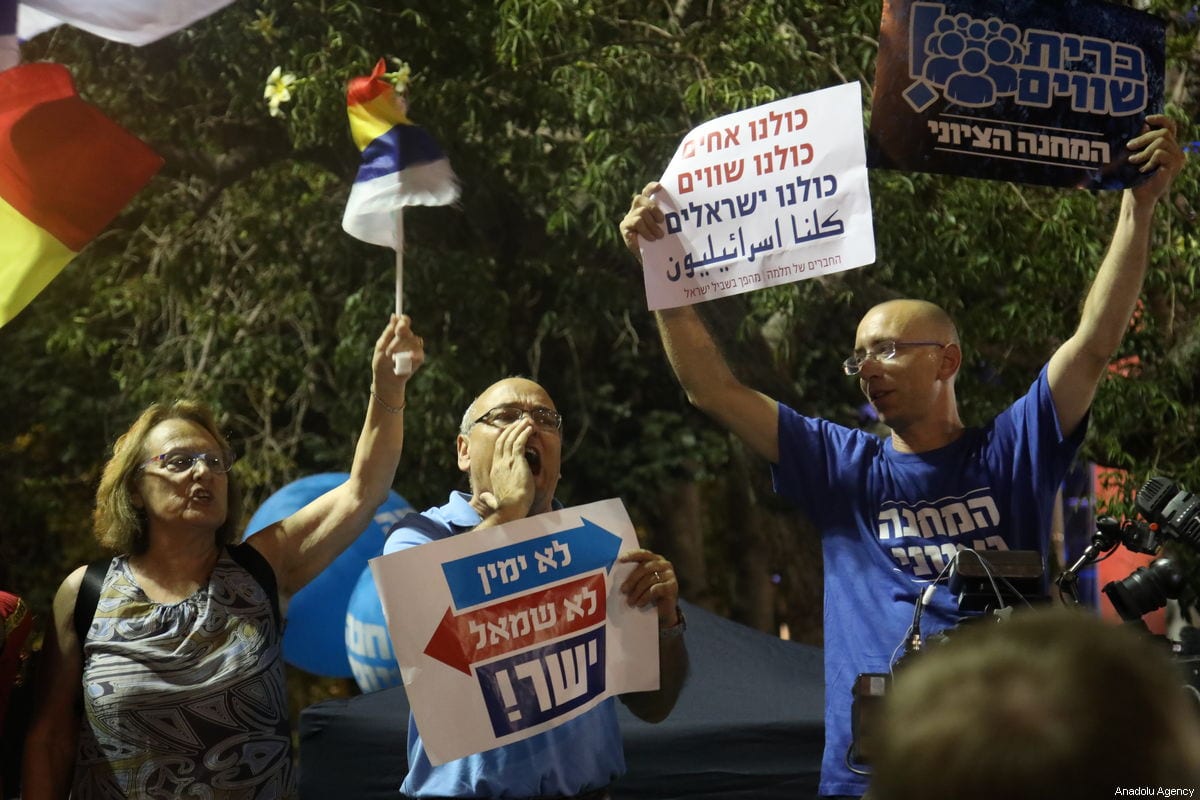
Thousands of demonstrators from the Druze community stage a protest against the “Jewish Nation-State” law that was approved last month by the Israel’s parliament, at Rabin Square in Tel Aviv, Israel on August 04, 2018 [Daniel Bar On / Anadolu Agency]

December 23, 2020 

After hearing a series of fifteen petitions on Tuesday against Israel's Jewish Nation-State Law, the High Court of Justice is not expected to strike down the "racist" legislation, Dr Hassan Jabareen, the founder and executive director of Adalah rights group, has said.

Eleven Supreme Court justices sat on the panel sitting as the High Court of Justice. The latter generally hears petitions and provides judicial review over the branches of the Israeli government.

Prime Minister Benjamin Netanyahu slammed the hearing on his Facebook page: "The court receives its power to rule by virtue of a basic law, and therefore cannot judge the source of its own power. This hearing illustrates the need for a series of judicial reforms."

Knesset Speaker Yariv Levin MK, from the Likud, warned the High Court that if the justices do strike down the law, he would consider the decision to be illegitimate, the Times of Israel reported. "Any decision that would violate the Basic Laws that were passed in the Knesset is a decision made without authority, and is thus invalid," Levin said in his letter sent to Chief Justice Esther Hayut.

READ: Israel set for snap election as budget deadline nears

According to Jabareen, it is clear that the overwhelming majority of the judges are supporting the law so that they will vote for it. "They will give explanations for the controversial articles in a way that keeps up with previous rulings. It seems that the court does not have political, legal or constitutional understanding for the racist dangers of this law. The court does not have an idea about the comparative law, nor does it understand that no country could accept such a law, which says that the state is only for Jews and not for its non-Jewish citizens."

Attorney General Avichai Mandelblit said that the High Court of Justice should not even have heard the case. As far as Blue and White party leader Benny Gantz is concerned, "The threats of Yariv Lavin and Netanyahu against the courts are threats to democracy and seek to dismantle the separation of powers."

Israeli law Professor Aeyal Gross expects the judges to defer giving an opinion on the law. A decision could take several weeks.