Monday, March 08, 2021

Iran releases British-Iranian aid worker Zaghari-Ratcliffe from house arrest

Supporters hold a photo of Nazanin Zaghari-Ratcliffe during a vigil for British-Iranian mother imprisoned in Tehran outisde the Iranian Embassy on January 16, 2017 in London, England [Chris J Ratcliffe/Getty Images]

March 7, 2021 


Iran has released British-Iranian aid worker Nazanin Zaghari-Ratcliffe from house arrest at the end of her five-year prison sentence, but she has been summoned to court again on another charge, Reuters reported quoting her lawyer on Sunday.

Zaghari-Ratcliffe, a project manager with the Thomson Reuters Foundation, was arrested at a Tehran airport in April 2016 and later convicted of plotting to overthrow the clerical establishment.

Zaghari-Ratcliffe, who served out most of her sentence in Tehran's Evin prison, was released last March during the coronavirus pandemic and kept under house arrest, but her movements were restricted and she was barred from leaving the country.

On Sunday the authorities removed her ankle tag.

"She was pardoned by Iran's supreme leader last year, but spent the last year of her term under house arrest with electronic shackles tied to her feet. Now they're cast off," her lawyer Hojjat Kermani told an Iranian website. "She has been freed."

Read: Britain says it's appalled by Iran's new case against Zaghari-Ratcliffe

Iran's judiciary was not immediately available to comment about the release. Her family and the foundation, a charity that operates independently of media firm Thomson Reuters and its news subsidiary Reuters, deny the charge.

Kermani said a hearing for Zaghari-Ratcliffe's second case has been scheduled on March 14.

"In this case, she is accused of propaganda against the Islamic Republic's system for participating in a rally in front of the Iranian Embassy in London in 2009 and giving interview to the BBC Persian TV channel at the same time," Kermani said.

He said he hoped that "this case will be closed at this stage, considering the previous investigation".

The detentions of dozens of dual nationals and foreigners have complicated ties between Tehran and several European countries including Germany, France and Britain, all parties to Tehran's 2015 nuclear deal with six powers.

The release come as Iran and the United States are trying to revive the deal, which former U.S. president abandoned in 2018 and reimposed sanctions on Iran. Tehran responded by scaling down its compliance.


British-Iranian aid worker released after five years: lawyer

Zaghari-Ratcliffe was detained in 2016 and later convicted of plotting to topple the government and sentenced to five years in jail. A British lawmaker said she was, however, summoned again to court.

 British-Iranian aid worker Nazanin Zaghari-Ratcliffe has ended for five-year sentence in Iran, her lawyer Hojjat Kermani said on Sunday.


Her ankle bracelet was removed, but she has been summoned again to court, according to British lawmaker Tulip Siddiq. 

"I have been in touch with Nazanin's family. Some news: 1) Thankfully her ankle tag has been removed. Her first trip will be to see her grandmother. 2) Less positive - she has been summoned once again to court next Sunday," Siddiq, who is the member of parliament for where Zaghari-Ratcliffe used to live, said on Twitter.

It was not immediately clear whether Zaghari-Ratcliffe was allowed to leave Iran. Kermani was quoted as saying that "a hearing for Zaghari's second case has been scheduled at branch 15 of the Revolutionary Court of Tehran."

Ankle bracelet removed for first time

The aid worker was able to remove her ankle bracelet for the first time since being released from prison on furlough because of the pandemic last year, her lawyer said. She has been under arrest at her parent's home in Tehran since. 

Iran's semi-official news agency ISNA reported on Sunday that Zaghari-Ratcliffe would be summoned to court on March 13 over the new charges, which were not specified. No other Iranian media immediately confirmed the new court date. 

UK calls for immediate release

In response, the UK government called for the immediate release of Zaghari-Ratcliffe, as the looming court date dashes hopes from her family, friends and colleagues of an immediate return home. British Foreign Secretary Dominic Raab said the government in London welcomed the removal of her ankle bracelet. 

However, he said her treatment by Iranian authorities was "intolerable."

"She must be allowed to return to the UK as soon as possible to be reunited with her family," Raab tweeted. 

It remained unclear what would happen in court next week. Her family and supporters fear the worst, due to tattered political relations between Iran and the UK, and other world powers. 

'More sleepless nights ahead'

"We don't know how to interpret being summoned ... Is it that they're just going to finish off all the paperwork and release her and give her passport back? Or Is it that they are going to whack her with that second sentence?'' her husband's sister, Rebecca Ratcliffe, told Sky News. The uncertainty means "there are a few more sleepless nights ahead of us," she said. 

The move comes as tensions escalate over Iran's atomic deal with world powers. Since former US President Donald Trump withdrew from the deal in 2018, Iran has been accelerating its breaches of the agreement by enriching more uranium than allowed, along other violations. 

Additionally, Britain and Iran are negotiating a row over a debt of around £400 million (€465 million) ($530 million) owed to Iran by London, for a payment the late Iranian Shah Mohammad Reza Pahlavi made for Chieftain tanks that were never delivered. Zaghari-Ratcliffe, a project manager with the Thomson Reuters Foundation, was arrested at a Tehran airport in April 2016 as she prepared to return to Britain with her daughter after a family visit.

She was later sentenced to five years in jail after being convicted of plotting to overthrow Iran's clerical establishment. 


India is called the pharmacy of the world during the COVID-19 pandemic with its vast experience and deep knowledge in medicine

The rollout of COVID-19 vaccine is "India's gift" to the world in combating coronavirus and will be remembered as a time when the country stepped up in a major way as a global player in innovation, a top American scientist has said.

FILE - In this Jan. 21, 2021, file photo a medical staff member prepares the Pfizer-BioNTech 
COVID-19 vaccine at Tudor Ranch in Mecca, Calif. (AP)

07 Mar 2021

India is called the pharmacy of the world during the COVID-19 pandemic with its vast experience and deep knowledge in medicine. The country is one of the world’s biggest drug-makers and an increasing number of countries have already approached it for procuring coronavirus vaccines.

Dr. Peter Hotez, Dean of the National School of Tropical Medicine at Baylor College of Medicine (BCM) in Houston during a webinar this week said that the two mRNA vaccines may not impact the world's low and middle income countries, but India’s vaccines, made in collaboration with universities across the world such as BCM and Oxford University, have “rescued the world" and its contributions must not to be underestimated.

During the webinar, “COVID-19: Vaccination and Potential Return to Normalcy - If and When", Dr Hotez, an internationally-recognised physician-scientist in neglected tropical diseases and vaccine development, said that the COVID-19 vaccine rollout is "India's gift' to the world in combating the virus.

India’s drugs regulator gave emergency use authorisation to Covishield, produced by Pune-based Serum Institute of India after securing licence from British pharma company AstraZeneca, and Covaxin, indigenously developed jointly by Hyderabad-based Bharat Biotech and Indian Council of Medical Research scientists.

The webinar was organised by Indo American Chamber of Commerce of Greater Houston (IACCGH).

“This is something very special and I see it myself because I'm on weekly teleconferences with our colleagues in India, you make a recommendation, and within days it's done and not only done, but it's done well and with incredible rigor and thought and creativity," Dr Hotez said, stressing that he felt compelled to make this statement because "India's huge efforts in combating global pandemic is a story that's not really getting out in the world."

Dr Hotez, considered as the authority on vaccinations, is working on an affordable coronavirus vaccine in collaboration with Indian pharmaceutical companies.
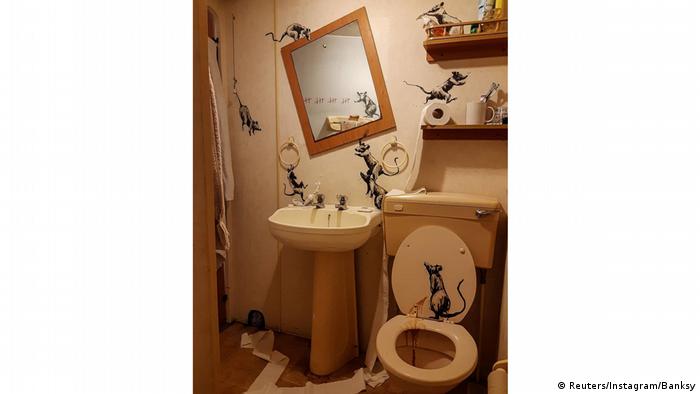
UK COVID-19 lockdown provides boom towns for rats

The coronavirus pandemic has thrown up all sorts of problems and challenges. Controlling a rodent infestation may not be top of the agenda, but it’s becoming a, er, gnawing issue in the UK.


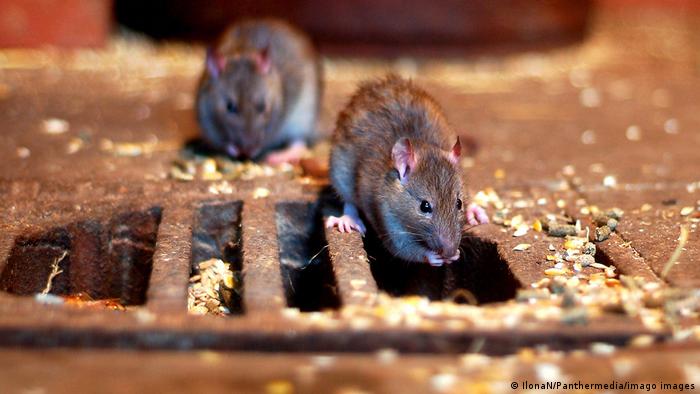
Rats are becoming more enterprising as the lockdown leaves streets and shops empty

Rats, and other members of the rodent family, have a lousy reputation. They crop up regularly in our everyday language to describe bleak situations and sentiments (Rats!, caught in a rat race, someone with rat-like features — you get the drift).

Much-maligned, they're often associated with the plague — somewhat apposite given our current predicament.

They seem to be omnipresent in the best of times, but now, they're having a, er, field day.

The Boomtown Rats


They're certainly more visible than in pre-pandemic times, but nothing to panic about — yet

In London and other major cities across the UK, rat sightings have soared during the pandemic. The British Pest Control Association (BPCA), which represents 700 vermin catchers across the country, said its members reported a 51% hike in rodent activity during the first lockdown last spring, and a 78% increase in November after the next lockdown.

Typically, rats avoid humans and make drains and sewers their homes. However, as a result of shuttered businesses and deserted high streets, the creatures are out in full force and making restaurants, pubs and empty buildings their new habitat as they look for other sources to satisfy their dietary needs.

"It seems their lifestyle patterns are changing. Rats, in particular, are also becoming more visible in areas of population. With less footfall across cities and towns, there is less associated food waste being left in bins and on the floor. Also, bin areas behind restaurants and pubs are empty and free of food waste making it unavailable for the local rat population," Natalie Bungay, technical officer with the BPCA, told DW via email.

AMID CORONAVIRUS PANDEMIC, ANIMALS RECLAIMING EMPTY CITIES
Trip into town
In the coastal Welsh town of Llandudno, usually timid mountain goats have ventured into the empty streets to take a look around. They've become an online favorite thanks to Twitter posts by video producer Andrew Stuart. "There's hardly anyone around to scare them or anything … they just don't really care and are eating whatever they can," he said. The UK has been on lockdown since March 23.
PHOTOS 12345678


Food for thought

As a result, rats are also moving further afield to find other food sources. "Rats seem to be moving from cities closer to residential areas, where we're still filling our bins with food waste," says Bungay.

So what can be done to address the problem?

A much-peddled notion is that cats are a rat's worse enemy. However, research has shown that our feline friends are embarrassingly poor at catching and killing them due to the rats' size and ferocity.

Even Larry, the chief mouser at 10 Downing Street, is not having much success at hunting down the different types of vermin.


Pest control, which is provided by the BPCA's members, has been deemed an essential service during the pandemic. "There has still been access to COVID-19 secure, professional services in the pandemic, even in lockdown. If pest management visits have been maintained, then properties and businesses should be in a good position to reopen safely," says Bungay.
Taking precautionary measures

The BPCA says there several measures the public can take to prevent rodent infestations, such as safely securing all food sources, checking that access points, such as air vents, are properly sealed, and performing thorough cleaning and hygiene processes.

Hygiene is the operative word here. Rodents are known to carry and transmit diseases such as "Leptospirosis [a bacterial disease ], Salmonella, Listeria, Toxoplasma gondii [a parasite that forms cysts and can affect a number of body organs], and Hantavirus [which can cause potentially deadly diseases such as hemorrhagic fever or a pulmonary syndrome]," as Bungay points out.

As off-putting and worrying as that may sound, it should be remembered that rats try to avoid contact with humans. With less of us out and about "they're perhaps getting a little bolder and possibly being seen in areas they normally wouldn't," says Bungay.

There's no need to panic just yet about the increased sightings. Still, the public should remain vigilant. "If you spot the signs of a rodent infestation, don't ignore it and get some professional help," says Bungay. "We don't want to see loads of businesses open back up and find a nasty surprise waiting for them."


Sunday, March 07, 2021

Biden signs executive order to expand voting rights: ‘If you have the best ideas, you have nothing to

‘Every eligible voter should be able to vote and have it counted’

Chris Riotta
New York@chrisriotta

President Joe Biden marked the 56-year anniversary of the “Bloody Sunday” march in Selma, Alabama by signing an executive order to protect and strengthen nationwide voting access, while calling on states to expand voting rights for all eligible Americans.

The order was described by the White House as an “initial step” towards securing voting rights just days after the passage of HR1, legislation focusing on expanding access to mail-in voting and making it easier for Americans to register to vote.

In prepared remarks, the president said: “Every eligible voter should be able to vote and have it counted.”

He added: “If you have the best ideas – you have nothing to hide. Let more people vote.”

Mr Biden’s latest order sought to modernise the government voter registration website Vote.gov and directed federal agencies to begin sharing additional information about mail-in voting access and voter registration across social media and on their own sites.

The action comes as civil rights advocates and Americans across the country reflect on the anniversary of the 1965 march on the Edmund Pettus Bridge that descended into violence as demonstrators were attacked by white Alabama state troopers.

The peaceful demonstrators were attempting to begin a march in support of voting rights from Selma to Montgomery. Many have attributed the day with sparking national outcry and a focus on the issues that eventually led to the passage of the Voting Rights Act.

On Sunday, Mr Biden attended the annual Martin and Coretta King Unity Breakfast in Selma, where he delivered the remarks before signing the executive order. 

“In 2020 – with our very democracy on the line – even in the midst of a pandemic – more Americans voted than ever before,” Mr Biden said. “Yet instead of celebrating this powerful demonstration of voting, we saw an unprecedented insurrection on our Capitol and a brutal attack on our democracy on January 6th. A never-before-seen effort to ignore, undermine and undo the will of the people.”
QUANTUM BIOLOGY

Quantum physics can cause mutations in our DNA, study

An innovative study has confirmed that quantum mechanics plays a role in biological processes and causes mutations in DNA.


BYAMIT MALEWAR

MARCH 6, 2021 

Credit: GETTY


Using advanced computer simulations, scientists from Surrey’s Leverhulme Quantum Biology Doctoral Training Centre determined the role of proton tunneling in spontaneous mutations inside DNA.

Proton tunneling is a type of quantum tunneling involving the instantaneous disappearance of a proton in one site and the same proton’s appearance at an adjacent site separated by a potential barrier.

Scientists found that hydrogen bonds hold the two strands of the DNA‘s double helix together. Under certain circumstances, the hydrogen bonds can behave like spread-out waves that can exist in multiple locations at once, because of proton tunneling. This prompts these atoms to occasionally being found on the wrong strand of DNA, prompting mutations.

Despite having a short lifetime, these mutations can survive the DNA replication mechanism inside cells.

Dr. Marco Sacchi, the project lead and Royal Society University Research Fellow at the University of Surrey, said: “Many have long suspected that the quantum world—which is weird, counter-intuitive and wonderful—plays a role in life as we know it. While the idea that something can be present in two places at the same time might be absurd to many of us, this happens all the time in the quantum world, and our study confirms that quantum tunneling also happens in DNA at room temperature.”

Louie Slocombe, a Ph.D. student at the Leverhulme Quantum Biology Doctoral Training Centre and co-author of the study, said:

“There is still a long and exciting road ahead of us to understand how biological processes work on the subatomic level, but our study—and countless others over the recent years—have confirmed quantum mechanics are at play. In the future, we are hoping to investigate how tautomers produced by quantum tunneling can propagate and generate genetic mutations.”


Journal Reference:
L. Slocombe et al. Quantum and classical effects in DNA point mutations: Watson–Crick tautomerism in AT and GC base pairs, Physical Chemistry Chemical Physics (2021). DOI: 10.1039/D0CP05781A
Singapore builds huge floating solar farm at sea in bid to tackle climate crisis

Oceans are ‘new frontier’ in electricity production, says firm tasked with carrying out project
3/7/2021

A worker checks cables on a floating solar power farm at sea off Singapore’s northern coast on 22 January, 2021. 

(AFP/Getty)

A growing push in Singapore to reduce the city-state’s greenhouse gas emissions and combat climate change has seen a sea of glimmering solar panels built off the country’s northern coast.

Reaching into the Johor Strait, which lies between the city-state and Malaysia, construction of the solar farm has seen 13,000 solar panels laid out at sea, according to a report from AFP.

With the ability to produce up to five megawatts of electricity, the solar panels can provide enough energy to power at least residential 1,400 flats year-round.

Shawn Tan, vice-president of engineering at Sunseap Group, the Singaporean firm tasked with carrying out the project, told AFP that the sea had presented a solution for a country with limited space on dry land for producing renewable energy.

“The sea is a new frontier for solar to be installed,” Mr Tan said.


“After exhausting the rooftops and the available land, which is very scarce, the next big potential is actually our water area,” said Jen Tan, senior vice-president and head of solar in southeast Asia at Sembcorp Industries, a business working on another solar project for Singapore.

The new effort comes as Singapore seeks to address its record as one of Asia’s biggest per-capita carbon dioxide emitters.

With limited space, along with a lack of options for hydro-electricity and wind power, Singapore has faced logistical challenges in the push towards renewable energy.

Environmental advocacy groups have long accused the country of failing to do enough to address climate change, even as rising sea levels have become a growing threat to Singapore’s future.

Climate Action Tracker (CAT) said in its analysis that while Singapore has strengthened its efforts to combat climate change, its 2020 and 2030 targets have been “weak”.

“Singapore updated its 2030 target in March 2020, but the updated target is not an increase in climate action, contrary to the Paris Agreement requirement to scale it up,” CAT states on its website.

Furthermore, CAT says that while Singapore released a long-term low emissions development strategy in April last year, aimed at halving emissions from their peak in 2030 by 2050, the plan “shows a lack of commitment to reaching net-zero emissions, aiming to achieve net zero ‘as soon as viable’ in the ‘second half of the century’.”

“Singapore needs to substantially strengthen its 2030 Paris Agreement target, which could form the basis for a more ambitious long-term target,” CAT states.

Despite the country’s expansion of its renewable energy capacity, natural gas is still the primary energy source in Singapore, accounting for 96 per cent of electricity generated, the organisation said

How To Nearly Sink a $2.9 Billion Dollar Submarine: Leave a Hatch Open.

As mishaps go the Arihant may have been among the more embarrassing but at least it didn’t result in the loss of life. 

March 7, 2021 Topic: India Submarine Region: Americas Blog Brand: The Reboot

Here’s What You Need to Remember: Since their inception submarines have been called a “steel tomb” due to the inherent dangers involved in their routine operations. It almost seems unnatural to design a boat that would travel under the water’s surface, and that is why it took a brave type of sailor to volunteer for such duty. During the American Civil War, the CSS Hunley became the first “successful” submarine in that it could effectively submerge yet had problems surfacing—and sadly that cost the lives of its entire crew.

During the Cold War, the Soviet Navy suffered a number of submarine accidents, with many being due to fires; while one particular accident involving the K-431 was later revealed to be due to mishandling of the boat’s nuclear rods, which were lifted too high into the air. That resulted in a reactor achieving critical mass, followed by a chain reaction and explosion.

Other accidents have been what can only be described as “human error” of the most extreme kind. A German Type VIIC submarine sank on its maiden voyage during World War II because the boat’s new deepwater high-pressure toilet was used “improperly,” by the captain no less!

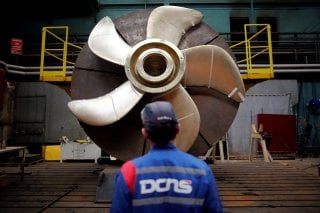
Yet, none of those mishaps compares to what happened to INS Arihant, India’s first nuclear-powered ballistic missile submarine, in 2017. The brand new $2.9 billion submarine was left completely inoperative for nearly a year after a hatch was left open, which allowed seawater to rush in, almost sinking the boat.

The nuclear submarine was the first of an expected five in class, designed and constructed as part of the Indian Navy’s Advanced Technology Vessel project. The Arihant was designed with four launch tubes that could carry a dozen K-15 short-range missiles or K-4 intermediate-range nuclear missiles.

While the subs were advanced the training of the crew certainly wasn’t.

Moreover, the Arihant faced a number of problems from the start, and this included delays in its construction and notably major differences between the Russian-supplied design and the indigenous fabrication.

Those were all minor of course compared to the damage that occurred from human error.

That resulted in a hatch that was left open by mistake while the boat was in the harbor, and in addition to filling the propulsion compartments with seawater, there was substantial damage to the pipes that ran through the submarine. Given how corrosive seawater can be the various pipes, including those that carry pressurized water coolant to and from the ship’s eighty-three-megawatt nuclear reactor, all had to be cut out and replaced.

The six-thousand-ton INS Arihant remained out of service at the docks while the water was pumped out, and the pipes replaced. The entire process took ten months. Its absence was first noted in the Doklam border standoff with China in the summer of 2017—and the Indian military only confirmed that the submarine had undergone repairs in early 2018.

As mishaps go the Arihant may have been among the more embarrassing but at least it didn’t result in the loss of life.

GOOD NEWS
Earth’s atmospheric oxygen will last for another billion years

The fundamental timescale of the oxygen-rich atmosphere on Earth remains uncertain.

BY PRANJAL MEHAR
MARCH 7, 2021

Image: Pixabay


Earth’s oxygenation is an increase in the concentration of atmospheric molecular oxygen (O2). Larger amounts of atmospheric oxygen became possible because of shifts in the competition between oxygen production derived from photosynthesis and the rate of oxygen consumption by various geological processes.

Earth’s modern atmosphere is a remotely detectable signal of its surface biosphere. However, the lifespan of oxygen-based biosignatures in Earth’s atmosphere remains uncertain, particularly for the distant future.

A recent study found the answer to this. Using a numerical model of biogeochemistry and climate, scientists from the Toho University reveal Earth’s oxygen-rich atmosphere’s future lifespan.

Knowing Earth’s oxygen-rich atmosphere’s future lifespan has great ramifications for the future of Earth’s biosphere and the search for life on Earth-like planets beyond the solar system.

The study reveals that the future lifespan of Earth’s oxygen-rich atmosphere is approximately one billion years.

Kazumi Ozaki, Assistant Professor at Toho University, said, “Indeed, it is generally thought that Earth’s biosphere will come to an end in the next 2 billion years due to the combination of overheating and CO2 scarcity for photosynthesis. If true, one can expect that atmospheric O2 levels will also eventually decreases in the distant future. However, it remains unclear exactly when and how this will occur.”

Scientists examined how Earth’s atmosphere will evolve in the future. For this, they built an Earth system model which simulates climate and biogeochemical processes. Because modeling future Earth evolution intrinsically has uncertainties in geological and biological evolutions, scientists adopted a stochastic approach. This allowed scientists to obtain a probabilistic assessment of the lifespan of an oxygenated atmosphere.

Running the model for more than 400 thousand times by varying model parameter, scientists found that Earth’s oxygen-rich atmosphere will probably persist for another one billion years (1.08±0.14 (1σ) billion years) before rapid deoxygenation rendered the atmosphere reminiscent of early Earth before the Great Oxidation Event around 2.5 billion years ago.

Ozaki said, “The atmosphere after the great deoxygenation is characterized by elevated methane, low-levels of CO2, and no ozone layer. The Earth system will probably be a world of anaerobic life forms.”

The study suggests that Earth’s oxygenated atmosphere would not be a permanent feature. The oxygen-rich atmosphere might only be possible for 20-30% of the Earth’s entire history as an inhabited planet.

Journal Reference:
Ozaki, K., Reinhard, C.T. The future lifespan of Earth’s oxygenated atmosphere. Nat. Geosci. (2021). DOI: 10.1038/s41561-021-00693-5
Drones vs hungry moths: Dutch use hi-tech to protect crops


MONSTER,
Netherlands — Dutch cress grower Rob Baan has enlisted high-tech helpers to tackle a pest in his greenhouses: palm-sized drones seek and destroy moths that produce caterpillars that can chew up his crops.

© Provided by The Canadian Press

“I have unique products where you don’t get certification to spray chemicals and I don’t want it,” Baan said in an interview in a greenhouse bathed in the pink glow of LED lights that help his seedlings grow. His company, Koppert Cress, exports aromatic seedlings, plants and flowers to top-end restaurants around the world.

A keen adopter of innovative technology in his greenhouses, Baan turned to PATS Indoor Drone Solutions, a startup that is developing autonomous drone systems as greenhouse sentinels, to add another layer of protection for his plants.

The drones themselves are basic, but they are steered by smart technology aided by special cameras that scan the airspace in greenhouses.

The drones instantly kill the moths by flying into them, destroying them in midair.

“So it sees the moth flying by, it knows where the drone is ... and then it just directs the drone towards the moth,” said PATS chief technical officer Kevin van Hecke.

There weren't any moths around on a recent greenhouse visit by The Associated Press, but the company has released video shot in a controlled environment that shows how one bug is instantly pulverized by a drone rotor.

The drones form part of an array of pest control systems in Baan's greenhouses that also includes other bugs, pheromone traps and bumblebees.

The drone system is the brainchild of former students from the Technical University in Delft who thought up the idea after wondering if they might be able to use drones to kill mosquitos buzzing around their rooms at night.

Baan says the drone control system is smart enough to distinguish between good and bad critters.

“You don’t want to kill a ladybug, because a ladybug is very helpful against aphids," he said. "So they should kill the bad ones, not the good ones. And the good ones are sometimes very expensive — I pay at least 50 cents for one bumblebee, so I don’t want them to kill my bumblebees.”

The young company is still working to perfect the technology.

“It’s still a development product, but we ... have very good results. We are targeting moths and we are taking out moths every night in an autonomous way without human intervention," said PATS CEO Bram Tijmons. "I think that’s a good step forward.”

Baan also acknowledges that the system still needs refining.

"I think they still need too many drones ... but it will be manageable, it will be less,” he said. “I think they can do this greenhouse in the future maybe with 50 small drones, and then it’s very beneficial.”

Mike Corder, The Associated Press
JUST IN TIME PRODUCTION
Seat Foam Shortage Could Cut Car Production, and Texas Grid Failure Is Blamed

Sebastian Blanco 
© Cadillac 

The recent Texas grid shutdown meant oil refineries didn't make byproducts needed for car and truck seating, and now automakers are scrambling for alternatives.

The massive winter storm that hit Texas in February caused widespread damage to water and electric infrastructure, and it also shut down oil refineries in the state.

That meant fewer refinery byproducts were produced, which meant there was less polyurethane foam produced, which meant no foam for car seats—and now automakers might have to stop or slow production in March until replacement supplies can be found.

One anonymous auto executive told Automotive News that this is going to be a bigger problem than the microchip shortage the industry is already dealing with.


The Texas-size electric grid shutdown that made headlines last month continues to have an impact on people living in the state, but it may also now affect production of new automobiles. That's because the state's failure to prepare for the dramatic winter storm and the resulting power outages stopped local petrochemical plants from operating, which is having a domino effect on the foam required to make new vehicle seats.


When the state's processing plants had to shut down, they put a pause on refining oil, which meant that the oil refinery byproducts that eventually get used in seats (specifically the propylene oxide that's needed for polyurethane foam) were also not being produced for a while. And that lack is now becoming evident to the automotive industry to the degree that, according to Automotive News, which broke the news, the looming foam shortage could alter automobile production starting next week, perhaps even Monday. Other sources said the impact might not be felt until later in March. But everyone seems to agree that finding alternative sources for seat foam is a priority right now.

© Melissa Vaeth/GM GM Assembly Wentzville MO

"Everyone is scrambling," one unnamed auto-industry executive told Crain's Detroit Business."This problem is bigger and closer than the semiconductor issue."

General Motors, Stellantis, Toyota, BMW, Hyundai, and Kia all told Automotive News that they're monitoring the situation but do not have any production stoppages to announce just yet.

The devastating winter storm that hit Texas in mid-February was caused by a blast of cold Arctic air moving further south than usual. It wasn't like the state didn't have any warning, with a senior meteorologist working for the state's unusual electric grid operator, ERCOT, writing in the days before the worst of the storm hit,"This period will go down in Texas weather history as one of the most extreme events to ever impact the state. Temperatures early next week will set widespread daily records that are likely to be the coldest experienced since the 1980s."

A possible foam shortage is not the only supply chain issue that automakers have faced recently. Late last year, the industry was not able to source enough microchips for new cars, which forced at least eight automakers in North America and more around the world to adjust schedules at production plants. That shortage was driven by auto plant shutdowns that happened in early 2020 when the coronavirus started spreading across the globe. At the time, automakers lowered their orders for more chips, thinking they would not need them if the virus dramatically lowered demand for new cars. But demand bounced back sooner than expected and automakers quickly learned chip suppliers had by then promised their products to companies making consumer electronics.