It’s possible that I shall make an ass of myself. But in that case one can always get out of it with a little dialectic. I have, of course, so worded my proposition as to be right either way (K.Marx, Letter to F.Engels on the Indian Mutiny)
Sunday, October 24, 2021
Data suggests oil giants are not looking very hard to find ways to reduce their carbon footprint
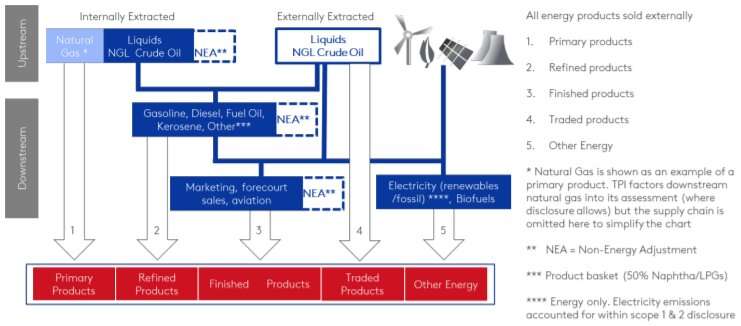
Schematic representation of how assessed product is calculated based on different categories of energy product and their relationship with the value chain. Credit: DOI: 10.1126/science.abh0687
A small team of environmentalists from the London School of Economics and the Political Science Organization for Economic Co-operation and Development has published a Policy Forum piece in the journal Science highlighting the lack of effort by the world's largest oil and gas companies to reduce their carbon footprint. In their paper, the authors claim that of 52 companies they looked at, just two of them have established science-based climate targets.
One of the biggest contributors of greenhouse gas emissions is the gasoline-burning vehicle. Cars and trucks the world over spew billions of tons of carbon into the atmosphere every day. And most of that gasoline is provided by oil and gas giants such as BP and Exxon Mobil. In recent years, these companies have been pushed by consumers and government alike to come up with plans to reduce their carbon footprints by reducing the amount of carbon-based product they sell to consumers. In this new effort, the authors suggest that the oil and gas giants have not responded to pressure as might be expected, and instead appear to be mostly turning a deaf ear.
To learn more about how the big oil and gas companies have been responding to calls for a response to global warming issues, the authors obtained and analyzed data from 52 of the largest companies looking for evidence of a response. They found that just two of the companies had made any public announcements regarding plans to help reduce emissions to meet the goals of the Paris Climate Accord. Occidental Petroleum announced it had plans to help reduce emissions to meet the 1.5 degree Celsius benchmark, and Royal Dutch Shell announced it had plans to help prevent reaching the 2 degree Celsius limit.
The authors also looked at emission intensities, the CO2 emissions from operations and use by customers, noting that only 23 of the companies listed numbers for customer use, which is, of course, the biggest contributor to emissions. They also looked at future emission intensity projections for all of the companies and found that just over half had released estimates. Those that did list them had unambitious goals, say the authors.
Overall, the authors found that the vast majority of large oil and gas companies are doing little to assist the effort to reduce greenhouse gas emissions, which in the end could be their undoing. As the world moves to alternative fuel sources, these giants could find themselves without customers.
Limiting climate change to the 1.5°C target set by the Paris Climate Agreement will likely require coal and gas power use to decline at rates that are unprecedented for any large country, an analysis of decadal episodes of fossil fuel decline in 105 countries between 1960 and 2018 shows. Furthermore, the findings, published October 22 in the journal One Earth, suggest that the most rapid historical cases of fossil fuel decline occurred when oil was replaced by coal, gas, or nuclear power in response to energy security threats of the 1970s and the 1980s.
Decarbonizing the energy sector is a particularly important strategy for reaching the goal of net-zero greenhouse gas emissions by 2050, which is necessary in order to prevent global average temperatures from climbing beyond 1.5°C this century. However, few studies have investigated the historical precedent for such a sudden and sweeping transition—especially the decline of carbon-intensive technologies that must accompany the widespread adoption of greener ones.
“This is the first study that systematically analyzed historical cases of decline in fossil fuel use in individual countries over the last 60 years and around the world,” says Jessica Jewell (@jessicadjewell), an associate professor in energy transitions at Chalmers University in Sweden, a professor at the University of Bergen in Norway, and the corresponding author of the study. “Prior studies sometimes looked at the world as a whole but failed to find such cases, because on the global level the use of fossil fuels has always grown over time.”
“We also studied recent political pledges to completely phase out coal power, which some 30 countries made as part of the Powering Past Coal Alliance. We found that these pledges do not aim for faster coal decline than what has occurred historically,” adds Jewell. “In other words, they plan for largely business as usual.”
To explore whether any periods of historical fossil fuel decline are similar to scenarios needed to achieve the Paris target, Jewell and her colleagues, Vadim Vinichenko, a post-doctoral researcher at Chalmers and Aleh Cherp, a professor at Central European University in Austria and Lund University in Sweden, identified 147 episodes within a sample of 105 countries between 1960 and 2018 in which coal, oil, or natural gas use declined faster than 5% over a decade. Rapid decline in fossil fuel use has been historically limited to small countries, such as Denmark, but such cases are less relevant to climate scenarios, where decline should take place in continental-size regions.
Jewell and colleagues focused the investigation on cases with fast rates of fossil fuel decline in larger countries, which indicate significant technological shifts or policy efforts, and controlled for the size of the energy sector, the growth in electricity demand, and the type of energy with which the declining fossil fuel was substituted. They compared these cases of historical fossil fuel decline to climate mitigation scenarios using a tool called “feasibility space,” which identifies combinations of conditions that make a climate action feasible in particular contexts.
“We were surprised to find that the use of some fossil fuels, particularly oil, actually declined quite rapidly in the 1970s and the 1980s in Western Europe and other industrialized countries like Japan,” says Jewell. “This is not the time period that is typically associated with energy transitions, but we came to believe that some important lessons can be drawn from there.” Rapid decline of fossils historically required advances in competing technologies, strong motivation to change energy systems (such as to avoid energy security threats), and effective government institutions to implement the required changes.
“We were less surprised, but still somewhat impressed, by how fast the use of coal must decline in the future to reach climate targets,” she adds, noting that, of all the fossil fuels, coal would need to decline the most rapidly to meet climate targets, particularly in Asia and the OECD regions where coal use is concentrated.
About one-half of the IPCC 1.5°C-compatible scenarios envision coal decline in Asia faster than in any of these cases. The remaining scenarios, as well as many scenarios for coal and gas decline in other regions, only have precedents where oil was replaced by coal, gas or nuclear power in response to energy security threats in smaller electricity markets. Achieving the 1.5°C target requires finding mechanisms of fossil fuel decline that extend far beyond historical experience or current pledges.
The authors found that nearly all scenarios for the decline of coal in Asia in line with Paris Agreement’s goals would be historically unprecedented or have rare precedents. Over half of scenarios envisioned for coal decline in OECD countries and over half of scenarios for cutting gas use in reforming economies, the Middle East, or Africa would also be unprecedented or have rare precedents as well.
“This signals both an enormous challenge of seeing through such rapid decline of fossil fuels and the need to learn from historical lessons when rapid declines were achieved on the national scale,” says Jewell.
###
This work was supported by the Research Council of Norway under the Analyzing Past and Future Energy Industry Contractions: Towards a Better Understanding of the Flip-Side of Energy Transitions project and by the European Union’s Horizon 2020 research and innovation program.
One Earth (@OneEarth_CP), published by Cell Press, is a monthly journal that features papers from the fields of natural, social, and applied sciences. One Earth is the home for high-quality research that seeks to understand and address today’s environmental Grand Challenges, publishing across the spectrum of environmental change and sustainability science. A sister journal to Cell, Chem, and Joule, One Earth aspires to break down barriers between disciplines and stimulate the cross-pollination of ideas with a platform that unites communities, fosters dialogue, and encourages transformative research. Visit http://www.cell.com/one-earth. To receive Cell Press media alerts, contact press@cell.com.
The brain is the most complex organ in the human body. Now, a new study has brought us closer to understanding some of its evolution. It shows that human brains decreased in size approximately 3,000 years ago. By studying ants as models to illustrate why brains may increase or decrease in size, the researchers hypothesize that brain shrinkage parallels the expansion of collective intelligence in human societies.
Studying and understanding the causes and consequences of brainevolutionhelps us understand the nature of humanity. It is well documented thathuman brainshave increased in size over the course of our evolutionary history. Less appreciated is the fact that human brains have decreased in size since the Pleistocene. When exactly these changes happened, or why, was not well known.
"A surprising fact about humans today is that our brains are smaller compared to the brains of our Pleistocene ancestors. Why our brains have reduced in size has been a big mystery for anthropologists," explained co-author Dr. Jeremy DeSilva, from Dartmouth College.
To disentangle this mystery, a team of researchers from different academic fields set out to study the historical patterns of human brain evolution, comparing their findings with what is known in ant societies to offer broad insights.
"A biological anthropologist and a behavioral ecologist and evolutionary neurobiologist began sharing their thoughts on brain evolution and found bridging research on humans and ants might help identify what is possible in nature," said co-author Dr. James Traniello, from Boston University.
Their paper, published in Frontiers in Ecology and Evolution, sheds new light on the evolution of our brain.
A recent size decrease
The researchers applied a change-point analysis to a dataset of 985 fossil and modern human crania. They found that human brains increased in size 2.1 million years ago and 1.5 million years ago, during the Pleistocene, but decreased in size around 3,000 years ago (Holocene), which is more recent than previous estimates.
"Most people are aware that humans have unusually large brains—significantly larger than predicted from our body size. In our deep evolutionary history, human brain size dramatically increased," said Traniello. "The reduction in human brain size 3,000 years ago was unexpected."
The timing of size increase coincides with what is previously known about the early evolution of Homo and the technical advancements that led to; for example, better diet and nutrition and larger social groups.
As for the decrease in brain size, the interdisciplinary team of researchers propose a new hypothesis, finding clues within ant societies.
What could ants teach us about human brain evolution?
"We propose that ants can provide diverse models to understand why brains may increase or decrease in size due to social life. Understanding why brains increase or decrease is difficult to study using only fossils," explained Traniello.
Studying computational models and patterns of worker ant brain size, structure, and energy use in some ant clades, such as the Oecophylla weaver ant, Atta leafcutter ants, or the common garden ant Formica, showed that group-level cognition and division of labor may select for adaptive brain size variation. This means that within a social group where knowledge is shared or individuals are specialists at certain tasks, brains may adapt to become more efficient, such as decreasing in size.
"Ant and human societies are very different and have taken different routes in social evolution," Traniello said. "Nevertheless, ants also share with humans important aspects of social life such as group decision-making and division of labor, as well as the production of their own food (agriculture). These similarities can broadly inform us of the factors that may influence changes in human brain size."
Brains use up a lot of energy, and smaller brains use less energy. The externalization of knowledge in human societies, thus needing less energy to store a lot of information as individuals, may have favored a decrease in brain size.
"We propose that this decrease was due to increased reliance on collective intelligence, the idea that a group of people is smarter than the smartest person in the group, often called the 'wisdom of the crowds,'" added Traniello.
More information:Jeremy DeSilva et al, When and Why Did Human Brains Decrease in Size? A New Change-Point Analysis and Insights from Brain Evolution in Ants,Frontiers in Ecology and Evolution(2021).DOI: 10.3389/fevo.2021.742639
Tropical rainfall pattern will increase rainfall variability in Pacific Northwest
The tropical Madden-Julian Oscillation (MJO) rainfall pattern brings change to non-tropical parts of the United States.
DOE/US DEPARTMENT OF ENERGY
The Science
The Madden-Julian Oscillation (MJO) is a tropical rainfall pattern that excites waves of air in the atmosphere. The MJO can have a significant effect on weather outside of the tropics. Scientists have studied how the MJO might respond to a warming climate. However, they know much less about how warming temperatures might affect the “teleconnection” that causes the MJO to affect non-tropical weather. This research shows that the MJO teleconnection pattern observed in winters in far northern regions will likely extend further eastward over the North Pacific. This change will increase the effects of the MJO on the variability of rainfall in California.
The Impact
The eastward-extended teleconnection allows the MJO to exert more influence on the Northeast Pacific and the west coast of North America. The increased sub-seasonal variability poses challenges on regional resource management. It also creates challenges for how we prepare for extreme weather in these regions.
Summary
The MJO is a slow-moving tropical mode that produces a planetary-scale envelope of convective storms. By exciting Rossby waves—atmospheric waves that span the planet—the MJO creates atmospheric linkages called “teleconnections” that have far-reaching effects on extratropical circulation and weather. While recent studies have investigated the MJO's response to anthropogenic warming, scientists know less about potential changes in MJO teleconnection patterns. This new research shows that the MJO teleconnection pattern in boreal winter will likely extend further eastward over the North Pacific. This is due primarily to an eastward shift in the exit region of the subtropical jet, on which the teleconnection pattern is anchored, and additionally contributed by an eastward extension of the MJO itself. The eastward-extended teleconnection allows the MJO to exert a greater impact downstream on the Northeast Pacific and North American west coast. Over California, the multi-model statistical mean result projects an approximately 54 percent increase in MJO-induced precipitation variability by the year 2100 under a high emission scenario.
Funding
This work was supported by Berkeley Lab Laboratory Directed Research and Development (LDRD) funding provided by the Department of Energy (DOE) Office of Science; the DOE Office of Science, Office of Biological and Environmental Research, Climate and Environmental Sciences Division, Regional & Global Climate Model Analysis program (specifically, the Calibrated and Systematic Characterization, Attribution, and Detection of Extremes [CASCADE] project); the National Institute of Food and Agriculture; the Packard Fellowship for Science and Engineering; the National Science Foundation; and the National Natural Science Foundation of China.
IMAGE: BEEF CATTLE GRAZE ON A FAMILY FARM IN AUGUSTA COUNTY, VIRGINIA.view more
CREDIT: JOHN BENNER FOR VIRGINIA TECH
Rolling green pastures dotted with grazing cows are a common sight in Virginia. However, there’s more strategy behind those grazing cows than most people know, such as the impact on the land, water quality, and farm profitability.
In 2015 a small team of Virginia Cooperative Extension agents, farmers, and representatives from state and federal conservation agencies from Northern Piedmont and Northern Shenandoah Valley created the Graze 300 VA Initiative “to enable Virginia farmers to achieve 300 days of livestock grazing per year by facilitating better pasture management and environmental stewardship.” Since then, Graze 300 VA has grown to 30 Extension agents and specialists working together with farmers across Virginia.
This year, the Graze 300 VA movement is beefing up its mission — thanks to a grant from the Virginia Tech College of Agriculture and Life Sciences Strategic Plan Advancement Integrated Internal Competitive Grants Program and the Virginia Agricultural Experiment Station. Out of 71 proposals submitted, 32 projects were funded. Graze 300 VA was the only one led by Extension agents.
Virginia Cooperative Extension agents Carl Stafford, Bobby Clark, and John Benner, and Inga Haugen, University Libraries’ liaison to the College of Agriculture and Life Sciences, are leading the program’s efforts.
The grant will help build on existing Graze 300 VA successes, research social factors that influence farmer change, provide in-depth grazing management training, develop better educational resources for Virginia’s farmers, and broaden the use of technology, including designing a grazing app to advance the Graze 300 VA initiative.
Most farmers graze about 220 days per year, from spring until fall, and supplement with hay during the four-month cold season. Winter feeding can account for more than 50 percent of production costs due to the cost of making hay. Inflation and spikes in the cost of farm equipment, fuel, and fertilizer make traditional grazing less profitable than years past. Currently, only a handful of farmers in Virginia regularly reach a 300-day grazing season.
According to the team’s background work, if 20 percent of Virginia farmers adopt better grazing management practices and extend their grazing season closer to 300 days per year, Virginia farms could increase profitability by more than $6 million per year.
“We have collected several case studies of farmers who have successfully extended their grazing season and have become more profitable,” Benner said. “We continue to share these experiences with other farmers.”
The team said that although Graze 300 VA could have a huge impact, getting farmers to adopt the extended grazing movement won’t be easy. Farmers’ deep-seated traditions surrounding grassland and livestock management techniques are interwoven into the fabric of these communities. For example, traditions associated with hay baling and feeding hay are a rite of passage for young people in family farming operations.
To help create strategies to encourage farmers to adopt new practices, the team recruited colleagues from the College of Liberal Arts and Human Sciences.
“We believe there are traditional barriers to adopting this new way of farming that we don’t fully understand,” said Clark. “Thus we have engaged the Virginia Tech Sociology Department to help us better understand those factors.
"Farm profitability helps to ensure that Virginia’s rural communities are resilient and vibrant,” Clark continued. “Over the long term, farm profitability is a repetitive cycle. We teach farmers more profitable technologies, and as farmers adopt these technologies, it becomes the new normal. The net benefit of this cycle ensures citizens have a safe, affordable, and consistent supply of food.”
CAPTION
A falling plate meter is used to measure the amount of grass in a field so farmers have more precise readings in managing their grass.
CREDIT
Bobby Clark for Virginia Tech
They just need the technology to do it.
The team wants to utilize unique technologies like those developed in Ireland for improving farm and forage management. They will create similar tools that can connect with farmers and technical service providers, collect and monitor farm production data, and evaluate management decisions. This technology will integrate well with Graze 300 VA partners, the Center for Advanced Innovation in Agriculture and their SmartFarm Innovation Network (Sustainable Precision Animal Agriculture).
To create this technology, the team tapped the University Libraries’ DataBridge team to assist in scoping potential solutions and implementing a project plan. The goal is to allow Virginia cattle farmers to better capture information on their pastures and livestock and allow for more efficient use of their land and extend the grazing season further into the year. Essential data such as paddock usage to indicate cattle rotation, cattle health, and biologics will be considered for the app.
“This app can have a big impact on Virginia farmers,” said Jonathan Briganti, the manager for DataBridge. Briganti will scope “the diverse climate, cattle breeds, and workflows seen in American farms." Such an effort requires a deeply researched and carefully executed plan, which is why the principal researchers work methodically to bring the right domain experts in the room, Briganti added.
The application will assist producers tracking and managing forage output and grazing to reduce feed costs and improve environmental quality.
Extending the grazing season also has environmental and production benefits. In well-managed pastures, the sod is thicker. This reduces runoff, soil erosion, and nutrient losses. Therefore, farmers use less fertilizer. Additionally, because thicker sod captures more water in sudden rainfall events, the pastures are more productive during dry summers when occasional storms are the only source of moisture.
The team is also partnering with farmers, agribusinesses, and several agencies to improve water quality. According to Clark, extending the grazing season will improve water infiltration, nutrient use efficiency, and soil organic matter while encouraging fewer barren areas in fields. A longer grazing season also reduces the amount of sediment, nitrogen, and phosphorus that ends up in surface waters that could eventually run into streams and rivers.
“It’s economics and environment and doing what is best for the landscape," said Haugen, who was a grazing dairy farmer before she was a librarian. "A type of farming that works on flatlands, like vegetable or crop farming, might be a poor choice in the mountains. This program works with what folk are doing and helps them to be better in many areas. It benefits them and our communities that share the water, air, and soil, and then also our downstream neighbors.”
“This is the extension/outreach component of land-grant universities,” Clark said. “In this case, Virginia Cooperative Extension is helping to address three major issues across the commonwealth: ensuring a safe, affordable, and consistent food supply, helping Virginia sustain resilient communities, ensuring environmental health and stewardship, and ensuring water quality.
“This is a big deal,” Clark continued. “This initiative is improving farm profitability, environmental issues, and water quality. An enormous challenge the world faces is finding ways to have good water quality or improve water quality that do not cause a major financial burden on people or industry. In this case, we are achieving both better water quality and better farm profitability. It is a win-win situation.”
The team is seeking collaborators interested in helping with the Graze 300 VA Initiative. People interested in testing the app, learning more about grazing, supporting students in learning about data and grazing, or have questions in general are welcome to contact Haugen.
Project to study marine life in Gulf Of Mexico Reefs
Texas A&M-Galveston professor Jay Rooker will lead a $1.9 million effort to learn more about the Flower Garden Banks and the fish that inhabit the marine sanctuary.
The Gulf of Mexico is one of the most important areas in the world for marine life, and especially its natural banks and reefs that provide food, habitat and shelter for numerous species. It’s also home to a key marine protected area, and a Texas A&M University at Galveston marine biologist is heading a $1.9 million project to study how fish and marine life inhabit the region.
Jay Rooker will lead a team of 13 researchers from five universities hoping to answer many questions about marine life in the Gulf, especially those related to natural banks and the fishes that inhabit them.
One key area that will be examined is the Flower Garden Banks National Marine Sanctuary that was first discovered by snapper and grouper fishermen in the early 1900s. They named the banks after the corals, sponges, plants and other marine life that they could see on the brightly-colored reefs below their boats.
“Understanding how fish populations use the Flower Garden Banks and other banks in the expanded sanctuary boundaries will be the focus of our research,” Rooker said. “We will study a wide range of reef-associated fishes — including groupers, snappers, jacks, parrotfish and sharks — to determine their required habitats and how natural banks within the sanctuary are interconnected.”
The first scientific study of the area, located about 100 miles off the Galveston coast, did not occur until 1936 but numerous studies have been conducted in the area since then. Earlier this year, the sanctuary was expanded from 56 to 160 square miles and now includes 14 additional banks. Today, the Flower Garden Banks is the only national marine sanctuary in the Gulf of Mexico and is one of 14 federally designated underwater areas protected by NOAA’s Office of National Marine Sanctuaries.
Rooker and the team will use acoustic and satellite telemetry to track fish movements within and across banks. They will also use sound recordings to determine the timing of spawning activity to help show where the fish will end up as juveniles.
“Reef-associated fishes in the Gulf of Mexico reside in a complex mix of habitats and natural banks,” Rooker said. “The outer shelf of the northern Gulf of Mexico is characterized by a network of natural banks that extend eastward along the edge of the Texas-Louisiana shelf to the mouth of the Mississippi River. These natural banks — including the Flower Garden Banks — provide critical habitat for a variety of marine organisms. But our understanding of how fish use these natural banks is rather limited, and we hope to learn more about essential habitats of key components of this unique reef fish assemblage and improve our understanding of fish populations within the sanctuary.”
Although many Americans favor expanding background checks for gun purchases, gun-control measures in Congress have failed to garner enough votes to pass. In contrast, some state legislatures have enacted measures to reduce gun violence in their communities. A new study examined the impact changes to background checks and licensing policies has made on different types of violent crime in Massachusetts. The study found no immediate impact, suggesting that state lawmakers may want to ensure their legislation is being implemented as intended.
The study, by a researcher at American University (AU), appears in Justice Quarterly, a publication of the Academy of Criminal Justice Sciences.
“Gun violence remains at the forefront of the public policy debate when it comes to enacting new or strengthening existing gun legislation in the United States,” explains Janice Iwama, assistant professor of justice, law, and criminology at AU, who conducted the study. “Yet the political polarization and relatively limited scholarly research on guns and gun violence make it difficult for policymakers and practitioners to enact and implement legislation that addresses the public health and safety issues associated with gun violence.”
In 2014, Massachusetts passed new requirements related to background checks for firearms sold at gun shows or through private sales and created changes to firearm regulations by adopting new gun licensing procedures; the new law went into effect in January 2015. Research on the effects of gun legislation has yielded mixed findings and the effectiveness of Massachusetts’ law is unclear.
Iwama explored the differential effects of the new legislation on public safety outcomes, including violent crime, in Massachusetts counties from 2006 to 2016. She used data from the Firearms Records Bureau, a statewide agency that maintains a database of issued licenses and records of firearms sales by gun dealers, as well as private transfers of weapons.
The study used models to predict counts of violent crimes, using data from the FBI, and considering variables that represent the percentage of all denied applications, the percentage of denied applications due to unsuitability, and the percentage of denied applications due to statutory disqualification (e.g., criminal history record, mental health record, fugitive status) at the county level.
Based on the percent of firearms licenses, about 1 to 5 percent of adult residents had a firearms license in Massachusetts counties. But Iwama found no consistent effect of the new legislation on reducing four types of violent crime (murder or nonnegligent manslaughter, aggravated assault, robbery, rape).Her study did find that a one-percent increase in denied firearm licenses and denied firearm licenses following statutory disqualifications increased robberies 7.3 and 8.9 percent, respectively.
While the percentage of denied firearms licenses and firearms license applications had little to no effect on violent crimes, Iwama suggests state lawmakers revisit their legislation to ensure that it is being implemented as intended and address challenges identified. In particular, are these findings the result of a longer-than-expected lag in enforcement following passage of the legislation? Are they due to individuals obtaining firearms in nearby states with looser gun laws? Or is it possible that the 2014 law is being enforced differentially by county?
“It is important for policymakers, practitioners, and researchers to consider the magnitude of effects of their laws and how they may be influenced by different levels of enforcement in the state or by the lack of enforcement in surrounding states,” cautions Iwama.
Among the study’s limitations, Iwama notes that the data collected from the FBI was not complete because of changes in reporting practices. In addition, the percentage of firearms licenses, which she used as a proxy for gun ownership, represents neither a perfect measure of gun owners nor an accurate count of the number of firearms available by county. Finally, the small size of the study’s sample hindered the author’s ability to examine patterns across different counties in the state.
NIH/NATIONAL CENTER FOR ADVANCING TRANSLATIONAL SCIENCES (NCATS)
A new, retrospective study of medical and insurance records indicates health care costs for people with a rare disease have been underestimated and are three to five times greater than the costs for people without a rare disease. The study, led by the National Institutes of Health’s National Center for Advancing Translational Sciences (NCATS), provides new evidence of the potential impact of rare diseases on public health, suggesting that nationwide medical costs for individuals with rare diseases are on par with those for cancer and heart failure. The study’s results were published Oct. 21 in the Orphanet Journal of Rare Diseases.
Most of the approximately 7,000 to 10,000 known rare diseases disproportionately affect children, adolescents and young adults. Individually, most rare diseases might affect only a few hundred to a few thousand people worldwide. However, rare diseases are collectively common, affecting an estimated 25 million to 30 million people in the United States. Many of these diseases have a genetic cause, are serious or life-threatening and are hard to diagnose and treat.
The pilot study was a collaborative effort among NCATS; Eversana Life Sciences, Chicago; Oregon Health & Science University, Portland; Sanford Health, Sioux Falls, South Dakota; and a health insurer in Australia. Pariser and colleagues analyzed patients’ diagnosis information in medical records and billing codes. They used International Classification of Diseases (ICD) codes, which designate a disease diagnosis and other methods, to determine those individuals with rare diseases and their direct medical costs for 14 rare diseases in four health care systems compared to non-rare disease patients of a similar age.
The pilot study aimed to test the feasibility of this approach in analyzing data on rare diseases prevalence and costs. The 14 rare diseases represented a diverse set of disorders that differ in prevalence, organ systems affected, age of onset, clinical course, and availability of an approved treatment or specific ICD code. Examples of the selected rare diseases include sickle cell disease, muscular dystrophy and eosinophilic esophagitis.
The team determined approximate medical costs by examining healthcare system data from NCATS and Eversana. In every case, the cost per patient per year (PPPY) for those with a rare disease exceeded costs for non-rare diseases patients of the same age. According to the Eversana healthcare system database, which included estimates from commercial and insurance payors over nearly 15 years, PPPY costs ranged from $8,812 to $140,044 for rare diseases patients compared to $5,862 for those without a rare disease. The NCATS data, which drew from estimates mostly from Florida Medicaid information over five years, indicated PPPY costs ranging from $4,859 to $18,994 for rare diseases patients versus $2,211 for those without a rare disease.
The team reported that extrapolating the average costs estimate for the approximately 25 to 30 million individuals with rare diseases in the United States would result in total yearly direct medical costs of approximately $400 billion, which is similar to annual direct medical costs for cancer, heart failure and Alzheimer’s disease.
The researchers also used patient medical records to trace the diagnostic journeys of four people with a rare disease, including two individuals who had a form of Batten disease, an inherited neurological disorder, and two others with cystic fibrosis, an inherited disease that severely affects the lungs. The journey “maps” provided detailed descriptions of direct medical costs, such as for hospitalizations and procedures associated with these diseases, and provided insights into patient clinical management before and after disease diagnosis.
Such commonalities among rare disease patients could point to the potential use of machine learning techniques on healthcare system databases to improve diagnoses, said NCATS Acting Director Joni L. Rutter, Ph.D., a co-author on the study.
The research team also would like to determine if the methodologies they used for exploring the prevalence and associated costs for a small set of rare diseases could be scaled to thousands of other known rare diseases.
“Ultimately, to improve the lives of people with rare diseases,” said Rutter, “we need to find innovative ways, including new technologies, to help shorten the lengthy diagnostic odysseys so many patients and families experience and make more treatments available faster.”
About the National Center for Advancing Translational Sciences (NCATS): NCATS conducts and supports research on the science and operation of translation — the process by which interventions to improve health are developed and implemented — to allow more treatments to get to more patients more quickly. For more information about how NCATS helps shorten the journey from scientific observation to clinical intervention, visit https://ncats.nih.gov.
About the National Institutes of Health (NIH): NIH, the nation’s medical research agency, includes 27 Institutes and Centers and is a component of the U.S. Department of Health and Human Services. NIH is the primary federal agency conducting and supporting basic, clinical, and translational medical research, and is investigating the causes, treatments, and cures for both common and rare diseases. For more information about NIH and its programs, visit https://www.nih.gov.
NIH…Turning Discovery Into Health®
JOURNAL
Orphanet Journal of Rare Diseases
METHOD OF RESEARCH
Data/statistical analysis
ARTICLE TITLE
The IDeaS initiative: pilot study to assess the impact of rare diseases on patients and healthcare systems.
ARTICLE PUBLICATION DATE
21-Oct-2021
US COVID-19 pandemic lockdowns sharply increased bicycle-related injuries; gun-related injuries rose too
Study results from trauma centers in four different regions may provide a roadmap for allocating trauma resources in the next pandemic
IMAGE: THE EFFECT OF CORONAVIRUS SHUTDOWNS ON NATIONWIDE TRAUMA PATTERNS. SCIENTIFIC FORUM PRESENTATION. AMERICAN COLLEGE OF SURGEONS CLINICAL CONGRESS.view more
CREDIT: AMERICAN COLLEGE OF SURGEONS
Key takeaways
Despite regional variations in COVID-19-related restrictions, trends in trauma center activity followed similar patterns in four trauma centers in different regions of the United States.
Trauma cases involving bicycle-related injuries increased 100 percent, and gunshot wounds increased 23.5 percent, during lockdown.
Study findings indicate allocating more resources for wellness may be a priority in future pandemic-related lockdowns.
CHICAGO: Despite regional variations in COVID-19-related restrictions last year during the lockdown phase of the pandemic, similar trends emerged in activity at Level I trauma centers in four different cities from the Southeast to the Northwest, according to research presented at the virtual American College of Surgeons (ACS) Clinical Congress 2021.
The data could help inform public policy decision-making for the next pandemic, study authors said.
A retrospective review of 27,652 trauma cases from 2019 to 2020 at four Level I trauma centers in Orange County, California; Portland, Oregon; Miami, Florida; and Tulsa, Oklahoma, found that overall activity followed similar patterns in these locations, with cases for motor vehicle collisions declining while those for gunshot wounds and bicycle accidents increased significantly.
“We were trying to assess if the different variations in COVID-19 shutdowns across the country affected trends,” said presenter Leonardo Alaniz, a third-year medical student at the University of California, Irvine. The findings bore out the study hypothesis—that trauma centers in four different cities with different levels of pandemic restrictions demonstrated similar trauma case patterns.
“Overall, what we discovered is that there was a substantial increase in bicycle-related trauma rates of about 100 percent,” he said (p < 0.01). “We also saw an increase in gunshot wounds (GSW) by about 23.5 percent. However, we did see a substantial reduction in motor vehicle crash (MVC)-related trauma rates, about 12.7 percent.” (p values for both GSW and MVC-related trauma are <0.01.)
The trend for GSW was somewhat unexpected, senior author Cristobal Barrios, Jr., MD, FACS, said. “We thought we might see an uptick in the percentage of GSW given the percentages of MVC were down and the percentages might need to go up to cover that mechanism of injury; but we were mildly surprised that not only did the percentage go up, but the actual raw numbers of gun injuries went up,” said Dr. Barrios, a health sciences clinical professor in surgery and assistant dean of admissions at UC Irvine. “That was true across all the trauma centers that contributed data to the study.”
While the percentage changes in those three metrics varied among the individual centers, the overall trends followed the same pattern. The changes at each individual site are:
In Orange County, GSW increased 55 percent (p < 0.01), MVC decreased 10.2 percent (p < 0.01), and bicycle injuries increased 30.8 percent (p = 0.01).
Dr. Barrios said the trends in MVC- and bicycle-related injuries during lockdown are understandable. “People weren’t going anywhere for any real large distances because there was nowhere to go during lockdown, but maybe they were utilizing their bicycles to get around a little bit, to get some exercise, and to get out of the house,” Dr. Barrios said. In June 2020, bicycle sales increased 63 percent over the same period in 2019, the market research firm NPD gGroup, Inc. reported.*
These findings may help clinicians and policy makers to better prepare if pandemic-related restrictions are necessary in the future, Dr. Barrios said.
“We did this research to shed light on what to expect during any possible next lockdown for a pandemic and where to potentially put resources for clinicians in terms of what types of injuries might present and that might increase or decrease,” he said. “Tailoring resources was one point.”
One of the take-home findings, Dr. Barrios noted, was that more resources should be applied to addressing issues of wellness, namely stress reduction and mental health. “That might be why people were using bicycles more; to get out and get exercise and reduce their stress,” he said.
Mr. Alaniz added, “Another big contributor would be to have more green spaces in these communities—spaces where people can go out and exercise in a safe environment. That would also play a huge role in preserving the mental health of our communities.”
Study coauthors are Juan P. Hoyos and Erika Tay Lasso, MD, of the UC Irvine Department of Surgery; Shevonne Satahoo, MD, of Jackson Memorial Miller School of Medicine, Miami; Gajal Kumar, MD, FACS, of Ascension Medical Group St. John Medical Center, Tulsa; and Megan Lundeberg, MD, of Legacy Emanuel Hospital and Health Center, Portland.
“FACS” designates that a surgeon is a Fellow of the American College of Surgeons.
The study authors have no relevant financial relationships to disclose.
Citation: Alaniz L, et al. The Effect of Coronavirus Shutdowns on Nationwide Trauma Patterns. Scientific Forum Presentation. American College of Surgeons Clinical Congress. 2021. ________________________ *Schwinn shifts marketing gears as bike riding surges during the coronavirus crisis. CNBC. Available at: https://www.cnbc.com/2020/08/29/coronavirus-bike-sales-surge-schwinn-pivots-marketing-plan.html (.) Accessed September 30, 2021.
# # #
About the American College of Surgeons The American College of Surgeons is a scientific and educational organization of surgeons that was founded in 1913 to raise the standards of surgical practice and improve the quality of care for all surgical patients. The College is dedicated to the ethical and competent practice of surgery. Its achievements have significantly influenced the course of scientific surgery in America and have established it as an important advocate for all surgical patients. The College has more than 84,000 members and is the largest organization of surgeons in the world. For more information, visit www.facs.org.