Sunday, November 14, 2021

Lab details conditions to decontaminate disposable masks
Rice lab details conditions to decontaminate disposable masks
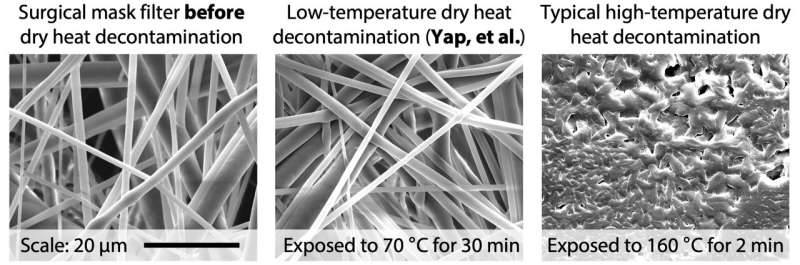
Scanning electron microscope images by Rice University engineers show the effects of
 heat on the filter layer of a surgical facemask. The center image shows the polymer filter
 after decontamination at 70 degrees Celsius for 30 minutes. The right image shows the 
melted layer after exposure to 160 C for two minutes. The research team determined that 
a disposable mask can be decontaminated for reuse after five minutes at 70 C. 
Credit: Faye Yap / Rice University

Here's the recipe to decontaminate a disposable facemask: Heat it at 160 degrees Fahrenheit in an oven for five minutes. You can use your own oven.

The science now bears that out, according to engineers at Rice University, who through extensive experimentation and modeling, determined that proper heating will eliminate the virus that causes COVID-19 from a standard disposable surgical mask without degrading the mask itself. 

The work by mechanical engineer Daniel Preston of Rice's George R. Brown School of Engineering, Rice graduate student Faye Yap and collaborators at the University of Texas Medical Branch (UTMB), Galveston, shows masks can be decontaminated and reused multiple times before degrading. 

Best of all, heating to 70 degrees Celsius (approximately 160 F) killed more than 99.9% of SARS-CoV-2 and other viruses they tested, meeting FDA guidelines for decontamination. That shows promise for adapting the protocol to handle future outbreaks where personal protective equipment (PPE) is at a premium.

The research is detailed in the Journal of Hazardous Materials.

The paper is the third in a series prompted by the COVID-19 pandemic and supported by a National Science Foundation Rapid Response Research grant. The first paper in August 2020 suggested a thermal approach to decontamination would be viable. The second paper, which appeared this May, compared the effects of ambient temperature ranges on the virus in several U.S. locations. 
Rice lab details conditions to decontaminate disposable masks
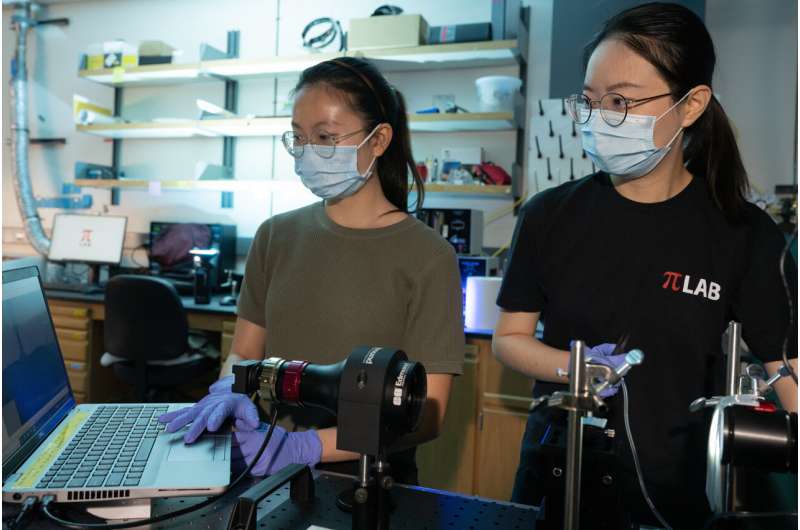
Rice University graduate students Faye Yap, left, and Zhen Liu characterize a mask sample. Researchers at Rice and the University of Texas Medical Branch, Galveston, have established a framework for properly decontaminating disposable facemasks. They determined that heating a mask in a 160-degrees-Fahrenheit oven for five minutes kills more than 99.9% of the viruses they tested, including SARS-CoV-2. Credit: Jeff Fitlow / Rice University

The current study introduces a modeling framework researchers can use to determine just how much  one needs, and for how long, to kill a particular virus. Preston pointed out the framework applies not only to airborne viruses like SARS-CoV-2, but also to viruses that live on surfaces and transmit primarily by touch.

In describing their strategy, study authors Yap and Preston detailed decontamination methods that have been tried but only work to a degree: Exposure to ultraviolet light, because it doesn't reach into folds or crevices common to masks; steam, because it can compromise the structure of a mask; or chemical disinfectants that can leave harmful residues and may also degrade the material.

"In general, it's been shown that  is pretty effective, especially for flat or smooth surfaces," said Preston, an assistant professor of mechanical engineering. "There's a lot of good work out there, but not everyone has access to UV, and heat overcomes the issues presented by crevices or folds in fabrics."

When Preston realized little had been done to create a modeling framework for decontaminating PPE, he decided his lab was right for the job, along with collaborators in Galveston who performed most of the heating experiments.

"We really didn't find anything in the literature that clearly described the effect of temperature on decontamination of viruses," he recalled. "At least nothing that could be applied to the pandemic. That got us into this even before we applied for the grant.

"Ultimately, what we hypothesized and have now found to be true is that the thermal inactivation of the virus can be easily explained by a combination of two fundamental relationships," he said. "One of them is the Arrhenius equation, which relates the reaction parameters to temperature. And the other is the rate law, which uses those reaction parameters to tell you how fast a reaction occurs. In this case, the reaction is inactivation of the  itself."

Lab details conditions to decontaminate disposable masks
Researchers at Rice University and the University of Texas Medical Branch, Galveston, inoculated pieces of standard surgical masks with droplets containing active viruses to determine the best method to decontaminate masks with dry heat. Credit: Jeff Fitlow/Rice University

It's important to ensure the mask heats through, Yap said. Because masks are thin, that's not as much of an issue as decontaminating larger objects, a topic of future study by the Preston lab. Heating to 70 C should work equally well for cloth masks, as long as all layers reach the required temperature for five full minutes. 

She noted that if the heat is too high, the polymer fibers that make up most masks will melt, as they saw in microscope images of their samples. "At about 125 C, the (middle) filter layer in the mask starts to deform, and at 160 C it melts," Yap said. "There's a fine line when you start to approach the material's melting point."

But where the decontamination protocol does work, it works very well. "If you can get the entire mass to heat up to the proper temperature, 70 degrees C, then you will still inactivate the viruses within five minutes," Yap said. Even heating masks to the proper temperature for up to 30 minutes did not significantly degrade them, she said.

While COVID-19 is hopefully fading in the West, Preston said a shortage of PPE remains a problem in many parts of the world. A simple and effective method to decontaminate masks could help many. However, the ability to reuse  is not the be-all and end-all of staying safe during a pandemic.

"I don't want to claim that thermal inactivation of viruses stabilized on surfaces is going to be the main contributor to preventing the spread of COVID-19," he said. "Viruses are still going to spread through aerosolized droplets that transmit from one person to another. Masks can prevent that, and decontamination represents a secondary precaution to limit spread."

Jason Hsu of UTMB is co-lead author of the paper. Co-authors are Rice graduate student Zhen Liu and research scientist Kempaiah Rayavara, graduate student Vivian Tat and Chien-Te Tseng, a professor of microbiology and immunology, at UTMBRice engineer wins grant to study temperature and coronavirus

More information: Te Faye Yap et al, Efficacy and Self-Similarity of SARS-CoV-2 Thermal Decontamination, Journal of Hazardous Materials (2021). DOI: 10.1016/j.jhazmat.2021.127709

Journal information: Journal of Hazardous Materials 

Provided by Rice University 

Emission reductions from pandemic had unexpected effects on the atmosphere

Emission reductions from pandemic had unexpected effects on atmosphere
Worldwide restrictions during the COVID-19 pandemic caused huge reductions in travel
 and other economic activities, resulting in lower emissions. Seen here, almost-empty
 highways in Colombia during the pandemic. Credit: International Monetary Fund

Earth's atmosphere reacted in surprising ways to the lowering of emissions during the pandemic, showing how closely climate warming and air pollution are linked.

The COVID-19 pandemic and resulting limitations on travel and other  by countries around the globe drastically decreased air pollution and  within just a few weeks. That sudden change gave scientists an unprecedented view of results that would take regulations years to achieve.

A comprehensive new survey of the effects of the pandemic on the atmosphere, using  from NASA and other international space agencies, reveals some unexpected findings. The study also offers insights into addressing the dual threats of climate warming and air pollution. "We're past the point where we can think of these as two separate problems," said Joshua Laughner, lead author of the new study and a postdoctoral fellow at Caltech in Pasadena, California. "To understand what is driving changes to the atmosphere, we must consider how air quality and climate influence each other."

Published Nov. 9 in the Proceedings of the National Academy of Sciences, the paper grew from a workshop sponsored by Caltech's W.M. Keck Institute for Space Studies, led by scientists at that institution and at the Jet Propulsion Laboratory in Southern California, which is managed by Caltech. Participants from about 20 U.S. and international universities, federal and state agencies, and laboratories pinpointed four atmospheric components for in-depth study: the two most important greenhouse gases, carbon dioxide and methane; and two  and microscopic nitrate particles.

Carbon Dioxide

The most surprising result, the authors noted, is that while  (CO2) emissions fell by 5.4% in 2020, the amount of CO2 in the atmosphere continued to grow at about the same rate as in preceding years. "During previous socioeconomic disruptions, like the 1973 oil shortage, you could immediately see a change in the growth rate of CO2," said David Schimel, head of JPL's carbon group and a co-author of the study. "We all expected to see it this time, too."

Using data from NASA's Orbiting Carbon Observatory-2 satellite launched in 2014 and the NASA Goddard Earth Observing System atmospheric model, the researchers identified several reasons for this result. First, while the 5.4% drop in emissions was significant, the growth in atmospheric concentrations was within the normal range of year-to-year variation caused by natural processes. Also, the ocean didn't absorb as much CO2 from the atmosphere as it has in recent years—probably in an unexpectedly rapid response to the reduced pressure of CO2 in the air at the ocean's surface.

Air Pollutants and methane

Nitrogen oxides (NOx) in the presence of sunlight can react with other atmospheric compounds to create ozone, a danger to human, animal, and plant health. That's by no means their only reaction, however. "NOx chemistry is this incredibly complicated ball of yarn, where you tug on one part and five other parts change," said Laughner.

As reported earlier, COVID-related drops in NOx quickly led to a global reduction in ozone. The new study used satellite measurements of a variety of pollutants to uncover a less-positive effect of limiting NOx. That pollutant reacts to form a short-lived molecule called the hydroxyl radical, which plays an important role in breaking down long-lived gases in the atmosphere. By reducing NOx emissions—as beneficial as that was in cleaning up air pollution—the pandemic also limited the atmosphere's ability to cleanse itself of another important greenhouse gas: methane.

Molecule for molecule, methane is far more effective than CO2 at trapping heat in the atmosphere. Estimates of how much methane emissions dropped during the pandemic are uncertain because some human causes, such as poor maintenance of oilfield infrastructure, are not well documented, but one study calculated that the reduction was 10%.

However, as with CO2, the drop in emissions didn't decrease the concentration of methane in the atmosphere. Instead, methane grew by 0.3% in the past year—a faster rate than at any other time in the last decade. With less NOx, there was less hydroxyl radical to scrub methane away, so it stayed in the  longer.

Lessons from the pandemic

The study took a step back to ask what the pandemic could teach about how a lower-emissions future might look and how the world might get there.

Notably, emissions returned to near-pre-pandemic levels by the latter part of 2020, despite reduced activity in many sectors of the economy. The authors reason that this rebound in emissions was probably necessary for businesses and individuals to maintain even limited economic productivity, using the worldwide energy infrastructure that exists today. "This suggests that reducing activity in these industrial and residential sectors is not practical in the short term" as a means of cutting emissions, the study noted. "Reducing these sectors' emissions permanently will require their transition to low-carbon-emitting technology."The new Global Methane Pledge can buy time while the world drastically reduces fossil fuel use

More information: Joshua L. Laughner et al, Societal shifts due to COVID-19 reveal large-scale complexities and feedbacks between atmospheric chemistry and climate change, Proceedings of the National Academy of Sciences (2021). DOI: 10.1073/pnas.2109481118

Journal information: Proceedings of the National Academy of Sciences 

Provided by Jet Propulsion Laboratory 

The impact of weather on COVID-19 pandemic

Abstract

Rising temperature levels during spring and summer are often argued to enable lifting of strict containment measures even in the absence of herd immunity. Despite broad scholarly interest in the relationship between weather and coronavirus spread, previous studies come to very mixed results. To contribute to this puzzle, the paper examines the impact of weather on the COVID-19 pandemic using a unique granular dataset of over 1.2 million daily observations covering over 3700 counties in nine countries for all seasons of 2020. Our results show that temperature and wind speed have a robust negative effect on virus spread after controlling for a range of potential confounding factors. These effects, however, are substantially larger during mealtimes, as well as in periods of high mobility and low containment, suggesting an important role for social behaviour.

Introduction

The effect of weather on the spread of the coronavirus is one of the most investigated research questions since the onset of the pandemic1,2,3. Like other epidemic diseases, the trajectories in many countries show strong seasonal patterns with fewer cases during summer and more during winter. Although a range of studies has provided empirical evidence for the negative relationship between temperature and contagion4,5,6,7,8,9,10, several scholars come to contrasting conclusions by showing that the containment potential of weather differs substantially with respect to effect sizes, significance levels, weather indicators, regions, and time periods11,12,13,14,15.

Weather can influence virus contagion in two distinct ways. From an epidemiological standpoint, the survival and spread of a virus depends on the temperature of its environment. Since higher temperatures harm the lipid layer of the virus10,16,17, the viability of the SARS Coronavirus is substantially impaired at higher temperature levels18. From a behavioral perspective, weather alters mobility levels, social distancing, and location of social gatherings, which in turn affects the spread of the virus across individuals19,20,21. Thus, while the epidemiological channel implies lower cases during higher temperatures, the direction of the effect of weather through the social channel is not clear a priori, which may explain the conflicting results of previous empirical studies.

To investigate the weather-pandemic nexus, we collect a unique dataset covering 3376 counties in 114 states/regions from nine countries (Austria, Denmark, Finland, Ireland, Italy, Norway, Portugal, Sweden, and the United States) between 1st of January 2020 and 31st of December 2020, at a daily frequency. Using over 1.2 million observations and coverage of all seasons of the year, we examine the effect of weather on three alternative indicators22,23 which aim to capture the pandemic situation within a county on a given date: (1) (log) new cases; (2) number of new cases within the last 14 days per 100,000 habitants (notification rate); (3) (log) cases. As climatic indicators, we use hourly weather variables24 capturing: (1) temperature; (2) relative humidity; (3) wind speed; and (4) total precipitation in each county at a given date.

To quantify the effect of these weather variables, we use state-of-the-art econometric techniques that enable us to exploit comprehensive cross-county and within-county variation and achieve very high statistical precision in the empirical estimates. Such an exceptional regional granularity allows us to control for unobserved heterogeneity across counties—such as cultural factors—and regional-time-varying factors affecting the evolution of the pandemic—such as the imposition of lockdown measures, mask requirements and other factors affecting social distancing. In addition, we extend the literature by exploring alternative time lags between weather and virus cases—to take the delay between infection and reporting into account—and the effect of temperature at different hours of the day. This is essential since, as we show, weather affects contagion differently throughout the day depending on human activity (i.e. work, social gatherings).

READ / DOWNLOADTHE REST HERE

The impact of weather on COVID-19 pandemic | Scientific Reports (nature.com)

New dinosaur species discovered decades after its bones were excavated


By CNN
Nov 12, 2021

A species of dinosaur has been discovered decades after its bones were unearthed, according to a new study.

Scientists have named the ancient reptile Brighstoneus simmondsi, believed to be from the Lower Cretaceous period about 125 million years ago.

The genus Brighstoneous was named after Brighstone, an English town close to the excavation site.


Simmondsi is a nod to amateur collector Keith Simmonds, who found the specimens.
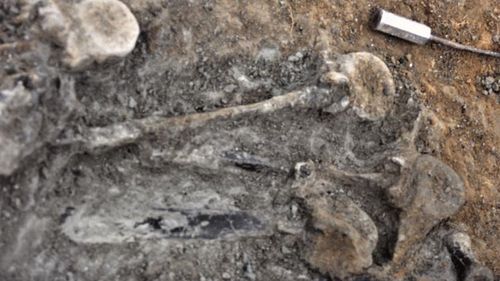
The Brighstoneus bones were found at an excavation site in England in 1978. (CNN)

Mr Simmonds originally found the bones in 1978 on the Isle of Wight, an island off the south coast of England.

The specimens were stored in the Dinosaur Isle Museum in Sandown on the Isle of Wight until they were examined over 40 years later for a different study.

"It's quite common, if not more common, these days to discover new dinosaurs in museum basements rather than out in the field," said study author Jeremy Lockwood, a doctoral student at London's Natural History Museum and University of Portsmouth in the United Kingdom.

At the time, Mr Lockwood was conducting research on the diversity of large plant-eating iguanodontian dinosaurs, which included the Iguanodon and Mantellisaurus atherfieldensis, the most common dinosaur fossil specimens found so far on the island.

An accidental discovery
After closely examining the bones, Mr Lockwood realised he had a new species of dinosaur on his hands.

Both the Iguanodon and Mantellisaurus had a straight, flat nose while the Brighstoneus had a rounded one, he said.

Brighstoneus also had more teeth, which were designed for chewing, Mr Lockwood added.


The new dinosaur has an elongated, round nose, compared to other similar species that have a flat nose. (CNN)

In the Lower Cretaceous period, grass and flowering plants were not widely available, so the dinosaur likely had to eat tough plants like pine needles and ferns, he said.

Using the thigh and femur bones, scientists estimated the dinosaur was about 8 metres long and weighed around 1000kg.

Prior to this discovery, scientists designated all delicate bones found on the island as Mantellisaurus while larger bones were categorised as Iguanodon.

"Brighstoneus shows that there was greater diversity in the Lower Cretaceous iguanodontians than we realised," Mr Lockwood said.

The Brighstoneus specimens were also four million years older than the Mantellisaurus bones, so one could argue that they are unlikely the same species due to the long length of time between the two, he noted.

Some of the features of the bones, such as the jawline, are unique to Brighstoneus, said Matthew McCurry, curator of paleontology at Sydney's Australian Museum and senior lecturer at the University of New South Wales, who was not involved in the study.

The longer jaw was able to hold 28 teeth, a few more than any other closely related species, Mr McCurry said.

Mr Lockwood is interested in researching if dinosaur diversity fluctuated over time or if it stayed the same over the course of a million years.

Dinosaur bones can also reveal what Earth was like millions of years ago, Mr McCurry said.

"Describing new species of dinosaurs is the first step in piecing together what these past ecosystems looked like and in learning about how they changed over time," he said.

The study naming Brighstoneus simmondsi was published on Wednesday in the Journal of Systematic Palaeontology.


'Step up or shut up': Alberta mayor frustrated over lack of help with homeless

'You hear crickets when it comes time to actually put pen to paper and secure funding'

Up to 60 people have been sleeping in a homeless camp in Wetaskiwin, southeast of Edmonton, since August after the city closed its only overnight shelter. (Jason Franson/The Canadian Press )

A central Alberta city has taken another step to secure warming shelters for vulnerable individuals living in tents in an open field, but its mayor says they need some help.

Up to 60 people have been sleeping in a homeless camp in Wetaskiwin, southeast of Edmonton, since August after the city closed its only overnight shelter.

The site has been described as "worse than a refugee camp." Health-service providers have identified numerous risks, including inadequate sources of warmth, shelter, food and safety.

At a special city council meeting Friday, an additional $35,000 was approved on top of $150,000 in federal grants to pay for emergency warming trailers until the end of March 2022.

Paul Edginton, general manager of community and protective services, said the city is also working with a proposed shelter operator, which is in talks with the government of Alberta.

"At this point in time, they are prepared to come to town," he said. "They are ramping up. They're doing everything on their end to be ready to come on Nov. 29, first week of December.

"Operational funding needs to come through before we could open the trailers." 

'I'm extremely, extremely frustrated'

Wetaskiwin Mayor Tyler Gandam said he will try to find funding, but added that the province needs to step up.

"I don't think that the vulnerable population can wait. You hear crickets when it comes time to actually put pen to paper and secure funding. So step up or shut up. I'm done," he said Friday.

"I'm extremely, extremely frustrated and disappointed in the lack of support from other agencies."

Edginton said the chances of the proposed shelter operator not coming to Wetaskiwin are low, but he noted there could be other city costs — including fencing, increased security and insurance for the trailers.

Alberta Health Services has a temporary contract with a local non-profit to ensure there is access to drinking water, food and firewood for the homeless at the camp until a shelter space is secured.

The partnership will also support transportation to medical appointments.

TEXAS CURRICULUM IN ALBERTA

Document suggesting students learn positive aspects of Nazi Germany deleted by Alberta education officials

Minister denounces 'horrendous' and 'wrongheaded' set of guidelines

Alberta Education Minister Adriana LaGrange says a document that included 'wrongheaded' and 'horrendous' suggestions about the Nazis has been removed from the ministry website. (Scott Neufeld/CBC )

A document that suggested Alberta students learn about the positive aspects of Nazi Germany has been deleted from the Ministry of Education's website, following criticism from multiple groups. 

The document, a set of guidelines for "recognizing diversity and promoting respect," suggested considering whether a given educational resource addressed "both the positive and negative behaviours" of various groups. 

"For instance," it read, "if a video details war atrocities committed by the Nazis, does it also point out that before World War II, German government's policies substantially strengthened the country's economy?"

Provincial Education Minister Adriana LaGrange denounced the document on social media Friday, saying she had immediately instructed her department to remove it from all Alberta Education publications.

She said it contained "wrongheaded views" and "horrendous content." She said neither she nor anyone in her office had seen it before Friday morning.

"There is not a 'positive' side to tell of the murderous Nazi regime, as this document wrongfully suggests," LaGrange posted on Twitter.

The document also said some Canadian history resources "dwell on the mistreatment of [First Nations, Métis, and Inuit] Peoples by Caucasians and do not include any examples of non-FNMI individuals or groups actively opposing this type of treatment."

"The resource should attempt to provide some balance by presenting factors causing the behaviour or portraying positive qualities exhibited by members of the group that have acted inappropriately," it said.

Press secretary Nicole Sparrow said the ministry is reviewing all documents on its website, "with a particular focus on longstanding documents that have not been recently reviewed."

On Friday morning, the Jewish Federation of Edmonton and Friends of Simon Wiesenthal Center for Holocaust Studies contacted the ministry with concerns about how the document portrayed the Nazi regime.

The regime "dragged the world into the largest global armed conflict in history and in the end it destroyed its own country, so what positive attributes could we possibly find in that?" said Jaime Kirzner-Roberts, director of policy at the Simon Wiesenthal Center for Holocaust Studies.

THE ONLY DIFFERENT GOVERNMENT IN THE LAST 44 YEARS WAS THE NDP ALL OTHER GOVERNMENTS INCLUDING UCP ARE THE SAME CONSERVATIVE PARTY IN POWER FOR THAT TIME

According to Wayback Machine, a digital archive, the Nazis' inclusion in the document predates recent governments. A version from 2008 contained a paragraph with similar wording.

Multiple updates 

The document was first created in 1984 but has been revised multiple times.

Sparrow said numerous documents were updated in 2019 to remove references from previous legislation.

"A general review of the document content was not done at that time and at no point did this document come to the minister's office for approval," she said in an email.

Carla Peck, a professor of social studies education at the University of Alberta, said the document did not reflect current standards for teaching history or diversity.

"We want to help them understand the perspectives of people who lived in the past, but it's very important not to engage in 'both sides'-ism, when doing so ends up painting an inaccurate or incomplete history or can do harm to people," she said.

Jewish Federation of Edmonton president Steve Shafir said his organization will be meeting with the ministry to discuss the document, which he said was deeply offensive to Holocaust survivors, their descendents and Edmonton's Jewish community.

"We're not looking to blame anybody for this, but we'd like to ensure that there's some safeguards in place to ensure something like this doesn't happen again," he said.

Shafir said the organization is also advocating for Holocaust education to be included in the new curriculum.

Harvest bust leaves Canadian grain companies scrambling

Jen Skerritt, Bloomberg News
Nov 12, 2021

A dearth of grain in Canada has left companies scrambling for supplies.

Grain companies are scouring Canada’s prairies for replacement crops to fulfill their export commitments after drought withered output, leaving many farmers unable to deliver pre-sold supplies, said Wade Sobkowich, executive director of the Western Grain Elevator Association that represents major grain handlers such as Viterra Inc.

Barley and canola are particularly difficult to find and companies are paying “much higher” prices than the export value to convince farmers to sell, he said.

“They’re definitely taking a loss,” Sobkowich said Friday by phone, noting no company has been forced to default on sales contracts. “If they’re short they now have to figure out how much is it going to take to get the tons.”

Western Canadian grain production plunged this year as drought engulfed swaths of major growing regions. The canola harvest is the smallest in 13 years and wheat production fell by 35 per cent, according to Statistics Canada.

There are a lot of farmers who are “really short on what they forward contracted” and companies are billing them for the cost of replacing the grain so they are “sharing in the loss,” Sobkowich said.


“We’ve sort of grown accustomed to a higher level of production for the last eight or nine years,” Sobkowich said. “We haven’t seen so many forward contracts that were in question as far as being able to be fulfilled.”

IF THE CONSERVATIVES HAD NOT SOLD OFF THE CANADA WHEAT BOARD FARMERS WOULD NOT BE SUBJECTED TO THESE PRIVATE CONTRACT LOSSES