Sunday, November 14, 2021


Canadian Pacific-Kansas City Southern merger to face environmental review

By Bill Stephens | November 12, 2021

Projected increase in train traffic prompts regulatory decisio


WASHINGTON – Canadian Pacific and Kansas City Southern will have to study the environmental impacts of their proposed merger, the Surface Transportation Board said today.

The railways will have to prepare an environmental impact statement partly due to projected increases in rail traffic on several line segments, most notably on CP’s former Milwaukee Road line from Sabula, Iowa, to Kansas City, Mo., the board said in its decision.

The board’s office of environmental analysis will host six online public scoping meetings from Nov. 30 to Dec. 9 to hear feedback from the public, communities, state and local agencies, and environmental groups regarding the potential impact of the merger.

A projected rise in rail traffic in CPKC lines was among the factors that triggered the need for an environmental review, the board said. The threshold for an environmental review is a 100% increase in gross ton miles over a particular line segment or an increase of at least eight trains per day.

CPKC main lines in Illinois, Iowa, Missouri, Kansas, Oklahoma, Arkansas, Louisiana, and Texas would exceed the threshold, the STB noted.

The environmental review must be completed before the board issues a decision on the merger.

BNSF and CN raise issues over CP-KCS merger

BNSF seeks more time regarding Mexico traffic; CN claims merger application filed too early


A train of auto racks with BNSF power meets Kansas City Southern locomotives at Robstown, Texas. BNSF is asking the Surface Transportation Board for more time to consider the impact of the CP-KCS merger on U.S.-Mexico rail traffic. (Bill Stephens)

WASHINGTON – BNSF Railway and Canadian National have raised issues with federal regulators’ timeline for review of the proposed Canadian Pacific-Kansas City Southern merger.

BNSF, in a filing posted today on the Surface Transportation Board’s website, said the 90-day comment period was insufficient given the ramifications of how the merger would affect traffic moving between the U.S. and Mexico.

The CP-KCS combination will create the first railroad to link Canada, the U.S., and Mexico. KCS is an important interchange partner for BNSF traffic moving over the Laredo, Texas, gateway, the busiest rail border crossing in North America.

“Notwithstanding the central importance of Mexico to the proposed transaction, the Application contains virtually no analysis of market conditions in Mexico, competition in Mexico involving cross-border movements, commercial and regulatory factors governing rate-setting for the Mexican portion of these cross-border movements, or future regulatory conditions that will affect access to Mexico,” BNSF wrote. “Based on the information in the Application about competitive conditions in Mexico, it is impossible to assess potential harm to U.S. shippers that compete with Canadian shippers for movements into and out of Mexico, or to assess the impact of the proposed transaction on shippers located on different U.S. rail lines. As far as the Application is concerned, conditions in Mexico are in a black box.”

BNSF asked the board to extend the comment period by 60 days, with a 60-day extension of all following deadlines on the merger review schedule.

The additional time would allow BNSF, other parties, and the STB to fully evaluate the merger’s cross-border impact and help regulators determine whether conditions should be imposed to ensure that three KCS Texas interchange locations — Laredo, Robstown, and Brownsville — will remain open on “reasonable rate and service terms.”

“Absent such conditions, shippers may be forced to use less efficient and more costly routes, and BNSF’s ability to provide fully competitive service over those gateways to and from points in Mexico pursuant to the UP/SP merger conditions will be at risk,” BNSF wrote.

CN claims CP and KCS filed their merger application too early in an attempt to “short circuit the public interest review process.” Under STB guidelines, CP and KCS should have to wait until between Dec. 15 of this year and Feb. 15, 2022 to file their merger application, CN argues.

“Applicants’ rush to file an application in violation of the rules also has serious implications for the Board’s public interest review in this merger proceeding. For example, the Application projects that the proposed transaction would generate increased train volumes that exceed the Board’s environmental review thresholds over wide ranges of Applicants’ networks stretching from Laredo to Chicago,” CN wrote in its filing. “Yet the Application fails to address the potential consequences of such traffic shifts for affected communities or identify any planned mitigation.”

The board has since ordered CP and KCS to prepare an environmental impact study for their merger.
STILL SHIPPING COAL
Teck and Oldendorff team up to reduce supply chain CO2 emissions from BC port

MINING.com Editor | November 8, 2021 

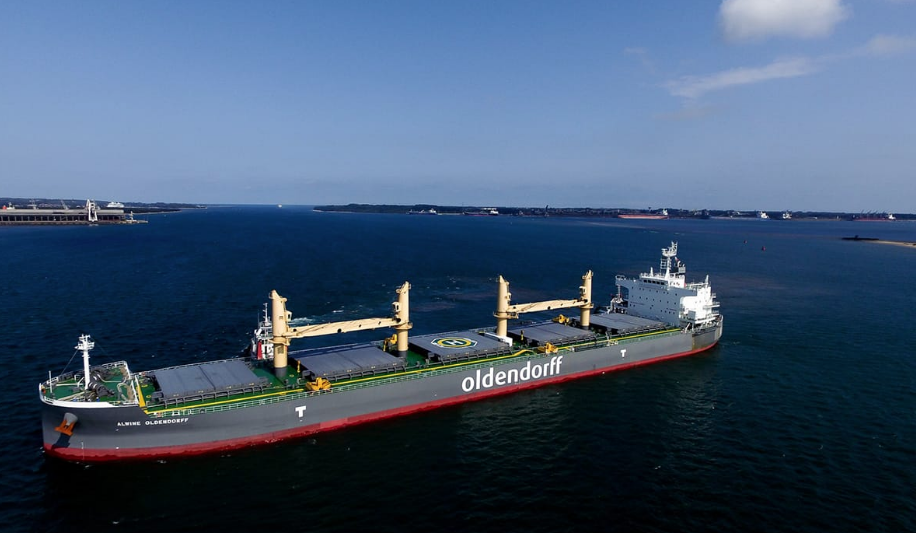
Ultramax ship from the Eco fleet. Image from Oldendorff Carriers.

Teck Resources (TSX: TECK.A and TECK.B, NYSE: TECK) and Oldendorff Carriers have announced an agreement to employ energy efficient bulk carriers for shipments of Teck steelmaking coal from the Port of Vancouver to international destinations to reduce CO2 emissions in the steelmaking coal supply chain.


This initiative is expected to achieve a CO2 emissions reduction of 30 – 40% for shipments handled by Oldendorff. The estimated savings can be of up to 45,000 tonnes of CO2 per year, equivalent to removing nearly 10,000 passenger vehicles from the road, the companies said in a media release.

Oldendorff’s fleet of approximately 700 ‘Eco’ bulk carriers from Handy size to Cape size gives Teck shipping flexibility and reduced carbon intensity on each voyage. The CO2 reductions represent Scope 1 emissions for Oldendorff and Scope 3 emissions for Teck.

“Partnering with Oldendorff to reduce the emissions associated with transportation of our steelmaking coal is one of the ways Teck is reducing our carbon footprint and taking action on climate change,” said Teck CEO Don Lindsay. “As part of our climate strategy, we are committed to working with transportation providers to reduce emissions downstream of our business.”

Peter Twiss, CEO of Oldendorff Carriers said through working with the Teck logistics team and challenging fundamental logistic concepts, they were able to develop an environmentally optimized delivery program.

“Using our fleet of ‘Eco’ bulk carriers in this re-envisioned delivery program, the CO2 emissions will be reduced significantly,” Twiss said.

Teck has goals to reduce carbon intensity across operations by 33% by 2030 and be a carbon-neutral operator by 2050.
Saskatchewan province adds lithium to mining portfolio
Cecilia Jamasmie | November 12, 2021 | 

Saskatchewan produces a large volume of lithium-enriched brine water. 
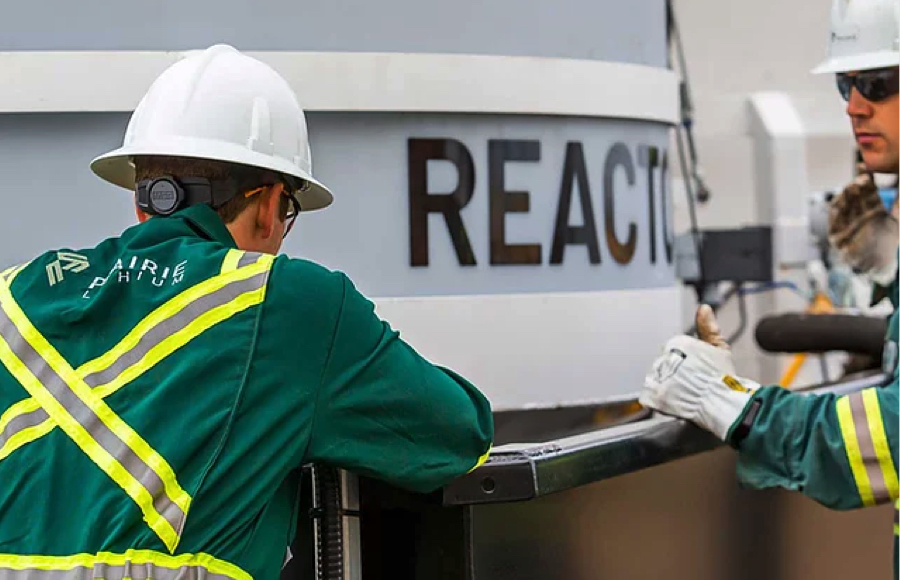
(Image courtesy of Prairie Lithium.)

Canadian junior Prairie Lithium reached a milestone this week as it finished drilling the province of Saskatchewan’s first dedicated lithium well, which could make the battery metal the region’s third largest resource offering after potash and uranium.


The junior has been using proprietary technology to extract the sought-after battery metal from subsurface brine water since 2020, when the company’s first extraction tests began.

The salty underground water is then mixed with an ion exchange material in a tank, and is eventually converted into lithium chloride.

Provincial Energy and Resources Minister Bronwyn Eyre said lithium is “having a moment” right now, and the demand is expected to increase by five-fold by 2030.


The pilot project processing facility, in Emerald Park, successfully extracted 99.7% of lithium from the brine in “a matter of minutes,” Eyre said in the statement.

Eyre said this process is cleaner than the traditional way of extracting the mineral from hard rock and creates a sustainable use for the oil wells.

“Which is the beautiful irony, that oil field brine will power electric vehicles of the future. What’s not green about that?”

Saskatchewan’s Growth Plan supports the development of lithium exploration and extraction technologies, providing funding programs like the Saskatchewan Petroleum Innovation Initiative and Saskatchewan Advantage Innovation Fund — both used by Prairie Lithium.
Top battery player

The province currently produces uranium, potash and helium, but a total of 22 of the 31 minerals Canada has classified as “critical” have been discovered in Saskatchewan.

Experts have flagged the country’s potential to become a top player in the global EV battery market thanks to its lithium, graphite, nickel, cobalt, aluminum and manganese deposits.

Having most of key ingredients for advanced battery manufacturing and storage technology, however, is not enough. Without an ecosystem that allows for the creation of a market and industry for batteries, Canada could miss the chance to position itself as a top competitor in the global electric vehicles battery supply chain.

Value-adding, Benchmark Mineral Intelligence director Simon Moores has said, could see Canada gaining a big piece of the growing lithium-ion and EVs market.

Ottawa has taken steps to support the fledgling battery materials sector. The province of Quebec acquired last year 50% of troubled Nemaska Lithium (TSX: NMX) in a new joint venture with Livent Corp. and the Pallinghurst Group.

Australia’s Piedmont Lithium (ASX: PLL) and its 19%-owned Sayona Mining (ASX: SYA) completed in August the acquisition of Canada’s North American Lithium (NAL). The move was part of their plan to create a potential lithium production hub in the Abitibi region of Quebec.
Cobalt and nickel too

In Ontario, the federal and provincial governments offered a combined C$10 million ($8m) to help First Cobalt (TSX-V: FCC) develop a refinery, which would be the sole producer of refined cobalt in North America.

Cobalt is already, though not exclusively, processed in Canada. Sherritt International brings nickel and cobalt mixed sulphide intermediate from Cuba to Fort Saskatchewan, Alberta.

The plant has the capacity to produce up to 35,000 tonnes of nickel and 3,800 tonnes of cobalt (100% basis) per year.

Brazil’s Vale (NYSE: VALE) also produces refined cobalt as a by-product at nickel mines in Sudbury, Ontario.

The world’s largest miner, BHP, (ASX, LON, NYSE: BHP) is only days away of making official its acquisition of Noront Resources (TSX-V: NOT), which would give it access to the Eagle’s Nest nickel and copper deposit in the “Ring of Fire” in northern Ontario.
Congo lawmakers tell Barrick to secure mine perimeter after deadly protest

Reuters | November 12, 2021 | 

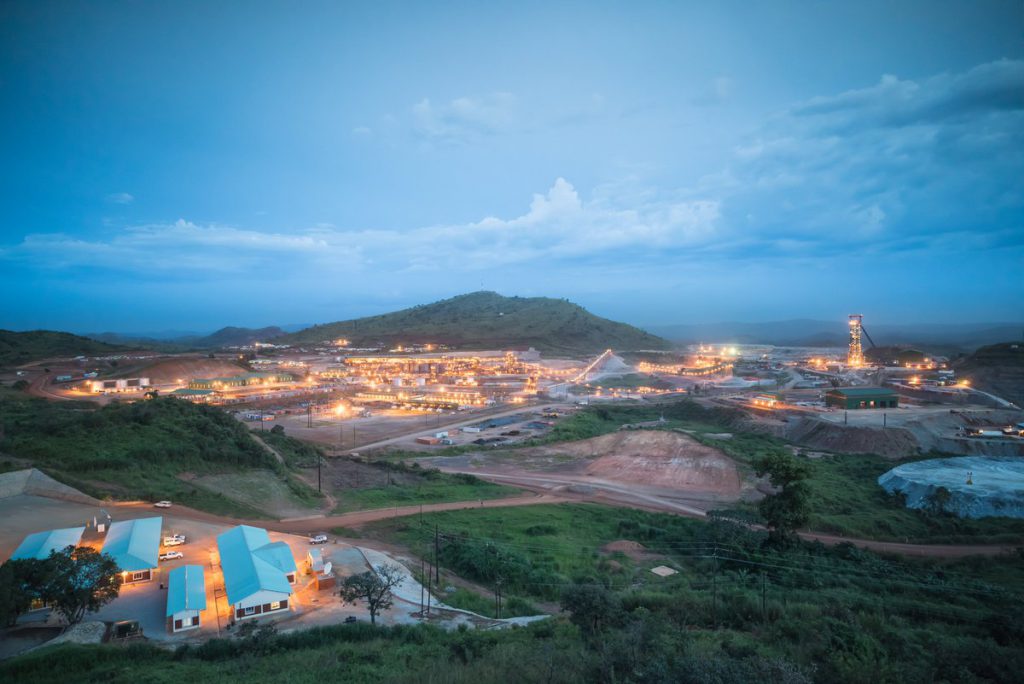
Barrick’s Kibali gold mine (pictured). Credit: Barrick Gold Corp.

Lawmakers in Democratic Republic of Congo have asked Barrick Gold Corp to secure the perimeter of its Kibali gold mine after a protest last month over the eviction of people living on the company’s concession turned deadly.


A parliamentary mission found four people, including one soldier, were shot dead and 14 others wounded during a demonstration in Durba town, in Congo’s northeast, on October 22. At least one police station was reportedly destroyed.

According to company records, during the 2012/13 construction of the mine, Kibali resettled and gave compensation to around 17 000 people living on its concession, which the company refers to as an exclusion zone.

The report recommended Kibali “secure its mining perimeters in general, and its exclusion zone in particular, by visible and appropriate means to prevent the population from settling there,” as well as provide humanitarian assistance to populations in distress.

The report also said local authorities failed to properly communicate October’s eviction to one of the two settlements affected, and that state security employed a disproportionate use of force against the demonstrators, causing the loss of life.

Local authorities were not immediately reachable for comment.

The report said the evicted community had “suffered significant damage” with the demolition of a church and a school of at least 400, leading to unemployment. Locals from Kilimalande, one of the resettlement sites for the displaced villagers, also said they were unable to accommodate the newcomers.

The problems began in 2015 when people started building houses on the portion of the exclusion zone outside the fenced area, known as Zone B, which is yet to be mined, the company has said.

Kibali country director Cyrille Mutombo said the people who built houses ignored concrete beacons showing the boundaries of the concession.

“With the involvement of government, beacons were erected and trees planted to demarcate the exclusion zone, and some people don’t think that’s enough, but the law says ‘clearly visible landmarks.'”

Mutombo said that people also moved and removed some of the beacons, and the government did not respond to the company’s repeated requests to put them back or remove people from the area.

Kibali, which is 45%-owned by Barrick, 45% by AngloGold Ashanti and 10% by state-owned gold company SOKIMO, produced 364 000 oz of gold in 2020, according to its website.

(By Hereward Holland; Editing by Aurora Ellis)
COMING SOON 'MAYBE' TECH
Opportunities, challenges of fuel cell EVs in heavy-duty applications – report

MINING.COM Staff Writer | November 10, 2021 


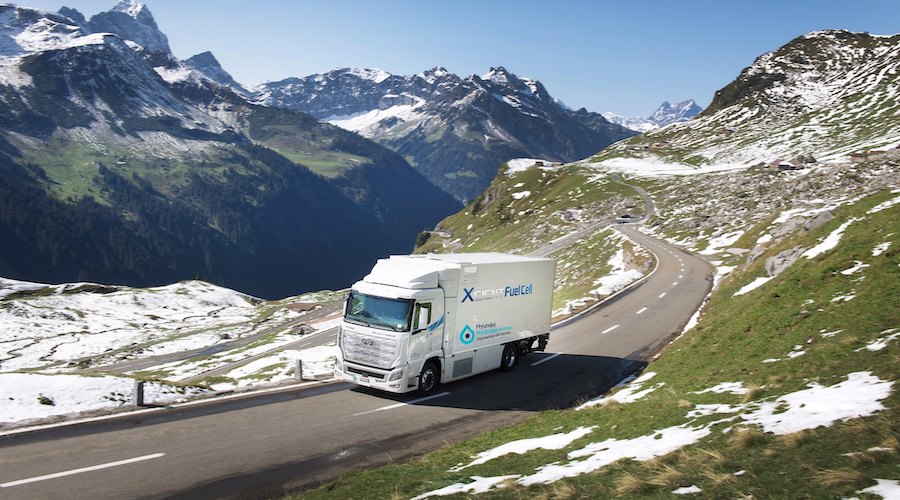
Hyundai hydrogen powered truck in Switzerland. 
(Image by Trafigura Images, Flickr).

A new report by IDTechEx states that although facing certain limitations, particularly in the passenger vehicle segment, there are big opportunities when it comes to fuel cell electric vehicles (FCEVs) for long-haul trucking or high mileage bus operations.


For the market analyst, the range and refuelling advantage for FCEVs mean that heavy-duty applications, which would require a very large battery with a battery-only architecture, actually benefit from fuel cell technology, at least in the near term.

The energy density of today’s automotive lithium-ion batteries means that the daily range of battery electric vehicles (BEVs) is limited by both the maximum weight of batteries that can be carried by a vehicle and by the available space for batteries within the vehicle.


Fuel cell systems, on the other hand, generate electrical energy to power the vehicle by means of a chemical reaction between hydrogen fuel, which is stored at high pressure in tanks within the vehicle, and purified intake air. This means that they can offer a superior energy density to battery-only powertrains and therefore deliver greater range at the same weight.

The report also points out that the potential to refuel considerably faster with hydrogen than the time it takes to charge a large Li-ion battery means fuel cell electric vehicles offer operational flexibility closer to current combustion engine vehicles than BEV can deliver.

As an example of an OEM exploring the advantages of FCEVs, IDTechEx highlights the case of Hyundai, a company that is conducting commercial trials in Switzerland with a fleet of 46 FCEV trucks, with plans to increase this to 1,600 trucks by 2025.

The Korean automaker has also announced upcoming FCEV truck projects in the US and orders for 4,000 FCEV trucks in China.

“There is also some penetration for FCEVs into the bus market, with more than 150 fuel cell buses operating in Europe, 65 in the US, and more than 3,000 in China. A growing order book for FCEV buses suggests demand is increasing, at least to a pilot-scale level of testing,” the report reads.
Challenges

As it outlines the advantages of FCEVs for heavy-duty applications compared to BEVs, IDTechEx’s document also underscores the obstacles that the technology has still to overcome.

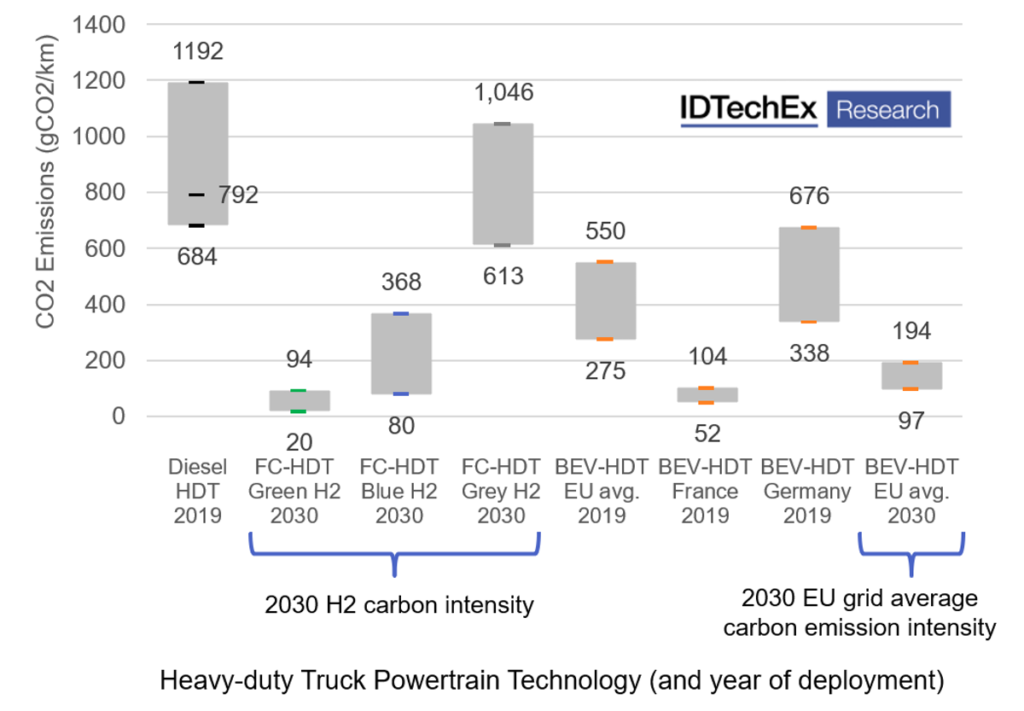
The main issue hindering further development and adoption is the need for low-cost production of renewable green hydrogen, which is essential to make FCEVs both economically viable and deliver the low emission credentials on which the technology is being promoted.

“The high cost of producing green hydrogen and its relative scarcity means that it is not currently economically feasible as a transport fuel,” the report states. “Ninety-five per cent of the hydrogen produced today is generated from fossil fuels, which whilst cheap, does not greatly improve the carbon footprint of on-road vehicles.”

According to the market researcher, the need to build hydrogen refuelling stations is also a barrier that will limit the deployment of FCEVs to those countries prepared to commit to substantial infrastructure funding.

Finally, the paper emphasizes that there is also an inherent inefficiency in using green hydrogen as a transport fuel.

“Because of efficiency losses transforming renewable electricity to pressurized hydrogen fuel and then back to electricity to power the vehicle, renewable electricity is likely to have more of an emission reduction impact when deployed in battery electric vehicles,” IDTechEx’s experts conclude.


'MAYBE'TECH
'We'll spend $70bn on renewables and make world's cheapest green hydrogen': Indian billionaire Adani

Industrialist says massive investment leaves conglomerate 'strongly positioned to produce least expensive H2'


Prime Minister Narendra Modi with Gautam Adani, chairman and founder of the Adani Group (left).Photo: Hindustan Times/Hindustan Times via Getty Images

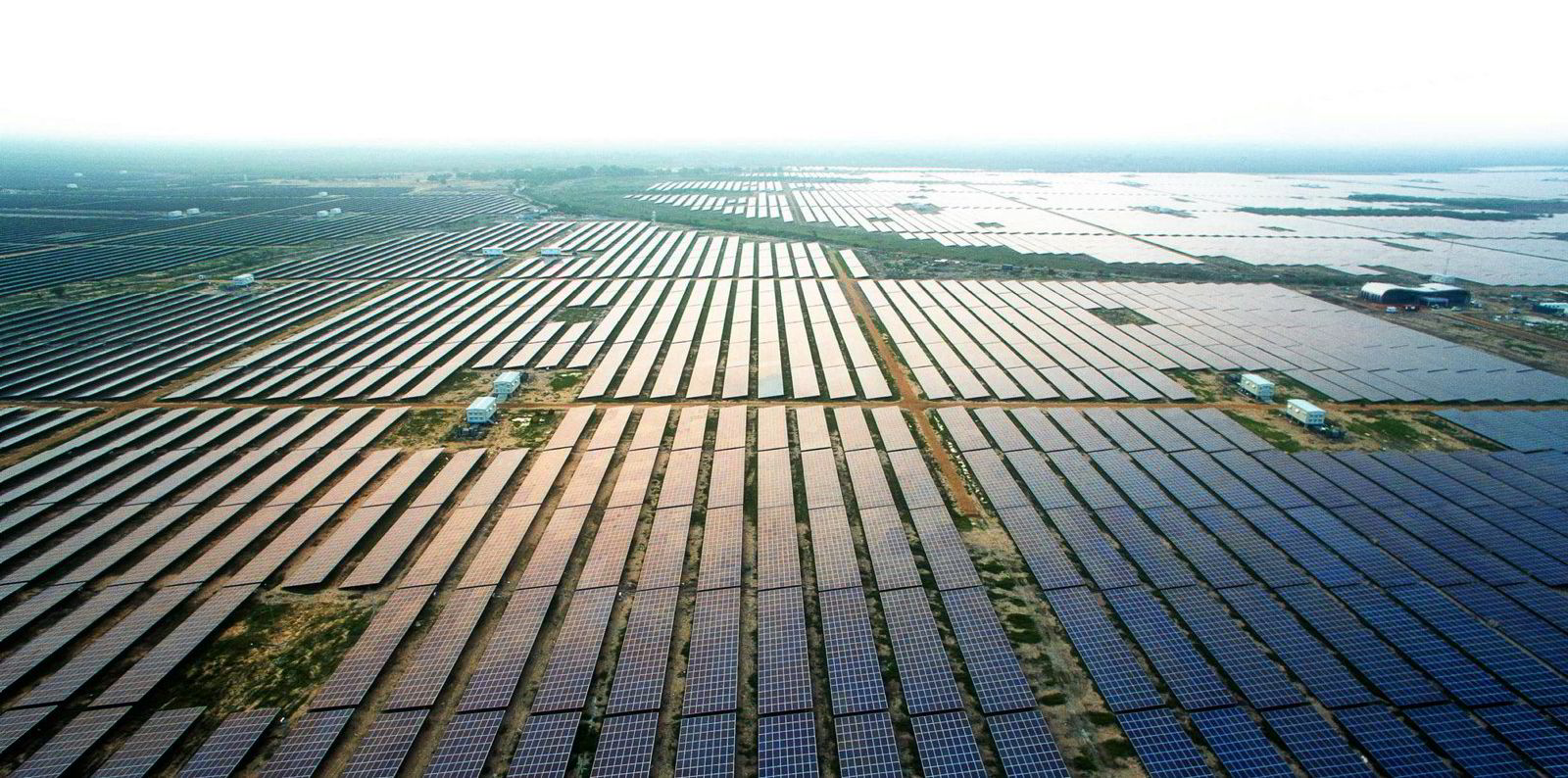
Indian billionaire Gautam Adani said his Adani Group conglomerate will spend $70bn to amass a 45GW renewable energy portfolio by 2030 and produce the world’s cheapest green hydrogen.

Adani Group will also build gigawatt-scale solar manufacturing capabilities as part of a mission to become "the world’s largest renewable energy company" by the end of the decade.

"We believe the combination of our renewable capacity and the size of our investment makes us the leader among all global companies in the effort to produce cheap green electricity and green hydrogen," Adani was quoted by Indian media as telling the Bloomberg India Economic Forum.


Investor 'red carpet' or 20 years too late? Modi sets India on 2070 net zero path
Read more

"From an Adani perspective, we are very strongly positioned to produce the world's least expensive hydrogen, which is expected to be an energy source plus feedstock for various industries that we intend to play in."

Adani’s green hydrogen ambitions reflect those of Indian Prime Minister Narendra Modi, who earlier this year put renewable H2 centre-stage in the nation’s economic plans as a driver of energy independence.


Modi pledges massive green hydrogen 'quantum leap' to Indian energy independence
Read more

The Adani Group on its corporate website says it is "not too difficult to imagine a scenario where green hydrogen at a price of less than $1/kg – coupled with the projected reduction in the cost of combined cycle hydrogen turbines and fuel cells – will not only allow the country to make a transition from fossil fuels, but will also free India from the debilitating financial burden of energy imports".

The International Energy Agency puts the current cost of green hydrogen at $3-8/kg, compared to $0.50-1.70/kg for unabated grey hydrogen made using fossil fuels.


'Biggest deal in Indian renewables' as Adani Green swoops for $3.5bn rival
Read more

It is unclear by what metric Adani’s ambition to be "the world's largest renewable energy company without any caveat" should be judged, but the 45GW by 2030 mentioned at the Bloomberg event would in headline capacity terms leave it trailing far behind European groups such as Enel and Iberdrola – the former is pitching to have 145GW under its wing by then.

The group’s Adani Green Energy unit is, however, already a contender for world’s largest solar developer, with a 24GW portfolio following this year’s $3.5bn deal to buy the PV assets of Japanese-owned SB Energy.


Asia's richest man to build gigafactory to mass-produce Stiesdal’s new low-cost hydrogen electrolyser
Read more

French oil and gas supermajor TotalEnergies in January this year tied up a deal for a 20% stake in Adani Green and deepened a long-standing solar partnership between the two, as part of the French group’s own renewable growth ambitions.

Adani, Reliance Industries owned by fellow billionaire Mukesh Ambani – which itself has a 100GW 2030 solar goal – and Goldman Sachs-backed ReNew Power will lead a push to fulfil Modi’s massive ambitions, which have just increased to a 500GW clean energy base by 2030 as part of his net zero commitment to the COP26 summit.


Five Rich Nations Jeopardizing Future With Plans for Fossil Fuel Expansion: Report

The United States, the United Kingdom, Australia, Canada, and Norway "are condemning communities in the Global South to a state of perpetual crisis which they did nothing to create."


Ocean Rebellion staged a theatrical action with a Boris Johnson head and an "Oil head" burning a boat on Marazion beach on June 5, 2021 in Cornwall, United Kingdom.
 (Photo: Gav Goulder/In Pictures via Getty Images)


KENNY STANCIL
COMMONDREAMS.ORG
November 12, 2021


As the COP26 climate summit draws to a close following two weeks of talks and pledges in Glasgow, a new report out Friday details five wealthy nations' life-threatening plans to expand fossil fuel production, exposing the utter emptiness of their professed commitments to decarbonization.

"Coal, oil, and gas production must fall globally by 69%, 31%, and 28% respectively between now and 2030... Projections suggest that the Fossil Fuelled 5 will... actually increase oil and gas production by 33% and 27%."

Shedding further light on the enormous gap between rhetoric and reality, the report, titled The Fossil Fuelled 5, compares governments' most recent emission reduction targets with their future energy plans and finds that even as they refer to themselves as climate leaders, the United States, the United Kingdom, Australia, Canada, and Norway intend to approve and subsidize new fossil fuel projects that "will be in operation for decades to come."

Despite climate scientists' repeated warnings about the need to keep coal, oil, and gas underground to have a fighting chance of limiting global warming to 1.5ºC above preindustrial levels by the end of the century, several of the world's wealthiest nations "are doubling down on fossil fuel production," says the report, which was assembled by Freddie Daley, a research associate at the University of Sussex, in collaboration with the Fossil Fuel Non-Proliferation Treaty Initiative, as well as key partners in each of the five countries analyzed—Oil Change International, Uplift U.K., The Australia Institute, Stand.earth, and Greenpeace Norway.

The world is currently on pace for catastrophic levels of heating, and further increasing the extraction and burning of fossil fuels—the main driver of the climate emergency—will "have disastrous impacts for all life on our planet," the report notes, "but especially those communities in the Global South who have done the least to create this crisis and have the fewest resources to adapt to its impacts."

According to the report, "Coal, oil, and gas production must fall globally by 69%, 31%, and 28% respectively between now and 2030 to keep the 1.5ºC target alive." Exemplifying how "net-zero" by mid-century promises "do not focus on the urgent need to stop production and consumption of fossil fuels in the immediate term," the report adds that over the course of this decade, "projections suggest that the Fossil Fuelled 5 will reduce coal production by only 30%, and actually increase oil and gas production by 33% and 27%, respectively."

Related Content

'Dangerous Trajectory': Report Details a World Set to Consume Fossil Fuels at Full Speed
Julia Conley

Many had hoped that countries would respond to the coronavirus crisis by jumpstarting the renewable energy transition. Although they vowed to "build back better," the U.S., U.K., Australia, Canada, and Norway have provided "more than $150 billion USD to support the production and consumption of fossil fuels since the beginning of the Covid-19 pandemic," states the report. "This level of support from the Fossil Fuelled 5 is more than the entire G7 put towards clean energy as part of the pandemic recovery effort ($147 billion)."

"There's an alarming gap between what wealthy nations are saying and what they are doing," Daley said in a statement. "They seem to be quite content to make pledges and promises with one hand, while expanding and subsidizing fossil fuel production to the tune of billions on the other."

"Not only are these wealthy nations jeopardizing their own futures and the futures of their citizens through this continued expansion," he added, "but they are condemning communities in the Global South to a state of perpetual crisis which they did nothing to create."

Country-specific findings from the report include:

The United States has pledged to halve emissions by 2030 yet has simultaneously provided $20 billion in annual support to the fossil fuel industry;

Despite hosting COP26, the United Kingdom is expected to greenlight the Cambo oil field, which contains approximately 255 million barrels of oil;

Despite its recent commitment to net-zero by 2050, Australia has over 100 fossil fuel projects currently in the approval pipeline;

Canada is looking to increase their price on carbon but also provided approximately $17 billion in public finance to three fossil fuel pipelines between 2018 and 2020; and
Norway has raised its ambition to decrease emissions but has already granted 60+ new licenses for fossil fuel production and access to 84 new exploration zones in 2021 alone.


Progressive advocates from all five countries denounced their respective governments for subsidizing planet-wrecking fossil fuels when the world is demanding a rapid and just transition to clean energy.

The United States—which has planned to expand oil and gas production more than any other country between 2019 and 2030—was described by Collin Rees, U.S. program manager at Oil Change International, as "the poster child for climate hypocrisy."

"If we are to prevent the worst impacts of the climate crisis from becoming a reality, we must address the root of our collective problem: fossil fuels."

"The world's largest historical emitter [is] claiming the mantle of climate leadership while pouring fuel on the fire of the climate crisis," Rees continued. "[President] Joe Biden's words will ring hollow until he cancels deadly fossil fuel expansion projects like the Dakota Access Pipeline or the dozens of proposed oil and gas export terminals awaiting approval from his administration."

He added that "the U.S. remains a massive driver of oil and gas expansion, and that won't change until our leaders commit to a managed phase-out of fossil fuel extraction that truly protects communities, workers, and the climate."

The U.S., U.K., Austalia, Canada, and Norway "have the responsibility and capacity to transition rapidly away from fossil fuels with limited impact to their own economies, and to support developing countries around the world to move away from fossil fuels, under timeframes and conditions that are fair, reasonable, and just," says the report. "Instead, they are downplaying their historical responsibility for the climate crisis and effectively appropriating the limited remaining fossil fuels that can be produced before humanity breaches 1.5ºC."

One reason why wealthy signatories to the Paris agreement have been able to avoid scrutiny for "expanding fossil fuel production in the face of overwhelming evidence that they need to do the opposite" is because exported fossil fuels are not reflected in the producer country's domestic emissions, which is why the report calls them "the elephant in the room" that must be addressed.

While the countries that import fossil fuels are held responsible for those emissions on paper, the reality is that major coal, oil, and gas exporters are still exacerbating global greenhouse gas pollution and therefore undermining efforts to curb rising temperatures, "impacting the lives of billions alive today and those yet to be born," the report notes.

"Together, the Fossil Fuelled 5 account for 25% of global fossil fuel exports," says the report. "Nations such as Australia, Norway, and the United States continue to export huge amounts of coal, oil, and/or gas, essentially exporting their greenhouse gas emissions and contributing to the continued fossil fuel dependence of many countries worldwide."

The report emphasizes that "the principles of fairness and equity are vital for collective international action on climate," adding:

Wealthy countries failing to phase down fossil fuel production leaves little incentive for developing nations, who are typically more dependent on the revenues and employment opportunities derived from fossil fuel production, to do the same.

Wealthy nations expanding fossil fuel production has a symbolic effect. Continuing to extract and burn fossil fuels, as well as supporting the fossil fuel industry through subsidies, implies that large-scale fossil fuel production is compatible with steep declines in emissions and essential to future prosperity, despite overwhelming evidence to the contrary.

To "end the era of fossil fuels," the report urges the U.S., U.K., Australia, Canada, and Norway to:

Halt the licensing for further exploration and extraction of fossil fuels;

Commit to a timeline for domestic phase-out of fossil fuels in line with 1.5ºC, noting that wealthy countries can and should move first and should therefore exceed the average rates identified in the Production Gap Report of phasing out coal, oil and gas on average by 11%, 4% and 3% respectively each year;

End the support for fossil fuel production through subsidies, tax relief and other mechanisms of government support;

Join the Beyond Oil and Gas Alliance (BOGA) to work with other ambitious governments to end fossil fuel production and fund a just transition for workers;

Act as first movers as part of the Fossil Fuel Non-Proliferation Treaty; and
Redirect the vast financial support currently provided to fossil fuel industries towards helping developing countries shift away from a reliance on fossil fuel production and consumption.

"If we are to prevent the worst impacts of the climate crisis from becoming a reality," the report concludes, "we must address the root of our collective problem: fossil fuels."
Demand for fossil fuels seen dropping to zero by 2050
Surin Murugiah/theedgemarkets.com
November 12, 2021 


KUALA LUMPUR (Nov 12): Demand for fossil fuels is seen declining significantly over the next 30 years drop to zero by 2050, replaced by renewables, electricity and hydrogen.

BloombergNEF (BNEF), a strategic research provider covering global commodity markets and the disruptive technologies in its NewEnergy Outlook 2021 (NEO) estimates investment in energy supply and infrastructure to be between US$92 trillion and US$173 trillion over the next thirty years.

It said annual investment will need to more than double to achieve this, rising from around US$1.7 trillion per year today, to somewhere between US$3.1 trillion and US$5.8 trillion per year on average over the next three decades.

The NEO is BNEF’s annual long-term scenario analysis on the future of the energy economy.

The latest edition presents three climate scenarios that meet the Paris Agreement and achieve net-zero emissions in 2050.

BNEF’s Green Scenario is a net-zero pathway where so-called ‘green hydrogen’ complements greater electricity use, recycling and bioenergy.

The Gray Scenario assumes greater use of electricity and renewable power is complemented by carbon capture and storage technology and allows for the continued use of some fossil fuels.

Meanwhile, the Red Scenario assumes smaller, modular nuclear is deployed to complement wind, solar and battery technology in the power sector, with dedicated nuclear plants manufacturing so-called “red hydrogen”.

BNEF said each of the net-zero scenarios describes major transformations in the primary energy supply.

It said that today, some 83% of primary energy is fossil fuels, while wind and solar PV account for 1.3%.

“In our Green Scenario, which prioritises clean electricity and green hydrogen, wind and solar grow to 15% of primary energy in 2030, 47% by 2040 and 70% in 2050, split 62% wind and 38% PV.

“In our Red Scenario, nuclear makes up a whopping 66% of primary energy in 2050, compared with 5% today.

“In contrast, in our Gray Scenario, where widespread use of carbon capture and storage means coal and gas continue to be used, fossil fuels decline just 2% a year to 52% of primary energy supply in 2050, with wind and PV growing to 26%,” it said.

BNEF also said the energy transition is driving the next commodity supercycle, with immense prospects for technology manufacturers, energy traders, and investors.

Meanwhile, independent journal Eurasia Review said prices for copper, nickel, cobalt, and lithium could reach historical peaks for an unprecedented, sustained period in a net-zero emissions scenario, with the total value of production rising more than four-fold for the period 2021-2040, and even rivaling the total value of crude oil production.
OPINION
Protecting the Earth — not the wealth of financial tycoons — at the heart of world’s unprecedented climate commitments


By David Olive
Star Business Columnist
Thu., Nov. 11, 202
1

In these last few days of the climate crisis summit in Glasgow, it’s worth asking if this milestone gathering has yielded anything but cynicism.

Significant achievements have been made at the COP26 summit. But as often happens at landmark gatherings of world leaders, protesters denouncing the event as a sham have obscured progress achieved by the delegates.

COP26 has already been dismissed as a bust by cynics demanding a rapid end to fossil-fuel investment and use. That is an impractical goal, of course, given that the world still relies on fossil fuels for about 84 per cent of its energy needs.

Yet COP26 will be remembered for significant achievements.

Many of those are advancements on existing reforms and some are unprecedented.

First, the further progress on earlier reforms.

The work on existing reforms includes tighter coordination among governments, corporations and independent research bodies to better ensure that agreed-upon decarbonization targets are met.

That work tends not to earn headlines, but it is the essence of summitry, which strives to achieve global consensus on proposed and achieved reforms that were developed by a host of reformers between summits.

For instance, financial-markets regulators at COP26, who have long considered climate crisis as the greatest threat to the global financial system and thus to the world economy, have been pitching “stress tests” for financial institutions.

The tests would determine if banks, insurers, pension funds and other financial asset managers have adequate capital to cushion the blow to their investment portfolios from devastating damage caused by global warming.

That type of precautionary planning was successfully used in the early 2010s to prevent a recurrence of the catastrophic Wall Street meltdown of 2009 that put tens of millions of people out of work in North America and Europe in the resulting Great Recession.

The tests are not a limited exercise in protecting the wealth of financial tycoons, as the cynics have described it. They are aimed at preserving the vast portion of the world’s financial assets held by pension plans like the Canada Pension Plan Investment Board and its hundreds of counterparts worldwide.

Another overarching topic at COP26 has been guarding against “greenwashing,” when enterprises aren’t sincere in their stated goals of reducing their carbon footprint.

That is best achieved with new, demanding standards of greenhouse gas emissions (GHG) reporting that are more consistent and comparable than the markedly different ways in which environment, social and governance (ESG) performance is measured among reporting institutions today.


In the years since the Paris climate accords of 2015, proposed rigorous reporting standards have been developed among regulators and groups advocating for greater corporate and government transparency.

Among those are new sets of strict disclosure standards proposed separately by the U.S. Securities and Exchange Commission (SEC) and the International Financial Reporting Standards agency, which oversees accounting in most parts of the world.

Canadian investors in the multitrillion-dollar market for ESG products today cannot be certain that they are comparing apples and apples in making investment decisions. Delegates at COP26 have begun the process of knitting those many proposed best-disclosure rules into a global standard.

That initiative is long overdue. Antonio Guterres, the UN secretary-general, has warned of the current “deficit of credibility and a surplus of confusion over emissions reductions and net zero targets, with different meanings and metrics.”

Jane Fraser, CEO of banking giant Citigroup Inc., told the COP26 summit that agreement on consistent sustainability standards “will make it much easier” for the bank’s investing clients to commit to green projects.

That “gold standard” on environmental performance reporting, as the COP26 delegates describe the goal they seek, would also prevent reported climate data from running afoul of traditional financial accounting rules.

To this point, the candour of reporting institutions has been constrained by worries about the legal and regulatory liabilities to which they might be exposing themselves with full disclosure.

Important as that work is, COP26 will be best remembered for its unprecedented advances.

For instance, Canada and about two dozen other countries have committed to ending government financing of fossil fuel projects abroad in 2022. Not by 2030, but by the end of next year.

At COP26, the U.S. and Britain have sponsored a new fund to raise $500 million a year from the global private sector to finance the transition to clean energy worldwide. Additional governments are expected to sponsor similar funds, as the profit potential from clean tech becomes clearer.

The challenge now is to co-ordinate the clean-tech funds to guard against duplication of effort.

There is a need for specialized funds that finance promising clean-tech startups, and others that invest in commercializing university research.

Other funds will invest in projects by which low-income countries can transition to clean energy and build infrastructure that protects against climate-crisis risks.

One of the boldest COP26 initiatives is a new coalition to fight climate change consisting of 450 banks, insurers, pension funds and asset managers with combined assets of $130 trillion (U.S.), or about 40 per cent of the world’s financial assets.

The coalition, called the Glasgow Financial Alliance for Net Zero (GFANZ), says it is prepared to finance about $100 trillion (U.S.) worth of clean energy projects over the next three decades.

That’s about two-thirds of the estimated total cost of $150 trillion (U.S.) to keep the average world temperature from rising more than 1.5 degrees Celsius.

GFANZ was unveiled at COP26 on Nov. 3 by Mark Carney, the UN climate envoy, and former head of the central banks of Canada and the U.K.

GFANZ is one of the largest pools of capital ever committed to a single purpose. Carney, who assembled the coalition, will continue to recruit more signatories. In his view, cash-strapped governments can’t finance the clean-energy revolution.

Carney vows to “ruthlessly, relentlessly” monitor coalition members for adherence to their pledges. Coalition members include financial behemoths Citigroup Inc., BlackRock Inc. and Allianz SE. Among the members of the coalition’s Canadian contingent are Canada’s Big Six banks and Vancouver City Savings Credit Union (Vancity).

“The money is here,” Carney told the COP26 summit, striking an optimistic note. “But that money needs net zero-aligned projects and (then) there’s a way to turn this into a very, very powerful virtuous circle.”

COP26 has revealed that there is more private-sector money than previously thought to supercharge the shift to clean energy. And also, that there aren’t enough green technologies, projects and companies in which to invest.

That could change if entrepreneurs and engineers can be freed up from developing the latest slightly improved smartphones, from the untested virtues of exploring the “metaverse,” and from space tourism to meet life-and-death challenges here on Earth.


We can only hope.
Greenpeace says Shell is tricking drivers with its carbon neutral campaign

By: Canada's National Observer
Posted Friday, Nov. 12, 2021


The advertisements being challenged are part of Shell Canada’s Drive Carbon Neutral program, which launched in November 2020. (Szabolcs Toth / Unsplash)

If you find yourself filling up at a Shell station across Canada, you’ll likely be greeted by an ad, one that ensures you can drive "carbon neutral" if you participate in a program from the company.

Or perhaps, you’ll stumble on a video, which shows a family circling around a city in a grey SUV, eventually ending up at a Shell station during the peak of golden hour. "See the difference driving carbon neutral can make" pops up on the screen.

The advertisements are for Shell Canada’s Drive Carbon Neutral program, which launched in November 2020. A company press release said from Dec. 31, 2020 onwards, customers at its pumps can contribute two cents per litre to various carbon offset projects.

That program and its claims of carbon neutrality will be challenged Wednesday when environmental group Greenpeace is set to file a complaint to the Competition Bureau of Canada. The group argues the Drive Carbon Neutral program is greenwashing and is therefore tricking customers into participating in an initiative with false claims, which it says goes against the Competition Act: a federal law governing the majority of business conduct in the country.

To read more of this story first reported by Canada's National Observer, click here.