Sunday, November 14, 2021

ITALIAN OIL COMPANY

Eni inadvertently buys oil from 

Iran, violating U.S. sanctions

By JONATHAN BROWNING, LAURA HURST AND ALBERTO BRAMBILLA on 11/12/2021

(Bloomberg) - Eni SpA, one of Europe’s largest oil companies, said it unwittingly purchased a consignment of crude from Iran -- an act that would have breached U.S. sanctions.

In 2019, the Rome-based company bought a shipment of oil that was purported to have come from Iraq -- a fact that authorities in Baghdad denied. Eni said in a statement to Bloomberg Tuesday that subsequent investigations including using satellite tracking, established the crude was, in fact, Iranian.

The details came to light following a London lawsuit for unfair dismissal filed by an employee fired over the oil transaction. Eni told the court that its investigators determined that the manager and her boss deliberately omitted abnormal test results that would have shown the cargo’s origin was unclear, according to a judgment in the case.

The Italian oil giant was forced to return a shipment of about 700,000 barrels of oil after laboratory results confirmed that the crude wasn’t the Iraqi grade the company had expected, the judges said in the filing. Eni shipped the cargo all the way to the Sicilian port of Milazzo, where it has a refinery, before having to transport it back to the Middle East, a roundtrip of about 10,700 miles.

The employment claim was brought by Francesca Delladio, who was fired as Eni’s manager of oil trading operations for her part in the incident. Her boss, Alessandro Des Dorides, was dismissed separately, the judges noted.

Eni said Delladio was fired for missing several red flags and withholding information from the company’s oil refining unit, according to the judgment from the tribunal. 

However, she told the tribunal that she simply executed a contract, and that it was a trader, Francesco Galdenzi, “who was the one in a position to investigate the strategy, history and background of the cargo.”

Eni said that there was never a corporate intent to violate the oil embargo.

“Thanks to the effectiveness of the controls carried out by Eni, the crude oil load was rejected,” the company said in a statement.

Des Dorides isn’t connected to the London lawsuit or the incident that led to it, his lawyer said. Delladio’s lawyer declined to comment on the case, but her witness statement for the proceedings said she was made a “scapegoat” for what happened. 

The oil was sold to Eni by a series of firms including Napag Trading Ltd., which was the “principal party” in the transaction, according to Napag’s lawyers. Napag vehemently denies “it was aware or had any suspicion that the oil cargo loaded onto the tanker originated from Iran,” the lawyers said.

Galdenzi told Eni’s internal auditors at a meeting that the price for the oil was “very good,” according to the company’s account of events reported in the judgment.

Galdenzi authorized a payment of 42 million euros ($48.2 million) despite the analysis showing that the crude didn’t match the quality of Iraq’s Basrah Light oil, the judges found. International oil trades are normally conducted in dollars.

The judges said that by the time he came to authorize payment, Galdenzi would also have been aware that its sulfur and density were inconsistent with Basrah Light. The cargo was also transferred onto the White Moon from another vessel, something that was also unusual, according to the judgment.

Galdenzi, who is currently head of business development crude for Eni’s Trade & Biofuels division according to his LinkedIn, referred questions to his employer. Eni said Tuesday that Galdenzi was himself misled.

In call transcripts filed by Eni in the U.K. employment lawsuit, Delladio and Des Dorides discussed keeping a complete set of test results away from Eni’s oil refining and marketing unit.

The conversations were revealed in a previously unreported judgment dated May 5 of this year, and a follow-up ruling posted on Nov. 5.

The court found that Delladio was unfairly dismissed because Eni failed to undertake a reasonable investigation that could have identified potentially mitigating circumstances. However, the tribunal also suggested there was an 80% chance that Delladio would still have been fired if the investigation had been carried out properly.

Eni told the tribunal that Delladio missed or ignored warning signs and an executive of her status should have had suspicions when the test results came back. Measurements of density and sulfur content are among the “very basics” of crude trading, an Eni investigator said in a letter cited by the court.

The first test results came through to Delladio on May 5, 2019, showing density measurements outside the standard parameters of so-called light crude from the Basra field and were forwarded to Des Dorides and Galdenzi, according to the ruling. Follow-up measurements confirmed abnormal figures by May 10 but the full analysis was not forwarded to Eni’s refining and marketing unit for another seven days.

The judges said Delladio failed to forward the test results on a “timely basis,” and she “was at best disingenuous, and at worst arguably dishonest, or if one accepts that she had forgotten about the receipt of the results on 10 May 2019, careless in performing an important part of her job role.”

'A slap in the face’: nurses’ strike signals Kaiser’s end as union haven


The management’s initial offer of 1%-a-year raise and 26% cut in salary for new hires seen as a wage squeeze during pandemic


Nurses are applauded by police and firefighters as they leave Kaiser hospital at the end of their shift on May 14, 2020 in South San Francisco, California. 
Photograph: Justin Sullivan/Getty Images


Steven Greenhouse
Sat 13 Nov 2021

Across corporate America, relations between companies and their labor unions range from chilly to ice-cold. Not at Kaiser Permanente – the California-based healthcare giant. Kaiser has long been seen as having the nation’s best labor-management partnership. Now the partnership finds itself in crisis as 34,000 Kaiser Permanente healthcare workers prepare to strike on Monday, in what would be the largest walkout in this fall’s strike wave.

After risking their lives during the pandemic, many Kaiser workers are asking how things could have turned so sour in the much-praised partnership, in which managers and union members team up at hundreds of Kaiser facilities to find innovative ways to improve care and efficiency, saving the company tens of millions of dollars a year.


‘We went from heroes to zeroes’: US nurses strike over work conditions


Last week one of Kaiser’s nurses’ unions served notice it would strike on 15 November, and soon after, several other unions also voted to strike. The nurses’ union – United Nurses Associations of California/Union of Health Care – complained that management’s latest employment offer would “depress wages for current employees and slash wages for incoming workers”.
Advertisement


Saying that its labor costs were far above its competitors, Kaiser initially proposed raises of 1% a year for three years and cutting the pay of new hires to 26% below those of its current employees.

“The partnership has been built on it being a leading payer in the market,” said Adrienne Eaton, dean of the Rutgers School of Management and Labor Relations, who has written about Kaiser. “If they’ve decided not to do that any more, it’s going to cause a strong reaction among the unions.”

It certainly caused a strong reaction in Semanu Mawugbe, a Kaiser nurse in Los Angeles. “It’s a slap in the face,” he said, noting that the 1%-a-year offer was well below this year’s 5%-plus inflation rate. “They tell us we’re heroes and we’re much appreciated because of everything we did during the pandemic”, he said. “But their offer shows they don’t mean it. We’re the ones who sustained the hospitals and took care of the sick like it’s a war zone.” The unions say Kaiser is seeking to squeeze wages when the non-profit company is doing well, with $45bn in cash reserves and $6.8bn in operating profits the last three years.

Since Kaiser’s labor-management partnership was founded in 1997, none of its 35 union locals has gone on strike. The partnership includes over 100,000 union members. Kaiser overall has $89bn in annual revenues, 12 million health plan members, 39 hospitals and more than 700 other medical facilities spread across eight states and Washington DC.
On September 2, 2019, Kaiser Permanente healthcare workers, patients and their supporters marched in a Labor Day protest in Los Angeles, California against the healthcare giants unfair labor practices and shift from prioritizing patients to profits.
 Photograph: Robyn Beck/AFP/Getty Images

“The challenge we are trying to address in partnership with our unions is the increasingly unaffordable cost of healthcare,” Arlene Peasnall, Kaiser’s senior vice-president of human resources, said in a statement. “The fact is wages and benefits account for half of Kaiser Permanente’s operational costs.”

Peasnall said Kaiser’s wages have risen to the point where its union members earn “on average 26% above the market rate”. “This is unsustainable,” she said. Facing a strike, Kaiser management increased its contract offer to a 2% raise in each of four years with a 2% lump sum payment in the contract’s first two years. Under Kaiser’s revised proposal, new hires would be paid 15% less than current workers.

Several labor experts said Kaiser made some elementary bargaining mistakes that were bound to inflame its workers. Kaiser offered just 1%-a-year raise while its largest union, a service employees’ local representing 46,000 Kaiser workers, has a contract that calls for raises of 3% a year over the next two years. Other unions felt shortchanged to be offered less than that. “It does seem like a provocation,” Dean Eaton said.

Labor experts also said Kaiser’s two-tier proposal to pay new hires significantly less was bound to anger workers and worsen staffing problems. “It generally doesn’t make sense having two tiers of staff and it makes even less sense when we’re going through a pandemic.” said Peter Lazes, former director of the Health Care Transformation Project at Cornell University. “I have to blame management for not being sensitive. It seems hard to understand why they’re doing this when there’s a nursing shortage nationally.”
They tell us we’re heroes and we’re much appreciated … But their offer shows they don’t mean it. We sustained the hospitals and took care of the sick like it’s a war zoneSemanu Mawugbe

Lazes, who has studied Kaiser’s partnership, isn’t so sure that the labor dispute will jeopardize the partnership long-term. “The idea that you’re going to have differences between labor and management partners that might result in a strike or a strike vote is part of the labor-management process,” he said. “Union and management have to know how to dance together and box at the same time.”

Denise Duncan, president of the United Nurses union, called Kaiser’s offer “totally unacceptable”. She derided the proposal to pay new workers less: “You can’t solve a nursing shortage that way.” She faulted Kaiser’s wage survey, saying it should have been done in cooperation with Kaiser’s unions. She said the survey, comparing Kaiser’s pay levels with those at smaller, less sophisticated medical institutions, often in rural areas, was apples and oranges.

“Ultimately, we just had to pull our levers [for a strike]”, Duncan told the Guardian. “Our members were angry. Everyone worked so hard. We feel Kaiser let our principles of partnership go.”

Lazes said that Kaiser’s new CEO and leadership team do not seem nearly as committed to making the labor-management partnership succeed and run smoothly as was Bernard Tyson, a Kaiser CEO who died of a heart attack in November 2019. Duncan wholeheartedly agreed. “We believed Bernard to be a purist on social justice and working people and having the utmost respect for the history of the partnership,” she said.

Duncan said Tyson’s successor, Greg Adams, had been doing little to ensure the partnership’s success. “You got to invest in it. You have to bring in the next generation of workers and leaders,” she said. “If you don’t invest in it, it dies.”

Peasnall said the company was devoted to the partnership. “Don’t mistake passionate advocacy in bargaining with actual changes in a relationship,” she told the Guardian. “Our labor-management partnership remains strong and is a significant source of our strength as an organization.”

Peasnall added: “We absolutely believe that as we conclude bargaining this cycle, and get through the disastrous pandemic, we will emerge stronger and more united than ever before.”

Meanwhile nurses like Semanu Mawugbe are angry and ready to walk out. “None of us want a strike, but there are times it has to be done,” he said. “We’re hoping for a last-minute, 11th-hour turnaround.”


Kaiser braces for strike that could see 100,000 workers walk off job

Other "sympathy" strikers could later boost it to nearly 100,000 walkouts.


SAN FRANCISCO, CALIFORNIA – NOVEMBER 10: Kaiser Permanente nurses and workers hold signs as they stage an informational picket outside of the Kaiser Permanente San Francisco Medical Center on November 10, 2021 in San Francisco, California. Kaiser Permanente nurses and workers are staging informational pickets across California as thousands of Kaiser workers are preparing to strike for higher wages and safer working conditions.
 (Photo by Justin Sullivan/Getty Images)
San Gabriel Valley Tribune
PUBLISHED: November 12, 2021 

Kaiser Permanente is bracing for a potentially crippling strike as nearly 27,000 Southern California workers plan to walk off the job Monday, Nov. 15 in protest of understaffing and wage cuts for new hires they say will worsen the problem.

The Alliance of Health Care Unions, which represents more than 30,000 Kaiser employees in California and Oregon, recently gave management a 10-day notice of their intent to walk out unless the two sides reach a labor agreement.

They’ve since gained support from thousands of other union members, which could bump the total to nearly 100,000 walkouts.

Employees with SEIU-UHW, which represents 58,000 Kaiser employees statewide including 22,000 locally, began voting this week to authorize a one-day “sympathy strike” on Thursday, Nov. 18 in solidarity with 21,000 nurses and others from United Nurses Associations of California/Union of Health Care Professionals (UNAC/UHCP).

Kaiser, based in Oakland, said in messages to its members Friday that it is doing everything it can to keep hospitals and emergency and urgent care departments open throughout any union activity.

A wide footprint


Monday’s strike will affect 366 Southern California hospitals and medical centers in Anaheim, the Antelope Valley, Baldwin Park, Downey, Fontana, Harbor City, Irvine, Los Angeles, Ontario, Panorama City, Riverside, San Diego, West Los Angeles and Woodland Hills.

Workers ranging from nurses, pharmacists and physician assistants, to occupational therapists, appointment clerks and environmental service employees, plan to participate. They are protesting Kaiser’s plan to implement a two-tier wage system that would lower pay for incoming and future healthcare workers.

SAN FRANCISCO, CALIFORNIA – NOVEMBER 10: Kaiser Permanente union workers hold on strike signs during an informational picket outside of the Kaiser Permanente San Francisco Medical Center on November 10, 2021 in San Francisco, California. Kaiser Permanente nurses and workers are staging informational pickets across California as thousands of Kaiser workers are preparing to strike for higher wages and safer working conditions. (Photo by Justin Sullivan/Getty Images)

UNAC/UHCP President Denise Duncan said the unions oppose the two-tier package, as it would hamper Kaiser’s ability to hire, recruit and retain employees during a severe shortage of nurses and other healthcare workers.

In addressing the plan, Kaiser said the healthcare landscape is changing and the company risks losing ground in its ability to provide affordable care and competitive pricing.

“Looking ahead, we simply must reduce expenses to remain competitive long term,” Kaiser said. “Our wages and benefits represent more than 50% of our overall cost structure.”

Keeping operations going

In a message to members, Kaiser explained how it will shift workloads and cancel some appointments to ensure it remains operational.

“We are actively coordinating with community hospitals and other needed clinical providers to help with patient needs,” the healthcare giant said. “If you need care, visit kp.org/getcare or use our mobile app, where you’ll be able to access all your care options.”

Kaiser is moving some on-site appointments to phone or video visits, while other appointments, elective surgeries and non-urgent needs have been rescheduled or canceled.

“We’ll contact you in advance if there are changes to your appointments,” the healthcare provider said. “We apologize for any inconvenience.”

If a walkout occurs, Kaiser said its pharmacies will be temporarily closed, although prescriptions could be filled through its mail-order delivery service.

Kaiser Permanente is bracing for a strike involving nearly nearly 27,000 Southern California workers who plan to walk off the job beginning Monday, Nov. 15 to protest understaffing and wage cuts for new hires that they say will worsen the problem.
 (File photo)

Wage hikes for existing workers

Kaiser recently offered Alliance leaders an updated proposal the company said would give workers as much as 4% a year in pay increases, with no takeaways to their benefits and retirement programs.

It would provide the potential for 2% pay increases plus a 2% cash payout each year of a four-year contract.

A union representative said the cash payout would be taxable, which means the entire yearly package wouldn’t actually amount to a 4% pay increase.

The two sides are bargaining every day, he said, but it doesn’t appear a resolution will be reached before Monday.


Health Care Giant Kaiser Is the Latest Employer Now Staring Down the Barrel of a Strike

At Kaiser Permanente, some 32,000 workers are preparing to go on strike. In addition to proposing measly raises, the health care giant is resisting workers’ desire to have more say in addressing chronic understaffing
.
Members of the United Nurses Associations of California/Union of Health Care Professionals (UNAC/UHCP), one of the unions representing Kaiser workers that could go on strike November 15.
 (Alliance of Health Care Unions)

JACOBIN
11.12.2021

Barring progress at the bargaining table, some 32,000 workers at health care giant Kaiser Permanente are set to walk off the job on Monday, November 15. The workers comprise the Alliance of Health Care Unions, which consists of twenty-one union locals and spans from California to Hawaii to Georgia. Should they strike, they’ll join another Kaiser work stoppage by more than 750 engineers, which began on September 18. The Service Employees International Union—United Healthcare Workers West (SEIU-UHW) says that its members will engage in a one-day sympathy strike with those engineers on November 18, while California Nurses Association members and two thousand of Kaiser’s mental health workers will do the same on November 19.

There are rumors of impending tentative agreements for some of the locals within the Alliance, but neither Kaiser nor the unions have announced any such deals. As to the issues on which the company has dug in its heels, there are several. For one, workers want raises, and the company is offering a mere 1 percent annual raise for the duration of the three-year contract. There are also wage disparities to rectify: Some workers at Kaiser locations in the Inland Empire make 39 percent less than their counterparts in the same positions at Kaiser locations in Los Angeles and Orange County. Further, Kaiser is pushing for a new wage tier that would drastically reduce pay for those hired starting in January of 2023: The company’s proposal cuts their pay by anywhere from 26 to 39 percent.


Finally, there is the issue of staffing. Safe staffing levels have long been a central demand among health care workers, and the pandemic has only exacerbated the issue. When health care facilities don’t have enough workers, they turn to “travelers,” registry workers who travel from one facility to another on short-term contracts. It’s a vicious cycle: Health care workers leave their facilities to become travelers because pay for such work has skyrocketed, while pay for traditional health care jobs stagnates. The problem is so bad at Kaiser that some workers began placing gravestones in an employee locker room, with one for each coworker who had left.

One traveling nurse who recently took a gig at Kaiser explains that while she was there, “We were always short-staffed.” In the TikTok in which she recounts her experience — the video currently has some 10,000 comments — she tells fellow traveling nurses not to work at the company. “There are a ton of amazing clinicians at Kaiser that are being forced into poor patient care by shitty business practices by a company that puts profits before patients at every single turn in the road,” she says.

Kaiser workers say that the company is not backfilling positions that have been vacated — many by staff who left to work as travelers — and that the result is a crunch that leaves workers stressed and patients without adequate care. At one point during the bargaining process, to illustrate the inadequacy of the nonbinding staffing language in the prior contract, members of the Oregon Federation of Nurses and Health Professionals (OFNHP), one of the unions in the Alliance, printed out every short-staffing complaint members had made over the past three years. The resulting document was nine thousand pages.

The Alliance is proposing that the labor-management partnership at Kaiser include staffing committees to oversee backfilling existing positions and hiring for new ones, a structure that would meet on a regular basis and provide workers’ representatives a clear picture of who does and does not work at Kaiser’s sprawling health care facilities that care for some 12 million patients. More specific proposals for filling vacated positions are being negotiated at the local level. But according to workers, the company has been particularly intransigent about this subject, preferring unilateral control over staffing decisions.

While the latest news from the bargaining table suggested significant distance between the two sides on wages — the Alliance wants 4 percent annual raises and no two-tier — it is staffing that may prove the most intractable issue (of course, a two-tier wage system would also exacerbate the problem by driving away potential applicants). Kaiser wants to do as it pleases, and ceding the slightest bit of power over hiring choices to those who must deal with the consequences of those decisions may prove unacceptable to the bosses. As bargaining continues and future tentative agreements are announced, that is the issue on which many at Kaiser are keeping an eye.


ABOUT THE AUTHOR
Alex N. Press is a staff writer at Jacobin. Her writing has appeared in the Washington Post, Vox, the Nation, and n+1, among other places.


Sanders Leads Senators in Backing Kaiser Permanente Workers Before Planned Strike

"The company wishes to diminish the safety, security, and well-being of its workers, rather than improve them. That's just not right. Your employees deserve better."


U.S. Sen. Bernie Sanders (I-Vt.) speaks to the media outside the West Wing of the White House in Washington, D.C. on July 12, 2021, after attending a meeting with President Joe Biden.
 (Photo: Saul Loeb/AFP via Getty Images)

JESSICA CORBETT
COMMONDREAMS
November 12, 2021

Sen. Bernie Sanders, joined by seven Democratic colleagues, sent a letter Friday to Kaiser Permanente chair and CEO Greg Adams in support of tens of thousands of healthcare workers planning to strike on November 15 unless negotiations for a fair contract improve.

"These employees are heroes and heroines and should be treated as such."

Monday's strike is set to include 32,000 Kaiser workers, though another 8,000 have authorized a strike, the letter notes. They are represented by various unions and work at facilities across California, Colorado, D.C., Georgia, Hawaii, Maryland, Oregon, Virginia, and Washington.

Along with Sanders (I-Vt.), the letter is signed by Sens. Tammy Baldwin (D-Wis.), Cory Booker (D-N.J.), Kirsten Gillibrand (D-N.Y.), Mazie Hirono (D-Hawaii), Jeff Merkley (D-Ore.), Elizabeth Warren (D-Mass.), and Ron Wyden (D-Ore.). It follows a wave of "Striketober" labor actions nationwide last month.


In addition to calling on the Kaiser chief executive to negotiate a fair contract, the senators highlighted the conditions that workers have endured while "working tirelessly in the midst of a life-threatening pandemic" that is ongoing.

"They risked their lives to save patients—showing up to work despite not being provided basic protective equipment. We've been told that some were even forced to sleep in their cars and hotels to protect their families. These employees are heroes and heroines and should be treated as such," the letter says. "Sadly, you have taken another approach."

According to the eight senators:


Instead of treating these workers with the dignity and respect they deserve you have demanded that they accept just a 2% wage increase and a two-tier system that allows you to pay new workers lower wages. Considering your recent profit margins, we find this offer to be demeaning and unacceptable. These dedicated workers deserve a fair wage increase, and the new generation of Kaiser Permanente workers should have the same pay structure as those who are longer-term employees.

To add to these concerns, you have refused to negotiate a fair contract with Kaiser workers who organized unions more than two years ago. Your company has also failed to address unequal wage scales that have a racially discriminatory impact, and you have rejected proposals to work with employees to safeguard patient care by improving staffing.

Noting that the healthcare giant made $2.2 billion in operating profits last year, the letter to Adams says that "now, at a time when Kaiser is sitting on $44.5 billion in cash reserves and your insured membership has grown to 12.5 million, the company wishes to diminish the safety, security, and well-being of its workers, rather than improve them."

"That's just not right. Your employees deserve better," the letter continues. "In this moment, Mr. Adams, you can do the right thing."


According to CBS Los Angeles, Kaiser is warning patients that if the strike happens next week, "its pharmacies would be temporarily closed and some appointments might have to be changed to virtual care, including phone or video visits."

An early November statement from the United Nurses Associations of California/Union of Health Care Professionals (UNAC/UHCP) about a 10-day strike notice covering 21,000 nurse practitioners, midwives, pharmacists, physical and occupational therapists, physician assistants, registered nurses, and others accused Kaiser of failing to "address union proposals that would tackle pressing problems such as staffing shortages, racial justice, and equal health access."

UNAC/UHCP president Denise Duncan, RN, said at the time that "the lives of our patients and the health of our communities are dependent on the outcome of these negotiations."

"The lives of our patients and the health of our communities are dependent on the outcome of these negotiations."

"For weeks, we've been beating back a two-tier wage package which would impact our ability to hire, recruit, and retain during a severe shortage of nurses, healthcare workers, and professionals—wage proposals that resemble those of a slash-and-burn corporation, not the leading healthcare provider that our members helped build," Duncan explained.

"For healthcare providers, a strike is always a last resort, but it's clear from the employer's latest proposals that this is the path they've chosen," she said. "Nurses and healthcare professionals have one priority: delivering the best possible care to our patients. Kaiser's actions are destructive to that priority. These next few weeks will define us."

Echoing that sentiment, nurse Kim Mullen of Kaiser South Bay said that "the whole reason I'm going on strike is because of my patients."

"I believe my patients deserve the best care and attracting the best nurses is what's best for them," she continued, "and I need to make sure that we continue to attract the best nurses who want to stay at Kaiser in order for my patients to get the best care."

Alaa Abou-Arab, an occupational therapist at Kaiser LAMC, said: "My son was born at Kaiser. My doctor is at Kaiser. The reality is: we're not just Kaiser staff, we're Kaiser patients."

"This stuff is real for us," Abou-Arab added. "We're relying on the future generation of nurses to take care of us too. We're striking in solidarity with those nurses and for our own families."
Our work is licensed under Creative Commons (CC BY-NC-ND 3.0). Feel free to republish and share widely.


French couple who said windfarm affected health win legal fight


Christel and Luc Fockaert awarded €110,000 after over health problems they claim were caused by windfarm


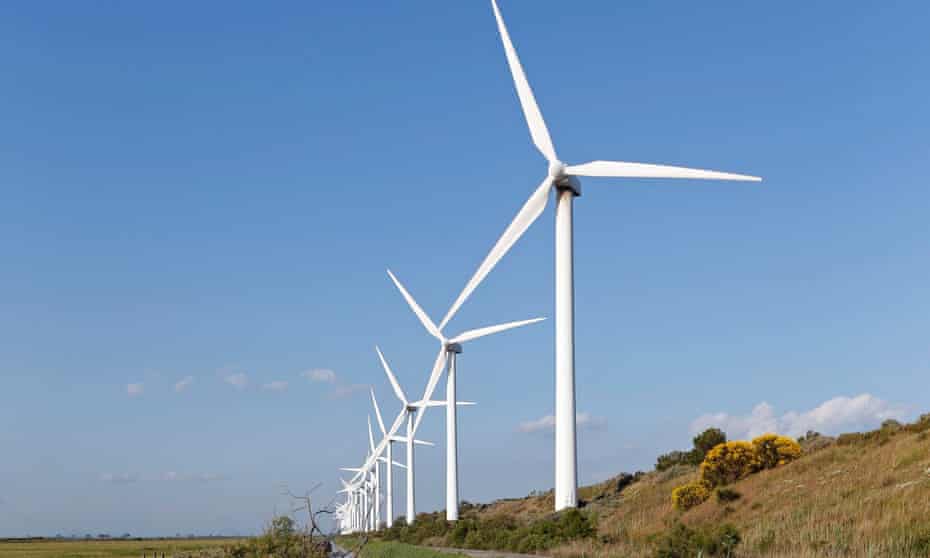
A windfarm in France. The Fockaerts said noise from the turbines was akin to a ‘washing machine continually turning’. Photograph: Jean-Paul Pélissier/Reuters


Kim Willsher in Paris
Mon 8 Nov 2021 

A French court has recognised “turbine syndrome” after a couple complained their health was damaged by living near a windfarm.

In what is believed to be the first judgment of its kind in France, Belgians Christel and Luc Fockaert were awarded more than €100,000 in compensation by the judge in Toulouse.

The couple claimed they experienced a range of health problems including headaches, insomnia, heart irregularities, depression, dizziness, tinnitus and nausea for more than two years, insisting these were caused by six wind turbines set up 700 metres from their home at Fontrieu in the Tarn, southern France.

The turbines had been installed in 2008. However, it was reported that the couple’s health problems started five years later. The Fockaerts believed this was because woodland between their property and the nearest turbine was cut down.

They singled out the noise, which they said was “comparable to a washing machine continually turning”, and the “white flashing lights” on the turbines, as particularly detrimental to their health.

“We didn’t understand straight away, but little by little we realised the problem came from the turbines,” Christel Fockaert said. “The turbines flash every two seconds … we had to have outside lights to counter the effect of the flashes.”

The couple moved away from the area in 2015 and said their health problems disappeared shortly afterwards.

Doctors failed to find any health problem, but a court expert said turbine syndrome had been previously identified by scientific research.

However, an Australian study found sickness attributed to wind turbines is more likely to have been caused by people getting alarmed at the health warnings circulated by activists. Researchers said it was “essentially a sociological phenomenon” and that giving it a name like “wind turbine syndrome” and “vibro-acoustic disease” was a key feature in its spread.

Other peer-reviewed studies in Europe, Canada and the US have also debunked the alleged “syndrome” – that is not medically recognised – suggesting it is adverse publicity, opposition to the turbines or the power of negative expectations and suggestions that might be making people feel sick.

The Fockaerts’ case was originally thrown out of court in January last year but they appealed, saying the judge had ignored the experts’ reports they had commissioned and instead had gone to see for themselves but had spent only an hour at the site of the complaint.

The energy companies Sasu, Margnes Energie and Sasu Singladou Energie, which run the park, were ordered to pay €110,000 in compensation to the couple and were reported to have since changed the lights and speed of the six turbines.

Alice Terrasse, the couple’s lawyer, told French television: “It’s an unusual case and as far as I know there has been no precedent.”

The ruling is expected to spark a flood of complaints, but Terrasse warned against others seeking to profit from the Fockaerts’ victory.

“This case cannot be reproduced. This (wind) park caused an unusual nuisance because of its configuration but each case is different and should be examined differently.”

She added that the judgment should serve as a warning to those companies setting up windfarms to reflect carefully on their impact on the local population.

Emmanuel Forichon, of the environmental collective Toutes Nos Énergies - Occitanie Environnement (All our Energy - Occitanie Environment) said the ruling was “important and brave”.

“We already consider environmental issues and biodiversity, and occasionally the impact on landscapes, but not enough the issues of human health. This could create a jurisprudence and, above all, make the regulations evolve,” he said.

'MAYBE' TECH

Momentum grows for green hydrogen projects in Tasmania

Sonali Paul Reuters

PUBLISHEDNOV 11, 2021

  
CREDIT: REUTERS/DAVID GRAY

Woodside Petroleum said on Friday it has acquired land for a proposed hydrogen plant in Tasmania, one of three proposed hydrogen projects the island state is promoting to take advantage of its abundant hydropower and wind power.

MELBOURNE, Nov 12 (Reuters) - Woodside Petroleum WPL.AX said on Friday it has acquired land for a proposed hydrogen plant in Tasmania, one of three proposed hydrogen projects the island state is promoting to take advantage of its abundant hydropower and wind power.

The aim is to use the available renewable energy to power electrolysers to split water and produce so-called green hydrogen which would then be converted to ammonia for export, part of a push by Australia, a major coal and gas exporter, to help cut carbon emissions.

Woodside is working with Japan's Marubeni Corp 8002.T and IHI Corp 7013.T to export 200,000 tonnes a year of green ammonia to Japan from Tasmania's Bell Bay area, starting with 300 megawatts of electrolyser capacity.

They aim to make a final investment decision in 2023 and complete construction in 2025 on the project called H2TAS. Woodside has not disclosed a cost for the project yet.


"H2TAS is already garnering interest from existing and prospective Woodside customers in Asia and Europe," Woodside Chief Executive Meg O'Neill said in a statement.

Fortescue Metals Group FMG.AX and Origin Energy ORG.AX have proposed similar projects at Bell Bay.

Tasmania's Energy Minister Guy Barnett said the state was working closely with the projects to create a single export hub, which could qualify for funding from the Australian government's A$464 million ($338 million) clean hydrogen hubs program. First round bids close on Nov. 22.

"Woodside strongly supports a collaborative approach among proponents and with governments to strengthen Bell Bay as a hub," Woodside spokesperson Christine Forster said in emailed comments, adding that sharing infrastructure would help keep costs down.

Government support would be needed for its H2TAS project, the company said.


($1 = 1.3734 Australian dollars)

(Reporting by Sonali Paul; Editing by Christian Schmollinger)

The Hydrogen Stream: Australia takes the spotlight with 1.7 GW project in Tasmania and new tech to produce hydrogen from rooftop PV

Australian energy company Woodside Petroleum has secured land for its proposed H2TAS hydrogen plant in Tasmania. “H2TAS is a phased development with the potential to support up to 1.7 gigawatts (GW) of electrolysis for hydrogen and ammonia production. The initial phase would have capacity of up to 300 megawatts (MW) and target production of 200,000 tonnes per annum (tpa) of ammonia, matched to forecast customer demand,” wrote the company on Friday, adding that ammonia would be produced by hydropower and wind power. The main focus is on export, but the company also speaks about domestic use. “H2TAS is already garnering interest from existing and prospective Woodside customers in Asia and Europe,” Woodside CEO Meg O’Neill commented. In May, Woodside teamed up with Japan’s Marubeni and IHI to export ammonia to Japan. Woodside is aiming to take a final investment decision for H2TAS in 2023. Construction and commissioning activities are expected to take around 24 months. In October, Woodside Petroleum unveiled plans to establish an export-oriented hydrogen and ammonia production facility in southern metropolitan Perth.

Energy consultancy Xodus and Perth-based metals manufacturing company Unique Metals announced a memorandum of understanding for the Unique HyMetals hydrogen project in Australia. “Unique HyMetals will enable the company to rebalance and optimise energy from rooftop solar and use it to transform water into hydrogen, which can then be used at times when solar is not feasible or unused. Furthermore, there will be zero waste, as the resulting oxygen, which is often considered a by-product of the process, will be captured and used for manufacturing activities such as laser cutting and oxyacetylene welding,” Xodus wrote on its website. The companies expect to start construction activities for internal usages in 2022 and plan investments in commercial-scale refueling infrastructure in 2025.

The Australian Renewable Energy Agency (ARENA) announced that the Australian government and Queensland state awarded Korea Zinc A$21 million (€13.37 million) in funding to start producing green hydrogen for fuel cell trucks at the company's zinc refinery in Queensland. The project will be located at the Sun Metals zinc refinery in Townsville, which is owned by Ark’s sister company Sun Metals Corporation (SMC). Ark and SMC are subsidiaries of Korea Zinc, the largest zinc, lead, and silver producer in the world. SMC’s zinc refinery is currently the second-largest single-site consumer of electricity in Queensland. After funding directed to light vehicle transport projects, ARENA now wants to focus on ultra-heavy fuel cell electric trucks.

Australia’s focus on heavy-duty vehicles came amidst similar developments in Europe. French oil and gas company TotalEnergies and Germany’s commercial vehicle manufacturer Daimler Truck have signed an agreement to team up in sourcing and logistics, dispensing of hydrogen in service stations, developing hydrogen-based trucks, and establishing a customer base. “The partners will collaborate in the development of ecosystems for heavy-duty trucks running on hydrogen, with the intent to demonstrate the attractiveness and effectiveness of trucking powered by clean hydrogen and the ambition to play a lead role in kickstarting the rollout of hydrogen infrastructure for transportation,” TotalEnergies wrote on Wednesday.

Siemens Gamesa’s Brande Hydrogen pilot project in Denmark produced its first green hydrogen as part of the testing and commissioning phase. “Project partner Everfuel is distributing this to hydrogen stations in Denmark, enabling a growing number of zero emission vehicles, such as fuel cell taxis, to operate on a 100% green fuel supply,” the renewable energy developer wrote earlier this week, calling it the “world’s first project capable of producing green hydrogen directly from wind, in island mode.” The Brande Hydrogen setup couples an existing onshore Siemens Gamesa SWT 3.0-113 DD wind turbine with an electrolyzer stack from electrolysis partner Green Hydrogen Systems. Siemens Gamesa is also using the Brande Hydrogen site, which can also operate connected to the grid, to explore the potential of integrating battery technology in the turbine-electrolyzer project.

European ports continue to announce investments in hydrogen infrastructures. Energy storage assets startup Global Energy Storage (GES) has announced its first investment at Europoort in the Port of Rotterdam. “It is buying an interest in part of the assets of the Stargate Terminal from Gunvor Group and will develop more than 20 hectares at the heart of the port,” GES wrote on Thursday. “The deal has been formally approved by the Port of Rotterdam Authority. The site includes a significant waterfront with deep water access, brownfield development opportunities and potential greenfield development sites.” Launched in May this year, Guernsey-headquartered GES is backed by Bluewater, a private equity firm focused on the middle-market energy sector. “Alongside a new jetty that we aim to develop and low-carbon commodity infrastructure, we are also looking to become part of the logistics chain needed to import blue and green hydrogen,” commented CEO Peter Vucins.

The Maritime Cluster of Cantabria – MarCA – has presented the consortium that will launch the Green Hydrogen Cantabria renewable energy project, formed by 26 companies and regional institutions. With an estimated budget of between €26.2 and €28.3 million, the creation of the Green Hydrogen Cantabria consortium makes it possible to begin the financing process. “Specifically, the consortium plans to raise national and European funds to promote the development of this pilot project,” MarCa wrote on Wednesday, adding that a change in legal and regulatory framework is needed to facilitate the mass deployment of the technology.

As anticipated, EDP Renewables (EDPR), the renewable energy arm of Portugal's Energias de Portugal (EDP), whose largest shareholder is state-owned energy company China Three Gorges, pledged to invest in renewable hydrogen projects that will secure an additional 1.5 GW of capacity by 2030. With the announcement, made on Tuesday during the COP26, EDPR joined the H2Zero initiative.

Last week, Solaria Energía and Enagás announced the signing of an agreement to study the potential joint development of a green hydrogen plant. The project envisages up to 200 MWp of solar photovoltaic energy for the production of green hydrogen.

Also last week, Vectalia, Fotowatio Renewable Ventures (FRV)Iberdrola, and Aguas de Alicante kicked off the HyVus project consortium, which includes the generation of green hydrogen that will power part of the fleet of Vectalia buses, as well as vehicles of other operators. The plant will be connected directly to a 1.25 MW PEM electrolyzer, which should produce around 345 kg/day (15 hours of operation per day). The project will include construction of a refueling station for heavy hydrogen vehicles at 350 bar pressure. The four companies plan to apply for Next Generation funds.


The fossil fuel industry turned out in force at COP26. So did climate activists

Updated November 12, 2021
Heard on Morning Edition
FRANK LANGFITT

Youth climate activists protest on Thursday that representatives of the fossil fuel industry have been allowed inside the venue during the COP26 U.N. Climate Summit in Glasgow.
Alastair Grant/AP

GLASGOW, Scotland — You might think the fossil fuel industry would steer clear of the United Nations climate summit. After all, fossil fuels have driven the crisis that COP26 is struggling to address.

But big energy is a big presence. Fossil fuel interests understand that international agreements to cut emissions pose an existential threat to them, and they come to the summits to monitor and sway the discussions.

THE COP26 SUMMIT
These researchers are trying to stop misinformation from derailing climate progress

A report by several watchdog groups says more than 500 attendees at the summit are from countries with major oil and gas industries or work for organizations that lobby on behalf of the fossil fuel industry, including the World Petroleum Council and the World Coal Council.

Stroll through the summit's sprawling trade-show section and you'll come across elaborate pavilions for major energy-producing nations, such as Saudi Arabia and the United Arab Emirates. The International Emissions Trading Association has a storefront as well and counts Chevron and the mining giant Rio Tinto as corporate partners.


Saudi Arabia, a major oil producer, has a pavilion at the climate summit.
Frank Langfitt/NPR

Earlier this week, Russia hosted executives from BP and Gazprom Neft, the Russian oil and gas company, for a public forum on the transition to clean energy. Nigel Dunn, a senior vice president at BP, touted his company's plans to shift from oil and gas toward wind, solar and hydrogen.
Article continues after sponsor message

He portrayed BP as part of the solution to the climate crisis.

"We absolutely need green companies, companies that are developing renewables," said Dunn, speaking to about 20 people. "But we also need greening companies, and I would like to think BP is one of those greening companies ... that is committed to the energy transition, because time is running out and we need to hit this transition at pace."


Russia held a public discussion inside the summit this week with two oil and gas company executives, which protesters disrupted. Denis Deryushkin (left) of the Russian Energy Agency moderated the session with Nigel Dunn (center), a senior vice president at BP and Sergey Vakulenko (right), head of strategy and innovations at Gazprom Neft.
Frank Langfitt/NPR


THE COP26 SUMMIT
U.S. and China announce surprise climate agreement at COP26 summit
European fuel companies are rethinking fossil fuel holdings, but American companies aren't

While major European energy companies like BP are moving away from oil and gas, American firms generally think demand for both will remain high for decades and have given no sign they plan to pivot away from their core products.

Sitting next to Dunn at the forum was Sergey Vakulenko, head of strategy and innovations at Gazprom Neft, who warned just how much an energy shift will cost consumers. He said the firm would remain an oil and gas company for at least the next decade, but added that it would shift to a more equal mix of oil and gas and will be looking at new green fuels.


ENERGY
Big Oil (Probably) Isn't Going Away Anytime Soon. But It's Definitely Changing

Vakulenko also warned just how much a shift to cleaner energy will cost consumers.

"Politicians are trying to tell their electorates that the energy transition would be painless and costless, and, effectively, it shifts the blame to business," said Vakulenko. He cited a report by the International Energy Agency that said the transition would cost trillions of dollars.

"People would have to change their habits when it comes to temperature in their homes, that the temperature should be, well, somewhat uncomfortable," he said. "People might have to change their diets and eat less beef, change their vacation habits and fly less."

After a while, a group of protesters arrived at the two-story Russian pavilion where the forum was taking place. One demonstrator held up a sign with the words "Climate Criminal." The moderator, Denis Deryushkin of the Russian Energy Agency, decided to wrap up early.


Russia's pavilion at the COP26 summit.
Frank Langfitt/NPR

"I got a message from the organizers," he said. "Unfortunately, we don't have time for a proper Q&A session."

"No more lies!" the protesters chanted. "Keep it in the ground!"

Dunn swiftly walked away. I caught up with him in one of the summit's main hallways. Given that the energy industry knew for decades about the risks to the planet of burning fossil fuels, I asked when BP had started work on its energy transition.

"You have to go through my press office for any comment," Dunn answered.

"You just spoke for an hour and a half, and you're not taking any questions at all on one of the biggest issues facing the planet?" I asked.

"No," Dunn said.

Fossil fuel industry reps have a longstanding interest in attending climate summits


The Tuvalu pavilion at COP26 emphasizes the impact global warming is having on small island chains. The South Pacific archipelago is losing land to rising seas and is seeking financial help to build up its land to a higher elevation by dredging sand from the ocean floor. The polar bears depicted in life jackets emphasize the plight of so-called front-line states in the climate crisis.
Frank Langfitt/NPR

The fossil fuel industry presence at COP26 is nothing new. Companies and associations with business interests have been coming to the climate summit meetings for years.

Attendees at the first one in Berlin, in 1995, included the International Gas Association, the International Association of Motor Vehicle Manufacturers and the National Coal Association.

Pascoe Sabido works with Corporate Europe Observatory, one of the watchdog groups that released the report on the fossil fuel industry presence at COP26. He says they have come to gather information, influence government officials and protect big energy interests.

"Their entire business model is predicated on drilling, digging up, burning fossil fuels, so of course they're trying to save their skin," Sabido says.

He thinks the summit should ban them. The energy companies have a conflict of interest with the goal of this meeting, he argues. That goal is to reach an agreement to reduce carbon emissions to prevent global temperatures from rising by 1.5 degrees Celsius above pre-industrial levels. Scientists warn that not doing so could cause irreversible damage to the planet.


Pascoe Sabido works with Corporate Europe Observatory, one of the watchdog groups that released a report showing that more than 500 participants at the climate summit are from countries with major oil and gas industries or work for organizations that lobby on behalf of the fossil fuel industry.
Frank Langfitt/NPR

But economies have depended on fossil fuels, stretching back to Britain's industrial revolution in the mid-19th century. So I ask Sabido if people at the summit should talk to energy firms anyway.

"Very interesting point," he says, "but their interest is in burning fossil fuels. So if we're realizing we need to move away from it, then unfortunately, it's really difficult having them part of a conversation."

Sabido likens the oil and gas companies a bit to Big Tobacco, which misled the public about the health impacts of cigarettes despite knowing many of the facts for decades.

Similarly, Exxon executives said the scientific evidence on whether human activity had a significant impact on climate change was inconclusive, even when the company's own research showed otherwise.

Despite having spread doubt about climate change, the energy business remains determined to have a voice at the summit in Glasgow.

NPR's Camila Domonoske, Jeff Brady, Rafael Nam and Jessica Beck contributed to this report.

How prolonged radiation exposure damages nuclear reactors

nuclear reactor
Credit: CC0 Public Domain

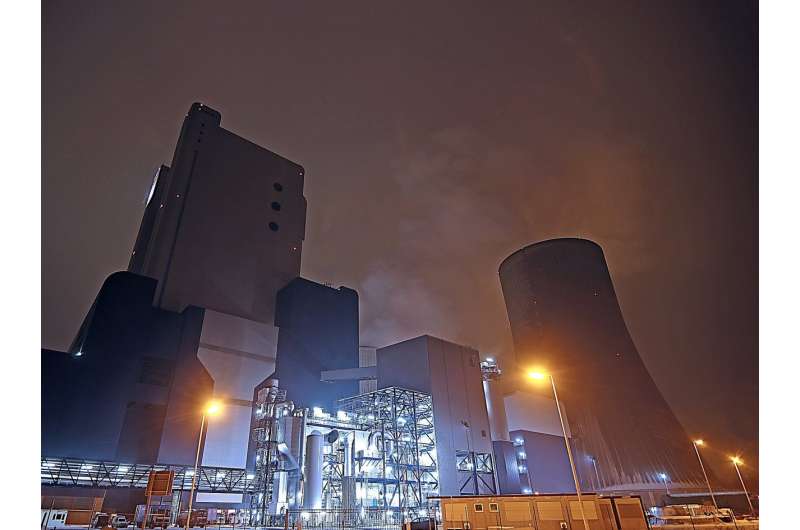
New research from Texas A&M University scientists could help in boosting the efficiency of nuclear power plants in the near future. By using a combination of physics-based modeling and advanced simulations, they found the key underlying factors that cause radiation damage to nuclear reactors, which could then provide insight into designing more radiation-tolerant, high-performance materials.

"Reactors need to run at either higher power or use fuels longer to increase their performance. But then, at these settings, the risk of wear and tear also increases," said Dr. Karim Ahmed, assistant professor in the Department of Nuclear Engineering. "So, there is a pressing need to come up with better reactor designs, and a way to achieve this goal is by optimizing the materials used to build the nuclear reactors."

The results of the study are published in the journal Frontiers in Materials.

According to the Department of Energy,  surpasses all other natural resources in power output and accounts for 20% of the United States' electricity generation. The source of nuclear energy is fission reactions, wherein an isotope of uranium splits into daughter elements after a hit from fast-moving neutrons. These reactions generate enormous heat, so nuclear reactors parts, particularly the pumps and pipes, are made with materials possessing exceptional strength and resistance to corrosion.

However, fission reactions also produce intense radiation that causes a deterioration in the 's structural materials. At the , when energetic radiation infiltrates these materials, it can either knock off atoms from their locations, causing point defects, or force atoms to take vacant spots, forming interstitial defects. Both these imperfections disrupt the regular arrangement of atoms within the metal crystal structure. And then, what starts as tiny imperfections grow to form voids and dislocation loops, compromising the material's mechanical properties over time.

While there is some understanding of the type of defects that occur in these materials upon radiation exposure, Ahmed said it has been arduous to model how radiation, along with other factors, such as the temperature of the reactor and the microstructure of the material, together contribute to the formation defects and their growth.

"The challenge is the computational cost," he said. "In the past, simulations have been limited to specific materials and for regions spanning a few microns across, but if the domain size is increased to even 10s of microns, the computational load drastically jumps."

In particular, the researchers said to accommodate larger domain sizes, previous studies have compromised on the number of parameters within the simulation's differential equations. However, an undesirable consequence of ignoring some parameters over others is an inaccurate description of the radiation damage.

To overcome these limitations, Ahmed and his team designed their simulation with all the parameters, making no assumptions on whether one of them was more pertinent than the other. Also, to perform the now computationally heavy tasks, they used the resources provided by the Texas A&M High Performance Research Computing group.

Upon running the simulation, their analysis revealed that using all parameters in nonlinear combinations yields an accurate description of radiation damage. In particular, in addition to the material's microstructure, the radiation condition within the reactor, the  design and temperature are also important in predicting the instability in materials due to radiation.

On the other hand, the researchers' work also sheds light on why specialized nanomaterials are more tolerant to voids and dislocation loops. They found that instabilities are only triggered when the border enclosing clusters of co-oriented atomic crystals, or grain boundary, is above a critical size. So, nanomaterials with their extremely fine grain sizes suppress instabilities, thereby becoming more -tolerant.

"Although ours is a fundamental theoretical and modeling study, we think it will help the nuclear community to optimize materials for different types of nuclear energy applications, especially new materials for reactors that are safer, more efficient and economical, " said Ahmed. "This progress will eventually increase our clean, carbon-free energy contribution."

Dr. Abdurrahman Ozturk, a research assistant in the nuclear engineering department, is the lead author of this work. Merve Gencturk, a graduate student in the nuclear engineering department, also contributed to this research.

Study could change nuclear fuel

More information: Abdurrahman Ozturk et al, Surface and Size Effects on the Behaviors of Point Defects in Irradiated Crystalline Solids, Frontiers in Materials (2021). DOI: 10.3389/fmats.2021.684862

Provided by Texas A&M University 

GREENWASHING

World Petroleum Council announces the theme for the 24th World Petroleum Congress in Calgary in September 2023


11/12/2021

Calgary will host the 24th World Petroleum Congress from September 17-21st, 2023. The World Petroleum Congress is the premier oil and gas conference in the world and hosts the most senior government and industry leaders in the global energy industry triennially.

The program for the 2023 event in Calgary is being managed by the Canadian National Committee of the World Petroleum Council (WPC) organization comprised of Canadian energy professionals.

In advance of the 23rd World Petroleum Congress taking place in Houston, Texas from December 5-9th, 2021 the National Committee of Canada announced at a recent press conference in Calgary that the theme for the 2023 Congress will be: Energy Transition - the Path to Net Zero.

“This theme is important for the World Petroleum Congress and its members and it reflects the exciting future in the global energy industry and the strategic direction of WPC,” said Denis Painchaud, President of the Canadian Organizing Committee. “A lot of what happens in Calgary will help shape the direction of the global energy industry in the years to come. Conversations will help define realistic, workable paths to a net-zero future and help elevate the Canadian energy sector for the next 25 years and beyond, helping ensure that jobs and investment stay in Canada.”

The Calgary Congress will highlight best practices from all areas of our industry and will include program content and participation opportunities for all involved in upstream, downstream, midstream, and transportation. There will be opportunities for everybody, pipeline, value add companies (e.g., petrochemicals), supply chain companies and the clean technology sector that all play an important part in our evolving future.

“The Calgary Congress presents a unique opportunity to have a global audience focused on the energy sector of Canada and Alberta,” said Sonya Savage, Minister of Energy for the Government of Alberta. “This will allow Canada to promote foreign direct investment opportunities, partnerships, exports of Canadian technologies, including clean tech, and demonstrate that Canada is a progressive global energy leader.”

The 24th World Petroleum Congress in Calgary will welcome an estimated 15,000 visitors, delegates, exhibitors and media from around the world. “I am pleased that Calgary will be hosting the 24th World Petroleum Congress with the forward-thinking theme of Energy Transition – the Path to Net Zero,” says Calgary Mayor Jyoti Gondi. “Hosting the 2023 Congress will not only drive significant economic impact for our city, but it will allow us to showcase our expertise and the great work that is happening right now as a global energy transition leader.”

“The Calgary Congress will continue the tradition of addressing the key industry issues including climate change and the environment and comes at a critical time after COP26 when the world is expecting a transition to net zero,” said Dr Pierce Riemer, Director General for the World Petroleum Council.

Today also marks the launch of the sponsorship packages for the 2023 Congress in Calgary. WPC Canada looks forward to developing meaningful partnerships with local, national and international companies and organizations that will be able to network and connect with global energy leaders.

The WPC Canada team will be leading a group of Canadian partners to the upcoming Congress in Houston in December to invite the world back to Calgary for 2023 and begin discussions with many global partners about becoming sponsors of the event. The Canada Pavilion will be open during the entire Congress to meet and engage energy sector leaders. Any Canadian companies that are interested in joining Team Canada in Houston or who wish to have a conversation about a partnership for 2023 should visit the WPC Canada website at wpccanada.com