Monday, December 13, 2021

Sally Rooney: Anyone who has visited Palestine could not fail to support her decision

Alexandra Pringle
3 December 2021

Experiencing what Palestinians endure daily changes you forever. That's why many writers who've been to the Palestine Festival of Literature backed her refusal to publish in Israel


Irish novelist Sally Rooney in Pasadena, California on 17 January, 2020
(AFP)

Irish author Sally Rooney recently made the decision not to have her latest novel published by an Israeli publisher. The Normal People author said that she could not "accept a new contract with an Israeli company that does not publicly distance itself from apartheid and support the UN-stipulated rights of the Palestinian people".

All we needed was a pair of eyes to see what is there: the indignity and brutality of the checkpoints, the settlers shouting and waving their guns, the wall, the barbed wire, the refugee camps

Last month, 70 writers, poets, playwrights, booksellers and publishers, including myself, signed a letter endorsing her decision. It struck me that over a third of those who signed have attended the Palestine Festival of Literature (PalFest). The letter was also signed by PalFest's co-founders, Ahdaf Soueif and Brigid Keenan.

PalFest was founded in 2008, with patrons including Chinua Achebe, John Berger, Mahmoud Darwish, Seamus Heaney and Harold Pinter. They were later joined by Philip Pullman and Emma Thompson. It was formed "in the hope … that the experience of visiting Palestine with PalFest expands authors’ vocabulary and imagination, that they will draw connections between their own work and the various processes of control ongoing in Palestine". The number of signatories to the letter is evidence that this has worked.

One of those who signed the letter supporting Rooney was the Scottish novelist Andrew O’Hagan.

He attended PalFest in its first year and wrote in the London Review of Books: "In the week that Israel celebrated its 60th anniversary, I had come as one of the writers attending the first-ever Palestine Festival of Literature… everywhere we went the wall seemed a shadow, a heavy ornament of Israeli aggression and a horrible reminder to those of us who grew up to see the wall come down in Berlin and the end of apartheid in South Africa. Even in those infamous places, merely mentioning the problem did not invite hatred the way trying to say anything at all about Israel does. Discussion lacks traction in a land scarred from end to end with barriers to progress."
Indignity and brutality

I first went to Palestine with PalFest in May 2009. We crossed over the Allenby Bridge and were kept waiting for eight hours while the Arab writers among us were detained until the last possible moment.


Mohammed El-Kurd: Palestinian poet distils lessons from injustice
Read More »

I stood in the sunshine, in a small group including Michael Palin, Deborah Moggach, Rachel Holmes, Abdulrazak Gurnah, Claire Messud, Henning Mankell and others, little realising that the aggression we were shown was a mild foretaste of what was to come.

That evening, in Jerusalem, we assembled at the Palestinian National Theatre for the opening of the festival. The Israeli army descended with their guns and forced us out. We picked up large platters of food and trooped down the road, into the garden of the French Cultural Institute, where the show went on.

It was a week that changed the lives of every one of us. All we needed was a pair of eyes to see what is there: the indignity and brutality of the checkpoints, the settlers shouting and waving their guns, the wall, the barbed wire, the refugee camps and, in some ways saddest of all, the old city of Hebron.

As Messud wrote: "The agonising descent into darkness that was our visit to the glorious city of sandstone and carved trellis work, an ancient city was being depleted of its inhabitants."
A quotidian oppression

I will never forget walking along a shuttered marketplace, once thriving, now empty. Looking up, Israeli flags fluttered from houses taken from Palestinian families. Netting stretched across the street to catch the rocks and garbage hurled from windows onto Palestinian women, men and children walking to market.

But the netting couldn’t catch the urine and faeces that sometimes accompanied the rocks. As Messud said, we were witnessing "a quotidian oppression that must be experienced, even for a few hours, to be believed".

I returned in 2017 for the 10th anniversary of PalFest, which we marked at Bloomsbury by publishing an anthology, This is Not a Border, edited by Ahdaf Soueif and Omar Robert Hamilton. From Amman, we made our way through the King Hussein border crossing, and on by bus to Ramallah, then to Jerusalem, through the infamous Qalandia checkpoint, used daily by tens of thousands of Palestinians who work in Israel.
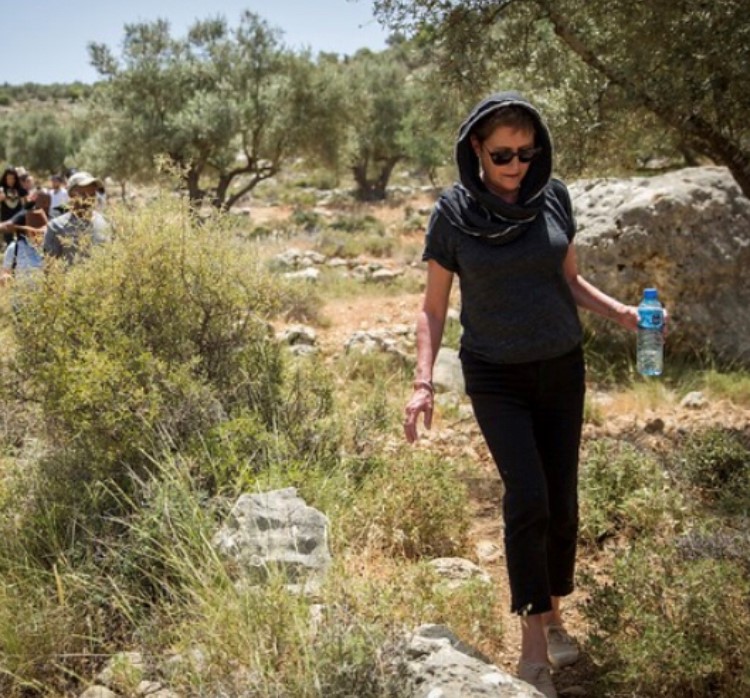
"On a walk through occupied Ramallah... one of the writers turned to me and said, "there is little we can do, but you can publish."
 (Photo of Alexandra Pringle in Ramallah in 2017/supplied)

We emerged waving copies of the This is Not a Border. From there we travelled to Hebron, now an even sadder city than on my first visit, and on to Bethlehem, Haifa and Nablus. Every day we travelled by bus, through checkpoints, to different venues.

Out of the bus windows, we could see the olive trees so necessary to Palestinian life, destroyed by Israeli soldiers. We were taken on a walk through occupied Ramallah by Palestinian writer Raja Shehadeh. On that ancient, stolen hillside, one of the writers turned to me and said, "There is little we can do, but you can publish".

The book was also launched at literary festivals throughout the UK. At the Hay Festival, Soueif was awarded the Hay Medal for Festivals "in solidarity, kinship and deepest admiration" for her work on PalFest.
'Psychologically and emotionally devastated'

After his experience at PalFest, novelist William Sutcliffe wrote in the Guardian: "I returned from Palestine psychologically and emotionally devastated by what I had seen. Every aspect of the occupation was harsher, more brutal than I had expected."
Sally Rooney: 'Normal People' author boycotts publisher linked with Israel's defence ministryRead More »

Sutcliffe is Jewish, like many other participants, including Adam Foulds, Gillian Slovo, Ben Ehrenreich, Esther Freud, Jillian Edelstein, Geraldine d’Amico, Ursula Owen, Ben Moser and myself. In the New York Times, Foulds said: "You hear so much about the rage, the violent mood… but I have found a language of peace, freedom and justice. The festival is recognition of the independent life of the Palestinian people. Coming through the invisible barrier of fear has actually filled me with hope. I found deep humanity on the other side."

Publishing about Palestine has been a part of my work as a publisher. In 2020, the Irish writer Colum McCann’s powerful and humane novel Apeirogon was longlisted for the Booker Prize. After reading it, one of my Jewish authors said to me she would never walk down a street in Jerusalem and feel the same way.

Last year, Susan Abulhawa’s novel Against the Loveless World was a winner of a Palestine Book Award. I was Edward Said’s final editor, and this year Timothy Brennan’s biography of Said, Places of Mind, won the Palestine Book Award for biography.

Sally Rooney is not the only author to cause a storm with her support of the Boycott, Divestment, Sanctions (BDS) movement against Israel. In 2019, Kamila Shamsie had the Nelly Sachs prize for literature, awarded to writers promoting "tolerance and reconciliation", rescinded by the city of Dortmund.

"It is a matter of great sadness to me," she said, "that a jury should bow to pressure and withdraw a prize from a writer who is exercising her freedom of conscience and freedom of expression."

Shamsie, along with Geoff Dyer, Andrew O’Hagan, Eileen Myles, Hanan al-Shaykh, Gillian Slovo, Carmen Callil, China Mieville, Pankaj Mishra, and many other PalFest signatories, had, like me, got on and off buses, struggled through checkpoints, read to audiences in cities and universities through Palestine, and seen, with our own eyes, why it was that Rooney made the decision she did.

And that is why we signed in support of her.

The views expressed in this article belong to the author and do not necessarily reflect the editorial policy of Middle East Eye.

Alexandra Pringle

Alexandra Pringle was editor-in-chief of Bloomsbury Publishing for 20 years.
 She is now executive publisher
Palestinian factionalism has destroyed the national movement

Tariq Dana
7 December 2021

Driven by rigid dogmas and exclusionary politics, Palestinian factionalism leaves little room for fresh voices and progressive change


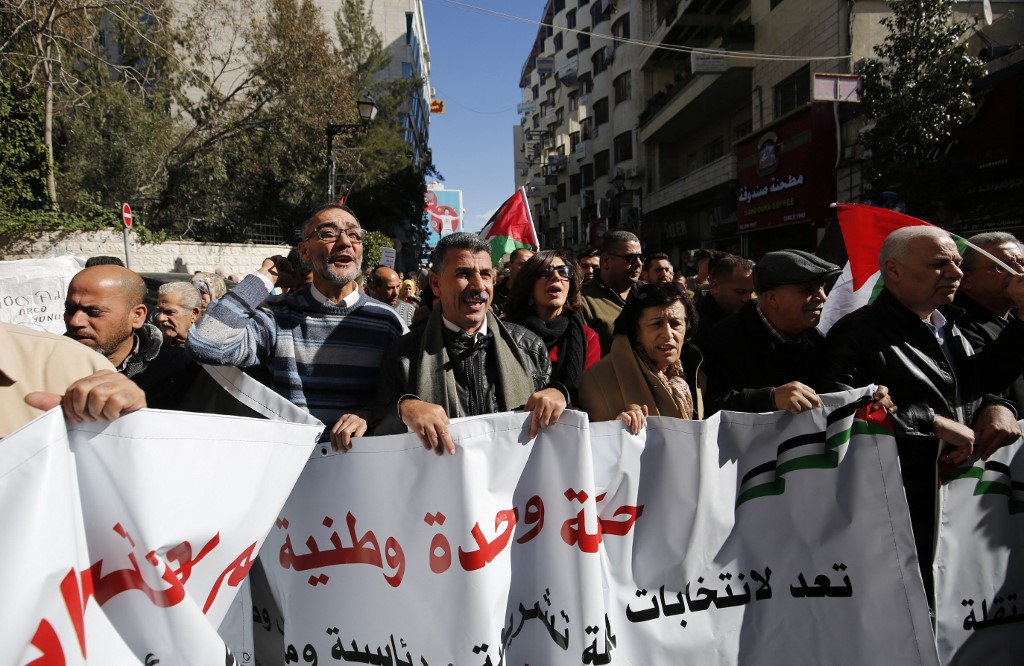
Palestinians protest in the occupied West Bank on 15 October 2021 (AFP)


It was once an internationally renowned anti-colonial movement that brought the question of Palestine into the regional and international spotlight. But today, the Palestinian national movement suffers from increasing irrelevance and dramatic decline, torn by polarisation and division, its national strategy replaced by competing self-serving agendas.

This can easily be attributed to the mechanism of control devised by the Oslo process, notably the Palestinian Authority (PA), which coopted a significant segment of the Palestinian movement and leadership. But the movement’s structural crisis predates Oslo, with factionalism having long sowed the seeds of intra-Palestinian rivalries.


Factionalism constitutes fertile terrain for competing Arab regimes to manipulate Palestinian politics for their own ends

Instead of imbuing the Palestinian body politic with revitalising pluralism, factionalism has instead been largely driven by rigid dogmas and exclusionary politics. It devastated the pre-Nakba Palestinian struggle against British and Zionist colonial forces, which was dominated by clan cleavages inherited from the Ottoman era. Parties lacked clear political programmes and frequently engaged in squabbles over power and authority.

The formation in 1964 of the Palestine Liberation Organization (PLO) as a collective framework for various political movements initially breathed new life into Palestinian politics. But it was soon riven by competing factional agendas, sometimes presenting irreconcilable visions. The absence of genuine democratic mechanisms within PLO institutions further damaged the national movement.

One of the major historical divides related to the 1974 “10-point programme”, embraced by Fatah but rejected by other factions because it prioritised statehood over liberation through the creation of a “national authority”.
External manipulation

Factionalism constitutes fertile terrain for competing Arab regimes to manipulate Palestinian politics for their own ends. In Syria and Iraq, for example, Baathist forces founded as-Saiqa and the Palestinian Arab Front respectively, aiming to represent their competing claims within the PLO. This was a factor in diverting the national movement from its anti-colonial objectives towards rival Arab state interests.

Islamic movements introduced an additional factional pillar to the national movement. The foundation of Islamic Jihad in 1981 and Hamas in 1987 challenged the historical dominance of the PLO. Hamas in particular has presented itself as a viable alternative to the crisis-ridden PLO, advancing a radically different vision of how Palestinian politics and society ought to operate, including through a conservative social order.

Palestinians in Ramallah call for an end to the Fatah-Hamas divide in 2019 (AFP)

At the same time, Hamas and Islamic Jihad have their own intra-factional rivalries, with the two groups holding contrasting views on various political and social issues. Whereas Hamas was an offshoot of the Muslim Brotherhood, Islamic Jihad was inspired by the 1979 Islamic Revolution in Iran. Unlike Islamic Jihad, which distances itself from controversies on the social role of Islam, Hamas' doctrine emphasises the Islamisation of society as a precondition for liberation.

While Hamas views its relationships with Iran and Hezbollah through a lens of pragmatism, Islamic Jihad considers them strategic allies for the Palestinian struggle.
Pursuit of power

The Oslo years ushered in a new stage of Palestinian politics, where the pursuit of power and material privileges dominated most factions under Israel’s colonial expansion. The establishment in 1994 of the PA, a body that was dependent on international aid and Israeli security conditions, fuelled exclusionary politics based on narrow factional loyalties and interests.

The crisis peaked in 2007 amid clashes between the Fatah-led PA in Ramallah and the de facto Hamas government in Gaza. They mobilised their resources against each other, suppressed dissents and tightened their individual grips on power, allowing Israel more space to manipulate the situation to prevent meaningful reconciliation between the West Bank and Gaza leaderships.

Factionalism also has an economic dimension, with employment in the PA’s civilian and security sectors in Gaza and Ramallah largely based on proximity to the ruling factions. Fatah also exploits its financial leverage to weaken opposition to the PA.

The PA relies heavily on dogmatic, populist rhetoric to enforce its dominance over Palestinian politics and institutions. The recent assassination of activist Nizar Banat by PA security forces was a case in point. While Palestinians took to the streets to demand accountability, Fatah portrayed the protests as a “conspiracy” fuelled by a “foreign agenda” targeting its “legitimate” leadership, and waged a brutal crackdown.

Palestinian factionalism is ultimately a self-destructive endeavour that runs counter to the Palestinian struggle and national interests. It has marginalised urgently needed voices and ideas, and prevented progressive change within the national movement.

As long as this rigid form of factionalism persists, the decay of the Palestinian national movement is inevitable.

The views expressed in this article belong to the author and do not necessarily reflect the editorial policy of Middle East Eye.

Tariq Dana

Tariq Dana is an assistant professor of conflict and humanitarian studies at the Doha Institute for Graduate Studies and an adjunct lecturer at Northwestern University, Qatar. He is also a policy advisor for Al-Shabaka: The Palestinian Policy Network.
Britain helped create the refugees it now wants to keep out

Jonathan Cook
6 December 2021

Those making perilous journeys for asylum in Europe have been displaced by wars and droughts, for which the West is largely to blame

A group including women and children, in a dinghy, react as they approach the southern British coastline as they cross the English Channel from France on 11 September 2020 (AFP)

The deaths of at least 27 people who drowned as they tried to cross the Channel in an inflatable dinghy in search of asylum have quickly been overshadowed by a diplomatic row engulfing Britain and France.

As European states struggle to shut their borders to refugees, the two countries are in a war of words over who is responsible for stopping the growing number of small boats trying to reach British shores. Britain has demanded the right to patrol French waters and station border police on French territory, suggesting that France is not up to the job. The French government, meanwhile, has blamed the UK for serving as a magnet for illegal workers by failing to regulate its labour market.

No European leader appears ready to address the deeper reasons for the waves of refugees arriving on Europe's shores – or the West's role in causing the 'migration crisis'

European leaders are desperate for quick answers. French President Emmanuel Macron called an emergency meeting of regional leaders a week ago to address the “migration” crisis, though Britain’s home secretary, Priti Patel, was disinvited.

Britain’s post-Brexit government is readier to act unilaterally. It has been intensifying its “hostile environment” policy towards asylum seekers. That includes plans to drive back small boats crossing the Channel, in violation of maritime and international law, and to “offshore” refugees in remote detention camps in places such as Ascension Island in the mid-Atlantic. UK legislation is also being drafted to help deport refugees and prosecute those who aid them, in breach of its commitments under the 1951 Refugee Convention.

Not surprisingly, anti-immigration parties are on the rise across Europe, as governments question the legitimacy of most of those arriving in the region, calling them variously "illegal immigrants", "invaders" and "economic migrants".

The terminology is not only meant to dehumanise those seeking refuge. It is also designed to obscure the West’s responsibility for creating the very conditions that have driven these people from their homes and on to a perilous journey towards a new life.
Power projection

In recent years, more than 20,000 refugees are estimated to have died crossing the Mediterranean in small boats to reach Europe, including at least 1,300 so far this year. Only a few of these deaths have been given a face – most notably Aylan Kurdi, a Syrian toddler whose body washed up on the Turkish coast in 2015 after he and others in his family drowned on a small boat trying to get to Europe.

The numbers trying to reach the UK across the Channel, though smaller, are rising too – as are the deaths. The 27 people who drowned two weeks ago were the single largest loss of life from a Channel crossing since agencies began keeping records seven years ago. Barely noted by the media was the fact that the only two survivors separately said British and French coastguards ignored their phone calls for help as their boat began to sink.

But no European leader appears ready to address the deeper reasons for the waves of refugees arriving on Europe’s shores – or the West’s role in causing the “migration crisis”.

The 17 men, seven women, including one who was pregnant, and three children who died were reportedly mostly from Iraq. Others trying to reach Europe are predominantly from Iran, Syria, Afghanistan, Yemen and parts of North Africa.
Protesters in London denounce Britain’s border policies on 25 November 2021 (AFP)

That is not accidental. There is probably nowhere the legacy of western meddling – directly and indirectly – has been felt more acutely than the resource-rich Middle East.

The roots of this can be traced back more than a century, when Britain, France and other European powers carved up, ruled and plundered the region as part of a colonial project to enrich themselves, especially though the control of oil.

They pursued strategies of divide and rule to accentuate ethnic tensions and delay local pressure for nation-building and independence. The colonisers also intentionally starved Middle Eastern states of the institutions needed to govern after independence.

The truth is, however, that Europe never really left the region, and was soon joined by the United States, the new global superpower, to keep rivals such as the Soviet Union and China at bay. They propped up corrupt dictators and intervened to make sure favoured allies stayed put. Oil was too rich a prize to be abandoned to local control.

Brutal policies

After the fall of the Soviet Union three decades ago, the Middle East was once again torn apart by western interference – this time masquerading as “humanitarianism”.

The US has led sanctions regimes, “shock and awe” air strikes, invasions and occupations that devastated states independent of western control, such as Iraq, Libya and Syria. They may have been held together by dictators, but these states – until they were broken apart – provided some of the best education, healthcare and welfare services in the region.

The brutality of western policies, even before the region’s strongmen were toppled, was trumpeted by figures such as Madeleine Albright, former US President Bill Clinton’s secretary of state. In 1996, when asked about economic sanctions that by then were estimated to have killed half a million Iraqi children in a failed bid to remove Saddam Hussein, she responded: “We think the price is worth it.”


How will US disengagement shape the Middle East?
Read More »

Groups such as al-Qaeda and the so-called Islamic State quickly moved in to fill the void that was left after the West laid waste to the economic and social infrastructure associated with these authoritarian governments. These groups brought their own kind of occupation, fragmenting, oppressing and weakening these societies, and providing additional pretexts for meddling, either directly by the West or through local clients, such as Saudi Arabia.

States in the region that so far have managed to withstand this western “slash and burn” policy, or have ousted their occupiers – such as Iran and Afghanistan – continue to suffer from crippling, punitive sanctions imposed by the US and Europe. Notably, Afghanistan has emerged from its two-decade, US-led occupation in even poorer shape than when it was invaded.

Elsewhere, Britain and others have aided Saudi Arabia in its prolonged, near-genocidal bombing campaigns and blockade against Yemen. Recent reports have suggested that as many as 300 Yemeni children are dying each day as a result. And yet, after decades of waging economic warfare on these Middle Eastern countries, western states have the gall to decry those fleeing the collapse of their societies as “economic migrants”.
Climate crisis

The fallout from western interference has turned millions across the region into refugees, forced from their homes by escalating ethnic discord, continued fighting, the loss of vital infrastructure, and lands contaminated with ordnance. Today, most are languishing in tent encampments in the region, subsisting on food handouts and little else. The West’s goal is local reintegration: settling these refugees back into a life close to where they formerly lived.

But the destabilisation caused by western actions throughout the Middle East is being compounded by a second blow, for which the West must also take the lion’s share of the blame.

Societies destroyed and divided by western-fuelled wars and economic sanctions have been in no position to withstand rising temperatures and ever-longer droughts, which are afflicting the Middle East as the climate crisis takes hold. Chronic water shortages and repeated crop failures – compounded by weak governments unable to assist – are driving people off their lands, in search of better lives elsewhere.

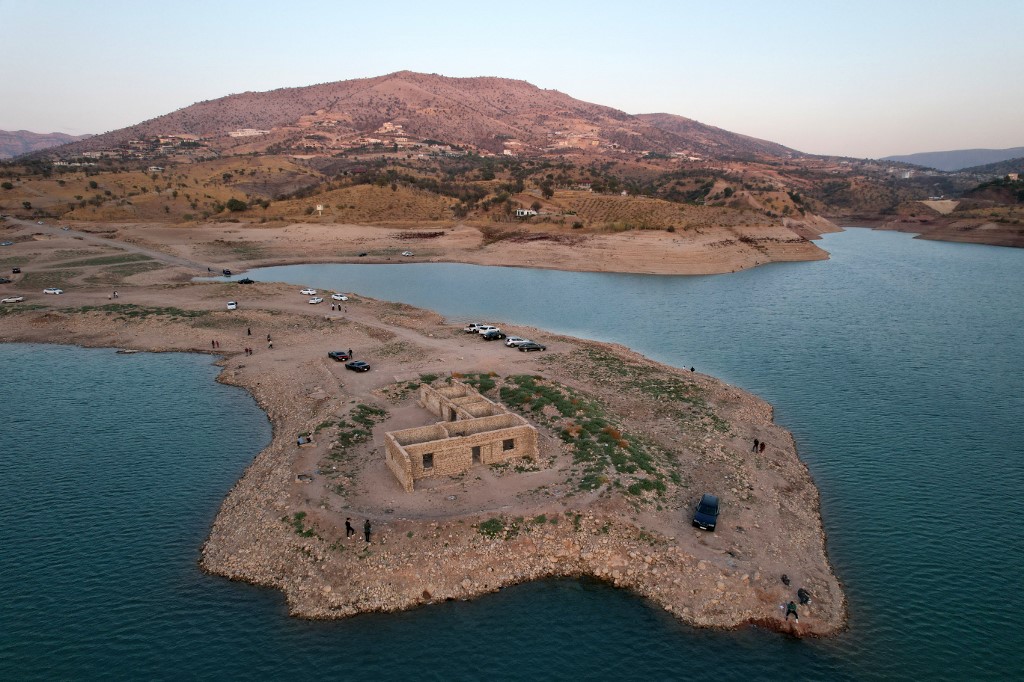
The remains of a submerged village abandoned decades ago, seen on 4 November 2021, resurfaced after a large drop in the water level of Iraq’s Dohuk Dam due to drought (AFP)

In recent years, some 1.2 million Afghans were reportedly forced from their homes by a mix of droughts and floods. In August, aid groups warned that more than 12 million Syrians and Iraqis had lost access to water, food and electricity. “The total collapse of water and food production for millions of Syrians and Iraqis is imminent,” said Carsten Hansen, the regional director for the Norwegian Refugee Council.

There is probably nowhere the legacy of western meddling – directly and indirectly – has been felt more acutely than the resource-rich Middle East

According to recent research, “Iran is experiencing unprecedented climate-related problems such as drying of lakes and rivers, dust storms, record-breaking temperatures, droughts, and floods.” In October, the International Federation of Red Cross and Red Crescent Societies noted that climate change was wreaking havoc in Yemen too, with extreme flooding and an increased risk of waterborne diseases.

Western states cannot evade their responsibility for this. Those same countries that asset-stripped the Middle East over the past century also exploited the resulting fossil-fuel bonanza to intensify the industrialisation and modernisation of their own economies. The US and Australia had the highest rates of fossil fuel consumption per capita in 2019, followed by Germany and the UK. China also ranks high, but much of its oil consumption is expended on producing cheap goods for western markets.

The planet is heating up because of oil-hungry western lifestyles. And now, the early victims of the climate crisis – those in the Middle East who provided that oil – are being denied access to Europe by the very same states that caused their own lands to become increasingly uninhabitable.
Impregnable borders

Europe is preparing to make its borders impregnable to the victims of its colonial interference, its wars and the climate crisis that its consumption-driven economies have generated. Countries such as Britain are not just worried about the tens of thousands of applications they receive each year for asylum from those who have risked everything for a new life.

They are looking to the future. Refugee camps are already under severe strain across the Middle East, testing the capacities of their host countries – Turkey, Jordan, Lebanon and Iraq – to cope.

Europe is preparing to make its borders impregnable to the victims of its colonial interference, its wars and the climate crisis that its consumption-driven economies have generated

Western states know the effects of climate change are only going to worsen, even as they pay lip service to tackling the crisis with a Green New Deal. Millions, rather than the current thousands, will be hammering on Europe’s doors in decades to come.

Rather than aiding those seeking asylum in the West, the 1951 Refugee Convention may prove to be one of the biggest obstacles they face. It excludes those displaced by climate change, and western states are in no hurry to broaden its provisions. It serves instead as their insurance policy.

Last month, immediately after the 27 refugees drowned in the Channel, Patel told fellow legislators that it was time “to send a clear message that crossing the Channel in this lethal way, in a small boat, is not the way to come to our country.”

But the truth is that, if the British government and other European states get their way, there will be no legitimate route to enter for those from the Middle East whose lives and homelands have been destroyed by the West.

The views expressed in this article belong to the author and do not necessarily reflect the editorial policy of Middle East Eye.

Jonathan Cook

Jonathan Cook is the the author of three books on the Israeli-Palestinian conflict, and a winner of the Martha Gellhorn Special Prize for Journalism. His website and blog can be found at: www.jonathan-cook.net
How Israel turned Palestine into a surveillance tech dystopia

Nadim Nashif
10 December 2021 

International community must stand up against Israel's increasingly invasive surveillance operations


In response to mounting pressure, the US recently blacklisted NSO Group over its spyware sold to foreign governments (AFP/file photo)

Whether in the occupied West Bank, Gaza or Israel, Palestinians live under a cloud of constant Israeli surveillance. Recent revelations have included the Israeli army’s deployment of Blue Wolf facial recognition technology, which reportedly saw Israeli soldiers incentivised with prizes for taking the most photos of Palestinian civilians, and the installation of NSO Group’s Pegasus spyware on the phones of Palestinian human rights workers.

While these revelations might have shocked the international community, Palestinians have long known that Israel uses the occupied territories as a laboratory for testing invasive surveillance technologies. This allows Israeli firms to market their technologies as “field tested” when they are exported around the world.

In addition to violating Palestinians' human rights, Israeli surveillance ... has far-reaching consequences for the international community

In addition to violating Palestinians’ human rights, Israeli surveillance of Palestinian communities has far-reaching consequences for the international community. The lack of accountability, transparency and regulation on the sale and provision of surveillance tools threatens marginalised communities, human rights defenders, academics and journalists worldwide. As like-minded governments look to Israel as a blueprint for surveilling their own citizens, the international community can no longer afford to stand by as the right to privacy is eroded.

Indeed, Israeli surveillance systems have become central to controlling the everyday lives of Palestinians. Since its 1967 occupation, Israel has gradually tightened its control over the information and communications technology sector in the West Bank and Gaza, in defiance of the Oslo Accords, which required Israel to gradually transfer control to Palestinians.

This has resulted in severe violations of Palestinian digital rights, including a tiered system of accessibility in which Israelis enjoy access to 5G, while Palestinians in the occupied West Bank only have access to 3G, and 2G in Gaza.
'Pressure points'

Israel simultaneously stifles technological advancement for Palestinian communities, while controlling the infrastructure that undergirds the surveillance state. An Israeli military whistleblower recently revealed that Israeli authorities have the ability to listen in on any phone conversation in the occupied West Bank and Gaza - and not only that, any mobile device imported into Gaza via the Kerem Shalom crossing is implanted with an Israeli bug.

Israel’s controversial Unit 8200 uses such surveillance methods to find “pressure points” to turn Palestinians into informants. The Unit often seeks out gay Palestinians, and burdens them with the impossible choice of having their sexuality revealed to their friends and family, which may lead to persecution, or becoming informants and spying on their communities for the Israeli government.


Israeli spyware: What you read could make you a target
Read More »

Over the past half-decade, there has been a notable increase and diversification in Israeli surveillance methods. Israel encouraged the tech and security sector to produce algorithms and surveillance tools to sift through Palestinian social media content, and its controversial predictive policing programme has seen hundreds of Palestinians arrested on charges of social media incitement since 2015.

The Covid-19 pandemic has exacerbated the situation, as Israel has used the guise of public health to roll out new invasive surveillance measures. Palestinians face severe restrictions on freedom of movement and must apply for travel permits, but in light of the pandemic, Israel last year launched a mobile application to replace in-person permitting services.

While the app was framed as a public health measure, its more insidious intentions are clear in its terms of service, which force users to provide access to the data stored on their phones, such as calls and photos. This becomes more problematic when understanding how important these services are for many Palestinians.

Without proper permits, it can be difficult to find work within the small geographical areas to which many Palestinians are confined. Israel’s pandemic response has thus forced Palestinians to choose between access to a professional livelihood, or maintaining their right to privacy.

Closed-circuit cameras

At the same time, video surveillance and facial recognition software are a daily reality for Palestinians. In 2000, several hundred closed-circuit television cameras (CCTVs) were installed in the Old City of Jerusalem. In 2015, that system was significantly expanded, and today, facial-recognition technology has become so widespread that many Palestinians no longer feel safe in their own homes.

Some CCTVs are positioned in such a way that they can see into private homes, leading some women to resort to sleeping in their hijabs, while other families are reluctant to let their children play outside, as the cameras have stripped away any sense of privacy.

Governments around the world must push for increased regulation and transparency in how surveillance technologies are developed and deployed

While Israel’s system of surveillance is clearly built on a lack of regard for Palestinians’ basic rights, including their right to privacy, the response from global governments has been slow and ineffective in addressing the issue. The work of civil society organisations and digital rights defenders is thus a vital tool for increasing public pressure on surveillance companies.

In response to mounting pressure, the US recently blacklisted NSO Group and Candiru, saying they “developed and supplied spyware to foreign governments that used these tools to maliciously target government officials, journalists, businesspeople, activists, academics, and embassy workers”. And last year, amid intense public scrutiny, Microsoft announced that it would sell its stake in the Israeli facial recognition company AnyVision.

Yet, this does not go far enough to tackle the systemic issue of entrenched Israeli surveillance systems and the testing of such technology on Palestinians. Governments around the world must push for increased regulation and transparency in how surveillance technologies are developed and deployed, and sanction companies that depend on the exploitation of marginalised communities to test their products.

The views expressed in this article belong to the author and do not necessarily reflect the editorial policy of Middle East Eye.

Nadim Nashif is the executive director of 7amleh, an organisation that focuses on the advancement and protection of Palestinian digital rights
Soundstorm: Why are DJs flocking to play in Saudi Arabia’s music festival?

Over 200 musicians will perform at a music festival that activists say only exists to whitewash the kingdom’s image abroad.


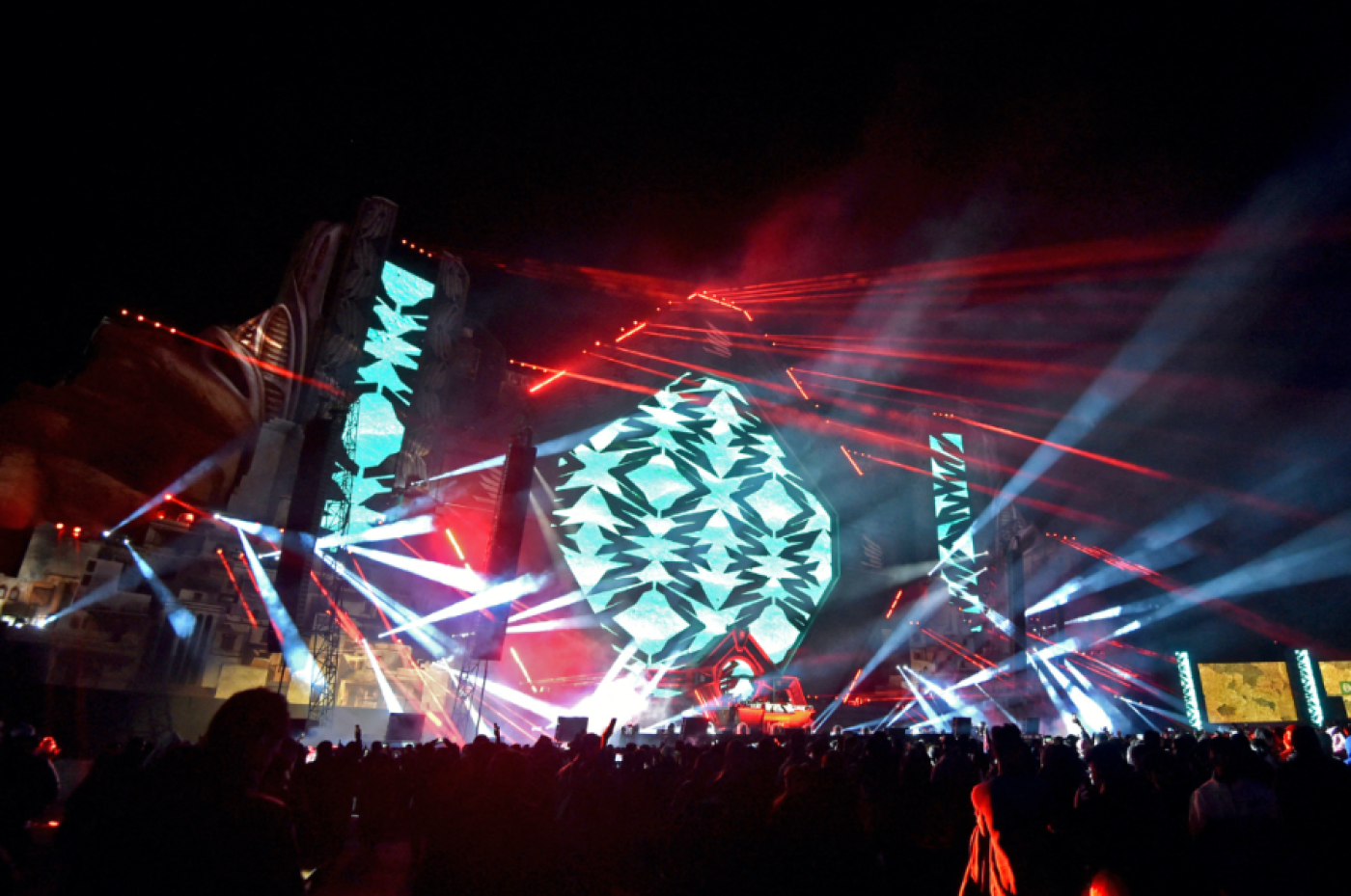
Saudi fans attend the "MDL Beast Fest", an electronic music festival, held in Banban on the outskirts of the Saudi capital Riyadh on 19 December 2019 (AFP)

By Matt Unicomb
Published date: 12 December 2021 

Between December 16 and 19, the airspace above Saudi Arabia’s Riyadh Airport will see an influx of private jets from London, Berlin and Los Angeles.

It will not be businesspeople or royal functionaries on those planes, but some of the more than 200 colourfully dressed DJs and musicians booked to play at Soundstorm, a four-day electronic music festival that human rights activists say is part of a campaign by Saudi authorities to whitewash its international reputation.

'It hurts that someone who came from underground music can accept money from a government responsible for some of the worst human rights abuses'
- Annabel Ross, journalist

“After brutal crackdowns on activists, women’s rights defenders and the murder of [Saudi journalist] Jamal Khashoggi, Saudi Arabia’s image has taken blow after blow,” Hashem Hashem, a regional campaigner for Amnesty International based in Beirut, tells Middle East Eye.

“They are trying to attract foreigners by appearing to be a progressive kingdom. We’ve also been seeing concerts, Formula 1, golf tournaments and other sports events.”

Promising lasers, speaker stacks, smoke machines and giant disco balls, Soundstorm will host scenes more familiar to crowds in the United States and Europe than Saudi Arabia. A four-day pass costs 399 Saudi riyal, or around $106.

The first event of its kind took place in 2019, when 400,000 people attended the dance music festival MDL Beast, according to official figures. Artists and influencers paid to promote the festival were heavily criticised.

This year, as in 2019, most of the performing artists are from what is widely referred to as the EDM scene, where multi-millionaire DJs like David Guetta and Tiesto play trance and high-tempo hip-hop remixes at mega-raves, particularly popular in the US.

But at least 30 DJs on the lineup are from electronic music’s so-called “underground,” a term loosely used to describe the more subtle, repetitive genres of house and techno heard in clubs and warehouse parties across Europe.

Viewed by its followers as a more tasteful, purist form of dance music, it’s suited to night-long partying and hypnotising clubbers. Along with these more subtle sounds comes, according to many of its fans, a commitment to social justice and human rights.

Unlike DJs from the EDM scene, many underground music fans expect certain principles from their favourite DJs. There are numerous instances of high-profile house and techno names being outcast over sexist or homophobic statements. Many top artists boycott Israel and publicly comment on global injustices.

House and techno have origins in the US’s Black and queer communities, which developed these styles at raves in Chicago, Detroit and New York in the ’80s and ’90s.


Saudi Arabia’s prisoners of conscience  Read More »

Decades later, the underground electronic scene is, for many, still a place for personal liberation and safe freedom of expression. Many of its most popular DJs are openly queer and the scene’s most famous venue, Berghain, is a gay club. Hundreds of artists, including some of those performing at Soundstorm, use social media to regularly champion issues like feminism, antiracism and LGBTQ+ rights.

In 2020, the Belgian techno DJ Charlotte de Witte, who will perform at Soundstorm, used Twitter to condemn violence against women in Turkey. The same year, Lee Burridge, another DJ booked at Soundstorm, asked his followers to show “solidarity and empathy to those who need it most” in a lengthy Facebook post. Nina Kraviz, another DJ performing, regularly speaks out on women’s rights.

There are many more examples like these. But, as the bookings at Soundstorm make clear, there is a gap between the values held by many in the scene and the actions of its top DJs.

“It hurts that someone who came from underground music can accept money from a government responsible for some of the worst human rights abuses in the world,” Annabel Ross, a music journalist who reports on sexism and abuse, tells MEE.
Puppets for the monarchy

At least one DJ playing at the festival has defended the decision, suggesting his set may play a role in bringing about change in the conservative kingdom. “Having such a large event and inviting DJs to play unrestricted might make some difference,” techno DJ Jeff Mills wrote in a since-deleted Facebook post.

Similarly, Stacey Piggott, a veteran Australian publicist, put a positive spin on international performers going to Saudi Arabia as a way to highlight human rights abuses in the kingdom.

“There will be millions of F1 fans who would have had no idea about the human rights issues in Saudi until this week. That awareness is a positive for activists,” she told MEE ahead of a panel discussion at Soundstorm about the local music industry.

But human rights activists say the DJs playing in Saudi Arabia are simply puppets for the monarchy.

'Women’s rights activists are raped in prisons, but no visitor will hear that from the government. And they think they will help Saudi society'
- Rana Ahmad, activist

“The message delivered through this event is whatever message the Saudi government wants delivered, not what the DJs want to show,” says Duaa Dhainy, a researcher at the European-Saudi Organisation for Human Rights, or ESOHR.

Research by ESOHR shows that Saudi Arabia has performed 64 executions in 2021, more than double last year. At least eight of those were for “high treason” or alleged political crimes, including Mustafa al-Darwish, who was executed at 26 for participating in anti-government protests when he was 17.

“The best way to deal with the human rights violations in Saudi Arabia is not to go,” says Dhainy. “This is what human rights groups ask.”

Rana Ahmad, a Saudi activist and author who fled to Germany, burst out laughing at the suggestion that DJs could be responsible for any kind of social change in the country.

“Mohammed bin Salman can pay a lot of money for anyone to play music or sport,” Ahmad tells MEE. “Women’s rights activists are raped in prisons, but no visitor will hear that from the government. And they think they will help Saudi society? It’s sad.”

In July, Human Rights Watch released a report highlighting the extent of the torture suffered by political prisoners in Saudi Arabia's prisons. The report offered further evidence that prisoners, such as women's rights activist Loujain al-Hathloul, were subjected to violent treatment including electric shocks, beatings, whippings, and sexual threats.

Hathloul was released in February after three years in prison but is still subject to a travel ban.

A rare code of silence


MEE has reached out to over 10 DJs playing at Soundstorm for comments, but all either declined to be interviewed or did not respond to requests. In normal circumstances, DJs or their representatives reply to promotional inquiries within a few hours, eager to promote their next gig or release.


‘Fashion-washing’: How Saudi Arabia is using couture to improve its reputation
Read More »

DJs in the underground electronic music scene do not spend their days surrounded by minders and personal assistants. Anyone who’s been clubbing in Berlin or London for a few years could probably get a DJ’s phone number through friends of friends. This reflects their status not as household names, but as relatively niche performers, likely selected by Soundstorm concert programmers deeply familiar with underground music scenes in Europe and the US.

Saudi Arabia is known to offer high, tax-free salaries to workers who spend a year or two working on cultural projects in the kingdom.

Maurizio Schmitz, a booking agent affiliated with some of the DJs playing, declined to comment for this story. The same goes for Alex Jukes, whose press agency represents Charlotte de Witte. Phone enquiries to Temporary Secretary, the booking agency for Dixon and Move D, were also not returned.

Several Facebook posts from Jeff Mills responding to criticism have since been deleted.

Ahmad, the Saudi activist, was unsure if artists playing had been made to sign non-disclosure agreements, but said it was likely their contracts will prevent them from going anywhere in Riyadh without their official government minders.

“The visitors aren’t allowed contact with the regular people inside Saudi Arabia, only people from or working with the government,” she said.

Because no DJ agreed to answer questions, MEE could not verify this statement. Representatives from MDL Beast, Soundstream’s parent company, also did not respond to written requests for comment.
Cashing in

The lineup for Soundstorm, funded by Saudi Arabia’s General Entertainment Authority, would likely have cost several million dollars to assemble, a booking agent in Berlin familiar with the industry tells MEE, suggesting that the festival could pay performance fees of at least triple the usual rate.


'The voices of the real Saudis can’t be heard, because human rights defenders are in prison'
- Duaa Dhainy, ESOHR

He estimated that, at a European festival, DJs like Dixon, Nina Kraviz and Amelie Lens could receive €25,000 ($28,138) for a two-hour performance. Booking agents, he says, may have taken advantage of Saudi Arabia’s deep pockets to multiply the fees for their artists, and increase the value of the industry-standard 15 percent commission they take home for themselves.

Lesser known European DJs on the bill, such as Move D and Thomas Melchior, would sometimes perform in European clubs for less than €2,000 ($2,250). They likely see a gig in Saudi Arabia as a quick payday.

Superstars from other fields have turned down offers to appear in Saudi Arabia for far bigger amounts. Nicky Minaj pulled out of an estimated $1.5m contract after pressure from human rights groups. Model-turned-author Emily Ratajkowski declined a paid invitation to appear at MDL Beast in 2019. Resident Advisor, a popular online platform for electronic music news and event listings, donated all proceeds from a £30,000 ($33,762) ad campaign for MDL Beast in 2019 to the International Committee of the Red Cross.

“Participating in such a festival is delivering the voice and image the Saudi government wants, even if you think you’re delivering something else,” says Dhainy.

“You’re not being hosted by the Saudis, but the Saudi government. The voices of the real Saudis can’t be heard, because human rights defenders are in prison.”
President Moon Jae-in: End to Korean War agreed to "in principle"

Rebecca Falconer
AXIOS

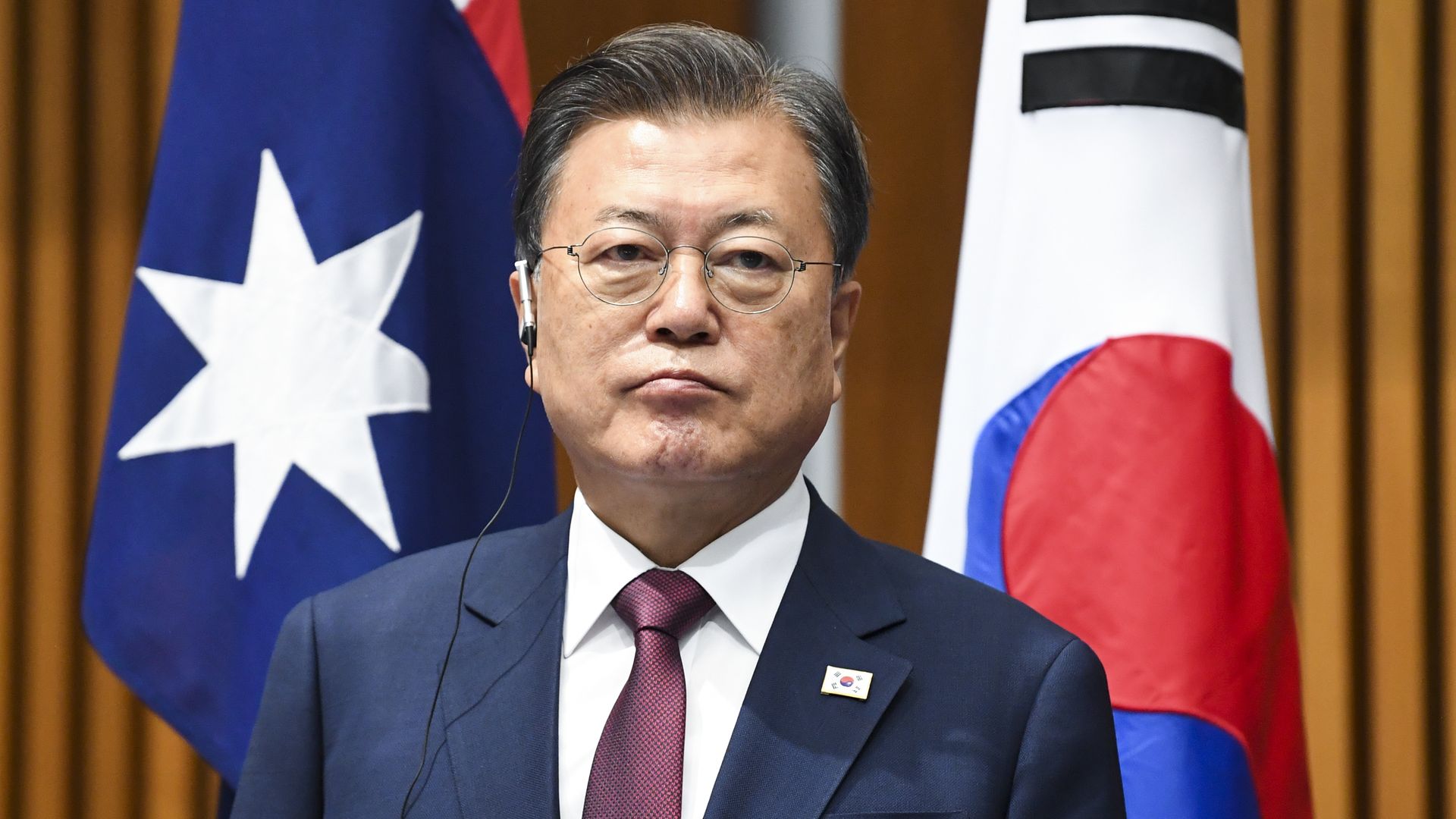
South Korean President Moon Jae-in at a ceremony in Australia's Parliament House in Canberra on Monday. Photo: Lukas Coch - Pool/Getty Images

South Korean President Moon Jae-in said Monday the U.S., North Korea, his country and China have agreed "in principle" to declare a formal end to the Korean War. But they've yet to meet on the matter due to Pyongyang's demands.


Why it matters: Moon believes the move would help restart stalled negotiations between the countries on Pyongyang's denuclearization. A State Department spokesperson said in an emailed statement that U.S. officials were "prepared to meet without preconditions."
 
"We hope [North Korea] will respond positively to our outreach," the spokesperson added.

Context: There's been no formal treaty ending the 1950-53 Korean War. So South and North Korea are still technically at war, backed by the U.S. and China, respectively.

Driving the news: Moon said during a news conference in Canberra, Australia, that North Korean officials were insistent that the U.S. lift what they describe as a "hostile policy" toward the the country — a reference to American action such as sanctions over its nuclear weapons and missiles programs.
"Because of that, we are not able to sit down for a discussion or negotiation on the declarations" to officially end the war, Moon said.

"We hope that talks will be initiated," he added.

The bottom line: "The end-of-war declaration itself is not an ultimate goal," Moon said. But it would be an essential step in paving the way to restart negotiations on for denuclearization and peace on the Korean Peninsula, he said.

Go deeper: Biden's Korean War diplomacy

The Analytical Angle: 

Can an effective local body system counter violent extremism and terrorism in Pakistan?

Decentralisation can serve as deterrence to terrorism and violent extremism in a society.
Updated 04 Dec, 2021 

There is a growing realisation even at the top leadership of the state that perhaps nothing else poses a bigger threat to the stability of Pakistan than violent extremism and terrorism. It has damaged the tolerant culture using self-proclaimed religious superiority by some to harm those who hold differing views or follow different faiths. Despite the fact that radicalism has been spreading widely in our society, we still have little understanding of what motivates people to engage in militancy. Who is more likely to join the extremist groups? Do financial hardships, victimisation, marginalisation, stress, or traumatic life events push individuals into extremist beliefs? How do militant groups succeed in attracting others to join their ranks? Can people change their minds and walk away from such violence-promoting elements? Can local communities engage residents in positive activities and counter polarising ideologies? All of these questions demand serious deliberation.

We try to explore whether a representative, autonomous local body system can reduce the risks of someone indulging in political violence, including terrorism. According to the existing research evidence for countries confronted with such threats, the answer is a resounding yes. Multiple channels appear to play a role. In contrast to central control, decentralisation empowers the representative local governments to exercise greater autonomy over their own affairs. It provides decision-making authority to the elected representatives, improves service delivery, addresses minority concerns, and prioritises fiscal allocations to more pressing needs. In essence, it serves as a catalyst to identify and address grievances and issues early on, before they spiral out of control. The built-in feedback mechanism through community engagement and inclusive governance facilitates peaceful resolutions of conflicts.

Before digging further into the topic at hand, it is worth noting that typically three methods are used for devolving authority to lower tiers of government. Deconcentration redistributes central power across many levels of government offices, ensuring that distinct bureaucracies are responsible for distinct tasks and duties. Delegation involves the transfer of powers, mainly administrative duties, to semi-autonomous public agencies or third parties like housing authorities, transportation and waste disposal services, to name a few. Decentralisation, however, constitutes a major devolution of administrative, fiscal, and legislative responsibilities to the representative bodies elected from and by the local constituents. The constituents can vote the elected bodies out of office if they feel unsatisfied with their performance. The fear of retribution fosters healthy competition among the competing candidates. Participatory governance can thereby promote work efficiency, reduce social divisions and promote mutual trust.

Let us take a relevant example to understand how local leadership through community participation may act as a vanguard in monitoring suspicious activities in their areas. The governments of Khyber Pakhtunkhwa in 2014 and Punjab in 2015 enacted a law, requiring property owners and managers —whether a house, hotel, or hostel — to provide information about any new tenant to the local police station. The purpose of the law was to develop a database that could help with the investigation of any terrorist or criminal activities. Although the right step, its implementation faced several practical issues. First, hardly any awareness campaign was launched to raise public understanding of the law. Second, both the fear of falling into uninvited trouble and public distrust of the police, the property owners hesitated from reporting information about the renters. Third, already resource-crunched, it was impossible for the police to go door to door for seeking information about any tenants in the area. Therefore, in order to identify individuals who may embrace an extremist ideology or pose a threat of violence, it is important for the police to work with the local leadership under a formal legal framework.

The question now is why has a representative local body system failed to take roots in Pakistan. This is despite the fact that Article 140-A of the constitution clearly states that, "Each Province shall, by legislation, create a local government system and transfer political, administrative, and financial responsibility and power to the elected representatives of the local governments". Furthermore, the constitution mandates the Election Commission to hold local body elections, meaning that only elected representatives can form such a government. At times, we see the federal government running effective programmes to support provincial governments, such as battling the Covid-19 pandemic, disbursing funds through the Ehsaas programme, or combating aftermaths of any natural calamity with the help of the armed forces of Pakistan. While such efforts greatly help in dealing with large-scale crises, they cannot substitute for the service delivery matters or governance issues in districts, tehsils or union councils.

A detailed study by Cheema, Khwaja and Qadir (2006), titled, “Local government reforms in Pakistan: context, content and causes”, examines why the local body system has been ineffective. They argue that to understand the current state of decentralisation in Pakistan, one must first comprehend its historical context. The British established local governments in India not by building on the traditional panchayat system and empowering locals, but by setting up a powerful, nominated office of Deputy Commissioner (DC) in districts. This colonial legacy continued post-independence, where the military regimes had been proactive in enacting local government reforms, while political governments either undermined or ignored these reforms. Because of the weak local body system and centrally controlled DCs, the power focus shifted towards maximising parliamentary seats in the federal and provincial assemblies to form a government. Moreover, the rivalry between the provincial and local governments over constituency politics did not bode well for the implementation of the decentralisation programme. Therefore, controlling districts through nominated and pliable bureaucracy became politically expedient for the ruling elites, whether military or civilian.

Albeit, the "Devolution of Power" plan of General Pervaiz Musharraf, launched in January 2000 and implemented following a series of local government elections, is widely regarded as the most radical decentralisation reforms effort in Pakistan. It restructured the sub-provincial government significantly by delegating the administrative and expenditures responsibilities to the elected local bodies. The newly formed office of District Coordination Officer (DCO), formerly DC, now reported to the elected head of the local government. Furthermore, DCO also could no longer exercise the executive magistracy and revenue collection powers of the old DC system. While most public service delivery matters came under the purview of the local governments, their ability to raise revenue remained limited with a heavy dependence on funds on the discretion of the central or provincial governments. Clearly, as with any other system, a solid foundation of the local government system needed further structural changes in order to be truly independent and autonomous. Yet, this devolution plan made the local government system both effective and responsive to local needs. However, following the waning power of Musharraf after 2007, this system started to lose its ground. Unnecessary delays in the approval and disbursement of funds for projects planned by the local governments hindered their ability to serve the people at the grassroots level.

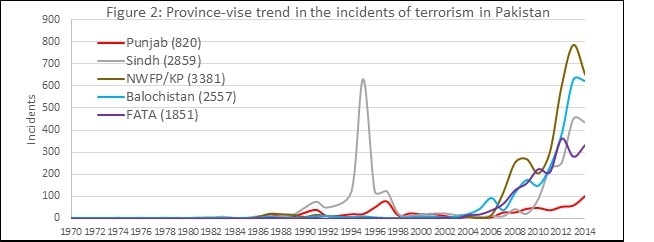
Nearly all data sources on terrorism show that after 1990 the incidents of both domestic and transnational terrorism were lowest during the period 2000-2007 in Pakistan. Figures 1 and 2 on the trends in number of overall terrorist incidents in Pakistan as well as in its provinces confirm this fact (data for these graphs come from the Global Terrorism Database). Despite its other flaws, this period is recognised as the best era for decentralisation in the country, where the local governments enjoyed substantial budgetary, administrative, and political control. While correlation does not imply causation, research evidence from a panel of countries supports the terrorism-mitigating effect of decentralisation.

Decentralisation can serve as deterrence to terrorism and violent extremism in a society. On one hand, communities acting as watchdogs make it more difficult for someone to engage in organised violence. On the other hand, alternative work opportunities, generated by improved governance and market incentives, yield greater financial rewards. The bottom line is that unless we make structural changes to the way we govern ourselves, we may just continue to stumble from one tragedy to another, whether caused by internal or external forces.


The Analytical Angle is a monthly column where top researchers bring rigorous evidence to policy debates in Pakistan. The series is a collaboration between the Centre for Economic Research in Pakistan and Dawn.com. The views expressed are the authors’ alone.

PAKISTAN
Costs of corruption
Huma Yusuf
DWAN.COM
Published December 13, 2021 


WE were promised Riyasat-i-Madina. Instead, Transparency International’s National Corruption Perception Survey, conducted this year across all four provinces, reiterates how rampant corruption is in Pakistan. The report’s findings have already warranted economic and political analysis. But it’s time we also focused on the social consequences of endemic corruption.

TI’s survey found that 85.9 per cent of respondents consider the government’s self-accountability to be lacking. More tellingly, a majority (66.8pc) believe the government’s accountability drive is biased. The drivers of corruption are perceived to be weak accountability (according to 51.9pc of respondents) and the insatiable greed of the powerful (29.3pc). And almost 73pc of surveyed Pakistanis believe that the lack of local government structures has spurred public-sector corruption at the grassroots level.

The economic costs of rampant corruption are well known. Almost a decade ago, then NAB chairman Fasih Bokhari estimated that Pakistan loses around Rs7 billion per day to corruption. One can only imagine what that figure is today. Studies have also shown that corruption stunts economic growth (while making it less inclusive), limits tax revenues and deters both domestic and foreign investment. Corruption doesn’t just skew income distribution, it makes us all poorer.

The political costs are also apparent. The government maligned the opposition with charges of corruption, and now it faces the same allegations. Writing in The Friday Times, Najam Sethi last week described the perception statistics in TI’s report as a “damning indictment of the PTI regime”. He also implied that political corruption breeds corruption, arguing that the prime minister’s current attempts to undermine and browbeat the ECP are likely in anticipation of indictment in the foreign funding case. That long-running drama, which is now nearing conclusion, may reveal some PTI members to have diverted and benefited from foreign financial flows.

Corruption doesn’t just skew income distribution, it makes us all poorer.

The findings of the foreign funding case and the ECP showdown will lead to more political instability, and the revolving door of corrupt Pakistani leaders will continue to turn. And that’s why we must instead prioritise the social implications of rampant corruption.

TI’s report shows that the police (41.4pc), judiciary (17.4pc) and public procurement (10.3pc) are considered the most corrupt sectors. And sadly, in the year after a pandemic, the health sector has climbed to fourth place (the auditor general’s report last month claiming irregularities of up to Rs40bn in finances meant for the country’s coronavirus response may have caused this ranking to climb even higher). Respondents also emphasise the burden of paying a bribe to receive public services (such as water and sanitation). And the judicial backlog looms large, with more than 46,000 cases pending at the Supreme Court, and more than 1.7 million at district courts.

The institutions perceived as the most corrupt are those citizens turn to for security, justice, well-being and basic service provision. That most Pakistanis believe the state’s most fundamental offerings to be corrupt explains why there’s such little public trust in the Pakistani state. If daily interactions — basic expectations, and the only hope for recourse — are marred by venality, then how can there be trust in the state? Why shouldn’t it be reconceived as an extractive and exploitative service provider to protect and enhance the interests of the few at the expense of the many?

Here’s the rub. When you don’t trust the state, you turn elsewhere. To religious movements or violent extremist groups that offer alternative narratives of righteousness and restore your sense of empowerment. It may seem like a stretch to link perceptions of corruption with Priyantha Diyawadana’s brutal lynching, but it’s not.

Studies coming out of the US show that perceptions of corruption are higher among marginalised or discriminated against groups that are less likely to have access to power, political representation or justice. The widespread experience of corruption in Pakistan also likely drives feelings of marginalisation, which, when not routed through healthy channels (local government, civil society activism, student politics) increase susceptibility to radical thought and extremist movements. Enter the TLP. Other studies have established links between corruption and ethnopolitical violence.

The first formal response to the TI report has been the acceptance in a Gujranwala court of a petition against TI’s chairperson for targeting the judiciary. Rather than trying to silence the messenger, our state institutions need to heed the message. Corruption must be meaningfully tackled not just to drive prosperity and ensure political stability, but to prevent Pakistan’s social fabric from fraying any further.

The writer is a political and integrity risk analyst.


Age of democratic erosion

Maleeha Lodhi
Published December 13, 2021 
PRESIDENT Joe Biden’s initiative to hold a virtual ‘Summit for Democracy’ has been variously interpreted. Many in the West saw this as a timely effort to reinvigorate democracies, put the issue back on the US foreign policy agenda and sharpen the focus on the ‘battle’ against autocracies. Others read the move as another effort in Washington’s counter-China strategy to mobilise democratic states and reinforce the idea that an ideological conflict is to be waged. The latter interpretation strengthened the view that the Biden administration is injecting a ‘cold war’ dimension into its competition with China.

Whatever the motive there is no getting away from the fact that democracies everywhere face challenges from the rising forces of intolerance. Today democracies in many parts of the world are far from being shining examples of equal liberties for all and respect for institutions and human rights. In fact, most democracies now are in serious disrepair and need to fix their multiple weaknesses and deficiencies. Political polarisation and toxic politics seem to have become a worldwide phenomenon now. This denudes democratic systems of the essential ingredients to make them work effectively — tolerance, consensus and accommodating diverse opinion.

The Global State of Democracy Report 2021, published by a Sweden-based research institute, highlights what it calls ‘democratic erosion’. It says “the quality of democracy continues to travel a very visible downward path across the board”. Democratic governments, according to the report, have been mimicking the practices of authoritarian regimes and this “democratic backsliding” is “threatening to become a different kind of pandemic”. It “now afflicts very large and influential democracies that account for a quarter of the world’s population”. This at a time when the percentage of people living in a democracy has also plunged to its lowest point since 1991.


Read: Democracy slipping away at record rate, warns IDEA

One of the two most egregious examples of democratic erosion is in our neighbourhood — India, while the other is among the world’s oldest democracies, the US. Indian democracy has in recent years been challenged by the rise of right-wing nationalist populism, also evidenced across the world, with so-called strongmen rule holding sway. This has entailed elected leaders acting with impunity to erode civil liberties, curb freedom of expression, suppress dissent and undermine democratic norms. The perversion of Indian democracy and its descent into authoritarianism has however gone much further with the assault on the state’s formal secularism by the ruling party’s Hindutva ideology and its active mobilisation of anti-Muslim and anti-minority sentiment. This has fuelled violent religious discord and the most vicious mob attacks on minorities.

Read: India has now become the sick man of South Asia

Democratic decline is now a global trend which reflects growing intolerance around the world.

Democratic erosion in the US has assumed a different form but has also resulted in regression. The rise of Trumpian populism in recent years has seen the mainstreaming and empowerment of racist and white supremist groups and sentiment that has fuelled racial unrest and deeply divided the country. Moreover, polarisation has steadily eroded the political middle ground, produced partisan gridlock and made even minimal consensus to run the political system elusive, leaving it in a dysfunctional state. Lack of respect for democratic norms and institutions reflected in Trump’s whimsical rule has outlasted him. It is reflected most notably in the way many Republican-run states are making changes to election laws and voting rules. In at least 19 states Republican-controlled state legislatures have enacted laws that restrict voting rights.

This has set off alarm bells about the future of democracy in the US. A statement signed earlier this year by over a hundred American scholars warned of the danger to democracy by such actions which were politicising the electoral system and could call into question the fairness and credibility of future elections. The wider public seems to share this view. Two-thirds of Americans believe their country’s democracy is under threat according to a July 2021 PBS/NPR poll.

The US is no exception to a global trend also playing out in central Europe where leaders including Victor Orbán in Hungary, Andrzej Duda in Poland and an aspiring ‘elected autocrat’ Herbert Kickl in Austria represent the far right that has manipulated xenophobic nationalism and mobilised anti-immigration sentiment to seize power. Then there is Brazil’s far right populist President Jair Bolsonaro in Latin America’s largest democracy. Many such populists once they are elected concentrate power, subvert democracy and engage in reckless politics and authoritarian practices.

The trend towards authoritarianism in the last decade or more raises the question of what are the underlying factors responsible for the phenomenon and rise of populist leaders. This cannot be attributed to any uniform set of factors as each country’s case is different with specific dynamics and variables shaping its political trajectory and landscape. Some common features can nevertheless be identified. They include the failure of established political parties and their policies to meet heightened public expectations, growing disconnect between political elites and people, poor governance, increasing inequality, lack of responsiveness by institutions to public concerns, political polarisation, economic and social discontent, uncertainties spawned by globalisation and role of the social media.

What about Pakistan’s democratic record? The country’s chequered political history has seen it alternate between periods of fragile democracy and long bouts of military rule. The post-1980s democratic experience has been replete with ousters of elected governments, well short of completing their term, by military-backed actions undertaken either by previously powerful presidents or the judiciary. In such an environment democratic values and norms could barely take root while the politics of intolerance practised by several civilian governments also played into the hands of the ubiquitous establishment. Today Pakistan’s democracy has an elected government but in a political system popularly known as ‘hybrid’, to indicate the influence exercised by the military over national affairs and governance. This has further distorted the working of democracy. So have the actions of a government that treats political opposition as illegitimate, shows little tolerance for criticism or dissent and prefers to rule unilaterally. Pakistan’s democracy has regressed in recent years but for reasons somewhat different from those challenging democracy elsewhere. What it has in common with democratic decline across the world is an environment of growing intolerance that is both a cause and consequence of democratic erosion.

The writer is a former ambassador to the US, UK & UN.
Published in Dawn, December 13th, 2021