Wednesday, January 05, 2022

Science skepticism appears to be an important predictor of non-compliance with COVID-19 shelter-in-place policies

2022/1/5 
© PsyPost


Attitudes about science were associated with compliance with shelter-in-place policies during the initial stages of the COVID-19 pandemic in the United States, according to research that analyzed anonymous cell phone location data. The study indicates that regions where people are more skeptical of science tend to adhere less strictly to stay-at-home orders. The findings have been published in Nature Human Behaviour.

Following the outbreak of COVID-19, social scientists quickly became interested in studying factors that impact compliance with government policies that mandate physical distancing.

“Since we are from economics and public policy backgrounds, we were naturally interested in studying individual behavior in response to public policy in the context of the COVID-19 pandemic. We got the idea for the paper when state governments across the U.S. started introducing shelter-in-place policies in a staggered fashion in March 2020,” said study author David Van Dijcke, a PhD student at the University of Michigan.

“We realized we could use the variation in the timing of when those policies were introduced to trace out their effects. Since it was apparent to us that non-compliance with the policies — people not staying at home — would be an important issue for their efficacy, we started thinking about what might affect such non-compliance. While we look at science skepticism, other studies have found important roles for partisanship and poverty as well.”

“Around the same time, we stumbled across SafeGraph, the company that provided us with the anonymized mobile device data that we used to estimate the extent to which people were staying home,” Van Dijcke said.

The researchers measured responses to the shelter-in-place policies at the county level by analyzing location data from more than 40 million mobile devices across the United States.

Van Dijcke and his team used data from a previous study on climate change opinions, which aggregated data from 12 nationally representative surveys, to assess science skepticism. The surveys included responses from 12,061 individuals in total and the data were used to estimate the percentage of people per county who agreed with the statement that global warming is caused by humans.

Because of the lack of granular geographic data on science skepticism, “we used belief in anthropogenic (human-made) global warming as a proxy for science skepticism and validated this measure by benchmarking it against measures of science skepticism from other, smaller-scale datasets,” Van Dijcke explained.

Those other datasets included the American Values Survey, which asks respondents the extent to which they agree with the statement “I am worried that science is going too far and is hurting society rather than helping it,” and the World Values Survey, which includes survey items such as “We depend too much on science and not enough on faith.”

The researchers found that the proportion of people who stayed at home after shelter-in-place policies went into effect tended to be higher in counties with lower levels of skepticism compared to counties with higher levels of science skepticism.

Previous research has found that shelter-in-place policies tended to be less effective in regions with a greater share of Donald Trump voters. But Van Dijcke and his colleagues found that their results held even after controlling for political partisanship.

“The main takeaway is that whether or not people stayed at home during the first COVID-19 lockdowns in the States depended to a significant extent on whether they were skeptical about science,” Van Dijcke told PsyPost. “That is the case irrespective of people’s political affiliation, income, education, etc. We also find some evidence that science skepticism undermined compliance with other public health interventions during the pandemic, such as mask-wearing and vaccination. We think these are important findings since they underline the importance of science education and communication, as well as the danger of misinformation about these topics.”

“A caveat to our study is that it applies to the United States during the first wave of the pandemic, and thus may not be generalizable beyond that setting,” Van Dijcke noted. The study examined the proportion of people who stayed at home between March 1 and April 19, 2020.

But the most important limitation of the study is the fact that the researchers had to rely on belief in anthropogenic global warming as their primary measure of science skepticism.

“An obvious lacuna to fill is the availability of large-scale, representative data on science skepticism that can be mapped to granular geographies in the United States such as counties,” Van Dijcke said. “I think the pandemic has forcefully demonstrated how detrimental science skepticism can be to the implementation of public policy. Such data would open the way for a large array of additional questions regarding science skepticism to be studied, since researchers could link it to any other data available at the county level, most prominently Census data.”

However, the results are in line with another study published in Nature Human Behaviour, which found that people with lower levels of trust in doctors, scientists, economists, professors, and experts were less likely to engage in behaviors intended to prevent the spread of COVID-19.

The study, “Science skepticism reduced compliance with COVID-19 shelter-in-place policies in the United States“, was authored by Adam Brzezinski, Valentin Kecht, David Van Dijcke, and Austin L. Wright.
A Year After the Insurrection, Where's Accountability for Accomplices in Congress?
Big biz withholds cash, while Thompson takes aim at Penc
e, Hannity

By Keith Reed


Chairman Rep. Bennie Thompson, D-Miss., speaks with the media after the House select committee hearing on the Jan. 6 attack on Capitol Hill in Washington, on July 27, 2021.Photo: Jose Luis Magana (AP)

Thursday marks a year since thousands of losers stormed the U.S. Capitol, trying to keep an even bigger loser in office. They failed, despite doing about 150 million times more damage than it would have taken for every cop in DC to open fire had the crowd been mostly Black. Some of the insurrectionists are sitting in jail now, though not nearly enough have been tracked down and tried and sent there. Their hero, exiled from DC in shame, is free to spend his post-presidency at his own posh Florida resort.

But while Trump is gone–for now–and as more of his followers get carted off to jail, 147 of his biggest co-conspirators in an attempt to hijack an election are still sitting members of Congress. All of them are Republican elected officials and all of them voted against certifying a duly-won election of the American presidency. And now, seven of the biggest companies in the country are cutting off their funding.

The website Popular Information dialed up almost 200 companies to find out if they stuck to their word about no longer campaign contributions to the sitting lawmakers who tried to undermine the peaceful transfer of power. Here’s what they found.

Popular Information contacted 183 companies and asked if their corporate PACs would suspend donations to the 147 Republican objectors in 2022. There are seven companies that have explicitly pledged to withhold PAC funding to the Republican objectors in 2022:

Airbnb: Airbnb told Popular Information it would not donate to the Republican objectors in 2022.

BASF: “BASF is committed to staying with our approach for the remainder of the 2022 election cycle.”

Eversource Energy: “[W]e intend to uphold that pledge.”

Lyft: “Yes, we plan to uphold this pledge.”

Microsoft: “[W]e are committed to our pledge”

Dow: “This suspension will remain in place for a period of one election cycle (two years for House members; up to six years for Senators), which specifically includes contributions to the candidate’s reelection committee and their affiliated PACs. Dow is committed to the principles of democracy and the peaceful transfer of power.”

American Express: Last year, American Express told Popular Information that its PAC would never donate to the 147 Republican objectors again.

79 big firms in total kept the commitment they made a year ago, but another 58 haven’t, according to Popular Info.

In the meantime, Rep. Bennie Thompson’s Jan. 6 committee wants to know what Trump’s other closest buddies knew and when they knew it. CNN reported on Tuesday that Thompson wants former VP Mike Pence and Sean Hannity of Fox News to testify.

From CNN

The idea that the former vice president would voluntarily throw himself back into the controversy by testifying appears far-fetched, however. He has painstakingly spent the last year putting space between himself and the infamy of January 6 as he struggles to keep himself viable for a possible future Republican presidential campaign. Still, various Pence aides have begun engaging with the committee, including his former chief of staff Marc Short, whom CNN reported last month is cooperating.

Thompson spoke to CNN moments after the committee fired off another request for cooperation, calling on Hannity, a prime-time Fox News opinion star, to discuss dozens of texts it says he sent to Trump and the President’s team in the days surrounding January 6. The messages once again lay bare the propagandistic synergy between the conservative network and the Trump White House. It also suggests that the panel is willing to go after the most high-profile witnesses and brave significant political controversy in its quest to tell the story of January 6.

Controversy, maybe. But how about full accountability?

The Propaganda Engulfing Jamal Khashoggi

January 5, 2022

As’ad AbuKhalil writes this “friend” of Western journalists was close to the ruthless regime, even to the commander of his own eventual assassination squad. He will always be remembered as the obedient servant of various Saudi princes and as an early champion of bin Laden.


By As`ad AbuKhalil
Special to Consortium News


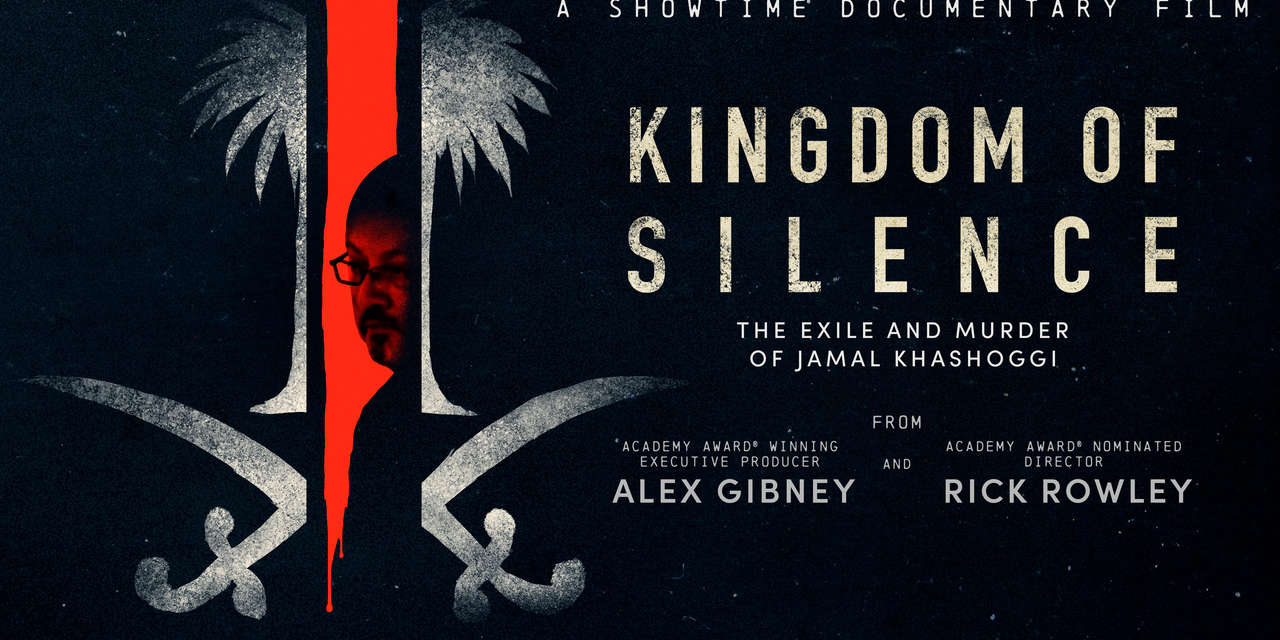
With great fanfare and laudatory reviews in mainstream media, Showtime released the documentary Kingdom of Silence last year about the life and death of Jamal Khashoggi. A cult has been constructed around the person of Khashoggi throughout Western media (but not in Arab media) and the documentary distorts not only the history of the man but even his resonance in the Arab world.

The documentary does not measure up to the standards of a journalistic film, and it does not adhere to fairness and diversity of opinions. It is hagiography through and through. Not one critic of Khashoggi was interviewed, and a retired U.S. diplomat managed to represent the Saudi regime’s point of view. The voiceless Saudi opposition (which had no links to Khashoggi) remained so.

Lawrence Wright plays a major role in the film, commenting not only about Khashoggi but also about Arab politics (Wright has no knowledge of Arabic and no training in Middle East studies although he writes on “terrorism” for The New Yorker and wrote a script for the movie, the Siege, which upset the bulk of the Arab-American community).

Wright, like almost all Western journalists, refers to Khashoggi as a “friend”—as do most people who appear in the film (am I the only one left who does not call Khashoggi a friend?). This raises a question: here was a man who dedicated his life to the service of various Saudi princes and was as a “friend” of members of the DC media establishment. Would any of those journalists dare refer to a journalist working for Syrian or Iranian propaganda outlets as “a friend?”

Their closeness to Khashoggi over the years implicates them in the way they subject pro-U.S. despotic regimes to less scrutiny than to regimes opposed to the U.S.. This type of journalist holds particular scorn for despotic regimes that aren’t part of the American order in the Middle East.

Was Khashoggi really a friend to all those people mentioned in the documentary? How many friends can one accumulate in a lifetime? This is ironic because the real friends of Khashoggi in Arab (mostly Saudi) media denounced him or distanced themselves from him after his death, while Western journalists strived to claim the closest friendship.

Supported Saudi Crackdown

Kingdom of Silence doesn’t even promise to tell the story fairly or honestly. An actual close friend of Khashoggi’, Maggie Mitchell Salem, managed to describe his polygamous deception as “romantic.”

What you don’t hear in this documentary is about the decades Khashoggi devoted to the service of Saudi propaganda while men and women were beheaded for holding the wrong views. There is just one scene in the film in which you see Khashoggi on U.S. television defending a crackdown by the Saudi government. He defended shooting protesters because they weren’t killed.

This “friend” of Western journalists was close to the ruthless regime, even to the commander of his own eventual assassination squad. They got to know each other when the commander served as an intelligence man at the Saudi embassy in London where Khashoggi was chief of propaganda operations after Sep. 11.

[Ed.: Kingdom of Silence is by Alex Gibney, who made a thoroughly misleading documentary about Julian Assange in 2013, that among things portrayed Assange as paranoid about being extradited to the United States.]

No Professional Standards Allowed


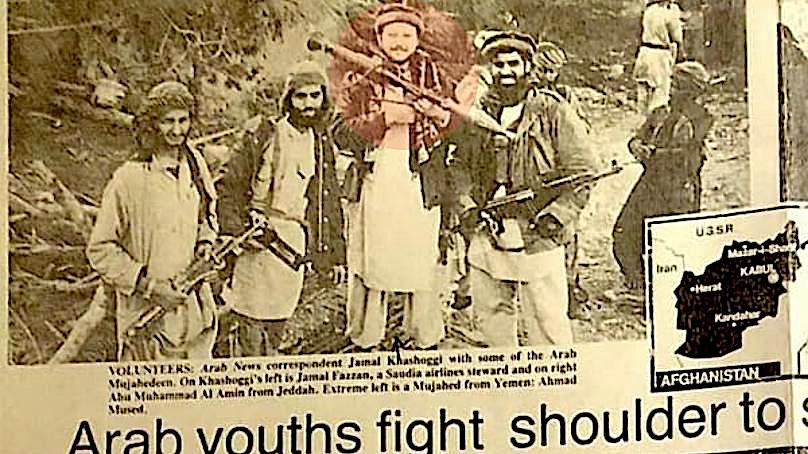
Newspaper clip showing Khashoggi (center) as Arab News correspondent in Afghanistan, 1980s.

Kingdom of Silence manages to discuss how much Khashoggi cared about the journalistic profession and its standards when he worked for decades as a journalist in Saudi Arabia—of all places. But there are no professional standards allowed in Saudi regime media, and all newspapers serve as mere mouthpieces for various princes.

Khashoggi knew how the media game is played and always attached himself to a prince at certain moments. He worked first for Prince Khalid Al-Faysal, before serving his brother, Turki Al-Faysal. He knew the latter when he was chief of Saudi intelligence and Khashoggi was a “correspondent” “covering” Osama bin Laden and his “struggle” against the Soviet occupation of Afghanistan. (There is a picture of Khashoggi from that era holding an AK-47, and he may have fought alongside bin Laden and his band of religious fanatics).

The lines between Saudi journalism and intelligence were very thin; an editor of two Saudi newspapers, Jihad Khazen, admitted that he used to receive “reports” from the Saudi intelligence chief and that he would publish them as articles in Al-Hayat (a defunct mouthpiece of Prince Khalid bin Sultan). Toward the end of his career, Khashoggi attached himself to Prince Al-Walid bin Talal, who quickly fell out of favor when Crown Prince Muhammad bin Salman took over. That was the true story of Khashoggi’s “dissent” or defection. His mentor-prince was no longer favored.

Dangerously Close to the Brotherhood

There is a missing element in the documentary, which applies to all discussions about Khashoggi in the Western press. Khashoggi was no advocate of democracy as he posed in his last year, conveniently for his stint at The Washington Post. He was at odds with Riyadh by being very close to the Muslim Brotherhood and to Qatar. His name is being circulated and honored (through various institutes and academies that bear his name) by the Qatari regime.

Kingdom of Silence claims that Khashoggi was a supporter of the “Arab Spring.” That was not true at all. His stance on the Arab uprising was a an exact replica of the stance by Qatar: the regime supported uprisings only in countries where the Muslim Brotherhood had a good chance of seizing power, and it opposed democratization where the Brotherhood had none.

For that, the Qatari regime and Khashoggi personally supported the brutal Saudi-Bahraini crushing of the rebellion in Bahrain in 2011. There is an unspoken agreement in the Western press to never mention that Khashoggi (the early fan and advocate of bin Laden) was politically close to the Muslim Brotherhood and to Qatar. In fact, several of the people who spoke in the documentary about Khashoggi were people who are also close to either Qatar or the Muslim Brotherhood (or to both, as in the case of Tawakkul Karman).

Glamorizing the Man

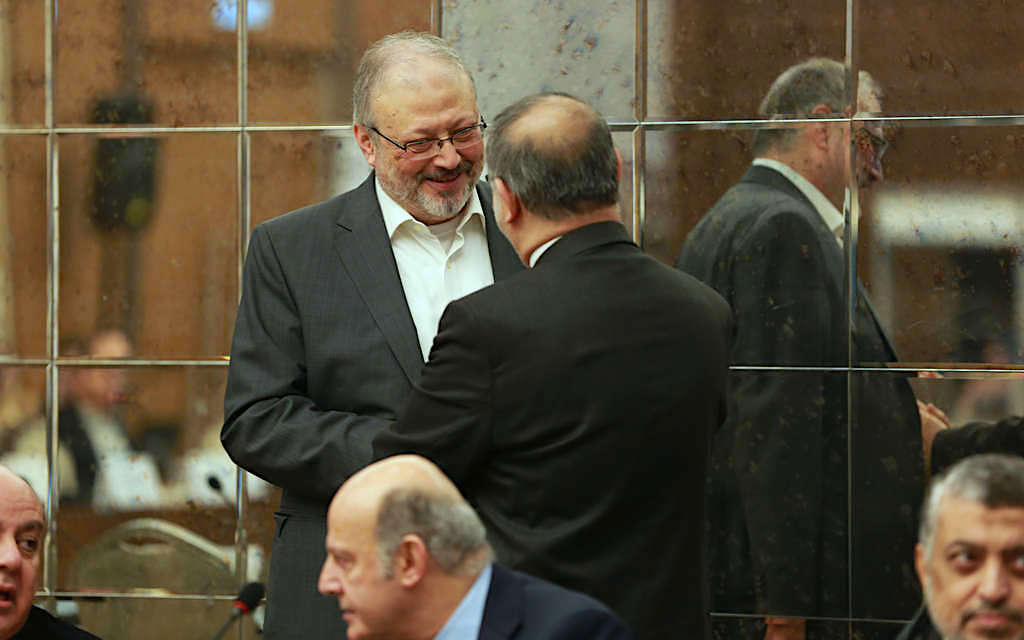
Jamal Khashoggi in still from Kingdom of Silence. (Showtime)

The film is part of an effort underway to glamorize and embellish the life of Khashoggi. Many members of the Western establishment in Washington are excessively trying to honor his memory. Perhaps some—as Maggie Mitchell Salem admitted in the documentary—feel guilty because they wanted him to be a “native” voice who could frustrate Donald Trump’s policies toward the Kingdom. Of course, Joe Biden has continued the same pro-Saudi policies as his predecessor but with little opposition or consternation from the mainstream media.

Western media wants to turn Khashoggi into an Arab hero. Some may owe him a debt because he facilitated the work of Western correspondents inside the Kingdom. But the notion that he was some pan-Arab symbol of political courage is laughable. Khashoggi is remembered—and will always be remembered—as the obedient servant of various Saudi princes and as an early champion of bin Laden.

Wright maintains that Khashoggi was the only Saudi dissident when there are thousands of courageous men and women who languish in Saudi prisons; their names unknown to the likes of Wright and other Washington hacks.

One can’t dismiss the decades Khashoggi’s service to the crown simply because in the last year of his life he wrote vapid, unoriginal articles about the virtues of democracy (in general terms and without holding the U.S. and Western powers accountable for their complicity in the lack of democracy in the Arab world).

There is another Khashoggi documentary in the making and Qatar and Western media will continue to keep his name afloat. Championing Khashoggi is safe because he never took positions that were offensive to the U.S. government.

Kingdom of Silence reminds us that he supported the U.S. invasion of Iraq, and took overtly sectarian stances when it was in the interest of the U.S.-Israeli alliance. Khashoggi wasn’t consistent in his messaging in Arabic and English and those who watch the documentary will get yet another confirmation that Khashoggi’s articles in The Washington Post were not really authored by him.

The documentary spoke little about the dissent in Saudi Arabia that has existed long before the ascension of King Salman to the throne. Contrary to claims by Khashoggi and by this documentary, repression in the Kingdom did not start with Muhammad bin Salman.

What is different is that bin Salman killed a journalist who was close to Western media. That is crossing a red line, not beheading of scores of people in public squares in Riyadh. Western media may champion Khashoggi all they want but they can’t turn a decades-long propagandist for the Saudi regime into a hero.

As`ad AbuKhalil is a Lebanese-American professor of political science at California State University, Stanislaus. He is the author of the Historical Dictionary of Lebanon (1998), Bin Laden, Islam and America’s New War on Terrorism (2002) and The Battle for Saudi Arabia (2004). He tweets as @asadabukhalil

The views expressed are solely those of the author and may or may not reflect those of Consortium News.


UK Deployed 31 Nuclear Weapons During Falklands War

British warships in 1982 were armed with dozens of nuclear depth charges in a nuclear-free zone in Latin America, Richard Norton-Taylor reports.


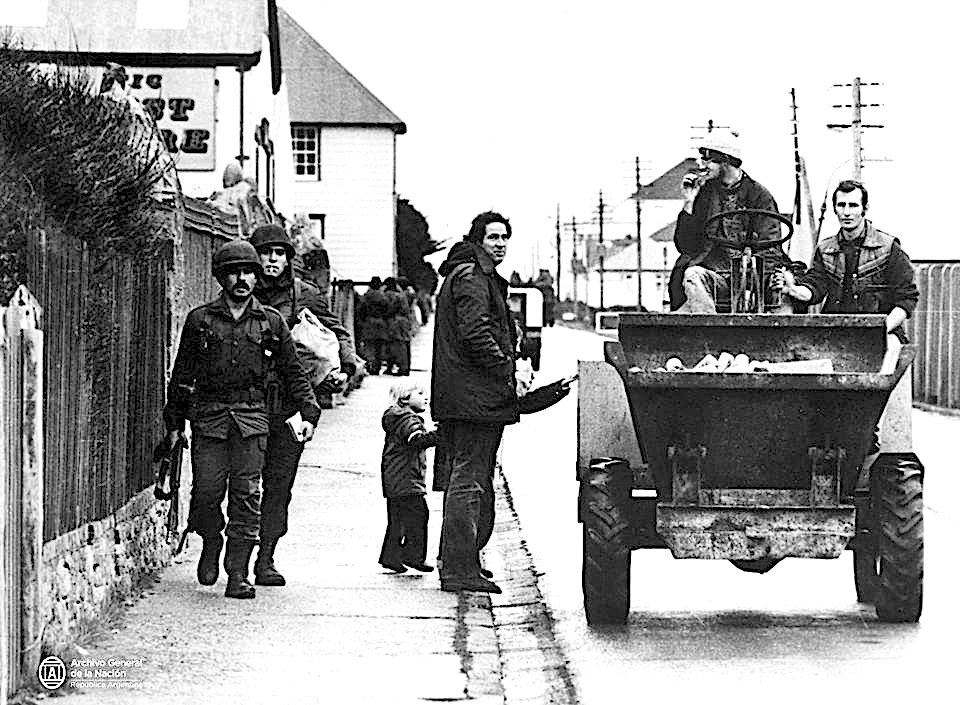
Argentinian soldiers and Falklanders in 1982. (Wikimedia Commons)

By Richard Norton-Taylor
Declassified UK
January 5, 2022

The revelation is contained in a new file released to the National Archives. Marked “Top Secret Atomic,” it shows that the presence of the nuclear weapons caused panic among officials in London when they realized the damage, both physical and political, they could have caused.

The military regime in Argentina claimed the Falkland islands and invaded on April 2, 1982. The U.K. government under Margaret Thatcher dispatched a naval task force to the South Atlantic to retake the islands.

A Ministry of Defence (MoD) minute, dated April 6, 1982, referred to “huge concern” that some of the “nuclear depth bombs” could be “lost or damaged and the fact become public.” The minute added: “The international repercussions of such an incident could be very damaging.”

Nuclear depth bombs are deployed from navy ships to attack submerged submarines.

The unidentified official who wrote the minute continued:

“The secretary of state [John Nott] will wish to continue the long-established practice of refusing to comment on the presence or absence of UK nuclear weapons at any given location at any particular time.”

Heated Row


The existence of the weapons provoked a heated row between the MoD and the Foreign Office. The latter asked the MoD to “unship” the weapons. The Navy refused to do so.

The MoD noted the principal arguments in favour of keeping the weapons on board. It stated:

“In the event of tension or hostilities between ourselves and the Soviet Union concurrent with Operation Corporate [the codename given to liberating the Falklands] the military capability of our warships would otherwise be severely reduced.”

One document in the file says there was no risk of an “atomic bomb type explosion.” But there was a threat of the “disposal of fissile material” if any of the weapons was damaged which could lead to up to 50 “additional deaths” from cancer.

Even if there was no pollution in the event of a damaged or sunk nuclear weapon the Argentinians might get hold of nuclear technology and “we might have had to face acute embarrassment in the non-proliferation field,” recorded a MoD official.

Keeping Secret


August 1981: A British Harrier jet takes off from the Royal Navy aircraft carrier HMS Invincible during fleet exercise in Norfolk, Virginia. (U.S. Navy)

A plan to offload the weapons at the British base on Ascension Island in the South Atlantic Ocean was rejected by the Navy. It said this would delay the passage of the task force to the Falklands and that the operation would not be kept secret.

Instead, the weapons were transferred from the frigates and destroyers to the larger aircraft carriers, HMS Hermes and HMS Invincible, where the weapons could be better protected. Prince Andrew served as a helicopter pilot on Invincible during the war.

By the middle of May 1982, the Hermes had 18 nuclear weapons on board and Invincible 12, while the Royal Fleet Auxiliary ship, Regent, had one, according to the file. The ships were within the “total exclusion zone” imposed by Britain around the Falkland Islands, the documents say.

The file does not say whether any of these were “inert” surveillance rounds used to monitor the “wear and tear on the weapons”, as academic Lawrence Freedman put it in his Official History of the Falklands Campaign, published in 2005.
PRISON NATION USA
The embattled Trump-era head of federal prisons is stepping down under political pressure

C. Ryan Barber
Michael Carvajal, director of the Federal Bureau of Prisons, testifies during a Senate Judiciary Committee hearing on the coronavirus response on June 2, 2020. 
Tom Williams/CQ Roll Call via AP Photo


Michael Carvajal, a Trump holdover, is stepping down as head of federal prisons.

Carbajal has faced criticism over chronic mismanagement and abuse of inmates.

Sen. Dick Durbin has called for Carvajal's dismissal and questioned his commitment to reform.

Michael Carvajal, the Trump-era head of the federal prison system, is stepping down after months of calls from Democrats for his dismissal, a source familiar with the matter told Insider and the Justice Department later confirmed.

Carvajal has announced his retirement but will remain the Bureau of Prisons director for an indefinite period as the Biden administration searches for a successor, a spokesperson for the Bureau of Prisons said late Wednesday.

A longtime correctional officer, Carvajal was named director of the Bureau of Prisons in February 2020 by then-Attorney General William Barr, just months after Jeffrey Epstein died by suicide in federal custody. Carvajal was previously the bureau's assistant director for correctional programs, a post with oversight of emergency planning and a variety of other prison activities.

"We are very appreciative of Director Carvajal's service to the department over the last three decades. His operational experience and intimate knowledge of the Bureau of Prisons – the department's largest component – helped steer it during critical times, including during this historic pandemic," said Justice Department spokesman Anthony Coley.

Carvajal's tenure was marked by the rampant spread of coronavirus within the federal prison system, blistering reports from the Justice Department's internal watchdog, and criticism over staffing shortages and poor working conditions.

As a holdover from the Trump administration, Carvajal found himself on treacherous footing following the inauguration of President Joe Biden.

In June, the Associated Press reported that senior Biden administration officials had discussed ousting Carvajal.

Sen. Dick Durbin, the top Democrat on the Senate Judiciary Committee, called as recently as last month for Attorney General Merrick Garland to remove Carvajal, saying he "has shown no intention of reforming the institution."

Speaking on the Senate floor, Durbin also cited Epstein's death at the federal Metropolitan Correctional Center in New York City, a facility that was shuttered earlier this year, and reports of misconduct by prison staff.Durbin pointed to an Associated Press investigation that found more than 100 federal prison workers have been arrested, convicted or sentenced for crimes since the start of 2019.

US prisons director resigning after crises-filled tenure

By MICHAEL BALSAMO and MICHAEL R. SISAK


WASHINGTON (AP) — The director of the federal Bureau of Prisons is resigning amid increasing scrutiny over his leadership in the wake of Associated Press reporting that uncovered widespread problems at the agency, including a recent story detailing serious misconduct involving correctional officers.

Michael Carvajal, a Trump administration holdover who’s been at the center of myriad crises within the federal prison system, has told Attorney General Merrick Garland he is resigning, the Justice Department said. He will stay on for an interim period until a successor is in place. It is unclear how long that process would take.

His exit comes just weeks after the AP revealed that more than 100 Bureau of Prisons workers have been arrested, convicted or sentenced for crimes since the start of 2019, including a warden charged with sexually abusing an inmate. The AP stories pushed Congress into investigating and prompted increased calls to resign by lawmakers, including the chairman of the Senate Judiciary Committee.

Carvajal’s tumultuous tenure included the rampant spread of coronavirus inside federal prisons, a failed response to the pandemic, dozens of escapes, deaths and critically low staffing levels that have hampered responses to emergencies.

“We are very appreciative of Director Carvajal’s service to the department over the last three decades,” Justice Department spokesman Anthony Coley said in a statement. “His operational experience and intimate knowledge of the Bureau of Prisons — the department’s largest component — helped steer it during critical times, including during this historic pandemic.”

The administration had faced increasing pressure to remove Carvajal and do more to fix the federal prison system after President Joe Biden’s campaign promise to push criminal justice reforms. The Bureau of Prisons is the largest Justice Department agency, budgeted for around 37,500 employees and over 150,000 federal prisoners. Carvajal presided over an extraordinary time of increased federal executions and a pandemic that ravaged the system.

After the AP’s story was published in November, Senate Judiciary Committee Chairman Dick Durbin demanded Carvajal’s firing. Several congressional committees had also been looking into Carvajal and the Bureau of Prisons, questioning employees about misconduct allegations.

In a statement, Durbin, D-Ill., said Carvajal “has failed to address the mounting crises in our nation’s federal prison system, including failing to fully implement the landmark First Step Act,” a bipartisan criminal justice measure passed during the Trump administration that was meant to improve prison programs and reduce sentencing disparities.

“His resignation is an opportunity for new, reform-minded leadership at the Bureau of Prisons,” Durbin said.

Carvajal, 54, was appointed director in February 2020 by then-Attorney General William Barr, just before the COVID-19 pandemic began raging in federal prisons nationwide, leaving tens of thousands of inmates infected with the virus and resulting in 266 deaths.

COVID-19 is again exploding in federal prisons, with more than 3,000 active cases among inmates and staff as of Wednesday, compared with around 500 active cases as of mid-December. All but four BOP facilities are currently operating with drastic modifications because of the pandemic, with many suspending visiting.

Carvajal also oversaw an unprecedented run of federal executions in the waning months of the Trump presidency that were so poorly managed they became virus superspreader events.

Biden administration officials had discussions about whether to remove Carvajal in the spring, after the AP reported that widespread correctional officer vacancies were forcing prisons to expand the use of cooks, teachers, nurses and other workers to guard inmates.

The agency’s staffing levels reached a critical point under Carvajal and officers at several facilities have held protests calling for him to be fired. But Deputy Attorney General Lisa Monaco said recently that she still had confidence in him.

Carvajal, an Army veteran, worked his way up the Bureau of Prisons ranks. He started as a correctional officer at a Texas federal prison in 1992 and was the warden of the federal prison complex in Pollock, Louisiana, before being promoted to regional director in 2016, assistant director in 2018 and director in 2020.

Carvajal’s departure was celebrated by some of his own employees, who say the federal prison system has suffered under his watch.

“Destructive actions by Carvajal have crippled this agency to the point of uncertainty, like a tornado leaving destruction behind,” said Jose Rojas, a leader in the federal correctional officers’ union. “He was a disgrace to our agency. Good riddance.”


UK PM QP
The Prime Minister was back to his old tricks behind the House of Commons despatch box for the first time in 2022, reports Adam Bienkov

Boris Johnson at Prime Minister's Questions

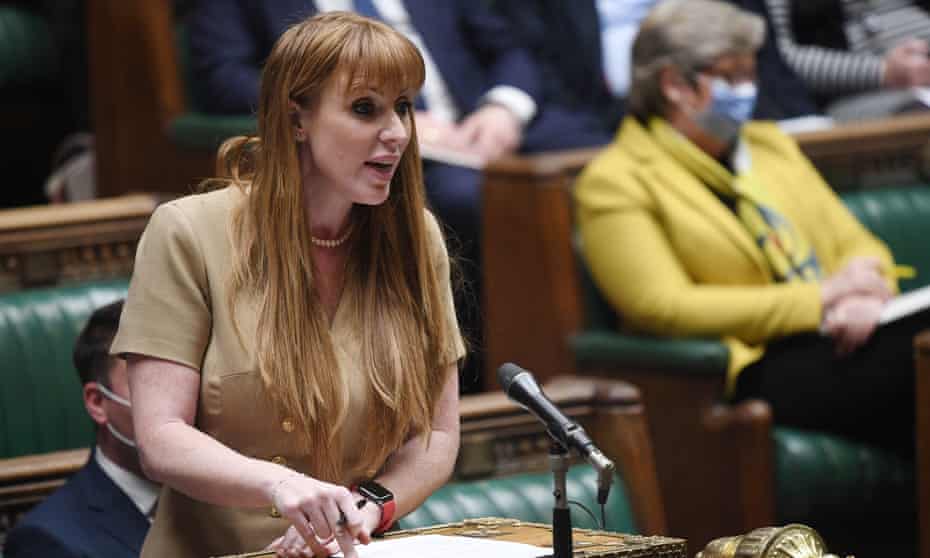
Boris Johnson again made a series of false claims during his exchanges with Labour’s Angela Rayner during Prime Minister’s Questions.

The Prime Minister rattled off the following series of false claims during the brief exchanges with Labour’s Deputy Leader in the House of Commons on Wednesday afternoon.

Inflation Fears

The Prime Minister categorically denied having said back in October that inflation fears in the UK were “unfounded”, telling Angela Rayner that “I said no such thing”.

However, Johnson did say exactly this back in October, telling Sky News that “people have been worrying about inflation for a long time and those fears have been unfounded”.

You can watch the video of him saying this here. He later declined a request by Angela Rayner to correct the record.

Labour Plans to Rejoin the EU

Johnson also claimed that Labour has committed to take the UK “back into the EU”.

However, far from announcing such a plan, Labour Leader Keir Starmer has repeatedly ruled this out, saying that there is “no case” for rejoining the EU and that there will be “no rejoining” of the EU under Labour.

Labour’s Plan to Nationalise the Energy Sector

In response to questions about spiralling energy costs, the Prime Minister claimed that the Labour Party plans to nationalise the energy sector.

While Starmer did promise “common ownership” of the sector during his campaign to become Labour leader, he has since abandoned this idea and has ruled out nationalisation of energy firms in the UK.

Inequality Is Down


The Prime Minister also claimed that income inequality in the UK is down, saying that “if you look at this… inequality, economic inequality, is down in this country. Income inequality is down, Mr. Speaker, and poverty is down”.

In fact, income inequality has “steadily increased” in the UK, according to the most recent analysis by the Office for National Statistics.

The proportion of children in relative poverty has also increased, according to House of Commons Library analysis.


Johnson fumbles and flails under pressure from Rayner

At the first PMQs of the year, faced with tough questioning by Labour’s deputy leader, the prime minister threw truth to the winds
The Labour party’s deputy leader, Angela Rayner, at prime minister’s questions on Wednesday. Photograph: UK Parliament/Jessica Taylor/PA

John Crace
Wed 5 Jan 2022 

It’s an ill wind and all that. With Keir Starmer testing positive for Covid for the second time in a matter of months, it was the deputy leader, Angela Rayner, who got to take on Boris Johnson at the first prime minister’s questions of the new year. Which was just the news that Johnson didn’t want to hear, because Rayner is his worst nightmare.

First off, she’s a woman and Boris has a major problem relating to women without mansplaining. More importantly, though, she’s a working-class woman who is very comfortable speaking her mind. Where Starmer may back off and err on the side of caution and politesse, Rayner is never happier than when going toe to toe. Especially when she’s up against someone who is struggling in the polls and whom she doesn’t much respect.

Rayner began with a flick at the ongoing investigation into parties at No 10 – it never hurts to remind your opponent of nasties coming down the road – before homing in on the here and now. In October he had said that fears of inflation were unfounded. Given that inflation was now running at 6%, how had he managed to get it all so wrong?

“Um, er,” said Johnson. For a moment – the trademark hesitations and incoherence aside – it looked as though Johnson might actually try to answer the question directly. He even began a half-formed sentence to that end. Then half way through he gave up and decided to do what he always does. When under pressure or not. He started lying. How could he have forgotten to do something so natural to him? Maybe it was the Rayner effect. “I said no such thing,” he continued. It was a pure invention that just happened to have been captured in an interview he had given to Sky.

From that point on, Johnson was pretty much lost, careering from one car crash to the next. In between wittering on about cold weather payments and the warm home discount – he claimed it was worth £140 a week: it isn’t, it’s £140 a year, though this was probably less a lie and more total ignorance – he just bounced from one lie to the next causing ever greater self-harm.

First he tried to claim that the country would be in lockdown if Labour had got its way. Where he got this idea from is anyone’s guess. Most likely it was his own wish fulfilment; what he would have liked to do had he not been too weak to face down the rightwing libertarians in the Tory party. All Labour had ever done was back plan B and said it would be guided by the scientific data.

Then he smashed into the next lie. Labour was committed to nationalising the gas industry. It isn’t: Starmer has specifically ruled that out. Then, when Rayner wondered why the government was so keen to rule out cutting VAT on fuel bills – something Johnson had promised as a Brexit dividend – Boris exploded into faux outrage. How dare people who had voted to stay in the EU demand that he keep his promises? He was fully entitled to break as many as he liked to remainers. And, in any case, Labour wanted to rejoin the EU. Pure fantasy. Even the Lib Dems have given up on that one.

When Starmer is faced with so many lies in a matter of minutes, he tends to have a mini-meltdown himself. As if the idea of a prime minister being unable to tell the truth does not compute with his version of reality. And you can sort of see his point. It’s a sign of how low we’ve sunk into the shit that we’ve grown used to the idea of Johnson as a serial liar. We don’t expect anything else from him. But where Keir, frets, Rayner runs with it. Sensing Boris was badly losing the plot – if you can lose something you never really had – she paused to ask if he was feeling OK?

And he really wasn’t. He was having one of his worst days. He knew that all of his lies would unravel long before the end of PMQs but was unable to prevent himself from telling them. He was so busted. So exposed. He knew it and his own benches knew it.

Some Tories tried to offer some encouragement – their jobs are hanging by the same thread as Boris’s and, like it or not, they are symbiotically entwined with him – but it was all a bit half-hearted. Not least because all the red wall MPs care about their constituents’ cost of living. The session ended with Edward Leigh moaning about foreigners. Boris couldn’t bring himself to tell him Vote Leave had promised Indians they could come to the UK post Brexit.

Things didn’t much improve for Johnson when he came to give the Covid statement right after PMQs. There again, it’s never the easiest lie to spin that you’ve made all the right calls for the right reasons, when everyone knows that you only did what your party would allow. Or more specifically what the Coronavirus Recovery Group would allow. Donkeys led by yet more donkeys.

Rayner pointed out some of the more obvious dangers of hospitals being overwhelmed, operations cancelled and people with heart attacks expected to take a bus to A&E but it was the SNP’s Ian Blackford who got to the heart of the matter. Riding out the pandemic had consequences. More people would die. Which probably wouldn’t affect Boris or many Tory MPs that much, but would certainly be one hell of a bummer for those who died. And for their friends and families. So maybe now was the time for a bit more caution. A bit of humility.

Only Johnson doesn’t do caution or humility. He just ducks and dives, doing what he needs to do to get through to the end of the day more or less intact. The consequences left to pile up for tomorrow. Steve Baker and Mark Harper, two hardline members of the CRG, invited Boris to end all restrictions now. In their world, it is their bravery in standing up to Omicron that had forced it into being weaker than Delta. Had the government imposed another lockdown, Omicron would have been inspired to be a much stronger variant. Or something. Whatever drugs they are on, count me out.

Boris hummed and hahed, before saying the plan B restrictions ended in three weeks anyway and he would see how things had panned out by then. Hopefully all those who were going die would hurry up and get their dying in during the next weeks so he would then be able to wing it again. It’s come to something that surviving this episode of the pandemic will come down to luck rather than scientific judgement. Then Boris will be Boris.
Nuclear War Over Ukraine?
Bankrupt America is in no position to fight for Ukraine.


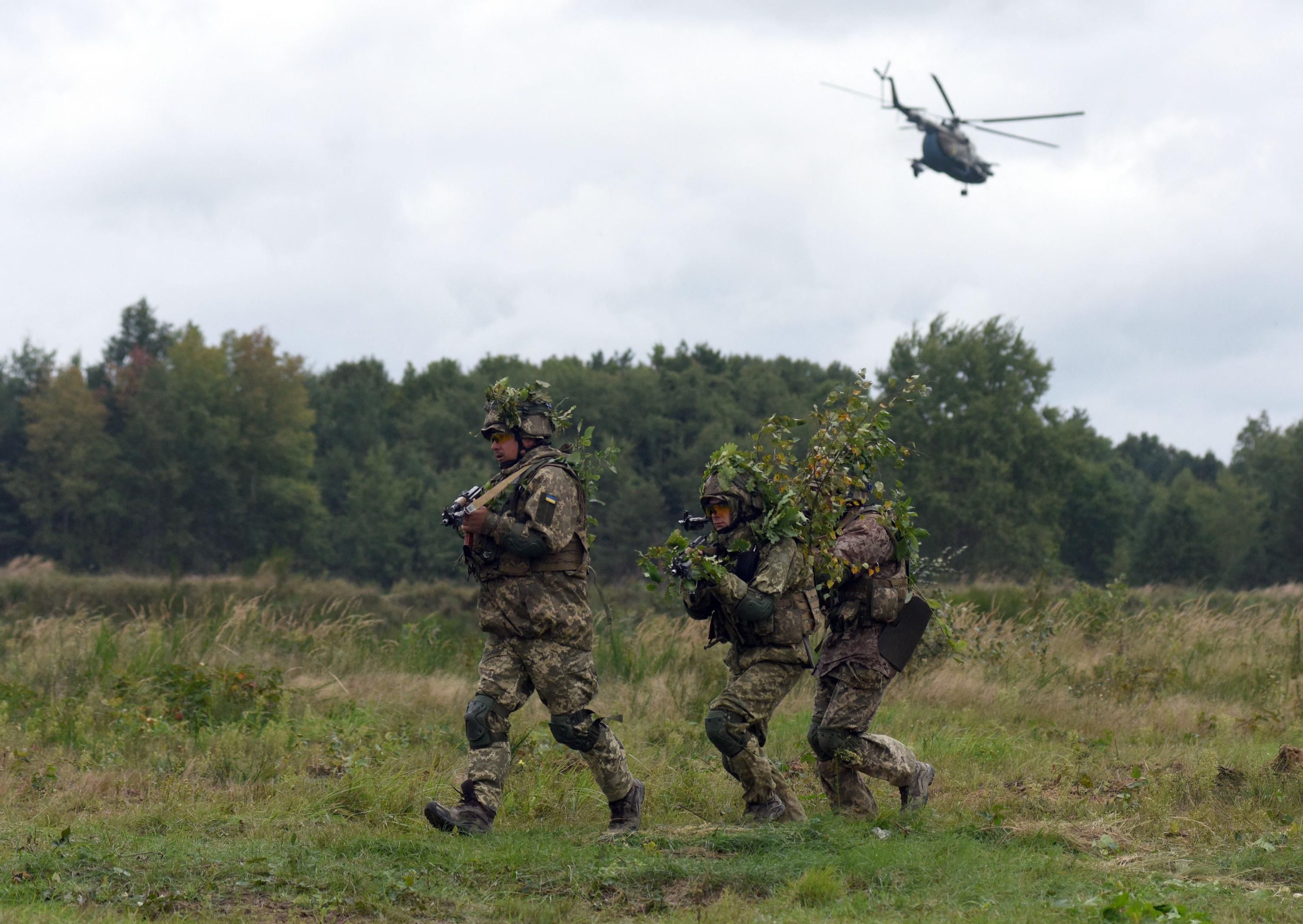
Ukrainian servicemen take part in the joint Rapid Trident military exercises with the United States and other NATO countries nor far from Lviv on September 24, 2021, as tensions with Russia remain high over the Kremlin-backed insurgency in the country's east. The annual Rapid Trident military exercises, taking place in western Ukrainian until October 1, involve some 6,000 soldiers from 15 countries, Ukraine's defence ministry said in a statement.
 (Photo by Yuriy Dyachyshyn/AFP via Getty Images)


ERIC MARGOLIS
January 5, 2022
 by Eric Margolis

How many American soldiers will die in the battle for Luhansk? Or Kerch? Not 1 in 1,000 Americans could find these drab Ukrainian (formerly Russian) industrial cities on a map.

How many Americans are aware that a unit of the Florida National Guard is stationed in western Ukraine, of all places? It's just a training mission, says the Pentagon. Right. Training how to pick oranges. This from the 'invincible' US military (I used to be a member) that got its backside whipped in Vietnam, Iraq and now Afghanistan.

Moscow has no doubt at all that Washington's strategic objective is to complete the amputation of Ukraine from Russia and then to go on tearing down what's left of the current Russian Federation.

No matter. The US, says President Biden, is geared up for a major fight in this obscure coal-mining region of the former Soviet Union. US Navy vessels and aircraft now challenge Russia's Black Sea and Azov Sea borders. NATO units probe Ukraine's air and land borders.

Washington is warning Moscow not to react to US military intrusions. And, above all, not to invade Ukraine—which was part of historic Russia and the Soviet Union until the USSR fell apart after a US-engineered coup in Kiev that created western-orientated Ukraine. Today, Ukraine is governed by a former TV comic whose career was financed by shady oligarchs and western interests.

President Biden has all but threatened war against Russia if Vlad Putin makes good on threats to attack Ukraine. Putin warns the US of his new arsenal of whizz-bang weapons, many of them nuclear. This reminds me of an Italian diplomat's brilliant quip about the regional conflict over a barren Eritrean border region: 'two bald men fighting over a comb."

Ukraine is an economic black hole, with massive industrial pollution, titanic debts, unbridled thievery, and staggering corruption.

For Russia, Ukraine was its former industrial and agricultural heartland, and key component of the Russian state. Think of Ohio suddenly detached from America by pro-Trump rebels or the Red Fleet cruising the Great Lakes.

Moscow has no doubt at all that Washington's strategic objective is to complete the amputation of Ukraine from Russia and then to go on tearing down what's left of the current Russian Federation. Russia's remote Far East would be a key target. No wonder Putin keeps making ever more dire warnings. He is the West's target number one.

Yes, Moscow has moved about 80,000 troops to 'NATO's border.' But this border is Russia's own external border as well. Moscow has every right to do so.

Putin is no angel (see his repression of the Chechen) but he is quite right when he says that the West back-stabbed Russia when it orally promised not to expand NATO east in exchange for Gorbachev's agreeing to Germany's reunification and its inclusion in NATO.

Today NATO has pushed into Moscow's former backyard. In NATO's vanguard are Russia-hating Poland, the three Baltic states and Hungary—all of whom have ample reason to fear and mistrust Russia. All would be happy to see the US go to war with Russia. But the US has no strategic objectives and no logical war aims in southern Russia/Ukraine. A bridge too far, as it proved for Germany in the 1940's, one of the toughest campaigns fought by one of Germany's top generals, Erich von Manstein.

It's very unlikely that Joe Biden or Vlad Putin want a real shooting war in Ukraine. We see lots of breast-beating but no real military action—so far. What neither side will admit is that they both have serious shortages of ammunition, spare parts, fuel, recovery vehicles and guided missiles. Neither Kiev nor Moscow can afford to replace weapons lost even in a short war. Bankrupt America is in no position to fight for Ukraine. The other NATO allies are paper tigers. Most important, Germany has no desire to fight Russia. Unlike the snarling Republicans in the US Congress, Europeans want no new wars. Their boys are not ready to die for Luhansk.

But an accidental conflict is always close and growing nearer.
© 2021 Eric Margolis

Eric Margolis is a columnist, author and a veteran of many conflicts in the Middle East. Margolis was featured in a special appearance on Britain’s Sky News TV as “the man who got it right” in his predictions about the dangerous risks and entanglements the US would face in Iraq. His latest book is "American Raj: Liberation or Domination?: Resolving the Conflict Between the West and the Muslim World."


Prominent former evangelical: 'Authoritarian Christianity' at the heart of the Jan. 6 attack on the Capitol
Sarah K. Burris
January 05, 2022


As the Jan. 6 anniversary approaches, much has been discovered about the thousands of Americans who broke through the barriers, bashed in windows and assaulted police officers at the U.S. Capitol.

Religious Dispatches writer Robert Jones looked into the merger between white supremacy and white evangelism as "Jesus Saves" signs and "Jesus 2020" and the Christian flag mixed among the Donald Trump campaign signs and MAGA hats. In fact, at one point, the Christian flag was paraded through the congressional chamber after officials had been evacuated to safety. The Religion News Association even went so far as to call Jan. 6 the "top religious event of 2021."

While Jan. 6 was clearly a Trump event, the different communities involved were all linked through the commonality of white Christianity.

This attitude was captured by the University of Alabama's Religious Studies Department in a digital project with the Smithsonian. The site looks at what they call "Uncivil Religion" during Jan. 6.

"We contend that religion was not just one aspect of the attack on the Capitol, but, rather, it was a thread that weaves through the entirety of the events of Jan. 6," explained the project's leads Michael Altman and Jerome Copulsky.

The report explained that some who participated in the event were brought to Washington, D.C. as part of the "Jericho March," a group that was "imitating the siege of the city of Jericho by the Israelites described in the book of Joshua in the Hebrew Bible."

The day before the attack, Christianity Today reported that the group was attending the riot to "pray for a Trump miracle." The story cited Southern Baptist author and Bible teacher Beth Moore and author and First Amendment lawyer David French as being among the few willing to speak out against the ways in which the evangelical community has canonized Trump.

"I have never seen anything in these United States of America I found more astonishingly seductive & dangerous to the saints of God than Trumpism,” Moore said on Twitter in 2020. "This Christian nationalism is not of God. Move back from it."

RELATED: Evangelicals scrambling to oust belief in Trump as congregations are torn apart

It's a similar observation made by the Atlantic’s Jeffrey Goldberg, who interviewed several Capitol attackers who conflated Trump with Jesus Christ. Goldberg heard phrases like, "It’s all in the Bible. Everything is predicted. Donald Trump is in the Bible. Get yourself ready."

The participation of the Jericho March was the second time they came to Washington, after first holding events in Dec. 2020 as Trump's legal filings were being dismissed in court. Evangelical broadcaster Eric Metaxas addressed the crowd, drawing criticism from his friend Rod Dreher in The American Conservative in the days that followed.

"I have known Metaxas since 1998," wrote Dreher. "He is one of the sweetest men you could hope to meet, gentle and kind, a pleasure to be around. Not a hater in the least. Though I have not supported his Trumpist politics, I would not have figured him for someone who would go as far as he did on the Kirk interview. What kind of person calls for spilling blood in defense of a political cause for which he does not care if any factual justification exists? What kind of person compares doubters to Nazi collaborators? A religious zealot, that’s the kind. The only way one can justify that hysterical stance is if one conflates religion with politics, and politics with religion."

Samuel Perry and Andrew Whitehead wrote for TIME that it's critical to remember the Christian nationalism on display Jan. 6, 2021 "because evidence is mounting that white Christian nationalism could provide the theological cover for more events like it."

READ MORE: Christian hypocrisy on parade as evangelicals battle mask mandates and vaccinations

The evolution among white Christian evangelicals to Trumpism is part of another trend showing a growing racism index among the group. The 2020 Associated Press VoteCast Exit Polls ranked the median score on the Racism Index: 78 out of 100.

In Perry and Whitehead's annual studies included in their book, they have measured Christian nationalism using questions about whether people think the government should declare the United States a "Christian nation." They also ask about the separation of church and state and whether America's success is part of "God's plan." Those who score in the top 20 percent, the "true believers,"

The researchers tracked the support for Jan. 6 attackers beginning in Feb. 2021. Over seven months support for prosecuting the attackers among the "true believers" plummeted 22 points from 76.3 percent to 54.2 percent. Those who said they stood with the rioters also doubled from 13.6 percent to over 27 percent.

Perry and Whitehead believe that the reason for increased support among the Christian nationalist community comes from their co-devotion to Donald Trump. To make matters worse, other researchers have found that Christian nationalists seem more inclined to buy into conspiracy theories like those around the COVID-19 vaccine and QAnon world.

Robert Jones closed his piece by calling this a "time of reckoning" where evangelical leaders must decide whether they're moving forward with "defensiveness and inaction" or rededicate themselves to shoring up a healthier faith for the future. Many evangelical leaders have chosen the side of Trump while others are struggling to lead their flock back to Jesus.

"My hope is that enough of us will awaken from the fevered nightmare of white supremacy and finally choose a future in which we work shoulder to shoulder with our Black and brown brothers and sisters to achieve the promise of a multi-racial, multi-religious America," said Jones.

This MAGA fan was actually an undercover reporter – and what she found at Trump rallies was ‘alarming’

sarah.toce
January 05, 2022

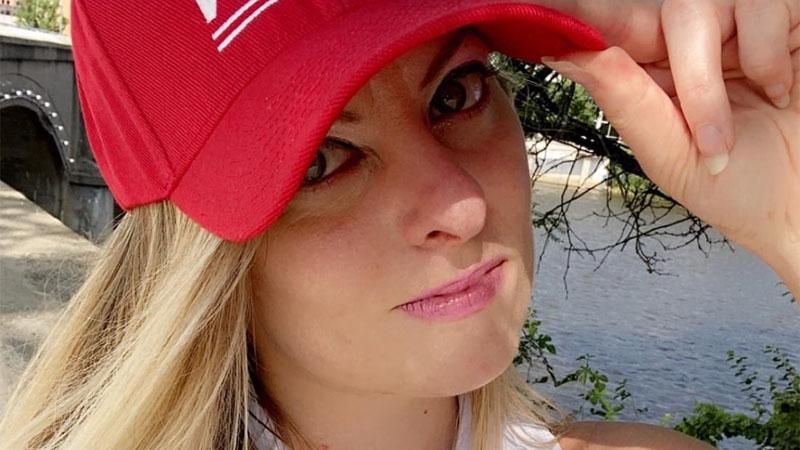
Amanda Moore. (Twitter.com/Screenshot)

Fever Dreams co-hosts Asawin Suebsaeng and Will Sommer welcomed guest Amanda Moore on the show to discuss the one-year anniversary of the insurrection at the U.S. Capitol -- from the inside. Moore revealed she had been secretly recording conversations as an undercover operative during MAGA, QAnon and CPAC events. What she found was alarming.

Moore said her main takeaway from her time undercover was that “there’s a rise of right-wing populism among the under-30 crowd that's incredibly alarming to me… I really worry about it.. I really just can never stress enough, like the rise of like the younger populist fascists. And like I said, everybody, under 35, I met who was at the Capitol says, ‘We did it. That was us.’ And they accept it and they’re like, ‘It would’ve been cooler if we had gotten further.’ And, like, ‘The Founding Fathers would be proud of us.’”

The Daily Beast reported the "...increasingly popular far-right playbook for harassing hyperlocal and moderate GOP officials and their children—people who are ostensibly part of the same party—to pressure them out of positions overseeing elections or on school boards, in order to install more radical acolytes."
“Pressley Stutts took over the very local Greenville, South Carolina, GOP—I mean, he bullied this woman… who was in charge into quitting," Moore said. "And now—I mean, he was at an event I was at, and there was a COVID outbreak, and now he’s dead. But I mean, before he died, he was able to accomplish this.”

Moore said that during November and December 2020, she had to stop wearing her face covering to preserve her identity - because wearing a mask at Stop the Steal rallies became too dangerous.

“I don’t know what a superspreader is in technicality,” Moore said. “But if it means everybody there got COVID, I went to at least a dozen superspreader events and people died at almost all of them. And these are people who, like, were preaching to the very last breath—like, don’t get the vaccine.”

Listen to the interview below.

From the Bundys to the Rotunda: How allowing far-right terrorism to fester led to Trump's Jan. 6 coup attempt

Arun Gupta
January 05, 2022


Inmates (clockwise from top left) Ryan Bundy, Ammon Bundy, Brian Cavalier, Peter Santilli, Shawna Cox, Ryan Payne and Joseph O'Shaughnessy, limited-government activists who led an armed 41-day takeover of the Malheur National Wildlife Refuge, are seen in a combination of police jail booking photos released by the Multnomah County Sheriff's Office in Portland, Oregon January 27, 2016. Multnomah County Sheriff's Office/Handout via Reuters

The sight of violent Trump supporters invading the Capitol a year ago may have been shocking but it was not surprising. It was the direct result of the government allowing right-wing political violence to smolder for years until it burst into a conflagration on Jan. 6.

While far-right terrorism is the story of America — Native genocide, slave codes, Klan terror, anti-Asian pogroms, racist mass shooters today — there was a specific path to Trump’s coup that might have been avoided if the government had taken the threat seriously.

That path runs through the Bundy family. They incubated Jan. 6 by bringing together key actors who joined in the insurrection, showing the government was reluctant to confront right-wing terrorism, and proving that terrorism could work.

The deadly virus has spread with 40 percent of Republicans supporting violence for political ends. This genie can’t be put back in the bottle. But right-wing terrorism can be eliminated root and branch by using the full force of the state. That was the mistake with the Bundys, which lead to the Jan. 6 insurrection. They were allowed to foment political violence with little pushback.

READ: Raw Story’s Arun Gupta caught up in same trap that snared Oregon militants

The story starts in April 2014 when the Bureau of Land Management tried to enforce court-ordered penalties on patriarch Cliven Bundy. He owed $1.2 million in fees for illegally grazing cattle on federal lands for 21 years, so BLM officials seized hundreds of them. But Cliven, driven by messianic Mormonism and a fringe interpretation of the Constitution that he has a divine right to the land and Washington almost no rights to the land, called for a “range war.”

Hundreds of armed militiamen responded. They came from extremist groups that had grown by 600 percent after the election of the first Black president. In a foreshadowing of Jan. 6, the BLM was ill-prepared to deal with such a complex operation despite Cliven’s threats he was “ready to do battle.” Confronted by the militia, the feds stopped the roundup to lower tensions. That was a mistake, one being repeated with the kid-gloves treatment of the Jan. 6 insurrectionists.

Leniency emboldened the Bundys. They surrounded the feds with snipers, one of whom stated, “I’ve got a clear shot.” The feds retreated, the Bundys unlawfully retrieved their cattle.

The first effect of the Bundy standoff was images that thrilled anti-government extremists. It showed viral clips of right-wing violence were effective recruiting tools. The far-right realized not only could they play war against the government, but they could also reap followers and political gains. The lure of viral fame helps explain why so many Jan. 6 rioters posted their illegal exploits on social media, leading to their arrest.

The second effect was the Bundys acted as accelerants of far-right terrorism. Among those who flocked to Bundy were Jerad and Amanda Miller, who expressed an eagerness for violence against federal agents. The two were kicked off the ranch, but weeks later went on a killing spree. They gunned down a bystander and two cops, sticking a note on one cop saying “the beginning of the revolution,” and tossing a swastika on the second, before killing themselves.

Trump threw gasoline on the terrorism fire: in Portland, Charlottesville, among mass shooters, “Boogaloo extremists,” anti-BLM killings, an epidemic of ISIS-style car attacks encouraged by the GOP, with child-killer and right-wing hero Kyle Rittenhouse. On Jan. 6

A third effect of the Bundy standoff was to catalyze events that led directly to Jan. 6. Among those who traveled to Nevada in 2014 were the Oath Keepers and militiamen associated with the Three Percenters, which functions more like a network.

The two militias were all over the Capitol on Jan. 6. Twenty-one members of the Oath Keepers allegedly “played a critical role” in the insurrection, and four men affiliated with the Three Percenters have also been charged in connection. (Another 30 members and supporters of the fascistic Proud Boys have been arrested for involvement in Jan. 6, including four leaders.)

Both militias reek of white supremacism. The Oath Keepers have rallied with ACT for America, an anti-immigrant hate group, promoted racist Great Replacement-style conspiracies, and are anti-Black Lives Matter. Three Percenters provided security for white nationalists during the deadly Charlottesville “Unite the Right” rally in 2017. The next year the leader of a Three Percenter affiliate masterminded a Mosque bombing in Minnesota.

Racists gravitated to the Bundys because they are unreconstructed racists. Days after sending the feds packing, Cliven mused that Blacks were “better off as slaves.” In his holy vision, white men have “ancestral rights” to the land, not the Shoshone Nation that has a treaty claim to nearly all of Nevada, including the land on which he illegally grazes his cattle. While fils Bundy are savvier than père in posing as defenders of freedom for all, Ammon removed his mask after a bit of praise for BLM. He now calls it “a wicked, Marxist, communist organization that deceives its members and destroys Black people’s lives.”

The infernal combination of militias, white supremacy, and frontier justice that coalesced at the Bundy ranch was the mood on Jan. 6. Foremost it came from Trump. Bellowing “take back our country,” he repeated falsehoods that the election was stolen from him by non-citizens before he directed his mob to storm the Capitol.

Trump presided over a white-nationalist hate orgy: Confederate flags, a noose, rioters hurling N-words and flag poles, a “Camp Auschwitz” sweatshirt. One prominent face at the Capitol was Nick Fuentes, usually described as a white nationalist, but when combined with his Holocaust denialism, love of dictators, opposition to “race-mixing,” and participation in Charlottesville, makes him hard to distinguish from Nazis.

The onslaught on the Capitol is a companion to the Bundy standoff in that both spring from the view that as white people alone own the land and the institutions, they can break any laws, commit any crime to secure them.

The fourth effect was Nevada created a model for right-wing violence. After the 2014 standoff, the Bundys and the militias took their show on the road. First, Ryan Bundy joined forces with a Utah county commissioner and backed by the sheriff, to lead a convoy of ATVs into Recapture Canyon, where they are banned because the area is rich in ancient Native American sites. Then rifle-toting Three Percenters and Oath Keepers descended on a mining site in Southern Oregon after the owners had a minor dispute with the BLM over their plans. In the summer of 2015, the two militias joined by the Pacific Patriot Network established a new front in Montana to confront the National Forest Service in another trivial beef over a mine.

The next incident delivered the drama the Bundys sought. On Jan. 2, 2016, nearly five years to the day before Trump’s coup, Ammon, Ryan and a dozen heavily armed men seized the Malheur National Wildlife Refuge in Eastern Oregon. They claimed to be defending a father-son pair of ranchers who had been sentenced to five years in jail after years of criminal behavior and violent threats against federal employees and their families. But the takeover was just another battle in their range war.

I was in Malheur for a week, reporting for The Raw Story until the feds nabbed the Bundys. I sat in Ryan’s pickup truck, across from magazines of .223 ammo nestled in cup holders, as he held forth for hours on his fringe constitutional views. That inspired their revolt to take back land for the people, even if the people save a few in nearby towns rejected them. When questioned, Ryan did not deny they aimed to overthrow the federal government. Toward that end, they invited in a self-appointed judge who tried and convicted local officials in star chambers and planned to remove them from power.

By making themselves the law, the Bundys foreshadowed Trump’s attempt to overthrow the government by whatever means he wished, martial law, suspending the Constitution, the Insurrection Act, or a violent conspiratorial mob.

The Bundys were sidelined for a couple of years by their arrest. But they emerged victoriously. The brothers were acquitted in the Malheur occupation after the jury allegedly demanded an absurd level of proof for a charge of conspiring to prevent refuge employees from doing their jobs. The feds’ hands-off approach, allowing the Bundys to turn the refuge into a media circus for more than a month, also apparently led jurors to believe their presence was not illegal. Then in 2018, a judge in Nevada dismissed all the charges against all three Bundys in relation to the 2014 standoff because of prosecutorial misconduct.

Ammon Bundy found a new cause to spread his gospel of violent Christian nationalism: Covid. In April 2020, Ammon launched People’s Rights, an anti-mask, anti-vax, anti-lockdown movement. Bundy talks of freedom and liberty, but he is building an army of anti-vaxxers, conspiracists, militia members and members of violent white nationalist groups like the Proud Boys and Patriot Prayer.

This is the fifth effect of the Bundys: The violent, conspiratorial white nationalist fringe is becoming the Republican mainstream. FOX News greeted the 2014 standoff enthusiastically, and the Bundys garnered support from a few obscure elected officials. The cross-organizing among militias and white nationalists in Nevada was hardly a lovefest, however, with rival groups reportedly pulling guns on each other. But as the Bundys kept provoking confrontations and Trump blew open space for white nationalism, they helped turn the GOP into a big tent of violent extremists.

Prior to the Jan. 6 Capitol invasion, there were five attacks on state Capitols. Ammon Bundy was in the forefront of the August attack on the Capitol in Boise. In Malheur, there was little support for Trump, but five years later, in December 2020, Ammon encouraged supporters to attend the “Stop the Steal” rally in D.C. On the day of the invasion, Cliven took to Facebook to lend unabashed support for Trump’s coup.

The Bundys themselves are for the most untouchable. Ammon is running to be the Republican nominee for governor of Idaho. In a state where the GOP is so extreme it is Taliban-like, it has nonetheless spurned Ammon. But that is of no matter to him. As shown by the mob attack on the Capitol on Jan. 6, he and his family have held the line. It’s Trump and the Republicans who’ve rushed toward the Bundys.