Wednesday, June 15, 2022


China confirms water on the Moon

H2O is present in the rocks gathered by the Chang'e-5 lunar lander, Chinese scientists have said
China confirms water on the Moon


Indications that water could be present in the rocks gathered by Chang'e 5 lander on the Moon have been confirmed by testing on Earth, Chinese scientists have reported. They've shared their findings in an article, published this week in the magazine Nature Communications.

The lunar lander touched down on the Moon in December 2020, gathering some 1.7 kilograms (over 3.5lbs) of rocks and lunar soil, known as regolith.

The craft also used its on-board instruments to measure the chemical composition of the samples that it collected.

This data allowed Chinese researchers to suggest that molecules of water could be present at about 120 parts per million (ppm) in some type of moon rocks and at 180ppm in others.

Now, a team from the Chinese Academy of Sciences has confirmed the presence of water in the samples by directly studying the cargo that Chang'e-5 brought back to Earth.

The soil analyzed by the scientists turned out to be relatively dry – even by lunar standards – showing levels of water at 28.5 parts per million.

However, they also discovered that the mineral apatite was among the samples to boast an H2O content of 179ppm, which was consistent with earlier forecasts.

Telescope and satellite observations have long led scientists to suspect that water existed on the Moon, as either hydroxyl or H20 in the rocks.

The hope is that cosmonauts and astronauts, colonizing Earth's satellite in the future, will be able to extract molecular oxygen and hydrogen out of the environment to produce water and pure oxygen for themselves.

US faces new crisis after baby formula shortage – Time

TAMPONS

A successful ad campaign has been named as one of the causes behind a national tampon deficit


© Getty Images / zoranm

The US is experiencing a severe deficit of tampons, with an extremely successful ad campaign being cited as one of the factors contributing to the shortages, TIME Magazine claimed earlier this week.

In 2020, popular comedian and actress Amy Schumer was hired by Procter & Gamble as a ‘face of Tampax’ – the most popular tampon brand in the US. In the ad campaign, Schumer played the role of a helpful tampon supplier who appeared in toilets and ‘saved’ women from getting into trouble by supplying them with Tampax.

Since then, “retail sales growth has exploded,” the company’s spokeswoman Cheri McMaster told TIME. Demand for Tampax is up 7.7% over the past two years, which prompted the manufacturer to run its plant in Auburn, Maine, 24/7.

However, as research conducted by TIME’s Alana Semuels revealed, the successful advertising campaign has not been the only cause of tampon shortages which have been well documented by social media users: Twitter, Reddit and other social media are flooded with photos of empty shelves where some of the most-needed hygienic products were supposed to be.

“This isn’t as bad as toilet paper shortages in Spring 2020, but it’s not great,” Dana Marlowe, the founder of I Support the Girls charity which provides homeless people with bras and menstrual hygiene assistance, wrote on Twitter.

The shortage first became clear during the Covid pandemic when people were stocking up on essentials. Later on, according to TIME, another problem compounded matters: a raw materials shortage. As demand for face coverings and other medical supplies was growing, the demand for raw cotton and rayon was also on the rise. As a result, tampon manufacturers have been struggling in sourcing these materials. The fact that the price of cotton was rising fast (in April it was 71% higher than in the previous year), further aggravated the problem.

Rising costs of transportation have made delivery of the products to the US more expensive. The CEO of startup The Organic Project, Thyme Sullivan, told TIME that the cost of getting its tampons to the US is up 300% from last year.

In addition to all the listed problems, manufacturers are also struggling with staff shortages amid the rising demand for its products. As tampons are considered to be medical devices, they are subject to strict control regulations and therefore “companies can’t put just anybody on the assembly line, so production lagged demand,” the author of the research explained.

“Increased demand, staffing shortages, raw material shortages – none of these factors are unique to tampons. Yet what makes the tampon shortage so persistent and problematic is that unlike most other items that the supply chain has made it hard to access, tampons are not something women can stop buying until supplies return,” TIME explains.

Tampons are not the only scarce product in the US. Last month, New York authorities were forced to declare a state of emergency over a shortage of baby formula. The deficit of the vitally important product was triggered by the February shutdown of a Michigan plant operated by Abbott Laboratories, over contamination concerns. The facility, which accounts for roughly 40% of the formula in the US market, recalled some of its products and shut down a manufacturing plant after four babies who had been fed formula made at the facility contracted a rare bacterial infection. Two of them later died.
Coffee Trumps Tradition in Lebanese City

For years, a cafe in the city center has offered a safe haven to minorities. But political and economic stresses are pushing a more open culture to the margins

June 2, 2022
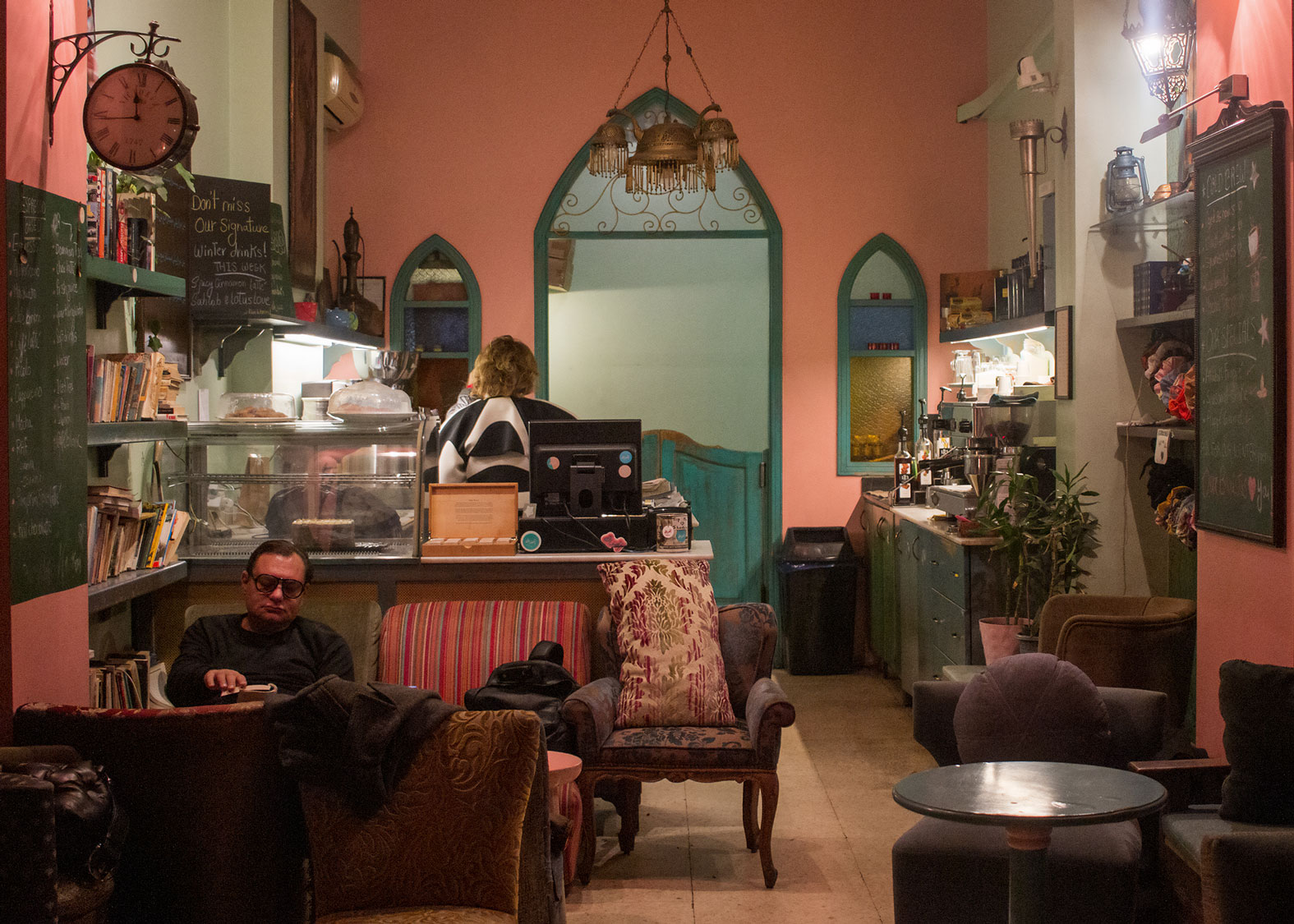
Lawyer and activist Khaled Merheb reads his book in the eclectic, salon-style interior of Ahwak Community Cafe, a haven for Tripolitans from every pavement of the city / George Sopwith


It would be easy to walk past Ahwak Community Café, brushing it off as another attempt at a European-style neighborhood coffee shop. But there is more to Ahwak than the coffee it serves.

Behind its turquoise door is a hideout for a small community of Tripolitans who are striving for cohesion and creativity in a city alienated by political corruption, violence, insecurity and religious divisions.

Located in the unassuming commercial area of Dam w Farez, within throwing distance of Sahet al-Nour, Tripoli’s central square, Ahwak and its community constitute an overlooked part of the city — a place where liberals, conservatives, Muslims, Christians, atheists, artists, intellectuals, LGBTQ people, the young and the old, can talk and drink together.

It is an antidote to Tripoli’s troubles, conspicuous in a city infamous for poverty, the ebb and flow of fundamentalism, and home to some of Lebanon’s wealthiest politicians, including caretaker Prime Minister Najib Mikati.

Inside is a homely, salon-style room; the walls are pink or papered with gold print, sofas and armchairs fill the floor, while a medley of round tables hold cappuccinos and espressos. The colorful space reflects the eclectic clientele who, since 2008, have relished the atmosphere created by Ahwak’s owner, Sahar Minkara.

Minkara is perched on a sofa sipping a cafe blanc, a hot drink scented with orange blossom, as she recounted the days her fragmented city united for the first time during Lebanon’s October 2019 revolution.

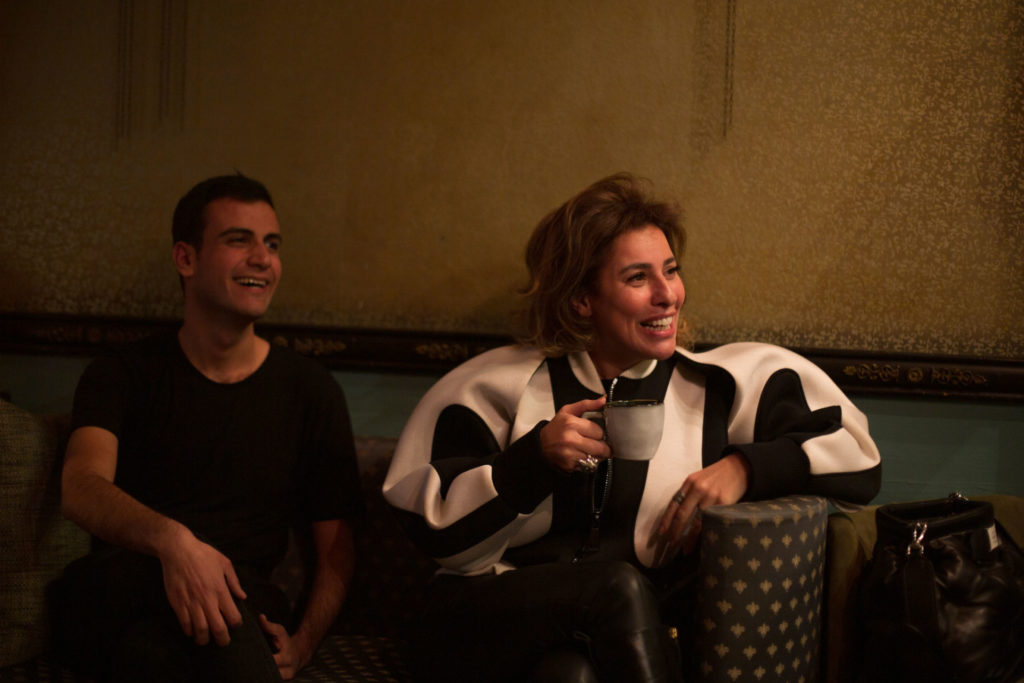
Ahmad Jenzarli, 22, and Ahwak’s owner Sahar Minkara, 47, laugh during an evening at Ahwak Community Cafe in Tripoli, Lebanon / George Sopwith

“It was a big moment for us,” she said. “There were people smoking marijuana on the square. … There were young boys holding rainbows. They were dancing to techno [music] under the Allah sign [in the middle of the square].”

For a few months, sects, gender and class were forgotten, and the country erupted in furor against a decades-old, corrupt and incompetent ruling class. “We were so oppressed in the city. Everyone is so oppressed,” Minkara said.

For years, Lebanon’s northern capital has embodied the country’s troubles. It has endured occupations and conflict, repelling investment and opportunities, leaving its residents feeling forgotten. Minkara is one of them, yet not due to deprivation or unemployment, but because she is speaking up for a community others want to silence.

“What you are seeing today in Tripoli is way more conservative than the Tripoli I grew up in,” she said.

Born and raised in the city, Ahwak’s 47-year-old proprietor defies the typical expectations of a Tripolitan woman. Not only is it unusual to have a female-run coffee shop, but with her black leather pants, monochrome bomber jacket and wave of freshly pouffed hair, she also counters Tripoli’s conservative image.

“[The city has gone] backwards at a huge speed. My generation sees this immensely. We were the last generation who saw the city in both cultures … who saw the diversity of the city.”

After returning from a year in Australia during the 2006 Israel-Lebanon war and seeing the city’s neglected state, Minkara felt energized to create something positive. From friends emigrating, to villagers from rural areas seeking work in the city, everyone was searching for better opportunities, while regional instability also meant that Tripoli became host to different ethnic groups. The dynamic of the city was evolving but with little prosperity, she explained. “I saw the start of a declining city, and I thought, I need to make a platform for somebody, and I need to push it culturally.”

Minkara wanted to re-create a pocket of the past Tripoli, the cosmopolitan society that shaped her childhood. She was also inspired by the historic prominence of coffee: “I think coffee shops have always played huge roles in societies — whether it was the Industrial Revolution, the early 1920s, ’30s, [Jean-Paul] Sartre … coffee shops are a platform where everyone can speak.”

In Lebanon, coffee is on every street corner. It is found on the backs of motorbikes, steaming out from a neat machine, or in Turkish copper dallah pots, lugged by a fez-donning old man clinking his cups to catch passersby. It is so integrated into the morning routine of what’s known as “sobhiye”: gossiping with friends or neighbors over coffee.

With the rise of Egyptian President Gamal Abdel Nasser’s pan-Arabism in the 1950s, Tripoli’s coffee rooms became Arab nationalist havens. Local men gathered around the old quarters of Tal square to drink coffee, smoke cigarettes and dissect Lebanese President Camille Chamoun’s pro-Western, Christian outlook. The rooms have survived the ravages of time with the same plastic chairs, checkered brown tiles, smoke-stained walls and large analog clocks.

Like its predecessors, Ahwak also grew into a coffeehouse of debate and ideas, but with an edge. Customers nurtured an atmosphere of free thinking, culture and, ultimately, fun.

“First, it was a big hit,” Minkara said of Ahwak’s early years. “I got to attract a beautiful community of creative people; open-minded, youngsters, [the] super creative, musicians. The LGBTQ-plus [community] as well, not because I was like putting a rainbow on the front [of the shop]. But because here, nobody was judged, everybody was free to do anything.”

Ahwak molded to its patrons: One evening it would be a music venue, the next day, a library. Minkara made a point to promote young artists, holding exhibitions and attracting local press, as the sounds of late-night revelry became one with the community.

“I had veiled women coming here, I had somebody who would come, cover his coffee, go to the mosque opposite, pray and then come back,” she said. “And even we had a sheikh, Raheem, who used to come here, and he was very nice. … He used to sit here and see me drinking beer and open conversations with me,” Minkara remembered.

Yet as the cafe became a magnet for the city’s young people, it attracted suspicion from the wider community, including the mosque across the street. Ahwak garnered an array of nicknames, like “the coffee shop for gays and sluts,” and the “safara,” the Arabic word for embassy, a reference to all the foreigners who frequented the cafe.

Minkara eventually found herself face-to-face with the wrath of the sheikh from the mosque opposite Ahwak

.
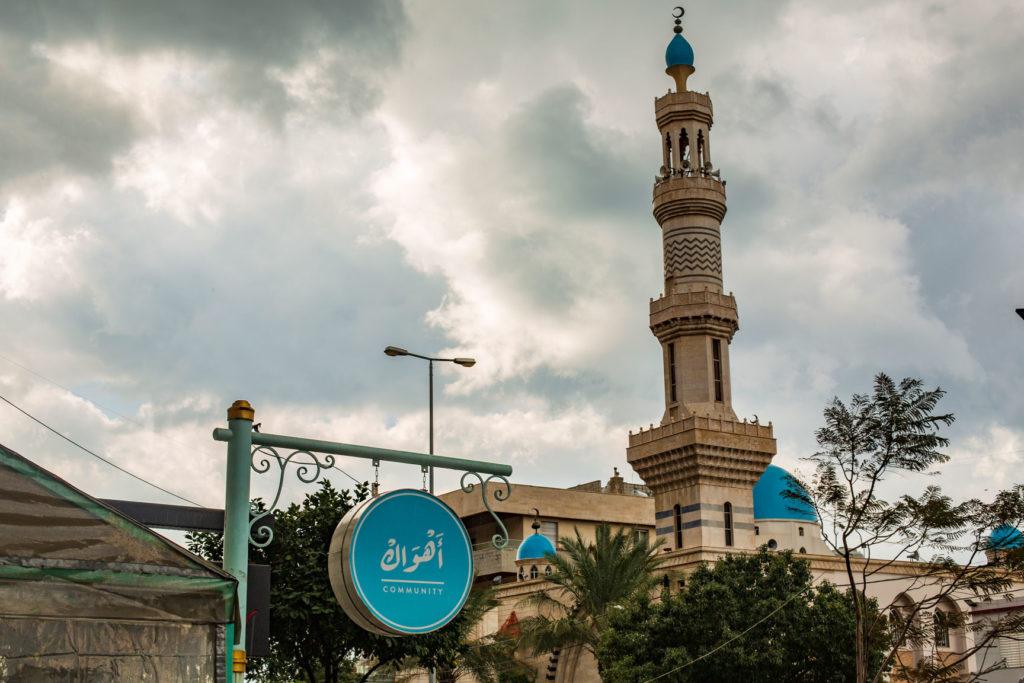
The outside of Ahwak Community Cafe, with Al-Rahman Mosque in the background, inDam w Farez, Tripoli. In 2017, the mosque blamed Ahwak for a power failure during prayers / George Sopwith

One evening during Ramadan in 2017, as the adhan boomed from the minaret, the power cut, as is common under Lebanon’s fragile electricity network. Ahwak was immediately blamed.

“They thought I came and cut the wires,” Minkara said. A backlash erupted on social media, and an anonymous Islamic group, who called themselves the “Propagation of Virtue and the Prevention of Vice,” threatened Minkara, ordering her to shut down Ahwak and evacuate the city within 24 hours.

Undeterred, she grabbed the phone and called the sheikh. “I told him, ‘If anything happens to me or to my clients, I’m going to sue you.’ And I did,” she said. Local politicians became involved, who were “all very supportive,” while the army stationed a tank between the mosque and Ahwak.

The next day, high on rebellion, Minkara dressed in “the shortest crop top with the tightest jeans and the highest heels” and sat outside Ahwak, in full view of the mosque.

“I remember the beautiful thing, the next day after the incident, the whole community came to support, they were sitting all over the coffee shop. People came in solidarity, people who hadn’t come for years,” she said.

Tripoli is majority Sunni, but it is also home to a small Christian community, Alawites, and a number of displaced Syrians, Palestinians and Iraqis. Some fear the city has been undergoing Islamification because of the increasing reach of Sunni political and religious authorities in recent years, which some believe has cultivated an insular and watchful atmosphere.

The diverse demographic has led to tensions. During the summer of 2013, hostilities from Syria’s civil war spilled over the border, and the city was engrossed in daily clashes between warring Sunni and Alawite neighborhoods.

The city was on edge, but day-to-day business continued, and Ahwak was packed with patrons each evening.

However, one evening, three men dressed in black and wielding guns barged into the busy cafe and accused Minkara of serving alcohol. “And you know what they did?” she said, acting out someone nudging her elbow with a gun. They grabbed the bottles of coffee syrup and started sniffing them: “They were saying, ‘Is this alcohol?’”

“To be honest, I was scared,” she admitted.

“They are always trying to break people like Sahar and me,” said Khaled Merheb, one of Ahwak’s earliest customers, referring to the city’s religious conservatives. “Because we talk without gloves, without consequences.”

Merheb, a 51-year-old openly gay human rights lawyer and activist, is accustomed to defamatory rumors and gossip.

“This is a conservative city. … I’m very liberal, I’m pro-gay rights, I’m pro-women’s rights, I’m pro-children’s rights. … And I’m very vocal about it, I’m not ashamed,” he said.

He gained critics after once defending gay rights on television and lost work because of it.

“I don’t care because I’m a person who does what they want to,” he said.

It is thanks to Ahwak that Tripoli’s gay community has a place to meet without fear of judgment, and young Tripolitan Ahmad Jenzarli views the cafe as an integral branch of a limited LGBTQ scene. The law student highlighted the open culture, which allows him and his friends to hang out at ease.

“In other cafes, you would hear whispers, of course,” he said, since Tripoli has “always been perceived as an Islamic city,” and both Muslim and Christian religious authorities oppose homosexuality.

“[The LGBTQ community is] limited in safe spaces and opportunities, so if they lose one, then they don’t have a plan B,” Jenzarli added 
.
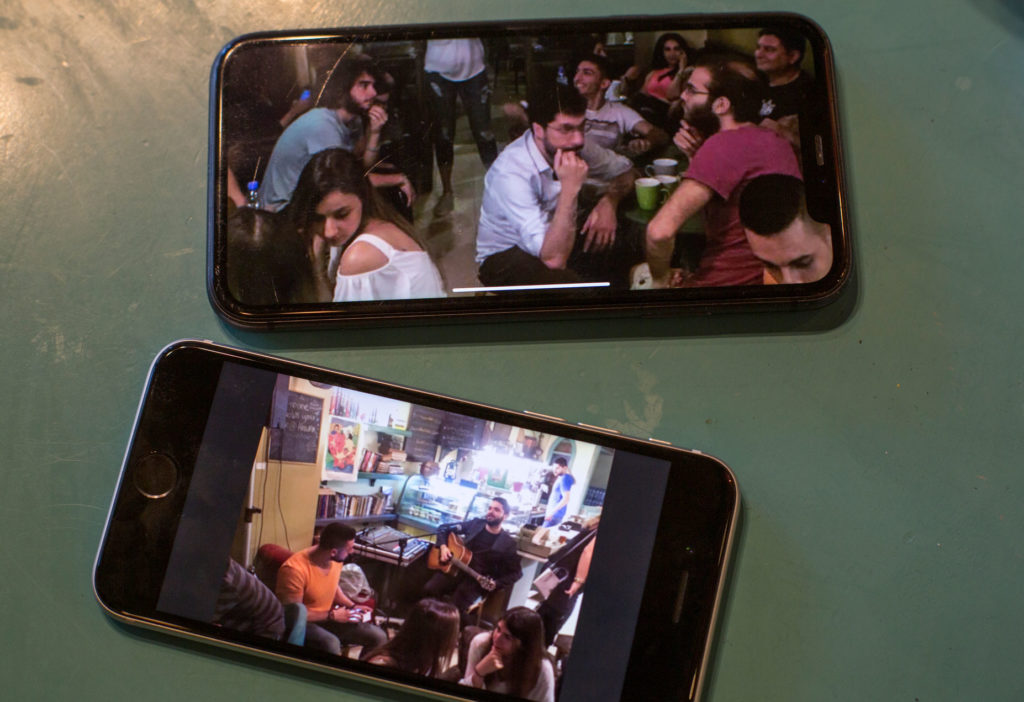
Photographs of a music concert at Ahwak Community Cafe in 2017, the years before Tripoli became submerged in a revolution and economic depression / George Sopwith

Lebanon’s gay community faces discrimination, and in Tripoli there are barely a handful of safe spaces. While Lebanon has no specific law concerning same-sex relations, Article 534 penalizes any sexual activity “against nature.”

Recently, however, judges in Lebanon have been acting in support of LGBTQ rights, and with jurisprudence, it is widely acknowledged that homosexuality is not penalized, Merheb explained. “Legally, we are free to talk, we are not stopped from talking about gay rights, lesbian rights, about anything. For example, if someone wants to display homosexuality, it’s totally free, it’s totally legal.”

But the country’s economic depression is threatening to turn back the clock on social progress. Now in its third year, the financial crisis, described as one of the worst globally since the mid-19th century, is yet to be resolved. The Lebanese pound has lost over 90% of its value, while the World Bank estimated an inflation average of 145% last year, among the highest in the world.

Everywhere the impact is evident; from fuel and medicine shortages to electricity rationing and the emigration of hundreds of thousands of Lebanese, the crisis has left people not just in poverty, but also exhausted.

The euphoria of October 2019 has been replaced with an air of hopelessness. The smell of burning rubber tires and overturned garbage bins is a daily feature in Tripoli; a symbol of fed-up youth who have resorted to blocking roads as a desperate protest against the miserable living conditions and government ineptitude. While others, pushed to the brink, have been risking their life for better opportunities by setting off in boats from Tripoli’s coastline, creating a new route to smuggle people to Europe.

Today, Ahwak’s spark is flickering, and it is obvious Minkara is surviving off the remnants of better days. She is both inspired and depressed by her city, committed but losing love in the current climate. “We were drenched,” Minkara said. “They drenched us with the economic situation. If it wasn’t because of that, we would still be on the streets, or maybe burnt everyone’s [politicians] houses [by now].”

This year is unlikely to bring much relief for Lebanon. General elections took place in May. They risk deepening divisions, as a vulnerable population returns to old faces for support.

Ahwak faces an uphill struggle too, with its community shrinking in a deflating city. What is more, Minkara once again is battling to keep Ahwak open. “The new landlord doesn’t like me much and wants me to close,” she revealed, adding that she believes it is for “political” reasons.

And while Minkara feels heavy with nostalgia, the presence of her cafe in Tripoli remains poignant. “I always say: The day I close this shop, the city will be over. We might be a minority in this city today, but we exist.”

Rosabel Crean is a freelance journalist covering social issues in Lebanon
When the Establishment No Longer Calls the Shots in Writing History

From Tiananmen Square to the trans-Atlantic slave trade, deciding how the past is remembered is one of the invisible roles of rulers. But newer social movements are challenging whether the narrator should be a hero or a villain

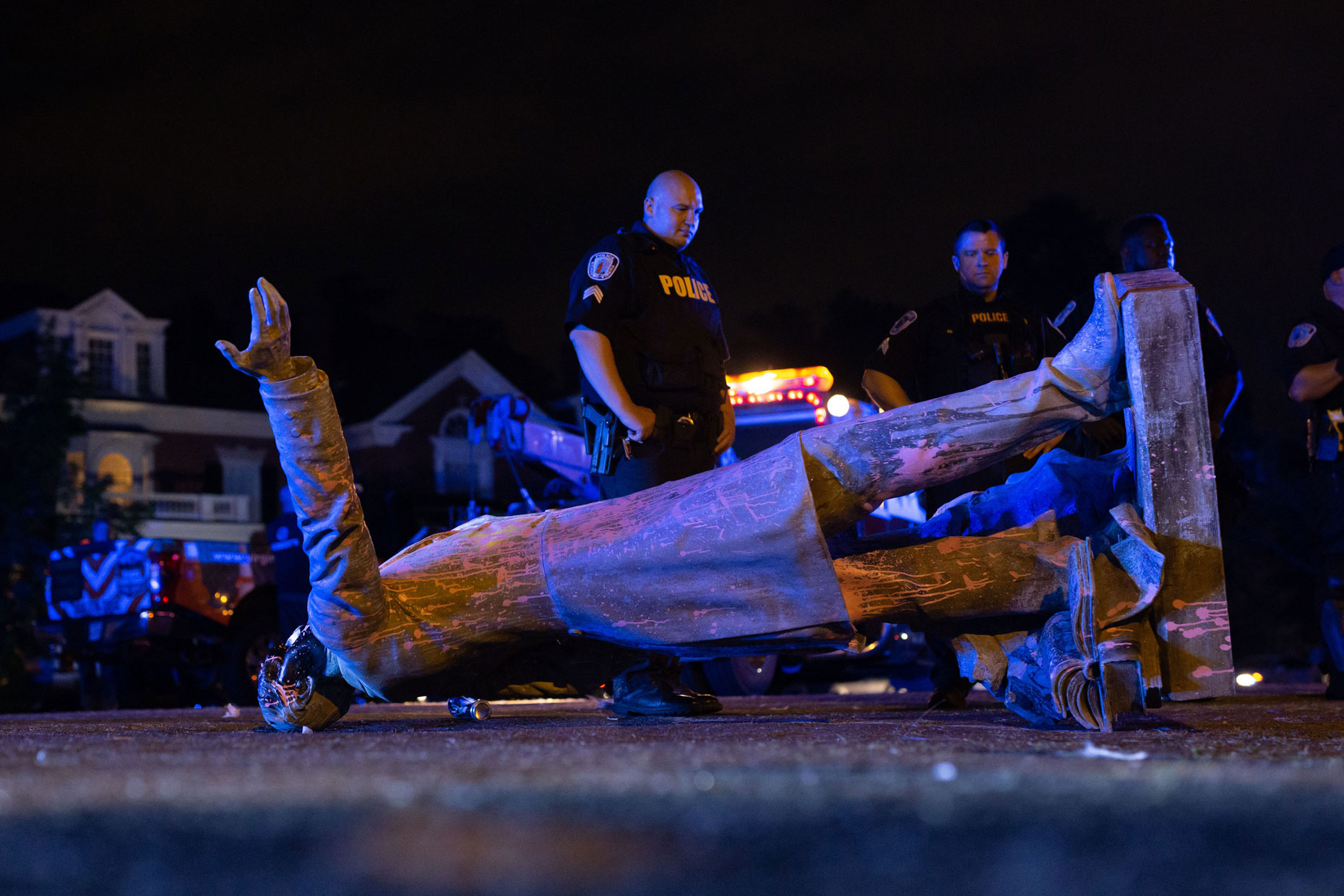
A statue of Confederate States President Jefferson Davis lies on the street after protesters pulled it down in Virginia in 2020
/ Parker Michels-Boyce / AFP via Getty Images


“What you can’t do is go around seeking to change our history retrospectively,” proclaimed British Prime Minister Boris Johnson in January 2022, “or to bowdlerize it or edit it in retrospect.” The prime minister was reacting to a jury verdict acquitting four protesters who had joined a Black Lives Matter demonstration in Bristol, England, in June 2020. The four were prosecuted for toppling a public statue of the 18th-century philanthropist and slave merchant Edward Colston.

One Conservative member of Parliament, Tom Hunt, added that the verdict would give a “green light for all sorts of political extremists . . . to ransack our past.” Another party member and former minister, Tim Loughton, objected that the jury decision “effectively allows anyone to rip down statues, vandalize public art and memorials or desecrate buildings because they disagree with what they stand for.” But the left-leaning writer Nesrine Malik fired back, accusing these Tory grandees of overlooking “deep inequalities that run, like cracks, from the past to the present.” Malik cast British history as a “legacy of supremacy, both racial and national” — a legacy that still lives on “not just in our streets and squares but in our politics, our education and our economy.” Malik charged that the country remains “as delusional about the moral integrity of its colonial heroes as it is about the health of its race and ethnic relations.”

Nothing about these disputes is uniquely British. Iconoclasm dates back over millennia, recurring in many cultures during turbulent times. When rival factions clash, their politics end up tied to memory. Moreover, in today’s world, social media fuel street rebellions by increasing their payoff, particularly when monuments seem to glorify, say, European imperialism or the American Confederacy. Militants who deface these displays enjoy instant audiences and can spark global movements — or rather, they can do so if they live within sufficiently open societies. After all, China’s 1989 Tiananmen Square massacre claimed over 10,000 victims, yet when Hong Kong universities removed public memorials commemorating it in 2021, barely a peep was heard. Few Chinese can afford to ruin their or their families’ lives by candidly challenging official histories. The ordinary citizen cannot even obtain basic information about the uprising (China has banned search engines such as Google and Yahoo, allowing only more restricted ones), so many people know little about it.

The warning sounded by George Orwell back in 1949 still rings true today: “Who controls the past controls the future. Who controls the present controls the past.” This raises a question that is relevant from Bristol to Beijing: Can we discover any patterns in how governments around the world promote public understanding of history?

Official histories usually glorify the state’s heroes, lament its victims and condemn its enemies — but rarely do such histories proclaim open remorse for past sins. Those that do tend to come from democratic rather than autocratic governments, even if the line between the two is sometimes hard to draw.

One context in which officials openly condemn their own state’s past is revolution, as far as the new government proclaims a sharp break with its predecessor. By emphatically charging the old order with wrongdoing, the new regime aims to bolster its public approval. The French revolutionaries of 1789 were eager to proclaim the state’s past injustices so the revolutionaries could then be seen as legitimate, rightly overthrowing the brutal and corrupt ancien rĂ©gime. They presented the aristocracy as traitors, as aliens, as part of the “they” and not part of the “we,” or even as a kind of foreign occupying force. In the 20th century, Bolsheviks condemned tsarism in similar terms, just as Mao’s cultural revolution turned on older imperial remnants. Cuba, Nicaragua and others furnish further examples. In these revolutionary contexts the government realigns itself with the state, as if it were not only the government but also the state itself that was being renewed. The new officials feel confident about condemning the state’s past wrongdoings as a means of justifying the overthrow of their predecessors.

Yet revolutions are the exception in history. Most of the time officials wish to exhibit continuity between the state and government. They hesitate to condemn past evils committed by their own states, particularly when those evils do not lie far back in time, because that would mean condemning some predecessor government along with often vast portions of the population who supported it. After the demise of leaders such as Italy’s Benito Mussolini and Spain’s Francisco Franco, any official proclamations of their crimes became a perilous affair, likely to spark outrage and faction, likely to divide populations and even families. Former administrators and supporters of those regimes — also called collaborators, depending on where you stand — were still alive, often still young and professionally or civically active. For many governments, silence seems to offer the only pathway toward national reconciliation.

Today, we can make sense of the politics of memory, of who is remembered and how, by starting with four assumptions. Each of them, it seems, is uncontroversial. First, most nations today have emerged because someone exerted power over others, whether that power be military, economic, ethnic, national, religious, gender-based or something else. Second, those power differentials have bred injustices, at least in the eyes of later generations, if not always from the standpoint of those who held power at the time. Third, it remains rare for governments to publicly proclaim their own responsibility for histories of mass and systemic injustice. Official histories usually glorify their own heroes, lament their own victims and condemn their real or fabricated enemies — but rarely do they proclaim open remorse for the state’s own wrongdoings, at least insofar as the existing constitutional order is still largely in place. Indeed, highly autocratic governments sanitize history by turning such acts into taboos, as in North Korea, China, Russia, Turkey and elsewhere. Democratic regimes may be more inclined to issue such statements, but the wording is often parsimonious since officials seek to avoid not only political backlash but also lawsuits from victims or their descendants who may be numerous and may demand large sums in compensation.

Yet despite all such obstacles, governments do, from time to time, confess past wrongs, which leads us to the fourth precept: The dividing line between the governments that are willing to acknowledge guilt and those that are not falls largely between democracy and autocracy — even if boundaries between these two terms have become ever harder to draw. Not only between democracies and autocracies, but also within democracies we witness autocrats like former U.S. President Donald Trump, France’s far-right provocateur politician Eric Zemmour or the former leader of Germany’s right-wing Alternative for Germany party Alexander Gauland pushing against self-critical histories in favor of sanitized national histories. To be sure, officials within democracies generally have an easy enough time apologizing for incidental mishaps, for example, by openly apologizing for the death of a military recruit who has been killed in a botched military exercise. The harder task is to take responsibility for mass injustices.

Only after World War II do we witness a break from those habits of silence and avoidance, most notably in what was then West Germany, when the government and intelligentsia adopted the narrative of a collectively responsible “we.” The disgraced Nazi regime would henceforth be treated not as “other” but as part of an ongoing history for which present and future governments would have to take responsibility. This has come to be known as “Erinnerungskultur,” literally “memory culture.” The phrase may sound stilted in Anglophone ears, but it has become mainstream, almost colloquial in Germany, where it no longer sounds novel or exotic.

To be sure, public consciousness is one thing, but public consensus is another. Even in Germany’s political mainstream, commemorative projects spur controversy. Berlin’s massive Holocaust memorial, built in 2005, has long sparked quarrels about its aims and design. For many people, its conception seems inappropriately amorphous; at worst, there is the unseemly reality that visitors can easily flaunt their disrespect. Similarly, since reunification in 1990, disputes surrounding the former East Germany have proved contentious around topics like the dictatorship’s political legitimacy, its citizens’ participation in it, and West Germany’s overt and covert dealings with it during the Cold War. And yet surely all these disputes display not the weaknesses of Erinnerungskultur but its strengths. If democracies thrive through collective self-examination, then surely they offer a natural home for self-critical histories. When people like Trump reject critically minded memory, they reject the very idea of democracy as an arena for collective and deliberative reflection.

Obviously, stories of national guilt need not eclipse all others, nor do stories of national loss need to be excised. Russian or Polish authorities can credibly commemorate mass sufferings at the hands of Nazis. China can justifiably remember atrocities committed by Japan. Vietnam and Cambodia can rightly recall the victims of American war crimes. But when officials entrench mythologies about their nation solely as the hero or the victim, silencing any discussion about its role as a perpetrator, then they take ever further steps away from democracy itself. The problem is not that there is necessarily autocracy wherever we find sanitized history, but the converse: Wherever we find autocracy, we are sure to find sanitized history. In the same way, we do not necessarily find self-critical history wherever we find democracy, but the converse: Wherever we find self-critical history, we can surely expect to find at least incipient, if not yet full-fledged, democracy.

One hotly disputed by-product of Erinnerungskultur has been Germany’s ban on public statements that deny the occurrence or the extent of the Holocaust. Such a ban, also adopted in France and many other Western democracies, ends up placing one civic value above another, since the government’s constitutional duty to protect free expression becomes subordinated to a collective ethical duty of remembrance. The anti-denialist law coerces citizens either to confirm both the existence of the Holocaust and its gravity, or to dodge the matter when speaking publicly. What results is a rift in memory politics. In opting for such bans, countries like Germany or France subscribe to “militant democracy” as immortalized in the words of the 18th-century Jacobin Louis Antoine de Saint-Just: “no freedom for the enemies of freedom.” That philosophy contrasts with the Anglosphere’s traditionally laissez-faire policies, where governments certainly engage in commemorative activities yet prefer to leave much of the discussion, debate and research in the hands of citizens without imposing bans, as in the United States, or imposing comparatively mild ones, as in Britain.

Despite such surface disagreements between contemporary democracies, we should not exaggerate the divergences between Western European and Anglo-American attitudes. What unites them is a goal of strengthening the democratic public sphere, even if they dispute the best means of achieving that goal. In the past I have criticized speech bans by arguing that democracy cannot legitimately subordinate free expression to historical commemoration. I continue to hold that view, yet the difference between the age-old policies of officially self-glorifying histories and this newer, self-critical stance reveals something unprecedented, indeed admirable, about the German and French policies. Whatever may be the advantages and disadvantages of their speech bans, the anti-denialist laws contrast starkly with, for example, Poland’s 2018 legislation imposing criminal penalties on speakers who blame the Polish state or nation for complicity in Nazi atrocities.

What’s the difference? Polish authorities like to equate their ban with the German one, defending their crackdowns by arguing that Germany does the same. Yet the aims and effects of the two countries’ bans could not be more different. For all its faults, the German ban adopts the democratically credible stance of acknowledging the nation’s wrongdoings, while the Polish ban merely defaults to the old sanitizing rhetoric of officials proclaiming their nation’s heroism or victimhood. The Polish ban penalizes references to historically documented events, while the German one primarily obstructs the dissemination of patent falsehoods and conspiracy theories (which, incidentally, tend to be laced with hefty doses of antisemitism). The German ban raises concerns about democracy as far as it curbs speech, and yet it strengthens democracy by entrenching a culture of collective self-criticism. The Polish policy fails on both counts.

Apologists for the Polish ban complain that frequent references to “Polish” concentration camps such as Auschwitz-Birkenau, Treblinka, Belzec or Sobibor, which the Nazis built in the occupied country, run the risk of misleading the public by suggesting that those compounds had been managed under Polish authority. But that’s a poor excuse. Warsaw’s lawmakers know that there are alternative means of avoiding that error without having to adopt a law so blatantly designed to curtail public discussion and scholarly research about Poles’ wartime crimes. Polish officials’ bad faith is underscored when we recall that, even before 2018, the governing party had sought to bring prosecutions for criminal libel against the Polish-American historian Jan Gross, who has published research on atrocities committed by Poles against Jews during the war.

It is important to add that Germany has also promoted measures that are less coercive but more effective — measures that can advance Erinnerungskultur without having to punish speakers. In particular, German school curricula do much to promote Holocaust and wartime education, often including guided class trips to former concentration camps, as well as long-standing policies within the mass media to expand documentary programming, and promotion of information and discussion through museums and other public forums.

Similar policies have been adopted by other Western nations, yet not without backlashes. In former imperial powers such as Britain, France or the Netherlands, it has become increasingly untenable to discuss the achievements of the empire without paying serious and even primary attention to the prices paid by colonized and Indigenous peoples. Recently in the Netherlands, some commentators have argued that the time has come to stop calling the 17th century — the era of Rembrandt, Vermeer, Hals, Spinoza, Huygens, the world’s first stock exchange and the Dutch East India Company — the “Golden Age,” given blights of slavery, poverty, imperialism and warfare that followed on its heels. Meanwhile, in recent decades American classrooms have devoted greater attention to the bleak pasts of slavery and Jim Crow along with the brutalization of various Indigenous and immigrant peoples yet have simultaneously faced hostility from reactionaries who seek to erase or downplay those histories and would restore schoolbooks to tales of Anglo-Saxon glory.

Despite the emergence of more self-critical official histories, it is self-glorification that continues to dominate throughout much of the world. People who face struggles in their daily lives may feel little sympathy for victims and events that seem far away. Many crave collective pride, not collective shame. Few politicians score points by telling the nation how horrid its ancestors were. Yet democracies have no other option. Self-critical history is not only a necessary ingredient of truth-telling at home but also of credibility abroad if democracies are to challenge others about past and present human rights violations.

Against the backdrop of official histories, how and why did this new countercurrent of self-criticism start to emerge? After all, self-evaluation is an ancient norm, found in many cultures and belief systems. Socrates launched much of Western philosophy by embracing such self-criticism, and yet he urged it only on individuals, not on governments acting in their official capacities. Similarly, we cannot rule out the origins of autocritique in medieval Christian practices of self-chastisement, yet here, too, such rituals were individual, never formally instituted as government practice.

The late Middle Ages and Renaissance gave rise to “mirrors for princes” and “mirrors for magistrates,” namely handbooks for rulers on good governance that highlight the value of self-reflection. These texts urged leaders to embrace self-mediating qualities of humility, compassion and other such virtues of benign government (as poignantly ironized in Shakespeare’s mirror-smashing moment in “Richard II”). Desiderius Erasmus’ “The Education of a Christian Prince” offers a prominent example of the genre, but similar advice can also be found in non-European systems such as Confucianism, Buddhism and Islam. Albeit in their own idioms, all such traditions urge rulers to exercise power with erudition, yet here too, these teachings never recommend that governments must engage in open self-rebuke by taking public responsibility for mass injustices.

One might argue that earlier societies felt no need for official proclamations of wrongdoing given that their evils did not take place on the scale witnessed in industrialized societies. Yet that argument is unpersuasive. After all, mass atrocities were certainly known in premodernity, even if not in numbers witnessed in more recent times. And at any rate, it would seem easier for officials to take blame for wrongdoings that were smaller in scale, so it does not seem to be the sheer degree of wrongdoing that explains the recent shift toward self-critical history.

The reasons for the shift lie elsewhere and can be viewed as the logical conclusion of an admittedly idealistic, post-Enlightenment cosmopolitanism that reached a pinnacle around the mid-20th century in response to the horrors of World Wars I and II. Idealistic cosmopolitanism is a worldview that envisions a society of critically aware citizens who jointly agree about past failures and future reforms. It assumes a common “human family” sharing universal moral values, as witnessed when the U.N. General Assembly adopted the Universal Declaration of Human Rights in 1948, a document that opens by proclaiming that “disregard and contempt for human rights have resulted in barbarous acts which have outraged the conscience of mankind.”

Of course, the problem with that humanist idyll is that no such universal conscience ever existed. The U.N. Declaration’s drafters, including Eleanor Roosevelt, Peng Chun Chang, Charles Malik and others, were well-meaning yet privileged elites who shared little with ordinary people. In the long chronicle of human civilization, the shift from sanitized histories toward collective self-rebuke may yet prove to be a flash in the pan, a luxury of momentary prosperity.

Yet no one who believes in democracy can take an entirely pessimistic outlook. Policies of national self-inculpation are likely to remain the rare exception. But let’s not forget that constitutional democracy itself remains exceptional in history.

Eric Heinze is the professor of law and humanities at Queen Mary University of London
May 27, 2022
Baby Formulas and Cash Crops in Africa Led to Poor Diets

How the colonial powers’ pressure to wean babies and boost the food economy hid a faulty argument on famine and malnutrition
June 7, 2022
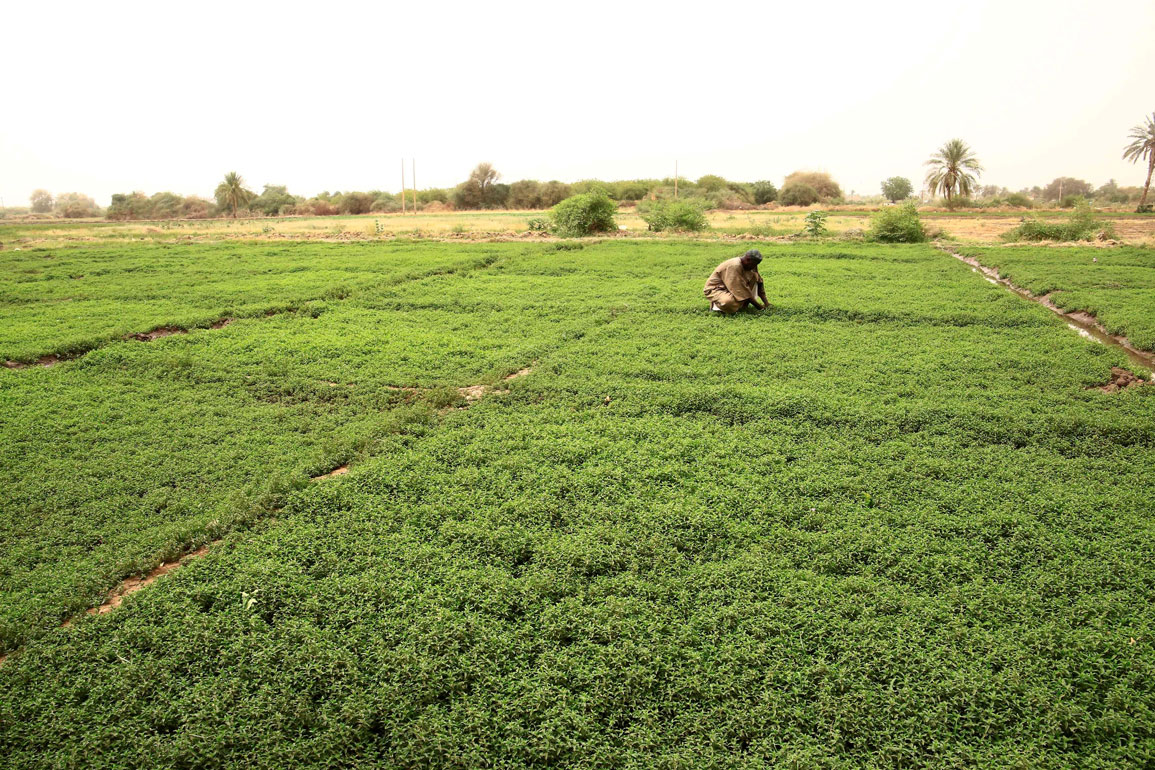
A farmer works in his farm in Khartoum, Sudan, May 22, 2022 /
 Mohamed Khidir / Xinhua via Getty Images


Afew years following the Universal Declaration of Human Rights, when the Gold Coast was gaining independence from Britain in the early 1950s, the British colonial government released a cookbook called “Gold Coast Nutrition and Cookery.” Maintaining a soft policy of influencing Ghana’s food culture, the 347-page book detailed a wealth of recipes.

Apart from the fritters and, bizarrely, embroidery it recommended — among other standard British and Ghanaian food staples — the book made the connection between nutrition and health. The text further suggested the consumption of meat, fish and cheese as well as adding milk to a cup of tea as sources of protein.

The book also extended animal milks to infants, stating that breast milk for the first six months of a baby’s life is not sufficient in terms of nutrients. It explicitly denounced breast milk being the only nutritional source for a baby during the first six months of life.

In his study on malnutrition and imperialism, John Nott, a professor of economic and medical history at the University of Edinburgh, explained how bottle-feeding boomed in the mid-20th century across all of colonial Africa. Near Kampala, Uganda, the percentage of children being bottle-fed increased from 14% in the early 1950s to 42% a decade later.

Women were told breastfeeding was not enough, and as far as colonial administrations were concerned, milk had to be part of the nutrition plan for infants and children. Breastfeeding was discouraged, and baby formulas were replacing much of infant rations. This was later heavily encouraged through aggressive marketing of baby formulas. In fact, in the early 1970s, Nestle was accused of dressing their employees in nurse uniforms in maternity wards in Africa, South America and South Asia in an attempt to promote dependence on breast milk substitutes. Even though the World Health Organization (WHO) promoted breastfeeding under the “International Code of Marketing of Breast-milk Substitutes,” which it adopted in 1981 on the heels of the Nestle scandal, it was estimated in 2015 that six companies, including Nestle, spend close to $50 for each baby born worldwide to market breast milk substitutes, a total of $6 billion a year.

This push for bottle-feeding was also noted as far back as 1939, when Cicely Williams, a pioneering Jamaican physician of acute malnutrition on the Gold Coast, said this kind of marketing and policy shift toward breast milk substitutes amounted to “murder.” While governments in Africa no longer promote substitutes and breastfeeding is deemed necessary for the first six months of a baby’s life, Nott believes dismissing breast milk substitutes entirely is too simplistic and less than helpful. “Breast milk substitutes are valuable for women who have to work,” Nott added.

In addition to taxing colonial Africans toward the end of the 19th century, it was only a matter of time before the colonial administration created a policy encouraging production at the expense of reproduction. In contrast to previous incentives for reproduction, women were encouraged to substitute breast milk with baby formula in order to earn enough income to cover the projected taxes — all while making food aid contingent on planned parenthood. The language about overpopulation became demonizing, correlating food insecurity and burgeoning malnutrition and famine with the size of a population, and interfering with reproductive rights.

“This shift towards cash earning and a productive economy … it undermines the reproductive economy and labor. And so it demands a more efficient form of child rearing,” Nott explained.

Between controlling food sources and scorched-earth policies, in which countries like Britain burned crops and livestock in an attempt to sway Kenyans to conform to the cash-crop economy, these efforts were consolidated in 1937 when the colonial administration ordered Africans on reserves (what colonial administrations called the colonies) to grow cash crops as a matter of economic policy, thereby controlling the workforce and arable land.

“What you’ll realize when you look at the history is that maize was also grown to feed cattle in the U.K. But because you’re growing it in Africa so much, there’s a surplus, then you have to create a policy that then makes it a staple of the people,” noted Mercy Lung’aho, a researcher on food consumption and micronutrients at the International Institute for Tropical Agriculture.

Such a transition in nutrition was accompanied with symptoms of edema, in which fluid is retained in the feet. Distended bellies, changes in skin and hair pigmentation as well as weight loss and muscle atrophy were also found in children. But research into nutrition in the colonies was heavily discouraged and depoliticized by colonial administrations in Uganda and Ghana. These administrations pushed for the narrative that wasting and hunger, if present, are caused by poverty and ignorance.

But it wasn’t until 1935 that the set of symptoms plaguing populations in imperial Africa was given a name: “kwashiorkor.” Williams worked extensively on identifying the disease, linking it to malnutrition caused by severe deficiency in protein and associating it with the new food habits of the colonies.

The word kwashiorkor comes from West Africa’s Ga language, meaning “disease of the displaced child,” and refers to weaning practices that accompanied the changing food habits in the region. But these symptoms were not novel. In Europe, these symptoms along with other diseases such as rickets, stunted growth and gastroenteritis, among many others, existed three centuries before being identified in Africa.

“In some respects, all diseases are social constructs. To some extent a disease is made when we decide to give it a name. … So when we find it, that’s kind of when this disease comes into being. But you know it had been somewhere; it had existed,” Nott remarked.

Lung’aho described stunting and malnutrition as intergenerational, explaining, “Because as an adolescent girl, you have to grow and enter your period of reproductive age at optimal nutrition for you to give your child a chance to have optimal nutrition, and therefore have [a chance to] to live up to their potential. So because we have this cycle of malnutrition, which is intergenerational, it’s often linked to poverty.”

Lung’aho explained that nutrition during a human’s first 1,000 days, from when a woman conceives up to when a child is 2 years old, is fundamental. She also reaffirmed that food is a human right. “When your right is taken away from you, it’s a form of abuse. It becomes very difficult for you to not have food, and then think governance [in the former colonies] should improve, because your sole purpose will be trying to sustain yourself,” she added.

As with Maslow’s hierarchy-of-needs psychological theory, food scarcity and attitudes toward nutrition hamper any other needs or rights a person can exercise because they are preoccupied with food instead of seeking education, health care or the tools to acquire higher needs. Few people have the capacity to fight for better governance when they are malnourished.

Lung’aho also pointed out that children who have gone through food scarcity had a very poor relationship with food and grow up to develop poor eating habits. “If you’re not nurtured well, your priorities are lopsided,” she said.

The researcher talked about the systematic erasure of Indigenous knowledge about cropping and early warning systems as another reason food scarcity is synonymous with continental Africa.

In a book called “Indigenous Food Systems,” Indigenous knowledge included food security and sovereignty through upholding traditions and calendars for each indigenous crop. The waning of these crops also disrupted local agricultural policies and food habits.

Through talking to communities such as the Maasai, one thing stood out to Lung’aho: “You realize that grandparents would sit outside for long periods of time. You think they were just lazy, but they were monitoring the weather, and they had warning systems in place.”

In another study addressing intellectual developments of nutritional science, Nott described African malnutrition and its connection to overpopulation.

“During the early years of colonial rule it was generally assumed, in the absence of credible census data, that Africa’s population was stagnating and that it would grow only through Western intervention. In extremely invasive regimes, as in the Belgian Congo, colonial governments and expatriate companies explicitly promoted high birth rates and short birth spacing through financial incentives,” the study read, highlighting the policy some colonial administrations adopted to exponentially increase the workforce through encouraging births.

The study further added that overpopulation under a relatively stable colonial power seemed unsustainable and overreached ecological restrictions. Reversing course, the powers thereupon blamed overpopulation, and family planning became the paramount policy.

In the 1950s, private groups, namely the International Planned Parenthood Federation (IPPF) and the Pathfinder Fund, built birth control clinics to limit pregnancies. In the following decade, USAID and the U.K. Ministry of Overseas Development made food aid contingent on family planning, which infringes on reproductive rights.

“Hunger in Africa was defined as a problem of overpopulation. Rather than considering the nature of food production and food supply, demographers, ecologists and environmentalists argued that high fertility rates were causing populations to grow beyond their means. This is the basis of Neo-Malthusian understandings of hunger. The result of this logic was a whole load of policies and funding targeting fertility reduction all across Africa. These arguments are still very common today,” Nott commented.

Regarding fertility, Lung’aho blamed mismanagement of resources but highlighted the noticeable drop in fertility rates. “Long gone are the days women had 10-plus children,” she said. According to the World Bank, Africa’s fertility rate of 4.5 children per woman in 2017 is significantly lower when compared with the rate of 6.6 children in 1980.

But even as food aid is a tool meant to sustain developing countries, it is still far from sufficient. In fact, in September 2021, the World Food Program (WFP) announced that it would cut food aid by 48% for 440,000 refugees in Kenya because of a lack of funding.

The number of refugees in the East Africa region is 4.7 million, and there are 12.4 million internally displaced people, according to WFP’s head of Relief and Refugees, Felix Okech. “WFP estimates that funding shortfalls and ration cuts are affecting up to 70% of the refugees in the region,” Okech explained.

In the Kenyan context, Okech added that funds won’t run out completely. “But, you know, you’re supposed to provide 100% of the minimum food basket, except we can only provide 50% of that for the next four months,” he said in early spring.

Okech expressed cautious optimism, saying that food insecurity is an international event and responsibility: “The countries that can help should step up and offer support.”

“We’ve dug a pit of reliance on foreign aid,” Lung’aho reflected. “And now that the people have new priorities and cannot continue to give, we’re now stuck in our own scarcity where we cannot innovate our own solutions and cannot look within to empower ourselves to come up with solutions when we do have the potential.”

Along the same line, Lung’aho said that over time, it has become politically correct to just look at the science and politically risky to point out the root cause of the issues. Her studies center on creating solutions with the guidance and consent of communities using acquired as well as Indigenous knowledge.

“Having a holistic approach, and thinking about systems, rather than individual problems, is how we move forward as Africa,” she noted.

Lung’aho went on to describe the groundwork she has been doing in Kenya and Nigeria, where she documents the pockets of Indigenous knowledge on one side and makes them part of a sustainable practice where ancient knowledge is relearned and adopted.

“Foreign aid is a two-edged sword. If managed well, it can do good. If mismanaged, it does cause harm,” Lung’aho said, referring to an event that took place in April 2021, when hundreds of thousands of Kenyans petitioned the IMF to hold $2.3 billion in loans for Kenya, citing the country’s poor track record of corruption under hashtags such as #stopgivingkenyaloans. The package was approved as part of Kenya’s COVID-19 response plan.

“The positive impact of foreign aid is often marred by bad governance, weak rule of law, high levels of corruption, absence of strong democratic institutions, lack of accountability and information control by government officials. Overdependence on aid is rendering the continent’s current development model unsustainable,” Lung’aho said. She also asserted the importance of self-sufficiency and homegrown solutions.

“Our policies had a different priority when they were set,” she added. “They needed to be realigned and corrected to focus on nourishing communities and creating decent livelihoods while protecting the environment.”

Eman El-Sherbiny is a Nairobi-based freelance journalist
The Suffering of Crimea’s Tatars

Crimean Tatar leader and Soviet dissident Mustafa Dzhemilev talks to New Lines about a war that, for him, began in 2014 and has only grown worse since

Riada Asimovic Akyol
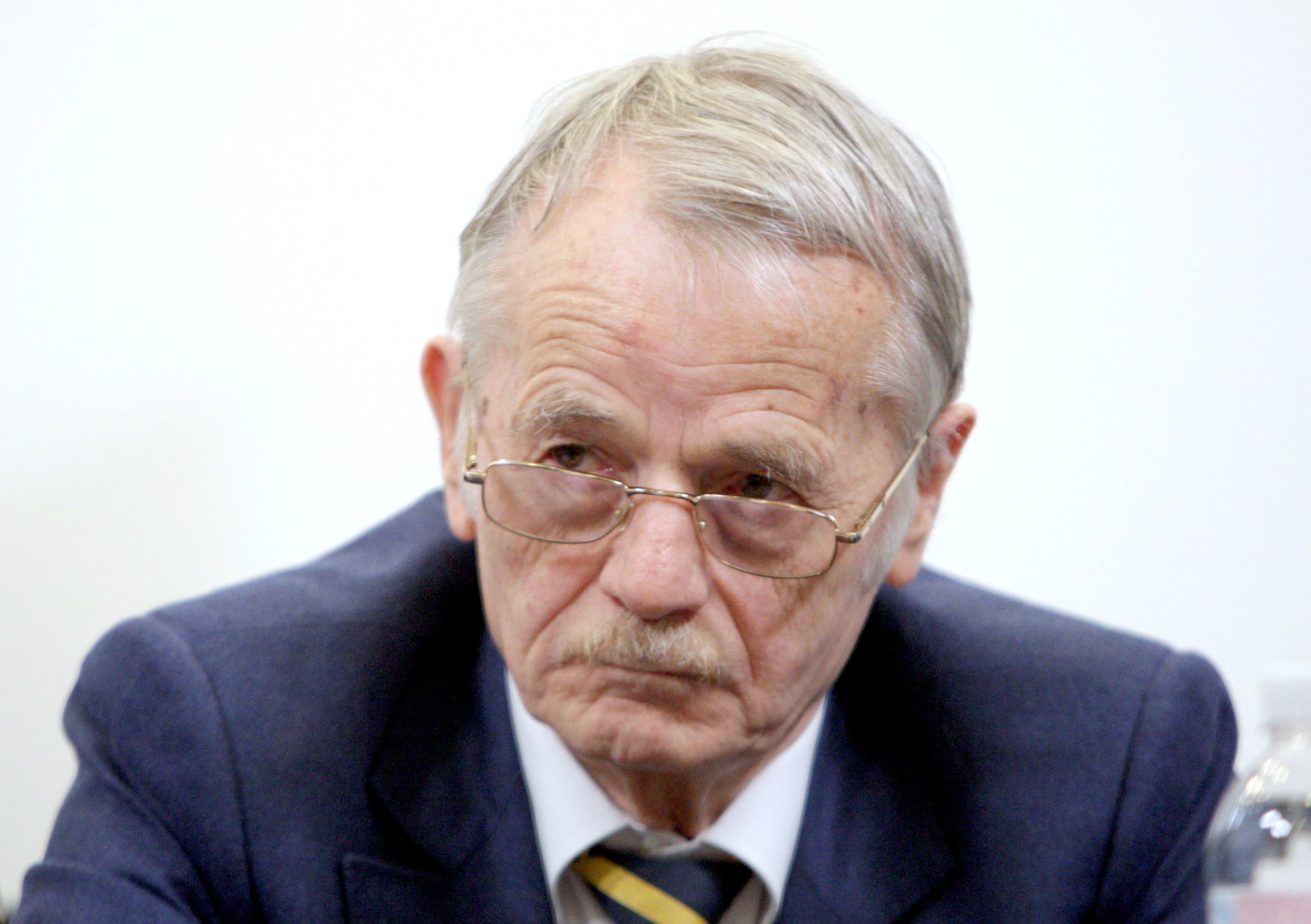
Mustafa Dzhemilev / Inna Borodaieva / Ukrinform / Future Publishing via Getty Images


Crimean Tatars, the indigenous Muslims of Ukraine and the country’s largest ethnic minority, have joined the fight against Russia’s invasion. Tatars serve throughout Ukraine’s military ranks and as civilian volunteers offering humanitarian help.

Tatars are Turkic-speaking Muslims who have lived in Crimea since the 13th century. Russian rulers have persecuted them for almost 300 years. One of the greatest tragedies in Tatar history was their genocidal expulsion from Crimea by Josef Stalin in 1944. About 200,000 Tatars are said to have been forcibly deported to Central Asia by the notorious Soviet secret police, the NKVD, in cattle cars. According to estimates, half died before they even reached the inhumane labor camps where the Soviets forced them to work and dwell.

Tatars were allowed to return to Crimea in the late 1980s, but most did not go back to their homeland until the Soviet Union collapsed in 1991. In 2014, Tatars faced Russian aggression once again, when Russian President Vladimir Putin’s army annexed Crimea.

In 2022, many Tatars have helped Ukraine defy its invaders. This is the latest Tatar struggle for freedom from Russian imperialism. The memory of pain and a history of repression form the basis of Tatar support for Ukraine’s defense, though Muslim neighbors with similar historical experiences — like some Chechens — have openly joined their oppressor’s side.

New Lines spoke with Mustafa Dzhemilev, a venerated leader of the long-persecuted Crimean Tatars. Dzhemilev is also a member of the Ukrainian Parliament and a celebrated human rights activist. He has been nominated several times for the Nobel Peace Prize, including this year. Dzhemilev spent 15 years in prison camps in the Soviet Union, and he once went on a 303-day hunger strike.

Despite experiencing imprisonment and systematic political persecution throughout his life, Dzhemilev continues to raise awareness about human rights violations and the oppression of his people. He resisted Russia’s annexation of Crimea in 2014 and has staunchly opposed its full-scale invasion of Ukraine in 2022. The Russian authorities have illegally denied him entry to Crimea, his homeland, until 2034.

Dzhemilev was in Kyiv on May 6 at the time of this interview. He spoke by video about the horrors of violence and the war crimes Russia is perpetrating across the country. He also addressed the situation of Crimean Tatars, and he shared his views about Ukraine’s immediate and future needs, including military support and sanctions.

New Lines: How are you doing these days, considering the difficult circumstances that Ukraine is in currently?

Mustafa Dzhemilev: Thank goodness I’m fine, now I’m at home. There are occasional alarms, the bombardment continues, but they are dropping bombs on the whole of Ukraine. Now the weakest part for Ukraine is that we don’t have air [defense systems]. Our soldiers are brave, they are fighting, they inflict a lot of damage to the enemy. According to Russia’s plans, they were going to take Kyiv in three days. Now, on the 71st day of the war, they are expelled from Kyiv, but there are ferocious fights in the Donetsk region, serious battles on the Kherson side. Our losses are quite substantial — of course not as much as the Russians’, but still a lot. The saddest part is that there are a lot of dead civilians. According to today’s figures, at least 247 children have been killed. I went to Bucha, the place where they killed the most, and they showed me pictures of children. [Setting aside] the ones who died at the time of that bombardment, they shot with guns in the chests of the little children and killed them. What kind of people are these people, actually these creatures, we can’t understand.

NL: A Russian-controlled court set up in occupied Crimea has recently declared you guilty of several charges: illegal storage of ammunition, improper storage of weapons and illegal border crossing. The Ministry of Foreign Affairs of Ukraine protested the decision against you, describing Russian accusations as “unjustified.” The MFA reminded that this is not the first attempt by the Russian occupation administration to restrict your freedom, further explaining, “The so-called courts are pursuing a purposeful policy of Russia to persecute the Crimean Tatar people and its leaders in order to expel the Indigenous people from Crimea.” What is your comment on this development, and what are the consequences of this decision?

MD: I am really sad. They give 15, 17, 19 years of imprisonment to normal people there — to those who say a few words opposing Russian occupiers. To me, they gave three years, and a conditional sentence on top of it, like I did almost nothing. I was a bit sad of course.

In fact, this is my eighth time in court. This is a ridiculous court. The main accusation is that I broke the law for illegal crossing of the Russian Federation border. I was going to my house in Bağçasaray. Actually I couldn’t pass those borders — I didn’t. I couldn’t get to the checkpoint, because there were tanks there. They greeted us like that, as if they had come to a war.

Negotiations took place in a neutral place. They spoke with the Turkish ambassador, they said, [Turkish President Recep] Tayyip ErdoÄźan and [Turkish Prime Minister at the time Ahmet] DavutoÄźlu are watching the events there, because they were broadcasting it to the whole world. They said, please go from there. A new front might open against Ukraine, but we would try to solve your entrance to Crimea with diplomatic ways. At that time, our citizens, up to 1,000-2,000, who crossed those borders, had passed. I stated my conditions and said, “You will put them back in Crimea. You will not punish them, then I will withdraw.” That’s how we did it. But, the Russians, of course, were deceitful, as they always are. They punished the people there a lot, gave fines, put three people in jail, and then they filed a lawsuit. In fact, they opened that case in 2016. They appealed to Interpol, but since then I have been to many countries. I did not surrender. Interpol doesn’t listen to them.

They filed a lawsuit again in 2019, and the reason for that is that we were going to march toward Crimea, so [they wanted] to scare us. It was along the lines of, “If you cross the border, we will catch you, you will go to prison.” They said that to me and Refat Chubarov, the head of the Majlis of the Crimean Tatar people.

We did not do that march, but not due to fear of their punishment. With the COVID pandemic, it was not possible to gather that many men. We delayed it. For two years, they continued this trial. My lawyer is a renowned, very good lawyer, Nikolai Polozov. He had to leave Russia because of some threatening signals that they would imprison him. He is in Turkey now. So, they recently announced the verdict in absentia. Three years in prison conditionally. But the prosecutor protested my supposedly soft sentence, so there will be another trial, yet again.

NL: Russia’s military invasion of Ukraine has been going on since Feb. 24. Russian troops have carried out airstrikes on important military and civilian infrastructure, destroying military units, airports, oil depots, schools, churches and hospitals. In your interview with the Crimean News Agency on April 27, you made some statements after visiting Bucha. You said, “Things that are unbelievable for the 21st century have happened here.”

Despite this nightmare, Ukrainian President Volodymyr Zelenskyy stated that Ukraine has entered a new phase in the war against Russia, with Ukrainian troops stopping the advance of the invaders. Zelenskyy said that Ukraine must first do everything to stop the war and then move on to diplomacy. What do you think about these statements?

MD: Actually, I didn’t think highly of Zelenskyy before. We didn’t vote for him. I didn’t take him seriously. The comedian man, in such a difficult situation, became president. I did not vote for him. I supported [former President Petro] Poroshenko. But I see that after this war started, he behaved very well. He was very determined, very brave. I said to his face too: “I am proud of my president.”

The negotiations with the Russian delegation started a month and a half ago. First there were talks at the Belarus border, and then in Istanbul. In Istanbul, I was there too. These negotiations make no sense, because of Russia’s ridiculous demands: You will recognize the Crimean Peninsula as Russian territory. You will recognize those self-proclaimed, lawless republics of Donetsk and Luhansk. You will give up your intention to join the EU and NATO. You will return your weapons taken from abroad. So, we would completely surrender there.

Now, we said, “Look, let’s talk about the cease-fire now, because it is necessary not only for us, but also for you. Collect your own dead here.” There are hundreds of dead bodies that they do not take. There are trains full of corpses, the refrigerators are full of mortal remains, and they do not accept it. “No, our demands are like that,” they say. [The only thing that was] agreed is to make human corridors from the few besieged places under Russian control, but those agreements did not work either. Because you start to let the people in the corridors upon which we agreed, and they pass, but [the Russians] also open fire. So the people are forced to go back.

Currently, the most difficult situation is on the Mariupol side. The commander of Mariupol sent me a clear video request a couple of days ago, actually not on my behalf, but asking for help from Tayyip ErdoÄźan. We delivered it to Mr. Tayyip and sent it to HĂĽrriyet, CNN TĂĽrk, Sabah [Turkish media]. This is what we can do.

Yesterday [May 5], there was a Crimean Tatar medic at Azovstal steel plant in Mariupol who also appealed for help. He expects something from Mr. Tayyip … because in Ukraine, Turkey’s reputation is very high, they love Mr. Tayyip very much, they trust him very much. But unfortunately, Mr. Tayyip could do nothing.[Turkish presidential spokesperson] Ibrahim Kalin paid a visit here recently and spoke with [Sergei] Shoigu, the Russian defense minister, on this Mariupol issue. Shoigu said, “We will allow the wounded and civilians to pass but let the soldiers surrender. Let Zelenskyy order them to surrender.” Mr. Ibrahim responded to him: “Look, no commander has the right to say ‘surrender’ to his own citizens. Therefore, we offer you, the people there, your captives.”


We have more than a thousand Russian captives. [Quoting Ibrahim:] “Let’s exchange them. One of Turkey’s ships is waiting in Istanbul, it can take more than a thousand men. When you [Russians and Ukrainians] make a decision, we will come by ship to the port of Berdyansk. We will take the men out with buses that are under our control, we will take them to Turkey by ship, and we give you our word that they will stay in Turkey until the end of the war. We will host them there.”

But no, they did not agree.

Now they have their holiday, “Russia’s Victory Day,” on May 9. On that holiday, they want to hold a rally, [celebrating that they] took Mariupol, took captives, and things like that. But our people won’t surrender, so people most likely will die. Our friend who sent his message yesterday from Azovstal is actually a doctor. He says there is no material, no medicine, that people die in doctors’ hands. But we unfortunately get nothing.

NL: Yes. Yesterday, media around the world shared a video that an unnamed man who described himself as a Crimean Tatar, a Muslim medic, posted late night on Thursday, May 5, to Instagram, as a direct appeal to ErdoÄźan. He called for help to save the lives of civilians who were still trapped in the Azovstal steel plant in Mariupol. So, is it true that the Russian invaders brought at least 13 mobile crematoriums to Mariupol to hide the traces of their crimes? Journalists and officials in Mariupol also reported that at least three mass graves were found.

MD: They use mobile crematoriums not only in Mariupol, but also in Donetsk. They send a few bodies, but they burn most of the dead there to reduce their number. According to our Interior Ministry’s writings, 12,000 parents from over there [Russia] made phone calls or went to our websites to ask about their children. These are parents of children [we are] 99% [certain are] dead. But they don’t ask the Russian authorities, because they are afraid. According to their laws, they give some money for the dead soldiers. So they say [to parents] that if you report this information, we will not pay you, and we will say that your child is missing, or we will say that he was lost during a drill. We will not mention war. To get the money, parents don’t tell anyone about their dead children. That is what’s happening.

NL: In an interview with the Associated Press on May 5, even Russia’s close ally, Belarusian dictator Alexander Lukashenko, admitted that he felt the “Russian special operation” was not going as planned. Considering this situation, what can we expect from Putin? Of course, he probably will not take a step back, but will he use more violence?

MD: If this president of Russia was a normal person, then it would be possible to make predictions. But he does not think about Russia or the Russian people. If he had really thought about Russia’s future, he would not have come to Crimea in 2014. He would have thought a little about his fate. Now he has entered the territory of another independent country — with a total of 190,000 soldiers. What would the world’s reaction be to that? And what are you going to do after you enter the country? In 2014, [then-German Chancellor Angela] Merkel said to him, directly to his face: “You probably live in the 15th or 16th century, that is your logic.” Indeed, he is like that.

At the moment, all sorts of analyses are being made, with guesses as to what he might do. But it’s a little hard to say for sure. … There are other issues, but it is not about just pressing a red button, there are seven or eight stages before that. They say it is very difficult to use a nuclear weapon, that it is 99% impossible, but even if there is a 1% chance, it is a danger to the world.

In the first days of the war, our people fought really bravely. The enemies thought they would take Kyiv in three days, according to their plans, and that they would hold a parade on the fourth day. They were going to hold a celebratory concert. But half of them were destroyed, half of them escaped to Bucha. They started to torture civilians around Kyiv, and they killed a lot of people. Now they have left the Kyiv region. According to their plan, they want to take Donetsk, Luhansk — the Donbas region. They want to take Kherson and pass to Moldova, to Russian-controlled Transnistria. They also want to make Donetsk a corridor to the Crimean Peninsula. They want to besiege Ukraine, to close the exits to the seas. They intend to make the country helpless.

I am sure that they will not carry out these plans, because thanks to them, the Western countries have given a lot of weapons. We expect the situation on the fronts to change a lot soon.

NL: You warned in the past that Russia would use occupied Crimea to attack the rest of Ukraine. Today, the whole world admires the high motivation of the Ukrainian army and the Ukrainian people in defending their homeland. You said it’s hard to make predictions, but what are Ukraine’s most pressing needs? I think the European Union’s oil embargo against Russia is essential to limit Putin’s financing of war against Ukraine. Do you agree?

MD: The most urgent need is to close the air space. We need planes, we need air defense systems. They are firing S-300 rockets, and we can’t do anything. They are deploying Iskanders on ships from the Black Sea, and we cannot respond. Our rockets cannot reach that distance. These howitzer weapons, which will be given from America, give the opportunity to hit a 35-40 km (22-25 mile) area, but to reach Sevastopol from the territory of Ukraine that is under our control, we need rockets with a range of at least 400 kilometers (250 miles). Unfortunately, we do not have those rockets. This is our weak side. But our advantage here is that people have great motivation, they fight very bravely. The Russians’ main motivation is to make raids in the occupied lands. They allow women to be raped. They have no other motivations.

People call me from Crimea and say there are trucks filled with used phones, washing machines for sale, things raided here and sold in occupied lands. And people buy because of the low prices.

NL: Among the Ukrainians resisting the Russian occupation, there are also the Crimean Tatars. In early April, several Ukrainian media outlets shared your statement that all institutions, businesses and schools have been instructed to regularly post on Facebook in support of Putin, and to support what they call the special operation. At that time, you also shared with the media that kidnapped civilians from the Kherson and Melitopol regions were taken to, and brutally tortured in, Crimea. So what’s going on in Crimea right now?

MD: There is tension there at the moment. Everyone in Crimea has been instructed to be ready for war. I [talk by phone] with our citizens there. I tell them, “Look, we actually had a plan to save Crimea from occupation without a war, but since they occasionally open fire on the Crimean Peninsula, maybe Ukraine will have to reciprocate. Take your precautions, protect your lives.”

The peninsula of Crimea is now practically closed. It is not possible to get out of there, nor is it possible to enter. … We occasionally appeal to our citizens over there to not come here in any way. If you come here, you will either become a corpse or a murderer. Therefore, refuse. Do not go into the Russian army.[For a failure to enlist], the punishment is up to two years in prison. The best thing is to go to jail. But do not come to war. Yet it is very dangerous for them to surrender, because their relatives are held as hostages in Crimea, and they are in such a difficult situation. So there’s a lot of tension. FSB [the Federal Security Service of the Russian Federation] men come to the houses of many people, our activists, and threaten them if they write words of support for Ukraine. The punishments would be such and such — so there is terror.


NL: During your recent visit to Antalya during The Diplomacy Forum, you said, “The West does not fully understand that we are fighting not only for ourselves, but also for them.”

MD: It really is like that. Ukraine is now the main war front against this totalitarian fascist regime. If Russia is victorious here, after that it can attack other countries. Firstly, the Baltic countries and Poland — and they do not actually hide that they have such intentions. That is why now it is a little immoral to look at this war from the outside and be an impartial spectator, because our war is not only for ourselves, but for all freedom. That’s why we always expect support from countries.

Fortunately, the countries in the West are giving enough support now, but if they had given this support in 2014, when the Russians occupied Crimea, if these serious sanctions had been imposed then, maybe we would not have come to this day. Unfortunately, countries in the West were a little late in this regard.

NL: What are your hopes and expectations for the future of Crimea?

MD: The war is actually a bad thing, but as a result of this war, we hope very much that there will be a chance to save Crimea from occupation. That is to say: This war started in Crimea and will end in Crimea as well.

Because until the full territorial integrity of Ukraine is restored, this war will not end. But Russia will certainly not triumph here. How long will the war in question continue? This is the main issue. Ukraine will of course fight to the end, for the whole of its own territory, for freedom.

NL: You said in an interview a few years ago that Putin cannot be trusted. You stated, “There is no point in believing Putin, because he is a person who can violate any contract he signs.” What kind of person do you think Putin is?

MD: About 99% of the words he says are lies. But it’s a very strange thing. At the same time, according to the Russian press, Putin’s ratings are rising. It is not possible to believe their statistics, because it is dangerous for someone to [give an answer the authorities] don’t like. A Russian journalist said that according to some sociological studies, 87% of the people living in Crimea are very happy about being part of Russia and asked me how I interpret that. I said it is possible, but the problem is this: If people say, “I don’t recognize the Russian occupation, Crimea is part of Ukraine,” that person stays in prison for five years, but comes out as a dignified person. If you give the death penalty for that [response], then 99% would say they support Russia. That is the situation. It is impossible to believe the statistics there.

The truth is that they have a lot of propaganda. People living in Russia mainly watch their own televisions — they can’t access many other internet sites, because many have been closed by the Russian government. If Russia’s politics continues like this, the Russian state has no future. Gradually, the Russian state is turning into a big North Korea.

Oil embargoes affect the economy of Western countries. But as time passes, the situation will change. Therefore, as much as possible, all sanctions should be applied now. If it is too little, then Putin’s regime will stay in place for a few more years. This is very harmful, both for the world and for the Russian people.

NL: In your message to the Crimean News Agency a few days ago, you congratulated all Muslims on the Eid al-Fitr holiday. Emphasizing that many Crimean Tatars have had to celebrate the holidays away from their homeland for eight years due to the Russian occupation, you said, “We believe that we will mark the next and future holidays in our own lands.”

I have to be honest and ask you a difficult question: Are you worried about the future of the next generation of Tatars? Is it difficult to keep them attached to the Tatar culture, language and religion as Muslims under constant pressure?

MD: [The Russians] make moves not against [the Tatars’] religion, but against their identity. They’re closing schools. Russification is everywhere — that’s where the danger lies. There is a lot of propaganda. Our people should not be blind, as they were in Chechnya. But you know, we were under Soviet propaganda for more than 70 years, and a few years after perestroika, people’s minds were restored. Now, if there was freedom there, our children, our people would be fine. But it is a pity, of course, that people do not speak in their native language. There is so much discrimination. They are treated like second-class citizens. They are also trying to comply with the laws in order to find a place for themselves, and this causes great harm to the mentality and honor of a people.

The sooner we are saved from the occupation, the better.

Riada Asimovic Akyol is the strategic initiatives editor at New Lines
May 12, 2022
The Last Days of the Ottomans – with Eugene Rogan
New Lines Podcast
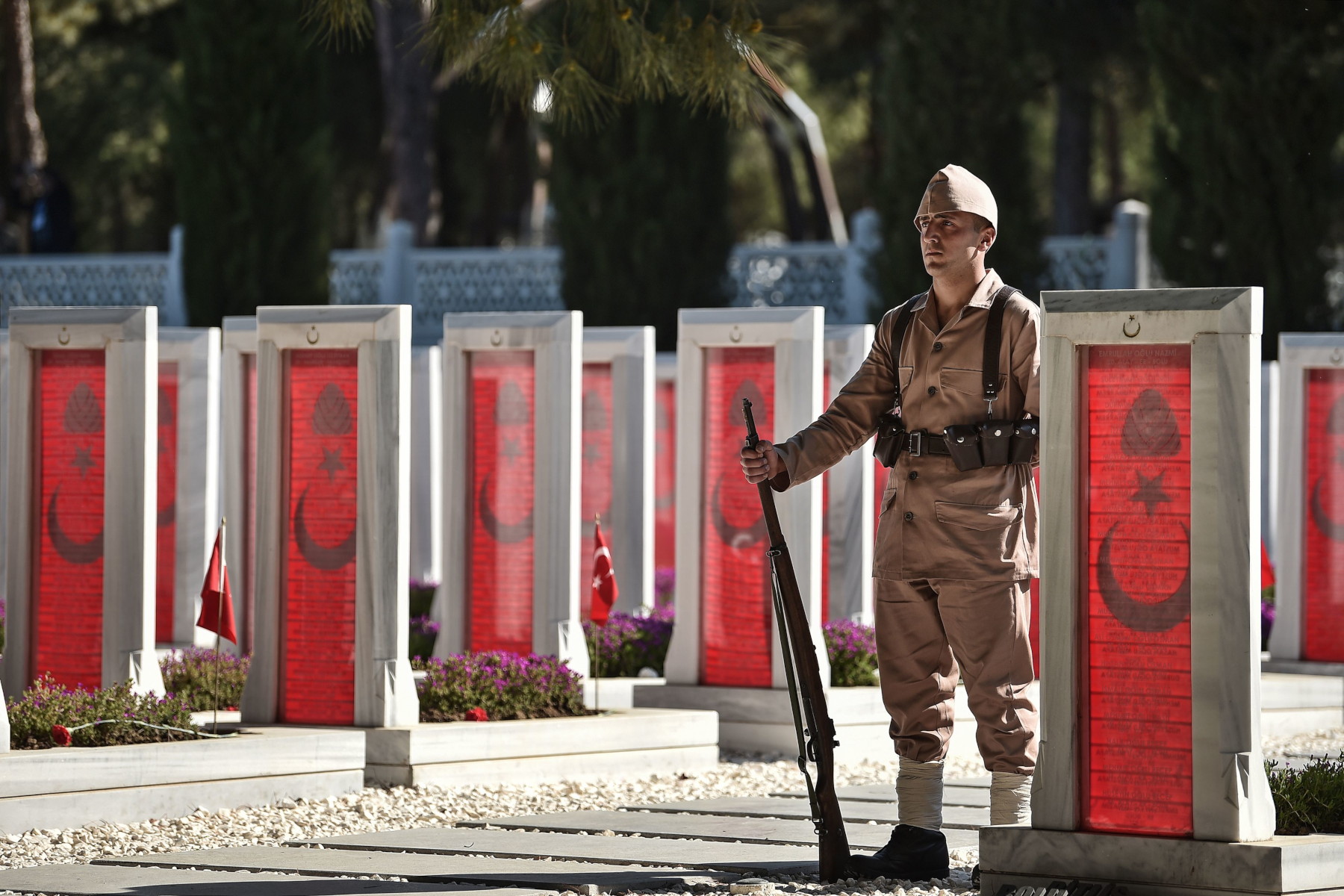
A Turkish soldier wearing a WWI uniform / Ozan Koze / AFP via Getty Images

The fall of the Ottoman Empire has continued to resonate, right down to a century later. There are still things that we can point to and say, ‘This influenced the world as we know it now.’

For six centuries, the Ottoman Sultans held dominion across most of the Middle East, North Africa and Southeastern Europe. But by the eve of the First World War in 1914, the empire was already in steep decline. It is at this moment of crisis that the preeminent historian Eugene Rogan begins his bestselling book “The Fall of the Ottomans.” In this podcast, he talks to New Lines’ Faisal Al Yafai about those decisive final years.

Though more than 1 million Ottoman subjects died in the conflict, Rogan argues that the Middle Eastern front of the Great War has been relatively neglected — both by scholars and in the popular imagination of the region’s peoples. He points to an enduring perception in much of today’s Middle East that it was “someone else’s war.” Certainly the war inflamed preexisting ethnic and confessional fractures. In an effort to suppress the national movements erupting across the empire, the Ottoman government turned to increasingly repressive measures against its own population, culminating in the brutal genocide of the Armenians.

But Rogan is quick to point out that the Ottoman troops also fought bravely and tenaciously, turning back Western and Russian forces who, unwisely underestimating them, hoped to knock the empire out of the war early. Their eventual defeat came far later and transformed the region into the Middle East we know today. Yet although the challenges facing the Ottomans may have been formidable, Rogan asserts that this ultimate collapse was not inevitable. Had their rulers not made certain choices at certain crucial moments, he says, we could have seen a Middle East still dominated by Ottoman sultans to this day.