Thursday, June 16, 2022

How Nigeria’s Igbo highlife music provided hope after a devastating civil war
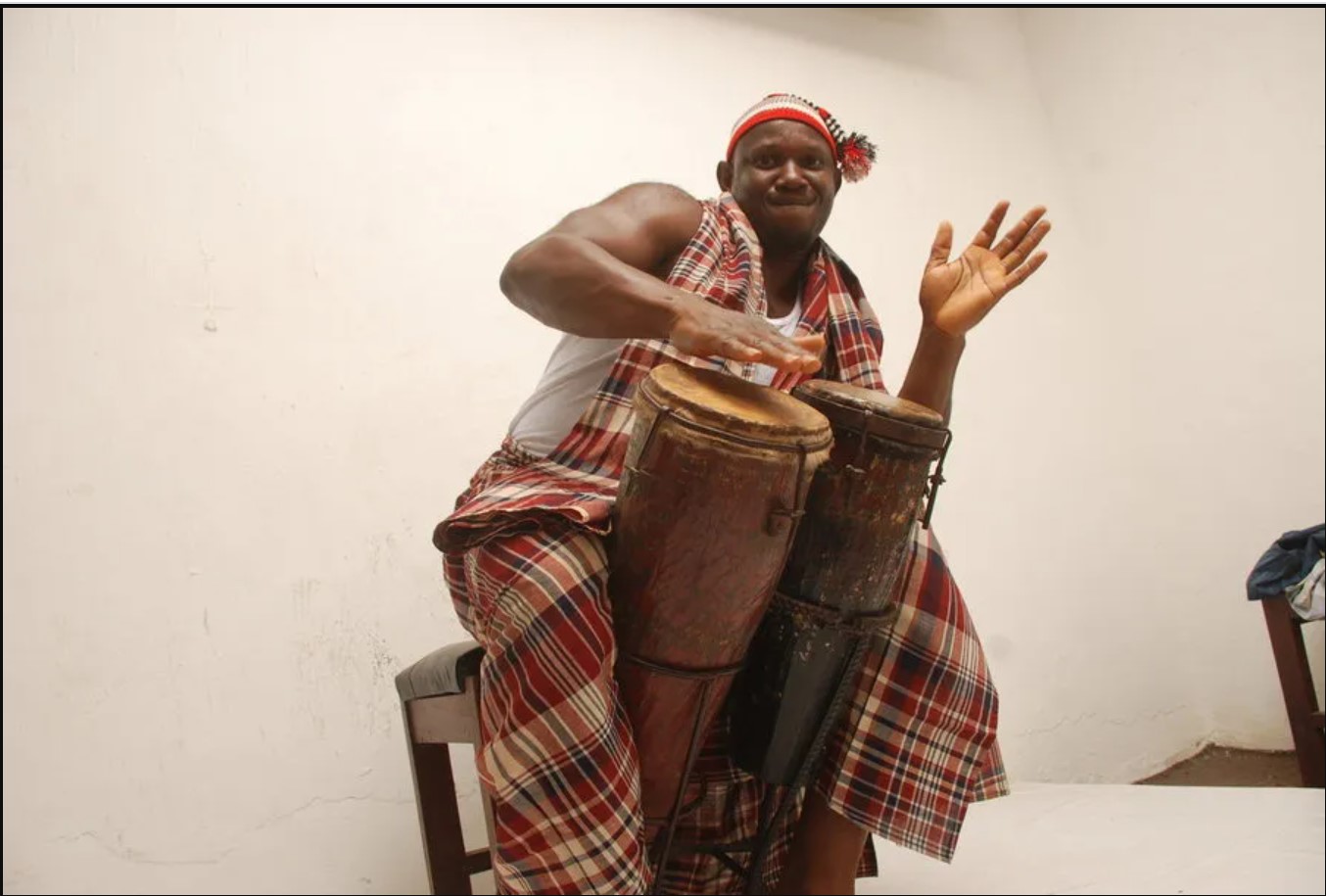
An Igbo young man playing the Abia (drum). Image from Ou Travel and Tour, used with permission

Read the first part of this series on the pioneers of Igbo highlife music here.

Igbo highlife provided comfort and hope for the Igbos, an ethnic group living mainly in southeastern Nigeria, after a devastating civil war that ended in 1970. In face of this agony, highlife musicians brought solace by encapsulating the trials of their times with a call to trudge on, despite the prevailing difficulties. Through the 80s and 90s, Igbo highlife continued to evoke the peculiar mood of the times.

The Nigerian civil war broke out after the 1966 failed coup tried to overthrow a northern head of state, which was led by Igbo officers. The backlash from the coup ignited a massacre of Igbos and other southerners living in northern Nigeria. The violence immediately afterward resulted in “deaths ranging as high as 30,000” forcing “more than 1 million” Igbos to flee back to “the Eastern Region,” according to a study by Helen Chapin Metz, a researcher with the American Library of Congress. The Igbos reacted with secession from Nigeria, creating the Republic of Biafra. This culminated in the 1967-1970 Nigeria/Biafra civil war that resulted in the death of “over one million ethnic Igbos and other Easterners,” asserts Chima J. Korieh, a professor of African History at United State’s Marquette University.

Post-civil war Igbo highlife music

The civil war sent more than a million Igbos, scattered around Nigeria, back home to the eastern region. This entrenched highlife in the east, asserts Oghenemudiakevwe Igbi, a Nigerian scholar. The lyrics code-switching from Igbo to English language made the highlife genre “an acculturative product of the folk music” of the Igbo culture, from where it blossomed, asserts Ikenna Onwuegbunna, a Nigerian music scholar.

After the Nigerian civil war from 1967 to 1970, the Igbos were totally devastated, having lost their lives and livelihood. The official “no victor, no vanquished” post-civil war mantra, captured the government’s commitment of the reintegration of Biafrans into the Nigerian state. However, the harsh reality was that the same Nigerian government directed that “£20 be paid to all Biafran bank account holders, regardless of the balance of their accounts prior to” the war. This broke survivors of the debilitating war, perhaps even more than the actual conflict.

Igbo highlife music, as personified by the Oriental Brothers International Band, offered a ray of light, amidst this grim reality. 

The Oriental Brothers International Band
Original Nigerian vinyl (Afrodesia label) of the Oriental Brothers International (1976). 

The Opara brothers, Godwin Kabaka Opara, Ferdinand (Dan-Satch) Emeka Opara, Christogonous Ezebuiro “Warrior” Obinna, and Kabaka Opara, along with Nathaniel “Mangala” Ejiogu, Hybrilious Dkwilla’ Alaraibe, and Prince Ichita, founded the Oriental Brothers in 1972. By the end of the decade, the group had released 20 albums.

One of Nigeria’s most successful bands, the Oriental Brothers played a pivotal “spiritual role” in keeping the Igbos “sane,” after the trauma inflicted by a “war so vicious,” according to All Music, a global music database.

Unfortunately, the band broke up with Kabaka leaving in 1977 to form the Kabaka International Guitar Band, following a leadership squabble with Dan-Satch. Three years later, Warrior also went solo, forming Dr. Sir Warrior and The Original Oriental Brothers. Years later, the group reunited to record two albums: “Anyi Abiala Ozo” (1987) and “Oriental Ge Ebi” (1996).
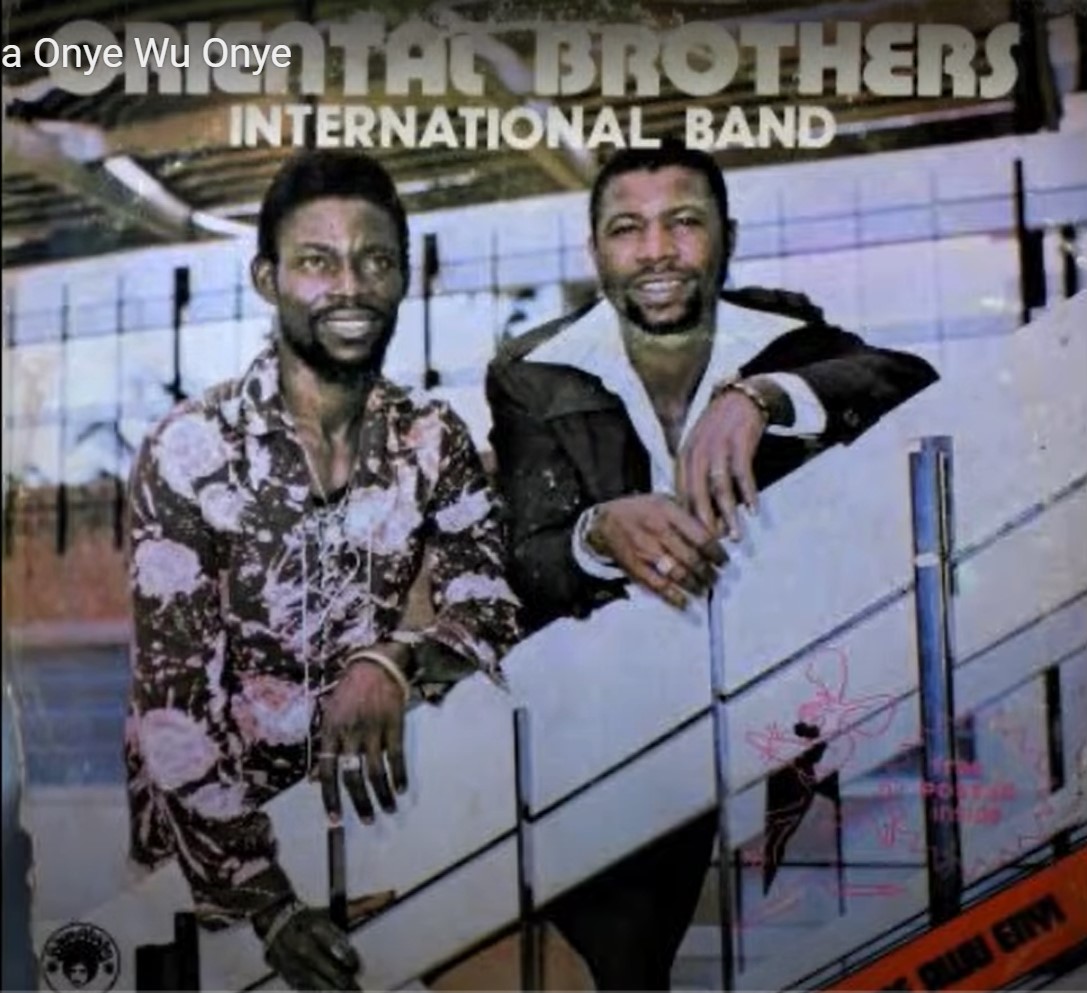
L:R: Dan-Satch and Warrior, Oriental Brothers Album Cover

In March 2015, Dan-Satch Opara gave some insights to the inspiration behind some of the songs by the Oriental Band Brothers, during an interview with the Nitch, a Nigerian entertainment online newspaper. For instance, ‘Ihe chi nyere m, onye a nana m’ is a literal translation of the Igbo philosophical aphorism, “that no one should snatch what God has given me (or someone else).” ‘Ebele onye uwa’, Dan-Satch continues, was a “premonition of the split of Oriental Brothers.”

Another song, ‘Iheoma’ was about the Udoji award of 1975. In 1972, Chief Jerome Udoji, was the head of the commission that was tasked by the government to reform Nigeria’s postcolonial and post-war civil service. The enhanced salary structure for civil servants proposed by the commission was subsequently known as the “Udoji Award.” Therefore, ‘Iheoma’ ridiculed the non-inclusion musicians in the enlarged pay packet. Dan-Scotch explains, “some people got so much money and bought motorcycles or cars. Nothing was given to us musicians then […] despite our contributions to the happiness of the people.” 

The band stood out for their unique blending of Congolese guitar instrumentation with traditional Igbo rhythms. Their soulful and therapeutic musical renditions ruled the radio waves down into the 80s. The Oriental Brothers stressed the need for peaceful and harmonious living. Most of “their song themes were drawn from war experiences diluted with rich Igbo proverbs,” maintains Amaka Obioji, a journalist with Legit, a Nigerian online news site.  

Ozoemena Nsugbe’s egwu ekpili

The Igbo traditional egwu ekpili musical instruments. L-R: Ichaka, ubọ aka, Ichaka and ọkpọkọrọ (also called ekwe nta or ekwe aka). Image by Giovana Fleck/Global Voices.

Egwu ekpili is a genre of traditional Igbo music predominant among Igbos from Ọnịcha, Nsugbe, Nteje, Aguleri, in Anambra State, southeastern Nigeria, is characterised by the call and response repertoire. This Igbo folk music “deploys conventional and conceptual metaphors to articulate salient Igbo identities and ideologies,” notes Ebuka Elias Igwebuike, a Nigerian language and literary scholar. The ọkpọkọrọ (also called ekwe nta or ekwe aka), ịchaka and ubọ aka – egwu ekpili musical instruments – dates back to about 950 AD in traditional Igbo societies. 

Akunwata Ozoemena Nsugbe's album cover.

This genre has been integrated into Igbo highlife music, with the electric guitar and piano featuring prominently, alongside the traditional ekpili Igbo instrumentation. Akunwata Ozoemena Nsugbe who started singing in 1967, and Chief Emeka Morocco Maduka, popularly known as ‘Eze Egwu Ekpili,’ are some of the notable egwu ekpili highlife crooners. The themes of their songs were mostly philosophical and moralistic.

Zigma sound, a fusion of highlife, folk song and vocals

Bright Chimezie’s album cover

Bright Chimezie promoted a mix of Igbo traditional music, highlife, and vocal through his Zigima Sound which was popular in the early 80s. The gap-toothed Chimezie, labeled Okoro Junior by fans, held the Nigerian music scene spellbound with his impressive leg work in numerous live performances. 

Nigerian journalist, the late Amadi Ogbonna wrote of Chimezie:

His breathtaking performance on stage also endeared him to the crowd wherever he performed. A very creative musician, Bright Chimezie was able to infuse comedy into his songs. Songs like ‘Respect Africa,’ ‘Okro Soup’ and ‘Oyibo Mentality’ propelled him to national stardom.

Chimezie, a strong believer “in African culture and traditions” asserts in a 2010 interview that he used music to creatively tell stories. “The message I am trying to get across to the people there is that we should be very proud of where we come from. The kind of food we eat, our type of dresses,” Chimezie said. 

These highlife musicians drawing their inspirations from Igbo identity went deep in their interrogation of existential questions while offering entertainment to their fans. Chimezie maintains that there was “a philosophy” in their music, evident in “the lyrical context” that told the story of the people. The fusion of Western and Igbo musical instruments also gave their songs a popular validity that is still refreshingly unique. 

Find Global Voice’s Spotify playlist highlighting other Nigerian Igbo highlife songs here. For more information about African music, see our special coverage, A Journey into African Music.

Here's a playlist of Igbo highlife music from the 70s to the 90s: 


Xenophobia in South Africa Mimics Apartheid-Era Violence

Experts say it may result from a twisted take on the information given to Blacks during the time of white rule


May 26, 2022
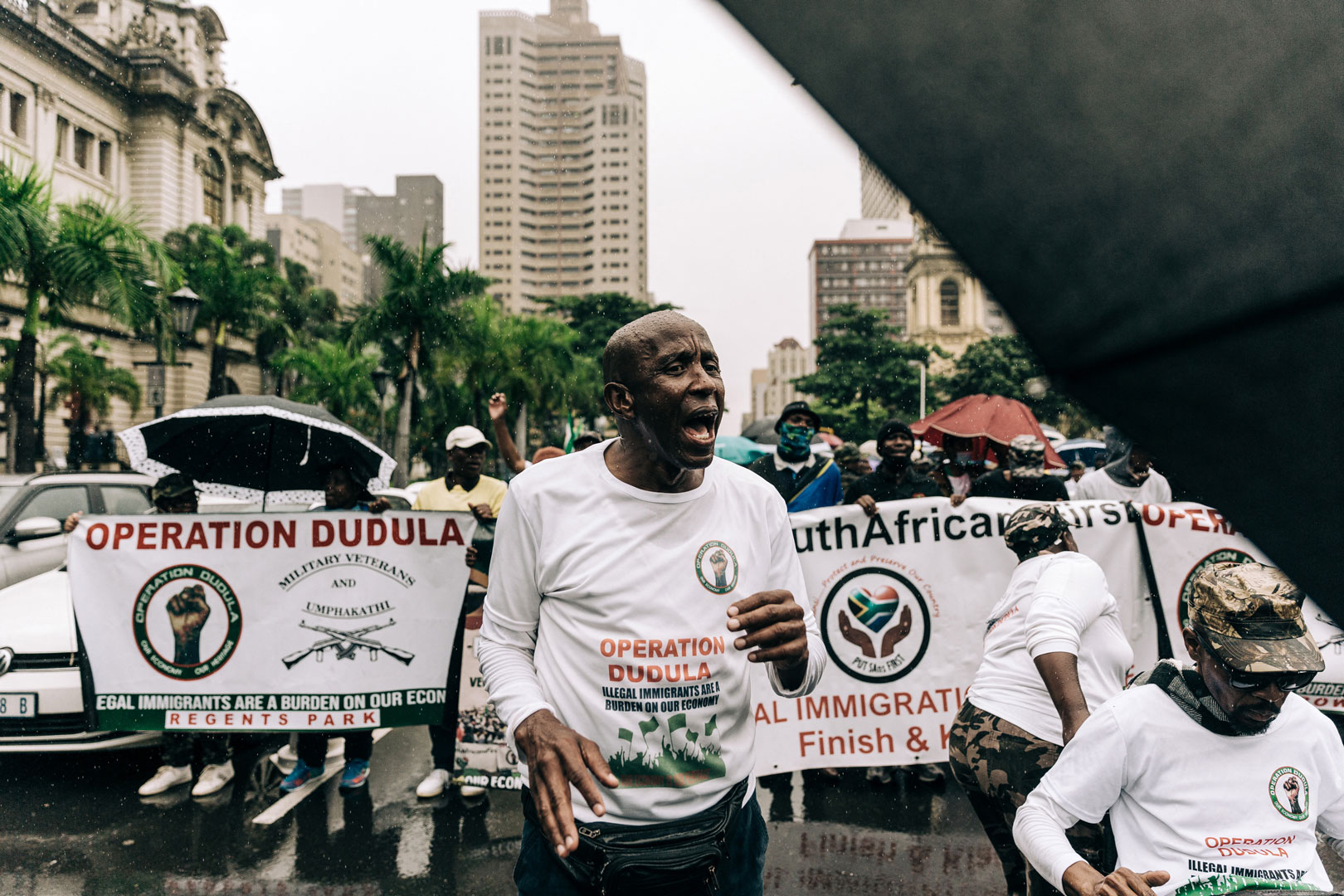
Members of “Operation Dudula” chant anti-migrant slogans as they march in Durban, on April 10, 2022
 / Rajesh Jantilal / AFP via Getty Images


On March 6, Zimbabwean national Elvis Nyathi heard a mob approaching his home in Diepsloot. Nyathi knew the drill. The mob had come looking for him before, and he survived by hiding in the back of his house. But this time would be different. His mutilated body was later found in the same hiding spot, where the mob had caught up with him. They doused his feet with gasoline and lit them on fire, then whipped him with iron cable as he burned to death. Witnesses saw what happened and gave public accounts of the ordeal, and the police have so far arrested seven men who are accused of murdering Nyathi.

The brutal violence that befell Nyathi is becoming more common in South Africa, which is leading the world as one of the most xenophobic places for Black African migrants, who have often fled war and poverty in their own countries in search of a better life in South Africa. The migrants hail from Zimbabwe, Nigeria, Somalia, Mozambique and Congo, among others. And the perpetrators of the violence are Black South Africans, increasingly organized into vigilante groups and etching closer toward the political mainstream in ways that eerily parallel neo-Nazi groups in the West.

The past two months alone have witnessed numerous anti-immigrant demonstrations in the provinces of Gauteng and KwaZulu Natal, with protesters raising banners of any number of the new and mushrooming xenophobic groups. Among the most prominent are Operation Dudula, Put South Africa First, The Patriotic Alliance Party and All Trucker Foundation, which has openly declared that they will “clean the country of immigrants,” whom they accuse of taking jobs from Indigenous South Africans and blame for the country’s rise in criminality. (South Africa has one of the highest homicide rates in the world, with 50 murders per day.)

“Dudula,” which in native Zulu means push out or shove aside, is led by 35-year-old Nhlanhla “Lux” Dlamini, who is usually seen wearing military fatigues with a bulletproof vest.

Dlamini rose to fame when he protected Maponya Mall in Soweto during a looting spree after former President Jacob Zuma was arrested on contempt of court charges in July 2021. He later spread a series of xenophobic comments online warning foreigners against opening “spaza shops” (the popular informal convenience stores) in Soweto.

His group, Operation Dudula, gained momentum in 2021 on the 45th anniversary of the June 16 Soweto uprising, a commemoration of the nearly 200 youths who died while protesting the use of Afrikaans—the tongue of the white-minority establishment—instead of English as the language of teaching in schools.

In the weeks leading up to the anniversary, flyers and posters circulated online with the warning: “We will be removing foreigners by force!!”

Fringe political parties also have become increasingly vocal about their contempt for undocumented migrants, blaming them for society’s ills.

The Patriotic Alliance Party, for example, says it wants all illegal migrants to be forcibly removed because they are “responsible for the high levels of crime” and have destabilized communities.

“When you look at rape, assault, serial killers, the majority of perpetrators are illegal immigrants who live side by side with the locals who now can no longer stand the criminality,” Kenny Kunene, a former convict and vice president of the Patriotic Alliance, told New Lines.

In the township of Diepsloot, in particular, Zimbabweans are being targeted as they represent the largest migrant population. An estimated 1 million Zimbabweans work in South Africa in both the formal and informal labor market. Many undocumented Zimbabweans have settled in Diepsloot, a densely populated township that means “deep ditch” in Afrikaans, because they do not need documentation for cheap accommodation.

Now they are fighting back against the rising rhetoric that aims to criminalize them en masse.

“When one Zimbabwean is caught, it is blown out of proportion by the police, media and community leaders. Is it necessary to announce the nationality? Show me the statistics that say foreigners are the ones committing the crimes,” said Gabriel Shumba, a Johannesburg-based Zimbabwean human rights lawyer. Shumba has been representing both exiled Zimbabwean nationals and the undocumented ones in South Africa.

Indeed, the perpetrators of this violence target the poorest and most vulnerable among immigrants, especially those who peddle or run informal shops.

“The undocumented migrants largely live in townships and therefore bear the brunt of the locals’ frustrations. The other affluent migrants are in the suburbs doing white-collar jobs, so they are not targeted because they aren’t in the same locality,” said Innocent Jeke, a Zimbabwean national who runs the nonprofit group Africa Integrated Platform in Midrand, Johannesburg.

This sense of being targeted is all too real for Congolese national Babeth Kalumba, who runs a spaza shop.

“The violence is happening in the townships where people are poor and suffering, so they are not happy that we are running small businesses. Every day I see their frustrations growing, and I fear for my life,” Kalumba told New Lines.

Such fear translated into reality for 36-year-old Kangolongo Kayembe, an asylum-seeker from the Democratic Republic of Congo. Like hundreds of thousands of Africans, she arrived in South Africa in 2009, fleeing the fighting in her country. In 2021, Kayembe was attacked by a mob while selling food in the streets of Johannesburg East.

“I have learnt my lesson. Last time they attacked me and took my goods and threw them away. Since [the attack on Nyathi] in Diepsloot, they have been terrorizing us for days. I will stay indoors and keep away from them,” she said.

Some experts say that the reason that Black vigilantes target Black Africans might be rooted in South Africa’s apartheid-era education system, which portrayed the rest of the continent as uncivilized and underdeveloped, leaving the majority of South Africans without a sense of pan-Africanism.

Indeed, there has been little education about the critical role that African states have played in supporting South Africans dismantle the apartheid regime, thanks to an archaic education system that continues to teach a Eurocentric history.

“South Africa was disconnected from the rest of the continent, and the whites drummed it into the Blacks’ minds that they were better off than other Black Africans and painted the rest of the continent as being riddled with disease, dictatorship and genocide,” said Savo Heleta, a researcher at Nelson Mandela University in Port Elizabeth.

There has also been a lack of knowledge about anti-immigrant sentiment during apartheid, when Africans from neighboring countries migrated to South Africa to work as cheap labor in the mines and farms and attacks against them largely went unreported.

From the high standards one was welcomed to on arrival at the ultramodern Jan Smuts Airport and the efficient motorways sweeping them into the lavish, world-class hotels adorning the city’s skyline, Johannesburg was as vibrant as any modern American or European metropolis.

While the rest of Africa struggled during their immediate post-independence eras, shrugging off the effects of colonialism and economic underdevelopment, South Africa’s growth as an economic powerhouse differentiated it from the rest of the continent. South Africa’s disinformation machine during apartheid also influenced the global narrative about the continent, painting a bleak picture of Africa as a dark, backward, backwater place riddled with corruption, famine and disease.

During apartheid, the South African government aimed to balance these two sometimes conflicting points. They needed economic migrants to fill in for the Black South Africans purposely disenfranchised from their own economy while maintaining the mischaracterization of Africa as a scary and terrible place so as to discourage South Africans from leaving the country and agitating against the white government.

So Black migrants “were brought in by the white government intentionally to undermine and frustrate Black South Africans by giving the foreigners preferential treatment, but in the same breath they demonized the rest of Africa as a way of discouraging Blacks from going into exile to fight the apartheid regime,’’ said Loren Landau, a lecturer at the Africa Center for Migration & Society at Witwatersrand University in Johannesburg.

This dissonance resulted in waves of African migrants to South Africa, only to be met with a rising tide of Black-led xenophobia and violence against them.

Ephraim Banda was one of the migrant workers who made South Africa his new home in the quest for a better future for his family, before he found it wasn’t all that he had hoped it to be.

“We came here in the ‘50s to work in the mines from Nyasaland [now Malawi], and even then, we were mistreated by our fellow Blacks. It’s as if they never appreciated what our countries were doing to fight apartheid,” Banda said, referring to the support given to South African exiles during the struggle for Black majority rule.

In the late 1970s and throughout the 1980s, the Mozambique civil war and Somalia’s descent into a failed state triggered the initial major waves of xenophobia, as hundreds of thousands of displaced Mozambicans and Somalis settled in South Africa.

In 1985 in Alexandra, a township in the city of Johannesburg, a campaign named Buyelekhaya (go back home) was launched by armed gangs who forcibly marched immigrants to the police station where they were detained and accused without proof by locals of sexually assaulting women. More incidents followed with the horrific deaths of a Mozambican and two Senegalese immigrants in September 1998. The victims were thrown from a moving train in Johannesburg after being attacked by a mob who were on their way back from a tense rally at which foreigners were blamed for the country’s high unemployment rate.

Sporadic violence as such gained momentum until it culminated in an infamous attack in July of 2006 in the Cape Flats, where 21 Somali immigrants were killed at various locations and times, though the police have denied that this was part of an organized attack.

When Nelson Mandela took up the mantle as South Africa’s first Black president in 1994, he captivated millions of Black South Africans dreaming and hoping for a better life. But the jubilation was short-lived, as poverty and corruption persisted despite the government’s intervention.

This period also precipitated an exodus of white South Africans, appalled as they were at the prospect of being ruled by a government led by people they had previously considered good enough for menial work and nothing else. This exacerbated the country’s brain drain, which had been ongoing since the final years of apartheid, when young, skilled, white South Africans left the country for greener pastures.

To fill the economic void left by white flight, Mandela’s government encouraged educated Black Africans to migrate to South Africa—a departure from apartheid-era migration to the country by unskilled labor meant to further disenfranchise Black South Africans. Under Mandela, it didn’t take much to attract Africans of all backgrounds and talents. South Africa was fast becoming a favored destination for Africans looking to earn a decent living, conceivably even better than the possibilities in Europe, at a time when the United States and European countries were making it increasingly more difficult for African nationals to travel there.

This wave of migrants arrived in South Africa and started taking up the less-desirable jobs increasingly shunned by young, up-and-coming South Africans—jobs like waiting tables as well as janitorial and domestic work.

In the late 1990s and 2000s, after Zaire (now the Democratic Republic of Congo) and Zimbabwe imploded, another large wave of migrants poured into South Africa. Not to be left behind were Nigeria’s eager and entrepreneurial economic migrants looking to escape the lack of opportunity in the continent’s most populated country.

Trading became another avenue of income for new immigrants. After initially hawking their wares on the streets, they set up small shops and found opportunities in the mainly Black communities that locals either hadn’t noticed or hadn’t adequately served.

But the country’s economy continued to suffer. Rising unemployment, wholesale corruption and lack of services ignited a wave of despondency and disillusionment in Black society.

On May 12, 2008, the growing tension and increasing number and ferocity of attacks on immigrants finally reached a boiling point. It happened in Alexandra, where mobs attacked Zimbabweans, Mozambicans and Malawians who were living there. South Africa’s ill-trained and notoriously corrupt police appeared incapable of containing the violence, making only cursory attempts to clamp down on the rioters as the situation spiraled out of control. More violence flared in other townships around Johannesburg and then spread to Durban and into the provinces of Mpumalanga, Free State and the Southern Cape.

By the time a semblance of normality was restored, 62 people had been killed. No one was brought to justice.

A few months later in September, President Thabo Mbeki was ousted and replaced by Zuma. But this made little difference in the lives of many South Africans, even as the country continued to attract migrants from as far away as South Asia.

Soon came an influx of Bangladeshi and Pakistani citizens, who first arrived as visitors and then overstayed their visas and worked in the informal sector. In 2015, Statistics South Africa estimated that from 1.2 to 1.5 million immigrants were living illegally in South Africa.

Attacks continued to flare up across the country, targeting immigrants with more organization and precision.

“The 2008 attacks were very localized and started in Johannesburg then quickly spread to other parts of the country. It was not planned. What we see today is massive planning by disgruntled people,” Heleta said.

As for the groups perpetuating hate speech and violence against immigrants, the anger is palpable.

Zandile Dabula, who is Operation Dudula’s national spokesperson, often says that small business owners like her are “losing opportunities due to foreign competition,” leaving her and many of her compatriots without jobs or income.

“It’s a ticking bomb, and it’s about to explode because South Africans are angry. We can’t be called xenophobic because what we are doing is ensuring the law is followed,” she said. “We are trying to reclaim our South Africa.”


Kwangu Liwewe is a freelance multimedia journalist covering Africa


‘We Have Been Invaded by Fascists’

Viktor Marunyak, the ‘sheriff’ of Stara Zburievka in southern Ukraine, survived abduction and torture at the hands of Russian occupiers. He tells New Lines why his native Kherson region will never be controlled by Russia


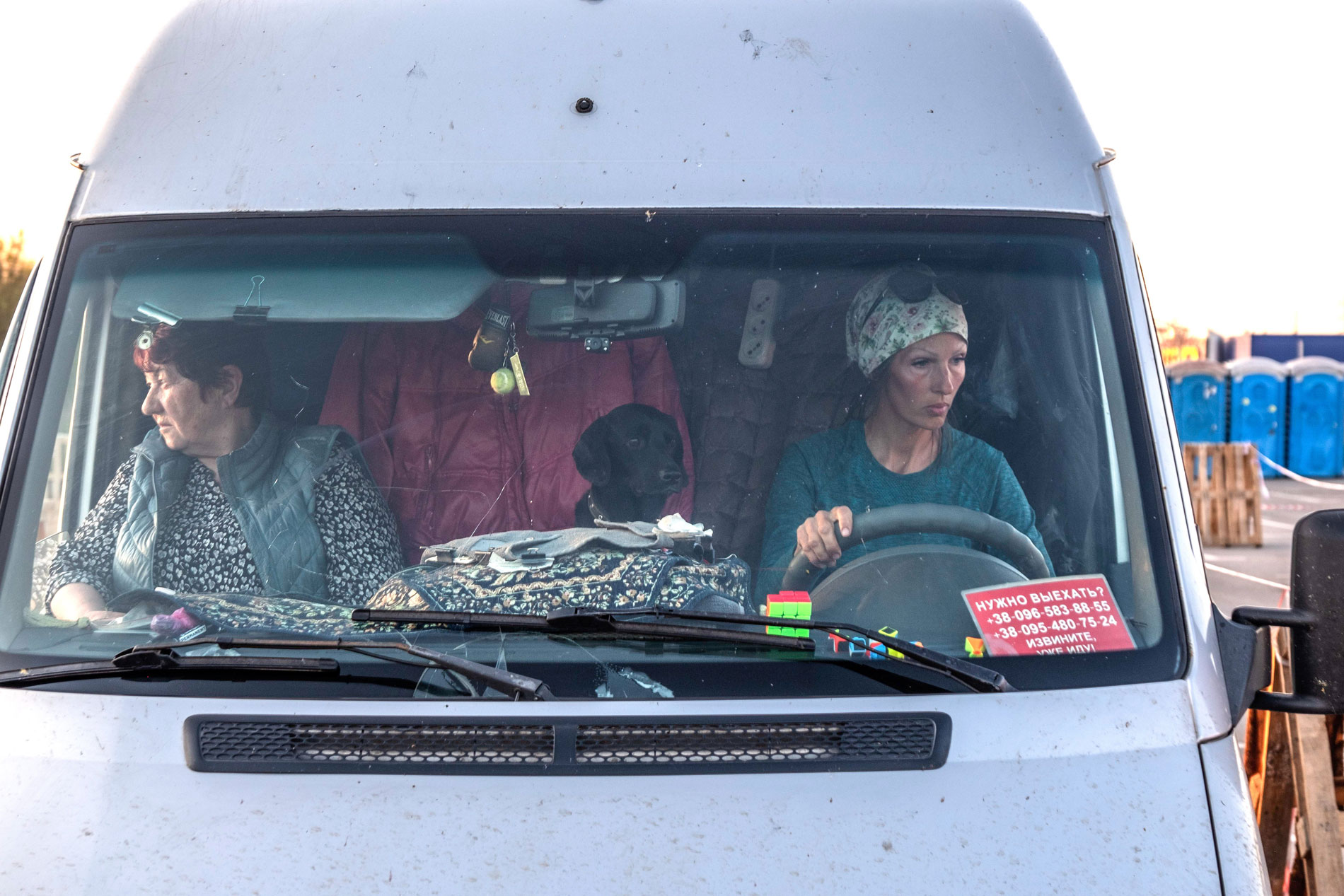
A woman from Kherson arrives at Zaporizhia Center for displaced people accompanied by a woman with dog who went to Kherson to rescue her / 
Rick Mave / Sopa Images / LightRocket via Getty Images


Olga May 25, 2022
May 25, 2022

Viktor Marunyak, a village head of Stara Zburievka in Ukraine’s southern Kherson region, has been known not only as one of the longest-serving mayors, but also as a movie star. His international visibility helped save his life after he was abducted by Russian soldiers during the invasion of Ukraine.

Marunyak was one of the protagonists of “Ukrainian Sheriffs,” a documentary directed by Roman Bondarchuk, winner of several international awards and Ukraine’s 2016 Oscars entry. The movie tells a story of a remote village in the Kherson region, 50 miles from Crimea, where two local men assume the functions of “sheriffs” because the police rarely come to the village to settle disputes. They are given this mandate by the village head, Viktor Marunyak, who trusts them to enforce law and order.

Marunyak, a historian by education, has been reelected as a mayor of Stara Zburievka four times since 2006, thanks to his efforts to reform the village and fight corruption. When the Russian full-scale invasion of Ukraine began on Feb. 24, Stara Zburievka immediately fell under occupation. For the first several weeks, things were quiet: Russians mostly bypassed it. In mid-March, the invaders came to Stara Zburievka knocking on people’s doors, looking for local collaborators willing to help install the Russian administration there.

On March 21, Marunyak’s 60th birthday, they knocked on his door too.

“Russians arrived at my house in the evening in several cars. They said they will take me with them, and then will bring me back home,” Marunyak told New Lines. “They took me to a building in the village where three local men have already been detained. They were young boys and they had signs of beating. Russians asked me to confirm that these boys were from our village. They started interrogating me about local ‘sabotage groups’ and weapons storages. For some reason, they were obsessed with the idea of finding a lot of Kalashnikovs. When I didn’t answer, they just beat me up.”

Marunyak wasn’t released the following morning, nor in the next three weeks. He was held by Russian occupiers first in Stara Zburievka and then in Kherson, where he was beaten and tortured for his refusal to collaborate.

“The first night, they didn’t let us lie down, we slept on our feet,” he said. “A Russian soldier prevented us from speaking to each other. They [the Russians] stripped us naked and made us freeze for two or three hours. They tried to suffocate us by putting their hands on our necks: and only released their grip when someone was about to pass out. They pressed pistols to our heads and threatened to shoot us.”

The torture continued in Kherson, where Marunyak was taken on the fourth day after his kidnapping. He was put in a basement of a pre-trial detention center, where Russians already held about 30 other people, some from his village. There, he and other arbitrarily detained Ukrainians were again interrogated, beaten up and tasered.

As a result of the beatings and torture by Russians, nine of Marunyak’s ribs were broken. “It was hard to sleep because of the pain. I was trying to do some exercises, to take deep breaths, but it was getting more difficult every day.”

“The hardest thing during torture was not to lose my mind. Your body and your brain react in very unexpected ways,” Marunyak recalls. “It was very hard when I was put in solitary confinement. I didn’t know which day of the week it was. What helped me was concentrating on thoughts about my family, that I had to survive to see them.”

While Marunyak was in captivity, Russians visited and searched his house several times. They took away everything, from their modest savings to food and socks. They also interrogated and pressured his wife, threatening to harm their children who live outside the Kherson region.

Similar things are happening across Stara Zburievka and elsewhere in the region, Marunyak said. Russians are going door-to-door, hunting and kidnapping Ukrainian officials, activists, journalists, veterans of war in Donbas and even people who rented their houses to Ukrainians soldiers of the 57th Infantry Brigade, which was stationed in the Stara Zburievka village before the Russian invasion.

“My story is not unique, these human rights abuses are happening on a large scale,” Marunyak said. But his story is unique in a sense that he was eventually released, unlike many other Ukrainians arbitrarily detained by Russians. According to the assessment of Natalia Bimbiraite, a human rights defender who fled Kherson after the Russian invasion and is currently helping to evacuate people from there, about 200 people, including local officials, journalists and teachers, have been abducted by Russians in the region so far. The whereabouts of many of them are still unknown.

Filmmakers who made “Ukrainian Sheriffs” and knew Marunyak personally sounded the alarm about his kidnapping at the international level. “We immediately wrote a letter to the head of Ukrainian Helsinki Human Rights Union, contacted Ukrainian and foreign journalists and filmmakers,” Darya Averchenko, the producer of the film, told New Lines. She reached out to international human rights organizations, such as Amnesty International, and her colleagues from the U.S. film industry wrote about the kidnapping of Marunyak in the media. Marunyak is sure this international outcry was fundamental to secure his release.

“After three weeks in detention, on April 12, a young Russian intelligence officer in a mask told me that he had no orders to keep me detained and that I was free. But on one condition: I had to return to the village, do my duties and inform them about anyone who organizes protests. It was clear for me that Russians wanted to keep me ‘on a short leash’. But I had no desire to work for them so I decided to flee.”

In early May, after being treated for pneumonia and broken ribs in a local hospital devoid of most medicines because of a Russian transport blockade, Marunyak was able to escape from the Kherson region. Filmmakers helped to raise the money and volunteers took him and his wife out via a safe route bypassing Russian checkpoints.

“It was a real special operation to take them out,” says human rights defender Natalia Bimbiraite who helped to secure Marunyak’s evacuation to a safe location in Ukraine. “Basically, we took the last available escape route from the Kherson region, because all other ways have been blocked by Russians.” After transiting through Odesa, Marunyak has now safely made it to Latvia, where he stays with the family of a filmmaker from the “Ukrainian Sheriffs” team.

“I want as many people as possible to know my story, and to know that we [Ukraine] have been invaded by fascists,” Marunyak said. Temporarily away from his village, he hopes to be back soon. “I am in touch with the people from the village and I plan to continue my work for its development. It’s all my life.”

Marunyak is worried about the fate of two of his “sheriffs” from Stara Zburievka. “One of them has joined the Ukrainian army and is currently fighting in the east. But there is no connection with another one; I know he was hiding [from Russians] in a village, in a forest, in a cemetery. I hope he managed to escape.”

What did his experience of life under occupation and in detention teach him? Marunyak reflects on his conversations with Russians who held him. “Russians and Ukrainians are from different planets. They are surprised that streets in our villages are lit, that there are WCs and showers in our houses. They are surprised that we have a decentralized system of governance, that mayors and village heads are elected, not appointed, that there is no top-down hierarchy when everyone follows orders from above.”

Marunyak says he thinks this bottom-up organization will ultimately be a decisive factor in Ukraine’s victory. Like he and his fellow “sheriffs” who took the initiative in their own hands to establish order in their village, many Ukrainians are voluntarily contributing to the resistance effort. In the city of Kherson and across the region, people are still taking to the streets protesting against Russian occupation, despite arrests and kidnappings. Those who do not go to protest sabotage the occupation authorities, preventing them from taking full control over the region.

“Russians were unable to organize a bogus referendum on the self-proclaimed Kherson Republic because the local population was totally opposed to it,” said Natalia Bimbiraite. “People took to the streets on April 27, when Russians planned to conduct it, and disrupted these plans. The ‘Crimea scenario’ is impossible in the Kherson region.”

Marunyak estimates that only 10 to 15% of the local population supports the occupation forces. Russian attempts to annex the Kherson region will not be legally recognized and the occupiers will struggle to govern here, he said.

“In fact, Russians use repression because they are afraid of us. Those sent to Kherson are scared to death of fighting with the Ukrainian armed forces so they take revenge on civilians,” he said. “I am sure Ukraine will be able to recapture the Kherson region. People are waiting for the Ukrainian army to come and liberate them. There is already an insurgency movement against the occupiers, even in my village.”


Olga Tokariuk is an independent journalist based in Ukraine

In India, the War on Journalists Is All-Encompassing

As the government mistreats the press, ordinary people are now joining in blaming reporters for violence and mayhem

June 6, 2022

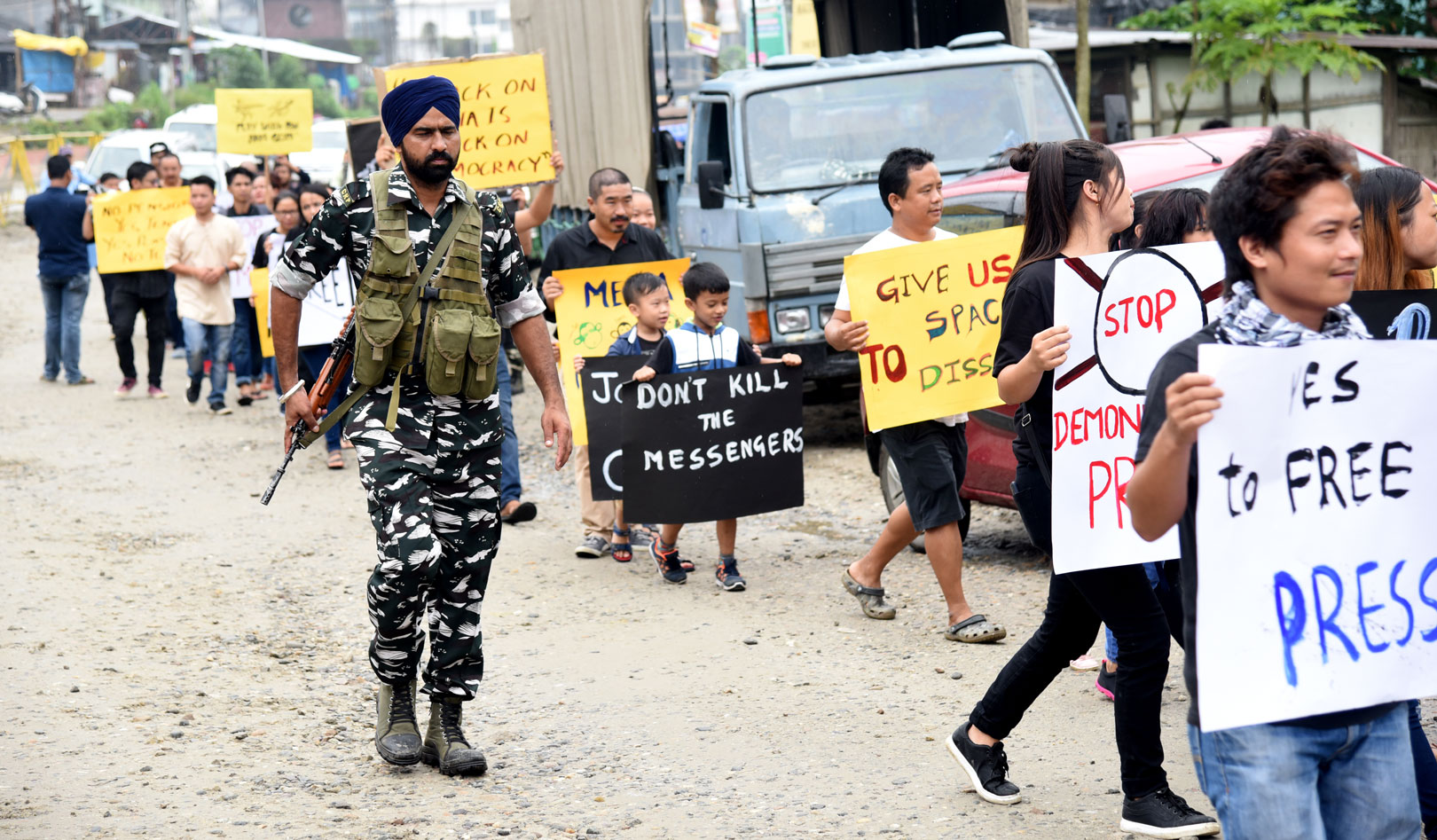
Children of journalists march for freedom rights 
/ Tanmoy Bhaduri / SOPA Images/LightRocket via Getty Images

An unsettling, eerie silence engulfed the streets of Khajuri Khas two days after the riots. The neighborhood is a Muslim ghetto and was one of the worst hit in the anti-Muslim violence that erupted in Delhi in late February 2020. Fifty-three people were killed, a majority of them Muslims.

I walked through lanes covered in ashes. The air was thick with the toxic smell of burned refrigerators and charred vehicles. Broken pieces of furniture lined the streets. I stepped over a lone, bloodstained slipper and a half-burned notebook. I remember noting that about 30 houses in Khajuri Khas were burned down. Shops belonging to Muslims had been specifically targeted. It was day three of the violence, and parts of the city were still burning.

As a journalist, my presence set off ripples of resentment. “The media instigated the riots. Are your prime-time news anchors happy now?” asked a 50-year-old man who sat outside a three-story house that was gutted. Two teenage girls — his daughters — were wailing inconsolably. They had escaped the previous night when the rioters attacked this lane. Now they returned to see their home destroyed. “My daughter was going to get married next month. Now we’re left with nothing. Are your bosses happy now?” he asked.

I could feel a tight knot in my stomach. He was not the first riot victim I met that day who believed the media had played an active role in instigating the hate and bigotry that culminated in these riots.

While the exact timeline remains unclear, the roots of the riots lie in the Citizenship (Amendment) Act (CAA). The 2019 act, which amends the original Citizenship Act dating to 1955, excludes Muslims from the subcontinent from seeking fast-track citizenship. For months Muslim women, student activists and liberal groups protested against the law for being anti-Muslim. In the run-up to the riots, mainstream media networks ran a blitzkrieg of evening TV debates labeling protesters as “anti-nationals,” “paid foreign agents” and even terrorists.

I remember many conversations with colleagues who were covering these protests. We could see this coming. “It is only a matter of time before the propaganda and polarization channeled by big media networks translates into violence,” a senior journalist once told me. I was reporting at the protest sites for over two months and witnessed rising apprehension among protesters. When a leader from India’s ruling Bharatiya Janata Party (BJP) issued an ultimatum to the police that the police clear out the protesters or the party and its followers would, it was only a matter of hours until violent mobs descended on protest sites. The media is complicit in the bloodbath that followed, several protesters later told me.

And this hostility toward us continues. In April, several journalists were attacked by a mob at a Hindu right-wing rally in New Delhi. Five of them had to be escorted by police for their protection; of these, four were Muslim. At the rally, Hindu supremacists who had earlier been accused of similar hate speech delivered anti-Muslim verbal attacks. Arbab Ali, a reporter with Article 15 — an independent news website — tweeted that he was attacked by the mob because of his Muslim identity: “They asked us our names. They called us Jihadi,” he wrote.

When I decided at the age of 12 to be a journalist, I believed that it was the way I could serve my country and its people. To this day, I continue to struggle with my stubborn idealism. It’s an internal conflict where my innate optimism is challenged by the harsh realities of being a journalist in India. I have tried seeking comfort in the little impacts that my own stories could achieve. I had to continue doing my part. But with the growing self-censorship by mainstream media networks, even ordinary acts of reporting the truth start to feel like a battle. After more than seven years as a reporter in India, where the press is being muzzled, one thing is clear: In the India of right-wing Prime Minister Narendra Modi, journalists either join the cacophony of government propaganda or are silenced.

Curtailing of press freedom is part of Modi’s larger campaign to control India by fueling anti-Muslim sentiments. In August 2019, Modi revoked the special status of Kashmir and brought it under the direct control of his government. Kashmir was also placed under the longest internet shutdown ever recorded in a democracy, from August 2019 to March 2020, right after the abrogation of its special status. The region continues to face internet interruptions regularly. India is the global leader in internet shutdowns, imposed as a repressive method to quell dissent, according to the latest report by digital freedom monitoring agency Access Now.

Journalists in Kashmir, India’s only majority-Muslim state, are disproportionately affected by frequent summons to local police stations and background profiling, among other forms of censorship. According to a story published in The Wire, in the past two years at least 40 Kashmiri journalists have been called for “background checks,” summoned to explain their work and social media conduct. Several Kashmiri journalists are also barred from traveling abroad as per the report. At least six Kashmiri journalists have been formally charged with terrorism.

Journalists who refused to be silenced found themselves under attack. Fahad Shah, an independent journalist and editor from Kashmir, was charged under the stringent Public Safety Act (PSA), an anti-terrorism law that can put him in jail for two years without trial for reporting on the government’s crackdown on the Muslim community in Kashmir. Shah is the editor-in-chief of The Kashmir Walla (TKW), a website known to be the last voice of independent local journalism in Kashmir. He has also freelanced for the international press including The Guardian, Time, Foreign Policy and The Nation. Before being charged under PSA, Shah faced a campaign of harassment for his reporting.

After his release, he has been arrested by local police and granted bail by courts three times since February. “Every time he got bail from courts, the police would arrest him again in a different case. They have really been after him,” a close friend and colleague of Shah told me.

In this year’s run-ins with the law, Shah was first arrested on Feb. 4, reportedly after filing a story about a gunfight that took place in May 2020 in which a 17-year-old was killed. In the report, he quoted the police as well as the teen’s family, who said that he was not a militant. He was charged with sedition and “glorifying anti-national content” and spent more than 20 days in jail before being released on bail. “He had become very weak after the first time. And now, there’s no hope for a bail,” his friend told me.

A month before Shah’s first arrest this year, another journalist from TKW, Sajad Gul, was detained under PSA for reporting on anti-government protests in the Kashmir Valley. Shah wrote editorials against Gul’s arrests on his website, and that irked the establishment, his colleagues told me.

Shah’s first arrest was a marked escalation in the Indian government’s assault on press freedom in Kashmir. Despite civil society outrage and condemnation from national and international watchdogs like the Editors of Guild of India, Human Rights Watch and the Committee to Protect Journalists, the state went ahead with its arrest.

“No one thought that the government would go this far. Fahad didn’t believe things could get this bad,” his friend said.

But things did go from bad to worse. Shah was no stranger to state monitoring and press censorship. He, like other Kashmiri journalists, learned to navigate his job through the muddy waters of everyday surveillance and indirect intimidation from government agencies in Kashmir. But his arrest has led to fear among journalists in the valley who have retreated into silence. I spoke to several Kashmiri journalists who are now refraining from “making too much noise” and trying to avoid being noticed for their work. Many of them have moved to New Delhi and other cities. My Kashmiri counterparts know all too well the price they have to pay to be a journalist in the conflict region.

Aakash Hassan was driving back from a reporting assignment in Srinagar, Kashmir, when he got a call from a familiar number, one he knew to be that of a local law enforcement agency. He wasn’t surprised, as it was only a few days before that he had published a story about the Indian government’s crackdown on information in Kashmir. “I have been summoned and questioned at least a dozen times by local police in the last two years,” Hassan told me.

This is what we call the Kashmir pattern. Journalists are called for “background checks” or “routine verifications” often after they publish a story that is critical of the government. The call is not made in direct reference to the story, but covert hints do the job.

“They ask all sorts of questions: Who am I writing for these days, questions about my family, my bank account details, my family’s bank account details, what are my siblings doing and how much property does my family own,” Hassan said. “Sometimes they warn in vague terms to be careful about what I write.”

In another recent assault on journalistic freedoms in Kashmir, the local administration issued an order requiring all journalists to “register” with a government department to be able to report freely out in the field or online. For Hassan, it was the shutdown of the Kashmir Press Club that dealt a big blow. To the average person, it looks like a rundown government building and smells of old rotten paper, but for journalists in Kashmir, it was the last safe space in Srinagar where they could meet and discuss their stories. When I was there in 2018, it was newly established but had already become a refuge for local independent journalists like Hassan. “More than anything else, it was a solidarity group where I knew that someone would speak up if something bad were to happen to me,” Hassan told me. “Despite the harsh circumstances under which journalists in Kashmir operate … it was the only place where we could exchange reporting notes, talk about the threats we face and just be there for each other.”

Last year, in the early hours of Sept. 9, the residences of four Kashmiri journalists were raided by local police investigating a case charged under the anti-terror law Unlawful Activities Prevention Act (UAPA). “The manner in which these raids were conducted, it looked as if we were terrorists and not journalists,” Hassan said.

As things escalate in Kashmir with Shah’s most recent arrest, the pattern seen in Kashmir is being replicated in the rest of India. Siddique Kappan, a Muslim journalist from the southern state of Kerala, has been languishing in jail over two years now. He was on his way to report on a story about a heinous rape in the northern Indian state of Uttar Pradesh when he was arrested by local police and later charged under an anti-terrorism law on charges of sedition. Kappan has reported on the CAA protests and the rise of Hindu nationalism, much like me and many of my colleagues. He also used to write about the illegal incarceration of activists under the UAPA, the same law that’s being used against him. Raihanath, Kappan’s wife, believes he was arrested so as to intimidate all journalists from pursuing any story against the government. “The government wants to instill fear among journalists and civil society groups. Siddique was targeted because he is a journalist and a Muslim one at that,” she told me.

In this war on journalism, we are being attacked not only through intimidation tactics but also by a systematic assault from government sympathizers and their social media army. Online threats and social media harassment is a package deal for female journalists in India. Over the years, I’ve conditioned myself to ignore them, often not even reading the bile that’s thrown at me for simply doing my job. But earlier this year, the online trolling took an uglier turn.

This past New Year’s, I woke up to a series of messages from friends and colleagues in India informing me that my name and picture had appeared in an “online auction” on a fake website hosted by American tech platform GitHub. It left me disgusted and angry. These men offered me and nearly 100 other Muslim female journalists and activists up “for sale” and described us in derogatory terms. This was the second such fake “online auction” of outspoken Muslim women held by individuals who represent the support base of the ruling party. The first time, the police made no arrests, emboldening the perpetrators to do it again.

In a patriarchal country like India, targeting women is seen as the apt way to humiliate a community. As a journalist, I don’t let my religious identity come in the way of my reporting. But in India, where the Hindu right dominates, it’s an identity that I am constantly reminded of and targeted for. Muslim women like me were targeted because we either had covered stories that are critical of the government or have been vocal critics of government policies, especially the citizenship law. The motive was to shame us into silence. Since this was the second such “auction,” law enforcement agencies were driven into action not so much by the government but by the outrage that followed. Five men, ages 18 to 25, have been arrested so far.

Other colleagues face worse. When Rana Ayyub is not being quizzed by Indian police and tax authorities, she is slapped with communal slurs and threats of death and rape by Modi’s supporters, many of whom the prime minister follows on Twitter. In her columns for The Washington Post, Time magazine and other international publications, Ayyub takes on Modi and his government, calling out the dangers of Hindu nationalism, Islamophobia and the attack on press freedom. Ayyub is perhaps one of the most internationally recognized journalists from India, which means she is also one of the most viciously abused. Ayyub has had at least three criminal lawsuits filed against her in addition to an investigation into her finances, launched by Indian tax authorities. She says the threats and intimidation — both by the government and its “troll army” — have intensified ever since she began writing for international media. Her being a Muslim journalist often means that the online harassment escalates to pure vitriol.

It has taken a toll on her mental health, and she hit rock bottom. “It is brazen and the intimidation gets to be a lot, it gets really overwhelming. Recently, I was borderline suicidal when I called up my psychiatrist and lawyers. But then I reminded myself, this is exactly what they’re trying to do to you,” Ayyub said. Despite the sustained campaign against her, Ayyub considers herself one of the “luckier” ones.

“One thing that separates me from Siddique Kappan is privilege. I do have the privilege to have a psychiatrist. I do have the privilege to have a great lawyer,” Ayyub acknowledged.

Following the latest case filed against Ayyub alleging misappropriation of funds collected during the pandemic for her charity work, the United Nations Special Rapporteurs issued a statement urging the government to “halt all retaliation attacks” against her, calling the case “judicial harassment” and drawing a sharp response from India. Ayyub has denied all allegations, calling it a smear campaign. The case, which is now being investigated by India’s top financial regulatory agency, was filed by the founder of a Hindu nationalist NGO.

For independent journalist Neha Dikshit, the online threats turned real. On Jan. 27, 2021, Dikshit tweeted that there had been an attempt to break into her house two days earlier. She revealed that she had been stalked since September 2020 and that the stalker threatened her with “rape, acid attack and death.” Prior to this incident, Dikshit was often targeted by Modi supporters on social media with hateful and misogynist comments.

An investigative reporter, she was awarded the 2019 International Press Freedom Award by the Committee to Protect Journalists for her work exposing extrajudicial killings by Indian police. But back in India, there have been attempts to intimidate her through police complaints. In 2016, two criminal defamation cases had been filed against Dikshit by Hindu right-wing organizations affiliated with the ruling party for reporting that Modi’s ideological Rashtriya Swayamsevak Sang (RSS), a Hindu right-wing voluntary paramilitary organization, was involved in the trafficking of tribal girls for the purpose of indoctrination in India’s northeast. There is another more serious criminal case of inciting communal hatred against her for her journalistic work. “For the past five years, I have had to travel to another state and appear in court hearings. There are legal expenses and travel costs that one has to bear in addition to the mental toll it takes,” Dikshit told me in a phone interview.

Dikshit said she has also made previous governments unhappy with her work and had received legal notices, but Modi’s government has normalized this trend of entangling journalists in court cases that take years to resolve. The objective is to ensure journalists exercise self-censorship to avoid these legal hassles.

The police don’t act on the complaints filed by journalists. When someone broke into Dikshit’s home, after innumerable phone threats by the perpetrator letting her know he was closely watching her every move, she reported the incident to the police. But there has been no update in the case since. In the past 25 years, there have been only two convictions in cases of attacks on journalists, Dikshit said.

Modi’s government has carefully crafted a new strategy to intimidate “unfriendly” media with bogus criminal or terror charges, according to Siddharth Vardrajan, editor of The Wire, an award-winning independent media outlet that has fiercely criticized the establishment. There are five police cases filed against The Wire, Vardrajan and three of his reporters. “I don’t recall in the last 20 years that I’ve been a journalist to see criminal cases of this kind be filed against reporters. Journalists were harassed in the past too, but what’s happening now is that if the state doesn’t like a particular story, then it’s quite happy to unleash the police against the reporter,” Vardrajan said.

That journalists like Dikshit and Ayyub are on the radar of Hindu extremists is no secret, and the complaints filed by them should be given due urgency. Threats of this kind have been known to turn deadly. On Sept. 5, 2017, Gauri Lankesh, a left-leaning journalist who was highly critical of Hindu nationalism, received a wave of death threats and then was shot dead by assassins “trained” by the Hindu extremist organization Sanatan Sanstha. Four years on, 18 people have been arrested in connection with her murder, but there have been no convictions.

I have witnessed firsthand how attacks on journalists have escalated rapidly over the past three years. As I remember Lankesh, I am forced to confront the possibility that many of my colleagues risk their lives for the work they do. We have been forced to accept the threats, hate, harassment, government censorship and intimidation as a part of being a journalist in India. We shouldn’t have to.

The aftermath of the Delhi riots left me with a feeling of resentment toward the normalization of anti-Muslim rhetoric and government propaganda, which was evident during the coverage of the protests and the riots. The pandemic and the Indian media’s reportage only made it worse. Television news networks have been highly effective in propagating Modi’s message to the masses. Most big networks, especially Hindi news channels with millions of viewers, have a prime-time news anchor who unabashedly advances anti-Muslim racism. In the past few years, a large section of television news networks played a big role in propagating hate and bigotry in an already polarized India.

At the start of the pandemic in early spring 2020, many big media houses were quick to blame a Muslim congregation for the initial spread of COVID-19. The government also released COVID-related data specifically about the congregation, isolating that particular community. The media played into the government’s narrative and amplified it. Headlines flashing “Corona Jihad” became a new catchphrase. Unverified videos of men wearing skullcaps and spitting in public places were used on air, instigating hate against minorities and sparking attacks on Muslim street vendors in different parts of the country.

That’s when I decided to take a break from mainstream media in India. I needed to step away; I couldn’t take it anymore. I’ve put thousands of miles between me and that rhetoric, but it doesn’t help in reducing the anger and helplessness I continue to feel every time another journalist in India is arrested or when another mainstream media network fuels hate. My internal conflict rages on. On one hand, I feel an enveloping cynicism that my side is losing the war on journalism. On the other are my idealism and a call that I need to work harder than ever. While it may be one of the most challenging times to be a journalist in India, it is also the most urgent. And when I look at the courage and resilience of my colleagues back home, I am reminded why I chose this profession. We have to do our part.

Zeba Warsi is a New York-based Indian journalist
‘A Happy Marriage Begins by Crying’: Kyrgyzstan’s Tradition of Kidnapping and Raping Brides

How pioneering young women are trying to put an end to a violent 12th-century tradition from the steppes of Central Asia

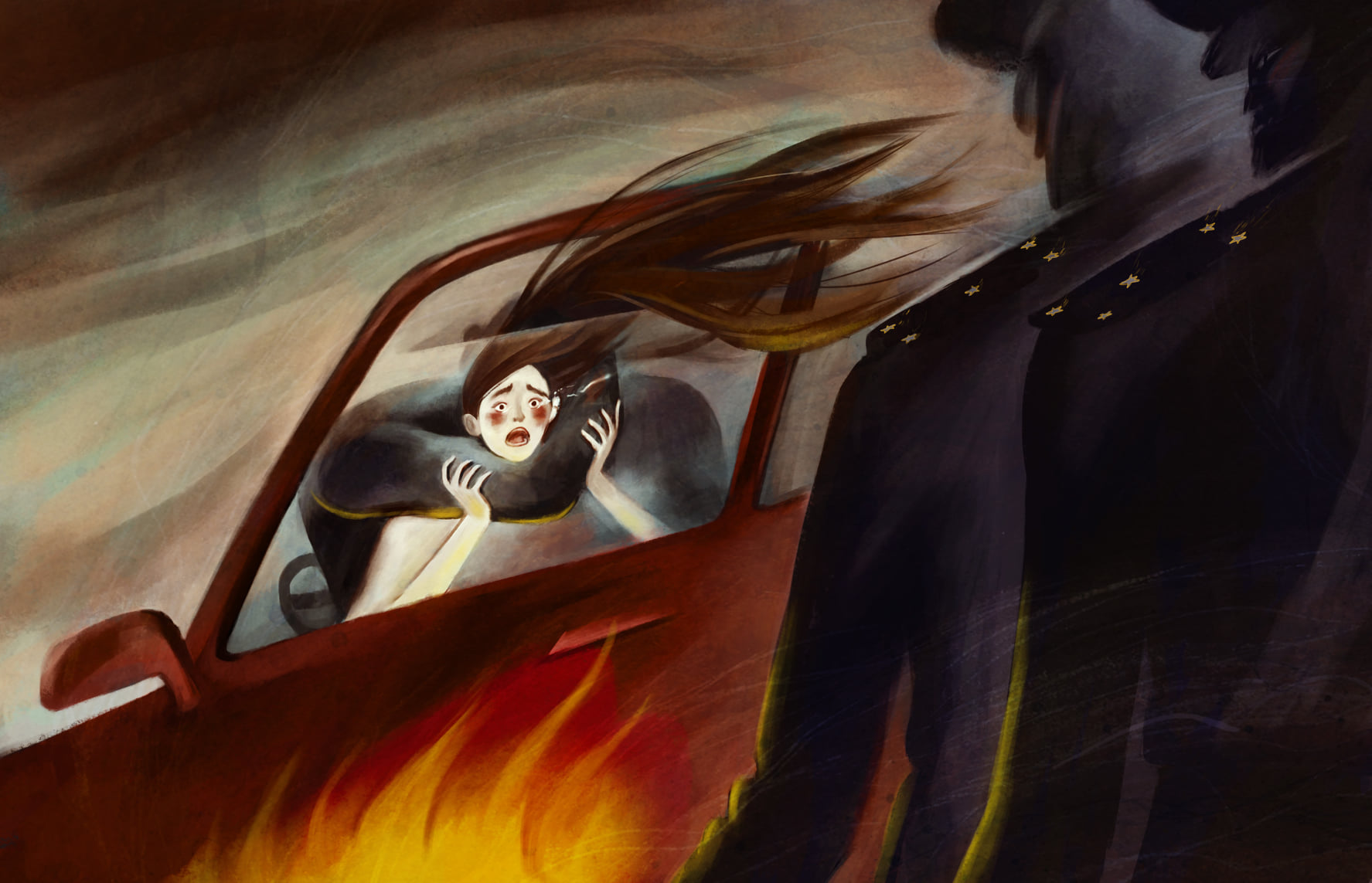
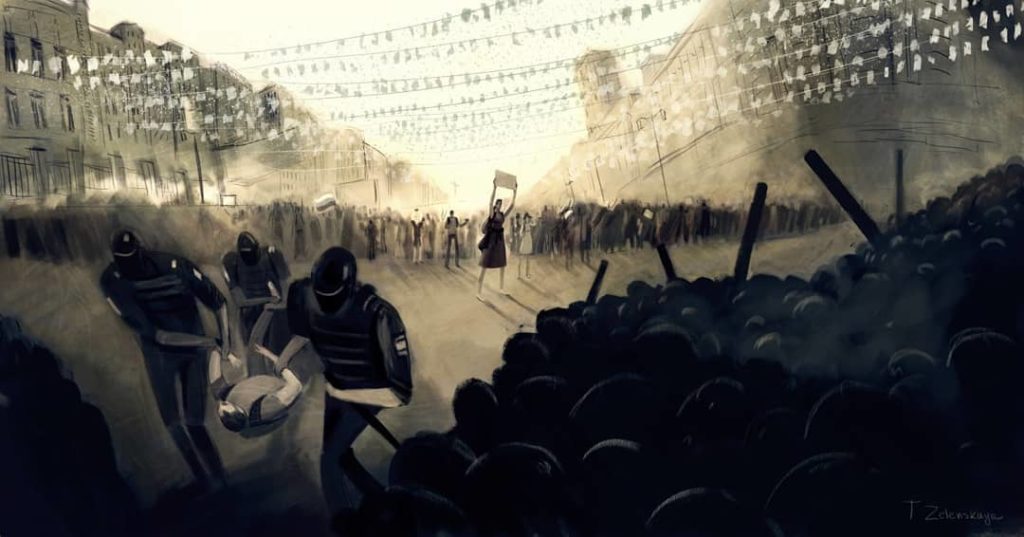
Art protesting violence against women in Kyrgyzstan.
 Courtesy of the artist Tatyana Zelenskaya


https://newlinesmag.com/

Aisuluu was returning home after spending the afternoon with her aunt in the village of At-Bashy, located 150 kilometers (90 miles) from the Torugart crossing into China. “I remember it was 5 o’clock in the afternoon on Saturday. I had in my hands a paper bag full of samsa [a dough dumpling stuffed with lamb, parsley, and onion]. My aunt always prepared them on weekends,” she told New Lines, withholding her last name for fear of reprisal.

“A car with four men inside comes in the opposite direction to mine. And all of a sudden it … turns around and within a few seconds, comes up beside me. One of the guys sitting in the back gets out, yanks me and pushes me inside the car. I drop all the samsa there, on the pavement. I scream, I squirm, I cry, but there is nothing I can do,” she added.

The man who kidnapped her will soon become her husband. At the wedding, Aisuluu will discover that she was not even the woman he had intended to kidnap for marriage. But in the haste of having to return home with a bride and after wandering the streets all afternoon, the man decided to settle for the first “cute girl” he saw and kidnap her. This was 1996, and Aisuluu was a teenager. Today she has four children by her kidnapper-turned-husband, with whom she remains as a wife.

It has been so ingrained in Kyrgyz society that it has become an accepted norm, complete with proverbs to console its terrified victims one generation after the next.

Known as Ala Kachuu, or take-and-run, the brutal practice of kidnapping brides finds its roots in medieval times along the steppes of Central Asia. It has been so ingrained in Kyrgyz society that it has become an accepted norm, complete with proverbs to console its terrified victims one generation after the next.

The Ala Kachuu has been banned in Kyrgyzstan for decades, but the law is ignored by most of the population and the authorities in a context that continues to see women subjected to domestic violence and abuse. The law was tightened in 2013, with sentences of up to 10 years in prison for those who kidnap a woman with the intention of forcing her into marriage (previously it was a fine of 2,000 soms, about $25 U.S.). But the new law has not curtailed the practice, and prosecutions have been rare.

“A happy marriage begins by crying,” goes one Kyrgyz proverb, ignoring the tears of anger and terror that mark the start of a marriage for Ala Kachuu brides.

The Ala Kachuu is practiced in all the countries of Central Asia, but it is especially common among the rural villages on the hard mountainous territories of post-Soviet Kyrgyzstan, where it is most common.

The data collected from the Women Support Center, an organization that fights for gender equality in the country, indicates at least 12,000 marriages celebrated and consummated every year against the will of the bride. Men kidnap women, they say, to prove their manhood, avoid courtship (considered a tedious waste of time) and save the payment of the kalym, or dowry, which can cost the groom up to $4,000 in cash and farm animals.

After the kidnapping, which in some cases can be consensual when a couple wishes to speed up the process of dating and honor tradition, the brides are taken to the house of the future husband. The in-laws welcome the woman and force her to wear the jooluk, a white shawl that certifies submission to the new family. Then comes the wedding. You can rebel, of course, but most of the girls kidnapped, around 80%, decide to accept their fate, often on the advice of their parents.

Refusing marriage after spending the night in the house of an unknown man amounts to a social stigma that is difficult to erase, a shame that the girl and her whole family live with forever. The future husband rapes the young woman shortly after having kidnapped her (it is estimated that there are 2,000 rapes preceding marriage a year), thus condemning her as his wife, for returning to her family after that would be a deep mark of shame. Fleeing brides also risk further violence and even death.

One such bride, Aizada Kanatbekova, 26, was found strangled to death in a field in early April, two days after being forcibly loaded into a car with the help of two passersby. The kidnapping unfolded in daylight in the city center of the capital, Bishkek, an alarming indication that this practice is not limited to the most rural areas of the country.

Altyn Kapalova, a writer, artist, activist and researcher at the University of Central Asia in Bishkek, lamented the lack of legal protection for women. “A police station is not a safe place for a woman seeking help. If a woman goes to a police station to report a kidnapping, they laugh at her, tell her it’s not their business, to go home and settle it with her family,” she said.

In 2018, one gruesome case highlighted authorities’ callous attitude. The victim, Burulai Turdaaly Kyzy, a 20-year-old medical student, was killed while in a police station by the man who had kidnapped her. He fatally stabbed her, then carved her initials and those of another man she had planned to marry into the woman’s body. The officers had left the two of them alone in the waiting room.

The perpetrator was convicted of murder and sentenced to 20 years in prison. But activists lament that the majority of violence against women still goes unpunished. “The problem is one of culture, of education, and not of laws,” added Kapalova, who has been receiving constant threats since 2019, after having organized the first feminist exhibition in the history of Kyrgyzstan. Called the “Feminnale,” the exhibit is on display at the Kyrgyz National Museum of Fine Arts in Bishkek.

Kapalova pointed out that since most Kyrgyz women marry during adolescence, their youth and low level of education make them that much more vulnerable to domestic violence. “In fact, girls remain forever in a low educational context; their world is one in which a man can do everything and violence becomes a daily part of their life, something to be accepted without protest and suffered in silence,” she said.

Perhaps one of the saddest examples of the extent to which girls can be relegated to the margins of society in Kyrgyzstan is an examination of the disparaging girl names that remain popular in some parts of the country. “Kyrgyzstan is full of girls called Zhanyl or Burul, which in Kyrgyz means ‘I made a mistake’ or ‘I sinned,’ ” said Kapalova. These are “newborns whose only fault was being born female and therefore punished with names that represent them as God’s mistakes not to be repeated,” she added.
Art protesting violence against women in Kyrgyzstan. 
Courtesy of the artist Tatyana Zelenskaya

According to data from the UNICEF office operating in Bishkek, the percentage of girls ages 15 to 19 who become pregnant in Kyrgyzstan is among the highest in the world, while 13% of marriages take place before the age of 18, despite being prohibited by current regulations. The Kyrgyz government has no specific plans to combat violence against women or the phenomenon of the Ala Kachuu.

Indeed, the new president, the nationalist Sadyr Japarov, has instead included in the country’s new constitution, passed in a referendum on April 11, 2021, a passage that recalls the values of morality and tradition, seen by many as a tacit endorsement of Ala Kachuu.

The introductory prologue of the new constitution underlines the importance of the spiritual and cultural foundations of Kyrgyz society: “following the traditions of our ancestors, continuing to live in unity, peace, harmony with nature, based on the precepts of Manas the Magnanimous.”

This is a passage that replaces the introduction of the old 2010 constitution, which instead focused on the need to fight for the construction of a democratic, free and independent state. There is also a new article, number 21, that mentions “development of the culture of the people of Kyrgyzstan with the preservation of customs and traditions,” a reference that aims to cement traditional values and that was read by many as a change of priorities, toward the erosion of human rights and fundamental freedoms, if they were in conflict with traditional values.

Kyrgyz women have not always benefited from the traditions of their ancestors, as is the case with the practice of Ala Kachuu.

The main voices of dissent against the government’s pivot toward arcane tradition come from disparate activist initiatives. One such voice is Tatyana Zelenskaya, an artist who works in collaboration with the NGO Open Line Foundation, which supports victims of bride kidnapping through counseling and legal advice. Zelenskaya created the drawings and graphics of Spring in Bishkek, a game for smartphones that aims to convince girls that kidnapping is not a tradition but a crime.

In just over six months, the app has already recorded over 130,000 downloads, an extraordinary success, given that developers had set a goal of 25,000. In the game, the user witnesses the kidnapping of her best friend and must free her, while messages with suggestions prepared by psychologists, journalists and activists appear on the screen, as well as real telephone numbers that can be used in cases of emergency.

“The idea behind the game is to make the girls understand that they are masters of their own destiny. This is why we transform them into heroines capable of rebelling and changing the course of things,” Zelenskaya said. “It may seem unimportant, but for a generation of women who grew up with the idea that nothing is possible without a man’s approval, unhinging this concept is difficult.”

Also among the voices of dissent is a dynamic group of eight Kyrgyz women ages 18 to 24 who are shaking things up. They plan to launch into orbit the first satellite in the history of Kyrgyzstan. “We will be ready for launch by autumn 2022,” said Kyzzhibek Batyrkanova, who is the eldest in the group. “A nanosatellite will go into orbit, a CubeSat with basic and limited functionality, capable of receiving and sending a signal. We have been working on it for some time, building it entirely, piece by piece: technology, programming, mathematics, physics, up to welding,” she added.

Batyrkanova directs the operations of the “Kyrgyz Space Program,” an initiative that receives no help from Kyrgyz institutions but is funded by private donations. For the technical elements, the all-woman team managed to establish collaborative relationships with foreign universities and with NASA, securing advice about the construction of the satellite and participating in conferences and educational trips.

All eight women are studying aerospace engineering while carrying out the construction of the CubeSat. They travel to remote areas and give seminars to school kids, especially girls, in the basics of engineering, mathematics, science and technology. They also share personal stories of “emancipation.”

She does so “because I was like them, a young girl whose highest aspiration was to find a charming prince,” said Anna Boyko, who oversees the physics and programming courses for the group. “Then I took part in two weeks of training in a computer company … (and) after two days they all realized that I was much better than my male companions with computers.”


Mauro Mondello is a Sicilian freelance reporter, author, documentary filmmaker and 2020 Yale World Fellow
August 2, 2021
Change won’t appear overnight in many states if the Supreme Court overturns Roe v. Wade

Workers at a family planning clinic watch an abortion rights march in Chicago on May 14, 2022. 
Scott Olson/Getty Images

THE CONVERSATION
Published: June 3, 2022

Individual states and some cities are taking legal steps to either limit or allow abortions, gearing up for what will likely be a fierce national battle if the U.S. Supreme Court overturns the constitutional right to abortion.

The Supreme Court is set to soon release a final verdict on Dobbs v. Jackson Women’s Health Organization, one month after a leaked Supreme Court draft majority opinion showed it could reverse Roe v. Wade.

But a ruling – likely to come sometime in June or July 2022 – will be only one important step in the ongoing national abortion saga. While 13 states, including Arkansas, Missouri and Oklahoma, have “trigger laws” that would almost immediately restrict abortion if Roe v. Wade is overturned, the legal future for abortion in 10 states is uncertain.

As a professor of health law, public health law and medical ethics, I think it is important to understand that it may take time to see the full effects of a Supreme Court decision at the state level.

Join thousands of Canadians who subscribe to free evidence-based news.Get newsletter

Many states have laws regulating abortion already in place, while other states are moving to expand or restrict abortions. Oklahoma, for example, approved a new law on May 26, 2022, that bans most abortions after a fetus’ heartbeat can be detected – usually around six weeks after conception. The only exceptions are cases of reported rape or incest, or a need to save the pregnant woman’s life.

In Austin, Texas, lawmakers are working to pass a law that would decriminalize abortion within city limits. Towns in Nebraska and elsewhere have also approved local regulations that ban abortion. While state laws can override these rules, local ordinances can still limit where abortion clinics can operate.

It’s key to keep in mind, though, the legal process at the state level can involve not only the legislature, but courts and state governors, which creates a complex and sometimes unpredictable outcome that could take months or years to resolve.

What’s at stake

The Supreme Court is currently reviewing Dobbs v. Jackson Women’s Health Organization, a case that considers a Mississippi law called the Mississippi Gestational Age Act. This 2018 law prohibits most abortions after 15 weeks of pregnancy, with medical emergencies or fetal anomaly as exceptions.

The Supreme Court ruled on Roe v. Wade in 1973, establishing that women have a right to get an abortion before a fetus could survive outside of its mother’s womb – typically around 24 weeks of pregnancy. After this time, states could choose to restrict abortion – as long as there were exceptions to preserve the life or health of a pregnant woman.
State-by-state decisions

Now, if the Supreme Court rules in favor of the Mississippi law and overturns Roe v. Wade, states would regain power to regulate abortion.

This would result in a new patchwork of state laws across the U.S. that would take time to be approved and implemented.

State legislatures may review old state abortion laws that predate Roe v. Wade, for example. State Supreme Courts could also review existing or new laws on abortion.

There’s already been a growing gap on this issue across states. In 2018, many states began passing new laws to either make it harder or easier to get an abortion.
States may restrict abortion access

Many states are now working to not entirely ban abortion, but rather to change the point at which someone can get an abortion during pregnancy.

Currently, only three states – Alabama, Arkansas and South Dakota – plan to entirely ban abortions, with the exception of a medical emergency.

The picture is more nuanced in different states. Some states have trigger laws that would make it illegal for someone to perform an abortion after six weeks of pregnancy.

Texas already enacted a law in 2021 that makes it illegal for someone to perform an abortion after six weeks of pregnancy.

Legislators in other states, like Arizona and Florida, also recently approved laws that restrict abortion after 15 weeks of pregnancy.

Some federal courts have challenged these kinds of restrictions. In over a dozen states, including Kentucky, a federal court blocked state laws in April 2022 that restricted when someone can get an abortion. But overturning Roe v. Wade could allow these laws to take effect, or could produce more legal battles to block the law or revise it.

Every state would still permit exceptions, such as for medically necessary abortions or health emergencies. Each state’s exception would differ slightly.


The U.S. Supreme Court is expected to soon release its decision on Dobbs v. Jackson Women’s Health Organization. Drew Angerer/Getty Images


States may expand abortion access

An estimated 21 states, though, would continue to have few limitations on getting abortion if Roe v. Wade is overturned.

There is also growing momentum for some states to make it easier to get an abortion, by allocating taxpayer funding for abortion services, for example, or mandating insurance coverage with no additional cost.

In recent years some states, such as Maine, Illinois and Virginia, have changed their laws to allow medical professionals who are not doctors, like nurses, to perform surgical abortions.

Eight states, including California, New York and Washington, have laws that guarantee the right to get an abortion.

Seven states, including Colorado, Oregon and Vermont, have no limits on when a pregnant woman can get an abortion.

Some states, meanwhile, have state abortion laws predating Roe v. Wade that they may to revisit. Michigan, for example, has a 1931 law that makes providing an abortion a felony, unless it is done to protect the life of the pregnant person.

A Michigan court blocked enforcing this law on May 17, 2022, even if the court overturns Roe v. Wade. This means the Michigan Legislature may revise the state law, which could take months.

If the Supreme Court indeed throws the question of abortion back to states, the outcome of Dobbs v. Jackson could be the starting point for states to navigate a wide range of new abortion laws.

Author 
Katherine Drabiak
Associate professor of health law, public health law and medical ethics, University of South Florida


Connecting the dots between Roe v. Wade, sex workers and bodily autonomy

June 3, 2022


The same people who criminalize sex work, criminalize other “serious offences” against sexual norms such as medical treatment for trans people and access to abortion.

 Credit: SHYCITYNikon / flickr

The last couple of years have been rough in terms of bad news all around: a global pandemic, numerous assaults on democracy, climate change, police brutality, war in Ukraine, inflation. To add to this dumpster fire, leaked documents show that Roe v. Wade is on its way to being reversed in America. This reversal will overturn constitutional protections for abortion in the U.S.

Last week, Canadian Blood Services announced that they would no longer ban blood and plasma donations from sex workers Instead, they would only accept donations from sex workers who haven’t seen a client in more than a year. On the surface, these two events seem unrelated. Today, I would like to connect the dots, and talk about how sex workers, bodily autonomy, and reproductive rights are interconnected.

(Spoiler alert: the answer to any rhetorical questions below is always patriarchy. Always.)

Let’s start with the Canadian Blood Services news. Until now, sex workers (and our clients) were banned from donating blood and plasma for life. Now they are recommending that Health Canada approve a one year ban from the person’s last time engaging in sex work either as a provider or a client. They will be considering eliminating any ban in the future.

The 45 year old ban for life is based on an erroneous assumption that sex workers, due to their profession, are somehow more at risk of having bloodborne diseases such as HIV/AIDS or STIs. Here are the facts: a 2001 study reports that 90 per cent of sex workers in Victoria B.C. used condoms during anal or vaginal intercourse with clients. Moving forward to 2021, the UNAIDS Global Update found for the age 15-49 demographic in Western and Central Europe and North America, sex workers account for only 0.4 per cent of new HIV infections. So not only is the ban not based in science or reason, but what exactly is exchanging sex for money? Which sex acts do they mean? What definition are we going by?

The same powers that be who oppress women, oppress sex workers. Blood bans reinforce rigid heteronormative values. The ban for men who have sex with men was only reversed last year and will only be allowed without restriction in September. Such policy decisions make outcasts out of marginalized groups.

At the height of the pandemic, all strip clubs in Ontario were closed due to a moral panic concerning outbreaks in Toronto clubs, at the same time as bars and pole dancing studios remained open. Now the town of Newmarket, Ontario has voted to ban massage parlors, a decision that disproportionally affects and discriminates against Asian sex workers. We are either painted as vectors of disease, or victims of human trafficking– never as grown ass women who made a choice. I’ve said it before, and I’ll say it again: decriminalization is key for healthier outcomes for sex workers.

Everyone should have the right to do what they wish with their body, and sleep with whomever they please (the usual disclaimers about consent and age apply, of course). Everyone should have access to free, science based sexual education. What is the harm of learning about your body, consent, and safe sex? How on Earth did it take three attempts until Canada banned conversion therapy? While we’re on the subject, I apologize if I’m stepping on religious sensibilities, but publicly funded schools should be teaching sex ed. We shouldn’t settle for a public education system that sets up our kids to have kids of their own before they’re ready. We shouldn’t settle for a public education system that doesn’t teach consent and healthy relationship skills.

The same people who criminalize sex work, criminalize other “serious offences” against sexual norms such as medical treatment for trans people and access to abortion. Why, in the U.S, were only married women allowed access to the pill until the 1970s, when it was approved by the FDA in 1960? And why is it still so expensive?

Again, these are instances of grown ass women making the best choice for themselves at that time. Is it really a choice if you can’t access sexual education and birth control to begin with? Is it really a choice when in many jurisdictions worldwide, the possession of a condom could result in a prostitution charge?

Abortion bans have the biggest implications for marginalized women. Poor women, racialized women, migrant women, and rural women have less access to abortion to begin with. Under a ban, they would have even less health care options because they can’t afford to travel elsewhere. They are far less likely to be able to afford a lawyer if they face criminal charges in place where abortion is criminalized.

Analogously, marginalized sex workers are less likely to be able to afford a lawyer if they face criminal charges related to their work. More and more, we live in a system designed to make criminals where there is no crime. It’s the war on drugs, rebranded, and there are more potential criminals to catch. Exciting times for law enforcement, but not for the rest of us.

At times like these, many Canadians like to breathe a sigh of relief and express gratitude that things are better here than in the U.S. And yet – in Ontario, migrant workers have no provincial health coverage. Farms are isolated. There is next to no public transit. Even in urban centres, you have to pay out of pocket. There is often a language barrier. Abortion care for migrant women is only possible largely to due to mutual aid (if you would like to donate money towards abortion access and sexual health services, I recommend donating to Choice in Health Clinic. They help support migrant workers, and are sex work allies.). Nationwide, due to a combination of geography and poor policy, abortion access is patchy.

I don’t want to be barefoot and pregnant in the kitchen. I would much rather be naked and glistening on a stage. Some may disagree with my choice to live outside the bounds of conventional morality, but that should still be my choice to make.

Repeat after me: Sex work is real work! Abortion is healthcare! My body, my choice!