Thursday, June 16, 2022

Dublin celebrates 'Bloomsday' as James Joyce's 'Ulysses' hits 100


The Bloomsday festival is Ireland's most unique literary event, celebrating the '16th June 1904' which was immortalised in James Joyce's 'Ulysses'.
Photo: Handout

AFP
Thursday, 16 Jun 2022

One hundred years ago, a wandering Irish writer emerged from the ashes of World War I with a reworking of Greek myth that still retains the power to shock, to confound and to intrigue.

James Joyce's Ulysses was first published in February 1922 in Paris after printers in Britain had refused to handle the "obscene" novel.

It remained banned there and in the United States for years.

The anniversary four months ago was duly observed by Joyceans around the world.

But this week fans will don period dress to celebrate their annual commemoration of the novel with more than usual gusto.

Ulysses plays out entirely on one day - June 16, 1904 - and follows the emphatically unheroic Leopold Bloom around British-ruled Dublin, obliquely tracking the adventures of Homer's protagonist Odysseus on his epic return home from the Trojan War.

For "Bloomsday" this Thursday, performers in costumes from the turn of the 20th century - straw boater hats and bonnets - will re-enact scenes from the book across the Irish capital.

Sweny's Pharmacy, where Bloom buys lemon soap for his wife Molly, will become a stage for re-enactments of the book's "Lotus Eaters" scene, while a funeral procession for another character, Paddy Dignam, will be held in the city's Glasnevin Cemetery.

'Bit of craic'

Events for the centenary have been held throughout Dublin this week.

On Tuesday an audience crammed into the first-floor room of a Napoleonic era fort in Sandycove, where Joyce once stayed, to watch a performance of an imagined second meeting between the Irish author and his French contemporary Marcel Proust.

Now a museum and place of pilgrimage for Ulysses enthusiasts as the setting for the novel's opening scene, the two titans of 20th century literature debate Joyce's legacy and sip wine - apple juice for the matinee performance - in the tower's living quarters.

"It's just been fantastic to get down here and immerse ourselves in a bit of craic (fun)," said Tom Fitzgerald, a volunteer with the museum who played Joyce in the performance.

"Some people take it very seriously. I always say at Sandycove we do the eating, drinking and singing part of 'Ulysses' and if Joyce was around, he'd be here. He wouldn't be at some symposium."

Irish embassies around the globe will be marking the day with events including a Zulu performance of Molly Bloom's closing soliloquy in Johannesburg and a Vietnamese rendering of Joyce's Dubliners collection of short stories in Hanoi.

Elsewhere, grassroots festivals organised by fans in places ranging from Toronto to Melbourne and Shanghai are also taking place.

Incisive questions


A totemic work of early 20th century modernist literature, Ulysses is densely allusive and hard to categorise.

It dismantles genres as Joyce responds in revolutionary style to Irish nationalism, religious dogma and sexual politics, among a host of other themes.


Bloom himself is Jewish, an outsider in Catholic Ireland. The novel is sometimes smutty, sometimes scatological, and sometimes impossible to decipher. THAT IS BECAUSE JOYCE USES Onomatopoeia -

But it is often bitingly funny, and never less than thought-provoking, as Joyce answers Homer with his own modernist take on myth.

For Darina Gallagher, the director of James Joyce Centre in Dublin, Ulysses, which was published in the same year as the Irish state was formed, raises questions that Ireland still contends with.

"We haven't really been able to talk about gender and politics, identity and nationalism. And we're still only growing up as a society to confront issues of the Catholic Church that we can't believe Joyce is writing about," she said.

Ulysses was written in self-imposed exile away from Dublin as Joyce spent War War I on his own odyssey around Europe, from Trieste to Zurich and Paris.

The Bloomsday tributes carry a certain irony: Ireland, then in the grip of Catholic orthodoxy, refused to repatriate Joyce's body when he died in 1941, aged only 58. He was buried in Zurich.

British dramatist Tom Stoppard in his 1974 play Travesties imagines Joyce meeting Lenin and Dada founder Tristan Tzara in Zurich in 1917.

"What did you do in the Great War, Mr Joyce?" a character asks the writer.

Joyce replies: "I wrote 'Ulysses'. What did you do?" - AFP
U.S. Supreme Court spurns Republican bid to defend Trump immigration rule

Wed, June 15, 2022,
By Andrew Chung

-The U.S. Supreme Court on Wednesday dismissed a bid by Republican state officials to take over the legal defense of a hardline immigration rule imposed under former President Donald Trump barring permanent residency for immigrants deemed likely to need government benefits.

The unsigned one-sentence ruling "dismissed as improvidently granted" an appeal by 13 Republican state attorneys general led by Arizona's Mark Brnovich seeking to defend the rule in court after Democratic President Joe Biden's administration refused to do so and rescinded it. The rule widened the scope of immigrants deemed likely to become a "public charge" mainly dependent on the government for subsistence.

The state attorneys general had hoped to ask lower courts to throw out decisions that sided with various challengers to the rule, including a number of Democratic-led states.

Biden's administration in February proposed a new public charge rule that it called more "fair and humane." It would avoid penalizing people for seeking medical attention and other services.

Trump's rule was in effect from February 2020 until Biden's administration rescinded it in March 2021, acting on a decision in a separate legal case in Illinois that vacated the rule nationwide. Republican state officials also sought to intervene in that case in their uphill battle to revive Trump's rule.


U.S. guidelines in place for the past two decades had said immigrants likely to become primarily dependent on direct cash assistance or long-term institutionalization, in a nursing home for example, at public expense would be barred from legal permanent residency, known as a "green card."

Trump's policy expanded this to anyone deemed likely to receive a wider range of even non-cash federal benefits such as the Medicaid healthcare program, housing and food assistance for more than an aggregate of 12 months over any 36-month period.

The San Francisco-based 9th U.S. Circuit Court of Appeal decided in 2020 that Trump's policy impermissibly expanded the definition of who counts as a "public charge" in violation of a federal law called the Administrative Procedure Act. Other courts made similar rulings.

Brnovich sought to intervene in a challenge to Trump's immigration rule involving three lawsuits, including two filed in California and Washington state by 18 mostly Democratic-led states and the District of Columbia. Brnovich was joined by officials from Alabama, Arkansas, Indiana, Kansas, Louisiana, Mississippi, Missouri, Montana, Oklahoma, South Carolina, Texas and West Virginia.

The Republican officials said the public charge rule would save states more than $1 billion annually by limiting the immigration of individuals who are not self-sufficient.

During the time the policy was enforced, the government issued only five adverse decisions under it, according to court filings, all of which have since been reversed.

The U.S. Supreme Court on March 3 ruled that Kentucky's Republican attorney general could seek to restore a restrictive abortion law after the state's Democratic governor dropped defense of the statute when lower courts struck it down.

(Reporting by Andrew Chung in New York; Editing by Will Dunham)

Video courtesy of NBCUniversal. For more, check out NBC.com.
Poll: Half of Americans now predict U.S. may 'cease to be a democracy' someday

Andrew Romano
West Coast Correspondent
Wed, June 15, 2022

Trump supporters clash with police outside the U.S. Capitol on Jan. 6, 2021. (Roberto Schmidt/AFP via Getty Images)

A new Yahoo News/YouGov poll shows that most Democrats (55%) and Republicans (53%) now believe it is “likely” that America will “cease to be a democracy in the future” — a stunning expression of bipartisan despair about the direction of the country.

Half of all Americans (49%) express the same sentiment when independents and those who do not declare any political affiliation are factored in, while just a quarter (25%) consider the end of U.S. democracy unlikely and another quarter (25%) say they’re unsure.

At the same time, however, a large number of Americans seem indifferent to the high-profile hearings by the House committee investigating the Jan. 6, 2021, attack on the Capitol — an effort to get to the bottom of one of the most dramatic assaults on the democratic process in U.S. history.

In fact, the new survey of 1,541 U.S. adults — which was conducted from June 10 (the day after the committee’s first hearing) to June 13 (the day of its second) — found that fewer than 1 in 4 (24%) say they watched last Thursday’s initial primetime broadcast live. Only slightly more (27%) say they caught news coverage later. Nearly half (49%) say they did not follow the hearings at all.

Donald Trump is pictured during the second hearing of the Jan. 6 committee on Monday. (Tom Williams/CQ-Roll Call via Getty Images)

So while the data indicates that many Americans seem to be losing faith in the future of U.S. democracy, relatively few seem interested in reckoning with a real-life attempt to undermine it. That raises a disturbing question: Have Americans simply given up on democracy?

The poll doesn’t go quite that far. But it does suggest that Americans have largely given up on each other.


As usual, partisanship is key to understanding what’s happening here. Live viewership of the hearings was lowest among Donald Trump voters (9%), Republicans (13%) and Fox News viewers (22%); it was highest among Joe Biden voters (47%), Democrats (44%) and viewers of MSNBC (52%). Nearly three-quarters (72%) of those who watched identified as Democrats or Democratic-leaning independents.

In part as a result, less than half of Americans (45%) say they believe the Democrat-led committee’s central claim: that the Jan. 6 attack “was part of a conspiracy to overturn the election.” The rest either say it was not (35%) or that they’re unsure (20%).

Likewise, just 37% of Americans believe there was a conspiracy and that “Donald Trump was at the center of [it]” — the committee’s other major argument.

Again, partisan affiliation defines these views: 84% of Biden voters and 77% of Democrats believe the attack was part of a conspiracy to overturn the election; 71% of Trump voters and 59% of Republicans believe the attack was not part of such a conspiracy. Independents are evenly split — 39% yes versus 41% no — on the question.


But if Republicans and Republican-leaning independents are largely dismissive of the Jan. 6 riot at the Capitol, then why are most of them pessimistic about the future of democracy? For the same reason most refused to watch the hearings in the first place: because they see Democrats — not the Trump supporters who invaded the Capitol — as the real problem.

And Democrats largely feel the same way about Republicans.

When asked to choose the phrase that best “describes most people on the other side of the political aisle from you,” a majority of Republicans pick extreme negatives such as “out of touch with reality” (30%), a “threat to America” (25%), “immoral” (8%) and a “threat to me personally” (4%). A tiny fraction select more sympathetic phrases such as “well-meaning” (4%) or “not that different from me” (6%).

The results among Democrats are nearly identical, with negatives such as “out of touch with reality” (27%), a “threat to America” (23%), “immoral” (7%) and a “threat to me personally” (4%) vastly outnumbering positives such as “well-meaning” (7%) or “not that different from me” (5%).

Meanwhile, the number of Trump and Biden voters who say the other side is primarily a threat to America (28% and 25%, respectively) is double the number who say the other side is primarily “wrong about policy” (14% and 13%).

This explains why 43% of Republicans continue to say that “left-wing protesters trying to make Trump look bad” deserve “the most blame” for Jan. 6, versus just 7% who blame Trump himself, 10% for “Trump supporters who gathered at the Capitol” and 12% for “right-wing groups like the Proud Boys” — even though there is zero evidence that liberals were involved.


Trump supporters storm the Capitol following a rally on Jan. 6, 2021. (Samuel Corum/Getty Images)

It also helps explain why members of the Jan. 6 committee have their work cut out for them if they hope to move public opinion. The new Yahoo News/YouGov survey suggests that outrage toward the targets of the House investigation has only eroded over the last seven months.

While still confined to a small minority, belief that the attack on the Capitol was “justified” (17%) has risen 5 percentage points since December (12%); it is now the highest it has ever been.


The number of Americans who describe Jan. 6 participants as “primarily peaceful and law-abiding” (30%) has also gone up 6 points (from 24%) since December.


At the same time, the number of Americans assigning “a great deal” of blame to Trump for the Jan. 6 attack has fallen 6 points (from 45% to 39%), as have the numbers saying the same about “Republicans who claimed the election had been stolen” (down from 42% to 36%) and “Trump supporters who gathered at the U.S. Capitol” (down from 50% to 43%).


And while 60% of Americans said in December that they believed “another attack like January 6 could happen in the future,” fewer (53%) say that now.

The survey does contain one small kernel of hope for the House committee. In December, 72% of Republicans predicted the committee would not “tell the truth” about Jan. 6. But today, the number of Republicans who say the committee is not telling the truth is 12 points lower (60%), while the number who say they’re not sure is 10 points higher (28%). That could suggest some openness to persuasion.

Yet even such uncertainty is likely to be consumed by partisan animosity in the end. A full 60% of Democrats and 61% of Republicans now believe America is becoming a “less democratic country”; just 23% say the country is becoming “more democratic.”

Republicans in particular are far more inclined to agree that America treated “people like them” fairly “in the past” (71%) than “today” (36%) — though more Democrats also say the former (50%) than the latter (46%).

A majority of Republicans (52%) also say it’s likely that “there will be a civil war in the United States in [their] lifetime”; half of independents (50%) and a plurality of Democrats (46%) agree. In each group, fewer than 4 in 10 say another civil war is unlikely.


A Trump supporter with a Confederate flag outside the Senate chamber during the Capitol assault. (Saul Loeb/AFP via Getty Images)

And perhaps most unsettling of all, only about half of Americans are willing to rule out “physical violence” (50%) and “taking up arms against the government” (47%) when asked if there are times when such measures “would be justified in order to protect the country from radical extremists.” About a quarter of Americans say that violence (26%) and taking up arms (23%) could be justified.

These tendencies, it’s worth noting, are particularly pronounced on the right — as Jan. 6 itself demonstrated. Nearly 8 in 10 Trump voters (79%) say “limiting free speech” is off-limits as a method to protect the country from radical extremists; 65% say the same about “protesting outside personal residences of government officials.” Yet only 39% reject taking up arms against the government in such situations — and nearly as many (31%) say it could be justified.

Just 15% of Biden voters agree.

______________

The Yahoo News survey was conducted by YouGov using a nationally representative sample of 1,541 U.S. adults interviewed online from June 10 to 13, 2022. This sample was weighted according to gender, age, race and education based on the American Community Survey, conducted by the U.S. Bureau of the Census, as well as 2020 presidential vote (or nonvote) and voter registration status. Respondents were selected from YouGov’s opt-in panel to be representative of all U.S. adults. The margin of error is approximately 2.9%.
A presidential hopeful in Kenya is running on a cannabis and snake venom platform

REUTERS / AMIR COHEN

The cannabis-and-snake-venom platform is alive and well in Kenya.


By Faustine Ngila
East Africa 4IR Correspondent
Published June 15, 2022

Kenya is facing inflation, unemployment and public debt. But George Wajackoyah, one of the four presidential candidates in the Aug. 9 polls, wants to get the economy back on track by legalizing cannabis and farming snakes.

His rivals—former prime minister Raila Odinga and deputy president William Ruto—promise a $60 monthly stipend for unemployed citizens and several economic reforms. Meanwhile, on Twitter, TikTok and Whatsapp, Wajackoyah, a trained lawyer, figures that since a sack of 90 kilos of raw cannabis is worth $3.4 million, Kenya needs fewer than 2,000 sacks to repay its foreign debts.

Wajackoyah and his running mate Justina Wamae plan to legalize the farming of hemp, a form of cannabis with high levels of cannabidoil (CBD), so that its fibre can be used in industry and its CBD in medicines. In parallel, they want to legalize and control the use of marijuana, the form of cannabis popular as a recreational drug. To ensure that only hemp is grown in Kenya, Wamae has explained, agricultural officials will visit farms to test crops, and hemp seeds will be provided only by the government.

A 2019 report by Prohibition Partners that surveyed nine African countries calculated that Africa’s legal cannabis industry will grow to $7.1 billion by 2023. Wajackoyah wants Kenya to take advantage of this growing market, estimated globally to be worth around $70 billion by 2028. “Kenyans will be so rich that they will only be working four days a week,” Wackajoyah said on Citizen TV.

Wajackoyah thinks Kenya should tap the snake venom market too

Wajackoyah also wants Kenya to take up snake farming on an industrial scale. Snake venom, used in the manufacture of drugs and to treat snake bites, can earn as much as $120 per gram. “Proceeds from the sale of snake poison (sic) alone are enough to repay our Chinese loans,” Wajackoyah claimed to a local TV station. The global market for anti-venom drugs, made out of snake venom, is expected to reach $1.5 billion by 2027.

However wild Wajackoyah’s schemes sound, he could still prove to be a spoiler in the presidential race, said Herman Manyora, a political analyst and lecturer at the University of Nairobi. The cannabis narrative has brought Wajackoyah such wide renown that he may trip up the chances of either Raila or Ruto to garner the requisite 50% plus one vote that they need to win. “I won’t be surprised if he causes a re-run in August,” Manyora said. “The marijuana mantra is pulling crowds and that could attract undecided voters.”
‘We are so burned out, exhausted, overworked and overtired’: Women plead with Congress to act on paid leave and rising child-care costs during emotional hearing on Capitol Hill


June 16, 2022
By Emma Ockerman


Appearing before the House Ways and Means Committee, women described how the economy was failing them


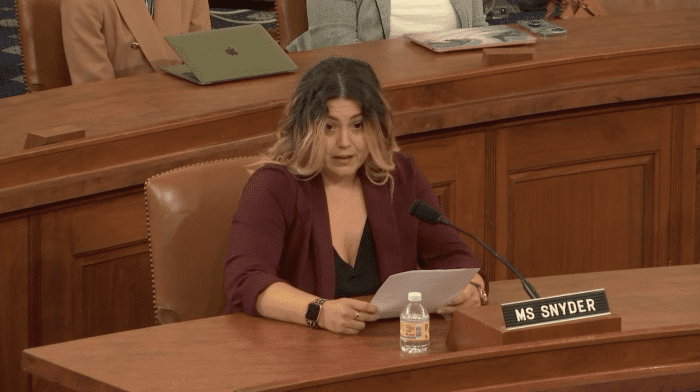
Tori Snyder, a single mother and business owner from Pittsburgh, testified before the House Ways and Means Committee on Wednesday, asking for federal investments in child care, paid leave and other areas.
HOUSE WAYS AND MEANS COMMITTEE/YOUTUBE

The economy is failing American women.


That’s the message multiple speakers conveyed — sometimes through tears — to the House Ways and Means Committee during a hearing Wednesday, decrying what they described as the country’s lack of paid leave, its broken care economy and rising costs. In his opening statement, Chairman Richard Neal, a Democrat from Massachusetts, said that, although the COVID-19 pandemic did not create the circumstances that force many women to juggle their careers, care for loved ones and financial instability, it certainly made all of those things worse.

“We are so burned out, exhausted, overworked, and overtired,” Tori Snyder, a single mother to a 4-year-old boy and small-business owner in Pittsburgh, as well as a member of the advocacy group MomsRising, told the legislators. “We’re struggling even more now because it’s so expensive to feed our children. I hope you will invest in the care and the care infrastructure working families need with paid leave for all, affordable childcare, home and community-based services and coverages that address all of our healthcare needs.”

While women’s participation in the labor force is increasing after dropping off earlier in the pandemic, there were still 656,000 fewer women working in May 2022 compared to February 2020, just before COVID-19 hit the U.S., according to the National Women’s Law Center. What’s more, many women who overcame mass school closures, layoffs, and child-care shortages to return to work are left without the same pandemic-era benefits that had once helped them scrape by, since the enhanced child tax credit, a federally mandated paid-leave program, and expanded unemployment benefits have all since expired, despite an increased cost of living.

‘My daughter is almost 2, and I’d like to put her in daycare. But the dangers of COVID still persist, and everything is so expensive.’— Nija Phelps of Milford, Conn.

Nija Phelps of Milford, Conn., said that while her family desired comprehensive paid leave back in 2014, when she and her husband had to quit their jobs to care for her mother-in-law, the need has only increased since then. She was furloughed due to the pandemic in 2020, when she was pregnant with her first child. Her husband was only able to take six weeks of paid leave to care for their newborn, and going back to to work meant potentially exposing himself, the baby and Phelps’s mother-in-law to COVID-19. But their family didn’t really have a choice.

“We had to do what we had to do to keep his job,” Phelps said. “Now my husband has lost his job, and I’m only back to work one day every other week, down from three to four days a week. We’re in a state of constantly being on guard and trying to prepare for whatever comes next, and still stay on top of our finances and caring for our family. My daughter is almost 2, and I’d like to put her in daycare. But the dangers of COVID still persist, and everything is so expensive.”

The expanded unemployment benefits and child-tax credit were a “lifeline,” Phelps said. Now that they’re gone, Phelps’ family is dipping into their retirement savings.

‘I struggled to pay rent, put gas in my car, buy groceries, and pay for my mom’s medications.’— Donna Price of Cleveland, Ohio

Donna Price of Cleveland had a similar story of making tough choices during the pandemic. She cares for her 18-year-old autistic son and her disabled mother, on top of being a nurse. Her son’s mental health has suffered during the pandemic, and Price said that she had to take eight weeks off without pay to supervise him early last year, when his school and care program went fully remote due to a surge in the virus.

“I struggled to pay rent, put gas in my car, buy groceries, and pay for my mom’s medications,” Price, who is also a member of MomsRising, said. “I was facing $2,000 in unpaid gas bills and $800 in unpaid electric bills. We only made it through with help from my older son and my daughter, who’s a social worker and a police officer. Otherwise, I don’t know what I would’ve done.”

Eventually, Price had to leave her job at a hospital and take a contract nurse position so she could have more flexibility and better care for her son and mother — even though that meant lower pay and fewer benefits.

“I know so many working women can relate to my story,” Price said. “As moms, essential workers, and caregivers for elderly parents, we go out every day and do what we need to do to make sure everyone else is cared for. But sometimes it feels like no one is making sure we’re okay. There are days when I just want to know that my health and my financial and emotional well-being matter. That my elected leaders have my back.”

‘My business and other businesses are struggling with the effects of inflation, and I am concerned about the prospects for a recession next year.’— Alicia Huey, National Association of Home Builders

Legislators were divided on how to solve the problem, though. Democrats continued to push the universal paid family and medical leave proposal promoted in President Joe Biden’s Build Back Better agenda, while Republicans railed against “Bidenflation” and said Democrats weren’t open to negotiating with them. They instead voiced their support for a bill that would give incentives to employers who offered such benefits to their workers.

“Under President Biden, working women haven’t had it this bad in decades,” Republican Rep. Kevin Brady, the ranking member on the House Ways and Means Committee, said. “And with a looming recession, real wages shrinking, and even higher gas prices ahead, it looks to be getting worse.”

One witness testified in support of the Republican plan: Alicia Huey, the first vice chairman of the board for the National Association of Home Builders and a custom home builder, remodeler, and developer in Birmingham, Ala. She told the legislators that the trade group “strongly believes Congress must pursue flexible, targeted, and incentive-based strategies” for child care and paid leave. She noted, too, that the costly building materials, inflation, and labor constraints are making housing more expensive, which is similarly burdening families and needs equal attention.

“My business and other businesses are struggling with the effects of inflation, and I am concerned about the prospects for a recession next year,” Huey said. “Solving these issues in a bipartisan manner should be a matter of urgency. Critical issues like paid leave and affordable childcare, alongside affordable housing, need solutions with an immediate impact to help working families and small businesses.”

But Democrats were emphatic on universal paid family and medical leave being the best answer, and some grew frustrated with Republicans repeatedly blaming Democrats for rising gas prices and inflation during the hearing.

“It must feel a little odd for you to being here, giving testimony about your personal experiences, and be told, essentially, that the problem is really Biden, gasoline, and inflation,” Rep. John Larson, a Connecticut Democrat, said, addressing the witnesses. “Apparently, what you had to say didn’t break through, or there’s a principle going on here that says government mandates are horrific, we should avoid these at all costs.”
Thousands protest 'bulldozer justice' against Indian Muslims

BISWAJEET BANERJEE
Wed, June 15, 2022

LUCKNOW, India (AP) — Protests have been erupting in many Indian cities to condemn the demolition of homes and businesses belonging to Muslims, in what critics call a growing pattern of “bulldozer justice” aimed at punishing activists from the minority group.

On Sunday, authorities in the northern state of Uttar Pradesh rode on a bulldozer to raze the home of Javed Ahmad, who they said was connected to Muslim religious protests that turned violent last Friday. Police arrested Ahmad on Saturday.

The protests were sparked by derogatory remarks about Islam and the Prophet Muhammed made recently by two spokespeople of Prime Minister Narendra Modi’s Hindu nationalist Bharatiya Janata Party. The party suspended one of them and expelled the other, issuing a rare statement saying it “strongly denounces insults of any religious personalities.”

Bulldozers also crushed the properties of protesters in two other cities in Uttar Pradesh last week. In April, authorities in New Delhi used bulldozers to destroy Muslim-owned shops days after communal violence in which dozens were arrested. Similar incidents have been reported in other states.

“The demolitions are a gross violation of constitutional norms and ethics,” Nilanjan Mukhopadhyay, a specialist on Hindu nationalist politics and biographer of Modi, told The Associated Press on Wednesday.

On Tuesday, 12 prominent people, including former Supreme Court and High Court judges and lawyers, sent a letter to India’s chief justice urging him to hold a hearing on the demolitions, calling them illegal and “a form of collective extrajudicial punishment.” They accused the Uttar Pradesh government of suppressing dissent by using violence against protesters.

Two people who were protesting the remarks by the governing party spokespeople died of gunshot injuries in clashes with police on Friday in Ranchi, the capital of Jharkhand state.

Several Muslim-majority countries have also criticized the remarks, and protesters in Bangladesh called for a boycott of Indian products, leaving India's government scrambling to contain the diplomatic backlash.

Violence has been increasing against Muslims by Hindu nationalists emboldened by Modi’s regular silence on such attacks since he was elected prime minister in 2014.

Muslims have been targeted for their food or clothing, or over inter-religious marriages. The rights groups Amnesty International and Human Rights Watch have accused Modi’s party of looking the other way and sometimes enabling hate speech against Muslims, who comprise 14% of India’s 1.4 billion people, but are the second-largest Muslim population of any nation. Modi’s party denies the accusations.

Over the weekend, Uttar Pradesh’s chief minister, Yogi Adityanath, a Hindu monk-turned-governing party politician, told state authorities to demolish illegal buildings belonging to people linked to Friday's protests, in which more than 300 people were arrested.

On Sunday, bulldozers turned Ahmad’s house into rubble after authorities claimed it was built illegally, which Ahmad’s lawyer and family denied.

“If the construction was illegal, why was no action taken earlier? Why did the government wait until the riot took place?” asked Shaukat Ali of the All India Majlis-e-Ittehadul Muslimeen, a political party.

Officials say the demolitions only target illegal buildings, but rights groups and critics say they are an attempt to harass and marginalize Muslims, pointing to a wave of rising religious polarization under Modi’s rule.

On Saturday, Adityanath’s media adviser tweeted a photo of a bulldozer and wrote, “To the rioters, remember every Friday is followed by a Saturday,” suggesting there would be repercussions.

His words sparked an immediate reaction, with many calling the demolitions a clear punishment.

“It was a threat that if you raise your voice against the government or the BJP, your house will be demolished,” said Lenin Raghuvandhi of the People’s Vigilance Committee on Human Rights.

___

Associated Press writer Ashok Sharma in New Delhi contributed to this report.
French arms firm busts sanctions to help Russia build weapons


Wed, June 15, 2022


It was the BMD-4 with the Thales-made Catherine FC thermal imaging camera that took part in the shelling of Ukrainian civilian cars in Bucha.

I saw a post by volunteers on a social network, and together with my fellow lawyers we launched our own probe into the French manufacturer's involvement in Russia's military aggression against Ukraine.
Oleksandr Dubilet,
Chairman of the Board of CB "PrivatBank" (1997-2016), Financial and banking expert

So-called exemplary company

In France, Thales is not just a public company. There are three arguments to support this assertion.

1) The company specializes in the manufacture of systems for military, aerospace and maritime purposes


2) The company's shares are listed on the Paris Stock Exchange

3) It is not so much the private shareholder (the Dassault family with its 24.62% share) that is important, but the French government and its 25.67% share. Simply put, a company that is more than a quarter controlled by the French government, exports components that kill Ukrainians.

Thales

According to open sources, Thales supplied Catherine FC thermal imaging cameras to Russia, which were used to manufacture the Essa, Plissa and Sosna-U thermal sighting systems. They enhance the combat capabilities of modified Russian T-80, T-90, T-72 tanks and other military vehicles.

Conscious violators

After photo and video evidence of "fruitful" cooperation between Thales and Russia appeared on the Internet thanks to volunteers, my fellow lawyers and I have found real evidence that Thales supplied these combat components after the imposition of sanctions related to Russia's annexation of the Crimea.

Since this model of equipment was created in 2016, foreign manufacturers had to supply components at least a year earlier. Consequently, Thales sold military goods and technologies to Russia after the introduction of the first wave of sanctions (Council Regulation (EU) No. 833/2014 of July 31, 2014).


Catherine FC

Are these sanctions significant? Undoubtedly. In 2015, Thales failed to sign a $1.3 billion deal to supply two helicopter carriers to Russia. Instead, both ships were sold to Egypt.

I will also talk about a lesser-known episode of illegal but profitable cooperation between Thales and the aggressor state. The French company Sofradir, a subsidiary company of Thales, specializes in the manufacture of infrared detectors for military, space and commercial use.

According to NGO Disclose, in 2016, the company supplied 83 infrared detectors (S24) and 258 infrared detectors (S02) to Russia's CJSC TPK Linkos.

What is Linkos? According to the Arms of Russia information agency, Linkos specializes in the development and production of computers and communications equipment, optical, optical and electronic and microwave systems and complexes, night vision equipment and quantum electronics products.

In addition, Sofradir supplied 138 infrared detectors (S10) to JSC NPO GIPO, the Russian state institute of applied optics, which develops and manufactures optical and electronic systems. Since 2008, GIPO has been a part of the Rostekhnologii state corporation.

Mutually beneficial cooperation between this subsidiary of Thales and Russian military institutions is evidenced by two decisions (documents 1 and 2) of the 2016 Inter-ministerial Commission for the Study of Military Exports (CIEMMG) of France. According to the documents found by our team, French officials allowed Sofradir to supply military technology and goods despite the sanctions.

In 2019, Sofradir and Ulis merged and created a new company – Lynred. The well-known Thales is a 50% shareholder in Lynred.

The conclusion is simple: Sofradir actually misled the Inter-ministerial Commission by concluding an additional agreement "to fulfill the contract." The additional agreement extended the contract and aimed at circumventing sanctions for further supplies of military technology to Russia.

I and my colleagues found information that proves that Thales violated the sanctions in both the first (thermal imaging cameras) and the second (infrared detectors, through the subsidiary Sofradir) episodes, in the public domain (!). In my opinion, this illustrates the perception of sanctions very well. That is, the above French companies did not even bother to conceal evidence of their sanctions violations.

Demanding action

An EU Council decision bans the supply of dual-use goods and technology to Russia. However, you may be interested to know that this document has a loophole that reads as follows: the authorized state body may issue a license to supply such goods under contracts concluded before August 1, 2014.

And the French company Thales took full advantage of it, deliberately extending the old contracts through additional agreements and actually supplying military goods in 2015-2018.

My team of lawyers is working on each of two episodes of criminal cooperation between Thales and its subsidiary Sofradir with Russia. We have sent statements to the EU Council as the body that imposed the sanctions, as well as informing the law enforcement agencies, in particular, the French prosecutor's office. Our goal is to open criminal cases based on these statements.

Having revealed the corporate structure of Thales and identified the shareholders (in particular, the French government), we plan to address the shareholders of this company, French banks, secondary monitoring bodies and stock exchanges and demand that they take appropriate action against sanctions violators.

As in the case of our legal "hunt" for the Belgian company New Lachaussee, which supplied ammunition equipment for the Kalashnikov concern, the purpose of international lawsuits against Thales is to punish violators of sanctions and show the toxicity of any cooperation with the aggressor state.

At a time when Ukrainians are dying for European values, Europe must be completely on our side.
Patsy Mink, first woman of color elected to Congress, to be honored with portrait in US Capitol


Ryan General
Tue, June 14, 2022

The late Democratic legislator Patsy Mink (D, HI-2) will be honored for her historic work in Congress with the unveiling of her portrait in the U.S. Capitol later this month.

Mink became the first woman of color and the first Asian-American woman in Congress after winning a seat in the U.S. House of Representatives in 1964. She was also the first woman elected to Congress from the state of Hawaii.

On June 23, Mink's portrait will be unveiled during a ceremony spearheaded by House Speaker Nancy Pelosi (D, CA-12). Her portrait will be part of a series that recognizes former members of Congress who made history.

She initially served to represent Hawaii's at-large congressional district from 1965 to 1977 and then the state’s second congressional district from 1990 until her death in 2002.

During her early years in Congress, Mink introduced important initiatives such as the first federal child-care bill under the Early Childhood Education Act and worked on the Elementary and Secondary Education Act of 1965.

Mink also authored the early legislative draft for Title IX of the Education Amendments of 1972, which bans sex discrimination in education — including sports — in federally funded programs. Following her death in 2002, the federal civil rights law was renamed the Patsy T. Mink Equal Opportunity in Education Act in her honor.

Her last term in office was similarly focused on pushing for legislation with importance to women, children, immigrants and minorities.

In 2014, then-President Barack Obama posthumously awarded Mink with the Presidential Medal of Freedom.

“Every girl in Little League, every woman playing college sports and every parent, including Michelle and myself, who watches their daughter on a field or in the classroom, is forever grateful to the late Patsy Takemoto Mink,’’ Obama said during the awarding ceremony.

Rep. Judy Chu (D, CA-27), chairwoman of the Congressional Asian Pacific American Caucus, said they pushed for the unveiling of Mink’s portrait in Congress “so that everybody who walks down the halls of the Capitol can see that an Asian American woman was a prominent leader who influenced this country to be better.”

According to Chu, the portrait and a proposal to build a national museum of Asian Pacific American history and culture would allow for a better appreciation of the contributions of Asian Americans.

Jean Sinzdak, associate director of the Center for American Women and Politics in the Eagleton Institute of Politics at Rutgers University, also highlighted the significance of Mink’s portrait.

“It's important to showcase the Asian American leaders that have played a vital role in our country's culture and policymaking,’’ she said.

Featured Image via Women Make Movies
Marjorie Taylor Greene Argues Global Warming Is 'Actually Healthy For Us'

Josephine Harvey
Tue, June 14, 2022,

Rep. Marjorie Taylor Greene (R-Ga.) apparently believes in global warming ― but she’s not concerned, because in her opinion, it’s “actually healthy for us.”

“The temperature tracking is from the 1800s. We’ve already warmed 1 degree Celsius and do you know what’s happened since then?” the extremist Republican said during an appearance on the Right Side Broadcasting Network on Monday.

“We have had more food grown since then, which feeds people. We are able to producing fossil fuels, keeps people’s houses warm in the winter. That saves people’s lives, people die in the cold,” she said. “This earth warming, and carbon, is actually healthy for us. It helps feed people, it helps keep people alive.”

The comments came after RSBN host Brian Glenn complained that proponents of the Green New Deal want to “put all types of regulations on your vehicles and factories and things like that.” Greene advised him sarcastically that it’s because people think “carbon is bad.” She then attempted to refute that argument by explaining that plants need carbon to survive.

Greene, who is not a scientist and holds a Bachelor’s degree in Business Administration, was right in saying the earth’s surface temperature has risen by roughly 1 degree Celsius since the pre-industrial era.

It’s widely accepted science that global warming been brought on by rising carbon and greenhouse gas emissions, which trap the sun’s heat when they rise into the atmosphere. Emissions have been driven by human industrialization.

The rise in temperature is driving an increase in extreme weather events, shifting temperature extremes, intensifying heavy rainfall, droughts and other damaging climate extremes that are negatively impacting crop production and threatening global food security.

Things like using energy to heat or cool your home, or for agricultural processes, generate carbon emissions that contribute to global warming, not the other way around.

And yes, as any school-age biology student could tell you, plants do use carbon dioxide. This underscores the urgency to protect and restore ecosystems like forests and grasslands to help remove carbon emissions from the atmosphere.

Greene has previously argued that the climate “just changes” of its own accord.

“How much taxes and how much money did the people back in the ice age spend to warm up the earth?” she asked at a town hall in March 2018. “Maybe perhaps we live on a ball that rotates around the sun, that flies through the universe, and maybe our climate just changes. And I don’t think a whole lot of spending is going to do anything about it.”
ROFLMAO
North Korean defector says she's 'terrified’ of son's socialist 'indoctrination' in US public schools


Jane Nam
Wed, June 15, 2022

North Korean defector and human rights activist Yeonmi Park, 28, criticized what she described to be a “massive indoctrination coming from the left” in U.S. public schools.

In an interview with Fox News on June 15, Park detailed how she escaped North Korea at age 13 and was held captive in China by human traffickers, but said she still finds herself “fighting for freedom even in America.”

She explained that her son was being educated to “think like [a] socialist” and taught that socialism is “a good, benevolent system.”

“I never knew I was going to be waking up at night terrified [of] being in America,” she shared.

Park stated that socialism was a “playbook” for dictators and the elite to keep all of the power.

“The definition of socialism means giving all of the power to the government. They decide the means of production, they decide every aspect of our lives. And that’s how they are artificially fixing the outcomes,” she said.

“I mean, it’s [Adolf] Hitler’s youth, Mao’s youth and Kim Il Sung’s youth. They always go for young children because they have [not] lived their life enough to… have critical thinking skills,” she continued.

“And… big kills [who] want to seize power from the people, they always mobilize the youth. And that is the truth that [worries me that], as a parent myself, that I cannot protect my child right now in America.”

Park has appeared on Fox News on several occasions. Last year, she appeared to warn viewers of the “Marxist” parallels between cancel culture and the Kim Jong Un regime.

Park will also reportedly be releasing a book in 2023 titled “While Time Remains: A North Korean Defector’s Search for Freedom in America,” which will explore some of what she claims are similarities between the U.S. and North Korea, including speech censorship and demonization of groups for what Fox describes as “the purpose of exploiting power.”


As a human rights activist, Park has been featured in several major news outlets including Time and The New York Times, sharing her experiences of starvation and oppression in North Korea.

Her bestselling book, “In Order to Live: A North Korean Girl’s Journey to Freedom,” was published in 2016 and has nearly 12,000 reviews on Amazon, with some reviewers describing it as “life-changing.”