Thursday, June 16, 2022

Farmers in India fear irregular monsoon amid summer heat and drought

India's monsoon season has been slow to start this year. With intermittent rains and dry spells in some regions, many fear for their crops.
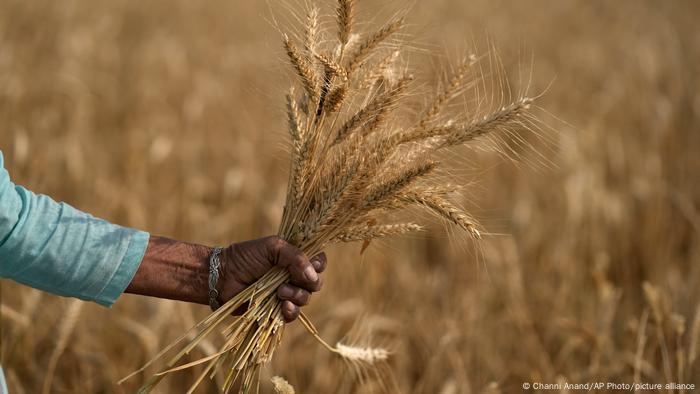
India is witnessing extreme heat waves and delayed rains

The timely onset of the monsoon season in India bodes well for the economy, especially for farmers whose land is irrigated by the annual southwest monsoon.

This monsoon provides a lifeline for about 60% of the country's net cultivated area and industries linked to it. However, experts fear that the monsoon may be unevenly distributed this year.

Although the first rush of monsoonal rains arrived in southern India last week, it has been far from normal, heightening fears that its progress over the northern region and the northwest could be erratic and, maybe, delayed.

According to Indian Meteorological Department (IMD) officials, the monsoon in Kerala state has been slow and weak, recording a 54% deficiency in rainfall in the first 10 days since the declared onset on May 29. 

The IMD considers a range of factors, such as rainfall, wind field — or the pattern of the winds — and outgoing longwave radiation (OLR), before declaring the onset of monsoon.

Skymet Weather, which provides weather forecasting services, said that although the monsoon arrived over Kerala before its usual time,  its onset has been subdued.

"The monsoon has covered parts of Karnataka and Tamil Nadu well before the expected time but farmers must wait for at least the next eight to 10 days for the typical monsoon rains to arrive, which will help in sowing the crops," Skymet said.

How do cyclones propel monsoons?

For the past two years, multiple cyclones in late May and early June helped pull the monsoon winds over the Indian subcontinent, causing an early onset of the weather and even floods in many parts of the country.

Meanwhile, Cyclone Asani dissolved in mid-May of this year and helped the monsoon move into the Andaman Sea but did not pull it further out.

"At this point, Kerala has a below-normal rainfall based on the long-range forecast in May," D S Pai, the director of Institute of Climate Change Studies, told DW.

"The cyclonic wave needs to strengthen further. If a low-pressure area forms over the Bay of Bengal in the next few days, then it will propel the monsoon," added Pai.

Those views are echoed by Roxy Mathew Koll, a climate scientist at the Indian Institute of Tropical Meteorology. Koll said that a late and sluggish southwestern monsoon in the first two months could mean dry spells, especially in many regions in the north.

"A slow or delayed progress of the monsoon could aggravate the water and food security of those regions in the north and northwest regions of the country that have already been affected by a rain deficit and heatwaves," Koll told DW.

"The monsoon has not been moving inland. Therefore its progress could be delayed. A lot will depend on its progress and, more importantly, uniform distribution across the country in the next two months," he added.

India gets about 70% of its annual rainfall in the June through September monsoon season, making it crucial for an estimated 260 million farmers.

Poor monsoon can impact economy

The vast majority of Indians — about 800 million people — live in villages and depend on agriculture, which accounts for about 15% of the nation's gross domestic product (GDP). A failed monsoon can have a rippling effect on economic growth.

Farmers typically begin preparing their fields for sowing within the first week of June, but those operations may be delayed.

The planting of key summer crops like rice, sugar cane, pulses and oilseeds begins with the arrival of monsoon rains in June.

Summer crops account for almost half of India's food output, and a delayed or poor monsoon means supply issues and acceleration in food inflation, a key metric which influences the Reserve Bank of India's decision on interest rates.

A good monsoon season could help reduce inflation, which jumped to an eight-year high in April and prompted the central bank to raise lending rates.

Many hope the rains will provide relief from the intense summer heat that has hit the wheat crop and triggered a power crisis as temperatures jumped to record highs in northern India.

"The sluggish progress of the monsoon is certainly a concerning matter at the moment. A very large area of India, which includes northern, northwestern and western parts, has hardly received any pre-monsoon rain since June 1," Akshay Deoras, a meteorologist and researcher, told DW.

Deoras, who has accurately forecast several high-impact weather events, including deadly tropical cyclones, added that below-average rainfall is expected across most regions until June 20.

After two deficient monsoons in 2014 and 2015, India saw six years of normal rainfall since 2016.

IMD officials have, however, sought to downplay fears of a delayed or erratic monsoon by saying that the country is likely to see a long-term increase in rainfall this year.

"The monsoon is now reviving and rainfall activities in most of India will increase from the week commencing in mid-June. Conditions are favorable for the monsoon's advance," said R K Jenamani, IMD senior scientist.

Edited by: Leah Carter

Will Spain face a gas crisis as Western Sahara conflict flares up?

Madrid's U-turn on its formerly neutral stance on the conflict has enraged Algeria. Trade relations have been frozen unilaterally and a cut in gas supplies to Europe could be in the pipeline.

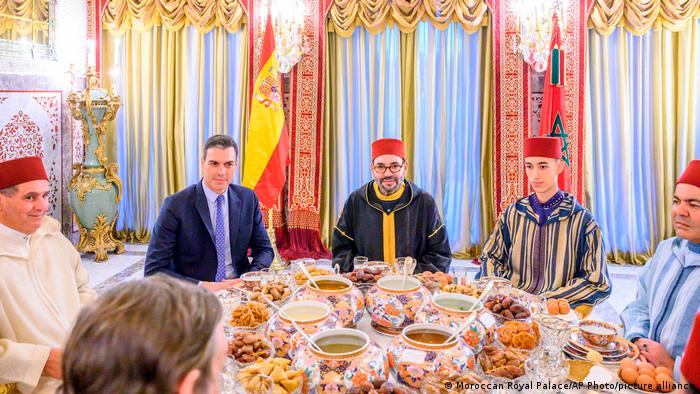
The new alliance forged by Pedro Sanchez and King Mohammad VI is viewed with 

suspicion in North Africa

Perhaps it was by accident, but the coincidence was nevertheless striking. On the very same day Algeria suspended its friendship treaty with Spain on June 8, some 113 African refugees landed on the shores of the Spanish holiday island of Mallorca. The number of refugees, who had set sail from Algeria, was the biggest registered in a single day on the island this year.

Immediately, the government in Spain started wondering whether Algeria was now also resorting to illegal migration as a political weapon to sort out its differences with the EU member state. A similar tactic was applied by Algeria's neighbor Morocco last year in May, when the North African state opened its borders to allow about 6,000 refugees to swim to the Spanish exclave of Ceuta.

Refugees reached Ceuta by swimming or by walking at low tide, some used inflatable swimming rings

High stakes for the EU

However, there's more at stake in the spat between Spain and Algeria than renewed wrangling over migration policy. In the European Union, concern is mounting that the bilateral dispute might provoke a gas supply crisis on its southern periphery. And this at a time, when the EU is desperately exploring alternative gas resources to cut its huge dependency on supplies from Russia.

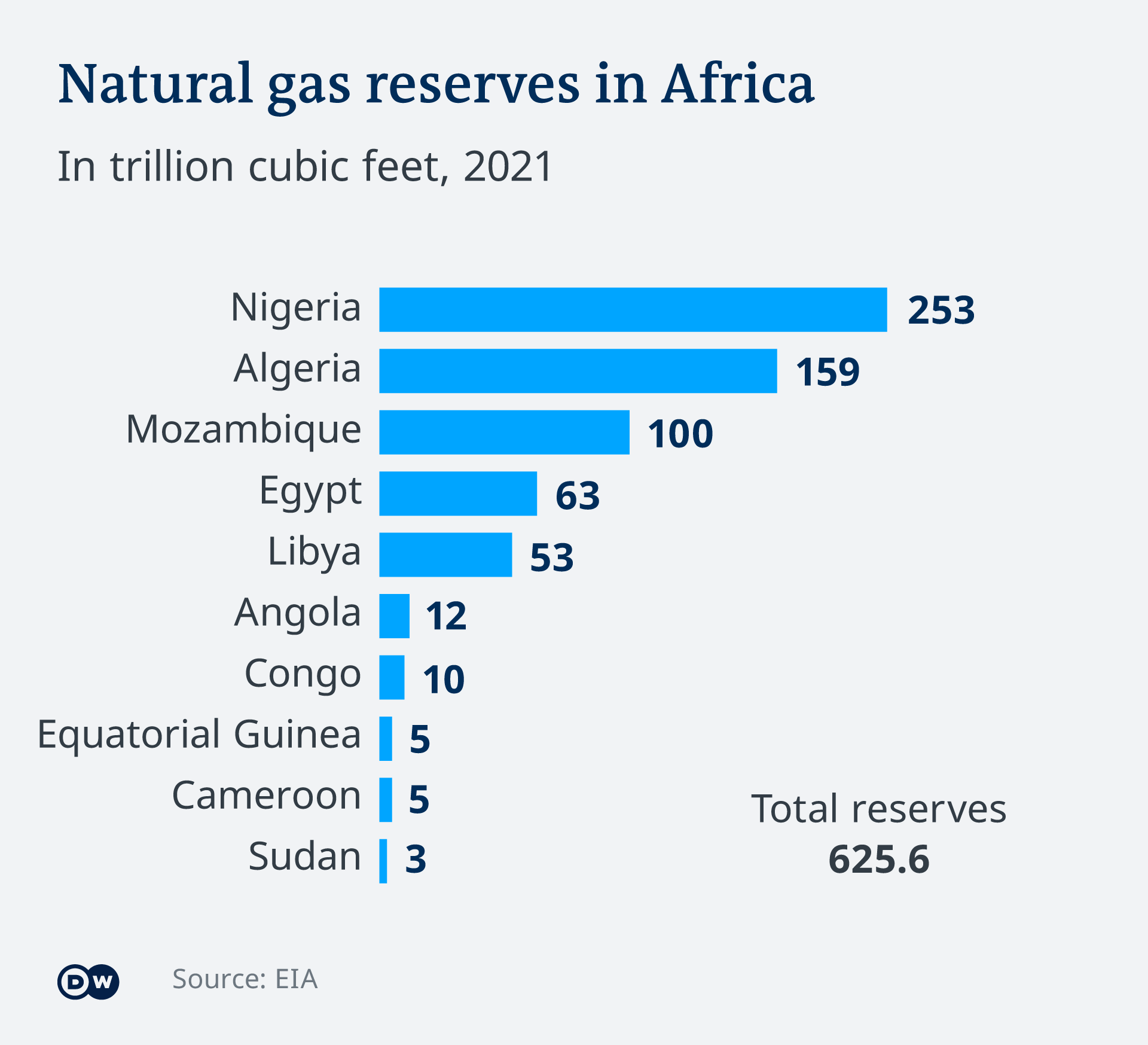
Algeria is Spain's second-biggest supplier of natural gas and covers about one-quarter of Spanish needs. But the North African country is important for the whole of the EU, supplying a total of around 11% of the bloc's overall gas demand.

Western diplomats have repeatedly warned that the authoritarian government of President Abdelmadjid Tebboune in Algiers could pose a security risk to EU energy policy by using gas as a political weapon, similar to Moscow's current efforts to counter EU sanctions. 

Latest developments have shown that the concerns in Brussels are not unfounded. In November 2021, Algiers shut off one pipe of the Maghreb-Europe Pipeline (MEG) which links Algerian gas fields via Morocco with Spanish and Portuguese gas grids. Annually, about 12 billion cubic meters of natural gas flow through the dual pipeline, with Morocco also benefiting from a gas-for-transit deal.

The never-ending dispute over Western Sahara

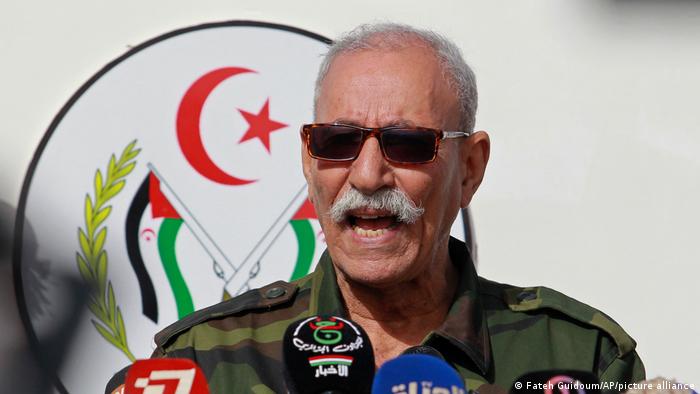
What's behind the disruptions of gas flows from North Africa is the ongoing dispute over Western Sahara  — a territory occupied by Spain until 1975 when Morocco annexed it. Since then, the desert region has been claimed by Morocco and the Indigenous Sahrawi family, led by the Polisario Front and backed by Algeria. Polisario is fighting for an independence referendum and has the support of the United Nations.

Until three months ago, Spain had remained neutral in the political row regarding its former colony. But in March, the Spanish government led by Socialist Pedro Sanchez made a surprise policy U-turn. In a letter to King Mohammad VI of Morocco, Sanchez announced his support for limited autonomy under Moroccan sovereignty, calling the plan "the most realistic basis" for Western Sahara.

In May 2021, Spain’s high court refused to arrest Polisario leader Brahim Ghali who was being treated for COVID in Madrid

Quite naturally, Rabat applauded, while Algiers fumed. In retaliation to the Spanish decision, Algerian President Tebboune recalled his ambassador to Madrid and suspended an agreement for the repatriation of thousands of Algerian refugees in Europe. In addition, the state-owned gas company Sonatrach said Spain would now have to pay more for Algerian gas.

Is reconciliation possible?

A few days ago, President Tebboune chose to escalate the rift by suspending a 20-year-old friendship treaty with Spain. Moreover, he threatened to freeze trade between the two countries, but refrained from cutting gas supplies altogether. He argued that the Spanish decision was a "violation of international law" and that the illegal occupation of Western Sahara by Morocco "cannot be tolerated."

Reconciliation with Madrid was only possible, Tebboune added, if Spain returned to international law and acknowledged the people of Western Sahara's right to self-determination.

Madrid's policy change not only plunged the Sanchez government into a major dilemma, but is likely to create a fresh conflict on Europe's southern periphery. This comes at a time when Europe's gas conflict with Russia is worsening, with a "new frontline emerging in the South," as the influential Spanish newspaper El Pais wrote recently.

Meanwhile, the European Commission has stepped into the fray, warning Algiers against imposing an all-out Spanish trade blockade. The EU's executive arm threatened to push back with sanctions, which prompted President Tebboune to give in and announce that gas contracts with Spain and Europe would be honored. Even bilateral trade would continue without interruption, he said.

Nevertheless, a gas blockade remains the elephant in the room as the EU and Algeria seek to normalize relations again. Despite Russia's war in Ukraine, Algiers has remained a close ally of Moscow and has so far refrained from publicly denouncing the invasion. Russia's state-owned gas giant Gazprom is a major player in North African gas fields through its multiple stakes in various national operators.

When push comes to shove, nobody can say just how Russian President Vladimir Putin will use his strong leverage in the region.

This article was originally published in German.

 World Day Against Child Labor: Underage workers on the rise in Africa

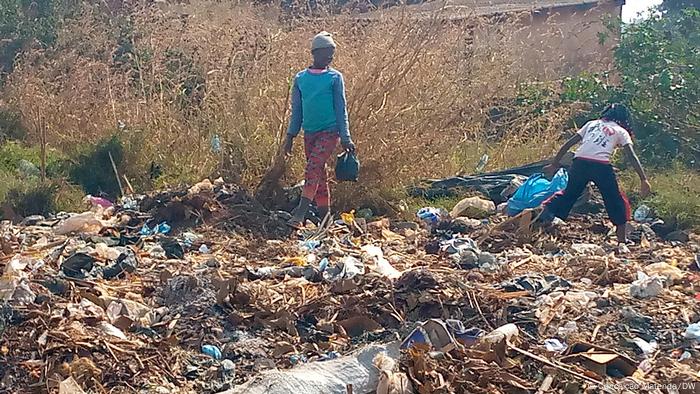
Child soldiers, underage gold miners, street vendors and cocoa plantation workers: After years of decline in child labor, the COVID-19 pandemic has pushed many African children back to work.

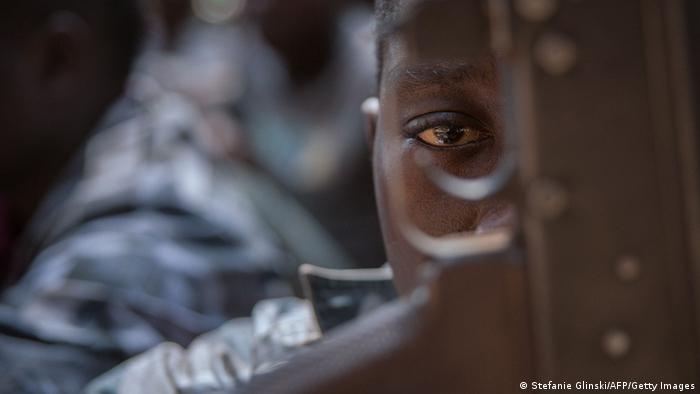
South Sudan is notoriously known for conscripting child soldiers

Cameroon's capital, Yaounde, is teeming with young vendors. Most of them are children between the ages of 7 and 14, and they occupy major intersections and markets — often working until late at night.

Kevin and Lea are among the hawkers selling their wares in Yaounde's populous neighborhoods during the school vacations. 

"I sell water to help my parents pay for my exercise books for the new school year," 8-year-old Kevin told DW.

"And I sell peanuts to pay for my school supplies," added 10-year-old Lea.

Chantal Zanga, a school principal, is concerned.

"I'm against the street trading that children do," said Zanga. "The child has a right to protection. If we send them to the streets, who will protect them?"

Many children lose valuable school time and spend much of their childhood working

Children lack protection

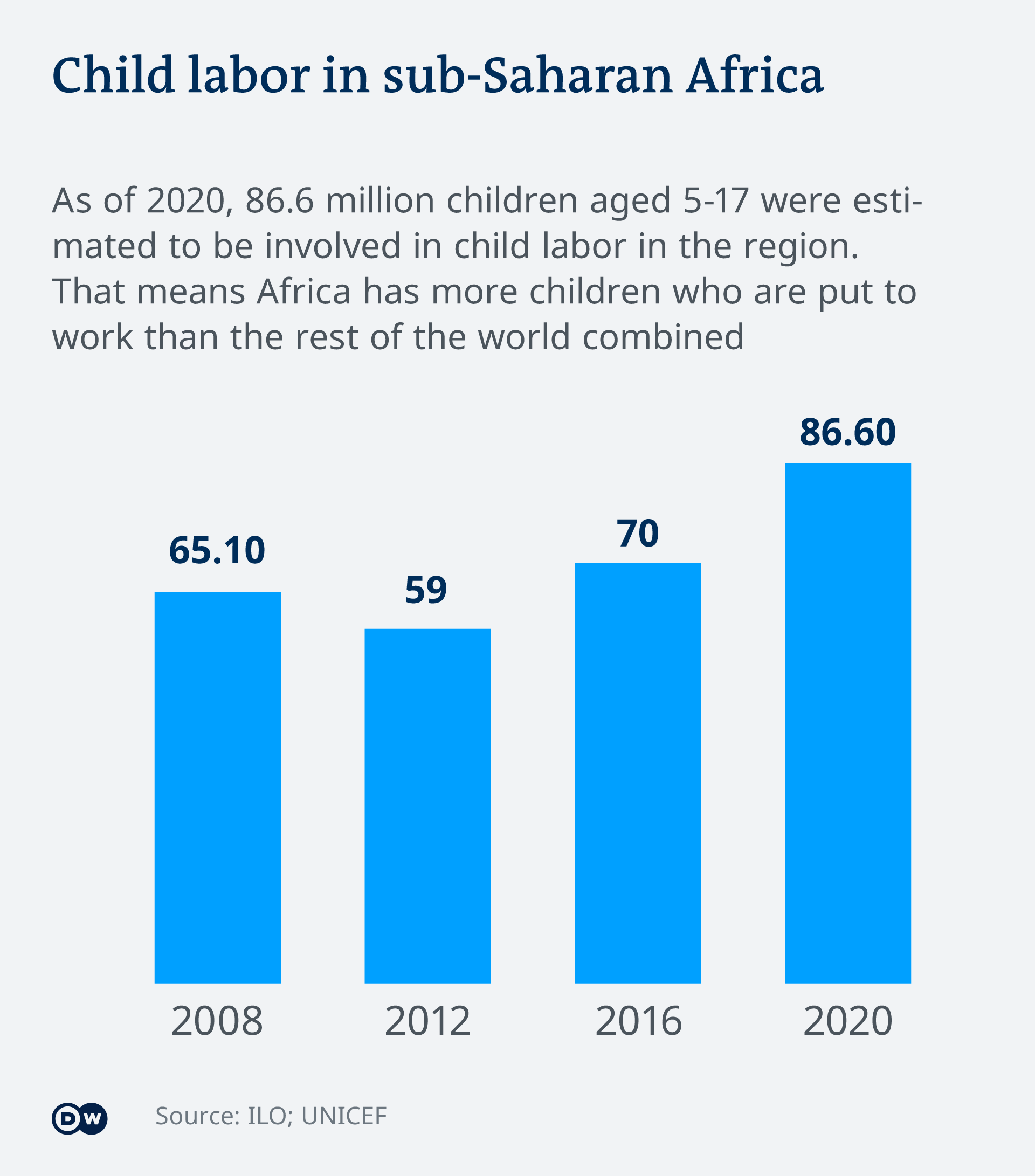
According to UNICEF, population growth, recurring crises, extreme poverty and inadequate social protection measures have led to an additional 17 million girls and boys engaging in child labor in sub-Saharan Africa over the past four years.

African countries are home to most of the world's 160 million working children.

The International Labor Organization estimates that more than 72 million children in sub-Saharan Africa — nearly one in five — are affected by child labor.

Experts estimate that millions more are at risk due to the coronavirus pandemic.

According to UNICEF, this marks the first time in 20 years that progress toward ending child labor has stalled.

It was against this backdrop that experts and child welfare activists met for the 5th World Conference on the Elimination of Child Labor in Durban, South Africa, last month, to discuss stricter measures for the protection of children. 

Danger on the streets

Distressed child street vendors face daily dangers from traffic, weather and sexual violence. Juliette Lemana, 12, sells safous, a fruit also known as a plum, and roasted plantains in Yaounde.

"Mama sent me to sell," she said, adding that recently a motorcycle ran over her classmate.

"Sometimes we come home at night and we can't find our way," the young girl told DW.

Cameroon's law prohibits child labor, according to Pauline Biyong, president of the League for the Education of Women and Children. 

"Cameroon has ratified many articles to protect children. This phenomenon should be marginal, but unfortunately we observe in our cities that children are used as labor by their parents. This is not normal," she said.

Poverty the leading cause of child exploitation

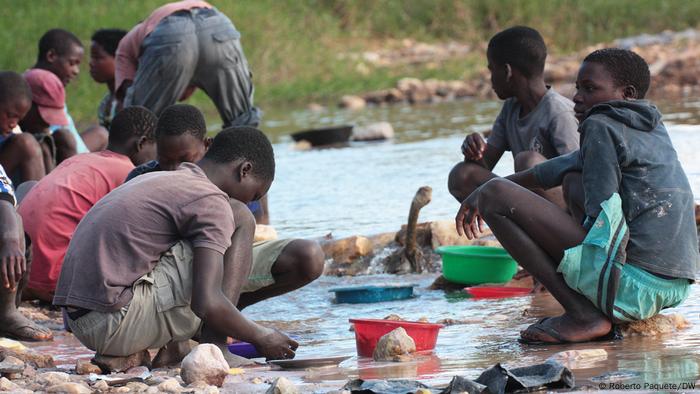
Economic hardship has forced many children to toil in the gold mines of Tanzania and neighboring Congo.

Others in countries such as South Sudan endanger their lives as child soldiers.

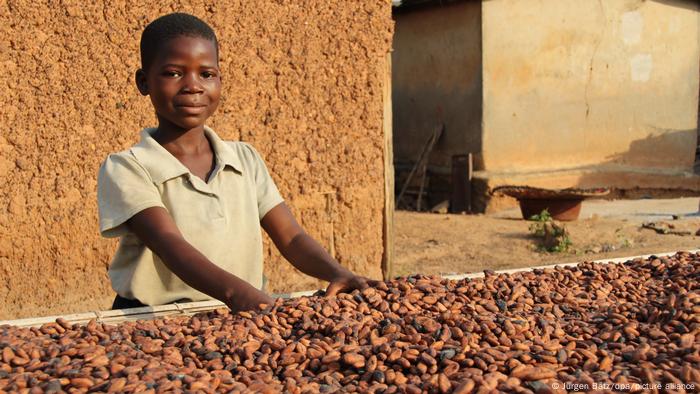
The International Labor Organization estimates that 2.1 million children work in cocoa production in Ivory Coast and Ghana. Around two-thirds of the cocoa produced worldwide comes from Africa.

Nestle is trying to polish its image in cocoa farming by building classrooms for children in cocoa-growing areas. In addition, the Swiss conglomerate has partnered with UNESCO to support women's literacy in the markets.

Despite all these efforts, children still work on some cocoa plantations. "The problem of child labor is real," Toussaint Luc N'Guessan, Nestle's program manager, told DW.

More and more children are working in West Africa's cocoa plantations

Parents abusing children

On the streets of Maiduguri in Nigeria's Borno State, many children work at the request of their parents.

"My father brought me here to learn tailoring," a young boy told DW. "Sometimes, I earn 150 nairas ($0.36/€0.35)."

Adamu Umar — who has 15 children — admitted to DW that he also makes his children work as street vendors to supplement the family income.

But their commitment to their families is costing them dearly, as aid organizations complain that children are denied schooling and education and thus a better life. 

According to the International Labor Organization, 43% of Nigerian children aged between 5 and 11 are child laborers, although international conventions prohibit this.

Poverty is often the cause of child labor in Africa

Severe penalties for parents

As part of the United Nations' Sustainable Development Goals, all 193 member states have pledged to take effective action to eliminate forced labor, modern slavery, human trafficking and the worst forms of child labor — including child soldiers — by 2025. 

But controls to stop the employment of minors are rare, according to children's rights organization Plan International.

"It is our responsibility as parents to take care of our children, not our children taking care of us," said Lucy Yunana, a children's rights activist in Nigeria.

Yunana called on the government to crack down on the menace with strict penalties.

She said any child caught peddling or begging should be arrested, including parents allowing their daughters to work as domestic help. Parents would then have to pay the fines.

Back in Cameroon, an extensive program called "useful vacations" was launched at the Center for the Advancement of Women and Families in Nkoldongo to keep children occupied.

But with little encouragement, some parents prefer to boost the family income by having their children work.

"The children have to learn to look for income; that's not bad," Gisele, a mother who sells safous at the Ekounou market, told DW. 

"They have nothing to do during the vacations, and it's normal that they help us prepare for the start of school, at least by buying notebooks. [Life in] Cameroon is hard."

This article was originally written in German.

EU court rules against Austria on migrants' child benefits

Austria says it has saved over €300 million since introducing a system which reduces child benefits for workers whose children live in poorer countries. But the European Court of Justice says this is unfair.


The adjustment mechanism also allows for the possibility of paying more to children in richer countries

Austria is committing "indirect discrimination" with its mechanism that allows the state to pay less in child benefits to certain migrant groups, the European Court of Justice (ECJ) said in a ruling on Thursday.

The mechanism adjusts the amount of child benefits depending on the country where the child lives. If the child is a resident of a country that is richer than Austria, the migrant worker would receive more support from the state. In turn, people whose children live in poorer EU states are entitled to less money.

With a "great majority" of migrant workers coming from poorer nations, the adjustment mechanism "constitutes indirect discrimination on grounds of nationality which, in any event, is not justified," according to ECJ judges.

The court is basing the decision on the fact that the mechanism is not taking into account differences in purchasing power within Austria itself. Therefore, it is against EU law on social security to make that same distinction on the level of EU nations, the judges said.

The ruling is sure to echo across the European Union, including the neighboring Germany where conservative politicians have repeatedly mulled adopting a similar mechanism.

What was the response from Austria?

Austria first introduced the mechanism in January 2019, under a conservative Cabinet led by Sebastian Kurz. It has since saved €307 million ($323 million) on child benefits, a government spokesman told the DPA news agency.

The country's Family Ministry said it would accept the verdict.

"Regardless, I maintain the view that adjusting family benefits for children living abroad would simply be fair," said Austrian Family Minister Susanne Raab.

The head of right-wing FPÖ party, Herbert Kickl, also criticized the verdict, saying that Austria should pay no child benefits for children living outside Austria.

dj/msh (dpa, AFP, epd)

Germany's new animal welfare label: Does it make a difference?

A mandatory label documenting how animals were reared and other new regulations are supposed to improve animal welfare. Is it a step toward more transparency for consumers — or just greenwashing?

A new mandatory label would initially indicate how pigs have been raised on farms

Germany's federal government has come up with a draft bill for new regulations regarding animal welfare. "I want good meat from Germany to be served in the future as well. In order to do so, our farms urgently need a perspective they can rely on," Food and Agriculture Minister Cem Özdemir said Tuesday when introducing his plans.

This perspective, he continued, includes four core elements: a mandatory label that specifies under which conditions animals were held; the renovation of stables and funding for such; adjustments in the building and licensing laws; and better regulations in the animal welfare law.

First up: New labels for pork products

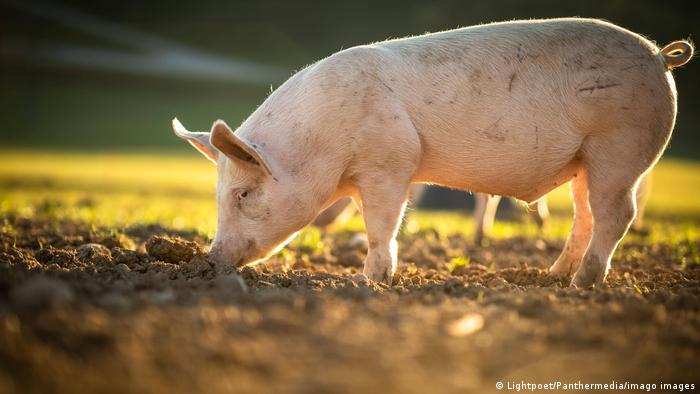
The label will first be put on pork products; other fresh meat products are to follow at a later stage. Whether they are sold online, at a farmer's market or in a supermarket, all products will be legally required to have a label that differentiates between five different methods of rearing: barn pen; barn pen and extra space; open-air barn pen; run and open land; and organic. 

Organic farming is the highest of the five rearing methods that will be displayed on the labels

While Germany already has pre-existing initiatives that label fresh meat products in four similar categories, this is the first time such labeling would be legally binding, Bernhard Krüsken, general secretary of the German Farmers' Association, explained. "And that makes Germany a pioneer in Europe in this field," he told DW.

The association was part of the Borchert-Commission, a coalition of politicians, scientists, agricultural associations and environmental NGOs that came up with the draft bill.

Draft bill leaves many questions unanswered

While Krüsken believes it's a step in the right direction, he also says it's not nearly enough. The draft bill doesn't yet include a date when the mandatory labeling on pork will kick in — or when other meat products like beef and poultry are to follow.

He says another shortcoming is that restaurants and wholesale dealers don't have to participate for now.

"It's important to label products for the consumers in order to advocate for higher standards and create a change in consumer behavior, but you have to do that across the board. The way the bill is drafted right now it is incomplete," he said. "It is just a niche solution."

Label won't make a difference, Foodwatch says

Some consumer organizations went one step further in their criticism, saying they don't believe the labels will make a difference at all.

"For us, it's just another label in the label jungle," Annemarie Botzki, agricultural expert at the German consumer organization Foodwatch, told DW.

"It's basically a marketing measure in order to give consumers a good conscience and keep their consumption going. And it's actually deceptive for the consumers," she said.

"They believe that a higher method of rearing means the animal is healthier. And that is often not the case. Just because an animal has a bit of a larger stable doesn't mean it's healthier. They are still forced to perform on an extremely high level that often makes them sick," she added.

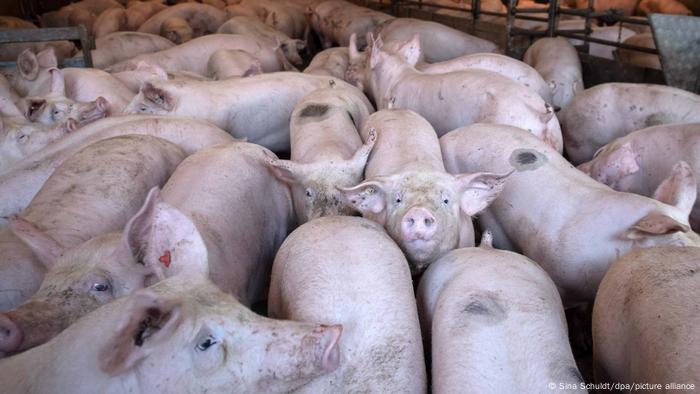
Every year, roughly 13.6 million pigs die in Germany before they are slaughtered

Sick animals at the slaughterhouse

A large fraction of animals, and especially pigs, that are brought to the slaughterhouse are in fact massively sick, Botzki said. Diseases range from pneumonia to inflamed organs, and these occur in any rearing method.

"They [the animals] are standing in their own excrement in the stables and are constantly breathing this in. They then develop ulcers," Botzki said. "We also see many behavioral problems, such as animals biting their ears and tails. All of that won't be changed by the labels."

Krüsken begs to differ. "The monitoring data from the slaughterhouse, we know, shows something else, namely that not every animal on the hook is sick," he said.

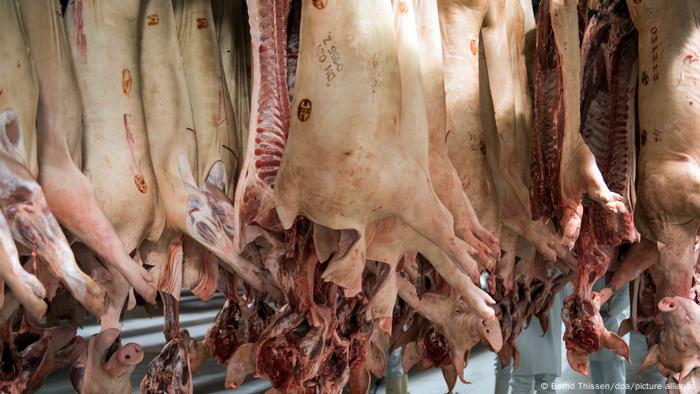
Every year, roughly 13.6 million pigs die in Germany before they are slaughtered. That's equivalent to 1 in 5 animals. A study by the veterinary school of Hanover shows that 13.2% of hogs and 11.6% of breeding pigs are expected to have experienced severe pain for a considerable time before they died.

And even animals who are held on organic farms are often sick. A study by the University of Kasselshows that more than half of dairy cows in organic farms have mastitis, a painful inflammation of the udder. And despite the disease, they are milked every day.

Punishing farmers who deliver sick animals?

That's why Foodwatch and other NGOs are asking for regular health checks on farms. Slaughterhouses collect and monitor data about the state animals were in when they were delivered to them, so they know which farmer delivers healthy animals and which farmer doesn't. 

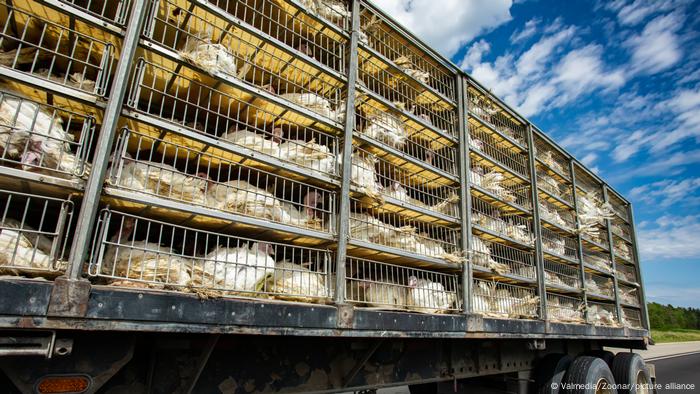
The EU alone transports 350 million mammals and 1 billion birds every year

"But the only thing that's currently being checked is whether the meat is edible in the end. The health of the animals isn't a concern at all. Even when a farmer consistently brings pigs to a slaughterhouse that are sick, have bitten themselves bloody, have abscesses and pneumonia, it has zero consequences for the farmer," Botzki said.

Krüsken's reply to this criticism is that at least the more established meat labels already regularly check the animals' health. "We have very clear rules on the hygiene of meat, and it's also not in the economic interest of farmers to have sick animals; they can't afford that," he said. 

But Foodwatch isn't satisified with this. In the future, it wants farmers who consistently deliver sick animals to be sanctioned and those who deliver healthy animals to be rewarded. On top of that, Botzki is demanding that the three lowest rearing methods shouldn't even be allowed on supermarket shelves at all.

Is mandatory organic farming the answer?

"Animal welfare is part of Germany's constitution, so we have a responsibility to make sure animals are doing okay. That's why organic farming should be the standard. Everything else is unlawful and just leaves the consumer with the agony of choice," she said.

The problem with that, according to Krüsken, is that a decision like this would need to be made EU-wide.

"If Germany dwindles its production down to the premium sector, then we have colleagues in Europe who will continue their production on low standards and whose products we will then see on our shelves," he said.


In Poland, opposition lawmakers criticize 'pregnancy register'

Poland's health minister recently signed an order that will oblige medics to register all pregnancies in Poland. Opponents fear it will lead to further clampdowns on abortions in the conservative country.

Poland already has some of the toughest laws on abortion in the EU

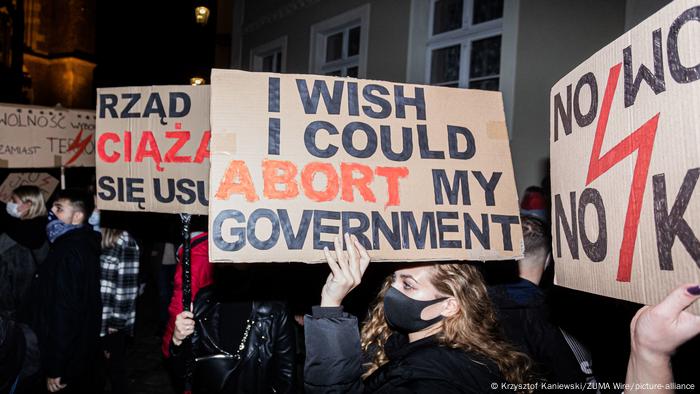
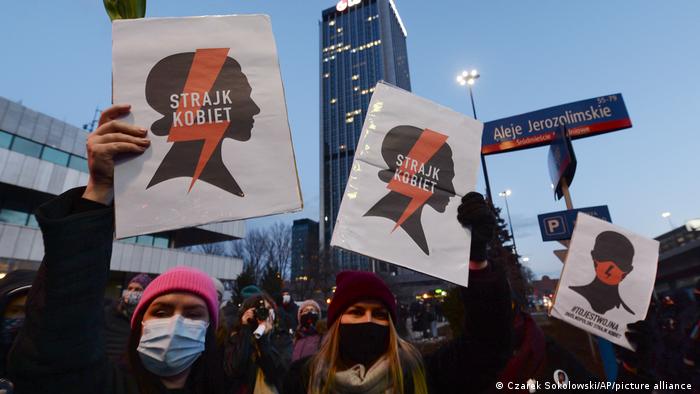
Polish abortion laws are already among the strictest in the European Union and a new measure to record all pregnancies in Poland will exacerbate the situation for women, say critics. Early this month, Polish Health Minister Adam Niedzielski signed an order that requires doctors to add more data to the country's Medical Information System, including whether a person is pregnant.

A first draft of the order had already surfaced in 2021, triggering fierce resistance. Opposition leader Donald Tusk, of the Civic Platform party, criticized the plan and said that the ruling Law and Justice, or PiS, party was obsessed with control and coercion.

Another member of Tusk's party, Tomasz Grodzki, who is also leader of the Polish Senate, wondered aloud whether one should compare the number of pregnancies with the number of births in order to track illegal abortions.

In the wake of such criticism, the draft vanished.

Measure comes into force in October

However, the idea did not. The United Right coalition, which includes PiS and the Solidarity Poland party and which has been in power since 2015, did not write off the idea.

Many Poles believe the Catholic Church has too much influence on the government

The Catholic Church, which has been instrumental in making the country's abortion laws some of the most restrictive in Europe, has a lot of influence on these conservative parties. Currently, a woman in Poland can only resort to abortion if her health or life is endangered or the pregnancy is the result of a rape. 

The order to register pregnancies is now set to come into force in mid-June, two weeks after its signing, but transmission of the data will only become mandatory from October 1. 

At a debate in the lower house of the Polish parliament, the Sejm, this week, Waldemar Kraska, a deputy health minister and PiS member, defended the measure. "We are not establishing a pregnancy register," he insisted. "We just want medical professionals to have the widest possible access to data about each individual patient so as to provide them with the best medical help and to avoid all possible harm." He also accused the opposition of "spreading lies."

"I don't think I have to explain to the doctors in this house how important it is to know whether a sick woman is pregnant or not," he said, explaining that the medical register had been expanded to include information about implants, blood types and allergies too.

Health ministry spokesman Wojciech Andrusiewicz even argued that the register had been expanded on the basis of recommendations from the European Commission. He said it would help to provide better protection to patients on foreign trips.

"Terrifying"

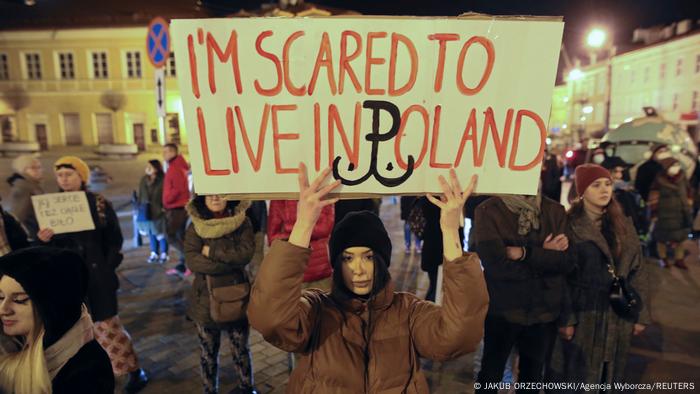
Many Polish women are thinking twice before having children

Politician Agnieszka Dziemianowicz-Bak from the Lewica, or Left, party, which requested the debate in the Sejm, said that "a pregnancy registry in a country with an almost complete ban on abortion is terrifying."

She argued that a registry could be used for "either good or bad purposes" but in the hands of a power that had made the lives of women hell, had restricted to right to legal abortion and refused contraception in cases of emergency, such an instrument could prove problematic.

Barbara Nowacka from the Civic Platform pointed out that young Polish women no longer wanted to have children because they were afraid of the state. She said that in her opinion, the registry would likely be used as "an instrument of intimidation."

The birthrate has been declining steadily in Poland. Only 23,000 children were born in February of this year, the lowest number in a single month since World War II.

Michal Gramatyka from opposition party, Poland 2050, said that such a register could make sense in a "normal" country but not in Poland. Referring to the growing powers of authorities in Poland, he asked a rhetorical question: "How can we believe that only doctors will have access to this information?"

In Thursday's edition of the left-liberal Gazeta Wyborcza daily newspaper, an editorial by local author, Katarzyna Wezyk, tried to reassure by pointing out that even after the measure came into force, women would not face punishment under any law in the event of a spontaneous abortion or an artificial termination of pregnancy.

"If this registry was designed as an instrument of pressure, then it has no teeth," she wrote. "Despite the efforts of anti-choice organizations, Poland is not a second El Salvador."

A woman who loses her child faces up to 30 years in jail in the Central American state. In Poland, a woman who undergoes an abortion cannot be punished under current laws. However, there ARE prison sentences of up to three years for those who perform an abortion illegally, assist in an illegal abortion or persuade a woman to undergo an abortion. 

This article was translated from German. 

Italy: Man undergoes first legally approved assisted suicide

A 44-year-old man who was paralyzed from the neck down was the first to be authorized for medically assisted suicide. Having no independence left him physically and mentally like a "boat drifting on the ocean," he said.


After a lengthy legal battle, an Italian man became the first in the country to be permitted to die by medically assisted suicide

A 44-year-old man died by medically assisted suicide in Italy on Thursday, in the first case of its kind in the country.

While it is technically against the law to help someone take their own life in Italy, the country's Constitutional Court ruled in 2019 that there could be certain exceptions — albeit under strict conditions.

Emotional last words

The man, identified after his death as Federico Carboni, passed away on Thursday after self-administering a lethal drug cocktail through a special machine.

His family and friends were with him when he passed.

Carboni's death was announced by the Luca Coscioni Association, a euthanasia campaign group which helped him push for his case with courts and health authorities.

The 44-year-old former truck driver, became paralyzed from the neck down 10 years ago following a traffic accident.

"I don't deny that I regret saying goodbye to life," he was quoted as saying prior to his death by the Luca Coscioni Association.

"I did everything I could to live as best as I could and try to make the most of my disability, but I am now at the end of my tether, both mentally and physically," Carboni said.

As a tetraplegic, he required 24-hour care, leaving him reliant on others and with no independence, he said — making him feel like a "boat drifting on the ocean."

"Now I am finally free to fly wherever I want," he said.

Long legal battle

In 2019, Italy's Supreme Court opened the path for assisted suicide in some cases. The issue had faced fierce opposition from the Roman Catholic Church and conservative parties.

The court outlined certain requirements that must be met in order to be considered for assisted suicide. For example, it must be clear that a patient cannot be cured, is dependent on life-sustaining means and that the patient is experiencing physically and mentally "intolerable" pain.

A patient must also be fully capable of making their own decisions and understanding the consequences.

Carboni received permission from an ethics committee last November, after overcoming initial refusal from health authorities and taking his case to court. He was the first person in the country to get legal approval.

He then had to raise €5,000 ($5,200) to cover the medication and special equipment needed to end his life. The Luca Coscioni Association launched a crowdfunding effort to raise money.

"We will continue to fight so that similar obstructionism and violations of the will of the sick are not repeated," the association said in a statement.

Assisted suicide has been permitted in Switzerland for decades. The practice is also legal in several other countries, including the Netherlands, Luxembourg, Spain and Belgium.

If you are suffering from serious emotional strain or suicidal thoughts, do not hesitate to seek professional help. You can find information on where to find such help, no matter where you live in the world, at this website: https://www.befrienders.org/

rs/msh (AP, AFP, dpa)

CRIMINAL CAPITALI$M

France: McDonald's to pay out over a billion to settle tax fraud case

Fast-food giant McDonald's will pay €1.25 billion to the French state to stop a tax fraud probe, a Paris court says. It is the second-biggest tax settlement in French history.

The payment by McDonald's French operation will avoid a legal case over tax evasion

Fast-food giant McDonald's is to pay €1.25 billion (roughly $1.3 billion) to the French state to avoid a legal case over tax evasion under an agreement from May that was approved on Thursday by a Paris court.

The settlement is made up of a €508 million fine and €737 million in back taxes.

"On condition of payment of the fine, the validation of the agreement means the end of the prosecution," chief financial prosecutor Jean-Francois Bohnert said in a statement.

He said that McDonald's would end up paying 2.5 times the amount of tax it had avoided.

What is McDonald's accused of?

McDonald's French operation has been accused of creating artificially low profits by paying licensing fees to its parent company in Luxembourg to reduce its tax bill.

Prosecutors had opened an official preliminary probe in 2016 after union officials reported the company for covering up tax evasion.

Reports at the time said the company was was suspected of defrauding the state of €75 million per year.

What has McDonald's said?

In a statement, McDonald's said it had already paid $2.2 billion in taxes over the period in question between 2009 and 2020.

"This agreement ends a tax case and a judicial investigation without acknowledging fault," the company said.

"McDonald's France is working proactively with French tax authorities to agree the current and future level of brand and knowhow fees," it said.

The largest-ever tax fine seen in France, €2.1 billion, was paid by aircraft builder Airbus in 2020 .

tj/msh (AFP, dpa, Reuters)