Friday, October 14, 2022

Opinion: Iran protests a struggle for self-determination

In their struggle for self-determination, Iranians are displaying a level of courage and cohesion we have not seen before. That's why the protests sparked by Jina Mahsa Amini's death are feminist, writes Katajun Amirpur.
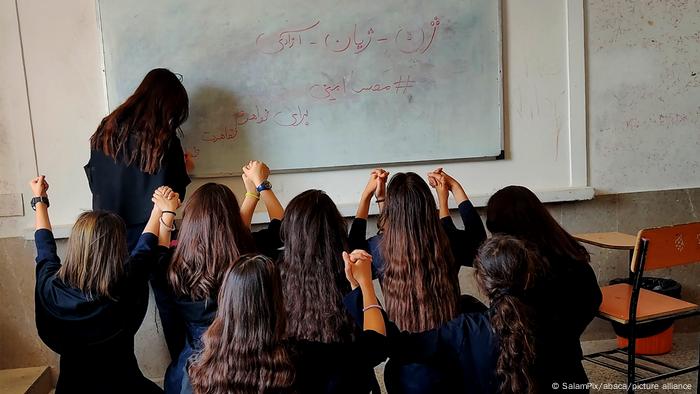
Students in a girls' school in Tehran remove their headscarves in protest against the

 Iranian government

The uprising in Iran is feminist. After all, feminism isn't about putting women in power instead of men. It is about self-determination for all, men and women alike. And today's protesters regard the enforced wearing of the hijab as a symbol of the state's refusal to grant them self-determination.

This right covers much more than "just" the right to dress as you like; it means the 50% of Iranians whose first language isn't Farsi being allowed to learn their first languages in schools; it means lesbians and gay men being able to freely express their sexual orientation; it means the Bahai being allowed to practice their religion — and so on.
Katajun Amirpur, a woman with shoulder-length hair wearing a dark top, smiles at the camera

Katajun Amirpur is a scholar of Islam and an expert on Iran. She lives and works in Cologne.

The artist Shervin Hajipour's song "Baraye" (meaning "for" or "because"), which has become a hymn of the uprising, summarizes a series of Twitter posts in which protesters give their reasons for taking to the streets: for dancing in the street; for the girl who wishes she was born a boy; for freedom, freedom, freedom. And there may well be as many men as women currently demonstrating for these things. In this respect, too, the videos that are now going viral are probably giving us a skewed picture.

But the hijab is symbolic of all this, and that is why young girls are now tearing off their headscarves. Ironically, the hijab has been used as the ultimate symbol for systemic change in Iran once before, during the revolution that took place in 1978/79. And it looks like it might be again.

A sledgehammer approach to modernization

The hijab is tightly bound up with the history of emancipation in Iran, in the sense of liberation from a paternalistic state — and not just since 1978, the year of the last Iranian revolution of the 20th century: Reza Shah Pahlavi banned women from wearing it in 1936. Reza Shah, the Cossack general who rose to become an emperor, wanted to modernize his country in every way, even aesthetically — and he was prepared to take a sledgehammer approach to achieve this. And so Iranian women were banned by law from wearing a headscarf. The state itself tore the hijab from the heads of women in the street.

Mohammad Reza Pahlavi, who succeeded his father on the throne, was at first a weak, indulgent ruler. Under his regime the hijab ban was less strictly enforced. Women and girls were free to wear a hijab in schools and on the street. It could still be detrimental to your career, however. An employee in a ministry or a bank, for instance, would have to choose between their headscarf and their job. Nor could they be worn in universities.

Mohammad Reza continued his father's policy of westernization, which was once again shown first and foremost in outward appearances, such as the women wearing miniskirts and high heels who were now to be seen on the streets of Tehran.

This new image for women — and the fact that they were much more present in public — met with resistance from sections of the conservative population. In an impressive study, the sociologist Martin Riesebrodt showed that the changes to the role of women was not just one of many points on the Islamists' agenda, but their central concern.

Ali Shariati, for example, who was arguably the revolution's most important ideologue, said the new Iranian woman had become a tawdry doll who wanted only to please. He wrote: "So-called religion makes cry-babies of our women; so-called civilization makes them barmaids." The changes were not just to women's appearance, but also to their legal status. In the 1960s, Ayatollah Ruhollah Khomeini's criticism of the shah also focused on the new family law, which was designed to give women greater legal equality.

Hijab as a symbol of protest against the shah

Although the shah certainly introduced some laws that improved women's legal status, including giving them the right to vote, he remained primarily a dictator to them. In 1978, many Iranian women began wearing a hijab when they took to the streets to demonstrate against political oppression, as a way of manifesting their anti-shah position. The headscarf became the ultimate symbol of protest against the shah.

Women also played a crucial role in the toppling of the shah's regime. The opposition politician and women's rights campaigner Parvaneh Eskandari, who was murdered in 1998 by henchmen of the Islamist regime, once made a statement that may seem surprising in light of the situation of women under the current regime. "Women played the same role as men [in toppling the shah — Editor's note]. But you mustn't forget that women had more constraints placed on them under the shah. In religion, they saw a way to overcome those constraints."

The revolutionary leader Khomeini had promised freedom in all areas, but what followed was history repeating itself, though the omens were reversed. The headscarf became compulsory. Three rulers, one maxim: we will prescribe how women must dress, and deny them self-determination even in their choice of clothing.

Iranian scholars debate the hijab

Admittedly, things had been shifting in Iran for a long time prior to the protests that have now broken out — at least in the debate around the headscarf. And even among the imams, who are traditionally the hijab's greatest advocates. Ayatollah Fazel Meybodi from the theologists' capital of Ghom, for example, explained some years ago that, "The religious enlightener argues: I believe in the hijab. But a government interfering and saying, woman, why are you not wearing a hijab, no, I don't accept that. That is not the job of a government.”

There was some danger involved in making any critical statement about the hijab, as the case of liberal cleric Hasan Eshkevari shows. He said: "The hijab is not one of the essential features of our religion; it is one of those social commandments that can change depending on circumstances."

These words saw him charged with renouncing his religion in 2001, an offense that carries the death penalty in Iran. [Eshkevari was initially sentenced to death, but the sentence was subsequently commuted to life imprisonment — Editor's note.]

And it is not only Iranian history that can be written in relation to the headscarf. It is also the ultimate symbol of this Iranian system. There are only three ideological pillars that make Iran an Islamic Republic. Two of them — the Iranian state doctrine and anti-Americanism — have been increasingly called into question since the late 1990s.
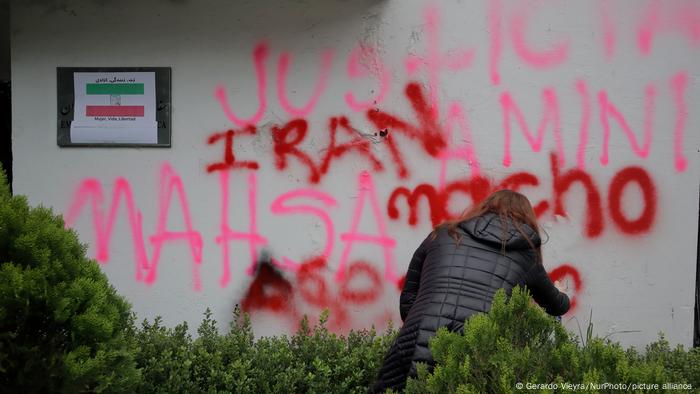

IRAN PROTESTS: RALLIES AND GRAFFITI WORLDWIDE IN SUPPORT OF IRANIAN WOMEN
At the Iranian Embassy in Mexico City
A woman spray-paints messages against "macho country" Iran on a wall of the Iranian Embassy in Mexico City in solidarity with Iranian women and in memory of Jina Mahsa Amini — the 22-year-old woman who died in custody after she was detained by Iranian authorities for allegedly violating strict Islamic dress codes for women.
12345678

And then there is the hijab. It isn't unfair of the West to associate the word "Iran” with the headscarf first and foremost. If Iran were to scrap this symbol, it would probably serve as sufficient evidence for the West that Iran was willing to reform. But that would be shortsighted.

Fear is dissipating

For this reason, the Islamists will cling to this piece of fabric for as long as they possibly can. The feminist lawyer Mehrangiz Kar once made a compelling argument for why Islamic systems of rule usually begin with the oppression of women. "They're choosing the weakest victims to create an atmosphere of fear. When fear rules, then everyone is afraid and the rulers can stabilize their power. It's impossible to imagine half of the people living in fear and at the same time the population as a whole confidently grappling with political problems."

For many people, this fear has now abated. The whole of the young generation is so fed up of being infantilized, disciplined and monitored that they are now hitting back when the regime's henchmen start beating them. You can see this right now on the many videos being shared on social media, and it's new.

In this struggle for self-determination, people are displaying a level of courage and cohesion we haven't seen before. For that reason, what we are seeing now is feminist. And feminist foreign policy would mean supporting Iranians in this feminist aim to achieve self-determination in their lives. 

This article was originally published on Qantara.de.

DW RECOMMENDS

  • Date 13.10.2022
UPDATES
Amnesty: 23 children killed amid Iran's 'all-out attack on child protesters'


Hundreds gather for the Iranian American Women Foundation's candlelight vigil for Mahsa Amini at West Hollywood Park in West Hollywood, Cali., on Sept. 29. On Thursday, Amnesty International said at least 23 children have been killed by security forces in Iran amid widespread anti-regime protests.
Photo by Jim Ruymen/UPI | License Photo

Oct. 14 (UPI) -- At least 23 children have died due to Iran's bloody crackdown on widespread anti-regime protests, Amnesty International said in a damning report that details who the children were and how they were killed amid the demonstrations that began last month.

In the 19-page report published Thursday, the British-based human rights organization states the children, who are between the ages of 11 and 17, were killed during the first 10 days of what some have described as a popular uprising against the Islamic regime.

The organization accuses Iran of conducting an "all-out attack on child protesters."

"Iran's security forces have killed nearly two dozen children in an attempt to crush the spirit of resistance among the country's courageous youth," Heba Morayef, Amnesty International's regional director for the Middle East and North Africa, said in a statement.

The victims tallied by the report include 20 boys and three girls.

The majority of the boys were killed by live ammunition though two died after being shot with metal pellets at close range, it said, adding that the three girls and one boy died after being beaten by security forces.

The protests erupted last month after 22-year-old Mahsa Amini, a Kurdish Iranian woman, died while in police custody.

She was arrested by the country's so-called morality police on accusations of not complying with strict hijab laws on Sept. 13 while visiting Tehran with her family.

She died three days later. Credible reports state she was beaten and possibly tortured, which caused her to fall into a coma prior to her death.

As the protests spread throughout the country in response, the regime of Iran's spiritual leader Ali Khamenei have attempted to silence dissidents by force, while blaming the United States for encouraging the unrest.

Amnesty International says the children tallied represent only 16% of the 144 protesters killed whose names and details it has been able to record. All of the deaths occurred in September, and the organization said it is investigating reports of deaths that have occurred this month.

The Oslo-based Iran Human Rights said that as of Thursday at least 201 protesters have been killed. It also states that 23 children are among its tally.

The organization added in a statement that on top of the deaths, many school-age children have been arrested and sent to what the education ministry calls psychiatric centers where they are to be "corrected."

The United States, the United Nations and other democratic countries and organizations have repeatedly called on Iran to cease its crackdown and allow peaceful protests, but Morayef said the Iranian authorities have ignored those pleas.

"The price of this systematic impunity is being paid with human lives, including children's," Morayef said. "Member states engaging at the U.N. Human Rights Council should urgently hold a special session and adopt a resolution to establish an international independent investigative and accountability mechanism on Iran."


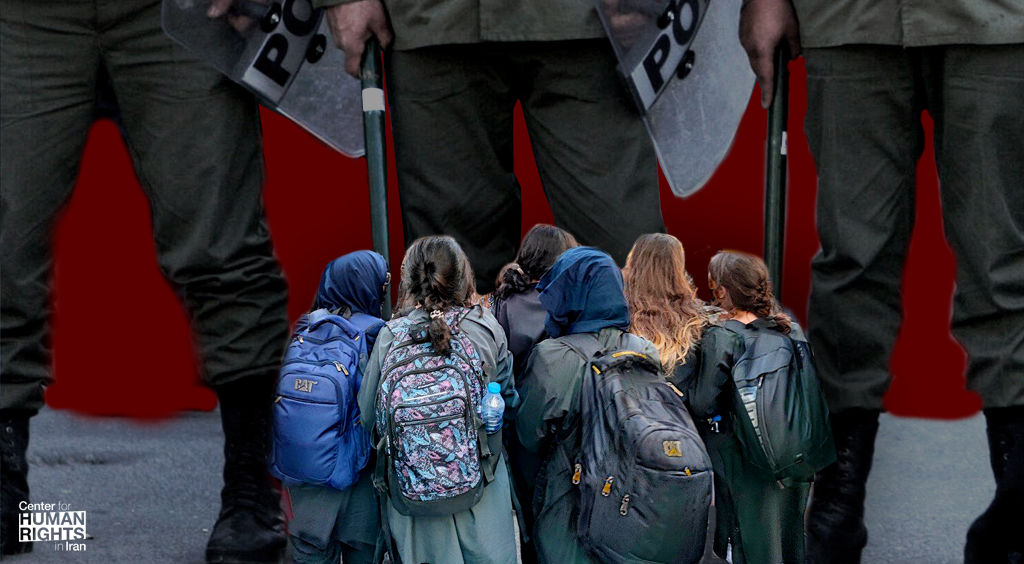
Iran Protests: Arrests of School Children Prompt Grave Fears of More Child Killings

Officials Paint Children as Enemies of the State, Claim They’re “Reforming” Kids
At Least 28 Children Killed Since September 16, Reports Tehran-based Group

October 13, 2022 – The arrests and interrogations of school children accused of joining nationwide protests in Iran and their detention in so-called “psychological centers” has raised fears of more child killings in the fourth week of protests that have been spreading across the country since September 16.

“Call this what it is: Kidnappings of children by a state that is stopping at nothing in its attempts to quell protests and terrify the people of Iran into submission,” said Hadi Ghaemi, executive director of the Center for Human Rights in Iran (CHRI).

“UNICEF, which has an office in Iran, should be tracking down these defenseless children and getting them back to their families,” said Ghaemi. “World governments should loudly call on Iranian officials to stop arbitrarily detaining children as well as adults for exercising their right to protest, as well as urge for the end of lethal force against protesters.”

“U.S. President Joe Biden and democratic allies at the UN should establish an urgent special session at the UN Human Rights Council to bring governments into a debate over the current violent crackdown and Iran’s ongoing human rights crisis,” he added.

At least 28 children are among the reported minimum number of 201 individuals killed since anti-state, nationwide protests erupted in the country in mid-September after the death of Mahsa Amini, 22, following her arrest by the morality police.

The number of 28 children was reported by the Tehran-based Association for the Protection of Children on October 10, which added that “the largest number” of deaths occurred in the province of Sistan and Baluchistan.”

On October 11, 2022, Education Minister Yousef Nouri told the Shargh daily that an unspecified number of children had been sent to reeducation camps after they were arrested allegedly for engaging in anti-state protests.

“We do not have students in prisons and those who have been detained are in psychological centers for discussions on reforming and educating them. Our expert friends are in charge of this, so the students can be returned to their schools,” Nouri said.

Reza Hadjipour, MP and spokesperson for the Education Committee of the parliament in an interview with Rokna news agency confirmed high school students are being detained but downplayed it by saying: “There are few students in detention, mainly those who are in contact with opposition networks abroad. Our friends have summoned them and are interrogating them now.”

The comments have caused fury in Iran, especially at school teachers and principals who’ve been accused of aiding intelligence and security agencies in detaining the kids.

“For the last time we warn high school principals in the city of Karaj to stop making schools security zones and not to continue sharing video footage from school cameras with security and intelligence agents,” said a statement by the Organization of Associations of Teachers on October 13.

“We have received names of those teachers and principals in schools, we will not publicize them for now,” added the statement. “We ask you to wake up and stop contributing to the bloodshed. Otherwise, we will publicize the names and pictures of these so-called teachers and principals.”

Iranian officials have not specified how many children have been arrested and have cut internet and phone access to the country to prevent information from reaching the outside world.

Information posted on social media indicates that children have been arrested in at least three cities: Karaj, Bandar Abbas, and Sanandaj, where Iranian authorities have been waging a lethal crackdown on protests there.

“Iranian officials operate with such impunity that they openly admit to child kidnappings without any fear of being held accountable for engaging in such monstrous actions,” said Ghaemi.

“We can’t look at the signing of a nuclear deal with Iran in isolation; efforts at nuclear nonproliferation are important, but what will flow from this specific deal is a significant release of funds that will only serve to increase the repressive capacity of the regime,” he added.

“Empowering the Islamic Republic by bolstering its economic capacity at a time when it is violently and unlawfully trying to crush peaceful public protest and dissent, including by arresting kids, is an effective interference in the country’s domestic affairs—it actively assists the government,” said Ghaemi.


Iran Protests: The Significance of Oil Workers’ Strike


On Monday, workers at a petrochemical complex in Asaluyeh, southern Iran, went on strike. Their colleagues in the Abadan oil refinery also joined them on Tuesday. Four weeks into the major Iran protests, the oil and petrochemical workers’ strike is considered a turning point.

This is not the first time oil workers, mainly contract oil workers, have gone on strike. But previously, they staged protests and demanded their rights. Their demonstrations were quashed, and many deprived workers were arrested or laid off. Yet, Iranian oil workers joined the nationwide uprising and popular “regime change” demand.

Initially sparked due to the death of a 22-years-old Kurdish girl in police custody, Iran protests have now morphed into a revolution, with people demanding nothing less than regime change. Protests have persisted despite the regime’s heavy crackdown.

The first turning point of Iran’s uprising was Saturday’s protests, with students joining them. These protests happened a few days after the bloody crackdown on innocent prayers in Zahedan and after the regime’s supreme leader Ali Khamenei threatened Iranians while praising his oppressive forces.

Iran’s uprising experienced what many consider its second turning point when the contract oil workers began their strike for several reasons:

  • Considered the regime’s main source of income, the oil industry’s shutdown or partial shutdown delivers a major blow to Iran’s ruling theocracy. In other words, workers control the regime’s most important economic lifeline.
  • Iran’s workers are among the most oppressed and underprivileged sectors of society. The regime’s corruption and ineptitude have turned Iran’s society, and particularly the workers’ community, into a powder keg. Iran has nearly 15 million workers, who form a large part of the population with their families. Thus, workers joining the uprising seriously threaten the ruling theocracy.
  • These workers have nothing to lose due to the regime’s corruption and plunder of their wealth. Their participation in the current uprising means protests have entered a new era.
  • Iranian oil workers have their unions and are among the most organized sectors due to their history of defiance. Thus, they could more easily organize protests and strike, and the rapid spread of strikes is a testament to this fact.
  • It is worth noting that during the last months of the Shah’s regime, the Iranian oil workers’ strike in 1979 delivered an irreparable blow to the regime. The international community did not sanction the Shah’s regime, yet the workers’ strike seriously damaged its economy.

In a nutshell, the strike by contract oil workers reaffirmed the Iranian people’s unwavering resolve to overthrow the ruling theocracy at any cost. The regime plunders the Iranian nation’s wealth to prolong its rule through the export of terrorism abroad and domestic oppression. The world community should increase its pressure on the regime and help Iranians achieve their rights.

World Day Against Death Penalty and Iranian Protesters’ Plight

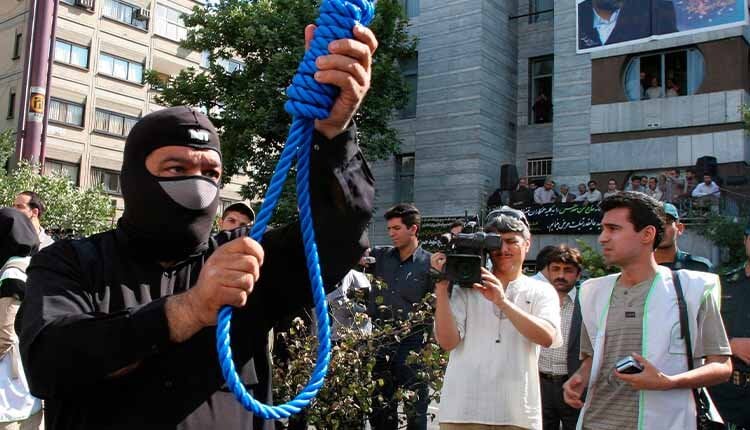
October 10 marked the World Day Against the Death Penalty while the world’s top executioner per capita, Iran, witnessed anti-regime protests for the fourth consecutive week.

Since taking power in 1979, Iran’s ruling theocracy has been using executions to intimidate the vibrant and progressive society that has rejected mullahs’ backward thinking from day one.  The regime’s incessant use of capital punishment has earned it the first rank of executioner per capita. Hundreds of Iranians are sent to the gallows every year under different pretexts, mainly political dissidence.

The clerical regime never stopped executions during Hassan Rouhani’s presidency, who presented himself as a “moderate,” roughly 5,000 Iranians, including over 130 women, were hanged.

Since Ebrahim Raisi took over for Rouhani in 2021, there have been nearly 800 executions. The number should be more, given the regime’s secrecy in announcing executions. In other words, executions have seen a dramatic since Raisi became president.

This was no surprise to human rights defenders and the Iranian people, as Raisi’s dark record of human rights violations was common knowledge. In fact, the regime Supreme Leader Ali Khamenei pulled him out of the ballot box in a bid to use him as the bogeyman to terrorize Iran’s restive society.

 Raisi played a key role during the mass political executions in the 1980s. During the 1988 massacre of over 30,000 political prisoners across Iran, Raisi sat on Tehran’s so-called “Death Commission,” sealing the fate of tens of thousands of prisoners. Based on a fatwa by the regime’s then-supreme leader Ruhollah Khomeini, those commissions were tasked to identify and purge political dissidents, mainly supporters and members of Iran’s leading opposition group, the People’s Mojahedin Organization of Iran (PMOI/MEK).

The 1988 massacre remained uninvestigated and unpunished, perpetuating what many observers believe is the “culture of impunity.” When Raisi became the regime’s president in 2021, Amnesty International’s Secretary General Agnès Callamard referred to this development as a “grim reminder that impunity reigns supreme in Iran.”

This impunity once again showed its evil face during the regime’s heavy crackdown on protesters throughout the last four weeks. The regime’s security forces are opening fire on protesters, and according to the reports tallied by the MEK, over 400 people have been murdered in cold blood during the recent onslaughts.

Besides, roughly 20,000 protesters have been detained, many facing the risk of being executed. Mostafa Salehi and the wrestling champion Navid Afkari were detained during the 2018 major protests and were hanged, despite an international outcry to save their lives.

It is crystal clear that Iran’s ruling theocracy, like any other dictatorship founded on human rights abuses, will never end its violence. These regimes know that without full-fledged oppression, including executions, they wouldn’t last a day.

Therefore, it would be a mirage to believe in an end to the violence employed by Iran’s clerical. The world community should end the naive thinking that dialogue would impact the regime’s cycle of violence. The only way to break this cycle is to recognize the right of all Iranians to self-defense against this brutal regime. The time has come for the international community to go beyond condemnations and take concrete actions to end the crisis of impunity in Iran.


Facing backlash, Alberta premier clarifies comments on discrimination of unvaccinated people

Kellen Taniguchi - Yesterday -  Edmonton Journal

Danielle Smith called unvaccinated people the most discriminated against group in her lifetime during a news conference on Tuesday, Oct. 11, 2022.

Alberta Premier Danielle Smith is not apologizing for her comment calling unvaccinated people the “most discriminated against group” that she’s seen in her lifetime — a comment that has sparked strong reactions in Alberta and across the country.

In a Wednesday statement, Smith explained her “intention” of making that comment.

“My intention was to underline the mistreatment of individuals who chose not to be vaccinated and were punished by not being able to work, travel, or in some cases, see loved ones,” said Smith.

“I want to be clear that I did not intend to trivialize in any way the discrimination faced by minority communities and other persecuted groups both here in Canada and around the world, or to create any false equivalencies to the terrible historical discrimination and persecution suffered by so many minority groups over the last decades and centuries.”


Smith’s statement comes after calls for her to apologize for her comments, something she hasn’t done.

Edmonton human rights activist Murray Billett said he was “gutted” when he heard Smith’s comments on Tuesday.

“I think we should be fearful. Anybody in the minority community should be fearful over comments like that,” said Billett, who is also a member of the LGBTQ community.

“For a provincial premier to suggest such a thing that the people that refused to get vaccination were the most discriminated against flies in the face of every statistic that you’ll ever read.”

In September, Edmonton’s Pride Corner was subject to two threats — a man with a baseball bat walking through the crowd making homophobic remarks and a social media threat two weeks later from an unknown account claiming to be two kilometres away and in possession of a gun.

Mekwun Moses, an Alberta Indigenous activist who has organized anti-racism rallies and rallies for residential school awareness, said Smith’s comments “minimize” Indigenous people’s perspectives.

“She spoke about that she has never seen something as discriminating in her lifetime and that definitely hit different … she’s been alive since residential schools closed, they didn’t close until 1996,” said Moses, adding she was offended by Smith’s comments.

“For her to say within her lifetime puts more discrimination on First Nations people because she’s not recognizing that they didn’t have their freedom, that they didn’t get to choose a lot of things like being put on reserves.”

Opposition Leader Rachel Notley took to Twitter Tuesday night and said Smith’s comments were “disrespectful and tone deaf.”

“First Nations communities are still dealing with the effects of genocide, and for the premier of this province to ignore this trauma and say unvaccinated people were the most discriminated against group in Alberta flies in the face of all the work we must still do,” said Notley.


Timothy Caulfield, a Canada research chair in health law and policy at the University of Alberta, called Smith’s comment “stunning.”

“It’s kind of a horrifying comment to think that this is the position that our premier holds,” he said.

“The lack of insight into our history, the lack of insight into the value of vaccinations and the lack of insight into how vaccine policies work and why those policies exist — it’s stunning.”

Caulfield said most of Alberta’s discrimination laws are focused on immutable characteristics, those characteristics we can’t change. He added vaccination status is a choice and choices have consequences.

Edmonton’s mayor also commented on Smith’s comment on Wednesday.

“From my perspective, Indigenous communities, racialized and minority communities, LGBTQ communities, women, people living with disabilities have and continue to face systemic discrimination and racism in our city,” said Mayor Amarjeet Sohi.

Sohi said he looks forward to working with Smith to remove barriers and see how they can find common ground on building an inclusive city.

The Jewish Federation of Edmonton made a statement on Twitter saying it had “concerns” regarding Smith’s comments.


“We have reached out to the premier’s office to express our concerns surrounding these comments and are keen on meeting with the premier to discuss antisemitism, discrimination in our community and others in Alberta, the need for mandatory Holocaust education and the story of Alberta’s Jewish community,” the statement reads.


ktaniguchi@postmedia.com
ALBERTA
Smith's premiership brightens NDP electoral fortunes: poll

Bill Kaufmann - Calgary Herald

Albertans are taking a dim view of Danielle Smith’s rise to the premier’s chair, with the NDP enjoying a bump in the polls, suggests a new survey.


Danielle Smith after winning the leadership of the Alberta United Conservative Party in Calgary on Thursday, October 6, 2022.

The online Leger Marketing poll of 1,000 Albertans shows they prefer NDP Leader Rachel Notley to Smith by a wide margin of 36 per cent to 22 per cent, with the Opposition party leading the UCP by 44 per cent to 42 per cent among decided voters — the latter figure a swing of five points since Sept. 22, before the ruling party’s leadership race concluded.

And the NDP is leading in what’s believed will be the decisive battleground of Calgary, by 44 per cent to 41 per cent — an advantage that in Edmonton widens to 15 points.

Fewer than 30 per cent of respondents believe Smith will engineer positive change, with negative numbers eclipsing the positive in half a dozen categories.

The poll was conducted Oct. 7 to 10, just after Smith won the leadership and before she made contentious remarks saying unvaccinated Canadians suffered worse discrimination than anyone else she’s seen in her 51 years, and about 7½ months before Albertans head to the polls next May.

On Sept. 8, four of Smith’s leadership rivals — Brian Jean, Rajan Sawhney, Travis Toews and Leela Aheer — held a joint Calgary news conference predicting a Smith-led UCP would lead to an NDP victory , and that her Alberta Sovereignty Act would damage the economy.

That act was originally touted as allowing Alberta to ignore federal decisions and court rulings against the province’s interests, though earlier this week Smith said Alberta would abide by Supreme Court decisions.


Smith's premiership brightens NDP electoral fortunes: poll
© Provided by Calgary Herald

The Leger poll is consistent with several other recent surveys showing Smith faces an uphill fight among voters, and Notley’s 14-point lead over Smith as preferred Alberta premier should be troubling to the UCP, said Mount Royal University political scientist Lori Williams.


“That’s a very significant gap and difficult to recover from, though not impossible,” said Williams.

Smith, she said, seems to sense the same challenges as the poll suggests in Calgary, given she opted not to seek a seat in the legislature by running in the open Calgary-Elbow riding , currently held by the UCP.

“There was a lot more room to appeal to a wider range of voters with the other leadership candidates, and that’s there in Calgary,” said Williams.

The poll shows 39 per cent of respondents don’t believe Smith can hold her party together, while 20 per cent have confidence she can — results that are likely well-founded given the UCP’s fractious history and the premier’s narrow leadership race win, said Williams.

One urban UCP MLA said the poll results aren’t surprising given they come just after a heated leadership race whose negativity has rubbed off on the general public.

“You have to take it with a bit of a grain of salt,” said the MLA, who spoke on condition of anonymity.

“There are raw nerves there and people need to hear what the Sovereignty Act really means.”

Much of the party’s fortunes rest on Smith’s leadership style following that of Jason Kenney, who was perceived by many — including some in the party — as being autocratic, said the MLA.

“A fresh rebrand of the UCP is possible,” said the lawmaker, adding party unity is crucial and that none of its MLAs have indicated an intention to bolt.

In the week since Smith’s ascension to the party’s leadership, a more collaborative approach seems to have emerged, said the MLA.

But the party’s chances of winning over Edmonton are moribund, as the poll suggests, and the region surrounding the capital now dominated by the UCP is “in question,” said the politician.

In Calgary, UCP candidates will have to work harder to keep their seats or win others than they did in 2019, said the MLA.

“We have to earn that trust back,” said the lawmaker.


Braid: Poll shows Premier Smith has big challenge gaining wide public support
© Provided by Calgary Herald

The public reaction to Smith’s premiership is unusual, said Ian Large, executive vice-president of Leger Marketing.

“When there’s a leader elected, you normally get a bump in the polls and we’re not seeing that here,” he said.

But he said Notley’s personal popularity has always been relatively high and the poll’s results don’t stray too far from that, said Large.

And the poll’s numbers, he said, can also be seen as a “glass half full” by the UCP given the high level of undecideds on some of the questions.

“There’s a large number of people (25 per cent) who are still saying ‘we don’t know who’ll make the best premier,’ ” said Large.

“Albertans are probably waiting to see who Danielle Smith is.”

There’s no dramatic sign within the survey of a “doomsday” collapse of UCP support, he added.

With Calgary possibly becoming more amenable to the NDP and with Edmonton solidly with Notley’s party, the rural-urban split is becoming more pronounced, he said.

That makes it all the more vital for Smith to hold onto that support, Large said, while Williams suggested there’s already concerns within the party that Smith won’t live up to hard-line promises, such as with the Sovereignty Act.

“How big is the base and how loyal is the base — it is big enough to make it work for her?” Large said.

“If she can’t hold on to that, she’s done.”

Leger says that as a non-random survey, no margin of error is reported, but if it was collected through a random sample, that margin of error would be plus or minus 3.1 per cent 19 times out of 20.

BKaufmann@postmedia.com

Twitter: @BillKaufmannjrn

 Archaeologists may have found the Sanctuary of Samian Poseidon described in ancient texts

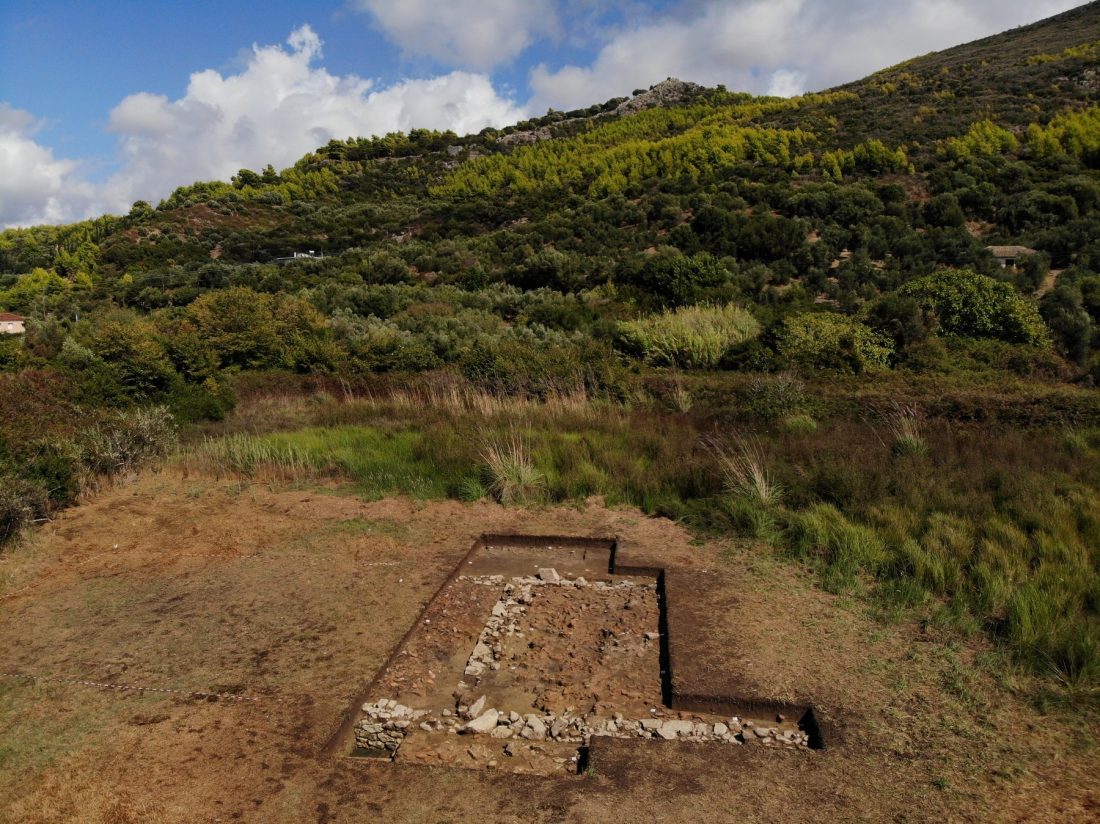
During excavations in the foothills at the ancient acropolis of Samicum in Greece, archaeologists may have found the sanctuary of Samian Poseidon.

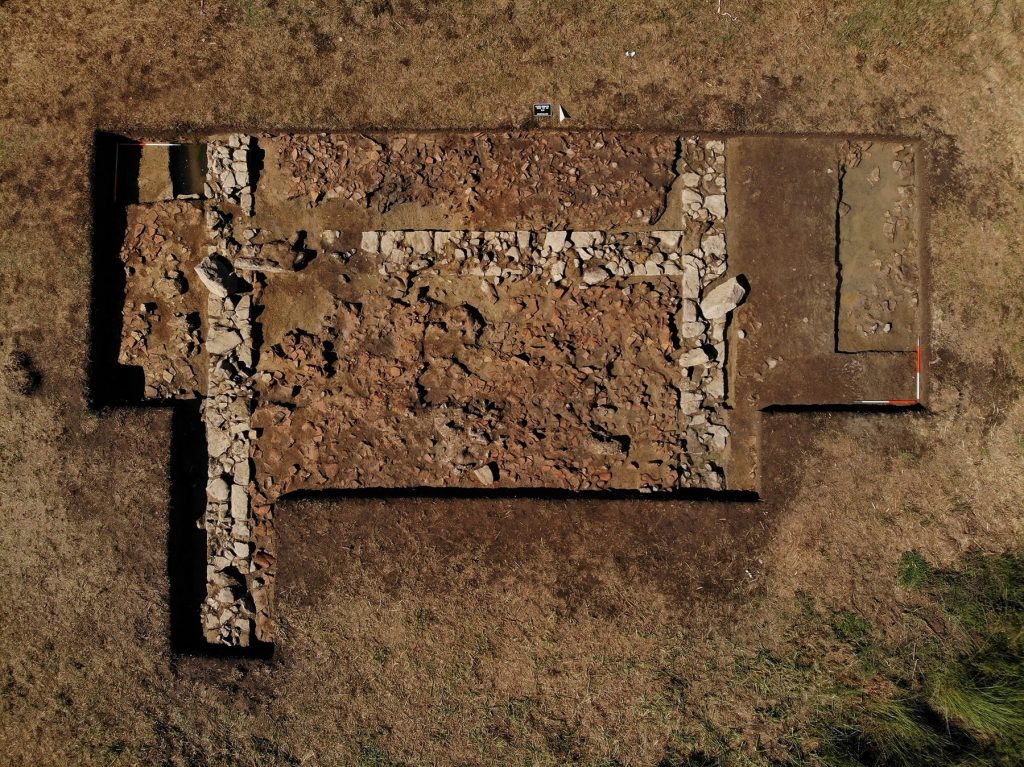
According to the Greek Reporter, archaeologists unearthed large sections of the foundation of a building 9.4 meters (30.8 feet) wide with heavy stone walls .8 meters (2.6 feet) thick. The remains have been dated to the 6th century B.C.

The sanctuary of Poseidon in Samikos was the regionally important religious center of the six cities of Triphylia, according to ancient sources Strabo and Pausanias. They formed an amphictyony, a confederation dedicated to the defense, upkeep, and veneration of a cult site. Strabo’s Geographica, Book VIII: “Then comes the mountain of Triphylia that sees Macistia from Pisatis; then another river called Chalcis, and a spring called Cruni, and a settlement called Chalcis, and, after these, Samicum, where is the most highly revered temple of the Samian Poseidon. About the temple is a sacred precinct full of wild olive-trees. The people of Macistum used to have charge over it; and it was they, too, who used to proclaim the armistice-day called “Samian.” But all the Triphylians contribute to the maintenance of the temple.”

The location where the potential temple was found fits with texts by Ancient Greek geographer Strabo who wrote about the temple in his work Geographica.

Photo: Greek Ministry of Culture and Sports

Samicum, also called Samikon, was an ancient city during the middle and late Helladic periods, located in the Peloponnese at Kleidi Hill near Kato Samiko, halfway between the mouths of the Alpheius and the Neda.

Scholars have proposed based on ancient descriptions that the temple of Poseidon was on a plain below the ancient acropolis of Samikon whose remains are on the hilltop overlooking the Ionian Sea.

A possible site of the temple was suggested following ongoing investigations conducting geophysical surveys in 2017, 2018, and 2021. This year archaeologists from the Ephorate of Antiquities of Ilia, the Austrian Archaeological Institute, the University of Mainz, and the University of Kiel (Dr. Dennis Wilken) embarked on the first comprehensive excavation of the site as part of a five-year program to explore the area to identify the sanctuary and the ancient port of Samikos.

Photo: Greek Ministry of Culture and Sports

The Athens Branch of the Austrian Archaeological Institute explains in a Facebook post: “Thick layers of roof tiles fill the space between the walls. Based on the anomalies of the geophysics, a building of at least 28 meters (92 feet) in length can be calculated, which had two interior rooms as well as a pronaos and an opisthodome or adyton. The elongated large building can be nothing other than an archaic temple located on the site of the sanctuary of Poseidon, perhaps even dedicated to the god himself.”

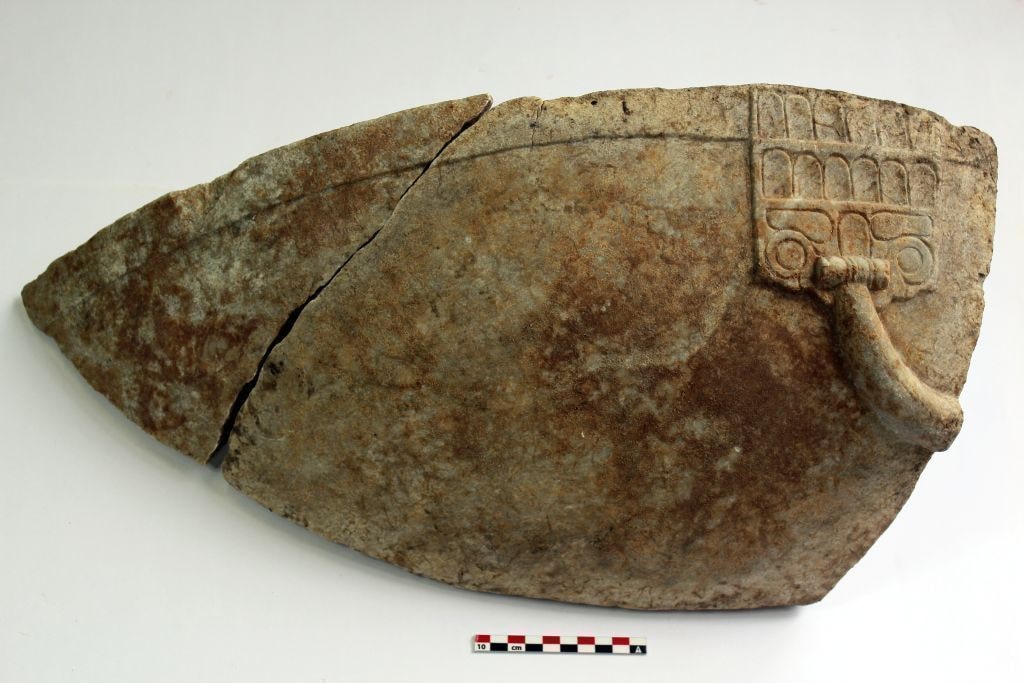
In connection with the fragments of a laconic roof, the discovery of a marble perirrhanterion provides evidence for dating the large building to the Archaic period. The large marble vessel itself, imitating a bronze bowl, is characteristic of the inventory of a sanctuary.

This discovery sheds new light on the political and economic significance of the Triphylian cities’ amphictyony in the sixth century BC when the sanctuary of Poseidon at Samikon served as the center of their religious and ethnic identity.

Cover Photo: Greek Ministry of Culture and Sports