It’s possible that I shall make an ass of myself. But in that case one can always get out of it with a little dialectic. I have, of course, so worded my proposition as to be right either way (K.Marx, Letter to F.Engels on the Indian Mutiny)
Pakistan's Khan announces 'long march' on Islamabad to press for snap polls
Ex-PM Imran Khan's announcement comes after the Election Commission of Pakistan disqualified him for failing to disclose gifts and proceeds of their alleged sale he received while serving as prime minister
.
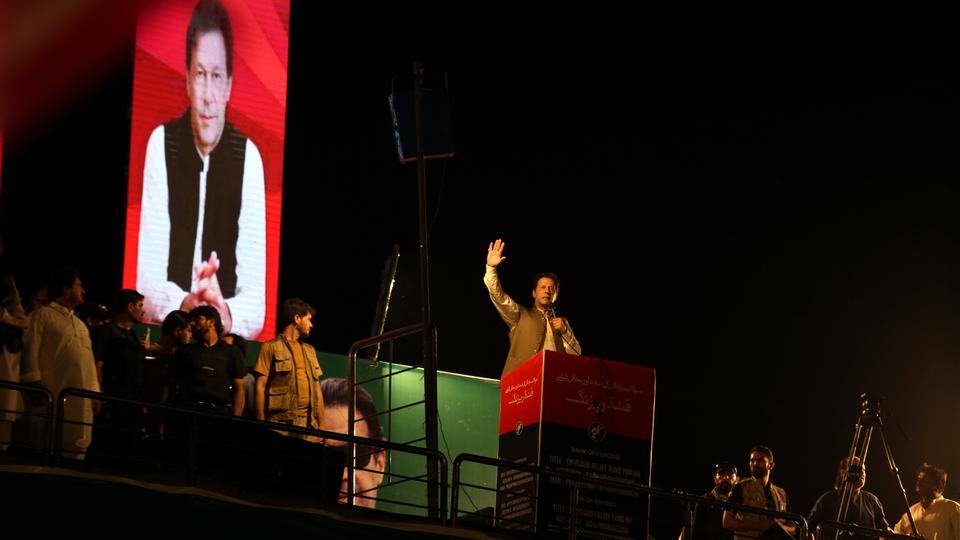
Imran Khan has held rallies across the country in recent months calling for snap elections in Pakistan. (AP Archive)
Former Pakistani prime minister Imran Khan has announced that he would begin a protest march with his supporters from the eastern city of Lahore to Pakistan's capital Islamabad on Friday to call for early elections.
"I have decided to launch the long march from Friday at 11.00 am from Liberty Square in Lahore to Islamabad," Khan said at press conference in Lahore on Tuesday evening. The distance between the two cities is about 380 kilometres.
"I am marching to press the government to announce elections immediately," he said, adding his supporters and party members should avoid violence.
Smaller protests by Khan's supporters took place last week after Pakistan's top election tribunal found Khan guilty of unlawfully selling gifts from foreign dignitaries and heads of state, removing him of his parliamentary seat.
Since being removed from office by a no-confidence vote in the legislature in April, Khan has held protests across the country calling for snap elections, but the government has said they will be held as scheduled in October or November next year.
In response to a query about the government's possible use of force to impede protesters, he claimed that his protest march will be peaceful and that he has no intention of entering the capital's red zone.
"We will remain peaceful as families will join us," Khan said, adding that the government will be held accountable "if they use any force against peaceful people."
Political, economic uncertainty
The government has already promised that demonstrators will be barred from entering Islamabad, and they expect to deploy some 30,000 law enforcement to encircle the capital for protection.
The authorities also sent hundreds of containers into Islamabad to barricade all entry points before the demonstrators arrived.
Last week's ruling has added to the political and economic uncertainty plaguing Pakistan this year.
The 70-year-old cricketer-turned-politician was accused of misusing his 2018 to 2022 premiership to buy and sell gifts in state possession that were received during visits abroad and worth more than 140 million Pakistani rupees ($634,920.63).
The Election Commission of Pakistan ruled that Khan would be removed from his seat in parliament but did not order a longer disqualification from public office, which under Pakistani law can be up to five years.
The Islamabad High Court, however, said he is not barred from contesting elections in the future.
The political instability has also fuelled economic uncertainty, with international ratings agencies questioning if the current government can maintain difficult economic policies in the face of political pressure and looming elections.
As the clock ticks down to Brazil’s presidential runoff this Sunday, the high-stakes race between incumbent President Jair Bolsonaro and former president Luiz Inácio Lula da Silva is being described as the most important election in recent history. Without a doubt, it is a stress test for the country’s three-decades-old democracy.
For Americans, following the headlines may invoke a strange sense of déjà vu. Throughout the campaign, Bolsonaro has consistently alleged, without evidence, that the country’s electronic voting system is vulnerable to widespread fraud and suggested the election is rigged against him. These claims have spawned a life of their own online, with some Brazilians openly plotting a January 6-style coup on social media if Bolsonaro loses.
“We have a full-blown Bolsonaro disinformation ecosystem,” the veteran Brazilian journalist Patrícia Campos Mello told the Columbia Journalism Review. “I am sure that, if he loses, he’s not going to accept the results. And he’s going to incite his supporters to go onto the streets.”
At the center of this so-called disinformation ecosystem are the Big Tech companies themselves. Election disinformation about Brazil is flourishing on YouTube, Facebook, Telegram, and WhatsApp. A recent study by the NGO Global Witness even found that Facebook and YouTube are approving advertisements featuring blatant election disinformation, despite repeated warnings. The tech giants are “fundamentally failing in their responsibility to stop democratic processes being undermined by false, misleading and purposeful deceit,” the organization wrote.
With voters awash in social media conspiracies and coup plots, content moderation in Brazil has taken center stage, with lawmakers courting controversial policy proposals on both ends of the spectrum. Last year, Bolsonaro issued a now-defunct order essentially prohibiting social media companies from removing content from their platforms in the absence of a court order — a first in global tech policy. Then, last week, in an effort to crack down on election misinformation, Brazil’s electoral court went in the opposite direction. It passed a new set of rules granting the country’s top elections official — Alexandre de Moraes, a frequent target of Bolsonaro’s attacks — the power to order social media platforms to remove content that violated prior takedown orders from the court. Platforms that don’t comply with takedown orders within two hours can be suspended country-wide for up to 24 hours.
Bolsonaro’s order sought to prevent companies from moderating content altogether, including blatant lies, while these rules give a tremendous amount of latitude to one individual. Bolsonaro allies and civil rights experts alike have expressed concerns about the unilateral power the policy grants the elections chief and its potential to censor political speech. Proponents, on the other hand, say it will help curb the election fraud conspiracies that have accompanied Bolsonaro’s campaign, and that pose an existential threat to the country’s fragile democracy.
IN GLOBAL NEWS:
The Saudi government’s crackdown on social media criticism may land a U.S. citizen behind bars — for 16 years. Saad Ibrahim Almadi, a U.S. national who also has Saudi citizenship, was detained while traveling from Florida to Riyadh to visit family, apparently over a series of tweets he posted while in the U.S. On October 3, a Saudi court handed the 72-year-old a 16-year prison sentence and an equally long travel ban for allegedly attempting to “destabilize the kingdom and supporting and funding terrorism.” According to Almadi’s son, Ibrahim, the only evidence used to sentence his father was 14 tweets Almadi posted, some of which were critical of the Saudi regime. Ibrahim also alleges that the government has tortured his father in prison. Almadi’s sentence is just one of a string of draconian punishments the regime has recently doled out in response to criticism on social media, including a 45-year sentence for a Saudi woman over anonymous tweets.
Texas public schools are rolling out a grisly DNA collection system to help parents identify their kids’ bodies in emergencies. Under the policy, which was launched as part of a 2021 law establishing a “child identification program,” schools are sending kits that parents can use to store their children’s fingerprints and DNA and hand to police in case they go missing. The plan, which went into effect in the state’s largest school district last week, is generating fierce pushback in the wake of the Uvalde school massacre less than six months ago, when family members of students whose bodies were unidentifiable after being destroyed by gunfire provided DNA samples to help identify the children’s remains. “It makes me physically sick,” one mom said of the program. Parents and critics have also expressed privacy concerns over the kits and the implications of providing students’ DNA and fingerprint records to law enforcement.
IN GLOBAL NEWS:
The Saudi government’s crackdown on social media criticism may land a U.S. citizen behind bars — for 16 years. Saad Ibrahim Almadi, a U.S. national who also has Saudi citizenship, was detained while traveling from Florida to Riyadh to visit family, apparently over a series of tweets he posted while in the U.S. On October 3, a Saudi court handed the 72-year-old a 16-year prison sentence and an equally long travel ban for allegedly attempting to “destabilize the kingdom and supporting and funding terrorism.” According to Almadi’s son, Ibrahim, the only evidence used to sentence his father was 14 tweets Almadi posted, some of which were critical of the Saudi regime. Ibrahim also alleges that the government has tortured his father in prison. Almadi’s sentence is just one of a string of draconian punishments the regime has recently doled out in response to criticism on social media, including a 45-year sentence for a Saudi woman over anonymous tweets.
Texas public schools are rolling out a grisly DNA collection system to help parents identify their kids’ bodies in emergencies. Under the policy, which was launched as part of a 2021 law establishing a “child identification program,” schools are sending kits that parents can use to store their children’s fingerprints and DNA and hand to police in case they go missing. The plan, which went into effect in the state’s largest school district last week, is generating fierce pushback in the wake of the Uvalde school massacre less than six months ago, when family members of students whose bodies were unidentifiable after being destroyed by gunfire provided DNA samples to help identify the children’s remains. “It makes me physically sick,” one mom said of the program. Parents and critics have also expressed privacy concerns over the kits and the implications of providing students’ DNA and fingerprint records to law enforcement.
WHAT WE’RE READING
This harrowing Motherboard piece about how police are conjuring up images of suspects they’ve never seen based on DNA samples.
This incisive look at the “rise of luxury surveillance” — technologies that millions of people happily buy into because they think they will improve their lives. “These gadgets are analogous to the surveillance technologies deployed in Detroit and many other cities across the country in that they are best understood as mechanisms of control,” writes surveillance expert Chris Gilliard for The Atlantic.
Four years ago, researchers published a pioneering report that pulled back the curtain on racial and gender bias in facial recognition software. Nature explores how the landmark study is influencing research and regulation today. The researchers behind this study went on to found the Algorithmic Justice League. If you’d rather watch than read, check out Coded Bias, Shalini Kantayya’s acclaimed documentary about their work.
An exposé by Forbes revealed that a team at TikTok’s parent company, ByteDance, planned to use the popular app to spy on the locations of specific Americans. “It is unclear from the materials whether data about these Americans was actually collected; however, the plan was for a Beijing-based ByteDance team to obtain location data from U.S. users’ devices,” writes Emily Baker-White.
Rayan El Amine, Isobel Cockerell, and Rebekah Robinson contributed to this edition.
From biometrics to surveillance — when people in power abuse technology, the rest of us suffer
Our weekly newsletter on how people in power are abusing technology — and what it means for all of us
Diwali 2022: India celebrates the festival with a dazzling display of lights
Publishe
IMAGE SOURCE,GETTY IMAGES
Image caption,
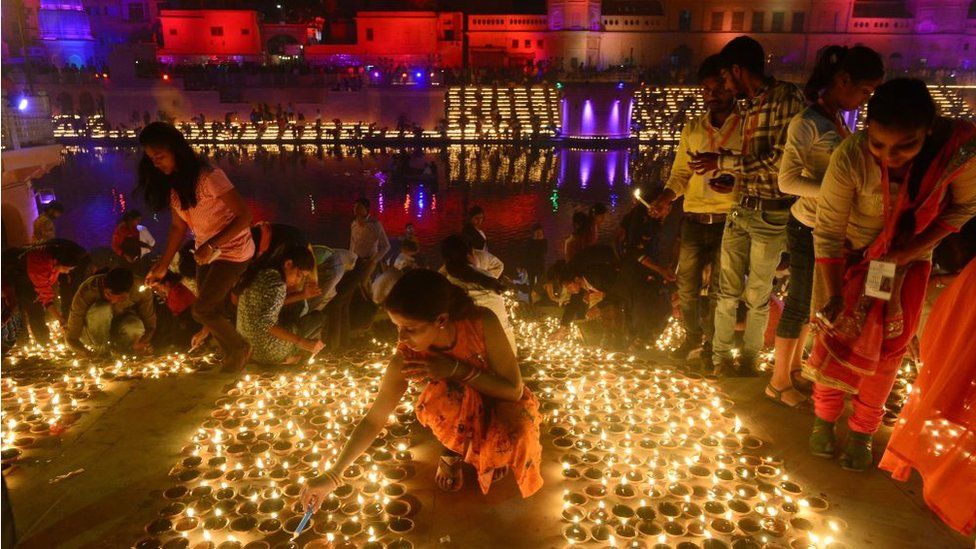
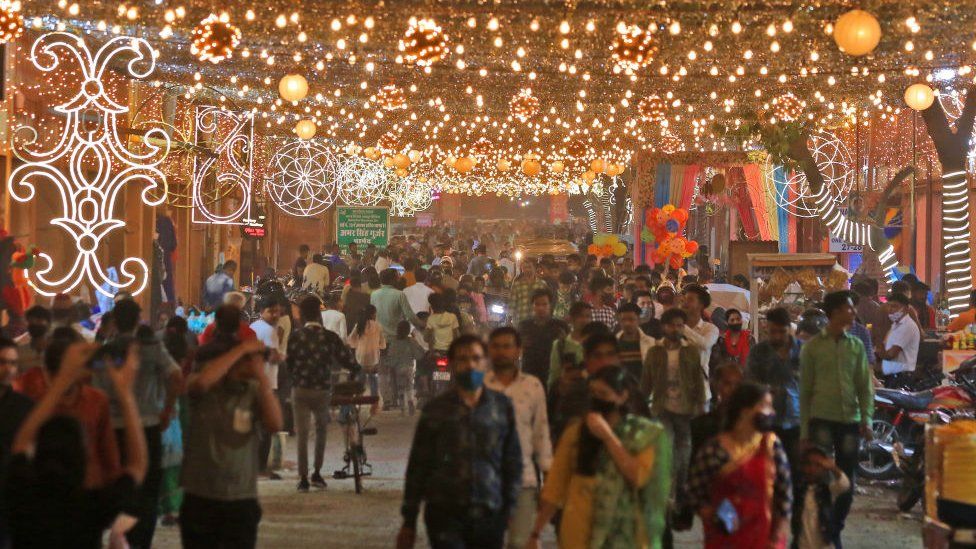
Diwali is also called the festival of lights
India's streets and homes are lit up with colourful lanterns and glowing lamps as millions celebrate the Hindu festival of Diwali.
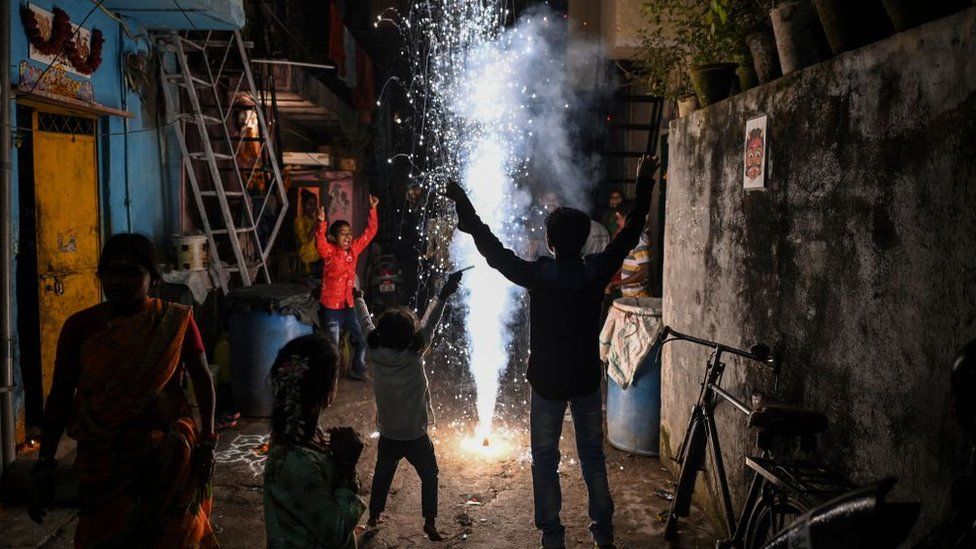
But the celebrations are also sparking concerns about air pollution, including in the national capital, Delhi.
A time for feasts, prayers and fireworks, Diwali is one of the most important festivals in India. It is known as the festival of lights as people illuminate oil lamps or candles to symbolise the triumph of light over darkness and good over evil.
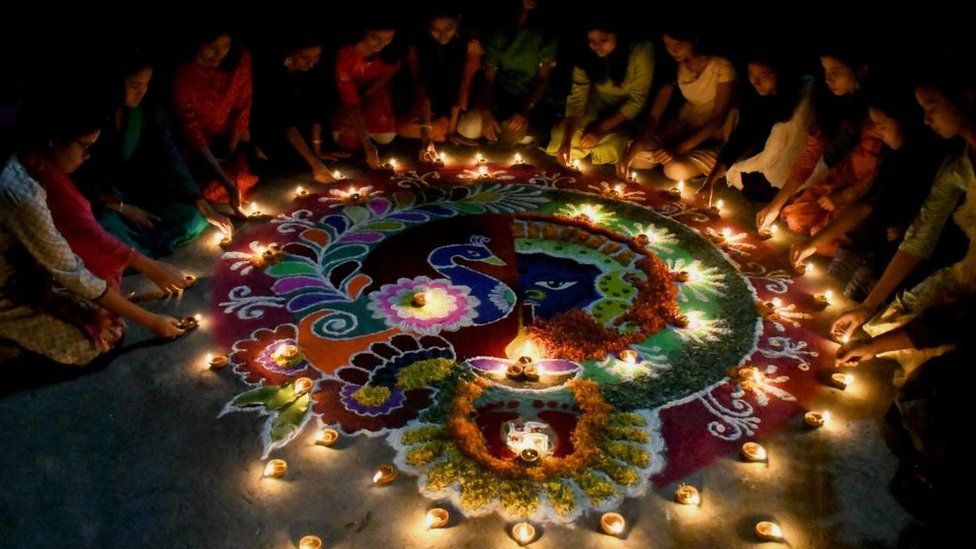
People illuminate their homes with oil lamps and draw rangolis - traditional designs made using colourful powders - outside their doors to welcome good luck and positivity into their lives.
Families gather to offer prayers, light fireworks and enjoy festive meals. People visit friends and family and exchange sweets, gifts and good wishes.
IMAGE SOURCE,GETTY IMAGES
Image caption,
People draw rangolis for good luck
IMAGE SOURCE,GETTY IMAGES
Image caption,
Millions of Indians celebrate Diwali
The exact dates of the festival change each year and are determined by the position of the moon, but it typically falls between October and November. This year, Diwali is being celebrated on Monday.
For the past two years, due to the Covid-19 pandemic, festivities were held with restrictions or were cancelled altogether. However this year, with restrictions being lifted, people are celebrating the festival with gusto.
The widely-celebrated festival also brings with it concerns about the rising levels of air pollution.
Despite governments in several states imposing partial or complete bans on firecrackers, thousands of people continue to light them, causing thick plumes of smoke to pollute the air.
IMAGE SOURCE,GETTY IMAGES
Image caption,
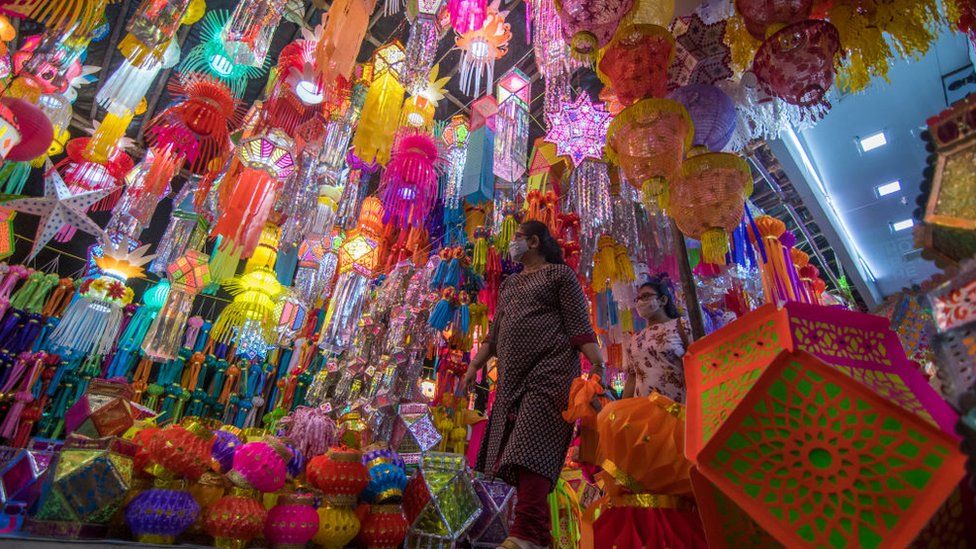
People hang lanterns outside their homes
IMAGE SOURCE,GETTY IMAGES
Image caption,
Thousands throng markets to shop for Diwali goods
In Delhi - the world's most polluted capital - fireworks during Diwali worsen the air quality, which is already quite poor in the winter months as farmers in the neighbouring states of Punjab and Haryana burn crop stubble to clear their fields.
Like in previous years, this year too the Delhi government has banned firecrackers to curb air pollution. Those lighting firecrackers could be jailed for up to six months and fined 200 rupees ($2.41; £2.15).
IMAGE SOURCE,GETTY IMAGES
Image caption,
Lamps called 'diyas' are lit to illuminate the home
IMAGE SOURCE,GETTY IMAGES
Image caption,
People wear traditional garments and visit friends and family
Sudanese security forces fire tear-gas at protesters on coup anniversary
Sudanese security forces fired tear gas at pro-democracy protesters, who rallied as they marked the first anniversary of a coup that derailed a transition to civilian
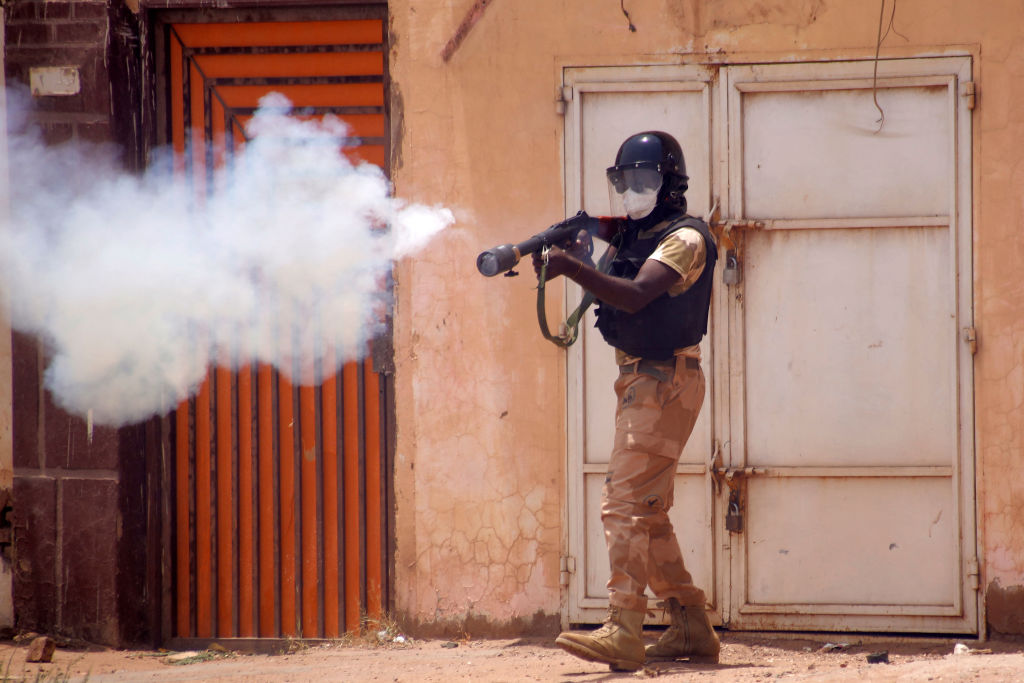
The New Arab Staff & Agencies 25 October, 2022 Sudanese security forces shot tear gas as protesters waved Sudanese flags chanting 'no negotiation with the putschists' [Getty]
Sudanese security forces shot tear gas Tuesday as thousands of pro-democracy protesters marked the first anniversary of a coup that derailed a transition to civilian rule and sent hunger and inflation soaring.
Waving Sudanese flags, thousands of demonstrators in Khartoum and its suburbs defied security forces who have carried out deadly crackdowns on past rallies, demanding that "soldiers go back to the barracks".
"No partnership, no negotiation with the putschists," protesters chanted, calling out what has become a pro-democracy rallying cry.
A year ago to the day, army chief Abdel Fattah al-Burhan seized power and arrested the civilian leaders with whom he had agreed to share power in 2019, when mass protests compelled the army to depose one of its own, long-time autocrat Omar al-Bashir.
Protesters, calling out that the "revolution continues", have demanded the creation of "a civil democratic Sudan".
Eyewitnesses said thousands also took to the streets in the cities of Wad Madani and El Obeid south of the capital, Gedaref and Port Sudan in the east, Atbara in the north and Nyala in the southwestern Darfur region.
In an attempt to stem protests, authorities restricted internet access across the country, online monitor NetBlocks said.
- Security forces deployed -
The authorities in Khartoum ordered all public institutions, schools, and businesses shut Tuesday, as security forces blocked roads and bridges.
"We've been protesting for a year now, and that has enabled us to contain the coup" that gained no "international or regional recognition", one protester in Khartoum told AFP.
Another, the Sudan flag draped across his shoulders, said: "It's the first time in history we're seeing a coup failing to move forward even an inch in a whole year."
For 12 months, near weekly anti-coup protests have been met with force, most recently on Sunday when security forces shot dead a protester, according to pro-democracy medics.
At least 118 people have been killed while demanding a return to civilian rule, a condition for Western governments to resume crucial aid they halted in response to the coup.
Already one of the world's poorest countries, Sudan has plunged into a worsening economic crisis.
Between three-digit inflation and chronic food shortages, a third of the country's 45 million inhabitants suffer from hunger, a 50 percent increase compared with 2021, according to the World Food Programme (WFP).
The cost of food staples has jumped 137 percent in one year, which the WFP says has forced Sudanese to spend "more than two-thirds of their income on food alone, leaving little money to cover other needs".
Many worry that three years after the 2019 uprising that toppled Bashir, signs point to a reversal of their revolution.
Since the coup, several Bashir-era loyalists have been appointed to official positions, including in the judiciary, which is currently trying the former dictator.
Burhan's pledge of elections next year is seen as far-fetched, no civilian leaders have taken up the mantle of the army chief's promised civilian government, and international mediation efforts are stalled.
"Sudan doesn't have the luxury of zero-sum games and political manoeuvres," UN envoy to Sudan Volker Perthes said Saturday. "All political actors need to put aside differences and focus on the best interest of the Sudanese people."
- Deadly clashes -
On Friday, 31 protesters were injured, including three who were hit in the eye by tear gas canisters, according to pro-democracy medics.
Western embassies on Monday urged security forces "to refrain from using violence against protesters and to fulfil their obligation to protect freedoms of expression and peaceful assembly".
A broader security breakdown nationwide has also left nearly 600 dead and more than 210,000 displaced as a result of ethnic violence this year, according to the United Nations.
Sudan is the world's fifth most vulnerable country to the impacts of climate change, according to a 2020 ranking in the Global Adaptation Index, compiled by the Notre Dame University in the United States.
More than two-fifths of people depend on farming for a living, and conflicts regularly erupt over access to land, water and livestock grazing.
In the southern Blue Nile state, an area awash with automatic weapons after decades of civil war, some 250 people were killed in clashes between rival groups over land last week, the UN said.
Sudan Suspends NGO That Took Government to Court Over Internet Access
A man flashes the victory sign during a protest to denounce the October 2021 military coup, in Khartoum, Sudan, Jan. 9, 2022.
KHARTOUM, SUDAN —
Sudan's military government has withdrawn the accreditation of a consumer protection group that took it to court over internet cuts during last year's military coup, the group said Sunday.
The Sudanese Consumer Protection Society (SCPS) asked a court last year to order the government to restore internet services blocked during the October 25 coup, a power grab that has derailed a fragile transition to civilian rule.
A court had twice ruled that the internet should be restored, to no avail, before services eventually resumed on November 18 last year.
A copy of the order, which has been seen by AFP, stipulated the "deregistration, seizure of assets and property, and the freezing of assets and accounts of the Sudanese Consumer Protection Society in all banks within and outside Sudan," but did not list the group's alleged violations.
Sudan has been in turmoil since army chief Abdel Fattah al-Burhan ousted the mainstream civilian bloc from a power-sharing government a year ago, triggering widespread international condemnation.
The power-sharing administration had been established in 2019 after the military ousted longtime autocrat Omar al-Bashir amid enormous street protests.
Since last year's coup, the protest movement has revived but been met by force that has killed at least 117 people, according to pro-democracy medics.
New U.S. Arctic Strategy: A new field of rivalry between superpowers?
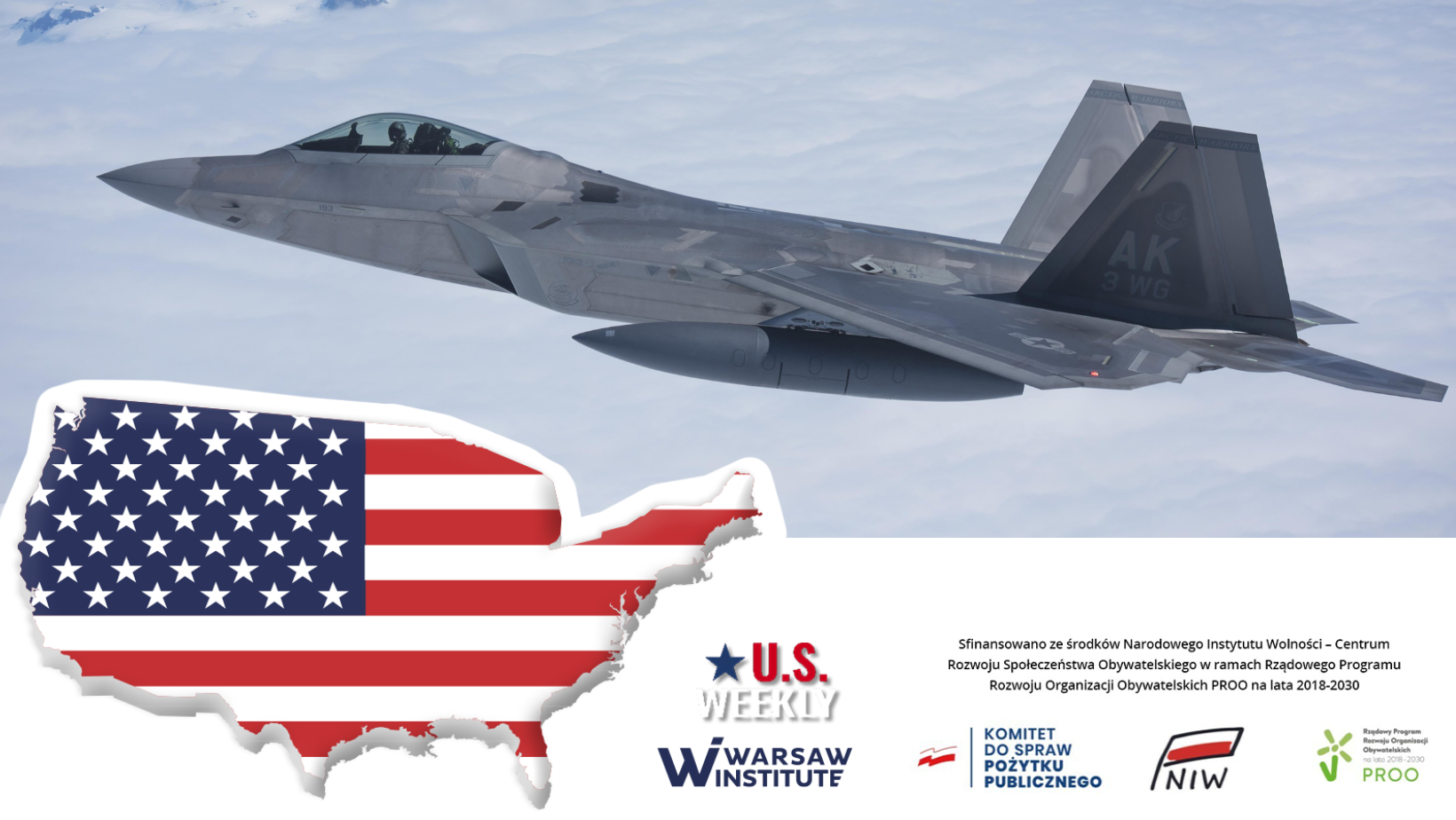
The Arctic is home to more than four million people. Despite its low population densities, the Arctic has strategic importance due to its extensive natural resources and military context. The Biden administration has pursued a comprehensive foreign policy, as evidenced by its new Arctic strategy seeking to grant Washington an advantage over other Arctic claimant nations.
SOURCE: TWITTER (ARCTIC TODAY)
Date: 24 October 2022
The Arctic consists of the Arctic Ocean and parts of Canada, Denmark (Greenland), Finland, Iceland, Norway, Russia, Sweden, and the United States (Alaska). Its territory is not subject to any regulation by international law. Two doctrines might regulate what country holds what Arctic land. The high seas doctrine says that the whole Arctic territory is open to all nations and may not be subjected to national sovereignty. According to the sector theory, Arctic countries could pursue claims to all discovered and undiscovered territories in their respective sectors. The Arctic holds an estimated 90 billion barrels of the world’s undiscovered oil resources and 1.67 billion cubic meters of its undiscovered natural gas resources, according to an assessment conducted by the U.S. Geological Survey. It accounts for 22 percent of the world’s oil and gas resources.[1] The Arctic contains a huge quantity of methane clathrate. Thus many countries have submitted claims to Arctic natural resources.
According to an official White House statement, the United States seeks an Arctic region that is peaceful and cooperative. The new National Strategy for the Arctic Region is an update of the 2013 agenda, poised to take a decade to realize this vision. This paper, however, addresses the climate crisis with bigger accuracy and accounts for increasing strategic competition in the Arctic, exacerbated by climate change, Russia’s war in Ukraine, and the People’s Republic of China’s increased efforts to garner influence in the region.
What might have prompted a Chinese threat in the Arctic was an Alaska summit, the first major meeting with Chinese officials under a new U.S. administration. Where they met must have been a clue for U.S. Secretary of State Antony Blinken. As tensions sour across the Pacific, many officials seem to overlook Chinese ambitions to become “a polar power” by 2030.[2] “China describes the Arctic as one of the world’s “new strategic frontiers,” ripe for rivalry and extraction. China sees the Arctic—along with the Antarctic, the seabed, and space—as ungoverned or undergoverned spaces,” according to the Brooking Institution report Northern expedition: China’s Arctic activities and ambitions, compiled jointly by Rush Doshi, Alexis Dale-Huang, and Gaogi Zhang. China is another country that has openly channeled its efforts into the Arctic.
For Russia, the Arctic poses a similar challenge as for other claimant states. Moscow has yet adopted a slightly distinctive perspective. As the United States and China seem to have taken the lead across the region, Russia is indeed losing its influence there. And yet, Russia’s coastline accounts for 50 percent of the Arctic Ocean’s coastline while the country has the world’s biggest icebreaker fleet.[3] How salient the Arctic is for the Russian invasion of Ukraine and NATO’s expansion was expressed in May by Nikolai Korchunov, a Russian diplomat. Finland and Sweden’s expected accession to NATO might prompt some clashes, he said.[4]
As global warming melts sea ice across the Arctic, some shipping routes may be opening up. Against this backdrop, world powers will begin efforts to grab the biggest chunk of Arctic shipping lanes. These territories could potentially see some heightened tensions. Unblocking all shipping lanes in the Arctic could provide a direct link between North America and Eurasia. Easier access to shipping lanes would, however, pose some risks. A new Arctic maritime path will open up the shortest passage between the United States and its rivals in the Pacific.
Washington’s new Arctic strategy involves four pillars:
Security
The Biden administration’s highest priority is to deter any threats to the United States. The U.S. government pledged to work closely with allies to jointly develop and lead shared approaches to address security challenges together. Washington also seeks to keep its military and diplomatic presence across the Arctic.
Climate change and environmental protection
The Biden administration declared it would partner with Alaskan communities and the state of Alaska to build resilience to the impacts of climate change in the North Pole.
Sustainable economic development
The U.S. government pledged to pursue sustainable development and improve livelihoods in Alaska, investing in infrastructure and supporting growing economic sectors.
International cooperation and governance
Despite the challenges to Arctic cooperation resulting from Russia’s war in Ukraine, the United States will work to sustain institutions for Arctic cooperation, including the Arctic Council. The U.S. administration also seeks to uphold international law, rules, norms, and standards in the Arctic.
Washington’s new Arctic strategy spans both domestic and international issues. Not only does the Biden administration consider the free access doctrine in the Arctic, but it will also seek to build up its presence in the area. A boost in Alaska’s strategic importance will increase the U.S. influence across the Arctic. There are nearly 22,000[5] U.S. troops in Alaska in nine military facilities around the state. As new shipping routes open up in the Arctic and with Washington’s new Arctic paper, perhaps the U.S. will deploy more troops to the area. To accurately tackle a new geopolitical challenge, the country’s armaments industry––so far focused on building new ships––must channel its efforts into building a fleet of icebreaking vessels.
[1]US Congressional Hearing. “Strategic Importance of the Arctic in US Policy.” [page 15]
JAN HERNIK – JAN HERNIK IS A GRADUATE OF THE AMERICAN STUDIES CENTER AT THE UNIVERSITY OF WARSAW. HE SPECIALIZES IN THE THEORY OF RELIGION, RACE AND ETHNICITY FOR POLITICAL CHOICE IN THE U.S PRESIDENTIAL ELECTIONS. HIS RESEARCH INTERESTS ALSO INCLUDE US ACTIVITY IN THE INDO-PACIFIC REGION
Op-Ed: Hiding Brexit – Nice try Financial Times, but the black hole is getting bigger
ByPaul Wallis PublishedOctober 23, 2022 Copyright AFP/File Philip FONG -
The vote ends five years of a Brexit saga in which Britain and Europe also sealed a divorce deal that bitterly divided the UK
The paywall-free Financial Times video discussing Brexit received a lot of praise for being straightforward and politically unbiased reporting. So it is. The word missing from the video is “revenue”. Debt is mentioned, but not explored in any detail.
OK, fair enough. You don’t insert the entire text of Lord of the Rings into a weather report, either. …But let’s not forget the markets had a fit and the pound went into free fall as the result of a mention of less revenue due to proposed tax cuts.
Try and find an instance of the market reacting to tax cuts anywhere else on Earth the way it reacted to the UK’s mere mention of such a simple policy. The market usually loves tax cuts. Not this time. Why?
If you search UK debt on Google News using the search dropdown, do you know what you get? Absolutely nothing. It’s not news. The UK now has a 100% debt-to-GDP ratio. That means you borrow as much as you earn. So far from Thatcher’s “can’t pay ourselves more than we earn”, this is the epitome of doing just that.
That’s £2.2 trillion with a Brexit pre-shrunk economy. It’s a pretty expensive hobby. As the revenue base shrinks with everyone, particularly Brexiteers moving their businesses and assets to the EU, it’s a much more expensive gambling-addict mode. According to a chart published last month, the actual debt is £2.4 trillion.
This is not to suggest that the UK is at risk of instant foreclosure. Quite the opposite. The moving vans won’t be arriving in any hurry, for a very pragmatic reason. Lenders want their money, not some deranged melodrama getting it. However, the fact that paying for the debt is now based on such a massive number doesn’t help.
As revenue shrinks, more borrowing will inevitably be required. This picture can’t change at all under Brexit. Strategically, it’s like driving your car over the White Cliffs of Dover and meanwhile taking out a personal loan before you hit the ground.
The market reaction to even the suggestion of reduced UK revenue was based on a much more demanding reality. When numbers don’t make sense, the markets don’t like it. Brexit has demolished trade with the EU. The US isn’t interested in doing anything, and much less interested if the Northern Ireland Protocol is compromised. The US could react very negatively.
This particularly tangled web created by alcoholic/coke and meth-based spiders underpins Brexit. The UK doesn’t want the European Court of Justice involved. Why not? Perhaps because it’s an external jurisdiction. That’d be at least consistent, but it’s also the presiding court in the EU. The ECJ can’t be uninvolved because there are member states involved. It’s not even a rational position for the UK to take, but as usual, it’s the default position regarding Brexit.
The debt is just to keep the wheels spinning while falling down the cliff. The UK has 66 million people, infrastructure, etc. to maintain. That can’t be paid for with thin air. The ever-shrinking Brexit economy can’t pay for that. Buildings have to keep standing, people must be paid, and water must keep pumping. Deregulated and privatized Britain had only one serious economic hot tap – The financial sector. That was big money, good for revenue, and that’s disappearing ASAP. Project Near
The Tories made a huge deal out of Project Fear. Things would be fine. There was no sudden blowout. Just a mass migration of people, businesses, and money. That was OK, according to someone.
Presumably, if you can’t see them, things do look fine. The simple fact is that Brexit is so wide-ranging that the visible negative effects are everywhere. You don’t distinguish between individual raindrops when you’re getting flooded out, either. You also don’t solve a jigsaw puzzle when you can’t see all the pieces.
People with no economic, financial, or political education can’t even interpret what they’re seeing. Nor, thanks to the world’s most utterly craven media, do these people have any idea how to find collateral information, let alone collateral damage.
The cumulative effects of Brexit are that deep. The UK is in “systemic shock” at this point. The nervous system still works, but it’s basically babbling. The UK is lucky the Bank of England stepped in when it did. It was under no obligation to do so, and may not be able to do so again if things get worse.
There are no handy hard numbers for revenue receipts and debts including projected interest rate rises.
Debt coverage is not a topic?
There are no projections for improving the trade situation.
Northern Ireland is critical and not a topic?
What else isn’t a topic?
Government by silence is hardly reassuring under these circumstances. Economic illiteracy is expected from Western governments. It’s been such a triumph in the past. The fact that a collection of Smugbridge-educated fools can’t even justify their own policies is a lot less reassuring.
The markets can be expected to continue to react very negatively to any further blows to revenue. Brexit is appropriately dying of its own hubris. The markets have read the riot act, and no further drivel will be tolerated.
Let’s put it this way – No numbers, no credibility.