Saturday, October 29, 2022

Elon Musk Completes Twitter Takeover With Help From Saudi Prince

October 29, 2022

Tesla CEO Elon Musk completed his $44 billion purchase of Twitter on Thursday after a chaotic, months-long buyout process, leaving the richest man on the planet in control of one of the world’s most widely used social media and communication platforms.

Musk wasted no time imposing himself on the company, swiftly firing several top executives including CEO Parag Agrawal.

“The bird is freed,” Musk tweeted late Thursday.

A self-described free speech absolutist who has proven in practice to be anything but, Musk has yet to fully detail his vision for Twitter, but critics of the takeover fear that the billionaire’s suggestions thus far — including reversing the permanent bans of former President Donald Trump and potentially other figures such as the hate-spewing conspiracy monger Alex Jones — could further deluge the platform with disinformation ahead of key elections in the United States and Brazil.

As The New York Times observed, “Twitter said it would prohibit misleading claims about voting and the outcome of elections, but that was before Mr. Musk owned it.”

“Elon Musk’s plans for Twitter will make it an even more hate-filled cesspool, leading to irreparable real-world harm,” said the Stop the Deal Coalition, an alliance of groups that includes Accountable Tech, Friends of the Earth, Public Citizen, and the Global Project Against Hate and Extremism. The coalition has urged Congress to investigate Musk’s acquisition of Twitter. (The purchase is reportedly already facing an investigation by federal regulators.)

“Musk’s plans will leave the platform more vulnerable to security threats, rampant disinformation, and extremism just ahead of the midterm elections,” the coalition said. “Elon Musk has a thirst for chaos and utter disregard for anyone other than himself and should not own Twitter.”

The coalition noted that, to fund the Twitter purchase, Musk is “accepting financing from Saudi Prince Alwaleed bin Talal Al Saud and the sovereign wealth fund of Qatar — two countries run by repressive regimes.” Saudi Arabia and Qatar are hardly bastions of free speech: Earlier this month, the Saudis sentenced 72-year-old U.S. citizen Saad Ibrahim Almadi to 16 years in prison over tweets criticizing the regime.

Almadi’s son told The Washington Post that the kingdom has tortured his father in prison.

“Elon Musk owning one of the world’s most powerful communication platforms is dangerous for us all,” the Stop the Deal Coalition continued. “As Musk runs Twitter to the ground, let this serve as a warning to other platforms that they will be held accountable for ignoring public safety and dismantling the guardrails designed to protect our information ecosystem.”

In a statement posted to Twitter Thursday morning, Musk said the reason he purchased the company “is because it is important to the future of civilization to have a common digital town square, where a wide range of beliefs can be debated in a healthy manner, without resorting to violence.”

But Musk’s stated openness to free expression appears not to apply to his employees, Tesla customers, or journalists covering his companies.“Elon Musk has a thirst for chaos and utter disregard for anyone other than himself and should not own Twitter.”

“In November 2020, former Tesla employee Stephen Henkes said he was fired from his job at Tesla on August 3, 2020 after raising safety concerns internally then filing formal complaints with government offices, when the company failed to fix and communicate accurately with customers over what he said were unacceptable fire risks in the company’s solar installations,” CNBC reported Thursday.

“Musk and Tesla have also sought — not always successfully — to silence customers,” the outlet added. “For example, Tesla used to compel customers to sign agreements containing non-disclosure clauses as a prerequisite to have their vehicles repaired,” the outlet added. “In 2021, Tesla asked customers to agree not to post critically to social media about FSD Beta, an experimental driver assistance software package that some Tesla owners could test out using their own cars and unpaid time to do so.”

“Musk is the face of 21st-century tech-based, extreme capitalism.”

Musk, like other billionaire CEOs, is also a union-buster.


Last year, the National Labor Relations Board upheld a judge’s ruling that Tesla unlawfully fired an employee involved in union organizing. The labor board also affirmed the finding that Musk illegally threatened workers “with the loss of their stock options” if they decided to form a union.

David Nasaw, emeritus professor of history at the CUNY Graduate Center, wrote in a column for the Times on Thursday that “Musk is the face of 21st-century tech-based, extreme capitalism, just as the robber barons, who built our railroads, and Andrew Carnegie, who supplied those railroads and the builders of modern American cities with steel, embodied the exuberant and expansive industrial capitalism of the late 19th and early 20th centuries.”

“Mr. Musk has exploited the opportunities emerging in a rapidly disintegrating regulatory state apparatus and acquired a small army of investors and a fleet of lobbyists, lawyers, and fanboys (known as Musketeers),” Nasaw continued. “He has sought to position himself as a tech genius who can break the rules, exploit and excise those who work for him, ridicule those who stand in his way, and do as he wishes with his wealth because it benefits humanity.”

“It is not unreasonable to expect that a Musk-owned and controlled Twitter will, in the name of free speech, allow disinformation and misinformation to be tweeted ad infinitum so long as it discredits his political opponents and celebrates and enriches himself and his allies,” Nasaw added. “Elon Musk is a product of his — and our — times. Rather than debate or deride his influence, we must recognize that he is not the self-made genius businessman he plays in the media. Instead, his success was prompted and paid for by taxpayer money and abetted by government officials who have allowed him and other billionaire businessmen to exercise more and more control over our economy and our politics.”

Elon Musk's Twitter Takeover Faces Backlash Over Saudi Financing

BY ANDREW STANTON ON 10/29/22 

Elon Musk's Twitter purchase is facing backlash for receiving funding from Saudi Arabian Prince Alwaleed bin Talal.

Musk secured the $44 billion deal on Friday following a months-long brouhaha over the purchase—quickly dividing internet users and raising concerns about the future of the social media company. The purchase has long been shrouded in controversy, with Musk promising to prioritize free expression on the platform. Some have raised concerns that the purchase could enable those who spew hate speech online.

The SpaceX founder relied on equity from other investors to carry out the deal. Alwaleed, a Saudi prince and CEO of the Kingdom Holding company, committed $1.89 billion—equating to nearly 35 million shares—in equity to help Musk purchase Twitter, according to Reuters.

In a press release, Alwaleed confirmed that his company's shares in Twitter will "roll over" to the "'new' Twitter," making the company the social media giant's second-largest investor—only behind Musk.

"The deal is in line with the long-term investment strategy for which Kingdom Holding Company is known for," the statement reads.

Musk's reliance on Saudi Arabia drew questions from some critics. Saudi Arabia has faced accusations of stifling free expression and alleged human rights abuses within their borders—and abroad. Notably, Saudi Crown Prince Mohammed bin Salman was accused of ordering the death of Washington Post columnist Jamal Khashoggi, who had been a critic of Saudi royalty, in Turkey. Khashoggi was reportedly cut into pieces with a bone saw during a visit to the Saudi consulate in Istanbul.

Critics pointed out what they viewed as a dangerous hypocrisy in allowing Saudi royalty so much ownership of Twitter.

"There's not been enough scrutiny of the fact that Elon Musk's Twitter takeover has been propped up with cash from Qatar & Saudi Arabia," tweeted Business Insider's Ryan Gallagher. "Twitter was prev compromised by Saudi spies who used internal data to out dissidents & have them jailed. Surprising any new owner of Twitter - especially one professing to be a free-speech absolutist - would want Saudi influence anywhere near the platform."


"The bird is free! The bird is free!" tweeted MSNBC Host Mehdi Hasan in reference to Musk's celebration of the purchase. Hasan, a critic of Saudi Arabia's authoritarian government, made the post as he retweeted the news about Alwaleed's stake in Twitter.


Tommy Vietor, a former staffer for President Barack Obama, tweeted: "The second largest investor in Twitter is...Saudi Arabia. The bone saw-loving kingdom that just sentenced a 72-year-old American man to 16 years in jail for his tweets."


Saudi Arabia's Crackdown on Free Speech Raised Eyebrows


Amnesty International in a 2021 report raised concerns about a continued "crackdown" on free expression in Saudi Arabia. They noted individuals working on human rights work or who expressed dissenting views were given "heavy" prison sentences.

"Among those arbitrarily detained, prosecuted or sentenced were human rights defenders, government critics and other political activists. Women human rights defenders were subjected to judicially imposed travel bans following conditional release from prison," the report concludes.

READ MORE

Twitter debates Musk's proposed "moderation council" as users volunteer

Saudi Arabia recently sentenced an American citizen, Saad Ibrahim Almadi, to 16 years in prison. Almadi was detained over tweets criticizing the kingdom when he visited the Middle Eastern nation in November 2021, The Washington Post reported earlier in October.

The tweets prompted charges of harboring a terrorist ideology and trying to destabilize the kingdom, according to the Post. Free expression advocates have raised concern about the arrest, illuminating Saudi Arabia's disregard for the right, which is guaranteed by many Western nations including the U.S.

Newsweek reached out to Twitter for comment.

No Straight Line to Progress: Meet Historian Justin Leroy

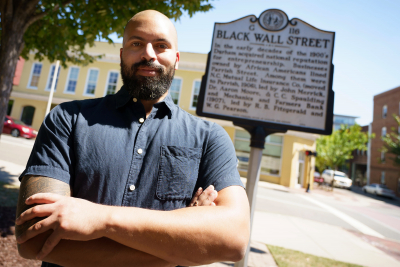
Justin Leroy in front of Black Wall Street sign
A historian of slavery, Justin Leroy is excited to incorporate local history into his research. (John West/Trinity Communications)

Justin Leroy was in the beginning of a graduate program at New York University in the summer of 2008 when it became clear that Barack Obama would become the Democratic nominee for president. Leroy recalls countless pundits talking about the move as a turning point in history.

“As I walked from the subway to my apartment, I would pass by these newsstands, and every national magazine had a cover story about the end of race and a post racial society,” he says. “And I was skeptical.”

“I think I am more pessimistic,” the new assistant professor of History at Duke shared recently. “I would see these murals or pictures of abolitionists, civil rights leaders and Obama that suggested his election would be the culmination of a centuries-long struggle.

To many, it did all seem so straightforward, as if the path to progress must be a straight line. But it didn’t make sense for the world Leroy knew to be true as a historian researching slavery and emancipation.

“That was in the back of my mind as I was studying the history of slavery,” he says. “I wondered what other kind of shapes or paths we might use used to understand history. So instead of just a straight line there are maybe, circles, ups and downs, even moving backwards.”

That idea has become the context for the research he does today — studying and teaching these connections between the past and the present while challenging the notion of a straight line through history.

Leroy views the wealth inequalities, systemic issues and the long-term impacts of capitalism we see today all through a lens of historic interconnectedness. Instead of looking at the 19th century as two distinct periods dividing slavery and emancipation, he sees the era as one marked by a continuity that cemented the relationship between race and capitalism into the systems we know today.

There was not slavery and freedom, a straightforward before and after: The barriers to economic freedom and progress that many 19th century Black people endured — and resisted — did not begin post-emancipation. They had always been present. 

“When I realized that history is not static, but a conversation between the present and the past, that's when I got really pulled in,” Leroy says.

Black history in the South

Leroy’s path to Duke’s Department of History wasn’t a straight line either. He first studied film at Wesleyan University and went on to receive degrees from NYU in American Studies and Humanities and Social Thought.

After a postdoctoral fellowship at Harvard, Leroy became an assistant professor of African American studies at University of California, Davis, where he made his home prior to moving to Durham.

As a New Englander living in California for the last few years, Leroy eventually began to see a disconnect between his research and his never having lived in the South. He can joke about the heat and mosquitos in North Carolina — but he knows that real challenges come with living here.

“A lot of north-south regional identity is bound up in stereotypes and how different you are from the other, so I never really thought of the South as some place I would want to live,” he says.

He joins Duke not only excited at the opportunity to take part in all of Duke and Durham’s traditions but to enmesh himself in a culture that has many historical ties to his research.

So much of the modern story of Southern places is owed to the histories Leroy studies. With historically significant sites within Durham, like downtown’s Black Wall Street district and the Historic Stagville plantation, Leroy has research locations right at his fingertips.

“I could never do that before,” he says, noting his eagerness to take students on local research trips.

Bringing his new perspectives to this historically rich place is exciting for Leroy, and his past experience studying in archives has helped him see his perspective as valuable.

He shared that after he would spend time with the archives and primary sources that he had previously only read about, there were things he saw differently from what researchers had described.

“That’s not to say that other scholarship is bad or wrong,” he says, “but it really made me realize how much the perspective of a researcher influences how we look at documents. I think the idea that research is purely objective is usually not the case.

“How you look at the past changes depending on your present. That's always been the case.”

There may not be a straight line through history, but scholars like Leroy know it is all connected.

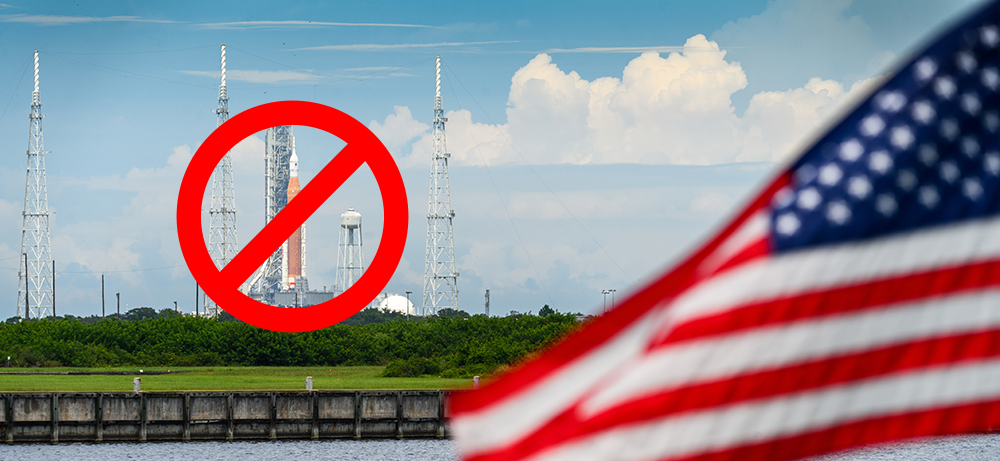
SPACE IMPERIALISM

anti-artemis

In Episode 146 of the CounterVortex podcastBill Weinberg protests the unprovoked imperialist attack on the asteroid Dimorphos, and rants against the sacrosanct dogma of space expansionism. The much-hyped asteroid threat is clearly being used as a cover for militarization of space to achieve global hegemony on Earth—and for eventual corporate pillage of the heavenly bodies. Finally, a long-overdue voice of space skepticism emerges from academe, with the book Dark Skies: Space Expansionism, Planetary Geopolitics, and the Ends of Humanity by Daniel Deudney. But hubristic notions of “space communism” have also been seen on the political left, as discussed in the book I Want to Believe: Posadism, UFOs and Apocalypse Communism by AM Gittlitz.

Both utopian and dystopian visions of space colonization were explored by Ursula K. Le Guin—the latter providing likely inspiration for James Cameron‘s hit movie Avatar. The utopian vision was first charted by the early Bolshevik writers Yevgeny Zamyatin in We and Alexander Bogdanov in Red Star. It was generations later embraced in rock music of the hippie era—most notably the Jefferson Starship and Black Sabbath. The perils of looking to space for human salvation have been explored in fictional form from Out of the Silent Planet by CS Lewis (1939) to The Three-Body Problem by Liu Cixin (2007). The critique was also put forth by Lewis in expository form in his 1958 essay “Religion & Rocketry“—in which he paradoxically takes a Christian moralist path to an anti-imperialist position on the space question which is more truly progressive than that of many “leftists.”

Listen on SoundCloud or via Patreon.

Production by Chris Rywalt

We ask listeners to donate just $1 per weekly podcast via Patreon—or $2 for our special offer! We now have 48 subscribers. If you appreciate our work, please become Number 49!

Image altered from NASA

PRISON NATION U$A
We Must Unlearn the Lie That State Violence Is Inherently Legitimate
Riot police clash with protesters demanding justice for the police murder of Breonna Taylor in Louisville, Kentucky, on September 23, 2020.
BEN HENDREN / ANADOLU AGENCY VIA GETTY IMAGES
October 29, 2022

Note: The text that follows is an excerpt of an interview with Kelly Hayes that is featured in the anthology of antifascist writing No Pasarán! (AK Press, October 2022).


“Kops and Klan go hand in hand!” This chant was shouted in street gatherings across the country during the 2020 uprising against white supremacy and police violence. The historic connection of white nationalist vigilante violence and the police became glaringly obvious in the disparity between the treatment of the Proud Boys and that of antiracist protesters, where police often refused to intervene while the far-right gangs leveled attacks on left-wing demonstrators.

Antifascism is built on the notion that these insurrectionary fascist groups, such as the alt-right or the Proud Boys, are extraordinary and distinct from the larger liberal order, yet it’s not that simple. Instead, the role of the police as an institution of social control in racial capitalism and settler-colonialism has always had some relationship to the insurgent white supremacist groups that are looking to reinstitute racial hierarchies. This apparently symbiotic relationship forces antifascists to reckon with the similarities and differences between white nationalist groups and the police as they build strategies to deal with both.

I interviewed abolitionist organizer Kelly Hayes — who is the host of Truthout’s podcast “Movement Memos” and a contributing writer at Truthout — about her experiences confronting these interlocking systems of oppression, how she became an organizer, how she approaches this relationship between antagonistic forces, and how we can build up an abolitionist antifascism that goes further than only defeating fringe neo-Nazi groups.


Shane Burley: How does police abolition work connect to antifascism?

Kelly Hayes: Police, who are themselves fascistic, are the entry point to incarceration. There’s nothing more fascistic in the US than our prison system. If fascism escalates, it already has a mass disposal system for human beings and a populace that has been conditioned to ignore what happens in those places. We already know that people suffer and die horribly in those places, and we know people allow it. People participate in mythologies about the purpose and function of it all. These facilities manufacture conditions that bring about premature death and they extract time, as Ruth Wilson Gilmore has explained. The prison-industrial complex and its many tentacles are the beast the fascists would feed us to.

It’s important to remember that fighting fascism means fighting the erosion of human empathy. It means fighting the further normalization of mass suffering and death. That makes the prison-industrial complex ground zero.


What role does the police have in the growth of the far right?

The police are a natural home for right-wing militants and it’s important not to think of far right forces and police as distinct. The membership overlap between police and white supremacist organizations is quite telling.

But I think people also sort of limit themselves sometimes in how they perceive that overlap. Most racist people don’t join racist organizations. We need to understand the police as a white supremacist organization that has formalized power. It’s entrenched in the government, and maintains state interests, and has a whole mythology of “upholding decency” around it. Policing, as an idea, appeals to a lot of people who aren’t down with the [Ku Klux] Klan. Since police can be well paid in an economy that generally screws over Black and Brown communities, we see a lot of nonwhite cops, and that demographic diversity helps legitimize police violence.

People have a narrow image of what white supremacy and the far-right looks like because we are conditioned to see state violence as inherently legitimate. Police don’t just have legal immunity, for the most part, they also have social immunity, and their actions are not scrutinized in the ways that everyday people are. If they were, people would have no trouble recognizing, based on simple inventories of events, that the police are a force for white supremacy.

A lot of vigilante violence that helped impose order under Jim Crow became institutionalized as the police became more professionalized, and more heavily armed. Lynchings where no one was charged gave way to shootings and beatings and other violence that was dealt out from a place of police legitimacy.

It’s not surprising to see collaboration between police and right-wing vigilantes because they’re natural allies and grown out of the same cultural formation. We rarely see them clash, and, when they do, they often do it with kid gloves. You cannot effectively pit these forces against one another because they are too entwined and have too many shared values and purposes.

We saw these two forces, the police and the far right, even more explicitly collapse into each other over the past few years. How do you think we can build social movements capable of taking on both forces simultaneously?

We have to understand that there is no alternative to taking on both the police and the far right simultaneously. The police are the most powerful right-wing gang in the country.

When strategizing against them, it must be understood that they are in collaboration with other white supremacist organizations. When countering white supremacist organizations, it must be understood that police are either actively entrenched in those organizations, or could come to their aid at any time, because they’re on the same side.
TOTALLY PREVENTABLE
Cholera overwhelms Haiti as cases, deaths spike amid crisis


ASSOCIATED PRESS
OCT 29, 2022

PORT-AU-PRINCE, Haiti — The sun shone down on Stanley Joliva as medical staff at an open-air clinic hovered around him, pumping air into his lungs and giving him chest compressions until he died.

Nearby, his mother watched.

“Only God knows my pain,” said Viliene Enfant.

Less than an hour later, the body of her 22-year-old son lay on the floor wrapped in a white plastic bag with the date of his death scrawled on top. He joined dozens of other Haitians who have died from cholera during a rapidly spreading outbreak that is straining the resources of nonprofits and local hospitals in a country where fuel, water and other basic supplies are growing scarcer by the day.

Sweat gathered on the foreheads of staff at a Doctors Without Borders treatment center in the capital of Port-au-Prince where some 100 patients arrive every day and at least 20 have died. Families kept rushing in this week with loved ones, sometimes dragging their limp bodies into the crowded outdoors clinic where the smell of waste filled the air.

Dozens of patients sat on white buckets or lay on stretchers as IV lines ran up to bags of rehydrating fluids that gleamed in the sun. So far this month, Doctors Without Borders has treated some 1,800 patients at their four centers in Port-au-Prince.

Across Haiti, many patients are dying because say they’re unable to reach a hospital in time, health officials say. A spike in gang violence has made it unsafe for people to leave their communities and a lack of fuel has shut down public transportation, gas stations and other key businesses including water supply companies.

Ms. Enfant sat next to her son’s body as she recalled how Joliva told her he was feeling sick earlier this week. She had already warned him and her two other sons not to bathe or wash clothes in the sewage-contaminated waters that ran through a nearby ravine in their neighborhood — the only source of water for hundreds in that area.

Ms. Enfant insisted that her sons buy water to wash clothes and add chlorine if they were going to drink it. As Joliva grew sicker, Ms. Enfant tried to care for him on her own.

“I told him, ‘Honey, you need to drink the tea,’” she recalled. “He said again, ‘I feel weak.’ He also said, ‘I am not able to stand up.’”

Cholera is a bacteria that sickens people who swallow contaminated food or water, and it can cause severe vomiting and diarrhea, in some cases leading to death.

Haiti’s first major brush with cholera occurred more than a decade ago when U.N. peacekeepers introduced the bacteria into the country’s biggest river via sewage runoff at their base. Nearly 10,000 people died and thousands of others were sickened.

The cases eventually dwindled to the point where the World Health Organization was expected to declare Haiti cholera-free this year.

But on Oct. 2, Haitian officials announced that cholera had returned.

At least 40 deaths and 1,700 suspected cases have been reported, but officials believe the numbers are much higher, especially in crowded and unsanitary slums and government shelters where thousands of Haitians live.

Worsening the situation is a lack of fuel and water that began to dwindle last month when one of Haiti’s most powerful gangs surrounded a key fuel terminal and demanded the resignation of Prime Minister Ariel Henry. Gas stations and businesses including water companies have closed, forcing an increasing number of people to rely on untreated water.

Shela Jeune, a 21-year-old hot dog vendor whose 2-year-old son has cholera, said she buys small bags of water for her family but doesn’t know if it’s treated. She carried him to the hospital where he remains on IV fluids.

“Everything I give him to eat, he just throws it up,” she said.

Ms. Jeune was among dozens of mothers seeking treatment for their children on a recent morning.

Lauriol Chantal, 43, recounted a similar story. Her 15-year-old son would vomit as soon as he finished eating, prompting her to rush him to the treatment center.

While at the center, her son, Alexandro François, told her he felt hot.

“He said to me ... ’Mama, could you take me outside to wash me or pour water over my head?’” she said.

She obliged, but suddenly, he collapsed in her arms. The staff ran over to help.

Children younger than age 14 make up half of cholera cases in Haiti, according to UNICEF, with officials warning that growing cases of severe malnutrition also make children more vulnerable to illness.

Haiti’s poverty also has worsened the situation.

“When you are unable to get safe drinking water by tap in your own home, when you don’t have soap or water purifying tablets and you have no access to health services, you may not survive cholera or other waterborne diseases,” said Bruno Maes, Haiti’s UNICEF representative.

Perpety Juste, a 62-year-old grandmother, said one of her three grandchildren became ill this week as she fretted about how their situation might have led to her sickness.

“We spent a lot of days without food, I cannot lie,” she said. “Nobody in my house has a job.”

Ms. Juste, who lives with her husband, five children and three grandchildren, said she used to work as a house cleaner until the homeowners fled Haiti.

The increasing demand for help is squeezing Doctors Without Borders and others as they struggle to care for patients with limited fuel.

“It’s a nightmare for the population, and also for us,” said Jean-Marc Biquet, a project coordinator with the organization. “We have two more weeks of fuel.”

Life is paralyzed for many Haitians, including Ms. Enfant, as she mourned her son’s death. She wants to bury him in her southern coastal hometown of Les Cayes, but cannot afford the 55,000 gourdes ($430) it would cost to transport his body.

Ms. Enfant then fell quiet and gazed into the distance as she continued to sit next to her son's body — too stunned, she said, to stand up.

First Published October 29, 2022, 10:35am
BEFORE COP27
East African Climate Activists Are Fighting a Destructive Pipeline Project
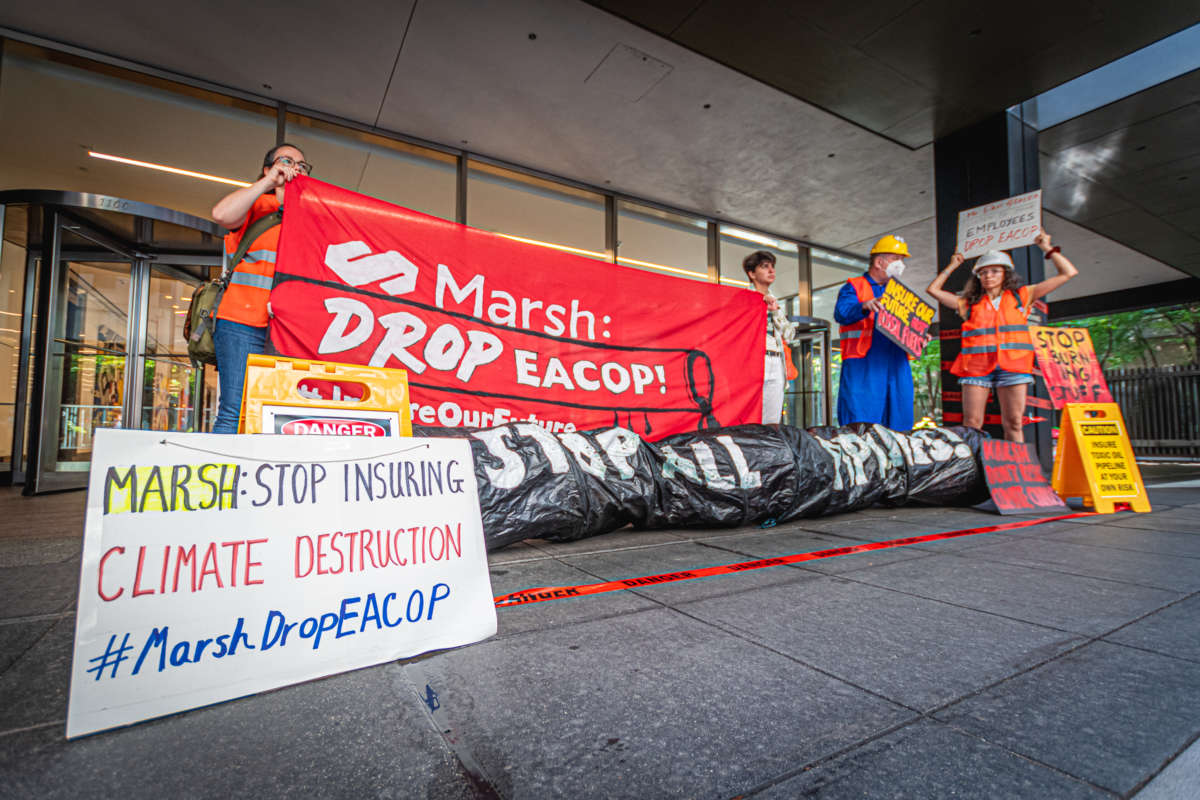
Activists rally outside the headquarters of insurance company Marsh McLennan in New York City, urging CEO Dan Glaser to cut ties with the East African Crude Oil Pipeline (EACOP) on July 1, 2022
.ERIK MCGREGOR / LIGHTROCKET VIA GETTY IMAGES
October 29, 2022

Anew analysis released Thursday by a climate research firm reveals environmental assessments used to gain approval for the East African Crude Oil Pipeline in Uganda and Tanzania failed to fully consider the massive amount of fossil fuel emissions that will result from the project.

The earlier assessments took into account only the construction and operation of the pipeline, known as EACOP, but failed to take into account the emissions which will result from the international transport, refining, and burning of the 848 million barrels of oil that the project will carry over its 25-year lifespan.

Climate campaigners have opposed the project which has already displaced thousands of people and threatens the livelihoods of millions.

In its new analysis, the Climate Accountability Institute (CAI) looked at expected emissions from tanker transport from Port Tanga in Tanzania through the Suez Canal to Rotterdam (and return), refining of the waxy crude oil into petroleum products, and end-use consumption of the carbon fuels,” and found that EACOP will be directly linked to 379 million tonnes of carbon emissions — more than 25 times the current annual emissions of Uganda and Tanzania.

CAI’s findings qualify EACOP as a “mid-sized carbon bomb,” Richard Heede, who leads the group’s Carbon Majors project, told The Guardian. A carbon bomb is defined as an extraction project which has the capacity to emit at least one billion tonnes of carbon.“EACOP is an ill-advised project whose impact on communities in Uganda and Tanzania, wildlife, and the planet will be devastating, as the project’s lead Total Energies stand to gain.”

“It is time for TotalEnergies to abandon the monstrous EACOP that promises to worsen the climate crisis, waste billions of dollars that could be used for good, [and] bring mayhem to human settlements and wildlife along the pipeline’s path,” Heede told The Guardian.

The earlier analysis that was accepted by the host governments detailed just 1.8% of the project’s total emissions.

The French oil company TotalEnergies and the China National Offshore Oil Corporation (CNOOC) are behind the project, with Total planning to invest between $3.5 billion and $5 billion in the pipeline despite, according to CAI, its “repeated public assurances that the company is decarbonizing its portfolio in alignment with the Paris Agreement.”

“EACOP is an ill-advised project whose impact on communities in Uganda and Tanzania, wildlife, and the planet will be devastating, as the project’s lead Total Energies stand to gain,” said Omar Elmawi, coordinator for the Stop EACOP campaign. “We must continue to push for a stop to this and other such projects.”

CAI’s analysis was released on the same day that the United Nations Environmental Program (UNEP) warned that “only an urgent system-wide transformation can avoid an accelerating climate disaster” and that continuing to extract fossil fuels will put the planet on a pathway to grow 2.8°C hotter by the end of century.

The report also comes as 350Africa.org and the Stop EACOP coalition are preparing to release a new documentary film, EACOP: A Crude Reality, which features the stories of climate campaigners who are fighting against the project and some of the thousands of people who have been evicted or economically displaced because of the pipeline.

“I lose my entire home with my family because they refuse to resettle me,” one man says in the film, which is scheduled to be released Sunday. “They told me I should take cash compensation.”

The stories within the film “are a testament to the impunity with which fossil fuel corporations such as Total Energies operate, as they realize huge profits at the expense of people and the environment,” said Hilda Nakabuye, a climate campaigner in Uganda.

“Harmful projects such as EACOP should have no place in the future of the continent,” she added. “Instead the government of Uganda and Tanzania supported by the developed nations should create sustainable, inclusive, and diversified economic opportunities and energy solutions that directly benefit Ugandans and Tanzanians and protect their basic rights, livelihoods, environment, and future.”

Climate advocates have successfully pressured 24 banks and 18 insurers to pledge that they will not support EACOP. Climate action groups across Africa plan to hold public screenings of the film, which will be available here starting Sunday.


'I never said the whole UK was racist': Trevor Noah hits back at critics after claiming 'British backlash' to Sunak becoming PM

29 October 2022, 17:25

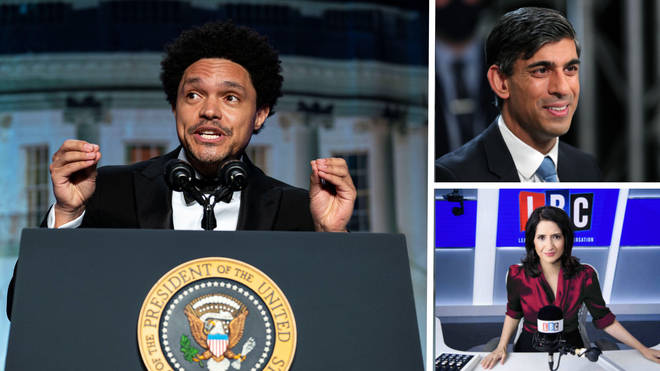
Trevor Noah (L) has insisted he never said the whole of the UK was racist
Trevor Noah (L) has insisted he never said the whole of the UK was racist. Picture: Alamy/LBC

By Kit Heren

US talk show host Trevor Noah has insisted that he never meant that the whole UK was racist, after being criticised for claiming that there had been a backlash to Rishi Sunak becoming the country's first Asian Prime Minister.

Daily Show presenter Mr Noah said on his satirical news programme The Daily Show this week that some people are saying that "now the Indians are going to take over Great Britain".

He also opened an earlier show with a reference to a racist caller to LBC, who told presenter Sangita Myska that Mr Sunak "doesn't represent Britain".

LBC: Sangita Myska eviscerates this caller who claims Suank 'doesn't love England'

Former cabinet minister Sajid Javid later said Mr Noah's comments were "completely detached from reality".

And Mr Sunak's own spokesperson, asked whether he believes the country he governs is racist, said: "No he doesn't."

Former Chancellor Mr Javid rejected Mr Noah's comments, saying: "Simply wrong. A narrative catered to his audience, at a cost of being completely detached from reality.

He added: "Britain is the most successful multiracial democracy on earth and proud of this historic achievement."

Trevor Noah
Trevor Noah. Picture: Getty

Popular historian Tom Holland also hit out at Mr Noah's comments.

He said: "As ever, the inability of American liberals to understand the world beyond the US in anything but American terms is a thing of wonder.

"(The likelihood of the right-wing party in the US choosing a Hindu as its leader is, I would agree, effectively zero.)"

TV presenter Piers Morgan also took to Twitter to argue that US media was “falsely portraying Britain as a racist country”.

Now Mr Noah has pushed back against his British critics, claiming that his comments have been blown out of proportion.

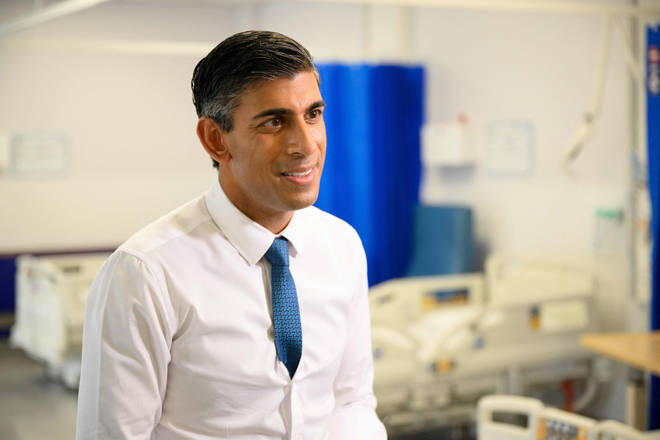
Rishi Sunak this week
Rishi Sunak this week. Picture: Getty

He replied to Mr Morgan's tweet, saying: "“C’mon Piers, you’re smarter than that.

“I wasn’t saying ‘the entire UK is racist’, I was responding to the racists who don’t want Rishi as PM because of his race. That’s why I said ‘some people’.”

Mr Noah made his original comments on his show earlier this week. A clip posted to social media has been viewed more than 1.3 million times.

He said: "Watching the story of Rishi Sunak becoming England's first Prime Minister of colour, of Indian descent, of all these things and then seeing the backlash is one of the more telling things about how people view the role that they or their people have played in history.

"And what I mean by that is this, you hear a lot of the people saying 'Oh, they're taking over, now the Indians are going to take over Great Britain and what's next?'"And I always find myself going 'So what? What are you afraid of?'"

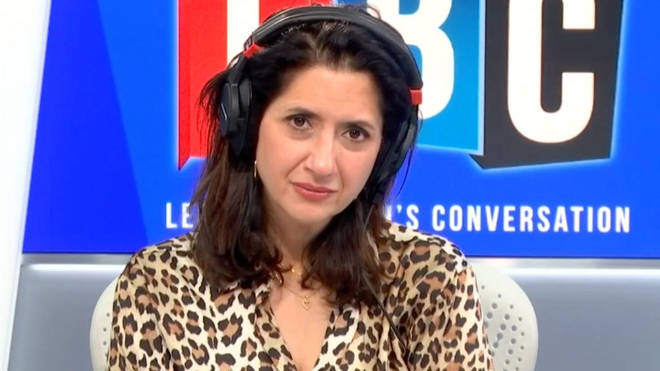
sangita
Sangita Myska. Picture: LBC

Mr Noah's claims came after a now-infamous conversation between LBC presenter Sangita Myska and a caller known only as 'Jerry from Lowestoft' two days before Mr Sunak won the Conservative leadership election.

The clip has now been viewed millions of times. Sangita, who, like Mr Sunak, is of East African Indian descent, said the video had been sent back to her from people all over the world.

Read more: Brit kayaker rescued at sea after spending days clinging to buoy in English Channel 'vanishes from French hospital'

She wrote in a later piece for LBC reflecting on the incident: "That conversion on LBC has kicked off a conversation worldwide about the moment the racist underbelly of a society collides with body politic so openly that the world can hear and feel [every] word of hate.

Read more: 'Peddling false claims': UK slams Russia for accusing Royal Navy of blowing up Nord Stream pipeline

"Racism exists in every society where there is a racially minoritized group. Britain is no exception. It has its own complex historical relationship with ethnic minorities by virtue of Empire and the subjugation of three quarters of the globe – most of whom were people of colour. 

"We are now over here, because colonial Britain was over there."

Sangita added: "On my LBC show I encourage my listeners to lean into their complex, difficult feelings - not hide away behind flippant remarks. 

"Then, in a safe, honest and open space we explore them together in a nuanced and balanced way."

Bats: Out of Our Nightmares and Into Our

Hearts


Photograph of flying bats against the sky at dusk

Bats in a Texas evening sky. Paul Cryan, USGS photographer, 2009.

This post was written by Science Reference Specialist Ashley Cuffia.

Bats get a bad reputation in popular culture, and at no time of year is it more prevalent than Halloween. The image of a furry, flying nightmare with fangs, red eyes and leathery wings swooping down on unsuspecting innocents may play well in the movies; these notions could not be farther from the truth. In all sincerity, these small creatures are largely harmless and perform a wide array of beneficial services such as pest control and pollination. Let’s take a look at the bat with an open mind, and allow them to fly out of our nightmares and into our hearts.

Here are five amazing facts about bats:

  • Over 300 species of plants depend on bats for their pollination needs. Some of these include avocados, cacao and agave. So without bats, there would be a lot less chocolate, guacamole and tequila in the world!
  • Each night bats can eat their body weight in insects. This not only helps crops from being destroyed, but also lowers the number of bug bites we will get in the summer.
  • The average bat in the wild can live up to 20 years with some reaching their 30s. The oddity of this is that normally the smaller the animal the shorter the lifespan, however bats break that mold and spend their long life zipping around the sky.
  • Baby bats are called pups, and most bats give birth to a single pup. Mother bats will gather all their pups up into a nursing colony in the spring and watch over their young as they grow. Like all other mammals bats feed milk to their young until they are old enough to eat solid food.
  • As the only true flying mammal on the planet, they are not only unique but incredibly fast. Their rate of flight speed depends on the species, but some can reach up to 100mph.
Color lithograph of red and brown bats in various poses. L. Prang and Co, 1874

Color lithograph of red and brown bats in various poses. L. Prang and Co, 1874

So what can we do to help these furry little flying animals continue doing the hard work that they do? Think about planting a bat garden or building a bat house!

Just as planting a pollinator garden for bees and butterflies as mentioned in our blog “Butterflies, Beetles and Bees, Oh My! National Pollinator Week” there are a variety of things you can plant to encourage bats.

  • Bats love to eat moths, so planting flowers that host moths such as evening primrose and honeysuckle would increase the odds of these furry friends stopping by for a snack.
  • Trees not only give bats a place to snuggle up, but also provide a buffet of bugs for their diet.
  • Insects are attracted to very fragrant plants, so not only do you get to enjoy your sweet scented flowers, but also attract more insects for the bats to eat.
  • Artificial light in your yard will attract bugs, but it will negatively impact bat behavior, so keep that yard nice and dark.
  • Providing water is also very important, however it is not as simple as putting out a bird bath or bucket. Bats scoop up water as they fly so a pond or water trough 7 to 10 feet in length is ideal for them. Just remember to add in a little ramp out of the water in case one crash lands or another creature happens to fall in.
  • Finally think about building a bat house, this will give them somewhere warm and dark to spend the day catching some zzz’s.
Black and white drawings of bat heads and bat in flight, 1904 lithograph

Scientific illustration of bats. Lithograph by Adolph Giltsch and drawing by Ernst Haeckel. Published in Kunstformen der Natur, 1904

Read more on how bats have captured the hearts of our other  LC bloggers:

Learn more about bats from these online resources: