Tuesday, January 10, 2023

OPEC’s Second-Largest Oil Producer Issues Arrest Warrant For Donald Trump

The Iraqi supreme court has issued an arrest warrant for former U.S. President Donald Trump for the assassination on Iraqi soil of Iran’s Quds Force commander, Qasem Soleimani, IraqiNews reports, citing a Baghdad news agency. 

The warrant was issued on Thursday in connection both with the killing of Soleimani and of another Iraqi militia leader, chief of staff of the Popular Mobilization Forces (PMF) in Iraq–both of whom were killed in a drone strike in January 2020 near the Baghdad airport. 

That assassination operation led to Iranian strikes on the Aia Al-Assad U.S. base in Iraq. 

The arrest warrant charges Trump with premeditated murder. While the warrant is clearly symbolic, a conviction of this nature carries the death penalty. 

The court said the investigation into the killings was still ongoing, AP reported. 

Citing Baghdad Today news agency, IraqiNews quoted Supreme Judicial Council head Faiq Zaidban as calling on Baghdad to hold Trump “accountable for this heinous crime”.

At the same time, in November, Iraq’s parliamentary speaker confirmed that hundreds–and possibly thousands–of people had been kidnapped and killed by Iran-backed militias from 2014 to 2016. 

Iraq, the second-largest oil producer in OPEC, is caught between rivals Iran and the United States, while Iran’s influence has grown exponentially since the toppling of Saddam Hussein following the 2003 U.S. invasion. 

In October, ending a long-running stalemate, Iraq’s parliament named a new pro-Iranian prime minister and pro-Iranian parties now dominate, having sidelined Shi’ite rival Moqtada al Sadr, who had been paralyzing the government with anti-Iranian protests. 

The PMF figure assassinated in a Trump-ordered military operation represented the head of an umbrella group that brought together pro-Iranian militias in Iraq, which enjoyed government support as a loosely defined element of the Iraqi armed forces. 

By Charles Kennedy for Oilprice.com

Norway Replaces Russia As Germany’s Top Gas Supplier

Norway became Germany’s single-largest natural gas supplier in 2022, overtaking Russia, as total German gas imports dropped by 12.3% compared to 2021, the German Federal Network Agency, Bundesnetzagentur, said on Friday.

Norway provided 33% of the gas Germany imported last year, followed by Russia, whose share fell to 22% for last year, compared to a 52% share in 2021, said the German regulator.

Last year, Russia started gradually cutting gas supply via the Nord Stream pipeline to Germany in June until shutting down the pipeline in early September, claiming an inability to repair gas turbines for the pumping stations due to Western sanctions.    

The lack of gas deliveries from Russia was partly compensated for by additional imports, including from the Netherlands, Belgium, and Norway, the German network agency said today.

Europe’s biggest economy also saved a lot of gas in 2022, partly due to household saving and to industrial production curtailments due to soaring gas prices.

According to Bundesnetzagentur, Germany’s natural gas consumption dropped by 14% in 2022 compared to the average consumption for the past four years. Industrial demand fell by 15% compared to the average for the past four years. Between October and December, industrial gas consumption fell by 23%, and consumption by private consumers and businesses was 21% below the previous years.

As supply from Russia fell and then stopped in early September, Germany started looking at importing LNG and began construction of regasification terminals to be able to welcome cargoes. The first such terminal, a floating LNG import terminal, officially opened at the end of 2022 at Wilhelmshaven on Germany’s North Sea coast. 

Earlier this week, Germany welcomed the first tanker carrying LNG at the newly opened LNG import terminal at Wilhelmshaven, with the cargo arriving from the Calcasieu Pass export facility in the United States. 

By Charles Kennedy for Oilprice.com

France’s Nuclear Power Output Rises, Easing European Energy Woes

France’s nuclear fleet is coming back online, with Bloomberg estimating that 73% of the country’s 56 reactors were available on Friday. That is significantly more reactors than in recent months, which eases some of the concerns about power supply in France and Europe.

To compare, only 40% of France’s 56 reactors were available in August 2022, when many reactors were under routine or unplanned maintenance, river water levels were low, and temperatures in rivers were too high to be used for reactor cooling.

Low nuclear power availability has been an issue for the French power system for most of the past year, as more than half of the country’s reactors were offline at one point in the autumn due to repairs or maintenance.

The higher nuclear power availability in France, a major producer of electricity from nuclear energy, eases concerns about power shortages this winter.

France is now more confident about its power supply for the coming weeks compared to a month ago, thanks to reduced consumption and increased nuclear power generation, French Prime Minister Elisabeth Borne told local Franceinfo radio earlier this week.

“I am more confident over the coming weeks,” France’s PM told the radio when asked about the country’s energy supply. 

Last month, Xavier Piechaczyk, the head of grid operator RTE, said that France could face the risk of power cuts this winter when the electricity supply may not be enough to meet demand.

In November, RTE said that the French electricity grid is at higher risk of strained power supplies in January 2023 than previously estimated due to lower nuclear power generation. 

Delays in routine maintenance work at France’s nuclear power stations will lead to a slightly lower nuclear availability this winter than expected back in September, the grid operator said. This raises the risk of a power supply crunch in January, RTE said in its latest winter preparedness analysis in November.

By Tsvetana Paraskova for Oilprice.com

Petrobras Braces For Attacks On Refineries

Brazil’s state oil major Petrobras has stepped up security at its refineries in response to threats of attacks on the infrastructure, Reuters has reported, citing unnamed sources.

The threats come as supporters of Brazil’s previous president, Jair Bolsonaro, stormed Brazil’s Congress, the presidential palace, and the Supreme Court this weekend. The riots first erupted following the narrow victory of President Ignacio Lula da Silva over Bolsonaro in October and have been going on since then.

"These vandals, who we could call ... fanatical fascists, did what has never been done in the history of this country," President Lula said. "All these people who did this will be found and they will be punished."

Petrobras, meanwhile, issued a statement over the weekend saying that all its units were operating as usual, adding that "Petrobras is taking all the preventative protective measures required, as a standard procedure."

"Besides monitoring the status of protests in these structures, we remain alert and in coordination with other ministries and states to ensure the supply," said the Mines and Energy Minister of the Lula government, Alexandre Silveira, as quoted by Reuters.

According to the news agency’s unnamed sources, Petrobras refineries in the states of Sao Paulo, Rio de Janeiro, and Parana are among the potential targets of the rioters.

President Lula da Silva’s victory has not been good news for Petrobras shareholders. Lula’s plans involve turning Petrobras into a renewable energy major, which caused a plunge in Petrobras’ stock price when he took office earlier this month.

There’s more, too. In his inauguration speech, President Lula vowed increased government intervention in the economy to stimulate growth. He also said that Petrobras, along with the national development bank, BNDES, should be the biggest drivers of this growth, suggesting there won’t be much independence for either in decision-making.

By Charles Kennedy for Oilprice.com


30 Billion Investment Will Keep Norwegian Gas Output High For Years

Norway will continue to pump the current high volumes of natural gas for at least another five years as operators have pledged $30.3 billion (300 billion Norwegian crowns) to develop new fields and extend the lifetimes of producing fields, the Norwegian Petroleum Directorate said on Monday.  

“These are remarkable investments for the future. This will help ensure that Norway can continue to be a reliable supplier of energy to Europe”, said NPD Director General Torgeir Stordal.  

“Only rarely have we seen so much oil and gas produced on the Norwegian shelf as was the case last year – and only rarely have we seen such significant investment decisions,” the NPD said in its yearly overview of the production and investment activity on the Norwegian Continental Shelf.

In 2022, Norway’s gas production was 9 billion standard cubic meters higher compared with 2021. Gas now accounts for more than half of production from the shelf, the Norwegian authority said.  

“Production is extremely high, and it will continue to grow in the years to come. Gas production is projected to remain at around 2022 levels for the next four to five years,” the directorate said.

The consistently high production has been the result of the higher number of producing fields, as several start-ups took place last year, as well as older fields producing longer and producing more than previously expected, according to the NPD.

Natural gas production in Norway, which supplies around 25% of the gas consumed in the EU and the UK, was expected to rise by 8 percent in 2022 compared to 2021, government estimates showed at the end of 2022.

In the summer of 2022, Norway’s authorities approved applications from operators to boost production from several operating gas fields, to allow higher gas production as its key partners, the EU and the UK, scrambled for gas supply ahead of the winter.

Last year, Norway became Germany’s single-largest natural gas supplier, overtaking Russia, as total German gas imports dropped by 12.3% compared to 2021, the German Federal Network Agency, Bundesnetzagentur, said last week. Norway provided 33% of the gas Germany imported last year, followed by Russia, whose share fell to 22% for last year, compared to a 52% share in 2021, the German regulator said.   

By Tsvetana Paraskova for Oilprice.com

GLOBALIZATION IS FORDISM

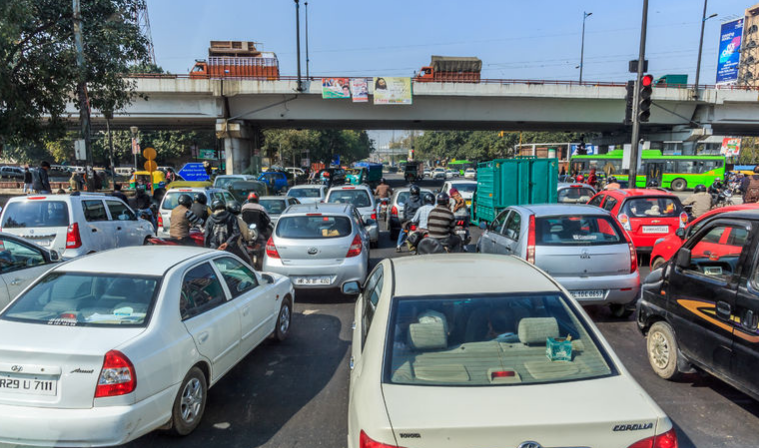
India Becomes World's 3rd Largest Car Market


India has officially booted Japan out of the number three spot in the global automotive market. Latest industry data, reported on by Nikkei, shows that for the first time ever, India is now the third largest global auto market. 

For 2022, the country's new sales came in at 4.25 million units, based on preliminary results from the Society of Indian Automobile Manufacturers. This figure tops Japan's 4.2 million units for the year. Japan's sales in 2022 were down 5.6% from 2021. 

Between January and November, India had delivered 4.13 million new vehicles. The total hits 4.25 million after adding December's sales volume reported Sunday by Maruti Suzuki, India's largest carmaker, the report says. And sales volume in the country is expected to rise: there are still year-end results and sales figures for commercial vehicles that have yet to be included into the 2022 totals. 

China led the global market in 2021 with 26.27 million vehicles sold and the U.S. came in second with 15.4 million vehicles sold. India's market has been volatile over the last few years, the report notes. 4.4 million vehicles were sold in 2018, but volume plunged back below 4 million vehicles in 2019 as a result of a credit crunch. 

After Covid, vehicle sales fell to under 3 million as the country locked down. A recovery started in 2021, approaching 4 million units, leading the country to its accelerated growth in 2022. The country is still dealing with the residual effects of the semiconductor shortage that shocked the industry during the Covid. Aftershocks of the shortage continue to work their way out of the supply chain heading into 2023. 

Most vehicles sold in the country were gas based, which includes some hybrid vehicles. While EVs are driving sales in places like China and the U.S., they have yet to be adopted in any meaningful fashion in India yet, the report says. 

Still, British research firm Euromonitor estimated that only 8.5% of Indian households owned a passenger vehicle in 2021. The country's population of 1.4 billion is expected to keep growing until the early 2060s.

By Zerohedge.com

Russian Lukoil To Sell Strategic Italian Refinery To Trafigura-Backed Company

In its first major overseas asset sale following Russia’s invasion of Ukraine and subsequent Western sanctions, Lukoil, Russia’s second-largest oil company, has agreed to sell its Italian ISAB refinery to a Cypriot company backed by Geneva-based commodities trader Trafigura. 

The deal will see Lukoil’s 100% subsidiary, Litasco S.A., sell the ISAB refinery to Cyprus-based G.O.I. Energy Limited, a private equity firm backed by Trafigura, according to a statement on Lukoil’s website. The deal value was not disclosed. 

According to Lukoil, the transaction is expected to be completed by the end of March this year upon fulfillment of “certain conditions precedent including receipt of necessary approvals of competent authorities, particularly the Italian Government”. 

ISAB encompasses a large petrochemical complex in Italy, which combines refining, gasification and electricity cogeneration plants. 

Cyprus-based G.O.I Energy is run by Israeli Green Oil CEO Michael Bobrov, according to Reuters, while Green Oil holds a major stake in Bazan Group, Israel’s largest refiner. 

The deal will allow Western-based Trafigure to handle oil supplies for the Italian refinery, should the Italian government agree to the sale. 

ISAB is an important strategic asset for Italy, refining approximately one-fifth of Italy’s crude oil, according to Reuters. As of December 5th, in line with the European Union ban on Russian seaborne crude, the ISAB refinery is no longer permitted to import Russian oil. 

In early December, the Italian government said it was considering direct state intervention to keep the refinery running after December 5th, noting that ISAB had been forced to rely fully on Russian oil because banks halted financing and guarantees for other oil purchases, Reuters reported

Lukoil also owns a network of some 230 branded gas stations in the United States, distributing in 11 states. 

At the beginning of Russia’s invasion of Ukraine, these gas stations garnered much media attention, with vague calls for boycotts. Those calls, however, dissipated by the end of March, when it became clear that boycotting them would harm the American franchise owners. 

By Charles Kennedy for Oilprice.com