Friday, January 20, 2023


New book spotlights influence of Pentecostalism on California’s Mexican farmworkers

'Sowing the Sacred: Mexican Pentecostal Farmworkers in California' recounts how 'divine healing' was seen as a pragmatic way to care for impoverished workers who lacked regular access to medical care.
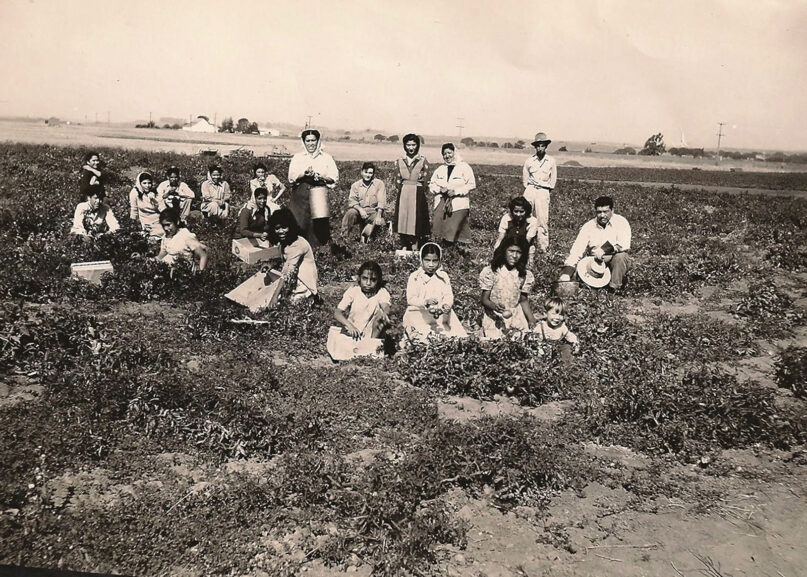
Salinas Apostólicos harvesting. Members of a Salinas, California, church gather for a quasi-staged photograph in the mid-1940s. Standing on the far right is Manuel Vizcarra, the eventual presiding bishop of La Asamblea Apostólica de la Fe en Cristo Jesús (AAFCJ). Photograph courtesy of Milca Montañez-Vizcarra.

(RNS) — The farm labor history of California has often been told through the plight of agricultural laborers during the Depression era and the efforts, beginning in the early 1960s, of the United Farm Workers to improve working conditions of Mexicans in the fields.

But to Lloyd Barba, a professor of religion at Amherst College, this history isn’t complete without factoring in religion, particularly the stories of California’s Mexican farmworkers who embraced Pentecostalism, a Christian movement generally seen at the time as a “distasteful new sect” with “cultish and fanatical tendencies.”

“I think about how often Latino history is told as labor history, and that makes sense … but where are the laborers going?” Barba said. “If we’re going to get a more balanced and accurate Latino history, we have to look at Latino religious life.”

In his recently released book, “Sowing the Sacred: Mexican Pentecostal Farmworkers in California,” Barba writes about the Mexican and Mexican American Pentecostal agricultural workers who built houses of worship in the state’s agricultural towns, who turned to “divine healing” for injuries they sustained working in the fields and whose worship style inspired civil rights leader Cesar Chavez to incorporate music and singing in his union organizing.

LLoyd Barba. Photo courtesy of Amherst

Lloyd Barba. Photo courtesy of Amherst

Barba also writes about the role of women in these church spaces “who were the foundation of the church,” despite not given ministerial credentials to become preachers. They raised money for the building of churches by selling food and made the worship spaces look holy through their handmade goods, such as doilies and fabric embroidered with biblical phrases, Barba said.

“To do a material history of this Mexican Pentecostal movement is to do women’s history,” Barba told Religion News Service.

The book traces the development of Pentecostalism among migrant laborers between 1916 and 1966, before the heyday of the National Farm Workers Association, which later became the United Farm Workers. Barba felt it important to “describe a moment where the exploitation of Mexican workers is at its worst.”

Barba, in his book, recounts how “divine healing” was seen as a pragmatic way to care for impoverished workers who lacked regular access to medical care. For laborers working in tough conditions, it was about “hard work and fervent worship … work by day and worship by night,” Barba said.

“People are getting hurt. People are contracting tuberculosis. People are seeking out healing when there’s not a health care system in place to provide those kinds of services,” Barba said. “Whether we’re talking physical healing, or what we now refer to as mental health and counseling, these are spaces that offered respite in an otherwise punishing world.”

Worship services “would call for people who were sick to come up and to be healed,” Barba said. There was a “spectacle” side to it, he added, “in that it was a very public kind of ritual.”

In the book, Barba cites a flier distributed by La Iglesia Apostólica Cristiania del Pentecostés that invited residents in the Imperial County city of Calexico to revival services held “under the direction of the Holy Spirit.” These services were outdoor and presided by a Mexican orator and pastor who lived in Los Angeles. “All are invited. Bring your sick and God will bless them,” the flier declared.

Women and the Tamales Delivery Truck. Apostólico congregations transformed the tamales fundraiser into local cottage industries, complete with a streamlined production and clientele bases. In this 1940s photograph from Salinas, tamaleras pose proudly next to an early 1940s Chevrolet Carryall, which they customized and later came to know affectionately as the “tamales truck.” Photograph courtesy of Milca Montañez-Vizcarra

Women and the Tamales Delivery Truck. Apostólico congregations transformed the tamales fundraiser into local cottage industries, complete with a streamlined production and clientele bases. In this 1940s photograph from Salinas, tamaleras pose proudly next to an early 1940s Chevrolet Carryall, which they customized and later came to know affectionately as the “tamales truck.” Photograph courtesy of Milca Montañez-Vizcarra

Barba writes about the “sonic elements of services,” which included “collective singing, exuberant worshipping, guitar playing, percussive striking, hand clapping, and shouting ‘aleluya.’”

The “vibrancy” of this sacred music inspired Chavez to later incorporate it into his organizational tactics. Barba wrote of the working relationship between Chavez — who at the time served with the Community Service Organization — and the Rev. Mariano Marín — a Pentecostal preacher and pastor — who led his immigrant congregation in the midst of Operation Wetback, which resulted in a mass deportation of Mexican nationals.

Through this partnership, Chavez witnessed Marín leading worship services out of a house in the San Joaquin Valley town of Madera and noticed a contrast between “the sonic and material world of Pentecostal and Catholic music,” Barba wrote.

Chavez recalled in his 1975 autobiography visiting a little church in Madera of a dozen men and women, describing “more spirit there than when I went to mass where there were two hundred.
“Sowing the Sacred: Mexican Pentecostal Farmworkers in California" by Lloyd Barba. Courtesy image

“Sowing the Sacred: Mexican Pentecostal Farmworkers in California” by Lloyd Barba. Courtesy image

“These people were really committed in their beliefs and this made them sing and clap and participate. I liked that,” he wrote. “I think that’s where I got the idea of singing at the meetings. That was one of the first things we did when I started the Union. And it was hard for me because I couldn’t carry a tune.”

For Barba, who hails from Stockton in the Central Valley, it’s noteworthy that this religious movement grew in rural agricultural areas.

He sees the influence of those early immigrant houses of worship today in the Spanish-language church signs across California’s Central Valley. A church that used to be “First Baptist Church” in many cities in the Central Valley may now be “Iglesia Bautista,” Barba said, adding that he also knows of church services in Mixtec among Indigenous Mexicans arriving in the area.

“Because of a large — first Mexican but more so now Central American — influx into the agricultural fields in California, you can note a very visible transformation of the religious demography,” Barba said.

LA REVUE GAUCHE - Left Comment: Search results for PENTECOSTAL 


Meta told to make adult nudity policies more inclusive

by AFP
January 20, 2023,

San Francisco—Meta was reviewing a call by its oversight board to make its policies on adult nudity more inclusive, a spokesperson said Thursday, after the tech giant removed two Instagram posts showing transgender and non-binary people with their chests bared.


Neither post violated Meta’s policies on adult nudity, and in a statement released earlier this week, the board said it had overturned the company’s decision to remove them.

A Meta spokesperson told AFP Thursday that the company welcomed the board’s move and had already restored the images, agreeing they should not have been taken down.

But the board also seized the opportunity to call on Meta, which also owns Facebook, to make its broader policies on adult nudity more inclusive.

The current policy “prohibits images containing female nipples other than in specified circumstances, such as breastfeeding and gender confirmation surgery,” the oversight board wrote in its decision.

That policy, it continued, “is based on a binary view of gender and a distinction between male and female bodies,” and results in “greater barriers to expression for women, trans and gender non-binary people on its platforms.”

It called for Meta to evaluate its policies “so that all people are treated in a manner consistent with international human rights standards, without discrimination on the basis of sex or gender.”

The Meta spokesperson said the company was reviewing that request, which echoes calls made by activists for years.

“We are constantly evaluating our policies to help make our platforms safer for everyone,” the spokesperson said.

“We know more can be done to support the LGBTQ+ community, and that means working with experts and LGBTQ+ advocacy organizations on a range of issues and product improvements.”

“We have given Meta food for thought,” oversight board member Helle Thorning-Schmidt, a former prime minister of Denmark, said Thursday in a forum at Instagram.

“It’s interesting to note that the only nipples not sexualized are those of men or those who have been operated on.”

“Over-policing of LGBTQ content, and especially trans and nonbinary content, is a serious problem on social media platforms,” a spokesperson for advocacy group GLAAD told AFP.

“The fact that Instagram’s AI system and human moderators repeatedly identified these posts as pornographic and as sexual solicitation indicates serious failures with regard to both their machine learning systems and moderator training.”

Meta said it will publicly respond to each of the board’s recommendations on the matter by mid-March.

Sweden readies for tense anti-Turkey protests amid NATO 'terrorists' row

NEWS WIRES
Fri, 20 January 2023 


© Ali Unal, AP

Sweden is bracing for demonstrations Saturday that could complicate its efforts to persuade Turkey to approve its NATO accession.

A far-right activist from Denmark has received permission from police to stage a protest outside the Turkish Embassy in Stockholm, where he intends to burn the Quran, Islam’s holy book.

Meanwhile, both pro-Turkish and pro-Kurdish groups are planning demonstrations in the Swedish capital.

Turkey has so far refused to approve bids by Sweden and Finland to join NATO, which needs sign-off by all member states.

Turkey says Sweden in particular needs to crack down on Kurdish and other groups that Ankara considers terrorists.

Sweden has assured Turkey it won’t allow any terrorist groups on Swedish soil. But pro-Kurdish and anti-NATO groups have complicated matters for the Swedish government by staging anti-Turkey demonstrations that have infuriated the Turkish government, including an effigy of President Recep Tayyip Erdogan that was briefly hung outside Stockholm’s City Hall last week.

(AP)
Anglican head 'joyful' about new LGBTQ rules but warns of splits

Agence France-Presse
January 20, 2023

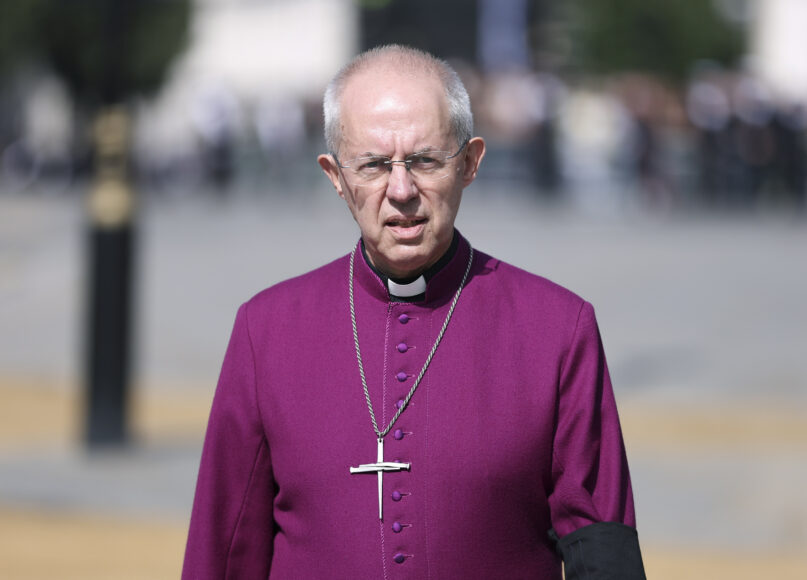
Archbishop of Canterbury Justin Welby © Ben Stansall / AFP


The Archbishop of Canterbury said he was "extremely joyful" about plans to allow church blessings for same-sex couples, but warned deep divisions existed within the world's Anglican community over the issue.

"I will be extremely, joyfully celebratory of these new (prayers of blessing)," he told a news conference.

But said he would not personally offer such blessings due to opposition by much of the worldwide Anglican Communion, of which he is ceremonial head.

"I will not personally use them in order not to compromise that pastoral care," Welby told reporters at his official London residence, Lambeth Palace

Highlighting the difficult position the Church finds itself in, Welby's colleague Stephen Cottrell, the Archbishop of York, said he would conduct such blessings.

Cottrell fought back tears as he recounted the story of a late friend, who was a priest in a gay relationship with another priest. No biblical readings were allowed in the couple's secular marriage service.

The Church will still not allow same-sex church weddings, due to opposition from the Anglican Communion that makes up the bulk of its congregation.

But it has quelled the immediate row with its compromise.

Bishops met on Tuesday to finalise recommendations of a six-year consultation into the issue, which affirmed the Church's teaching that Holy Matrimony exists between one man and one woman for life.

The issue will not be put to a vote at the General Synod, the Church's legislative body, when it meets in London early next month.

'Live together with our disagreements'

However, Welby warned the splits could re-emerge.

"I can't predict the future," he said.

"We're divided and there's no point in pretending otherwise. The Church of England and the Anglican Communion are very divided," he added.

"There are widely different views. The vast majority of the Anglican Communion hold to the traditional view."

The Anglican Communion comprises 43 Churches around the world in 165 countries, with around 85 million members.

Despite the division, Welby said the Church's global leaders were in agreement that "God in His love and grace came as fully human... in order to reach out to every human being, whatever their sexuality or colour or race or gender".

Welby recognised that the church had often responded to the issue of homosexuality in a "negative and harmful" manner, recounting how a friend had killed himself because of its reaction to his coming out.

Cottrell also accepted that "we got it wrong".

"We're not saying we think we've got it right now, but we are saying this is a good place to where we can live together with our disagreements and fully acknowledge and welcome (LGBTQ+ members)."

© 2023 AFP

Church of England refuses to back same-sex marriage

However, same-sex couples would be able to have a church service with prayers of dedication, thanksgiving or for God's blessing.

FILE - The Archbishop of Canterbury Justin Welby walks in Westminster on Sept. 14, 2022. The Church of England said Wednesday, Jan. 18, 2023, it will allow blessings for same-sex, civil marriages for the first time — but its position on gay marriage will not change and same-sex couples will still not be able to marry in its churches. The plans, to be outlined in a report to the General Synod, which meets in London next month, came after five years of debate and consultation on the church's position on sexuality. (Richard Heathcote/Pool Photo via AP)

LONDON (AP) — The Church of England said Wednesday it will allow blessings for same-sex, civil marriages for the first time but same-sex couples still will not be allowed to marry in its churches.

The decision followed five years of debate and consultation on the church’s position on sexuality. It is expected to be outlined in a report to the church’s national assembly, the General Synod, which meets in London next month.

Under the proposals, the Church of England’s stance that the sacrament of matrimony is restricted to unions between one man and one woman will not change.

However, same-sex couples would be able to have a church service with prayers of dedication, thanksgiving or for God’s blessing after they have a civil wedding or register a civil partnership.

Same-sex marriage has been legal in England and Wales since 2013, but the church did not change its teaching when the law changed.

Archbishop of Canterbury Justin Welby, the spiritual leader of the Anglican Church, acknowledged that the proposals “will appear to go too far for some and not nearly far enough for others.”

“This response reflects the diversity of views in the Church of England on questions of sexuality, relationships and marriage. I rejoice in that diversity and I welcome this way of reflecting it in the life of our church,” Welby said.

“I hope it can offer a way for the Church of England, publicly and unequivocally, to say to all Christians and especially LGBTQI+ people, that you are welcome and a valued and precious part of the body of Christ,” he added.

The church said bishops plan to issue a formal apology to LGBTQ people on Friday for the “rejection, exclusion and hostility” they have felt from within the church.

It said it would issue pastoral guidance to its ministers and congregations and urge them to welcome same-sex couples “unreservedly and joyfully.”

Archbishop of York Stephen Cottrell apologized for “the way LGBTQI+ people and those they love have been treated by the church which, most of all, ought to recognize everyone as precious and created in the image of God.”

“We are deeply sorry and ashamed and want to take this opportunity to begin again in the spirit of repentance which our faith teaches us,” he said. “This is not the end of that journey, but we have reached a milestone, and I hope that these prayers of love and faith can provide a way for us all to celebrate and affirm same-sex relationships.”

Cottrell said the proposals will not be “what everyone wants,” but further changes will require a legislative overhaul and there was currently no majority supporting such change.

Jayne Ozanne, a prominent campaigner for LGBTQ people in the church, said the bishops’ decision was “utterly despicable.”

“I cannot believe that five years of pain and trauma has got us here. We have had countless apologies over the years but no action to stop the harmful discrimination,” she tweeted.

The General Synod is expected to discuss the proposals in detail during its Feb. 6-Feb. 9 meeting.

Dutch to ban unhealthy designer pets

Charlotte VAN OUWERKERK
Fri, January 20, 2023 


The Netherlands wants to ban pets such as flat-faced dogs and cats with folded ears, which look sweet but suffer "miserable" health problems, the government said on Friday.

Dutch Agriculture Minister Piet Adema said he would seek to outlaw the ownership of the designer breeds and to ban photos of them in advertising or on social media.

"We make life miserable for innocent animals, purely because we think they are 'beautiful' and 'cute'," Adema said in a statement.

"That is why today we are taking a big step towards a Netherlands where no pet has to suffer from his or her appearance."

Despite sought-after looks that have made them a favourite with celebrities and a fixture among social media influencers, such pets suffer from a range of health conditions.

The Dutch minister said that owners often "have the best of intentions but are often unaware of the dark side of their pets' appearance".

"This subject touches me as a minister but also as a human," added Adema.

The government would now work out a full list of affected breeds, he said, adding that it could take some time.

But the public broadcaster NOS said squish-faced pugs could be among those banned.

The Netherlands banned the breeding of pets that are affected by their appearance in 2014, but some animals were still being traded illegally or bought from abroad.

The proposed new rules are designed to close a loophole so that it will also be illegal to own them.

In 2019, the Dutch government updated the rules to specifically apply to dogs whose snout is less than half the length of their skull.

- 'Out of breath' -

"Dogs with snouts that are too short are constantly out of breath, making them gasp throughout their life," Adema said in a letter to parliament setting out the proposal.

"Dogs that have a deviant skull shape may suffer from a permanent headache.

"Cats with folding ears have deviated cartilage which can cause them a lot of pain."

The fold-eared felines would definitely qualify for a ban, as was already the case in the Flanders region of neighbouring Belgium, the agriculture ministry said.

"There is scientific evidence for these cats that they always suffer because they are a have a cartilage defect caused by a specific gene," it said in briefing notes accompanying the proposal.

The government had asked for advice from experts in veterinary genetics at the University of Utrecht in the central Netherlands, it added.

Any ban would come in after a transition period. People who currently own one of the pets would be allowed to keep them until the animal dies.

Recent studies have found that pugs and other dogs bred to have short noses, such as French and English bulldogs, are more prone to health problems, particularly with breathing.

cvo/dk/gil

Chinese turn to traditional remedies to fight Covid-19

As Covid-19 rips through China's population, making millions sick and fuelling a drug shortage, many are turning to traditional medicines to battle the aches and pains brought by the virus. Encompassing a range of treatments from herbal remedies and massages to acupuncture and diets, traditional Chinese medicine (TCM) has been used for thousands of years to treat all manner of ailments. But critics say it is pseudoscientific, and there is little peer-reviewed data to back claims of its efficacy.
Racism, polarization, poverty at heart of Peru protests

i24NEWSJanuary 20, 2023 
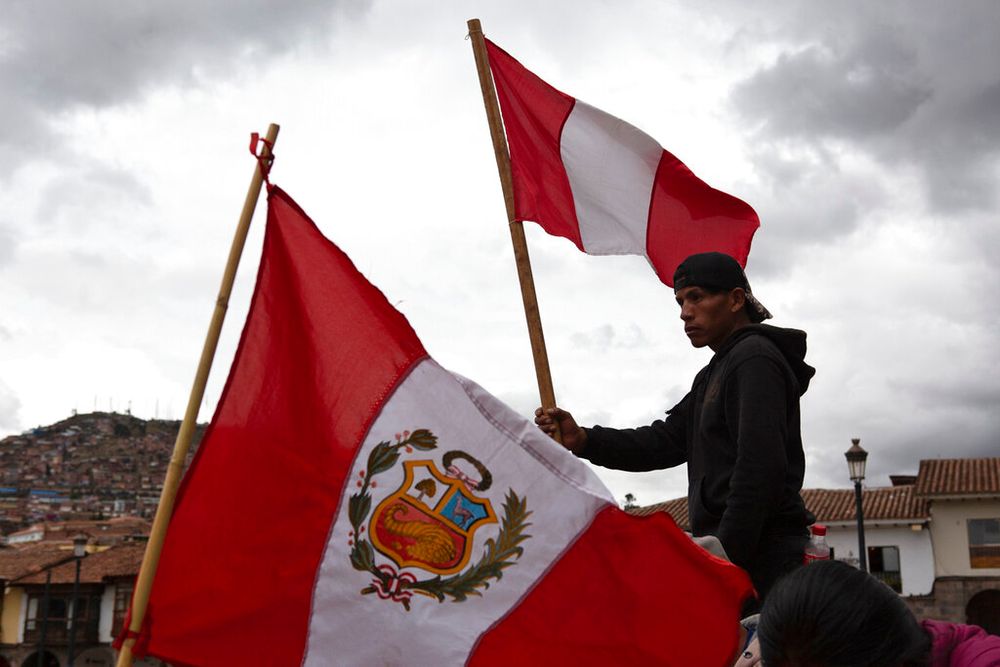
A person waves a Peruvian flag during an anti-government protest
 in Cusco, Peru, on January 19, 2023.

'It's an old and complex discontentment. These are people who carry rage and the pain of having been victims of the feudal system'

The explosion of unrest that has left at least 44 dead in Peru began high up in the Andes and spread to the capital Lima as Indigenous people vented their fury over racism, polarization, and growing poverty.

According to analysts, the unrest sparked on December 7 by the ousting of then-president Pedro Castillo is not a passing political crisis, but rather a symptom of deep structural problems such as the division between Peru’s rural poor and urban elite.

The anger felt by thousands of Indigenous people began when Castillo was arrested and charged with rebellion after he tried to dissolve congress and rule by decree.


Racism

"The causes of unhappiness are racism, contempt, lack of respect, and the poor quality of daily life," political analyst Mirko Lauer told AFP, referring to Indigenous people.

"It's an old and complex discontentment. These are people who carry rage and the pain of having been victims of the feudal system, of having been at times separated from their families due to internal migrations, of having been the victims of radicalism and reactionism.”

Polarization

"Polarization is one of the causes of the protests (but) it's not ideological," said Carlos Melendez, a political scientist and professor at the Diego Portales University in Chile.

He said the polarization comes from the clash between "the Lima establishment" and the poor provinces in the south.


Poverty


"We have had a large stage of growth that started to end in 2016, coinciding with the turbulent politics that began that year with the war between Congress and the Executive, then came the pandemic and poverty rose 10 percent," said economist Augusto Alvarez Rodrich.

During the economic boom, poverty plummeted from 40 percent to 10 percent in three decades, before rising again to 26 percent in 2022. That figure is higher in the Andean regions and is what explains "the discomfort that exists in the country."

The protests are also an expression of discontent towards the elites. As Lauer pointed out, both left-wing and right-wing populism is built on hatred of the elites.
After Davos, a race for money to stop climate change

Laurent THOMET
Fri, January 20, 2023 


US climate envoy John Kerry bluntly summed up in one word what the planet needs to avoid a global warming catastrophe at the World Economic Forum this week: money.

The annual meeting of the global elite in the Swiss Alpine resort of Davos was a chance for top government officials, CEOs, academics and campaigners to debate how to tackle the climate crisis.

The bill is monumental: Kerry and others warned that trillions of dollars were needed to speed up the world's efforts to reach net-zero carbon emissions by 2050 and limit warming to 1.5 degrees Celsius.

But the week-long forum exposed fault lines over how to meet those targets at a time when the world faces a costly war in Ukraine, an economic downturn, soaring inflation and a cost-of-living crisis.


The US government is pouring $369 billion dollars into its green energy transition through tax incentives and subsidies for electric cars and other technology under its landmark Inflation Reduction Act (IRA).

Kerry warned however that public funds alone were not enough, as he used his Davos appearance to press his case that the private sector has a major role to play -- if firms can be shown there is money to be made.

The former US secretary of state admitted that he sounded like the corporate raider Gordon Gekko from the film "Wall Street" when he said earlier this week that "money, money, money, money, money, money, money" was needed to meet the 1.5C target.

"The magic that we need is to unleash those trillions of dollars that are looking for good investments, but they're looking for bankable investments," Kerry said.

But at the same panel, Ecuadoran climate activist Helena Gualinga said profit was being placed above the health of the planet.

"When I hear a lot of these conversations I think it's very business first, and then we'll deal with climate and then we'll deal with biodiversity loss," she said. "That needs to be reversed."

From tanks to subsidies: the main topics at Davos


Russian ministers and oligarchs were absent again for the second year running 

Davos (Switzerland) (AFP) – The World Economic Forum in Davos wrapped up Friday after a week that featured feverish discussion of the war in Ukraine, rifts over global trade and Greta Thunberg crashing the party of the global elite.

Here's a summary of the hottest topics and main events:

Tanks


Ukraine sent a huge national delegation to Davos to lobby hard for new weapons and financial support to help it push Russian forces out of occupied territories, with the German-made Leopard tanks high on the wish-list.

German Chancellor Olaf Scholz, who made an appearance on Wednesday, was pressured from all sides to greenlight the export of the tanks from Poland and Finland -- to no avail.

When asked why he was hesitating by a Ukrainian in the audience for his speech, Scholz never mentioned the word tank, saying instead that "we are never doing something just by ourselves but together with others, especially the United States".

Ukrainian President Volodymyr Zelensky, in the first of two appearances by video-link in Davos, said pointedly that "the time the Free World uses to think is used by the terrorist state to kill".

Russian ministers and oligarchs, once welcomed with open arms, were absent again for the second year running.

- Subsidies -


International trade and globalisation have been articles of faith for the Davos set since the WEF started 50 years ago, but worries that both are under threat were evident in this year's official theme: "Cooperation in a fragmented world."

One of the biggest concerns is that a race between the United States, China and the European Union to subsidise so-called "clean-tech" -- from renewable energy technology to electric cars and batteries -- could put the international trading system under further strain.

EU Commission chief Ursula von der Leyen warned on Tuesday that she saw "aggressive attempts to attract our industrial capacities away to China and elsewhere".

She also referred to the US Inflation Reduction Act (IRA), a $369-billion package to reduce greenhouse gas emissions, which is causing alarm in Europe over its potential impact on European companies.

"Do it, too," US climate envoy John Kerry replied.

The IRA was a "valid concern" for Europeans, Julie Teigland, a managing partner at EY consultancy's Europe, Middle East and Africa region, told AFP.

"We have to be careful not to escalate into a trade war. I don't think anybody wants that. Nobody wants a war on subsidies," she added.

'Big lie'

UN Secretary-General Antonio Guterres delivered one of the most noteworthy speeches this year, launching a frontal attack on oil and gas companies over their role in global warming.

Guterres drew a parallel between the actions of oil companies and those of tobacco companies that covered up the adverse effects of cigarettes.

"Some in Big Oil peddled the big lie. And like the tobacco industry, those responsible must be held to account," he said.

He was referring to a study published in the journal Science that said ExxonMobil had dismissed the findings of its own scientists on the role of fossil fuels in climate change.

"We knew nothing -- we read the papers (but) I do not have climate scientists at TotalEnergies," the boss of the French firm Patrick Pouyanne shot back.

Greta


Three years after attending as a teenager and facing off with then US president Donald Trump, Greta Thunberg returned, but this time without a visitor's badge.

Speaking at an event with other climate activists, she said it was "absurd" to think that people in Davos were part of the solution to global warming and defended her decision to shun political and business leaders

"Without massive public pressure from the outside, these people are going to go as far as they possibly can... They will continue to throw people under the bus for their own gain," the 20-year-old said.

She held a small protest in the snow and cold on Friday, this time without getting detained by police -- unlike in Germany earlier in the week where she was protesting against an expanding coal mine.

ChatGPT

There were a dozen public sessions devoted to artificial intelligence and nothing was talked about more than ChatGPT, the chatbot capable of producing strikingly quick and cogent texts on almost any topic.

Made by the hottest startup in Silicon Valley, OpenAI, the chatbot is seen as proof of the power of artificial intelligence, but also a source of worry that a whole host of jobs will disappear.

"The applications are going to initially put some people out of jobs," Uber CEO Dara Khosrowshahi said, while expressing confidence that affected people would find new positions. "That adjustment period can be difficult, can be scary, etc. But I think the end state is going to be good."

The computer giant announced on Wednesday it was laying off 10,000 employees in the coming months.

© 2023 AFP
Brazil begins first operations to protect Amazon

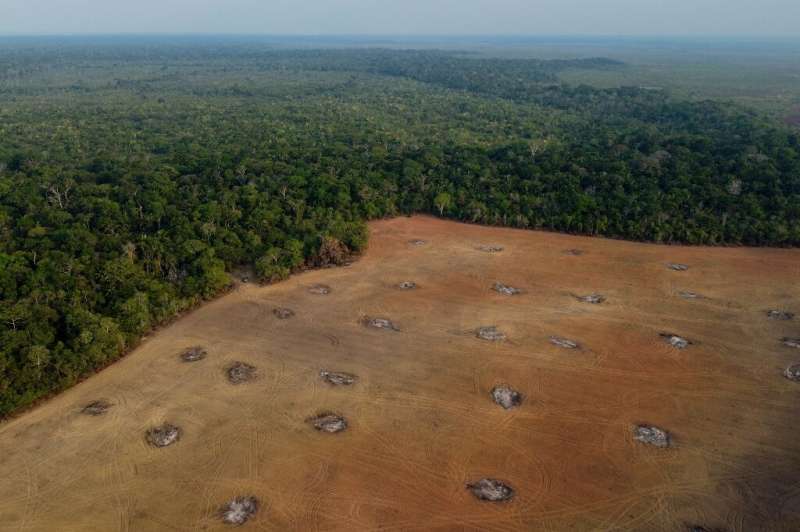
An aerial view of a massive patch of land cleared of trees in Brazil's eastern Amazon.

Brazil this week began the first operations against Amazon deforestation since veteran leftist Luiz Inacio Lula da Silva took office, the Ibama environmental agency said Friday.

On the campaign trail before his October election victory—when he defeated far right climate change skeptic Jair Bolsonaro—Lula promised to end deforestation by 2030.

The Amazon rainforest suffered during Bolsonaro's four-year presidency as the former army captain repeatedly enacted laws favoring agriculture and mining in the forest at the expense of that critically important ecosystem. Reducing deforestation is key to slowing climate change.

"The deployment of teams for the start of inspection operations began on January 16, 2023," Ibama told AFP.

Average Amazon deforestation soared by 75 percent during Bolsonaro's presidency, compared with the previous decade.

"The environmental team put in place by the federal government has, since the beginning of the transition period, been working to build a plan capable of inverting the rate of deforestation seen these last few months," added Ibama.

On Wednesday, Lula told the Globo News television channel that he wanted to create a federal police force to "act in a stronger manner" to protect forests.

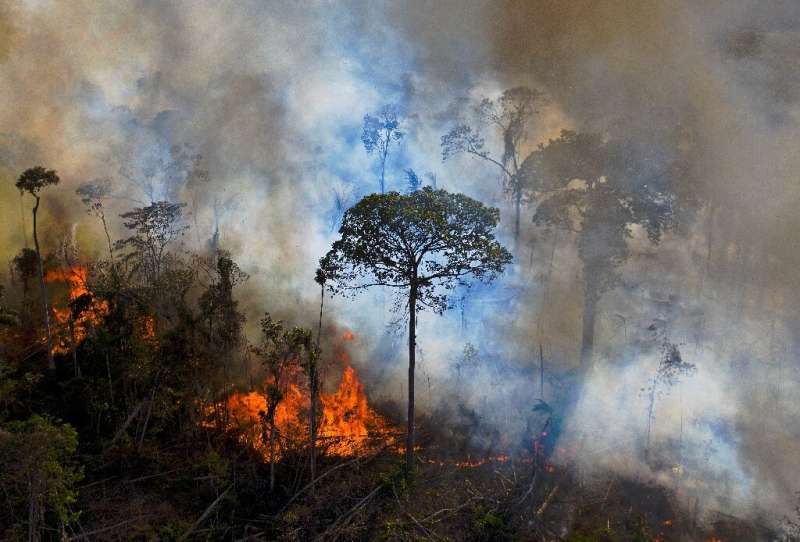
Brazil's Amazon rainforest has been badly damaged by wildfires, such as this one in Para state in August 2022.

He also said he wanted to arrange a meeting with the other South American countries that share the Amazon to discuss a continental preservation policy.

Lula said he would fight deforestation "by any means" and added: "I will need the armed forces, I will need the federal police force."

Since taking office on January 1, Lula has signed a series of decrees pertaining to the protection of the Amazon.

He also reactivated an Amazon protection fund that had been frozen since 2019 due to a disagreement between the Bolsonaro government and major donor countries Norway and Germany over how to spend the money.

And Lula revoked a Bolsonaro decree authorizing mining exploitation in Indigenous areas and protected zones.

© 2023 AFP


Explore furtherBrazilian Amazon deforestation up 150% in Bolsonaro's last month
Bolsonaro asks court to disregard controversial draft decree

Issued on: 20/01/2023 - 21:04

Brasília (AFP) – Former Brazilian president Jair Bolsonaro has asked investigators probing his election campaign to disregard a document found at the home of his justice minister that called for a review of the results of the vote.

The Supreme Court is investigating Bolsonaro over suspected abuse of power during his failed re-election campaign.

The draft document found at the home of Anderson Torres -- who is currently in detention and being investigated over the January 8 storming of Brasilia's seats of power by Bolsonaro supporters -- proposed taking federal control of the supreme court, which is responsible for elections.

But Bolsonaro's lawyers argued in a message sent to the court on Thursday that the decree "was never published, nor would have been."

The document, they argued, was "apocryphal, it never left the residence of third parties, it was never published, nor publicized ... it never went beyond the level of reflection."

The Supreme Court has given Bolsonaro three days to explain the content of the document found last week in Torres's home.

Bolsonaro, who spent years casting doubt on the Brazilian electronic voting system, has still not officially recognized his defeat to veteran leftist Luiz Inacio Lula da Silva, who assumed office on Jan. 1.

The decree stated that it would "immediately reestablish the transparency and validity of the 2022 presidential election process."

Justice Minister Flavio Dino said the draft decree was "a link in the putschist chain" that "shows the true purpose" of the January 8 riot in Brasilia.

Bolsonaro, who was in the United States at the time of the riots, is also under investigation for the storming of the presidential palace, Congress and supreme court by his supporters.

© 2023 AFP