Thursday, March 30, 2023

Internet Archive to Appeal 'Chilling' Federal Ruling Against Digital Books

"For democracy to thrive at global scale, libraries must be able to sustain their historic role in society—owning, preserving, and lending books," said Internet Archive founder Brewster Kahle. "This ruling is a blow for libraries, readers, and authors."
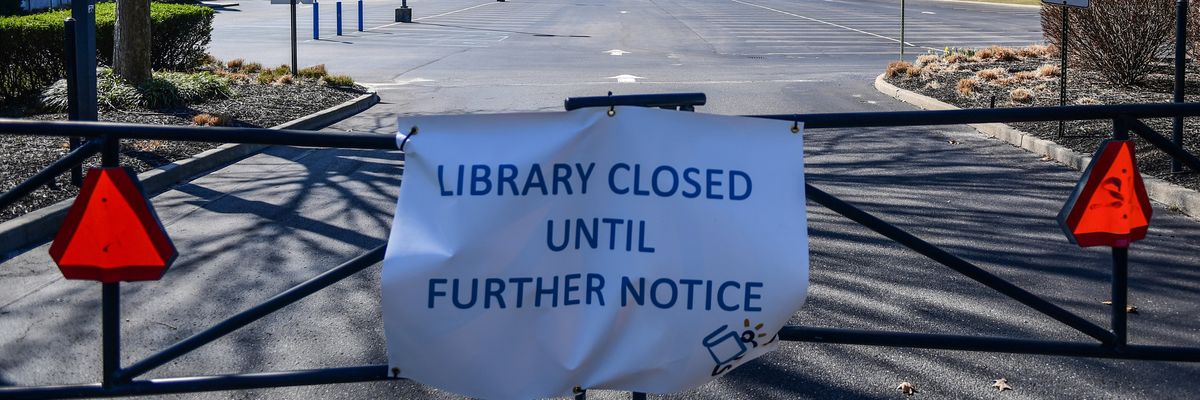


A sign says the Middle Country Public Library in Centereach, New York is closed until further notice during the Covid-19 pandemic on March 26, 2020.

(Photo: Thomas A. Ferrara/Newsday RM via Getty Images)

COMMONDDREAMS
Mar 25, 2023

Internet Archive vowed to appeal after a U.S. district court judge on Friday sided with four major publishers who sued the nonprofit for copyright infringement.

Prior to the Covid-19 pandemic, Internet Archives operated a controlled digital lending system, allowing users to digitally check out scanned copies of purchased or donated books on a one-to-one basis. As the public health crises forced school and library closures, the nonprofit launched the National Emergency Library, making 1.4 million digital books available without waitlists.

Hachette, HarperCollins, John Wiley & Sons, and Penguin Random House sued Internet Archive over its lending policies in June 2020. Judge John G. Koeltl of the Southern District of New York on Friday found in Hachette v. Internet Archive that the nonprofit "creates derivative e-books that, when lent to the public, compete with those authorized by the publishers."

A future in which libraries are just a shell for Big Tech's licensing software and Big Media's most popular titles would be awful—but that's where we're headed if this decision stands.

Internet Archive "argues that its digital lending makes it easier for patrons who live far from physical libraries to access books and that it supports research, scholarship, and cultural participation by making books widely accessible on the Internet," the judge wrote. "But these alleged benefits cannot outweigh the market harm to the publishers."

In a statement responding to the ruling, Internet Archive founder Brewster Kahle pledged to keep fighting against the publishers.

"Libraries are more than the customer service departments for corporate database products. For democracy to thrive at global scale, libraries must be able to sustain their historic role in society—owning, preserving, and lending books," Kahle said. "This ruling is a blow for libraries, readers, and authors and we plan to appeal it."

Internet Archive's supporters have shared similar warnings throughout the ongoing court battle, including after the ruling Friday.


"In a chilling ruling, a lower court judge in New York has completely disregarded the traditional rights of libraries to own and preserve books in favor of maximizing the profits of Big Media conglomerates," declared Lia Holland, campaigns and communications director at the digital rights group Fight for the Future.

"We applaud the Internet Archive's appeal announcement, as well as their steadfast commitment to preserving the rights of all libraries and their patrons in the digital age," they said. "And our admiration is shared—over 14,000 people having signed our pledge to defend libraries' digital rights at BattleForLibraries.com this week alone."

Holland continued:
From a basic human rights perspective, it is patently absurd to equate an e-book license issued through a surveillance-ridden Big Tech company with a digital book file that is owned and preserved by a privacy-defending nonprofit library. Currently, publishers offer no option for libraries to own and preserve digital books—leaving digital books vulnerable to unauthorized edits, censorship, or downright erasure, and leaving library patrons vulnerable to surveillance and punishment for what they read.

In a world where libraries cannot own, preserve, or control the digital books in their collections, only the most popular, bestselling authors stand to benefit—at the expense of the vast majority of authors, whose books are preserved and purchased by libraries well after publishers have stopped promoting them. Further, today a disproportionate number of traditionally marginalized and local voices are being published in digital-only format, redoubling the need for a robust regime of library preservation to ensure that these stories survive for generations to come.

A future in which libraries are just a shell for Big Tech's licensing software and Big Media's most popular titles would be awful—but that's where we're headed if this decision stands. No book-lover who wants an equitable and trustworthy written world could find such a future desirable. Accordingly, we plan to organize an in-person action to demand robust ownership and preservation standards for digital books and libraries. For updates on when and where, check BattleForLibraries.com.

More than 300 authors last September signed an open letter led by Fight for the Future calling out publishers and trade associations for their actions against digital libraries, including the lawsuit targeting Internet Archive.

"Libraries saved my life as a young reader, and I've seen them do as much and more for so many others," said signatory Jeff Sharlet. "At a time when libraries are at the frontlines of fascism's assault on democracy, it is of greater importance than ever for writers to stand in solidarity with librarians in defense of the right to share stories. Democracy won't survive without it."

Fellow signatory Erin Taylor asserted that "the Internet Archive is a public good. Libraries are a public good. Only the most intellectually deprived soul would value profit over mass access to literature and knowledge."

Koeltl's ruling came just two days after the American Library Association released a report revealing that in 2022, a record-breaking 2,571 titles were challenged by pro-censorship groups pushing book bans, a 38% increase from the previous year.

Meanwhile, Republicans in the U.S. House of Representatives on Friday passed the so-called Parents Bill of Rights Act, which education advocates and progressive lawmakers argue is intended to ban books and further ostracize marginalized communities.

I AM A LONG TIME USER AND SUPPORTER OF THE INTERNET ARCHIVE AND THEIR WAYBACK MACHINE FOR FINDING OLD OR OUT DATED WEB SITES

Evacuations in Minnesota After Fiery Derailment of Train Carrying Ethanol

The train was operated by BNSF, which has lobbied aggressively against safety regulations in recent years.


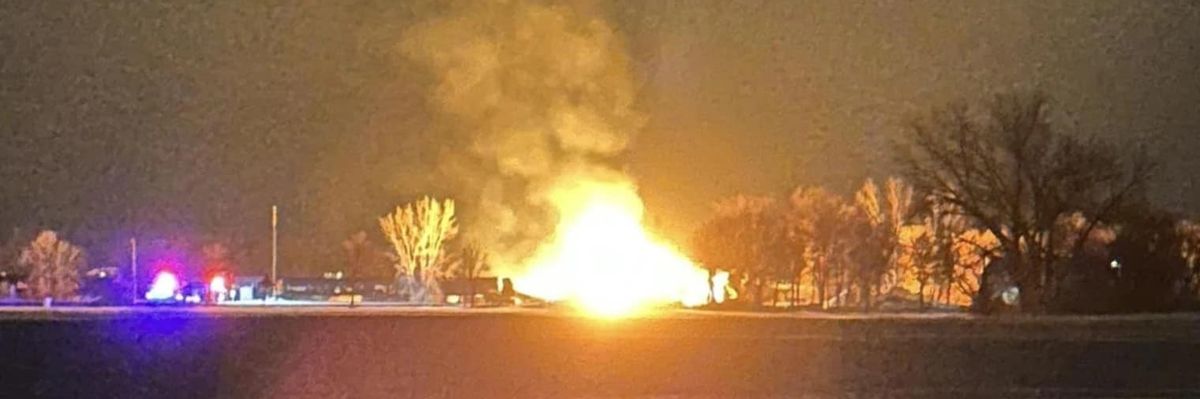
A Raymond, Minnesota resident's photo shows the fiery BNSF train derailment on March 30, 2023.

(Photo: Jamie Bestge/Facebook)


JAKE JOHNSON
Mar 30, 2023

This is a developing news story..

A BNSF train carrying ethanol derailed and caught fire early Thursday morning in Raymond, Minnesota, forcing residents living near the crash site to evacuate.

U.S. Transportation Secretary Pete Buttigieg, who has faced backlash for responding inadequately to the disaster in East Palestine, Ohio, said the Federal Railroad Administration is "on the ground' in Raymond following the derailment.

"At present no injuries or fatalities have been reported," said Buttigieg. "We are tracking closely as more details emerge."


BNSF, which is controlled by Warren Buffett's Berkshire Hathaway, has lobbied aggressively against enhanced rail safety regulations at the state and federal levels in recent years.

An OpenSecrets analysis published earlier this month found that BNSF has spent nearly $13 million on state-level lobbying since 2003. BNSF's parent company is also among the rail industry's top federal lobbying spenders over the past two decades, according to federal disclosures.

BNSF said in a statement that more than 20 train cars "carrying mixed freight including ethanol and corn syrup" derailed in Raymond on Thursday.

The wreck and resulting blaze forced local authorities to issue evacuation orders for people living within a half-mile of the site. The Minnesota Department of Transportation said a nearby highway was also closed due to the fire.

The local sheriff's department said in a press release that "no travel is advised to the city of Raymond" as emergency workers attempt to contain the fire.
It Is Time to Show the American People Photographs of Children Massacred by Gun Violence


Pictures convey reality in a way that words cannot. One of these days, the parents of children murdered in a school shooting may make the same decision Mamie Till did of her son Emmett in 1955.


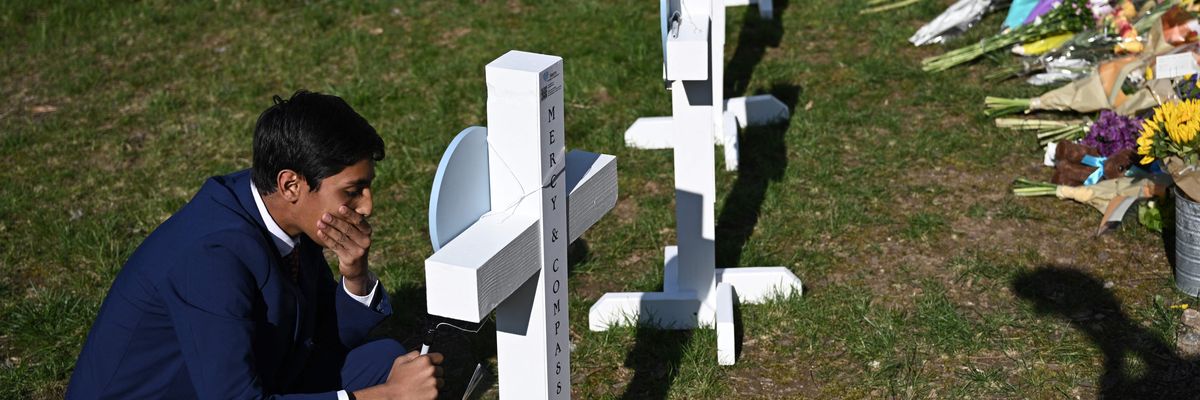
Alexander Reddy, who's friend's little sister is Hallie Scruggs, pays respects at a makeshift memorial for victims by the Covenant School building at the Covenant Presbyterian Church following a shooting, in Nashville, Tennessee, March 28, 2023.
(Photo by Brendan Smialowski/AFP via Getty Images)

THOM HARTMANN
Mar 29, 2023Common Dreams

And now we have another mass school shooting, this time in Tennessee with three 9-year-old girls dead as well as 3 adults. Immediately followed by another pathetic Republican congressman claiming that Congress can’t do a thing.

A community is grieving, schoolkids across America are terrified, and after 130 mass shootings in the first 87 days of this year — 33 of them in schools and colleges — you’d think average Americans would finally understand the horrors of the gun violence Republicans in Congress and on the Supreme Court have inflicted on us.

This is a phenomenon as systemic and unique to the United States today as Jim Crow was in the 1950s. The gun control movement needs to learn from the Civil Rights movement.

Back in 1955, young Black people like 14-year-old Emmett Till were routinely murdered by white people all over America, usually with no consequence whatsoever.

Emmett Till was kidnapped by two Mississippi white men, brutally tortured, murdered, and his mangled body was thrown into the Tallahatchie River. (And the white men who did it, and the white woman who set it off with a lie, never suffered any consequence.)

His mother, Mamie Bradley, made the extraordinarily brave decision to show her child’s mutilated face with an open-coffin funeral in their hometown of Chicago.

Jet magazine ran a picture you can see here of Emmett, which went viral, invigorating the Civil Rights movement as it horrified the nation. As President Biden said last month, honoring the release of the new movie Till:
“JET magazine, the Chicago Defender and other Black newspapers were unflinching and brave in sharing the story of Emmett Till and searing it into the nation’s consciousness.”

That picture made real the horrors of white violence against Black people in America for those who were unfamiliar, or just unwilling, to confront it.

We’ve all heard about Newtown and Stoneman Douglas and Las Vegas, but have you ever seen pictures of the bodies mutilated by the .223 caliber bullets that semi-automatic assault weapons like the AR15 fire?

The odds are pretty close to zero; most Americans have no idea the kind of damage such weapons of war can do to people, particularly children.

But we need to learn.

In the 1980s, egged on by partisans in the Reagan administration, America’s antiabortion movement begin the practice of holding up graphic, bloody pictures of aborted fetuses as part of their demonstrations and vigils.

Their literature and magazines, and even some of their advertisements, often carry or allude to these graphic images.

Those in the movement will tell you that the decision to use these kinds of pictures was a turning point, when “abortion became real“ for many Americans, and even advocates of a woman’s right to choose an abortion started using phrases like “legal, safe, and rare.“

Similarly, when the Pulitzer Prize-winning photo of 9-year-old “Napalm Girl” Phan Thị Kim Phúc running naked down a rural Vietnamese road after napalm caught her clothes on fire was published in 1972, it helped finally turned the tide on the Vietnam War.

Showing pictures in American media of the result of a mass shooter’s slaughter would be a controversial challenge.

There are legitimate concerns about sensationalizing violence, about morbid curiosity, about warping young minds and triggering PTSD for survivors of violence.

And yet, pictures convey reality in a way that words cannot. One of these days, the parents of children murdered in a school shooting may make the same decision Mamie Till did in 1955.

America’s era of mass shootings kicked off on August 1, 1966 when Charles Whitman murdered his mother and then climbed to the top of the clock tower at the University of Texas and begin shooting.

The vast majority of our mass killings, however, began during the Reagan/Bush administrations following the 1984 San Ysidro, California McDonald’s massacre, the Edmond, Oklahoma Post Office shooting of 1986, and the Luby’s Cafeteria massacre in Killeen, Texas in 1991.

We’ve become familiar with the names of the places, and sometimes the dates, but the horror and pain of the torn and exploded bodies has escaped us.

It’s time for America to confront the reality of gun violence. And all my years working in the advertising business tell me that a graphic portrayal of the consequences of their products is the greatest fear of America’s weapons manufacturers and the NRA.

We did it with tobacco and drunk driving back in the day, showing pictures of people missing half their jaw or mangled and bloody car wreckage, and it worked.

And now there’s a student-led movement asking states to put a check-box on driver’s licenses with the line:
“In the event that I die from gun violence please publicize the photo of my death. #MyLastShot.”

This isn’t, however, something that should just be tossed off, or thrown up on a webpage.

Leadership from multiple venues in American journalism — print, television, web-based publications — should get together and decide what photos to release, how to release them, and under what circumstances it could be done to provide maximum impact and minimum trauma.

But Americans must understand what’s really going on.

A decade ago, President Obama put then-VP Joe Biden in charge of his gun task force, and Joe Biden saw the pictures from school shootings back then.

Here’s how The New York Times quoted then-Vice President Biden:
“‘Jill and I are devastated. The feeling — I just can’t imagine how the families are feeling,’ he said, at times struggling to find the right words.”

Obama himself, after seeing the photos, broke into tears on national television.

And we appear to be tiptoeing up to the edge of doing exactly this. Yesterday’s Washington Post featured an article about what happens when people are shot by assault weapons and included this commentary:
“A Texas Ranger speaks of bullets that ‘disintegrated’ a toddler’s skull.
“This explains the lead poisoning that plagues survivors of the shooting in Sutherland Springs, Tex.; David Colbath, 61, can scarcely stand or use his hands without pain, and 25-year-old Morgan Workman probably can’t have a baby. It explains the evisceration of small bodies such as that of Noah Pozner, 6, murdered at Sandy Hook Elementary, and Peter Wang, 15, killed at Marjory Stoneman Douglas High. The Post examined the way bullets broke inside of them — obliterating Noah’s jaw and Peter’s skull, filling their chests with blood and leaving behind gaping exit wounds.”

But we need to go the next step and show the actual pictures for this truth about the horror of gun violence to become widely known. Doing this will take leadership.

And, of course, there must be a Mamie Bradley: a parent, spouse or other relation willing to allow the photos of their loved one to be used in this way.

In 1996 there was a horrific slaughter in Tasmania, Australia, by a shooter using an AR15-style weapon, culminating a series of mass shootings that had plagued that nation for over a decade.

While the Australian media generally didn’t publish the photos, they were widely circulated.

As a result the Australian public was so repulsed that within a year semi-automatic weapons in civilian hands were outlawed altogether, strict gun control measures were put into place, and a gun-buyback program went into effect that voluntarily took over 700,000 weapons out of circulation.

And that was with John Howard as Prime Minister — a conservative who was as hard-right as Ronald Reagan!

In the first years after the laws took place, firearms-related deaths in Australia fell by well over 40%, with suicides dropping by 77%. There have only been two mass killings in the 27 years since then.

The year 1996 was Australia’s Emmett Till moment.

America needs ours.

Our work is licensed under Creative Commons (CC BY-NC-ND 3.0). Feel free to republish and share widely.


THOM HARTMANN
Thom Hartmann is a talk-show host and the author of "The Hidden History of Monopolies: How Big Business Destroyed the American Dream" (2020); "The Hidden History of the Supreme Court and the Betrayal of America" (2019); and more than 25 other books in print.
Full Bio >

 Biden Begins Oil Drilling-Rights Sale in Fresh Blow to Activists

Commodities Mar 29, 2023 

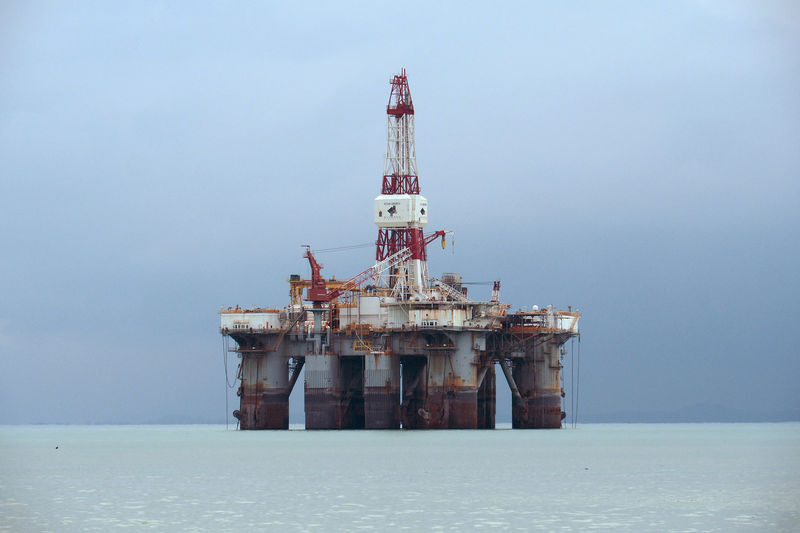
(Bloomberg) -- The Biden administration is auctioning off oil-drilling rights in the Gulf of Mexico, a fresh affront to climate activists still smarting from the White House’s approval of an Arctic exploration project. 

The 73 million acre sale — one of the nation’s largest ever — being held by the Interior Department on Wednesday was one of several required under the Democrats’ climate law as a concession to Senator Joe Manchin to secure the bill’s passage in the Senate.

Climate activists such as Earthjustice said the sale, which would offer up almost all of the unspoken-for tracts in the Western and Central Gulf, was larger than required. The group filed a lawsuit to clock the auction earlier this month.

The Interior Department declined to comment. 

At least 27 companies, including Exxon Mobil Corp (NYSE:XOM). and Chevron Corp. (NYSE:CVX), submitted bids for more than 300 tracts representing 1.7 million acres, according to Interior Department data. 

©2023 Bloomberg L.P.

Biden Begins Oil Drilling-Rights Sale in Fresh Blow to Activists


Why is Myanmar's military holding an election?

Soldiers stand next to military vehicles as people gather to protest against the military coup, in Yangon, Myanmar on Feb 15, 2021.
Reuters

      Why hold an election after staging a coup?

      The army has ruled Myanmar for five of the past six decades and in the 10 years prior to the coup had transitioned to a quasi-civilian political system in which the military shared power with an elected government.

      That system was created by the military to allow it to step back from direct rule while retaining an important political role with which it could protect its own interests and not be at the mercy of elected politicians.

      It was a success, at least compared with the decades of authoritarian rule, sanctions and economic decay that preceded it. Myanmar's brief encounter with democracy and civilian rule saw unprecedented reform, Western investment and economic liberalisation. Much of that, however, has been unravelled by the Feb 2021 coup.

      So why did the military stage the coup?

      The generals intervened just hours before a new parliament was due to convene, citing unaddressed irregularities in an election three months earlier that was won in a landslide by Aung San Suu Kyi's ruling National League for Democracy (NLD) party. Election watchdogs, however, found no significant issues.

      Experts believe the coup was a self-preservation move by the military top brass. Their bitter rival, the NLD, won nearly 80 per cent of available seats in the election compared with less than seven per cent for the military's proxy party - a win big enough to mount a serious effort to change the constitution to weaken the military's political power and make it answerable to elected governments.

      What has happened to the opposition?

      Suu Kyi, 77, is serving 33 years in prison after being found guilty on multiple charges her allies say were trumped up to end her political career. Dozens of NLD officials are also in jail or have fled.

      The junta dissolved the NLD and 39 other parties after they failed to meet Tuesday's election registration deadline, with many of those unwilling, like the NLD, or unable to take part.

      Many opposition figures and activists see the election as a sham and some have joined a shadow government that seeks to undermine the military, or have taken up arms with a resistance movement.

      Who will win the election?

      No date has been set for the election, but with the NLD out of the equation and most of the 63 registered parties contesting seats only in regional legislatures, the military's proxy, the Union Solidarity and Development Party (USDP), is almost certain to win at the national level.

      The USDP was created by the previous military government before it made the transition. It dominated a 2010 election boycotted by the NLD and many other parties, but was beaten convincingly in 2015 and again in 2020, before that vote was annulled.

      Despite its leaders overseeing most of Myanmar's biggest reforms, the USDP remains unpopular and synonymous with military rule. Another USDP government is likely to be viewed locally with scepticism.

      How will the world respond to the election?

      Many Western countries and international organisations have already dismissed the election as illegitimate and voiced concern that key stakeholders in Myanmar are being shut out of the political process. They are also worried it will intensify the conflict.

      Many economic sanctions that were removed in recognition of reforms post-2011 have been re-imposed and it is unlikely the election or early actions of the government it creates will result in their lifting anytime soon.

      Myanmar's neighbours, which have preferred a policy of engagement with the military, may take a wait-and-see approach, including over investments in the country.

      ALSO READ: Myanmar junta dissolves Suu Kyi's party as election deadline passes

      The Force is with Ukraine: Luke Skywalker voices air raid warning app

      Mark Hamill, 71, has been an outspoken activist for Ukraine since Russia invaded on February 24, 2022. He said he's happy to help out by lending his iconic Star Wars voice.

      By JERUSALEM POST STAFF
      Updated: MARCH 30, 2023 

      Actor Mark Hamill poses with "Star Wars" characters R2-D2 and Stormtroopers after unveiling his star on the Hollywood Walk of Fame in Los Angeles, California, US, March 8, 2018
      (photo credit: MARIO ANZUONI/REUTERS)

      The Force is with Ukrainians as Star Wars legend Mark Hamill, the voice of Luke Skywalker, has lent his iconic vocals to an air-raid warning app used throughout the country as war rages on.


      “Attention. Air raid alert,” the calm but urgent voice says. “Proceed to the nearest shelter.”

      The app, Air Alert, "warns Ukrainians that Russian missiles, bombs, and deadly exploding drones may be incoming" when sirens go off, Associated Press first reported. “Don’t be careless,” Hamill’s voice cautions. “Your overconfidence is your weakness.”

      When the threat is cleared, Hamill says, "The air alert is over. May the Force be with you."

      "The air alert is over. May the Force be with you."Mark Hamill

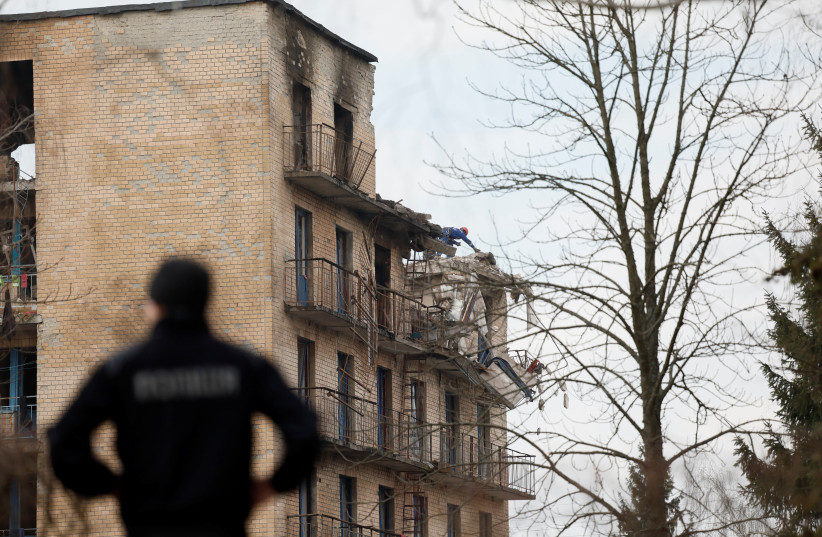
      A rescuer works at a site of a building heavily damaged by Russian drone strikes, amid Russia's attack on Ukraine, in the town of Rzhyshchiv, in Kyiv region, Ukraine March 22, 2023 (credit: REUTERS/ALINA YARYSH)

      Hamill, 71, has been an outspoken activist for Ukraine since Russia invaded on February 24, 2022. In an interview with the AP he said he's happy to help out, adding it's "impossible not to be inspired by how [the Ukrainians have] weathered this storm. Here I sit in the comfort of my own home when in Ukraine there are power outages and food shortages and people are really suffering," Hamill, who – aside from playing the iconic Jedi master from a galaxy far, far away – lives in California, said. "It motivates me to do as much as I can."

      This is the Way: How necessary is Mark Hamill's voice on the app for Ukraine?

      For much of the war, a Ukrainian-language setting voiced by a woman has been offered on the app. But some Ukrainians, especially those who grew up on Star Wars, are comforted by Hamill's familiar voice breaking the bad news that yet another Russian barrage is on the way.

      It may be fortunate, then, that Hamill didn't reprise another of his famous roles: That of the infamous clown prince of crime, the Joker – archnemesis of Batman.

      In the invasion’s first year, high-end estimates of combined total military and civilian deaths are almost 300,000 casualties. By the war's first anniversary, air-raid alarms sounded more than 19,000 times across the country. A year later, war has not letting up. There are still days and nights when the sirens and the app sound every few hours. The app has been downloaded more than 14 million times.

      The Russian military said in February that since the beginning of the war, it has destroyed 7,994 armored tanks and other armored vehicles, 4,189 artillery pieces, 1,038 MLRs, 405 anti-air systems, 387 aircraft, 210 helicopters, 3,222 drones and 8,501 other military vehicles.

      Michael Starr contributed to this report.
      VP Harris enters the fray over democracy with visit to Tanzania

      U.S. Vice President Kamala Harris is stepping onto the front lines of the battle for democracy in Africa
      THE INDEPENDENT
      TODAY


      U.S. Vice President Kamala Harris will step onto the front lines of the battle for democracy in Africa on Thursday, spending time in Tanzania as it makes fragile progress toward restoring its reputation as a more inclusive government.

      Samia Suluhu Hassan, Tanzania’s first female president, has undone some of the country’s more oppressive policies, such as a ban on opposition rallies, even though she came to power as a member of the ruling party.

      She’s finishing out the term of President John Magufuli, who died in office and earned a reputation for stamping out dissent, arresting critics and forcing them into exile. Hard-liners have been uncomfortable with some of Hassan’s changes, however, which could cost her in the next election two years from now.

      Harris, the first woman to serve as U.S. vice president, will meet with Hassan on Thursday, a noteworthy show of support from Washington as the United States deepens its outreach to Africa.

      “There’s so much excitement here and people are saying it’s like Madam President’s efforts in changing the country are being rewarded with recognition from an economic and political superpower that is the U.S.,” said Tanzania-based analyst Mohamed Issa Hemed.

      During a previous meeting in Washington, Harris told Hassan that “we welcome the progress that you have made during the course of your leadership and, in particular, the work you have done to empower women leaders in Tanzania and the work you have done to support human rights.”

      Harris arrived in Tanzania late Wednesday after spending three nights in Ghana. Much like at her first stop, she was greeted with music and dancing as she walked down a red carpet that was rolled out to Air Force 2. Some of the welcoming party wore shirts with Harris' face and skirts feature Hassan.

      Harris is scheduled to spend two nights in Tanzania, then conclude her weeklong trip with a stop in Zambia, another country that is striving to strengthen its democracy. She plans to return to Washington on Sunday.

      Idayat Hassan, director of the Centre for Democracy and Development in Abuja, Nigeria, said Harris’ visit can help galvanize enthusiasm at a time when there are concerns over backsliding into authoritarianism in Africa and around the world.

      “Many people will want the U.S. to speak to the issue of democracy, which they feel is beginning to decline and is not what it used to be,” she said. “There are more that need to be assured that democracy is here to stay.”

      Like Tanzania, Zambia has made uneven steps toward democracy since its independence. However, there’s been a burst of hope after the country elected Hakainde Hichilema, a former opposition leader who once faced charges of treason.

      Zambia has since decriminalized defamation of the president, a law that was used to stifle opposition. It’s also serving as a co-host of President Joe Biden’s second Summit for Democracy this week.

      However, Hichilema warned this week that economic progress is necessary to sustain open societies.

      “You can’t eat democracy,” he wrote in The Washington Post. “Human rights may sustain the spirit, but not the body.”

      Africa: Industries Can Harm Health in Many Ways - Here Are 3 That Aren't So Obvious


      29 MARCH 2023

      ANALYSIS

      A recent ground-breaking series of reports in the science journal The Lancet unpacks what commercial determinants of health are, and how they affect public health. It uses a new, broader definition of the determinants:

      the systems, practices and pathways through which commercial actors drive health and equity.

      Some commercial entities contribute positively to health and society. However, research shows that some commercial products and practices are directly linked to avoidable ill health, planetary damage, and social and health inequity. Large transnational corporations are especially to blame.

      Read more: Profit versus health: 4 ways big global industries make people sick

      The Lancet series examines not just directly damaging products (such as alcohol or ultra-processed foods) but the commercial practices that influence human health, inequities in health and planetary health. The series highlights the need to better understand the diversity within the commercial world, and the variety of ways its normal operations harm humanity and the planet.

      3 'hidden' industries that can harm your health

      Some seemingly benign - or even beneficial - industries actually have major and avoidable impacts on health. They contribute negatively to health in subtle or indirect ways.

      The pharmaceutical industry is one. Its abuse of intellectual property to increase prices and limit access to essential drugs is a common trend. The pre-selling of COVID-19 vaccines to wealthy countries is a recent, massive-scale example. The industry's longstanding resistance to lowering the price of antiretroviral drugs for HIV meant that untold thousands, mostly in developing countries, died because they lacked access to treatment.

      Social media is another industry of particular concern especially given the increase in its consumption in recent years. A plethora of research confirms the adverse effects of social media on mental health, especially an increase in cases of depression and anxiety.

      On top of this, other industries often use social media to promote harmful products and for "social washing", a strategy employed by companies to promote themselves as more socially responsible than they actually are, purely for brand promotion. We have also seen an increase in "surveillance capitalism" whereby private information is gathered through social media use. The information is then used by, for example, junk food companies through platforms such as Facebook for the targeted marketing of unhealthy commodities.

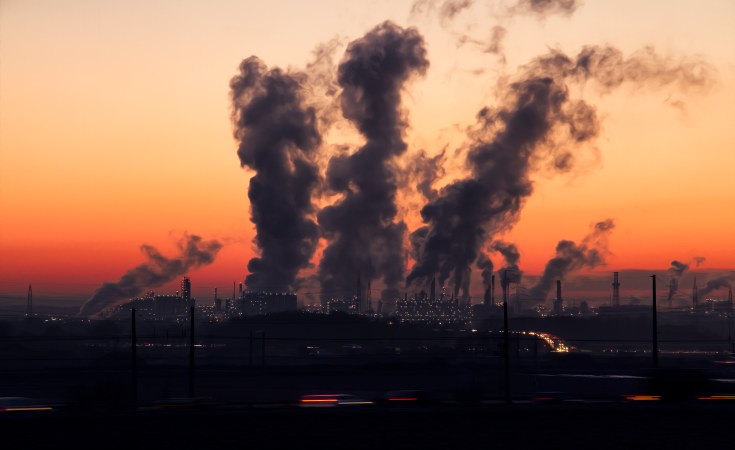
      Extractive companies have also been linked to various health and planetary harms. Air and water pollution, environmental degradation, fatalities, silicosis, and noise-induced hearing loss are just a few examples of these harms. A report by the South African Human Rights Commission has severely criticised the mining industry and held that this sector "is riddled with challenges related to land, housing, water and the environment".

      In the South African context, the harms created by the mining industry are particularly concerning given the knock-on, damaging socio-economic effects - for example as a result of the loss of breadwinners - on families and, often, vulnerable communities.

      Harmful business practices

      Not only can harm to global health come from a range of industries, it can also come indirectly from business practices. Three harmful practices are:

      Next steps

      Commercial determinants of health are clearly influenced by a much wider range of actors and practices than the more obvious product-related harms of the "big four" (tobacco, alcohol, ultra-processed foods and fossil fuels). No business entity is purely "good" or "bad", but we have seen an increasing trend where companies use "beneficial" practices, such as sponsorship, donations and pledges to environmental causes, to mask harmful practices and influence politicians.

      Without a common understanding that these industries are harming our health, no action can be taken against them. Holding industry accountable and stricter government regulation are the minimum actions needed.

      The Lancet series authors are calling for a global move towards health-promoting models of commerce. This is a move away from emphasising profits and economic growth, and instead focusing on societal and planetary health and well-being.

      This article is part of a media partnership between The Conversation Africa and PRICELESS SA, a research-to-policy unit based in the School of Public Health at the University of the Witwatersrand. Researchers from the SAMRC/Wits Centre for Health Policy and Decision Science also contributed to the Lancet series on the commercial determinants of health.

      Dr Sameera Mahomedy, Researcher in Law and Policy, SAMRC/Centre for Health Economics and Decision Science - PRICELESS SA, University of the Witwatersrand

      AUSTRALIAN  OPINION
      America, like Bill Cosby, has become a fallen hero


      Kerri Sackville
      Columnist and author
      March 30, 2023 —

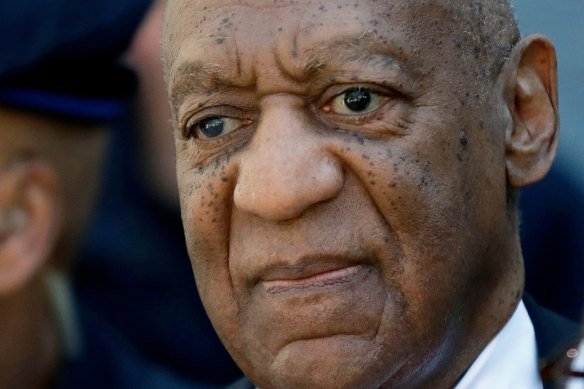
      When I was growing up, Bill Cosby was almost universally loved. The Cosby Show was hugely popular, and profoundly aspirational. We all wanted families like the Huxtables. Bill Cosby was a hero to us all. Unfortunately, it turned out that Bill Cosby was drugging and sexually assaulting women. He certainly isn’t a hero anymore.


      Once hugely popular and inspirational: Bill Cosby’s fall from grace mirrors that of the United States.CREDIT:AP

      I remember how devastated I was to learn that my hero had fallen. A curtain had been pulled back to reveal an ugly truth at the heart of a myth, and I couldn’t unsee it.

      Well, I feel like the entire United States of America is my Bill Cosby. The US used to be incredibly aspirational for me and many of my peers. We revered the US. It was the centre of the free world! The land of opportunity! The home of the brave!

      When I was growing up, Green Cards were so highly prized they were almost mythologised. They were the golden ticket, a chance to move to the greatest country on earth and pursue the American Dream. When a friend of mine won one in the Green Card lottery, we were awed and envious and disbelieving.

      I loved the US. I admired the patriotism, the enthusiasm so many Americans held for their country. I admired Hollywood. I adored the John Hughes movies, and the TV dramas like Hill Street Blues and Family Ties and LA Law. I admired the multiculturalism, the idea of a melting pot of immigrants from around the globe. I coveted the college system, the diners, Walmart, and brands like Gap and Banana Republic. I marvelled at New York, which did and still does feel like the centre of the universe.


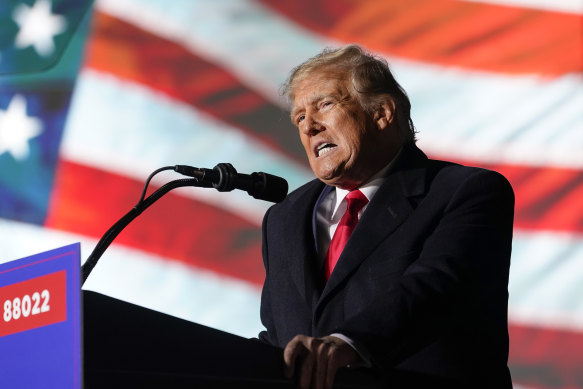
      Former US president Donald Trump has built a following stoking division.CREDIT:AP

      Now, I wouldn’t take a Green Card if it came with a bag of cash and a date with George Clooney. The country is so divided and so toxic that I worry for my American friends. From an ex-president who tells blatant lies and tries to undermine the democratic process, to the lack of socialised medicine and soaring costs of health care, from the institutionalised racism to the police violence, from the daily mass shootings (sometimes more than daily), to the “don’t say gay” bill, the US is an ongoing series of horror stories.

      RELATED ARTICLE

      Censorship
      Porn, power and the other p-word in conservative America
      Julie Szego

      I still love New York and American movies, but New York isn’t the US, and neither is Hollywood. The US is 50 states, 24 of which have recently banned abortion. The US has more guns than people, and the highest rate of gun ownership in the world by a huge margin. The US had almost one school shooting per week last year, and homicide is the leading cause of death for kids and adolescents. The religious right is waging war on the rights of transgender people, the rights of gay people, and the reproductive rights of women, and they are making progress. Incarceration rates in the US are among the highest in the world and income inequality is the highest among developed nations.

      There are progressives in the US, people who care about social justice and about the rights of the most vulnerable citizens. Most people didn’t vote for Donald Trump and most people don’t support the overturning of Roe vs Wade. But access to voting is unequal, the electoral college system is inequitable, and the stacked Supreme Court means that the values of a conservative minority beat the wishes of the majority. It is democracy, yes, but it is certainly not inclusive.


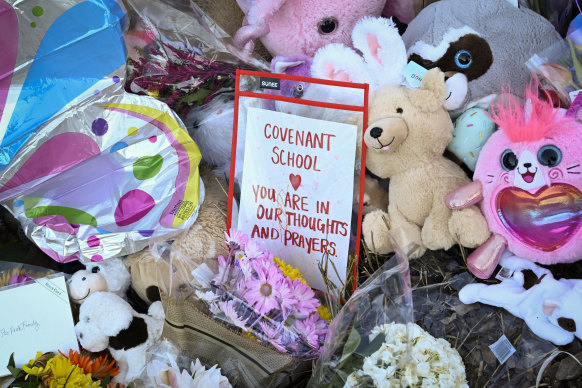
      A memorial to victims at Covenant School in Nashville. The US had almost one school shooting per week last year.
      CREDIT:AP PHOTO

      I used to revere the US, now I ache for the women and the LGBT+ community and the people of colour and the thousands upon thousands dead from gun violence each year. The US is now my Bill Cosby. It is a fallen hero for many of us.

      RELATED ARTICLE

      Guns in America
      What will it take to stop it? An Australian on the scene of America’s mass shootings

      But it makes me even prouder of my own country. Australia is far from perfect. We have our own problems with income inequality and homelessness, our own problems with gendered violence, our own terrible record of institutionalised racism.

      But our gun laws are aspirational. Our Medicare system is aspirational. Our reproductive rights are aspirational. We have progressive governments in power. We don’t need another country to revere