Thursday, March 30, 2023

South African ex-Treasury boss helms billion-dollar lithium plan
Bloomberg News | March 30, 2023 | 

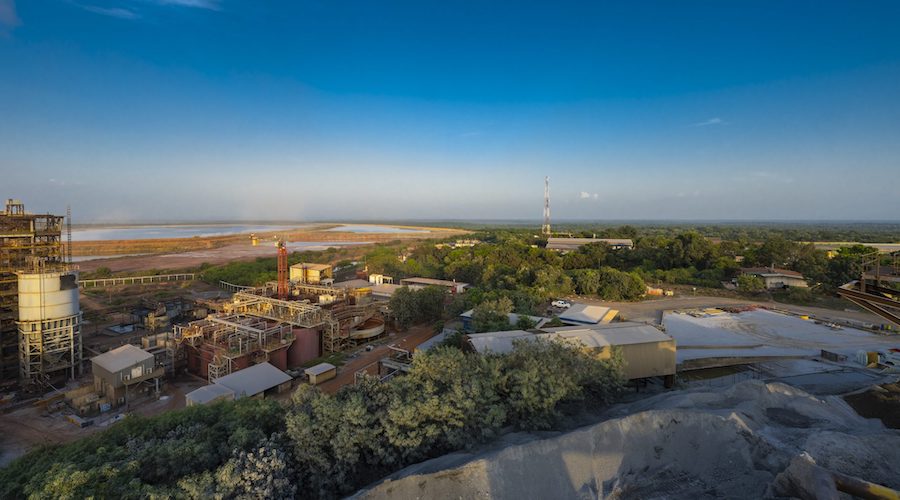
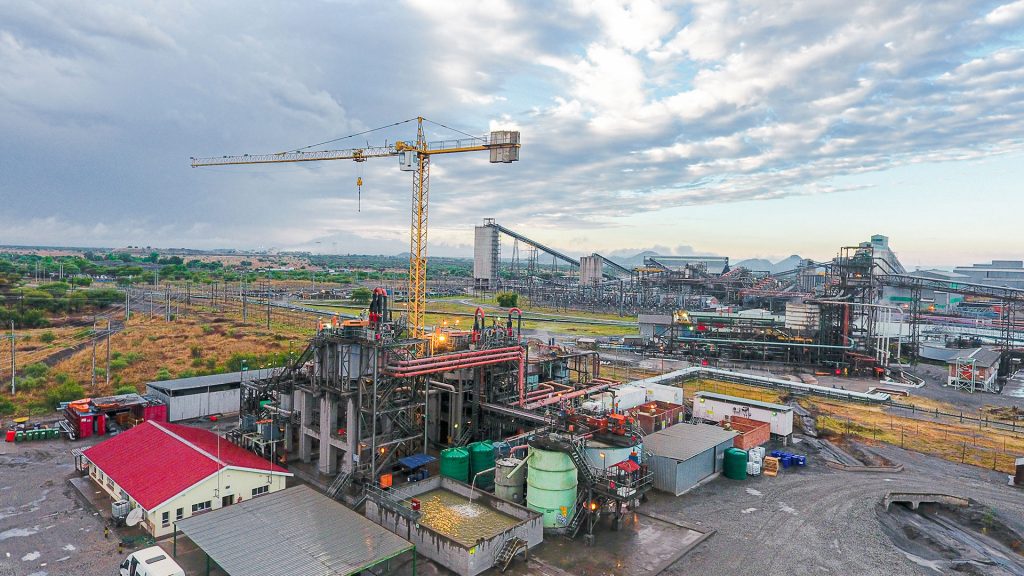
The Kilken platinum tailings retreatment processing plant. 
Credit: Moti Group

The former head of South Africa’s National Treasury has been tasked with cleaning up a scandal-dogged company that’s contemplating partnering a Chinese battery maker in a $1 billion lithium operation.


Dondo Mogajane aims to restructure and improve compliance at Johannesburg’s Moti Group. Founder Zunaid Moti told Bloomberg his reputation is hindering the fortunes of a company that has a venture with Anglo American Platinum Ltd., chrome and lithium assets and property development businesses. He has stepped back from management.

Moti, 48, spent five months in a German jail in 2018 and 2019 after being arrested on an Interpol diffusion notice issued by Russia in connection with the alleged theft of a pink diamond. In 2012, he was charged with conspiracy to commit murder before the case was thrown out of court.

Moti, who was represented by Cherie Blair in the Interpol case, said he was arrested improperly on bogus charges engineered by a disgruntled businessman and a letter he showed Bloomberg from Interpol shows that he’s no longer subject to a notice from the organization.

“Everyone would not be associated with someone whom when you Google you just see is depicted as this gangster who drives Ferraris,” Mogajane said in an interview this month at Moti’s headquarters, which forms part of a complex upon which a decommissioned Mirage jet fighter has been mounted. Mogajane, who was courted for the position for over a year, said he was aware it came with “reputational risk” and told Moti: “We will have to run a proper business without you being there.”

Battery factory

The former Treasury director-general is the chairman of South Africa’s Government Employees Pension Fund, which has 2.3 trillion rand ($127 billion) under management. He’s also a board member at the New Development Bank, a multilateral lender founded by the BRICS group of countries.

Mogajane, who took up the Moti post in July, is reorganizing the company at a crucial time as it negotiates a venture based on its 10,000-hectare (24,711-acre) lithium concession in northeastern Zimbabwe with the Chinese company. An initial mining operation may lead to the establishment of a battery factory at a cost of more than $1 billion. The Moti group plans to retain 30% of the venture.

The deal will be a “game-changer” for Zimbabwe, he said. “We are negotiating with a well known electric-vehicle battery-manufacturing company, with clients that range from Tesla to BMW,” he said, declining to identify the firm because of confidentiality agreements.

Mogajane plans to seek an exemption from Zimbabwe’s ban on exporting lithium ore and start shipping the material to China this year and build a battery plant “in the medium to long term.”

Lithium reserves

The southern African nation, which has some of the world’s biggest reserves of the green metal, is banking on it to help revive a moribund economy. The price of lithium carbonate, the benchmark product, surged more than six-fold over the past two years to as much as $66,500 per ton, according to Benchmark Mineral Intelligence data. The metal has pared back those gains in recent months as supply started to catch up with demand.

Mogajane is also planning to expand the company’s Kilken Imbani plant, which re-treats mining waste at Anglo Platinum’s Amandelbult mine in South Africa to extract more of the precious metal, even though Moti Group is embroiled in a legal battle with a minority shareholder who wants to be bought out.

Moti said his time in prison gave him time to reset his priorities. The closing of his accounts with Absa Group Ltd. after his release from jail despite him having banked with them since he was a teenager showed him that retaining control wasn’t in the best interests of his family. Absa declined to comment.

“My reputation was hurting my children and it was not allowing my business to move forward,” Moti said in an interview at his house in an upmarket suburb of Johannesburg. “We don’t want to end up where my children are victimized because of my history.”

Moti still plans to run African Chrome Fields, in which Moti Group once had a venture with Zimbabwean businessman Kudakwashe Tagwirei, who has been sanctioned by the US and UK on corruption allegations. It will be separated from the group.

“I am going from the Moti Group,” he said. “I would rather now just get out of the boxing ring.”

(By Loni Prinsloo and Antony Sguazzin, with assistance from Mark Burton)


Premier African Minerals completes Zimbabwe lithium plant, production imminent

Reuters | March 29, 2023 | 

Zimbabwe holds some of the world’s biggest hard-rock lithium deposits and has recently attracted about $700 million in investment from several Chinese firms.
 

Premier African Minerals said on Wednesday it had finished building a lithium processing plant at its Zulu mine in Zimbabwe and expected to start production of spodumene concentrate later this week.


Spodumene is a lithium ore with high concentration of lithium, a key component in the production of batteries for electric vehicles.

Premier built the plant, which has capacity to produce nearly 50,000 tonnes of spodumene concentrate annually, as part of a $35 million offtake deal signed last year with China’s CanMax Technologies (formerly Suzhou TA&A).

“We expect to produce spodumene, a lepidolite mica rich concentrate and a tantalum rich concentrate, late this week provided that final formal outstanding approvals from certain Zimbabwean authorities are received,” Premier CEO George Roach said in a statement.

Zimbabwe holds some of the world’s biggest hard-rock lithium deposits and has recently attracted about $700 million in investment from several Chinese firms, including CanMax, which also bought a 13.38% stake in Premier last year, Zhejiang Huayou Cobalt, Sinomine Resource Group and Chengxin Lithium Group.

On March 22, Huayou said it had started trial production from its Arcadia lithium project 40 kilometres (24.85 miles) outside Zimbabwe’s capital Harare. Huayou said the $300 million Arcadia plant has capacity to process 4.5 million tonnes of lithium ore at Arcadia, producing 50,000 tonnes of lithium carbonate equivalent lithium concentrate.

(By Nelson Banya; Editing by Mark Potter)
Australian man finds giant gold nugget worth $160K

Cecilia Jamasmie | March 29, 2023 | 

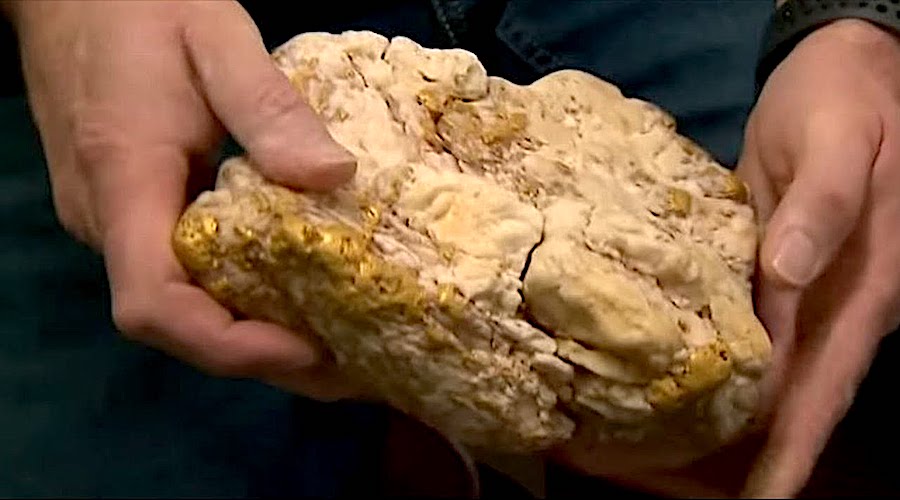
The “Lucky Strike” nugget. (Image courtesy of 9 News Australia | YouTube. )

An amateur gold digger armed with an inexpensive metal detector has hit the jackpot in Australia after finding a 4.6kg gold nugget worth about $160,000 (A$240,000).


The man, who chose to remain anonymous, made the discovery in the goldfields of the state of Victoria, which was the heart of Australia’s gold rush in the 1800s.

He took his discovery to a prospecting store nearby run by Darren Kamp, who valued and bought the specimen.

“He pulled this rock out and as he dropped it into my hand he said, ‘Do you think there’s A$10,000 worth in it?'”

“I looked at him and said, ‘Try A$100,000’”, Kamp told 9 News Australia.

He then learned the piece he was looking at was just half of the nugget.

“All up, the 4.6kg rock contained 83 ounces – or about 2.6kg – of gold,” he said.
Darren Kamp. (Image: Lucky Strike Gold | Facebook.)

The prospector used a Minelab Equinox 800 detector that costs about $800 (A$1,200), the lowest end of the tool’s price range, according to Kamp.

He noted that if the nugget had been buried 12 inches deeper it would have been impossible for the man’s machine to detect it. That’s why Kamp named the find “Lucky Strike”, which is also the name of his prospecting store.

The location where the nugget was found is the same that in 1869 yielded Australia’s largest. Found by two miners, who called it the “Welcome Stranger,” this 154-pound nugget measured 24 inches across.
Mexican president proposes tougher mining laws, shorter concessions

Reuters | March 29, 2023 

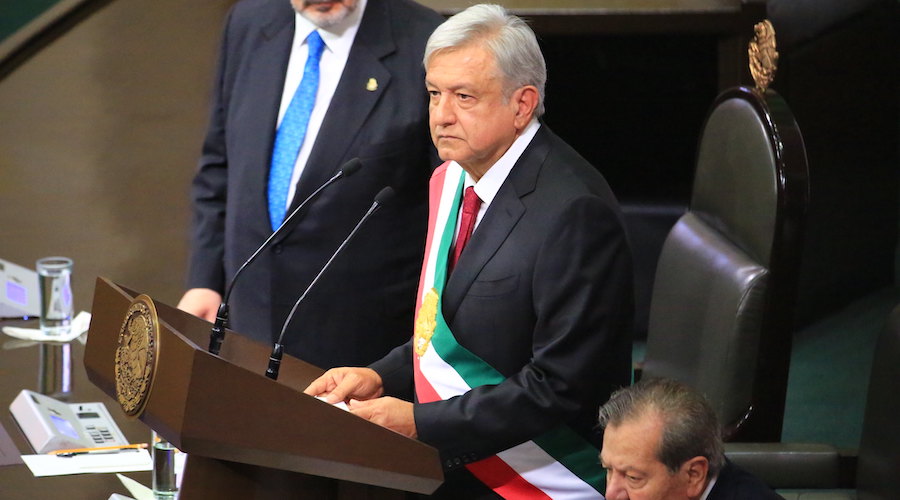
Mexican President Andrés Manuel López Obrador. (Image by Gobierno Danilo Medina, Flickr).

The Mexican government’s proposed overhaul of mining laws, including shorter concessions and tighter rules for permits, drew a quick warning from industry leaders who fear it could undermine the sector’s growth prospects.


President Andres Manuel Lopez Obrador offered the draft reform on Tuesday to lawmakers in the lower house of Congress, which would sharply reduce the length of mining concessions to 15 from 50 years.

Mexico, a major mining country for decades, is the world’s top primary silver producer, as well as a top 10 gold and copper miner.

The initiative, which still must pass various legislative steps before it could be enacted, would also add new requirements to obtain mining and water permits, establish a new obligation to disclose mining impacts, and require miners to give back at least 10% of the profits to communities.

The country’s mining chamber Camimex warned that changes contemplated in the draft could provoke “strong repercussions” for the industry, stressing in a statement late on Tuesday that it continued to analyze the proposal.

Since he took office in late 2018, Lopez Obrador has refused to offer any new mining concessions, arguing that too many had been granted by previous governments.

Last year, the president championed the nationalization of the country’s nascent lithium industry, favoring a newly created state-run producer to mine the coveted battery metal, in another move mining sector analysts see dampening investor appetite.

Shares in precious metals miner Industrias Penoles fell more than 3% on Wednesday, after jumping more than 5% the day before, while Compania Minera Autlan dipped nearly 2%.

Leading copper producer Grupo Mexico advanced 0.73%, marking its third consecutive day of gains.

In its statement, Camimex expressed hope the upcoming debate over the proposal will incorporate industry concerns, adding it expects “a broad, inclusive and informed legislative discussion.”

(By David Alire Garcia, Valentine Hilaire and Noe Torres; Editing by Richard Chang)
Mali to review and renegotiate mining contracts

Reuters | March 30, 2023 |

Syama gold mine. (Image courtesy of Resolute Mining.)

Transitional authorities in Mali will review mining contracts after an official audit of the sector advised that the state was not receiving a fair share of gold-mining revenue, the council of ministers said on Wednesday.


Mali is one of Africa’s largest producers of gold, which is its top export. Companies operating in the country include Barrick Gold Corp and Resolute Mining.

The council said an action plan would be implemented and would include creation of a commission to renegotiate mining deals, a move to repatriate cash earned from gold exports and the adoption of a mining sector environmental code.

“The action plan will be implemented via a participatory approach, including the mining companies themselves,” it said in a statement without providing a schedule for the measures.

Soon after coming to power in a 2020 coup, the military junta vowed to review mining contracts signed with companies by previous administrations.

Gold exports from Mali rose 8.4% in 2022 to 69.3 tonnes, reflecting a rise in industrial gold production over the same period, data from the statistics agency showed earlier in March.

(By Tiemoko Diallo and Alessandra Prentice; Editing by David Goodman)
Codelco loses environmental licence for Ecuador copper project

Bloomberg News | March 30, 2023 |
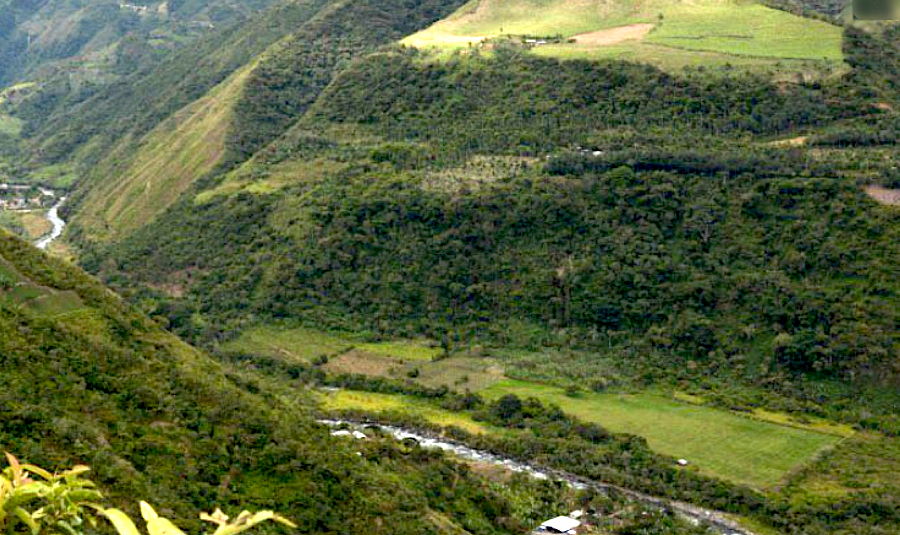
The Llurimagua copper project, in the northern Ecuador Imbabura Province, is in the advanced exploration stage. (Image courtesy of Enami EP | Twitter.)

A provincial appeals court in Ecuador has stripped Codelco and local joint venture partner Enami of its environmental license for the Llurimagua copper project, according to a ruling published Wednesday.


Plaintiffs from the nearby Intag Valley, who have opposed mining development since the 1990s in defense of animal species like the spectacled bear, had filed a constitutional injunction alleging a violation of their right to be consulted.

The Ibarra court agreed, revoking the license granted by the environment ministry in 2014 and ordering Enami to provide a new environmental impact study and management plan for advanced exploration as a precondition for resuming work. Conditions include consultation with the affected community.

To be sure, the court didn’t strip the partners of their mining title. The decision overturns a February ruling by a lower court in Cotachi. The Llurimagua project has also been delayed by a dispute between its Chilean and Ecuadorian shareholders.

(By Stephan Kueffner)
Peru copper mines aim for output boost in 2023 after protest impact fades
Reuters | March 30, 2023

Antapaccay copper mine in Peru. (Photo: Glencore)

Peru’s copper miners hope to increase output in 2023 after recovering from the impact of major protests at the start of the year, industry executives said, despite simmering anti-government anger in the world’s no. 2 producer of the red metal.


The South American country saw a number of key mines reduce or temporarily halt production in January and February during the deadliest protests that have hit Peru in over 20 years, with the worst violence in the copper-rich Andean south


However, protests and blockades that snarled transport to and from mines have largely been lifted, despite ongoing public anger since the dramatic ouster late last year of leftist leader Pedro Castillo. Voters are still pushing for snap elections.

“The southern (mining) corridor is operating normally, all the inventories of concentrates that the mines had are been sent to the coast,” said Víctor Gobitz, president of mining sector body SNMPE and chief executive of Peru’s top mine Antamina.

Power data from Peru’s private power sector body COES, analyzed by Reuters, shows activity at Peru’s top mines has stabilized since early March following the disruptions earlier this year, which stalled production and shipments.

That’s a boost for mines, including Chinese state-owned MMG Ltd’s Las Bambas, Glencore PLC’s Antapaccay, Hudbay’s Constancia, and Antamina, co-owned by Glencore, BHP Group Ltd, Teck Resources Ltd and Mitsubishi Corp.

Gobitz said the easing of protests and new mines coming fully online like Anglo American’s $5.5 billion Quellaveco would push up overall copper production this year.

“If we manage to resolve the issue of the mining corridor and the 100% effect of Quellaveco, then without a doubt Peru will produce more copper in 2023 than in 2022,” he said.

Peru produced some 2.44 million tonnes of copper last year, 4.8% more than in 2021 and very close to the maximum level before the global effects of the Covid-19 pandemic.

Ratings agency Moody’s said in a March report that most miners in Peru had survived relatively unscathed from the protests, though the impact would likely “delay mining company permits for projects already under construction.”

In southern Puno, the San Rafael de Minsur tin mine, the world’s fourth largest, has slowly restarted operations since March 20 after a roughly 10-week halt due to protests, though blockades continue on weekends.

A Minsur spokesperson told Reuters the mine was “on track to be operating at full capacity, but it takes some time to get there. It will depend on there being no other interruptions.”

(By Marco Aquino; Editing by Adam Jourdan and Jonathan Oatis)
CHART: Demand is soaring, but global mining is not expanding

Frik Els | March 30, 2023 | 

Capex freeze. Dvoinoye mine in Khabarovsk Krai, 2019. (Image: Kinross Gold).

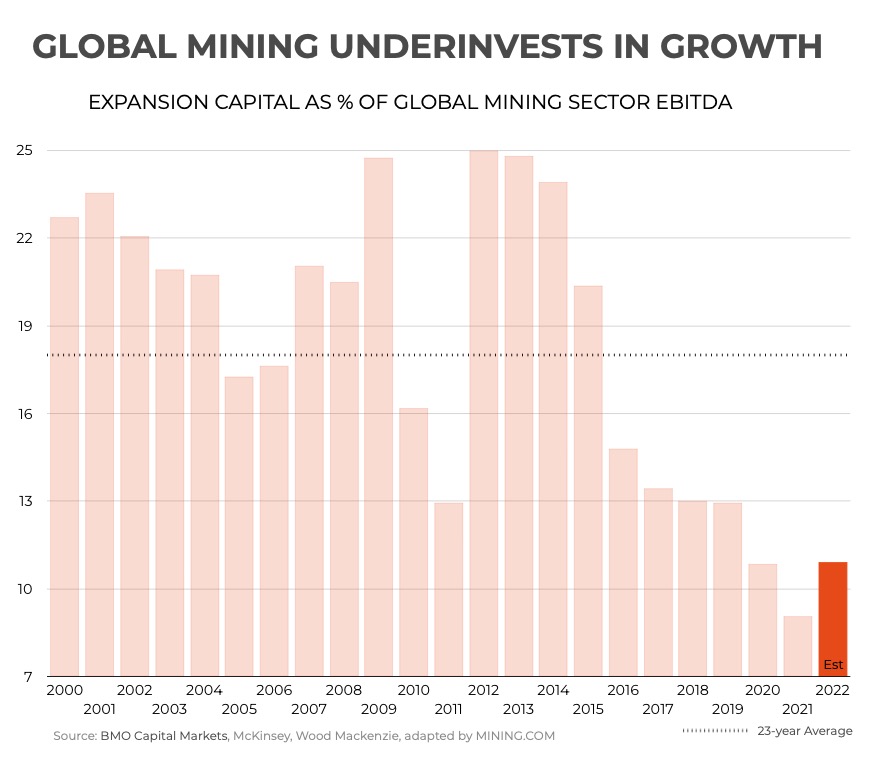
A new report by BMO Capital Markets has a trenchant chart showing just to what extent mining companies – flush with cash – are opting to return money to shareholders rather than build new mines.


Global mining’s enthusiasm for brown and greenfield projects has fizzled over the last decade despite near universal agreement that in the coming decades demand for metals and minerals will boom due to the green energy transition.

BMO says while companies “have started to talk more openly about investment,” so far they are “doing little about it”.

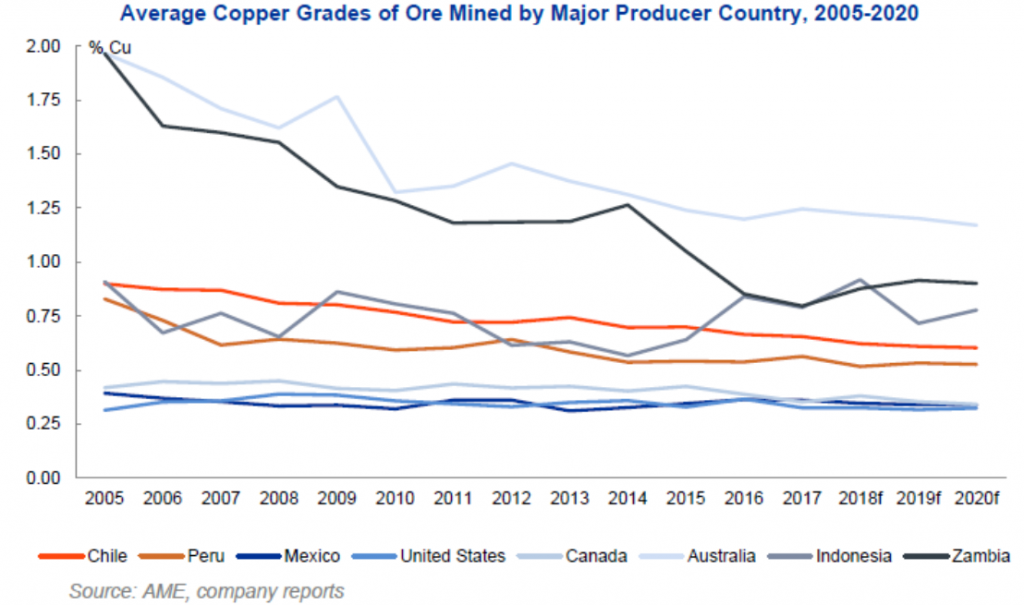
Over the past 20 years, expansion capital spending across the industry has typically run above 20% of EBITDA, which is to be expected in an industry with depleting assets and falling grades (click here for a copper ore grade graph).

The authors of the report point out that the past couple of years have seen this metric slip to around 10%, “with shareholder returns favoured even as free cash rose.”


“Given the timeline to bring a mine to market, this lack of investment is storing up issues for later in the decade, where balances look incrementally tighter.”


Buying not building

“Moreover, given it has never been harder to build a new mine owing to capex escalation concerns, shareholder resistance and environmental/ESG challenges, we see companies looking towards buying rather than building any growth,” says BMO.

Given this, the investment bank sees the need for medium-to long-term pricing to trade at a premium to the cost curve “given the need to substitute or thrift demand in a number of metals, particularly those exposed to the fuel to materials transition.”

Also in the report, where BMO has upped its price forecast for most of the commodities it covers (notably molybdenum +59%, gold +13%, and copper and zinc both +10%), is a section on changes to China’s raw materials model.

If mining companies in the West are planning to buy their way out of years of underinvestment in new assets, they will have stiff competition, not just at home:


“Ensuring availability of raw material supply is not a new policy for China, but it has clearly been moved up the agenda since last year’s NPC.

“We view this as effectively a carte blanche to Chinese SOEs to invest in mines overseas again, both mining companies and, potentially, battery and automakers such as CATL and BYD.”
David Graeber, his  book
DEBT: The First 5,000 Years of it.

Why does the Iranian opposition continue to support a failed approach?

The Iran-Saudi pact proved that isolation, sanctions and maximum pressure are failed policies that never brought change. So why does the foreign opposition continue to push for them?

Soraya Lennie
25 March 2023 

Anti-government protesters hold up placards and flags during a march marking the 44th anniversary of the Iranian revolution, in Trafalgar Square, central London on 11 February 2023 (AFP)

There has been no shortage of language to describe the relationship, or lack thereof, between the Islamic Republic of Iran and Saudi Arabia in the past decade. But the Middle East's two most prominent pillars of power seem to have come to a truce.

The China-brokered deal did not fall out of the sky. Rather, it is the product of almost five years of sometimes tepid diplomacy, bookmarked by the Trump administration's assassination of Iranian Quds Force Commander Qassem Soleimani, who was acting as an interlocutor between Riyadh and Tehran on the night of his killing.

If these isolationist, pro-sanctions policies didn't work for the most powerful country on earth, then why does the opposition keep pushing them as key to the collapse of the Islamic Republic?

Iran and Bahrain are now also talking, while the powerful secretary of Iran's Supreme National Security Council, Ali Shamkhani, visited the UAE on 16 March.

There are many lessons in this diplomatic flurry - primarily, that isolation, sanctions and maximum pressure are failed policies.

The story goes, isolation was supposed to change Iran's "behaviour". Meanwhile, wide-ranging sanctions and maximum pressure were supposed to halt the nuclear programme and, unofficially, lead to "regime change".

But here we are.

The Islamic Republic is still heavily involved in regional politics, including in Iraq. Iran's ally, Bashar al-Assad, is still Syria's president and is being welcomed back into the global fold, even in the Arab world.

Domestically, Iran's nuclear programme continues to develop, despite sanctions, assassinations and sabotage. And, most recently, Tehran's circle of elites has so far survived the crisis of legitimacy and protest after the September death in custody of 22-year-old Mahsa Amini.

Enter the foreign-based opposition.

If these isolationist, pro-sanctions policies didn't work for the most powerful country on earth and its ally - the US and Saudi Arabia - then why does the opposition keep pushing them as key to the collapse of the Islamic Republic?
Isolating Iran

On 10 March, the newly formed Alliance for Democracy and Freedom in Iran (ADFI), released its charter to unify the fragmented Iranian diaspora and spell out its plan for the transition to a democratic Iran.

The plan, which "relies initially on activities outside of the country", states that "the isolation of the Islamic government internationally is a first and necessary step" in achieving its goal to overthrow the Islamic Republic.

Isolation apparently involves five steps, including the expulsion of Islamic Republic ambassadors and all "dependents" in those countries.


Saudi-Iran deal: After years of tension, a new chapter for the region begins
Read More »

Further, it seeks to "facilitate any means necessary to aid the people of Iran".

What that exactly means is unclear, and given the track record of regime change projects in the modern Middle East, it is somewhat alarming.

The document has not received much enthusiasm among the Iranian public, who were busy preparing for Nowruz, struggling with endemic inflation and dealing with the fallout of five months of protest. But it has been crucified by hardline media as a foreign-sponsored vanity project, and more importantly, in an op-ed in the leading reformist daily, Shargh, as lacking a basic understanding of Iran as a nation.

The first six signatories to the charter have become some of the most prominent faces in the diaspora and several have voiced support for sanctions in the past, including the Trump maximum pressure strategy.

They are unapologetically black and white on how to deal with the Islamic Republic, and so far have successfully lobbied the UN to kick Iran off the Commission on the Status of Women (CSW) and have also succeeded in pushing the European Parliament to declare the Islamic Revolutionary Guard Corps of the Iranian armed forces a terror organisation.

The group is continuing to lobby individual governments to do the same. But just how these campaigns help Iranian protesters or prisoners is unclear.

It's even vaguer as to how ending Iran's participation in a UN commission, or a non-binding European resolution, might collapse the Islamic Republic.

Nonetheless, the opposition is pushing for full economic and diplomatic isolation.

A 'vanity project'


It remains to be seen what expelling Iranian diplomats and their families would achieve. After all, Iranian diplomats have, for years, been expelled the world over for a variety of misdeeds, including by Saudi Arabia and the UK, and not even the most creative leap in logic could conclude that these expulsions have led to democratic change in Iran.

Further, it is unlikely any of Iran's major trading partners (i.e., anyone that matters) would entertain the idea.

Saudi-Iran reconciliation: Is Arab-Israeli alliance against Tehran ending?
Ameer Makhoul     Read More »


It may be a blow to the diaspora ego, but the biggest sparks for change in the Islamic Republic have always come from internal pressures, not external ones. Regime change devotee John Bolton couldn't even tip the tables on that.

Take, for example, the most intense protests, beginning in 1999, when students staged protests at Tehran University over the closure of the popular reformist newspaper, Salaam. A decade later, in 2009, the biggest protests in the history of the Islamic Republic took place amid a widespread belief the presidential election was rigged. Then in 2019, a long-touted cut in fuel subsidies caused a violent revolt. Reports suggest that 1,500 people were killed in the ensuing crackdown.

If the opposition wants to be seen as more than a performative vanity project and gain legitimacy outside of regime change diaspora communities and TikTokers, it needs to understand policy - and so far, it doesn't.

Isolation makes it easier for the state to stifle dissent. Sanctions harm ordinary people, not the elite. And with respect to Iran, neither leads to a change in the status quo.

Lobbying could have focused on pushing the EU to end its discriminatory visa practices so Iranians could gain employment and education abroad. After all, regular Iranians struggle to get visas to Europe, let alone audiences with prime ministers or speaking slots in Munich.

Meanwhile, US lobbying efforts could have focused on removing sanctions on banking and technology to make it easier for Iranians to pay for services abroad, including medication, or services that help circumvent the state's internet blackouts.

More than one Iran policy expert has described the diaspora's focus as an extraordinary waste of effort and resources. And if they haven't learnt from the Saudi experience, then the movement is already dead in the water.

There are 84 million people in Iran who are living with the consequences of failed policies every day. The opposition need not add to it.

The views expressed in this article belong to the author and do not necessarily reflect the editorial policy of Middle East Eye.

Soraya Lennie is an investigative journalist, analyst and the author of Crooked Alleys: Deliverance and Despair in Iran (HURST, 2021). Since 2006, she has covered stories across the world, including the war against ISIS, the Iran nuclear deal, the Paris terror attacks and war crimes in the former Yugoslavia. She has spent more than a decade based in the Middle East, including Tehran and Kabul, for various international news organisations, such as Al Jazeera English and TRT WORLD. Lennie has also contributed to CNN, BBC, Washington Post and Vogue.

Toomaj: 'Voice of whole country' silenced by Iran regime; battle to free 'symbol of the revolution'

Issued on: 30/03/2023 - 


13:42
Video by:Tom Burges WATSON

Iran's jailed dissident star rapper Toomaj Salehi faces the death penalty for his high-profile support of the unprecedented civil uprising sparked by the death of Mahsa Amini. The UN human rights chief said that the death penalty was being weaponised by Iran's government to strike fear into the population and stamp out dissent, saying the executions amounted to "state sanctioned killing". For more on the current fate of the Persian rapper, and the widespread support he is receiving from fellow musicians and dissidents, at home and worldwide, FRANCE 24 is joined by Toomaj's Lawyer Dylan Slama, who's filed an official complaint with the UN Human Rights Commission, his cousin Shabnam Khosravi, and celebrated Graphic Novelist and Filmmaker Marjane Satrapi.

The Hague rules US violated international law with Iran sanctions

The International Court of Justice also ruled the court has no jurisdiction over $2bn in frozen Iranian central bank assets


Iranian Foreign Minister Hossein Amir-Abdollahian attends a joint press conference with his Russian counterpart following their talks in Moscow, on 29 March 2023 (AFP)

By MEE staff
Published date: 30 March 2023 

The International Court of Justice ruled on Thursday that the US "violated" international law by freezing some Iranian assets, ordering Washington to pay compensation for an amount to be determined in the future.


The Hague, however, rejected Iran's bid to unblock nearly $2bn in assets belonging to its central bank which were frozen by the United States over alleged terror attacks.

Iran on Thursday said the International Court of Justice (ICJ) had demonstrated the legitimacy of its position and the "illegal" behaviour of the United States.

"The verdict of the International Court of Justice handed down on March 30 shows once again the legitimacy" of Iran's positions "and the illegal behaviour of the United States," Tehran's foreign ministry said in a statement.

The ruling comes amid heightened tensions between Washington and Tehran. Last week, a US contractor was killed and five American servicemen were wounded by a drone attack on a base in northeastern Syria that the US claimed was "of Iranian origin”.

The US responded with air strikes against sites linked to Iran’s Islamic Revolutionary Guard Corps in Syria, prompting Iran-backed militias to retaliate with rocket and drone attacks on US coalition targets in northeastern Syria.

Indirect talks between the US and Iran to revive the 2015 nuclear deal have all but collapsed. The former Trump administration unilaterally withdrew from the pact in 2018 and imposed debilitating sanctions on Iran.

More recently, ties between Iran and the West have frayed over Iranian military support to Russia for its invasion of Ukraine and Tehran’s violent crackdown on protestors.

The ICJ case started in 2016 with Iran alleging the US broke a 1955 friendship treaty by allowing US courts to freeze Iranian companies' assets. The US said the money was to be given in compensation to victims of terrorist attacks.

Washington told the court that its move was justified based on Iran’s alleged sponsoring of terrorism, a defence that the Hague dismissed, ruling that the decades-old treaty was still valid.

At the time of the treaty, Iran was a stalwart US regional ally. In 1979, the Islamic Republic came to power after the overthrow of the US-backed Shah and ties between the two countries were severed.

Although the court struck down Washington’s defence, it said that the court didn’t have jurisdiction over the roughly $2bn in frozen central bank assets because the friendship treaty only protected commercial enterprises. ICJ court rulings are binding under international law, but the court has no way of enforcing them.