Friday, March 31, 2023

Alibaba’s overhaul: a ‘smart’ move after China crackdown

By AFP
March 29, 2023

Alibaba has said it will split its $220 billion empire into six businesses 

- Copyright AFP/File STR

Alibaba, China’s biggest e-commerce company, has announced plans to split its business into six groups, in one of the most significant overhauls of a leading Chinese tech firm to date.

Below is what we know about this major shake-up:


What is happening to Alibaba?

Alibaba has said it will split its $220 billion empire into six businesses: focusing on logistics, cloud computing, entertainment, e-commerce, and two others offering services to global businesses.

Its logistics arm, Cainiao, helped deliver Chinese vaccines around the world during the Covid-19 pandemic.

Its cloud computing service was seen as a rival to Amazon until last year, when the Chinese government suspended a partnership with Alibaba, saying the company failed to quickly address cybersecurity vulnerabilities.

The entertainment unit runs Youku, one of China’s biggest online video-sharing platforms.

Each unit will be managed by its own CEO and board of directors, allowing them to raise their own funds and pursue public listing plans separately.

Alibaba itself will only retain full ownership of its China e-commerce unit, Taobao Tmall Commerce Group.

The company described the restructuring as the “most significant” organisational overhaul in its 24-year history.

“The market is the best litmus test, and each business group and company can pursue independent fundraising and IPOs when they are ready,” CEO Daniel Zhang said.

What’s behind the overhaul?


Dividing the monolith into smaller units could make Alibaba more nimble and help insulate parts of the business from government crackdowns, analysts said.

“Revenue in Alibaba’s core e-commerce business declined last year, because pressure from competition was… high,” said Li Chengdong, founder of Dolphin, a technology-focused think-tank in Beijing.

“By splitting up, Taobao actually becomes a little lighter and can cope with… new types of competition.”

Alibaba has been a prime target of China’s regulatory crackdown, prompted in part by Beijing’s fears that too much power and capital had been accrued by a small number of tech behemoths.

“Splitting things up is a smart move,” said Jeffrey Towson, partner at Techmoat consulting.

“Now (Alibaba) won’t be seen as such a dominant, solitary player,” he added.

“If there is a political issue with one part, it won’t hit the rest of the business.”

Why is it happening now?


Signs now suggest the crackdown from regulators may be easing.

Officials at China’s annual rubber-stamp parliamentary session this month pledged more support for the private sector, ravaged by almost three years of harsh Covid restrictions.

Alibaba’s overhaul comes as its talismanic co-founder, Jack Ma, returned to China this week after an extended absence from the public eye.

Ma has kept a low profile since late 2020, when a speech he made attacking Chinese regulators was widely believed to have provoked Beijing into pulling a mammoth IPO by Alibaba’s affiliate Ant Group.

In January, Ant Group said Jack Ma no longer held controlling rights in the company — a move analysts speculated might have helped pull Ant and Alibaba out of the regulatory doghouse.

Will others follow suit?


Chinese tech shares rallied in Hong Kong on Wednesday on speculation that other big players could follow Alibaba’s example.

The tech giant’s fate has been held up as a cautionary tale for others also caught in Beijing’s crosshairs — and its restructuring plan could serve as a template for its peers.

“Investors could get hyped on the positive side in the short term,” Willer Chen, senior research analyst at Forsyth Barr Asia Ltd, told Bloomberg News.

“Alibaba’s shakeup plan may also lead investors to think of the potential for other tech firms like Tencent to follow suit.”

According to Towson, Alibaba has always been “ahead of the curve”.

“Many are looking at whether other companies will now follow its path. But I don’t know of anyone doing it right now.”

Instant View: Alibaba to split into six units

(Reuters) - Alibaba Group Holding Ltd said it plans split its business into six main units covering e-commerce, media and the cloud, adding that each will explore fundraising or initial public offerings.

Alibaba's U.S.-listed shares rose 7% in pre-market trading.

Here are comments from analysts: THOMAS HAYES, CHAIRMAN AT GREAT HILL CAPITAL, NEW YORK

"This is the ultimate value unlock and this is going to enable the sum of the parts valuation to be realised much more quickly as you'll have faster growing business segments that will ultimately be awarded much higher multiple by the market when they're either IPO or spun to shareholders.

"It also takes any residual regulatory overhang off the table as six smaller species pieces can fly under the radar, versus one behemoth."

OSHADHI KUMARASIRI, ANALYST AT LIGHTSTREAM RESEARCH, WHO PUBLISHES ON SMARTKARMA

"I think Alibaba is pursuing easier regulation by splitting its business into six entities. This could potentially allow each entity to operate under a more manageable regulatory framework, rather than having one large entity that may be subject to more stringent regulations.

"It is likely that the geopolitical risks associated with Alibaba will persist as long as the tensions between China and the U.S. continue to exist. However, this split would allow investors to pick and choose areas where that risk is at the lowest."

SUSANNAH STREETER, HEAD OF MONEY AND MARKETS AT UK-BASED HARGREAVES LANSDOWN

"The break-up would allow Alibaba to raise external investment and grow its cloud business. Alibaba would be able to more easily unlock value in the cloud business and be less weighed down by the more cumbersome nature of a sprawling empire."

"Hong Kong would be the priority (for IPOs), given how things stand at the moment."


DANIEL TU, FOUNDER OF ACTIVE CREATION CAPITAL, HONG KONG

"Alibaba has suffered a couple of tough years and faced slowing economic growth at home. That has resulted in considerable losses in its share price and valuation. Furthermore, it has struggled with growth in the past few quarters. Therefore, the reorganisation is an attempt to reinvigorate growth.

"With Jack Ma and many of the original partners no longer with the company, the question for some will be whether the culture and resiliency the co-founders once built are still embedded in today's leadership team in order for them to successively carry out the reorganisation and the long-term competitiveness of the six business units."

ALFREDO MONTUFAR-HELU, HEAD OF THE CONFERENCE BOARD'S CHINA CENTRE, BEIJING

"From Alibaba's side, the restructuring will do a lot in terms of clearing the way for it to continue growing. Each of the six units operate in different areas, and therefore must respond to different sets of regulations.

"For instance, separating the logistics business from the cloud business should be better for the former because the data security requirements on cloud are stricter. And of course cloud business executives are better placed at responding to these requirements."

ART HOGAN, CHIEF MARKET STRATEGIST AT B RILEY WEALTH, BOSTON

"When you get to a certain size and have multiple different disciplines inside your business model, it's hard to have ascribed the value that would be the sum of the parts.

"Alibaba planned to split into six different units to ascribe an appropriate value to each of its different units; likely makes sense if they're able to pull this off."

XIAOYAN WANG, ANALYST AT 86RESEARCH

"We believe that the separation of Alibaba's businesses is a good thing for its stock price as it will unlock value and make each business more flexible and competitive.

"As for regulation, we think it's also a positive development. After the businesses are spun off from Alibaba, the regulatory risks they face may actually decrease, rather than being subject to Jack Ma's personal risk. This will make it easier for investors to assess regulatory risks more clearly."

DAVID BLENNERHASSETT, ANALYST AT BALLINGAL INVESTMENT ADVISORS

"This somewhat mirrors Alphabet's path, in which it also became a Holdco for a number of operations. Sounds like a sound practice for the siloed ops to independently carve out their own brand/narrative, if you will, IPO and uplift funds to the parent.

"Although this may provide added granularity to Alibaba's various businesses, it doesn't necessarily translate Alibaba is more attractive if it continues to control each segment - or holding minority/equity-accounting stakes and the market assigns discounts on discounts.

"I do wonder if there is some regulatory angle here, ringfencing some outfits that may face greater scrutiny. Interesting timing as this announcement coincides with Ma visiting China again."

STUART COLE, HEAD MACRO ECONOMIST AT EQUITI CAPITAL, LONDON

"I am not sure how quickly Alibaba could be broken up. I am sure they have done some work on this before announcing it, but it seems quite a large job to create six companies out of one. But it does inject an element of flexibility and adaptability into the company, which currently is something of a behemoth.

"And it will allow the more successful of the six new companies to potentially raise finance more easily and cheaply than the parent company can as they will not be burdened by the slower, less profitable parts of the business. So for investors, they get the opportunity to put their funds in the parts they like whilst avoiding the parts they do not, unlike the current situation.

"It does seem something of a coincidence that this is happening just as Jack Ma seems comfortable returning. To me, it suggests something that Alibaba has been wanting to do for some time, but has been waiting for the opportunity to do so."

KENNY NG, STRATEGIST AT CHINA EVERBRIGHT SECURITIES, HONG KONG

"It releases additional value. With this expectation, investors will be more positive on Alibaba. It may reflect a new round of development for the business and reduce worries of regulatory issues."

(Reporting by Yuvraj Malik, Selena Li, Eduardo Baptista, Johann Cherian, Scott Murdoch, Shashwat Chauhan, Josh Ye, Kane Wu and Tom Westbrook; Compiled by Anshuman Daga; Editing by Louise Heavens, Andrew Heavens and David Goodman)

Britain to join Indo-Pacific trade bloc in biggest trade deal since Brexit

PUBLISHED FRI, MAR 31, 2023

Sumathi Bala

KEY POINTS

On Friday, the government said it will join the 11-member Comprehensive and Progressive Agreement for Trans-Pacific Partnership, unlocking access to a region with a total GDP of £11 trillion ($13.6 trillion).

The U.K. said this was the country’s largest post-Brexit trade deal and makes it the first European nation to join the CPTPP.

Prime Minister Rishi Sunak said the deal puts the U.K. at the center of a dynamic and growing group of Pacific economies.


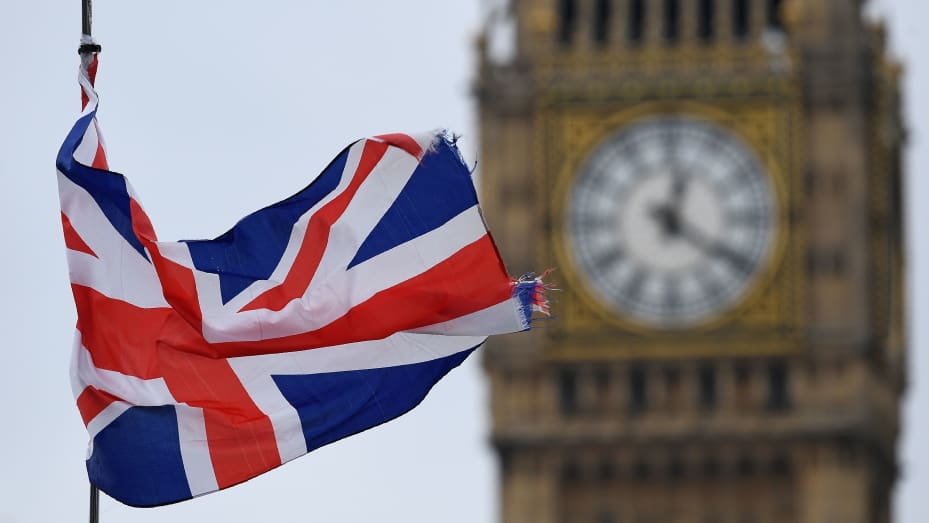
A Union Jack flag flies near the Elizabeth Tower, commonly referred to as Big Ben, at the Houses of Parliament in central London, U.K., on March 29, 2017.

Britain struck a historic trade deal to join a vast Indo-Pacific trade bloc after nearly two years of intense negotiations.

On Friday, the government said it will join the 11-member Comprehensive and Progressive Agreement for Trans-Pacific Partnership, unlocking access to a region with a total GDP of £11 trillion ($13.6 trillion).

The U.K. said this was the country’s largest post-Brexit trade deal and makes it the first European nation to join the CPTPP, since it came into force in 2018.

Prime Minister Rishi Sunak hailed the deal and said it puts the U.K. at the center of a dynamic and growing group of Pacific economies.

“We are at our heart an open and free-trading nation, and this deal demonstrates the real economic benefits of our post-Brexit freedoms,” he said in a statement. “British businesses will now enjoy unparalleled access to markets from Europe to the south Pacific.”

The trade bloc spans Canada, Mexico, Japan, Australia, Vietnam, Singapore and Malaysia, among others. The agreement is expected to be formally signed by year end, after final approval from Parliament and the 11 member states.

The trade pact evolved out of the now-defunct Trans-Pacific Partnership, or TPP, that originated in the United States but fell apart after former President Donald Trump scrapped U.S. involvement.

Trade benefits

Britain said the deal will cut tariffs on exports of food, drink and cars, and will grant access to a market of around 500 million people and will be worth 15% of global GDP once the UK joins the trade bloc.

The U.K. estimates joining the CPTPP will boost its economy by £1.8 billion in the long term and lift wages by £800 million compared with 2019 levels.

The trade secretary, Kemi Badenoch, said the deal sends a “powerful signal” that Britain is using its “post-Brexit freedoms to reach out to new markets around the world and grow our economy.”

Natalie Black, the U.K.’s trade commissioner for Asia Pacific, called it a “progressive deal” for Britain.

“This deal is, yes, about economic performance today. But is very, very much about economic performance in the future,” she told CNBC’s “Squawk Box Asia” on Friday.

“This is the part of the world that is going to drive economic growth, and also drive the rules of the road of trade going forward. We want to be part of those discussions.”

Still, it remains to be seen how much the deal actually benefits Britain’s growth prospects. Based on the government’s own estimates, the deal will raise long-term domestic GDP by just 0.08%, which will have little impact to offset European trade losses as a result of Brexit.

Deborah Elms, executive director of the Asian Trade Centre, said it’s very hard to calculate these trade figures, especially based on existing trade flows.

“If you are a U.K. company, you probably have limited existing trade flows to many of the CPTPP countries like Australia, New Zealand, Japan and Singapore, ” she told CNBC’s “Capital Connection.” “Simply, because the distance is far and because you used to be very tightly enmeshed with the European Union.”

The trade flows are always “under what you actually are likely to see in the reality as businesses recognize the benefits and start to use a trade agreement like the CPTPP,” she added

High bar for entry

Still, negotiations to finalize the trade deal, haven’t always been easy. An impasse between Britain and Canada over agricultural market access had to be smoothed over to remove the final hurdle in closing the agreement.

“This has been a complex deal to negotiate,” acknowledged Black. “We’ve been negotiating across multiple time zones across a range of complex issues. And they’re not always straightforward. But, ultimately, all parties have agreed that the U.K. is a great new member of CPTPP.”

China has also applied to join the trade bloc but has not made as much progress as the U.K.

There are many “aspirant economies” who have either “declared that they want to formally join or we know are interested in joining,” said Black.

While the trade commissioner said it “wouldn’t be appropriate” to comment on individual economies, she noted the barriers to joining the trade bloc are very high.

“It’s really up to those who come behind us to make sure they meet the expectations of members of having high quality applications.”


In Depth: New Business Comes With Old Risks for China’s Struggling Tutoring Industry


Sales of ‘learning tablets’ helped keep companies going after the crackdown on for-profit education.

China’s after-school education industry was caught flat-footed after Beijing rolled out a policy in mid-2021 that outlawed most after-school classes for K-12 students in an effort to reduce inequality in education.

The ban — which covered both online and in-person instruction — effectively sent the industry into survival mode as companies sought to replace the revenue they lost from classes they were no longer allowed to offer. E-commerce offered one potential path. Last year, New Oriental Education & Technology Group Inc., once a heavyweight in English language education in China, made headlines when it began running live-streaming sessions in English to hawk products like books and food. Other private education companies started taking their own products right to the consumer. In the year and a half since the industry shake-up, most companies that once specialized in K-12 tutoring began selling items like smart table lamps and e-printers, with many offering a line of devices called “learning tablets.”

Beyond just another revenue source, these premium-priced devices have provided companies like Shanghai Liulishuo Information Technology Co. Ltd., Gaotu Techedu Inc. and Youdao Inc. a way to deliver course work to their customers without violating the government’s restrictions on offering after-school classes for K-12 students.

In the third quarter of 2021 — in the wake of the clampdown on such classes — shipments of education-oriented tablets rose 6.9%, ending a streak of declines that had lasted four straight quarters, according to research firm IDC. For the entire year, sales grew 3% to 12.9 billion yuan ($5 billion), according to data from another research firm Frost & Sullivan.

And the outlook looks promising for the immediate future, with IDC predicting that China’s education-oriented tablet market will grow rapidly over the next few years. The company forecast that shipments this year will grow 7.7% to 3.82 million.

For the education companies, however, selling tablets and other hardware is far from a panacea. Although they have good reasons for getting into the business, it remains unclear whether sales will be lucrative enough to replace the revenue that the education companies lost from the education business. Meanwhile, competition in the learning tablet segment is growing as one of the main selling points of the devices — artificial intelligence-driven features — has attracted a host of big-name tech companies with far more expertise in the field. And then there are the regulators, who may not look favorably on a pricy education product that could exacerbate the very problem they are trying to solve.

Turning to tablets

The education companies were able to shift into the device business despite their lack of experience because of China’s highly developed ecosystem for manufacturing electronics, said an engineer who works for an internet firm with an education hardware business. That made it easy to find suppliers that could produce a finished product at a low cost.

Companies like Liulishuo and Gaotu began launching their learning tablets in late 2021 at prices that analysts said were easily double those of most equivalent products. Liulishuo, which had once offered English language lessons through an app, sent its tablet to market with a price tag as high as 4,000 yuan, while Gaotu, a former purveyor of online lessons on a wider range of subjects, priced its device at almost 5,000 yuan.

In exchange for the higher price, these companies packed their devices with education content that had amassed from their years in the after-school tutoring industry, giving them some advantage over other electronic hardware manufacturers, said an industry source who previously worked for an online tutoring firm.

Liulishuo’s management believe its product will cater to parents who value its education content, according to a source familiar to with the company’s business strategy.

The content loaded into learning tablets usually incudes exam prep and other subjects that the companies had been barred from offering in classes to the public after the government crackdown. This helped meet some of the demand for after-school lesson that had been left unfilled, analyst said.

It remains unclear just how much of a revenue generator learning tablets can be, especially considering that the size of China's K12 tutoring industry was 168.7 billion yuan in 2020, the year before the crackdown, according to research firm Frost & Sullivan.

For Youdao, the online learning and dictionary service company, hardware sales made up about 27% of its total net revenue in the fourth quarter of 2022, which was up 38.6% year-year to 1.5 billion yuan, according to its quarterly earnings report.

For Gaotu, it’s murkier. Its latest quarterly report didn’t break out hardware sales as a share of net revenue, which was down 50.6% from the fourth quarter of 2021, according to the report.

Last May, Liulishuo was forced to delist from the New York Stock Exchange after failing to meet the listing requirements due to its low valuation. In November, Gaotu received its own delisting warning from the exchange.

Competitive space

The tutoring companies have faced competition in the education hardware segment from the early entrants to the business, such as BBK Education Electronics Co. Ltd. and Readboy Education Technology Co. Ltd. Both founded in the late 1990s, the companies started out selling traditional hardware such as electronic dictionaries before adding the learning tablet to their product line-up in recent years.

However, the competition doesn’t end there. One of the ways that the tutoring companies have justified the high prices of their devices is by touting their advanced artificial intelligence (AI) features. For example, Youdao has hyped its tablet’s ability to check and grade homework. In addition, the tablet’s software can also craft content precisely tailored to the user, according to a company marketing statement.

These kinds of capabilities have apparently resonated with parents. During the final quarter of last year, sales of Youdao’s smart devices rose 28% to a 407 million yuan.

Still, these AI features has been way overhyped, said Zhang Jidong, vice president at the education unit of Iflytek Co. Ltd., a leading Chinese AI firm that has expanded its lineup of education hardware products in recent years. To truly provide such tailored services requires immense set of data that can deployed to train an AI model, and companies like that are few and far between, Zhang said. And most of the private tutoring companies remain focused more on shoring up their education content than on AI research and development.

Still, all the attention has drawn bigger technology firms with a lot more experience with developing AI, such as Alibaba Group Holding Ltd., Tencent Holdings Ltd., Baidu Inc. and Bytedance Ltd. Companies that have gotten into the education hardware game since 2021 also include Huawei Technologies Co. Ltd., smartphone-maker Oppo Co. Ltd., home appliance heavyweight Haier Group Corp., and TV manufacturer Skyworth Group Ltd.

Regulatory risk

Over the past three years, the government has turned a blind eye to the development of the education hardware business because officials believed it played a positive role in supporting online classes that became more prevalent in China during the pandemic, a Ministry of Education official told Caixin.

But the government could tighten regulation on the use of education hardware, now that the pandemic is over, the official said.

However, with the end of the strict zero-Covid policy in December, it seems unlikely that schools will again be required to move all classes online again.

Consequently, concerns have resurfaced about how pricy instructional products can leave poorer families at a disadvantage, potentially widening the inequality gap that had led the government to crack down on the after-school education business in the first place.

There have been signs that another round of regulatory tighten is on the way. Late last year, the Communist Youth League of China added learning tablets to a list of “new types of connected devices” that should be restricted for use by minors.

And in September, an article written by Yu Weiyue, the head of the Ministry of Education department charged with overseeing after-school education attracted widespread attention. In the article, Yu didn’t explicitly mention education hardware, but wrote that “after-school instruction is a matter of national security that need to be tightly regulated.”

Israeli PM, Biden exchange frosty words over legal overhaul

Israel’s prime minister has brushed aside criticism of his judicial overhaul plan from President Joe Biden

By JOSEF FEDERMAN - Associated Press
Mar 29, 2023

Israeli Prime Minister Benjamin Netanyahu attends a weekly cabinet meeting at the prime minister's office in Jerusalem on March 19, 2023. Netanyahu on Wednesday, March 29, rebuffed President Joe Biden's suggestion that the premier “walks away” from a contentious plan to overhaul the legal system, saying the country makes its own decisions.

By JOSEF FEDERMAN - Associated Press

JERUSALEM (AP) — Israel’s prime minister on Wednesday brushed aside criticism of his judicial overhaul plan from President Joe Biden, saying the matter was an internal Israeli issue and would not be influenced by outside pressure.

While both sides tried to play down their differences, it was a rare bout of public disagreement between the two close allies, and reflected what has been a lukewarm relationship between the Biden administration and Prime Minister Benjamin Netanyahu’s new government. It also marked the latest sign of cooling ties between Israel and the Democratic Party.

The disagreement came after months of unrest in Israel over Netanyahu’s proposed overhaul of the country’s judicial system. Netanyahu, who is on trial for corruption charges, says the plan is needed to rein in the powers of an interventionist judiciary. Critics say it will push the country toward authoritarianism by weakening an independent court system.

Following especially heavy protests, Netanyahu this week froze the plan and launched negotiations on a compromise with his political opponents. The timeout prompted Biden’s ambassador, Tom Nides, to tell Israeli media that he expected Netanyahu to soon be invited to the White House.

Asked about the legislation on Tuesday, Biden told reporters, “I hope he walks away from it.” He said Netanyahu’s government “cannot continue down this road” and called for a compromise. He also said there were no immediate plans for a White House visit, saying: “No, not in the near term.”

Netanyahu responded with a statement expressing appreciation for Biden’s years of support for Israel and vowing to seek a “broad consensus” over the legal program. But he also dismissed the outside pressure.

“Israel is a sovereign country which makes its decisions by the will of its people and not based on pressures from abroad, including from the best of friends,” Netanyahu said.

Members of his coalition reacted even more harshly, saying Biden had no business interfering in an internal Israeli matter.

Israel “is not another star in the American flag,” said National Security Minister Itamar Ben-Gvir, leader of the ultranationalist Jewish Power party. “I expect the U.S. president to understand this point.”

Netanyahu later tried to soothe tensions in a speech to the U.S. “Summit for Democracy,” a virtual gathering of global leaders, saying that while the United States and Israel have “occasional differences,“ the ties between them are “unshakeable.”

A senior Israeli official, speaking to reporters, described the spat as a “tempest in a teacup” and said there have not been any discussions with the Americans about a Netanyahu visit to Washington. He spoke on condition of anonymity because to discuss behind-the-scenes diplomacy.

White House National Security Council spokesman John Kirby also tried to play down the disagreements, saying Biden's comments about the judicial overhaul plan have remained “completely consistent.” He also dismissed suggestions they caused tensions in an “unshakeable” relationship.

“The great thing about a deep friendship is you can be that candid with one another,” Kirby said.

While they may get through this latest dispute, it will not erase the deeper differences between them.

After five Israeli elections in under four years, Netanyahu managed to cobble together a coalition government with a group of ultra-Orthodox and ultranationalist partners late last year.

These include far-right partners who oppose Palestinian statehood and have strong ties to the West Bank settler movement — putting them at odds with U.S. support for a two-state solution to the Israeli-Palestinian conflict.

Since taking office, there have been repeated run-ins with the Americans over Israeli settlement construction on occupied lands and comments by Finance Minister Bezalel Smotrich, who called for a Palestinian town to be “erased” and later said the Palestinian people don’t exist. Washington has called his comments “repugnant” and snubbed Smotrich during a recent U.S. visit.

Israeli opposition leader Yair Lapid, who enjoyed good ties with Biden during a brief period as caretaker prime minister last year, accused Netanyahu of harming Israel’s most important relationship.

“For decades, Israel was the USA’s closest ally,” Lapid wrote on Twitter. “The most radical government in the country’s history ruined that in three months.”

That relationship, however, has been repeatedly tested in recent years by a growing partisan divide in the U.S. over support for Israel.

Netanyahu has long been seen as favoring the Republicans over the Democrats. During his 2009-2021 term as prime minister, he cultivated close ties with U.S. evangelical Christian groups.

Netanyahu had several public spats with the Obama administration — in which Biden served as vice president — over Israel’s policies toward the Palestinians and the Iranian nuclear issue. In 2015, he infuriated the White House by addressing Congress to rail against a U.S.-led nuclear deal between world powers and Iran.

His close relationship with former President Donald Trump further alienated U.S. Democrats.

Democratic lawmakers, particularly in the party’s progressive wing, have grown increasingly outspoken in their criticism of Israel.

A Pew poll published last May found Republicans expressing far more favorable views of the Israeli government than Democrats. The poll found that Democrats — especially young voters — have increasingly expressed favorable views about the Palestinians.

This gap has spread to the American Jewish community, a key base of support for Israel, which tends to lean heavily toward the Democrats.

A separate Pew poll published in 2021 found that Jewish Democrats, especially the younger generation, have lower levels of support and connection to Israel.

The Netanyahu government’s attempts to reshape the judiciary now risk accelerating these trends. Business leaders, top economists and former security chiefs have all come out against the plan, saying it is pushing the country toward dictatorship.

It has also drawn criticism from Israel’s supporters in the U.S., including American Jewish organizations, as well as Democratic members of Congress.

The plan would give Netanyahu, who is on trial on corruption charges, and his allies the final say in appointing the nation’s judges. It would also give parliament, which is controlled by his allies, authority to overturn Supreme Court decisions and limit the court’s ability to review laws.

Critics say the legislation would concentrate power in the hands of the coalition in parliament and upset the balance of checks and balances between branches of government. They also say that Netanyahu has a conflict of interest while on trial.

After this week’s freeze of the overhaul, the rival sides have several months to find a compromise.

But Alon Pinkas, a former Israeli consul-general in New York who is now a columnist for the liberal daily Haaretz, said the damage has already been done.

“This is not about an invitation to the White House,” he wrote Wednesday. “This is about a fundamental crisis of trust. Worse, it is about asking whether a dependable U.S. ally is becoming unstable, unreliable and untrustworthy.”

Associated Press writer Aamer Madhani in Washington contributed reporting.
CRIMINAL CAPITALI$M
US: Credit Suisse violates deal on rich clients' tax evasion

JAMEY KEATEN and COURTNEY BONNELL Associated Press
Mar 29, 2023 U

Swiss bank UBS announced plans to acquire its smaller rival Credit Suisse in a deal for $3.25 billion dollars.


GENEVA — Credit Suisse violated a plea agreement with U.S. authorities by failing to report secret offshore accounts that wealthy Americans used to avoid paying taxes, U.S. lawmakers said Wednesday, releasing a two-year investigation that detailed the role employees at the embattled Swiss bank had in aiding tax evasion by clients.

The U.S. Senate Finance Committee pointed to an ongoing, possibly criminal conspiracy tied to nearly $100 million in accounts belonging to a family of American taxpayers that the bank did not disclose. It also said Credit Suisse helped a U.S. businessman hide more than $220 million in offshore accounts from the IRS.

Credit Suisse revealed that it had found 23 accounts each worth more than $20 million that were not declared to tax authorities, many of them unveiled just days before the report was released, according to the committee. It said its findings show that more than $700 million was concealed in violation of the bank's 9-year-old plea deal with the U.S. Justice Department.

“Credit Suisse got a discount on the penalty it faced in 2014 for enabling tax evasion because bank executives swore up and down they’d get out of the business of defrauding the United States,” said Sen. Ron Wyden, the Democratic chairman of the committee.

“This investigation shows Credit Suisse did not make good on that promise, and the bank’s pending acquisition does not wipe the slate clean,” he said.

The Swiss government pressed for a $3.25 billion takeover of long-troubled Credit Suisse by rival bank UBS this month amid turmoil in the global financial system. The collapse of two U.S. banks ignited wider fears that sent shares of Switzerland’s second-largest bank tumbling as customers withdrew their money.

The Senate findings pose new problems for UBS as it tries to absorb Credit Suisse and create a single Swiss megabank, coming the same day that UBS named a new CEO to help push through the takeover. It's also Credit Suisse's latest run-in with U.S. authorities, following settlements worth hundreds of millions of dollars over mortgage-backed securities that were behind the 2008 financial crisis.

Credit Suisse, whose yearslong troubles range from hedge fund losses to fines for failing to prevent money laundering by a Bulgarian cocaine ring, said it “does not tolerate tax evasion” and insisted that the Senate report described “legacy issues” — some dating to a decade ago — that have been addressed since

“We have implemented extensive enhancements since then to root out individuals who seek to conceal assets from tax authorities,” the Zurich-based bank said.

“Our clear policy is to close undeclared accounts when identified and to discipline any employee who fails to comply with bank policy or falls short of Credit Suisse’s standards of conduct,” it said.

UBS said it has assessed outstanding lawsuits and investigations as part of the Credit Suisse acquisition and expects the deal to be beneficial for shareholders. It's working to close the sale and get approval from regulators in the coming weeks or months.

The Senate report noted Credit Suisse’s cooperation with the investigation, including having appointed new leadership.

The Swiss lender paid a discounted fine of $1.3 billion to the U.S. Justice Department after pleading guilty in 2014 to conspiracy to aid and assist U.S. taxpayers in filing false income tax returns and other documents with the IRS.

The bank acknowledged “knowingly and willfully” helping thousands of Americans open accounts that weren't declared to tax authorities and concealing offshore assets. It avoided criminal charges in exchange for agreeing to report undeclared accounts and provide other information to U.S. officials.

The Senate committee said secret offshore accounts belonging to a family of dual U.S.-Latin American citizens and worth nearly $100 million were closed in 2013 but the money was transferred to other banks without telling U.S. authorities.

With that maneuver, "Credit Suisse enabled what appears to be potentially criminal tax evasion by a client to go undetected for almost a decade," the report says.

The committee said former senior bankers helped manage that family's accounts. In addition, Credit Suisse employees helped a U.S. businessman hide $220 million from U.S. authorities despite long knowing he was an American, according to the report, which said whistleblowers flagged the scheme after the plea deal.

Credit Suisse workers were incentivized to help accounts hide U.S. ties because their bonuses depend on the amount of money being managed, the report said. To that end, employees who had clients with assets above $20 million or $30 million may have given those accounts special consideration because it would mean they got larger bonuses, the committee said.

Investigators say bankers figured out how to code accounts for Americans who possess dual citizenship. Those bankers would use the non-U.S. passport of wealthy individuals to evade internal systems designed to look for identifying marks in U.S. passports.

FOX BACK IN HEN HOUSE
Sergio Ermotti back as UBS chief for Credit Suisse takeover


By AFP
March 29, 2023

Banking giant UBS is bringing back Sergio Ermotti as CEO
 - Copyright Metro Nashville Police Department/AFP Handout

Nathalie OLOF-ORS

Sergio Ermotti will return as CEO of Swiss banking giant UBS to pilot the controversial acquisition of troubled rival Credit Suisse, its board announced Wednesday.

Ermotti spent nine years restoring UBS’s reputation after its bailout by the Swiss government and the central bank during the 2008 global financial crisis, as well as the $2.3 billion in losses racked up by a rogue trader in 2011.

He is due to take over on April 5 from current boss Ralph Hamers, who has agreed to step down but will remain at his side during a transition period.

“The task at hand is an urgent and challenging one. In order to do it in a sustainable and successful way, and in the interest of all stakeholders involved, we need to thoughtfully and systematically assess all options,” Ermotti said in a statement from the board.

The marriage of UBS and Credit Suisse was hastily arranged by the government to prevent a global financial meltdown following fears of contagion from the collapse of three US regional banks.

The central bank has since admitted that the size of the resulting megabank could cause domestic problems in Switzerland.

UBS was already the biggest bank in the country — and will now become even larger after swallowing up the second-most important bank in the wealthy Alpine nation.

Switzerland, whose vibrant banking scene is a key part of the country’s culture, has been shocked to the core by the enforced merger.

A recent poll showed a majority of Swiss people reject the deal and blame Credit Suisse’s leadership for the outcome.

Swiss financial regulator FINMA is probing how to hold Credit Suisse bosses to account.

The Swiss parliament is planning a special session on Credit Suisse in April. It is also exploring whether to create an investigative committee to determine who was responsible for the debacle.

– Checkered past –

Credit Suisse was already embroiled in a series of scandals when its shares crashed on March 15 after the chairman of Saudi National Bank, its main shareholder, said his group would not up its stake in the Swiss lender.

A $54-billion lifeline from the central bank was not enough to stop the panic and the government brokered the weekend deal with UBS on March 19.

UBS and Credit Suisse were both among the 30 banks around the world deemed too big to fail and therefore considered Global Systemically Important Banks.

Credit Suisse was undergoing major restructuring before the takeover to repair trust after the implosion of the US fund Archegos in 2021, which cost the lender more than $5 billion.

That same year, its asset management branch was rocked by the bankruptcy of British financial firm Greensill, in which some $10 billion had been committed through four funds.


Russia is using old oil tankers to bypass export sanctions, risking spills

WASHINGTON POST
March 17, 2023 


An oil tanker is moored in Novorossiysk, Russia. Russia earned record oil revenue of about $325 billion in 2022 after the war in Ukraine sent oil prices sharply higher, to more than $120 per barrel.
(AP)


Russia is using a fleet of older, poorly insured tankers to sidestep Western sanctions on its fossil fuels, raising fears of a potentially catastrophic accident or oil spill as the Kremlin works to finance its invasion of Ukraine, policymakers and environmental advocates said.

The worries have been especially acute among countries on the Baltic Sea, a shallow body of water that is a northern route for Russian oil shipments. Navigation there can be a challenge, especially for crews unaccustomed to its icy winter conditions. After restrictions on Russian oil exports were imposed in December, old oil tankers with no record of previously sailing through that route started appearing in the narrow Gulf of Finland that leads to St. Petersburg, Finnish officials said.

The safety concerns were alarming enough for Finnish authorities to increase drills and training for an emergency response to an oil spill or other environmental catastrophe, said Commander Mikko Hirvi, the deputy head of the Finnish Coast Guard district that includes the Gulf of Finland.

“We have enhanced our readiness,” Hirvi said, saying that the Coast Guard also has gathered the necessary equipment to address a disaster, such as floating spill containment booms and ships capable of gathering oil spilled into the sea.

Oil and gas exports are the lifeblood of the Russian economy, and for much of last year, Russian fossil fuel revenue was robust, because the invasion of Ukraine drove up prices. That’s why the United States, the European Union, Britain, Japan and a handful of other countries agreed to impose a price cap on Russian crude oil exports last year. Many countries have also imposed outright bans on Russian oil imports.

The restrictions have led to a dramatic shift in the ships willing to load oil in Primorsk and other Russian ports on the Gulf of Finland. Now decades-old tankers that would otherwise have faced the scrap heap are coming through the Baltic Sea, staffed by crews officials fear have little experience with the crowded, shallow and icy conditions of the waterway. The tankers are also increasingly inadequately insured, experts say, raising the prospect that in the event of an oil spill or collision, there wouldn’t be enough resources to mount a rescue effort.

Though there have not been any environmental incidents reported, even a small problem could be disastrous in the Gulf of Finland, whose shallow depth and fjordlike coastline would make cleanup extremely difficult.

“When we see new vessels which haven’t been operating here before, we really don’t know the crew competence in ice navigation skills,” Hirvi said. “The potential risks are there, and they are higher than before.”

The aged vessels sailing through the Gulf of Finland are part of a broader reconfiguration of ships that serve Russia’s fossil fuel exports. A growing fleet of tankers with shadowy ownership — shell companies in the Middle East or Asia that don’t appear to have previous shipping experience — is helping Russia legally move its oil exports to India and China, which haven’t imposed any sanctions on Russia.

And a “dark fleet” of tankers — ones that sometimes shut off their transponders to obscure their movements — has shifted its market from long-sanctioned Venezuelan and Iranian oil to oil from Russia, in an illegal effort to sneak the fuel past restrictions. Russia itself doesn’t own sufficient tankers to meet its needs, and Russian-owned ships could face more sanctions than ones whose ownership is less clear.

Russia’s efforts have yielded mixed results, with its oil export revenue down 42 percent in February compared with a year ago, according to figures released Wednesday by the International Energy Agency.

The Blue Sun drifts off


The older ships sometimes run into trouble — as Spanish authorities found out on March 4, when the crew of the Blue Sun, a 19-year-old tanker, sent out a signal declaring the ship’s engine had failed and they were drifting near the Strait of Gibraltar.

The ship, old enough to be in a scrapyard, had been purchased by a Vietnamese company just days earlier and registered its destination as Russia’s Baltic Sea port of Primorsk, which doesn’t appear in records of its previous travels. Vietnam’s close ties to Russia date back to the Soviet era, and the country has not imposed any sanctions on the Kremlin.

Around 11:45 a.m., the Spanish coast guard deployed a bright red tugboat after receiving a distress call from the Blue Sun, whose engine had shuddered to a halt when its sailors were switching fuels.

When the rescue ship arrived, there was more smoke than usual coming out of its smokestacks, said Pedro Echeverría Ibáñez, a spokesman for SASEMAR, the Spanish maritime search-and-rescue agency.

The ship — which in recent photos sported “NO SMOKING — PROTECT THE ENVIRONMENT” in giant red and blue letters across its bridge — was drifting slowly to the southeast, open-source ship tracking data compiled by FleetMon, a tracking service, shows.

After about 2½ hours, the crew fixed the problem and the ship resumed its course to the Gulf of Finland, where it sat for days in a narrow band of international waters 30 miles southeast of Helsinki. On Wednesday it sailed to Primorsk, one of Russia’s biggest oil exporting ports, according to the tracking data.

Navigating the Gulf of Finland


In the tighter area of the Gulf of Finland, an engine failure such as the one the Blue Sun experienced off the coast of Spain could be riskier, experts said, although they also said such problems are routine and typically manageable.

The Gulf of Finland, which forms the easternmost tongue of the Baltic Sea, is just 30 miles wide in some areas, with traffic to and from Russia confined to an even tighter band of water pinched between Finnish waters to the north and Estonian ones to the south. The gulf is crowded with ships and, close to Russia, ice — a navigational obstacle course at this time of year.


“We have very little sunlight from November to February. We have five, six hours of daylight and the rest is dark,” said Veli-Pekka Tynkkynen, a professor who focuses on Russian energy and environmental policy at the University of Helsinki.

And since the water averages just 125 feet deep in the area, a spill would be like letting a large amount of oil into a small bathtub, environmentalists say.

“What is a concern is local knowledge,” said Captain Johan-Elias Seljamaa, the deputy commander of the Estonian navy. “The Baltic Sea and especially the Gulf of Finland is really confined. If you don’t have experience navigating in these waters, it’s a higher risk.”

The Blue Sun appears typical of the kind of ship that has been appearing in Russian ports after the export restrictions hit. Until the end of February, it was owned by Sea World Management, a Monaco-based company, according to public record. Now it is registered to Hung Phat Maritime Trading, a Vietnam-based tanker company. Last month, Spanish authorities detained a different ship that Hung Phat owns, the Elephant, after linking that tanker to a transfer of oil they believed violated European sanctions.

Hung Phat could not be reached for comment. A person who picked up the phone at Sea World Management declined to comment.

More tankers covered by “unknown” insurers

Following the Blue Sun’s sale, the status of its insurance is no longer clear in public registries. A growing number of tankers appear to be inadequately insured, a separate and mounting risk, experts say. That means there might not be the resources to pay for the massive cleanup of an oil spill.

Transporting Russian oil through international waters to countries such as India and China that have not imposed sanctions is not illegal. But oil shipments priced higher than the cap can no longer be covered by the handful of major insurers with enough resources to pay for emergency efforts following an environmental catastrophe, since those insurers are based in countries that have signed on to the restrictions.

No one else “has deep enough pockets to cover against a major oil spill,” said Lauri Myllyvirta, the lead analyst at the Center for Research on Energy and Clean Air, a Finland-based environmental research group that has been tracking Russian energy exports.

The month before the invasion started, 19 percent of tankers leaving Russian ports were registered as being covered by “unknown” insurers, typically a sign of inadequate or nonexistent insurance, according to data from Myllyvirta’s group. So far this month, the share has risen to 45 percent, and it will probably rise further as policies lapse and cannot be renewed, he said.

The risks are increasing, he said.


“It’s an incredibly vulnerable body of water simply because of the tiny volume of water compared with other seas or oceans in the world,” he said. “That just means that a major oil spill could be an even more serious catastrophe or incident.”
Burkina Faso to resume diplomatic relations with North Korea

Chae Hui Chol has been approved as ambassador to West African country

Aurore Bonny |30.03.2023 -


DOUALA, Cameroon

Burkina Faso plans to resume diplomatic relations with North Korea, the country’s Foreign Ministry announced Wednesday.

The decision will allow the two countries "to maintain exemplary bilateral cooperation in several areas," Foreign Affairs Minister Olivia Rouamba said at the end of a Council of Ministers meeting.

The West African nation suspended relations with North Korea in 2017 to conform to UN Security Council sanctions over Pyongyang’s nuclear weapons program.

Rouamba said the governments of Burkina Faso and North Korea will reportedly be focusing on military equipment, mining, healthcare, agriculture and research

The Burkinabe government has also approved the appointment of a North Korean ambassador to Burkina Faso.

Chae Hui Chol, has been approved as Ambassador Extraordinary and Plenipotentiary of the Democratic People's Republic of Korea (DPRK) to Burkina Faso, with residence in Dakar, Senegal, according to a statement from the Ministerial Council.

In the past, Burkina Faso has maintained "very good relations with this country, which was a privileged partner during the period of the August 1983 Revolution," said Rouamba.

The government officially cut off relations in 2017 using a provision recommended by the United Nations to all its member states in its sanctions resolution against Pyongyang.

Faced with a security crisis fueled since 2015 by terrorist attacks, Burkina Faso, under the leadership of Capt. Ibrahim Traore, the leader of the ruling junta, decided to diversify its partnerships to strengthen the fight against terrorism. In January, the transitional authorities broke a military agreement with France, its former colonist.

This is "a way of asserting its authority by contracting diplomatic relations with countries unconsidered by France," Regis Hounkpe, a pan-African expert in geostrategy, told Anadolu.​​​​​​​

The fight against terrorism and the need to face it by its own means or military cooperation is only an additional element of the distancing from France, he said.

Antarctic ocean currents heading for collapse - report

  • Published
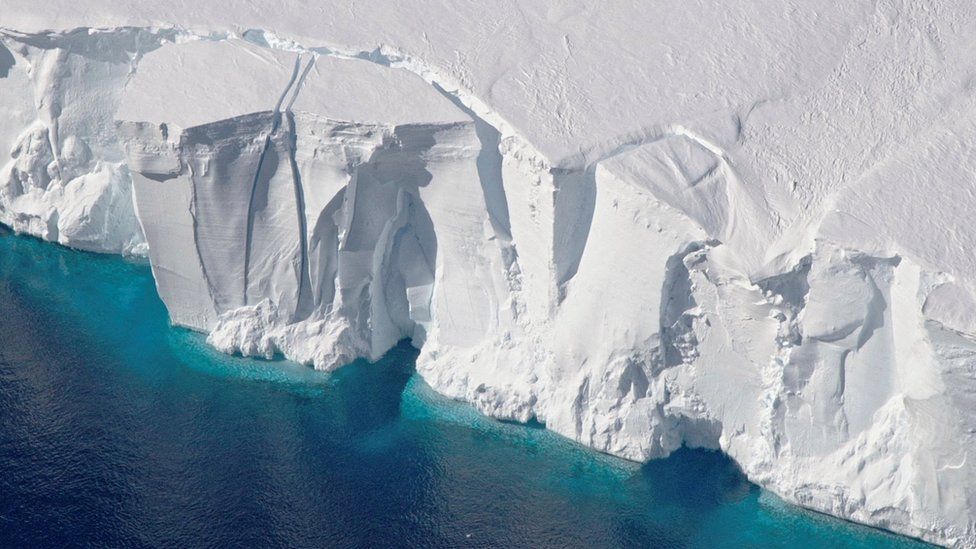
    IMAGE SOURCE,NASA

    Rapidly melting Antarctic ice is causing a dramatic slowdown in deep ocean currents and could have a disastrous effect on the climate, a new report warns.

    The deep-water flows which drive ocean currents could decline by 40% by 2050, a team of Australian scientists says.

    The currents carry vital heat, oxygen, carbon and nutrients around the globe.

    Previous research suggests a slowdown in the North Atlantic current could cause Europe to become colder.

    The study, published in the journal Nature, also warns the slowdown could reduce ocean's ability to absorb carbon dioxide from the atmosphere.

    The report outlines how the Earth's network of ocean currents are part driven by the downwards movement of cold, dense saltwater towards the sea bed near Antarctica.

    But as fresh water from the ice cap melts, sea water becomes less salty and dense, and the downwards movement slows.

    These deep ocean currents, or "overturnings", in the northern and southern hemispheres have been relatively stable for thousands of years, scientists say, but they are now being disrupted by the warming climate.

    "Our modelling shows that if global carbon emissions continue at the current rate, then the Antarctic overturning will slow by more than 40 per cent in the next 30 years - and on a trajectory that looks headed towards collapse," study lead Professor Matthew England said.

    The 2018 Atlas Study found the Atlantic Ocean circulation system was weaker than it had been for more than 1,000 years, and had changed significantly in the past 150.

    It suggested changes to the conveyor-belt-like Atlantic Meridional Overturning Circulation (Amoc) could cool the ocean and north-west Europe, and affect deep-sea ecosystems.

    A sensationalised depiction of the Amoc shutting down was shown in the 2004 climate disaster film The Day After Tomorrow.

    The report also highlighted how the slowdown would affect the ocean's ability to absorb carbon dioxide from the atmosphere.

    Dr Adele Morrison, who contributed to the report, explained that as ocean circulation slows down, water on the surface quickly reaches its carbon-absorbing capacity and is not then replaced by non carbon-saturated water drawn to the surface from greater depths.

    "If the oceans had lungs, this would be one of them," Prof England, an oceanographer at Sydney's University of New South Wales, told a news briefing.

    Dr Morrison also warned that said a slowdown of the southern overturning could have an impact on marine ecosystems and Antarctica itself.

    "Overturning brings up nutrients that have sunk down to the bottom when organisms die… to resupply nutrients for the global ecosystem and fisheries," she told the BBC.

    "The other larger implication that it could have is a feedback on how much of Antarctica melts in the future. It opens a pathway for warmer waters which could cause increased melt, which would be a further feedback, putting more meltwater into the ocean and slowing down circulation even more," she added.

    Scientists spent 35 million computing hours over two years to produce their models, which assumed that emissions of greenhouse gases continue their current path. If they fall, this could lessen the amount of ice melting, and slow the decline in the ocean current.

    However, results suggest deep water circulation in the Antarctic could slow at twice the rate of decline in the North Atlantic.

    "[It's] stunning to see that happen so quickly," said climatologist Alan Mix from Oregon State University, a co-author of the latest Intergovernmental Panel on Climate Change (IPCC) assessment.

    "It appears to be kicking into gear right now. That's headline news," he told Reuters.

    The effect of Antarctic meltwater on ocean currents has not yet been factored in to IPCC models on climate change, but it is going to be "considerable", Prof England said.