Friday, March 31, 2023

Democracy in Pakistan: 
Of the elite, for the elite, by the elite

Civilians and the military have taken turns to rule Pakistan, but the system, arguably, has remained the same, ‘unscathed’ by democracy.


Touqir Hussain 
Published March 29, 2023 

One of the most perplexing debates around is on the subject of democracy, where it is easy to confuse concept with practice, form with substance and illusion with reality.

There is another problem. Countries at varying stages of democratic evolution are all called a democracy, which adds to the confusion, as we, in our mind, expect all these models to be equally responsive in meeting the needs of society. That makes us tolerate and endure a system that is not quite democratic and may never become so.

In Pakistan, democracy remains both illusive and elusive. What we have is something that looks like democracy, but does not work like one. Democracy is a dynamic, not static, process but Pakistan’s “democracy” is stuck.

If any “good” has come out of the current crisis, it is hopefully the realisation that the conventional wisdom that Pakistan’s problems are due to a lack of civilian supremacy, or because the “democratic system” has faced repeated interruptions by the military rule, or that elected governments have not been allowed to complete their full term may not be quite true.

Has the current crisis — and the way politicians’ brazen preoccupation with the struggle for power is ripping the country apart while it burns — left any doubt that the “democracy” we have has been part of the problem, not the solution? In fact, it is this very “democracy” that has provided legitimacy to bad governance, produced weak governments opposed to reforms for fear of losing elections, and has kept recycling. Above all, it has lacked substance.
Form and substance

True democracy has both form and substance. The form manifests itself in electoral democracy, sustained by a process of free and fair elections, and peaceful and orderly change of governments. But the form must embody good governance to empower people, and it can do so only by resting on free and representative institutions, constitutional liberalism or any other value-based system, strong rule of law, and a just and equitable social order. That is the substance. Without substance, democracy remains hollow. It has no soul.

The intelligentsia in Pakistan, especially the liberal/secularist segment, is most passionate about the Western liberal model focusing on freedom of choice, free speech, civil liberties, independent judiciary, and of course elections.

Much of this class lives emotionally disconnected from the rest of the population and their harsh challenges of survival and means to cope with them. It feels that all you need is elections, free media, independent judiciary, and the Constitution.

Voila! You have democracy — and it will take care of the nation’s problems, including those of the poor.

Democracy and progress

The secular/liberal class as a whole, and Western-oriented sections of it in particular, are right in seeing a causal connection between democracy and progress in advanced industrialised countries. They are, therefore, justified in emulating a similar democratic political system and having high expectations from it.

Where they are at fault is that they do not grasp the full picture. Most of them forget that democracy, which ostensibly brought progress in the West, was more than a political system. It was also a society’s organising idea, whose substance was equality of opportunity, fairness, rule of law, accountability, safeguarding of basic human rights and freedoms, gender equality and protection of minorities.

In sum, democracy’s core idea was humanism. And the whole objective of giving people the right to choose who will govern them on their behalf was to ensure the implementation of this very ideal.

Otherwise, what is the purpose of self governance? Given the chance to self govern, would people like to bring themselves to grief with their own policies? Certainly this was not the intent.

Unless a nation shows this fundamental understanding of democracy and takes steps to put itself on the road to democracy, it will never get there. It will keep moving in circles or going backwards.

The poor cannot ‘feed’ on democracy

For much of the liberal class in Pakistan, especially its more affluent stratum, the form is the substance. It looks at democracy as simply black and white — there can be no gradation.

The fact is that Pakistan is, and is not, democratic.

Pakistan’s “democracy” is advanced enough to satisfy the liberals’ love of liberty and enjoyment of certain human freedoms, but regressed enough to be exploited by the elite for their purposes at the expense of the people.

In her book, ‘Thieves of State’, Sarah Chayes focuses on corruption in Afghanistan. Sarah, who spent a decade in Kandahar, concludes that the concerns of most people did not have much to do with democracy. Pakistan is, of course, no Afghanistan but the book has a message that applies here as well.

Democracy is no doubt the best form of government but go and ask the masses in societies that are grappling with serious state and nation-building challenges what is most important in their lives. What is important for them, they will tell you, is social and economic justice, human security and dignity and the hope for a better future. And they will like any government that provides this kind of life.

A USAID official once asked me what the people of Pakistan want. Development or democracy? Prompt came my reply — if democracy brings development, they want democracy; if it does not, they want development.

Basically, you need a democracy that satisfies the human aspirations for freedom as well as improves the quality of life for citizens at large.

Freedoms are meaningless if they do not provide for the whole society’s welfare and progress.

Pakistan’s ‘democracy’ a political tool for power

In Pakistan’s case, “democracy” is just a political tool for the dominant social groups to maintain their wealth and status. The other instrument is military rule.

But the beneficiaries are roughly the same in both models — the whole panoply of power comprising the top tier of politicians, bureaucrats, the military and judiciary, “business folk and the landed”, who among them monopolise the country’s economic resources.

The civil and military leaderships may compete for power, but eventually cooperate to maintain the status quo. Both use each other — the military using the failure of the politicians as a pretext to come to power or to dominate it, and politicians using the alibi of military interruption or dominance for their own failure. They are allies as well as rivals.

In Why Nations Fail, Daron Acemoglu and James Robinson trace the evolution of political and economic institutions around the globe and argue that nations are not destined to succeed or fail due to geography or culture, but because of the emergence of extractive or inclusive institutions within them.

They write:

“Extractive political institutions concentrate power in the hands of a narrow elite and place few constraints on the exercise of this power. Economic institutions are then often structured by this elite to extract resources from the rest of the society. Extractive economic institutions thus naturally accompany extractive political institutions. In fact, they must inherently depend on extractive political institutions for their survival … political institutions enable elites controlling political power to choose economic institutions with few constraints of opposing forces. They also enable the elites to structure future political institutions and their evolution.”

In light of their thesis, we can see how powerful groups or institutions have long dominated Pakistan’s body politic by taking advantage of its security issues, place of religion in its national makeup and its feudal social structure. The political system that emerges from this body politic is designed to empower only the powerful and privileged and does little to foster the rule of law.

Musical chairs

Civilians and the military have taken turns to rule Pakistan, but the system, arguably, has remained the same, ‘unscathed’ by democracy. There was no fear of accountability, and no obstacle to electability. They did not need the people, so they did very little for them. And neither of them faced the full wrath of the public as each deflected the blame on to the other.

When the cost of maintaining a “democracy” led by civilians would become unbearable, we would tolerate the army’s intervention to help us get rid of them. But instead of returning to the barracks, the military would stay on. Then we’d long for democracy, which would let us down yet again. The fact is that no institution is solely responsible for democracy’s misfortunes in Pakistan. They all provided opportunity to each other to come to power and supported the system.

In the civilian edition that now comprises the ruling coalition, politicians may be divided into political parties but are united by the elites. Henceforth, whichever party comes to power when the ongoing bloody struggle for power is over, it will likely be no different from others in being invested in the system. It may disrupt the system, but will not threaten it.

Liberty and order

Even if Pakistan had a fully functional Western liberal democracy, it was not going to solve the country’s fundamental challenges. The fact is the Western liberal democratic model has become too competitive. In their book, ‘Intelligent Governance for the 21st Century’, Nicolas Berggruen and Nathan Gardels challenge the view that the liberal democratic model is intrinsic to good governance. Examining this in relation to widely varying political and cultural contexts, especially the Chinese system, the authors advocate a mix of order and liberty.

When asked once on the Charlie Rose Show what he thought of Western democracy, Lee Kuan Yew — the inaugural prime minister of Singapore — replied that the system had become so competitive and combative that in order to come to power, the opposition spent all its time planning to undermine the incumbent government by misrepresenting or distorting issues and thus misleading the public. “It would be a sad day when this kind of democracy comes to Singapore,” he said.

In his classic, The Future of Freedom, Fareed Zakaria states that Singapore follows its own brand of liberal constitutionalism, where there are limits on political freedoms — and it happens to be one of the most self-content countries in the world.

It boggles one’s mind that we in Pakistan tolerate the civil-military led political and governance structure, which is rigged in favour of the elite, while using the full freedom of a democratic system to play the game of politics at people’s expense. We put up with it as if this behaviour is an acceptable price to be a “democracy”, which incidentally does not quite happen to be a democracy. Indeed, there are institutions that one finds in a democratic system, but they lack autonomy and integrity. They have failed in the moral strength to serve the people, but not in the capacity to sustain the system.

You can see how millions of good Pakistanis are glued to TV or their phones every day following the comings and goings of politicians as if they were going to solve the country’s problems. We forget that their fights are about themselves, among themselves.

Democratisation is a revolutionary struggle

You cannot change what you do not know. The creation of a true democracy is a revolutionary struggle. And it must begin with the realisation that the “democracy” we have will not solve our problems regardless of who is in power. We cannot also bank on this “democracy” to become democracy by itself.

Countries change not because they have become democratic. They become democratic because they have changed. In many ways, democratisation is a painstaking struggle, indistinguishable from state and nation-building. Progressive movements and the civil rights campaign in America, political and social movements in Europe and the Meiji Restoration in Japan are a few such instances.

How will this change occur in Pakistan?

That is the subject of a much wider and complex debate. Briefly, one can say the following: Pakistan has enormous strengths — remarkable resilience, faith-based optimism, a sense of exceptionalism, a vibrant media and a promising civil society.

There is enormous talent available within the country — academics, journalists, authors (many of them internationally acclaimed), political activists, retired public servants — both civil and military — who all have shown extraordinary knowledge and commitment to Pakistan. They can inspire and mobilise the young generation yearning for true change that could provide stimulus and critical mass for social movements.

I am not advocating for military rule or a technocratic government. Let the current political process for all its flaws continue. It cannot or should not be overthrown but can be undermined over time.

That will be the purpose of social movements — to remove the obstacles to a genuine democracy in Pakistan. These include a misplaced focus on faith that has fostered extremism and hindered openness and tolerance, and a feudal dominance that has inhibited education, gender equality, openness to modern ideas and a credible political process.

Not to mention the military’s pre-eminence that has led to the dominance of security over development. The latter has skewed national priorities and resource allocation. All this is hardly a life-supporting environment for democracy.

Can Pakistan truly become democratic? Yes, it can. Whether it will remains to be seen.


The writer, a former Ambassador, is adjunct professor at Georgetown University and Visiting Senior Research Fellow at the Institute of South Asian Studies, National University of Singapore
HISTORY: THE RISE AND FALL OF THE PROGRESSIVE WRITERS’ MOVEMENT

One of the most significant literary movements to emerge from India — the All-India Progressive Writers’ Movement (AIPWM) — had its roots in the political revolution that formed the Union of Soviet Socialist Republics (USSR) in 1917 and its consolidation.


Misha Zafar Published March 26, 2023
Authors of Angaarey, Rashid Jahan (second from right)
 and Mahmud-uz-Zafar (extreme left)

Though AIPWM has left behind a rich literary legacy that aimed to bring to the surface various sufferings of people in India, it became controversial soon after its creation. Accused of ‘using the plight of a common man to push a Marxist agenda backed by the Soviet Union’, it was eventually dismantled.

Under the banner of socialist realism — an ideological catalyst in the early 20th century — the Central Committee of the Communist Party of the Soviet Union merged all its existing literary organisations to create the Writers’ Union of USSR. As it gained complete agency over Soviet literature, the Writers’ Union came to play a vital role in sustaining communist doctrine by influencing fiction and distributing it to the masses.

Soviet fiction became popular in other parts of the world. A few years after the Writers’ Union had been established, the socialist intellectuals of India, who at that time had been scattered throughout the country, joined together to organise the first All-India Progressive Writers’ Conference in Lucknow. The meeting was led by renowned Urdu writer Sajjad Zaheer and the presidential address was delivered by none other than Jawaharlal Nehru.

One of the most influential literary movements of the Subcontinent was inspired by Marxist ideology emanating from the Soviet Union. The partition of the Subcontinent and the movement’s close alignment with political ideology led to its undoing as well

A LITERARY MOVEMENT IS BORN

Lucknow in the 1930s was a roaring hub of zestful voices and endless discourse.

Four years prior to the conference, a collection of nine short stories and one play, titled Angaarey, was published in Urdu, authored by four young writers: Rashid Jahan, Ahmed Ali, Mahmud-uz-Zafar and Sajjad Zaheer. The book was considered so controversial that it was banned months after its publication and the authors faced a trial in Lucknow for hurting communal sentiments.

As copies of Angaarey were burnt in a public display of hostility towards emerging liberalism in literature, Ahmed Ali would call Angaarey a “declaration of war by the youth.”

In 1936, the same year when the first All-India Progressive Writers’ Conference took place, the Communist Party of India formed its farmers’ wing and, at the annual session of the Indian National Congress, the Communist Party of India united with the Congress Socialist Party to challenge the right wing’s longstanding authority. A cultural and political shift was inevitable, and it would come to life by introducing a new ideology to the masses through a literary movement.

The manifesto of the All-India Progressive Writers’ Association (AIPWA), formed as a result of the conference, called for the ‘spirit of progress’ by introducing scientific realism, to ‘rescue literature from the conservative classes’ and for the literature produced to focus more on the basic problems of existence — such as hunger and poverty.

Sajjad Zaheer, who had co-authored the manifesto for the conference a year earlier in London, was elected as the Secretary General of AIPWA. Although at this point in his career he was recognised primarily for his literary works, he would have to take on a political role and begin organising linguistic associations on a provincial scale.
The cover of Angaarey, a collection of short stories written and compiled by some of the future Progressive Writers, caused literary upheaval in the Subcontinent


ENTER PREMCHAND


Among the sea of notable writers in the Subcontinent during the early 20th century was one prolific genius called Premchand. Premchand wrote about the common man and his struggles. He pioneered the exploration of social hierarchies and caste systems in India through fiction. He wrote about the hardships of women and highlighted their noble femininity. There was sensitivity woven deeply in his works, which made Premchand a venerated author in both Urdu and Hindi literature, with over a dozen novels and two hundred short stories under his belt.

Premchand was elected as the President of AIPWA, which gave the movement the credibility it needed to establish itself as a ‘legitimate’ literary one. Sajjad Zaheer was a known communist and it was in the interest of the movement to appoint an apolitical figure in a leading position. Zaheer’s political stance was far more detectable for the public than Premchand’s subtle and nuanced takes that evolved with his writing throughout his career.

In his presidential speech at the first conference, Premchand outlined the objectives of the movement by stating that its purpose was to create an atmosphere in India that would help progressive literature flourish. The members of the movement wanted to promote a creative literary life that encompassed reading papers, holding discussions and thorough criticism. He was confident that AIPWA would become a mode through which a literary renaissance in India would take place.

One of the primary objectives of the movement was to promote purposeful art and literature, something that was inspired by the Writers’ Union of the USSR. Premchand emphasised how there was a need to renounce religious revivalism and create works that would devote all of man’s energy to “economic and political freedom.”

Premchand’s senior post in the association was a tactful decision, primarily because it was used to deflect allegations about the associations’ pro-communist agenda, aimed at Sajjad Zaheer. The emergence of the left was uplifting the common people culturally as well as politically. They were being systematically disillusioned towards a system that had long been working against them. With broken promises of reforms and fair wages, they were awakening to class consciousness, which only further helped the work of AIPWA prosper.

PARTITION AND DIVISION

After the partition of the Subcontinent in 1947, Pakistan and India inherited institutions and political ideologies that had existed under British rule. Sajjad Zaheer was sent to Pakistan by the Communist Party of India to revive the momentum of Marxist literature, after many Hindu and Sikh writers moved out of the newly formed state. He set up the All-Pakistan Progressive Writers Association (APPWA) and also founded the Communist Party of Pakistan (CPP) in 1948 and became its first Secretary General.

But anti-communist sentiments carried from British India had infiltrated Pakistani politics; APPWA had to earn the public’s trust and gain credibility through its work once again.

Prominent figures during this time, such as Saadat Hasan Manto, were writing about conflicted views towards the Partition, which resonated deeply with the masses. Krishan Chander wrote Hum Wehshi Hain [We Are Barbarians] about the mass murders of 1947. The association wanted to produce literature that used the Partition to catalyse a communist revolution, but notable figures of the movement, such as Krishan Chander and Saadat Hasan Manto, were writing about what it meant to be a human during a traumatic period in history, witnessing agonising bloodshed and dealing with the loss of an identity.

Furthermore, Pakistan’s first long-term plan for economic development relied heavily on the private sector. It was inevitable that the country would lean towards capitalism and, subsequently, APPWA was accused of anti-nationalism by reactionary writers who criticised the organisation’s Marxist agenda.

Sajjad Zaheer, the leading force behind the Progressive Writers’ Association

PAKISTAN AND THE MOVEMENT


During the first few years of Pakistan, all factions of the state were looking to form a unified social identity in order to artificially manufacture homogeneity. The progressive writers wanted to adhere to a rigid framework that was distinctly Marxist, but liberals and nationalists wanted to explore and interpret humanism, state and morality under their own terms. Much like the case with the Writers’ Union of the USSR, progressive writers were having trouble producing original work that had unique dynamics and explored their individual style.

The first meeting of APPWA was held at the YMCA Hall in Lahore, in 1949. To show their support, the Soviet Union had sent four delegates to the conference, all four of whom had received the Stalin Prize for Literary Excellence.

The halls of the conference were adorned with life-sized pictures of Russian authors Maxim Gorky and Vladimir Mayakovsky. The writers attending the meeting drafted a new manifesto based on contemporary Urdu literary trends in Pakistan and assessed that writers and poets could no longer remain politically neutral. They had to be more dogmatic in their works and assertive in propelling the movement forward.

Mian Iftikhar-ud-Din had established a publishing house in 1947 called Progressive Papers Limited and Faiz Ahmed Faiz had become the first editor of its weekly magazine, called The Pakistan Times. The Pakistan Times became a medium through which young intellectuals of Pakistan were influenced by the work of the Progressive Writers’ Movement. The magazine’s affiliation with notable figures such as Faiz Ahmad Faiz and Ahmad Nadeem Qasmi, who had established themselves as prolific Urdu writers at this point, added to the appeal of the movement.

The up-and-coming generation of writers were bringing a youthful, arguably politically naive, perspective to the socio-cultural domain of Urdu literature. They romanticised a socialist future and juxtaposed it with present-day conditions of poverty and class struggles in Pakistan, defined by a Marxist lens.

DISSOLUTION OF THE CPP


The split of the All-India Progressive Writers’ Association after Partition significantly abated the fierce trajectory of the movement.

Progressives in India were facing anti-Urdu discrimination and experiencing difficulty in having their work published, whereas the progressives in Pakistan were facing political challenges that halted their growth and reach. Every act of rebellion from APPWA was met with vicious retaliation by the government. Additionally, CPP was now under constant surveillance of the Government of Pakistan, which considered it critical to contain communist ideology from seeping into the rest of the nation.

From its inception, the government of Pakistan had remained wary of the CPP’s agenda. With a plethora of problems arising during the infancy of Pakistan, a political party destabilising the country from within was the last thing the country needed.

Regardless, the members of the CPP and Marxist intellectuals of the Progressive Writers’ Movement remained driven in their mission to spread the principles of socialism by finely lacing them in the literature produced for the public.

It was the over-ambitious nature of the CPP and its plan to swiftly bring about a communist revolution that became the reason for its downfall. In 1951, the CPP reached the peak of its controversy when its members Sajjad Zaheer and Faiz Ahmad Faiz were caught colluding with Maj Gen Akbar Khan in his scheme to overthrow the government of Prime Minister Liaquat Ali Khan through a military coup. The plotters were arrested and the CPP banned.

DEATH OF APPWA


In 1951, APPWA was declared a political party right around the time when the CPP was outlawed. Over the next seven years, the association faced extreme difficulty in redressing its position.

In 1958, the heart of APPWA, Progressive Papers Limited, was accused of colluding with foreign communist states and Gen Ayub Khan used these allegations as an opportunity to dismantle the hub of the Progressive Writers Movement by forcibly auctioning off the assets of the company for Rs. 4.6 million. The Progressive Writers’ Movement officially died in 1958 and its members swiftly scattered throughout Pakistan to seek other employment positions.

THE LEGACY

The goal of the Writers’ Union of the USSR, which had subsequently inspired the Progressive Writers’ Movement, was to create purposeful art and literature. It was meant to uplift the working class by understanding them and their struggles on an individual level. The writers were supposed to possess a close understanding of the adversity the working class faced.

However, it was the class difference between many of the notable progressives and the people they were writing about that created dissonance between the two. At some point, the Marxist literature that was written for the masses became leisure reading for the elites.

In 1919, Vladimir Lenin had written a letter to Maxim Gorky, an author he greatly admired, and criticised him on his growing distance from the people he was writing about. Lenin wrote: “If you want to observe, you must observe from below, where it is possible to survey the work of building a new life in a worker’s settlement in the provinces or in the countryside. There one does not have to make a political summing up of extremely complex data, there one needs to observe.”

The letter would have been perhaps equally relevant for the progressives of the Subcontinent.

Despite its weaknesses and its failure to sustain itself, the Progressive Writers’ Movement bequeathed a rich literary legacy to contemporary readers and writers in Pakistan, seeking to inspire works of fiction similar to Angaarey and other writings that came into being during this era. And in spite of everything, it did develop a collective consciousness to resist oppression that sustains in many writers and readers to this day.

The writer is an academic and historical social researcher

Published in Dawn, EOS, March 26th, 2023
THE FORGOTTEN LIFE OF HEMU KALANI

The exploits of the freedom fighter and his contribution to the resistance movement against British rule in Sindh should be a staple chapter in every history textbook.


LONG READ

Published March 26, 2023

This article seeks to present and understand the life and impact of the Sindhi Hindu freedom-fighter Hemu Kalani, known later as the “Bhagat Singh of Sindh”. Hemu has been honoured in India and was posthumously praised by the likes of Jawaharlal Nehru and Subhas Chandra Bose, but has largely been forgotten in his birthplace of Sindh in Pakistan.

Based on Sindhi, Indian and British historical sources and the memoirs of his contemporaries, this article will trace the early life of Hemu, how the War of Independence and other movements influenced his ideology and beliefs, his defiance when confronted by the British and why his legacy should not be forgotten.

Who was Hemu Kalani?

Hemu’s full name was Hemandas Kalani and he was the son of Pesumal Kalani, a contractor, and Jethi Bai. He was lovingly called ‘Hemu’ by his family. However, given the nature of manual record-keeping at the time, there exist some discrepancies with regards to Hemu’s date of birth.

A few references state that Hemu was born on March 11, 1923, whereas Mumtaz Bukhari, a Sukkur-based journalist, says that Hemu’s date of birth in the admission register of the Government Municipal High School is listed as February 22, 1922. This school was previously called Mules School and Kalani appeared in his Matriculation exam from here.

Contrary to these accounts, Jetho Lalwani’s book on Hemu, “Azadi Ka Parwana Shaheed Hemu Kalani” [The Lover of Freedom: The Martyr Hemu Kalani] — recently translated by Mohan Gehlani into English — mentions Hemu’s birthday to be March 23, 1923. Hence, going by Lalwani’s book, the current month and year marks the birth centenary of Hemu.

The exploits of the anti-colonial freedom fighter and his contribution to the resistance movement against British rule in Sindh should be a staple chapter in every history textbook. Yet, his name and legacy have somehow been erased in Pakistan while being honoured in India

While some sources note that Hemu was a good student, it is unanimously agreed upon that his true strength as a youngster lay in the sports arena. Known for his strength and well-built physique, Hemu would often enter the wrestling pit (akhaarra) and had also taken admission at the Krishan Mandal Akhaarra. Alongside this, a few of Hemu’s friends also wrote that he was an expert swimmer and would regularly swim across the banks of the Indus River.

According to a booklet issued by the Indian parliament in 2003, Hemu’s political leanings were greatly influenced by his paternal uncle, Dr Mangaram Kalani, who was heavily involved in the anti-colonial struggle and was regarded as a famous Congress elder in Sukkur.

Mangaram was also strongly affiliated with the student organisation Swaraj Sena. Fatumal Tekchandani wrote in his article “Veer Mata ka Bahadur Beta” [The Brave Son of the Heroic Mother] in 1981 that high school and college students from the ages of 19 to 25 participated in this organisation, and its objective was to awaken the spirit of patriotism and revolution within the youth.

The Spark Of Revolution

Hemu’s desire to fight against the British occupation of India needs to be viewed within the context of the continuous struggle for freedom that had been taking place in Sindh for more than eight decades.

In fact, Maulai Shedai, who has written extensively about the history of Sukkur, argues that all movements and uprisings which were launched in India during the time of British rule greatly impacted Karachi, Hyderabad and Sukkur. This was because Karachi was comparatively near to Bombay whereas Sukkur was, at the time, considered to fall within the sphere of influence of Lahore. Sindh too remained a part of the Bombay Presidency from 1843 to 1936.

Professor Muhammad Laiq Zardari, the author of Tehreek-e-Pakistan Mein Sindh Jo Hisso [The Role of Sindh in the Pakistan Movement] writes that when the War of Independence began in 1857, its impact was felt in the big cities of Sindh such as Karachi, Hyderabad and Shikarpur, and Jacobabad as well.

On September 14, 1857, 24 local soldiers who had planned to attack the General Commanding Commissioner and other officers in Karachi were captured by the British. Fourteen of them were hanged and four were blown up with a cannon. Professor Zardari writes that the rebels had made a plan to capture the citadel so that an agitation, like the one which occurred at the Red Fort in Delhi earlier in the year, could help ignite a rebellion across Jacobabad, Sukkur and Shikarpur. Although this attempt proved to be unsuccessful, it did lay the groundwork for many revolutionaries who would emerge from Sindh in the years to come.

Decades later, when Mahatma Gandhi began his Quit India Movement in 1942, he travelled to Karachi to address a gathering. Hemu’s classmate Lachhmandas Keswani writes in his memoirs that, upon learning of Gandhi’s visit, he and his friend Hashoo Santani travelled to Karachi in the hope of meeting Gandhi.

Hemu Kalani was of the opinion that simple demonstrations and protests would not be enough to drive the British out of the Indian Subcontinent. He believed that his cohort needed to take more dramatic and extreme steps if they truly wished to get rid of the British once and for all.

Upon reaching the venue, they were met with a large, boisterous crowd of onlookers who had turned up to listen to Gandhi. Keswani soon realised that Master Rangmal, whom he knew in Sukkur, was fanning the respected guests and speakers with a hand fan. Keswani made his way up to Master Rangmal and implored to be given a chance to fan Gandhi. According to him:

“I said to him, ‘Saeen [sir] you must be tired, give me a chance to be of service’… I reached near Mahatma Gandhi while moving the fan. He had just completed his speech. I asked him to please give me the chance to serve the country, after which he asked me what I do. I told him that I am a student. He told me to prepare the people against the British government and keep protesting for freedom.”

Enthused, Keswani returned home to tell his friends about this encounter. Upon hearing his friend’s story, Hemu decided to join the revolutionary activities which were gripping the region. There was no turning back now.

A Revolutionary Is Born

Upon joining the Swaraj Sena due to the influence of his uncle Mangaram, Hemu was chosen as the organisation’s figurehead. The 19-year-old quickly began spearheading gatherings in his area aimed at drawing the youth towards the anti-colonial movement.

However, Hemu was of the opinion that simple demonstrations and protests would not be enough to drive the British out of the Indian Subcontinent. He believed that his cohort needed to take more dramatic and extreme steps if they truly wished to get rid of the British once and for all.

Keswani admits in his memoirs that Hemu and he committed more than five crimes. According to him, the first ‘crime’ was replacing the Union Jack with the tricolour Congress flag in the office of the chief collector of Sukkur. As Keswani notes:

“There was quite a lot of debate over this action of ours and people wondered where these revolutionaries had emerged from. Hemu told his paternal uncle Mangaram Kalani about his incident, after which he asked to meet the comrades.”

Following this, the nascent band of revolutionaries (which comprised of Hemu, Keswani, Hashoo, Hari Lilani and Tikam Bhatia) decided to explode a bomb at an old police outpost which lay on the way to the railway station of Sukkur. As for how they acquired the bomb, Keswani reveals: “Mangaram brought us the bombs. We inquired as to where these bombs were obtained from. Upon hearing our inquiry, Manga said that there was no need for us to know this. He would bring us a bomb whenever we needed one.”


A rare example of Pakistanis remembering Hemu Kalani’s contribution to the freedom struggle at a school in Larkana | Ghulam Bhutto Elementary School

In addition to the police outpost at the railway station, Hemu and Keswani also exploded bombs at the Gharibabad police outpost and at the Bandar Road police station in Sukkur. After a few days, all those who had participated in this undertaking gathered at Mangaram’s house. Here it was decided that they would place a bomb within the premises of a local court. This attempt, however, proved to be unsuccessful. Although the bomb was placed in the court inside a bag, it was discovered by a clerk and promptly defused by the police.

Unperturbed by this failure, Mangaram plotted his next move. On October 22, 1942, Keswani and other members of the group had gone to watch a film at Prabhat Talkies. During the intermission, Hemu met them outside the cinema and informed them of Mangaram’s latest plan. A British military train loaded with ammunition was soon due to depart from Sukkur station, and Mangaram wanted them to loot this train.

As Keswani recalls in his memoirs, the five young men arrived at the railway tracks and immediately got to work:

“We began to unfasten the bolts from the fishplates of the track situated at some distance from the old gate of Sukkur. All five of us had just loosened the bolts with all our force and after great difficulty when an officer shining a bright light called out to us and said, ‘Who are you?’ Four of us — Hari, Hashoo, Tikam and me — immediately escaped. But Hemu stopped for some reason unbeknownst to me. As a result, he was caught by the police.”

Lalwani writes that the sound of the repeated hammering on the railway tracks had been heard by a guard at a nearby biscuit factory, who had in turn informed the police about the suspicious-sounding noise coming from the tracks.

The next day, a newspaper at the time published the following news: “Attempt to derail Quetta-bound train unsuccessful, one rebel was arrested.”

In Custody

Following the incident, Hari and Tikam found shelter in the environs of Old Sukkur, while Keswani and Hashoo escaped to Shikarpur. All four were nervous about whether or not Hemu would reveal their names to the police. However, despite repeated torture, Hemu refused to tell the police who the other participants were in the blighted robbery attempt. Hemu continued to insist that he had acted alone.

Hemu’s case was met with a special ferocity because it came on the footsteps of a similar incident earlier in the year. On May 16, 1942, a train on its way to Lahore was looted in Sanghar. This robbery, and other guerrilla actions of a similar nature, had been carried out by members of the Hur Movement, as retaliation against the arrest of their spiritual leader Pir Sibghatullah Shah Rashdi. This resulted in the British imposing martial law in the region.

Hemu’s case was filed in a special tribunal and lawyers including Abdul Sattar Pirzada (the father of Abdul Hafeez Pirzada — the “father of the Pakistani constitution”), Nandiram Wadhwani and Saduram Kalani represented him. Lalwani writes in the essay titled ‘The Bravery and Spirit of Hemu’ that the lawyers advised Hemu to not plead guilty in court.

Contrary to their advice, when Hemu was presented in court bound in chains, he proudly stated that he had committed the act he was accused of and that he had no regrets about his actions. In a desperate attempt to save his life, Hemu’s lawyers requested the court to be lenient with their verdict since he was still a young man who had made a ‘mistake’.

The tribunal sentenced Hemu to 10 years in prison and the papers of the case were sent to the Sindh Headquarters located in Hyderabad. When Martial Law Administrator Major-General Richardson received the case papers at the Sindh Headquarters, he changed the verdict to a death sentence. Later, Major-General Richardson would also go on to sentence Pir Sibghatullah Shah Rashdi to death, which was acted upon on March 20, 1943.

Many dignitaries, including the then mayor of Karachi, Jamshed Mehta, the head-priest of Sadhu Bela Swami Harnamdas, educationist Sadhu TL Vaswani and former Assistant Public Prosecutor Sukkur, Abdul Sattar Pirzada, appealed to the viceroy and the martial law administrator to reconsider the death sentence. However, Hemu himself did not endorse any such appeals.

Hemu’s brother Tekchand Kalani later said in an interview that their mother, Jethi Bai, during her meetings with Hemu, had repeatedly tried to get him to sign the appeals for mercy and had also asked him to reveal the names of the men with whom he had tried to damage the railway tracks on that fateful day. Hemu simply refused both of his mother’s requests.

On January 20, 1943, Tekchand received a telegram informing him that his brother would be hanged the next day. As Hemu’s family members gathered to meet with him for one last time, Tekchand recalls his brother saying, “Why are you crying? Give me your blessings so that I may quickly obtain a second life so that I can finish this task.”

As his relatives and loved ones tearfully bid him farewell, Hemu extended his arms through the iron bars of his prison cell towards his brother and said, “I am going to be leaving a task incomplete. You complete it.”

On the day of his hanging, Hemu was asked if he had any last wish, to which he replied that he wanted to ascend the stairs of the gallows while chanting slogans and also wanted the government officials present to shout their replies to these slogans. Accounts by Lalwani and Hemu’s brother say that Hemu chanted the slogans “Inquilaab Zindabad” [Long Live the Revolution], Union Jack Murdabad [Down with the Union Jack] and Vande Mataram [I Praise Thee, Mother] as he made his way up to the hangman’s noose.


The Hemu Kalani memorial stamp issued by the Indian Government in 1983 
| Indian Stamp Company

The Legacy of Hemu Kalani

When writer Amir Abbas Soomro, a resident of Shikarpur, travelled to India several years ago, he met with Hemu’s brother. In his travelogue, while referring to this meeting, Soomro writes that, after Hemu’s hanging, a security fee of 1,000 rupees was demanded for the recovery of the corpse. Since his family could not afford to pay this amount, a dignitary covered the payment of this fee to recover the corpse. Hemu was hanged on the morning of January 21, 1943 and his corpse was handed over to his family at 4:30pm later that day.

However, before receiving the corpse, Hemu’s parents had to sign a written document, which stated that if any disturbance occurred in the city after their son’s dead body was handed over to them, they would be held responsible.

Hemu’s corpse was recovered from a military truck in Sukkur Jail and was accompanied by British army officers as it made its way to the cremation ground in Old Sukkur. His dead body was covered in flower petals and only his face was visible to the onlookers. Following his death, students boycotted educational institutions and people gathered in the streets in the thousands to catch one last glimpse of the revolutionary.

After the death of Hemu, there were protests across Sindh. Black flags were waved in the Shri Swaminarayan Temple in Karachi and a portrait of Hemu was hung in Sadhu Belo. On January 26, 1943, Jawaharlal Nehru said the following about Hemu:

“My mind travelled to Sindh, where a few days ago a young boy, Hemu, aged 20 was sent to the scaffolds by a martial law court for the offence of tampering, or attempting to tamper, with railway lines. He was a college student, recently matriculated. Whether his offence was properly proved or not — little proof is needed by a military tribunal functioning under martial law — I do not know. But this execution struck me as something which will have far-reaching consequences all over India, especially among the young.”

In 1943, when Nehru came to Karachi, he specially visited Sukkur and condoled with Hemu’s mother. Captain Gurbaksh Singh Dhillon of Subhas Chandar Bose’s Azad Hind Fauj [Indian National Army] gave Jethi Bai a gold medal to honour and acknowledge her son’s sacrifice. Given the impact of his death, Hemu came to be known as the “Bhagat Singh of Sindh”.

After Partition, much of Sindh’s Hindu population moved across the border to India. Hemu’s family also left the soil for which their son had offered his life. Today, Hemu is still remembered and honoured in India, while hardly anyone knows his name in Pakistan, despite his invaluable struggle against the British Raj in Sindh. He cemented himself as a figure and symbol of resistance and defiance for all of Sindh. Yet, the land where he was born and for which he paid the ultimate price barely remembers his sacrifice today.

Hemu’s family settled in Delhi after 1947, prompting the Indian state to regularly acknowledge and commemorate his enduring legacy. In 1983, to mark his 60th birthday and 40 years since his hanging in Sukkur, Indian Prime Minister Indira Gandhi had a Hemu Kalani memorial stamp issued.


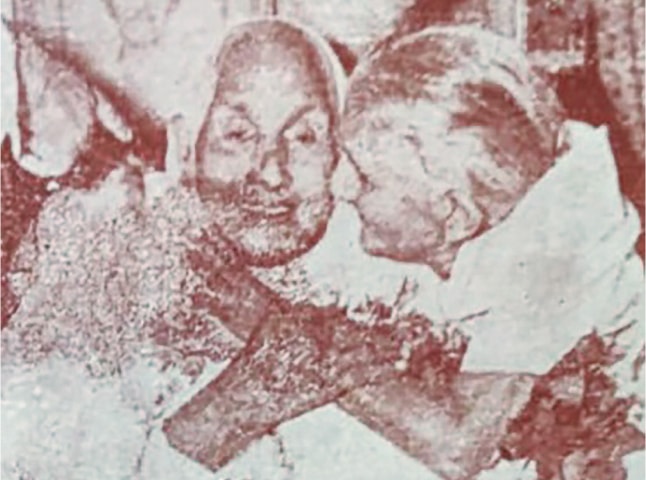
Bhagat Singh’s mother (left) being embraced by Hemu Kalani’s mother,
 Jethi Bai | British Library Archives

In the ceremony, during which the stamp was unveiled, Hemu’s mother Jethi Bai was seated alongside Bhagat Singh’s mother, which proved to be a very poignant interaction between the mothers of two revolutionaries. Newspapers in India published a photograph of the two women with the caption, “Sindh Mata [mother] and Punjab Mata.” According to Soomro’s conversation with Hemu’s brother, Bhagat Singh’s mother told Jethi Bai, “Your son is even greater than my son because he sacrificed his tender youth for the motherland.”

On 21 August, 2003, a 12-feet high statue of Hemu was erected in the Indian parliament and was unveiled at a ceremony which was attended by the then Indian Prime Minister Atal Bihari Vajpayee and Congress President Sonia Gandhi, thus symbolising the widespread and continued acknowledgment of Hemu’s contribution to the independence struggle.

The Hemu Kalani Yadgar Mandal was established in Delhi and today serves as a college for women. Additionally, a public square (Venus Chowk) was named after Hemu in Ulhasnagar and more than a dozen roads and educational institutions in various Indian cities carry his name.

But he remains missing from public acknowledgment in his own birthplace.

When studying the history of their land, Pakistanis are not taught about the exploits of Hemu Kalani and his contribution to the resistance movement against British rule in Sindh. This historical exclusion also represents an eagerness to erase certain elements of our collective past. This tendency was perfectly represented recently when the Hemu Kalani Park, located on the banks of the Indus in Sukkur, was renamed Muhammad bin Qasim Park, after the Arab conqueror.

However, it is not too late to rectify this national ignorance with regards to the contributions of Hemu in the fight against the British Raj. Hemu’s birth centenary this year offers us all a chance to ensure a vital correction in our selective amnesia towards one of the most distinguished sons Sindh has produced.

This is a translation of an Urdu piece carried on the BBCUrdu website in August 2020. The writer is Riaz Sohail, a senior journalist with BBC based in Karachi.

Eos regrets that the writer originally credited with the piece made false claims about his authorship of the piece. He is now permanently blacklisted from writing for Dawn.

Published in Dawn, EOS, March 26th, 2023

Watch how an ICBM nuclear warhead is transported in Great Falls, MT

WASHINGTON, US — There is a curious video on YouTube of the transportation of a nuclear warhead on an ICBM. According to the author of the video, the nuclear warhead is moving from Great Falls, Montana to Malmstrom AFB.

Watch how an ICBM nuclear warhead is transported in Great Falls, MT
Video screenshot

Two combat helicopters with M134 Miniguns mounted on the side hover in the air. Their movement follows the direction of the convoy, but they cover a much larger area than the air. On the ground, the military convoy is escorted by at least two police vehicles. Eight military armored vehicles with M60 or 240B machine guns mounted on top accompany a military truck with a large hermetically sealed military container. It is in the container that is supposed to be the nuclear warhead of the intercontinental ballistic missile.

The convoy stops for no one

The video was uploaded in early March and has almost 1.5 million views. It is not clear if this video is from this year, but it appears to have been filmed during the winter period, judging by the snow on the ground. “If you live in Great Falls, MT. you know what this is. If you don’t live in Great Falls or another city with a base that services these, then chances are you’ve never seen something like this,” he wrote the author of the video.

A comment below the video claims that, according to insiders, this convoy stops for no one until it reaches its final destination. It’s unclear where the warhead captured being transported in the video came from, but Malmstrom AFB is located close to Great Falls. In reality, the distance from the town center to the base is only 19 miles. One of America’s great rivers – Missouri – passes through Great Falls.

Malmstrom AFB

Malmstrom AFB is a famous US military base. The base hosts the 341st Missile Wing. There are only three military bases in the US that operates, maintain and secures the Minuteman III intercontinental ballistic missile [ICBM]. Malmstrom AFB is one of those three. This base is part of the Global Strike Command headquartered at Barksdale Air Force Base, Louisiana.

Malmstrom AFB employs about 4,000 people: 3,400 military personnel and 600 civilian personnel. During the Cuban Missile Crisis in 1962, the base was the first to be put on combat operational readiness, with Minuteman I intercontinental ballistic missiles included in the operational readiness. One year later, the base already has 150 nuclear ICBMs.

Watch how an ICBM nuclear warhead is transported in Great Falls, MT
Photo credit: USAF

According to official information from the US Air Force, Malmstrom AFB operated the Minuteman II and III systems simultaneously for many years. It is the only base in the United States operating both types of missiles simultaneously. Today, the 341st Missile Wing is now managed by Air Force Space Command under Air Force Global Strike Command and operates the Minuteman III ICBM.

***

Follow us everywhere and at any time. BulgarianMilitary.com 


Israel flounders

It is entirely possible that the Israelis are done with the autocratic drivel falling off the lips of a man they once
thought made sense.


Rafia Zakaria
Published March 30, 2023 


MANY people point out that these are extraordinary times and that the world is in a state of ferment. The last few years have witnessed increasing chaos as the planet contends with disease, the devastating effects of climate change, a war between two nations that has caused misery worldwide, and growing financial challenges for countries and societies.

Together, these have brought desperation and anger to a boiling point, as people curse their governments for back-breaking inflation, for being unjust and using repressive tactics against them. The citizens of Ghana, Pakistan, Iran and France are all out protesting. Some participate in large public events, whose every moment is choreographed. Others just take to the streets in a swarm armed with sticks and stones and other improvised ‘weapons’ to make their discontent known.

The protesters that have been crowding the streets of Israel are marching to demonstrate against Prime Minister Benjamin Netanyahu’s efforts to ‘reform’ the judicial system in that country and take away its independence by giving parliament, and essentially the party in power, the right to appoint all the judges. The protests have not simply meant people coming out to demonstrate. They have also meant calls for strikes, with flights not able to leave the airports and hospitals cancelling non-emergency treatment. Concerns have also gripped the forces, with military reservists joining the demonstrations.

While Israel has pretended to be the ‘only’ Middle Eastern nation to be a democracy, its actual politics have not followed the expected democratic trajectory — especially where human rights are concerned. It has been castigated internationally for treating Palestinians and Israeli-Arabs like criminals and subjecting them to the daily humiliation of endless checkpoints and searches, besides wrecking their homes, building on their lands and killing them with bombs and guns.


Today, the zeal with which Israel’s far-right is trying to erode the powers of the instruments of state and making institutions subservient to the government of the day is perhaps unprecedented, as it affects more than just the Arab population.

On the face of it, Prime Minister Netanyahu has capitulated and delayed his ‘reform’ plans. With the number of protesters threatening to grow even more, he agreed to withdraw his government’s proposal if the protesters also retreated. Nor have the protesters been limited to Tel Aviv. The city of Jerusalem saw 100,000 people in the streets — everyone seemed to be enjoying a party atmosphere. The stress on the prime minister has been all too visible.

It is entirely possible that the Israelis are done with the autocratic drivel falling off the lips of a man they once thought made sense but is now just desperately clinging to power by any means necessary. His firing of his defence minister, Yoav Gallant, who had spoken out against the prime minister’s intention to ‘reform’ the judiciary, is further proof that Netanyahu’s goal is to only have those people around him who agree with his plans and marvel at his brilliance.

Meanwhile, the Palestinians, whose protests have been trampled upon by bulldozers and bullets, continue to witness the unfolding saga. In a telling article in Newsweek, a social activist in the Gaza Strip, Muhammad Shehada, writes about how this long-forgotten segment of the population feels. “But watching the protests as a Palestinian was bittersweet. … Most of us have never experienced the rights and liberties that Israelis are fighting tooth and nail to preserve for themselves, and to us Palestinians, this tension between what Israelis were willing to risk for their own rights, and how little they seem to care about ours, was a painful juxtaposition.”

The real reason behind Netanyahu’s declining popularity and imminent downfall may well be that the agenda of his far-right party — which prioritises ‘security’ at the cost of just about everything else — is becoming redundant in the eyes of the people. The biggest challenge that the world faces today is not the repercussions of the terrible events of 9/11 but the rapidly boiling earth surface. The mad hunting down of international terrorists post 9/11 doesn’t quite impress people or make them feel instantly patriotic as they once did. A large number of adults, the older Gen Z in particular, were born after 9/11 and remember the tragedy as a historical event rather than as an example of a clear and present danger.

The protests that are happening in Israel reflect similar discontent in other countries, where men and women are taking to the streets to protest against one leader, cheer another and to reject old institutions at least in the form they exist. Have the people of the world finally become fed up? These emotions are going to change the globe.

Another bit of bad news for Israel has been the thaw between arch-rivals Iran and Saudi Arabia, who agreed to step back from their hostile positions after a meeting negotiated by the Chinese. It could well be that a peaceful Middle East, where Iran and Saudi Arabia are not in some perverse arms race, will finally sound the death knell for the ongoing cash pipeline between the United States and Israel. That same pipeline of cash is also threatening the rift emerging between the Israeli and American Jews. The former have become used to being cruel and treating the Palestinians as inhuman, and the latter are stunned when they learn of the bans on medicine and medical supply to the occupied West Bank.

This is a precarious time in Israel with internal dissent and geopolitical alliances changing fast. At a time when people have decided to hold governments and institutions accountable, and new regional influences are starting to exert themselves, it will soon find itself without recourse to a solution.

The writer is an attorney teaching constitutional law and political philosophy.
rafia.zakaria@gmail.com


Published in Dawn, March 30th, 2023


Democrats urge Biden to investigate Israel’s use of American weapons on Palestinians

B.M | DOP - 

Tens of Democrat members of Congress urged US President Joe Biden to conduct an investigation into Israel’s use of American weapons against the Palestinian people.

In a letter, the Congress Democrats requested Biden to investigate whether Israel used US weapons to carry out human rights abuses against the Palestinian people.

According to Middle East Monitor, the letter, signed by 10 members so far, requested Biden to change US policy toward Israel, highlighting the shocking violence of Israeli forces.

In addition, the letter mentioned the Israeli deadly raid in Nablus which claimed the lives of 11 Palestinians, including an elderly man and a child.

“Israeli forces and settlers have killed over 85 Palestinians in 2023, including 16 children,” the Congress members said, adding that the previous year was the deadliest for Palestinians in the occupied West Bank since 2004.

Remembering Israel’s killing of Shireen Abu Akleh, the Congress members highlighted the Israeli crimes in 2022, including killing the American citizens Omar Assad and Abu Akleh.

“At this inflection point, we ask your administration to undertake a shift in U.S. policy in recognition of the worsening violence, further annexation of land, and denial of Palestinian rights,” the letter read.

This letter came following brutal attacks and human rights violations committed by the Israeli new government against the Palestinian people, sanctions, and land.


UN: 700,000 Israeli settlers are living illegally in the occupied West Bank

B.M | DOP - 

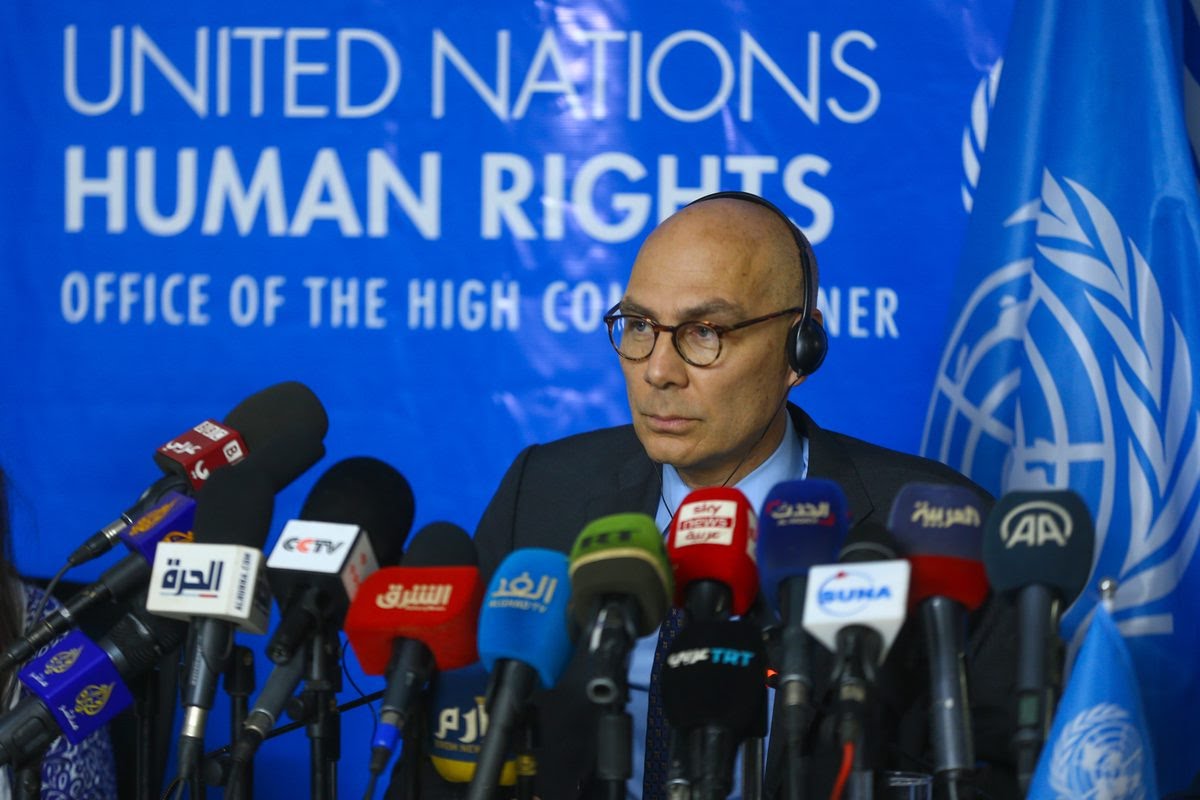
The High Commissioner for Human Rights presented a new report on Israeli settlements in the occupied Palestinian territory on March 28, 2023.

The UN report, presented by Christian Salazar Volkmann, highlighted settler violence and settlement expansion in the occupied West Bank from 2012 to 2022.

The report pointed out that from 2012 to 2022, the number of Israeli settlers in the occupied West Bank had grown from 520,000 to over 700,000.

“These settlers lived illegally in 279 Israeli settlements across the occupied West Bank, including 14 settlements in the occupied East Jerusalem,” the report indicated.

In addition, the UN report shed the light on settler violence. The UN had verified 3,372 violent incidents by settlers, injuring 1,222 Palestinians during the past decade.

With 2022 recording the highest level of settlers’ violence, the report added that Israel had failed to investigate and prosecute crimes against Palestinians committed by settlers and Israeli forces.

Faulty vision
The Ramazan (Rahmadan) moon has remained elusive, leading to controversies.

F.S. Aijazuddin Published March 30, 2023 


ONE would have thought that having 20:20 vision would have been a prerequisite for the Central Ruet-i-Hilal Committee. It is responsible for the sighting of the moon that signals both the beginning and the end of the holy month of Ramazan. The committee has become instead a symbol of institutionalised myopia.

By tradition, only a sliver of the new moon needs to be seen by the naked eye. In recent times, the committee, however, has depended on 150 observatories of the Pakistan Meteorological Department spread across the country, and on verifiable sighting by members of the public. The committee also uses powerful telescopes as aids.

Despite this network of watchful trained observers and artificial devices, the Ramazan moon has remained elusive, leading to controversies on the commencement of the first fast or the celebration of Eid. This became particularly contentious during the 1960s, when Ayub Khan’s government ordered Eid to be celebrated while others (especially in the then NWFP) defied its diktat.

On one such Eid, an imam was ordered by the military authorities to lead the prayers in Karachi’s polo ground. To ensure his presence, two officers were posted beside him. The imam proved more ingenious than they were attentive. During the prayers, the imam crept away, leaving the congregation in an uncomfortably long sajdah.

The Ramazan moon has remained elusive, leading to controversies.

The present Central Ruet-i-Hilal Committee was constituted by the National Assembly in 1974. Even though it is almost 50 years old, it still has no rules or regulations. It is nominally under the control of the Federal Ministry of Religious Affairs and Inter-faith Harmony.

Its present chairman is Maulana Abdul Khabeer Azad who, like his father, had served as the khateeb of the Badshahi Mosque in Lahore. He was appointed as chairman of the Ruet-i-Hilal Committee on Dec 30, 2020, succeeding Mufti Muneebur Rehman, whose tenure lasted for 22 long years, from 1998 until 2020.

Many suspected the ability of Mufti Muneeb to discern anything at all. He often found it difficult to negotiate stairs and, especially in his later years, needed assistance to read documents. One expected his successor to have better sight.

Maulana Azad, as khateeb of the historic Badshahi mosque, had the opportunity of escorting innumerable VIPs on tours around it. Two such occasions he will certainly choose to remember were the visit by the winsome Diana, Princess of Wales in 1991, and the subsequent visit by her son, Prince William, and his wife, Catherine, in 2019. During the latter, he endeared himself to the prince by showing him a photo of his late mother with himself.

A royal visit he may not wish to recall will be that of Prince Charles (now King Charles III) and his second wife, Camilla (now Queen Consort), in 2006. Persons in attendance remember the occasion vividly. The prince and his wife had made the obligatory stop to pay their respects at the tomb of Allama Iqbal. While the royal couple were signing the visitor’s book, the khateeb took his position at the footsteps of the mosque to await the royal couple.

Suddenly, an official from the protocol department appeared. He assailed him with: “How many times have I told you to clear the prayer in advance with us?” One of those present tried to deflect the attack. The official would have none of it. “Do you know what he said? He recited a prayer — and that too in English — thanking God for bringing Prin­ce Charles and his beautiful mother to Lahore.”

Maulana Azad has since been entrusted by the government to spot the Ram­azan moon.

This year, the Saudi government, to avoid confusion, ann­ounced the date of the first fast well in time to enable the public to make preparations. We in Pakistan had to wait until almost 10pm for the maulana and his committee members to make up their minds either way.

Most Pakistanis take their religion as seriously as the minority of zealots do. They wonder with reason why, when we are part of the Muslim ummah, when we read the Holy Quran in the original language of its revelation, when we acknowledge the Saudi king as the trusted Custodian of the Two Holy Mosques, do we still choose to observe common religious festivals on days different to the Saudis and other Muslim brethren?

It has taken the Christian Church more than 500 years for its various churches — all followers of the same Jesus Christ — to recognise the need for unity. Perhaps, by the time this holy month of Ramazan is over, and fasting should have improved everyone’s eyesight, Muslims will be able to observe the new moon at the same time and celebrate Eidul Fitr on the same day.

Such a miracle is overdue.

The writer is an author.
www.fsaijazuddin.pk

Published in Dawn, March 30th, 2023
PAKISTAN

Kidney-punched

Rising temperatures and melting glaciers can submerge Karachi by 2060.


Shahzad Sharjeel 
Published March 30, 2023 


NATURE has gone on the offensive, for we have been jabbing away at the climate for far too long, and it is raining kidney punches. Resorting to poetic licence and romanticising harsh realities is what poets often do. In one such moment, poet Ishrat Afreen wrote:

(How pretty appear the hands picking cotton: they seem like metaphors of love of the soil).

It is hard to tell if Ms Afreen ever ventured into the cotton-growing fields. The heat is enough to drive ordinary beings out of their ‘cotton-pickin’ minds. While a 2012 World Bank report, Turn Down the Heat, warns us about rising global temperatures and determines a rise of four degrees Celsius as the redline beyond which the oceans boil over and Earth becomes uninhabitable, we obsess about redlines at Zaman Park.

Local television shows and vloggers would have us believe that the law-enforcement agencies raiding a suspect’s home in his absence is the height of state callousness. It is left to a foreign news agency like Reuters to report that women pick cotton at temperatures exceeding 50°C in the baking fields of Jacobabad, Sindh, regularly.


Overexploitation of groundwater around Quetta and global warming have destroyed fruit orchards around the valley; rampaging forest fires caused mainly by rising temperatures have wreaked havoc on pine nut forests in the rest of Balochistan. Both have depleted means of livelihood.

Rising temperatures and melting glaciers can submerge Karachi by 2060.


Have you ever heard of an international athlete, who represented her country not in one but two sports, resorting to illegal immigration across continents? Faced with the double whammy of economic hardship and ethnic discrimination, this is exactly what Shahida Raza of Quetta did recently. She drowned off the coast of Italy in February. That she was reduced to such desperate measures, despite having represented Pakistan on both the hockey and football teams, is not considered the height of state callousness because she belonged to the persecuted Shia Hazara community.

While traditional and social media in Pakistan continued to focus on leaked audio-video tapes and their resultant pain and pleasure points, the New York Times reported on Ms Raza’s fate.

An optimistic take on the economic and political crises caused mainly by poor leadership over the decades leads us to believe that land, being inanimate, will endure, and future generations can build a more equitable society. Unfortunately, this is not a universal truth. While some regions on Earth may fare better in the face of climate change, the fate of others may already be sealed. The entire Maldives and large swathes of Bangladesh are at severe risk of going under water before the end of the century.

The rising temperatures and the melting glaciers in both the Hindukush and Himalayan ranges can submerge Karachi by 2060. Elfatih Eltahir, a professor of civil and environmental engineering at MIT, has warned in a study published in Science Advances that if temperatures continue to rise unchecked, most of South Asia will become uninhabitable by 2100 due to the unbearable heat and the crop failures caused by it.

According to a 2022 study, the world already loses 677 billion manpower hours a year owing to the heat that makes outside labour impossible. This translates to a loss of productivity equal to $2 trillion a year. South Asia depends on its overseas labour for a large chunk of its foreign remittances.

A large segment of it comes from the Middle East, including the Gulf states — a region beset with challenges of overreliance on hydrocarbons and extr­emely hot climes. While policymakers in the South Asian capitals gloat over remittances, the labo­urers are losing their kidneys swe­a­t­ing away in shei­khd­oms at an alar­ming rate.

It is scientifically proven that ext­reme heat cau­ses excessive swe­ating, and that, combined with the lack of or dela­yed access to drinking water, it causes saturation of insoluble salts that turn into kidney stones. Lack of economic opportunity at home, worsened by the climatic conditions, deprives migrant workers of any negotiating power for better work conditions abroad.

Devaluation of local currencies and skyrocketing prices lend further attraction to earning in more stable currencies, but the physical and emotional price paid in return is not captured in any index. It is befitting to end this piece with a couplet by a gem of a poet, Ata Shad, who also happens to be from Balochistan, M. Raza’s home:

(Standing atop whirlwind pillars; we dream of reaching the sky).

The writer is a poet. His latest publication is a collection of satire essays titled Rindana.
shahzadsharjeel1@gmail.com

Published in Dawn, March 30th, 2023
PAKISTAN

Lahore’s sick lungs

 “If more of us cycled in Lahore, we might not have such bad air, after all!

Zofeen T. Ebrahim 
Published March 31, 2023 


WHEN environmental lawyer Ahmad Rafay Alam started the cycling group Critical Mass Lahore 14 years ago in the city, his plan was to promote “sustainable urban transport” as well as the idea that “women have a right to be in public spaces”. Both ideas caught on and have found resonance in Karachi and Islamabad, but Alam himself gave up cycling because of the traffic, which had become too dangerous to navigate.

HRCP director Farah Zia says cycling brings not only “immense pleasure” to her but also a sense of “freedom”. Sadly, like Alam, the sea of vehicles keeps her from pedalling to work every day, so she restricts herself to cycling around her neighbourhood.

Alam resumed cycling during the 2021 Covid-19 lockdown. He recalled that “once in a lifetime” event when the “air was cleaner, the sky bluer” and the roads rid of motorbikes and cars. But life was back full throttle in 2022 and has picked up even more speed since then.

No lessons were learnt from the lockdown, it seems, and the 2022 World Air Quality Report, published earlier this month, is evidence of this. IQAir, a Swiss air quality technology company which published the report, ranked Lahore as the most polluted city in the world. It had ranked 15th in 2021. Peshawar, at fifth position, did not fare any better, and came fourth in the Central and South Asia region.

Two recent reports underscore the urgency of collective action to curb emissions.

What is making Lahore’s air sick?

To understand this, we need to first acquaint ourselves with the very tiny but extremely hazardous particulate matter (PM), found in the air in solid or droplet form. These can be 10 micrometres, 2.5 micrometers or even less in diameter. By way of comparison, PM2.5 is one-thirtieth the width of a human hair, which is between 70 to 90 micrometres.

The smaller particles are so tiny that several thousand can fit in the full stop at the end of this sentence. These miscreants (including sulphates, nitrates, black carbon and ammonium) travel deep into our lungs and enter our bloodstream, causing serious lung and heart diseases. In fact, scientists say, air pollution has reduced the average life expectancy across Pakistan by up to 2.7 years.

The WHO global air quality guidelines to help governments and civil society reduce human exposure to air pollution and its adverse effects have recommended an annual PM2.5 guideline level of 5 µg/m³ and a daily PM2.5 guideline level of 15 µg/m³.

The report by IQAir has listed the top five polluted (ie air pollution) countries in 2022 based on the WHO guidelines. Pollution in Chad at 89.7 μg/m³ was over 17 times higher than the WHO guideline, followed by Iraq with 80.1 μg/m³ (16 times higher). Pakistan came third with pollution levels of 70.9 μg/m³, 14 times higher than the guideline. Bahrain and Bangladesh came fourth and fifth with 66.6 μg/m³ and 65.8 μg/m³ respectively (more than 13 times higher).

PM2.5 concentrations in Lahore dropped from a high of 133.2 µg/m³ in 2017 to a low of 79.2 µg/m³ in 2020. Since then, however, concentrations have continued to climb, reaching 97.4 μg/m³ in 2022.

The data collected from 7,323 cities across 131 countries, regions, and territories was based on over 30,000 regulatory air quality monitoring stations and low-cost air quality sensors operated variously by governmental bodies, research institutions, non-profit NGOs, universities and educational facilities, private companies and citizen scientists across the globe.

Interestingly, more than half of the world’s air quality data was generated by grassroots community efforts. “Air quality monitoring by communities creates transparency and urgency; it leads to collaborative actions that improves air quality,” stated Frank Hammes, Global CEO, IQAir.

Another study released this month in Lancet found that 99 per cent of the global population was exposed to PM2.5. Assessing the daily and annual PM2.5 concentrations across the globe from 2000 to 2019 using a computer model and incorporating traditional air quality observations from ground stations as well as meteorological data, the study finds the hotspots to be in eastern Asia, southern Asia and northern Africa.

The results are grim and underscore the urgency with which policymakers, public health officials and academia must come together to find ways to curb emissions from the usual culprits — power plants, factories, the farming sector, transport and waste burning.

Following close on the heels of the two damning global air quality reports, the Ministry of Climate Change got its National Clean Air Policy, 2023, approved by the federal cabinet earlier this month. The timing could not have been more perfect. Although in 2021, Pakistan had announced a Pakistan Clean Air Plan to perform national and local air pollution assessments, and its implementation continued in 2022, having a policy in place shows the government is committed to curbing air pollution.

The policy has identified one priority intervention each in five sectors: implementation of Euro-5 and Euro-6 fuel quality standards in the transport sector; enforcement of emission standards in industry; a ban on burning crop residue in agriculture; preventing the burning of municipal waste; and promoting the use of low-emission cooking technologies in households.

If fully implemented, these interventions can reduce PM2.5 emissions by 38pc by 2030. And that is the key for which provinces must be on board. “Vigilant adherence and tangible reductions to concentrations of air pollutants will be the metric that gauges its success and impact on the lives of the inhabitants,” said IQAir CEO Glory Dolphin Hammes about achieving success.

There is much that can be done to give cities their lungs back. Having an Ultra Low Emission Zone, like there is in central London, where polluting vehicles must pay a daily charge to drive, is an idea; as are the ‘15-minute cities’, where all basic services and amenities that people need for daily life are within a 15-minute walk or bike ride from their homes. As Alam said: “If more of us cycled in Lahore, we might not have such bad air, after all!” For those who cannot do without a motorised vehicle, electric bikes could be an alternative.

The writer, a Karachi-based independent journalist.

Published in Dawn, March 31st, 2023