It’s possible that I shall make an ass of myself. But in that case one can always get out of it with a little dialectic. I have, of course, so worded my proposition as to be right either way (K.Marx, Letter to F.Engels on the Indian Mutiny)
Sunday, May 07, 2023
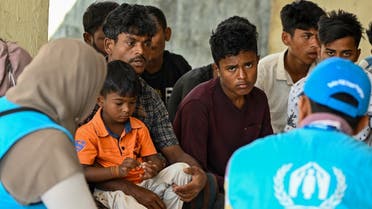
Rohingya won’t return to Myanmar to be ‘confined in camps’ UNHCR officers check on Rohingya refugees at a temporary shelter following their arrival in Ladong in Aceh Province on February 17, 2023. (AFP)
Reuters Published: 06 May ,2023
Rohingya refugees in Bangladesh said on Saturday they would not return to Myanmar to “be confined in camps” after making a visit to the country as part of efforts to encourage their voluntary repatriation.
Nearly one million Rohingya Muslims are living in camps in the Bangladeshi border district of Cox’s Bazar, most after fleeing a military-led crackdown in Buddhist-majority Myanmar in 2017.
Twenty Rohingya Muslim refugees and seven Bangladeshi officials visited Maungdaw Township and nearby villages in Rakhine State on Friday to see the arrangements for resettlement.
Rohingya have expressed discontent with the preparations for repatriation and said they will not go back unless their security can be guaranteed and they can be sure of being granted citizenship.
“We don’t want to be confined in camps. We want to get back our land and we will build our own houses there,” Oli Hossain, who was among the refugees who visited Rakhine State, told Reuters by phone.
“We’ll only return with citizenship and all our rights,” said the 36-year-old Hossain, father of six children.
Myanmar is offering Rohingya national verification cards (NVC), which Rohingya refugees regard as inadequate.
“Myanmar is our birthplace and we are citizens of Myanmar and will go back with citizenship,” said refugee Abu Sufian, 35.
“We’ll never accept NVC. This will effectively identify Rohingya as ‘foreigners’,” he told Reuters, adding that Myanmar authorities “even changed the name of my village in Rakhine.”
Bangladeshi officials have made several trips to Myanmar as part of efforts to get repatriation going, but this was the first by Rohingya refugees since 2017.
A Myanmar junta spokesman did not answer calls seeking comment.
Myanmar’s military had until recently shown little inclination to take back any Rohingya, who have for years been regarded as foreign interlopers in Myanmar and denied citizenship and subjected to abuse.
A Myanmar delegation, however, visited the camps in March to verify a few hundred returnees for a pilot repatriation project.
A Bangladesh official said the project would involve about 1,100 refugees but no date had been set. Attempts to get repatriation going in 2018 and 2019 failed as the refugees, fearing violence, refused to go back.
The UN refugee agency (UNHCR) reiterated that “every refugee has an inalienable right to return to their home country. Refugee returns must be voluntary, in safety and dignity - based on an informed choice, but no refugee should be forced to do so.”
“UNHCR maintains that dialogue with the Rohingya refugees is a must to make an informed decision,” it said in a statement.
“... visits are an important part of voluntary refugee returns, providing a chance for people to observe conditions in their home country first hand ahead of return and contributing to the making of an informed decision on return,” it added.
Taliban ruling through extreme forms of misogyny, say UN experts
This came following UN experts eight-day visit to Afghanistan. UN Special Rapporteur on the Situation of Human Rights in Afghanistan, Richard Bennett was also a part of the visit.
UN experts in their findings on the state of human rights and discrimination against Afghan women in Afghanistan, said that the Taliban through its "most extreme forms of misogyny" has been destroying the relative progress towards gender equality achieved in the past two decades in the country, Afghanistan based Khaama Press reported. This came following UN experts' eight-day visit to Afghanistan. UN Special Rapporteur on the Situation of Human Rights in Afghanistan, Richard Bennett was also a part of the visit.
The mission took place from April 27 to May 4 in the context of a chronic humanitarian crisis and profound turmoil due to the most recent verdict banning Afghan women from working with the United Nations and non-governmental organizations, Khaama Press reported. The UN report said: "Since the collapse of the Republic, the de facto authorities have dismantled the legal and institutional framework and have been ruling through the most extreme forms of misogyny, destroying the relative progress towards gender equality achieved in the past two decades. The Taliban impose certain interpretations of religion that appear not to be shared by the vast majority of Afghans."
Several organisations continue to provide crucial humanitarian assistance and protection to the most marginalized people in the country. The Taliban said that the women were working in the health, and education sectors, stressing that women could work according to Sharia, separated from men. The Taliban has said women's rights are an internal affair and that the international community should not interfere.
"The de facto authorities reiterated their message that they were working on reopening schools, without providing a clear timeline and indicated that the international community should not interfere in the country's internal affairs," according to the UN report. Based on the UN report, women and girls' lives in the country are devastated by the crackdown on their human rights.
"We are alive, but not living," said one of the woman interlocutors stated in the report. The report concluded, "We urge the de facto authorities to comply with their obligations under international human rights instruments to which Afghanistan is a State party, especially CEDAW, and honour their commitments towards protecting and promoting all women's and girls' rights", according to Khaama Press.
(ANI)
Senegalese veterans return home after France's U-turn on pension rights
• FRANCE 24 English
U$ FOR PROFIT HEALTHCARE
Report: Noncitizens Will Account for One-third of Uninsured Population in 2024
A recent Urban Institute report found that the uninsurance rate for nonelderly people who aren’t citizens will be 39.2% in 2024, about four times higher than it is for the entire U.S. population at 9.8%.
Adults under the age of 65 who are noncitizens are expected to represent about one-third of the country’s 27 million uninsured in 2024 — even though this group only accounts for 8% of the total nonelderly population in the U.S., a new report showed.
The report, published Thursday, was conducted by the Urban Institute and funded by the Robert Wood Johnson Foundation. For the analysis, the researchers used the Urban Institute’s Health Insurance Policy Simulation Model, which estimates how healthcare policy options will affect cost and coverage.
It comes after the Health and Human Services (HHS) proposed a rule that would permit Deferred Action for Childhood Arrivals (DACA) recipients — also known as Dreamers — to apply for coverage through the Health Insurance Marketplace or through their state Medicaid organization. HHS predicts the rule could lead to 129,000 DACA recipients gaining coverage. The Urban Institute’s analysis, however, does not include the effects of the proposed rule.
The researchers found that in 2024, the uninsurance rate for nonelderly people who aren’t citizens will be 39.2%, about four times higher than it is for the entire U.S. population at 9.8%.
“As the uninsurance rate has declined, noncitizens comprise a growing share of those without coverage,” said Katherine Hempstead, senior policy adviser at the Robert Wood Johnson Foundation, in a news release. “The recent proposed rule regarding DACA recipients illustrates the need for expanding eligibility regardless of immigration status if we want to attain universal coverage.” The report also showed that 36% of those who are noncitizens have employer-sponsored insurance, lower than the total nonelderly population in the U.S. at 54.4%.
In addition, more than 80% of uninsured noncitizens have at least one family member who is employed. However, many aren’t working for companies with employer-sponsored insurance, according to the Urban Institute.
This population is also less likely to have insurance through the government: just 16.5% of those who are uninsured and noncitizens are eligible for Medicaid, CHIP or subsidized Marketplace coverage. Two-thirds of this group are ineligible because of their immigration status.
“Despite some efforts to cover certain lawfully present noncitizens and the availability of Marketplace options, only 16.5% of uninsured noncitizens gained eligibility for Medicaid, CHIP, or Marketplace premium tax credits,” said Matthew Buettgens, senior fellow at the Urban Institute, in a statement. “States have several options to extend coverage to noncitizens and undocumented immigrants and expand overall health coverage in the United States.”
Photo: alexsl, Getty Images
WHO Says Impossible to Globally Eradicate COVID-19 Due to Transmission Routes
6 May 2023
It is impossible to completely eliminate COVID-19 because its transmission routes from animals to humans complicate the situation, but we are able to address its consequences and possible healthcare emergencies, Executive Director of the World Health Organization's Health Emergencies Programme Dr Michael Ryan said on Saturday.
"No. I do not believe so. There is very specific criteria when you can eliminate or eradicate a virus ... What we see here is a virus that's evolved quickly, it can move from humans to animals and from animals to humans, so it can hide in different spaces, not just in humans. It is very hard to speak about an eradication or elimination in this case," Ryan told a question-and-answer session, Azernews reports.
He also said that it was possible to eliminate "the public health threat provoked by the virus" through the vaccination and treatment, adding that "we can end the emergency, but we cannot end the virus."
"So, can we eliminate the [COVID-19] virus? I think the answer is very unlikely, if not impossible," Ryan noted.
On Friday, the WHO's director-general, Tedros Adhanom Ghebreyesus, said the organization no longer considered COVID-19 a global health emergency, emphasizing that the infection still posed a threat to the health of the human population.
France condemns hate speech against Yezidi community
“It recalls the right of Yazidis to live in peace, security and dignity, in the same way as the other components of Iraqi society.”
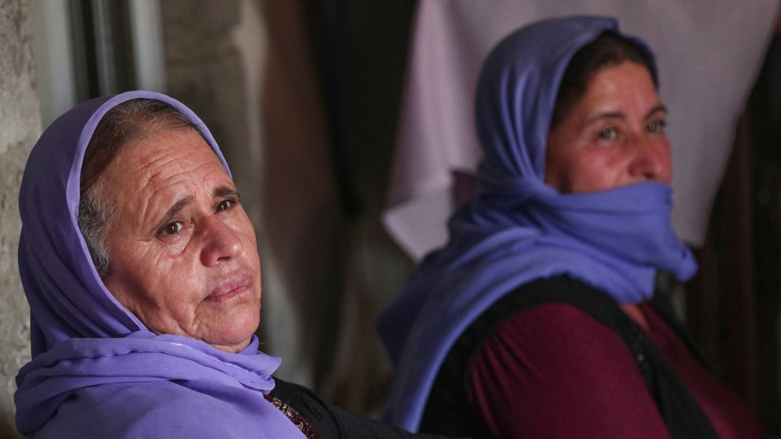
Displaced Yazidi women sit in their tent at the Chamishko camp for internally displaced persons (IDP) in the city of Zakho in the north of Iraq's autonomous Kurdish region on May 5, 2022. (Photo: Safin Hamed/AFP)
ERBIL (Kurdistan 24) – The French embassy in Iraq on Wednesday strongly condemned recent hate speech targeting the Yezidi community.
“It called for the right of Yazidis (Yezidi’s) to live in peace, security and dignity, in the same way as the other components of Iraqi society,” the statement said.
“It reaffirms France's concrete commitment to the Yazidis in Iraq, whether it be their right to decent living conditions in the region where they have been the target of Daesh's extermination, or in camps where they have sought refuge.”
Moreover, France called on federal authorities and those of the autonomous region of Kurdistan to continue their efforts to improve security, governance and reconstruction in Sinjar.
The French Embassy in Iraq emphasized its “commitment to creating an understanding and a peaceful dialogue between the different components of the Iraqi population and to preserving the country's diversity, one of its main assets.”
Yezidi activists on social media welcomed the statement. “Thanks to the Embassy of France,” Yezidi activist Saad Baber told Kurdistan 24.
“We need such solidarity and statements from the UN in Iraq, the US Embassy, the UK Embassy, and other International missions to stand with Yazidi survivors who are living in fear because of hate speech by religious leaders in Iraq and the Kurdistan region,” he added.
Hunar Kakayi, an activist, documented the hate speech against the Yezidi community on social media and welcomed the French statement in his Twitter page.
“I think the statement by France is good because it should alert security intelligence actors in the KRG about the existence of the Daesh (ISIS) ideology.”
“I believe the KRG government should do more to arrest those who directly threaten national security and disturb the social fabric.”
France has supported the Yezidi community since the beginning of ISIS attacks on the religious minority. Moreover, France supports a project to build a hospital in Sinjar.
Social media was abuzz with unverified claims on Friday that Yezidi protestors had attacked and set fire to a mosque.
Following the incident, hate speech and threats against Yezidis escalated on social media, even some applauding ISIS's past atrocities against Yezidi women.
The Iraqi Sunni Endowment visited the Rahman Mosque in Sinjar to investigate the incident, and determined that the mosque was not attacked and there was no evidence of any material damage to the mosque.
The return of 25 Sunni Arab families to Sinjar lead to protests by Yezidi’s who claimed the families helped ISIS, during the ISIS genocide of Yezidi’s in August 2014.
The return of displaced Sunni Muslims native to Sinjar has been a concern among the Yezidi community, who accuse them of having facilitated ISIS crimes against them.
Buddhism amongst “greatest gifts” from India to world: Indian envoy to US Sandhu
ANI 6 May, 2023 Washington [US], May 6 (ANI): Buddhism is among the “greatest gifts” of India to the world, Indian ambassador to the United States Taranjit Singh Sandhu said while noting that it plays the role of a “unifying factor” in various countries where the religion is being practised.
Sandhu made the remarks while celebrating Buddha Purnima in the United States on Friday along with venerable monks, scholars from the International Buddhist Association of America, and the Indian diaspora.
The Indian ambassador tweeted, “Commemorated the life & message of Lord Buddha with venerable monks from across scholars from International Buddhist Association of America, @IbcWorldOrg, White House officials, academics and India diaspora.”
While addressing the gathering, Sandhu said, “All of you know today is a sacred day and across many different cultures in the world of Buddhist philosophy we celebrate Lord Buddha’s birth anniversary.”
“Buddhism is amongst the greatest gifts from India stretching back to more than 2500 years and it’s practiced in more than 100 countries today. It’s a strong unifying factor. I have learned in my previous assignment in Sri Lanka and witnessed how strong our shared Buddhist heritage is,” he added.
Lauding the Narendra Modi government in India for the steps taken to strengthen Buddhism, he said, “Under the leadership of Prime Minister Modi, the government of India is keen to strengthen the people-to-people linkages weaved through the common thread of Buddhism.”
Recalling PM Modi’s visit to Sri Lanka in 2017 as the chief guest of UN International Vesak Day celebrations, the Ambassador enumerated the initiatives taken for Buddhism.
“I recall, in 2017 Prime Minister Modi’s historic visit to Sri Lanka as the chief guest of UN International Vesak Day celebrations. Several initiatives since then have been taken like the development of Buddha circuit in India and Nepal, the rejuvenation of pilgrimage centres like Sarnath and Kushinagar, inauguration of Kushinagar International Airport, the International India Center for Buddhist Culture and Heritage in Lumbini with cooperation of India and the International Buddhist Confederation, assistance to several countries in India’s neighbourhood, Southeast Asia for construction and renovation of Buddhist monasteries and joint projects to be set up, International centers and museums for Buddhist culture and heritage are just few examples of India’s efforts,” he said.
The Indian envoy added that the first global Buddhist summit was successfully organized in India last month where scholars from across the world participated.
“In a world which is facing multiple challenges today in the form of pandemic, terrorism, environmental degradation and like,” he said.
Sandhu referred to the preachings of Buddha and said that there is no problem for which solutions could not be found in his teachings.
“As Lord Buddha said, be your own light, and he showed us the path which he himself had lived,” he said.
“India has been deeply influenced by the Buddhist philosophy and has been working with like-minded partners, including the United States, in addressing the diverse headwinds that we face,” the Indian ambassador added.
The gathering was also addressed by the scholars and office bearers of the International Buddhist Association of America.
(ANI)
OPINION
When it comes to minority rights, why is Pakistan a ‘country of particular concern’, but not India?
Washington’s attitude to violations of religious freedoms may be arbitrary, but that shouldn’t stop Islamabad from doing justice by its minorities.
Aizaz Ahmad Chaudhry, Dawn.comMembers of Pakistan's Sikh community protest after two Sikh men were killed by gunmen, in Peshawar in May 2022. | Reuters
Each year, the United States Commission on International Religious Freedom publishes its annual report, which normally includes a chapter on Pakistan. In its 2022 report, the Commission focused on blasphemy and anti-Ahmadi laws, forced conversions and forced marriages, and cases of targeted killings, lynchings, and mob violence. Based on the commission’s recommendation, the US State Department designated Pakistan as a country of particular concern for systematic and egregious violation of religious freedom.
Pakistan’s foreign ministry rightly lost no time in rejecting this designation, which it termed as “unilateral and arbitrary”. It especially expressed its disappointment that India, which is a big violator of religious freedom, had not been included in the list.
Pakistan and other targeted countries find the US reports condescending and feel that the US should not sit in judgement on others on issues which are best addressed in a universal forum, the UN Human Rights Council. The Council meets regularly in Geneva to monitor human rights, including the right to religious freedom. Each country presents itself for international scrutiny through Universal Periodic Reviews.
The issue boils down to politically motivated double standards. While the US Commission has noted that religious freedom conditions in India are taking a “drastic turn downward”, the State Department still chose not to designate India, which the US regards as its preferred ally in its competition with China. Likewise, the US is often found more concerned about the rights of Uighurs in China than Muslims in Kashmir. In some Western countries, freedom of speech has been misused to desecrate the sacred texts and personalities of Islam.
The US designation notwithstanding, however, the issues of human rights and religious freedom in Pakistan must be addressed in earnest. It does not behove a civilised nation to tolerate what we witnessed in December 2021 when a Sri Lankan manager was dragged out of a factory in Sialkot by fellow workers, who killed him and burned his dead body.
More recently, a mob entered a police station in Nankana sahib, forcibly took a person accused of blasphemy, killed him and dragged his body, stripped of clothes, through the streets. In August 2021, a mob vandalised a Hindu temple after a local court in Rahimyar Khan district granted bail to an eight-year-old Hindu boy who was accused of blasphemy.
A police officer stands guard outside the Batul Noor mosque of the Ahmadi community in Lahore in December 2013. Credit: Reuters.
Fortunately, we have solid legal grounds to obligate everyone to respect minority rights. The Constitution of Pakistan under Article 20 grants freedom to every citizen to profess his/her religion and to manage religious institutions. Article 25 guarantees equality before the law and equal protection of the law. Through Article 36, the state has been called upon to safeguard the legitimate rights and interests of the minority communities. The Constitution also stresses affirmative measures to create a non-discriminatory and protective environment for all.
These constitutional provisions are in sync with the guidance provided by the Quaid-i-Azam in his speech to the Constituent Assembly on Aug 11, 1947: “You are free; you are free to go to your temples, you are free to go to your mosques or to any other places of worship in this State of Pakistan. You may belong to any religion or caste or creed – that has nothing to do with the business of the state.”
The faith of Islam also provides clear guidance to Muslims. Surah Al Ma’idah states that “whoever takes a life – unless as a punishment for murder or mischief in the land – it will be as if they killed all of humanity; and whoever saves a life, it will be as if they saved all of humanity” (5:32). It is further ordained in Surah Al-Baqara that “there be no compulsion in religion”. The Holy Prophet (PBUH) practised religious tolerance towards non-Muslims. As an Islamic state then, Pakistan is expected to guarantee religious rights to non-Muslims and to treat them fairly and equally.
At the national level, parliament, the executive, the judiciary, and the media have all expressed their concern for the protection of minority rights. Globally, at the UN Human Rights Council, Pakistan has appeared in Universal Periodic Reviews in 2008, 2012, 2017 and 2023.
In a recent report submitted to the Council, Pakistan affirmed its commitment towards “domestication” of provisions of major international human rights instruments by enacting laws on key human rights issues, including on the protection of minorities’ rights. The Ministry of Religious Affairs and Interfaith Harmony is committed to preparing a national interfaith harmony policy in consultation with provinces and establish a minorities welfare fund for the maintenance of religious places belonging to minorities. The government has also made a commitment to the international community to curb the misuse of blasphemy laws through various administrative safeguard.
Despite these facts, there are persistent complaints of the deprivation of the rights of minorities in the country. In an elaborate report, titled “A Breach of Faith: Freedom of Religion or Belief in 2021-22”, the Human Rights Commission of Pakistan has identified specific incidents of minorities facing persecution, marginalisation, forced conversions, and misuse of blasphemy laws. Incidentally, many of the issues highlighted in the report are also mentioned in the US Commission’s report. There has been a consistent recommendation that the threshold of evidence regarding blasphemy accusations must be raised so that the law is not used to settle personal vendettas.
The moot point is that while we may register our protest on the US designation of Pakistan as a country of particular concern, or even ignore the contents of its report, we must pay undivided attention to the issues of minority rights. It is our civic, moral and legal duty. Each case of violence against minorities is important in its own right and reflects on the standards of our own society.
The writer is a former foreign secretary of Pakistan and author of Diplomatic Footprints.
Victoria Bohay, the manager at the Naked Bean Café in Regina, holds an oat milk latte. Researchers say the way your body metabolizes coffee can affect how you feel when you drink it. (Matt Howard/CBC)
Latte, pour-over or double double: no matter how you grind or brew it, many Canadians start their day with a cup of coffee.
Coffee — more specifically, caffeine — can be a great way to feel more alert and awake. But what else is that cup of coffee doing to our health?
According to experts, it depends.
"In popular press, one day coffee is good for you, another day it's bad for you, another day it doesn't do anything," said Sara Mahdavi, a clinical scientist at the University of Toronto.
But whether a certain level of caffeine has health benefits, is neutral or harmful depends on how our bodies respond to coffee, which happens through a genetic pathway — something many studies don't take into account, she said.
"For the most part, people are not looking at the genetics of a population who is consuming these coffees," said Mahdavi, who has done research into caffeine and genetics.
LISTEN | What impact does coffee have on our health?
The Dose24:47How does drinking coffee affect my health?
For many of us, coffee is an essential part of our day. So what impact is it having on us, beyond just waking us up in the morning? To try to answer that question, we speak to Thomas Merritt, a geneticist and professor at Laurentian University in Sudbury. For transcripts of this series, please visit: https://www.cbc.ca/radio/podcastnews/the-dose-transcripts-listen-1.6732281
Thomas Merritt, a geneticist and professor in the school of natural sciences at Laurentian University, agrees that much of it comes down to our genes.
"There's some people that can pound back pot after pot with no adverse effects. And there's some people, they have a sip of coffee and they get really amped up and over-jittery," Merritt told The Dose's host Dr. Brian Goldman.
"So there's a lot of variation in how individuals respond to that cup of coffee."
So how much coffee should we be drinking?
Mahdavi recommends limiting your caffeine intake to 200 milligrams per day, which she said her research shows is safe for everyone.
How much coffee is that? According to Health Canada's caffeine guidelines, an eight-ounce cup of coffee can contain between 118 to 179 milligrams of caffeine, depending on how it's brewed.
A double shot of espresso — which is more concentrated than regular brewed coffee — has about 150 milligrams of caffeine.
Health Canada's guidelines recommend up to 400 milligrams of caffeine per day for adults who aren't pregnant or breastfeeding.
In general, most people can tolerate one to four cups of coffee a day before they start to get jittery, said Merritt.
But the important thing, he says, is to pay attention to how coffee makes you feel.
"Do you feel uncomfortable after a cup of coffee? Well, you should probably scale it back or think about something like a decaf coffee. And if you feel like you're waking up and you're still comfortable with the coffee after a couple of cups, that's great," he said.
People generally drink as much coffee as their bodies can tolerate and no more than that, says Marilyn Cornelis, an associate professor of medicine at Northwestern University, who has researched the genetics of coffee consumption. (Shutterstock)
How does coffee wake us up?
The caffeine molecules in coffee look a lot like a naturally-occurring neurotransmitter in our bodies called adenosine.
"Adenosine is involved with keeping us drowsy, keeping us asleep," said Merritt.
The caffeine binds to our adenosine receptors, but because it looks slightly different, it turns off the sleep pathway and turns on a wake-up pathway instead.
"It breaks that normal sleep cascade and breaks that cycle, and it actually fires off a different cascade that leads to a series of things, one of which is waking us up," said Merritt.
And it's not just alertness. He said drinking coffee can also provide a hit of dopamine, a chemical neurotransmitter that sends messages of pleasure to the brain.
"So to drink a cup of coffee does wake you up, but it has this euphoric effect to it, in addition to just that buzz of a cup of coffee."
Why our genes are important
Though the mechanics of the jolt of caffeine will be the same for everyone, experts say the degree to which an individual reacts can vary wildly — because of how quickly or slowly our bodies metabolize caffeine.
If you're a fast caffeine metabolizer, you can tolerate a lot more coffee, whereas if you're slower to metabolize that caffeine, you're likely more sensitive to coffee, said Marilyn Cornelis, who researches the genetics of coffee consumption.
And those genes often affect how much coffee you naturally drink, said Cornelis, an associate professor in the department of preventive medicine at Northwestern University's Feinberg School of Medicine.
"As an example, if I have a genetic variant related to higher caffeine metabolism, I generally will consume more dietary caffeine or coffee," she said.
"We actually see that the genetics alter our behaviours."
Earlier this year, Mahdavi published a study suggesting that the genetic variants that affect our caffeine metabolism have a big impact on whether coffee is boosting our health or harming it.
WATCH | Tung Nguyen thinks he brews the perfect cup:
Tung Nguyen knows coffee. And now he's bringing his beans and bold brew from his native Vietnam to Fredericton's multicultural centre.
For the study, Mahdavi and her co-authors looked at data from more than 1,100 people between the ages of 18 and 45 over a period of 16 years.
The participants all had stage one hypertension, or high blood pressure.
"We were able to demonstrate that of course those individuals who are slow metabolizers, the more coffee they consume — particularly more than 300 milligrams equivalent of caffeine per day — there are different health deterrents," said Mahdavi.
Her study measured three markers of kidney health, including hypertension, and found that the group that metabolized coffee more slowly showed a decline in kidney function.
When she looked at the results from fast caffeine metabolizers, they told a different story.
Regardless of the amount of coffee they drank, their kidney function stayed the same instead of decreasing, which suggests the speed of caffeine metabolism makes a big difference.
"It was really quite miraculous when you looked at their graph over time," said Mahdavi. "There was literally no difference between those who consumed no coffee, some coffee and a lot of coffee, with relation to those three same markers of their kidney [health]."
Mahdavi and Cornelis said research shows that about half of the general population metabolizes caffeine more slowly, while the other half does it more quickly.
So how do you know which kind of caffeine metabolizer you are?
There's a simple genetic test that will tell you, said Mahdavi, although it usually costs hundreds of dollars and isn't covered by insurance. But you may not need to worry about it.
"Based on my research, we generally consume within our tolerability of coffee," said Cornelis.
That means if you're a slow metabolizer, you can likely feel how coffee affects you and cut back on your own.
Habtamu Lamu, owner of Awash Ethiopian Restaurant in Edmonton, pours a cup of coffee. A recent study from the University of Toronto suggested that people who metabolize caffeine more quickly often get health benefits from drinking coffee. (Nola Keeler/CBC)
Is coffee doing us any good?
For those who metabolize coffee more quickly, there are definite health benefits, said Mahdavi.
"We saw that the more coffee they consumed, actually their rate of heart attack went down," Mahdavi said of the participants in her recent study who were fast caffeine metabolizers.
More recent research shows that coffee generally is good for us, including reducing the risk of both Type 2 diabetes and Parkinson's disease, said Cornelis.
"Twenty years back … coffee and caffeine in general really had a bad rap. But with better research they've actually shown that at least coffee, it's actually showing to have a much more beneficial impact on health generally," she said.
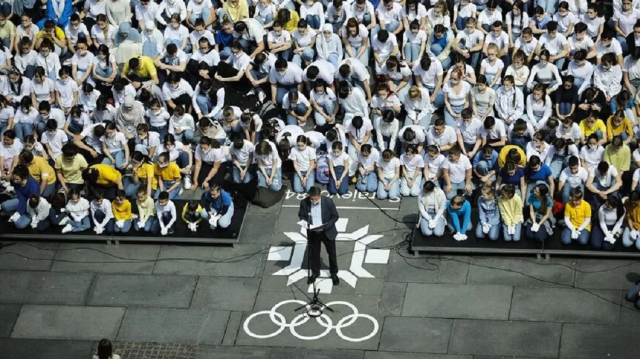
Bosnia remembers 1,601 children killed during siege of Sarajevo
1,425-day siege of Bosnian capital claimed more than 11,000 civilian lives amid shelling, sniper fire
6/05/2023 Saturday
Bosnia and Herzegovina on Friday commemorated 1,601 children killed during the siege of Sarajevo between 1992 and 1995.
A memorial service was held in the capital with the same number of students, representing the child victims.
Fikret Grabovica, president of the Association of Parents of Children Killed during the siege of Sarajevo, said the perpetrators were not punished and none of them were even prosecuted.
We aim to explain that the evil experienced should not occur to anyone, and peace and freedom are important for everyone, he added.
President of the War Victims Association Amerisa Ahmetovic said more work is needed to strengthen the commemoration culture. "The important thing in all this is to tell our children, future generations, what happened, to tell them constantly, to warn against the evils that occurred in the war," he said.
The children drew attention to the massacre by covering their mouths with pieces of white cloth.
The 1992 Bosnian War started with Serbian troops' siege of Sarajevo and left over 100,000 people killed.
Serb forces erected barricades all over Sarajevo, and the situation deteriorated with the bombing of the city on April 6, triggering the 1,425-day siege.
Thousands of civilians were targeted in countless massacres during the siege that would last until Feb. 29, 1996.
Civilians endured daily bombings and mortar attacks by Bosnian Serb troops as shoppers in the market, people waiting in bread lines, and children playing in schoolyards were also targeted indiscriminately.
During the nearly four-year siege, 11,541 civilians, 1,601 of whom were children, were killed, while more than 50,000 others got injured, records show.
According to estimates, an average of 329 mortar shells were fired on Sarajevo every day, with more than 500,000 bombs dropped in total.
Historical and cultural artifacts, along with infrastructure, in Sarajevo, which has hosted many civilizations throughout history, were also damaged during the prolonged blockade.
The bloody war in Bosnia and Herzegovina ended on Nov. 21, 1995, at Dayton Air Base in the US state of Ohio, with the agreement of the Bosniak, Serb, and Croat sides.


.jpg)


 Members of Pakistan's Sikh community protest after two Sikh men were killed by gunmen, in Peshawar in May 2022. | Reuters