It’s possible that I shall make an ass of myself. But in that case one can always get out of it with a little dialectic. I have, of course, so worded my proposition as to be right either way (K.Marx, Letter to F.Engels on the Indian Mutiny)
Friday, May 26, 2023
MICROPLASTICS & MICROFIBERS
“Sustainable” condenser tumble dryers create hundreds of tonnes of waterborne microfiber pollution
A new study has revealed that drying laundry using a condenser tumble dryer leads to hundreds of tonnes of potentially harmful microfibers being released into waterways and oceans across the UK and Europe.
IMAGE: EXAMINING MICROFIBERS COLLECTED ON THE DRYER LINT FILTERview more
CREDIT: PROCTER & GAMBLE
A new study has revealed that drying laundry using a condenser tumble dryer leads to hundreds of tonnes of potentially harmful microfibers being released into waterways and oceans across the UK and Europe.
Researchers from Northumbria University, worked in partnership with scientists at consumer goods giant Procter and Gamble on the study, which is published today (24 May) in the scientific journal PLOS ONE.
The team found that while condenser dryers may reduce the volume of airborne microfibers being released compared to vented dryers, they are still a significant contributor of waterborne microfiber pollution, with more than 600 tonnes of microfibers being poured down household drains.
Both types of tumble dryer produce microfiber pollution. Although recent studies have suggested that moving from vented tumble dryers to condenser dryers could reduce airborne microfiber pollution, their impact on waterborne microfiber pollution has been unknown until now.
While condenser dryers collect moisture from wet clothes into a container, rather than exhausting microfibers into the air as vented dryers do, the researchers found that condenser dryers in the UK and Europe still produce more than 7,200 tonnes of microfiber annually.
Although 91% of this is collected in the lint filter, which many consumers dispose of in their household waste, the remaining microfibers – a massive 641 tonnes, equivalent to the weight of more than 100 adult male African elephants – are collected in the condenser and poured down the drain. This makes condenser tumble dryers significant sources of microfiber water pollution.
However, some appliance manufacturers suggest that consumers should clean their lint filters under a tap. If consumers follow this guidance, it could lead to ten times more tonnes of microfibers entering our waterways. This means that the drying process is causing more waterborne microfiber pollution than the washing process.
To evaluate the environmental impact of condenser dryers, Professor John Dean, from Northumbria University’s Department of Applied Sciences, worked alongside researchers at Procter & Gamble to test loads of new, clean garments as well as dirty laundry sourced from volunteers in Newcastle upon Tyne. They collected and analysed microfibers from several components of each type of dryer.
“We have for the first time focused on microfiber release from vented and condenser dryers using real consumer laundry loads,” said Professor Dean, an expert in analytical science and environmental pollutants.
“It was found that most microfibers released from dryers is collected in the lint filter, thereby preventing release into the environment. However, when you realise that some manufacturers then recommend regular washing of the lint filter under a running tap, this contributes directly to an increase of waterborne microfibre pollution.
“After considering the environmental impact of current domestic household practices, a simple remedy is proffered. Instead of washing the lint filter under the tap after use in the tumble dryer, simply clean the filter either by hand, a light brush, cloth, or vacuum cleaner, and dispose of the collected fibres, as dry waste, in household waste. This simple and effective procedure can reduce microfibre release from tumble dryers and contribute to the protection of the global natural water environment.”
While extensive research has been carried out into the quantities of microfibers released down the drain by washing machines, historically, less has been understood about the release from tumble dryers.
However, in recent years, the spotlight has shifted from the washing machine to the tumble dryer because fibers also become released from textiles during the drying process.
The team is now urging the appliance industry, its trade associations, and legislators to recognise that all types of tumble dryer can be significant contributors to the problem of environmental microfiber pollution.
The researchers say that efforts are needed to mitigate this issue through revised usage instructions and improved appliance design.
Current plans to introduce microfiber filtration systems into washing machines are expected to reduce the environmental impact of that stage in the laundering process. This study suggests that similar approaches to tumble dryers is a logical next step.
Dr Neil Lant, a Research Fellow at P&G and their leading scientist on this study, added: “The contribution of washing machines to aquatic microfiber pollution has now been extensively studied and filtration technology is now being integrated into those appliances to mitigate the issue.
“Our recent work in collaboration with Northumbria University has recognised, for the first time, that the most important tumble dryer types used in Europe – condenser and heat pump – can also be significant contributors to aquatic microfiber pollution, especially if users wash lint filters in a sink.
“We do over 7 billion dryer loads in the UK and EU each year, with condenser dryers generating 7,200 tonnes of microfibre. We can prevent around 90% of that from causing water pollution by cleaning lint filters into household waste, but to deal with the rest we’ll need to redesign the air filtration systems in all types of dryers.”
Procter & Gamble has been working with analytical and forensic fibre science experts at Northumbria University for over six years to improve our understanding of microfibre release during washing and drying.
Fibers lost during the wear and care of textiles may pose a risk to the environment and human health when released into air and water. A study published in PLOS ONE by Neil J. Lant at Procter & Gamble, Newcastle Innovation Center, Newcastle upon Tyne, United Kingdom and colleagues suggests that while condenser dryers may reduce airborne microfibers compared to vented dryers, they are a significant contributor of waterborne microfiber pollution.
Recent studies have suggested that transitioning from vented tumble dryers to condenser dryers with no exhaust outlet could reduce airborne microfiber pollution. However, their impact on waterborne microfiber pollution is unknown. To evaluate the environmental impact of condenser dryers, researchers tested loads of new, clean garments as well as dirty laundry sourced from volunteers in Newcastle upon Tyne, United Kingdom. They collected and analyzed microfibers from several components of each type of dryer.
The researchers found that both dryer types produced microfiber pollution, including water pollution from rinsing lint traps in the sink. While condenser dryers are ventless and do not exhaust microfibers into the air, the lint filter, condenser, and condensed water are all significant sources of microfiber water pollution.
Future research is needed, however, to replicate the study using a larger sample size, as well as to explore strategies to sequester, dispose of, or eliminate laundry-based microfiber pollution.
According to the authors, “The appliance industry, its trade associations and legislators should recognize that all types of tumble dryer can be significant contributors to the problem of environmental microfiber pollution and begin efforts to mitigate this issue through revised usage instructions and improved appliance design. Current plans to introduce microfiber filtration systems into washing machines are expected to reduce the environmental impact of that stage in the laundering process, suggesting that reapplication of similar approaches to tumble dryers is a logical next step”.
Neil Lant, of Procter & Gamble, adds: “Our recent work in collaboration with Northumbria University has recognized, for the first time, that the most important tumble dryer types used in Europe (condenser and heat pump) can also be significant contributors to aquatic microfiber pollution, especially if users wash lint filters in a sink. We do over 2 billion dryer loads in the UK each year, generating around 2,000 tonnes of microfibre. We can prevent around 90% of that from causing water pollution by cleaning lint filters into household waste, but to deal with the rest we’ll need to redesign the air filtration systems in all types of dryers.
John Dean, of Northumbria University, adds: “By working collaboratively with the Procter & Gamble Newcastle Innovation Centre’s Dr. Neil Lant, and his colleagues, we have for the first time focused on microfibre release from vented and condenser dryers using real consumer laundry loads. It was found that the vast majority of microfibres released from dryers is collected in the lint filter, thereby preventing release into the environment. You realise that some manufacturers, however, then recommend regular washing of the lint filter under a running tap, which contributes directly to an increase of waterborne microfibre pollution. After considering the environmental impact of current domestic household practices, a simple remedy is proffered. Instead of washing the lint filter under the tap after use in the tumble dryer, simply clean the filter either by hand, a light brush, cloth, or vacuum cleaner, and dispose of the collected fibres, as dry waste, in household waste. This simple and effective procedure can reduce microfibre release from tumble dryers and contribute to the protection of the global natural water environment.”
Citation: Cummins AM, Malekpour AK, Smith AJ, Lonsdale S, Dean JR, Lant NJ (2023) Impact of vented and condenser tumble dryers on waterborne and airborne microfiber pollution. PLoS ONE 18(5): e0285548. https://doi.org/10.1371/journal.pone.0285548
Author Countries: UK
Funding: The study was entirely funded by the following three sources: The Worshipful Company of Launderers provided a grant to AMC through the Master (2022) of that institution and its Education Committee. No grant number was provided. The Worshipful Company of Launderers had no role in study design, data collection and analysis, decision to publish, or preparation of the manuscript. https://www.launderers.co.uk/. Northumbria University funded the study through employment of JRD and SL, and provision of consumables. Only the co-authors affiliated to this institution were involved in study design, data collection and analysis, decision to publish, and preparation of the manuscript. https://www.northumbria.ac.uk/. Procter & Gamble Technical Centres Ltd provided funding in the form of salaries for NJL, AKM and AJS and purchase of appliances and related laboratory consumables. In addition to NJL, AKM and AJS, another member of Procter & Gamble staff contributed to the study as described in the acknowledgements but only these individuals were involved in study design, data collection and analysis, decision to publish, and preparation of the manuscript. Procter & Gamble management gave approval to publish, but this process did not influence the text of the manuscript. https://www.pg.com/.
Impact of vented and condenser tumble dryers on waterborne and airborne microfiber pollution
ARTICLE PUBLICATION DATE
24-May-2023
COI STATEMENT
I have read the journal’s policy and the authors of this manuscript have the following competing interests: NJL, AKM and AJS are employed by Procter & Gamble Technical Centres Ltd, a wholly owned subsidiary of the Procter & Gamble Company. Procter & Gamble is a manufacturer of fabric care products such as laundry detergents, fabric conditioners and dryer sheets. This does not alter our adherence to all PLOS ONE policies on sharing data and materials.
Not so biodegradable: new study finds bio-based plastic and plastic-blend textiles do not biodegrade in the ocean
First-of-its-kind experiment off Scripps Pier finds only natural fibers degrade in the marine environment; plastic fabrics remain intact one year later
IMAGE: CAGE DESIGN USED FOR THE SEA SURFACE EXPERIMENT THAT TOOK PLACE OFF THE ELLEN BROWNING SCRIPPS MEMORIAL PIER AT UC SAN DIEGO'S SCRIPPS INSTITUTION OF OCEANOGRAPHY IN 2019.view more
CREDIT: SARAH-JEANNE ROYER
Plastic pollution is seemingly omnipresent in society, and while plastic bags, cups, and bottles may first come to mind, plastics are also increasingly used to make clothing, rugs, and other textiles.
A new study from UC San Diego’s Scripps Institution of Oceanography, published May 24 in the journal PLOS One, for the first time tracked the ability of natural, synthetic, and blended fabrics to biodegrade directly in the ocean.
Lead author Sarah-Jeanne Royer conducted an experiment off the Ellen Browning Scripps Memorial Pier and found that natural and wood-based cellulose fabrics degraded within a month. Synthetic textiles, including so-called compostable plastic materials like polylactic acid (PLA), and the synthetic portions of textile blends, showed no signs of degradation even after more than a year submerged in the ocean.
“This study shows the need for standardizing tests to see if materials promoted as compostable or biodegradable actually do biodegrade in a natural environment,” said Royer, who performed the research while a postdoctoral scholar in the Dimitri Deheyn laboratory at Scripps Oceanography. Royer currently remains affiliated with Scripps Oceanography as a visiting scholar from Hawaiʻi Pacific University. “What might biodegrade in an industrial setting does not necessarily biodegrade in the natural environment and can end up as marine and environmental pollutants.”
Startling images of landfills stacked with mountains of thrown away clothing in Chile and Kenya show the global ramifications of fast fashion. An estimated 62 percent of textiles— 68 million tons — are now made from plastic fibers and plastic blends, which can persist in the environment for decades to centuries. Synthetic textiles also create plastic pollution from microfibers shedding during regular wearing and washing. Most washing machines are not designed to filter for microfibers, that then end up in wastewater, and ultimately the ocean.
Bio-based plastics made from renewable natural resources such as cornstarch or sugar cane have been marketed as a potential solution to the plastic problem. PLA is one such polymer in the bio-based plastics market, often labeled as biodegradable and compostable. The team chose this textile for the study given its extensive use as a replacement for oil-based materials.
For the experiment, ten different types of fabrics were used including wood-based cellulose (known commercially as Lyocell, Modal, and Viscose); natural cellulose (organic virgin cotton and non-organic virgin cotton); bio-based plastic (PLA); oil-based plastic (polyethylene terephthalate and polypropylene), and fabric blends of Lyocell mixed with polyester and polypropylene. All these are commonly used in the textile industry. Polyethylene terephthalate is a type of polyester often marketed as a recycled textile. Polypropylene is used in textiles, carpets, geotextiles, packaging materials, and disposable medical textiles such as masks.
The textile samples were placed in flow-through containers deployed both at the sea surface and at the seafloor approximately 10 meters (32 feet) deep. Samples were examined every seven days with images taken, and small pieces removed from duplicate samples for further examination in the lab. This included scanning electron microscopy to examine the fibers at high resolution, and Raman spectroscopy to gain information about the chemical composition and molecular structure of the fibers. The samples were then submerged again, in a process that lasted for 231 days at the sea surface and 196 days at the seafloor.
After the conclusion of the Scripps Pier experiment, the samples were moved to the Experimental Aquarium at Scripps Oceanography, where samples were exposed to controlled conditions of flowing seawater. While the natural, cellulose-based textiles repeatedly disintegrated in 30-35 days, the oil-based and bio-based materials showed no sign of disintegration even after a total of 428 days.
“The natural, cellulose-based materials would disintegrate in about one month, so we would exchange for a new sample after the old one disintegrated,” said Royer. “The natural samples were replicated five times, while the plastic samples remained the same for more than a year.”
Examining the samples via electron microscopy allowed Scripps marine biologist Dimitri Deheyn, senior author of the study, to measure the size and structure of each fiber. The natural fibers became thinner with time, while the diameter of the plastic fibers remained the same showing no sign of biodegradation. Study co-author Francesco Greco performed the Raman spectroscopy analysis at the Department of Geology of Northwest University, China, looking at the structural-chemical degradation of the fibers. Greco, now at the Weizmann Institute of Science, found significant changes in the chemical fingerprint of the cellulose-based materials, while bio- and oil-based plastics remained unchanged.
Fiber blends, which interweave natural fiber strands with bio- or oil-based plastic strands, are often promoted as a more sustainable alternative to textiles made entirely from synthetic plastics. This study showed, however, that only the natural part of the fiber degraded, with the plastic portion of the blend remaining intact.
Additionally, the same type of fabrics were tested in a closed-system bioreactor by an independent company, which replicates a marine environment in an enclosed, indoor system. The bioreactor allowed measurements of the percent of carbon dioxide produced by microbial activity using the fabrics as nutrients, which was thus used as a proxy for measuring biodegradability. The cellulose-based materials showed complete biodegradation within 28 days, whereas the oil-based and bio-based fibers did not show any sign of biodegradation.
Study authors note that the bio-based polylactic plastic, marketed as an ecologically promising material, and the oil-based polyethylene terephthalate and polypropylene, represent an important source of human-caused pollution, and the fate of how these materials act in a natural environment should be further explored.
"This comparative study highlights how crucial our language is around plastics,” said Deheyn. “Indeed, a bioplastic like PLA, commonly assumed to be biodegradable in the environment because it contains the prefix ‘bio,’ is actually nothing like that."
Given these results, Royer and the team hope consumers will become more aware of the power of their own choices
“Consumers who are concerned about microfiber plastic pollution should be mindful of the materials they are buying,” said Royer. “We should all aim to buy fewer garments, opt for high-quality, cellulose-based materials like cotton, merino or wool that will last longer, or look to more circular and sustainable options that repurpose items like clothing swaps and Buy Nothing groups.”
The study was funded by the Biomimicry for Emerging Science and Technology (BEST) Initiative from the Deheyn lab with contributions from Lenzing, The Walter Munk Foundation for the Oceans, and Preserve Calavera. The Raman analysis was supported by the Young Thousand Talents Plan of China.
In addition to Royer, Deheyn and Greco, Michaela Kogler from Lenzing is a co-author of the study.
Deployment of the sea surface experiment that took place off the Ellen Browning Scripps Memorial Pier at UC San Diego's Scripps Institution of Oceanography in 2019.
CREDIT
Dimitri Deheyn
Figure 1 graphic showing disintegration time in days for five selected types of material exposed to coastal waters at the Ellen Browning Scripps Memorial Pier located at UC San Diego's Scripps Institution of Oceanography in La Jolla, California.
CREDIT
Royer, et al.
JOURNAL
PLoS ONE
METHOD OF RESEARCH
Experimental study
SUBJECT OF RESEARCH
Not applicable
ARTICLE TITLE
Not so biodegradable: polylactic acid and cellulose/plastic blend textiles lack fast biodegradation in marine waters
ARTICLE PUBLICATION DATE
24-May-2023
A popular compostable plastic doesn’t break down in the ocean
“Biodegradable” is a misleading term for plastic substitutes that require heat to break down or industrial compositing conditions
A widely used compostable plastic persists unchanged in marine environments for at least 14 months, according to a new study in the open-access journal PLOS ONE by Sarah-Jeanne Royer and colleagues from Scripps Institution of Oceanography at the University of California, San Diego. The study highlights the distinction between textile materials that can be composted in a controlled, industrial setting (PLA), and the ones that can undergo biodegradation in natural environments (cellulose-based textiles).
The accumulation and persistence of oil-based plastic waste in the ocean is one of the major ecological problems facing marine life. Macroscopic plastic items, such as discarded water bottles, that enter the ocean may persist for decades in their original form; even when they break up into microscopic pieces, called microplastics, they are not biodegraded, but instead remain undigestible pollutants that permeate the oceans.
In recent years, substitutes have been developed to replace oil-based plastics, with the intention of both reducing fossil fuel use in creating plastic goods, and providing a more environmentally benign waste product when the item is discarded, through composting.
One of the most popular substitutes is polylactic acid (PLA), a polymer of lactic acid derived from fermentation of sugars and starches. PLA will break down back into lactic acid at the high temperatures found in very large compost piles; however, it does not do so reliably or quickly in colder conditions.
To examine the fate of PLA in a natural marine environment, the authors submerged samples of PLA, along with samples of oil-based materials, cellulose-based materials, and blend of cellulose-based and oil-based materials, in cages in the coastal waters off La Jolla, California. Samples were examined weekly for evidence of disintegration and returned to the ocean after a few hours.
The authors found that the cellulose-based material degraded quickly, in less than one month. Laboratory chemical analysis confirmed that the cellulose had been largely broken down by biological processes through CO2 production, not simple mechanical wear. In contrast, neither the oil-based plastic, the blend, nor the PLA showed signs of degradation throughout the 14 months of the experiment.
“Our results indicate that compostability does not imply environmental degradation,” Royer said. “Referring to compostable plastics as biodegradable plastics is misleading as it may convey the perception of a material that degrades in the environment. PLA-based plastics must be composted in appropriately controlled facilities in order to achieve their potential as compostable substitutes for oil-based plastics.”
The authors also add: “This work represents one of the few pioneer studies addressing the comparability between the biodegradability of different material types (natural to fully synthetic and bio-based materials) in natural environmental conditions and controlled closed systems. This study shows the need for standardizing tests to see if materials promoted as compostable or biodegradable such as PLA actually do biodegrade in a natural environment. In this case, consumers who are concerned about microfiber plastic pollution should be informed, knowledgeable and mindful of the materials they are buying.”
Citation: Royer S-J, Greco F, Kogler M, Deheyn DD (2023) Not so biodegradable: Polylactic acid and cellulose/plastic blend textiles lack fast biodegradation in marine waters. PLoS ONE 18(5): e0284681. https://doi.org/10.1371/journal.pone.0284681
Author Countries: USA, Israel
Funding: This work is being supported by the Deheyn lab BEST Initiative (Biomimicry for Emerging Science and Technology Initiative), which is a platform for facilitating the interaction between academia and industry for fundamental research on nature-inspired solutions." The funders can contribute to brainstorming about the study design to address specific questions, but have no role in data collection and analysis, and decision to publish. The funders can sometimes (if requested) be involved in brainstorming about interpretation of data outcome, which inherently can contribute to some extent to the preparation of the manuscript. Otherwise, the funders have no role in directing the publication with regards to its presentation, data content and conclusion. As a courtesy and if requested, drafts of the publications can be shared with the funders to show progress in the publishing process. For the Raman analyses, financial support was provided to FG from the Young Thousand Talents Plan of China (Grant Number 41720104002) and the funders in this case had no role in the study design, data collection and analysis, decision to publish, or preparation of the manuscript.
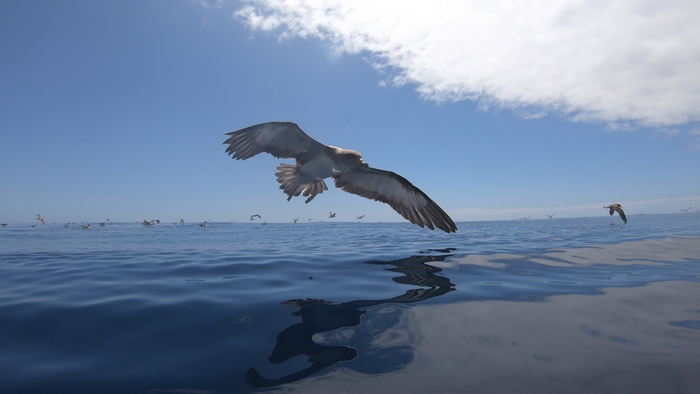
IMAGE: CORY´S SHEARWATERS FORAGING SOUTH OF THE ISLAND OF PICO, AZORES ARCHIPELAGO, PORTUGAL. CREDIT: CHRISTOPHER PHAM / PUFFIN CENDRÉ À LA RECHERCHE DE NOURRITURE AU SUD DE L’ÎLE DE PICO, DANS L’ARCHIPEL DES AÇORES, AU PORTUGAL. PHOTO : CHRISTOPHER PHAMview more
CREDIT: CHRISTOPHER PHAM
Scientists have been worried about the potential harms of microplastics for years. These small plastic particles less than 5 mm in length have been found everywhere because of plastic pollution – from the Earth’s deep oceans to remote regions in Antarctica, and even the seafood we eat. But, are microplastics really harmful?
An international team of scientists, including researchers from McGill University, have found evidence that microplastics in the digestive tract of seabirds altered the microbiome of the gut – increasing the presence of pathogens and antibiotic-resistant microbes, while decreasing the beneficial bacteria found in the intestines.
“Our findings reflect the circumstances of animals in the wild. Since humans also uptake microplastics from the environment and through food, this study should act as a warning for us," say the authors.
“The gut microbiome encompasses all the microbes in the gastrointestinal tract, which help control the digestion of food, immune system, central nervous system, and other bodily processes. It’s a key indicator of health and well-being," says Julia Baak, co-author of the study and a PhD Candidate in the Department of Natural Resource Sciences at McGill University.
To gain a better understanding of how species are affected by diets chronically contaminated with microplastics, the scientists examined the gut microbiome of two seabird species, the northern fulmar (Fulmarus glacialis) and the Cory's shearwater (Calonectris borealis) that live mainly on the high seas and feed on marine mollusks, crustaceans, and fish.
“Until now there was little research on whether the amounts of microplastics present in the natural environment have a negative impact on the gut microbial health of affected species,” says Gloria Fackelmann, who conducted the study as part of her doctoral thesis at the Institute of Evolutionary Ecology and Conservation Genomics at Ulm University in Germany.
In studying the seabirds, the researchers discovered that microplastic ingestion changed the microbial communities throughout the gastrointestinal tract of both seabird species. “The more microplastics found in the gut, the fewer commensal bacteria could be detected. Commensal bacteria supply their host with essential nutrients and help defend the host against opportunistic pathogens. Disturbances can impair many health-related processes and may lead to diseases in the host,” says Fackelmann.
According to the researchers, most studies exploring the impact of microplastics on the microbiome are done in labs using very high concentrations of microplastics. “By studying animals in the wild, our research shows that changes in the microbiome can occur at lower concentrations that are already present in the natural environment,” says Fackelmann.
Northern fulmars attend their nest on the eroding rock face of Prince Leopold Island, Nunavut. Credit: Mark Mallory / Les fulmars boréaux surveillent leur nid sur une paroi rocheuse érodée de l’île Prince Léopold, au Nunavut.
Photo : Mark Mallory
Northern fulmars in Arctic Canada return to their colonies in early May, often when nests are still snow-covered, and go through ritualized pair-bonding with their lifelong mates. Credit: Mark Mallory / Les fulmars boréaux de l’Arctique canadien retournent dans leurs colonies au début de mai, quand les nids sont souvent encore couverts de neige, et se livrent à un rituel de couple avec leur partenaire de vie.
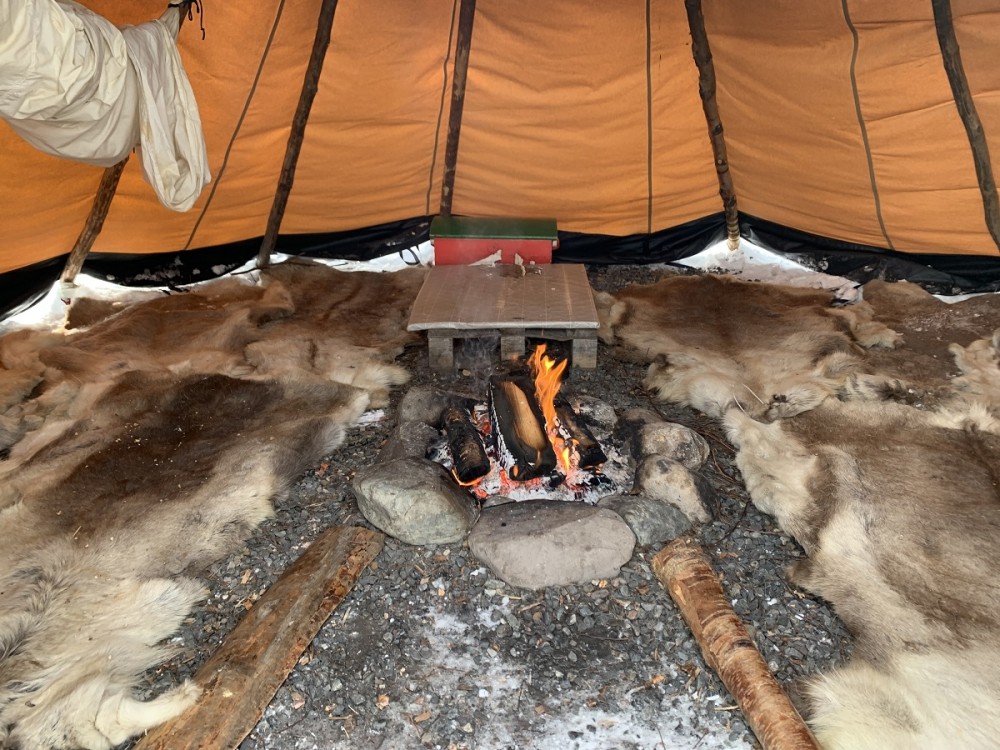
It’s a mild winter morning in the Arctic Norwegian town of Alta, but at the Altta Siida kindergarten, it’s a hub of activity. Outside, snowsuit-clad children run and play in the snow. The grounds are dominated by the school’s lavvu, a traditional Sami shelter. Inside, reindeer skins line the ground around an open fire. Throughout the morning, children dart in and out of the tent, playing, eating their morning snacks and giggling with a caregiver.
“We had the [lavvu] before, but until the SaMOS project, we just didn’t use it,” Karen Anne Marit Buljo, one of the school’s assistants, said. “But now, we do. The children eat here, they play here and they’re allowed to come here anytime they want. And many prefer to be here.”
The Sami manat odda searvelanjain – Sami children in new education rooms project, known as SaMOS, started in 2017 to provide culturally relevant early childhood education for Sami children.
The project had a clear and specific immediate goal: to prioritize Sami language and traditions in this education. But those involved in the project say it was also about something much bigger—challenging the legacy of colonialism in Indigenous education in Sapmi, the traditional Sami homeland in northern Europe, and help undo the decades of Sami language loss.
“It hasn’t always been easy to talk about the word ‘decolonization’ in Sapmi, even amongst Sami, because we’ve all been through the Swedish, Norwegian and Finnish education systems and have been taught in those schools that the Nordic countries are completely democratic and that there’s no colonization at all,” Ol-Johan Sikku, the SaMOS project leader, said. “But that’s changing, and now we can talk about it in a way we couldn’t before.”
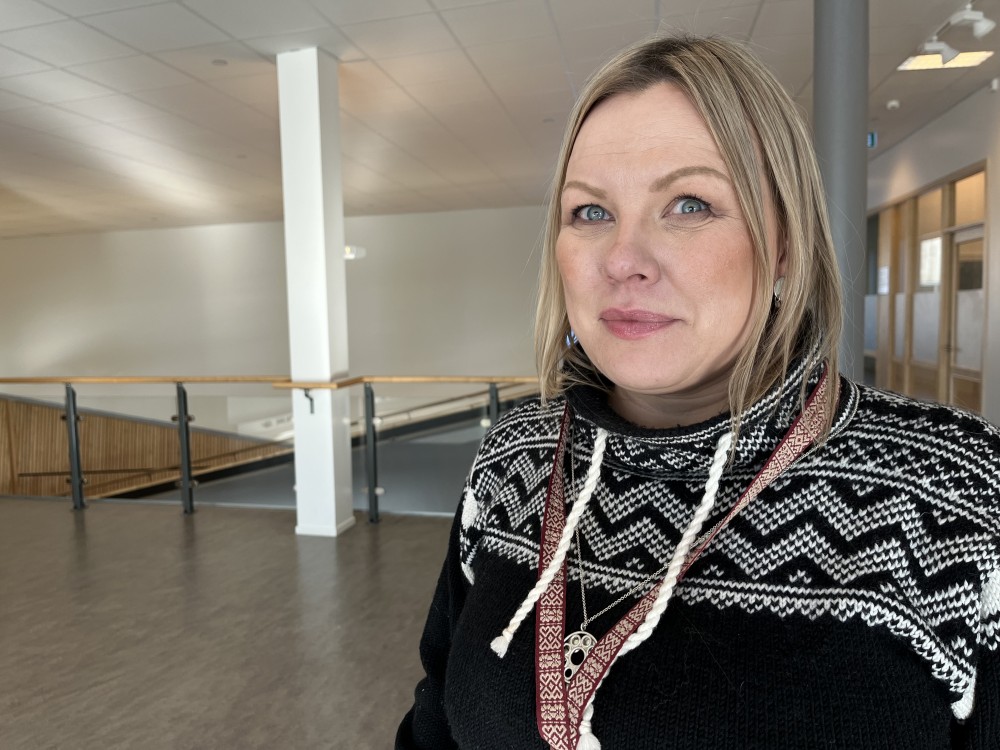
Ol-Johan Sikku. Photo: Eilis Quinn
You can’t teach Sami language and culture through the Norwegian language and education system. We have to go back to how our language and culture was successfully transmitted from generation to generation for thousands of years. Ol-Johan Sikku, the SaMOS project leader
Sami languages in danger
The Sami are an Arctic Indigenous people. There is no census just for Sami but their numbers are estimated to be between 100,000 to 150,000. Their traditional homeland stretches across Arctic Finland, Sweden, Norway and Russia’s Kola Peninsula.
There are many Sami cultures including livelihoods based on the sea, hunting and reindeer herding, or combinations of all three. Traditionally, many Sami migrated east to west with the seasons in the Nordic region. The closure of national borders in the 1800s and first half of the 1900s caused hardships for many, both splitting up families into different countries as well as cutting herders off from seasonal grazing areas they were no longer allowed to travel to.
Policies in Sweden, Finland, Norway and Russia also often involved the education system and church discouraging or actively suppressing Sami languages and culture and forcibly assimilating Sami children into the dominant culture, something that continues to negatively impact Sami languages and education today.
There are numerous Sami languages and dialects spoken across the Sami homeland but according to UNESCO, all are in danger. Their classifications range from “definitely endangered” for North Sami, the most widely spoken Sami language with most estimates averaging around 25,000 speakers; to “critically endangered” for Pite Sami which is said to be extinct in Norway but is believed to still have around 30 speakers in Sweden.
Mikkel Mikkelsen is a member of the Sami Parliament in Norway. Photo: Eilis Quinn
SaMOS is the first project that’s connected the Sami Parliament, the university, and the kindergartens together talking about this education, and that’s historical for us.Mikkel Mikkelsen, an MP in the Sami Parliament in Norway
Mikkel Mikkelsen, an MP in the Sami Parliament in Norway, says a laser-focus on early childhood education, like with the SaMOS project, is needed to help turn things around.
“There’s a 60 per cent drop out rate in some Sami language subjects, and there’s anecdotal experience that some Sami students are not full Sami speakers when they finish secondary school,” Mikkelsen said. “If the numbers of students stay at the levels they are today, we expect a decline of Sami speakers by 60 per cent in the future.
“The Sami language has to be taught in early childhood or chances are very slim of catching up later.”
“Responsibility is an important part of bringing up Sami kids.”
The SaMOS project involved both the Sami Parliament in Norway, which funded the initiative with 5-million krone a year (approximately $645,000 CDN) and the Sami University of Applied Sciences, located in the Arctic Norwegian village of Kautokeino, referred to locally by its Sami name Guovdageaidnu.
The project was piloted in four Norwegian kindergartens of which Altta Siida was one.
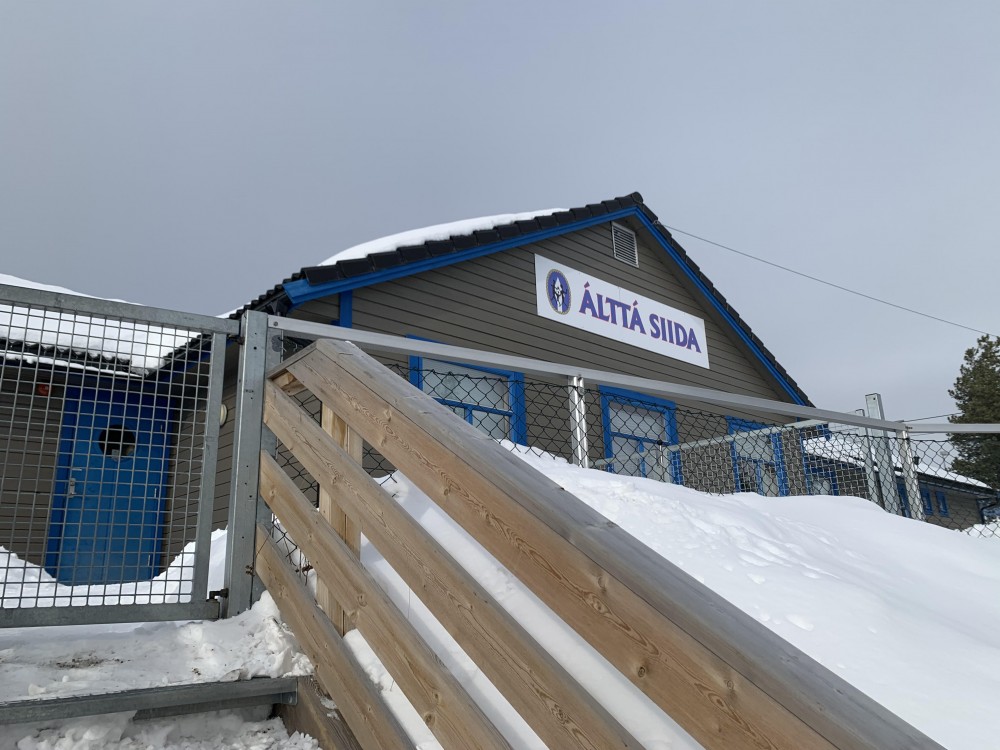
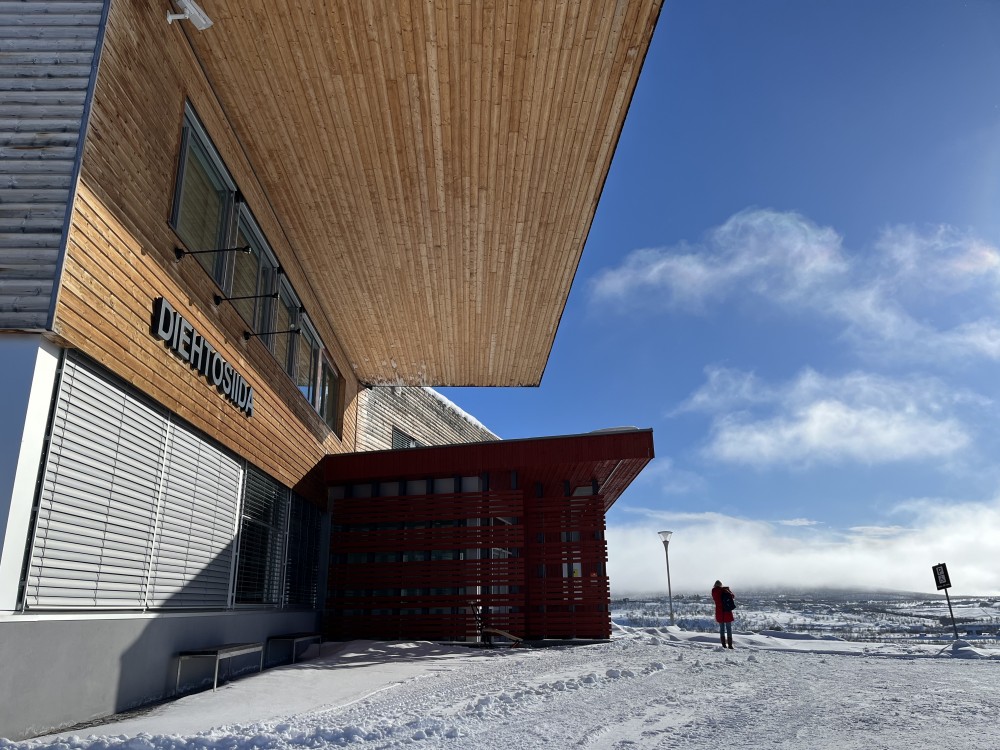
Álttá Siida. Photo: Eilis Quinn
The SaMOS project has awakened our thinking to be more conscious of working with the Sami pedagogy.Per Isak Vars, a pedagogical leader at Altta Siida
Altta Siida has 47 children, six years old and younger, and 15 employees and uses North Sami as the language of instruction.
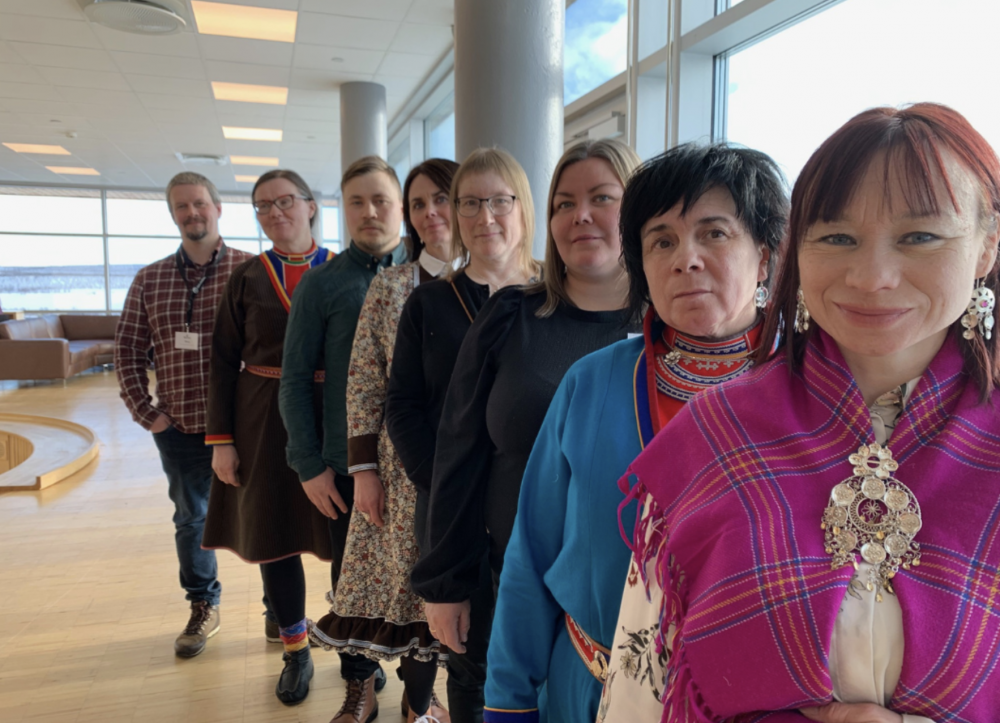
In March, Buljo, along with two colleagues from Altta Siida, presented their experiences with SaMOS at the Sami University of Applied Sciences along with the other three participating schools: Veajage, a kindergarten in Drag, a village in the Lule Sami area of northern Norway, Suaja Maanagierte located in Snana, a South Sami kindergarten in central Norway, and Badjemanaid Beaiveruoktu located in the Arctic community of Karasjok, 18 kilometres from the Finnish border.
The three-day conference was devoted to exploring experiences with the initiative, their implications for early childhood education and how the findings may be further implemented.
“Without this SaMOS project I don’t think we’d have been working the way we did and teaching the kids traditional work,” Per Isak Vars, a pedagogical leader at Altta Siida told the conference.
“The SaMOS project has awakened our thinking to be more conscious of working with the Sami pedagogy.”
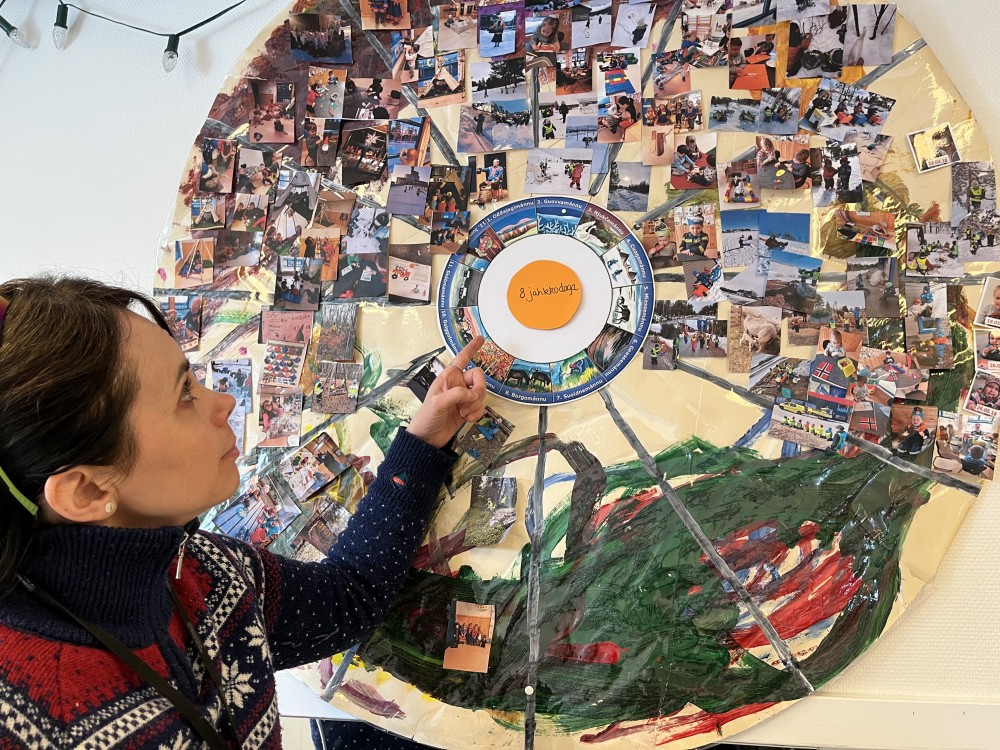
Altta Siida’s Karen Anne Marit Buljo points to a Sami wall calendar where the school posts pictures of their students’ activities throughout the different seasons. Photo: Eilis Quinn
Buljo said that putting Sami ways of instructing front and centre left a huge mark.
“We gave them responsibility and showed them trust when we chopped wood, made fire in the lavvu and realized the kids should make the fire themselves,” she said. “Before they would only be involved indirectly because we were worried about what the parents would say if the kids were playing with the fire, but now we know this kind of responsibility is an important part of bringing up Sami kids.”
The vocabulary and language skills learned by doing traditional Sami activities is hard to overstate, she said.
“We even had one child that didn’t speak Sami when he came, but now he’s started to. It’s good to see there’s hope for those kids, even if they don’t speak Sami in the beginning.”
Reindeer skins and a fire inside of Altta Siida’s lavvu. Photo: Eilis Quinn
The guiding philosophy for SaMOS was to build it from the ground up based on Sami values and ways of thinking. This started from the beginning with everything from how the project arrangement was officialized, to how it was discussed with the kindergarten employees, to how it was implemented in the classrooms.
The agreement between the Sami Parliament in Norway and the university, was signed and placed in a giisá, a traditional Sami box that holds a family’s valuables, before it was archived in the computer system.
“Yes it’s symbolic, but we were all aware that this project from beginning to end must be in the Sami way, and not the normal western structure and hierarchy,” Sikku said. “As far as we know, this type of project has never been organized this way before.”
A reindeer in Máze, Norway. Not all Sami children have access to traditional activities and the school system can play an important role in helping Sami children connect with their culture, say educators. Photo: Eilis Quinn
Anne Ingebjorg Svineng Eriksen, a teacher in Sami pedagogics at the Sami University of Applied sciences, was one of the people who worked with the kindergarten educators on the project.
Eriksen said even at the beginning stages, they realized they had to reorganize the way they were sharing information.
“Our first SaMOS session to the kindergarten employees consisted of lectures with one Power Point presentation after another, and we quickly discovered that this form of teaching did not work very well,” Eriksen said.
“A form of teaching based on Sami values and thinking is to provide space for self-reflection, discussions and active participation. Narratives and stories from day-to-day kindergarten were a better way to do this and are more in line with Sami values and understanding.”
Photo: Eilis Quinn
Decolonization is not just a process between the state and the Sami, it’s also a process we need to undertake inside us in order to decolonize our minds.Laila Susanne Vars, the rector of the Sami University of Applied Sciences
An important part of the SaMOS project was also getting the kindergarten workers to reach back into their own childhoods and think of how Sami language and culture had been transmitted to them.
“We’re building strong education institutions, but we still have a way to go in believing in our own strong Sami pedagogical thinking in the way we teach, and in the way we were taught by our grandparents,” Laila Susanne Vars, the rector of the Sami University of Applied Sciences, said.
“We need to systemize it, do research on it, and implement it into our schools and make sure we’re proud of it, so we can use that as a foundation for our dialogue with ministries and use that framework for all that we do.”
Photo: Eilis Quinn
I was very excited that my son got to be part of it.David Labba, a pedagogical leader at Altta Siida, whose four year-old son Joel Ante was part of the SaMOS project.
David Labba, a pedagogical leader at Altta Siida, stressed the significance of SaMOS lessons in shining a light on Indigenous language and practices within a dominant culture
“It’s easy, even for a kindergarten like us that was already strong on Sami language and activities, to be influenced into maybe Norwegian or western ways of thinking or doing things, just because the culture is so omnipresent on TV and iPads and everywhere,” Labba said.
“You don’t even realize it until one day you sit down and realize ‘Wait, that’s not the way we should work and teach our kids here.’”
Labba said examples range from concrete things like prioritizing making Sami decorations for the classrooms that teach children about their culture and associated vocabulary, to more abstract things like putting less focus on the individual and instead stressing the collective and working together to solve problems whether in an activity or if a child is upset.
Labba, whose son Joel Ante, 4, was in the SaMOS class, said he was thrilled with the project both as an educator and as a parent.
“I was very excited that my son got to be part of it.”
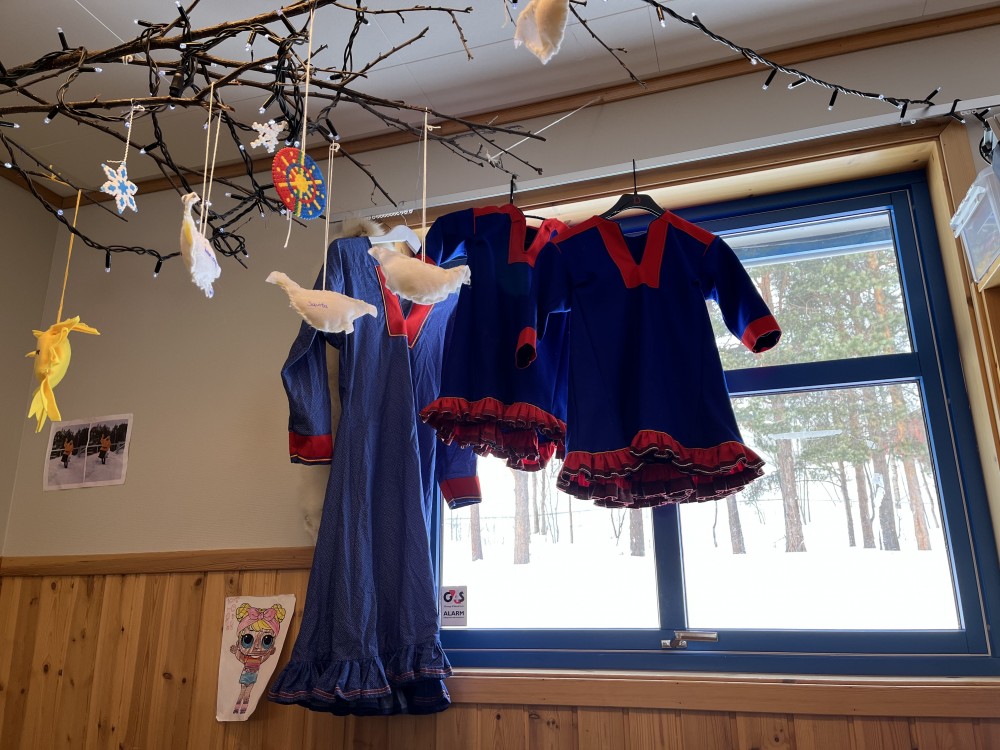
Sami clothes are located throughout Altta Siida and are accessible to the children whenever they want. Photo: Eilis Quinn
Laila Susanne Vars highlighted SaMOS’ strength in promoting individual teachers’ childhood experiences, and teachings from elders and community members.
“The Norwegian, Finnish and Swedish education systems very much influence the way we think about education, teaching and pedagogical teaching at universities,” she said.
“That’s why decolonization is not just a process between the state and the Sami, it’s also a process we need to undertake inside us in order to decolonize our minds and start rethinking our own education system to incorporate Sami values, ways of thinking and traditional knowledge in everything we do.”
SaMOS’s leader Ol-Johan Sikku agrees, saying early childhood education steeped in Sami culture and language is one of the best bulwarks against assimilation, by giving children pride and teaching them to value their Indigenous heritage. He says that’s part of what made working on SaMOS so meaningful to him, both professionally and personally.
“I grew up in a traditional family on the Swedish side of Sapmi, studied economics at Umea University and was engaged in different things like organizing the Sami parliament in Sweden and it was all really nice,” Sikku said.
“But I felt something was wrong and realized later it’s because I had high status in the Sami community, not because of my skills as a Sami, but because I had Swedish manners and a Swedish education. In my opinion, this is wrong and is not how it should be.”
Working cross-border
At the beginning of the project, the Sami parliaments in Finland and Sweden applied for EU funding to launch SaMOS in their countries simultaneously with Norway, but their applications were denied.
Now that the pilot portion of the project has wrapped up, next steps include developing ways to easily share the SaMOS findings and processes, not only across Norway, but eventually in Finland and Sweden as well.
Annika Pasanen, a professor of Sami sociolinguistics at the Sami university, was involved in a working group that submitted a report used in the SaMOS project on the importance of strong language models for language learning.
The Sami University of Applied Sciences in Kautokeino/Guovdageaidnu, Norway. Photo: Eilis Quinn
She said efforts need to continue to standardize Sami pedagogical terms.
“Nowadays, “language immersion” can refer to basically anything in practice, from one hour a week language learning to total immersion and “In the context of language planning, it’s very harmful because educators, parents, politicians etc have to understand that in language acquisition, certain methods can lead to certain results,” Pasanen said. “For instance, one hour a week can lead to mostly symbolic learning of an endangered language, whereas total immersion enables effective acquisition and intergenerational language transmission.
“We should have common concepts of Sami early childhood education all over Sapmi. Everyone should know what “Sami kindergarten” or “language immersion” or “language nest” means, what the role of Sami language is, which methods are used, what kind of results are to be expected and they should be understood and systematically used in all Sapmi.”
Filling the teacher shortage
Photo: Eilis Quinn
Currently, there are two Sami language high schools in Norway, one in Kautokeino/Guovdageaidnu and one 125km east in the village of Karasjok. Together, they graduate approximately 100 Sami-speaking students a year.
Sami education experts say there’s high competition for those graduates amongst post-secondary institutions and attracting a portion of them to education careers is a challenge.
“A lot of young people don’t want to be here because it’s too small, they want to go to Tromso or Oslo for their education and it’s not always possible to get them to come back,” Sikku said.
Vars agrees.
“Here at the Sami university we’re trying to recruit as many students as possible to the Sami teacher education because we really need them,” she said. “But we often find ourselves in competition with other institutions.”
Truth and Reconciliation
A landscape in Kautokeino/Guovdageaidnu, Norway. Photo: Eilis Quinn
Vars says that initiatives like SaMOS are important reminders of what can happen when Sami people and institutions at all levels pull together, something especially important as Norway goes through the Truth and Reconciliation process. (The final report is expected to be released in June.)
Separately run Truth and Reconciliation Commissions are also underway and at varying stages in both Sweden and Finland.
“It’s a challenge addressing Truth and Reconciliation through three separate processes because it doesn’t take into consideration that we’re living in four different nation states, with different legislation and policies,” Vars said.
She says this, among other issues, leads to disparities in Sami language and education even within small geographical areas.
“Because of the border closures, you can have a family with one part living on the Swedish side of Sapmi and another part on the Norwegian side, but that one family faces different regulations and rights when it comes to education for instance.
“So when it comes to the importance of “samifying” education, and people ask if it’s really worthwhile, the answer is ‘Yes’. SaMOS is a perfect example of what happens when you put together the Sami Parliament, the Sami university, the Sami kindergartens and the municipalities and have a very powerful unity and collaboration. If we could also do this when it comes to other things like hunting and fishing and other rights issues I think it would be more difficult for the state to divide and conquer us.
“We’ve had our share of that, but now it’s time to have a strong front.”
This story is posted on the Barents Observer as part of Eye on the Arctic, a collaborative partnership between public and private circumpolar media organizations.
Translating Swahili language and knowledge in colonial and post-colonial Tanzania
In the 1940s, a student from Kenya named James Gekonyo applied to the Chemistry Department of Makerere University in Uganda. When his admissions interviewers asked him to explain the difference between a solid, liquid, and gas, Gekonyo said: “I can hold a solid in my hand and it will stay there; a liquid will run to the floor, and I cannot hold a gas at all.” Gekonyo was denied admission—his answer was deemed “silly” by the interviewers.
Swahili has been a recorded written language for centuries and traces its roots back over 1,200 years, but colonial-era European academics became interested in the language because they inaccurately believed it represented an early stage of linguistic development. Despite this perception, when British missionaries began working on Zanzibar, they soon set to learning Swahili. They devised a way to write it in Latin script and produced dictionaries and a language handbook, learning the language from—among others—an eminent Islamic jurist, his associates, and the mission’s students. Translation occurred through this web of interlocuters who suggested, affirmed, and revised word lists until all understood.
Yet even as missionaries attempted to codify Swahili, their students shaped it to fit their needs. Robinson cites, for example, the word “kuchenja”—a hybrid the students created of the English word “to change” and the Swahili verb prefix “ku-.” This “linguistic flexibility and creativity,” Robinson writes, demonstrates “that translation was rarely as simple as moving between a source and a target language—both of which were perpetually in flux.”
As Britain consolidated its colonial rule in the 1920s, the administration formed a committee to standardize written Swahili into a “developed” language. It sought to insert the language of science into Swahili (deemed impossible by some) while creating dictionaries and coining new words. The committee was occasionally “confronted by the fact that not only is language a moving target, but so, too, is knowledge.”
With the dawn of the independence era, translation problems and solutions began to be framed differently, Robinson writes. Tanzania’s first president Julius Nyerere used Swahili as an anti-colonial rallying cry and symbol, stressing the connection between the language and the nascent nation. Swahili proved to be a potent national symbol and provided some solutions to translation problems experienced during the missionary and colonial eras. The author of a science column published in the newspaper Mambo Leo shortly before independence wrote effusively about new technology, clearly demonstrating that the colonial concern that Swahili couldn’t convey such complexity was a moot point. Yet a later column confronted the issue of knowledge translation, describing how nature can still astonish the experts, sometimes anticipating the wonders and amazement of technological change.
In the paper’s conclusion Robinson emphasizes the role power plays in translation, setting the parameters for what language and expertise was accepted. Writing of ongoing efforts to translate scientific research into African languages and to bring research conducted in Africa onto an equal playing field with the rest of the world, Robinson writes: “Such initiatives are at once hopeful signs of progress and frank reminders that certain communicators of knowledge continue to confront familiar and damaging barriers and that stark inequalities persist in the current global landscape of knowledge production and communication.”
The ongoing development of the Stabroek Block by the Exxon-led consortium will deliver a tremendous economic and financial windfall for Georgetown.
The IMF forecasts a 37% y-o-y GDP growth for Guyana for 2023.
ExxonMobil’s Yellowtail project is expected to commence operations during 2025 and will boost Guyana’s oil production to nearly 900,000 barrels per day.
The impoverished South American micro-state Guyana is in the midst of an epic oil boom which has seen the former British colony emerge as the hottest frontier offshore drilling region. The ensuing economic boom created by surging oil production saw Guyana emerge as the world’s fastest growing economy reporting stunning double-digit GDP since 2020, which hit an incredible 62% for 2022. Guyana’s petroleum production has expanded at a stunning clip, growing from less than 100,000 barrels a day in early 2020 to nearly 400,000 barrels per day by the end of March 2023. Despite recent negative developments, Guyana’s epic oil boom will continue gaining momentum for at least another decade with the country on-track to be pumping 1.2 million barrels a day by 2027. Recent events point to further oil discoveries being made and that energy investment will continue growing both of which will boost Guyana’s reserves and oil production.
It is U.S. energy supermajor ExxonMobil, and consortium partners Hess and CNOOC, which is at the heart of Guyana’s burgeoning oil boom. The integrated oil company has made over 35 oil discoveries in the 6.6-million-acre offshore Stabroek Block where it holds a 45% working interest and is the operator. Those have endowed Exxon and its partners with estimated oil resources of over 11 billion barrels. The supermajor continues to make discoveries in the Stabroek Block as it progresses its latest drilling campaign.
The last discovery, which is the second for 2023 after the Fangtooth SE-1 well, was announced toward the end of April 2023. Exxon found oil with the Lancetfish-1 wildcat well which is located approximately four miles to the southeast of the January 2022 Fangtooth-1 discovery. Lancetfish-1 was drilled to a depth of 5,843 feet or 1,780 meters and found 92 feet, 28 meters of oil-bearing sandstone. According to Alistair Routledge, president of ExxonMobil Guyana, the discovery “demonstrate(s) the Stabroek block’s continued exploration potential”. It points further oil discoveries being made despite the Kokwari-1 exploration also completed during April 2023 coming up dry.
The energy supermajor continues to prioritize development of the prolific Stabroek Block committing to investing $12.7 billion in the Uaru project, the fifth such operation to be developed by Exxon in the block. The Uaru project has been approved by Guyana’s government in Georgetown. The operation will have 10 drill centers with 44 production and injection wells targeting over 800 million barrels of oil resources. It is anticipated that Uaru will commence production during 2026 with the capacity to pump 250,000 barrels of oil per day.
Earlier in April 2023, the Prosperity Floating, Production, Storage, and Offloading vessel, known as an FPSO, arrived in Guyana’s waters. Prosperity will develop the Payara oilfield is located to the north of the Liza field, which analysts have described as the world’s most exciting frontier oil play. It is anticipated that Payara will start operations later this year to exploit a resource containing 600 million barrels of oil through 10 drill centers with 20 production and 21 injection wells. Payara has planned capacity to pump 220,000 barrels per day which will boost Guyana’s total production to over 600,000 barrels a day.
Exxon also has the 250,000 barrel per day Yellowtail project planned, although a final investment decision, or FID, has yet to be made. If approved, Yellowtail is expected to commence operations during 2025 and will boost Guyana’s oil production to nearly 900,000 barrels per day. These developments indicate that the former British colony is on track to be pumping at least 1.2 million barrels of oil by 2027, securing Guyana’s position as the third largest oil producer in Latin America and the Caribbean. The prolific nature of the Stabroek Block with over 35 oil discoveries and 11 billion barrels of oil resources is why Exxon prioritized its development and has chosen to exit higher risk South American jurisdictions such as Colombia to concentrate on Guyana.
While the Exxon led consortium operating the Stabroek Block is the key driver of Guyana’s massive oil boom it isn’t the only game in town. CGX Energy, a 78% owned subsidiary of Frontera Energy, announced in January 2022 the discovery of oil with the wildcat Kawa-1 well in the northern tip of the offshore Corentyne Block. Despite delays and drilling problems the Wei-1 well spudded during January 2023 has drilled to 19,142 feet compared to a planned depth of 20,500 feet with completion expected by the end of May 2023. The well to date has encountered multiple oil-bearing intervals in the Maastrichtian and Campanian formations with the presence of medium sweet 24.9 API oil. CGX has stated however that “It is not yet certain that the hydrocarbons encountered to date in the Well are yet sufficient to underpin commercial development on the Northern portion of the Corentyne Block.” The northern section of the block is believed to contain the same petroleum fairway that runs through the Stabroek Block and into neighboring Block 58 offshore Suriname where Apache and TotalEnergies have made five commercial discoveries.
The ongoing development of the Stabroek Block by the Exxon led consortium will deliver a tremendous economic and financial windfall for Georgetown. The IMF has forecast that Guyana’s economy will expand by a notable 37% for 2023 and then an incredible 45% next year securing the South American micro-state’s position as the world’s fastest growing economy. Oil from the Stabroek Block is delivering a tremendous financial windfall for Georgetown. According to Guyana’s central bank petroleum royalties and profits generated $201.5 million for April 2023 alone. The Ministry of Finance in January 2023 forecast that Guyana’s combined oil royalties and profits for the year will total $1.63 billion, which is a 31% increase over 2022. There is speculation that the former British colony’s revenue from oil could be even greater with the Lisa field now pumping around 400,000 barrels a day, well above nameplate capacity of 340,000 barrels daily.
By Matthew Smith for Oilprice.com
How The Renewable Boom Can Counter Energy Poverty In Rural Areas
The nature of traditional energy sources means that development happens around resource-rich areas in order to increase efficiency.
As the renewable energy rollout accelerates, there is a huge opportunity to develop rural and more isolated regions.
The potential of renewable energy is particularly attractive in rural areas with high levels of poverty and little to no access to electricity.
As the world undergoes a green transition, governments around the globe have the potential to develop new energy hubs and diversify beyond traditional fossil fuel-rich regions to create a new energy landscape. While coal, oil, and gas operations were confined to a few resource-rich areas, renewable energy can be produced in a more diverse and widespread manner, which could help to develop the economies of much-overlooked rural regions of the world. In fact, vast areas of undeveloped land present the perfect location for generating solar and wind power. So, could renewable energy be the key to global rural development?
The OECD has long been discussing the potential for linking renewable energy to rural development, having launched an Executive Summary Brief for Policy Makers in 2012. This has shaped the way some (but not all) political leaders have approached the development of their renewable energy sectors. Some of the benefits for rural areas identified by the OECD included new revenue sources, job creation, business opportunities, technological innovation, community skills development, and a decrease in energy prices.
Since this report, the OECD has seen a significant deepening of the ties between renewable energy and rural development. The organization now expects rural regions to be the primary beneficiaries of accelerated investments in renewable energy, particularly thanks to the acceleration of the green transition in several countries. As rural territories provide open spaces, agriculture, and a low population density, they are ideal for the development of renewable energy projects, including wind, solar, water, and biomass. At present, rural regions produce around 63% of renewable energy, with 36% of this figure coming from the most remote places.
The United Nations Development Programme (UNDP) has also identified the rollout of renewable energy operations in rural areas as a means of tackling the barriers to rural energy access, as well as rural poverty. The development of green energy projects in non-traditional energy production areas, many of which may not have access to mains electricity, could help encourage the electrification of these regions. This is particularly important for developing countries that experience high levels of energy inequality. And some states are already developing their rural areas as renewable energy hubs, to spur economic development in disadvantaged communities, attract foreign investment, boost the country’s economy, and support the green transition.
In rural sub-Saharan Africa, most of the population continues to rely heavily on agricultural activities as their main source of income. Many do not have access to irrigation or electricity, making the modernization of farming impossible, and revenues therefore limited. There is also a huge problem with food insecurity and the growing threat of climate change. The development of renewable energy projects could go hand in hand with rural development, with green energy operations supplying vital clean power to the country, as well as a new source of revenue and affordable power to disadvantaged communities.
The International Energy Agency (IEA) believes the global clean energy transition holds new promise for Africa’s economic and social development. By May 2022, the countries that account for over 70% of the world’s CO2 emissions committed to net-zero emissions by 2050. This includes 12 African countries, that produce more than 40% of Africa’s carbon dioxide emissions. The IEA’s Sustainable Africa Scenario sees the African continent having universal access to modern energy services by 2030, as well as the full implementation of all African climate pledges. This would require 90 million people a year to be connected to an electricity grid, tripling the connectivity rate of recent years. In 2022, 600 million people, around 43% of Africa’s population, had no access to electricity. While the cost of achieving this goal is huge - around $25 billion per year - the benefits are far-reaching.
This is true of all areas of the world, not Africa alone. And in China, there has been significant development seen in rural areas thanks to the rollout of renewable energy projects. In March this year, China announced it would be launching a pilot scheme to further promote the development of renewable energy in rural areas. This will require provincial-level government departments to identify rural 'pilot counties' for the construction of renewable energy operations and submit these plans to the National Energy Administration (NEA) for assessment and approval by the end of May.
Meanwhile, this month, in the U.S., the Biden Administration announced almost $11 billion in grants and loans to deliver affordable clean energy to rural communities across the country. The Department of Agriculture Secretary, Tom Vilsack, suggested that this funding will provide rural areas with more dependable power and help lower energy costs. This is the single largest federal investment in rural electrification since 1936. Vilsack stated: “These investments will also combat climate change and significantly reduce air and water pollution that put children’s health at risk.” The programme is expected to contribute to the development of large-scale solar, wind, geothermal, biomass, hydropower projects, and energy storage projects across the country, attracting greater investment from the private sector.
Governments worldwide are discovering the expansion of renewable energy operations and rural development can go hand in hand, helping to improve the economies of much-neglected regions of the world as well as supporting the global green transition. Rural areas offer the ideal landscape for renewable energy development, while also providing energy security for areas that may not have had easy access to electricity previously. Further, the creation of energy projects brings new revenue, jobs, and more investment to these regions. In return, rural regions can develop their economies and contribute to the country’s overall economy, as well as help accelerate the green transition.