Tuesday, June 13, 2023

Explainer: Russia's plan to deploy nuclear weapons in Belarus

By Guy Faulconbridge
June 13, 2023
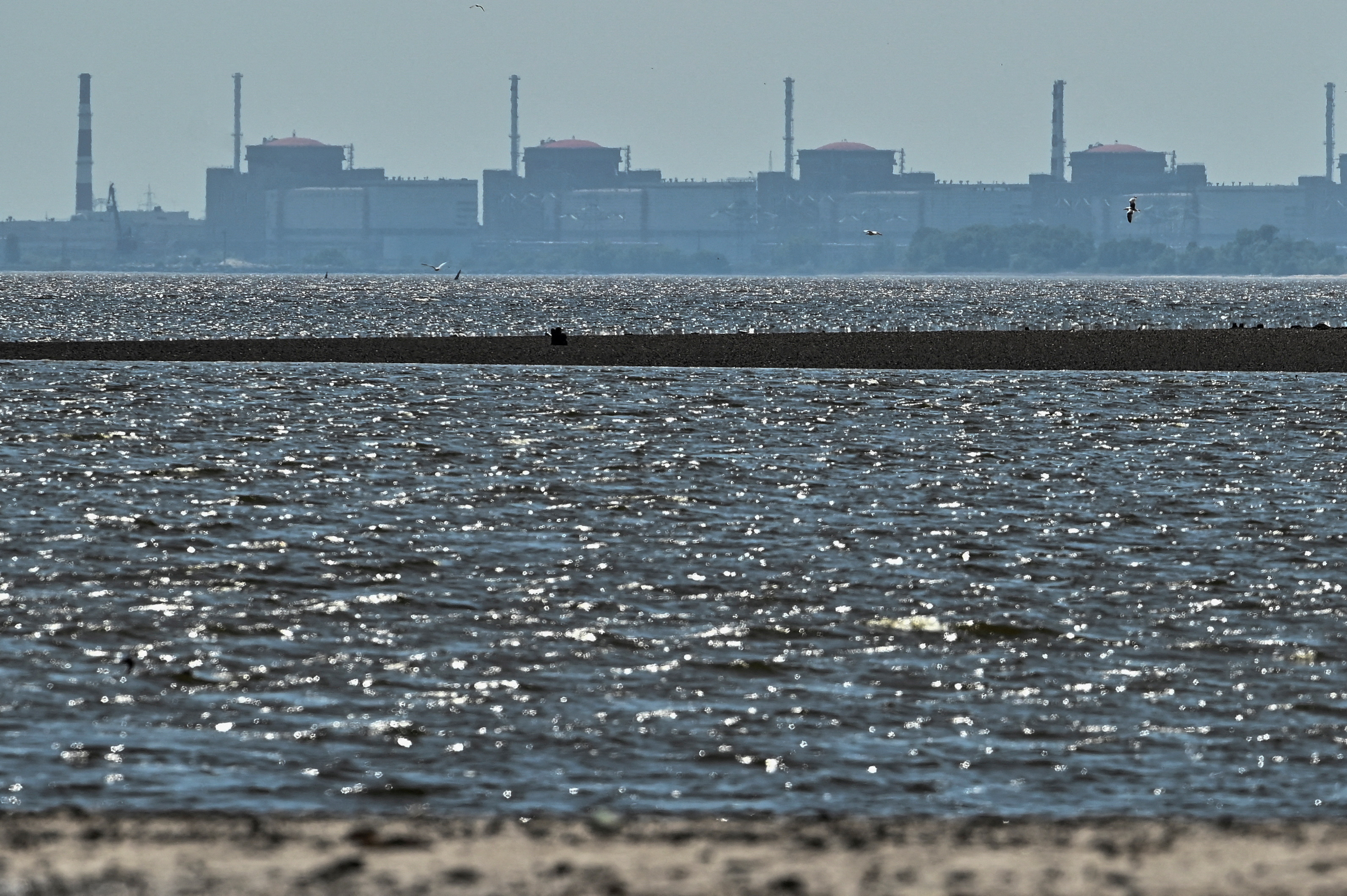
 A view shows Zaporizhzhia Nuclear Power Plant from the bank of Kakhovka Reservoir near the town of Nikopol, after the Nova Kakhovka dam breached, amid Russia's attack on Ukraine, in Dnipropetrovsk region, Ukraine June 9, 2023. REUTERS/Stringer/File Photo


MOSCOW, June 13 (Reuters) - Russian President Vladimir Putin in March announced a plan to deploy tactical nuclear weapons in Belarus, Moscow's first move of such warheads outside Russia since the 1991 fall of the Soviet Union.

What is known about the deployment?

WHAT DID PUTIN SAY?

Putin's nuclear deployment is a message to the West that he will not back down over the Ukraine war.

Putin made the announcement, almost as an afterthought, in an interview with state television Kremlin correspondent Pavel Zarubin that was first posted on Telegram on March 25.

Putin said the trigger for the decision to deploy in Belarus was an announcement by Britain that it would supply depleted uranium munitions to Ukraine. The Wall Street Journal reported on June 13 that the United States is also set to approve depleted uranium tank rounds for Ukraine.

Belarus said the deployment was in answer to the West's "aggressive policy" and that it was aimed at forcing the West's leaders to think before escalating further.

WHAT WEAPONS WILL BE DEPLOYED AND WHERE?

Putin said that "tactical" nuclear weapons - so called as they are designed for battlefield use - would be sent to Belarus but did not say exactly which warheads would be deployed or where.

Putin said Iskander mobile short-range ballistic missiles, which can deliver nuclear warheads, had already been handed over to Belarus. Russian sources say the Iskander has a range of 500 km.

Putin also said 10 Belarusian aircraft had been adapted to carry the warheads. Belarus said Su-25 aircraft had been adapted to carry the warheads. The Sukhoi-25 jet has a range of up to 1,000 km, according to Russian sources.

The Federation of American Scientists has said the weapons could be based at Lida air base, just 40 km from the Lithuanian border.

WHEN?

Putin said Russia would finish the construction of a special storage facility in Belarus on July 7-8 and the weapons would be deployed soon afterwards.

Lukashenko has made different comments. He seemed to indicate last month that the weapons were already on the move while on June 13 he said the weapons would be deployed in "several days".

He has also said that there could be "nuclear weapons for everyone" who joined the Russia-Belarus union.

WHO CONTROLS THEM?

Putin said Russia would remain in control of the weapons just as the United States controls its own tactical nuclear weapons deployed in Europe.

The United States has had nuclear weapons deployed in Europe since the 1950s at NATO bases for possible use against the Soviet Union.

Putin has repeatedly raised concerns about the 200 U.S. B61 tactical nuclear warheads deployed at bases in Belgium, the Netherlands, Germany, Italy and Turkey.

Those U.S. warheads are kept in vaults at air bases and the United States keeps the Permissive Action Link (PAL) codes used to arm the weapons.

Russia's nuclear weapons are controlled and transported by the 12th Main Directorate of the defence ministry (12th GUMO).

NUCLEAR RISKS?

After the Soviet Union collapsed in 1991, the United States went to enormous lengths to ensure that the Soviet nuclear weapons stationed in Belarus, Ukraine and Kazakhstan were returned to Russia - which inherited the Soviet nuclear arsenal.

By putting nuclear weapons back in Belarus, Putin is showing that the architecture of post-Cold War nuclear arms control is crumbling.

WHAT IS THE US/NATO RESPONSE?

The United States has criticised Putin's nuclear deployment but has said it has no intention of altering its posture on strategic nuclear weapons and also that it has not seen any signs Russia is preparing to use a nuclear weapon.

"We have not seen any reason to adjust our own strategic nuclear posture, nor any indications Russia is preparing to use a nuclear weapon," the State Department said on March 27. "But candidly, this announcement is one that we condemn."

NATO Secretary General Jens Stoltenberg said on April 18 that Putin's move was irresponsible.
Reporting by Guy Faulconbridge; Editing by Nick Macfie
French entrepreneur prevails in debate hailing China's system

CGTN

A French entrepreneur who has extensively studied China said the country's political system allows its people to enjoy freedom from want and freedom from fear, prevailing in a debate against the "superiority" of the American system.

A recent debate on the comparison between the political systems of China and the West, organized by an American institution, was held in Cambridge, Massachusetts. Adrian Zenz, a self-proclaimed anti-China "scholar" who has been heavily promoted by U.S. political circles and Western media, engaged in a 150-minute debate with Arnaud Bertrand, a French entrepreneur and Twitter influencer.

Bertrand, based on his extensive evidence and personal experiences of working and living in China for many years, delivered a comprehensive lecture at the event.

Bertrand made it clear that political systems are incomparable. If it were possible to find one system suitable for all countries in the world, then a superior system would replace others, he said. He believed that China's system is suitable for the Chinese people, as it is a product of China's long and unique history.

Turning to the subject of what freedom truly means, Bertrand cited a famous speech by former U.S. President Franklin D. Roosevelt in 1941 about the "Four Freedoms," pointing out that Western societies are neglecting two of them: freedom from want and freedom from fear.

He contended that poverty is the antithesis of freedom. When a person lives in extreme poverty, they lose the freedom of choice and become slaves to the hardships of life.

Bertrand noted that 14 percent of the population in France live below the poverty line, and in Paris, hundreds of homeless people can be seen living in tents. In 2021, 20.3 million people in the United States were classified as deeply impoverished, accounting for 6.2 percent of the total population and 48.4 percent of the poor.

"Can we really say that these people are free?" Bertrand questioned. Even the harshest critics of China acknowledge the fact that China has achieved the largest scale of poverty reduction and the fastest speed of poverty alleviation in the world, he said, noting that the total investment made by China in poverty alleviation is equivalent to the amount the United States has spent in the past 20 years on the wars in Afghanistan and Iraq.

In terms of the freedom from fear, Bertrand posed a simple question: In the United States, can a person freely walk outside late at night without fear? He pointed out that the probability of becoming a victim of violent crime in America is 70 times higher than in China. He stated, "In my seven years in China, I have never witnessed or been a victim of any crime. It is a very, very safe country. This freedom from fear truly exists."

Bertrand then raised a more profound reflection on collective freedom. He mentioned that former French President Charles de Gaulle once proposed that the greatest freedom should be the sovereignty and independence of a state, which is the prerequisite for all other freedoms.

In this regard, China is undoubtedly the freest country in the world because it is not a vassal state of any country and does not engage in military alliances. Such a high degree of sovereignty allows China to focus on domestic affairs and have free rein over international matters, Bertrand said.

Bertrand compared freedom, stability, and prosperity, demonstrating that China's development not only benefits its own people but also makes positive contributions to global peace and development. In contrast, Adrian Zenz, who participated in a public debate for the first time, repeated the accusations about China that had been debunked multiple times, and failed to articulate the position assigned to him in the debate, which was to advocate for the superiority of the American system.

Offline voting after the debate showed a clear victory for Bertrand.
Japan conducts tests before dumping nuclear-contaminated wastewater into sea amid strong opposition

CGTN

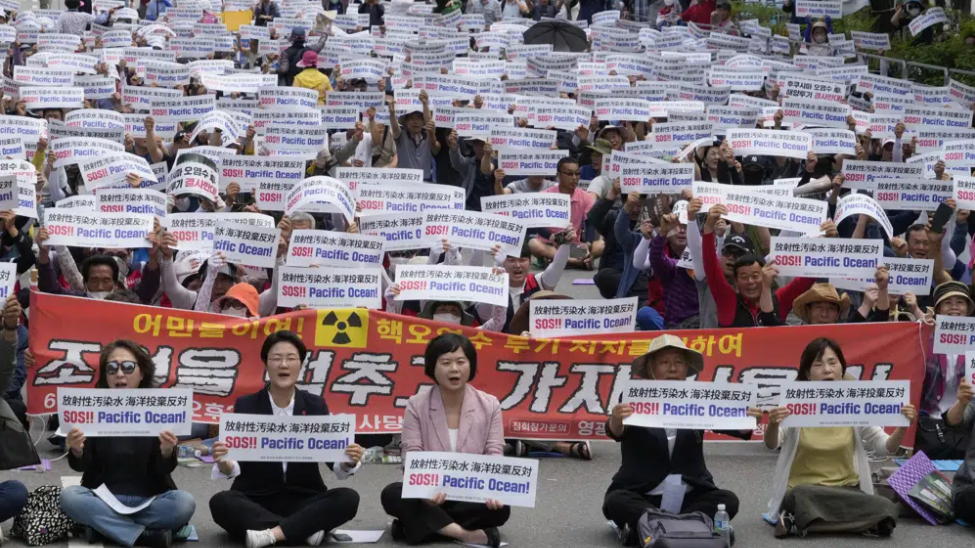
South Korean fishermen stage a rally against the Japanese government's decision to release nuclear-contaminated wastewater from the Fukushima nuclear power plant in front of the National Assembly in Seoul, South Korea, June 12, 2023
. /AP

The operator of the wrecked Fukushima nuclear plant on Monday began testing the newly constructed facilities built to discharge nuclear-contaminated wastewater into the sea, a plan vehemently opposed by local fishing communities and neighboring countries.

The Fukushima Daiichi nuclear power plant tests use fresh water instead of treated water, operator Tokyo Electric Power Company Holdings (TEPCO) said.

Plant workers examined pumps and emergency shutdown equipment at the newly constructed seaside facility, which will dilute the radioactive water with large amounts of seawater. The diluted water then enters an undersea tunnel and is released into the ocean about 1 kilometer from the coast.

The undersea tunnel and other key facilities are near completion. TEPCO says the voluntary tests are expected to continue for about two weeks ahead of mandatory pre-operation checks to be conducted by the Nuclear Regulation Authority, possibly in early July.

In April 2021, Japan's government announced plans to gradually release the nuclear wastewater after diluting it to what it says are safe levels. Japanese officials say the water, currently stored in about a thousand tanks at the plant, needs to be removed to prevent accidental leaks in case of an earthquake and make room for the plant's decommissioning.

Strong opposition

The plan has faced fierce protests from local fishing communities concerned about safety and damaging their reputation. Nearby countries, including South Korea, China and Pacific Island nations, have also raised safety concerns.

China has repeatedly urged Japan to take the legitimate concerns of all parties seriously and not start dumping the radioactive wastewater into the sea without full consultation and consensus with stakeholders and relevant international organizations.

In South Korea, fishermen staged a rally against the plan to release radioactive water in front of the National Assembly in Seoul on Monday.

Fishing officials in Japan said they remain opposed to the plan when they met Industry Minister Yasutoshi Nishimura on Saturday when he visited Fukushima and the neighboring prefectures of Ibaraki and Miyagi.

"We stand by our opposition," Tetsu Nozaki, head of the Fukushima prefectural fisheries association, told Nishimura. However, Nozaki said the association supports progress in the plant's decommissioning and hopes to continue the dialogue. "At the moment, our positions remain wide apart."

Nishimura told reporters that he hopes to gain an understanding of fishing communities while working to prevent damaging their reputation. Japan's government has set up a fund to promote Fukushima seafood and provide compensation in case sales fall due to safety concerns.

Japanese officials say the diluted water will be released into the ocean over decades, making it harmless to people and marine life. Japan has sought support from the International Atomic Energy Agency to gain credibility and ensure safety measures meet international standards.

Some scientists say the impact of long-term, low-dose exposure to radionuclides is unknown and the release should be delayed.

A massive March 11, 2011, earthquake and tsunami destroyed the Fukushima Daiichi nuclear plant's cooling systems, causing three reactors to melt and releasing large amounts of radiation. The tanks storing the water are being used to cool the reactor cores and will reach their capacity in early 2024.

(With input from agencies)

 Togliatti-Odesa ammonia pipeline in Ukraine. Photo Credit: se.ua

Moscow Seeks To Use Ammonia Pipeline Blast To Pressure West On Ukraine – Analysis

By  and 

Moscow and Kyiv have been trading barbs over who is to blame for the explosion on the Togliatti-Odesa ammonia pipeline on June 5, with the Russian side saying it was the work of Ukrainian “terrorists” and the Ukrainian side saying that it was the result of Russian shelling along the frontlines of Moscow’s

invasion. Ukrainian President Volodymyr Zelenskyy stressed that what happened to the pipeline was the result of military action rather than another Russian terrorist attack, such as the destruction of the Kakhovka dam (Pravda.com.ua, June 6; T.me/holodmedia, June 7; T.me/mod_russia_en, June 7; Politnavigator.net, June 8). The preponderance of evidence strongly suggests that Russia is to blame for this attack precisely to put additional pressure on the West to force Kyiv to concede to Moscow’s demands about a much wider range of issues—just as it has done throughout negotiations about the agreements allowing Ukrainian grain to be sold abroad (see EDM September 13, 2022; Mind.ua, May 12).

No ammonia has flowed through the pipeline since the expanded Russian invasion began in February 2022, and, given that Moscow has insisted that the flow must resume if the export of Ukrainian grain is to continue, Russia had everything to gain by attacking the pipeline to use it as leverage, whereas Ukraine had nothing to gain and much to lose. Thus far, this Russian effort has failed; however, the Russian authorities and propaganda outlets are certain to continue to push the Kremlin’s version and demands in the hope of shifting Western public opinion against Ukraine.

While oil and gas pipelines invariably attract more attention, the Togliatti-Odesa ammonia pipeline is important for Moscow. The pipeline, completed in 1981, extends from the Russian city of Togliatti to Odesa and two other Ukrainian Black Sea ports. Before Russian President Vladimir Putin launched his expanded invasion of Ukraine, it carried some 2.5 million tons of ammonia, a key component for fertilizers, each year and earned Moscow upward of $2.4 billion annually.

But when the Russian attack began, Kyiv suspended the operation of the pipeline, and it has carried no ammonia since. Moscow has tried to compensate by developing port facilities in Novorossiysk, but these have become problematic given the shoreline there and the inability to export ammonia through the Baltic countries—a move that Western sanctions have effectively blocked. Over the past year, the Russian government has sought to link other issues that the West and Ukraine care about to reopen the pipeline. The most important of these links has involved the United Nations–brokered Black Sea Grain Initiative, which allows Ukraine to export its grain harvests.

Russia, Turkey, Ukraine and the UN signed the initial grain agreements on July 22, 2022. They were extended on March 18 for 60 days, according to Moscow, but 120 days, according to Ukraine. That latter deadline will come in mid-July; as that date approaches, the Russian government has taken an ever-harder line, indicating that the attack on the pipeline reflected Russian policy rather than a Ukrainian action that Moscow could be counted on to exploit. For example, five days before the attack, Moscow blocked Ukrainian grain shipping out of the southern ports (Nakanune.ru, June 7). And just before that, the Kremlin signaled that there would be no further extension of the grain deal without a breakthrough on the ammonia pipeline (Mind.ua, May 12).

In its discussions about the grain deal, Moscow has insisted on concessions on various issues not directly related to the transit of grain, including among others, the reopening of the Togliatti-Odesa ammonia pipeline. And it has attacked Western governments for failing to put pressure on Ukraine on this point. Kyiv for its part has sought to make the grain deal self-standing, though in response to Russian demands, the Ukrainian government did offer last fall to make concessions on the pipeline if Moscow agreed to a “one for one” exchange of Ukrainian and Russian prisoners (1prime.ru, June 12).

The explosions on the ammonia pipeline occurred just days before the latest round of talks about the grain deal this week in Geneva. The talks did not go well, with Moscow’s representative, Deputy Foreign Minister Sergey Vershinin saying that Russia would not renew the grain agreement unless Kyiv reopened the ammonia pipeline and ensured its security. Vershinin criticized the UN and the West for failing to put pressure on Kyiv to open the pipeline and for not ending its sanctions regime. He also stated that Russia would act strictly according to its own national interests, regardless of the consequences for others (Uspei.com, June 10; Ria.ru, June 10; Ria.ru, June 12). Russian domestic outlets have played up these themes and suggested that what the Kremlin believes Kyiv has done to the pipeline leaves little opportunity for progress (Interaffairs.ru, June 5; Tsargrad.tv, June 10).

Western governments have clearly gotten the message, but there is little indication that they have accepted the Russian version of events or plan to pressure Kyiv to reopen the ammonia pipeline. The British Defense Ministry, for example, bluntly declared that “Russia is likely sabotaging the grain deal to force the reopening of the ammonia pipeline”—language that suggests London, like other Western capitals, will not submit to this latest Russian attempt at blackmail (Twitter/DefenceHQ, June 9).

In this situation, Moscow is doing exactly what it has done in the past: feeding stories to Western media outlets that may lead some in the West to accept its position and put pressure on their governments. However, in the current environment, such efforts may backfire and simply call increased attention to what the Kremlin has been doing in Ukraine.

What is especially worrisome now is that Moscow may attack port facilities in Odesa at the southern end of the ammonia pipeline—not only to undermine Kyiv’s ability to export grain and other products but also to try to show Ukraine and the West that the Kremlin has additional and even more horrific options in these complex negotiations about the extension of the grain deal. Given that Putin’s preferred modus operandi has been to double his bets whenever he feels he has been driven into a corner, this is all too likely a possibility—and one that is rather sensitive for the Ukrainians (Mind.ua, May 12).

If that should happen, the relatively small explosions along the ammonia pipeline near the frontlines in Ukraine last week, especially given Russian truculence and intransigence in Geneva, could become the trigger for a much larger crisis.

This article was published by The Jamestown Foundation’s Eurasia Daily Monitor Volume: 20 Issue: 95


Paul Goble is a longtime specialist on ethnic and religious questions in Eurasia. Most recently, he was director of research and publications at the Azerbaijan Diplomatic Academy. Earlier, he served as vice dean for the social sciences and humanities at Audentes University in Tallinn and a senior research associate at the EuroCollege of the University of Tartu in Estonia. He has served in various capacities in the U.S. State Department, the Central Intelligence Agency and the International Broadcasting Bureau as well as at the Voice of America and Radio Free Europe/Radio Liberty and at the Carnegie Endowment for International Peace. Mr. Goble maintains the Window on Eurasia blog and can be contacted directly at paul.goble@gmail.com .
China chides US over plan to rejoin UNESCO 6 years after quitting under Trump

The Biden administration has offered to pay off more than US$600 million in contributions it owes to the agency

Beijing says membership is a serious commitment and ‘not like going to a park’


Liu Zhen
13 Jun, 2023
SCMP

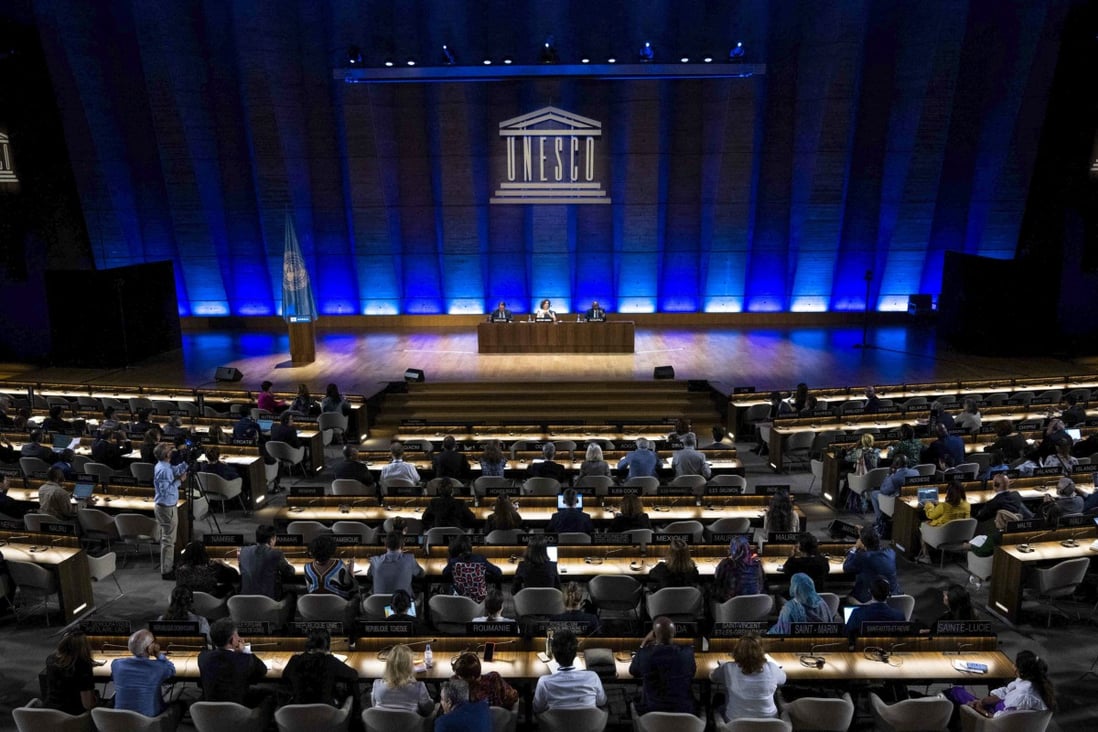
The US would rejoin the UN body next month and has agreed to pay its outstanding contributions.
Photo: AFP

The United States should not use international organisations as geopolitical playgrounds, Beijing said on Tuesday as it chided Washington over its plans to rejoin the United Nations’ top heritage body.

Unesco director general Audrey Azoulay confirmed on Monday that the US would rejoin the UN body next month and honour the more than US$600 million in financial contributions it owed.

US officials had previously said that the decision to leave Unesco six years ago left a gap for China to expand its influence.

Chinese foreign ministry spokesman Wang Wenbin said the US should be responsible and use its membership to support multilateralism and promote international cooperation.

“The membership of international organisations is a serious matter … it is not like going to a park, where you can enter at ease and leave as you please,” Wang said.

“International organisations must not be used as arenas for geopolitical competition, and the public interests of the international community must not be used as an excuse [for the US] to promote its own interests as the global leader.”

He added that the US had twice withdrawn from Unesco, having a negative impact on the agency, and the US should “effectively fulfil its international obligations as a responsible country”, including paying its long overdue debts to Unesco.

“If the US is sincere in rejoining this time, it should show its sincerity in abiding by international rules and respecting the international rule of law,” he said.

The US first withdrew from Unesco in 1984, with the Ronald Reagan administration claiming the organisation was controlled by the former Soviet Union.

The US rejoined in 2003 but stopped paying its contributions in 2011 after the agency accepted Palestine as a member state.

It lost its voting rights in 2013 and formally quit in 2017 under the administration of US president Donald Trump.

The US was once the biggest financial sponsor of the agency, contributing over 20 per cent of its overall funding. Its withdrawal put Unesco under serious financial strain and the remaining members were called on to bridge the gap.

John Bass, US undersecretary of state for management and resources, said in March that the absence of the United States from Unesco bolstered China, and “undercuts our ability to be as effective in promoting our vision of a free world”.

The Joe Biden administration has submitted a financial plan to Unesco to pay off its US$619 million in arrears in the next few years.

The plan will be put to a vote at a general conference of Unesco’s 193 member states next month. Some member states have requested that an extraordinary session on the US plan be held earlier.
Turkey arrests 3 more Kurdish politicians

ByTurkish Minute
June 13, 2023


An executive from the pro-Kurdish Peoples’ Democratic Party (HDP) and two co-mayors in an eastern province were jailed on Tuesday, in the latest episode of an ongoing crackdown on Kurdish politicians in Turkey, local media outlets reported.

In Ankara, HDP Party Council member DoÄŸan ErbaÅŸ, who is also a human rights activist, was detained and subsequently sent to prison to serve a 12-year sentence handed down to him on conviction of terrorist organization membership and spreading terrorist propaganda for the outlawed Kurdistan Workers’ Party and the Kurdistan Communities Union (KCK), an umbrella organization that encompasses the PKK.

Erbaş was sentenced by a high criminal court in İstanbul in December 2022 and had been at large, according to Turkish authorities.

Video footage released by the Ankara Police Department showing ErbaÅŸ, 60, being rear-handcuffed and taken into custody by two police officers who pushed his head against a police car sparked outrage among Kurdish rights activists, who described the treatment as humiliating.

Lawyer BaÅŸar Abdi Alınak said the release of the video “goes beyond physical and mental torture” and was aimed at intimidating and insulting Kurds.

Alınak said there was no reason for the politician to be taken into custody in such an insulting way since he was not resisting the police.

Prominent human rights activist and lawyer Eren Keskin also criticized the way ErbaÅŸ, who she referred to as a “very old friend,” was taken by the officers to the police vehicle, sharing the video on Twitter. “You still don’t understand, you can’t subdue [Kurds] even if it’s by force,” she tweeted


In the eastern province of Ağrı, Müşerref Geçer and Emrah Kılıç, co-mayors of the Patnos district from the HDP who were detained last week, have been arrested.

The co-mayors were arrested along with three others as part of an investigation into allegations of committing fraud in municipal tenders.

Government critics say the charges are politically motivated.

Perihan Koca, a lawmaker from the opposition Green Left Party (YSP), a sister party to HDP, called on authorities last week to release the co-mayors, saying, “This is a way of appointing trustees… The appointment of trustees is a seizure of the people’s will.”

The Turkish government has removed 48 democratically elected HDP co-mayors from office and appointed trustees in their place since 2019, according to a report from the HDP.

The HDP stands accused of links to the PKK, although the party strongly denies any ties to it. The PKK has waged an insurgency against the Turkish state since 1984 and is listed as a terrorist organization by Turkey and much of the international community.

The government of President Recep Tayyip ErdoÄŸan has been trying to close down the HDP since March 2021 over its alleged ties to the PKK. Dozens of politicians from the party including the party’s co-chairs have been in jail for years on bogus terrorism charges.

The Turkish government speeded up the crackdown on the party ahead of the presidential and parliamentary elections held last month due to the party’s support for the opposition’s presidential candidate, Kemal KılıçdaroÄŸlu, who was defeated by ErdoÄŸan in a runoff election held on May 28.

The party says it is being singled out for standing up for Kurdish rights and resisting the government’s expanding crackdown on political freedoms and dissent.


Palestinian teenager killed as Israeli forces raid Balata camp

Fares Hashash, 19, was shot in the chest and abdomen by Israeli forces after they raided the camp near Nablus, according to the Palestinian health ministry.

The New Arab Staff
13 June, 2023

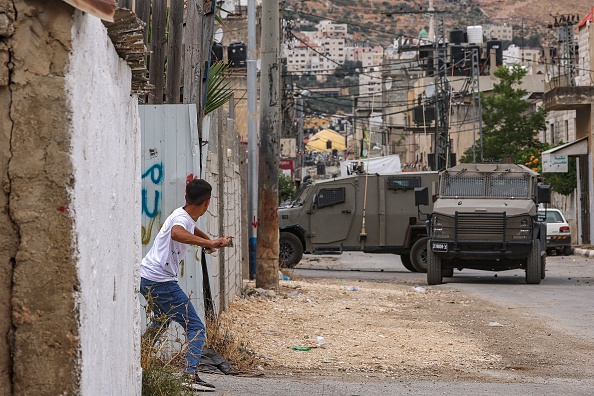
Balata residents and fighters clashed with Israeli forces after they stormed the camp [Getty]

A Palestinian teenager was killed on Tuesday when a large Israeli force unit stormed the Balata refugee camp in the occupied West Bank.

Fares Hashash, 19, was shot in the chest and abdomen by Israeli forces after they raided the camp near Nablus, according to the Palestinian health ministry.

The raid, in which dozens of military vehicles and soldiers took part, targeted a house said to belong to a Palestinian fighter. It came hours after similar raids were carried out across the West Bank, including in the nearby city of Nablus.

The father of a Palestinian fighter who was being pursued said in a video shared on Twitter that the Israeli forces warned him they would demolish the house if he did not hand himself in.

"I was at work, an [Israeli] officer called me and told me let your son hand himself in, I've surrounded the whole house...if he does not hand himself in I'm going to bring the house down," said Issam Al-Slaj's father.

He added that many members of the family were inside the house at the time.

Al-Slaj is allegedly a member of the Al-Aqsa Martyrs' Brigade.

In another video, a man can be heard shouting: "We're going to blow up the house."

Clashes between Israeli forces and Palestinian fighters and residents broke out shortly after the raid, sources from the camp told The New Arab’s Arabic-language sister site Al-Araby Al-Jadeed.

Videos showed that explosive devices were reportedly used to target Israeli vehicles.
The same sources, who spoke on condition of anonymity, said plain-clothed Israeli special forces entered the camp from one end while military reinforcements entered from south of the camp.

Israeli military vehicles were accompanied by a bulldozer to remove stones and iron barriers reportedly placed by resistance fighters at the entrances to Balata to delay the storming of the camp.
Before confirming Hashash's death, the Palestinian Red Crescent had earlier said one person was shot in the chest and rushed to hospital, adding that ambulances came under Israeli fire.

At dawn on Tuesday, Israeli forces raided Nablus and began preparing an apartment belonging to a Palestinian man behind an April attack that killed three Israeli settlers for its demolition.

They also raided the Askar camp east of Nablus, the Aqabat Jabr camp in Jericho and the city of Jenin, where it carried out arrests.

Israeli forces have carried out near-daily raids in the West Bank for over a year.

More than 160 Palestinians have been killed in the West Bank and besieged Gaza Strip since the beginning of this year.
Saudi Arabia reiterates rejection of Israel normalisation without Palestinian statehood

The Saudi embassy in Washington has reaffirmed that there will be no normalisation with Israel before a Palestinian state is established.

The New Arab Staff
13 June, 2023

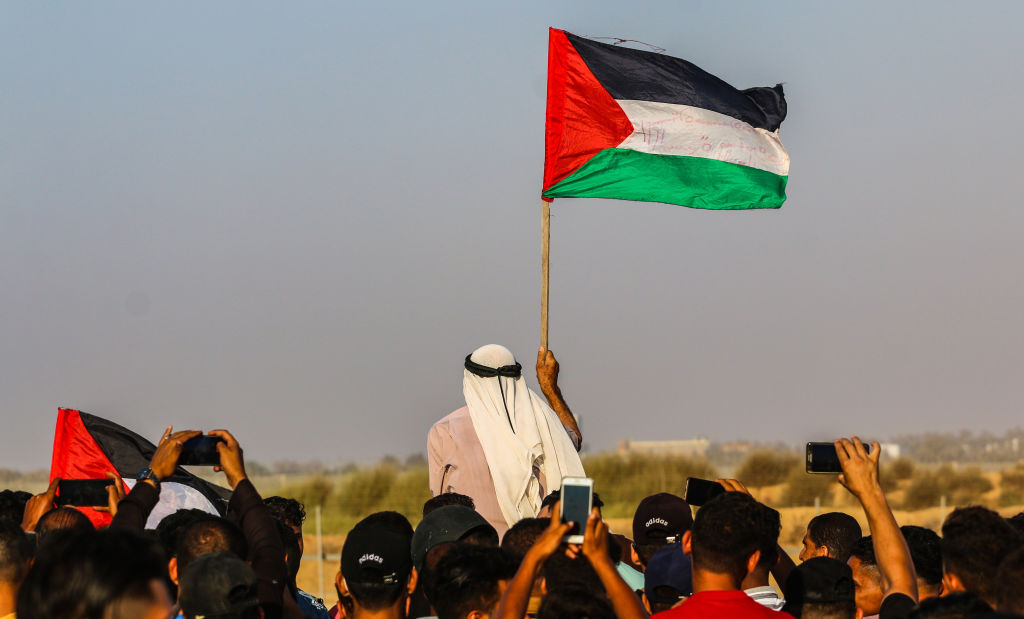
Israel continues to occupy the Palestinian West Bank in violation of international law [Getty]

Saudi Arabia has reiterated its refusal to establish ties with Israel before Tel Aviv reaches a peace agreement with the Palestinians, who are still living under Israeli occupation.

"Israel has a lot of potential, normalisation can do wonders; trade, cultural exchanges, but for that to happen, for the kingdom to take that step, we need that core dispute [with the Palestinians] to be resolved," Fahad Nazer, a spokesman for the Saudi embassy in Washington told Arab News.

The United States is trying to mediate talks between Israel and Saudi Arabia to establish diplomatic relations, as it did between Israel and the United Arab Emirates, Bahrain, Sudan, and Morocco in 2020.

But Saudi Arabia has repeatedly said it would only sign an agreement with Israel if a Palestinian state is established, in line with the 2002 Arab Peace Initiative.

Israel continues to occupy East Jerusalem and the West Bank in violation of international law and besiege the Gaza Strip. More than 160 Palestinians have been killed by Israeli forces and settlers since the start of 2023.

"Saudi Arabia’s position on the Israeli-Palestinian conflict has been clear and consistent for many years, it was the late King Abdullah who in 2002 introduced the Arab Peace Initiative, the proposal offers Israel normalisation with all members of the Arab states, in return for a just and comprehensive peace with the Palestinians based on a two-state solution," Nazer told Arab News.

"That offer remains on the table, we hope they go back to the negotiating table, to try and resolve this dispute, which has brought much pain and suffering across the region," he added.

The spokesman’s interview with Arab News comes after comments made last week by Saudi Foreign Minister Prince Faisal bin Farhan, who said a regional normalisation push with Israel has "limited benefits" without Palestinians being given a state of their own.

"We believe that normalisation [with Israel] is in the interest of the region, that it would bring significant benefits to all,” he told reporters after meeting his US counterpart Antony Blinken who was visiting Riyadh.

Israel is keen to establish ties with Saudi Arabia, which recently re-established ties with long-time foe Iran and with the Syrian regime earlier this year as part of a Chinese-brokered deal.

Saudi Arabia is reportedly in talks with Israel to allow for direct Hajj flights for Palestinian citizens of Israel wishing to perform the annual pilgrimage. The flights could also include Palestinians from the occupied territories.

Palestinians who wish to journey to Saudi Arabia for the Muslim pilgrimage usually travel through third-party countries such as Jordan, due to Israeli restrictions on Palestinian travel.


Saudi Arabia pours cold water on normalisation with Israel

Spokesman for the Saudi embassy in Washington said that normalisation with Israel can only happen if the Palestinians get their own state.

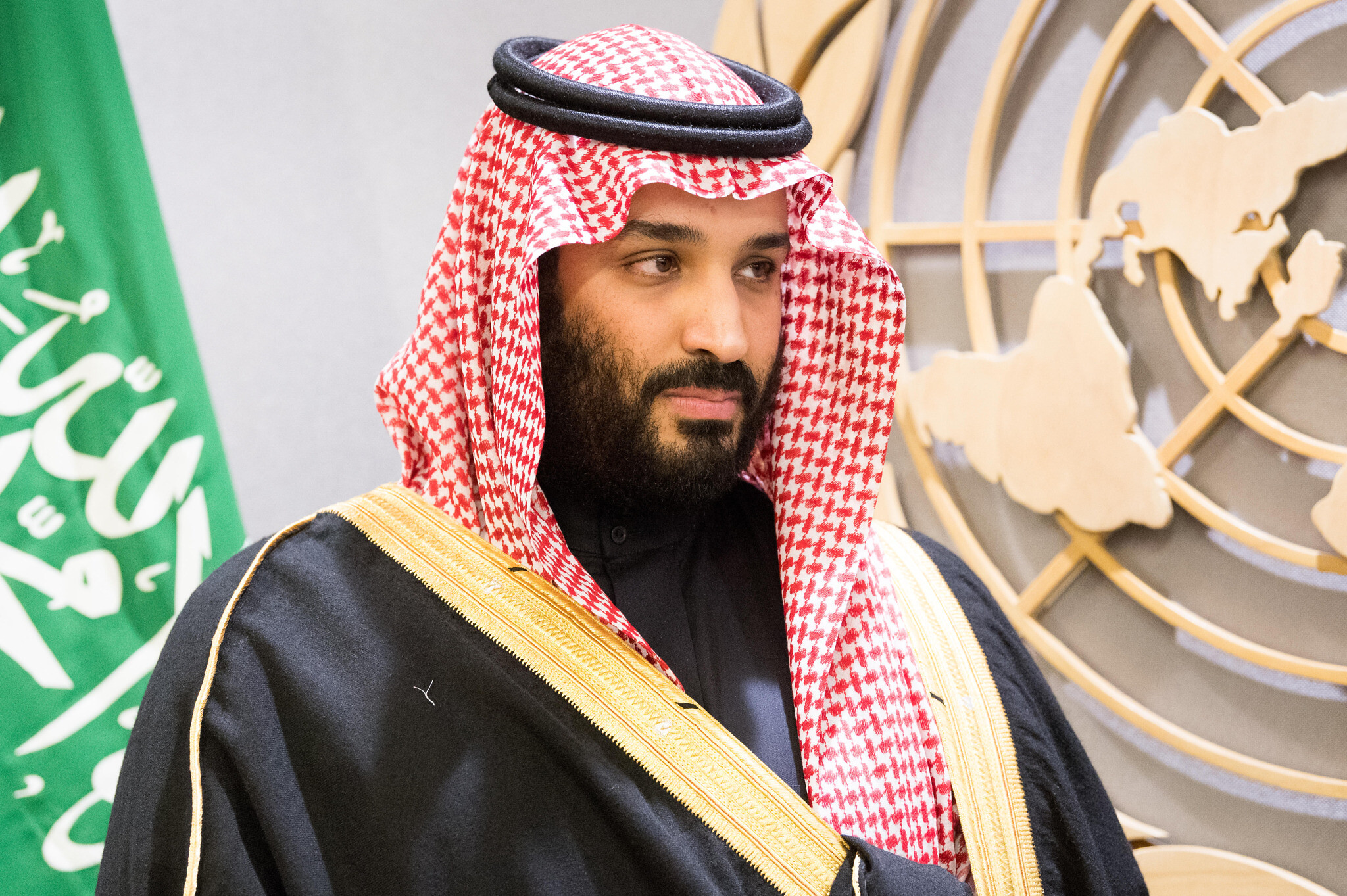
Prince Mohammed bin Salman Al Saud,
Crown Prince, Kingdom of Saudi Arabia, at the United Nations in New York City on March 27, 2018.
Prince Mohammed bin Salman Al Saud, Crown Prince, Kingdom of Saudi Arabia, at the United Nations in New York City on March 27, 2018.

Saudi Arabia will not normalise ties with Israel until a Palestinian state has been established, the Kingdom’s embassy in Washington said. 

Saudi embassy spokesman Fahad Nazer told Arab News that the Riyadh’s position on the Israeli-Palestinian conflict “has been clear and has been consistent for many years.”

“In fact, it was the late King Abdullah, who, way back in 2002, introduced what is now known as the Arab Peace Initiative at the Arab League Summit in Beirut in that year. And the proposal, the initiative, does offer Israel normalisation with all members of the Arab states in return for a just and comprehensive peace with the Palestinians based on a two-state solution,” he said.

Nazer stressed that the “offer really still remains on the table,” but that the issue of Palestinian rights must be solved before normalisation with Israel can move forward.

His comment comes after U.S. Secretary of State, Antony Blinken, visited Riyadh last week, with the intention of making progress in normalising ties between Saudi Arabia and Israel.

Ahead of his trip, Blinken stressed that Washington has a “real national security interest” in promoting normalisation between Israel and Saudi Arabia.

“We believe that we can and indeed we must play an integral role in advancing it. Now, we have no illusions that this can be done quickly or easily. But we remain committed to working toward this outcome, including on the trip I’m about to take this week to Jeddah and Riyadh for engagements with our Saudi and Gulf counterparts,” Blinken said at the AIPAC conference in Washington last week.

Israeli Prime Minister Benjamin Netanyahu has declared it a top priority for his government to establish ties with Saudi Arabia, which would further integrate Israel into the Arab world.

But several issues have poured cold water on the immediate prospects of a deal between Saudi Arabia and Israel, such as intense clashes on the Al-Aqsa compound between Israeli Police and Palestinians, as well as the Netanyahu government’s push to significantly expand settlements in the West Bank.

Saudi embassy spokesman Fahad Nazer’s comments also stands in stark contrast to Netanyahu, who believes that the lack of progress in finding a solution to the Israeli-Palestinian conflict isn’t an obstacle for peace and normalisation with other Arab nations.