Saturday, July 08, 2023

Edmonton removes 1,103 encampments as complaints jump by 61 per cent

Article content

The City of Edmonton has removed 1,103 encampments amid rising complaints even as local shelters are near capacity despite the warm weather.

New data released publicly this week, and camp removal numbers shared with Postmedia, show the city has continued to struggle to help people experiencing homelessness. There were around 1,300 people living rough or staying in shelters on Homeward Trust’s by-name list as of June 23, and shelters are nearing capacity, city staff told city council this week.

Advertisement 2

Complaints to 311 about homeless encampments are up 60 per cent from the same time last year to 5,090, with some calls about the same camps. The McCauley, Downtown and Boyle Street neighbourhoods are among the top five neighbourhoods for complaints.

While fewer people have been camping in parks than last year — down to 1,162 from 1,200 in June 2022 — slightly more people are sleeping in other places, data presented to council on Tuesday shows. In total, there were 369 encampments in June outside of parks compared to 340 a year ago — many of which are in the city’s core.

Jennifer Flaman, deputy city manager for community services, during an update to city council on transit and Downtown safety this week, said the many shelters reaching capacity is abnormal for this time of year. Even as teams try to help people find somewhere to go other than camping outdoors, Flaman said finding alternatives is difficult.

“This presents us with a significant challenge. We are enjoying summer weather now, we also know winter is around the corner,” she told council on Tuesday. “We are in a bit of a quandary about where people can go.”

Edmonton’s encampment teams also do not have enough resources to meet the growing need, Flaman said, although staff are more coordinated with outreach groups than in previous years.

Article content

Advertisement 3

Article content

She said the majority of non-park camps around Downtown are putting pressure on the encampment response. The city’s response times have also been slower because of extreme weather — the city activated more extreme weather responses than usual on account of heat, poor air quality, and flooding, Flaman said.

“Resourcing has not kept pace with the rapid growth of encampments and is not equipped to handle the volume and complexity of needs,” she said.

On the other hand, Flaman said the pilot with Homeward Trust to rapidly house about 100 people is showing some promising signs. To date, 39 people have been connected with housing workers, 12 are in bridge housing, five are approved for permanent housing and awaiting placement, and two people are in permanent housing.

The city is currently in talks with the provincial government about emergency shelter funding for next winter and the hope is to have 1,200 beds available.

Calls to 311 about encampments have gone up by more than 1,000 per cent between 2016 and 2022, according to the city.

People struggling in west end: Knack

Coun. Andrew Knack said he’s hearing a lot more concerns after daytime services closed in the west end three weeks ago. Before it opened there were more complaints about the Jasper Place Transit Centre than before, but now it seems the issue has re-emerged.

Advertisement 4

Article content

Knack said he’s getting complaints about encampments now from communities who haven’t experienced them at this magnitude before.

“I don’t think I’ve ever seen it as bad in the west end, especially since the closure of those spaces. The last month has been really hard on a lot of folks, and a lot of folks struggling who would like support but frankly have nowhere to go,” Knack said during the meeting Tuesday.

“Outside of a small place operated by the Mustard Seed which can be shelter space for 20 people or so, there is nothing there anymore, so we see more folks out on the street.”

The councillor questioned whether increasing enforcement would solve the issue since there isn’t anywhere for people to go if they are moved.

lboothby@postmedia.com

@laurby

Victoria tenants unite to fight rising rents

As rents skyrocket, tenants in many cities are banding together in hopes of gaining the kind of collective bargaining rights some workers have
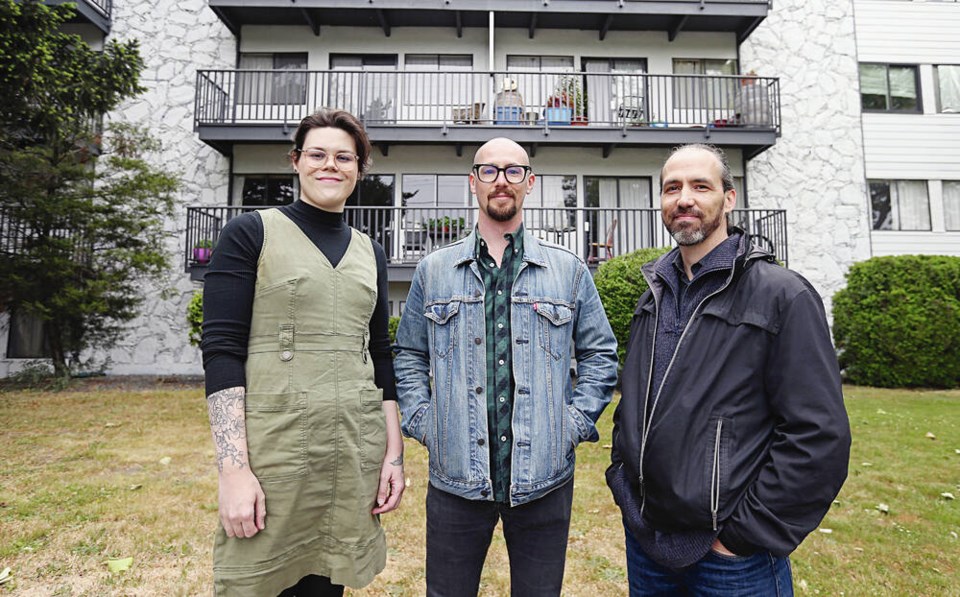
Victoria Tenants Union organizers, from left, Allie McKenna, Kyle Sarrassin and Harland Bird.                                         ADRIAN LAM, TIMES COLONIST
Michael John Lo

Less than 10 years ago, Harland Bird was renting an apartment near Victoria City Hall for $450 a month, heat and hot water included — by himself.

“It’s laughable now to think about something like that,” he said. “Clearly, something has changed.”

When the house where he was renting was sold, Bird struggled to find something else. “I could not find a place to live. I moved into three [short-term] places in two months, and had to keep moving because I couldn’t find anywhere else.”

With no other options, Bird now lives with his partner’s family. “While I got lucky, a lot of people out there are not,” he said. “Something has to be done.”

Bird is a founding member of the Victoria Tenants Union, which was formed this May in hopes of giving renters similar bargaining rights to workers. Where a workers’ union would withhold labour as a last resort, a tenants’ union would withhold rent payments.

Tenants’ unions are a trend seen in other cities in the face of ever-rising rents, with tenants hoping they will have more power as a group than as individuals.

“Just like [how] workers negotiating with their bosses individually doesn’t tend to work out, tenants negotiating with their landlords individually often doesn’t tend to work out,” Bird said.

“We need tenants’ unions to help protect against abuses or potential abuses by landlords, just like we need labour unions to protect against potential abuses by the bosses who would still probably have us all working 12, 14, 16 hour days if it wasn’t for unions.”

Recent findings from the Canadian Rental Housing Index national database found that 16 per cent of households in the capital region are paying more than 50 per cent of their gross earnings on rent and utilities.

The report also found the average rent in B.C. increased by 30 per cent from 2016 to 2021, the largest increase of any province.

“There’s a fundamental imbalance in this city,” said Pierce Nettling, another founding member. “A lot of people in this town are seniors. They’re on fixed incomes and pensions. There’s only so much of a budget that they can make before we start displacing them.”

The resulting housing pressures from increased rents radiates out from Victoria and causes increased pressure in markets elsewhere on Vancouver Island, he said.

The Victoria Tenants Union wants tenants to be able to stay in the capital region, and to be better informed about their tenancy rights.

“We’re like a team for everyone,” Nettling said. “If you live in a trailer park, if you live in a building, if you live in a basement suite, we want to hear from you.”

One of the union’s long-term goals is to achieve tenant collective bargaining rights, which could mean that landlords would have to follow rent standards pre-negotiated with the building’s tenant association instead of setting prices for individual renters.

Nettling said tenants need collective-bargaining rights due to the increasing investor ownership of housing, particularly by real estate investment trusts or REITs — companies that own and often operate rentals.

The fight for tenants’ collective-bargaining rights in Canada stretches back to the 1860s, when tenant farmers on Prince Edward Island formed a union and went on a rent strike against absentee farmers.

In the late 1960s and 1970s, a wave of Vancouver-based tenant unions fought landlords on rent increases and campaigned for increased tenant rights.

The NDP promised tenant collective bargaining rights in 1972 but did not implement it after they were elected to power.

More recently in 2018, tenants in a west Toronto highrise successfully quashed a proposed 3.4 per cent rent increase from their property management company with a two-month rent strike.

Today, hundreds of tenants in two separate Toronto building complexes are currently on rent strike, withholding rent from corporate landlords such as Dream Unlimited and Starlight Investments in the face of higher-than-normal rent increases. Ontario only allows rent increases of 2.5% a year to account for inflation, though landlords can apply for another three per cent.

Bryan Jacobs, an organizer with Rent Strike Bargain, a tenant advocacy campaign that is closely associated with the Victoria Tenants Union, cautioned that B.C. tenants looking to implement rent strikes should be aware that it is much easier to evict someone in B.C. for withholding rent compared to in Ontario, where a landlord has to apply for an eviction notice.

“In B.C. they just download a form off the website and they can start eviction proceedings without approval of the [tenancy] board.”

Tenant unions can still bargain for better maintenance, pet policies or installations of amenities like a laundry room at the bargaining table without resorting to more militant strategies, he said, adding landlords and tenants have some common interests and there is space for good faith negotiations.

“Landlords are trying to get profit. But to get profit, they need to make sure that the housing is as good as it can be,” Jacobs said. “We’re not actively calling on tenants to strike, because that is so dangerous.”

For now, the Victoria Tenants Union is simply talking to renters, hearing their concerns and laying the groundwork for something bigger.

Founding member Kyle Sarrasin said most people have been appreciative of their outreach efforts.

“If we’re in touch with people — if we’re getting them to be in touch with each other within their own spaces, there will be more room for mutual aid, mutual support,” he said. “In large part, it’s about building community.”

mjlo@timescolonist.com

>>> To comment on this article, write a letter to the editor: letters@timescolonist.com 

 Montreal

Longueuil, Que., plans to complete road through wetland where endangered frog lives

Construction project was halted in 2021 by federal decree

road
This road was designed to help dampen rush-hour traffic on Roland-Therrien Boulevard in Longueuil, Que., but Ottawa halted the project to protect the western chorus frog. (Isaac Olson/CBC)

A road that was already about 75 per cent built, levelling a lush wetland to give commuters an alternative route in Longueuil, Que., is finally going to be completed after the project was halted in November 2021.

The municipal construction project, more than a decade in the making, was brought to a screeching halt by federal decree to protect the western chorus frog, a threatened species under the Species at Risk Act.

But in a recent interview on Radio-Canada's Le 15-18, Longueuil Mayor Catherine Fournier said, after an analysis, it was impossible to restore the natural habitat back to the way it was before the road construction began.

Restoration is what environmental groups have been calling for. Instead, she said, the city is looking to move forward with the $2.6-million road, which is supposed to connect R-100 Street to Béliveau Boulevard — creating a straight shot between de la Savane Road, where the Saint-Hubert Airport is found, and Jacques-Cartier Boulevard East, at the Pierre Boucher Hospital.

The city's previous administration touted the project as something residents have been demanding, saying it will have bike paths and sidewalks.

Longueuil built a wildlife corridor under the new road, costing the city nearly $1 million, and there's a landscaped traffic circle on R-100 Street that will serve little purpose without the connection to Béliveau.

frog
Environment and Climate Change Canada says the frog now occupies only 10 per cent of the area it once did in Montérégie due to intense agricultural activities and urban development. (Radio-Canada)

Construction had begun before Fournier was elected in November 2021. Once in office, she ordered the city cease its legal opposition to an injunction requested by environmental groups to stop the work to extend Béliveau Boulevard.

The federal government soon enacted an emergency order to protect the habitat of the chorus frog, following a similar measure in 2016, which covered La Prairie and parts of Candiac and Saint-Philippe in the Montérégie region.

The decree outlawed draining the soil or altering surface water — something that already happened when crews installed a sewer system, drainage ditches and levelled the land in preparation of asphalt.

That wetland, located between residential development and farmland, is directly adjacent to a 260-hectare nature preserve known as the Boisé du Tremblay.

In that wetland lives chorus frogs. The call of the male western chorus frog sounds like a fingernail being drawn along a metallic comb and it can be heard up to a kilometre away. It's a sound that used to be much more common in the region.

According to Quebec's Ministry of Forests, Wildlife and Parks, 20 per cent of the chorus frog's habitat is located in the wetland, making it the most important site the species occupies in the province.

Mayor Fournier said the "2.0" version of the road project includes several measures aimed at protecting the frog's habitat, such as constructing a narrower boulevard, implementing new wildlife crossings and refraining from real estate development along the boulevard.

This project was developed in collaboration with teams from Environment Canada, the Quebec Ministry of the Environment and the Montreal Urban Community, added Fournier.

The next step is to obtain the necessary permits to resume construction work, she said.

with files from Radio-Canada

Marine Institute Removing Ghost Gear Swept Out to Sea During Hurricane Fiona

Marine Institute Removing Ghost Gear Swept Out to Sea During Hurricane Fiona

The Marine Institute is working to remove ghost gear plunged to the depths of the ocean by Hurricane Fiona.

Ghost gear is fishing gear that has been abandoned or lost at sea, remaining in the ocean.

The Marine Institute’s Centre for Sustainable Aquatic Resources, thanks to $1 million in federal funding, is mapping the ocean floor between Cape St. George and St. George’s to find gear that had been swept out to sea by the raging storm last September.

Project Lead Mark Santos says they used sonar to scan and map the area and have identified around 1,000 potential pieces of ghost gear.

He says now they will go out with ROVs to confirm and identify the targets, and then attach ropes to the gear to retrieve it with the help of local harvesters.

BC
Palliative care doctor calls for broader change as province discusses allowing MAiD at St. Paul’s Hospital
MEDICALLY ASSISISTED DEATH

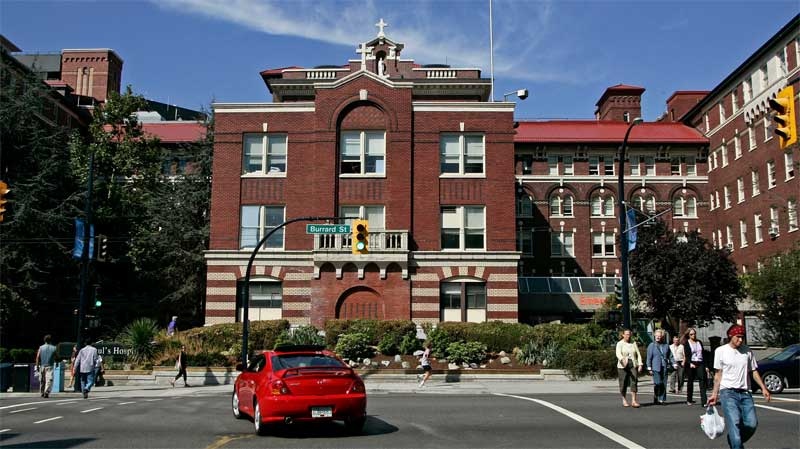
St. Paul's Hospital is seen in this undated image. (CP / Richard Lam)


Shannon Paterson
Multi-skilled Journalist, 
CTV News Vancouver
Updated July 5, 2023 

Dr. Jyothi Jayaraman has been a palliative care physician in Vancouver for more than 20 years. And when medical assistance in dying was approved in Canada in 2016, she became a MAiD practitioner.

“One of the criteria for eligibility is intolerable suffering. So when a patient says I’m ready to die, what they’re saying is I cannot suffer anymore,” said Jayaraman.

But she says the policy at St. Paul’s Hospital to transfer palliative care patients who’ve been approved for MAiD to other facilities in the final hours of their lives causes even more suffering.

“I have borne witness to many, many of these transfers, as have my colleagues,” said Jayamaran, who is one of more than 160 local health-care professionals who wrote to the premier this spring asking him to stop the forced transfer of MAiD patents from facilities run by faith-based organizations like Providence Health Care, which oversees St. Paul’s.

RELATED STORIES
Parents of Vancouver woman denied medically-assisted death at St. Paul's Hospital speak out
MAiD advocates prepare for court challenge of ban at Catholic Church-affiliated hospitals
After outrage over forced transfers, B.C. government in discussions with Catholic-run health authority about allowing MAiD

“We really heard nothing back. So it seemed as if our lived experience of witnessing forced transfers had no meaning at that point,” she said.

Then Sam O’Neill’s story came to light.

The 34-year-old terminal cancer patient had to be sedated for her transfer from St Paul’s to a hospice to undergo MAiD in April, and she didn’t wake up to say goodbye to her loved ones.

“Sam’s situation captured I think the country,” said Jayaraman. “There is talk now in the country about: How is this happening? Most people can’t believe it’s happening. Let me tell you that I have seen enough.”

And it appears the provincial government has also seen enough. Health Minister Adrian Dix is now in discussions with Catholic-run Providence Health Care about setting aside its religious objections and allowing MAiD to happen at St. Paul’s using outside practitioners.

“We are talking to them, and I expect this issue to be resolved,” said Dix. “We are starting with St. Paul’s because circumstances in acute care are often different. When you’re going to acute care, you’re not choosing at all. So this is the place to address things, and that’s what we are working with Providence on.”

Dr. Jayaraman argues pushing for change at St. Paul’s isn’t enough. “This is not a time for half-measures. This is not a time to say, St Paul’s will allow it, and it’s only because it’s an acute care facility.”

She says long-term care and palliative care patients often have no choice about where they end up. And if the facility is faith-based, they’re also forced to move to undergo MAiD.

“In long-term care (patients) have moved there sometimes five to six years ago, that is their home. They pay rent, it’s recognized as their home. Why should they be moved out of their home?” she said.

Jayaraman is advocating for an end to all forced MAiD transfers from publicly-funded health- care facilities, a fight she says has become a calling.

“I think this is something that needs to be stopped, and I’m prepared to do whatever I can,” she said.

Sun to bring light to 99 percent of world’s population at once Saturday

Nearly the entire world’s population will bask in the sun’s rays simultaneously


By Matthew Cappucci
July 7, 2023

Once in a while, viral memes and outlandish Reddit claims turn out to be true.

In 2022, a claim circulated on social media asserting that, on July 8, 99 percent of the world’s population would experience daylight or twilight simultaneously; in other words, only 1 percent of the world’s population would be located where it was nighttime.

Sounds a little far-fetched, right? It turns out the rumor is true.

EarthSky.org crunched the numbers.

At 11:15 Universal time, or 7:15 a.m. Eastern time, on July 8 each year, about 96 percent of the planet’s population is bathed in at least a bit of sunlight.

An additional 3 percent is in “astronomical twilight,” which occurs when the sun is below the horizon but its glow still illuminates a patch of the sky.

This means, 99 percent of Earth’s nearly 8 billion residents will be on the sunlit side of Earth at the same time. July 8 turns out to be the day that most people around the planet experience daylight at the same time.

This occurs because most of Earth’s population lives on one side of the planet. It might not look like that on most maps, but that’s because the majority of classroom maps are distorted to be population-centric. In reality, the Pacific Ocean occupies virtually half of Earth. When it’s nighttime there, it’s daytime for almost all of Earth’s land masses.

Time of year plays a role, too. In December, January and February, the sun’s most direct rays shine on the Southern Hemisphere, which is home to only 10 to 12 percent of the world’s population. That leaves most of the Northern Hemisphere with indirect sunlight, cutting back on how long the daylight hours stretch.

If you’re looking to maximize the population enveloped in sunshine, the sun should be shining most directly on where nearly 90 percent of the world’s population lives — the Northern Hemisphere.

That’s why the phenomenon occurs near when the Northern Hemisphere is experiencing its longest day at the summer solstice. There are actually many days that feature the 99 percent magic.


Common sense dictates that, if one of the dates (July 8) is 17 days after the solstice, another should be 17 days before.

But, according to EarthSky, there are actually 60 days that surround the summer solstice and meet the 99 percent criterion.

Between May 18 and July 17, there are a couple of minutes each day when 99 percent of Earth’s population is on the sunny side, so to speak. The timing just fluctuates about the 11:00 Universal time slot.

One might surmise that the solstice would spread sunlight to the greatest number of people, but that actually happens July 8.

By then, a bit of the Northern Hemisphere’s sunlight has been trimmed away and nudged into the northern fringes of the Southern Hemisphere, resulting in a net gain in people on the sunny side.

More people live just south of the equator than near the North Pole, so it turns out that’s the ideal date for maximizing the simultaneously sunlit population.

Suffice to say, sometimes boggling statistics aren’t magic — they’re just often overlooked.

And, as daylight dawns on the Eastern Seaboard on Saturday, people glancing skyward can know that, for an instant, nearly the entire world is experiencing something together.

U.S. West Coast ports union says it won’t work diverted containerships amid Canada strikes

CNBC

KEY POINTS
U.S. West Coast port workers’ unions say they won’t work containerships originally bound for the Port of Vancouver that changed course and were diverted to the Port of Seattle.

The disruption comes as labor strikes at West Coast ports in Canada stretch into a seventh day.

Canadian Labor Minister Seamus O’Regan Jr. spoke with acting U.S. Labor Secretary Julie Su about the impact of the strike on the North American supply chain.


WATCH NOW
VIDEO01:38
Containerships diverted from Vancouver amid port strikes, headed for Seattle


U.S. West Coast port workers’ unions say they won’t work containerships originally bound for the Port of Vancouver that changed course and were diverted to the Port of Seattle. The disruption comes as labor strikes at West Coast ports in Canada stretch into a seventh day.

The International Longshore and Warehouse Union U.S. West Coast chapter said Friday its members would not work any of the diverted vessels.


“The ILWU will not be unloading Canadian bound cargo in solidarity with out Brothers and Sisters in ILWU Canada,” said ILWU U.S. West Coast chapter President Willie Adams in a statement to CNBC.

According to MarineTraffic there are 16 vessels currently at anchor waiting off the Port of Vancouver and six at anchor at Prince Rupert. There are more containerships on the way.

There are a total of 15 containerships bound for Vancouver and nine containerships bound for Prince Rupert. These would be vessels, if re-routed, that the ILWU would not service because the containers are easily identified.

It would be very hard for the ILWU to identify containers that had their final destinations changed because they do not have access to container information for security reasons.

The diversions are the first of what could be widespread rerouting of ships, delaying planned arrivals and straining supply chains right at the beginning of peak season when holiday and back-to-school items are coming in.

The rerouting of containers also adds days to the delivery of product. For the auto industry which runs on lean just in time schedules, these delays can impact production.

“This is the largest disruption we have seen since the pandemic and comes at a time when the supply chain was stabilizing,” Goetz Alebrand, head of ocean freight Americas for DHL Global Forwarding, told CNBC.

The strike at the Canadian West Coast ports had previously been met with support from both the ILWU West Coast U.S. Chapter and the International Longshoremen’s Association (ILA).

The ILA, the largest union of maritime workers in North America, representing the workers at ports on the Atlantic and Gulf Coasts, Great Lakes, major U.S. rivers, Puerto Rico and Eastern Canada, also said in a statement that no diverted cargo from striking ports would be accepted.

The first of the diverted containerships is expected at the Port of Seattle on July 10, according to port authorities.

The disruptions follow a breakdown in labor negotiations. Both the British Columbia Maritime Employers Association and the ILWU Canada chapter walked away from talks earlier this week, each blaming the other for the breakdown in talks.

Diverted ships

Two containerships that were diverted were identified as the MSC Sara Elena and the OOCL San Francisco. VesselsValue has also identified the MSC Matilde V which was anchored outside of Vancouver pulling up anchor and leaving with the Vancouver-bound cargo and heading back to Quigdao, China.

OL USA told CNBC all of its future cargo that normally goes to Vancouver is being rerouted to Seattle, Tacoma, Los Angeles, Long Beach and the East Coast.

The strike could lead to congestion in the Canadian ports with longshoremen unable to unload vessels. Congestion can turn into backlogs and lead to delayed pickups from terminals, which can then lead to late fees that are often passed on to consumers — similar to what occurred during the pandemic.

The Canadian National Railway Company, which services the ports, told CNBC it will take weeks to months to clear out the congestion.

The Port of Vancouver and Port of Prince Rupert are popular destinations for U.S. trade because these ports are among the major ports of call for goods arriving from Asia. Some logistics managers have told CNBC that rail service out of those ports is a lot faster than going through the port of Seattle or Tacoma.

The distance between the Port of Vancouver and the Port of Seattle is a little over a half-day’s trip traveling at typical speeds.

ITS Logistics told CNBC it has containers on the OOCL San Francisco. They were scheduled to arrive at the Port of Vancouver on July 3 and were then destined by rail for Memphis. Paul Brashier, vice president of drayage and intermodal at ITS Logistics, said clients are now looking for alternate American ports.

“Right now we are advising all clients with freight that was booked to Vancouver or Prince Rupert to work with their booking agents to track the US ports of call of the vessels that their containers are on and see if the ocean liners will allow reconsigment (switching container final destination) to a US port,” Brashier said.

Many ITS clients have requested a change in container destination and are waiting to see if the ocean carriers will accept that change. The ocean carriers are the final arbiter in any container destination change. Usually, you can change a container’s destination five days prior to a vessel docking.

The Canadian ports normally process goods bound for the United States ranging from auto and manufacturing parts to footwear and apparel. Trade organizations including the American Apparel and Footwear Association and the National Retail Federation have told CNBC they urge the Canadian government to help keep parties at the negotiating table.

Talks still paused


ILWU Canada released a scathing statement Thursday, accusing the British Columbia Maritime Employers Association of a smear campaign and demanding to get back to the mediation table.

“The reality is, our people do hard work under difficult, often dangerous conditions, and they kept Canada’s economy moving through the worst of the pandemic,” said ILWU Canada President Rob Ashton. “That’s a long ways from the picture the employer wants to paint. It can be a good living, but it takes years of sacrifice to get there, and it’s still hard work.”

Ashton listed several points supporting the union’s position, including sporadic income for waterfront workers resulting from on-call work systems; inconsistent hours since many workers are dispatched on a day-to-day basis; and high rates of injury, including several deaths recorded in recent years.

The ILWU Canada president also said higher pay rates often require working night shifts, six or seven days a week.

“Our members’ families are facing spiraling food bills, housing costs, and interest rates. All we’re asking from employers is to share some of the wealth our labor is creating for them through a fair, reasonable increase in wages, and to ensure our members can continue to do that work with respect and dignity,” Ashton said.

BCMEA said in a statement to CNBC Thursday that negotiations are still paused.

“We continue to be ready to return to the table at a moment’s notice, assuming ILWU Canada is prepared to put forward a reasonable proposal, particularly on their demand to aggressively expand ILWU jurisdiction over maintenance work on the terminal,” the group said.

Canadian Labor Minister Seamus O’Regan Jr., who has been urging both sides to come back to the table to negotiate, spoke with acting U.S. Labor Secretary Julie Su Thursday evening about the impact of the strike on the North American supply chain.

With the Canadian Parliament out of session, the governing body would need to recall members in order to intervene. Even with remote voting, a quorum for in-person voting also needs to be met on any measure.
JUST ANOTHER PROTOTYPE
Toyota Reveals Solid-State EV Battery with 745-Mile Range, Cuts Emissions by 39%


ByJennifer L


Toyota reveals its solid-state EV battery technology which claims to have a 745 mile range and 10 minute charging time. Solid-state batteries can reduce the carbon emissions of electric vehicle (EV) batteries by 39%, but it needs 35% more lithium.

The world’s largest carmaker by sales caught the markets by surprise by announcing its plans to commercialize its solid-state battery technology by 2027.
 
Toyota’s Next-Gen EV Battery Technology

Last month, Toyota announced that as the next-generation EV continues to use new batteries, they’re “determined to become a world leader in battery EV energy consumption.”

This week, the Japanese carmaker, which has been lagging behind rivals in rolling out EVs, unveiled its solid-state battery breakthrough. The automaker said that it was able to simplify ways to produce the materials used in making solid-state batteries.

Toyota further noted that this discovery will enable it to halve the size, cost, and weight of EV batteries. That also means significantly cutting charging times to 10 minutes or less while increasing the driving range to 1,200 kilometers (745 miles). Currently, the luxury brand Lucid Air holds the longest drive range of 516 miles.

President of Toyota’s R&D center for carbon neutrality, Keiji Kaita, commented that they’re planning to achieve reductions both in their liquid and solid-state batteries. He further said that this new battery will be simpler to make than a conventional lithium-ion battery.

The car company has been working on this technology since 2012 and it’s becoming a reality as Toyota now have over 1,000 solid-state battery patents – more than any other carmaker.

Noting Toyota’s announcement, analysts remarked that this could be a game-changer for the industry. And it can also help the Japanese carmaker be closer to the leading EV maker Tesla. Most of Tesla’s EV units are powered by conventional lithium-ion batteries using liquid electrolytes.

Kaita also said they discovered ways to address the durability problems with EV batteries. And that they now are confident to mass-produce solid-state batteries by 2027 or 2028.

Ford and BMW also tested these batteries late last year.
What are Solid-State Batteries?

Solid-state batteries are considered by industry experts as the most promising technology to fix major EV battery concerns. These particularly include charging time, driving range, capacity, and safety risks like catching fire.

Some experts call solid-state the “kiss of death” for gasoline- and diesel-powered vehicles.

These batteries replace a liquid electrolyte with a solid material and use lithium metal instead of graphite at the anode. Here’s how Toyota’s solid-state battery differs from the current, liquid-based version and how it can change the industry.


Solid-state batteries offer high energy density, meaning they can store more energy with less materials. They also typically require no toxic materials.

More remarkably, research shows that this new technology can help mitigate the climate impact of EV batteries.

As shown below, batteries made from most sustainably sourced materials can cut carbon emissions further down by 39%. This emission reduction could probably be due to simplified production processes and faster charging times.


Moreover, more efficient mining methods such as extracting lithium from geothermal wells can also contribute to lower climate impacts. Solid-state batteries may need up to 35% more lithium than the current lithium-ion technology, but they use far less cobalt and graphite.
Driving Up the Demand for More Lithium

Lithium, also called white gold, is the unsung hero of the clean energy transition by powering up the EV revolution. Countries and major EV makers are scrambling to secure lithium. If solid-state batteries dominate the industry, demand for this critical mineral will soar up much higher than is currently projected.

In the European Union, the bloc’s proposed Batteries Regulation for lithium requires responsible sourcing and recycling of the EV element. The EU policy will ensure that there’s enough lithium supply for solid-state batteries. European governments still need to finalize the regulation.

In the U.S., the Inflation Reduction Act (IRA) incentivizes EV manufacturers that source their batteries locally or from free-trade partners. But the country needs to ramp up its domestic lithium supply to meet the skyrocketing demand. This is where rare lithium companies like the American Lithium Corporation come to the rescue. The company has two of the largest lithium deposits in the Americas.

According to an industry expert, improving the methods used in extracting and processing the raw materials in solid-state batteries, including lithium, is the key to slashing their climate impact.

Toyota’s solid-state battery revelation didn’t disclose key details such as battery performance in cold temperatures, energy density, and raw materials. The giant carmaker aims to manufacture 3 million battery-electric units each year by 2030 — 50% with solid-state batteries.

Will Toyota’s battery breakthrough change its course and make it a leader in the EV revolution? That’s what the industry has to watch out for.

Urenco to expand US enrichment plant

07 July 2023


Uranium enrichment services provider Urenco has announced plans to increase capacity at its plant in Eunice, New Mexico - the only operating commercial uranium enrichment facility in North America - by 15%. New commitments from US customers for non-Russian fuel underpin this investment, the company noted.

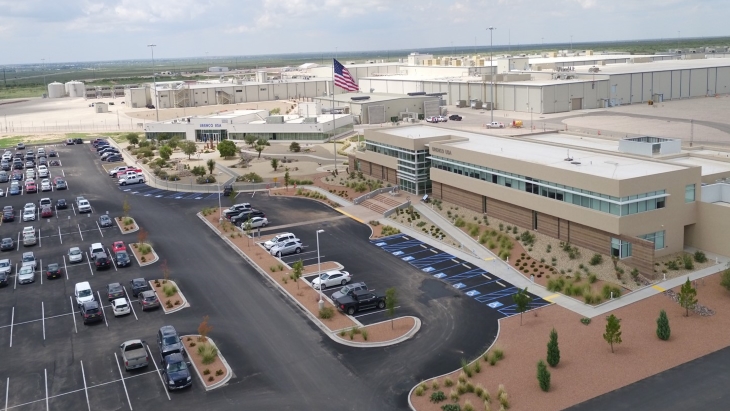
The UUSA plant in (Image: Urenco)

It said the project will see multiple new centrifuge cascades added to the existing Urenco USA (UUSA) plant, and will be the first project to be delivered as part of the company's capacity programme, which "will strengthen the nuclear fuel supply chain both in the US and globally".

Urenco said the capacity programme is a long-term plan to extend and refurbish enrichment capacity at its sites to meet increasing customer demand "as more countries and utility companies turn to nuclear for the first time, or seek to extend and/or diversify fuel supplies for existing nuclear operations".

The expansion of the Eunice plant - operated by Louisiana Energy Services LLC (LES) - will provide an additional capacity of around 700 tonnes of separative work units (SWU) per year, with the first new cascades online in 2025. The plant currently has a production capacity of 4600 tSWU per year.

In March 2015, the US Nuclear Regulatory Commission approved a licence amendment allowing Urenco to expand its Eunice enrichment plant. The amendment is related to LES's intention to expand its enrichment capacity at the UUSA facility by adding three new separation building modules and associated support facilities, in a phased approach over the next several years. Doing so would allow Urenco USA's total enrichment production capacity to rise from 3.7 million SWU to as much as 10 million SWU.

"Urenco is committed to supporting customers with their energy security and carbon reduction needs and this investment is a further sign of the exciting momentum behind nuclear, a reliable and low-carbon source that can maintain baseload energy and help us achieve net-zero," said Urenco CEO Boris Schucht. "We have the licences, designs, technology and proven capability to expand our capacity, and we are already seeing an increase in demand for our services from existing customers and new ones.

"As a leading enrichment company in the Western world, we have the duty to respond to the needs of the market. We will continue to monitor, forecast and support our customers and governments as we look to take further investment decisions across our enrichment sites."

Urenco also operates three enrichment facilities in Europe: at Capenhurst in the UK, Almelo in the Netherlands and Gronau in Germany.

Researched and written by World Nuclear News

Kärnfull Next receives investment from climate tech fund

07 July 2023


Danish climate tech fund Climentum Capital and Swedish social developer Granitor Growth Management are investing EUR2 million (USD2.2 million) into Swedish small modular reactor (SMR) project development company Kärnfull Next AB.

A rendering of a plant based on the BWRX-300 (Image: GEH)

"This breakthrough signifies one of the first instances of a European dark green climate fund investing in nuclear energy, marking a major milestone in climate-oriented investments," Gothenburg-based Kärnfull Next said.

It said the funding will strengthen its ongoing pre-feasibility and feasibility studies while helping accelerate the identification of potential new nuclear build sites across Sweden. "Managing multiple projects concurrently is crucial, given the strong demand for SMRs in Sweden. Representatives from Climentum Capital and Granitor Growth Management will join Kärnfull Next's board, providing strategic direction."

Kärnfull Next - a fully-owned subsidiary of Kärnfull Future AB - said its projects are aligned with both the EU Taxonomy and Sweden's energy needs, providing clean, dispatchable and reliable power. "Leading energy experts, TSOs, and government affirm the country's need for this kind of energy solution, from the perspectives of security of supply, economy and climate," it noted.

On 20 June, Sweden's parliament adopted a change to its energy targets, changing the aim to achieve "100% fossil-free" electricity by 2045, instead of "100% renewable". Changing the target is key to the government's plan to meet an expected doubling of electricity demand to around 300 TWh by 2040 and reach net-zero emissions by 2045. It means that nuclear generation can count towards the government's energy targets.

Kärnfull Next aims to have the first commercial SMR operational at a new nuclear site in Sweden by the early 2030s.

"We share the International Atomic Energy Agency view that there is no route to a net-zero scenario without a significant contribution of electricity from nuclear technology," said Malin Carlström, General Partner at Climentum Capital. "The cleanest and safest baseload source we have available today and for the next couple of decades is fission power - we need to acknowledge that, and we need to urgently build out our reactor fleets with the best available technologies".

Granitor Growth Management CEO Göran Linder added: "We see tremendous potential in Kärnfull Next's strategy to decarbonise sectors traditionally seen as challenging. This investment reaffirms our conviction that nuclear energy is a key part of a sustainable future."

"Being backed by progressive investors like Climentum Capital and Granitor Growth Management empowers us to meet Sweden's energy demands with clean, reliable and efficient solutions," said Kärnfull Next CEO and founder Christian Sjölander. "The strong support we have received accelerates our mission to revolutionise the energy sector and contribute significantly to a more sustainable future."

The issue of including nuclear energy as a sustainable investment for countries' green taxonomies has been a key one in recent years as governments seek to target spending and investment in areas that can help meet net-zero goals. The European Union included nuclear energy - with conditions and only on a transitionary basis - within its green taxonomy last year.

In March 2022, Kärnfull Next signed a memorandum of understanding with GE Hitachi Nuclear Energy on the deployment of the BWRX-300 in Sweden.

The announcement of the investment in Kärnfull Next came as a study by Columbia University's Center on Global Energy Policy of the 30 global "systemically important banks" found that none explicitly includes nuclear energy in their sustainable finance taxonomies. Of those banks, 17 had explicitly excluded nuclear energy from their green financing frameworks, while 12 had frameworks that were silent on nuclear, and one had no such framework.

Researched and written by World Nuclear News