Sunday, July 09, 2023

The massive Sphere in Las Vegas puts on mesmerizing sneak peek show

A preview of the capabilities of Sphere's massive LED screen.

The Las Vegas skyline has a multitude of over-the-top visual splendour, but the latest addition, called the MSG Sphere, makes Sin City stand out on a whole new level.


Now known as the largest sphere on Earth, the dominating dome boasts the world’s largest video screen, and the city was treated to a preview of its astonishing capabilities on the Fourth of July.

As part of the sneak peek show, residents and tourists watched in awe as the 366-foot-tall Sphere cycled through a multitude of mind-bending displays, including a giant, ominous eyeball, a basketball, a snow globe, a Jack-o’-lantern and even the Earth itself.

To achieve such impressive displays on the Sphere’s 580,000-square-foot fully programmable LED screen — named the Exosphere — engineers fitted the exterior with 1.2 million LED “pucks.” Each puck contains 48 individual LED diodes capable of displaying 256 million different colours.

Sphere lights up for the first time in celebration of Independence Day on July 4, 2023 in Las Vegas. Greg Doherty / Getty Images

“It’s absolutely stunning to look up and see what’s in front of you,” Rich Claffey, Sphere’s chief operations officer, told CNN. “I’ve been in the entertainment business for almost 40 years. I’ve never seen anything like this, and I’m not exaggerating. It is off the charts.”

Populous, an architecture firm behind some of the world’s top arenas, designed Sphere. It’s nearing completion and officially opens on Sept. 29, when it will welcome almost 18,000 guests to the U2:UV Achtung Baby Live at Sphere show.

Sphere lights up for the first time in celebration of Independence Day on July 4, 2023 in Las Vegas. Greg Doherty / Getty Images

The videos and photos from Sphere’s Fourth of July preview are almost unbelievable. The orb dwarfs cars driving on a nearby road and has spawned plenty of jokes about its size and capabilities.


Sphere will primarily be used as a live music and film venue, but will also have the infrastructure to host sporting events like boxing and mixed martial arts. In November, the Formula 1 Las Vegas Grand Prix’s street circuit will pass through the Sphere property.

In addition to 160,000 speakers, the venue will also offer 4-D experiences, with vibrating seats and wind machines.

Sphere lights up for the first time in celebration of Independence Day on July 4, 2023 in Las Vegas. Greg Doherty / Getty Images

“Most music venues are sports venues. They’re built for sports — they’re not built for music. They’re not built for art,” U2 frontman Bono said in an Apple Music interview earlier this year, as he toured the venue. “This building was built for immersive experiences in cinema and performance.”

Sphere sits one block off the notorious Las Vegas Strip and will connect via pedestrian walkway to the nearby Venetian resort complex.

University of Saskatchewan students send satellite to space

By Andrew Benson Global News
Posted July 7, 2023
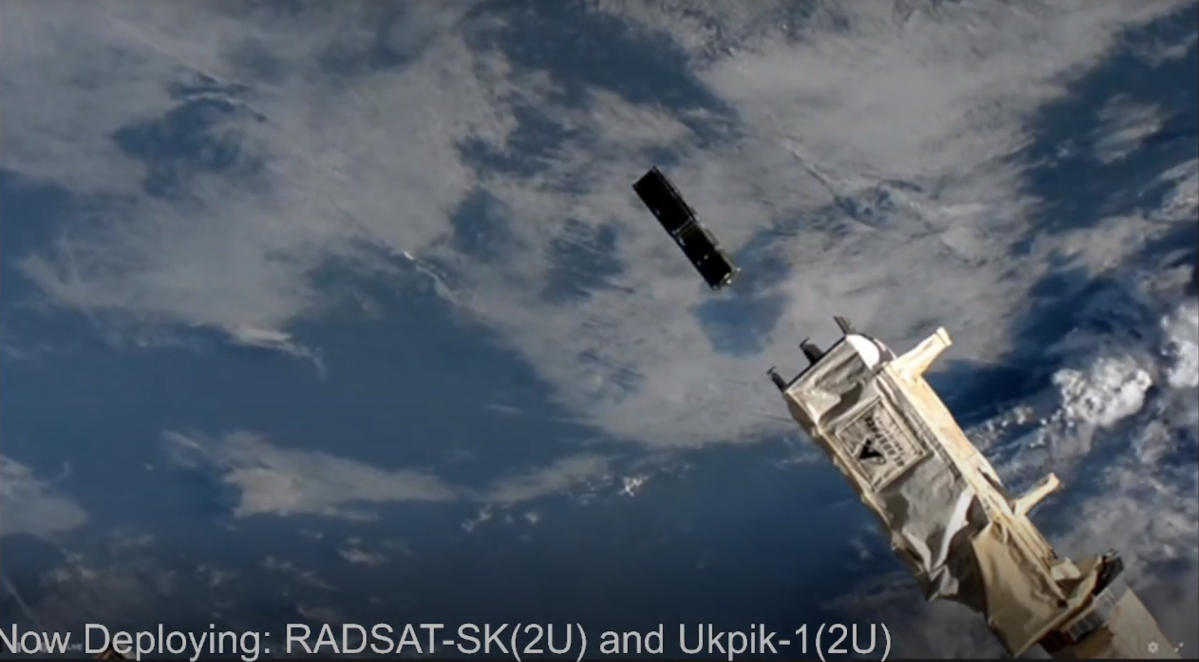
Students from the University of Saskatchewan designed and built their own miniature satellite called a CubeSat. Courtesy of Nanoracks

It’s not every day a school project gets sent to space, but for students from the University of Saskatchewan, their own satellite has officially left the Earth’s atmosphere.


The students involved worked for five years on their RADSAT-SK CubeSat.

A CubeSat is a class of miniaturized satellites, measuring roughly 10 cm by 10 cm by 10 cm. Students say the satellite carries two experiments involving space radiation and was launched into orbit a month ago by a SpaceX Falcon-9 rocket.

Just this week, the satellite was launched from the International Space Station.

“It’s kind of unreal,” said Dustin Preece, a CubeSat project student and the technical manager. “Just to see the thermal tape on there, glimmer in the sun every once in a while. That was really cool.”

The CubeSat will test a new cheap radiation measuring device, and a radiation shielding epoxy made out of melanin.


While the project took five years to get off the ground, it felt like a short time for Preece.

“There was so much to do and at times the days blurred together,” he said. “It’s been an amazing journey and I’m just very grateful to have been part of it.”

Preece said CubeSats are far cheaper to launch than traditional satellites due to their size, making such projects more accessible for universities.

The satellite is part of the Canadian CubeSat Project that started in 2018, involving more than 2,000 students across Canada. Its aim is to boost interest in science, technology, engineering and mathematics while involving students in real space missions.

“(It’s) a very exciting moment for students in Canada who wish and dream of working in the space industry,” Tony Pellerin, a Canadian Space Agency (CSA) manager and technical lead of the project said in a recent interview.

The RADSAT was designed and developed at the University of Saskatchewan.

“Once we tested it, we took it to Montreal to the Canadian Space Agency headquarters,” Preece said. “And it launched from the Kennedy Space Centre in Florida.”

“For now, it’s an academic project and we’ll see where it goes,” he explained. “Hopefully it does help the radiation industry, the nuclear industry and the space industry too.”

Preece hopes projects like this continue to come out of Saskatchewan, and says he wants to continue developing and sending satellites into space.

“We’re proud to represent Saskatchewan, and we want to expand Saskatchewan’s presence in the aerospace and the space industry,” Preece said. “It’s just been a privilege to be on this journey with everyone.”

This Montrealer forged medieval axes used to rebuild Notre-Dame cathedral

Meticulous detail needed to fashion axes just as they were made 800 years ago

Montreal blacksmith forging 12th century tools to rebuild Notre-Dame in Paris

1 day ago
Duration2:03
A Montreal blacksmith is forging the same type of tools — axes — that were used to build the original Notre-Dame de Paris. They will be used to help rebuild the cathedral's roof and spire, which were destroyed in a catastrophic fire in 2019.

The axe head, heated by the flames of Mathieu Collette's forge, glows white hot among the coals. 

Collette, a blacksmith who uses traditional methods to fashion tools from iron and steel, pulls it from the fire and, with a series of hammer blows, moulds it into shape. 

Meanwhile, in France, possibly at this very moment, carpenters are using axes he fashioned to carve logs of red oak into roof trusses for Notre-Dame-de-Paris, the world's most famous cathedral. 

The axes had to be as close as possible to the originals used by the carpenters who first built the cathedral in the 12th and 13th centuries — so that the new wood beams would bear the same markings as the old. 

Collette and the other toolsmiths who went to France to help with the project were uniquely positioned to make them. 

man working on anvil
Mathieu Collette hammers a hot, glowing axe head. (Matthew Lapierre/CBC)

"We're the only ones left," Collette said in an interview this week at his Montreal forge, located in an old pump house in the Peel Basin. 

"We made the axes the same way, using techniques, materials and tools of the time."

After a 2019 fire destroyed part of its roof, walls and spire, officials in France decided to reproduce the church exactly as it had been built some 800 years ago.

Man shaving metal on an anvil.
Mathieu Collette works a red-hot axe head on an anvil in his Montreal workshop. (Matthew Lapierre/CBC)

It's an undertaking that requires meticulous attention to detail.

To know what types of axes to make, Soumia Luquet, the director of the Maison Luquet, a traditional workshop near Munster, France, and her team analyzed the markings that remained on wood oak beams salvaged from Notre-Dame. They also looked at old engravings that showed workmen of the time hoisting axes and using tools.

It was a forensic investigation, of sorts, as they tried to create axes which, in the hands of modern craftspeople, would leave the same marks on the wood as those of the 13th century. 

man cutting wood beam in front of cathedral.
A worker uses an axe to cut woods during a public demonstration taking place in front of Notre-Dame-de-Paris to show the medieval techniques used for the lifting of a part of the reconstructed framework of the cathedral. (Alain Jocard/AFP via Getty Images)

They decided on five models of axes — some built for chopping, others for finer, finishing work. But to make enough for the team of craftspeople, they needed to make multiple replicas of each axe, 60 in total. 

Given that it takes nine to 14 hours to make one axe, Luquet knew they needed additional manpower.

Enter Collette, who, in the world of toolsmithing, is seen as a master. 

Toolsmithing "disappeared from history" with industrialization Luquet said, "and Mathieu is one of the first of this generation who chose to go to that job."

Trusses
A crane lifts a part of the new roof of the Notre-Dame cathedral, Thursday, May 25, 2023, near Angers, western France. (Jeffrey Schaeffer/AP Photo)

Collette arrived in France in October 2022 and, for weeks with little sleep, he worked alongside a small group of toolsmiths. Shoulder to shoulder, working in the 50 C heat of the forge, surrounded by fire and the noise of hammers striking iron, they fashioned raw iron ore into the axes, which upon completion, were sent to the carpenters.

"I think that we still can't believe what we have done," Luquet said. "You know in a way that you left a part of you in history."

In a way, Luquet said, the fire gave them the opportunity to build a new knowledge base, to relearn an art that was lost to history, and, as one of their team put it, to rebuild the cathedral, destroyed in a fire, with the fires of their forges. 

Man working metal near fire.
Beads of sweat drip off of Mathieu Collette's face as he works near the forge. It can reach 50 C inside the workshop. (Matthew Lapierre/CBC)

"This is a lifetime project," Collette said. "I'm so sad that the church burned. It should never have happened. But actually, I'm very proud."

Collette sees it as a spiritual undertaking — his role not as protector of a lost art, but as one of the first of a new generation of toolsmiths. Work on the cathedral, while important, is a way to show the public what role his craft can play in the context of a changing climate and a need to reduce waste.

"It's important to have edged tool blacksmiths today," he said. "All society has been developed around the capacities of the blacksmith." 

On a recent day at his forge, known as Forges de Montreal and home to a small museum where Collette teaches his art, he worked on a Biscayne axe head, the type used by fur traders in the 1700s. Collette turns some of these old axe heads, rusted and corroded, into shining, freshly sharpened tools that can be used again. 

When the metal is still hot after he has hammered and trimmed it to the right shape, he places his stamp and with a strong blow, leaves his mark on the iron. 


"This is the value of a traditional blacksmith is to help the community," Collette said.

"I find myself happier if I'm helping people."

The response to Meta is distinct in Quebec, both in politics and business

A person stands in front of a Meta sign outside of the company's headquarters in Menlo Park, Calif., Tuesday, March 7, 2023. Canada's government has announced on Wednesday July 5, that it will stop advertising on Facebook and Instagram in response to Meta’s decision to block access to news content on their social platforms as part of a temporary test.
(AP Photo/Jeff Chiu)

Pierre Saint-Arnaud
The Canadian Press
Staff
Published July 8, 2023 

The contrast between Quebec and the rest of Canada's response to the tug-of-war between Ottawa and Meta is striking, both in the political and business worlds.

This week, the federal and Quebec governments announced the withdrawal of their advertising from Meta, the parent company of Facebook and Instagram, to protest the web giant's decision to block links to Canadian news.

Meta aims to force the Trudeau government's hand by opposing Bill C-18, which would require web platforms to pay royalties to the news media.

Ottawa and Quebec City's decision to withdraw advertising was followed by several Quebec municipalities as well as some Quebec media outlets

FEDERAL AND PROVINCIAL PARTIES DIVERGE

As far as political parties are concerned, however, the situation varies dramatically.

In Quebec, all parties have stopped advertising on Meta platforms.

Premier François Legault's office confirmed to The Canadian Press on Friday that the Coalition avenir Québec (CAQ), as well as all CAQ MNAs, have ended their Facebook ad buys.

The Quebec Liberal Party and Québec solidaire did not have any ads on the platform at the time of the controversy, and will not launch any until further notice.

The Parti québécois, for its part, had already decided to withdraw its advertising from Facebook at the end of June.

At the federal level, the opposite is true.

The Liberal Party of Canada has not followed in the footsteps of the government it leads.

Both the Liberals and the New Democratic Party (NDP) have confirmed, in e-mails to The Canadian Press, that they are maintaining their advertising on Meta.

As for the Conservative Party, the question doesn't even arise, since the Conservatives are opposed to Bill C-18.

Only one federal party has withdrawn from Facebook: the Bloc Québécois.

REAL LEVERAGE?

According to analyses provided by Professor Jean-Hugues Roy of the Université du Québec à Montréal, Meta generated between $3.7 billion and $4 billion of advertising revenues in Canada in 2022.

With these numbers in mind, the ad withdrawals announced so far do not constitute a major loss; for example, Ottawa says it spends around $10 million a year on Facebook and Instagram.

The bulk of the money raised by Meta in Canada comes from private advertisers. The Quebec business community has begun to withdraw, at least in part, while little appears to be moving in this direction elsewhere in Canada.

MOBILIZATION OF AGENCIES AND ADVERTISERS

In addition to the withdrawal of Quebec state-owned companies such as Loto-Québec and the SAQ liquor retailer, the president of Montreal's Chamber of Commerce, Michel Leblanc, called on companies Thursday to boycott Meta's platforms completely.

Meanwhile, Quebec's association of advertising agencies (A2C) is relaunching its local media project, called Mouvement médias d'ici, first created three years ago.

The movement calls on companies to devote at least 25 per cent of their advertising budgets to local media.

"What we're saying is: realize that there are other options," said A2C president and CEO Dominique Villeneuve.

"We didn't want the target to be too big to reach, but for everyone to be able to make changes to their media plans and investment. What's changed is that we've created a public commitment."

"We're in discussions with several advertisers, and many agencies have already followed suit and signed up. We're very enthusiastic about the current response," she continued, adding that the names of the signatory companies should be announced next week.

STATUS QUO ON THE CANADIAN SIDE

A2C's Canadian counterpart, the Association of Canadian Advertisers (ACA), has not called on its members to take action. In a statement sent to The Canadian Press, the association said it's "disappointed to learn that global platform giants are preparing to block news for Canadians."

Its president, Ron Lund, asserts that "blocking links to Canadian news is not fair to consumers or advertisers of online content."

But the ACA confines itself to encouraging Google and Meta "to continue to work with the government to find a win-win solution."

The only movement outside Quebec has come from major Canadian media outlets, which are stakeholders in the conflict by nature. Initially, the Toronto Star went at it alone, but the CBC, Postmedia and Bell Media joined the movement.

This report by The Canadian Press was first published in French on July 8, 2023.

Brock University researcher turns to robotics to improve lives of people living with multiple sclerosis

Kailynn Mannella says because there is no cure for MS, innovative ways to rehabilitate individuals are needed


By Bob Tymczyszyn Standard Photojournalist
Monday, July 3, 2023

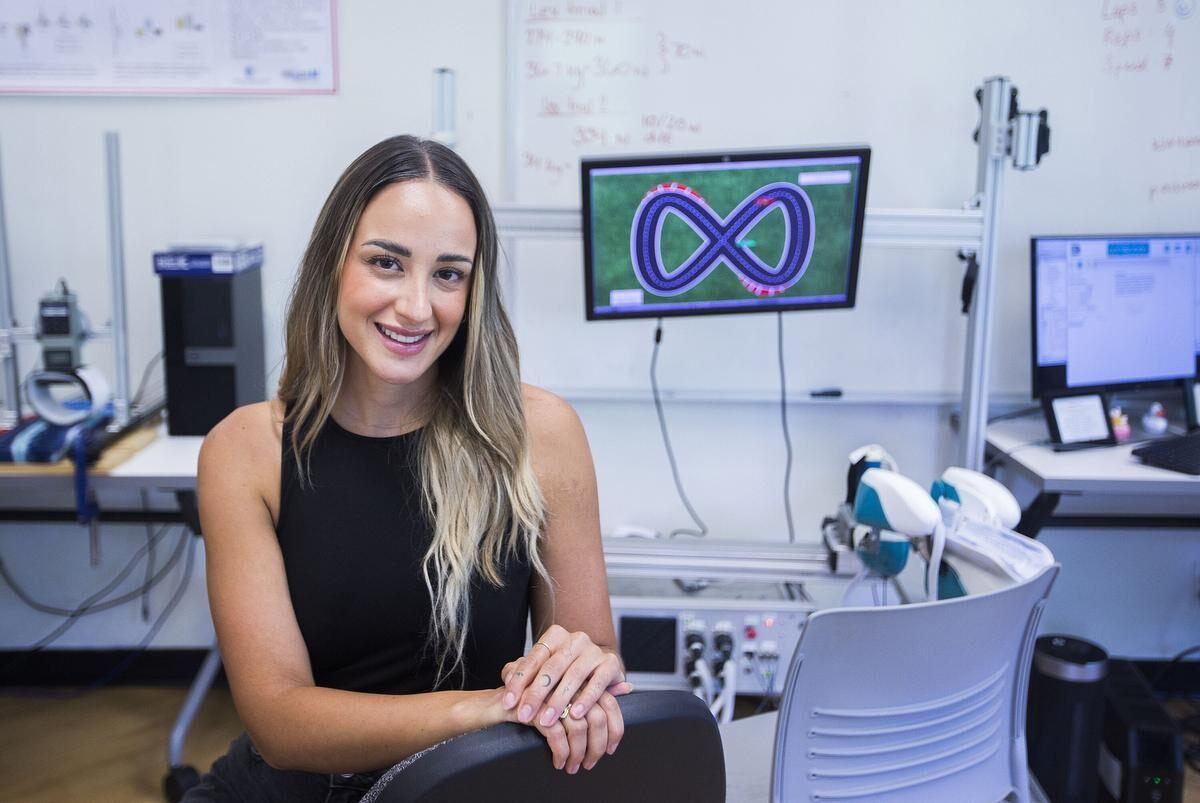
Kailynn Mannella is a PhD researcher at Brock University who is working with people who have multiple sclerosis.
Bob Tymczyszyn / Torstar

A Brock University PhD researcher through the use of robotic rehabilitation is looking for ways to improve the lives of people living with multiple sclerosis.

Kailynn Mannella said because there is no cure for MS research is at a stage where new, innovative ways to rehabilitate individuals are needed.

“What we’re doing isn’t the best, we could be doing more and we (at Brock) want to contribute to that side of research, being able to use it in the real world.”

In Canada, roughly 100,000 people are living with the disease and the Niagara region is a hot spot.

“We just want to make a difference in our community,” said Mannella.

MS is an autoimmune disease. The immune system instead of protecting from viruses and bacteria attacks tissues in the body. In the case of MS, communication between nerve cells is disrupted, and the body does not receive instructions necessary to perform functions such as speaking, seeing, walking and learning.

“Nobody knows what the cause of MS is and that’s primarily why there’s no cure at the moment,” said Mannella. “It could be genetic, it could be environmental, we’re not sure, it’s a guessing game, and it is a very rapidly progressive disease.

“Because there is no cure, we have a bigger need to develop rehab strategies to help people live with MS to have a more functional life.”

In a Brock lab, the only one of its kind in Canada, a robotic device is used for rehabilitation, to help somebody bring back function in an upper limb.

“We’ve been collecting data since January. Right now we’re just trying to reach some more people with MS in the community, it’s an ongoing project and will be going on until next January.

“We’ve had 18 come through and we’re looking for 10 more. If we got more we would prolong the study. It helps the research but is also free rehab for whoever is in need of it.” 

While there is a lot of stroke research, and robotic rehab has many good effects on stroke patients, Mannella said the two are very different and there is a lack of research as it relates to MS.

Brock teamed up with the Italian Institute of Technology, which built and programmed the robot used for rehab purposes.

“We’ve seen some really great strength improvements with some of the individuals with MS. We’ve also seen some motor control, which means all the muscles of their upper limb being able to communicate with each other.

“But we need a few more (participants) to make some firm conclusions.”

Participants come in for a pre-assessment, baseline values are measured, along with muscular strength and neuro-physiological assessments. Then participants attend the lab three times a week for eight weeks to train with the device before a final assessment to see how much they have improved.

“Some people have told me they are able to paint their nails or squeeze lemons when they bake, which they couldn’t do before. And many love coming here because they would not have done any kind of exercise unless they have this kind of program in place for them.”

Mannella said the research has three purposes, with one being the introduction of robotics in treatment.

“They use robots in Europe a lot, but we don’t have them here in rehab clinics and we don’t have them in hospitals so the goal would be to implement these devices where they would be very useful and just to prove that this is very useful for someone with MS.”

A second reason for the study is to determine the severity of the disease, which can be subjective, whereas robotic assessments can determine someone’s level of severity or their progress.

Lastly, Mannella says they are interested said there is interest in training one limb and seeing if there are any improvements in the untrained limb.

“MS is a bilateral disease but oftentimes there is one more-affected limb. We want to see if we can use that good limb for improvement.

“These are the three avenues that we want to see to help people with MS and then we want clinicians to be able to look at our research and use and adapt that to their rehab strategy.”

While Brock is looking for at least 10 more people, Mannella said it would welcome more participants, and anyone with any severity of the disease is welcome.

Mannella and her team can be contacted directly via email at km14ta@brocku.ca.

Bob Tymczyszyn
Bob Tymczyszyn is a photojournalist with the St. Catharines Standard.

New ferroelectric material could give robots muscles


Peer-Reviewed Publication

PENN STATE

Actuation of ferroelectric polymers 

IMAGE: ACTUATION OF FERROELECTRIC POLYMERS DRIVEN BY JOULE HEATING. view more 

CREDIT: QING WANG


UNVERSITY PARK, Pa. — A new type of ferroelectric polymer that is exceptionally good at converting electrical energy into mechanical strain holds promise as a high-performance motion controller or “actuator” with great potential for applications in medical devices, advanced robotics, and precision positioning systems, according to a team of international researchers led by Penn State. 

Mechanical strain, how a material changes shape when force is applied, is an important property for an actuator, which is any material that will change or deform when an external force such as electrical energy is applied. Traditionally, these actuator materials were rigid, but soft actuators such as ferrroelectric polymers display higher flexibility and environmental adaptability.  

The research demonstrated the potential of ferroelectric polymer nanocomposites to overcome the limitations of traditional piezoelectric polymer composites, offering a promising avenue for the development of soft actuators with enhanced strain performance and mechanical energy density. Soft actuators are especially of interest to robotics researchers due to its strength, power and flexibility. 

“Potentially we can now have a type of soft robotics that we refer to as artificial muscle,” said Qing Wang, Penn State professor of materials science and engineering and co-corresponding author of the study recently published in Nature Materials. “This would enable us to have soft matter that can carry a high load in addition to a large strain. So that material would then be more of a mimic of human muscle, one that is close to human muscle.” 

However, there are a few obstacles to overcome before these materials can meet their promise, and potential solutions to these obstacles were proposed in the study. Ferroelectrics are a class of materials that demonstrate a spontaneous electric polarization when an external electric charge is applied and positive and negative charges in the materials head to different poles. Strain in these materials during the phase transition, in this case conversion of electrical energy to mechanical energy, can completely change properties such as its shape, making them useful as actuators. 

A common application of a ferroelectric actuator is an inkjet printer, where electrical charge changes the shape of the actuator to precisely control the tiny nozzles that deposit ink on the paper to form text and images.   

While many ferroelectric materials are ceramics, they also can be polymers, a class of natural and synthetic materials made of many similar units bonded together. For example, DNA is a polymer, as is nylon. An advantage of ferroelectric polymers is they exhibit a tremendous amount of the electric-field-induced strain needed for actuation. This strain is much higher than what is generated by other ferroelectric materials used for actuators, such as ceramics.  

This property of ferroelectric materials, along with a high level of flexibility, reduced cost compared to other ferroelectric materials, and low weight, holds great interest for researchers in the growing field of soft robotics, the design of robots with flexible parts and electronics.  

"In this study we proposed solutions to two major challenges in the soft material actuation field,” said Wang. "One is how to improve the force of soft materials. We know soft actuation materials that are polymers have the largest strain, but they generate much less force compared to piezoelectric ceramics.” 

The second challenge is that a ferroelectric polymer actuator typically needs a very high driving field, which is a force that imposes a change in the system, such as the shape change in an actuator. In this case the high driving field is necessary to generate the shape change in the polymer required for the ferroelectric reaction needed to become an actuator.  

The solution proposed to improve the performance of ferroelectric polymers was developing a percolative ferroelectric polymer nanocomposite — a kind of microscopic sticker attached to the polymer. By incorporating nanoparticles into a type of polymer, polyvinylidene fluoride, the researchers created an interconnected network of poles within the polymer.  

This network enabled a ferroelectric phase transition to be induced at much lower electric fields than would normally be required. This was achieved via an electro-thermal method using Joule heating, which occurs when electric current passing through a conductor produces heat. Using the Joule heating to induce the phase transition in the nanocomposite polymer resulted in only requiring less than 10% of the strength of an electric field typically needed for ferroelectric phase change. 

“Typically, this strain and force in ferroelectric materials are correlated with each other, in an inverse relationship,” Wang said. “Now we can integrate them together into one material, and we developed a new approach to drive it using the Joule heating. Since the driving field is going to be much lower, less than 10%, this is why this new material can be used for many applications that require a low driving field to be effective, such as medical devices, optical devices and soft robotics.” 

Along with Wang, other researchers in the study include from Penn State Yao Zhou, postdoctoral scholar in materials science and engineering; Tiannan Yang, assistant research professor with the Materials Research Institute; Xin Chen, postdoctoral researcher in materials science and engineering; Li Li, research assistant in materials science and engineering; Zhubing Han, graduate research assistant in materials science and engineering; Ke Wang, associate research professor with the Materials Research Institute; and Long-Qing Chen, Hamer Professor of Materials Science and Engineering. From North Carolina State University, other researchers in the study include Hancheng Qin, graduate research assistant in physics; Bing Zhang, graduate student in physics; Wenchang Lu, research professor in physics; and Jerry Bernholc, Drexel Professor in Physics. From Huazhong University of Science and Technology in Wuhan, China, other researchers in the study include co-corresponding author Yang Liu, a former postdoctoral scholar in materials science and engineering at Penn State, now a professor of materials science and engineering. 

The study was supported in part by the United States Department of Energy.  


RELEASED WITH BAIL CONDITIONS

After return from Syria, two Canadian women appear in Edmonton courtroom on Terrorism Peace Bond

By Josh Hall (Twitter: @Vancan19)
Jul 8, 2023 | 1:26 PM

Two Canadians who returned from Syria this week have been arrested.

The RCMP Federal Policing Integrated National Security Enforcement Team (INSET) arrested Helena Carson, 33, and Dina Kalouti, 42, upon their arrival to Montreal-Trudeau International Airport on July 7.

Mounties say that with the consent of the Attorney General of Canada, the RCMP commenced proceedings against the two individuals by way of a Terrorism Peace Bond, pursuant to Section 810.011 of the Criminal Code.

Carson and Kalouti were transported to Alberta and appeared in an Edmonton provincial courtroom for a bail hearing. They were then released and are subject to a number of bail conditions pending a hearing of the application.

Meantime, Global Affairs Canada (GAC) said in a July 6 statement on this matter that it had taken extraordinary steps to repatriate five people — the two women, plus three children. This was done through the Bring Our Loved Ones Home litigation.

“Canada remains steadfast in prioritizing the safety and security of its citizens, both at home and abroad, and has been particularly concerned about the health and well-being of Canadian children in northeastern Syria,” says GAC.

“Canada extends its gratitude to the Autonomous Administration of North and East Syria for its cooperation in conducting another operation under difficult security circumstances. We also thank the United States for its assistance in the repatriation of Canadians and for continuing to play a key role in resolving the ongoing humanitarian crisis in the region.”

Canada remains steadfast in its commitment to the fight against Daesh, or ISIS, and global terrorism while vigorously defending human rights both domestically and abroad, GAC adds.

“Where there is sufficient evidence, law enforcement and public safety agencies will independently take the necessary steps to keep our communities safe,” it continues.

“We reiterate that it is a serious criminal offence for anyone to leave Canada to knowingly support a terrorist group and those who engage in these activities will face the full force of Canadian law. We remain committed to taking every possible step to ensure the safety and security of Canadians.”

Due to privacy considerations, GAC could not provide information about the repatriated individuals at the time of its statement, though RCMP later did name the adults. For operational security reasons, GAC can also not share details of the repatriation.

RCMP say that because the criminal investigation remains ongoing, there will be no further comment at this time.

They were asked, but could not confirm to rdnewsNOW where in Alberta the two women are from.

Edmontonians 'needn't worry' about peace bonds issued for detainees returning from Syrian camps


Kurdish forces patrol al-Hol camp, which houses families of members of the Islamic State group in Hasakeh province, Syria, Wednesday, April 19, 2023.
 (AP Photo/Baderkhan Ahmad)


Craig Ellingson
CTVNewsEdmonton.ca 
Digital Producer
Updated July 7, 2023 

The lawyer for two women and three children returning home to Edmonton on Friday after spending about five years in Syrian detention camps says despite a federal court ordering peace bonds for the adults, the public has nothing to fear.

While a peace bond is a protection order made by a Canadian court under the Criminal Code, it does not imply people placed under them are suspected of committing a crime.

Ottawa lawyer Lawrence Greenspon, who represents the women and three others who returned to Canada in April, said people "needn't worry" that they would be a threat to public safety.

"What’s happened here is the rights of Canadians overseas have been violated for a period of five years, and now, they’re going to be brought home, be reunited with their families and integrated back into Canadian society," Greenspon said of the group, who had been held in the camps because they are wives, widows and children of foreigners suspected of joining the Islamic State during the Syrian civil war.

RELATED STORIES

Two Canadian women and three children on way home from detention camps in Syria

The peace bond is a way of imposing conditions on them, such as mandatory use of electronic monitoring bracelets, curfews, and denial of access to the internet and social media, Greenspon said.

The sisters-in-law and the three children, whose mother is one of them, were part of a group of 19 Canadians that Global Affairs Canada agreed to bring home after they sued the federal government. A settlement was reached in January.

Fourteen of them arrived in Canada in April. The other five failed to show up for that flight, with neither their lawyers nor the Canadian government seemingly aware of what had happened to them for several days.

One of their lawyers later said that the women and children had been detained by Kurdish guards who would not allow them to travel and board the plane at that time.

On Thursday, the five returned to Canada. On Friday, the RCMP said the two women had been taken to Alberta and appeared in Provincial Court for a bail hearing in relation to Terrorism Peace Bond applications.

The women were released from custody, Mounties said, and are subject to a number of bail conditions pending the hearing of the application.

Global Affairs Canada said in a statement it could not provide information or details of the recent repatriation due to reasons of privacy and operational security.

"Canada remains steadfast in its commitment to the fight against Daesh and global terrorism while vigorously defending human rights both domestically and abroad," the federal agency said in a statement. "Where there is sufficient evidence, law enforcement and public safety agencies will independently take the necessary steps to keep our communities safe.

“We reiterate that it is a serious criminal offence for anyone to leave Canada to knowingly support a terrorist group and those who engage in these activities will face the full force of Canadian law. We remain committed to taking every possible step to ensure the safety and security of Canadians."

Greenspon called bringing the five repatriated Canadians home a "life-changing" milestone for them.

“These women and children have been in detention camps in horrible conditions for five years. They’re Canadians," he said. "The government has now seen fit, thankfully and finally, to bring them home … Clearly, the women and children are going to need some support. They’re going to need some counselling. Those things are already in place, ready to go.”

With files from CTV News Edmonton's Nahreman Issa, CTV National News correspondent Judy Trinh and The Canadian Press