Tuesday, July 25, 2023

Deep ocean targeted for mining is rich in unknown life

Agence France-Presse
July 24, 2023
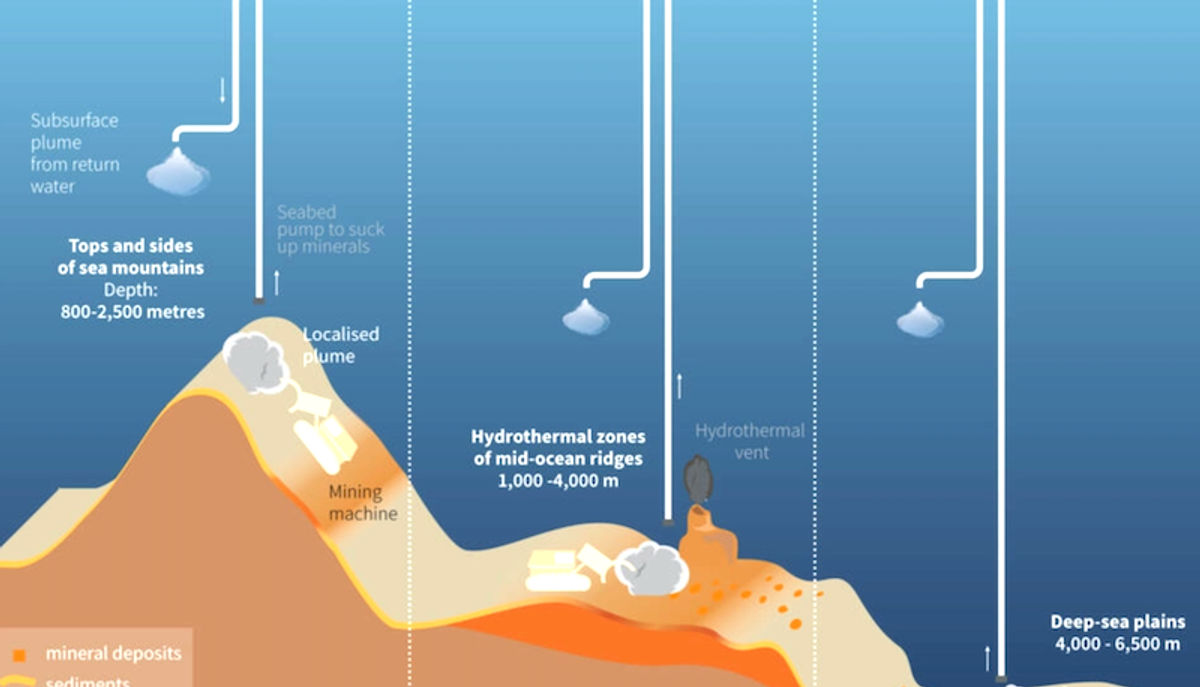

A vast area at the bottom of the Pacific Ocean earmarked for controversial deep sea mineral mining is home to thousands of species unknown to science and more complex than previously understood, according to several new studies.

Miners are eyeing an abyssal plain stretching between Hawaii and Mexico, known as the Clarion-Clipperton Zone (CCZ), for the rock-like "nodules" scattered across the seafloor that contain minerals used in clean energy technologies like electric car batteries.

The lightless ocean deep was once considered a virtual underwater desert, but as mining interest has grown scientists have scoured the region exploring its biodiversity, with much of the data over the last decade coming from commercially-funded expeditions.

And the more they look the more they have found, from a giant sea cucumber dubbed the "gummy squirrel" and a shrimp with a set of elongated bristly legs, to the many different tiny worms, crustaceans and mollusks living in the mud.

That has intensified concerns about controversial proposals to mine the deep sea, with the International Seabed Authority on Friday agreeing a two-year roadmap for the adoption of deep sea mining regulations, despite conservationists' calls for a moratorium.

Abyssal plains over three kilometres underwater cover more than half of the planet, but we still know surprisingly little about them.

They are the "last frontier", said marine biologist Erik Simon-Lledo, who led research published Monday in the journal Nature Ecology and Evolution that mapped the distribution of animals in the CCZ and found a more complex set of communities than previously thought.

"Every time we do a new dive we see something new," said Simon-Lledo, of Britain's National Oceanography Centre.

Campaigners say this biodiversity is the true treasure of the deep sea and warn that mining would pose a major threat by churning up huge plumes of previously-undisturbed sediment.

The nodules themselves are also a unique habitat for specialised creatures.

"With the science as it is at the present day, there is no circumstance under which we would support mining of the seabed," said Sophie Benbow of the NGO Fauna and Flora.

- 'Mind-bogglingly vast' -

The Clarion-Clipperton zone has both its age and its size to thank for the unique animals discovered there, scientists say.

The region is "mind-bogglingly vast", said Adrian Glover, of Britain's Natural History Museum, a co-author both on the study with Simon-Lledo and on the first full stocktake of species in the region published in Current Biology in May.

That study found that more than 90 percent of species recorded in the CCZ -- some 5,000 species -- are new to science.

The region, which was considered to be essentially barren before an increase in exploration in the 1970s, is now thought to have a slightly higher diversity than the Indian Ocean, said Glover.

He said sediment sampling devices from the region might only capture 20 specimens each time -- compared to maybe 20,000 in a similar sample in the Antarctic -- but that in the CCZ you have to go much further to find the same creature twice.

Scientists are now also able to use autonomous underwater vehicles to survey the seabed.

These are what helped Simon-Lledo and his colleagues find that corals and brittlestars are common in shallower eastern CCZ regions, but virtually absent in deeper areas, where you see more sea cucumbers, glass sponges and soft-bodied anemones.

He said any future mining regulations would have to take into account that the spread of animals across the area is "more complex than we thought".

- 'Serious harm' -


The nodules likely started as a shard of hard surface -- a shark tooth or a fish ear bone -- that settled on the seabed and slowly grew by attracting minerals that naturally occur in the water at extremely low concentrations, Glover said.

Each one is likely millions of years in the making.

The area is also "food poor", meaning fewer dead organisms drift down to the depths to eventually become part of the seafloor mud. Glover said parts of the CCZ add just a centimetre of sediment per thousand years.

Unlike the North Sea, formed from the last ice age that ended 20,000 years ago, the CCZ is ancient.


"The abyssal plain of the Pacific Ocean has been like that for tens of millions of years -- a cold dark abyssal plain with low sedimentation rates and life there," Glover said.


Because of this, the environment impacted by any mining would be unlikely to recover in human timescales.

"You are basically writing that ecosystem off for probably centuries, maybe thousands of years, because the rate of recovery is so slow," said Michael Norton, Environment Programme Director, the European Academies' Science Advisory Council.


"It's difficult to argue that that is not serious harm."
Fish near Fukushima contained radioactive cesium 180 times over Japan's limit

Julia Conley, Common Dreams
July 24, 2023

Fish (Marius Masalar / Unsplash)

With the Tokyo Electric Power Company planning to begin a release of 1.3 million tonnes of treated wastewater from the former Fukushima Daiichi nuclear power plant in Japan next month, reports of radioactive fish in the area have raised alarm in recent years—and new reporting on Sunday revealed that the problem is far from mitigated, prompting questions about how dangerous te company's plan will be for the public.

The plant operator, known as TEPCO, analyzed a black rockfish in May that was found to contain levels of radioactive cesium that were 180 times over Japan's regulatory limit, The Guardianreported.

The fish was caught near drainage outlets at the plant, where three nuclear reactors melted down in March 2011 during a tsunami.

Rainwater from the areas surrounding the reactors flows into the area where the fish was caught.

The high level of cesium—which, depending on the level of exposure, can cause nausea, vomiting, diarrhea, bleeding, coma, and death in people who eat contaminated food—was discovered as TEPCO prepares to begin the discharge of treated wastewater which has been used to cool fuel from the melted reactors. The wastewater has mixed with rainwater and groundwater since the tsunami.

TEPCO has acknowledged that fish near the drainage outlets have been unsafe for consumption, as the concentration of cesium in seabed sediment in the area has measured more than 100,000 becquerels per kilogram. The maximum legal level is 100 becquerels per kilogram.

"Since contaminated water flowed into the Fukushima Daiichi nuclear power station port immediately after the accident, TEPCO has periodically removed fish from inside the port since 2012," an official for the company told The Guardian.

A fish was detected to have high levels of radiation near Fukushima in January 2022, with authorities positing that the fish had escaped from the drainage outlet. Shipments of black rockfish caught off the coast of Fukushima prefecture were promptly suspended and have not been resumed.

More than 40 fish with cesium levels over the legal limit were found in the plant's port between May 2022 and May 2023, and 90% came from the inner breakwater where water flows from the area around the melted reactors.

The Nuclear Regulation Authority in Japan and the United Nations' International Atomic Energy Agency (IAEA) have both given their approval of TEPCO's plan to release the wastewater into the Pacific Ocean, which it says it needs to do to secure space for decommissioning the plant. The discharge process, using an Advanced Liquid Processing System (ALPS), would take decades to complete.

While the IAEA said earlier this month the plan will have a "negligible radiological impact to people and the environment," Paul Dorfman of Ireland's Radiological Protection Advisory Committee said Monday that reports like the one about the contaminated rockfish are likely "far from over."

"Believing [and] pretending some things are not harmful because it is convenient is literally killing the planet," said American University sociologist Celine-Marie Pascale, comparing the ecological and climate crisis to authorities' insistence that the water discharge is safe. "Corporate interests triumph at global expense once again."


Officials in Hong Kong have said they will ban food imports from 10 prefectures in Japan if the release moves forward in August, and some Chinese wholesalers have stopped accepting seafood imports from the country.

In addition to concerns about cesium, TEPCO has admitted that the ALPS it plans to use may not eliminate isotopes including ruthenium, cobalt, strontium, and plutonium. The system is also not able to remove tritium, the radioactive isotope of hydrogen.

Masanobu Sakamoto, president of JF Zengyoren, Japan Fisheries Cooperatives, said in June that the group "cannot support the government's stance that an ocean release is the only solution."
Conspiracy mindset fuels child vaccination hesitancy, new study reveals
2023/07/24


New research published in Frontiers in Psychology has found that individuals harboring a conspiracy mindset tend to demonstrate higher hesitancy towards vaccinating children against COVID-19 and measles, mumps, and rubella (MMR). The study also highlighted these individuals’ frequent reliance on politically conservative media sources, which further affirms their beliefs, contributing to a significant challenge in overcoming vaccine resistance among adults responsible for child vaccinations.

The researchers conducted this study to understand the role of a conspiracy mindset in shaping people’s attitudes towards COVID-19 vaccination, particularly concerning vaccinating children ages 5 to 11. They wanted to investigate whether individuals who hold a conspiratorial mindset, characterized by the tendency to believe in secretive and harmful actions by powerful agents, were more likely to distrust government health authorities, accept misinformation about vaccines, and be hesitant towards vaccination.

“We have been studying the role of conspiracy beliefs about the US government and health authorities since the pandemic. This has led us to look at the tendency to engage in conspiratorial thinking as a disposition to accept conspiracy theories, especially regarding the medical system and vaccines for COVID-19,” said study author Dan Romer, the research director of the Annenberg Public Policy Center (APPC) and lead author of the study.

To conduct the study, the researchers used a national probability sample of nearly 2,000 U.S. adults. They measured the participants’ conspiratorial mindset by assessing their agreement with statements related to generic conspiracy beliefs about the workings of government (e.g., “Much of our lives is controlled by plots hatched in secret places”). They also evaluated their beliefs in misinformation about COVID vaccines and specific conspiracy theories about the pandemic’s origin and impact. Additionally, they examined participants’ trust in health authorities, perceived risk of COVID to children, and support for vaccinating children for COVID-19 and the measles, mumps, and rubella (MMR) vaccine.

The study found that individuals with a conspiratorial mindset were more skeptical of government authority and agencies like the CDC and FDA. They were more likely to believe misinformation about vaccination and COVID-19, including conspiracy theories about how vaccines are created and how the pandemic was managed (e.g., “Health officials at the Food and Drug Administration, also known as the FDA, who opposed Donald Trump’s re-election, delayed the approval of COVID-19 treatments until after the election”). They were also less likely to view COVID-19 infection as harmful to children. These beliefs were associated with reluctance to recommend vaccinating children for COVID-19 and for the MMR vaccine.

“Our findings indicate that those who believe various forms of unsubstantiated allegations about COVID vaccines are also likely to mistrust the government and its health agencies, which is called a conspiracy mindset,” Romer told PsyPost. “As a result, a large factor in resistance to vaccination of both adults and children appears to derive from this mindset. This will pose a challenge to the government’s efforts to provide protection not only from COVID but also other infections that are common, such as the flu and MMR in children.”

The researchers also found that individuals with a conspiratorial mindset tended to rely on politically conservative media outlets (such as Fox News and Newsmax) and avoid mainstream news sources. This suggests that they engage with media that affirm their beliefs rather than media that provide recommendations supported by health authorities.

The study’s findings indicate that a conspiratorial mindset plays a significant role in adult reluctance to vaccinate children against COVID-19. Overcoming this resistance will be challenging and may require messaging from individuals already trusted by those with the conspiratorial mindset, as they are unlikely to trust mainstream news outlets or representatives of major health agencies.

“Some of the sources of the conspiracy mindset are the result of long-standing doubts about the government’s action toward particular groups, such as Black Americans,” Romer said. “It will take concerted efforts to gain the trust of such groups for the medical system. Other sources of resistance are more political, such as those who believe in a deep state or who think the government tries to suppress dissent. Others are particularly skeptical of the pharmaceutical industry. In any case, responding to conspiracy mindsets will be a challenge.”

One limitation of the study is that the panel members may not be entirely representative of the general population, as they tend to be more educated. Additionally, self-reported behavior and intentions may be influenced by social desirability biases. However, the researchers addressed these biases and found that individuals with a conspiratorial mindset were willing to report their lack of support for vaccination, suggesting that biases did not strongly affect the results.

“The major challenge for public health is to overcome this source of resistance to vaccination,” Romer said. “Future research will need to identify strategies for this purpose.”

The study, “The role of conspiracy mindset in reducing support for child vaccination for COVID-19 in the United States“, was authored by Daniel Romer and Kathleen H. Jamieson.

© PsyPost
Memorial to Emmett Till

Biden to designate civil rights monument amid new racism row

Agence France-Presse
July 25, 2023

A woman takes a picture of the Roberts Temple Church of God in Christ in Chicago, which will be designated by the White House as part of a three-part memorial to Emmett Till, a 1955 lynching victim 
(SCOTT OLSON)

US President Joe Biden is set to designate a new national monument on Tuesday memorializing the horrific 1950s lynching of Emmett Till, with the White House framing the symbolic act as part of a fight against resurgent racism.

The monument, encompassing several locations, will honor the 14-year-old Black boy who was tortured and murdered by white men in 1955 after he allegedly whistled at a white shopkeeper's wife in Mississippi.

His mother Mamie Till-Mobley, who became an activist after the murder and is credited with having helped spark the US civil rights movement, will also be remembered in the national memorial.

"The new monument will protect places that tell the story of Emmett Till's too-short life and racially-motivated murder, the unjust acquittal of his murderers, and the activism of his mother," the White House said.

The memorial proclamation will be unveiled by Biden in the ornate Indian Treaty Room at the White House, with the last surviving witness to Till's fatal abduction in attendance.

Wheeler Parker, a pastor now in his 80s, was Till's best friend and cousin when, aged 16, he witnessed him be taken away to his death. The White House said Parker would be joined by about 60 other guests, including Till family members, civil rights leaders and senior government officials.

Signed on the 82nd anniversary of Till's birth, Biden's proclamation will preserve three historic sites in Illinois and Mississippi.

One of them will be the Roberts Temple Church of God in Christ in Chicago, where Till's mother insisted at her son's funeral that the casket remain open, allowing a huge crowd and the press to see the boy's disfigured body -- a moment that galvanized public outrage.

Another will be the Tallahatchie, Mississippi, courthouse where an all-white jury found the men accused of murdering Till not guilty. (They would later admit to the crime.)

The third location will be the spot on the Tallahatchie River in Mississippi where Till's battered body was eventually discovered. Signs commemorating the brutal event there and in other locations around Tallahatchie County have repeatedly been defaced and vandalized over the years.


- New slavery controversy -

Biden's high-profile treatment for a painful piece of 20th century US history is playing out against a backdrop of accusations that a leading Republican candidate for the 2024 presidential race is openly stirring racist sentiment.

Florida Governor Ron DeSantis has led a charge to minimize the history of past racism in his state's school curriculum, making this part of a broader campaign against what he describes as the "virus" of "woke" left-wing values.


Responding to an outcry over what has been described as an attempt to rewrite history, DeSantis last week doubled down, saying that slaves in some instances learned valuable skills.

"They're probably going to show that some of the folks that eventually parlayed, you know, being (an enslaved) blacksmith into doing things later in life," DeSantis said Friday.

White House Press Secretary Karine Jean-Pierre described DeSantis's comment as "inaccurate" and "insulting."


"It's hurtful and prevents an honest account, an honest account of our nation's history," she said.

Jean-Pierre, who is Black, said the Emmett Till monument was part of "the broader story of American Black oppression" and survival.

"It's an important moment. You're going to hear directly from the president," she said.
General Motors reports strong results as it girds for tough labor talks

By AFP
Published July 25, 2023

GM again benefited from strong pricing in North America due to robust demand for trucks and sport utility vehicles
 - Copyright GETTY IMAGES NORTH AMERICA/AFP/File Brandon Bell

John BIERS

General Motors lifted its full-year forecast following another strong quarter on Tuesday as it girds for difficult labor negotiations and questions about demand for its growing electric vehicle business.

The big US automaker cited strong consumer demand that has allowed for solid pricing while keeping incentives in check.

Profits jumped 52 percent to $2.6 billion on revenues of $44.7 billion, which were up 25 percent.

In the spring, market watchers had spoken of a potential cooling in the US vehicle market due to persistently elevated inflation. But Wall Street analysts have recently pointed to the strong US labor market as a reason car sales have stayed robust.

“The biggest driving force behind our financial results is customer demand for our vehicles,” said Chief Executive Mary Barra in a letter to investors.

But the buoyant results come as GM faces some imminent challenges.

These include talks on a new contract with the United Auto Workers, whose new president, Shawn Fain, has adopted an aggressive posture towards GM, Ford and Stellantis, signaling a willingness to strike.

CFRA Research Garrett Nelson said the risk of a UAW strike would act as “near-term overhang” on the company, noting that GM shares had a muted reaction to Tuesday’s release.

– Cutting costs –


In the second quarter, GM scored higher deliveries compared with the year-ago period in both North America and China

Strong areas in North America included “premium” truck offerings, as well as the more affordable Chevrolet Trax, which starts at under $25,000.

GM’s average transaction price came in at $52,248, up about four percent from the year-ago level.

Tuesday’s results, however, were dented by $792 million in costs connected to a recall of the Chevrolet Bolt due to battery problems.

GM is now covering that amount of a previous $1.9 billion hit that LG Electronics and LG Energy Solution had assumed.

GM increased full-year projections, raising its range of annual net income to $9.3-$10.7 billion from $8.4-$9.9 billion.

The Detroit giant reduced its capital spending forecast and now eyes a peak of $12 billion for 2023, down $1 billion from the previous outlook.

Barra described plans to trim capital spending by “focusing on the most strategic internal combustion engine and EV programs and our highest impact growth initiatives.”

The outlook assumes GM negotiates a new labor agreement without a work stoppage.

The UAW’s Fain conspicuously shunned the tradition of opening this year’s contract talks with a ceremonial handshake with Barra and other two auto CEOs. The talks follow a period of strong auto industry profitability.

Barra pointed to GM’s “long history of negotiating fair contracts,” adding that “our goal this time will be no different.”

– Demand for EVs? –

Besides labor, questions also surround the market for electric vehicles (EV), with GM ramping up production at a time when car dealerships are seeing greater inventories of EVs compared with conventional vehicles amid uncertain consumer demand.

EV market leader Tesla has undertaken a series of price cuts in 2023.

GM plans to increase production to roughly 100,000 EVs in the second half of 2023, about double the rate of the first half.

This includes production of EV versions of the Blazer, Silverado and Equinox, according to a GM slide Thursday mapping out the ramp in the second half of 2023.

Shares of GM slipped 0.2 percent to $39.24 in pre-market trading.

Uncertainty as internet reaches remote Amazon

By AFP
Published July 25, 2023

A long-exposure image of a group of SpaceX's Starlink satellites
 - Copyright AFP/File Mariana SUAREZ
Lionel ROSSINI

Covered in tattoos resembling jaguar spots, an Indigenous man connects to TikTok for the very first time from a previously off-the-grid village deep in the Amazon.

He bursts out laughing at a video entitled: “If I were rich.”

The man and other members of the Matses Indigenous group have just made a massive leap into modernity with the arrival of Elon Musk’s Starlink satellite internet.

Their village of Nova Esperanca in the Javari Valley, a settlement of some 200 people, is more than 500 kilometers (310 miles) or three days by canoe from the closest town.

But now, they are instantly connected to the outside world by a massive solar-powered antenna perched on the roof of the only school in this area of northwest Brazil, near the borders with Peru and Colombia.

The Matses are one of seven Indigenous groups in Javari, Brazil’s second-biggest Indigenous reserve, to have had contact with outsiders.

About another 19 groups remain off grid — unfound or in voluntary isolation in the area of 8.5 million hectares (21 million acres).

The Matses are a nomadic, warrior tribe, which entered into communication with the modern world in the 1970s. Today, they still hunt and fish, as well as wear facial ornaments made of bone and ivory, despite having adopted Western attire. The eldest among them have facial tattoos.

But change is afoot.

On the day the antenna was installed, those with mobile phones — mostly teens — connected to TikTok, YouTube and sent voice messages on WhatsApp.

Among the converts was Bene Mayuruna, president of the General Organization of the Matses People (GMO) based in Atalaia do Norte, the nearest town.

Thanks to the internet, he will now be able to keep in touch with people in the region’s dozens of villages without having to make long trips by motorboat, he told AFP.

“Nova Esperanca… is very far away, access is difficult, communication too,” he said.

– Education and health –

The municipality of Atalaia do Norte financed the installation of the network at Nova Esperanca as part of a broader initiative that could revolutionize life for inhabitants of remote populations but also risks changing their traditional culture.

The council, which pays the subscription fees, has plans to expand the system to another 60-odd villages — some 6,000 people.

For Cesar Mayuruna, the sole Indigenous councilor of Atalaia do Norte, the goal is above all to improve education.

“Now we have dreams for the future: to be able to train civil engineers, geologists, architects, lawyers, nurses…” Mayuruna — a name that is common in the region — told AFP.

The internet should also improve the response to health emergencies, often snake bites.

“Sometimes the (two-way) radio doesn’t work, there’s no battery, no solar panel… So this is a big step forward,” said Fabio Rodrigues, a nurse with the SESAI health network that serves the community.

On the banks of the Javari River where illegal fishermen and miners, drug traffickers and pirates regularly attack locals, there are hopes Starlink will also improve security, even though the criminals, too, are known to employ the SpaceX satellite technology.

– Cultural concerns –


Some in Nova Esperanca, especially among the older generation, have concerns.

The antenna was barely installed before the elders called an emergency meeting.

They decided that after dark, the internet will be cut off for everyone except teachers, health workers and village leaders.

The same will apply on days of collective work, hunting, fishing or rituals.

“The internet means that young people are not interested in traditional activities, they are not helping their mothers,” said Bene Mayuruna.

“When the mother does an activity, like gardening, she calls and they don’t come because of the cellphone, because they are watching videos. This is worrying, isn’t it?” he concluded.

Europe, US heatwaves 'virtually impossible' without climate change
2023/07/25
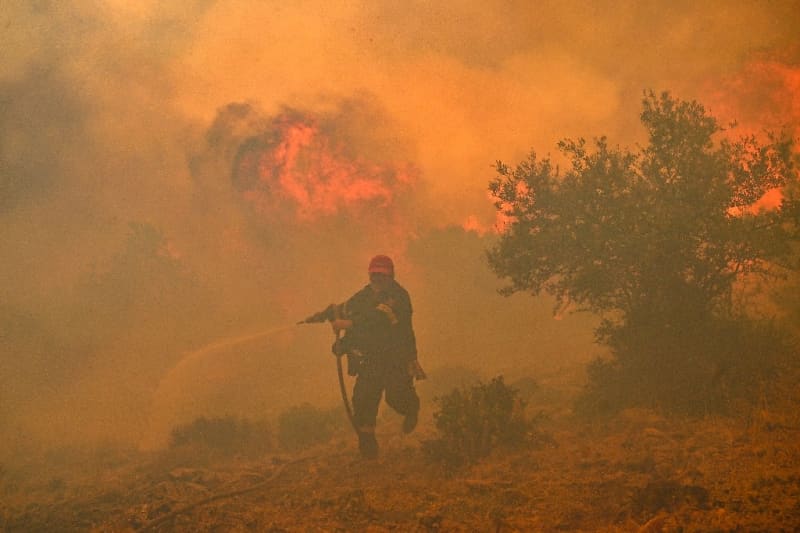
A firefighter tries to control a blaze in New Peramos, near Athens on July 19

Paris (AFP) - Blistering heat that has baked swathes of North America and Europe this month would have been "virtually impossible" without human-caused climate change, researchers said Tuesday, as intense temperatures spark health alerts and stoke ferocious wildfires.

With tens of million people affected in the northern hemisphere and July on track to be the hottest month globally since records began, experts warn that worse is to come unless we reduce planet-heating emissions.

Severe heatwaves have gripped southern Europe, parts of the United States, Mexico and China this month, with temperatures above 45 degrees Celsius.

In the new rapid analysis of the scorching temperatures, scientists from the World Weather Attribution group found that the heatwaves in parts of Europe and North America would have been almost impossible without climate change.

Temperatures in China were made 50 times more likely by global warming, they found.

"The role of climate change is absolutely overwhelming," said climate scientist Friederike Otto, of the Grantham Institute for Climate Change and the Environment, Imperial College London.

Intense temperatures have swept much of the southwest and southern United States -- including in Phoenix, Arizona, which suffered a record-breaking three straight weeks of highs above 43C.

Blazes on the Greek mainland and islands have caused tens of thousands to flee, sent tourists scrambling for evacuation flights and prompted the prime minister to say the country is "at war".

In Beijing, the government urged the elderly to stay indoors and children to shorten outdoor playtime to reduce exposure to the heat and ground-level ozone pollution.
'More extreme'

Scientists have already established that climate change -- with about 1.2C of global warming since the late 1800s -- has made heatwaves in general hotter, longer and more frequent.

To trace how far the July heatwaves in the northern hemisphere had departed from what would have been expected without that warming, Otto and her WWA colleagues used weather data and computer model simulations to compare the climate as it is today with that of the past.

Researchers said they focused on periods when "the heat was most dangerous in each region".

Otto said in the past it would have been "basically impossible" that such severe heat waves would happen at the same time and that people should no longer be surprised to see temperature records tumbling.

The future could be even worse.


"As long as we keep burning fossil fuels we will see more and more of these extremes."

The researchers found that these severe heatwaves can now be expected roughly once every 15 years in North America, every 10 years in southern Europe and every five years in China.

And they will become even more frequent -- happening every two to five years -- if temperature rise reaches 2C, expected in around 30 years unless countries fulfil their Paris Agreement pledges and rapidly cut emissions.

The study also found that these heatwaves were hotter than they would have been without climate change.

Last week leading NASA climatologist Gavin Schmidt told reporters that July 2023 is not just on track to be the hottest absolute month since records began, but also the hottest in "hundreds, if not thousands, of years".

Experts have said that the surging heat cannot be attributed solely to the warming El Nino weather pattern, which is not expected to strengthen until later on in the year.

As with other impacts from climate change, it is those most vulnerable who are most at risk.

Last week, the World Health Organization said the extreme heat was straining healthcare systems, hitting older people, infants and children.

The WHO said it was particularly concerned about people with cardiovascular diseases, diabetes and asthma.

© Agence France-Presse
Guardian angels’: Rhodes locals help fire-stranded tourists

By AFP
Published July 25, 2023

Locals on Rhodes have been helping to tackle the fires and support stranded tourists 
- Copyright GETTY IMAGES NORTH AMERICA/AFP SCOTT OLSON

Alexandros KOTTIS

In the yard of a private school far from the wildfires raging on the Greek island of Rhodes, children kicked a ball as a man relaxed under the scorching sun.

While the inferno has wrought havoc on the dream vacation of thousands of tourists, a few hundred of them have found shelter at the Rodion School in the island’s northeast.

“Some were less lucky than us, they had to run to the beach to save their lives,” said Vincent, a Swiss tourist who declined to give his surname.

The family of five was vacationing in the popular tourist spot of Lindos when they were forced to evacuate in panic on Saturday as the wildfires inched perilously close to coastal resorts in the south of the island.

The Rodion was closed for summer, but decided to hurriedly reopen as part of an island-wide mobilisation that saw hundreds of people housed in indoor gyms, halls and other hotels until they could board flights home.

More than 260 firefighters were still battling flames for an eighth consecutive day on Rhodes on Tuesday, supported by two helicopters and two planes.

“School staff were immediately mobilised and dozens of volunteers came forward to help. The scale of solidarity exceeds our expectations,” said the school’s director, Kyriakos Kyriakoulis.

“People were panicked when they came here, traumatised. We try to bring them a little comfort and humanity,” Kyriakoulis told AFP.

The school gymnasium has been transformed into a dormitory while the dance hall doubles as a canteen.

“The human warmth, the generosity, the empathy that we found with these people… They are our guardian angels. We won’t forget that,” Vincent said.

“Without them, I don’t know what we would have done,” he added.

Over 600 people have found shelter at the school, and 200 were still there Monday.

– ‘Very moved’ –


“The whole population of Rhodes has been incredibly supportive,” said Manolis Markopoulos, head of the Rhodes Hoteliers Association.

“Some have brought their own mattresses” for people to sleep on, he said.

The school’s teachers have interrupted their summer vacations to return to offer cultural, recreational and sporting activities to children, helping to take their mind off the trauma of evacuation.

“We have everything we need here, and more,” said Christine Moody, a 69-year-old British pensioner on her first visit to Greece.

“I can’t believe they are so kind, they give so much, and in every way. I am very moved,” she said, adding that she will remember this “forever.”

Local restaurant owners have brought free food, and computer science teacher Marios Hatzimihalis has set up an online form where evacuees can find available emergency accommodation.

“We do what is in our power to help, each with their skills and their means”, Hatzimihalis said.

His initiative has been employed by local authorities, who use it to register tourists awaiting repatriation to their countries.

The Greek transport ministry said over 2,100 people had flown home on emergency flights on Sunday and Monday.

In contrast to the support offered by the locals, many visitors have decried a lack of assistance from state authorities.

“We have not seen the Greek authorities. It is thanks to the people here that we are saved”, said Vincent.

Rhodes on Tuesday remains at the highest level of fire alert.


Greece 'at war' with wildfires, says prime minister amid evacuations

2023/07/24
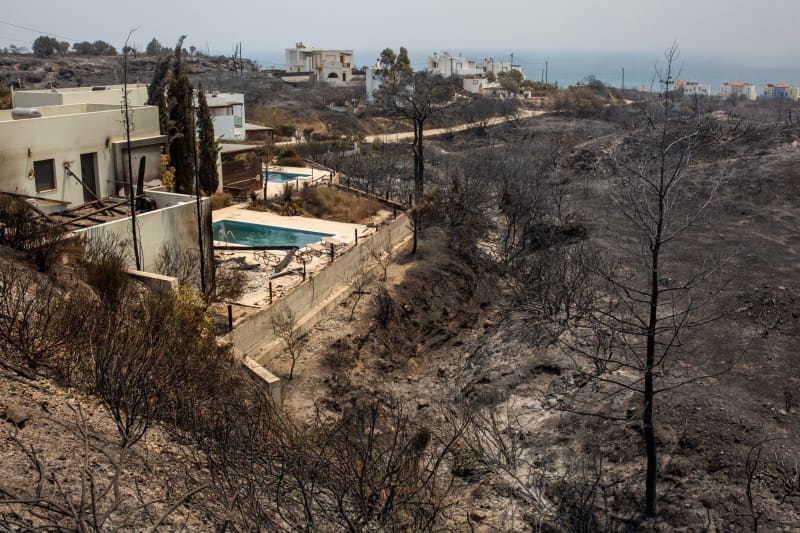
Burnt trees are seen next to a hotel near the village of Kiotari as forest fires rage on Rhodes and in other parts of Greece. Socrates Baltagiannis/dpa

Greek Prime Minister Kyriakos Mitsotakis said his country was "at war" with the wildfires which were raging in 64 regions across the country on Monday, and have forced tens of thousands of tourists on various holiday islands to be evacuated.

The fire danger remains extremely high. This applies to the region of Greater Athens, the Peloponnese peninsula and many islands in the Aegean Sea, the Greek Civil Defence Department warned on Monday.

It added that the high-risk situation is expected to remain in the coming days.

The worst fires raged on the island of Rhodes and on Corfu and Euboea on Monday.

On Rhodes, a large blaze raged for the seventh day in a row. There, some 20,000 people from the south-east of the island had been brought to safety on Saturday in one of Greece's largest-ever evacuation operations.

Around 9,500 people on Rhodes were still housed in halls and schools or being taken in by locals on Monday, said estimates.

The blaze on Rhodes has damaged around 10% of the island's hotels, according to the prime minister.

On the island of Corfu, in the north-west of the country, a forest fire was brought under control on Monday.

During the night, the local authorities had taken precautionary measures to evacuate some 1,000 tourists and 1,500 residents.

Coastguard boats brought the holidaymakers and residents to safety, state television reported.

Firefighting planes and helicopters were deployed at first light on Monday to all the fire grounds, according to the Civil Defence Department.

Fire crews from Turkey and Egypt were deployed to reinforce Greek firefighting crews. Strong winds continue to fan the flames, according to a spokesman for the fire brigade.

Efforts are now focused on helping bring tourists back home.

The German travel group Tui has said it is sending additional planes to Greece for stranded tourists.

Six additional planes brought holidaymakers from Germany and the United Kingdom home on Monday morning, Tui said on Monday. Another flight to Denmark was also announced.

"Our colleagues are still working around the clock to support the affected guests," said Thomas Ellerbeck, who is responsible for group communications at Tui.

The travel group had previously said it would stop all flights to the tourist spot up to and including Tuesday.

On Sunday, Tui reportedly had about 39,000 customers on Rhodes, 7,800 of whom were affected by the fires.

Tour operators are using chartered planes and vacant seats on regular flights, according to the German Travel Association (DRV). Some guests are being taken by ferry to Athens or Turkey to travel home from there, it said.

The situation that Greece finds itself in has been caused by climate change, Mitsotakis stressed during a parliamentary debate broadcast by state radio on Monday.

The Greek leader thanked all the people who helped with the firefighting efforts across the country in recent days.

He said the fact there had been no casualties in the wildfires in several areas was down to the efforts of firefighters, the civil defence service, the coastguard and volunteers. He warned that the next few days would continue to be dangerous.

The first fires began near Athens on Monday last week, amid a heatwave and strong winds.

Greece is eagerly awaiting Thursday, as meteorologists have said temperatures are set to drop.

Temperatures are expected to be around 35 degrees Celsius on Thursday, which is normal for the time of year. On Sunday, 46.4 degrees was measured in the south of the Peloponnese peninsula. This was the fourth-highest temperature ever recorded in Greece, the meteorological office reported.

But before the cooler temperatures arrive, there will be one last hot day with up to 46 degrees on Wednesday, weather experts said.

The cooling will be the result of strong northerly winds, and the Civil Defence Department warned that forest fires could rage out of control again because of these strong winds.

Burned cars in the village of Kiotari as forest fires rage on Rhodes and in other parts of Greece. Socrates Baltagiannis/dpa

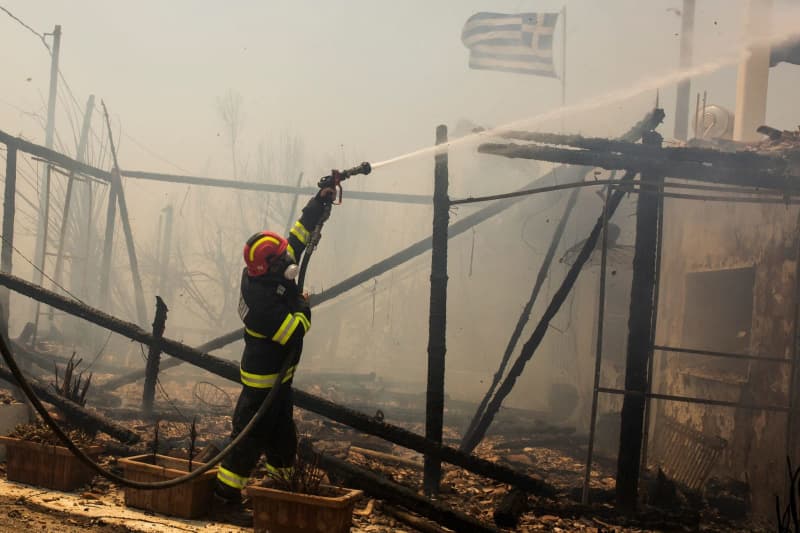
A Romanian firefighter tries to extinguish a fire that broke out in a house near the village of Gennadi as forest fires rage on Rhodes and in other parts of Greece. Socrates Baltagiannis/dpa

© Deutsche Presse-Agentur GmbH
Greta Thunberg protests at oil harbour just hours after court fine
2023/07/24
Swedish climate activist Greta Thunberg (C) stands in front of the European Parliament, where a protest action was held by environmental activists.
 Philipp von Ditfurth/dpa

Only hours after showing up in court for resisting police orders while protesting, Swedish climate activist Greta Thunberg was out demonstrating again on Monday.

Undeterred by the fines that had been handed down to her by a Swedish court, Thunberg participated in a similar act of civil disobedience to the one that got her in trouble the first time at the oil port in the Swedish city of Malmö.

She once again refused to comply with police orders to clear the street, media reports said.

Photos in Swedish media outlets showed the 20-year-old, who became the face of climate activism after staging weekly protests at the Swedish parliament, being carried away by police officers.

"We are doing this because we are in the middle of a climate crisis," Thunberg told Swedish news agency TT. "We who can act have an obligation to do so."

Earlier on Monday, at the Malmö District Court, Thunberg admitted to taking part in a separate protest in June and ignoring police instructions. However, she rejected the idea that it was a criminal offence, reported TT.

"My actions are justifiable," Thunberg told the court, saying she was acting in the face of a climate emergency.

The court, however, did not accept this argument.

Thunberg was sentenced to 30 daily fines of 50 Swedish kronor ($4.80) for resisting state authority. She was also ordered to pay 1,000 kronor to a fund for crime victims.

The activist, who lives in Stockholm, took part in a climate protest at Malmö's oil harbour in June that lasted several days, during which protesters prevented oil tankers from leaving the harbour.

She posted her own account of the protest on social media, including a picture of herself in front of a truck holding a sign that read "I am blocking tankers" in Swedish.

Four other activists were also charged for refusing to clear the road despite being ordered to do so several times by police officers.

A number of Thunberg's supporters had reportedly gathered outside the courthouse.

© Deutsche Presse-Agentur GmbH


Greta Thunberg goes on trial over Swedish climate protest


By AFP
Published July 24, 2023

Thunberg faces charges over a demonstration in the city of Malmo - Copyright AFP FREDERICK FLORIN

Swedish climate campaigner Greta Thunberg is set to go on trial on Monday charged with disobeying police at a rally last month, in which activists blocked the port in the city of Malmo.

She is due to appear before the court in the southern Swedish city at 0930 GMT.

The 20-year-old activist “took part in a demonstration that disrupted traffic” and “refused to obey police orders to leave the site”, according to the charge sheet seen by AFP.

She faces a maximum sentence of six months in prison, but prosecutor Charlotte Ottosen told AFP that usually these types of charges result in fines.

The rally, organised by environmental activist group “Ta tillbaka framtiden” (Reclaim the Future), tried to block the entrance and exit to the Malmo harbour to protest against the use of fossil fuel.

“We choose to not be bystanders, and instead physically stop the fossil fuel infrastructure. We are reclaiming the future,” Thunberg said in an Instagram post at the time.

Thunberg shot to global fame after starting her “School Strike for the Climate” in front of Sweden’s parliament in Stockholm at the age of 15.

She and a small band of youths founded the Fridays for Future movement, which quickly became a global phenomenon.

In addition to her climate strikes, the young activist regularly lambasts governments and politicians for not properly addressing climate issues.

Thunberg simply responded “no comment” to police questions regarding the Malmo rally, according to a preliminary transcript seen by AFP.

– ‘Burning our lives’ –

Reclaim the Future insists that despite the legal pressures, it remains unbowed in its determination to stand up to the fossil fuels industry.

“If the court chooses to see our action as a crime it may do so, but we know we have the right to live and the fossil fuels industry stands in the way of that,” group spokesperson Irma Kjellstrom told AFP.

Six members of the organisation would be appearing in court in Malmo, she said.

“We young people are not going to wait but will do what we can to stop this industry which is burning our lives,” she said, explaining the group’s plans for continuing civil disobedience.

Black women face ‘systemic racism’ in health care across Americas: UN


ByAFP

A searing United Nations Population Fund report highlights how Black women and girls face racism in health systems in the Americas and are often disadvantaged 'before, during and after pregnancy' - Copyright AFP/File Mohamed ABDIWAHAB

Black women throughout the Americas — and in particular the United States — face health care mistreatment due to “systemic racism,” leading to high death rates during childbirth, the United Nations warned Wednesday.

Maternal mortality among women of African origin is “alarmingly high,” both in absolute terms and when compared to non-Black and non-Indigenous women in the region, according to a damning new report by the United Nations Population Fund (UNFPA) reviewing nine countries in the Americas.

The study drew on data from Brazil, Colombia, Costa Rica, Cuba, Panama, Suriname, Trinidad and Tobago, the United States and Uruguay.

“Structural racism and sexism are evident in maternal health disparities that exist across income levels and national and regional borders,” the report said.

The disparities are sharpest in the United States, where non-Hispanic African American women and girls are three times more likely to die while pregnant or within six weeks of giving birth than the country’s non-Hispanic white women.

Black women are also 2.5 times more likely than white women to die in childbirth in Suriname, and 1.6 times more likely in Brazil and Colombia.

High maternal mortality among Black women in the Americas is often attributed to “their individual failure to seek timely treatment, poor lifestyle choices or hereditary predispositions,” the UNFPA said.

But the UN’s sexual and reproductive health agency “categorically refutes these misconceptions,” instead linking such discrepancies to a “systemic and historical pattern of racist abuse in the health sector” across North, Central and South America.

“The scourge of racism continues for Black women and girls in the Americas, many of whom are descendants of the victims of enslavement,” UNFPA Executive Director Natalia Kanem said in a statement.

“Too often, Afrodescendent women and girls are abused and mistreated, their needs are not taken seriously, and their families are shattered by the preventable death of a loved one during childbirth.”

The region’s Black women and girls “are disadvantaged before, during and after pregnancy,” the report stated, with UNFPA pointing in particular to the prejudices that persist in medical education.

For example, Black women in labor are more often deprived of anesthesia on the false pretext they are less sensitive to pain, or refused painkillers because they are seen to be more likely than white women to become addicted, the report said.

It also slammed “verbal and physical abuse” by health care staff.

As a result, Black women face increased complications during pregnancy and delayed health interventions, “which too often result in death,” the report said.

Published July 12, 2023