It’s possible that I shall make an ass of myself. But in that case one can always get out of it with a little dialectic. I have, of course, so worded my proposition as to be right either way (K.Marx, Letter to F.Engels on the Indian Mutiny)
Tuesday, August 22, 2023
Research measures global impact of ant invasions on native species
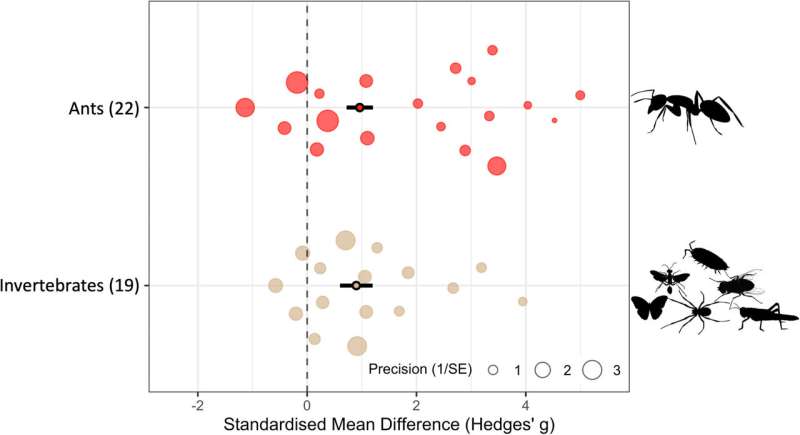
Local richness responses of ants and invertebrate communities to non-native ants. The number of studies for each taxon is in parentheses by taxon labels. Solid dots with black bars represent the overall standardized mean difference (Hedges' g) and 95% confidence intervals, respectively. Translucent circles represent individual taxon responses. The size of each circle is proportional to its relative weighting in the overall model and the inverse of its variance. A positive effect size means that invasive ants are reducing taxon richness. The position on the y-axis ("intercept") ensures that points are visible and do not overlap and is also determined by the taxonomic grouping variable. Several studies with very high effect sizes (>5) and taxa with fewer than five studies were omitted from the plot to aid visualization of the remaining data. Credit: Insect Conservation and Diversity (2023). DOI: 10.1111/icad.12672
New research by Cardiff University has measured the impact of ant invasions on native species at a global scale for the first time, finding that the introduction of invasive ants into new environments can reduce species numbers by 53% through competition and predation.
Ants play an important role in helping to maintain stable ecosystems, but some species of ants have been transported by humans globally and can cause major problems, even contributing to the extinction of some animal species.
The introduction of invasive ant species into habitats around the world through human activities, such as international commerce, has led to non-native ants establishing colonies in various habitats worldwide. Most research studying these populations show that invasive ants can lower native species diversity, probably through predation and competition.
Invasive ants possess adaptations that allow them to dominate most native ant species. This includes being able to eat a wide and general diet, as well as forming supercolonies—interconnected nests consisting of multiple queens and that can spread over large areas.
Dr. Maximillian Tercel, Cardiff University's School of Biosciences, said, "Ants are ecologically important social insects, helping to maintain key ecosystem functions. They participate in a wide range of species interactions, such as acting as predators, parasites, herbivores, granivores, prey, mutualists and hosts, across almost all terrestrial environments and all continents except Antarctica.
"But this means, through human transportation around the world, we have introduced different non-native species of ants into new areas—this can cause a lot of problems for the ecosystems and biodiversity in that area. Invasive ants are generally expected to lower native species diversity by predation and competition.
"However, case studies show that the effect of invasive ants might vary depending on where they invade and between different groups of animals. For example, birds might react badly to invasive ants but mammals or some insect groups may not react as badly—but this hasn't been measured until now.
"Ant invasions appear to be a really important element to consider when trying to conserve native biodiversity in many areas around the world, so we aimed to estimate the effect of invasive ants on animal community biodiversity for the first time."
The researchers extracted data from 46 published articles investigating the responses of animals to ant invasion in areas relatively unimpacted by other stressors, such as human disturbance. They focused on the impacts on the abundance and richness of species in those locations after ant invasions.
The Cardiff scientists calculated that an ant invasion reduces the total number of animal individuals in that location by 42% and reduces the number of species by 53% on average.
"This is a huge reduction in the diversity of animal communities and suggests that invasive ants can pose serious problems for the health of ecosystems in which they invade.
"These findings show that we urgently need to improve international prevention processes, early detection systems, and well-designed control strategies for invasive ants," added Dr. Tercel.
The research, "Non-native ants drive dramatic declines in animal community diversity: A meta-analysis," was published in Insect Conservation and Diversity.
More information: Maximillian P. T. G. Tercel et al, Non‐native ants drive dramatic declines in animal community diversity: A meta‐analysis, Insect Conservation and Diversity (2023). DOI: 10.1111/icad.12672
An aid to ecological management and ecosystem services supply and demand dynamics
by Maximum Academic Press
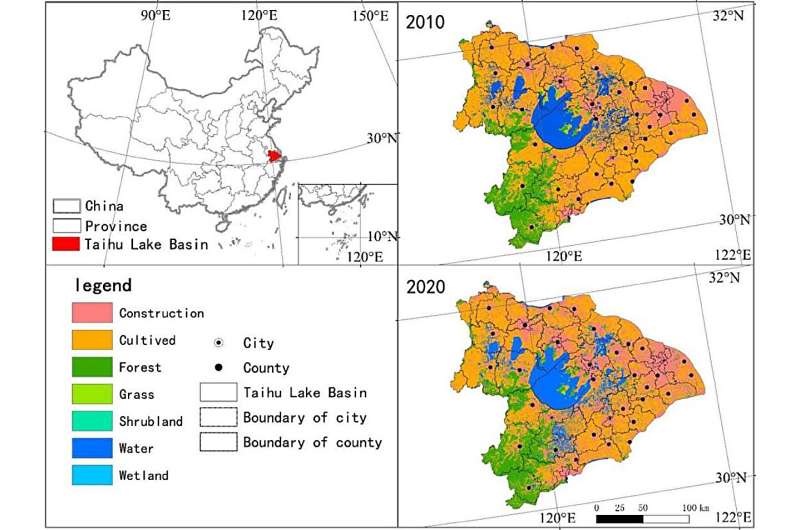
Location of TLB in the Yangtze River Delta in China. Credit: Circular Agricultural Systems
Ecosystem services (ESs) provide a variety of services and benefits for human well-being, but the supply-demand mechanism of ecosystem services under different spatio-temporal scales is unclear.
The Taihu Lake Basin (TLB) is a microcosm of degraded and unsustainable ecosystem services. Rapid industrialization and urbanization poses a great threat to the environment and ecology. Therefore, it is urgent to assess the changes in supply and demand for TLB ecosystem services from a spatio-temporal and multi-stakeholder perspective, and this will be conducive to the scientific and sustainable development of ecological services.
Circular Agricultural Systems published an online paper, entitled "Quantifying the difference between supply and demand of ecosystem services at different spatial-temporal scales: A case study of the Taihu Lake Basin," on 31 May 2023.
In this study, the InVEST model was used to quantify the dynamics of ESs supply and demand in the TLB from 2010–2020, and compared the mismatch between supply and demand for five ESs (i.e., water yield, carbon sequestration, recreation, food production, and heat regulation services) at four spatial scales (pixel scale, township scale, county scale, and city scale).
The study highlights the increasing quantitative and spatial differences in the supply and demand of environmental services in the TLB, in particular the conflict between carbon sequestration services and heat regulation services, which has become a major constraint to the development of environmental services.
However, there is a demand gap for water yield services and food production services. Evaluations of ecosystem service deficit and redundancy (ESDR) indicate that significant deficits are mainly in densely populated towns of the eastern and central regions, while high surplus areas are mainly in the forested areas in the southwest.
Comprehensive ecosystem service deficit and redundancy (CESDR) metrics showed a decline from -0.03 in 2010 to -0.05 in 2020, among which urban areas like Shanghai and Suzhou reflect pronounced imbalances. The data underscores the urgency for focused policy interventions in regions with high deficit.
In conclusion, this study analyzes the quantitative characteristics and spatial-temporal pattern of the relationship between the supply and demand of ESs in TLB at different scales. It emphasizes that a multi-scale analytical approach should be adopted in policy formulation to achieve a balance between supply and demand through reasonable ecological protection and ecological restoration.
More information: Wei Yang et al, Quantifying the difference between supply and demand of ecosystem services at different spatial-temporal scales: A case study of the Taihu Lake Basin, Circular Agricultural Systems (2023). DOI: 10.48130/CAS-2023-0005
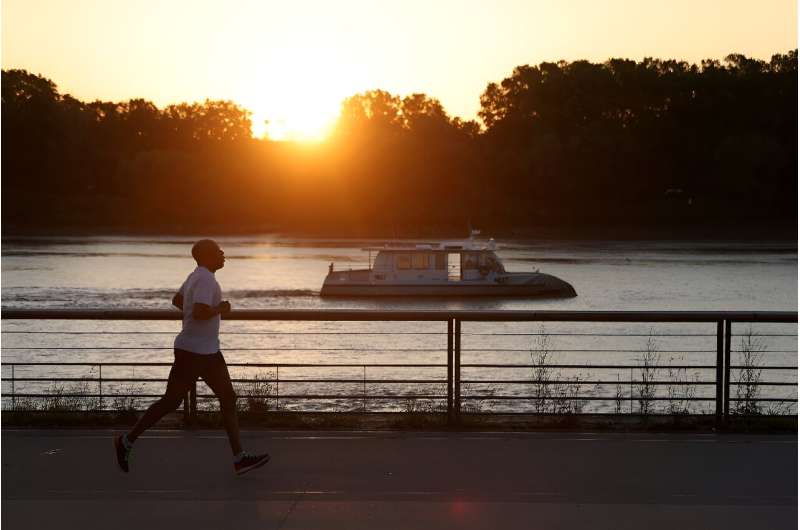
A man jogs along the docks at sunrise to avoid the heat, in Bordeaux, southwestern France.
Millions of people in France sweated through a late summer heat wave on Monday, with record temperatures expected in the wine-growing Rhone valley region and a forest fire blazing in the southeast.
Temperatures are expected to peak on Tuesday and Wednesday, with the most intense heat in the southern parts of the country where the mercury is already pushing past 40 degrees Celsius (104 Fahrenheit).
Health authorities have placed roughly half of the 96 departments in mainland France on the second-highest heat warning level, with some areas around the Rhone set to be placed in the maximum red category on Tuesday.
"Some records could be broken, notably on Tuesday in the Rhone valley with 40-42°C expected," national weather service Meteo France said.
The heat wave is "intense and long-lasting" and "particularly late in the season", it added, with a period of high pressure creating a "heat dome" over the country.
After a suffocating summer of record temperatures and forest fires in 2022, France had for the most part experienced a typical holiday period this year, escaping the intense heat that scorched southern Europe in July.
The current highs are the hottest of the season, Meteo France said.
Many people headed to municipal swimming pools, fountains or the beach to cool off.
"We went to the pool, so it was a cheap and easy way to fight the heat," Nathalie Chopin told AFP in the southeastern city of Lyon.
"It's very hot. Otherwise, we stay in our apartments, close the shutters and shut ourselves in."
Fire fears
After several weeks of dry weather, local authorities in the southern Gard area of France restricted access to forests due to the high risks of fires.
Around 260 firefighters were battling a wildfire near the village of Chanousse in the foothills of the Alps in southeast France, according to the Association for the Prevention and Reporting of Forest Fires.
It has consumed around 120 hectares (nearly 250 acres) of woodland, according to local authorities.
The high temperatures have also interfered with the scheduled re-starting of a nuclear power plant in Golfech in southwest France and could also lead to restrictions at a plant in Bugey in the Ain area, power group EDF said.
Heat waves frequently affect France's river-side nuclear power plants which suck in river water for cooling purposes before discharging it downstream.
They are forced to reduce their water usage during hot spells to guard against excessive warming of rivers which could affect local ecosystems.
The highest temperature ever recorded in France was 46C, registered in June 2018 in the village of Verargues in southern France.
Temperatures reached 35C in Bordeaux on Monday afternoon, while 37C was recorded in Lyon, Perpignan and Toulouse.
The upcoming bushfire season in Australia may be bad, but future years pose a more significant threat, says a University of New South Wales bushfire expert.
The recent devastation caused by wildfires across Europe and Hawaii has sparked concerns about the return of catastrophic bushfires in Australia. Coupled with the forecast that the southern hemisphere is likely entering a hot and dry El Niño event, conditions could be favorable for major fires after a few years of subdued activity.
But Professor Jason Sharples, an expert in bushfires dynamics from UNSW Canberra, says while it's always hard to predict exactly what will unfold in Australia, it's unlikely to be a repeat of the 2019–2020 Black Summer bushfires.
"El Niño conditions don't necessarily mean we will have a worse bushfireseason, though it does mean we're more likely to have hotter temperatures, less rainfall, and dry conditions that can lead to destructive fires," Prof. Sharples says. "Instead of being hit hard this year, we may see the impacts of El Niño accumulate and combine with climate change in the next season and the ones following."
However, Prof. Sharples says this season may still bring a chance of significant fires developing. Three years of increased rainfall from consecutive La Niña events has seen vegetation grow, especially grasses, and a relatively dry year so far may have begun to dry it out.
"In many areas, there is still some moisture content in forest fuels like trees, leaves and branches, as well the litter on the ground, but it takes a while, probably more than one season, to dry out," Prof. Sharples says. "So, while the vegetation has grown a lot, and there may be a lot of fuel lying around, it's probably not ready to burn with that intensity this year.
"However, there are still some forested areas that have already seen significant drying, and these areas could see intense bushfires."
The Black Summer bushfires also burned a lot of forest areas along south-east Australia already. While reburn fires could occur this year, Prof. Sharples says they're unlikely to be as severe, though other untouched forest areas along the coast could still burn.
Instead, grassland areas, which have also grown over the last few years of rainfall, may be more at risk this season.
"There is a higher possibility of grass fires this year, in areas like western New South Wales, though they're not typically as damaging as large forest fires," Prof. Sharples says.
"The biggest area burnt in Australia was due to a series of grassland fires that burnt 100 million hectares following a strong La Niña, so they can still be a significant hazard, particularly in rural areas."
Future bushfire season threats
While this upcoming season might not hit as hard as others in recent memory, Prof. Sharples says the risk of more severe and frequent bushfires continues to grow from human-driven climate change.
"The fact that our worst bushfire season on record didn't coincide with an El Niño suggests climate change is acting, and we should prepare for worsening bushfire conditions in the years ahead," Prof. Sharples says.
Overall, bushfire seasons are getting longer and starting earlier. Heat waves, in particular, are becoming hotter, longer, and more frequent, drying out fuels and intensifying bushfires.
"The risk of extreme bushfires is rising because of climate change, and there is a clear link between hotter temperatures and worsening bushfires," Prof. Sharples says. "They're becoming more destructive and regular, and present a unique set of hazards as they interact with the atmosphere to create violent firestorms."
Prof. Sharples says we must act now to improve fire preparedness and management strategies to mitigate the increasing threat of bushfires.
"We're not going to be able to prevent bad seasons from occurring, but we can take steps to improve fire management techniques to prevent extreme fires as much as possible," Prof. Sharples says.
"If not, we will be locked in a vicious cycle of climate change leading to larger fires and then those larger fires amplifying the effects of climate change."
Prof. Sharples also says we need more research to understand the dynamics of fires and a lot of investment and interest in different technologies to help mitigate the risk of bushfires.
"It's not the sort of problem that gets solved in a single season," Prof. Sharples says. "It will take years, possibly even decades, of research and planning to better prepare ourselves for the kinds of bushfires we had in the Black Summer season."
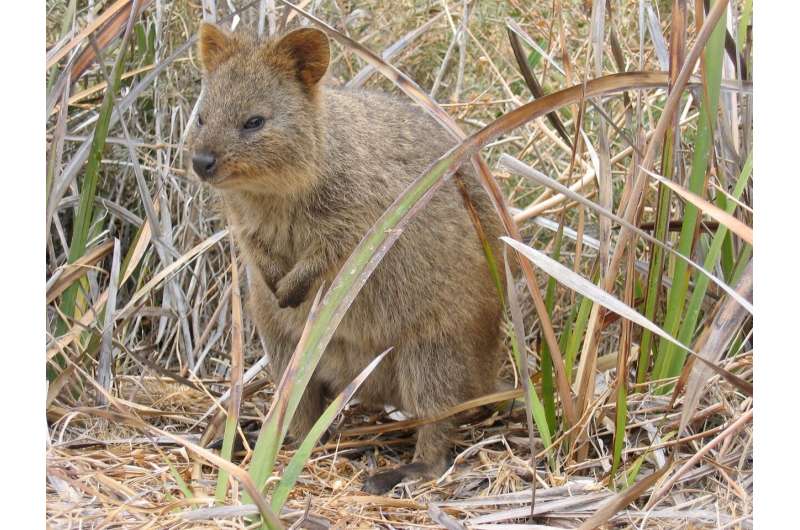
Quokkas residing in the Northern Jarrah Forest, Western Australia have been found to be using fire exclusion zones to ensure their own safety and longevity.
A study conducted by researchers at Murdoch University's Harry Butler Institute, working with the Department of Biodiversity, Conservation and Attractions, has shed light on their adaptive behavior following periods of prescribed burns. The study is published in the International Journal of Wildland Fire.
The findings emphasize the importance of appropriately sized and located fire exclusion areas in conservation management.
Harry Butler Institute researcher Leticia Povh led the study and said understanding how animals use their space after prescribed burning is crucial for effective conservation management, particularly for threatened species like the quokka.
"The study aimed to determine how individual quokkas changed their home ranges following burns," Povh said.
"In a world of rising temperatures and decreasing rainfall across southwest WA, this study has important conservation significance in determining how we manage habitat for our mainland quokkas into the future."
Over the course of two years, the movement patterns of 20 quokkas were meticulously tracked before and after prescribed burns.
Home-range area calculations were performed for each individual, and behavioral change point analysis was conducted to detect any alterations in their space use.
"The key results revealed a remarkable shift in the behavior of six quokkas that had previously resided in areas subjected to prescribed burns," Povh said.
"These individuals moved into fire exclusion zones, actively avoiding the burn areas for an average of three months.
"After this time, these quokkas spent no more than 2% of their time in the burn areas. In contrast, quokkas inhabiting fire exclusion and control sites did not exhibit any changes in their space use.
"This study highlights the importance of appropriately sized fire exclusion zones to ensure the preservation of populations of species dependent on dense vegetation."
Quokkas, like many other fauna species, rely on dense cover for refuge from introduced predators such as the feral cat and red fox, making fire exclusion areas a crucial component of prescribed burn planning.
By providing refuge and food sources, these areas contribute to the long-term viability of quokka populations and other species with similar habitat requirements.
As prescribed burns continue to be used in land management, the findings of this study offer useful insights for conservation practitioners.
By incorporating appropriately sized and located fire exclusion areas into prescribed burn planning, land managers can assist in preserving critical habitat for vulnerable wildlife like the quokka.
More information: Leticia F. Povh et al, A conservation-significant threatened mammal uses fire exclusions and shifts ranges in the presence of prescribed burning, International Journal of Wildland Fire (2023). DOI: 10.1071/WF22196
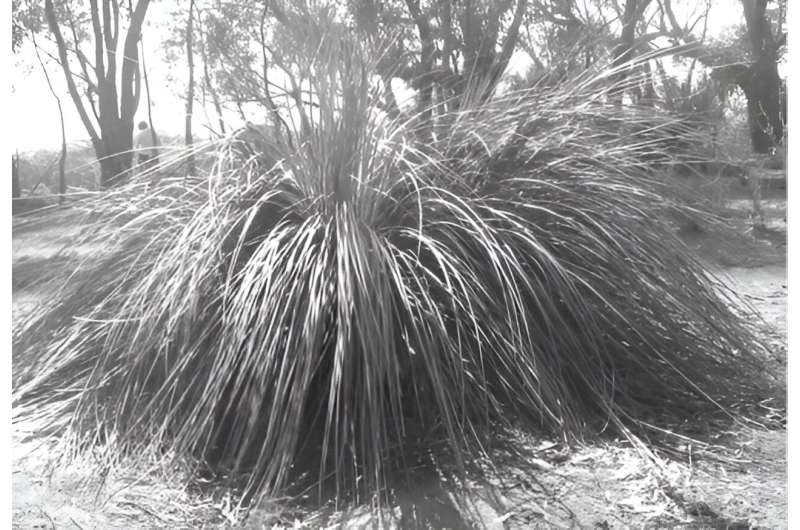
Australia's iconic grass-trees—aka yaccas—are hardy, drought-tolerant, and strikingly beautiful. Now, new research has revealed another, far more important, feature: their ability to protect wildlife from deadly weather extremes.
A study undertaken by the University of South Australia and Kangaroo Island Research Station shows that the yaccas' long, thick and dry grassy skirts help insulate animals from lethal temperatures in summer and winter, as well as keeping them dry. The research is published in Pacific Conservation Biology.
Temperatures under the grass-tree canopies at four sites in the Mt Lofty Ranges were up to 20 degrees cooler than under the direct sun in summer. In winter, conditions were significantly warmer under the grass skirts at night.
It turns out the iconic plant species—Xanthorrhoea semiplana sub species semiplana—also doubles as an effective umbrella, keeping the soil completely dry under 80% of the bigger, older yaccas during weeks of heavy rain.
Lead researcher Dr. Topa Petit says it's not surprising that many creatures seek shelter under yaccas, particularly the older species with the largest and thickest skirts.
"Several of the 29 species of Australian grass-trees are known to host native bush rats, threatened bandicoots, echidnas and pygmy-possums, among other wildlife," Dr. Petit says.
"Temperatures over 40 degrees can be lethal to some of our wildlife, but grass-trees provide extremely stable temperatures with very little variation.
"The remarkable ability of these grass-trees to protect wildlife from deadly climatic extremes—as well as providing effective hiding spots from predators—strengthens the mounting evidence that these plants are keystone species."
However, the yaccas on the mainland and Kangaroo Island are facing multiple threats which could have dramatic consequences for wildlife, Dr. Petit says.
The soil pathogen Phytophthora cinnamomi is having a devastating impact on the grass-trees, causing widespread dieback. Fuel reduction programs, summer fires and land clearing are threatening their survival even further.
"Grass-tree resilience to bushfires appears to be overestimated," Dr. Petit says.
"Moreover, even if grass-trees are not killed by fires, their very old thick skirts of dead leaves burn, leaving no shelter to animals in post-bushfire environments."
In 2022, the Federal Government added fire regimes that cause declines in biodiversity to the list of Key Threatening Processes.
"Historically, grass-trees were cleared for agriculture. They are now cleared or burnt in so-called fuel reduction programs. Extensive research has shown that this practice increases fuel loads and dries out the landscape."
Dr. Petit says yaccas scorched by fire can take decades to regain their role as effective shelters and are more susceptible to Phytophthora infestations.
"It's important that habitat management be backed by sound research and scientific monitoring rather than hysteria. We owe it to the future of our ecosystems."
More information: Sophie Petit et al, The role of grass-tree Xanthorrhoea semiplana (Asphodelaceae) canopies in temperature regulation and waterproofing for ground-dwelling wildlife, Pacific Conservation Biology (2023). DOI: 10.1071/PC23014
Fire devastates communities and families, and it makes identification of victims challenging. In the aftermath of the wildfire that swept through Lahaina, Hawaii, officials are collecting DNA samples from relatives of missing persons in the hope that this can aid in identifying those who died in the fire.
But how well does DNA hold up under such extreme conditions, and what is the best way to recover DNA from fire victims?
I am an anthropological geneticist who studies degraded DNA in archaeological and forensic contexts. My research group applies ancient DNA and forensic analysis methods to optimize DNA recovery from burned bones. Retrieving DNA from severely burned remains in order to identify victims is a particular challenge.
Forensic DNA analysis
In a typical forensic investigation, DNA is extracted from a sample—whether some blood, pieces of tissue or bone—collected from the scene of the disaster or crime. This process chemically separates the DNA from other components of cells within the sample, such as proteins, and purifies it.
This DNA is used as a template for polymerase chain reaction, or PCR, analysis, a method that is essentially the Xerox copier of molecular biology. Even if there are only a few cells present in the sample, PCR can amplify those DNA molecules into thousands or millions of copies. This creates a sufficient amount of DNA for subsequent tests.
In forensics, the specific DNA targeted in PCR is usually a set of highly repetitive markers called microsatellites, or short tandem repeats. Law enforcement agencies around the world use specific sets of these markers for identification purposes. In the U.S., forensic analysts target 20 of these DNA repeats. Each person has two unique alleles, or genetic variants, at each of these markers, and these alleles are uploaded to the FBI's Combined DNA Index System database to identify matches.
DNA taken from the relatives of missing people will likely be analyzed for short tandem repeat markers and their allele profiles uploaded to the Relatives of Missing Persons index within the database. The expectation is that victims and their biological relatives share a percentage of alleles for these markers. For example, parents and children share 50% of their alleles, since a child inherits half of their DNA from each parent.
Challenge of degraded DNA
In forensic contexts, the time between death and DNA sampling is usually short enough that the DNA is often still in fairly good shape, both in terms of quantity and quality. However, DNA is often not found in ideal conditions after a disaster.
Time and the elements take their toll. After death, the process of decomposition releases enzymes that can cleave or damage DNA, and additional damage occurs over time depending on the environment in which the body is found. DNA also degrades faster in warm, wet, acidic environments and slower in colder, drier environments that are more pH neutral or slightly basic.
In addition, DNA preservation may vary considerably among the tissues, bones and teeth recovered. For example, researchers found that DNA identification of victims of the World Trade Center attacks in 2001 was most successful when using bones of the feet and legs, compared with bones from the head and torso.
DNA analysis can help identify victims by comparing genetic similarities between people.
DNA damage can take different forms. Nicks and breaks in the DNA make it difficult to analyze. Chemical modification of the DNA can result in changes to the original sequence or make it unreadable. This includes changes to the building blocks of DNA called nucleotides that make up an identifiable sequence. For example, exposure to water can cause a chemical reaction called deamination that changes the nucleotide cytosine such that it appears to be the nucleotide thymine upon analysis. Exposures to other chemicals or UV light can cause cross-linking, which essentially ties the DNA into knots. As a result, the PCR enzymes used to copy or read the DNA sequence can't move linearly along the DNA strand.
Applying methods from archaeology
Researchers encounter similar issues in handling degraded genetic material when analyzing the DNA of ancient remains that are thousands of years old. To address these challenges, forensic geneticists and ancient DNA researchers like me employ a number of tricks to optimize DNA retrieval.
First, we tend to target dense bone or teeth for sampling, since they are more impervious to the environment. We also use DNA extraction methods that enhance the recovery of short fragments of DNA.
Second, we use PCR to amplify even shorter genetic markers, including mini-short tandem repeats, or sections of the mitochondrial genome. Mitochondria are structures within each cell that produce energy, and each one has its own DNA. Mitochondrial DNA is passed down from mother to child and can be found in hundreds of copies within each mitochondrion, which make it easier to recover and analyze. However, mitochondrial DNA may not provide sufficient information for identification, since people who are maternally related, even very distantly, will share the same sequence.
Researchers are also testing newer methods of DNA analysis common in the ancient DNA field for forensic purposes. For example, special enzymes can remove chemically modified nucleotides, such as deaminated cytosines, to prevent misreading of the DNA sequence. Researchers can also use DNA baits to "fish" for specific sequences. This method of targeted enrichment can recover very small fragments that can be used to piece together the full genetic sequence.
DNA analysis of burned remains
For fire victims, particularly those caught in intense, extended fires, the DNA may be highly fragmented, making analysis difficult. High temperatures cause bonds between molecules, including nucleotides, to break. This results in fragmentation and ultimately destruction of the DNA.
Because hard tissue—bones and teeth—are often all that remains after a fire, forensic researchers have studied how bone characteristics such as color and composition change with temperature. My research team used this information to classify the level of burning that human bone samples have been subjected to.
In investigating DNA preservation in those samples, we found that there is a significant point of DNA degradation when bones reached temperatures between 662° Fahrenheit (350° Celsius) and 1,022°F (550°C). For comparison, commercial cremation is 1,400°F to 1,600°F (760°C to 871°C) for 30 to 120 minutes, and vehicle fires typically reach 1,652°F (900°C) but can last a shorter period of time.
Our team also found that the likelihood of generating high-quality short tandem repeat data or mitochondrial DNA sequence data, whether using forensic or ancient DNA methods, decreases significantly at temperatures greater than 1,022°F (550°C).
In sum, as temperature and exposure time increase, the amount of remaining DNA decreases. This leads to only partial DNA profiles, which can limit analysts' ability to match a victim to a relative with high statistical certainty or prevent results altogether.
DNA evidence is not the only method used for identification. Investigators combine DNA with other evidence—such as dental, skeletal and contextual information—to identify a victim conclusively. Together, this information hopefully will help bring closure for families and friends.
We studied Fort McMurray's Muslim community to explore how they experienced mass evacuation. Our research found that the needs of a segment of the population were overlooked during mass evacuation. Perhaps, seven years later, this will not happen again.
Similarities to Fort McMurray
In May 2016, a large fast-moving wildfire jumped from the surrounding rural areas and into the city of Fort McMurray, Alta., causing approximately 88,000 people to flee. Canadians were shocked and saddened by the televised images of slow-moving lines of cars passing in close proximity to massive walls of flames.
In August 2023, Canadians are again seeing disturbing images of slow-moving traffic along smoky two-lane roads in Canada's remote northern locales. While it is too soon to make detailed comparisons between the Fort McMurray evacuation in 2016 and the ongoing Yellowknife evacuation, there appear to be some things in common.
Reuters reports on the evacuation order issued in Yellowknife, N.W.T.
Culturally appropriate services
While it is hoped that fire conditions change, it is possible that the fire will reach the outskirts of Yellowknife. If that happens, it could be weeks if not months before 20,000 residents can return. Other locales will have to absorb Yellowknife's entire population for extended periods.
In the immediate short term, the needs of the evacuees will shift from temporary relief to requiring more permanent services. Evacuees will benefit if some semblance of "home away from home" can be provided. That hospitality includes culturally appropriate evacuee hosting.
Whether it was fully understood during the chaos of the 2016 fire evacuations or not, thousands of people had specific cultural needs that became evident in evacuation centers.
As days turned to weeks, challenges for Muslim evacuees emerged. The disaster occurred during the start of Ramadan, and scheduled mass feeding times in large shelters conflicted with traditional sunrise-to-sunset fasting during Ramadan. Evacuation centers hosting Fort McMurray's evacuees were unprepared for meeting the needs of the sizeable Muslim population.
Anticipating diverse needs
Like Fort McMurray, Yellowknife is a culturally diverse community. When Yellowknife's diverse population arrives at reception centers in Alberta, it is an open question whether they will be met with culturally appropriate services. Initial analysis indicates at least three significant distinct cultural groups among the evacuees from Yellowknife.
The largest visible minority group in Yellowknife is the Filipino population, with about 1,065 people.
Historically, Yellowknife has attracted a significant number of French-speaking people, and there is a significant francophone community, making up nearly 17 percent of the city's population.
There is no 'one size fits all'
As the mass evacuation of Yellowknife unfolds, the needs of minority, racialized and marginalized populations will emerge. Past experiences indicate emergency officials at centers hosting evacuees in Alberta may not be ready to meet the needs of a diverse population.
Again, there exists the potential for minority populations having their needs overlooked by emergency services during mass evacuations. We know from the Fort McMurray experience that social issues related to diversity, equity and inclusion are real-life concerns impacting the evacuation experiences for thousands of Canadians.
The unfolding Yellowknife evacuation effort will not be a one-size-fits-all experience for Northwest Territorians. At this early point in the mass evacuation, it can be anticipated that social and cultural needs of all Yellowknifers will need to be acknowledged and acted upon.
Adaptations to standard operating procedures will need to be made at evacuation centers in Alberta to meet the needs of thousands of people with varying and culturally specific needs arriving from Yellowknife.