Tuesday, November 21, 2023

SCOTLAND
Humza Yousaf's mother-in-law hopes that by telling her story, people may listen to her calls for a ceasefire


Sky News
Updated Mon, 20 November 2023 


Before 7 October, Elizabeth El-Nakla was a grandmother, a retired nurse and the mother-in-law of Scotland's first minister.

After that day, she became the most prominent British citizen trapped in Gaza. Millions of us watched the video Humza Yousaf, Scotland's first minister, shared on social media where his visibly distressed mother-in-law said goodbye to her family and pleaded with the international community to help the Palestinians trapped in Gaza.

Today, two weeks after she and her husband, Maged, escaped Gaza and returned to their family home in Dundee, Elizabeth and her daughter Nadia, the first minister's wife, sat down to share their story in an exclusive interview with Sky News.

Grateful and relieved to be home, Elizabeth nevertheless is clearly still in great distress as she recounts her four-week ordeal and tells me she feels a great sense of guilt for not just her family but ordinary Gazans trapped.

"It's changed me forever," she told me sitting in the kitchen of her home in Dundee. "You really do think every day or every night you will die, and of the family that are under your roof as well. And that's hard to comprehend and hard to get over."

Elizabeth tells me that while finally crossing through Rafah into Egypt after two failed attempts brought huge relief, she left with her "heart torn".

"I left my heart to Gaza, I didn't bring it home," she said.

"It's not just leaving family members, it's all the people there and second of all, the people that have been injured. I wouldn't wish that situation on my worst enemy. It's unbelievable that no one can leave. Even if you want to save those children, let them go, let them out."

She is an unwilling figurehead, but having witnessed first-hand what is happening on the ground in Gaza, Elizabeth says she felt she had to share that story in order to give voice to ordinary Gazans.

"I know a ceasefire is the most important thing. It's the first step [in] moving forward. I'm not a politician and I don't understand the politics of it. But we need a ceasefire, not a humanitarian pause, a ceasefire to let the aid go in and help these people. There's no food, no water."

When I put it to her daughter Nadia, who is also an SNP councillor, the government's view that a ceasefire now would mean that Hamas is left with the infrastructure to carry out terrorist attacks, she argues that it wouldn't be a "unilateral ceasefire, but would benefit both sides".

She added: "The British government has an opportunity, as they have done in the past in the Middle East as a player for peace and to have that role as a legitimate player for peace. While you're not calling for a ceasefire, you can't really be that legitimate voice."

The family is calling for a full ceasefire and a two-state solution. But Nadia stated that Palestine is not a "world player" and called on other countries to step up to bring this conflict to an end.

"We don't really have any power. So, it's now up to other governments. We've seen that through Qatar, we've seen that through the UK and the US, trying to have those conversations.

"But actually, what would that even look like?

"My mind, to be honest, on a personal level, my mind can't go forward. I'm stuck day by day that I don't know if my family are going to live and whether Palestine's going to exist.

"For me to think about what happens after the war when we're not hearing of a ceasefire, my life can't go forward because it seems, it feels like, we're being erased from the world."

And when I ask Elizabeth - who has four grandchildren, her son Mohammed and her mother-in-law still in Gaza - if she can imagine ever going back again, she replies: "I would love to go back to Gaza and I would love my family to be safe there, but there is nothing to go back to."

Her hope is that by telling her story, she might - as she did with that video she sent in the days after the bombing began - at least capture the attention of the public and politicians who have the power to influence.
South Africa rips up UN refugee treaties in order to curb immigration

Ben Farmer
Mon, 20 November 2023 

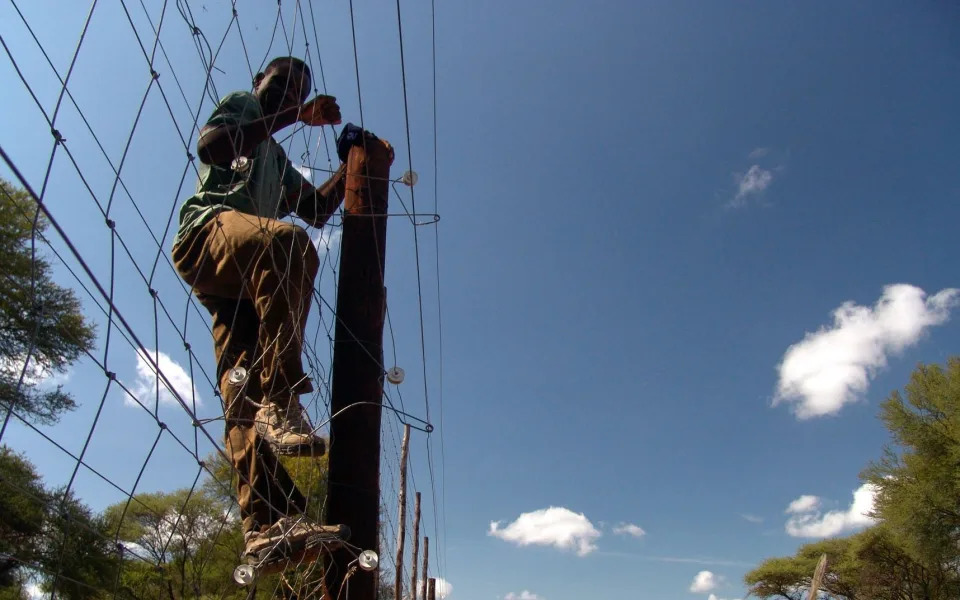
A Zimbabwean man climbs over the country's border fence with Botswana in the hope of eventually reaching South Africa

South Africa is planning to temporarily withdraw from United Nations refugee conventions so it can restrict immigration.

The country’s ruling African National Congress (ANC) government has said it needs to “press reset” on liberal asylum and immigration policies it can no longer afford.

The proposed overhaul comes amid widespread public resentment at current levels of immigration, and as the ANC is expected to lose its overall majority in next year’s general election.


Immigration is likely to be high on the electoral agenda and polling earlier this year found 89 per cent of voters thought the ANC was not tackling the issue well.

A new government discussion paper proposes temporarily pulling out of the 1951 UN refugee convention and the 1967 refugee status protocol, so officials can tighten up restrictions.

Aaron Motsoaledi, home affairs minister, said South Africa made a mistake signing up to the treaties in the mid-1990s without insisting on opt-outs to certain clauses.

Under the proposed reforms, South Africa would rejoin the conventions after restricting the right for refugees to work, as well as the right to education and the right to claim citizenship.

New laws would also be introduced to make it easier to send refugees back to countries no longer deemed dangerous.

The current liberal laws were adopted in the 1990s when the ANC embraced a pan-African stance on immigration, in part to show thanks to countries that had supported its struggle against apartheid.

Mr Motsoaledi said the policies were now outdated and needed a “radical overhaul”.

He said: “On this continent, the winds of change have been blowing hard and fast. Almost every week there is a coup somewhere in Africa.”
‘Fertile ground for violent clashes’

The ANC says the country’s outdated patchwork of immigration laws needs to be replaced because it has too many vulnerable gaps and loopholes. It argues these have been exploited by traffickers, criminals and economic migrants.

“The policy and legislative gaps within the Department of Home Affairs have created a fertile ground for violent clashes between foreign nationals and citizens, including [the] emergence of belligerent groups, either siding [with] or against the current migration system,” its white paper said.

South Africa’s middle income status, its relative wealth, job opportunities and its democratic institutions mean it attracts more migrants than any other country on the continent.

Two men try to crawl under a border fence between Zimbabwe and South Africa - KIM LUDBROOK/EPA

The 2022 census recorded more than 2.4 million migrants in a population of 62 million, but officials admit they have struggled to accurately assess the numbers because many foreigners are undocumented and enter illegally.

The census found 46 per cent came from neighbouring Zimbabwe, followed by Mozambique and Lesotho.

Yet despite its relative wealth, South Africa is also in the economic doldrums and has an unemployment rate of around 33 per cent. Foreigners are widely blamed for taking jobs from locals, committing crime and overburdening public services.
‘Foreigners a scapegoat’

The country has seen waves of anti-foreigner violence, most recently in 2019, when 12 people died and thousands of foreign nationals lost their homes. Many small foreign-owned businesses, particularly in the main black, densely populated townships around Johannesburg, were destroyed.

Last year a vigilante group called Operation Dadula, meaning “force out” or “knock down” in the Zulu language, picketed public hospitals, turning away anyone who could not prove they were South African.

Fikile Mbalula, the ANC’s secretary general, earlier this year described illegal immigrants as “a ticking time bomb for the country”, straining public finances and slowing efforts to improve services.

Government critics say it is using immigration to deflect from its own mismanagement and its rhetoric risks further increasing anti-foreigner sentiment.

Stephen Friedman, a political analyst, said foreigners in South Africa were a “scapegoat.”

He told South Africa’s Financial Mail: “It is not true that the law just welcomes everyone.

“There is simply no recognition by the government that the vast majority of foreigners in South Africa have skills, work hard and contribute to society.”

The British Government has meanwhile hinted that it may be prepared to quit the European Convention on Human Rights (ECHR), to allow it implement its Rwanda scheme to stop migrants crossing the Channel.

Last week the Supreme Court ruled that the Government’s asylum policy was unlawful, saying that it would break international and human rights laws.

This prompted calls from some Conservative MPs for the UK to leave the ECHR.
Tech giant started by US billionaire 'clinches' £480m deal to handle NHS patient information

Laura Donnelly
Mon, 20 November 2023
 
Palantir aims to join up medical information across the health service

A tech giant founded by a US billionaire has won a £480 million contract handling NHS patient data, The Telegraph understands.

The controversial deal for the “federated data platform” to join up medical information across the health service is expected to be announced shortly, after a series of delays.

Palantir, the tech giant founded by Peter Thiel, a US Republican party donor, has long been the frontrunner for the contract.


The company, best known for its work with intelligence and military agencies in the US, put in a joint bid with professional services company Accenture for the platform, in the biggest IT contract in NHS history.

Peter Thiel, whose company is understood to have won a lucrative NHS contract - John Lamparski/Getty

In the UK, Palantir built the Covid dashboard, which saw data on vaccines, Covid deaths and hospitalisations tracked daily during the pandemic, and helped coordinate the vaccine rollout.

The planned software platform would join up existing NHS data in a bid to speed up diagnosis and reduce waiting times and hospital stays.
Dogged by controversy

Sir Chris Whitty, the chief medical officer for England, is a keen advocate of the platform, saying that the ability to bring a wealth of data now held in separate systems will improve patient safety and secure medical advances.

The plans have been dogged by controversy, with scepticism about the NHS’s record on major projects and data handling and concern about the involvement of the US company.

Earlier this year, Mr Thiel - a supporter of Donald Trump - told the Oxford Union that Britain’s affection for the NHS is akin to “Stockholm syndrome”, saying the NHS “makes people sick”.


Peter Thiel speaking at the Sheldonian Theatre in Oxford - John Lawrence

A spokesman for the company later said he was speaking as a private individual, in comments that do not in any way reflect the views of Palantir.

Mr Thiel last month spoke at the Sheldonian Theatre, Oxford, with a lecture entitled The Diversity Myth.

The British Medical Association has argued against awarding the contract to Palantir, saying on Monday that “without proper oversight and protections, patient data could be at significant risk”.
Ministers keen to avoid past errors

Health officials say the software will allow analysts to spot patterns in illness and use resources better, while ministers have said it will not be able to see individuals’ data.

Ministers are also keen to avoid errors made in the past, with a previous attempt at record sharing abandoned in 2016 following a backlash about the way the scheme had been handled.

Palantir had been seen by rivals as holding advantages over other bidders, having been awarded a £25 million interim contract to “transition” data to the new system this summer.

The company has said it is “not in the business of collecting, mining or selling data”, saying it provides customers with tools to organise and understand their own organisations.
Roman emperor was trans, says museum

Craig Simpson
Mon, 20 November 2023 

An engraving of Elagabalus, who has been given female pronouns by the North Hertfordshire Museum - Leemage/Corbis Historical

A Roman emperor has been declared transgender by a UK museum, The Telegraph can reveal.

The North Hertfordshire Museum has said it will be “sensitive” to the purported pronoun preferences of the third century AD ruler Elagabalus. The emperor will be treated as a transgender woman and referred to as she.

Elagabalus has been given female pronouns on the basis of classical texts that claim the emperor asked to be called “lady”, but some historians believe these accounts may simply have been a Roman attempt at character assassination.

Information on museum policy states that pronouns used in displays will be those “the individual in question might have used themselves” or whatever pronoun “in retrospect, is appropriate”.

The council-run museum, in Hitchin, owns a silver denarius minted in the reign of Elagabalus, who ruled Rome from 218AD until his assassination, aged 18, in 222AD, and the coin has been used in LGBT-themed displays.

In displays featuring the coin, information about it and Elagabalus, the ruler will be referred to as she.


‘We know that Elagabalus identified as a woman and was explicit about which pronouns to use’ - x-default

The museum consults the LGBT charity Stonewall and the LGBT wing of the trade union Unison on best practice for its displays, to ensure that “our displays, publicity and talks are as up-to-date and inclusive as possible”.

Keith Hoskins, Liberal Democrat councillor and executive member for arts at the Lib Dem and Labour coalition-run North Herts Council, said: “Elagabalus most definitely preferred the she pronoun, and as such this is something we reflect when discussing her in contemporary times.

“We try to be sensitive to identifying pronouns for people in the past, as we are for people in the present. It is only polite and respectful. We know that Elagabalus identified as a woman and was explicit about which pronouns to use, which shows that pronouns are not a new thing.”

The pronoun choice is based on an account by Cassius Dio, a Roman chronicler, who wrote that Elagabalus was “termed wife, mistress and queen”, told one lover “Call me not Lord, for I am a Lady”, and asked for female genitalia to be fashioned for him.

However, Cassius Dio served the emperor Severus Alexander, who took the throne following the assassination of Elagabalus, and the accounts use his reputedly deviant behaviour as a justification for his assassination.


Historians have said feminine behaviour would have been a dishonour to men in Rome, and suggested that accounts of Elagabalus’ life are replete with the worst accusations that could be levelled at a Roman because they are character assassinations.

Andrew Wallace-Hadrill, a Cambridge classics professor, said: “The Romans didn’t have our idea of ‘trans’ as a category, but they used accusations of sexual behaviour ‘as a woman’ as one of the worst insults against men.”

He added that, as Elagabalus was Syrian and not Roman, “there’s racial prejudice going on there too”.

Prof Christian Laes, a University of Manchester classicist, said ancient accounts of the emperor’s life should be taken with “a huge pinch of salt”, adding: “Most of this is related to the aristocratic and senatorial disdain for the emperor’s oriental origins and beliefs.

“As regards trans, this was of course never seen as a category by the Romans. But it remains the case that in times of troubles and crisis, so-called transgressors of the sexual norms were subject to scapegoating.”
UK
Cameron threatens to ‘get tough’ on EU judges who block Rwanda plan


Charles Hymas
Mon, 20 November 2023 

Lord Cameron is sworn in to the Lords. He insisted he had first-hand experience with the ECHR and the need to curtail its powers 
- ANDY BAILEY/ HOUSE OF LORDS/ UK PARLIAMENT /PA

Lord Cameron has threatened to get tough on European human rights judges if they move to thwart the Government’s Rwanda plan.

The Foreign Secretary sought on Monday to reassure anxious Tory MPs of his stance on the controversial European Court of Human Rights (ECHR).

Sources said he stressed the importance of pushing on with Rishi Sunak’s new plan for emergency legislation and a new treaty - and then take on Strasbourg if required.


His comments came as he faced the 1922 backbench committee of MPs. Sources said the former Prime Minister insisted he had first-hand experience with the ECHR and understood the need to curtail its powers.

Lord Cameron cited his own battle in stripping prisoners of voting rights, an ECHR red line that he continued to defy during his time at No 10. He even slapped down suggestions last week by his former chancellor George Osborne that leaving the ECHR - demanded by some Tories - was off the table.

Mr Sunak has insisted he will do “whatever is necessary” to secure migrant deportation flights to Rwanda as he considers whether to opt out of human rights laws.

On Monday, the Prime Minister again said he would not let “a foreign court” prevent migrants being removed from the UK and pledged to end the legal “merry-go-round” that has blocked the Rwanda flights since last summer.

Mr Sunak was responding to questions about proposals to opt out of domestic and international human rights laws to secure the flights.

The PM has committed to emergency legislation and a new treaty to declare Rwanda safe after the Supreme Court last week ruled the Rwanda policy unlawful because it was unsafe for asylum seekers to be deported there by the UK.

But he is also considering two further options to restrict the ability of illegal migrants to block their deportations to Rwanda.

One would disapply the Human Rights Act in asylum claims to prevent courts from blocking flights. This would force a claimant to take their case to the European Court of Human Rights, a process that would take time during which advocates of the Rwanda policy hope it could be shown to have worked.


Under a second option, ministers would remove the right of judicial review and include “notwithstanding” clauses that would allow ministers to ignore the European Convention on Human Rights without leaving the treaty.

Robert Jenrick, the immigration minister, is pushing for both options as a “belt and braces” approach to the emergency legislation, which will bar anyone from lodging a legal challenge against the policy as a whole but not prevent individuals bringing cases against their deportation.

It is thought at least half a dozen Cabinet ministers would support such a move, which would divide the Cabinet.

James Cleverly, the Home Secretary, has previously declared his opposition to quitting the convention and said last week he did not believe it would be necessary to quit human rights laws to realise the Rwanda plan.

It is understood that Victoria Prentis, the Attorney General, a strong supporter of the convention, has indicated that she would not oppose opting out of the human rights laws on solely ideological grounds but was more concerned about the practical implications.

She is concerned that major carve-outs from human rights legislation could make it impossible to get the legislation through the Lords, or at the very least lead to substantial delays.

Alex Chalk, the Justice Secretary, another strong supporter of the European Convention on Human Rights, is said to want legislation that will deliver the policy without necessarily being hamstrung by “high ideals” and is “waiting to see what form it will take”.

Speaking at a college in Enfield, north London, on Monday, Mr Sunak said: “I’m completely committed to doing what is necessary to get those flights off and that scheme up and running. Because we have prepared for all circumstances, we have been working on a new treaty with Rwanda that will address all the concerns that were raised by the Supreme Court.

“We will combine that with new emergency legislation that will make it crystal clear – and give Parliament the opportunity to confirm – that Rwanda for all of these purposes is a safe place to implement our scheme.

“And I won’t let a foreign court stop us from getting flights off to Rwanda. This is a reasonable country. This is a reasonable Government. But people’s patience has run thin, and we have got to end this merry-go-round. And that is what I am determined to do.”
UK to build new satellite to help monitor climate change

Sky News
Updated Mon, 20 November 2023


A new satellite that will help scientists monitor climate change and natural disasters will be built and funded by the UK.

The country will join Portugal and Spain in the Atlantic Constellation project, which is developing a group of satellites to monitor the Earth.

The UK Space Agency is providing £3m for a new pathfinder satellite, with co-funding from Open Cosmos, based on the Harwell Space Campus in Oxfordshire.

It said the new satellite will provide "valuable and regularly updated data" on the planet.

It will also help detect, monitor and reduce the risk of natural disasters.

Andrew Griffith, minister in the Department for Science, Innovation and Technology, said: "Earth observation will play an absolutely vital role in tackling global challenges like climate change and disaster relief, providing the data we need at speed, while supporting key UK industries like agriculture and energy.

"By working with Open Cosmos on a new satellite and supporting our Atlantic partners, Spain and Portugal, we can harness space tech for our shared goals, while creating new skills opportunities and jobs for the future to grow the UK economy."\

The announcement comes on the opening day of the UK Space Conference in Belfast, Northern Ireland.

Earlier this year the UK Space Agency signed an agreement with Axiom Space, a Texas-based firm working on what it says will become the first-ever commercial space station.

A future flight carrying British astronauts would see them spend up to two weeks in orbit carrying out scientific experiments and participating in educational activities.
Canadian claims he was used by Ottawa for intelligence gathering in China

AFP
Mon, 20 November 2023 

Canadians Michael Kovrig (C) and Michael Spavor (R) appear in Parliament in Ottawa in March 2023 (Andrew Harnik)

A Sino-Canadian row reared its head on Monday after one of two Canadians jailed by China for nearly three years claimed he was unwittingly used for intelligence gathering and is seeking compensation from Ottawa.

Beijing's 2018 to 2021 detentions of Canadians Michael Spavor and Michael Kovrig had plunged bilateral relations into a deep freeze.

Spavor reportedly now blames Kovrig, with whom he had provided information on North Korea, unaware that it would be shared with Canada and its intelligence partners, for their incarceration.

And, he is seeking millions of dollars in compensation from Ottawa, according to the Globe and Mail newspaper.

"The allegations are unfounded," Kovrig told AFP.

Spavor's lawyer declined to comment while Canada's foreign ministry referred to Prime Minister Justin Trudeau's 2021 remarks also calling the espionage charges "unfounded."

China's embassy in Ottawa, however, said in a statement that Spavor's claim "fully exposes Canada's hypocrisy."

"Canada's hyping up of so-called 'arbitrary detention' by China is purely a thief crying 'stop thief,'" it said.

At the time of their detention, Ottawa rejected the spying charges leveled against the two Michaels, accusing Beijing of having arbitrarily detained them in retaliation for its arrest on a US warrant of Meng Wanzhou, a Huawei senior executive and the daughter of its founder, in December 2018.

All three were released in September 2021.

On Monday Ottawa maintained both men's innocence, saying in a statement: "Perpetuating the notion that either Michael was involved in espionage is only perpetuating a false narrative under which they were detained by China."

Spavor lived in China near the North Korean border and was among only a handful of Westerners who has met North Korean leader Kim Jong Un.

He ran a tourist travel business, helping arrange visits including by former basketball star Dennis Rodman to the isolated country.

Kovrig served as a diplomat in Beijing from 2012 to 2014, and would have in the course of his duties collected information on security and stability issues in China.

Ottawa does not be consider this to be covert intelligence work.

Kovrig was on leave from his diplomat job and working for a Hong Kong nonprofit organization when he was arrested in China.

Relations between Ottawa and Beijing have remained frosty, with fresh accusations that Beijing attempted to intimidate Canadian MPs leading to the expulsion of a Chinese diplomat in May.

A public inquiry has also been launched into alleged Chinese meddling in Canadian elections -- accusations that Beijing has called "groundless."

amc/tjj
Javier Milei vows to scrap Argentina’s version of BBC


Harriet Barber
Mon, 20 November 2023

Argentina’s president-elect Javier Milei - Juan Ignacio Roncoroni/EPA-EFE/Shutterstock

Argentina’s president-elect has vowed to privatise his country’s version of the BBC and stop all public construction projects in their tracks as he outlined a programme of radical transformation.

Javier Milei, an extreme libertarian economist who won a landslide victory on Sunday, pledged to dismantle the “propaganda mechanism” of the Left in a major political and economic shake-up aimed at reversing years of decline.

Questions about whether the politician, who campaigned with a chainsaw in hand, would temper his more controversial policies once elected were answered when Mr Milei immediately ordered “drastic changes” to the country without delay.

In his victory speech, he said: “There is no room for gradualism, there is no room for lukewarmness or half-measures. There is no way back.”

Addressing his plans for Argentina’s national broadcaster, he said: “We consider that Public TV has become a propaganda mechanism. I do not adhere to those practices of having a propaganda ministry. Public TV has to be privatised.”

Mr Milei – a former Rolling Stones tribute artist turned television pundit turned political leader – surged from relative obscurity to score nearly 56 per cent of Sunday’s vote and will be sworn in as president on Dec 10.

His victory came after Argentina’s inflation hit 143 per cent last month, with Mr Milei offering shock therapy as a solution to years of economic turmoil and swirling corruption claims among the Leftist ruling party.

His triumph was quickly celebrated by Donald Trump, the former US president, who said that Mr Milei will “Make Argentina Great Again”, and Jair Bolsonaro, the former Brazilian president, who wrote “hope shines again in South America”.

Mr Milei campaigned heavily on fixing the economy against the backdrop of rampant inflation and record poverty rates of 40 per cent.

Mr Milei is a former Rolling Stones tribute artist turned television pundit turned political leader - Juan Ignacio Roncoroni/EPA-EFE/Shutterstock

He has pledged to dismantle the Central Bank, replace the Argentine peso with the US dollar, slash social subsidies and halve the number of government ministries.

As a symbol of the deep cuts that he planned to implement, he often campaigned with a revving chainsaw in hand.

“I was born in 1977 and this is my fourth economic crisis,” said Alida Aranda, aged 46, as she waited eagerly with her 16-year-old son to watch Mr Milei vote on Sunday afternoon.

“Even our children have learnt that their pocket money becomes worthless, that there is no point in saving. This change will be good for us. Any change would be good.”

On Monday, Mr Milei confirmed that he would halt all public works and that “those in progress” would be put out to tender.

He added that he would pursue aggressive and front-loaded fiscal consolidation measures, and would probably lift most of Argentina’s currency and trade controls.

Chief on his list will also be the move towards dollarisation, though this is likely to be a long and volatile process, and he will likely need to restructure the country’s $44 billion debt with the International Monetary Fund.

He also vowed “a limited government, respect for private property and free trade” adding that the “model of decadence has come to an end”.
‘Likely to lead to social turmoil’

Analysts however warned that Mr Milei’s proposed reforms would lead to short-term economic pain.

“Even a light version of ‘Mileionomics’ would be likely to lead to social turmoil,” Richard Lapper, from Chatham House, told the Telegraph.

“Drastic spending cuts are certain to increase poverty and joblessness.”


He warned that Argentina’s powerful Left would fiercely oppose the changes, with strikes and street blockades probable.

Ahead of voting, more than 100 economists had penned an open letter warning that Mr Milei’s plans would cause economic “devastation” and social chaos.

The scale of Mr Milei’s victory was unexpected, winning 21 of 24 provinces.

But despite the widest victory margin in a presidential race since the South American country’s return to democracy in 1983, the election exposed deep fractures and historical wounds.

The self-proclaimed “anarcho-capitalist” sparked fierce debate for questioning the number of those forcibly disappeared by Argentina’s 1976-83 bloody military dictatorship, denying that humans have a role in causing climate change, and opposing feminist policies.

He also suggested that people should be allowed to sell their own vital organs, and is against abortion, which Argentina legalised in 2020, proposing a plebiscite to repeal the law.

In a final bid to win over the country’s moderates, Mr Milei backpedalled on some of his more controversial statements, such as loosening gun restrictions, and also avoided criticising Pope Francis, an Argentine, having previously labelled him a “filthy Leftist”.


His anger at the Left, which has been blamed for sending the peso into freefall by “printing money”, is strong.

After his election, a recent video was circulated widely of him attacking the “woke” establishment, and stating: “You can’t give s--- Leftards an inch.”

His rival candidate, Sergio Massa, who is the current economy minister, was widely considered the “continuation candidate” of the current government – a deeply unpopular administration that has been blamed for the economic crisis.

Anti-incumbency sentiment was strong among voters at the polling stations.

Conceding defeat on Sunday, Mr Massa said: “Argentinians have chosen another path.”

Mr Milei captured the world’s attention for his aggressive and theatrical style.

During campaigning, he praised his dogs as his “best advisors” and claimed that he was a tantric sex expert.

His girlfriend, Fátima Flórez, an actress, is known for her impressions of Argentina’s vice-president and former leader Cristina Fernández de Kirchner.

He has also been known to don a superhero costume of his “alter-ego” General Ancap (short for “anarcho-capitalist”) to sing about Argentina’s economic crisis.

The “lion”, as he calls himself, also lauded Margaret Thatcher – who is reviled in Argentina for ordering the sinking of the General Belgrano cruiser – as one of “the great leaders in the history of humanity”.
‘Now we have to give him a chance’

However, he has asserted Argentina’s “non-negotiable” sovereignty over the Falklands, which Argentina refers to as the Islas Malvinas.

“We had a war – that we lost – and now we have to make every effort to recover the islands through diplomatic channels,” he said in the final televised election debate.

In recent weeks, Mr Milei has backed Israel and condemned Hamas’s Oct 7 attacks on the country.

In an interview with The Times of Israel, he said that an Argentine rabbi is his spiritual guide and that he would move the country’s embassy to Jerusalem.

Political realities may constrain some of Mr Milei’s more radical ambitions: his party has only 35 of the 257 seats in the lower house and seven of the 72 senate benches, leaving him dependent on more conservative centre-Right parties.

Nevertheless, the mood in the capital on Sunday night was one of jubilance as supporters arrived in their thousands, waving Argentina flags, launching fireworks, honking horns and singing to popular Latin American rock music.

One Massa voter told the Telegraph that, while he feels disappointed by the result, “now we have to give him a chance”.

Lorenzo, aged 31, added: “Maybe I will be mistaken.”

Milei's Argentina dollarization plan has Latin American precursors


AFP
Mon, 20 November 2023 

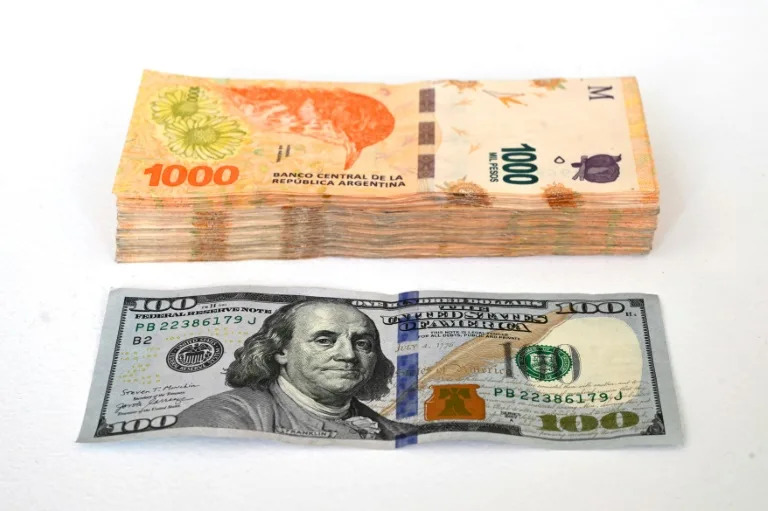
The equivalent of 100 US dollars is seen in Argentine pesos (Luis ROBAYO)

Argentine president-elect Javier Milei ran his campaign on promises to ditch the peso for the US dollar and do away with a central bank -- all in the name of subduing rampant inflation.

The far-right outsider is hoping to reign in inflation that has hit 140 percent, bedeviling the South American country as it struggles with a deep economic crisis.

Several Latin American countries have already officially or unofficially dollarized their economies, hoping to usher in new eras of economic and financial stability that could not be achieved using their own currencies.


The following are a few examples of dollarization in the region, along with how and why these countries made the switch to the American greenback.

- Ecuador -

Ecuador adopted the dollar in March 2000, hoping to shake off a profound banking crisis that had caused $5 billion in losses and left thousands of people bankrupt. The ensuing price increases threatened to accelerate into runaway hyperinflation.

The transition from the sucre to the dollar came after a bank holiday coupled with a temporary freeze to half of all deposits -- emergency steps that seemed to work.

Inflation levels came down rapidly, with Ecuador sometimes even veering into periods of deflation. The country's 2023 annual inflation is expected to sit at 3.1 percent.

- El Salvador -

The dollar became the official currency of El Salvador on January 1, 2001. The government of then-president Francisco Flores argued the changeover would make the country more attractive to foreign investments and trade, plus reduce the risk of devaluation and allow local banks to provide better credit offers.

But "dollarization had adverse effects," according to independent economist Cesar Villalona.

"It increased the cost of living. Upon the switch to the dollar, the prices of goods and services skyrocketed, and those who continue to pay for that situation are the poorest," he said.

El Salvador "does not have (its own) monetary policy, since we depend on what the United States does with its currency."

In 2021, El Salvador also made bitcoin an official currency, part of the campaign platform of President Nayib Bukele.

The country's annual inflation reached 7.32 percent in 2022, but is predicted to come down to 3.3 percent for 2023.

- Panama -

The dollar has circulated as the official currency of Panama for longer than any other Latin American country, alongside the local balboa.

US bills have been used in Panama since 1904, shortly after the country's independence from Colombia and around the time the United States began construction on the Panama Canal.

The balboa is only issued in metal coins and not paper bills, and the public sector only uses the currency for accounting purposes.

Panama usually sees annual inflation levels under 3 percent.

- Venezuela: de-facto dollarization -

The dollarization process in Venezuela has been more informal.

In 2018, as the country faced its first year of hyperinflation following the reelection of President Nicolas Maduro -- widely unrecognized by the international community -- government officials relaxed certain currency exchange controls in an effort to combat the crisis created by a shortage of the local bolivar.

"It was a combination of general factors that lead to de-facto dollarization," according to Albusdata economic analyst Henkel Garcia. "Structurally, it was high inflation, but there were also other forces like the situation with the electricity crisis," he added.

Without power, card payment points stopped working -- and without enough physical bolivars -- as giant stacks of cash became necessary to pay for goods and services -- the dollar became the clear alternative.

The country finally escaped hyperinflation in 2022, though it still faces one of the highest inflation rates in the world. Until September, Venezuela's annual inflation rate was 317 percent, according to its central bank.

US dollars -- a symbol of "American imperialism" -- have paradoxically become the most-circulated currency in Venezuela, according to economists.

- Dual-currency economies –

In some Latin American countries such as Peru and Uruguay, the dollar is used to pay for certain consumer goods and services -- like rent, real estate, vehicles and household appliances -- and US bills can be withdrawn from ATMs and used to open bank accounts, even though the official currency for government affairs remains fixed in local money.

bur-mr/dga/caw/bfm
UN peacekeepers no 'magic wand' for crises, their chief says

Amélie BOTTOLLIER-DEPOIS
Mon, 20 November 2023 

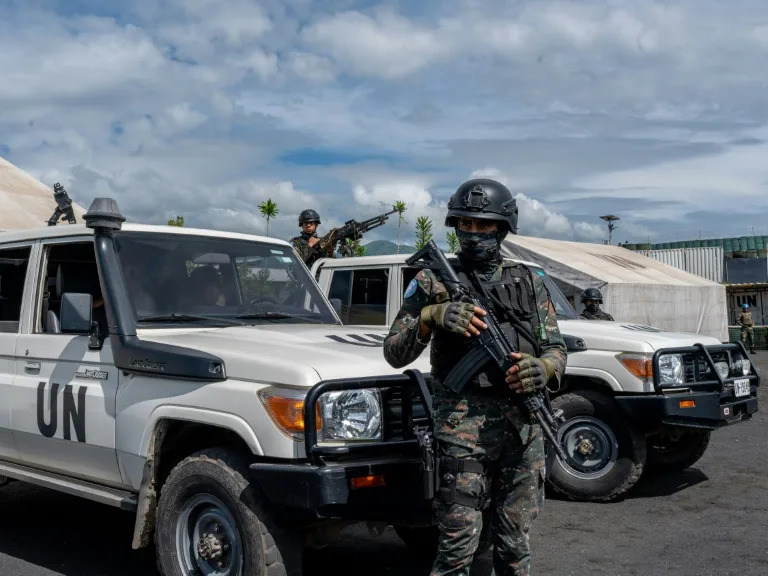
UN peacekeepers chief Jean-Pierre Lacroix said he supports efforts to develop mechanisms to protect civilians in ever more complex conflict zones
 (Glody MURHABAZI)

The presence of United Nations peacekeepers, whose shortcomings can frustrate local populations, is not a "magic wand" for conflict zones, said their leader Jean-Pierre Lacroix, who supports an expanded tool kit to protect civilians in increasingly complex territory.

From Lebanon to the Democratic Republican of Congo (DRC), from South Sudan to the Western Sahara, some 90,000 so-called Blue Helmets serve under the UN flag, engaged in 12 separate operations.

These missions do not always meet with unanimous approval on the ground, as in Mali, where UN peacekeepers have been forced by the government to leave, or in the DRC where some inhabitants have expressed hostility.

Yet the peacekeepers protect "hundreds of thousands of civilians" daily, Lacroix, the UN under-secretary-general for peace operations, told AFP in an interview.

Sometimes such protection mandates "raise expectations that we cannot meet, because of the capacities that we have, because of the budget that we have, because of the terrain and the logistical constraint," he acknowledged.

"It raises frustrations from those who are not protected," and such resentments are manipulated "by those who would prefer the continuation of chaos."

According to Lacroix, countries where UN peacekeepers operate face "the weaponization of fake news and disinformation."

Would conditions be better there if such missions were absent? "In most cases, it would probably be much worse," he said.

But "it doesn't mean that peacekeeping operations are the magic wand, or the universal response to every kind of crisis."

The 15-member UN Security Council authorizes the Blue Helmets in "supporting political processes" that lead to sustainable peace, Lacroix said.

But today "we have a more divided Security Council," with members that "don't put their weight behind the political processes" associated with UN peacekeeping, he added.

Lacroix hopes a December 5-6 ministerial meeting in Ghana will prompt a recommitment by members toward the global body's peacekeeping missions.

- 'Peace enforcement'? -

UN Secretary-General Antonio Guterres has already urged reconsideration of the future of such operations, particularly where there is no peace to keep.

Blue Helmets can protect civilians when a ceasefire is already in place. "UN peacekeepers do not do peace enforcement," Lacroix said.

They are not counter-terrorist units, or anti-gang forces.

Yet they are deployed in environments that are "becoming more dangerous," he said, where "non-state actors, armed groups, private security companies," crime syndicates and people involved in terrorism have little interest in creating peace.

The idea then of making room for complementary but non-UN missions is gaining ground.

The international community and multilateral system "need a more diverse set of tools" and responses to address widening challenges, Lacroix stressed.

"New forms of peacekeeping operations to better address the drivers of conflict such as the impact of climate change or transnational criminal activities, peace enforcement operations conducted by the AU (African Union) or other regional (or) sub-regional organization, we need all of that," he said.

Could such forces serve as models in Gaza, after the Israel-Hamas war?

The jury is out.

"I think there are millions of scenarios that one can imagine" for a security mission in the ravaged Palestinian territory, Lacroix said. "But it's very hypothetical up to now."

However missions look in the future, their immediate challenge is finding funding, and volunteers.

After a year of equivocation, the Security Council last month finally approved deployment of a multinational force, led by Kenya, to help restore security in crime-plagued Haiti. Nairobi pledged 1,000 police but wants other members to help cover the cost.

abd/mlm/caw
COP28 turns attention to potent methane emissions

Julien MIVIELLE
Mon, 20 November 2023 

Methane leaks from energy production, transportation infrastructures -- such as gas pipelines -- and from deliberate releases during maintenance (JOE RAEDLE)

Climate talks often revolve around reducing the most dangerous greenhouse gas CO2.

But other powerful heat-trapping emissions -- of methane -- are also likely to be in the crosshairs of negotiators at the crucial COP28 meeting in Dubai next week.

Methane -- which is potent but relatively short-lived -- is a key target for countries wanting to slash emissions quickly and slow climate change.


That is particularly because large amounts of methane are simply leaking into the atmosphere from fossil fuel infrastructure.

- What is methane? -


Atmospheric methane (CH4) occurs abundantly in nature as the primary component of natural gas.

It is the second largest contributor to climate change, accounting for around 16 percent of the warming effect.

Methane remains in the atmosphere for only about 10 years, but has a much more powerful warming impact than CO2.

Its warming effect is 28 times greater than CO2 over a 100-year timescale (and 80 times over 20 years).

Exactly how much methane is released in the atmosphere remains subject to "significant uncertainty", according to the International Energy Agency (IEA), despite progress in the monitoring of emissions through the use of satellites.

And scientists are puzzling over a steady increase of methane in the atmosphere, with concentrations currently over two-and-a-half times greater than pre-industrial levels.

- Gas leaks and cow burps -

The majority of methane emissions -- around 60 percent -- are linked to human activity, the IEA says, while some 40 percent is from natural sources, mainly wetlands.

Agriculture is the biggest culprit, responsible for roughly a quarter of emissions.

Most of that is from livestock -- cows and sheep release methane during digestion and in their manure -- and rice cultivation, where flooded fields create ideal conditions for methane-emitting bacteria.

The energy sector -- coal, oil and gas -- is the second largest source of human caused methane emissions.

Methane leaks from energy infrastructure -- such as gas pipelines -- and from deliberate releases during maintenance.

Discarded household waste also releases large quantities of methane when it decomposes, if left to rot in landfills.

- What can be done? -

A recent IEA report estimates that rapid cuts in methane emissions linked to the fossil fuel sector could prevent up to 0.1 degrees Celsius of warming by mid-century.

That might sound like a modest reduction, but such a reduction would have an impact greater than "immediately taking all cars and trucks in the world off the road", said the report authors.

IEA Executive Director Fatih Birol called it "one of the best and most affordable" options for reducing global warming.

It could be achieved by repairing leaky infrastructure and eliminating routine flaring and venting during pipeline maintenance.

"Leakage is far too high in many areas where natural gas is extracted but some countries, notably Norway, have shown that it is possible to extract and supply natural gas with minimal levels of leakage," Energy Programme Director William Gillett at the European Academies Science Advisory Council (EASAC) told AFP.

In the case of agriculture, it is possible to modify animal diets by, for example, adding a compound to improve their health and that of the planet.

For rice fields, changes to water management are the "most promising" way to reduce emissions, according to a FAO report.

- Binding agreement? -

A joint EU-US "Global Methane Pledge" was launched in 2021, aiming to reduce worldwide methane emissions by 30 percent by 2030, compared to 2020 levels.

Some 150 countries have signed on, but China, India and Russia were noticeably absent.

"To slow down climate change, it will be critical that the most important players who have not joined so far will engage" with the pledge, said Gillett.

Voluntary initiatives like these also lack rigorous measures to hold countries to account.

Scientists at EASAC have called for COP28 to agree on a "substantial strengthening" of the methane pledge, with a formalised reduction target of around 60 percent in the energy sector, in line with recent EU regulations.

If such a global commitment were to happen at the climate talks in Dubai later this month it would constitute a "major success", they said.

The United States and China have announced they will include methane in their climate action plans, and Beijing has revealed a plan to control its emissions -- although without a quantified target.

China's plan is a "crucial step forward in addressing one of the country's main greenhouse gases, which accounts for 10 percent of the country's total emissions", said Byford Tsand of the climate think tank E3G.

However, "it will take time to assess whether the plan could deliver 'significant effect' in the absence of any quantified reduction targets," he added.

Oil and gas giants have also proposed commitments, including the Oil and Gas Climate Initiative, which aims for zero emissions from their activities by 2030.

jmi/ico/lap/klm/rox