It’s possible that I shall make an ass of myself. But in that case one can always get out of it with a little dialectic. I have, of course, so worded my proposition as to be right either way (K.Marx, Letter to F.Engels on the Indian Mutiny)
Saturday, February 17, 2024
SCOTS NATIONALISM
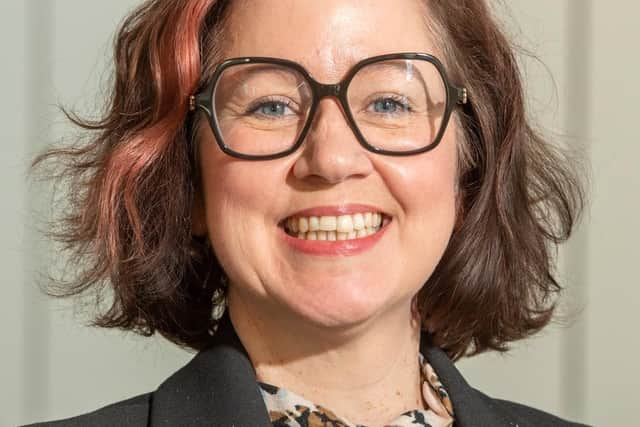
Labour risks killing off the goose that lays the black-gold egg - Erikka Askeland
It’s just as well Scottish Labour is holding its conference in Glasgow this weekend because they would likely be run out of town if it had been in Aberdeen.
Business leaders in Scotland’s north-east are on the warpath after Labour leader and aspiring Prime Minister Keir Starmer set his sights on the oil and gas industry.
Following an embarrassing U-turn on proposals to invest £28 billion in green energy projects, UK Labour now plans to squeeze companies in the North Sea by extending and increasing the so-called windfall tax to fund its reduced green ambitions.
The move caused Aberdeen and Grampian Chamber of Commerce (AGCC) to cry havoc – accusing Starmer, along with Scottish Labour leader Anas Sarwar and shadow net-zero minister Ed Miliband, of betrayal.
AGCC policy director Ryan Crighton said the Labour trio had a few months ago come to Aberdeen “looked us in the eye and told us they wanted to work with the energy industry to deliver a transition that leaves nobody behind”, promising there would be “no cliff-edge end” to the North Sea industry – and labelled the tax call as a betrayal of this pledge.
Labour expects to raise £11bn from oil and gas firms to fund an £8.3bn “GB energy” company, a £7.3bn national wealth fund to invest in decarbonising industry and to spend £1.3bn (down from an initial £6bn) to insulate the UK’s stock of leaky, gas-heated homes.
But an analysis from investment bank Stifel punched damning holes in this calculation, estimating that the policies would instead cost the exchequer £20bn by 2030 as oil and gas producers shut up shop and invested elsewhere.
For most people, the premature closure of the UK’s oil and gas industry would be no tragedy in the wake of the worsening climate crisis.
But many in the industry believe Labour plans will kill off the goose that lays the black-gold egg. This is expected to fund the UK’s transition to a clean energy system as well as ensure there is no post-industrial collapse like that of the UK coal fields under Thatcher or US car manufacturing in Detroit.
Stifel’s Chris Wheaton estimated up to 100,000 jobs could be lost in a “worst case” scenario – while the trade body Offshore Energies UK (OEUK) predicted that the policies would cause the industry to shed 42,000.
The oil and gas sector is estimated to support 93,620 jobs across Scotland with the vast bulk – over 84,000 – in Aberdeen and Aberdeenshire, highlighting the disproportionate effect the sector has in the region.
Labour is clearly betting that taxing filthy oil companies will play well with most of the UK electorate even if Aberdeen riots – Crighton noted that the “worst-case” 100,000 jobs lost would be five times as many coal miners that were forced out of work in the 1980s – which Labour then deplored.
Earlier in the week, Sarwar attempted to explain how Labour’s watered-down green plans would ensure that Scotland (if not the north-east of Scotland) would be a “global leader” in the transition from fossil fuels to clean energy.
He also predicted Labour will increase its share of the vote in the region in this year’s general election and the Scottish parliament elections in 2026, although this now seems like a faint hope.
Erikka Askeland is a former senior business writer, founder of Mediacraft, and Associate at the Freer Consultancy
Retailers Demand More Action from the EU to Resolve Red Sea Crisis
Retail companies in Europe suffer from the high costs of rerouting from the Red Sea. (EBA)
European retail industry body Eurocommerce has called on European Union institutions and member states to resolve the Red Sea crisis that has disrupted trade, saying in a letter to Belgium's foreign minister that it has already had "massive impacts" on businesses.
Shipping companies have rerouted container vessels away from the Red Sea to avoid Houthi militant attacks that have multiplied since early December, disrupting supply chains for firms reliant on the Suez Canal to get products from Asia to Europe.
Eurocommerce members include supermarket giants Ahold Delhaize, Carrefour, Lidl, M&S, and Tesco, and fashion retailers H&M, Inditex, and Primark.
"The longer carriers are forced to reroute, the more businesses, and ultimately consumers, will suffer from additional costs adding to the already high costs of living in Europe," Eurocommerce said in the letter on Friday.
Retailers who source from factories in China and South-East Asia have faced delays and cost increases as the alternative shipping route around Africa's southern tip takes 2-3 weeks longer, resulting in higher fuel and labor expenses.
The disruption has raised fears that inflation will take longer to unwind in Europe, at a time when cash-strapped consumers were looking forward to prices of food and clothes starting to ease.
"Given the magnitude of the impacts on businesses and the global supply chain, we appeal for continued intensified and coordinated efforts by the EU institutions and Member States to address the situation," Eurocommerce said.
The group said it supports EU initiatives that aim to protect commercial ships and seafarers against attacks. The EU is set to launch a joint Red Sea naval mission this month.
CRIMINAL CAPITALI$M
Ex-Goldman Sachs UK Analyst Jailed for Insider Dealing after London Trial
Mohammed Zina, 35, was employed by Goldman Sachs International in its conflicts resolution group in London. - Reuters
A former Goldman Sachs analyst was on Friday jailed for 22 months after he was convicted in a London court of using inside information to buy shares in listed companies and make more than 140,000 pounds ($175,650).
Mohammed Zina, 35, was employed by Goldman Sachs International in its conflicts resolution group in London.
Prosecutors said he used confidential information to buy shares in six companies between July 2016 and December 2017, including chip designer Arm Holdings with knowledge of SoftBank Group's impending $32 billion acquisition.
Zina would have made another 15,000 pounds, but he was arrested before he could sell his shares in snack maker Snyder's-Lance Inc, prosecutors said, Reuters reported.
He had pleaded not guilty to six offences of insider dealing and three counts of fraud for allegedly lying to Tesco Bank about the purpose of loans which were used to buy the shares.
But Zina was convicted of all nine charges on Thursday, following a trial at Southwark Crown Court.
Judge Tony Baumgartner sentenced him to 22 months in prison, saying: "You betrayed the trust of your employer, as well as cheated honest investors in the shares you traded using inside information you saw at work.
"What you did strikes at the very heart of our financial markets and the trust and confidence the public places in them."
He added: "You have thrown away what was undoubtedly a promising career in banking, something that many young people dream of, and for the sake of easy gain."
The judge listed a further hearing in September to deal with the prosecution's application to confiscate the profits made by Zina.
A Goldman Sachs spokesperson said: "Mohammed Zina betrayed the trust we placed in him and his misuse of client information was in direct contradiction of our values. We have zero tolerance for this conduct."
Mohammed Zina's lawyer declined to comment following the sentence.
His brother Suhail Zina, formerly an associate at law firm Clifford Chance, had also stood trial but was cleared of all nine charges. Clifford Chance declined to comment.
Earlier on Friday, Zina's barrister Brendan Kelly told the court he was the most junior member of the conflicts resolution group and was arrested more than six years ago, so had been "enduring these proceedings" ever since.
"Both the stigma and the impact of both conviction and imprisonment will have a very significant effect on this relatively young man of exemplary character," Kelly said.
THE CAPITALI$T STATE
Game is on? Coinbase and Circle publicly ‘begs’ Congress ‘to go after’ Tether
Representatives of Coinbase and Circle spoke at a United States Congressional hearing on February 15 and referenced concerns on Tether.
First, Caroline Hill, Circle’s Senior Director of Global Policy and Regulatory Strategy, directly cited Tether, mentioning terrorism financing activities. Notably, Carolie Hill formerly worked for the U.S. Treasury Department as a Director of Terrorist Financing and Financial Crimes (TFFC) before joining Circle.
In a video posted by Pledditor on X, Hill asks the Treasury Department to “use its authority” against companies with “U.S. touch points.”
“I personally believe no company should be allowed to reference the U.S. Dollar without having those democratic values inside the company and inside their U.S. Dollar backed stablecoin. (…) I hope they [Treasury] are looking at this seriously given Tether’s reputation as well as the data we have seen that they are contributing to terrorist financing and other activities.”
– Caroline Hill
Coinbase accuses offshore entities of playing ‘jurisdictional wack-a-mole’
Moreover, Grant Rabenn, Coinbase’s Director of Financial Crimes Legal, celebrated the exchange’s compliance with OFAC due to “proactive investigations.” Rabenn then mentioned how Coinbase’s competitors are a safe haven for “criminals who seek offshore platforms.”
“Those offshore entities often play jurisdictional wack-a-mole, attempting to avoid though anti-money laundering rules and expecting their regulators won’t care.”
– Grant Rabenn
Interestingly, Coinbase is a shareholder of Circle and an active partner in USDC management. This stablecoin is the second-largest in the cryptocurrency market and a direct competitor to Tether’s USDT.
In this context, Rho Rider commented on X that this might be the first time these companies directly named Tether publicly.
Tether responds to Circle’s and Coinbase’s accusations
Following the Congressional hearing, CoinMarketCalreported a provocative comment from Paolo Ardoino, Tether’s CEO, on February 16.
“Misleading Congress is a shocking act of desperation, and those who do so should be ashamed of themselves. Spouting lies and running in Circles never gets you anywhere.”
– Paolo Ardoino
According to CoinMarketCal: “Ardoino continued that his company has done more than anyone else to combat illicit crypto activities and remains fully committed to continuing the fight.”
With these last events, the market awaits further rivalry between the leading stablecoins issuers and their partner exchanges. Now, possibly with a might ally on Circle’s and Coinbase’s side – the U.S. Treasury Department.
POSTMODERN FEMINI$M
'Men Like Boobs And Cars - It's Very Simple Marketing'
“Back then, men were making those decisions. Today, it's me making the choice to wear revealing clothes to sell cars. I'm the boss,”
Nadia Adan is apologising for being a few minutes late to our interview. The 33-year-old businesswoman has just landed the sale of a supercar - a Ford Mustang, 2.3 Ecoboost 2019 - so she has a good excuse, writes Lisa Brady.
A natural salesperson, Nadia is the only female owner of a car showroom in Ireland. Undoubtedly also the most glamorous, she is proving herself to be nothing short of revolutionary in the market too.
Her latest customer purchased the flash wheels after spotting it on an Instagram post last week. In fact, Nadia has amassed quite the fan base since she took a leap of faith just before the pandemic and left her stockbroking job to start her own luxury used car business, Ashford Motors in Co Wicklow.
Using cheeky, revealing videos to market her cars, Nadia has become a social media sensation, racketing up 180,000 followers on TikTok and 80,000 on Instagram. It's gotten to the point where she even has fans waiting for her at her premises.
We meet on Valentine's Day, when one admirer has travelled all the way from Clare with his mum to give his crush flowers, for example. “Another customer who bought a car from me came with his two sons as they wanted to meet me, it's mad,” she laughs.
She takes none of the flattery too seriously, but is far too clever not to use her beauty and wit to attract her mostly male customer base. For Nadia is a businesswoman through and through who has worked hard to get to where she is today.
Her success is all the more impressive when you consider her tragic childhood. Born in Somalia in the early 1990s, she led a gilded life with her trailblazer mother until the age of three, when the vicious Mogadishu war destroyed their world.
“My mum owned a cargo fleet company and went to Russia and leased aircraft - she worked with the UN to bring in medical supplies to war zones,” said Nadia. “She had her own tourism company too and specialised in safaris. We were very wealthy, had a big house, fancy car, our own driver.
“Then when the war happened and the airspace was closed down, overnight we lost everything - our family, our business, our home… everything.”
Her mother's priority was to get them out of Somalia alive and, like millions of others, they became displaced, travelling through country after country for years in search of a place they could call home.
“My mum always had education as a priority for me and an English-speaking country,” says Nadia.
Refugee camp
The arduous journey to get to that place - which eventually happened to be Ireland - was marked by danger and dire conditions. Travelling though Africa, mother and daughter spent over a year in a refugee camp, were put in prison, and even spent a life-threatening six weeks trekking though the Sahara desert.
“Think of parents giving their children urine to drink to keep them alive - it was that bad,” says Nadia, who was too young to have distinct memories of the time, relying on conversations with her mum for context.
“We were trafficked from country to country - one of the boats almost capsized - and got fake passports thanks to money from an aunt in America. Eventually, we ended up on O'Connell Street in Dublin.”
It was here that they finally felt safe, and they got the warmest of welcomes.
“A couple of people gave us £100 notes, we were shown where to go to get asylum, and we got our papers in three months, got a house, my mum got a job. But it was a different time, there wasn't many refugees here,” says Nadia, reflecting on the current tensions regarding immigration today.
“We don't have the infrastructure and I get that. People need to redirect their anger but the system needs to change too,” she muses.
Growing up in Firhouse in Dublin, Nadia recalls how her mum went from having her own driver and businesses to packing boxes in a factory in Walkinstown. “She walked there and back as we didn't have a car for years, but I wanted for nothing, I was very happy.”
Finance degree
Education was always a priority for her mum, says Nadia, admitting it was a bone of contention between mother and daughter which reached boiling point when Nadia finished her finance degree.
“I was determined to get a job and start making money and having fun, but my mam was having none of it,' recalls Nadia. Her mother was determined that her daughter would complete a Masters in Finance in Trinity, even though her grades didn't add up.
She ended up marching Nadia to the Dean's office, hoping that he'd listen to their life story and give her a chance. Their unconventional tactic worked and after a summer of being tutored, Nadia was accepted into the college, and then went on to beat her fellow classmates to land an equity analyst role for a prestigious firm.
“The CFO told me I was chosen because I had something that the others didn't, and that was cop on,” recalls Nadia. “The rest you can learn from a book.”
From here, she turned her attention to stockbroking, and was the only female in a “shark tank” of 18 men. It was a challenging environment, but she was in no way intimidated.
“The overall boss was also a woman, so maybe that helped,” she recalls. “But I never felt inferior or in any way unequal in that role. It was a very professional environment.”
It was here Nadia that developed a love for cars, surrounded as she was by men driving top of the range motors. “I had the fancy job, now I wanted the flashy car,” she shrugs. “I bought a 2008 3-Series BMW coupe. I loved a fast, expensive car.”
As it happens, it was this car that would introduce Nadia to the motor trade as she ended up selling the vehicle on her lunch break for a profit.
“I was doing a trade-in but it was a crap deal, so I thought I'd sell it myself,” she says. “I made a few quid and thought, I want to do this again. So I would buy a car, drive it for a couple of months, sell it, make a few bob, and that's how it started.”
Leap of faith
Nadia began to build up trust with dealers, sourcing cars from far and wide. Then in January 2020 she decided to take a leap of faith, leave her job and concentrate on her passion of selling cars.
“I took a lease out on a yard in Wicklow, and filled it with a few of the cheaper cars I had for sale,” she says. “I didn't even have an office - I was working from my Jeep.”
Just two months later, the pandemic began. For a moment, Nadia thought it was game over. “I was like, how am I going to let people know I exist? How am I going to meet customers? Then I pivoted to Instagram, and it changed everything.”
What started as reels showing off cars in her garage transformed to a lucrative selling platform when Nadia sold a Bentley on social media. “I started investing in more cinematic videography but then realised that while the customer base was growing, it wasn't enough,” she says.
For while her cars were garnering some attention, there was something missing - and that was Nadia herself. Nadia's eyes were opened to the power of TikTok during lockdown and she hopped on board.
“I started doing fun videos,” she shrugs. “I would be hunkered down close to a car and viewers would have to try to guess the model. I had a low-cut top on and it sounds ridiculous but it worked. People just didn't know what to do with me.
“They put me in a glamour model box, and that's fine, but I wasn't that. I'm a businesswoman, I'm educated, I can talk the talk, plus I have my boobs on show,” she says frankly.
Finding herself in another male-dominated business, Nadia says this was a tougher territory to navigate as a female. She has even experienced competitors trying to devalue her offering and blocking her on social media. “I feel like I have to prove myself five times more than a man would,” she remarks.
Of the idea that her marketing is exploitative of women, harking back to a time of lads' mags and a more toxic masculinity, Nadia has an empowering perspective.
“There's a crucial difference. Back then, men were making those decisions. Today, it's me making the choice to wear revealing clothes to sell cars. I'm the boss,” she says proudly.
In fact, Nadia is unequivocally unapologetic about highlighting her beauty and curvaceous figure to get her business noticed, but there's substance behind her style.
Sex sells
“Sex absolutely does sell,” she admits. 'However, if my business was crap I'd be gone. I did a huge amount of grafting to make sure the business was solid because then I can market how I want. There is no rule book for this, or if there is I haven't seen it. But if you don't deliver from a business perspective, you'll be pulled apart.”
Speaking of which, there's trolling - a lot of it. But never one to miss an opportunity, Nadia has a novel approach to dealing with it. “The first time I was trolled I was so upset,” she says. “I think it was something along the lines of, ‘the likes of you are bringing women back 100 years’ It was nasty.
“I learned though that trolls are a viral moment because if someone says something really stupid to me, I'll now respond with a funny video. People love it.
“Men are the ones that comment about my appearance. They might say ‘you're a skank’ or ‘you've daddy issues’ or something like that. Women might hate you from behind the screens for a while, and then all of a sudden they will support you,” she observes. “They're my biggest supporters in that way.”
Nadia takes deposits on Revolut and confirs sales on Instagram. “If you don't have a social media presence as a garage, you'll be gone soon,” she predicts. “I'm in an industrial estate and no-one would ever find me if it wasn't for standing out online.
“But I can sell an Aston Martin to a guy in the States, or an €80,000 R8 on a 10-second TikTok video, which costs me nothing but boobs,” she laughs. “Me being a woman is an opportunity in this game. At the end of the day, my content is tailored to men, and they do like boobs and they do like cars. It's very simple marketing.”
Nadia's wit and the fun that she clearly has on her online content is winning her legions of fans, plus the fact that she's a magpie for shiny promotion opportunities. She cleverly completed a TikTok series with influencers like Eric Roberts, Garron Noone and Black Paddy, and even a search for a new staff member is going to be formatted in an online Dragon's Den-style series of videos.
“It's what you want to watch that's very critical when selling cars,” she says. “The car is going to sell itself - it's about getting that relationship with the customer through the screen.”
Nadia ends our chat with some sage advice on entrepreneurship.
“You just have to believe in yourself, take a risk, be good at what you do and then you can market what you want. I know my cars but you don't need to be a mechanic to sell one. I wouldn't be hugely technical about it, and that's OK. I'm not here to get oil under my nails.”
Photo: Nadia Adan, owner of Ashford Motors. (Pic: Fran Veale)