Saturday, February 17, 2024


Why the Top Cause of Death for Women Has Been Ignored


Cardiovascular Disease Kills 1 in 5 Women, but Has Not Received the Attention It Needs, Cedars-Sinai Experts Say

Cedars-Sinai
16-Feb-2024 

Credit: Cedars-Sinai

Natalie Bello, MD, MPH

Newswise — LOS ANGELES (Feb. 16, 2024) -- Experts at the Smidt Heart Institute at Cedars-Sinai who have studied progress made over decades of research say there’s still a long way to go before medical science fully understands how heart disease is different in women than men.

But there is hope, according to Natalie Bello, MD, MPH, director of Hypertension Research in the Department of Cardiology, and colleague Susan Cheng, MD, MPH, the Erika J. Glazer Chair in Women’s Cardiovascular Health and Population Science, who recently authored a perspective article in the journal Circulation Research.  

The paper reflects on women’s cardiovascular health during the past century and looks ahead to the many advances happening in the field. Bello spoke with the Cedars-Sinai Newsroom to share more.

What do women need to know about their cardiovascular health?

Heart disease is the No. 1 cause of death in women, but surveys show women tend to think they are more likely to die of cancer, particularly breast cancer. The most important thing to remember is that heart disease kills more women than all types of cancer combined.

Are some women at greater risk than others?

Almost 20% of women who get pregnant experience complications, such as high blood pressure, preeclampsia or gestational diabetes, that have important implications for their future heart health. These conditions are associated with a higher incidence of heart disease that often happens early in the lifespan.

What progress has been made?

Thanks to pioneers like C. Noel Bairey Merz, MD, director of the Barbra Streisand Women's Heart Center in the Smidt Heart Institute, the medical community is now actively involved in the advancement of women’s heart disease research and care. Her leadership in this area has broadened visibility to gender differences in things like heart attack symptoms and the diagnosis of small vessel heart disease.

Could you give an example of how increased research into women's cardiovascular health has led to better treatment for women?

There is a now a blood test approved by the U.S. Food and Drug Administration, developed by Cedars-Sinai investigators, that we can use to understand a woman's risk for preeclampsia. It helps tell us when a pregnant woman is safe to go home, or if she needs to stay in the hospital for closer monitoring, treatment or early delivery. We use it very frequently.

This is just one of many examples of how Cedars-Sinai has led in women’s heart health.

When should women think about their cardiovascular health?

At age 20, women should establish care with a primary care physician and have their cardiovascular risk assessed. At minimum, all women should visit a primary care provider annually for a blood pressure check.

What are the best ways to prevent cardiovascular disease?

Learn about your personal risk and ways you can modify the disease. That advice is based on the knowledge that 80% of cardiovascular disease is preventable. By doing things like stopping smoking, eating healthy, maintaining a healthy body weight, exercising and sleeping well, we can prevent or delay the progression of heart disease.

Why is it that women's cardiovascular health has been ignored?

In a paper published in 1912, a researcher named Dr. James Herrick and colleagues described heart disease as something that occurred in men. But they published another paper in 1928 showing that the same thing was happening in women. For whatever reason, the follow-up work never gained traction, and that set the stage for heart disease being seen as a man’s issue.

Early epidemiologic research also demonstrated a delay in the onset of heart disease in women compared with men. Noting that women’s risk seemed to increase after menopause, estrogen was believed to be protective and premenopausal women’s risk for heart disease was thought to be low. We now realize that societal issues and habits at the time also influenced risk: Men were more likely to smoke, and women didn’t start smoking socially until later in the last century. Unfortunately, when smoking became socially acceptable for women, there was an uptick in women's heart disease as a result.

I think one of the main reasons women’s cardiovascular health wasn't really investigated is that there was not as much diversity in science and medicine at the time. If you don't experience things, you don't know what questions to ask. I'm not saying it's impossible, but a bunch of men sitting around a table aren't necessarily going to ask each other, “I wonder how excessive menstrual bleeding impacts heart disease risk?” and decide to examine that in a research study.

What can women who aren’t scientists do to ensure the medical system addresses their needs?

It often takes people outside of the scientific community to remind us that we need to be examining certain issues in women’s health. A lot of times it comes from patients who experienced something in their own pregnancy or in their own heart health journey and either started a foundation or lobbied elected officials to increase funding for research related to women. It’s also important for women to feel empowered to discuss their concerns with their clinicians, and if they feel they aren’t being listened to, they should find another person to listen to their symptoms and work them up appropriately.

Read more from the Cedars-Sinai Blog: High Blood Pressure: How to Recognize and Treat It

Alexander the Great’s father located in Greek tomb after remains identified using X-ray analysis: study

Along with Alexander the Great’s father, researchers said the three tombs also contain Alexander’s half-brother and his teenage son


Fox News
Published February 16, 2024 1

New claim about Alexander the Great says he was not the real founder of the Egyptian city of Alexandria

Alexander the Great’s father’s remains have been identified in a Greek tomb using X-ray analysis, a new study says.

The new international — yet controversial study — states that archaeologists previously had the wrong tomb identified in Vergina, Greece, as containing Alexander the Great’s father, Philip II of Macedon, according to Live Science.

The site contains three 4th century B.C.E. tombs.


The study was first published in the December issue of Journal of Archaeological Science: Reports.

ANCIENT TOMB MAY HAVE BELONGED TO A COURTESAN WITH ALEXANDER THE GREAT'S ARMY, ARCHAEOLOGISTS REVEAL


Alexander Instructing his Soldiers, from The Deeds of Alexander the Great, 1608. 
Artist Antonio Tempesta. 
 (Heritage Art/Heritage Images via Getty Images)

Along with Alexander the Great’s father, Philip II of Macedon, the researchers said the three tombs also contain Alexander’s half-brother, King Philip III Arrhidaeus, and his teenage son, Alexander IV.

In ancient times, Vergina was Macedonia’s original capital, known as Aegae.

The archaeologists took x-rays of the skeletons in the tombs and compared them to detailed descriptions about the Macedonian royals, including height, weight, injuries and physical anomalies, according to Live Science.

Alexander’s father’s remains were identified by a knee injury that was "consistent with the historic evidence of the lameness of King Philip II," the study said, according to Live Science.

He was located in what is known as Tomb I rather than Tomb II, which he had previously thought to have been in, according to the study.


The Vergina site was first discovered in the 1970s, but debate has ensued about which royals were buried in each tomb.


Remnants from Greece's ancient Parthenon in Athens.
 (AP Photo / Petros Giannakouris / File)

Antonios Bartsiokas, the study’s lead author, told Live Science the research "was like a fascinating detective's ancient story," Bartsiokas is an anthropology and paleoanthropology professor at Democritus University of Thrace in Komotini, Greece.

The researchers located King Philip III Arrhidaeus, Alexander the Great’s half-brother and successor, in Tomb II.

"His skeletal evidence and the pattern of his cremated bones have been shown to be consistent with the circumstances of the death of King Arrhidaeus and his wife," Bartsiokas said, according to Live Science. "Tomb I was a very small and poor tomb and Tomb II was very big and rich. This ties with the historical evidence that Macedonia was in a state of bankruptcy when Alexander started his campaign and very rich when he died. This is consistent with Tomb I belonging to Philip II and Tomb II belonging to his son Arrhidaeus."

Philip II is believed to be interred with his wife and baby.


A full moon rises in Greece. (AP Photo / Thanassis Stavrakis / File)

Bartsiokas added, "This was the only newborn in the Macedonian dynasty to have died shortly after it was born. The age of the female skeleton at 18 years old was determined based on the epiphyseal lines of her humerus. [This number] coincides with the age of [his wife Queen] Cleopatra from the ancient sources."

He explained that the remains in Tomb II were also not found to have an eye injury as previously believed. Tomb I's remains could not definitely determine if there was an eye injury due to its deterioration.

"Philip II is known from ancient sources to have suffered an eye injury that blinded him," Bartsiokas said, according to Live Science. "I was surprised to find [the] absence of such an eye injury in the male skeleton of Tomb II, which was initially widely described as a real injury that identified Philip II. In other words, this was a case of a description of a morphologic feature that did not exist."

Alexander IV was determined by the study to be in Tomb III.
U$A
Opinion: Why Doctors Avoid Talking With Patients About Gun Safety

Physicians cite many reasons for not talking about firearm safety with patients. It’s time they make it a priority.


Visual: Sean Gladwell/Moment via Getty Images
BY JENNA JAKUBISIN
02.15.2024

IN NOVEMBER 2021, a teenager with a handgun killed four students and injured seven people at Oxford High School, near Detroit. It was the deadliest school shooting in Michigan history. Just this month, on Feb. 6, the shooter’s mother was convicted on four counts of involuntary manslaughter. During a trial that scrutinized safe gun storage — or rather, a lack thereof — prosecutors alleged she failed to secure the gun at home and ignored warning signs about her son’s mental health.

Gun violence in the U.S. is a public health crisis. According to the most recent data from the Centers for Disease Control and Prevention, 2021 was the second consecutive year in which guns were the leading cause of death among American children and teens. That year, nearly 49,000 people died from guns — equivalent to one person every 11 minutes. A report from the Johns Hopkins Bloomberg School of Public Health showed that gun ownership sharply increases the risk of dying by homicide and suicide.

During a public health crisis, doctors have important roles and responsibilities. The U.S. gun epidemic is no exception. Many health professional organizations, including the American Medical Association and the American College of Physicians, recommend that primary care providers discuss firearm access and safety with adult patients. As gun deaths increase, it’s more important than ever for doctors to prioritize gun safety discussions with patients. But a recent study in the Journal of General Internal Medicine showed that the extent of this practice is unclear.

At the time of the Oxford shooting, the study’s lead author, Joseph Ladines-Lim, was a second-year resident in the University of Michigan’s combined internal medicine and pediatrics program in Ann Arbor. In the tragedy’s aftermath, Ladines-Lim and colleagues launched a research project examining the practice of firearms screening at their institution.

“Do we even ask people if they have guns or not?” Ladines-Lim said. “If we’re screening, how does that work at our institution? And then when we do screen, how often are we providing appropriate counseling in terms of how to use firearms or store them safely? And then, are we documenting that at all?”

The data they collected suggest both providers and patients may avoid the topic. Ladines-Lim and colleagues surveyed 109 providers about gun safety counseling during new patient visits across 10 sites in the region. The survey included questions about prior training and whether providers knew the pre-visit patient questionnaire contained the screening question, “Do you have a gun at home?”

The researchers found that only 36 percent of providers felt comfortable talking about gun safety. One factor Ladines-Lim cites was a reluctance to jeopardize the doctor-patient relationship. “The issue of firearms in this country is a very polarizing one. It’s highly politicized,” Ladines-Lim said. “And it’s awkward.”


As gun deaths increase, it’s more important than ever for doctors to prioritize gun safety discussions with patients.

Most (89 percent) had no related training, and 32 percent were unaware of the pre-visit screening question. Views were divided on the importance of firearm safety talks; 45 percent of providers agreed that screening falls within their role, and 33 percent did not. However, providers were more likely to address gun screening in patients with mental illness and substance use disorders.

Providers mentioned lack of training and time constraints as barriers to addressing gun safety with patients. The health system is overloaded, Ladines-Lim explained, and there is never enough time to address all of a patient’s concerns. It would be reasonable, he said, to have doctors and clinicians focus on patients with high-risk factors, like depression, rather than screening all patients wholesale.

Ladines-Lim and colleagues also reviewed 501 patient medical charts. Zero patient charts documented gun safety counseling. More than half of new patients skipped the question about firearms on the pre-visit questionnaire but still completed the rest of the survey. The authors concluded that their decision to not answer was deliberate. “Maybe they don’t think it’s any of our business,” Ladines-Lim said.

As the study surveyed only a very small set of clinics, Ladines-Lim is unsure if their results can be extrapolated to the rest of the country. He and his colleagues think a broader survey spanning other medical centers and geographic regions would be of interest.

Guns in the home and domestic violence are intertwined. According to Everytown for Gun Safety, a nonprofit gun violence prevention organization, access to a firearm makes it five times more likely that a woman will be killed by a domestic abuser. Conversations about safe storage are crucial when talking with patients who have been abused, said Jacquelyn Campbell, a professor of nursing at Johns Hopkins University and an expert in domestic and intimate partner violence. “How do we get health care professionals to help women, particularly — or men — who are being abused by partners to disclose, to get help early, before it gets bad?”

First, Campbell said, don’t blindside the patient. She believes a brief preface — such as, “Gun violence is the number-one cause of death for children, and I know you have children” — can help legitimize the conversation. As another option, a short script can be programmed into electronic health record software and may alleviate providers’ concerns about time constraints.

Ladines-Lim agreed that with the right approach, patients may be more receptive: “Anything we ask, in general, we’re doing it because we have their interests at heart.” Some patients will never want to talk about gun safety, “and we accept that,” he said. But open and informed discussions can help prevent tragedies like the Oxford shooting and save lives.

And that doesn’t have to be political.

Jenna Jakubisin is an editor and science writer in Chicago. She is pursuing a master’s degree in Science Writing at Johns Hopkins University.


Interview: Confronting the Riddle of Geoengineering


Climate change expert Rob Bellamy believes that solar geoengineering has enormous potential, but the risks are real.


BY DAN FALK
02.16.2024

THERE’S NO QUESTION that our planet is warming as the result of human activity. One obvious strategy to slow down this warming is to reduce greenhouse gas emissions — something that has thus far garnered more talk than action. It has been eight years since nearly 200 nations signed the Paris Agreement to limit the global temperature increase to 1.5 degrees Celsius (2.7 degrees Fahrenheit) above pre-industrial levels, a feat that experts believe is unlikely to be achieved, as many nations remain reliant on fossil fuels, and emissions remain high. Meanwhile, 2023 was the hottest year on record.

So what else can be done? One provocative idea that’s been floated for several decades is geoengineering — basically, large-scale technological interventions to change the Earth’s environment or atmosphere to counter the effects of global warming.


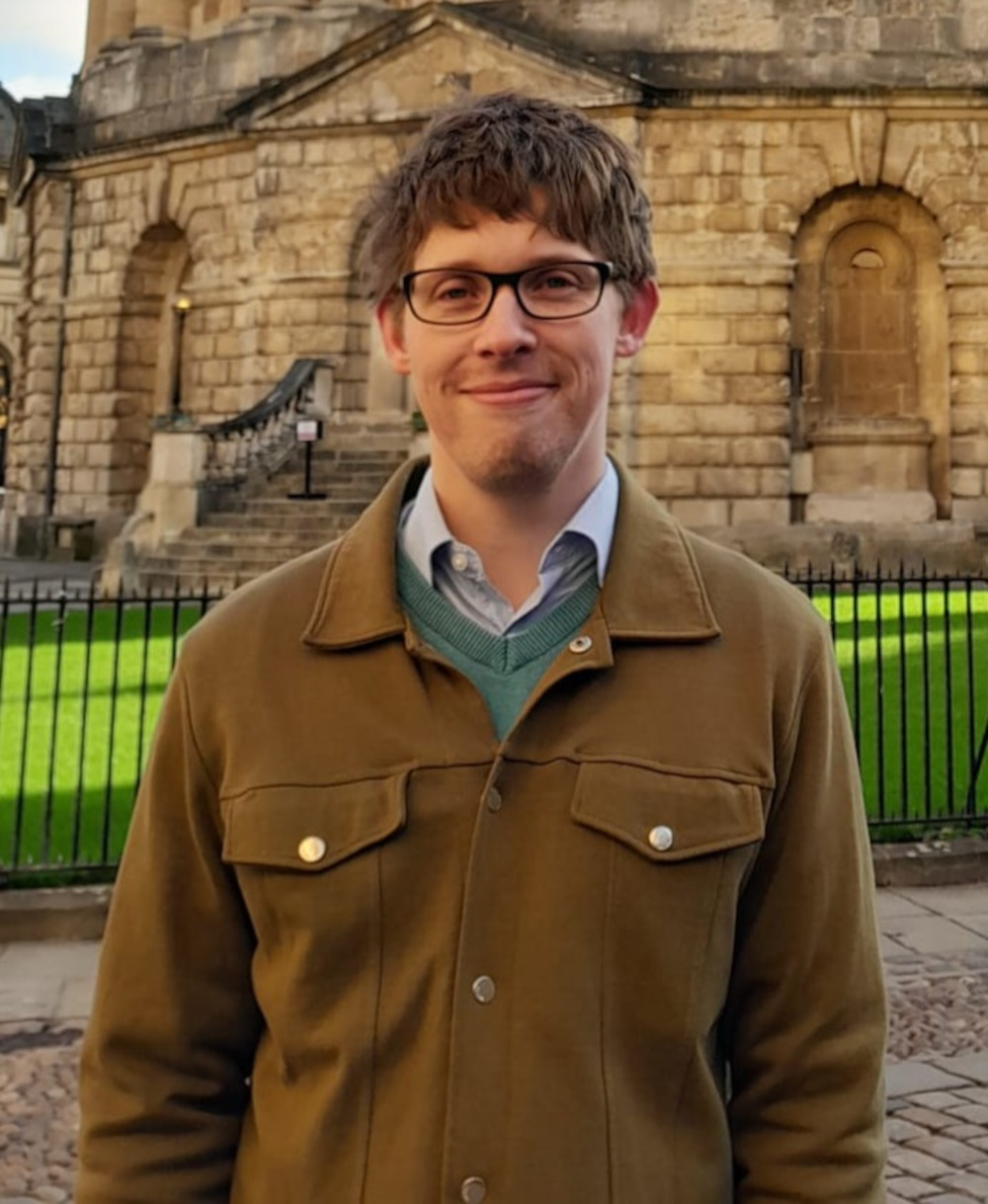
Rob Bellamy specializes in the interaction between climate and society, and he’s particularly interested in how solutions to climate change are perceived, evaluated, and governed.

Visual: Courtesy of Rob Bellamy

Geoengineering proposals have come in various forms, but the most talked-about ideas involve solar geoengineering: reducing the amount of solar radiation that reaches the Earth by reflecting some of the sun’s light back into space, or by allowing more heat to escape the atmosphere. One way of doing that would be to inject a chemical such as sulfur dioxide into the atmosphere, increasing the atmosphere’s reflectivity (sometimes called stratospheric aerosol injection). Other ideas under this umbrella have also been put forward — for example, spraying seawater aerosols into clouds above the ocean (“marine cloud brightening”) or spraying silver iodide into high cirrus clouds, triggering precipitation which in turn would thin the clouds and allow more heat to escape (“cirrus cloud thinning”).

Such tinkering with Earth’s climate has always been controversial; last September, a panel of experts called for a moratorium on geoengineering efforts. At the same time, others have suggested the idea at least needs to be researched, so that if it one day becomes necessary, scientists will better understand its possible effects.

Rob Bellamy, a lecturer in climate and society in the geography department at the University of Manchester, specializes in the interaction between climate and society; he’s particularly interested in how solutions to climate change are perceived, evaluated, and governed. He’s also playing a leading role in an effort called Co-CREATE, a three-year European Commision-funded project investigating strategies for responsible research into geoengineering.

Our interview was conducted over Zoom and has been edited for length and clarity.

Undark: As concerns over climate change become more urgent, is interest in geoengineering increasing?

Rob Bellamy: Yes, I think it is. It tends to go through waves. So there was this whole interest in it, recently, I suppose, kicked off by the Nobel Laureate Paul Crutzen in 2006, when he published a quite influential article on climatic change, when he was arguing that we should be looking at stratospheric aerosol injection.

I think in the last two or three years, there has been an increase — a resurgence — in solar geoengineering again. So there’s a whole bunch of projects and things that are going on in this space.

And this is in response to things like the 1.5 degree target. The chances that we will stay below 1.5 are really quite low, if not impossible.

And that immediately starts opening up questions around solar geoengineering, because at this point in time, the only thing that really could — if you really wanted to reduce the Earth’s temperature very quickly and significantly — solar geoengineering is the only thing that can do that.

UD: How much sulfur dioxide would have to be released to slow down global warming significantly?

RB: A good example is the Mount Pinatubo eruption, which is often used as a kind of natural analog for solar geoengineering. Stratospheric aerosol injection is often thought of as like doing a volcano deliberately, if that makes sense.

Volcanoes release sulfur into the atmosphere all the time. So you say, “Oh, why don’t we do that ourselves?” And so if you were going to do a continuous injection rate of between 8 and 16 trillion grams [about 9 to 18 million tons] of sulfur dioxide a year — that’s approximately equivalent to the amount that Mount Pinatubo erupted in 1991 — and would reduce global temperature by about 1 degree [Celsius].

If you’ve got to offset one and a half degrees, you probably want to do one and a half Mount Pinatubos worth of stratospheric injections.

UD: Do we have the technology to actually do that?

RB: Yes, we do. There are a whole bunch of ways you could do it. One of the most popular suggestions is to fly aircraft and release it at high altitudes in the stratosphere. And that should be fairly straightforward, technically speaking.

The other options include firing missiles, or having a balloon with a pipe attached to it. There was actually a project in the U.K. called the Stratospheric Particle Injection for Climate Engineering project, or SPICE for short, which was taking place back in the early 2010s. And there was a plan to do a testbed for that technology where they were going to do a 1/20th scale model, where they’d have this balloon going up a kilometer [0.6 miles], and a pipe.

With the real thing, you’d pump up sulfur dioxide, but they just wanted to pump up a bathtub load of water, just to see if you could get it up there, and to stress-test the pipe and the balloon under different wind conditions. It didn’t go ahead in the end, because of the controversy.

And then there are various conventional means; other people have suggested building a space elevator, which is a bit more science fictiony, and probably quite impractical. But in theory, you could technically do it quite soon.

Now, if you think about these things not purely in a technical sense, but see them instead as what we like to call “socio-technical systems” — so combinations of technical objects and the social arrangements that go along with them, and without which they wouldn’t work, thinking about things like policies, people, procedures, things like that — they’re actually very hard to do.

UD: You’ve described some of the ways these aerosols can be released into the atmosphere — would such a release be a one-off affair, or would it have to be done repeatedly?

RB: I think the idea would be that it would be a kind of a repeated thing. They often talk about doing continuous injections, over a period of time. But I suppose the thing is, once you start doing these injections, you’re committed to doing it for as long as is needed to reduce carbon dioxide in the background.

Because this links to one of the big risks associated with several geoengineering technologies, including stratospheric aerosols, and this is called “termination shock.” It’s the idea that if you were doing these injections over time, and in the background you haven’t been reducing your emissions so they’re kind of continuing to build up, and then for whatever reason — a technical failure, or a terrorist attack, or something like that — if for whatever reason, aerosol injections stopped, then you would see a very sudden rise in the Earth’s temperature in line with the amount of carbon dioxide that had been building up in the background.

So that’s one of the really big concerns. These technologies offer quite quick and very effective means of reducing the Earth’s temperature in principle, but you can’t do it on its own without massive risks.

UD: What are some of the other risks?

RB: There’s quite a lot. One of the other big ones, I suppose, is disruption to regional weather patterns around the world. So in particular, there have been several studies that have looked at the impact of the Indian monsoon quite significantly changing, potentially. So it could affect precipitation patterns in quite dangerous ways.

That has knock-on effects on things like agricultural production, ecosystems, things like that. Coral reefs could also be affected — potentially in a positive way, in terms of reducing heat stress. Lots of potential disruption to circulation patterns.

And there’s another one: With the stratospheric aerosol injection, in particular, there’s a concern about the depletion of ozone in the atmosphere, which is obviously another global environmental problem that we’re trying to try to deal with. So it wouldn’t necessarily help with that. Acid rain, obviously sulfur, when it falls out of the atmosphere again, would come down as acid rain in places.

UD: Is there also a danger that a program like this could lead to complacency?

RB: Yes. You may have heard of the term “moral hazard,” or “mitigation deterrence” — the idea that if we have a so-called technical fix, or technological fix, that’s available to us, then we might think, “OK, well, problem solved. We don’t need to do any of that hard work around reducing our emissions or anything like that.” So there’s a real concern that having this technology even available to us as an option before you even think about deploying it — even just the idea could be a deterrent to more stringent climate policy.

Now, there is a whole debate about whether or not this is a thing. There have been quite a lot of studies that have been looking at how the presence of these kind of technologies as an option would affect how people think about climate policy. Some studies have shown that solar geoengineering does induce kind of moral-hazard-type thinking, in the sense that people think a bit more, “OK, well, everything’s fine; we don’t need to do those emissions reductions.”

On the other hand, there’s plenty of evidence that also shows it doesn’t do that. And actually, there is reason to think that these technologies being available — and indeed being under serious consideration — could actually have a galvanizing effect on climate policy because people think, “Well, wow, if people are considering things as scary as this, then it must be serious.”

And then there’s plenty of evidence that says it’s not really going either way. So it’s really mixed.

UD: How reliable are the models that scientists have been using to judge the effects of geoengineering programs?

RB: I should caveat this by saying I’m not a modeler.

I think if you ask a lot of the other folks who are doing the modeling work in this space, they’d be quite confident that they’re doing a good job of predicting the effects and indeed some of the risks as well.

I mean, technically speaking, when you think about — just putting the models aside for a second — if you think about it in terms of the natural analogy of the volcanoes, I can say we know pretty well that putting sulfur into the atmosphere will cool the planet; we know that from volcanoes. If you look back in the climatic record, every time there’s a big volcanic eruption, there’s a big dip in the global temperature. So we know that it would work in that sense.

UD: If there are questions about how accurate the models are, I suppose that could lead people to suggest that that’s some kind of real-world testing is necessary.

RB: Yes, absolutely. And I think that’s actually where we’re at, now, in terms of this whole debate. We’ve had quite a lot of research in the social sciences and the natural sciences modeling work over the last decade or two, and I think this is one of the things that’s underpinning this new resurgent interest in the area: If we are going to make progress in this space, and figure out whether or not it is something that we may or may not want to do, then we’re going to have to start doing some kinds of experiments.

That’s actually what this project that I’m involved in is — it’s a European funded project, where we’re going to be trying to look at this exact question as to how, if at all, we can proceed with doing experiments in a responsible way.

UD: Tell me about that project.

RB: We’re working within the frame of an area called “responsible innovation,” where we’re trying to address things that we know are areas of significant concern across different types of new science and technology. So you look at all sorts of different controversial areas, like AI or biotechnology, climate technologies, there’s all sorts of things. The same kinds of concerns from people tend to come up time and again.

And so this framework we’re using is all about trying to address these concerns, anticipating the kinds of impacts that might come from using these technologies. Thinking about the different ways in which the research might be framed as well. Obviously, the way in which you frame your research questions will frame the kinds of answers that you get out of it. And that speaks as well to the modeling — the kinds of questions that you ask, the information you put into your research, will pretty much determine what comes out the other end.

Another key aspect of this work is, and this is the work I’m leading on, is societal engagement stuff. So we’re trying to get a wide range of voices involved in thinking about this. I suppose, to date, the whole debate has been very dominated by a quite a small clique of individuals in the natural and social sciences, who have basically been having this debate for 15 years or so. And often you’ll find that they make claims on behalf of other people, quite often vulnerable communities or the Global South in particular.

It’s argued that solar geoengineering could offer a way of alleviating some of the risks and harms that are being posed to those who are most vulnerable to the effects of climate change. But at the same time, you could argue that this technology could place those very same people at elevated risk from the use of this technology, and the different impacts that it might bring about.

But very few people have actually gone to these communities to ask them what they think. So that’s one of the things we’re quite keen to do — to really broaden this conversation.

UD: It seems like the very idea of geoengineering is international. What rules or laws ought to govern it?

RB: This area has been described as being a kind of governance black hole. So there is there is a need for governance here, and it’s a very contested space. You may have seen in the last couple of years, there’s been whole debates around whether or not there should be a ban, certainly on deploying solar geoengineering technology, but also whether or not there should be a ban on doing even research.

It’s a very contentious area. I can kind of see both sides of the argument. I think one thing most people would agree on is that there should be a moratorium or a ban on immediate deployment, because I think everyone would agree we just don’t know enough about the effects yet to be able to do it at a global scale.

That said, when it comes to research, it’s much more divisive. On the one hand, people argue that if we don’t research this, then we’ll remain ignorant about what we’re currently ignorant of. And on the other hand, people would argue that remaining ignorant about these things would save us from the folly of pursuing something as outlandish as solar geoengineering.


Dan Falk (@danfalk) is a science journalist based in Toronto and a senior contributor to Undark. His books include “The Science of Shakespeare” and “In Search of Time.”
Rice grain modified to add lab grown beef

The hybrid rice while it's growing. Credit: Yonsei University

February 17, 2024
Jacinta Bowler is a science journalist at Cosmos.
They were published in the Best Australian Science Writing 2023.

Rice is a nutritious staple food for much of the world, and now researchers in Korea have made it more nutritious, adding lab grown muscle and fat.

The resulting pink tinged rice grains might not be appetising to look at, but according to the researchers has a ‘pleasant and novel flavour’.

“Imagine obtaining all the nutrients we need from cell-cultured protein rice,” says first author Sohyeon Park from Yonsei University, South Korea.

“Rice already has a high nutrient level, but adding cells from livestock can further boost it.”

Lab grown meat has been on the horizon for around a decade now, but it’s still got plenty of hurdles to overcome.

Although geneticists and bioengineers can grow muscle or fat cells individually, putting them into a structure to form steaks, or even muscle fibres is harder than it sounds.

The researchers overcame this problem by using rice strengthened with fish gelatine and enzymes to grow the fat and muscle cells separately, forming rice grains with marbling of either meat or fat.

The hybrid rice. Credit: Yonsei University

Well, kind of meat – the rice protein was 18.54% genetically identical to the bovine tissue protein originally inserted. This took about 10 days from being ‘seeded’ to fully formed.

The hybrid rice had 8% more protein and 7% more fat than regular rice, and was firmer but brittler than regular rice.

The team also noted that the rice with muscle had a beefy or almondy smell to it, while those with the fat had compounds that correspond to cream, butter, and coconut oil.

“I didn’t expect the cells to grow so well in the rice,” says Park. “Now I see a world of possibilities for this grain-based hybrid food. It could one day serve as food relief for famine, military ration, or even space food.”


Like most lab grown meat, the rice was ‘grown’ on a mixture which included foetal bovine serum, so it’s not exactly ‘meat free’, but if the rice mixture could be weened off the serum it could be an effective way to create cheap, nutritionally denser food.

“Cell-organised rice grains exhibited distinct morphological and mechanical properties compared with bare rice grains, and these differences influenced the texture of cooked rice significantly,” the team writes in its paper.

“This strategy is a hybrid technology in which food, a scaffold, and cells are mutually beneficial and can be widely applied to other ingredients by optimizing the interactions between the materials.”

The research has been published in Matter.


Book Review: Off-Earth: Ethical Questions and Quandaries for Living in Outer Space

Book Review: Off-Earth Ethical Questions and Quandaries for Living in Outer Space by Erika Nesvold; MIT Press (2023); 304 pages, Hardcover: $27.95

This is a thought-provoking, even controversial for some readers!

Erika Nesvold, an astrophysicist, has worked as a researcher at NASA Goddard and the Carnegie Institution for Science.

As a developer for Universe Sandbox as well as cofounder of the nonprofit organization the JustSpace Alliance, Nesvold is also the creator and host of the podcast Making New Worlds.

The book rests on a stated premise: Can we do better in space than we’ve done here on Earth?

An issue is that we don’t, shouldn’t, or can’t leave our ethics back here on home planet Earth.

As stated by the publisher, Off-Earth includes historical and contemporary examples from outside the “dominant Western/US…and privileged narrative of the space industry.”

What that translates into is the author’s narrative on the potential ethical pitfalls of becoming a multi-planet species.

Bottom line: We won’t be departing our earthly problems and start afresh – even by taking in that space suit, airlock and cramped habitat smell.

Here’s an extract from the book, courtesy of MIT Press titled “The Thorny Ethics of Planetary Engineering – Whenever someone waxes poetic about terraforming alien worlds, it’s worth taking a moment to consider the ethical implications of the proposal.”

Go to:

https://thereader.mitpress.mit.edu/the-thorny-ethics-of-planetary-engineering/

For more information about this book, go to:

https://mitpress.mit.edu/9780262550994/off-earth/


Scientists used a synchronized pair of X-ray pulses (shown in pink and green) to study the energetic response of electrons (gold) in liquid water on attosecond time scales, while the hydrogen (white) and oxygen (red) atoms are ‘frozen’ in time. (Pacific Northwest National Laboratory Illustration / Nathan Johnson)

An international team of scientists has blazed a new trail for studying how atoms respond to radiation, by tracking the energetic movement of electrons when a sample of liquid water is blasted with X-rays.

The experiment, described in this week’s issue of the journal Science, required “freezing” the motion of the atoms with which the electrons were associated, on a scale of mere attoseconds. An attosecond is one-quintillionth of a second — or, expressed another way, a millionth of a trillionth of a second.

Attosecond-scale observations could provide scientists with new insights into how radiation exposure affects objects and people.

“What happens to an atom when it is struck by ionizing radiation, like an X-ray? Seeing the earliest stages of this process has long been a missing piece in understanding how radiation affects matter,” Xiaosong Li, a chemistry professor at the University of Washington and a laboratory fellow at the Pacific Northwest National Laboratory, said in a UW news release. “This new technique for the first time shows us that missing piece and opens the door to seeing the steps where so much complex — and interesting — chemistry occurs!”

Li is one of the senior authors of the Science paper, which describes a technique known as X-ray attosecond transient absorption spectroscopy, or AX-ATAS. The technique uses one X-ray pulse to excite atoms, and follows that with another pulse to probe how the excited atoms responded.

For their experiment, the researchers blasted a thin sheet of water with X-ray laser pulses at the SLAC National Accelerator Laboratory’s Linac Coherent Light Source in California. The AX-ATAS method made it possible for them to track the electrons energized by the X-rays as they moved into an excited state, all before the bulkier atomic nuclei had time to move and blur the picture.

“We now have a tool where, in principle, you can follow the movement of electrons and see newly ionized molecules as they’re formed in real time,” Linda Young, another senior study author who is a professor at the University of Chicago and a distinguished fellow at Argonne National Laboratory, said in a PNNL news release.

Li and Young are among 26 authors of the study published by Science, titled “Attosecond-Pump Attosecond-Probe X-Ray Spectroscopy of Liquid Water.” The authors based in Washington state include Li as well as Carolyn Pearce (PNNL and Washington State University) and Emily Nienhuis (PNNL), Lixin Lu, one of the paper’s principal authors, conducted research for the study as a UW doctoral student and is now a postdoctoral researcher at Stanford. Check out the news releases from UW and PNNL for further details about the study.

'Zombie Fires' burning at an alarming rate in Canada

By Nadine Yousif
BBC News, Toronto
Sonja Leverkus
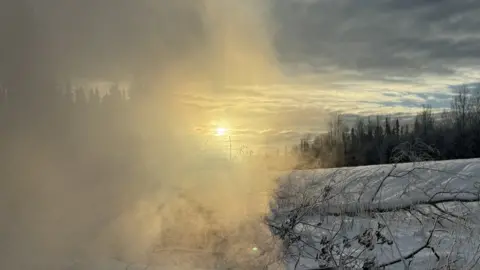
Smoke from a zombie fire pictured here in Fort Nelson, BC

Even in the dead of Canada's winter, the embers of last year's record-setting wildfire season remain. So-called zombie fires are burning under thick layers of snow at an unprecedented rate, raising fears about what the coming summer may bring.

People driving on the highway through the town of Fort Nelson, British Columbia (BC) in the winter can easily see - and smell - the clouds of white smoke flowing from the soil around them.

Sonja Leverkus, a firefighter and scientist who is local to the small north-eastern BC town, recalled driving during a snowstorm in November, but the snowfall didn't look white.

Rather, she said, it was blueish-grey because of the smoke in the air.

"I've never experienced a snowstorm that smelled like smoke," said Ms Leverkus, who has lived in northern BC for more than 15 years.

These plumes were still visible into February, she added, even on bitter cold days when temperatures had plummeted to -40C (-40F).'Zombie fires' spark record Arctic CO2 emissions

The Fort Nelson smoke is the result of zombie fires - also called overwintering fires.

They are flameless smoulders that burn slowly below the surface, and are kept alive thanks to an organic soil called peat moss common in North America's boreal forest and to thick layers of snow that insulate them from the cold.

These fires are not unusual. In the past 10 years, British Columbia has, on average, seen five or six that continue to burn during the cold months, experts say.

But in January, the province saw an unprecedented peak of 106 active zombie fires, raising concern among fire scientists about what these smoulders will mean for the upcoming wildfire season.

Most typically go out on their own before the spring, but 91 are still burning in BC, according to provincial data, and those that are not extinguished by March could reignite once the snow melts and they are exposed to air.

Because of this, scientists have linked them to early starts of wildfire seasons.
Watch: "Zombie" fires burn under the snow and soil

The neighbouring province of Alberta is also seeing a spike in these winter fires, with 57 burning as of early February - nearly 10 times more than the five-year average.

"This continued smouldering through the winter, I think, is very alarming to see", especially after Canada's record-shattering wildfire season last year, said Jennifer Baltzer, a professor of biology at Wilfrid Laurier University and the Canada Research Chair in Forests and Global Change.

More than 18 million hectares (44 million acres) of land were burned by wildfires in Canada in 2023 - an area roughly the size of Cambodia - far surpassing the country's 10-year average.

The season was among the most fatal in recent history, with several firefighters dying in the line of duty.

Thousands of people were forced from their homes and the effect was felt well beyond Canada's borders when smoke blanketed a large section of the US in June.

That calamitous wildfire season is one of the reasons why BC is now seeing such a high number of zombie fires, said Mike Flannigan, a professor and fire management expert at Thompson Rivers University in Kelowna, BC.

Most of them are fires that could not be put out fully by last autumn simply due to a lack of resources, he said.

By the end of the year, officials recorded a total of more than 2,200 wildfires in BC.

Another reason, Prof Flannigan said, is the extreme drought that the province has been dealing with over the last two years.

As of February, most of BC has been under medium to extreme levels of drought, per the province's drought map.

Like the zombie fires, the drought, too, has been noticeable, said Ms Leverkus.

When out in the forest last summer, she said she noticed that a creek that used to flow freely is now "just puddles".

These drought conditions have persisted through the winter. The province has seen so little snow that one ski resort in BC's South Cariboo region was forced to close its doors in early January for the remainder of the season.

Sonja Leverkus
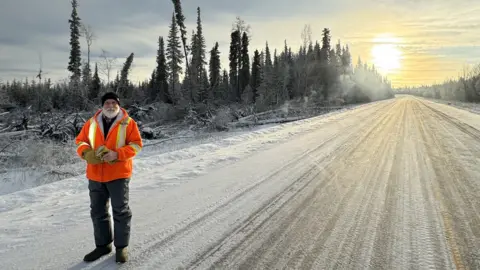
Trevor Scott, a structural technolgist and native of Fort Nelson, stands on a BC highway with smoke in the distance

Zombie fires were once infrequent, but scientists say they have become more common in recent years due to a rapidly warming climate.

For now, they are being monitored by officials, said Forrest Tower, a fire information officer with BC Fire.


He said that many of them cannot be put out manually as most of the province's firefighting force is on break for the off-season. They do not pose a risk yet, he said.

But the main concern is the fires could ignite again if BC continues to see very little snow or rain into the spring.

If this happens, he said the province's seasonal wildfire force could be immediately thrust into action come March or April.

Prof Flannigan said it is too early to predict just exactly what the upcoming fire season will look like in BC, but what the province has seen so far "is quite unusual".

And with it being an El Nino year, which spells out hot and dry conditions for western Canada, Prof Flannigan said that "the stage is set for a very active spring".

Patagonia’s cave art identified as south America’s earliest pigment-based paintings

Credit: Guadalupe Romero Villanueva

The discovery of ancient cave art in Patagonia, dated to be as old as 8,200 years, marks a significant breakthrough in understanding the cultural and historical timeline of South America.

This revelation, made by an international team of scientists and published in Science Advances, not only pushes back the age of the earliest known cave art in the continent but also offers a glimpse into the lives of its ancient inhabitants.

Patagonia, a region at the southern tip of South America known for its arid landscapes and the southern Andes, has long been recognized as a significant area for archaeological research.

It is believed to have been one of the last regions on Earth to be settled by modern humans, around 12,000 years ago.

The harsh conditions of Patagonia, characterized by minimal rainfall and limited food sources, coupled with a prolonged hot and dry spell that began about 10,000 years ago, would have made survival challenging for its early inhabitants.

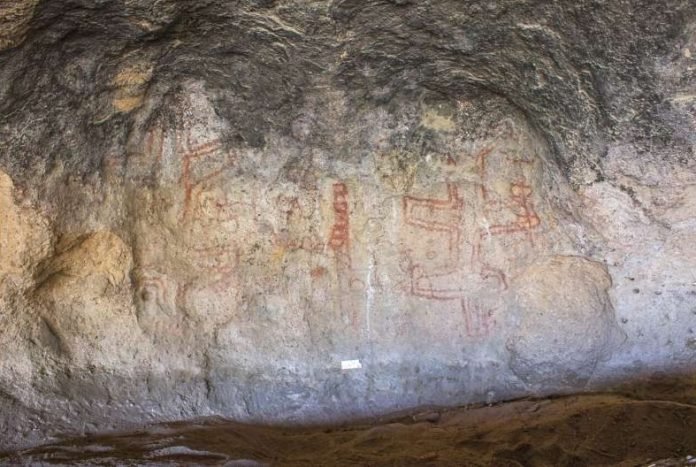
The site of interest, Cueva Huenul 1, is adorned with approximately 900 paintings, a testament to the rich cultural expressions of the people who once thrived in this challenging environment. Prior to this study, the consensus among researchers was that the cave art in this region dated back just a few thousand years.

However, the use of radiocarbon dating on the plant-based “paint” used in these artworks has dramatically shifted this timeline, identifying the oldest among them as being created 8,200 years ago.

This method of dating, which measures the decay of carbon-14 to estimate the age of organic materials, has proven to be a crucial tool in piecing together the history of human civilization.

The findings not only underscore the artistic expression and cultural sophistication of ancient South American societies but also highlight the enduring human spirit in the face of environmental adversities.

While the cave art in Patagonia does not claim the title for the world’s oldest, a distinction held by artwork found in Indonesia, it significantly enriches our understanding of prehistoric art on the South American continent.

These ancient markings provide invaluable insights into the symbolic world of early humans, reflecting their beliefs, experiences, and interactions with their environment.

The discovery prompts further investigation into the lives of the ancient Patagonians, inviting researchers to delve deeper into the mysteries of human expansion and cultural development across the globe.

It also raises intriguing questions about the spread of artistic practices among early human societies and the universal drive for expression that transcends geographical and temporal boundaries.

As research continues, the ancient cave art of Patagonia stands as a beacon, illuminating the past and guiding scholars in their quest to unravel the complex tapestry of human history.

The research findings can be found in Science Advances.

Copyright © 2024 Knowridge Science Report. All rights reserved.

WE GOT BUGS!

Expedia Group to close Seattle HQ temporarily to enhance security after discovery of spy cameras

Expedia Group’s headquarters on the Seattle waterfront. (GeekWire File Photo / Todd Bishop)

Expedia Group will close its Seattle headquarters for three days starting this weekend to further enhance its security and improve its ability to detect unauthorized devices after news broke this week about the discovery of spy cameras in two bathrooms at the campus in December and January.

A former Expedia Group employee, Marcelo F. Vargas-Fernandez, 42, pleaded not guilty to four counts of voyeurism in connection with the case during his arraignment Thursday in King County Superior Court in Seattle.

Seattle Police Department investigators have returned to campus to conduct additional searches, and no additional recording devices were found in those searches, an Expedia Group spokesperson said via email Friday.

The company informed employees Friday that it will close the campus temporarily, from Saturday through Monday, “to install additional security enhancements and accelerate our detection capabilities,” the spokesperson said.

Expedia Group said previously that the person charged in the incident is no longer employed by the company.

Video recording devices were first found on Dec. 4 under the sinks, pointed at the toilets, in two single-occupancy, non-gender bathrooms on the Expedia Group campus, according to a probable cause affidavit accompanying the charges against Vargas-Fernandez. However, “security supervisors made the decision not to take the devices because at the time they thought it was a music device or a battery backup for the soap dispensers,” the affidavit said.

A photo taken by a Seattle Police Department detective inside an Expedia Group bathroom in January, with an annotation by GeekWire showing the alleged location of the camera. See close-up view below. (SPD Photo)

The next morning, the devices were gone.

King County Prosecuting Attorney Leesa Manion alleges that Vargas-Fernandez removed the cameras after that initial discovery, then reinstalled them in early January. They were discovered again on Jan. 11.

Vargas-Fernandez was arrested Feb. 1 by Seattle police, who found at least 33 additional spy cameras when executing a search warrant inside his Lynwood, Wash., apartment, according to the probable cause affidavit.

GeekWire first reported the news about the charges against Vargas-Fernandez on Tuesday morning, followed by reports from other news organizations. In messages to GeekWire after the news broke this week, some Expedia Group employees said the media reports were the first they had heard about the incident, expressing disappointment that the company had not proactively communicated with them previously.

Expedia Group has since sent multiple messages to employees, including one informing them of the planned closure to enhance security and detection capabilities on the Seattle headquarters campus.

The company does not take President’s Day as a holiday. Expedia has a hybrid work policy, and the number of people typically in the office on Monday is relatively low compared to some other days of the week, employees say.

The Expedia Group spokesperson said Friday via email that the company is continuing to implement measures to enhance security for employees while also providing options for support services related to the incident.

Vargas-Fernandez denied involvement when initially questioned by police, according to the probable cause affidavit. His attorney, Charles R. Varni, has not yet responded to messages from GeekWire seeking comment.

Expedia Group includes brands such as vrbo, Orbitz, Hotwire, Trivago, Hotels.com, and Egencia in addition to the flagship Expedia.com. The company moved to its expansive campus overlooking Elliott Bay in Seattle in the fall of 2019 from its previous location in Bellevue, Wash.

Expedia Group is in the midst of a leadership transition with the announcement Feb. 8 that CEO Peter Kern will be stepping down from the role in May, replaced by Ariane Gorin, currently president of Expedia for Business. Kern will remain vice chairman and stay on the board.