Monday, March 04, 2024

Left-for-dead uranium mines are being revived as prices soar, countries eye nuclear power to address climate change

BYJACOB LORINC, MARIA CLARA COBO AND BLOOMBERG
March 3, 2024

The Mochovce nuclear power plant in Mochovce, Slovakia last November.
JANOS KUMMER/GETTY IMAGES

Across the US and allied countries, owners of left-for-dead uranium mines are restarting operations to capitalize on rising demand for the nuclear fuel.

At least five US producers are reviving mines in states including Wyoming, Texas, Arizona and Utah, where production flourished until governments soured on the radioactive element following the 2011 Fukushima nuclear disaster in Japan.

Most of those American mines were idled in the aftermath of Fukushima, when uranium prices crashed and countries like Germany and Japan initiated plans to phase out nuclear reactors.

Now, With governments turning to nuclear power to meet emissions targets and top uranium producers struggling to satisfy demand, prices of the silvery-white metal are surging. And that’s giving those once-unprofitable uranium operations a chance to fill a supply gap.

Uranium has been used as an energy source for more than six decades, fueling nuclear power plants and reactors. About two-thirds of global production comes from Kazakhstan, Canada and Australia.

Uranium will be a topic of conversation as thousands of mining executives, geologists and bankers descend on Toronto for the Prospectors & Developers Association of Canada gathering this week. The annual event has attracted at least 10 uranium firms, including Denison Mines Corp., Fission Uranium Corp. and IsoEnergy Ltd.

As countries increasingly consider nuclear power to address climate change, demand for uranium is expected to skyrocket. The International Atomic Energy Agency estimates the world will need more than 100,000 metric tons of uranium per year by 2040 — an amount that requires nearly doubling mining and processing from current levels.


Canada’s Cameco Corp. and Kazakhstan’s Kazatomprom, which together account for half of global supply, have struggled to ramp up production. They have warned of some operational setbacks that will result in less uranium output than expected in the coming years.

Read More: World’s Biggest Uranium Miner Warns of Production Shortfall

“We’re in an old-fashioned, plain-and-simple supply squeeze,” said Scott Melbye, executive vice president of Texas-based Uranium Energy Corp. “Demand is increasing again, with new reactors coming online.”

Production hasn’t kept pace due to years of underinvestment in mining and exploration, said Melbye, whose company is reopening mines in Wyoming and Texas that were idled in 2018.

Energy Fuels Inc. initiated plans late last year to restart operations in Arizona, Utah and Colorado, while Ur-Energy Inc. said it will dust off an idled mine in Wyoming. Mid-sized companies in Australia and Canada have announced similar plans.


To be sure, production from these mines — most of which are small and nearing the end of their lives — would comprise a small fraction of the world’s uranium supply.

“The industry is clearly trying to respond with smaller mines reopening, but when you have a mine that hasn’t operated for that long, it’s obviously not very substantive,” said John Ciampagli, Chief Executive Officer of Sprott Asset Management, which operates the Sprott Physical Uranium Trust.
Top Producers

Supply constraints should ease with top producers churning out the millions of pounds of uranium they left in the ground when prices were low. Kazatomprom has been increasing output after years of operating well below its capacity.

Cameco has been ramping up production at the world’s largest high-grade uranium mine and mill — MacArthur River and Key Lake in the western Canadian province of Saskatchewan — after idling operations between 2018 and 2021 due to weak market conditions.

The two firms “will be very concerned about losing their market share to a bunch of juniors, and so they’ll want to claim that back,” said Tom Price, a senior commodities analyst at London-based investment bank Libereum. “That will take a lot of heat out of the market.”


Still, US mine reopenings mark a revival for an American industry that was at risk of disappearing only five years ago. American uranium production hit an all-time low of 174,000 pounds in 2019 — a drop from its 44-million-pound peak in 1980 — as the US started increasing dependence on imports from countries like Canada, Australia, Kazakhstan and Russia.

Read More: The Long Arm of Russia and the Politics of Uranium

The US industry’s push is also political, with the government seeking to secure access to supply amid geopolitical uncertainty. Sanctions on Russia following its 2022 invasion of Ukraine have posed challenges for uranium shipments en route from Kazakhstan, since the former Soviet state’s exports typically pass through Russian ports.

To keep up with demand, the Uranium Producers of America forecasts the US will need eight to 10 new, major mines to start production over the next decade.

The Farming Conundrum

Agriculture is a big contributor to climate change — is there a path to reinvention?


A new report found that the United States is spending billions of dollars to try to slash greenhouse gas emissions from farms, but many of the new practices are unproven.


Credit...Tim Gruber for The New York Times

By Manuela Andreoni
Feb. 29, 2024

Two news stories this week — one that made headlines, and one that got less attention — point to the fiendish difficulty of reinventing agriculture to reduce its heavy toll on the climate.

The first development: The New York attorney general Letitia James, fresh off a $450 million civil verdict against Donald Trump, announced a lawsuit against JBS, the world’s biggest meatpacking company, for making misleading statements about its efforts to reduce greenhouse gas emissions.

James’s lawsuit said that JBS has “used greenwashing and misleading statements to capitalize on consumers’ increasing desire to make environmentally friendly choices,” with statements such as: “Agriculture can be part of the climate solution. Bacon, chicken wings, and steak with net zero emissions. It’s possible.”

The lawsuit cited David Gelles’s interview with Gilberto Tomazoni, the chief executive of JBS, at our Climate Forward event in September in which he said: “We pledge to be net zero in 2040.”

James argues the company can’t possibly achieve net zero “because there are no proven agricultural practices to reduce its greenhouse gas emissions” at the company’s vast scale, at least without costly efforts to offset its emissions.

JBS is a gigantic company, but the issues raised in the lawsuit against its U.S. arm are even fundamental: Is there even a path to net zero agriculture, especially if people are determined to keep large quantities of meat in their diets?
Climate-smart agriculture

The second development this week speaks to that problem: A new report found that the United States is spending billions of dollars to try to slash greenhouse gas emissions from farms. Sounds great, but there’s a hitch: much of the money may go to projects that won’t necessarily serve that goal.

The Environmental Working Group, a nonprofit group that conducted the research, said that the United States Department of Agriculture is poised to fund a number of unproven practices. Those include installing new irrigation systems, despite the harm they can cause to groundwater supplies, and building infrastructure to contain animal waste, which could in fact lead to more emissions of methane and other greenhouse gases.

Allan Rodriguez, a U.S.D.A. spokesman, said in a statement that the EWG report is “fundamentally flawed” because it “did not take into account the rigorous, science-based methodology used by USDA to determine eligible practices” or the level of specificity that is required for some practices to receive climate funding.

Anne Schechinger, the author of the EWG report, told me that she is still waiting for the U.S.D.A. to share its sources and data that would justify the climate-smart designation.

The Biden Administration’s Environmental AgendaNarrowing Two Big Climate Rules: President Biden’s climate ambitions are colliding with political and legal realities, forcing his administration to recalibrate two regulations aimed at cutting the emissions that are heating the planet: one requiring gas-burning power plants to cut their carbon dioxide emissions and one designed to sharply limit tailpipe emissions.
Chemical Facilities: The Biden administration issued new rules designed to prevent disasters at almost 12,000 chemical plants and other industrial sites nationwide that handle hazardous materials.
Fuel Ban: The Biden administration will permanently lift a ban on summertime sales of higher-ethanol gasoline blends in eight states starting in 2025, in response to a request from Midwestern governors.
Biden’s Climate Law: A year and a half after President Biden signed into law a sweeping bill to tackle climate change, an analysis of the legislation’s effects has found that electric vehicles are booming as expected but renewable power isn’t growing as quickly as hoped.

Even setting aside that particular dispute, one thing is clear: There is a huge knowledge gap in our efforts to transform agriculture. Measuring agricultural emissions is a lot more complex than monitoring power plants and tailpipes. That makes it hard for any government to measure how well such techniques are working — or if in some cases they’re actually doing more harm than good.

“The pace at which these strategies are being implemented is greatly outpacing the speed at which the science, knowledge necessary to understand their effectiveness is being generated,” said Kim Novick, an environmental scientist at Indiana University who studies carbon in agricultural systems. “Until we close that gap, it’s really a lot of putting the cart before the horse.”

Closing the knowledge gap

Farming accounts for about a third of the world’s carbon emissions, and a 10th of America’s. But we still know shockingly little about how to reduce its toll on the climate and vulnerable ecosystems.

I spoke to a number of experts for this newsletter. Though some of them were generally supportive of investing in some climate-smart practices, they told me that even practices that are generally recognized as good for the climate still have unclear benefits.

Take cover crops, one of the most accepted climate-smart farming practices. These are legumes and other species that are planted after the harvest of cash crops, such as corn, to help nourish the soil and improve water quality.

Most people agree that implementing cover crops on a large scale could help reduce emissions. But those conclusions rely on a relatively small amount of data, Novick told me.

The Inflation Reduction Act and other funding streams are directing hundreds of millions of dollars to improve data and models. That, the U.S.D.A. spokesman said, will “ensure that future resources are directed to the most effective practices.”

Doria Gordon, a senior director at the Environmental Defense Fund, told me she is excited about “the unprecedented level of funding” the agriculture sector is getting to become more sustainable and that many practices the U.S.D.A. is supporting should have climate benefits if implemented at scale.

Still, she would like the agency to take its efforts to collect data further. There is also “an equally unprecedented opportunity” to close the knowledge gap, she said. “This really is a once in-a-lifetime chance to advance our understanding of these emerging solutions.”

More climate news

Despite ongoing protests by farmers, the European Union approved a landmark bill to restore 20 percent of its land and sea ecosystems by 2030, The Guardian reports.

Cities across the world are stripping out concrete to make room for earth and plants, the BBC reports.

Exxon’s chief told Fortune magazine that “people generating the emissions” need to pay the price.


Manuela Andreoni is a Times climate and environmental reporter and a writer for the Climate Forward newsletter. More about Manuela Andreoni

Is the USDA’s spending on ‘climate-smart’ farming actually helping the climate?

A new report asks whether supposedly green livestock practices have proven benefits.

AP Photo / Rodrigo Abd

Max Graham
Food and Agriculture Fellow
Mar 01, 2024

America’s farms don’t just run on corn and cattle. They also run on cash from the U.S. Department of Agriculture. Every year, the USDA spends billions of dollars to keep farmers in business. It hands out money to balance fluctuations in crop prices; it provides loans for farmers who want to buy livestock or seeds; and it pays growers who lose crops to drought, floods, and other extreme weather.

The agency is also now giving money — including $20 billion that Congress earmarked two years ago in the Inflation Reduction Act — to farmers trying to curb their greenhouse gas emissions and store carbon in soil, a key part of the Biden administration’s goal to cut the 10 percent of the country’s emissions generated by agriculture. That windfall of climate-smart farm funding has been widely lauded by climate activists and researchers.

But exactly how the USDA spends that money is more complicated — and contentious — than it might appear, and not simply because Republicans in Congress have threatened to siphon the funds away. A new report from the Environmental Working Group says that more than a dozen of the farming practices that the USDA recently designated as “climate-smart”— including several of the highest-funded ones — don’t actually have proven climate benefits. That finding is especially important, according to the group, because the USDA is likely to spend more money on the same practices in the years to come: Much of the $20 billion authorized by the Inflation Reduction Act has yet to reach farmers’ pockets.

Supporting farming techniques with uncertain benefits “undermines potentially real reductions in emissions,” said Anne Schechinger, author of the report and Midwest director at the Environmental Working Group, an environmental research and advocacy organization. “If these unproven practices stay on the list, then a lot of money will go to these practices that likely aren’t going to reduce emissions.”

A USDA spokesperson said the agency uses a rigorous, scientific process to determine what it considers climate-smart. Still, the agency acknowledges that not everything on its list necessarily has quantifiable benefits. New additions to the list are provisional — that is, they’re added “under the premise that they may provide benefits” and will be removed later on if those benefits can’t be quantified.

Schechinger analyzed spending by the USDA’s Environmental Quality Incentives Program, called EQIP for short, the agency’s biggest conservation program. She found that, between 2017 and 2022, the program directed around $2 billion to techniques that were added provisionally to its climate-smart list for this fiscal year.

“It looks like a lot of money is going to climate-smart practices between 2017 and 2022 when, really, very little of the total EQIP money has actually gone to practices with proven climate benefits,” said Schechinger.

In particular, the group called into question eight of 15 methods that the Biden administration added provisionally, such as installing a waste facility cover or an irrigation pipeline. One of them — “waste storage facility,” a structure that holds manure and other agricultural waste — may even increase emissions, according to the report. The USDA spent about $250 million on them between 2017 and 2022.

The department specifies on its list that only a specific kind of waste storage facility, one that composts manure, counts as climate-smart. These composting structures can reduce methane emissions and improve water quality, the agency says.

“Unfortunately, EWG did not take into account the rigorous, science-based methodology used by USDA to determine eligible practices, nor the level of specificity required during the implementation process to ensure the practices’ climate-smart benefits are being maximized,” said Allan Rodriguez, a spokesperson for the USDA, in an emailed statement. “As a result, the findings of this report are fundamentally flawed, speculative, and rest on incorrect assumptions around USDA’s selection of climate-smart practices.”

Schechinger acknowledged that the USDA doesn’t define all waste storage facilities as climate-smart, but she said that the funding data she was able to obtain through a records request didn’t distinguish between specific facility types and that it “remains to be seen” whether the Inflation Reduction Act money will go only to the kind that composts manure.

Some researchers have argued that more studies need to be done on most “climate-smart” practices — even ones, such as planting cover crops, that the Environmental Working Group doesn’t question in its report — before anyone can say how much climate pollution they’re curbing or carbon they’re sequestering. “For most climate-smart management practices, we do not yet have the data and information we need to understand when and where they are most likely to succeed,” said Kim Novick, an environmental scientist at Indiana University.

Most scientists agree that more data needs to be collected and analyzed to understand, say, the nuances of storing carbon in the soil. But some argue that climate change is just too urgent to delay action.

That’s one reason Rachel Schattman, a professor of sustainable agriculture at the University of Maine, supports the USDA’s use of climate funding. She also has confidence in the agency’s commitment to science. A practice doesn’t get put on the agency’s conservation list “without having demonstrated environmental benefits or reduced environmental harm,” she said. “Whether those benefits or reduced harms are related to climate change is something [the USDA] is grappling with in a really meaningful way right now.”

Schattman also said it’s important not to paint climate-smart practices with a broad brush. “Everybody’s farm is different. Everybody’s soil is different. Everybody’s microclimate is different,” she said. An irrigation pipeline in the Arizona desert might have a different effect on water and energy use than one on a farm in Vermont. Even if a practice here or there doesn’t reduce emissions or store carbon in the soil exactly how the USDA intends, Schattman said the influx of funding still could move agriculture in the right direction.

The Inflation Reduction Act created “a once in a lifetime opportunity for a lot of farmers,” she said. “I think it is going to make a lot of things possible that people couldn’t do before.”


Grist is the only award-winning newsroom focused on exploring equitable solutions to climate change. It’s vital reporting made entirely possible by loyal readers like you. At Grist, we don’t believe in paywalls. Instead, we rely on our readers to pitch in what they can so that we can continue bringing you our solution-based climate news.


New USDA 'climate-friendly' farming and ranching practices have yet to be proven, report says

March 1, 2024
A cow grazes in a field outside of Walcott, Iowa.

An environmental activist group charges that many “climate smart” farming practices recently added to a list for U.S. Department of Agriculture funding are not yet proven.

The Environmental Working Group says funding from the Inflation Reduction Act should not be used to pay farmers for using the practices, until there is more evidence that they work.

The EWG made the charge in a new report issued Wednesday about the Environmental Quality Incentives Program, or EQIP.

The program, run by the USDA’s Natural Resources Conservation Service, was launched in the 1990s, but its current authorization comes from the 2018 Farm Bill. EQIP helps farmers with funding to implement conservation methods that have met the department’s approval. Since 2023, its funding sources have included money authorized by the Inflation Reduction Act to fund climate change mitigation efforts.

But the EWG report says many of the 15 practices earmarked for that funding “likely do little or nothing to help in the climate fight.”

“USDA says that they have literature showing that these practices have climate benefits,” said agricultural economist and EWG Midwest Director Anne Schechinger, who authored the report. “But they don't actually have any quantifiable data showing that these practices reduce greenhouse gas emissions.”

She said eight of the 15 practices are for irrigation and livestock, management techniques “that likely don’t reduce emissions,” and in one case, may even increase emissions.

Funding from the Inflation Reduction Act specifically meant for addressing climate change should be reserved for practices proven to be effective, Schechinger said. While the USDA’s NRCS plans to study the possible benefits of the new farming practices this year, she said until the results of those studies are in, the practices should be removed from eligibility for IRA funding.

New Practices:
brush management
irrigation system, sprinkler
waste storage facility
irrigation pipeline
waste facility cover
irrigation system, micro
pumping plant
woody residue treatment
herbaceous weed control
prescribed burning
wildlife habitat–restore and management
fuel break
composting facility
feed management
soil carbon amendment

The USDA is defending the EQIP program’s climate-smart agriculture practices.
In a statement, spokesman Allan Rodriguez said the department used “rigorous, science-based methodology” to determine which practices are eligible — and that farmers who qualify for funding must use the practices under specific conditions to maximize their effectiveness.

Rodriguez said the Environmental Working Group’s findings were “fundamentally flawed, speculative, and rest on incorrect assumptions around USDA’s selection of climate-smart practices.”

Jonathan Coppess, who researches federal ag policy as an associate professor at the University of Illinois, said the EWG report does raise valid concerns. He said that while he can sympathize with the USDA’s position, he points out that Inflation Reduction Act funding is scheduled to end after the 2026 fiscal year.

“Once the funds are out, you can’t pull them back,” said Coppess. “And so, if they are misspent, it's a missed opportunity in a significant way to do what is an important effort for agriculture, for our food system, and for the climate.”

But according to Erik Lichtenberg, there are more benefits to the practices in question than the EWG report credits. The University of Maryland agricultural economist, who has studied the USDA’s approach to conservation and climate change, said paying farmers to implement practices that are not fully proven is a way to find out how they work under a wide range of conditions and climates.

“We're fairly new to managing agriculture to mitigate climate change impacts, and that means we really need to be experimenting to see what does work and what doesn't,” Lichtenberg said. “Farming practices that work in one place, don't work in another. So, we're really going to need to experiment a lot and adjust for local conditions a lot.”

The USDA has funded only about a third of the applications they received from farmers for the EQIP program between fiscal year 2018 and 2022.

The USDA’s Rodriguez said the additional funding from the Inflation Reduction Act is expanding the number of farmers EQIP can serve, and also financing efforts to monitor and verify the effectiveness of new practices.

He said those efforts will enable them to “quantify the impact of conservation practices on greenhouse gas emissions and carbon sequestration and ensure that future resources are directed to the most effective practices.”

This story was produced in partnership with Harvest Public Media, a collaboration of public media newsrooms in the Midwest. It reports on food systems, agriculture and rural issues.


RESEARCH

Many newly labeled USDA climate-smart conservation practices lack climate benefits


JUMP TO:
What climate-smart practices should do
New practices probably don’t benefit climate
New list creates alternate reality of robust climate funding
Climate money will now go to different states
Map: Environmental Quality Incentives Program payments, 2017-2022
Analysis methodology


OverviewNewly designated USDA climate-smart conservation practices likely don’t reduce agriculture’s greenhouse gas emissions.
Only practices that reduce emissions are eligible for $19.5 billion in 2022 Inflation Reduction Act funds.
The new designations make it look, erroneously, like a lot of money is going to climate-smart agriculture.


Against the backdrop of the deepening climate crisis, the Department of Agriculture recently added 15 Environmental Quality Incentives Program, or EQIP, practices to its climate-smart conservation list – but many likely do little or nothing to help in the climate fight, a new EWG analysis of USDA data finds.

The new data is compiled in EWG’s just-updated Conservation Database. EQIP is one of the USDA’s largest conservation programs, helping farmers implement environmentally beneficial practices.

Some of the newly designated climate-smart practices already receive, by far, the most dollars from EQIP. So the revision of the list conveniently makes it look as though a large share of federal conservation funding will now go to climate-smart farming, providing a misleading picture of agriculture and climate in the U.S.

In 2022, EWG found that only a small portion of EQIP funding went to farmers’ implementation of climate-smart methods. The USDA's new list changes the equation significantly, effectively doubling climate-smart funding: Instead of 31 percent of EQIP funds subsidizing climate-smart farming between 2017 and 2022, it now appears that 63 percent did.

And the new climate-smart practices are about to get even more money, because they’re eligible to receive additional funds through the Inflation Reduction Act, or IRA. This money totals about $19.5 billion, $8.45 billion of which is meant specifically for EQIP practices that reduce greenhouse gas emissions or sequester carbon in soil between fiscal years 2023 and 2026.

But many of the newly labeled practices likely do not have climate benefits. Eight of them are methods for irrigation and livestock management that likely don’t reduce emissions. One even increases emissions, according to USDA’s own data.

The USDA’s conservation agency, the Natural Resources Conservation Service, or NRCS, says that in 2024 it will study the possible climate benefits of the newly added practices.

Until then, the USDA should remove them from its climate-smart list. No IRA funds should underwrite them without proof they actually reduce greenhouse gas emissions.
Climate-smart conservation is intended to provide real climate benefits

For the past few years, the NRCS has made a list of practices funded through EQIP and the Conservation Stewardship Program, one of its other tentpole conservation programs, that it considers climate-smart. The practices on this list are intended to cause “quantifiable reductions in greenhouse gas emissions and/or increases in carbon sequestration.”

In fiscal year 2023, the NRCS climate-smart list included 45 EQIP practices for which farmers received payments at some point between 2017 and 2022. (Other practices on the list didn’t get funding.) The funded practices included those with proven climate benefits, such as “cover crops,” “nutrient management” and “grassed waterways.”

In October 2023, the NRCS updated its list of climate-smart practices for fiscal year 2024. The roster now has 57 EQIP practices that received funding between 2017 and 2022, including 15 new additions (not including two practices that were removed). (See Table 1.) Only 14 of the 15 newly added practices got any funding between 2017 and 2022. “Soil carbon amendment” was added to the list for 2024 but didn’t receive any funds.

Table 1. 2024 climate-smart EQIP practices.*


EQIP practices added to USDA's 2024 climate-smart conservation list

EQIP practices removed from USDA's climate-smart conservation list for 2024


Brush Management

Wildlife Upland Habitat Management


Irrigation System, Sprinkler


Waste Storage Facility


Irrigation Pipeline


Waste Facility Cover


Irrigation System, Micro


Pumping Plant


Woody Residue Treatment

Windbreak/Shelterbelt Renovation


Herbaceous Weed Control


Prescribed Burning


Wildlife Habitat- Restore and Management


Fuel Break


Composting Facility


Feed Management


*List only includes 14 practices that received money between 2017 and 2023. It does not include “Soil carbon amendment,” which did not.

Source: EWG, from public records requests for USDA-NRCS program data.
Many practices newly labeled climate-smart likely don’t benefit the climate

Of the 14 newly added (and funded) practices, more than half – eight – are irrigation or livestock practices, such as “waste storage facility” and “irrigation pipeline.”

The NRCS is calling all of these practices “provisionally” climate-smart – it cannot yet show whether they reduce emissions, so they have no proven climate benefits.

And “waste storage facility,” a structure that contains animal waste, increases greenhouse gas emissions, according to the data USDA does have.

These livestock practices are almost certainly not climate-smart. Agriculture contributes more than 10 percent of U.S. greenhouse gas emissions, with livestock a major source – particularly beef and dairy cattle, which emit vast quantities of methane.

EQIP funding to manage large amounts of livestock in concentrated facilities encourages farmers to keep relying on this model instead of raising animals on pasture, which could help to lower emissions.

Irrigation practices are also not clearly climate-smart. Although EQIP irrigation practices seem to enable more efficient water use, they do not always reduce total water use, especially in the West, where many farmers’ water rights follow “use it or lose it” policies.

In these cases, if a water rights holder does not use all their water allocation, they forfeit the rest, so they have an incentive to use the most they can. So installing more efficient irrigation wouldn’t necessarily save any water.

The IRA text says $8.45 billion of its funding should go only to EQIP practices that reduce greenhouse gas emissions or sequester carbon in soil – in other words, to the practices on the NRCS climate-smart list.

So calling the livestock and irrigation practices climate-smart, provisionally or not, is problematic, since the IRA states that its agricultural funding should go to conservation practices that reduce emissions or sequester carbon.

The NRCS has said it will study provisional practices in 2024 to measure their greenhouse gas emission reductions, if any. It has also said if it does not find benefits, it may remove the provisional practices from the climate-smart list for the following year.

But history would show that these practices may not be studied in 2024: All eight provisional practices on the 2023 list remain on the list for 2024 – and all are still listed as provisional.
New list creates alternate reality where lots of money has gone to climate-smart farming

Some of the practices just added to the 2024 climate-smart list received the most EQIP funding between 2017 and 2022 – painting an inaccurate picture of a lot of money going to practices that reduce greenhouse gas emissions. But because many of these new provisional practices likely do not reduce emissions, only a small share of EQIP spending is actually going to practices with proven climate benefits.

EQIP sent $5.5 billion to farmers across all practices between 2017 and 2022. Only $1.7 billion of this, or 31 percent, went to practices on the 2023 climate-smart list, most of which have been proven to reduce emissions or sequester carbon in soil.

But with the addition of the 14 funded provisional practices for 2024, that amount more than doubled to $3.47 billion – or 63 percent of all EQIP spending.

That’s because many of the practices added to the 2024 list are the most-funded practices in the whole program. The 10 practices with the most total EQIP payments made up $2.65 billion between 2017 and 2022 – almost half of all EQIP spending. Only two of these, “cover crops” and “forest stand improvement,” were on the 2023 climate-smart list.

But when the list was revised for 2024, eight of the 10 practices with the most program funding appeared on it. In addition to the two from 2023, these included “brush management”; “irrigation system – sprinkler”; “waste storage facility”; “irrigation pipeline”; “waste facility cover”; and “irrigation system – micro irrigation.” (See Table 2.) Five of these six practices are livestock or irrigation practices.

Of the 10 practices with the most EQIP payments, the only two not on the 2024 climate-smart list were “fence” and “pipeline,” which brings water to livestock or wildlife.

Table 2. Almost all the 10 EQIP practices with the most payments between 2017 and 2022 were added to the 2024 climate-smart practice list.


Practice rank

Practice name

EQIP payments 2017-2022

Percent of all EQIP payments

On 2023 climate-smart list?

On 2024 climate-smart list?


1

Cover Crop

$504,812,892


2

Brush Management

$314,991,152


3

Irrigation System, Sprinkler

$313,561,007


4

Fence

$311,036,533


5

Waste Storage Facility

$252,142,865


6

Irrigation Pipeline

$230,101,825


7

Waste Facility Cover

$228,568,531


8

Irrigation System, Micro

$175,194,972

9

Pipeline

$162,365,526


10

Forest Stand Improvement

$159,735,684


Source: EWG, from public records requests for USDA-NRCS program data.
Addition of provisional practices to climate-smart list changes states receiving IRA funds

Expanding the climate-smart list will also change where the IRA money goes.

Across EQIP, payments are concentrated in just a few places – 44 percent of the money spent between 2017 and 2022 went to just 10 states. Similarly, 45 percent of payments to practices on the 2023 climate-smart list went to farmers in just 10 states, and 46 percent of payments to practices on the 2024 list went to farmers in the 10 states with the most payments.

When the list changed, so did the states that got the most climate-smart money. California and Texas were the top two on both lists, but the others changed drastically.

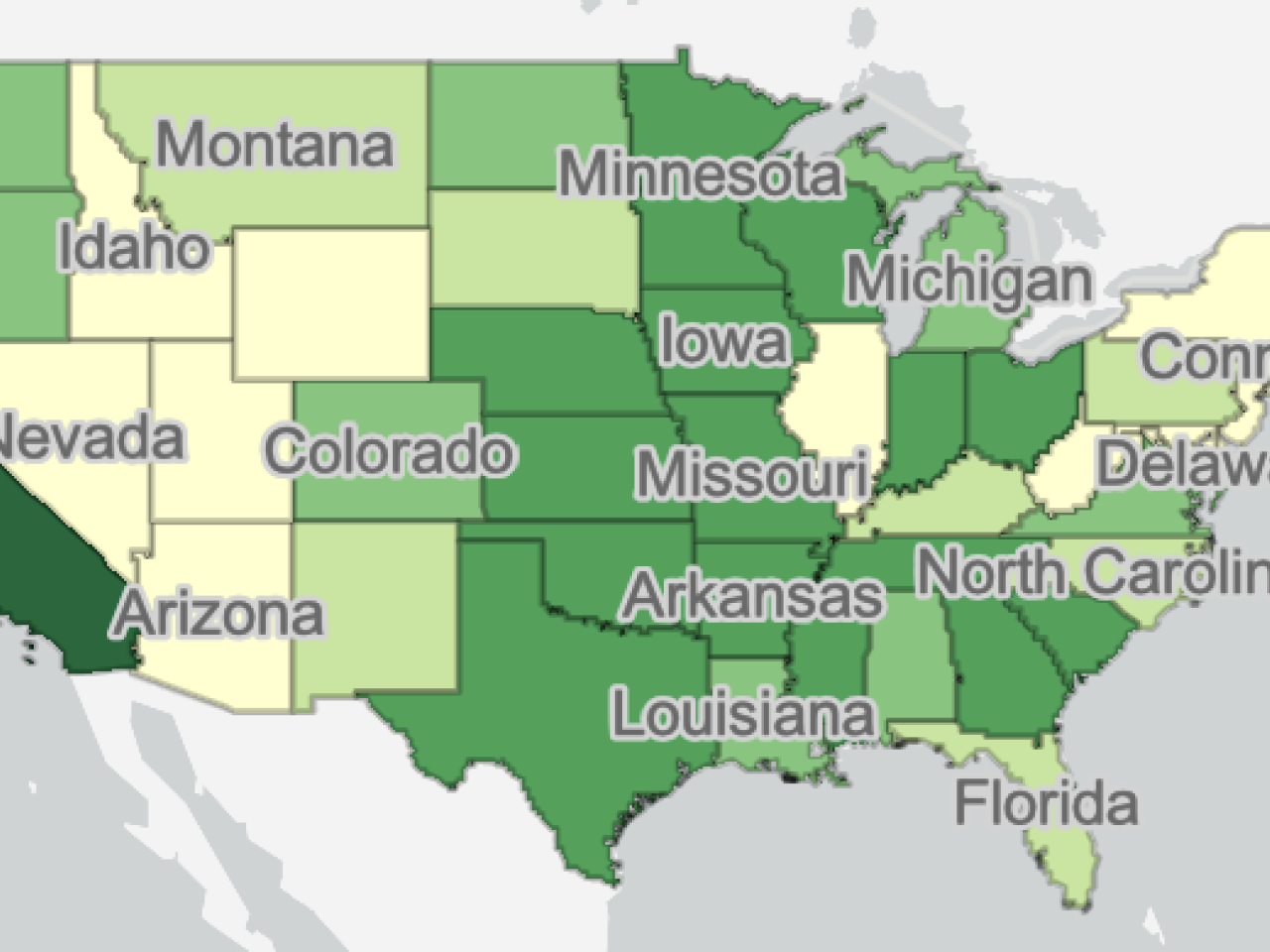
Seven of the top 10 states on the 2023 list were located in the Mississippi River Critical Conservation Area, a region of the country with important agricultural, industry, wildlife and ecological resources. But only four of the top 10 states on the 2024 climate-smart list were located in the conservation area (Table 3). Now Southern and Western states like Colorado, Georgia and Oregon will receive more so-called climate-smart funding.

Table 3. The 10 states that received the most payments between 2017 and 2022 for practices on the 2023 climate-smart list, compared to those on the 2024 list.
State rank States with the most payments for 2023 list Payments 2017-2022 for practices on 2023 list States with the most payments for 2024 list Payments 2017-2022 for practices on 2024 list
1 California $167,970,025 Texas $371,894,245
2 Texas $99,642,015 California $359,871,676
3 Missouri $69,273,408 Georgia $137,069,838
4 Indiana $65,270,184 Colorado $118,425,439
5 Tennessee $64,641,082 Arkansas $110,504,198
6 Wisconsin $57,753,631 Mississippi $100,305,742
7 Iowa $55,750,215 Oregon $93,274,547
8 Ohio $55,410,931 Oklahoma $91,351,469
9 Oklahoma $55,025,391 Indiana $91,034,785
10 Mississippi $54,055,521 Ohio $90,089,372
Total 10 states $744,792,403 Total top 10 states $1,563,821,311


Source: EWG, from public records requests for USDA-NRCS program data.

The map below shows which states received the most money for practices on the 2023 climate-smart list, compared to those that got the most money for practices on the 2024 list.

INTERACTIVE MAP
Environmental Quality Incentives Program payments

This application provides details about payments from the EQIP between 2017 and 2022 for practices on the USDA's 2023 climate-smart list compared to the practices on its 2024 climate-smart list.

VIEW THE MAP


METHODOLOGY

EWG analyzed payment data from the USDA for fiscal years 2017 through 2022. We received the state- and county-level data from the USDA through public records requests and the national practice-level payment data via an email from a USDA employee, not as a response to our official request. The sums provided here represent payments made to farmers for each EQIP practice, not the amount committed to farmers for the practices, also known as obligations.

The state- and county-level EQIP data include only practices with more than four contracts in a state or county for a particular year. In response to EWG’s Freedom of Information Act requests, the USDA did not provide data for EQIP practices with four or fewer contracts in the state or county in a specific year, citing a privacy exemption. Because of this, the payments by county do not equal the total payments by practice for the state or nationally, and the payments by state will not equal the total payments nationally.


'Embarrassed and disgraced': CNN employees criticise channel's Gaza coverage in leaked recording

A leaked audio has revealed a confrontation which took place between CNN employees and network executives during a meeting in London over the war in Gaza.


The New Arab Staff
03 March, 2024

CNN has been criticised for what Palestinians have said is bias news coverage since the start of the war 

Employees at CNN have expressed their discontent with the channel’s coverage of Israel’s war on Gaza during a meeting with network executives, a leaked recording obtained by The Intercept has revealed.

The employees confronted a panel of executives during the meeting at CNN’s London Bureau on 13 February, berating the seniors and telling them they felt "devalued, embarrassed, and disgraced" by the channel's coverage of the war.

Among the staffers who criticised CNN was renowned news anchor Christiane Amanpour, who according to The Intercept, was identified in the recording after someone said her name.

CNN correspondents have been confronted in and outside Gaza for what Palestinians say is biased news coverage in Israel’s favour.

This, the employees said during the February meeting according to the leaked recording, was creating a "hostile climate for Arab reporters".

The executives tried to reassure staffers and told them their concerns were being heard, but still defended CNN’s work, the recording revealed.

Gaza: News leaders sign solidarity letter with journalists

Last month, a report by The Guardian said unnamed CNN staff members had accused the broadcaster of biased reporting on the war.

Six journalists from CNN newsrooms in the US and elsewhere had blamed the outlet's new management and editorial process for pro-Israel narratives that have led to "journalistic malpractice," the report said.

Israel’s unprecedented bombardment of the Gaza Strip has killed over 30,400 people, mostly women and children health authorities in Gaza say.

IN INTERNAL MEETING, CHRISTIANE AMANPOUR CONFRONTS CNN BRASS ABOUT “DOUBLE STANDARDS” ON ISRAEL COVERAGE

Amanpour expressed “real distress” over Israel stories being changed, while other staffers described a climate that is hostile to Arab journalists.


Daniel BoguslawPrem Thakker
March 1 2024, 12:47 p.m.


CNN EMPLOYEES, INCLUDING the renowned international news anchor Christiane Amanpour, confronted network executives over what the staffers described as myriad leadership failings in coverage of Israel’s war on Gaza, according to a leaked recording of a recent all-hands meeting obtained by The Intercept.

In the hourlong meeting at CNN’s London Bureau on February 13, staffers took turns questioning a panel of executives about CNN’s protocols for covering the war in Gaza and what they describe as a hostile climate for Arab reporters. Several junior and senior CNN employees described feeling devalued, embarrassed, and disgraced by CNN’s war coverage.

The panelists — CNN Worldwide CEO and CNN Editor-in-Chief Mark Thompson, CNN U.S. Executive Editor Virginia Moseley, and CNN International General Manager Mike McCarthy — responded with broad assurances that the employees’ concerns were being heard, while also defending CNN’s work and pointing to the persistent obstacle of gaining access inside the Gaza Strip.

Related
CNN Runs Gaza Coverage Past Jerusalem Team Operating Under Shadow of IDF Censor


One issue that came up repeatedly is CNN’s longtime process for routing almost all coverage relating to Israel and Palestine through the network’s Jerusalem bureau. As The Intercept reported in January, the protocol — which has existed for years but was expanded and rebranded as SecondEyes last summer — slows down reporting on Gaza and filters news about the war through journalists in Jerusalem who operate under the shadow of Israel’s military censor.

“You’ve heard from me, you’ve heard my, you know, real distress with SecondEyes — changing copy, double standards, and all the rest,” said Amanpour, who was identified in the recording when an executive called her name. “So you’ve heard it, and I hear what your response is and I hope it does go a long way.”

CNN spokesperson Jonathan Hawkins declined to comment on the meeting and pointed The Intercept to the network’s previous statement about SecondEyes, which described it as a process to bring “more expert eyes” to coverage around the clock. “I would add to this that the staff members on this group include Arab staff based outside Israel, and have done since the group was established,” Hawkins said.

Amanpour did not respond to a request for comment.


Read Our Complete Coverage
Israel’s War on Gaza


Like other mainstream news organizations, CNN has faced a flood of internal and external criticism of its coverage of Israel and Gaza since October 7, accused of minimizing Palestinian suffering and uncritically amplifying Israeli narratives. Just this week, CNN described an Israeli massacre of more than 100 starving people who were gathered to get food as a “chaotic incident.” Earlier this month, The Guardian published an extensive story sourced to multiple CNN staffers who described the network’s Gaza coverage as “journalistic malpractice.”

During the February meeting, a half-dozen staffers spoke candidly about concerns with CNN’s war coverage. They said the coverage has weakened the network’s standing in the region and has led Arab staffers, some of whom entered lethal situations to cover the war, feeling as though their lives are expendable.

“I was in southern Lebanon during October and November,” one journalist said. “And it was more distressing for me to turn on CNN, than the bombs falling nearby.”

THE MEETING BEGAN as an effort for leadership to discuss editorial priorities. Thompson, in his opening remarks, spoke at length about his vision for evenhanded journalism and reiterated his personal openness to critical exchange and inquiry. “There’s something about the essence of CNN — its brand, what it stands for — which to me is great breaking news, with, right in the middle of the frame, a human being, someone you trust and whose background you know, acting as your guide to what’s happening,” he said.

As soon as the C-suite opened the discussion up to staff questions, the interrogation began.

“My question is about our Gaza coverage,” said the journalist who worked from Lebanon in the fall. “I think it’s no secret that there is a lot of discontent about how the newsgathering process — and how it played out.”

Instead of finding solace in CNN’s coverage of the war, the staffer continued, “I find that my colleagues, my family, are platforming people over and over again, that are either calling for my death, or using very dehumanizing language against me … and people that look like me. And obviously, this has a huge impact in our credibility in the region.”

MOST READ

The Story Behind the New York Times October 7 Exposé
Jeremy Scahill, Ryan Grim, Daniel Boguslaw


How Israel Quietly Crushed Early American Jewish Dissent on Palestine
Debbie Nathan


The journalist posed a question to the executives: “I want to ask as well, what have you done, and what are you doing to address the hate speech that fills our air and informed our coverage, especially in the first few months of the war?”

Thompson responded that he’s generally satisfied with how the network has covered Israel’s war on Gaza, while conceding that “it is impossible to do this kind of story where there are people with incredibly strong opinions on both sides,” without “sometimes making mistakes.” He added that CNN has gotten better at admitting mistakes and trying to correct them and suggested, in response to the staffer’s concerns over dehumanization, that holes in coverage are a consequence of limited access to Gaza.

“I think the fact that it’s been very difficult for us until relatively recently, and even today, to get fully on the ground inside Gaza, has made it hard for us to deliver the kind of individualized personal stories of what it’s been like for the people of Gaza, in the way it has been more possible for us with the story of the families of those murdered and kidnapped by Hamas in the original Hamas attack on Israel,” said Thompson, who answered most of the questions.

If the network had the same access to Gaza as it does to the families of Israeli hostages, he continued, “I believe we would have done the same,” citing a story the network ran about one of its own producers caught in Gaza. “I think that we have for the most part tried very hard to capture the … our job is not to be moral arbiters, it is to report what’s happening.”

Another newsroom staffer chimed in to object to the network’s uncritical coverage of statements by Israeli officials, including Defense Minister Yoav Gallant. “I think a lot of us felt very strongly about the fact that there were very senior anchors not challenging people like, comments like, the defense minister using what is considered under international law, genocidal language, ‘human animals,’ all of those things that made up the first seven pages of the South African legal case at the ICJ,” referring to the International Court of Justice.

The employee then turned to SecondEyes: “If we want a culture that truly values diversity, we need to be really honest about, nobody gets it right. But we did not have our key Jerusalem producers on that Jerusalem SecondEyes — we didn’t have an Arab on it for some time.”

The staffer went on to say that Muslim or Arab journalists at CNN were made to feel that they must denounce Hamas to clear their names and be taken seriously as journalists. “I’ve heard this, where a number of younger colleagues now feel that they didn’t want to put their hands up to speak up even in the kind of the local Bureau meeting,” the staffer said. “People were taking their names off bylines.”

Thompson interjected, saying that people seemed to be speaking up now and that he welcomes editorial discussions.

Another staffer disputed that characterization and noted that Arab and Muslim journalists walk a difficult line between feeling proud of working for CNN while facing pressure from their families and communities over working for a network with a pronounced pro-Israel bias.

“I think it’s very important for you to know that the degree of racism that those of us of Arab and Muslim descent face inside Israel, covering Israel, was disproportionate — the targeting of us by pro Israeli organizations, and what we had to hear,” another staffer added.

Amanpour chimed in toward the end of the meeting. She praised the reports of Clarissa Ward, Nada Bashir, and Jomana Karadsheh and suggested that CNN should have more experts like them on the ground and in the field, especially at the start of a conflict.

“Bottom line, we do actually have to send experts to these unbelievably difficult, contentious, you know, game-changing stories,” said Amanpour, a veteran war reporter. “It isn’t a place, with due respect, to send people who we want to promote or whatever, or teach. Maybe in the second wave, maybe in the third wave — but in the first wave, it has to be the people who know, through experience, what they’re seeing, and how to speak truth to power on all sides. And how to recognize the difference between political or whatever or terrorist attack, and the humanity, and to be able to put all of that into reporting.”

“For me, video is not a talking head on a balcony in a capital,” Amanpour said. “It just isn’t. To me, video is reportage.”

Yes, a Florida school sent a permission slip to parents for student participation in a Black History Month activity

The situation appears to have stemmed from a misunderstanding of a new rule in Florida's Parental Rights and Education law signed by Gov. Ron DeSantis in 2022.


Author: Isabella Casapao, First Coast News (On Your Side)
Published: March 3, 2024

FLORIDA, USA — Florida officials are clearing up some confusion surrounding a viral tweet showing a Miami-Dade County Public Schools permission slip asking parents if their child can participate in reading a book written by an African American.

The confusion appears to have stemmed from a misunderstanding of Flordia's Parental Rights and Education law signed by Gov. Ron DeSantis in 2022.


THE QUESTION
Did a Florida school send a permission slip to parents for a Black History Month activity?

THE SOURCES
Parental Rights and Education law
Florida Department of Education
Code Rule 6A-10.085
Florida Education Commissioner Manny Diaz
The Poynter Institute

THE ANSWER


THE CLAIM

The parent of a first-grade student at Coral Way K-8 Center in Miami took to social media to ask why he "had" to give permission for his child to participate in a Black History Month school activity, where students would participate and listen to an African American author's book.

Shown in an image taken by the parent, Chuck Walter, the permission slip describes the activity as: "Students will participate & listen to a book written by an African American."

The slip also lists a place for "Types of guests that may attend the activity or event," which states: fireman, doctor and artist.

So let's VERIFY.

WHAT WE FOUND

No Florida law, including the Parental Rights in Education law, requires schools to get parental consent to teach Black history or celebrate Black History Month.

Florida officials are condemning the school's actions in asking for permission for what they say is required material.

"African American history is required instruction, Black History Month is required instruction. There's no permission slip required for required instruction," Florida Education Commissioner Manny Diaz said during a news conference on Feb. 15. "Those permission slips have to do with field trips, extracurricular activities, those kind of activities."

Diaz is referring to the new Code Rule 6A-10.085 of the Parental Rights in Education Bill, which requires schools to get permission from parents before students can participate in field trips, extracurricular activities and other supplemental programs and activities.

The rule does not indicate that Black History or Black History Month must get approval from parents before being taught in a Florida classroom.

A day after the parent's tweet went viral, Diaz made a post on X, formally known as Twitter, saying: "Any school that does that is completely in the wrong."

During the conference, Diaz said: "There was a letter written from the Chairman of the State Board clarifying the issue."

In the letter obtained by First Coast News, State Board of Education Chair Ben Gibson asks the principal of Coral Way K-8 Center to update its school policies to correctly align with Florida law.

"It has come to my attention that your school has a policy that requires parental permission for students to engage in routine curricular activities," Gibson wrote, pointing to the fact the school is the "only school in Florida interpreting the State Board of Education's new rule this way."

"Obviously, it is wrong to interpret the rule to require parental permission for a student to receive ordinary instruction, including on subjects required by state law and Department rule," Gibson adds.

The letter concluded with Gibson asking the school's principal and superintendent to immedietely review the situiation and "take appropriate action."

A spokesperson for Miami-Dade County Public Schools told The Poynter Institute that the permission slips were sent home because the activity involved participation from a guest speaker during a school-authorized education-related activity.

However, the particular, viral permission slip that prompted the response from the board does not indicate guest-related involvement as the main reason for parental consent.
Analysis

Florida is swamped by disease outbreaks as quackery replaces science

The state is in the grip of a measles outbreak, yet Joseph Ladapo, the surgeon general, continues to ignore medical science to stop it
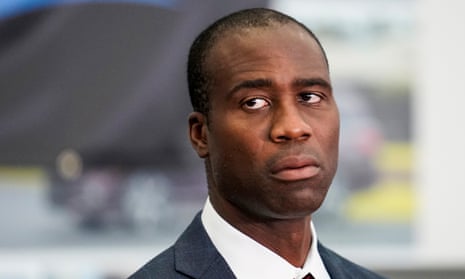
Ladapo, a politically appointed acolyte of DeSantis, wrote to parents telling them it was fine for them to send their kids to school amid a measles outbreak.
 Photograph: Chris O’Meara/AP


Richard Luscombe
in Miami
Sun 3 Mar 2024 

Shortly before Joseph Ladapo was sworn in as Florida’s surgeon general in 2022, the New Yorker ran a short column welcoming the vaccine-skeptic doctor to his new role, and highlighting his advocacy for the use of leeches in public health.

It was satire of course, a teasing of the Harvard-educated physician for his unorthodox medical views, which include a steadfast belief that life-saving Covid shots are the work of the devil, and that opening a window is the preferred treatment for the inhalation of toxic fumes from gas stoves.


‘Not a disease you want to relive’: why is the US seeing outbreaks of measles?

But now, with an entirely preventable outbreak of measles spreading across Florida, medical experts are questioning if quackery really has become official health policy in the nation’s third most-populous state.

As the highly contagious disease raged in a Broward county elementary school, Ladapo, a politically appointed acolyte of Florida’s far-right governor Ron DeSantis, wrote to parents telling them it was perfectly fine for parents to continue to send in their unvaccinated children.

“The surgeon general is Ron DeSantis’s lapdog, and says whatever DeSantis wants him to say,” said Dr Robert Speth, a professor of pharmaceutical sciences at south Florida’s Nova Southeastern University with more than four decades of research experience.

“His statements are more political than medical and that’s a horrible disservice to the citizens of Florida. He’s somebody whose job is to protect public health, and he’s doing the exact opposite.”

Ladapo’s advice deferring to parents or guardians a decision about school attendance directly contradicts the official recommendation of the federal Centers for Disease Control and Prevention (CDC), which calls for a 21-day period of quarantine for anybody without a history of prior infection or immunization.

It is also in keeping with Ladapo’s previous maverick proclamations about vaccines that health professionals say pose an unacceptable danger to the health of Florida residents. They include official guidance to shun mRNA Covid-19 boosters based on easily disprovable conspiracy theories that the shots alter human DNA and can potentially cause cancer – “scientific nonsense” in the view of Dr Ashish Jha, a former White House Covid response coordinator.

Meanwhile, with measles having been eradicated in the US since 2000, the disease’s resurgence, paired with Ladapo’s latest misadventure, have prompted a new round of mocking commentary. Florida: Come for the Sunshine, Leave With the Measles, opined the Orlando Sentinel; “Measles? So On-brand for Florida’s Descent Into the 1950s”, was the take of the Tampa Bay Times.

His statements are more political than medical and that’s a horrible disservice to the citizens of FloridaDr Robert Speth

The backlash prompted the Florida department of health to publish “clarifying information” this week, in which it insisted that the stay-at-home recommendation had in fact been given to parents at Manatee Bay elementary school, and attempted to blame the media for “reporting false information and politicizing this outbreak”.

Department officials repeated the claim in a subsequent statement.

“The media has continued to peddle the narrative that Dr Ladapo has defied science in his recent letter. In reality, he has used available data and immunity rates to drive policy decisions impacting Manatee Bay Elementary,” the deputy press secretary Grant Kemp said.

“97% of students at Manatee Bay Elementary have received at least one dose of the MMR immunization. Outbreaks are occurring in multiple states, and the national immunization rate for measles is less than 92%.”

Reporting false information, incidentally, is something Ladapo is familiar with himself. He was found to have personally manipulated data in a 2022 study of Covid-19 vaccines to wrongly assert they posed an elevated risk of cardiac illness or death in young men.

To Speth, and numerous other medical experts, Ladapo’s risky succession of positions denying even the most obvious benefits of immunization and vaccination is a symptom of a wider political assault by the rightwing, which carries deadly potential.

Its origins, Speth believes, lie in a long-discredited study by the disgraced British former doctor Andrew Wakefield falsely tying the measles, mumps and rubella (MMR) vaccine to autism, but which was enthusiastically embraced by anti-vaxxers and other extremists in the US.

“The Wakefield study was a gross fraud, yet today up to 25% of our population believes it, and opportunistic politicians seize on the sentiment to tell people what they want to hear about the danger of vaccines,” he said.

“Republicans are at war with medical science, and that’s a horrible tragedy. But I feel like Cassandra, talking about the public health threat. We’re going to start seeing a lot more children die of infectious diseases that could be prevented if they were vaccinated.”

Ladapo has been hailed a “superstar” by DeSantis, who sidelined then dumped his predecessor Scott Rivkees for contradicting the governor’s position on social distancing and face masks during the Covid-19 pandemic.

Ladapo became a vocal cheerleader of the governor’s anti-mask, vaccine and lockdown decrees; and was a prominent member of Frontline Doctors of America, a fringe cluster of radical physicians that pushed ineffective medicines such as ivermectin and hydroxychloroquine as a cure for the virus.
To pretend that the vaccine is unnecessary to eradicate measles is completely illogical, because that’s the reason it’s been gone from our countryTina Polsky

The group’s founder, Simone Gold, received a 60-day prison sentence in 2022 for taking part in the 6 January Capitol riot.

Additionally, Ladapo was a signatory to the Great Barrington Declaration, an open letter claimed to have been signed by 15,000 scientists and medical professionals calling for a herd immunity approach to Covid, but which included a multitude of spoof names including Dr Johnny Bananas, Dr Person Fakename and Dr I P Freely.

Democrats in Florida say Ladapo’s handling of the measles outbreak is one more reason why they believe he is unsuited for a job in which he earns in excess of $600,000 a year, paid almost equally by the state and University of Florida, where he was given tenured professorship as an incentive to come.

“What’s so sad about it is it’s completely preventable,” said state senator Tina Polsky, who has been one of Ladapo’s staunchest critics.

“In a moment of crisis we need the best level-headed people to be running that department of health, and now we’re in our next crisis after Covid and we have someone who doesn’t want to follow accepted scientific guidelines in charge.

“To pretend that the vaccine is unnecessary to eradicate measles is completely illogical, because that’s the reason it’s been gone from our country. It will have some devastating outcomes, it’s going to scare a lot of people, and kids are going to be out of school, which has its own negative outcomes.”

Florida GOP senators defend DeSantis’ surgeon general amid measles outbreak


The measles outbreak shows the further polarization of vaccines.


Joseph Ladapo (left) has faced backlash over his resistance to vaccines since Ron DeSantis (right) nominated him to be surgeon general two years ago
 | Wilfredo Lee/AP

By AREK SARKISSIAN
03/04/2024 

TALLAHASSEE, Florida — In Florida, even measles is polarizing.

An outbreak in Broward County has split the state, as Republicans in the Capitol rally around the controversial state surgeon general, Joseph Ladapo, who is taking a hands-off approach while Democrats accuse him of endangering children.

Ladapo, who rejected federal guidelines for Covid-19 vaccinations, sent a recent letter to parents at an elementary school in Broward County where six kids were infected with measles. In his letter, he advised parents that they should decide for themselves whether to vaccinate their kids or remove unvaccinated students from schools.

He did not follow federal recommendations to urge parents to vaccinate their children against measles or quarantine those who may have come in contact with the virus. People who have been vaccinated against measles have a very high protection rate.

Florida is one of 15 states that has had measles cases this year. The Centers for Disease Control and Prevention in January warned health care workers to be on the lookout for infections after cases were reported in Washington, D.C., Pennsylvania and elsewhere. At the time, the CDC said the infections reflected a wider rise in measles cases throughout the world after countries postponed or missed administering the vaccine amid the Covid pandemic.

The measles cases in Florida were first detected about two weeks ago. The Florida Department of Health has fielded a total of 10 reports of measles infections so far, with nine infections involving children in Broward County and one adult case in Polk County. The Polk County case involved an adult who came to Florida from outside the U.S. and has since left the state.

The measles outbreak in Florida shows the further polarization of vaccines, one area that once had overwhelming consensus across political parties and throughout the U.S. The measles vaccine is especially effective in protecting against the virus and, according to the CDC, has led to a 99 percent decrease in the virus compared to the pre-vaccine era.

Ladapo’s comments drew sharp rebukes from the medical community and state Democrats who said he’s putting kids in danger. Democratic Rep. Debbie Wasserman Schultz, whose district includes parts of Broward County, called on him to resign.


Florida surgeon general rejects FDA guidance, urges people under 65 not to get Covid booster

BY AREK SARKISSIAN | SEPTEMBER 13, 2023 

But top GOP senators in the GOP-led Legislature who confirmed Ladapo to be Florida’s top medical official are defending him based on his credentials but not engaging the issue at hand, saying lawmakers can’t withdraw confirmations and they approve of the work he’s done

“As far as I can tell, he’s been doing a great job, and we can’t undo confirmations, so we’re not going to go there,” said Republican Senate President Kathleen Passidomo Wednesday.

Five other GOP senators said they trusted that Ladapo — a Harvard-trained medical doctor and researcher who has long been skeptical of vaccines — has the credentials and experience to provide the right medical guidance for the state.

“He’s looking at everything and making his decisions,” GOP Sen. Travis Hutson said. “He’s obviously in the field and I’m not, so whatever decisions he makes, I stand by.”

Some Republican senators supporting Ladapo downplayed the measles cluster in South Florida, with one, Sen. Danny Burgess, telling POLITICO that he hadn’t heard about the cases in Broward County. Another, GOP Sen. Blaise Ingoglia, a close ally of Gov. Ron DeSantis, said “calling a public emergency over six or nine people is very premature.”

Ladapo has faced backlash over his resistance to vaccines since DeSantis nominated him to be surgeon general two years ago. The medical community pushed back after Ladapo in 2022 warned young men against getting the Pfizer-BioNTech and Moderna Covid-19 vaccines, claiming they could increase their chances of cardiac-related deaths. Last year, Ladapo also went against federal health agencies by warning people under 65 not to get the most recent Covid booster.

The CDC, Food and Drug Administration and others have said those vaccines and boosters are safe and effective.

DeSantis shares Ladapo’s skepticism of vaccines. At the governor’s request, the state Supreme Court convened a grand jury to investigate “crimes and wrongdoing” related to Covid vaccines, and DeSantis regularly questions the effectiveness of Covid shots. He’s also very supportive of Ladapo and brought his surgeon general with him on the campaign trail in New Hampshire while DeSantis was running for president.

“There is a highly contagious disease infecting children in my community," Democratic Sen. Lauren Books says. | Francis Chung/POLITICO

Democratic Senate leader Lauren Book, whose district includes the Weston elementary school where at least six children are infected with measles, said that Ladapo has a habit of sidestepping science-based facts, endangering Floridians along the way.

“There is a highly contagious disease infecting children in my community, and for the surgeon general to be spreading disinformation instead of science-backed medical advice is downright dangerous,” Book said on Wednesday. “He is putting kids at risk for serious illness and should be removed from his position immediately before more damage is done.”

The Florida Department of Health, in defending Ladapo and the agency, on Wednesday provided more details into how it handled the outbreak after the surgeon general’s guidance alarmed parents, school officials and local leaders who worried Ladapo was not doing enough to stop the spread.

The department stated it recommends to the elementary school facing infections that people who are not vaccinated or have had measles previously should stay home for up to 21 days. That guidance is generally in line with established medical advice.

“This recommendation has been made at Manatee Bay Elementary,” the DOH statement said. It did not elaborate on why Ladapo initially gave different advice.

Sen. Shevrin Jones, a Miami-area Democrat, criticized the surgeon general’s overall measles response, saying Ladapo’s advice is based on politics and not medicine.

“How he’s moved and how he’s operated, he’s operating on politics,” Jones said. “And that is why he’s dangerous.”


EDITORIALS

Dr. Joseph Ladapo's anti-vaxx stance growing stale. Florida needs a new surgeon general.

Palm Beach Post


Here we go again: Florida facing another dangerous virus, while the state's top health official thumbs his nose at conventional medical wisdom. Florida Surgeon General Dr. Joseph Ladapo is drawing warranted criticism for his initial lax response to the state's measles outbreak. Instead of urging parents to vaccinate their children, he waffled, leaving the decision to the parents with a hint at an anti-vax stance that made him infamous during COVID-19.

Ladapo's response is the latest in what has been a three-year string of controversy that has undermined the surgeon general's office and the Florida Department of Health. Whether it's altering a medical study to support fringe thinking or ignoring a request to put on a mask during the height of the pandemic by state Sen. Tina Polsky, D. Boca Raton, whose breast cancer made her susceptible to COVID. The Ladapo era in Florida must end
.
Florida surgeon general defies CDC recommendations as measles cases spread in state

Florida deserves a credible public health leader, not an ongoing embarrassment. Right now, the state is stuck with a political appointee who's taking up space but not taking the job or his craft seriously. The Palm Beach Post editorial board believes it's time for a change. The Governor, and more importantly the state, needs a new surgeon general.

Up until now, Gov. Ron DeSantis seems OK with his appointee's performance. The Governor needed a shill to buttress an anti-COVID mandate schtick that became part of DeSantis' ill-fated presidential campaign. Meanwhile more than 81,000 Floridians died from COVID. Will the Governor make the change? Probably not, unless the spread of measles forces his hand. It shouldn't have to come to that. Ladapo's performance is enough to justify replacement.

Measles spread helped by misinformation


Prior to the 1963 Measles Mumps and Rubella vaccine, nearly every child living in the U.S. had measles by the time they reached 15, according to the federal Centers for Disease Control and Prevention.. CDC data showed between 3 million to 4 million people were affected each year, with 500 dying and 48,000 persons hospitalized.

Why measles is making a comeback isn't a head-scratcher. It only takes two doses of the MMR vaccine, which is 97% effective, to prevent the disease, and there are many more vaccinated against measles in Florida than not. It's the contagion of misinformation undermining proven medical vaccines that has taken a toll on the nation's progress toward eradicating dangerous diseases. In his role, Ladapo has done more than enough to become modern medicine's chief cheerleader of misinformation.

Gov. DeSantis selected Ladapo from the University of California David Geffen School of Medicine in 2021, to replace former Surgeon General Scott Rivkees. The appointment came with $250,000 in pay to head the Florida Department of Health and another $262,000 as a professor of medicine at the University of Florida. It was a controversial pick to say the least.

Ladapo's association with America's Frontline Doctors, a controversial group of physicians known for questionable cures drew criticism, as has his constant criticism of COVID vaccines and masks as effective treatments. His quick appointment to the university, along with an inability to produce grants, ultimately drew the ire of his UF colleagues. As surgeon general, he altered a state study last year to suggest that some COVID-19 doses pose higher health risks for young men than what's been established by the medical community. In January, he called on the federal government to halt using the mRNA vaccine, describing it as the “anti-Christ” of all products.

The surgeon general's initial response to the measles outbreak was a muddled equivocation of a Feb. 20 advisory to Broward County parents that careened from acknowledging what "is normally recommended" to deferring any decision regarding school attendance to the parents. Ambiguity isn't the typical response to a potential public-health crisis. Under normal circumstances, public health officials would follow federal guidelines in urging unvaccinated children to either get a MMR shot or stay at home until any symptoms subside without medication.

Ladapo's pandemic track record and his more recent response regarding measles vaccinations leave us wondering if he will ever shake off the anti-vaccination pandering to do his job as a public health official effectively. We're not convinced he will. For those reasons, we believe Florida would be better off with a new surgeon general.