Monday, March 04, 2024

Canada teams up with Australia to fend off China in EV battery space

Naimul Karim
Mon, March 4, 2024 

CANADA-ENVIRONMENT-AUTOMOBILE-INNOVATION-DISCOVERY

Canada has inked an agreement with Australia to work together in developing the minerals needed for the energy transition away from fossil fuels, as both look to reduce their dependence for raw materials on China and pivot more towards friendlier nations.

The non-legally binding agreement means the two nations will work together to extract these minerals responsibly, improve transparency, build partnerships, conduct joint research and development programs and share industry growth models.

The joint statement said that Canada and Australia share a “like-minded” approach to the development of these minerals and will work together to develop these minerals in a “clean” and “fair” manner.

Canada is looking to build a battery industry as it expects the world to gradually shift away from fossil fuels within the next three decades. Batteries require minerals such as lithium, nickel and graphite, so the government has looked to boost its mining sector in recent years.

It also introduced a policy in 2022 that made it more difficult for foreign companies, especially “non-like-minded” nations, to purchase stakes in Canadian miners involved in producing these critical minerals. For instance, in 2022, it ordered three Chinese companies to divest its shares from three Canadian lithium companies.

Despite this policy, some Canadian junior miners have inked deals with Chinese companies in the last year. Montreal-based SRG Mining Inc. agreed to sell 19.4 per cent of the company to Carbon One New Energy Group Co. Ltd; Vancouver-based Solaris Resources Inc. inked an agreement with Zijin Mining Group Co. Ltd. to receive $130 million by way of a private placement of common shares; and Vancouver-based Osino Resources Corp. agreed to be bought by Yintai Gold Co. Ltd. for $368 million.

The completion of all three agreements will depend upon the federal government’s approval based on the Investment Canada Act.

Australia miners have a big presence in Canada. For example, North American Lithium Inc., the only major lithium producer in Canada, is owned by Sayona Mining Ltd. and Piedmont Lithium Inc., both of which are listed in Australia.

Perth-based Wyloo Metals Pty Ltd., which is run by Australian billionaire Andrew Forrest, bought Canadian junior miner Noront Resources Ltd. in 2022. Wyloo is looking to build a nickel mine in Ontario’s Ring of Fire region.

Melbourne-based BHP Group Ltd. has agreed to invest $14 billion in Saskatchewan to build one of the world’s biggest potash mines. Another Australian mining giant, Rio Tinto Ltd., inked a memorandum of understanding with Canada last year to look for ways in which the miner can contribute to the country’s low-carbon battery industry during the next decade.

“We will also work together with like-minded partners to respond to changing geopolitical realities so they do not negatively impact our pursuit of these goals,” a statement from Natural Resources Canada said.


Mining giant Rio Tinto eyes Canada in hunt for top-tier lithium property


Naimul Karim
Mon, March 4, 2024


rio-tinto-0304-ph

Mining giant Rio Tinto Ltd. “would love” to produce lithium in Canada, given the right project, says chief executive Jakob Stausholm.

Rio doesn’t currently produce lithium, but Stausholm, speaking at one of the world’s largest mining conventions in Toronto on March 3, said the miner is keen on building a lithium business and is on the hunt for a top-tier property. He said he believes lithium is more likely to dominate the battery market in the future than other metals such as nickel and cobalt.
Volatile market

“We would like to grow lithium, but what’s clear is that lithium is abundant in this world,” Stausholm said at the Prospectors & Developers Association of Canada convention. “And, therefore, you have seen a very volatile (market). Sometimes very high prices, and now prices have gone down so far.”

Lithium is expected to play a key role in the energy transition away from fossil fuels since it’s used to build batteries for electric vehicles (EVs). Several miners are exploring lithium projects in Canada, but there is just one major company — North American Lithium Inc., which is owned by Sayona Mining Ltd. and Piedmont Lithium Inc. — producing the mineral in the country.

The metal’s price rose manyfold in 2022 and early 2023 on the expected rise in EV demand. But prices have plummeted in the past year due to an increase in supplies, subdued Chinese demand and a poor EV market. The price of lithium carbonate is down more than 70 per cent from the same time last year.

Rio in 2023 dipped its toes into Canada’s lithium exploration industry by signing two agreements. In July, it signed an option agreement for about $115.7 million with Longueuil, Que.-based Azimut Exploration Inc., giving it the opportunity to own at least 75 per cent of the Corvet and Kaanaayaa lithium properties in the Eeyou Istchee James Bay region.

An option agreement doesn’t necessarily mean Rio will own the properties, and the company must fulfil several conditions. For instance, to acquire 50 per cent of Azimut’s properties, Rio must spend at least $14 million over four years to explore the projects. To secure an additional 20 per cent, Rio will need to spend an additional $100 million over five years on exploration.

The deal allows the mining giant to spend a few million dollars to test the lithium projects owned by Azimut and assess the financial viability of building mines at the locations.

A month earlier, Rio inked a similar deal with Montreal-based Midland Exploration Inc. to explore 10 lithium properties in the James Bay region, covering a surface area of about 1,000 square kilometres.

Both deals come after Rio entered a memorandum of understanding with the federal government last year to look for ways in which the miner can contribute to Canada’s low-carbon battery industry over the next decade.
Cutting carbon emissions

Aside from the projects in Canada, Rio is actively trying to develop three other lithium projects in Argentina, Serbia and the United States. But lithium continues to be a relatively small segment of Rio’s business. It’s currently more focused on its aluminum and iron-ore businesses in Canada and has made a few investments recently to reduce its carbon emissions.

For example, the company is trying to reduce the amount of heavy fuel oil consumed in the production of iron ore pellets and concentrates by installing an electric boiler in its Canadian operations.

In December, Rio also entered the aluminum recycling industry through a $700-million investment in Brampton, Ont.-based Matalco Inc. Producing secondary aluminum is more energy efficient than producing primary aluminum, but Stausholm believes the way forward is a combination of both.

In June, Rio announced it would invest $1.4 billion to expand its aluminum smelter in Quebec by adding new pots that it said would reduce its carbon emissions by 290,000 tonnes per year — equivalent to removing 63,000 vehicles from the road.

Despite these investments, Stausholm doesn’t think capital markets are properly rewarding companies focused on low-carbon strategies. However, he said the steps taken by Rio will create a difference in the coming decades, if not in the near future. Rio is trying to stay a step ahead of the game by “futureproofing” its assets, he said.

Stausholm said Canada is at least a decade ahead of other Western nations in terms of measures to reduce carbon emissions due to its reliance on hydropower. But he said he hasn’t seen a place where “people are so serious about addressing climate change like in China.”

Nevertheless, Canada and the U.S. are looking to reduce their reliance on China for metals and other raw materials and pivot towards friendlier nations.

Mining giant Rio Tinto dips toes in Canadian lithium projects


Critical minerals sector is 'not healthy,' says Barrick


Canada 'decade or two' ahead in climate change battle: Rio Tinto

In 2022, Canada prevented Chinese companies from investing in three lithium Canadian miners after it announced a policy that made it harder for “non-like-minded” nations to invest here.

Stausholm didn’t specifically comment on that issue, but said politicians serve their societies and companies serve the countries in which they operate, and “we are a global company” with major businesses in China and other nations.

• Email: nkarim@postmedia.com


Exclusive-BHP sets tentative sales deals for Canadian potash, not interested in Cobre Panama


Updated Mon, March 4, 2024 
Small toy figure and mineral imitation are seen in front of the BHP logo in this illustration


By Rod Nickel

WINNIPEG, Manitoba (Reuters) -BHP has signed non-binding sales agreements for all potash production from both phases of the Canadian mine it is building, and will look to convert those into firm offtakes within 12-18 months, a senior executive told Reuters.

BHP Chief Commercial Officer Ragnar Udd also said the company is not interested in acquiring the idled Cobre Panama copper mine from First Quantum Minerals.

Australia-based BHP's entry into selling potash is expected to shake up the global fertilizer market, which producers in Canada, Belarus and Russia dominate. Fertilizer is a key input for farmers to boost yields of crops such as corn.

BHP expects to begin production at Jansen, Saskatchewan in late 2026, ramping up to 4.35 million metric tons annually. A second phase approved by BHP will boost yearly output to 8.5 million tons, expanding global supply by roughly 10%.

BHP plans to sell potash to distributors, rather than directly to companies that re-sell the fertilizer to farmers, Udd said, declining to name the companies.

BHP has not previously disclosed the sales agreements or how it will market its potash.

Selling to distributors reflects the fact that BHP does not own a potash distribution network and allows it to focus on what it is best at - production, Udd said in an interview.

"A lot of the feedback we've had from customers is how thrilled they are to be seeing a new reliable, stable form of supply coming in from an industry player that's well-known," Udd said.

BHP will turn tentative sales into binding contracts - typically lasting one year - as production comes online, with the first likely in late 2025 or early 2026, Udd said.

BHP will provide stiff competition to Nutrien, Mosaic, Belaruskali and Uralkali. The company's entry may initially be "quite destructive" to prices, said Humphrey Knight, principal analyst of potash and phosphates at consultancy CRU.

Selling to distributors runs counter to how BHP usually operates, controlling much of the supply chain itself, Knight said.

The U.S. is the prime market for Canadian potash due to its proximity, but it has been difficult to penetrate for another producer, Germany's K+S AG, Knight said.

Udd said he would not give specifics about BHP's U.S. plan but said it is "quite comfortable" with its ability to compete there.

BHP, best-known for mining iron ore, copper, nickel and metallurgical coal, is not interested in acquiring First Quantum's Cobre Panama, one of the world's largest open-pit copper mines, which was forced to shut down in December after Panama's top court ruled that its contract was unconstitutional.

"Honestly, while we're always looking for opportunities, I think that's a situation best left for Panama and others," Udd said.

(Reporting by Rod Nickel in Winnipeg; additional reporting by Divya Rajagopal in Toronto, Editing by Franklin Paul)


France mulls penalties to rein in ultra-fast fashion brands

Reuters
Mon, March 4, 2024 

Shein pop-up store in Paris


PARIS (Reuters) - Fashion brands with ultra-fast product turnover such as China's Shein should be subject to penalties of up to 50% of their garments' selling price to offset their environmental impact, French ruling-majority MPs have proposed in a new bill.

The MPs say that ultra-fast fashion brands, rather than renewing their collections four times per year like traditional clothing brands, offer thousands of new products per day, inciting excessive spending and unnecessary pollution.

"This evolution of the apparel sector towards ephemeral fashion, combining increased volumes and low prices, is influencing consumer buying habits by creating buying impulses and a constant need for renewal, which is not without environmental, social and economic consequences," the bill said.

The bill singled out Chinese ready-to-wear company Shein, saying that it on average presents more than 7,200 new garment models a day, and makes more than 470,000 different products available to consumers.

To offset the environmental impact of ultra-fast fashion, the MPs propose penalties of up to 10 euros ($10.86) per item sold, or up to 50% of the selling price, by 2030.

Shein, in a statement to French news agency AFP, said it follows "best international practices in terms of sustainable development and social commitment".

Following discussion in a parliamentary committee, the bill will be presented to parliament in the second half of March.

French Environment Minister Christophe Bechu said in a statement on Monday that following a meeting with industry players, activists and researchers, his ministry plans several measures to reduce fashion's environmental impact.

He said France plans a ban on advertising by ultra-fast fashion companies and the introduction of a financial incentives system to make ultra fast-fashion more expensive while sustainable fashion will become cheaper.

The popularity of fast fashion e-commerce retailers like Shein and Temu has disrupted the retail sector. Shein taps a network of largely China-based suppliers, bucking traditional manufacturing trends by accepting small initial orders, then scaling up based on demand.

The ultra-flexible supply chain has allowed Shein to create a different business model than established fast-fashion players like Zara and H&M, which pioneered shorter production timelines but still largely rely on predicting shoppers' preferences.

($1 = 0.9211 euros)

(Reporting by Geert De Clercq and Mimosa Spencer; Editing by Sharon Singleton)
OOPS
Spending Plunges at Shops in Argentina With Milei Cuts Hitting Hard

Patrick Gillespie
Mon, March 4, 2024 


(Bloomberg) -- Consumers in Argentine are running out of options to shield themselves from runaway price increases as President Javier Milei’s austerity measures send the country deeper into recession.

Spending at small- and medium-size businesses — Argentina’s largest sector of employment — plunged 25.5% in February from a year ago, the third straight month of double-digit losses, according to data published Sunday evening by Argentine business chamber CAME.

Shoppers in the South American nation have weathered triple-digit price gains for a full year. But they’re now staying home because real wages, or incomes adjusted for inflation, have fallen 23% over the past three months, according to estimates from Buenos Aires-based broker Portfolio Personal Inversiones.

Milei’s economic shock therapy is seen as necessary by markets to fix the country’s root problems. But it’s also helped push annual inflation above 250%, unleashing price pressures that were artificially contained by the previous government.

But the cost of Milei’s drastic measures is evident across the real economy. Employers anticipate firing more workers than they hire in coming months, reversing a post-pandemic trend, according to government surveys. Staffing firm Manpower Group ranked Argentina as the worst of 41 countries in its most recent quarterly report on job expectations.

With recession forecasts piling up from Wall Street to Buenos Aires, the consumer pull back raises questions for investor about how Milei will eventually transition from emergency measures to a sustainable recovery strategy. The International Monetary Fund sees Argentina’s economy contracting 2.8% this year after declining 1.1% in 2023.

Most Read from Bloomberg Businessweek
RCMP lay terrorism charges against Edmonton city hall shooting suspect


CBC
Mon, March 4, 2024 

Yellow police tape is seen outside Edmonton city hall on Jan. 23 after a weapons complaint prompted an evacuation of the building. 
(Emily Fitzpatrick/CBC - image credit)

A security guard alleged to have fired shots and thrown Molotov cocktails in Edmonton city hall in January is now facing several terrorism-related charges.

In a news release Monday, the RCMP said its Integrated National Security Enforcement Team (INSET) has charged Bezhani Sarvar, 28, with counselling commission of a terrorism offence and possession of property for terrorist purposes.

Sarvar is also facing nine criminal charges in connection with the Jan. 23 attack at city hall that led to a lockdown.

In its news release, the RCMP say the following criminal charges laid against Sarvar also constitute terrorism offences:

Intentionally or recklessly cause damage by fire or explosion to property, knowing the property was inhabited.

Intentionally possess incendiary material while committing an indictable offence.


Use of a firearm while committing an indictable offence.


Intentional discharge of a firearm while being reckless as to the life and safety of another person.


Possession of a prohibited device (two counts).


Mischief.


Carrying a concealed weapon.


Possession of weapon for the purpose of committing an offence.

No one was injured during the attack.

Sarvar is being held at the Calgary Remand Centre.

He is scheduled for a bail hearing on Tuesday, according to court records.

Sarvar had worked for security company Corps of Commissionaires since 2019. He was assigned to a variety of locations across Edmonton but never worked as part of the security detail in city hall, the company said in a news release last month.
Federal byelection being held today in Ontario riding previously held by Erin O'Toole

The Canadian Press
Mon, March 4, 2024 


DURHAM, ONTARIO — A federal byelection is being held today in the Ontario riding of Durham to fill the seat left vacant by former Conservative leader Erin O'Toole.

O'Toole served as official Opposition leader from August 2020 until February 2022 and left his seat last spring. He was first elected as a member of Parliament in 2012.

Jamil Jivani, a lawyer and commentator, is running for the Conservatives to replace O'Toole.

The Liberals have nominated Robert Rock, a councillor in Scugog, Ont..

Rock initially sought the Conservative nomination but says he decided to run for the Liberals because the Conservative party no longer spoke to his values.

The NDP have nominated Chris Borgia, president of the Durham Region Labour Council.


The Durham riding, which includes part of the city of Oshawa, Ont., has been held by the Conservatives since 2004.

This report by The Canadian Press was first published March 4, 2024.
US FAA hits Boeing 737MAX production for weak quality control

Mon, March 4, 2024 

 An aerial photo shows Boeing 737 MAX airplanes parked on the tarmac at the Boeing Factory in Renton

By David Shepardson

WASHINGTON (Reuters) -The Federal Aviation Administration on Monday said the agency's 737 MAX production audit into Boeing and supplier Spirit AeroSystems found multiple instances where the companies allegedly failed to comply with manufacturing quality control requirements.

The FAA also said it found "non-compliance issues in Boeing’s manufacturing process control, parts handling and storage, and product control." The agency released a summary of its findings to the companies but did not make that public because it is part of an ongoing investigation, it said.

Boeing and Spirit AeroSystems, which makes the fuselage for the MAX, did not immediately comment.

The audit was prompted by a Jan. 5 mid-air emergency involving a new Alaska Airlines 737 MAX 9 that lost a door plug at 16,000 feet (4,877 meters). The FAA previously barred Boeing from expanding 737 production.

Last week, FAA Administrator Mike Whitaker said Boeing must develop a comprehensive plan to address "systemic quality-control issues" within 90 days following an all-day meeting with CEO Dave Calhoun.

"Boeing must commit to real and profound improvements,” Whitaker said last week. "We are going to hold them accountable every step of the way, with mutually understood milestones and expectations."

Calhoun said in a statement last week that Boeing's leadership team was "totally committed" to addressing FAA concerns and developing the plan.

Boeing has scrambled to explain and strengthen safety procedures since the mid-air incident that led to the FAA grounding the MAX 9 for several weeks in January.

Whitaker said Boeing's plan must incorporate results of the FAA production-line audit and findings from an expert review panel report released last week.

Boeing last month abruptly removed Ed Clark, the head of its 737 MAX program, as part of a management shakeup.

The door panel that flew off the MAX 9 appeared to be missing four key bolts, according to a preliminary report last month from the U.S. National Safety Transportation Board.

(Reporting by David Shepardson in WashingtonEditing by Chris Sanders and Matthew Lewis)
Mining company can't tap water needed for Okefenokee wildlife refuge, US says

Mon, March 4, 2024


SAVANNAH, Ga. (AP) — A federal agency is asserting legal rights to waters that feed the Okefenokee Swamp and its vast wildlife refuge, setting up a new battle with a mining company seeking permits to withdraw more than 1.4 million gallons daily for a project that critics say could irreparably harm one of America's natural treasures.

In a letter obtained by The Associated Press, the U.S. Fish and Wildlife Service tells Georgia state regulators that federal law prohibits diverting water from the Okefenokee National Wildlife Refuge in quantities that would harm its function as a protective habitat for native animal and plant species.

“Disruption to the natural flow of groundwater in this interconnected system could have far-reaching consequences for both the Refuge and surrounding areas,” Mike Oetker, the federal agency's acting Southeast regional director, wrote in a Jan. 31 letter to Georgia regulators. He added: “Any decision regarding the proposed mining permit must be made with consideration of federal reserved water rights.”

Twin Pines Minerals is on the cusp of obtaining permits it has sought since 2019 to mine titanium dioxide less than 3 miles (4.8 kilometers) from the southeastern boundary of the Okefenokee refuge, the largest U.S. refuge east of the Mississippi River.

The Okefenokee refuge covers nearly 630 square miles (1,630 square kilometers) in southeast Georgia and is home to more than 400 animal species including alligators and bald eagles. The swamp’s wildlife, cypress forests and flooded prairies draw roughly 600,000 visitors each year, according to the Fish and Wildlife Service, which manages the refuge.

Scientists have warned that mining near the Okefenokee's bowl-like rim could irreparably harm the swamp’s ability to hold water and increase the frequency of withering droughts. Interior Secretary Deb Haaland in 2022 declared the proposed mine poses an “unacceptable risk” to the fragile ecosystem at the Georgia-Florida line.

Twin Pines has insisted its proposed 773-acre (312-hectare) mine won’t harm the Okefenokee refuge. Regulators with the Georgia Environmental Protection Division have said their own analysis “concluded that water level in the swamp will be minimally impacted.”

The Georgia agency issued draft permits for the mining project Feb. 9, starting a 30-day period for public comments before regulators work up final permits for the agency’s director to approve.

While it's unclear how much permits might be delayed by the Fish and Wildlife Service's formal assertion of water rights, legal experts said Georgia regulators are legally obligated to work with the federal agency to ensure the Okefenokee keeps enough water to function as a wildlife refuge.

Legal issues dealing with water consumption are generally left to the states. However, a U.S. Supreme Court ruling in 1908 established that public lands reserved by the federal government for Native American tribes, national parks and other purposes have rights to water that take precedence over other users.

“This doctrine does not just give the Fish and Wildlife Service a seat at the table," said Megan Huynh, an attorney for the Southern Environmental Law Center. “It legally entitles the Okefenokee to as much water as is necessary to support the primary purpose of the refuge and wilderness area.”

While federal agencies commonly assert water rights for public lands in the West, where the arid climate makes water more scarce, they have rarely done so in the eastern U.S., said Ryan Rowberry, a Georgia State University law professor who has studied how federal reserved water rights protect public lands.

“Now we’re moving into a different era,” Rowberry said. Growth in population, industry and awareness that climate change is getting worse have called into question the premise that “there’s enough water for everybody" in eastern states, he said.

The move by the Fish and Wildlife Service seeks to reassert some level of federal oversight of Twin Pines' proposed mine. Typically, the U.S. Army Corps of Engineers would also need to approve permits. But it lost that authority over the Georgia project in 2020 because of regulatory rollbacks under then-President Donald Trump.

The Fish and Wildlife Service's letter to the Georgia Environmental Protection Division asks for federal officials and state regulators to meet and “work together to quantify the amount of water” the Okefenokee refuge needs. The state agency has not yet responded.

“Georgia EPD is reviewing the letter from U.S. Fish & Wildlife Service like all of the other comments being submitted" by the public on Twin Pines' mining application, John Eunice, the state agency's deputy director, said in an email Monday. He anticipated a response “once the public comment period has closed."

The groundwater use permit Twin Pines is seeking would allow an average daily withdrawal of 1.44 million gallons (5.45 million liters) of water from the Floridan Aquifer to process mining debris and waste. The plan calls for removal of additional water that gushes into mining pits during excavation.

Any discussions between federal officials, Georgia regulators and Twin Pines over the Okefenokee's water needs and how much water the proposed mine would divert from the swamp could be contentious. Hydrologists for the National Park Service said last year that documents Georgia regulators relied upon to conclude the mine wouldn't harm the refuge contained technical errors and “critical shortcomings” that made them unreliable. Regulators stood by their analysis.

Russ Bynum, The Associated Press
Column: Biden should hope he gets heckled at his State of the Union speech


Doyle McManus
Mon, March 4, 2024

President Biden's next State of the Union address to a joint session of Congress is Thursday. (Saul Loeb / Associated Press)

President Biden should hope he gets heckled by Republicans when he gives his State of the Union address on Thursday, just as he was last year.

Here's why.

Biden's campaign for a second term is in trouble. His job approval rating, normally a reliable indicator of an incumbent’s chances, is mired below 40%.

So the stakes for the State of the Union address, usually a forgettable event, are unusually high.

The president and his aides have been getting a tsunami of public advice from other Democrats, including strategists who worked for Presidents Obama and Clinton, on how to improve his prospects.

They say Biden needs to accomplish three goals: He needs to quell voters’ worries that at 81 he is too old to seek a second term. He needs to tackle, head-on, the issues on voters’ minds: high prices and immigration. And he needs to frame the election as a binary choice between him and former President Trump instead of a referendum on his first term.

Read more: California poll reveals how minor candidates could throw 2024 presidential race to Trump

For months, Biden has tried to joke his way out of voters’ concerns over his age — or worse, reacted angrily to questions about it.

“It’s crazy to think that if you don’t talk about it, people won’t think he’s old,” David Axelrod, Obama’s campaign strategist, said recently. “You won’t get a hearing unless you at least acknowledge to people, ‘Yeah, I get it.’”

Last week Biden took a half step in that direction, telling late-night television host Seth Meyers that both candidates are old, and that voters should focus on the differences between them.

“Take a look at the other guy — he’s about as old as I am," the president said of the 77-year-old Trump. "It’s about how old your ideas are. Look, I mean, this is a guy who wants to take us back. He wants to take us back on Roe v. Wade, he wants to take us back on a whole range of issues.”

That was a good start, but probably not enough.

“I don’t think they’ve put it to bed,” said Doug Sosnik, who helped Bill Clinton win a second term in 1996. “It’s still an issue. He needs to lean more forward on it.… This isn’t an issue he’s going to win; he just has to get to the point where he’s not losing on it.”

“We’ll have to do it again,” a Biden aide acknowledged.

Read more: Column: Trumponomics? He would impose the equivalent of a huge tax hike

Biden is unlikely to raise the age issue in his State of the Union speech. But merely by turning in a competent performance, he can rebut opponents’ claims that he’s not fit for the office.

In his address a year ago, he was handed a minor triumph by Republican zealots, including Rep. Marjorie Taylor Greene of Georgia, whose heckling and the back-and-forth that followed showed he can still be quick on his feet. The president should hope for more of that kind of help again this year.

On the economy, aides say Biden will recount the achievements of his first three years, including bipartisan legislation on infrastructure and high-tech manufacturing.

On inflation, which is easing but still troublesome, he’ll talk about his push to negotiate down prescription prices for Medicare and his efforts to ban hidden “junk fees” charged by banks, hotels and other businesses.

Read more: Column: Trump wanted to pull the U.S. out of NATO. In a second term, he's more likely to try

And he’ll repeat his demand for legislation to “make the wealthy and corporations to pay their fair share,” meaning higher taxes on corporations and individuals making more than $400,000 a year.

On immigration, he’ll ask Congress — again — to pass the bipartisan Senate border bill that has been blocked by House Republicans. He previewed that pitch during his visit to Brownsville, Texas, last week, puckishly appealing to Trump to join him in support of the bill. With House Speaker Mike Johnson (R-La.) sitting behind him, that part of the speech could set off fireworks.

He’ll talk about a long list of other issues as well, including reproductive rights — possibly including the recent ruling by Alabama’s conservative Supreme Court that had the effect of shutting down in vitro fertilization in the state.

Read more: 'What is this, "The Handmaid’s Tale"?' Exploring moral questions posed by controversial IVF ruling

The test of Biden’s success will be whether he can turn a speech that too often devolves into a laundry list of priorities into a coherent narrative of what he would seek in a second term.

“You need a compelling, consistent narrative on where the country is and how you’re going to make it better,” Sosnik said. “It’s got to be forward looking.”

Which brings us to the third goal: making the 2024 election a choice between two flawed candidates, not a referendum on Biden’s first three years.

“Most presidents can’t win a referendum, and Biden surely can’t, given the environment and the mood of the country right now,” Axelrod said on the podcast he co-hosts, "Hacks on Tap." “If it’s a referendum, it’s going to go poorly. If it’s a choice, I think he’s got a shot to win.”

Read more: Column: Biden's memory is failing. So is Trump's. The question is whose flaws are more dangerous

Biden offered a preview of that theme in his appearance with Meyers, when he framed the election as a choice between two old men — only one of whom “wants to take us back.”

Given the protocol of a State of the Union address, he’s unlikely to take Trump on by name, as he’s been doing more often in campaign events — calling the former president “dangerous,” a “threat to democracy” and, turning one of Trump's favorite insults back at him, “a loser.”

His rhetoric on Thursday will be more elevated, but the underlying goal will still be to make the contrast clear.

One way he can do that is on foreign policy, where he will press the Republican speaker of the House, Mike Johnson of Louisiana, to put his pending request for military aid for Ukraine to a vote. Biden is likely to remind Congress that defending U.S. allies against Russian President Vladimir Putin is a core national security goal. The comparison with Trump, an unabashed Putin fan, won't need to be spelled out.

So here’s a television recommendation rarely made before. This will be a State of the Union speech worth watching — even if the president isn't lucky enough to get heckled again.

Get the best of the Los Angeles Times’ politics coverage with the Essential Politics newsletter.

This story originally appeared in Los Angeles Times.
VP Kamala Harris leads Bloody Sunday memorial as marchers' voices ring out for voting rights

The Canadian Press
Sun, March 3, 2024 


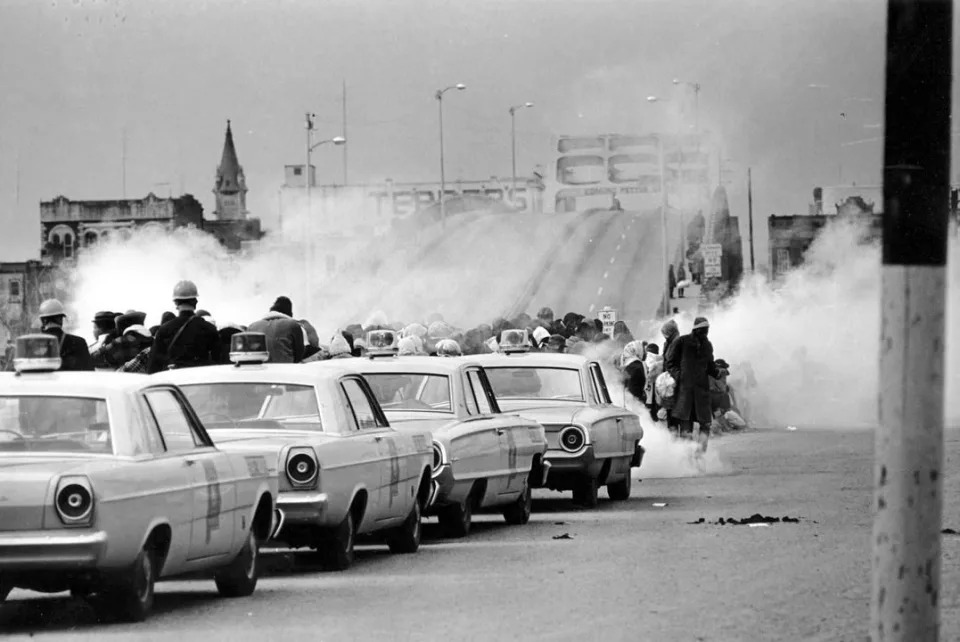
SELMA, Ala. (AP) — Vice President Kamala Harris told thousands gathered for the 59th anniversary of the Bloody Sunday attacks on civil rights marchers in Selma, Alabama, that fundamental freedoms are under attack in America even today.

Harris joined those gathered at the foot of the Edmund Pettus Bridge, where voting rights activists were beaten back by law enforcement officers in 1965. The vice president praised the marchers' bravery as they engaged in a defining moment of the civil rights struggle.

“Today, we know our fight for freedom is not over, because in this moment we are witnessing a full on attack on hard-fought, hard-won freedoms, starting with the freedom that unlocks all others, the freedom to vote,” Harris said.

She criticized attempts to restrict voting, including limits on early voting, and said the nation is again at a crossroad.

“What kind of country do we want to live in? Do we want to live in a country of freedom, liberty and justice? Or a country of injustice, hate and fear?” Harris asked, encouraging people to answer with their vote.

She said other fundamental freedoms under attack include "the freedom of a woman to make decisions about her own body.”

Harris paid tribute to the civil rights marchers who walked across the bridge in 1965 knowing they would face certain violence in seeking “a future that was more equal, more just and more free.”

Harris drew parallels between those who worked to stifle the Civil Rights Movement and “extremists” she said are trying to enact restrictions on voting, education and reproductive care.

Earlier Sunday, Attorney General Merrick Garland spoke at a Selma church service commemorating the anniversary of the attack by Alabama law officers on civil rights demonstrators. He said recent court decisions and certain state legislation have endangered voting rights in much of the nation.

“Since those (court) decisions, there has been a dramatic increase in legislative measures that make it harder for millions of eligible voters to vote and to elect representatives of their choice,” Garland told worshippers at Selma’s Tabernacle Baptist Church, the site of one of the first mass meetings of the voting rights movement.

“Those measures include practices and procedures that make voting more difficult; redistricting maps that disadvantage minorities; and changes in voting administration that diminish the authority of locally elected or nonpartisan election administrators,” he said. “Such measures threaten the foundation of our system of government.”

Decisions by the Supreme Court and lower courts since 2006 have weakened the Voting Rights Act of 1965, which was passed in the wake of the police attacks in Selma, Garland said. The demonstrators were beaten by officers on the Edmund Pettus Bridge on March 7, 1965, as they tried to march across Alabama to support voting rights.

The march and Garland’s speech were among dozens of events during the Selma Bridge Crossing Jubilee, which began Thursday and culminated Sunday.

The commemoration is a frequent stop for Democratic politicians paying homage to the voting rights movement. Some in the crowd gathered to see Harris speak about the upcoming November election and what appears to be a looming rematch between President Joe Biden and former President Donald Trump.

Khadidah Stone, 27, part of a crowd gathered at the bridge Sunday in light rain before the march, said she sees the work of today's activists as an extension of those who were attacked in Selma in 1965. Stone works for the voter engagement group Alabama Forward, and was a plaintiff in the Voting Rights case against the state that led to creating a second Alabama congressional district with a substantial number of Black voters. Voters will cast their first ballots in that district on Tuesday.

“We have to continue to fight, because they (voting rights) are under attack,” Stone said.

Nita Hill wore a hat saying "Good Trouble,” a phrase associated with the late Rep. John Lewis, who was beaten on the bridge during Bloody Sunday. Hill, 70, said it is important for Biden supporters to vote in November.

“I believe Trump is trying to take us back,” said Hill, a retired university payroll specialist.

Decades ago, images of the violence that at the bridge stunned Americans, which helped galvanize support for passing the Voting Rights Act of 1965. The law struck down barriers prohibiting Black people from voting.

U.S. Rep. James Clyburn, a Democrat of South Carolina who is leading a pilgrimage to Selma, said he is seeking to “remind people that we are celebrating an event that started this country on a better road toward a more perfect union,” but the right to vote is still not guaranteed.

Clyburn sees Selma as the nexus of the 1960s movement for voting rights, at a time when there currently are efforts to scale back those rights.

“The Voting Rights Act of 1965 became a reality in August of 1965 because of what happened on March 7th of 1965,” Clyburn said.

“We are at an inflection point in this country,” he added. “And hopefully this year’s march will allow people to take stock of where we are.”

___

Associated Press reporters Terry Spencer in Fort Lauderdale, Florida; Stephen Groves in Washington, D.C.; and Jeff Martin in Atlanta contributed to this report.

Kim Chandler, The Associated Press


UN rights chief calls for 'non-discriminatory' US election

Reuters
Mon, March 4, 2024 

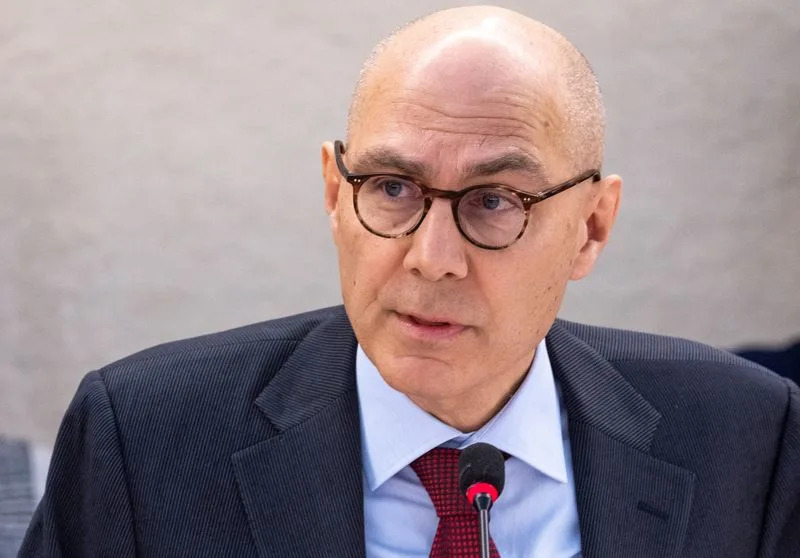
Turk UN High Commissioner for Human Rights addresses the Human Rights Council in Geneva


GENEVA (Reuters) - The U.N. human rights chief on Monday called on the United States to protect the right to vote and ensure that this year's presidential election is "non-discriminatory".

The U.N. Human Rights Committee last year voiced concern at an "practices at the state level that limit the exercise of the right to vote", including partisan gerrymandering, restrictions on voting by mail and burdensome voter ID requirements.

Former President Donald Trump has based his current campaign for re-election on his false claims that the 2020 election he lost to Joe Biden was rigged.

"In this electoral year, it is particularly important for authorities at all levels to implement recent recommendations by the U.N. Human Rights Committee to ensure that suffrage is non-discriminatory, equal and universal," Volker Turk, the U.N. High Commissioner for Human Rights, told the U.N. Human Rights Council in Geneva.

"In a context of intense political polarisation, it is important to emphasise equal rights, and the equal value of every citizen's vote," Turk said.

Trump is the frontrunner to be the Republican presidential nominee in the Nov. 5. election. Biden faces little opposition in the Democratic Party in his campaign for a second four-year term.

(Reporting by Gabrielle Tétrault-Farber; Editing by Nick Macfie)
Donors raise $100K for prisoner who sent 13-cent hourly wages to Gaza

Maham Javaid, (c) 2024 , The Washington Post
Sun, March 3, 2024 

Hamza, 56, has been incarcerated for roughly 40 years and is expected to be released on parole in March. (Contributed by Justin Mashouf)

When Justin Mashouf’s incarcerated friend Hamza told him he needed help donating money to help civilians in Gaza, Mashouf said he was eager to support him.

When the pay stub arrived, Mashouf was stunned - all $17.74 of Hamza’s 13-cent-an-hour janitorial wages were marked for charity.

When Mashouf shared Hamza’s prison pay stub on social media, users raised more than $102,000 through a GoFundMe campaign, money intended to go to the 56-year-old California man who has been incarcerated for nearly 40 years and is set to be paroled this month.

The Washington Post agreed not to publish Hamza’s legal name - “Hamza” is a chosen name - because Mashouf said Hamza feared he would be risking his parole status by seeking attention.

When Hamza first pitched the idea of donating to civilians in Gaza to Mashouf, he was “concerned and heartbroken” about news that he was watching from prison.

“These last few months, he’s been very anxious about the state of the world, especially since he knows he is reentering the real world,” Mashouf said in a phone interview. “But when people began showing him kindness, it really helped ready him for this reentry.”

“He gave people hope by showing how selfless he is, and then they gave him hope through their kindness.”

Mashouf, a filmmaker, first contacted Hamza in 2009, when he was working on his documentary “The Honest Struggle.”

Hours after Mashouf first posted Hamza’s pay stub for 136 hours of janitorial work for the California Health Care Facility, a prison in Northern California, and donation check on social media, strangers began to ask how they could donate to Hamza.

First, he collected money on Venmo, but soon that got overwhelming, he said.

“There were thousands of people who wanted to help,” he said, and he realized that he needed to set up a GoFundMe page to manage the donations.

Legal records show that Hamza was convicted of one count of second-degree murder in 1986 and sentenced to 15 years to life. He pleaded guilty to the murder when he was a teenager, records show.

Mashouf said Hamza had been convicted of the murder of an uncle.

“Hamza accidentally fired a gun at a loved one … leading to his imprisonment for over four decades,” according to the GoFundMe page.

At the time of his conviction, the sentencing judge told Hamza that he would be released on adult parole, Hamza wrote in an appeal against the denial of his parole in 2013.

Hamza had appeared before the parole board 10 times between 1995 and 2013 and was routinely denied, his documents showed. California Department of Corrections and Rehabilitation records show that Hamza was denied parole three more times between 2014 and 2023.

The GoFundMe page also laid out how Hamza converted to Islam in 1989 and how he would be spending his money once released: health care, housing, clothing, food, a job search and training. Hamza has already decided, however, that some of the donations meant for him will go to others in need, Mashouf said.

After Mashouf told Hamza that the funds were in the thousands, Hamza asked him to disable donations.

“He said whatever has already been donated is sufficient for him,” Mashouf said. “And that he didn’t want to distract people from those who were suffering more than him.”

In an update on the GoFundMe page, Hamza said he was eager to start his new life.

“I look forward to the promise of life, happiness, struggles and dreams, to soar and spread my wings, to be a man, a human being once again now that I know the preciousness and the incalculable value of Life,” he wrote.

Mashouf said that Hamza is a qualified electrician but would need computer and technological training to get up to speed before he joins the workforce outside prison.

Hamza will also be donating his March paycheck to civilians in Gaza, one that he hopes is his final check from prison.