Tuesday, March 05, 2024


Can Marine Protected Areas Be Shielded From Climate Change?
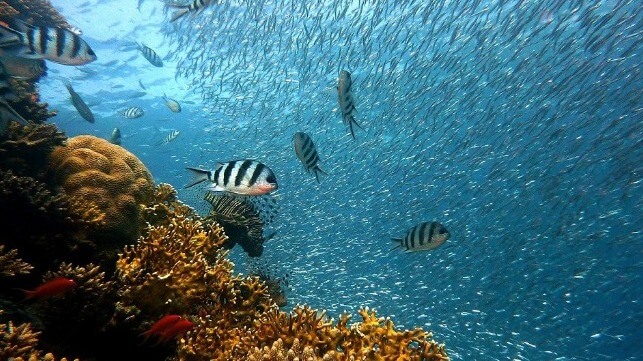
Pixabay
Pixabay / public domain

PUBLISHED MAR 3, 2024 9:41 PM BY CHINA DIALOGUE OCEAN


[By Regina Lam]

A marine protected area (MPA) may sound like a biodiversity haven, safe from the many external stresses of human activity. What is becoming apparent, however, is that this conservation tool rarely shelters waters from warming, changing chemistry, habitat loss, or species shifts – in other words, the impacts of climate change.

Scientists are therefore increasingly recommending that MPA designs evolve from static to adaptive.

“Ten years from now, what you thought you were protecting is not there anymore because they moved [due to climate change],” says Adrian Munguia-Vega, a marine biologist at the University of Arizona. “Or the network of protected areas that you were creating to improve the resilience of these ecosystems gets completely disconnected and broken into parts.”

The need for MPAs to deliver results has grown increasingly urgent since 2022 when parties to the UN biodiversity convention agreed to conserve and manage 30% of the world’s marine and coastal areas by 2030 – known as the “30 by 30” target.

In response to this need, Munguia-Vega and 50 other scientists and conservation experts wrote “Guidelines for designing climate-smart marine protected areas”. The document, published in October 2023 in the journal One Earth, offers a framework of 21 transboundary recommendations, conceived to support marine animals and their habitats amid looming climate challenges.

China Dialogue Ocean spoke to the study’s research co-lead Nur Arafeh-Dalmau. The marine conservation scientist from Stanford University says MPAs are investments, and including climate change in their design is required to make the best of the investment. “We may not get the outcomes desired if we don’t,” he adds.

Climate adaptation in the Southern California Bight

Considering climate change in MPA designs is not a novel idea. Scientists have been discussing it for at least two decades, but the awareness has seldom translated into action. For example, the design of California’s MPA network, which is a case-study in the One Earth paper, and many in the UK, did not address climate adaptation.

Munguia-Vega says this lack of concrete measures related to climate change might be due to a lack of scientific data, and hence knowledge, to inform conservationists.

To help fill in these information gaps, a network of marine scientists including Arafeh-Dalmau and Munguia-Vega analysed the Southern California Bight during the 2010s. The bight ecoregion, stretching over 2,700 km of coastal and inland waters, lies between Point Conception in California, US, and Punta Abreojos in Baja California Sur, Mexico. The team analysed sea surface temperature data and ran models to simulate ocean dynamics according to future climate scenarios.

The bight is known for its productive waters, which support a rich ecosystem and local fishing economies. It has also been identified as a hotspot of marine climate change, perched on the front lines of rapid ocean warming, acidification and deoxygenation, as well as increasingly frequent extreme weather events like marine heatwaves and hurricanes.

Under these changes, Arafeh-Dalmau and Munguia-Vega’s study projects that both the density of larval species in the area – including of lobsters, abalones, sea urchins, California sheepheads, and sea cucumbers – and their ability to wriggle from one habitat patch to another could diminish by an average of 50% by 2100.

While drifting along the ocean current, these species will increasingly find some of their usual habitats and breeding sites decimated by extreme weather. Meanwhile, warming waters will speed up their metabolic rates and respiration, which compresses larval phases and shortens dispersal ranges. Or, in Munguia-Vega’s words: “The larvae don’t have as much time as they used to have to reach the next patch.”

These patches of habitat are individual pieces of the Southern California Bight’s overall ecosystem. Their replenishment relies on the interconnectivity that drifting larvae facilitate. As the ecological connectivity of the MPA network shrinks, each patch will become more isolated and extinction risks will increase. 

“The entire [bight] system will be much less resilient and have a higher risk of population collapse,” explains Munguia-Vega. “That effectively means that you need a higher density of connected patches.”

The One Earth study suggests plans for the bight’s MPA network must be made with larval dispersal projections in mind. The network must cover a larger area and become denser and more focused on stepping-stone habitats – through which species usually pass on their dispersal journeys. 

The study also advises extending the duration of MPAs to more than 25 years – if not making them permanent – and granting them a higher level of protection. Some of the MPAs are only in effect for a limited period, or even seasonally, to protect certain species and habitats, such as during spawning. Prolonging the protection could support the over-exploited species that the MPAs aim to help restore, as marine heatwaves extend the time they need to recover, the study finds.

International cooperation on border-crossing species

Larvae naturally cross international borders. Around 16% of sea urchin and sea cucumber larvae in the Southern California Bight cross between the US and Mexico, according to the One Earth paper. As for the California sheephead, a local fish species, 20% cross from Mexican waters into the US. The data suggests that supporting these ecosystems requires international collaboration.

However, Munguia-Vega says the US and Mexican governments barely communicate to ensure a smoother cross-border journey for these larvae. His paper advocates for more international cooperation in developing and managing MPA networks.

“Almost all coastal countries share the ocean with a neighboring country, so we need to think about that,” says Arafeh-Dalmau. He believes that transboundary cooperation on MPAs can also boost international engagement, facilitating capacity-building and even enhancing peace-making efforts.

Carlos Mireles, a senior environmental scientist at the California Department of Fish and Wildlife, told China Dialogue Ocean that the department agrees with the findings of the paper. In fact, a researcher from the department was a co-author, as were representatives of other state agencies.

California carried out its first comprehensive examination of its MPA management program and broader network performance in 2022, Mireles adds. Out of that review came a recommendation for the state to incorporate climate change considerations into all aspects of the program. 

The state is formally reviewing proposals requesting changes to its MPA network, he says. “Coordination across government agencies, including our counterparts in Mexico, tribal governments, researchers in MPA and climate science, and other partners, will be central to this review process,” he adds. 

China Dialogue Ocean also reached out to Mexico’s Comisión Nacional de Áreas Naturales Protegidas but had not received a response at the time of publication.

It all comes down to cutting emissions

As the overall ocean environment deteriorates, there may still be some exceptional areas where species are more insulated from the consequences, such as rocky reefs and seagrass meadows. These are known as “climate refugia” and the One Earth study recommends prioritizing their protection.

The Southern California Bight’s refugia are kelp forests. “When a heatwave hits the coast, the kelps don’t die and the species that live in the kelp forests can survive the heatwave,” explains Munguia-Vega. “Those are your ideal places to establish marine protected areas.” Preserving refugia may result in a higher species survival rate than protecting more vulnerable patches.

China Dialogue Ocean spoke to John Bruno, a biology professor at the University of North Carolina who studies tropical waters and coral reefs. Unlike areas such as the Southern California Bight, warmer waters may offer less climate refugia: “We generally have no idea where the refugia are, because there are really no places in the tropics that are safe from warming.”

Bruno expresses support for clear and realistic recommendations for MPA managers to reduce climate change impacts, but he is also conscious of the bigger picture: “Ultimately, the solution is only to reduce emissions … This is all pointless if we don’t slow warming.”

Munguia-Vega also stresses the urgency of cutting emissions and says it is the hidden message behind the study. He adds that, while scientific research can guide climate change adaptation work locally, if temperatures continue to rise and marine heatwaves strike more harshly and regularly, associated ecosystems will disintegrate. Climate refugia like kelp forests will also disappear, along with the hundreds of thousands of species that rely on them, he says.

“We are going to have to reduce our CO2 emissions,” concludes Munguia-Vega. “Otherwise, these things will get so complicated that the future will not be very optimistic.”

Regina Lam is a special projects editorial assistant at China Dialogue mainly covering ocean and biodiversity. She is also a freelance journalist based in London.

This article appears courtesy of China Dialogue Ocean and may be found in its original form here


Houthi Missile Attacks Threaten UK's Tea Supply

Tea
J Pellgen / CC BY SA 2.0

PUBLISHED MAR 3, 2024 9:52 PM BY THE CONVERSATION


[By Jas Kalra]

British people are known around the world for their love of tea. This is borne out by the statistics: a staggering 50 billion cups of tea are consumed on average in the UK every year.

Most of this tea is made using black tea leaves, most of which are not produced in the UK. Thus, shipping disruption caused by attacks on merchant vessels in the Red Sea, through which an estimated 12% of global trade passes each year, has sparked fears of a national tea shortage.

The attacks, which are being carried out by the Yemeni Houthi rebel militant group in support of Hamas, have forced shipping companies to redirect around the southern tip of Africa – a journey that can take up to three weeks longer.

Two of the UK’s biggest suppliers of tea, Tetley and Yorkshire Tea, have announced that they are monitoring their supply chains closely for any potential disruptions. And customers have reported reduced stocks of tea in supermarkets across the UK.

It is no surprise that tea is vulnerable to supply chain disruption. The tea supply chain is a complex global network, involving producers, processors, auctions and wholesalers, packers, distributors and retailers.

The UK imports primarily unprocessed tea from countries in south Asia and east Africa. This tea is then packaged and blended within the UK for both domestic and export markets. Only around 10% of the packaged tea sold in the UK is supplied by companies from overseas.

But tea is one of many items to be caught up in the supply chain crisis. The disruption is affecting supplies across various other sectors too, including electric cars and liquified natural gas – and it could prove costly.

The UK is particularly reliant on natural gas for the production of carbon dioxide, a gas that is essential for everything from NHS operations to keeping food fresh while it is transported.

Not so unpredictable

The disruption caused by the Red Sea attacks is considered by some to have been an entirely unpredictable occurrence of what is known as a “black swan” event. But this crisis is the latest in a long line of shocks to global supply networks that have occurred over the past decade.

Whether it was the 2011 tsunami off the coast of Japan, Brexit, COVID, US trade sanctions on China, or the war in Ukraine, the fact of the matter is that supply chains are now experiencing disruption more often than they used to.

There are two reasons for this. First, organizations have become increasingly reliant on distant countries for the manufacturing and supply of routine and critical components.

Sometimes this decision is made because of the natural advantage these countries hold. For example, China currently accounts for 93% of the global production of so-called rare earth elements, which are used in the components of many of the devices we use every day. But most of the time these decisions are driven by an organization’s pursuit of lowering its cost of operation.

Second, a focus on just-in-time production, where businesses focus on producing precisely the amount they need and delivering it as close as possible to the time their customers need it, has reduced the buffer against supply chain shocks.

Building resilient supply networks

Organizations need to diversify their supply chains by developing alternate sources of supply. Many businesses already spread their source of materials over multiple suppliers across different regions to ensure quality, the continuity of supply, and to minimize costs.

For less complex components, such as packaging (cardboard, plastic bags and bubble wrap) or raw materials (metals and plastic), multiple sourcing is often practiced through competitive tendering and reverse auctions; where the sellers bid for the prices at which they are willing to sell their goods and services.

However, for more complex products, the development of alternate sources of supply needs to be done strategically. One of the most important steps to improve supply chain resilience is to reduce reliance on global suppliers through processes called “onshoring”, “nearshoring” and “friendshoring”.

Onshoring is where components are sourced from suppliers located within domestic national borders. Nearshoring is a similar strategy where a company moves its supply to neighbouring countries. And friendshoring is where organizations transfer their production away from geopolitical rivals to friendlier countries.

The US, for example, has traditionally relied on Taiwan and South Korea for its supply of semiconductors (computer chips). But geopolitical tensions with China, coupled with a global shortage of semiconductors, have forced the US to look for suppliers in countries closer to home, while also exploring the potential of moving chip manufacturing to the US.

Geographical and climate factors restrict the onshoring of tea cultivation to the UK. But these supply strategies could help businesses manage the risk of supply chain disruption to other, potentially more critical, commodities.

Making supply chains more agile

The frequency with which global supply chains are now becoming disrupted means that organizations must rethink their supply chain strategies, evolving from being efficient and lean to flexible and agile.

An agile supply chain strategy will require businesses to maintain adequate inventory levels to guard against a situation where stock runs out. These inventory levels must be informed by real-time – or as close to real-time as possible – data on customer demand.

The disruption to the UK’s tea supply highlights the vulnerability of supplies of everyday essentials to unexpected events. But businesses can make sure they are better prepared for the occurrence of an unexpected event by enhancing the resilience of their supply chain through diversification and agility.

Jas Kalra is Associate Professor of Operations & Project Management at Manchester Metropolitan University.

Top Image: J Pellgen / CC BY SA 2.0

This article appears courtesy of The Conversation and may be found in its original form here


Russia Banished From Membership in the Danube Commission

Grain trucks burn after a Russian attack on the Lower Danube port of Izmail, Ukraine, 2023 (Operational Command South)

PUBLISHED MAR 3, 2024 11:32 PM BY THE MARITIME EXECUTIVE


As western powers continue to sanction Russia for its ongoing war in Ukraine, the country has lost membership in the Danube Commission, effective March 1. This decision was adopted by member states last December during the commission’s 100th Jubilee Session.

“The Session took note of the systematic attacks by Russian Federation on the lower Danube region, which continually violate the fundamental principles of the Belgrade Convention. In this regard, the Danube States adopted a decision urging Russia to withdraw from Belgrade Convention until 29 February 2024, or failure to which, as of March 1, the Danube States will no longer consider themselves bound by the obligations of the Convention vis-à-vis Russia,” said a statement from the Commission.

The Danube Commission is one of the world’s oldest international organizations. Its main goals is to ensure and develop free navigation on the Danube River for merchant vessels flying the flags of its ten member states.

Beginning last year, Russia expanded its attacks to include Ukrainian port infrastructure on the Danube. Specifically, several Russian drone attacks in August and September struct Ukrainian grain facilities at the Danube River Port of Izmail, destroying over 10,000 metric tons of grain. Such actions contravene Belgrade Convention, according to the Commission.

Previously in March 2022, Russia’s powers at the Commission were terminated. The resolution meant Russian representatives were dismissed from the diplomatic and administrative-technical positions of the Secretariat of the Commission.

Although Ukrainian grain exports from the Black Sea ports have resumed through a special maritime corridor, the Danube route is still a critical alternative shipping route. Recently, the state-owned carrier Ukrainian Danube Shipping (UDP) announced it would expand its container shipping service to the Danube ports of Bulgaria, Serbia, Hungary, Slovakia, Austria, Germany and Romania.


We must stop technology-driven AI and focus on human impact first, global experts warn


Book Announcement

TAYLOR & FRANCIS GROUP


We need to stop designing new AI technology just because we can, causing people to adapt practices, habits and laws to fit the new technology; instead we need to design AI that fits exactly with what we need, according to human-centred AI advocates.

Fifty experts from around the world have contributed research papers to a new book on how to make AI more ‘human-centred,’ exploring the risks — and missed opportunities — of not using this approach and practical ways to implement it.

The experts come from over 12 countries, including Canada, France, Italy, Japan, New Zealand and the UK, and more than 12 disciplines, including computer science, education, the law, management, political science and sociology.

Human-Centered AI looks at AI technologies in various contexts, including agriculture, workplace environments, healthcare, criminal justice, higher education, and offers applicable measures to be more ‘human-centred,’ including approaches for regulatory sandboxes and frameworks for interdisciplinary working.

What is human-centred AI?

Artificial intelligence (AI) permeates our lives in an ever-increasing way and some experts are arguing that relying solely on technology companies to develop and deploy this technology in a way that truly enhances human experience will be detrimental to people in the long-term. This is where human-centered AI comes in.

One of the world’s foremost experts on human-centred AI, Shannon Vallor from the University of Edinburgh in Scotland, explains that human-centred AI means technology that helps humans to flourish.

She says: “Human-centered technology is about aligning the entire technology ecosystem with the health and well-being of the human person. The contrast is with technology that’s designed to replace humans, compete with humans, or devalue humans as opposed to technology that’s designed to support, empower, enrich, and strengthen humans.”

She points to generative AI, which has risen in popularity in recent years, as an example of technology which is not human-centred – she argues the technology was created by organizations simply wanting to see how powerful they can make a system, rather than to meet a human need.

“What we get is something that we then have to cope with as opposed to something designed by us, for us, and to benefit us. It’s not the technology we needed,” she explains. “Instead of adapting technologies to our needs, we adapt ourselves to technology’s needs.”

What is the problem with AI?

Contributors to Human-Centered AI lay out their hopes, but also many concerns with AI now and on its current trajectory, without a human-centred focus.

Malwina Anna Wójcik, from the University of Bologna, Italy, and the University of Luxembourg, points out the systemic biases in current AI development. She points out that historically marginalized communities do not play a meaningful role in the design and development of AI technologies, leading to the 'entrenchment of prevailing power narratives'.

She argues that there is a lack of data on minorities or that available data is inaccurate, leading to discrimination. Furthermore, the unequal availability of AI systems causes power gaps to widen, with marginalized groups unable to feed into the AI data loop and simultaneously unable to benefit from the technologies.

Her solution is diversity in research as well as interdisciplinary and collaborative projects on the intersection of computer science, ethics, law, and social sciences. At a policy level, she suggests that international initiatives need to involve intercultural dialogue with non-Western traditions.

Meanwhile Matt Malone, from Thompson Rivers University in Canada, explains how AI poses a challenge to privacy because few people really understand how their data is being collected or how it is being used.

“These consent and knowledge gaps result in perpetual intrusions into domains privacy might otherwise seek to control,” he explains. “Privacy determines how far we let technology reach into spheres of human life and consciousness. But as those shocks fade, privacy is quickly redefined and reconceived, and as AI captures more time, attention and trust, privacy will continue to play a determinative role in drawing the boundaries between human and technology.”

Malone suggests that 'privacy will be in flux with the acceptance or rejection of AI-driven technologies', and that even as technology affords greater equality it is likely that individuality is at stake.

AI and human behaviour

As well as exploring societal impacts, contributors investigate behavioral impacts of AI use in its current form.

Oshri Bar-Gil from the Behavioral Science Research Institute, Israel, carried out a research project looking at how using Google services caused changes to self and self-concept. He explains that a data ‘self’ is created when we use a platform, then the platform gets more data from how we use it, then it uses the data and preferences we provide to improve its own performance.

“These efficient and beneficial recommendation engines have a hidden cost—their influence on us as humans,” he says. “They change our thinking processes, altering some of our core human aspects of intentionality, rationality, and memory in the digital sphere and the real world, diminishing our agency and autonomy.”

Also looking into behavioral impacts, Alistair Knott from Victoria University of Wellington, New Zealand, and Tapabrata Chakraborti from the Alan Turing Institute, University College London, UK, and Dino Pedreschi from the University of Pisa, Italy, looked at the pervasive use of AI in social media.

“While the AI systems used by social media platforms are human-centered in some senses, there are several aspects of their operation that deserve careful scrutiny,” they explain.

The problem stems from the fact that AI continually learns from user behavior, refining their model of users as they continue to engage with the platform. But users tend to click on the items the recommender system suggests for them, which means the AI system is likely to narrow a user’s range of interests as time passes. If users interact with biased content, they are more likely to be recommended that content and if they continue to interact with it, they will find themselves seeing more of it: “In short, there is a plausible cause for concern that recommender systems may play a role in moving users toward extremist positions.”

They suggest some solutions for these issues, including additional transparency by companies holding data on recommender systems to allow for greater studying and reporting on the effects of these systems, on users’ attitudes toward harmful content.

How can human-centred AI work in reality?

Pierre Larouche from the Université de Montréal, Canada, argues that treating AI as ‘a standalone object of law and regulation’ and assuming that there is ‘no law currently applicable to AI’ has left some policymakers feeling as if it is an insurmountable task.

He explains: “Since AI is seen as a new technological development, it is presumed that no law exists for it yet. Along the same lines, despite the scarcity—if not outright absence—of specific rules concerning AI as such, there is no shortage of laws that can be applied to AI, because of its embeddedness in social and economic relationships.”

Larouche suggests that the challenge is not to create new legislation but to ascertain how existing law can be extended and applied to AI, and explains: “Allowing the debate to be framed as an open-ended ethical discussion over a blank legal page can be counter-productive for policy-making, to the extent that it opens the door to various delaying tactics designed to extend discussion indefinitely, while the technology continues to progress at a fast pace.”

Benjamin Prud’homme, the Vice-President, Policy, Society and Global Affairs at Mila – Quebec Artificial Intelligence Institute, one of the largest academic communities dedicated to AI, echoes this call for confidence in policymakers.

He explains: “My first recommendation, or perhaps my first hope, would be that we start moving away from the dichotomy between innovation and regulation — that we acknowledge it might be okay to stifle innovation if that innovation is irresponsible.

“I’d tell policymakers to be more confident in their ability to regulate AI; that yes, the technology is new, but that it is inaccurate to say they have not (successfully) dealt with innovation related challenges in the past lot of people in the AI governance community are afraid of not getting things right from the get-go. And you know, one thing I’ve learned in my experiences in policymaking circles is that we’re likely not going to get it entirely right from the get-go. That’s ok.

“Nobody has a magic wand. So, I’d say the following to policymakers: Take the issue seriously. Do the best you can. Invite a wide range of perspectives—including marginalized communities and end users—to the table as you try to come up with the right governance mechanisms. But don’t let yourself be paralyzed by a handful of voices pretending that governments can’t regulate AI without stifling innovation. The European Union could set an example in this respect, as the very ambitious AI Act, the first systemic law on AI, should be definitively approved in the next few months.”


Cost of direct air carbon capture to remain higher than hoped


Peer-Reviewed Publication

ETH ZURICH


Switzerland plans to reduce its net carbon emissions to zero by no later than 2050. To achieve this, it will need to drastically reduce its greenhouse gas emissions. In its climate strategy, the Swiss government acknowledges that some of these emissions, particularly in agriculture and industry, are difficult or impossible to avoid. Swiss climate policy therefore envisages actively removing 5 million tonnes of CO2 from the air and permanently storing it underground. By way of comparison, the Intergovernmental Panel on Climate Change (IPCC) estimates that up to 13 billion tonnes of CO2 will need to be removed from the atmosphere every year from 2050.

These targets will be hard to achieve unless ways can be found to reduce the cost of direct air capture (DAC) technologies. ETH spin-​off Climeworks operates a plant in Iceland that currently captures 4,000 tonnes of CO2 a year, at a cost per tonne of between 1,000 and 1,300 dollars. But how quickly can these costs come down as deployment increases?

ETH researchers have developed a new method that provides a more accurate estimate of the future cost of various DAC technologies. As the technologies are scaled up, direct air capture will become significantly cheaper – though not as cheap as some stakeholders currently anticipate. Rather than the oft-​cited figure of 100 to 300 US dollars, the researchers suggest the costs are more likely to be between 230 and 540 dollars.

“Just because DAC technologies are available, it certainly doesn’t mean we can relax our efforts to cut carbon emissions. That said, it’s still important to press ahead with the expansion of DAC plants, because we will need these technologies for emissions that are difficult or impossible to avoid,” says Bjarne Steffen, ETH Professor of Climate Finance and Policy. He developed the new method together with Katrin Sievert, a doctoral student in his research group, and ETH Professor Tobias Schmidt.

Three technologies and their costs

The ETH researchers applied their method to three direct air capture technologies. The goal was to compare how the cost of each technology is likely to evolve over time. Their findings suggest that the process developed by Swiss company Climeworks, in which a solid filter with a large surface area traps CO2 particles, could cost between 280 and 580 US dollars per tonne by 2050.

The estimated costs of the other two DAC technologies fall within a similar range. The researchers calculated a price of between 230 and 540 dollars a tonne for the capture of CO2 from the atmosphere using an aqueous solution of potassium hydroxide, a process that has been commercialised, for example, by Canadian company Carbon Engineering. The cost of carbon capture using calcium oxide derived from limestone was estimated at between 230 and 835 dollars. This latter method is offered by US company Heirloom Carbon Technologies, among others.

Focus on components

Estimating how the cost of new technologies will change over time is particularly difficult in situations where very little empirical information is available. This lack of real-​world data represents a challenge for DAC technologies: they haven’t been in use long enough to allow projections to be made as to how their cost might evolve in the future. To address this dilemma, the ETH researchers focused on the individual components of the different DAC systems and estimated their cost one by one. They then asked 30 industry experts to assess the design complexity of each technological component and determine how easy it would be to standardise.

The researchers based their work on certain assumptions: namely, that the cost of less complex components that can be mass-​produced will fall more sharply, while the cost of complex parts that must be tailored to each individual system will fall only slowly. DAC systems also include mature components such as compressors, which cannot feasibly be made much cheaper. Once the researchers had estimated the cost of each individual part, they then added the cost of integrating all the components and the costs of energy and operation.

Despite significant uncertainties in their calculations, the researchers’ message was clear: “At present, it is not possible to predict which of the available technologies will prevail. It is therefore crucial that we continue to pursue all the options,” says Katrin Sievert, lead author of the study, which recently appeared in the journal Joule.


The health and economic impact of youth violence in the United States reached $122 billion in 2020


New research in the American Journal of Preventive Medicine estimates the cost of homicides and nonfatal assaults of young people in the US


Peer-Reviewed Publication

ELSEVIER


Ann Arbor, March 4, 2024 – In 2020, the cost of youth violence in the United States was approximately $122 billion, according to new research in the American Journal of Preventive Medicine, published by Elsevier. The study quantifies the economic toll of homicides and nonfatal assaults of young people ages 10–24 years, differentiating by injury mechanism (e.g., firearms, stabbings, and other methods). Youth homicide cost the US an estimated $86 billion, of which firearm homicides contributed $78 billion. Nonfatal assault injuries among youth cost $36 billion. 

Lead investigator Elizabeth M. Parker, PhD, Division of Violence Prevention, National Center for Injury Prevention and Control, Centers for Disease Control and Prevention (CDC), Atlanta, explains, “We lose young people to violence every day in this country. Violence is a leading cause of injury and death among American youth. It affects all types of communities across our country, causing pain and suffering to individuals, families, and communities. The high economic cost is an important measure of the widespread problem of youth violence. Understanding it helps us grasp the broader consequences of violence and the critical importance of violence prevention programs, policies, and practices. We hope identifying the economic implications of youth violence will encourage active engagement and contribute to building safer communities for all.”

The investigators used data from the CDC’s publicly available Web-based Injury Statistics Query and Reporting System (WISQARS) to analyze homicides and nonfatal assaults resulting in emergency department visits among youth ages 10–24 years in 2020, as well as analyze the average economic cost of those injuries. The estimate includes costs for medical care, lost work, and reduced quality of life but does not include costs to the criminal justice system.

The study segmented the data by the injury mechanism or cause (e.g., firearms, stabbings, etc.), which distinguishes it from other recent research on youth violence. Injuries from firearms and stabbing accounted for 96% of youth homicides.

The findings highlight the importance of developing and implementing programs to address risk factors and prevent youth violence.

Dr. Parker adds, “Youth violence is preventable. We know there are strategies that work to prevent violence and ease the pain, suffering, and economic burden associated with youth nonfatal assault and homicide. CDC developed Resources for Action that describe strategies with the best available evidence to help communities and states focus their violence prevention efforts to ensure safer and healthier communities for all.”

These evidence-based approaches include but are not limited to, early childhood home visitation programs, preschool enrichment with family engagement, mentoring or after-school programs, street outreach, and community norm change campaigns.


Firearm ownership is correlated with elevated lead levels in children, study finds


Brown-led research found that firearm-related lead ammunition use is an unregulated source of lead exposure in the U.S. that may disproportionately impact children.


Peer-Reviewed Publication

BROWN UNIVERSITY


PROVIDENCE, R.I. [Brown University] — Childhood lead exposure, primarily from paint and water, is a significant health concern in the United States, but a new study has identified a surprising additional source of lead exposure that may disproportionately harm children: firearms.

A team led by researchers at Brown University found an association between household firearm ownership and elevated lead levels in children’s blood in 44 states, even when controlling for other major lead exposure sources.

Lead exposure from firearms is far less explored than from recognized sources like water or lead-based paint, but may be equally dangerous for children’s health, said Christian Hoover, a Ph.D. candidate in epidemiology at Brown’s School of Public Health, who is the lead author of the study published in the Journal of Pediatrics.

“This is very concerning because we don’t have a system of monitoring lead from firearm use, as we do with residential paint, and there is no system in place to minimize or prevent children’s exposure to lead in firearms,” Hoover said. “Firearm use is a relatively unchecked source of childhood exposure to lead. There’s currently no way to stop the exposure from happening and no interventions when it does.”

In the study, the association between elevated lead levels and firearm use was almost as strong as the association for lead-based paint, Hoover noted.

Lead levels in children in the United States have been persistently high for decades. While public health measures have been put in place to prevent and reduce childhood lead poisoning from paint and drinking water, blood lead levels haven’t concordantly dropped in significant measures, Hoover said.

Firearm-related take-home lead occurs when an individual discharges a firearm that uses lead-based ammunition and primer, which are the most commonly used in the United States, Hoover said. The lead dust settles on clothes and personal items, such as phones or bags, as well as in vehicles and common spaces. Children are more vulnerable to lead than adults due to their tendency to ingest contaminants through normal hand-to-mouth behaviors.

“Typically the places where the firearm-related lead collects, such as in carpets, are places where young children spend a considerable amount of time,” said Hoover, who is a co-investigator at the Harvard Injury Control Research Center.

A previous study led by Hoover found a link between firearms and elevated lead levels in children’s blood in cities and towns in Massachusetts; this new study involved the 44 U.S. states that report public health data on child blood lead levels.

Since there is no governmental database covering firearm ownership across states, the researchers used a widely-accepted proxy measure developed by the RAND Corporation to estimate state levels of household gun ownership. This metric combines data on firearm suicides, hunting licenses, subscriptions to Guns and Ammo magazine and background checks. They compared the data from the proxy measure with reports from the Centers for Disease Control and Prevention of blood lead concentration surveillance data for children under 6. The analysis spanned the years between 2012 and 2018.

According to the study, for every 10% increase in the number of households that report owning a gun, there is an approximate 30% increase in cases of elevated pediatric blood lead levels.

Childhood exposure to lead increases the risk of behavioral problems, reduced cognitive abilities and poor growth and development. There is no safe level of lead exposure, said Joseph Braun, a professor of epidemiology and director of the Center for Children’s Environmental Health at Brown.

“Despite public health efforts to prevent or reduce childhood lead exposure, a substantial proportion of U.S. children are still exposed,” Braun said. “Thus, we need to identify other modifiable sources of lead exposure in children’s environments to protect their developing bodies and brains.”

The authors concluded that the data suggest firearms are a notable source of child lead exposure that requires more targeted research.

Alan Fossa, a postdoctoral research associate in environmental health at Brown, also contributed to this study.

This research was supported by the National Institute of Environmental Health Sciences (R21 ES034187).