Tuesday, March 05, 2024


Secretary of the Navy Invites Korea's Shipbuilders to Come to America

Carlos Del Toro
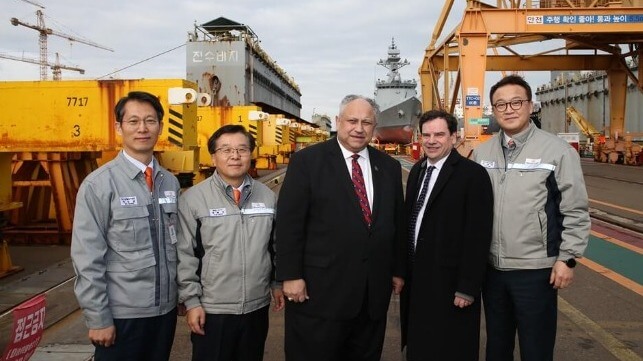
Secretary of the Navy Carlos Del Toro visits a drydock at Hanwha Ocean, formerly DSME (Courtesy Hanwha Ocean)

PUBLISHED FEB 29, 2024 11:59 PM BY THE MARITIME EXECUTIVE


Just weeks after sharply criticizing American defense contractors, Secretary of the Navy Carlos Del Tor visited South Korea's mega-shipyards to deliver a message: come to the United States. 

South Korea is one of America's closest allies, and it also happens to be the world's second-largest shipbuilding nation. Its Big Three yards have made their names by churning out complex LNG carriers, and two of them - HD Hyundai and Hanwha Ocean (formerly DSME) - have extensive experience in defense shipbuilding, too. Their latest surface combatant class uses the same Aegis combat system found on the U.S. Navy's own destroyers, and can carry about 30 percent more missiles.

"As I saw firsthand during my shipyard visits in Korea this week, Hanwha and Hyundai set the global industry standard," said Del Toro in a statement. "I could not be more excited at the prospect of these companies bringing their expertise, their technology, and their cutting-edge best practices to American shores.  As world class leaders in the global shipbuilding business, they are poised to energize the U.S. shipbuilding marketplace with fresh competition, renowned innovation and unrivaled industrial capacity."

Del Toro suggested that Korean investors could reactivate or upgrade "numerous former shipyard sites around the country which are largely intact and dormant." Not only would this give the Navy more contractors to choose from, he said - these new yards might even be able to attract commercial newbuild contracts. 

"Investment in dual-use shipyards in the United States will create good paying, blue collar and new-collar American jobs building the advanced ships that will protect and power the economy of tomorrow," he said. 

Hanwha CEO Dong Kwan Kim and HD Hyundai CEO Kisun Chung will both be visiting the Pentagon in the coming weeks for follow-up talks, Del Toro added. 

His comments contrasted sharply with an address he delivered at the annual West defense conference in San Diego earlier this month. In a prepared speech, he admonished the crowd of American defense executives to stop blaming COVID for supply chain shortages, do what is needed to recruit and retain their own workforces, and deliver performance matching their profitability. 

"I am committed to providing you in industry clear requirements, robust pipelines for the future, and strong stable investments. However, I need you to do your part as well to provide a proper return on investment for the American taxpayer," Del Toro admonished the crowd of defense executives. "I need you to deliver platforms and capabilities on time and on budget without excuses."


Ocean Plastic Could Spread Human Diseases

CSIRO
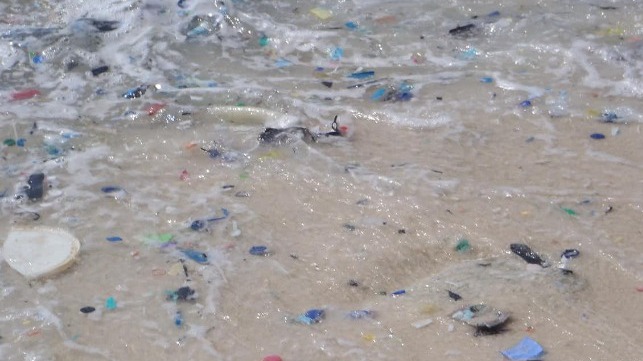
File image courtesy CSIRO

PUBLISHED FEB 29, 2024 8:38 PM BY CHINA DIALOGUE OCEAN


[By Anna Napolitano]

Images of paradise beaches buried under bottles and ocean animals swimming past carrier bags are the all-too-familiar evidence of how humanity’s addiction to plastic has polluted the marine world.

But a less visible problem with plastic is increasingly capturing scientists’ attention: the microbes that have colonized the millions of tonnes and trillions of pieces of it in the ocean. These organisms are emerging as a real threat to animals, and that may include humans.

China Dialogue Ocean spoke to Dick Vethaak, a retired professor of ecotoxicology (the study of how toxins affect organisms and ecosystems) and water quality: “We have introduced a completely new niche of substrates, used as a homeland for distinct microorganism communities. I refer to this as a plastic time bomb – the ground for the next pandemic.”

He is not the only person with such concerns.

Every corner of the ocean

Plastics are everywhere humans have looked in the marine environment, from microscopic fragments encased in Arctic ice, to bags drifting on the deepest ocean floors.

Most of this enters the ocean from land, with rivers believed to be the primary source of contamination. Once it enters the water, wind and waves break and shape it as sunlight degrades it, often transforming waste items into smaller and smaller fragments.

Legally binding rules designed to end this pollution are being drawn up under the auspices of the United Nations. To date, progress has been difficult, and the outcome is still uncertain.

Adding to the problem, there are suggestions that the fossil fuel industry could pivot from energy to plastic production.

“The industry sees plastics as their plan B: if they can’t use fossil fuels as an energy source, then they will use it for plastic products,” says Bethanie Carney Almroth, a professor of ecotoxicology and environmental science at the University of Gothenburg, Sweden.

Carney Almroth, who is involved in the UN plastic treaty negotiations, is concerned by this concerted push for increasing plastics production: “We have too much plastic: the planet and human societies cannot tolerate more.”

Almroth tells China Dialogue Ocean that microorganisms thriving on plastics are the latest addition to the list of dangers posed by marine plastic.

Enter the plastisphere

The seas are home to a huge variety of microorganisms. Scientists working on a study of Pacific Ocean coral reefs which concluded last year, were so surprised by the number they found that they suggested revising estimates of Earth’s microbial diversity upwards.

Wood, metal and any other material adrift at sea is rapidly colonized. As plastic has become ubiquitous in the ocean, our discarded waste has become a new type of home for life.

In 2013, the marine microbiologist Linda Amaral-Zettler and her colleagues coined the term “plastisphere” to describe the layers of organisms they found on plastic samples from the North Atlantic Subtropical Gyre (a part of one of Earth’s five major circulating ocean currents, which coalesce floating plastic into rubbish patches). Their study said the communities of microbes living on plastic debris were different from those in nearby water, “implying that plastic serves as a novel ecological habitat in the open ocean”.

Plastics endure, meaning microbial communities that build up on them can travel long distances, potentially bringing species far beyond their normal geographical range. They may also degrade into tiny pieces, which accumulate in animals, including those intended for human consumption.

Hitchhikers’ health impacts

Plastispheres are now a major global environmental concern.

One team of researchers has been studying how layers of microorganisms called biofilms develop on plastics in the Mediterranean and North Atlantic oceans, through a project called MicroplastiX. One of the project’s marine ecologists, Raffaella Casotti, told China Dialogue Ocean that “in the Gulf of Naples, a densely urbanized area, a wide variety of algae, invertebrates, and fungi grows on all microplastics sampled.”

Though most of the microorganisms that have been detected in the Mediterranean plastisphere are harmless, the researchers also found Vibrio bacteria in higher concentrations on plastic than in the surrounding waters. Some types of bacteria of the Vibrio genus are known to cause disease in shellfish – and the humans who eat them.

Casotti’s team fed sea ??urchins with either pristine or biofilm-laden plastic. Those fed the colonized plastic displayed a significantly stronger immune response. “The presence of a plastisphere doesn’t kill them, but leads to the immune system’s reaction,” explains Casotti. “Our hypothesis is that the microorganism on plastic might affect the sea urchin’s reproduction.”

In both laboratory-based and wild studies, scientists have found that colonized microplastics affect multitudes of species. The problems they cause range from impaired feeding, reproduction and fitness in corals and bivalves, to disease in aquaculture facilities.

Up the chain

Microplastics are not just found in the small filter feeders, such as oysters, that consume them directly in shallow waters.

“We found microplastics present in surface, mid-water and deep-sea species like clams, yellowfin tuna and vampire squid,” says Anne Justino, a researcher at the Federal Rural University of Pernambucoian in Brazil. Her work reveals that microplastic transfer into oceanic predators occurs when they eat contaminated prey, rather than through directly ingesting debris.

Justino’s team, which is also involved in the MicroplastiX project, is now working with fishery industries to assess the level of microplastic contamination in fish muscles – the main part eaten by humans.

Currently, researchers do not have a clear picture of how humans are exposed to plastics and what the consequences of any exposure might be.

One process that has been shown to remove some accumulated microplastics in seafood and thus reduce the potential for human health impacts is called depuration. This is where animals are placed in clean, flowing water to try and purge contaminants from their digestive systems.

But there are suggestions that oceanic plastispheres might still generate health problems for humans.

Karen Shapiro, a waterborne zoonoses specialist at the UC Davis Veterinary Medicine academic centre in California, USA, has shown how microscopic parasites like Toxoplasma gondii can quickly form colonies on floating plastic debris. This parasite is known to live inside shellfish, which then infect humans who eat them raw. Preliminary studies from Shapiro’s group and others show that Toxoplasma gondii can survive on plastic debris for several months.

Shapiro postulates that the plastisphere is bringing pathogens to areas where they would not otherwise be. She is cautious about drawing conclusions, however: “We know that plastispheres make their ways in our bodies, but we still don’t understand what they do to us. We lack clear papers directly correlating consumption of colonized microplastics and health effects for people.”

Superbugs thriving on plastic

Studies have found that plastispheres constitute happy islands for superbugs.

The use of antibiotics on fish farms can promote the flourishing of resistant bacteria in marine environments; such antibiotic-immune organisms might then flow into oceans via wastewater-treatment plants.

In 2021, researchers at the New Jersey Institute of Technology in Newark reported that microplastics from shellfish host bacteria resistant to antibiotics, and that these superbugs could survive longer on microplastics than when free-floating. South Korean researchers also found abundant antimicrobial genes when analyzing microbial communities living on plastic in the North Pacific Gyre.

But finding a direct correlation between the plastisphere and antibiotic-resistant infections in humans is incredibly difficult.

“The only way to definitively prove that the plastisphere contributes to disease outbreak,” says Vethaak, “is to assess the risk for human health from plastic-associated pathogens in populations suffering from occurring epidemics and living closer to highly polluted areas.”

He strongly believes that “plastic debris might serve as a vector for the spreading of diseases and antibiotic-resistant microorganisms in disaster areas [such as war zones and regions hit by extreme weather] with documented high levels of plastic”.

The high cost of cheap plastic

Plastic pollution has been seen in every part of the ocean and detected in every marine creature where it has been sought.

As researchers struggle to understand the true risk of the plastisphere, one thing is clear: eliminating any risk requires a coordinated global effort to end plastic pollution. This would ensure these new plastic-based ecosystems are not with us forever, that the ocean depths are not home to plastic bags, and that beaches are one day free of discarded bottles – and the microbes they carry.

Casotti fears she may one day find a really worrying human pathogen in her plastic samples.

“If the price of each water bottle reflected its real impact on our health, then it would cost the consumer at least 100 euros,” she says.

“And you would think twice before throwing it.”

Anna Napolitano is a freelance science journalist who covers topics ranging from health and medicine to the environment and oceans. 

This article appears courtesy of China Dialogue Ocean and may be found in its original form here


Australia's Future Navy: The Japanese Option

Japan and Australia have similar security strategies, so why not the same ships?

Mogami
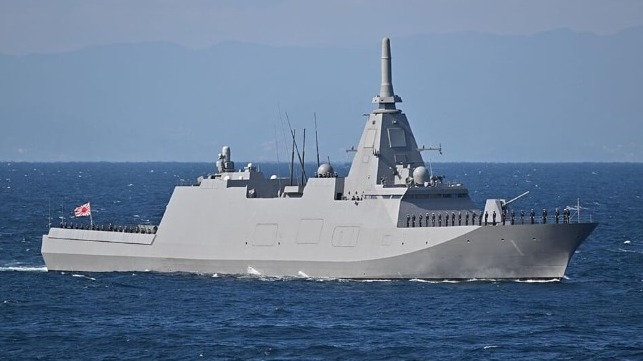
JS Mogami (Japan MOD)

PUBLISHED MAR 3, 2024 12:22 PM BY THE LOWY INTERPRETER


[By Peter J. Dean]

By the end of this decade the Royal Australian Navy (RAN) may well by operating a frigate that originates from Japan.

Just saying this out loud before the launch of Independent Analysis of Navy’s Surface Combatant Fleet on 20 February would have led commentators and experts to either pass looks of derision or list all the reasons why it would never happen. The fact that this has received little attention is due to the bold approach outlined in the Analysis. For a decidedly short document (six pages, while full-page glossy photos get more than eight), it packs a punch and decisively reshapes the Navy.

The media coverage has been extensive, but most of the column inches have been devoted to the size and shape of the future surface fleet, the funding envelope, the Government’s management of the defence portfolio, and the fact that the surface fleet will shrink before it grows.

But the decision to shortlist a Japanese vessel for eleven new general-purpose frigates has so far been overlooked, yet it is significant both because of the specific ship and because of the potential strategic impact of a Japanese design.

From a strategic perspective, selection of the Japanese frigate would reinforce a closer alignment between the two countries. Japan's National Security Strategy and National Defence Strategy were launched in December 2022, not long before the Albanese Government received the Defence Strategic Review from Sir Angus Houston and Stephen Smith on Valentines Day 2023. Looked at side by side, these documents, developed independently, are strikingly similar.

Both emphasise the emerging multipolar order in the Indo-Pacific, both adopt a focus on deterrence by denial, long-range strike, integrated air and missile defence, maritime operations, national resilience and accelerated preparedness.

Most importantly, both have at their centre a regional balancing strategy built around US allies and partners. The Japanese strategy document goes so far as to say that Australia is the second most important partner for Japan, behind the US. The Australia-Japan relationship has progressed steadily over the last decade, culminating in January 2022 when the two countries signed a Reciprocal Access Agreement, which was upgraded in 2023.

On the downside, Japan does not have a strong record of defence exports. However, Japan has a long history of working with the US and, like Australia, the bulk of its equipment is US in origin. The Japanese have also entered the playing field of major international capability development programs with the Global Combat Air Program, partnering with the UK and Italy. Perhaps the next step in expanding the balancing coalition in the Indo-Pacific is through an Australia-Japan frigate program built around the Mogami class.

As for the ship itself, the Japanese Mogami-Class frigate should be one of the front runners among the four selected (with the other designs coming from Spain, Germany and South Korea). The Independent Analysis calls for a vessel that is already ‘in the water’, can be built rapidly with a hybrid offshore and onshore build, and meets a suite of requirements. The new vessels must:

  • operate a helicopter.
  • conduct anti-submarine warfare, including with a towed-array sonar and lightweight torpedoes.
  • provide air defence.
  • provide anti-ship and land strike capability.
  • provide protection for a larger naval task force.

The Mogami class meets all these requirements but provides a couple of key additional attributes. This frigate is operated by a fellow US ally, is focused on the same geographical region as Australia, and is a mature design. The seventh vessel in the class was just launched and Japan is well on its way to building up to 22 Mogami frigates. Adding 11 RAN vessels to this class could yield economies of scale on maintenance, sustainment and future design enhancements.

One of the key features of the Japanese frigate is that it is designed to operate the MH-60 Seahawk helicopter. The RAN is committed to a fleet of these helicopters and the ability to operate it will be a critical requirement for the new frigate. The Mogami is also one of the fastest and most manoeuvrable ships of the four selected, and has the smallest crew requirement, a critical factor as the RAN faces a workforce crisis.

Finally, the Mogami-class has been designed to operate as a “mother ship” for an unmanned underwater and surface vehicles, a critical factor given the changing character of naval warfare and the decision to develop optionally crewed vessels as part of the new surface fleet design.

Professor Peter J. Dean is Director of the Foreign Policy and Defence Program at the United States Studies Centre. Prior to the commencement of this role Professor Dean was Chair of Defence Studies and Director of the UWA Defence and Security Institute.

He has been a Fulbright Professional Fellow and Endeavour Research Scholar in Australia-United States Alliance Studies, as well as a non-resident fellow with the Centre for Strategic and International Studies (CSIS) and the Australia, New Zealand and Pacific Studies at Georgetown University in Washington DC.

This article appears courtesy of The Lowy Interpreter and may be found in its original form here


India Launches New Naval Base to Expand Presence in the Indian Ocean

Minicoy Island
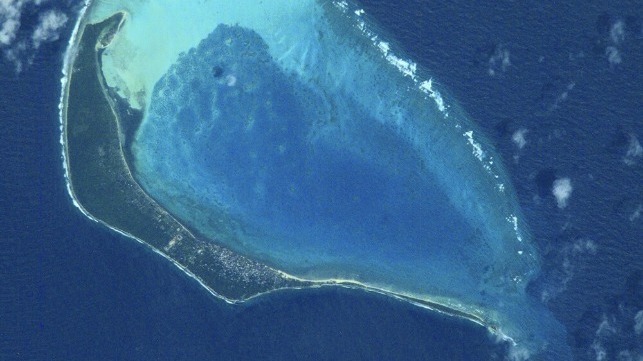
Minicoy Atoll (NASA)

PUBLISHED MAR 3, 2024 1:12 PM BY THE MARITIME EXECUTIVE


As India continues to project its naval power in the Arabian Sea with the ongoing Houthi attacks, India’s navy is planning for an expanded presence in the Indian Ocean region. This week, the country’s Defense Minister Rajnath Singh is scheduled to commission a new naval base on Minicoy Island, Lakshadweep, which is one of the Union territories in the Indian Ocean.

During the launch, the minister will be accompanied by the navy top brass aboard both of India’s aircraft carriers - INS Vikramaditya and INS Vikrant. In fact, this will be the first time that the two platforms will participate in a twin carrier operation.

According to Defense Ministry officials, the base will help the navy provide better coverage of the Indian Ocean and “keep an eye on the activities of adversaries in the region.” The base will provide similar capability like the naval base INS Baaz, located on the east coast of India in the Andaman and Nicobar Islands.

The initial plan for INS Jatayu is to start with a component of few officers but will be expanded into a larger naval station. A new airfield capable of handling all classes of fighter jets and aircraft is also in the works.

The new base on Minicoy Island borders the EEZ (Exclusive Economic Zone) of the Maldives, a region where Chinese naval vessels are intensifying operations. In the last few weeks, the Chinese research vessel Xiang Yang Hong 03 has been carrying out oceanic surveys in the outside limits of the EEZs of India, Sri Lanka and the Maldives. A week ago, the vessel made a port call at Male in the Maldives and spent four days at the anchorage.

This level of Chinese presence in the Indian Ocean have been a major concern for New Delhi. To counter the influence, India has sought to bolster its strongholds in the Indian Ocean’s islands, with new naval bases as part of the plan.

Last week, Prime Minister Narendra Modi - together with his Mauritius counterpart Pravind Jugnauth - inaugurated an airstrip and jetty in the Agalega Islands, Mauritius. Both projects were financed by India and are part of a bilateral partnership between the two countries in ensuring security and stability in the Indian Ocean region.

“The airstrip and jetty will enhance the island’s capacity and capabilities in marine surveillance and security,” said Prime Minister Jugnauth.


Netherlands Sending Watercraft and Ammunition to Ukraine

Netherlands watercraft for Ukraine
Netherlands will be supply various watercraft including RHIBs (Dutch Defense Ministry)

PUBLISHED MAR 4, 2024 1:26 PM BY THE MARITIME EXECUTIVE


The Netherlands has become the latest European country to promise increased aid to Ukraine to help counter a mounting Russian offensive in the east and the stalled efforts for further assistance from the United States. During a meeting on Friday, March 1, between Prime Minister Mark Rutte of the Netherlands and President Volodymyr Zelenskyy of Ukraine just 25 miles from the border with Russia, the Netherlands also promised support for Ukraine’s naval defense.

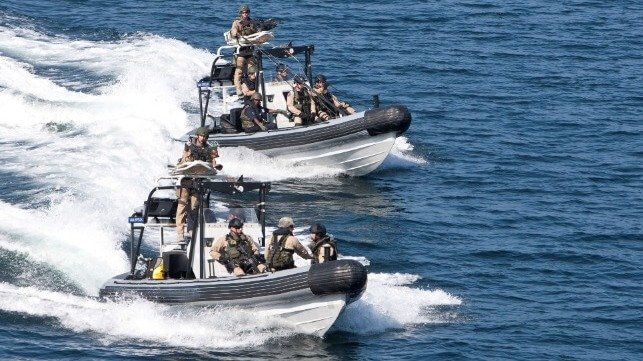
The Defense Ministry detailed the efforts to support Ukraine’s watercraft. They reported that the Netherlands is to provide fast and highly maneuverable rubber boats (RHIBs) and patrol boats as well as assault craft to Ukraine. The plan calls for some of the vessels to be delivered quickly from the Netherlands’ existing supply of vessels and others will come from the manufacturers paid for by the Netherlands.

The delivery includes 14 rigid hull inflatable boats (RHIBs), eight militarized river patrol boats, and CB90 assault craft. Ukraine has used naval watercraft very effective both in assault efforts against Russian naval assets in the occupied eastern regions and for the defense of commercial shipping as it restored exports from the ports around Odesa and on the Danube.

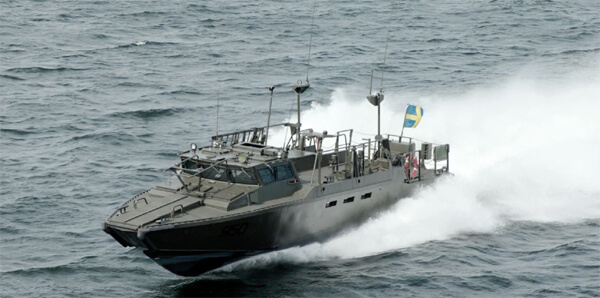
The CB90, manufactured by Saab, is considered to be a fast and very maneuverable assault ship. Saab highlights that more than 250 boats are operating worldwide and they recently developed a next-generation version of the vessel. At approximately 49 feet (15 meters) in length and approximately 20 tons, Saab highlights it is a lightweight vessel that adds to its overall capabilities. The company acknowledges speeds of 40 knots and above.


The Netherlands will also be supply CB90 assault crafts (Saab file photo)


Prime Minister Rutte also announced the Netherlands would be expanding its efforts to support supplying Ukraine with ammunition including badly needed artillery shells. Earlier in the week, the Netherlands said it would commit more than $100 million for additional aid for ammunition, and on Friday he announced the country would also be contributing more than $270 million to a Czech initiative to order large numbers of artillery shells in the short term for Ukraine. The Czech Republic is spearheading an effort to source 500,000 rounds of 155 mm shells and 300,000 122 mm rounds from third countries, and with financial support from European countries, the shells are expected to reach Ukraine in the coming weeks.

Since the beginning of December 2023, the Netherlands reports it has supplied different kinds of ammunition, radar systems, and individual weapons such as rifles and machine guns to Ukraine to support the war effort. Field hospitals, tents and accessories, generators, and numerous medical goods have also been sent to Ukraine.

The two leaders signed a 10-year security agreement that was agreed to in July 2023. According to the Netherlands, it joins 31 countries and the EU that have concluded an official agreement with Ukraine. All of this comes as the Republican-controlled U.S. House of Representatives has blocked further U.S. aid to Ukraine while White House and Senate leaders seek a solution.


Smugglers Run Aground While Trying to Flee Royal Navy

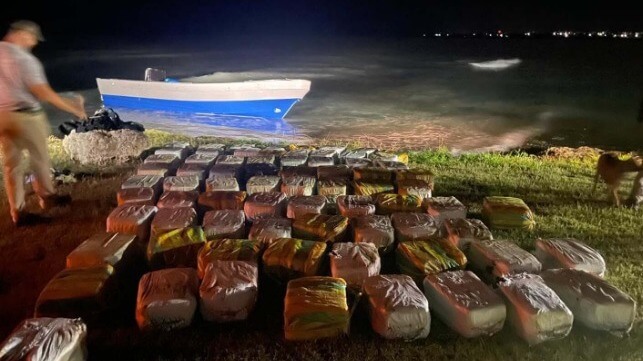
Smuggling boat aground on a beach in USVI at night
Image courtesy Royal Navy

PUBLISHED MAR 4, 2024 3:03 PM BY THE MARITIME EXECUTIVE


A Royal Navy warship has seized narcotics worth $370 million in a series of busts in the Caribbean, with help from the U.S. Coast Guard. 

In the first intercept, HMS Trent spotted a smuggling speedboat to the south of the U.S. Virgin Islands, and the ship gave chase. The smugglers tried to flee towards land, and they threw 20 bales of their illicit cargo over the side. The boat ultimately ran aground, and the suspects were detained by officials in the U.S. Virgin Islands. 

Between the recovery of bales in the water and the cargo still on board the grounded boat, the team captured 94 bales of drugs. This 2,800-kilo haul was valued at $280 million, according to British officials. 

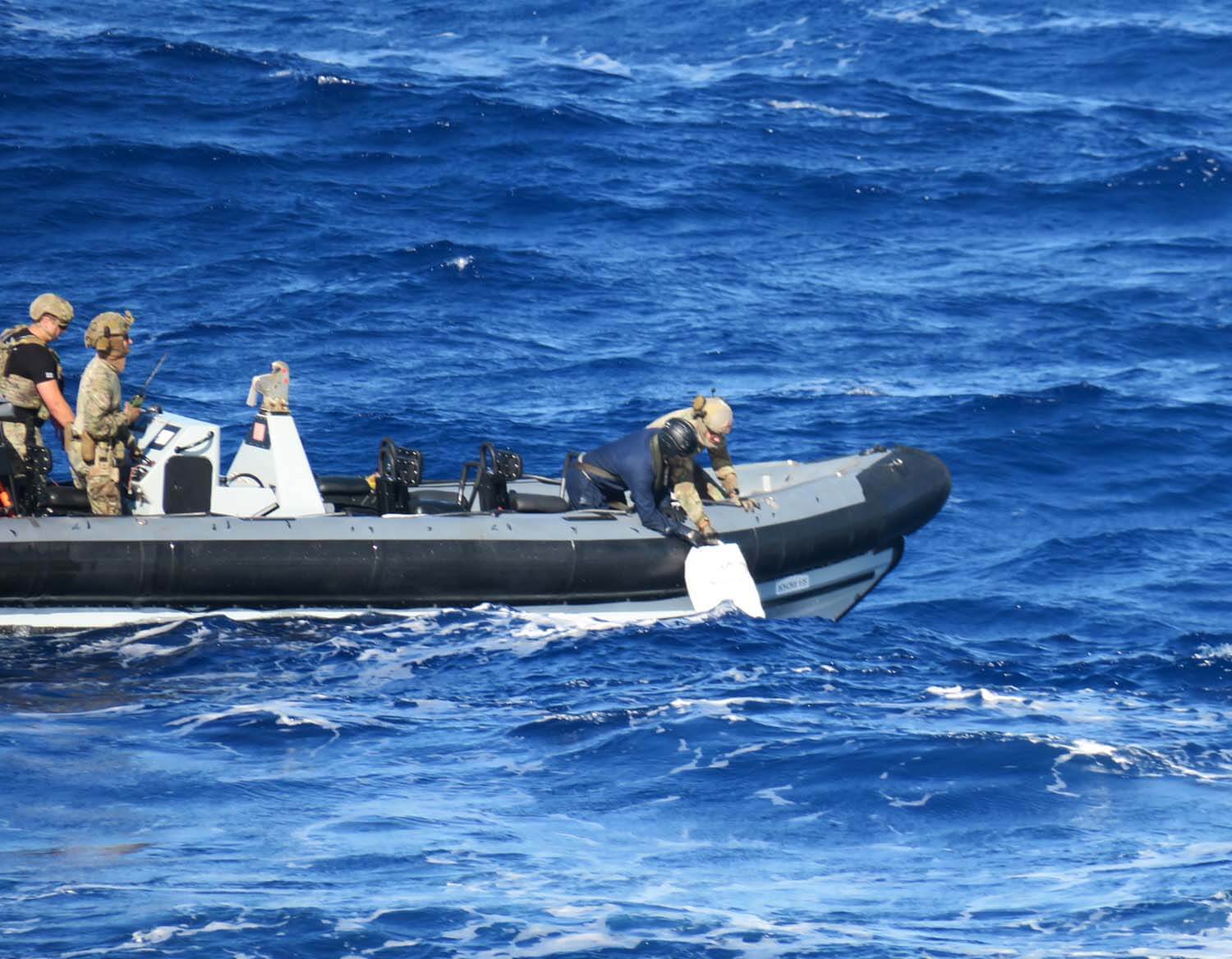
Image courtesy of the Royal Navy

Three weeks earlier, Trent's crew intercepted a group of smugglers in a nighttime pursuit. The four suspects tried to throw their illegal cargo over the side, but they were caught in the act by an embarked Coast Guard boarding team. Trent's coxswains pushed their boats "to the limits" to run down the smuggling vessel and enable the boarding. Aided by daybreak, Trent's crew searched nearby waters and recovered 29 bales of cocaine. The 880-kilo haul was worth another $90 million. 

“The size of this bust is rarely seen in the region, and it is one of the largest single seizures in recent memory," said the officer in charge of the Coast Guard boarding team (unnamed for operational reasons). “Being able to recover such a large cargo of contraband over a 24-mile search area is unheard of.”


India Seizes Cargo for Pakistan from CMA CGM Vessel Alleging Nuclear Ties

India Mumbai container port
Indian officials seized cargo bound for Pakistan alleging violations of nonproliferation agreements (file photo)

PUBLISHED MAR 4, 2024 12:19 PM BY THE MARITIME EXECUTIVE


A new international incident is brewing between India and Pakistan after Indian officials confirmed that they had seized a cargo off a CMA CGM containership bound for Pakistan. India is claiming the cargo could be used to support Pakistan’s nuclear and missile programs while Pakistan is refuting the claims.

India released news of the seizure just as Pakistan was completing the second round of elections for Prime Minister and was reporting that Shehbaz Sharif had won a second term as Prime Minister of Pakistan. With the seizure having taken place more than a month ago, questions surfaced if it was an attempt to embarrass the government and its supporter China with the timing of the news.

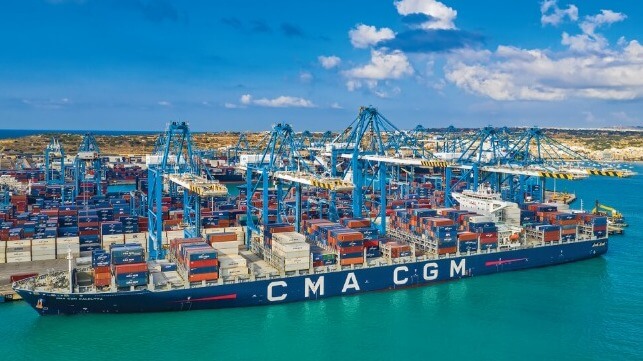
India claims officials in Mumbai’s Nhava Sheva port became suspicious after identifying irregularities in the paperwork of a shipment aboard the CMA CGM Attila. The 13-year-old containership, 105,100 dwt with a capacity of 8,700 TEU, operates on a regular route between China, Singapore, India, and Pakistan. 

The vessel arrived in India on January 24 and among the cargo were 2,200 kilos bound for a company in Pakistan which India claims is on its watch list and has a history of suspicious imports. Indian officials accused the company, Cosmos Engineering, of being a defense supplier, while Pakistan in its repose said it is a Karachi-based commercial entity that supplies parts to the automobile industry in Pakistan.

India’s Defense Research and Development Organization, working with customs officials, seized the cargo and is now asserting that it was an Italian-manufactured CNC (computer numerical control) machine used for precise applications and is banned under international agreements to stop proliferation. They further allege the shipment was arranged by a Chinese company which they said is further evidence of China’s support of activities in Pakistan.

Pakistan’s Ministry of Foreign Affairs responded in a statement calling the situation an “unjust seizure” and condemning India’s high-handedness in the seizure of commercial goods. They are contending that the seized shipment is a commercial lathe machine.

“These reports are reflective of Indian media’s habitual misrepresentation of facts,” Pakistan’s Ministry said in its statement.

Indian officials however contend that this is neither the first example of this type of illegal import nor the first time this company has been suspected for breaking the nonproliferation agreements. They allege in 2020, China was caught shipping an autoclave to Pakistan which was manifested as an “industrial dryer.” In 2022, Indian officials reported they intercepted Italian-made thermoelectric instruments also at the Nhava Shena port going to Cosmos Engineering.

As part of its response to the latest incident, Pakistan said the relevant private entities are pursuing the matter. The CMA CGM vessel was cleared and has returned to its normal route.


Nigeria Tracks Down Bunker Vessel and Holds it on Oil Theft Charges

bunker vessel
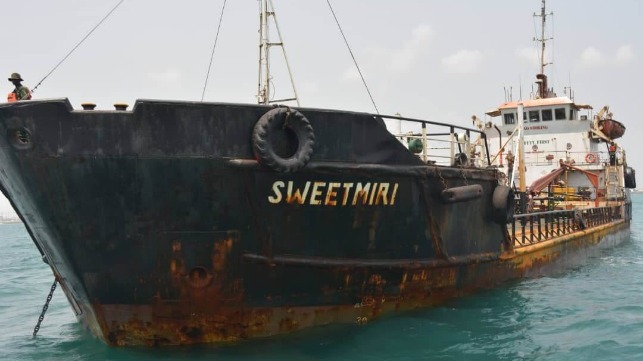
Nigeria arrested the bunker vessel on charges of stealing oil (Nigerian Navy)

PUBLISHED MAR 4, 2024 2:42 PM BY THE MARITIME EXECUTIVE


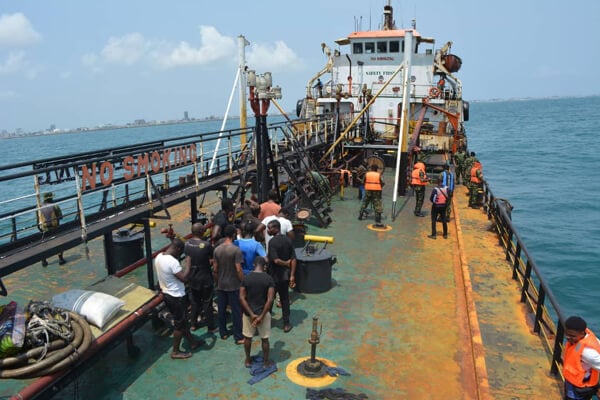
The Nigerian Navy reports it tracked and subsequently arrested a Panama-registered bunker vessel which it is accusing of oil theft. They tracked the vessel offshore before apprehending it with 13 crewmembers aboard and brought it back to Lagos over the weekend as part of a wider operation to crackdown on oil thieves. 

The vessel the Sweet Miri (1,800 dwt) is reported to be owned by a Ghanaian according to the Nigerians but according to databases is managed out of the UAE. The vessel is 34 years old and operates in the Gulf of Guinea region.

Flag Officer Commanding the Western Naval Command, rear Admiral MB Hassan, told reporters on Saturday that the navy had been observing the bunker vessel and its activity for some time. He said the vessel had turned off its AIS signal on February 25 which raised suspicions. The Navy dispatched a gunboat to investigate and they had suspicion the vessel was smuggling oil.

The Navy dispatched a second vessel in the search for the Sweet Miri before they finally located the vessel approximately 174 nautical miles from Nigeria. It was traveling to Benin when it was apprehended. The command reported a search turned up nearly two million liters of oil and the vessel was ordered to return to Nigeria.


Two Nigerian gunboats were used to track the bunker vessel and bring it back to Lagos (Nigerian Navy)


The vessel and its crew of 13 have now been placed under arrest while the commander said other departments of the government were also free to search the ship. The crew consists of one Ghanaian and 12 Nigerians.

The seizure was part of a wider crackdown across the region on alleged oil thefts. Over the past few months, there have been several reports of smaller vessels being held on allegations of oil theft.

The Nigerians in August 2022 chased a large tanker, the Heroic Idum, which they also charged with loading stolen crude. The vessel took refuge in Equatorial Guinea but was later handed back to Nigeria which used antipiracy laws to charge the crew. A settlement was finally reached in April 2023 when the vessel’s operators agreed to a public apology and a fine but it took till June 2023 for the crew to be released.


Two Chinese Research Vessels Loiter at Energy-Rich Benham Rise

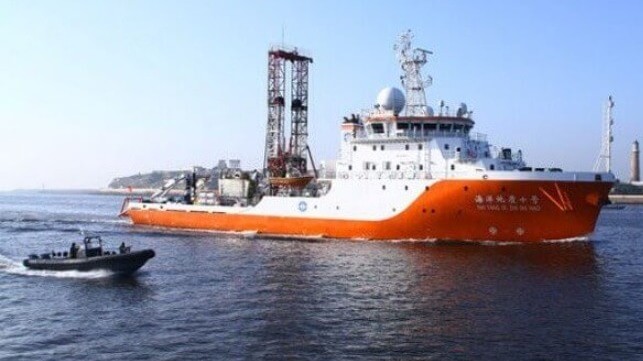
Haiyang Dizhi Shihao (Pakistani Navy file image)

PUBLISHED MAR 4, 2024 6:27 PM BY THE MARITIME EXECUTIVE


The government of the Philippines is responding to the presence of two Chinese research vessels at Benham Rise, a seamount in the Philippine Sea. The area is within the Philippine EEZ and has prospects as a future source of oil and gas. 

Defense researcher and former U.S. Air Force officer Ray Powell spotted and publicized the presence of two Chinese research vessels in the Benham Rise area last week. He identified the ships as the Haiyang Dizhi Shihao and the Haiyang Dishi Liuhao, and said that they had departed Guangzhou on February 26. 

The Shihao has a history of spending time in sensitive parts of the South China Sea. The vessel was identified loitering in the Indonesian EEZ in 2021, in close proximity to a working oil rig. (Unlike some similar situations in other neighboring states, the well was successfully completed, without diplomatic confrontation.)

To monitor Chinese activity at Benham Rise, the PCG has deployed the patrol vessel BRP Gabriela Silang on a two-week voyage to the area. 

On Sunday, the Philippine Navy confirmed that the two Chinese vessels had departed the Philippine EEZ. It was not immediately possible to follow up with aerial surveillance because of foul weather, spokesman Roy Trinidad said, but another attempt was scheduled for Monday.  

Trinidad emphasized that no laws were broken, and that the research vessels were transiting the area in compliance with UNCLOS.

China protests diplomat's "flashpoint" observations

China's ambitions to seize Taiwan are the primary focus of American military planners in the Pacific, but Philippine Ambassador Jose Manuel Romualdez recently told a conference panel that the Spratly Islands are the most important area to watch. 

“The real problem and the real flashpoint, which is why I’m telling you how critical it is for us. The real flashpoint is in the West Philippine Sea,” Romualdez said. "All of these skirmishes that are happening [with China], there can be one major accident and either one of our countries, the US or the Philippines, can invoke the [mutual defense treaty] and when we do, a commitment made by the US or the commitment we made will happen, and then all hell breaks loose."

China's diplomatic corps and state media expressed outrage at Romualdez' remarks. 

"It is deplorable that the said individual, in ignorance of basic facts, again used the South China Sea issue to hype up and launch a baseless accusation and malicious smear campaign against China," Chinese Embassy in Manila spokesperson Ji Lingpeng said on Sunday. "Who are stirring up the situation in the South China Sea? Who are spreading "China threat"? Who are ganging up in small blocks?"

Despite losing an international arbitral case, China claims the vast majority of the South China Sea as its own, including a large swath of the Philippines' western exclusive economic zone. Chinese government contractors have built a series of island military bases atop reefs in the Spratly Islands, providing bases for China's maritime militia and coast guard to enforce Chinese sovereignty claims in Philippine waters. 

In 2016, the Permanent Court of Arbitration in the Hague ruled that China's excessive maritime claims are not consistent with international law. China refused to participate in the case and has ignored the outcome. 

CRIMINAL CAPITALI$M

Gunvor Pays More Than $700M in U.S. and Switzerland Settling Bribery Cases

bribery
The charges of bribery stem from 2009 to 2022 reaching Ecuador as well as Congo-Brazzaville and Cote d'Ivoire

PUBLISHED MAR 4, 2024 5:16 PM BY THE MARITIME EXECUTIVE


Swiss-based international commodities trading company Gunvor, which says it focuses on logistics solutions that safely and efficiently move commodities, has settled a long-running and complex bribery case with U.S. and Swiss regulators. The company will pay more than $661 million in the United States as part of a guilty plea and $98 million to Swiss authorities while it works to resolve additional investigations in Ecuador and Switzerland.

The company emphasized in announcing its plea agreement with the U.S. Justice Department and guilty plea which was entered in federal court in New York on March 1, that it had cooperated with the investigations and taken extensive steps to enhance its internal controls. The U.S. charged the company with violations of the Foreign Corrupt Practices Act saying there had been a wide-reaching conspiracy to violate the anti-bribery provisions.

“Over nearly a decade, Gunvor representatives bribed high-level government officials at Ecuador’s state-owned oil company to enter into business transactions with other state-owned entities that ultimately benefited Gunvor. As a result of this complex bribery scheme, Gunvor obtained hundreds of millions of dollars in illicit profits,” said Acting Senior Counselor Brent S. Wible of the U.S. Justice Department’s Criminal Division.

The company agreed to pay a fine of nearly $375 million and to forfeit an additional $287 million to the U.S. Under the terms of the agreement, up to half the fine will be credited against the resolution of parallel matters yet to be completed in Ecuador and Switzerland. In addition, the company also agreed with Switzerland to pay an additional approximately $98 million to resolve yet another investigation into Gunvor’s previous misconduct.

“As a company, Gunvor made mistakes at the time, for which we are sorry and that we have worked diligently to fix,” said Gunvor Group Chairman, Torbjörn Törnqvist. “Today, Gunvor upholds an industry-leading compliance program that we are committed to continuously enhance. Corruption has no place in our company and will never be tolerated.”

Gunvor highlighted that the investigations centered around activities that it believes began in 2011, acknowledging its compliance program had shortcomings that “allowed for corrupt activities.” The company contends that its compliance practices were improved over time and that in 2020 it helped them to identify concerns and suspend and later terminate its agents in Ecuador before it learned of the U.S. investigation. It also identified misconduct in Congo-Brazzaville that was resolved with the Swiss authorities in 2019.

In the U.S. court filing the company admits between 2012 and 2020 more than $97 million was paid to intermediaries knowing that some of the money would be used to bribe Ecuadorean officials. The monies were routed through U.S. banks to front companies in Panama and the British Virgin Islands and front companies for Gunvor won oil-backed loan contracts with Petroecuador without competitive bids. The company also received confidential information from Petroecuador. 

The U.S. Department of Justice acknowledges that the fines were reduced in part because of the company’s cooperation and its remedial measures. The department also considered the 2019 settlement with Switzerland which was for a parallel corrupt scheme to bribe officials in Congo-Brazzaville and Cote d’Ivoire to secure oil contracts. That scheme was believed to run between 2009 and 2012. 

The U.S. also previously secured convictions of four individuals, including two consultants and one employee each of Gunvor and Petroecuador. Between 2020 and 2022, the U.S. obtained guilty pleas from the individuals on charges related to money laundering. The Cayman Islands, Colombia, Panama, Portugal, and Singapore also aided in the prosecution of the cases.