It’s possible that I shall make an ass of myself. But in that case one can always get out of it with a little dialectic. I have, of course, so worded my proposition as to be right either way (K.Marx, Letter to F.Engels on the Indian Mutiny)
Tuesday, March 05, 2024
CORNWALL
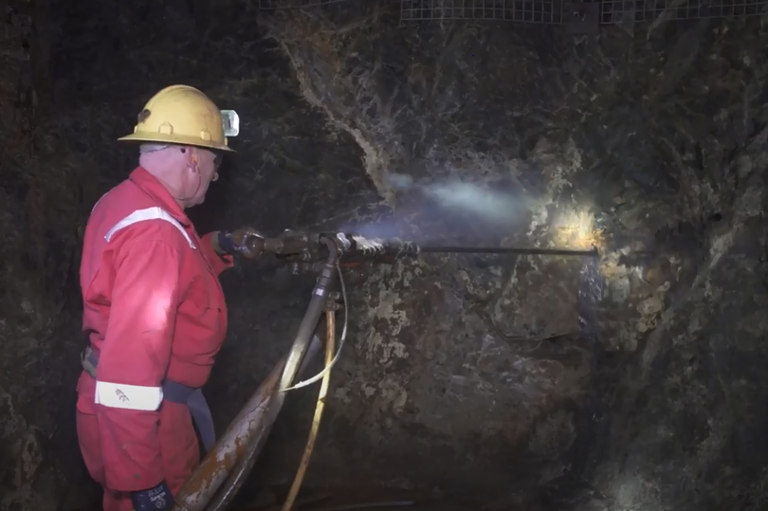
South Crofty tin mine project advances with early shaft refurbishment
Mining exploration company Cornish Metals will bring forward its plans to refurbish a mine shaft at its South Crofty tin project.
The AIM-listed firm, which is working to revive production at the mine in Pool near Redruth, said on Monday (March 4) that after an assessment of the timbers in New Cooks Kitchen (NCK) shaft it had decided to start refurbishment ahead of schedule.
Cash raised from an offering completed in May 2022 will be re-allocated to fund the works on the NCK shaft, the firm added.
Cornish Metals said the refurbishment would “significantly improve” the functionality of NCK shaft and mean larger equipment would be able to access the mine at an earlier stage in its redevelopment. It also said it would ensure the safety of the mine as the company regained access to the underground workings.
Under the plans, the rate of mine dewatering has been reduced - with the water level being maintained - to allow shaft refurbishment and dewatering to proceed at the same time. Shaft refurbishment and mine dewatering are now expected to complete by the third quarter of 2025.
Cornish Metals said the cost saving of around £4m from reducing the rate of dewatering will cover the cost of shaft refurbishment during 2024.
Cornish Metals is funded for the remainder of 2024 and has said there is “no anticipated impact” on the overall cost of re-opening South Crofty arising from the re-phasing.
Richard Williams, chief executive and director of Cornish Metals, said: “Cornish Metals is committed to safe, efficient and cost-effective work practises and has, accordingly, brought forward the refurbishment of NCK shaft.
"This is a key milestone for the project and demonstrates the confidence both we as a company and our largest shareholders have in the future of South Crofty. Importantly, management believes the project remains on track for production by the end of 2026.”
Cornish Metals is looking to restart tin production at the mine, which closed in 1998 after 400 years of continuous production, by 2026.
Draslovka and Barrick Gold Revolutionize Mining with Glycine Leaching Technology, Slash Cyanide Use by 80%
Draslovka's GlyCat technology, implemented at Barrick Gold's Bulyanhulu mine, offers a sustainable and cost-effective solution for gold mining, reducing cyanide consumption by 80% while maintaining high recovery rates. This strategic partnership sets new standards for responsible mining practices worldwide.
Draslovka, a pioneer in sustainability-driven technologies, has initiated the commercial deployment of its groundbreaking Glycine Leaching Technology (GlyCat) at Barrick Gold Corporation's Bulyanhulu mine in Tanzania. This landmark move is part of a broader strategic alliance aimed at enhancing mining sustainability and efficiency across the globe. Revolutionizing Gold Mining with GlyCat
The adoption of GlyCat technology at the Bulyanhulu Gold Mine signifies a monumental shift towards more sustainable and cost-effective mining practices. Glycine Leaching Technology (GLT), leveraging glycine, a non-toxic and biodegradable amino acid, promises a substantial reduction in cyanide consumption by 80% without compromising gold recovery rates. This innovation not only aligns with the industry's growing emphasis on environmental responsibility but also presents significant economic advantages by lowering detoxification requirements and expenses. Read more about the GlyCat technology and its benefits.
Strategic Partnership for a Sustainable Future
The collaboration between Draslovka and Barrick Gold Corporation extends beyond the implementation of GlyCat. It encompasses a comprehensive testing program slated for 2024 across various mining sites. This partnership reflects both entities' dedication to setting new benchmarks for responsible mining practices worldwide. Barrick Gold's commitment to environmental sustainability and operational efficiency is well-documented, with the company posting positive earnings and achieving a production record in 2022. Furthermore, it has recently entered into a significant agreement with federal and Balochistan governments for a new mining project, underscoring its leadership in the global mining sector. Discover more about Barrick Gold's recent achievements and future plans.
Implications for the Mining Industry
The successful application of GlyCat technology at Bulyanhulu and the subsequent expansion of its use across Barrick’s operations could potentially set a new industry standard for gold and metal recovery processes. By demonstrating that it is possible to maintain high recovery rates while significantly reducing the environmental impact and operational costs, Draslovka and Barrick are leading the way toward a more sustainable and economically viable mining future. This partnership not only highlights the practical benefits of Glycine Leaching Technology but also reinforces the mining industry's capacity for innovation and adaptability in response to global sustainability challenges.
As the mining industry continues to evolve, the integration of environmentally friendly technologies like GlyCat could play a pivotal role in shaping its future. The collaboration between Draslovka and Barrick Gold Corporation exemplifies the potential for strategic partnerships to drive significant progress in operational efficiency, cost reduction, and environmental stewardship. As such, this development is not just a win for the involved companies but a beacon of hope for the broader mining sector striving towards sustainability and responsible resource extraction.
Draslovka and Barrick Gold Commence Commercial Use of Glycine Leaching Technology for Gold Mining
Commercial use of GlyCat™ at Barrick’s Buylanhulu operation in Tanzania
80% reduction in cyanide consumption with no change to recoveries
Strategic partnership to include broader testing programme spanning
multiple sites
PRAGUE--(BUSINESS WIRE)--Draslovka a.s ("Draslovka"), a provider of sustainability-led technologies, reagents and services for mining and the energy transition, has progressed its previously announced partnership with Barrick Gold Corporation ("Barrick") and today announces the start of commercial use of its revolutionary glycine leaching technology for gold, GlyCat™ (“GlyCat”), at Barrick’s Buylanhulu operation in Tanzania. In addition, Draslovka and Barrick’s strategic partnership will now include a broader testing programme in 2024 that will span multiple mining sites.
“The application of GlyCat technology within our operations has significant potential to deliver improved operational efficiencies and cost savings, whilst also improving our environmental legacy. Consequently, we are very pleased to embark upon this strategic partnership with Draslovka to take advantage of this innovative technology across our global operations.”
At Bulyanhulu Gold Mine, the GlyCat pilot programme has led to an 80% reduction in cyanide consumption while achieving gold recoveries that are comparable to traditional cyanidation. With GlyCat as part of the process, the mine’s tailings show undetectable levels of WAD and are free of cyanide, thereby reducing detoxification requirements and costs.
Pavel Bruzek Jr, CEO of Draslovka, commented: “This licensing agreement follows a highly successful pilot programme that proved the major benefits GlyCat offers to the gold mining industry. GlyCat provides significant economic and sustainability benefits at a time when the future of mining is conditional on cost savings, sustainable operations and securing social license to operate. I look forward to continuing to work with Barrick and am confident others in the sector will soon see that GlyCat is revolutionary and its development will enable a major shift for the gold mining industry through massive economic and environmental benefits. Barrick was the first major mining company to recognise the potential glycine leaching offers and it is a pleasure and honour to work with the team on its commitment to sustainable operations.”
Simon Bottoms, Barrick Mineral Resource Management & Evaluations Executive, added: “The application of GlyCat technology within our operations has significant potential to deliver improved operational efficiencies and cost savings, whilst also improving our environmental legacy. Consequently, we are very pleased to embark upon this strategic partnership with Draslovka to take advantage of this innovative technology across our global operations.”
About Draslovka
Draslovka a.s. (“Draslovka”) is a chemical technologies, products and services company creating value and improving sustainability in several industries, including mining, agriculture and manufacturing. Today, Draslovka is best known as the world’s largest producer of sodium cyanide, a chemical vital for gold mining however its most important contribution to the sector is its Glycine Leaching Technology (“GLT”), the company’s proprietary technology that leaches metals (including gold, copper, nickel and cobalt) in a more sustainable and economic manner. Draslovka also manufactures other specialist chemicals and reagents and provides class-leading chemical application services to the mining and pest control industries as well as AI-enabled support services.
About Glycine Leaching Technology
Glycine Leaching Technology (“GLT”) uses glycine, a non-toxic, recyclable and biodegradable amino acid that is commonly used as a food additive, to recover gold, copper, nickel and cobalt. GLT was inspired by nature when researchers at Curtin University in Perth observed plants absorbing gold and other metals out of the soil through the presence of glycine, which carries those metals through the soil and into the plant.
GLT has the capacity to revolutionise the mining industry and the potential to save mining companies billions of dollars. GLT significantly reduces processing costs, enhances a mine’s sustainability profile and can extend mine life by lowering the cut-off grade or unlocking value hidden in a mine’s tailings. GlyCatTM technology for Gold from the GLT product family dramatically reduces cyanide usage while also lowering or in some cases completely eliminating detoxification measures. In select ores, the process also results in higher recoveries.
In 2023, Barrick Gold rolled out a global testing and implementation programme with the goal of using GlyCatTM to unlock substantive savings and generate value for its operations while also improving its environmental footprint.
About Barrick Gold
Barrick’s mission is to be the world’s most valued gold and copper mining business by finding, developing, and owning the best assets, with the best people, to deliver sustainable returns for our owners and partners.
Barrick is a sector-leading gold and copper producer, operating mines and projects in 18 countries in North and South America, Africa, Papua New Guinea and Saudi Arabia.
Barrick’s portfolio spans the world’s most prolific gold and copper districts and is focused on high-margin, long-life assets, with a highly diversified workforce drawn almost entirely from host nations and equipped with world-class skills.
The company’s shares trade on the New York Stock Exchange under the symbol GOLD, and on the Toronto Stock Exchange under the symbol ABX.
New research focused on improving mineral drill targeting using satellite connectivity and space-enabled geophysical sensors will be conducted at Stanford University in California, USA, under a collaboration with Australia’s Fleet Space Technologies.
Fleet Space, a privately-owned Adelaide firm, says it has worked with at least 35 mining and exploration companies, including Rio Tinto and Barrick Gold, on sub-surface surveys on five continents. It describes itself as a leader in space-enabled mineral exploration, with rapid relaying of results from its ExoSphere ambient noise tomography surveys enabled by its growing satellite constellation.
ExoSphere could deliver 3D subsurface models in days, rather than months with other methods.
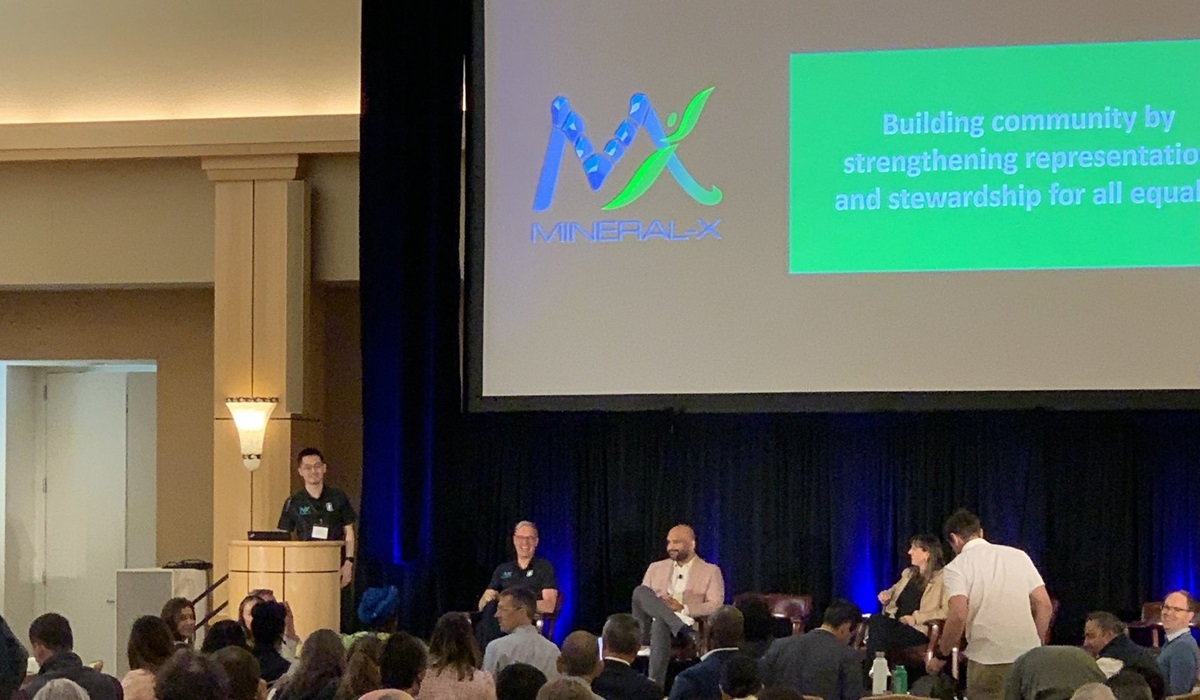
The company has been named as an industrial affiliate of Stanford’s Mineral-X program.
“By engaging with Stanford University’s faculty and scientists at Mineral-X, Fleet Space will engage in joint research on technological innovation to accelerate sustainable mineral discovery in support of the global clean energy transition,” the company said.
Fleet Space chief scientist Gerrit Olivier said scalable 3D geophysical methods stood out as “the cornerstone for breakthroughs in exploration efficiency” in an era marked by declining mineral exploration success rates and rising demand for raw materials.
“These methods provide a vital foundation for multi-physics and ML technologies to enhance exploration success,” Olivier said.
Dr Jef Caers, professor of earth sciences at Stanford and founder of Mineral-X, said the university was “thrilled to work with Fleet Space to accelerate the development of a resilient supply chain for the minerals needed for clean energy innovation globally”.
“The technology developed by Fleet Space provides critical innovations in geophysical imaging needed to map orebodies with an accuracy not possible with current airborne and surface methods.”
As well as its terrestrial activities, Fleet Space said last November a variant of its ExoSphere technology, called SPIDER, would be deployed on the Moon as part of a NASA Commercial Lunar Payload Services (CLPS) initiative to search for water ice deposits and deliver subsurface insight about the lunar regolith in 2026.
Recharge buys ‘highly sought-after’ Newnham Lake uranium project
4TH MARCH 2024 BY: CREAMER MEDIA REPORTER Australia-listed Recharge Metals on Monday announced a binding agreement to acquire 100% of Newnham Lake uranium project in the Athabasca basin of Canada.
“The ongoing collaboration between Recharge and DGRM, which vended our Express lithium project, has forged a strong working relationship over the last year, resulting in the valuable opportunity for Recharge to successfully bid for the highly sought after Newnham Lake uranium project in the Athabasca basin,” commented Recharge MD Felicity Repacholi.
Historical drilling at Newnham Lake has confirmed the presence of uranium inthe system. However, drilling has only focused on the shallow Athabasca basin unconformity, with minimal drilling done in the underlying basement rocks.
“Advancements in the understanding of basement-hosted mineralisation has helped uncover some spectacular deposits, such as NexGen’s Arrow deposit. This basement-hosted geological model adds weight to the prospectivity of Newnham Lake, as does the scale of the coincident low resistivity anomaly which is analogous to Arrow, and will be Recharge’s primary target,” said Repacholi.
Newnham Lake is near the north-east margin of the Athabasca basin and is about 56 km north-west of TSX-V-listed IsoEnergy’s Hurricane deposit, which has an indicated resource of 48.6-million pounds of uranium oxide (U3O8), based on 63 800 t grading 34.5% U3O8.
Recharge has received firm commitments for a A$1.44-million share placement to fund the acquisition and accelerate exploration activities at Newnham Lake project, with an additional A$50 000 to be placed to directors, subject to shareholder approval.
Complaint by Ecuadorian Indigenous Nation Asks British Columbia Securities Commission to Investigate Solaris Resources
Indigenous Organizations Unite Against Controversial Amazon Copper Mining Project
SUCÚA, Ecuador, OTTAWA, ON and OAKLAND, Calif., Feb. 29, 2024 /CNW/ - Today, the Shuar Arutam People (PSHA) filed a complaint against Solaris Resources Inc. (TSX: SLS) before the British Columbia Securities Commission over its failure to continuously disclose material information to shareholders regarding its Warintza mining project which overlaps PSHA's titled territory. In spite of PSHA´s explicit and continuous rejection of the Warintza project, Vancouver-based Solaris has kept moving forward with its mining plans in the Amazon, one of the most biodiverse areas on the planet. The complaint comes just days before the biggest mining conference in the world, the annual trade show of the Prospectors and Developers Association of Canada (PDAC) to be held March 3-6 in Toronto. Solaris, in the past, has used PDAC to showcase its "Warintza model" of community engagement as industry best practice. Source: Government Council of the Shuar Arutam People (PSHA), Amazon Watch, MiningWatch Canada, WITNESS. (CNW Group/MiningWatch Canada)
The global rush for critical minerals to meet rising demand of the energy transition away from fossil fuels has seen mining companies rebrand themselves as a sustainable 'green' industry and allies in mitigating climate change. But, much like the legacy of oil extraction, mining projects continue to violate human rights, disrespect the rule of law, contribute to climate change, and threaten important ecosystems and biodiversity, particularly in places like the Amazon basin, which is at a dangerous tipping point of collapse.
According to the complaint, the company has been disclosing partial information regarding its relationships with Indigenous communities opposing the project, and fails in its obligation to regularly disclose Ecuador's political and legal risks that may impede development of mining activities. The complaint also shows Solaris' failure to formally disclose material risks indicates a lack of compliance with its obligations, and may mislead current and prospective investors, which warrants a deeper investigation.
As recognized by the Ecuadorian government, PSHA is the legal representative body of 47 communities with collective land title and ancestral possession of 232,500 hectares of territory in the Cordillera del Condor region of Ecuador's Amazon, and site of Solaris' flagship Warintza copper-gold project. PSHA has repeatedly expressed its opposition to the project. The government has failed to consult them as required by the Ecuadorian constitution and international Indigenous Rights obligations, nor has their consent for the project been obtained.
Instead of addressing the full scope of its legal Free, Prior, and Informed Consent (FPIC) obligations, Solaris Resources has chosen to emphasize a "Strategic Alliance" with just two communities in the area, Yawi and Warintz, causing division and internal conflicts. However, it's important to note that neither of these communities can enter into a process of consultation or provide consent for land that is part of the collective PSHA territory. This has led to misleading implications for investors, suggesting that the company has secured the necessary "social license" to operate. This lack of FPIC puts the viability of the project at risk and opens the door to future litigation, similar to legal injunctions that have paralyzed neighboring mining projects.
Solaris also intends to list on the New York Stock Exchange (NYSE) in 2024, where it could face a similar complaint as the one presented to the British Columbia Securities Commission.
The complaint also shows that Solaris' positive country outlook is unsupported. The company does not disclose growing anti-extraction sentiment throughout Ecuador, where twelve mining projects are paralyzed due to opposition and legal actions. Recent plebiscites have restricted mining in several provinces, as well as one Ecuador's largest oil reserves under Yasuni National Park. Indigenous and anti-mining civil society organizations have also threatened new protests.
A growing coalition of Indigenous organizations and civil society groups including the regional confederation of Amazonian indigenous peoples of Ecuador's Amazon - CONFENIAE, Amazon Watch, Mining Watch, Witness, and Nia Tero are joining PSHA in their demand that Solaris Resources cancel the Warintza project and the Ecuadorian government revoke all mining concessions on its territory.
This story reflects a pervasive trend of conflict between Canadian mining companies and Indigenous communities, exacerbated by a history of environmental and social harm documented in the recent report Unmasking Canada: Rights Violations Across Latin America. The complaint against Solaris Resources Inc. by the PSHA exemplifies the ongoing struggle for Indigenous rights and environmental justice, amidst a backdrop of increasing resistance to mining projects in Ecuador and beyond. As Indigenous groups mobilize against extractive industries, supported by civil society organizations, it underscores the urgent need to hold mining companies accountable for their actions and prioritize Indigenous rights and environmental protection over corporate interests.
Jaime Palomino, President of PSHA, elaborates: "The Shuar Arutam people have rejected the Warintza project for many years. Despite this, the company insists on promoting the project by dividing the communities and trying to reach agreements with other Indigenous organizations. Both the company and the Ecuadorian government should respect our own government structure and our autonomy. Therefore, we are unaware of and reject any agreement that is or has been signed on our behalf."
"Solaris is misleading existing and future investors about the Warintza project. The reality on the ground is far different than the rosy outlook the company paints in its disclosures and CSR presentations. No legally binding consultation for the project has been conducted. Solaris has merely deployed a divide and conquer strategy in an attempt to manufacture consent. Solaris continues to keep its shareholders in the dark that there is steadfast opposition to this project that puts its viability at risk" said Mary Mijares, Fossil Finance Campaigner at Amazon Watch.
"The Shuar have repeatedly asserted there exists no social license for Solaris Resources' flagship Warintza project, even as the Canadian company downplays strong and consistent opposition. Today's complaint filed with the BC Securities Commission by the Shuar Arutam People and allied organizations is one more avenue to have their voices heard, as Ecuadorian communities increasingly succeed in stopping projects they see as socially and environmentally harmful" says Viviana Herrera, the Latin America Coordinator for MiningWatch Canada.
BACKGROUND:
For over two decades, the Shuar Arutam People (PSHA), Southwest Ecuador, in the Amazonian province of Morona Santiago, in the Cordillera del Cóndor, have firmly expressed their opposition to extractive megaprojects, including mining in their territory. In 2019, they declared their lands "a territory of life (TICCA)" and launched an international campaign "The Shuar Have Already Decided: No Mining!" In January 2021, PSHA's Governing Council, together with Public Services International (PSI), filed a complaint with the ILO against the Ecuadorian government for violation of ILO Convention 169 and for violating their collective rights and not consulting them on projects being carried out on our territory.
In 2019, Solaris Resources acquired Lowell Mineral Exploration and the controversial Warintza Project, which has remained dormant since 2006 after PSHA evicted Lowell Mineral Exploration.
SOURCE MiningWatch Canada
CNW Group Thu, February 29, 2024
As batteries demand more cobalt, scientists figure out how to use less for blue pigments
Staff Writer | March 3, 2024 Claude Monet’s Water Lilies from his private collection.
Researchers have discovered a new cobalt-doped barium aluminosilicate colourant that withstands the high temperatures found in a kiln and provides a bright colour to glazed tiles.
In a paper published in the journal ACS Applied Optical Materials, the scientists point out that many brilliant blue pigments—like those in antique Chinese porcelain or works by Claude Monet—make use of cobalt-based compounds, including the famous “cobalt blue.”
In mineral form, the metal has high chemical and thermal stability, and those properties make cobalt aluminate one of the only pigments suitable for high-temperature applications, including pottery glazes.
Tiles produced bright colors when glazed with a new blue pigment (right row) or an acidified version of the pigment powder (left row). (Image by adapted from ACS Applied Optical Materials.)
Today, cobalt is used in lithium-ion batteries, and demand for the metal ore will likely increase as the need for battery power grows. As a result, scientists, including Peng Jiang and colleagues, are searching for alternative pigments that require fewer cobalt ions and still maintain a bright blue hue.
The team based their new pigment on a barium feldspar mineral (BaAl2Si2O8), which also features high temperature and chemical stability. Compounds containing barium, aluminum, silicon and cobalt were ground together, pressed into a sheet, then heated to above 2550 degrees Fahrenheit to form the pigment.
Then, the researchers mixed the powder into a ceramic glaze, sprayed it onto tiles, and fired them to produce glazed pieces of pottery.
The pigment was stable at temperatures up to 3200 degrees—well above the typical firing temperature of a pottery kiln—and only experienced slight colour changes when exposed to either acidic or alkaline solutions, demonstrating the compound’s stability.
Tiles sprayed with the pigmented glaze maintained a smooth, bright surface that deepened in colour as the cobalt concentration in the pigment increased.
The researchers say this new powder substantially reduces the amount of cobalt needed, resulting in a cheaper, easier-to-produce blue ceramic pigment.
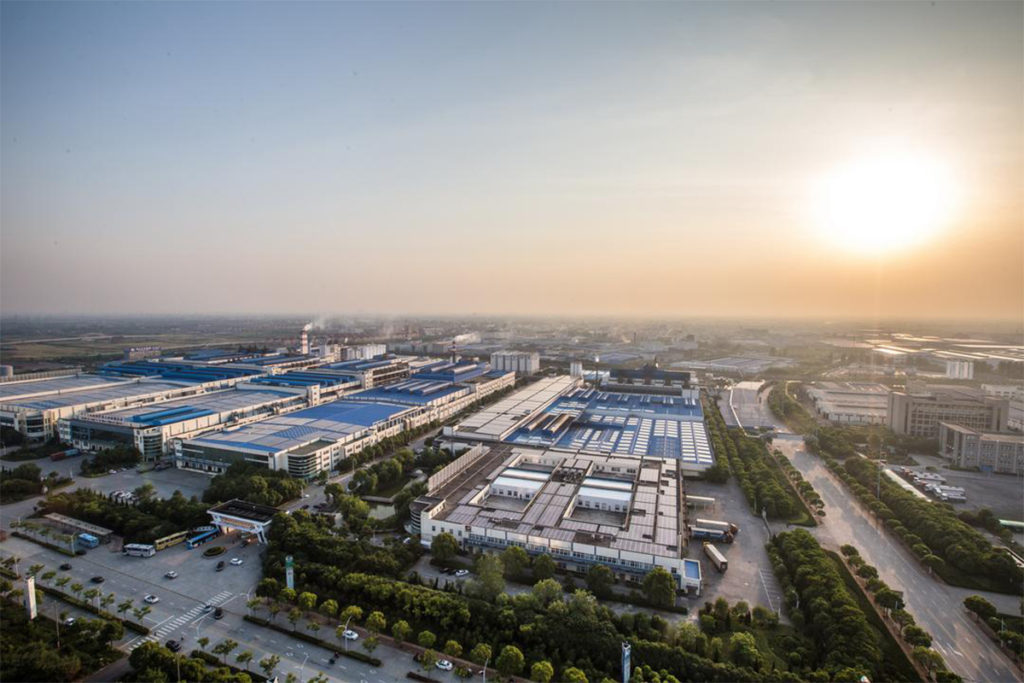
Huayou Cobalt chief proposes battery material policy to tackle overcapacity
China should adopt measures to tackle overcapacity in the lithium battery material industry, the chairman of Zhejiang Huayou Cobalt proposed ahead of the country’s annual parliamentary meeting, state media reported on Monday.
Overinvestment led to “severe overcapacity” in the last year, said Chen Xuehua, who is a delegate to China’s National People’s Congress (NPC), which gathers in Beijing from Tuesday.
Chen cited “significant declines” in industry capacity utilisation.
“Some companies’ operations are facing great difficulties, there are suspended operations, falling prices, idled equipment and staff layoffs,” Chen said, according to a report by Shanghai Securities News.
China’s lithium iron phosphate capacity will reach 5.75 million metric tons in 2025, while global demand for the cathode material widely used in batteries is pegged at about 2.67 million tons that year, he added, citing industry data.
Chen, whose company is a major producer of battery materials nickel and cobalt, proposed that the government publish timely industry information, establish an alerting system to flag mismatch of resources, capacity and demand, and provide guidance on investment and development.
Regulations in Europe and the United States have made it harder to source waste batteries and recycled raw materials, posing challenges to China’s leading role in the lithium battery chain, said Chen, whose company recycles used batteries.
China should encourage more imports of used battery materials, especially hydroxide intermediate made from waste lithium batteries, including by lowering tariffs, he said.
China bans imports of used lithium batteries and black mass, the shredded material which comes from used batteries, which can include lithium, cobalt and nickel. These metals can then be extracted and used to make new batteries.
(By Siyi Liu and Emily Chow; Editing by Tony Munroe and Emelia Sithole-Matarise)
SASKATCHEWAN
BHP inks tentative sales deals for giant Jansen potash project
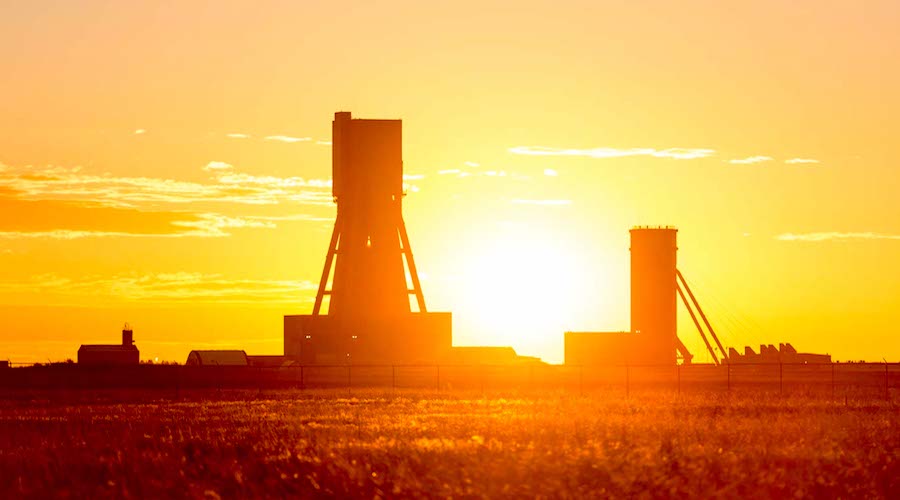
Staff Writer | March 4, 2024 | The Jansen potash project. (Image courtesy of BHP.)
BHP (ASX: BHP) has signed non-binding sales agreements for all potash production from both phases of its giant Jansen potash project in Canada, as reported by Reuters.
The company aims to convert these agreements into firm offtakes within the next 12 to 18 months, according to BHP’s chief commercial officer Ragnar Udd.
In October, BHP announced a $4.9 billion investment in Stage 2 of its potash project in Saskatchewan to double capacity by the end of the decade.
This investment adds to the $5.7 billion that the world’s largest miner is already pouring into Stage 1 of Jansen, along with an initial investment of $4.5 billion before the project’s first phase was even approved.
BHP expects potash demand to increase by 15 million tonnes to roughly 105 million tonnes by 2040, representing a growth rate of 1.5% to 3% annually.
Jansen is expected to begin production in late 2026, ramping up to 4.35 million tonnes annually.
BHP anticipates Jansen becoming one of the world’s largest potash mines, doubling production capacity to approximately 8.5 million tonnes per year by late fiscal 2029.
The world’s biggest miner reported that the first stage of the project is 32% complete and progressing as scheduled. The second stage is expected to take six years and produce about 4.36 million tonnes a year at a capital intensity of about $1,050 per tonne.
BHP plans to sell potash to distributors, rather than directly to companies that re-sell the fertilizer to farmers, Udd said.
“Our opening (sales) approach doesn’t take us as far down the supply chain as potentially others do, which actually allows BHP to specialize in where we actually excel, in the rock production of resources,” Udd said.
Frontier Lithium, Mitsubishi form JV for Canadian lithium operations
Reuters | March 4, 2024 | The PAK lithium project in Ontario. Credit: Frontier Lithium
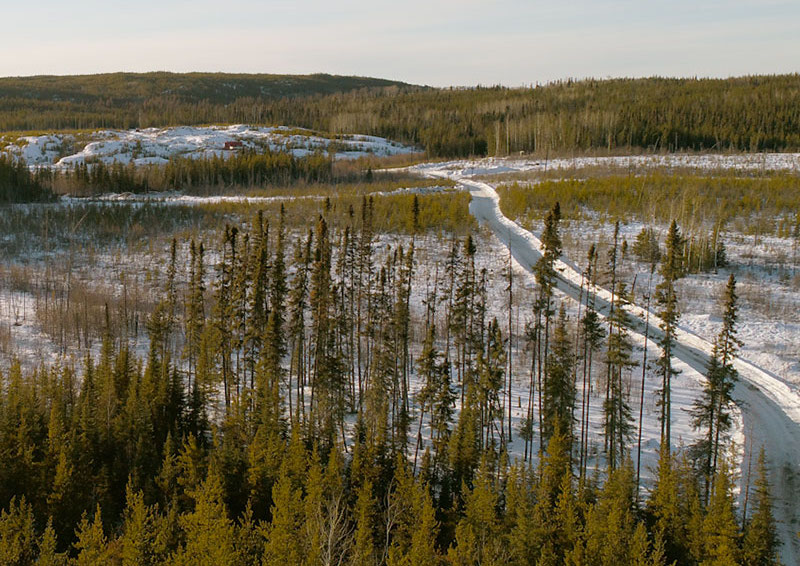
Canadian miner Frontier Lithium said on Monday it is forming a joint venture with Japanese trading house Mitsubishi to help advance lithium mining and processing in Ontario.
Frontier aims to become a major supplier of the commodity, a key mineral used in batteries for electric vehicles, to the North American supply chain.
The partnership will help finance Frontier’s PAK lithium project mine in Ontario and a planned lithium chemicals conversion facility, Frontier said.
As per the terms of the agreement signed last week, Mitsubishi would buy a 7.5% stake in the project for C$25 million ($18.44 million), with an option to increase it to 25%.
The PAK Lithium project encompasses about 27,000 hectares of land in Ontario, with two spodumene-bearing lithium deposits delineated since 2013. Spodumene concentrate is a type of lithium mineral ore.
($1 = 1.3560 Canadian dollars)
(By Kabir Dweit; Editing by Saumyadeb Chakrabarty)
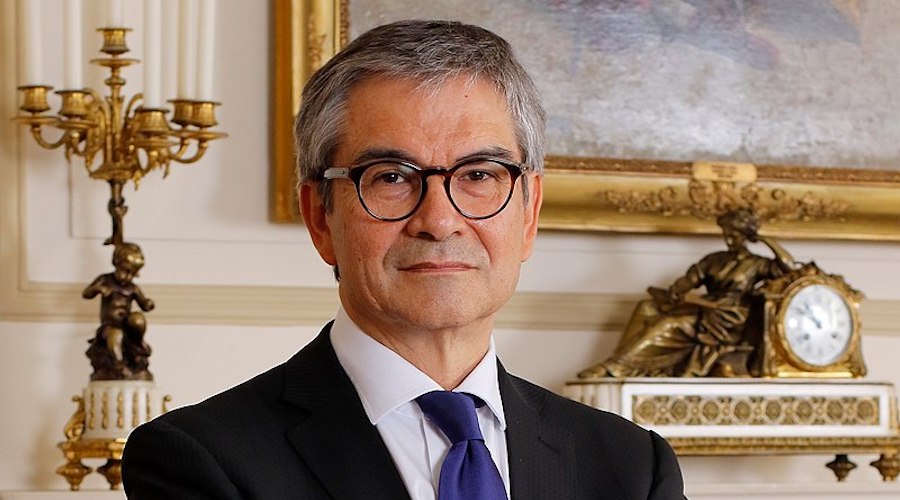
Chile wants 3 or 4 new lithium projects running in 2026, finance minister says Reuters | March 3, 2024 | 1:30 am Battery MetalsLatin AmericaLithium Mario Marcel Cullell, Chile’s Minister of Finance. (Image by Banco Central de Chile, Wikimedia Commons.)
Chile wants to have three or four new lithium projects operational by 2026, the country’s Minister of Finance Mario Marcel said on Saturday.
The South American country – the world’s largest copper producer and the second-largest producer of lithium – initiated a policy last year to increase state control of the strategic metal needed in batteries for electric vehicles.
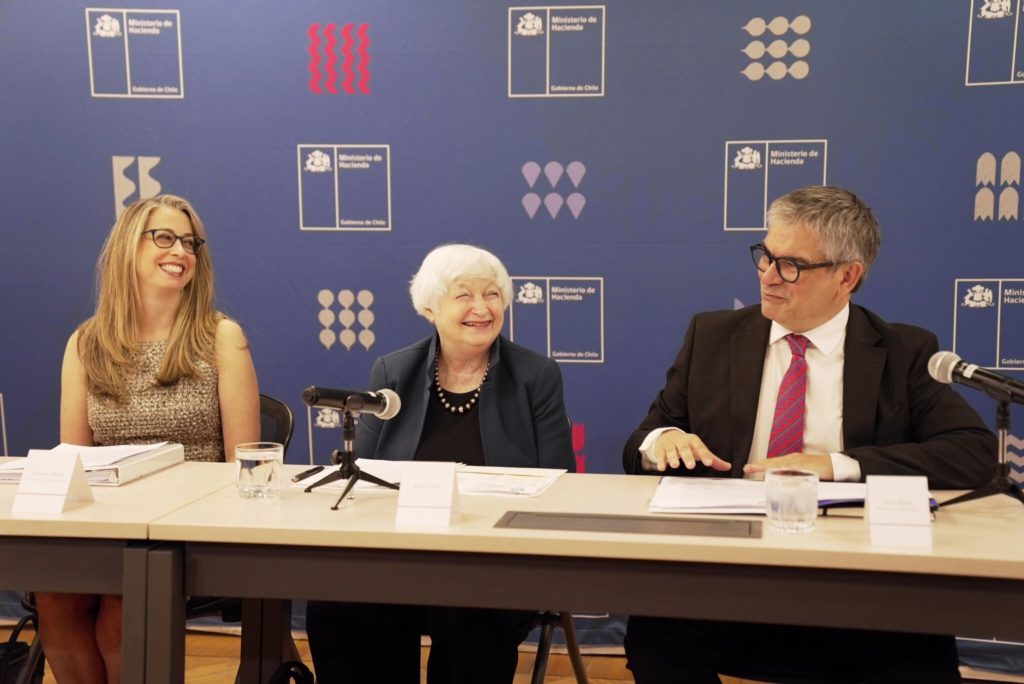
Marcel spoke following a meeting with US Treasury Secretary Janet Yellen, who has been touring the country.
On Saturday, Yellen visited the US lithium producer Albemarle in northern Chile, saying expanded US-Chilean ties would benefit both countries, improve energy security and help achieve key climate goals.
There are currently only two producers of lithium in Chile – Albemarle and SQM – with investors still waiting for the left-wing government of President Gabriel Boric to define its national lithium strategy as it seeks public-private partnerships to develop its lithium salt flats.
Earlier this week, Chile’s mining minister said the government had hoped to finalize lithium exploration tenders in the first quarter of this year for private companies.
Chile’s state-owned copper mining company, Codelco, has been selected to represent the Chilean state in the new public-private model for lithium as Boric seeks to expand the long-stalled industry.
(By Andrea Shalal and Lucinda Elliott; Editing by Jonathan Oatis)
Yellen praises Chile’s policies in visit to lithium-rich ally
Bloomberg News | March 1, 2024 Janet Yellen meeting with Chile’s Finance Minister Mario Marcel. Credit: Janet Yellen via X
US Treasury Secretary Janet Yellen on Friday lavished praise on Chile during a visit aimed at strengthening ties with an ally whose critical minerals are key to weaning dependence off China.
The South American nation has an “impressive agenda” including issuing the region’s first sovereign green bonds, Yellen said after a meeting with Finance Minister Mario Marcel in Santiago. She will meet with President Gabriel Boric later in the day.
“As a leading producer of both copper and lithium, Chile has a critical role to play in the supply chains that will power our world’s transition to clean energy,” Yellen said. “American companies are investing. And we see opportunities to further integrate our supply chains with benefits for both our economies.”
On Saturday, Yellen plans to tour Albemarle Corp.’s lithium-processing facility at Antofagasta in the north of the country. Chile has the world’s largest reserves of lithium – a metal essential for making batteries that power electric vehicles — and is the No. 2 supplier after Australia.
That also makes it a vital partner for China, by far the top global EV producer, which last year bought about two-thirds of Chile’s total lithium exports. The Biden administration is backing domestic EV plants with massive subsidies, as it seeks to grab a bigger share of the industry — and also pushing to secure their supplies of key ingredients from countries other than China.
Such initiatives are becoming part of the mission for Yellen, who over the past year has effectively become her country’s chief economic diplomat. She’s championed the administration’s “friend-shoring” agenda, an effort to make US supply chains less dependent on China and less vulnerable to potential coercion. She traveled to India four times and also visited Indonesia, another resource-rich nation, and Vietnam.
Marcel told reporters that Chile’s national lithium policy seeks to ensure there’s no dominance of companies from any specific country. Market turbulence
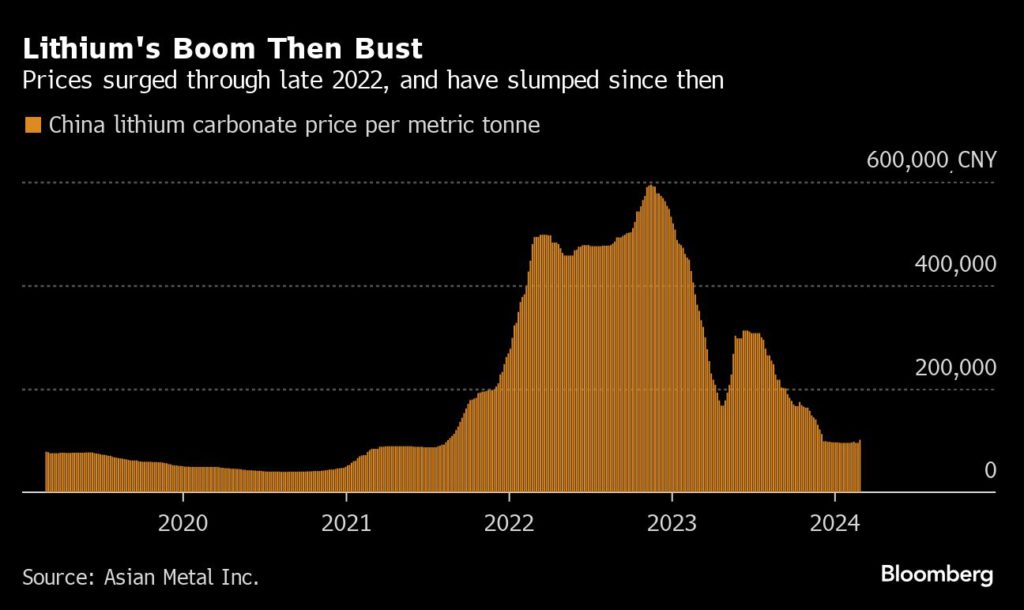
The EV boom has triggered a rollercoaster ride in the once-tiny market for lithium. Prices surged through late 2022, and by one measure they’ve slumped more than 80% since then. There’s been a slide in nickel and other key metals too, as a wave of new supply hits the market. For commodity producers like Chile, that’s making it difficult to invest in new mines.
Chile’s President Gabriel Boric wants the state to take a controlling stake in operations considered strategically significant, with the twin goals of making lithium production more sustainable and generating more money.
Understanding how this reform would work in practice, and how it will affect US firms, is something Yellen will seek to do during the visit, a Treasury official said. The Chilean government is respecting existing contracts, which in the case of US-based Albemarle run until 2043.
Mining Minister Aurora Williams said this week that the government expects to lay out by end-March which new lithium areas will be made available under the new public-private partnership model. Contracts will then be finalized by end-June. Chile has been losing market share as output remains restricted to two operations on a single giant salt flat..
As a free-trade partner with the US for more than two decades, Chile stands to benefit from President Joe Biden’s green stimulus program, potentially increasing demand for its lithium. Trade between the countries has grown around 9% a year since 2003. ‘Strategic partner’
Yellen’s visit to Chile “reflects our character as a strategic partner,” Marcel said in a statement, citing “the flow of investments between both countries” as well as talks on issues like the environment and the digital economy.
The US has competition, though. All across the so-called lithium triangle of Argentina, Chile and Bolivia, which accounts for more than half of global resources, Chinese investors are making inroads – and helping the countries shift further down the electric-vehicle supply chain by leveraging their vast mineral wealth.
Chile and Argentina are keen to be part of American EV plans, but they also continue to woo Chinese investors who can bring funds for more value-added investments.
Still, expanding the range of buyers would likely be good for Chile, according to Yellen — especially in light of China’s recent economic woes, which have weighed on Chile’s exports.
“They’re probably interested in diversifying their purchasers,” she said. “Just as we’re interested in diversifying suppliers.”
(By Viktoria Dendrinou, Matthew Malinowski and James Attwood)
Germany Accelerates Offshore Wind Development With Three Sites for 5.5GW
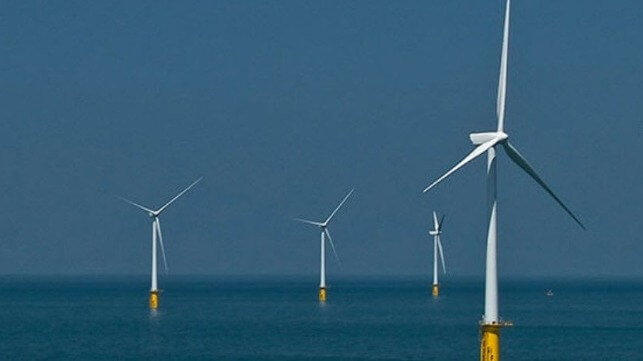
Germany started auctions for three additional North Sea locations (file photo)
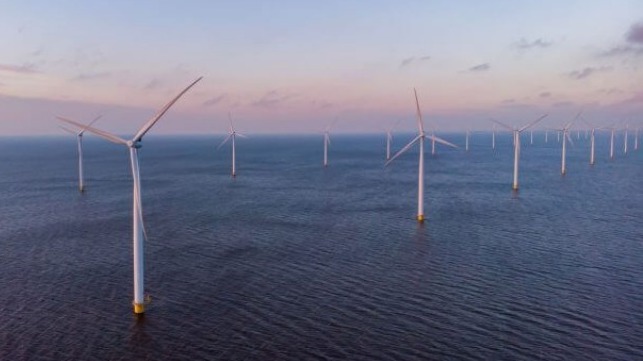
Germany’s Federal Maritime and Hydrographic Agency (BSH) has issued the fourth phase of its offshore wind program publishing the results of surveys for three new lease areas in the North Sea. They are releasing the details and beginning the second auction of 2024 with a deadline established of August 1 for bids on the three new sites.
The authority published the 4th WindSeeV, which contains the results of the preliminary area investigation for the construction of the three offshore wind farms. The newest area is in the western reaches of Germany’s North Sea exclusive economic zone near the border with the Netherlands.
BSH President Helge Heegewaldt commented, “With the entry into force of the 4th WindSeeV, the BSH is giving the offshore industry planning and legal certainty for the construction of three wind farms with an installed capacity of 5,500 MW in the North Sea. We are thus reaching another major milestone on the way to the Federal Republic of Germany’s 70 GW target.”
One of the three areas covers 158 km2 (61 square miles) with an installed capacity of 2,000 MW. It is located approximately 98 km off the Dutch island of Ameland and 107 km off the German island of Borkum. A similar-sized second area is located approximately 101 km from the nearest island, Ameland (Netherlands), and 111 km from the German island of Borkum. The third area is slightly smaller at 106 km2 (40 square miles) and would have a capacity of 1,500 MW. The shortest distance to the nearest island Rottumerplaat (Netherlands) about 108 km and it is a similar distance from Borkum as the other two parcels.
In addition to the three new sites, for which developers will have the benefit of the pre-investigation reports, last month the German authority also launched an auction for sites that could provide 2.5 GW of capacity in the North Sea. These sites, however, have not been pre-investigated. This follows similar auctions in 2023 for 7 GW of capacity.
Germany’s Federal Ministry of Economics is also moving forward with a draft law for the implementation of the third Renewable Energy Directory. To speed the development of offshore wind assets, the draft proposes replacing the requirement for project-specific environmental impact assessments (EIA) with a broader strategic assessment for the areas yet to be designated.
In a rare move, some of the leading wind farm developers including Ørsted, RWE, and Vattenfall, joined with environmental groups calling for continuing the EIA requirement. They said this step creates better legal certainty for the developer and aids in investment decisions. They argue that the EIA does not delay the overall development of the projects.
The German government is looking to streamline the process to encourage more development and address challenges in the supply chain to ensure more projects are entering the pipeline. Experts however argue that one of the biggest challenges in the German industry is delays in developing the offshore grid connection systems in the North Sea.
New York Re-Ups Two in Jeopardy Wind Farms in Fourth Solicitation
New York looks to have restarted two wind farm projects through tis latest solicitation (file photo)
New York State announced the results of its fourth, expedited offshore wind solicitation, which was used as a vehicle to stabilize two in-jeopardy wind farm projects and reinvigorate the state’s efforts after the financial headwinds threatened the industry in 2023. The state conditionally awarded Empire Wind 1 and Sunrise Wind agreements clearing the way for the projects to negotiate new power agreements. A third project, Community Offshore Wind II, was also “waitlisted” with consideration for later contract negotiations.
New York Governor Kathy Hochul highlights that these are two mature projects that have already cleared most of the permitting milestones and can move forward quickly. The projects total over 1.7 GW of electricity, which the Governor said will be the largest power generation projects in New York State in over 35 years once they are in operation in 2026.
Inflation, rising costs, supply chain problems, and challenges due to the lack of installation vessels, combined to place the projects in danger. Empire Wind, which was to be developed in a partnership between Ørsted and Eversource, and Sunrise Wind, which was to be developed by the Equinor and BP partnership, both petitioned NYSERDA (New York State Energy Research and Development Authority) to reset their 2019 offtake contracts. Both projects had been selected in New York’s first solicitation but argued four years later that market conditions made them not financially viable.
NYSERDA rejected the proposal but the Governor then moved to the accelerated solicitation which contained a provision that projects could re-bid if they canceled their earlier contracts. Doreen Harris, President and CEO of NYSERDA, highlighted today the rapid response to market challenges by executing the expedited solicitation.
The companies have also realigned for their forward plans. Ørsted agreed to buy out Eversource if the bid was successful and they completed a new power agreement. Equinor and BP agreed to split their portfolio with Equinor having taken full ownership of Sunrise Wind.
Beyond restarting the two projects, NYSERDA also waitlisted the proposal from RWE and National Grid Ventures for the second stage of their wind farm in the New York Bight. Known as Community Offshore Wind II, it calls for an additional 1.3 GW. The first phase also for 1.3 GW received a provisional offtake award in New York’s third solicitation, which was completed in October 2023.
“Today’s award is an important milestone in our continuing efforts to maximize value creation from Empire Wind 1, currently one of the biggest and most mature renewables projects in the U.S.,” said Pal Eitrheim, executive vice president of Equinor Renewables. “We are working diligently to bring the project to an investment decision during the third quarter.”
Empire Wind 1 would be located 15 miles offshore and deliver 810 MW. It is targeted to deliver first power in 2026. It has already received approval for its Construction and Operations Plan from the Bureau of Ocean Energy Management. It now needs to complete a new Offshore Wind Renewable Energy Certificate with NYSERDA.
Sunrise Wind would be located more than 30 miles east of Long Island and is expected to deliver 924 MW. It also needs to complete negotiations with NYSERDA on a new power agreement with Ørsted reporting a final investment decision is expected to be made in the second quarter of 2024.
It is a major step for Ørsted which had previously backed away from its U.S. offshore wind investments. They highlight that this will permit it to develop an offshore wind cluster with South Fork Wind (130 MW) due to complete construction shortly, Revolution Wind (704 MW) under construction, and Sunrise Wind. The projects will be able to share resources and the company has said the award for Sunrise Wind would reduce by approximately $260 million its impairment charge for its U.S. offshore wind assets.
In exchange for the new contracts, New York is requiring additional investments above the $32 million committed for the communities and $16.5 million toward wildlife and fisheries monitoring. They also have a stipulation requiring a total of at least $188 million in U.S. iron and steel purchases for the projects. The projects also include elements such as the development of the wind port at the South Brooklyn Marine Terminal and investments in the Long Island electric grid and in transmission assets.
Design Developed for Multi-Function Vessel for Floating Wind Turbine Farms
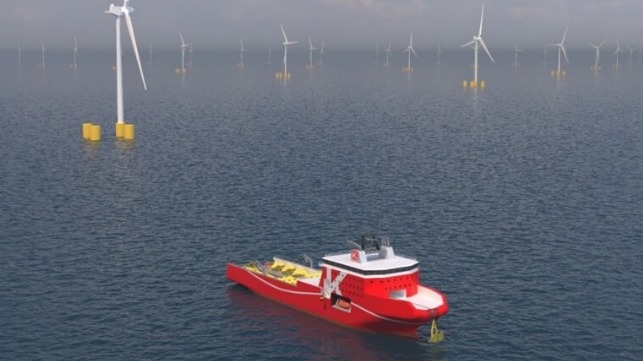
The concept is a vessel to undertake all phases of developing and installation float offshore wind turbines (K Line)
Japan’s “K” Line Wind Service working with shipbuilders Japan Marine United and Nihon Shipyard has developed designs for a new class of vessel specifically designed to support the development of floating offshore wind turbines. According to the companies, the concept is for a multi-functional floating offshore wind farm support vessel that would make the process of planning and installing floating wind turbines more efficient.
The emerging industry for Japan’s offshore energy sector is focusing on the challenges of floating wind turbines, which the government views as a major component in its long-term energy plans. Japan’s coastal topography however presents challenges as there are limited shallow water areas to deploy fixed-bottom offshore wind turbines.
The installation of floating offshore wind turbines will require mooring systems to be deployed by vessels, with the whole mooring system composed of an anchor, a mooring chain, and a fiber rope. “K” Line Wind Service working together with Japan Marine United and Nihon Shipyard has been studying effective mooring methods and the most suitable vessel design for mooring installation.
The MSFV concept is designed to perform the whole mooring process efficiently for floating offshore wind turbine installations. According to the companies, the vessel is suited to the transportation of the mooring system to the installation site, deploying the mooring system on the seabed, and anchor tensioning. Further, they report the vessel is designed to provide various vessel solutions in each phase of an offshore wind project, such as survey, transportation, construction, and operation and maintenance functions.
“K” Line Wind Service, a joint venture of Kawasaki Kisen Kaisha and Kawasaki Kinkai Kisen Kaisha, was launched to contribute to low-carbon and decarbonization projects by providing marine and vessel solutions.
The MFSV concept recently completed a design review and obtained Approval in Principle (AiP) from ClassNK. The companies are also in the process of a patent application for the MFSV.
The Japanese government is supporting research and development efforts aimed at developing the capabilities recognizing the important role floating wind turbines will play in the future. The development of the MFSV design concept was subsidized by the New Energy and Industrial Technology Development Organization (NEDO) as a part of its Green Innovation Fund Project.

/bnn/media/media_files/a1e645df6c2cd9fa3d89ad77933c901096f9358370b79204f6d15d28ba9cfe03.jpg)





#/media/File:Monet_w1502.jpg)
