Tuesday, March 05, 2024


Ireland must be a voice for the Palestinian people – Declan Kearney MLA

“Sinn Féin believes that our own freedom will ultimately be incomplete without the freedom of the Palestinians.”

Declan Kearney MLA

By Declan Kearney MLA

Israel’s war in Gaza has now entered its fifth month. 

During this week 52 states and three international organisations have engaged directly with the International Court of Justice (ICJ) on the illegality of Israel’s occupation of Palestine. Their actions are without parallel and follow South Africa’s unprecedented legal action against Israel due to its genocidal war in Gaza. 

26 member states of the EU and 13 members of the UN Security Council are now calling for an immediate ceasefire. This is not a war of defence. It is being executed as a war of ethnic cleansing against the Palestinian people, not only in Gaza, but across the West Bank.

A war of genocide which has been broadcast and recorded in real time by the victims of that same genocide. Gaza is now a graveyard for children. A cemetery for international law. It will forever be remembered as the place when so-called western democracies acted in complicity with an attempt to annihilate the Palestinian people, their society, and culture. 

Gaza and the West Bank; and the occupation of Palestine is the most defining moral and humanitarian issue of our time.  The daily atrocities, massacres and carnage are mind numbing and soul destroying. From a population of 2.3 million in the Gaza strip, more than 37,000 Palestinians are now confirmed dead, or lost in the rubble. Over 70,000 people have been injured. Thousands of others have been maimed for life. Damaged limbs are being amputated without anesthetics because there are none.

It is clear that the Israeli onslaught is attempting to completely destroy all of Gaza’s hospital, medical and health care infrastructure in total violation of the rules of war. There is no other rational explanation for the invasions and destruction of Al-Shifa and Nasser hospitals.

The forced displacement of the Gaza Strip’s population means that 1.5 million people have been pushed into Rafah; a space normally home to just 250,000. If the Israeli government proceeds with its threatened ground invasion into Rafah, the consequences will be apocalyptic. 

At the same time, in the West Bank, 400 men and women, and dozens of children, have been executed by Israeli undercover death squads; ground forces; illegal settlers; and; missile and drone strikes.

Israel’s war is also being used to mask a massive upsurge of Palestinian home demolitions, land theft, illegal settlement expansion in the West Bank and Gaza. Since 7 October, over 7000 residents of the West Bank, and 2,500 from Gaza, have been arrested and interned. In reports emerging, which are reminiscent of British torture techniques in Ireland, these detainees are being subjected to physical torture, sensory deprivation, and systematic humiliation.

Ethnic cleansing and genocide is being implemented across Palestine by this Israeli government with total impunity. There is no coming back from this. The actions of the aggressors have crossed every conceivable legal, diplomatic and political boundary. Israel’s war in Gaza screams a question for the international community; and at us all: ‘What side are we on?’

The choice is between international law and humanity, or genocidal barbarity. There are no grey areas. All right minded people stand with the oppressed and dispossessed of Palestine: With every sister, brother and child in Gaza, and the occupied West Bank.

We must not stop talking about Palestine. We must be outraged by every atrocity being committed. But the people of Palestine need more than that. Irish anger is not a political strategy.

Palestinians need our activism and our leverage. They expect Ireland to be their voice. Palestinian leaders have made clear they want the combined political and civic pressure of Ireland to be used at home, and internationally on their behalf. 

Our responsibility to the Palestinian people must be to build a global anti-apartheid movement with the momentum of the campaign which helped end the horror of apartheid in South Africa.

That can only be done by creating and maintaining maximum unity across Irish society. The absolute focus must be on securing a permanent, unconditional ceasefire: A withdrawal of all Israeli forces from both Gaza and the West Bank: And, an end to the human suffering of every Palestinian by using every form of influence. These priorities should take primacy over all domestic political differences. 

In July 1984, the decision of two young Dublin trade unionists by refusing to handle South African fruit became the catalyst for the iconic Dunnes Stores Strike. The strike maintained by Mary Manning and Karen Gearon, and eight other workers, for two years and nine months, eventually changed Irish government policy towards the South Africa apartheid regime. This example can be repeated by every individual Irish person today.

We can refuse to do business with companies which invest in, or profit from, Israeli state apartheid in Palestine. We should withdraw our own business from those who profit from apartheid practices, and the occupation in Palestine. 

Across Ireland, Sinn Féin is now introducing motions in councils which will require the compliance with ethical investment and purchasing practices. In Dáil Éireann our party has called on the Irish government to join South Africa’s legal case against Israeli genocide at the ICJ.

In a failure of leadership, the government parties refused to do so. That was the wrong decision. The Irish state should change its position and do much more. Without further equivocation it should listen to the leaders of the Palestinian struggle, and immediately recognise the state of Palestine.

Every single opportunity must be used demand an end to Israel’s genocidal war and occupation of Palestinian. Following restoration of power sharing in the north, Uachtarán Shinn Féin Mary Lou McDonald directly challenged British Prime Minister Rishi Sunak over his government’s support for Israel’s war. 

Last weekend Michelle O’Neill urged US Secretary of State Antony Blinken to support a ceasefire position. In recent days I have called on both the EU and US Ambassadors to Britain to intervene and demand that Israel’s aggression in both Gaza and the West Bank is ended immediately. 

While Sinn Féin promotes the case for Irish unity, and support for the peace process abroad, we will be a voice for Palestine. We will seize every political and diplomatic opportunity to call for an end to the genocide and ethnic cleansing, and demand an end to the war, and occupation of Palestine. 

This March we will use the access created in Washington, through promotion of our peace process, with White House, State Department National Security officials, and on Capitol Hill, to demand an end to Israel’s war and promote Palestinian national freedom.  

Sinn Féin has told the political and civic leaderships across the full spectrum of the Palestinian struggle, that we will categorically do so.  We will not hold back from using all available leverage on behalf of our Palestinian sisters and brothers. And the Irish government, and all Irish politicians who travel abroad this St Patrick’s Day period, should do the same.

Whether at home or abroad, all Irish influence must be mobilised on behalf of Palestine. We must ensure the plight of the Palestinian people is spoken of and heard everywhere.  Ireland must refuse to stop talking about Palestine. 

Irish republicans are proud of our history in struggle with the Palestine Liberation Organisation and the Palestinian people. The bonds between our national struggles have existed for many decades and they are unbreakable. 

While we are closer now than at any time in history to the achievement of Irish self-determination and independence, Sinn Féin believes that our own freedom will ultimately be incomplete without the freedom of the Palestinians. 

This new phase of Israel’s intensified occupation and aggression has placed renewed global focus upon Palestinian sovereignty and statehood; the right of Palestinian people to return to their homeland; and, the imperative of releasing all political prisoners. This is a watershed moment. The future of Palestine demands that the democratic world finally acts decisively in support of the Palestinian people’s fundamental, national and human rights.


  • This was originally published in the (London) Sinn Fein e-newsletter.
  • If you support Labour Outlook’s work amplifying the voices of left movements and struggles here and internationally, please consider becoming a supporter on Patreon.

 UK

Break up the establishment’s ‘permanent austerity’ consensus

“What is becoming clearer by the week is that the whole political establishment seems intent on never-ending austerity.”

Matt Willgress, LAAA

By Matt Willgress

We’re in the middle of the deepest cost-of-living crisis in generations, which has become a permanent cost-of-living emergency for millions.

Councils are going bust. Poverty and inequality are spiralling. Homelessness is out of control. Unemployment could be set to jump dramatically. People’s living costs just keep going up and up while wages and benefits fail to follow.

In this increasingly desperate context, it has been widely realised by millions in recent years that the Tories are more interested in doing the bidding of their rich backers than securing our jobs and livelihoods – but what is becoming clearer by the week is also that the whole political establishment seems intent on never-ending austerity.

On the Labour side of Parliament, this is reflected by Rachel Reeves’ increasingly conservative ‘fiscal framework,’ which is working through to the abandonment or watering-down of policy after policy that could start tackling the cost-of-living crisis, from public ownership of energy and water to the ditching of popular green investment policies, and much more besides.

On the left, we can’t let a new consensus for ‘permanent austerity’ be formed by the ruling class. It is the route to economic and social catastrophe, and to a further rise of far right politics in the years to come.

We therefore need urgently to put forward – and mobilise now for – policies that could both actually address the depth of the crises we face, and provide the basis for action in our workplaces and communities in the months and years ahead.

As part of this effort, and as a contribution to discussion across the left, labour and social movements on the programme we need – we are renewing efforts to get further support for the Workers Can’t Wait demands online, including these 10 measures:

  • Britain needs a pay rise – National Minimum Wage raised to at least £15 an hour for all; the pay rise public sector workers are asking for; increase Statutory Sick Pay to a real living wage for all from day one.
  • A social security system to end poverty – scrap the two child benefit cap, reverse the Universal Credit cut and extend the uplift to legacy benefits; boost and inflation-proof benefits; for a minimum income guarantee.
  • Control costs – energy price freezes now at April 2022 rates, cap rents and basic food costs.
  • Stop the corporate rip-off – public ownership of energy, water, transport, broadband and mail to bring bills down and end fuel poverty. Lower public transport costs. Higher taxes on profits and the super-rich. Open the books – back the workers’ commission on profiteering.
  • Extra resources to create universal, comprehensive public services – stop cuts and privatisation; Save our NHS – for a national care service; properly fund local government. Tax wealth to fund our public services.
  • Homes for all – no evictions or repossessions; tackle the homelessness emergency; fix the housing crisis with a mass council house building programme.
  • For the right to food – enshrine the right to food in law; universal free school meals all year; for a National Food Service.
  • Decent jobs for all – for full employment; end insecure working and ban zero-hours contracts; for the right to flexible work on workers’ not bosses’ terms.
  • Defend and extend our right to organise – reverse anti-trade union laws and repeal the draconian anti-protest laws; ban fire-and-rehire; for full union rights to bargain for better pay and conditions.
  • End austerity for good – invest in our future with a Green New Deal – end the dependency on fossil fuels and soaring oil and gas prices; for a massive investment in renewables, green infrastructure and jobs; insulate buildings to bring bills down.

Moving forward, we also need a new and urgent discussion on how to co-ordinate, renew and strengthen all those initiatives that seek to address the cost-of-living emergency and support struggles for an end to austerity.

Please add your name, take the policies to labour movement and community groups for endorsement and discussion, and keep mobilising against austerity – and for investment, not cuts.


  • Matt Willgress is the National Organiser for the Labour Assembly Against Austerity. This article was originally published by LabourHub here.
  • Join over 20,000 others and add you name in support to these demands here
  • No cuts – Tax the Rich – Invest in our Future! Online event. Mon. Mar. 4, 18.30. Register here With John McDonnell MP // Richard Burgon MP // Sarah Woolley (BFAWU) // ZIta Holbourne (BARAC) // Jess Barnard, Labour NEC.  Just before Sunak & Hunt’s 2024 Budget, join us to discuss how we renew resistance to austerity and popularise left economic alternatives to never-ending cuts. 

 UK

Welfare not warfare! Budget is a chance to set out a vision for a better world

“Arms races fuel insecurity and increase the risk of war. We need to put the brakes on. Instead, we need to redirect spending to tackling the roots of insecurity.”

Colin Archer

By Colin Archer

When the Chancellor Jeremy Hunt stands up in Parliament tomorrow he will deliver what could be the last set-piece financial announcement before the General Election. These events are not only great parliamentary theatre but also give a chance for politicians on all sides to show the voters what kind of society we want to build for the future. In the face of the many challenges our country faces, bold thinking is needed.

We don’t have to look far to see these challenges: public services are suffering after 14 years of chronic under-investment; schools are crumbling; hospital waiting lists are at an all-time high; food bank use is shockingly common; and the climate crisis is worsening by the year. Taken alongside pressures on public finances after 14 years of austerity and government economic mismanagement, something surely has to give.

Last year’s Autumn Statement showed an increase in the UK core military spending which reached £53.1 billion in 2022-23, an increase of more than 15% on the previous year, well above inflation. This means that the UK was spending £100,000 on the military every minute of every day. This figure doesn’t even cover all spending associated with the military, including the military aid to Ukraine, which has been increased to £2.5bn for the coming year.

Politicians often talk about ‘difficult decisions’ when they are talking about cutting public spending in the context of public services or welfare provisions. But with the Ministry of Defence struggling to fund its own equipment plans, now is the time to start talking about reducing the amount of money we are spending on military.

The target of spending 0.7% of our national income on overseas development was dropped because some labelled this UN aim as ‘arbitrary’ and ‘unaffordable’. Yet the UK remains committed to the NATO target of 2% of GDP spending on its military – which has been criticised even by some security analysts as arbitrary.

Figures from the MoD indicate a shortfall of £16.9 billion in funding for the latest 10-year equipment spending plans, with the ever-expensive nuclear-weapons programme continuing to prove to be a money pit. Do we really need to spend around £200 billion on a new generation of nuclear weapons, when the deterrence doctrine this system is based upon is so flawed? Do we need to retain such a heavily armed military with ‘global reach’ for the foreseeable future? Can we afford to keep spending so much on our armed forces when tackling poverty, ill-health and the climate crisis are so urgent? These are the difficult questions it is time to ask as a country.

Nearly ten years ago, the nations of the world set 17 targets – the UN Sustainable Development Goals – including the elimination of poverty and hunger, and urgent action on climate change. Progress on these targets is faltering – and in some cases being reversed – due to a lack of resources. Meanwhile, global military spending is spiraling and is now comparable with that during the worst periods of the Cold War. Arms races fuel insecurity and increase the risk of war. We need to put the brakes on. Instead, we need to redirect spending to tackling the roots of insecurity – like poverty and ecological damage. We need to defuse international tensions, by focusing more on diplomacy, arms control, and disarmament. Britain can play a leading role in bringing about a positive future – or it can continue down the road of militarism and war. It’s time to choose.


UK

School energy bills rise by nearly half in Devon – as inefficient school buildings shown to be wasting energy

School energy costs have risen by nearly half in Devon over the past academic year, new figures show.

By Will Grimond
Tuesday 5th March 2024 


School energy costs have risen by nearly half in Devon over the past academic year, new figures show.

Amid last year's soaring gas and electricity prices, separate analysis suggests a significant proportion of school buildings across the country are suffering from poor energy efficiency, despite some improvement in recent years.

Figures from the Department for Education show £4.53 million was spent on energy for local authority-run schools in Devon in the 2022-23 academic year – up 50% from the £3.02 million spent the year before.

This was the highest figure since at least 2015-16, when records are first available.

Across England, expenditure on energy for local authority-maintained schools hit £485 million in 2022-23 – a 61% increase on the year before, when £302 million was spent.


Almost every local authority saw a rise, with 74% recording their highest spending on record. One local authority, Bolton, saw expenditure nearly triple compared to the year before.


The Local Government Association – a membership body for local authorities – said many schools have been voicing concerns about their financial stability.


Louise Gittins, chair of the LGA’s Children and Young People’s Board, said schools are facing higher costs from "fuel, energy and food for school meals, alongside the need to fund agreed staff pay rises, and support for a growing number of pupils experiencing disadvantage."

Schools in Devon spent £120 per pupil on energy in 2022-23, up from £79 the year before.

The LGA urged further Government support for schools in the upcoming Spring Budget.

Separate analysis of energy efficiency ratings suggests many English school buildings are underperforming.

Across England, a fifth of all school buildings receiving display energy certificates last year were in the lowest, most polluting categories (E to G) – meaning they are not up to standard. However, this does represent an improvement – in 2018, around a third of ratings were in these categories.

DECs are designed to show the energy performance of public buildings, using a scale from ‘A’ to ‘G’ - ‘A’ being the most efficient and ‘G’ being the least.

Of the 16,700 buildings receiving a certificate, just 55 were rated A, and 831 received a B.

Across the South West, 12% of the 1,474 school buildings rated last year were in the worst categories – emitting the most carbon dioxide and wasting more energy.

An estimated 43% of schools in the region had a building evaluated last year.

These figures include academies and independent schools. Larger buildings require energy certificates more regularly, so bigger schools may be overrepresented in the figures.

Daniel Kebede, general secretary of the National Education Union said schools have been left to their own devices to deal with "leaky, draughty, energy inefficient buildings" and higher bills.

He said: "In the medium term we need a massive retrofit programme to make school buildings fit for the future – safe, energy efficient and able to play their part in creating a safe climate future for children.

"For many schools, however, the problems are such that rebuilding is the only answer, but the Government's record on this is woeful."

A Department for Education spokesperson said: "We know that schools have faced increased energy bills. We took account of this and made additional investment in total school funding to cover costs – a £4 billion increase in 2022-23, and a further £3.9 billion this year.

"School funding is rising to more than £59.6 billion next year – the highest ever level in real terms per pupil."


UK
Tesco latest supermarket to increase staff pay

Bloomberg

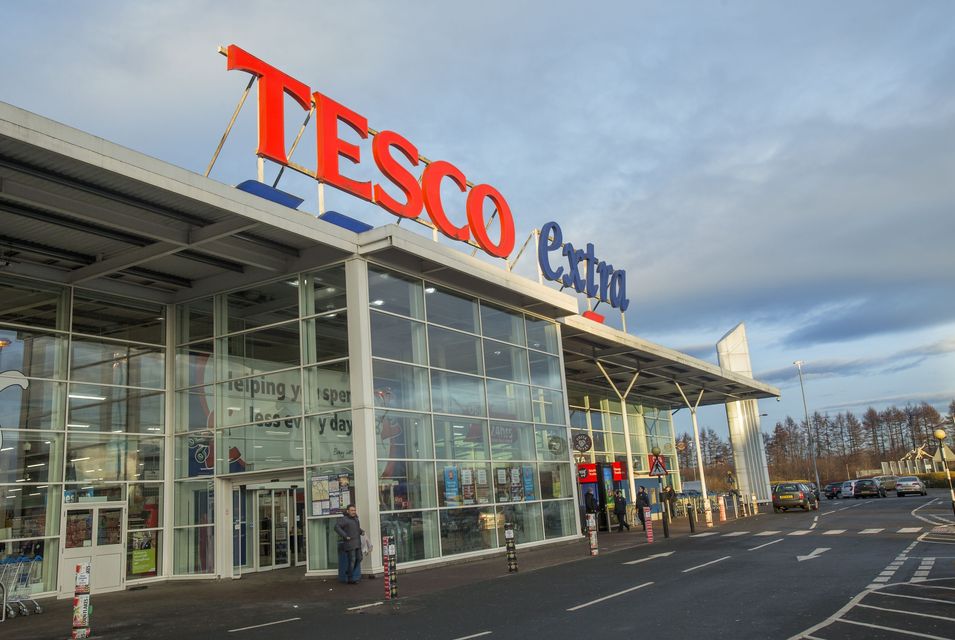
Tesco has become the latest supermarket to increase pay as retailers face up to the rising minimum wage and try to retain staff.

The hourly pay rate for store workers will rise from £11.02 to £12.02 in April, while pay for workers in London will rise to £13.15 an hour.

More than 200,000 staff will benefit from the increase, Tesco said.

All staff will get the voluntary Real Living Wage, which is higher than the compulsory National Living Wage.

The National Living Wage, often referred to as the minimum wage, is set to rise to £11.44 an hour in April 2024 - and for the first time will include 21 and 22-year-olds.

As a result, many of the major supermarkets have been announcing pay deals over the past few weeks.


M&S raises pay in battle for supermarket staff

Tesco now joins Sainsbury's, Asda, Aldi, Lidl and M&S in increasing its minimum pay for staff outside of London to £12 per hour.

Aldi's higher pay has been in place since the start of February, while Lidl and Sainsbury's increased wage began in March. M&S's pay rise will begin in April, while Asda will bring in an interim increase on 1 April to £11.44 an hour before raising the rate to £12.04 an hour from 1 July.

As well as raising pay, Tesco also said it would be increasing paternity leave to six weeks fully paid.

In addition, Tesco said it would increase maximum company sick pay entitlement to 18 weeks for eligible colleagues.

The supermarket has dropped separate pay rates for inner London and outer London employees to create one London Allowance, and it said the £13.15 per hour rate for this area meant it kept in line with the voluntary London Real Living Wage.

Daniel Adams, national officer at the shopworkers' union Usdaw, said: "This deal not only delivers an inflation-busting increase for Tesco employees, but it also demonstrates the value of progressive employers engaging constructively with trade unions at a time when the cost-of-living pressures continue to be keenly felt by our members."

 Tesco to increase pay for shop workers by 9.1%

Tesco is to increase basic pay for shop workers ahead of a rise in the national minimum wage (Ben Stevens/Parsons Media/PA)

By Henry Saker-Clark, PA Deputy Business Editor

Tesco is to increase store workers’ pay by 9.1% in a roughly £300 million investment.

It is the latest supermarket group to lift pay levels for workers ahead of the rise in the national minimum wage in April.

The national minimum wage will increase from its current rate of £10.42 per hour to £11.44 on April 1.

The grocery giant, which employs more than 330,000 people across the UK, will raise the basic hourly rate for store workers from £11.02 per hour to £12.02.Tesco employs more than 330,000 people across the UK (Danny Lawson/PA)

Tesco employs more than 330,000 people across the UK (Danny Lawson/PA)

It will also increase the pay of workers within the M25 to £13.15 per hour, from a current rate of £11.95 for those in inner London and £11.75 for those in outer London.

The pay deal announcement, which came after an agreement with the Usdaw trade union, will also see the business increase its paternity level to six weeks fully paid and raise maximum sick pay entitlement to 18 weeks.

Tesco UK chief executive Matthew Barnes said: “This represents another significant investment in our colleagues, building on the last two years of investment.

“We recognise the amazing work our colleagues do every day in serving our customers and we’re really proud to offer such competitive rates of pay alongside a great range of exclusive colleague benefits.”

Tesco will also increase its annual Colleague Clubcard discount allowance to £2,000, up from £1,500.

Usdaw national officer Daniel Adams said: “This deal not only delivers an inflation-busting increase for Tesco employees, but it also demonstrates the value of progressive employers engaging constructively with trade unions at a time when the cost-of-living pressures continue to be keenly felt by our members.

“We welcome the company’s positive response through our negotiations, which have resulted in the largest investment in pay in a single year, with the highest entry rate for store employees of any major supermarket.”

It comes days after rival Asda said it will increase its basic rate of staff pay to £12.04 per hour later this year.

Dartmouth men's basketball team votes 13-2 in favor of first labor union for college athletes

The vote could present a huge shakeup to the National Collegiate Athletics Association’s model, which currently only allows college athletes to financially benefit from their role on teams through name, image and likeness.


March 5, 2024
By Natalie Kainz


The Dartmouth Men's Basketball team voted 13-2 in favor of becoming the first-ever labor union for college athletes on Tuesday afternoon.

The vote could present a huge shakeup to the National Collegiate Athletics Association's (NCAA) model, which currently only allows college athletes to financially benefit from their role on teams through name, image and likeness.


The National Labor Relations Board paved the way for the union vote on Feb. 5, after Regional Director Laura Sacks ordered an election for the team.

“Because Dartmouth has the right to control the work performed by the Dartmouth men’s basketball team, and the players perform that work in exchange for compensation, I find that the petitioned-for basketball players are employees within the meaning of the [National Labor Relations] Act,” Sacks said in a statement.

Dartmouth has pushed back against the ruling, filing an appeal to postpone the election or impound the ballots. In the motion, which is pending with the NLRB, the university argued that the athletes are "students first and athletes second," and participate in college basketball to further their educational aims, like all students who participate in any recognized extracurricular activity.

Cornell Sports Law Professor Michael L. Huyghue called the classification of college athletes as regular students a “mockery,” because it neglects the millions of dollars that colleges are paid for television contracts, marketing rights and ticketing sales.

“We’ve just reached a point where the anti-trust laws are suggesting universities don’t have a right to capitalize on all that revenue,” said Huyghue.

Dartmouth still has five days to file an objection to the union election, and the decision by the NLRB can be appealed all the way up to the Supreme Court.

“Unionization is not appropriate in this instance,” Dartmouth wrote in a statement to NBC News. “The costs of Dartmouth’s athletics program far exceed any revenue for the program.”

But Huyghue said the mere fact that an employer has not been successful in generating revenue does not mean its employees don't have a right to unionize.
Dartmouth Big Green players huddle during a game on February 16, 2024, in New York City.
Adam Gray / Getty Images

The push for the team to be recognized as a union was started by Dartmouth men's basketball players Cade Haskins and Romeo Myrthil, who told NBC News Now they had to take on jobs to sustain their finances while also being student-athletes.

“We don’t get a stipend or any type of benefit for being athletes even though we are working like full time jobs basically by being on the team,” Haskins said.

This isn't the first time a college athletics team has made a bid to be recognized as employees. In 2014, Northwestern University's football team sought union status from the NLRB.

Although a union election was held, the ballots were destroyed because the NLRB ruled the following year that the prospect of union and nonunion teams in college sports could create competitive imbalances on the field.

Dartmouth men’s basketball team votes to unionize, though steps remain before forming labor union


College sports has grown into a multibillion-dollar industry that richly rewards coaches and schools while the players remained unpaid amateurs.

ASSOCIATED PRESS / March 5, 2024
Dartmouth's Robert McRae III (23) takes a pass from Jackson Munro (33) as Duke's Jaylen Blakes (2) defends during the second half of an NCAA college basketball game in Durham, N.C., Nov. 6, 2023. (AP Photo/Ben McKeown, File)


HANOVER, N.H. (AP) — The Dartmouth men's basketball team voted to unionize Tuesday in an unprecedented step toward forming the first labor union for college athletes and another attack on the NCAA's deteriorating amateur business model.

In an election supervised by the National Labor Relations Board in the school's Human Resources offices, the players voted 13-2 to join Service Employees International Union Local 560, which already represents some Dartmouth workers. Every player on the roster participated.

"Today is a big day for our team," players Cade Haskins and Romeo Myrthil said in a statement. “We stuck together all season and won this election. It is self-evident that we, as students, can also be both campus workers and union members. Dartmouth seems to be stuck in the past. It’s time for the age of amateurism to end.”"

The school has five business days to file an objection to the NLRB and could also take the matter to federal court. That could delay negotiations over a collective bargaining agreement until long after the current members of the basketball team have graduated.

Dartmouth pushed back on the decision — again — in a statement, saying it was supportive of the five unions it negotiates with on campus, including SEIU Local 560.

“In this isolated circumstance, however, the students on the men’s basketball team are not in any way employed by Dartmouth,” the school said. “For Ivy League students who are varsity athletes, academics are of primary importance, and athletic pursuit is part of the educational experience. Classifying these students as employees simply because they play basketball is as unprecedented as it is inaccurate. We, therefore, do not believe unionization is appropriate.”

Although the NCAA has long maintained that its players are “student-athletes” who were in school primarily to study, college sports has grown into a multibillion-dollar industry that richly rewards coaches and schools while the players remained unpaid amateurs.

Recent court decisions have chipped away at that framework, with players now allowed to profit off their name, image and likeness and earn a still-limited stipend for living expenses beyond the cost of attendance. Last month’s decision by an NLRB that the Big Green players are employees of the school, with the right to form a union, threatens to upend the amateur model.

"We will continue to talk to other athletes at Dartmouth and throughout the Ivy League about forming unions and working together to advocate for athletes’ rights and well-being,” Haskins and Myrthil said.

A college athletes union would be unprecedented in American sports. A previous attempt to unionize the Northwestern football team failed because the teams Wildcats play in the Big Ten, which includes public schools that aren’t under the jurisdiction of the NLRB.

That’s why one of the NCAA’s biggest threats isn’t coming in one of the big-money football programs like Alabama or Michigan, which are largely indistinguishable from professional sports teams. Instead, it is the academically oriented Ivy League, where players don’t receive athletic scholarships, teams play in sparsely filled gymnasiums and the games are streamed online instead of broadcast on network TV.

Myrthil and Haskins have said they would like to form an Ivy League Players Association that would include athletes from other sports on campus and other schools in the conference. They said they understood that change could come too late to benefit them and their current teammates.

The team includes four seniors, five juniors, three sophomores and three freshman.

“We have teammates here that we all love and support,” Myrthil said after playing at Harvard last month in the Big Green’s first game after the NLRB official’s ruling. “And whoever comes into the Dartmouth family is part of our family. So, we’ll support them as much as we can.”

Mary Kay Henry, the international president of the SEIU, said the players “will go down as one of the greatest basketball teams in all of history.”

“The Ivy League is where the whole scandalous model of nearly free labor in college sports was born and that is where it is going to die,” she said.

__

By JIMMY GOLEN AP Sports Writer

Jimmy Golen covers sports and the law for The Associated Press.