Tuesday, March 05, 2024


B.C., Ontario mortgage-holders increasingly missed payments in Q4, Equifax says

Consumers in Ontario and British Columbia increasingly missed payments on mortgages and credit cards in the fourth quarter of 2023, Equifax Canada said. 

The fourth quarter saw a continuation of what’s been happening for a while now as the impacts of higher interest rates and inflation continue to weigh on consumers, said Rebecca Oakes, vice-president of advanced analytics at Equifax Canada, in an interview.

These effects are becoming more visible as people renew their mortgages, she said, and in areas where housing prices are more expensive in Canada.

“We’re seeing that strain start to increase, and really starting to see missed payments coming out more and more on the credit side for individuals,” said Oakes. 

Mortgage delinquency rates soared in those provinces, surpassing pre-pandemic levels, the agency said. 

In Ontario, the mortgage delinquency rate was up 135.2 per cent compared with a year earlier, while B.C.’s rate rose by 62.2 per cent. 

Financially stressed homeowners in those provinces are also increasingly missing credit payments, the agency said, a trend primarily driven by homeowners who are 36 and younger. 

“What we are seeing in Ontario and B.C. in particular is that as consumers are coming up to the end of their term periods on their mortgage, whether that's fixed or variable, and they're renewing their mortgage, there are payments shocks that are happening for individuals, and that's something we knew was coming,” said Oakes.

“And for some individuals, unfortunately ... it’s a tipping point.”

Younger consumers tend to have higher mortgage amounts owing, and less savings to lean on, she said.

“As you tend to get financial stress, the credit card does tend to be one of the first things where we see missed payments coming through,” said Oakes.

“It definitely is a worrying trend.”

Housing prices are higher in B.C. and Ontario, Oakes said, contributing to the heightened levels of delinquency and missed payments in those provinces. 

Outside of B.C. and Ontario, where mortgage amounts tend to be lower, Equifax Canada said mortgage delinquency rates are rising at a slower pace and are still much lower than pre-pandemic. 

Mortgage delinquency rates across the country rose 52.3 per cent in the fourth quarter compared with a year earlier, while delinquency rates for non-mortgage debts that are more than 90 days overdue rose by 28.9 per cent. 

Equifax Canada said that as homeowners continue to renew their mortgages in a much higher interest rate environment, consumers who locked in historically low rates in 2020 may struggle to maintain their monthly payments. 

Post-renewal, monthly mortgage payments rose by $457 on average in the fourth quarter, said Equifax Canada. In B.C. and Ontario, that increase exceeded $680. 

Upcoming mortgage renewals will be pivotal for many homeowners, said Oakes. 

Total consumer debt hit $2.45 trillion in the fourth quarter, up 3.2 per cent from the previous year. Non-mortgage debt rose by 4.1 per cent, mainly driven by an increase in credit card debt. 

The number of consumers missing payments on credit products also increased, surpassing 2019 levels. While consumer insolvency levels are still below pre-pandemic levels, Equifax Canada said that the sharp increase in mortgage holders filing for bankruptcy is a worrying trend. 

That increase was particularly sharp in Ontario and B.C., the agency said. 

In January, consumer insolvencies were 23.5 per cent higher than a year earlier, according to the Office of the Superintendent of Bankruptcy.

This report by The Canadian Press was first published March 5, 2024.


Canada lags behind peer countries on female representation in management: report

The Canadian Chamber of Commerce says female leaders in the corporate world still face barriers, with significant gaps in business ownership, representation and compensation.

In a new report Tuesday, the organization says Canada lags behind nearly half of its OECD peers in its share of female managers.

While women have made strides in the overall workforce, holding almost half of all jobs in 2023, the report says the same cannot be said for higher-ranking positions.

It says that in 2023, the share of women in management — including middle management — was 35 per cent.

The higher up the ladder, the fewer women the report found, with women making up less than one quarter of boardroom seats in corporate Canada.

The report says that there's still a pay gap as well, with women earning 88 cents to the dollar in management occupations compared with men in 2023.

This report by The Canadian Press was first published March 5, 2024.

Women are making gains in employment, but face barriers in management: report

A new report found women are making significant gains in the corporate world, but still face barriers when it comes to management positions.

The new report from the Canadian Chamber of Commerce found women now represented 48 per cent of all jobs in 2023, a growth of five percentage points since 1987, but hold just 35 per cent of management positions and just 30 per cent of senior management positions.

“Women in Canada face not one glass ceiling but several, and not one broken rung in the promotion ladder but many—all of which hinder their ascent to full equality,” Marwa Abdou, the report’s lead author and senior research director with the Canadian Chamber of Commerce’s Business Data Lab, said in a news release on Tuesday.

“The data show that barriers for women persist most prominently in management positions and in boardrooms.”

Canada’s percentage of female managers is slightly above the Organisation for Economic Co-operation and Development (OECD) average, but falls more than 10 percentage points behind leader Latvia (45.9 per cent).

The report echoes a similar study from TD Bank, which found women are increasingly becoming the family breadwinners, but families with a female breadwinner are more likely to face financial pressure and have a smaller savings cushion.


Pay gap persists

Women also lag behind men in compensation. The report found women in management positions earned 88 cents for every dollar a man makes, up from 80 cents in 1997.

Prince Edward Island is the only province where female managers earned more than their male counterparts, while women in Quebec earn 95 cents on the dollar compared to men.

Abdou said the challenges women face have forced more women to turn to entrepreneurship.

“That seems like a silver lining—to have more women starting businesses—but women entrepreneurship is concentrated in the very gendered industries where they face additional challenges, such as reduced access to capital, less information and fewer resources, as well as unfavourable business environments,” she said.

The report suggests employers should examine job descriptions to ensure they don’t discourage women from applying, to track hiring outcomes and to strive for equal pay.  


ANOTHER VICTIM OF COVID
Just For Laughs files for creditor protection, says 2024 festival 'will not take place'

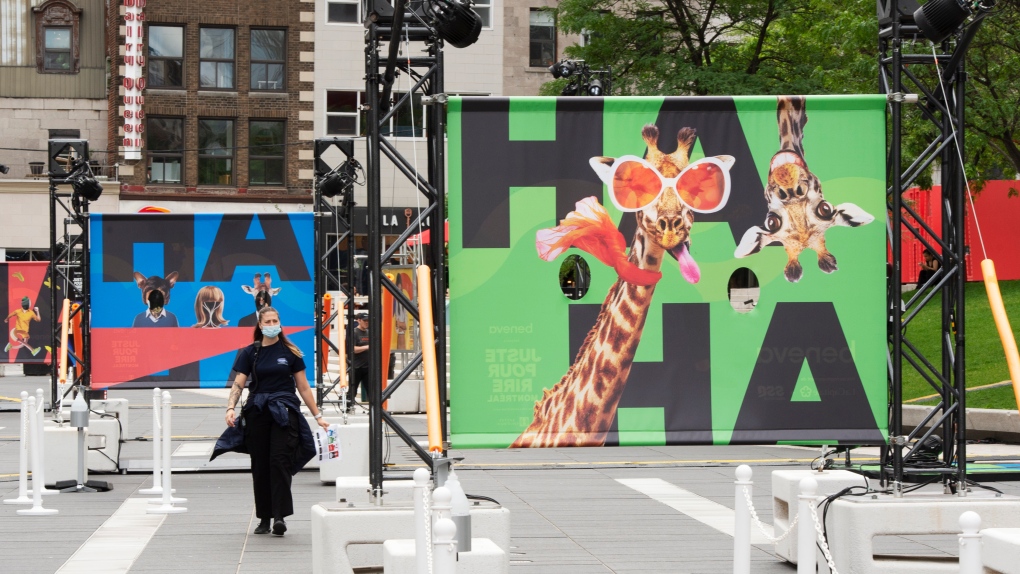
A woman wears a mask as she walks by the Just for Laughs festival at the Quartier du Spectacle in Montreal. (THE CANADIAN PRESS/Ryan Remiorz)

Rachel Lau
CTVNewsMontreal.ca Digital Reporter
Follow | Contact
Updated March 5, 2024


The 2024 Just for Laughs comedy festival has been cancelled as the Montreal company tries to avoid bankruptcy.

The Groupe Juste pour rire inc., which owns the festival, announced Tuesday it is seeking creditor protection under Canada's Bankruptcy and Insolvency Act.

"Unfortunately, the 2024 edition of the Just for Laughs Festival will not take place, at least not at the same time and in the same form as it customarily has," a statement from the company states. "Once the restructuring is completed, we hope that the festival will take place in 2025."

The group notes its board of directions "extensively" considered all available alternatives before coming "to the conclusion that the financial situation of the organization left no other choice than to initiate formal restructuring proceedings."

RELATED STORIES
Opinion: If cultural events do not fully resume, what will be left of the entertainment industry?
Montreal stand-up making comedy inclusive for those with hearing loss
Stakes are high to make festival season a success this summer, says a business leader

The group also blames a "very difficult financial situation given the significant changes in our business landscape," pointing out that the media and free festival industries have faced particular hardships in recent years.

"The global pandemic forced us to effectively cease operations for two years, with significantly reduced revenue, while carrying nearly all of the associated overhead costs," the statement reads. "The pandemic was followed by the inflationary times we continue to experience, meaning our cost structure increased appreciably, exerting unprecedented financial strains."

The news comes as a surprise to comedians who were hoping to perform at the festival.

"I'm in shock, and I'm definitely very sad. My love of stand-up comedy developed because of that festival," said Montreal comedian Abby Stonehouse. "It's disappointing and sad because it's something that a lot of us look forward to during the summer."

She points out that being part of Just for Laughs is a major opportunity for local comedians.

"It's such a great opportunity, such an amazing platform that we all wish to be part of," Stonehouse said. "We work all year round to potentially be part of this festival."

The Groupe Juste pour rire inc. notes during the restructuring process, it plans to maintain operations "albeit in a scaled-down format" as it considers looking for investors or selling parts of the business.

Just For Laughs, the largest international comedy festival in the world, was founded in 1983.


Philippine Senate orders Pastor Apollo Quiboloy’s arrest over sexual abuse allegations

BenarNews staff
2024.03.05
Manila

Philippine Senate orders Pastor Apollo Quiboloy’s arrest over sexual abuse allegationsSupporters of Apollo Quiboloy, founder of the Kingdom of Jesus Christ church, hold a prayer rally at a park in Manila, March 4, 2024, as the Philippines said it would file sexual abuse charges against the pastor, who is wanted in the United States on suspicion of child-sex trafficking.
 Ted Aljibe/AFP

The Philippine Senate on Tuesday ordered the immediate arrest of ex-President Rodrigo Duterte’s spiritual adviser to face questions over allegations of widespread sexual abuse, after the pastor again failed to show up for testimony before lawmakers.

Apollo Quiboloy, a Filipino televangelist preacher and founder of a mega-church who is already wanted in the United States on suspicion of sexual trafficking and fraud but who has enjoyed a certain amount of political protection in his home country, was held in contempt by a Senate committee investigating alleged criminal acts by his sect.

Quiboloy had been summoned to appear on Tuesday before the committee, which is chaired by Sen. Risa Hontiveros, one of foremost President Duterte’s staunchest critics.

But the pastor, who refers to himself as the “appointed son of God,” failed to appear. It was the second time in six weeks that Quiboloy did not show up in response to a committee summons

“It is within the Senate’s power to make anyone who refuses to obey the power of the Senate to be held accountable. This includes the refusal to a senate investigation despite a valid subpoena,” Hontiveros told reporters.

“It is very simple. The power of the Senate to conduct investigations in aid of legislation has long been settled by the Supreme Court,” she said.

Hontiveros said that Quiboloy’s legal counsel had sent a letter saying his client had other pressing matters to attend to and that the Senate would be violating the pastor’s constitutional rights by compelling him to testify.

“[I] cite in contempt Apollo Carreon Quiboloy for his refusal to be sworn or to testify before this investigation,” Sen. Hontiveros said, referring to Senate rules. 

“This committee requests the Senate President to order his arrest so that he may be brought to testify.”

Quiboloy founded the Kingdom of Jesus Church in 1985 in the southern Philippines, after claiming he had discovered spiritual salvation in the mountains. In all his religious pamphlets, he claims that God came to his mother as a cloud to declare him as his own.

The church grew in numbers – about 4 million in the Philippines and 2 million abroad, including in the United States – and with it, Quiboloy’s political clout. The sect, and his name, grew in national prominence when his friend, Rodrigo Duterte, was elected president of the Philippines in 2016. 

When the U.S. Federal Bureau of Investigation (FBI) announced in November 2021 that it had launched an investigation on Quiboloy, Duterte, who was an anti-U.S. president, defended him. 

Quiboloy’s media arm, the Sonshine Media Network International (SMNI), acted as a propaganda vehicle for Duterte, who served as president from 2016 to 2022. The ex-leaders once publicly admitted that he had received expensive cars and property from Quiboloy when he was mayor of Davao, although he claimed to have returned them.

Quiboloy-Duterte.jpg
Pastor Apollo Quiboloy (second from right) prays with then-presidential hopeful Rodrigo Duterte (to Quiboloy’s right) at a birthday celebration during a thanksgiving worship service in Lingayen, a town in Pangasinan province, northern Philippines, March 27, 2016. [Jojo Riñoza/BenarNews]

In Manila this week, Philippine Justice Secretary Jesus Crispin Remulla  ordered the filing of sexual abuse charges against Quiboloy.

“Upon reevaluation, it has been determined that there exists probable cause against Pastor Apollo C. Quiboloy for the crime of sexual abuse of a minor … as well as against Quiboloy and co- respondents for qualified human trafficking and other acts of child abuse,” the Philippine Department of Justice said in a statement.

A separate human trafficking case would be filed before a Pasig court, according to Remulla. He said that the prosecutor’s office in Davao – Duterte and Quiboloy’s bailiwick – had earlier thrown a case against the pastor.

“(But) upon closer examination, we have seen that the reason is indeed significant,” to pursue the case, Remulla said.

Quiboloy has rejected the allegations and went on the lam in February. But in a taped message, he alleged that these accusations had been concocted by U.S. security agencies together with President Ferdinand Marcos, and said they were plotting to kidnap him and eliminate him. The claim has been denied by Philippine security agencies.

“I am under surveillance in the Philippines by the CIA and the FBI. In my own country I am hiding because they can pick me up just like that,” Quiboloy said in a 36-minute voice recording uploaded on YouTube and Facebook last month. 

The allegations against him surfaced publicly in 2021 when a federal grand jury in the U.S., as part of a 42-count indictment, charged Quiboloy on suspicion of orchestrating a sex-trafficking operation that coerced girls as young as 12 to have sex with him or risk “eternal damnation.”

Under the charges brought against him by U.S. authorities, Quiboloy faces 15 years to life in prison if convicted of sex-trafficking, and five to 20 years if convicted of fraud and money laundering. But the Philippines has yet to extradite him to face the charges in a U.S. court, and it is believed that Quiboloy is at large in the Southeast Asian country.

In December 2022, the U.S. Treasury Department announced sanctions against Quiboloy, accusing him of raping women and children. 

Jeoffrey Maitem and Mark Navales contributed to this report from Manila and Cotabato City, southern Philippines.

UK

Why Tories Are Spouting Conspiracy Theories

Tory politicians are resorting to conspiracy theories to paint themselves as outsiders and deflect attention from their record in power.


MARCH 5, 2024

Suella Braverman, whose party has been in power for the past 14 years, claimed in a Telegraph article that Islamists are in charge of the whole country.
(Image Credit: UK Government)


Conservative MPs seem increasingly willing to use the rhetoric of conspiracy. Recently, Liz Truss claimed that her brief tenure as prime minister had been ended by the deep state — shadowy forces within the British establishment and the media.

A few days later, Lee Anderson, the Conservative Party’s former deputy chairman, asserted that London’s mayor, Sadiq Khan, is being controlled by Islamists. He was adding his own twist on a similar conspiracy theory put forward by former home secretary Suella Braverman, who claimed in a Telegraph article that Islamists are in charge of the whole country.

Why do politicians make conspiracy claims like these? It seems strange for MPs whose party has been in government for almost 14 years to imply that they aren’t really in control and that power is wielded by hidden actors.

Maybe Truss and Anderson mean what they say, and say what they mean. But even if they do believe that Britain is governed by a deep state or Islamist plotters, knowing a bit about rhetoric can help us to see that there is more going on when politicians use the language of conspiracy.

Context Matters

A good politician will adapt what they say to fit the moment and their audience. For example, Truss’s deep state comments were made at CPAC, a conference for American conservatives. She was speaking in part to promote her new book, Ten Years to Save the West, and so had little reason to do anything other than give her audience what it likes. Conspiracy theories have become prominent in American conservatism (think QAnon and the claims that the 2020 presidential election was stolen), so echoing the rhetoric is an obvious way for a CPAC speaker to ingratiate themselves with an audience.

Anderson, though, was speaking in the United Kingdom, where conspiracist language is more unusual. His comments were seen by many as deliberately divisive and Islamophobic, and quickly landed him a suspension from his party. That said, government ministers were evasive when asked why his comments were wrong and whether they were Islamophobic.

Part of the Brand


Courting controversy carries risks, as Anderson’s suspension shows. But it can also thrust a politician into the limelight, giving them a chance to speak to a broader audience and potentially gain new supporters. Much of the time, politicians make their own character — or ethos, as it is known in classical rhetoric — part of their pitch.

In her comments alleging a deep state conspiracy, Truss took on a populist tone. She portrayed herself as an anti-establishment figure fighting for the British people against the elites. She didn’t mention her party’s long period in government in charge of the civil service that allegedly made her tenure so impossible. Nor did she refer to the economic problems brought about during her fleeting administration.

Speaking to an audience that is likely to be less familiar with her political career, Truss was able to present herself as the protagonist in a David and Goliath narrative — albeit one in which David is defeated.

Similarly, Anderson used the controversy around his comments to present himself as a man of the people. Rather than giving any evidence to back up his claims about Islamists controlling Khan, Anderson instead justified his views by citing the positive reaction he had received from his constituents. When told in an interview with Channel 4 News that people were puzzled by his refusal to back down, Anderson replied: “If you go and speak to people in Ashfield [Anderson’s constituency] and ask them if they’re puzzled about it, no they’re not.”

In the aftermath of the controversy, Anderson told GB News: “When I went into pubs in Ashfield at the weekend, Friday, Saturday, Sunday, I got a round of applause when I went in. And these are normal working-class people.”

Such comments can be seen as part of a broader trend. Politicians have learned to cite the opinions of ordinary people in order to justify spurious claims. Rather than explaining anything about how he came to view Islamists being in charge of London, Anderson’s response to questions has been to use them as an opportunity to present himself as an outsider to the political establishment — a man in tune with what voters really think.


Pitting ‘Us’ Against ‘Them’


This focus on presenting a certain persona and using it to justify baseless comments tells us something important — that identity is a key ingredient in conspiracist rhetoric.

It enables a politician to construct a conflict between an in-group and an out-group — a struggle between “us” and “them” — and asks the audience to pick a side. Rather than focusing on policies or ways of improving life for the British population, this rhetoric wants the audience to identify with the speaker’s character and join them in opposing a threatening enemy.

In this way, conspiracist rhetoric is much like the Conservatives’ attacks on “woke ideology” — it deflects attention away from their record in government, and rallies their supporters against an enemy at a time when the party is down on its luck.

Counteracting this is no easy task. Rhetoric is an art, not an exact science. One strategy could be to focus more on what politicians are trying to achieve when they use conspiracist rhetoric. While it is important to determine whether or not they really believe in a deep state or Islamist conspiracy, we also need to challenge the personas that politicians craft for themselves, as well the us-against-them divisions they construct.

This article is republished from The Conversation under a Creative Commons license. Read the original article.
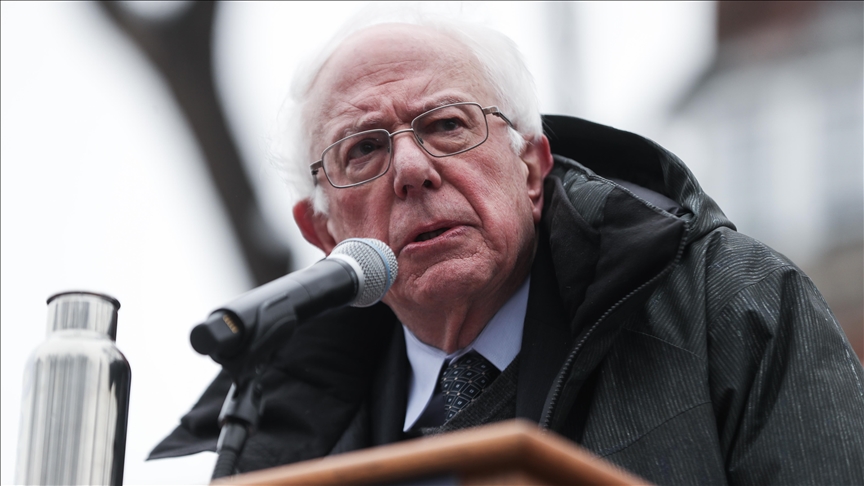
US Senator Bernie Sanders calls on Israel to open borders for humanitarian aid

'We are approaching a point of no return. The United States must continue to airdrop humanitarian aid,' says Sanders

Diyar Güldoğan |05.03.2024 - AA
US Senator Bernie Sanders ( Atılgan Özdil - Anadolu Agency )

WASHINGTON

US Senator Bernie Sanders on Tuesday called on Israel to open borders to allow for humanitarian aid for the Gaza Strip.

"We are approaching a point of no return. The United States must continue to airdrop humanitarian aid,” said Sanders, an independent senator for the state of Vermont.

"And Israel MUST open the borders and allow the UN to deliver supplies in sufficient quantities. Failure to do so should result in the immediate halt of all military aid," he said on X.

In a video on social media, he said the catastrophe unfolding in Gaza is among "the worst humanitarian disasters" in modern history.

For months, the UN and other aid organizations have warned that the constant bombing and restrictions on humanitarian aid entering Gaza raise the risk of famine and disease, he stressed, adding that two months ago, the UN warned that the whole population of Gaza was hungry, and people were going hungry.

"And that more than half a million people faced the most severe category of food insecurity ... Now, today the worst of those fears are becoming reality. Hundreds of thousands of children in Gaza, beautiful little kids are starving to death," Sanders said.

Israel has launched a deadly military offensive on the Gaza Strip since an Oct. 7, 2023 Hamas attack, which Tel Aviv said killed some 1,200 people.

More than 30,600 Palestinians have since been killed and over 72,000 others injured amid mass destruction and shortages of necessities.

Israel has also imposed a crippling blockade on the Gaza Strip, leaving its population, particularly residents of northern Gaza, on the verge of starvation.

The Israeli war has pushed 85% of Gaza's population into internal displacement amid acute shortages of food, clean water, and medicine, while 60% of the enclave's infrastructure has been damaged or destroyed, according to the UN.

Israel is accused of genocide by the International Court of Justice. An interim ruling in January ordered Tel Aviv to stop genocidal acts and take measures to guarantee that humanitarian assistance is provided to civilians in Gaza.

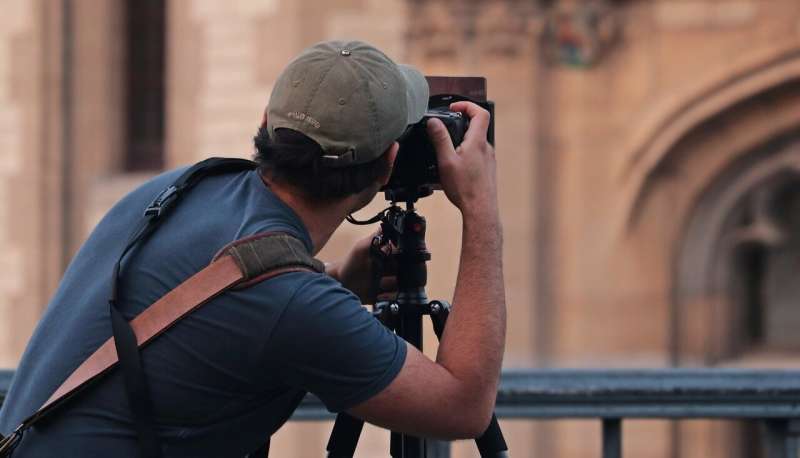
Study finds mainstream news outlets do not have a monopoly on credibility in the eyes of the public

photographer
Credit: Pixabay/CC0 Public Domain

Images of newsworthy events that appear on news websites and on social media have the same level of credibility in the public's view, regardless of whether they were captured by a professional photojournalist or an amateur photographer, according to new research led by the University of Massachusetts Amherst.


Brian McDermott, senior journalism lecturer at UMass Amherst, found that photos gathered by established mainstream news outlets do not have any special monopoly on credibility in the eyes of the public. The study appears in the journal Social Media + Society.

McDermott and co-authors Tara Marie Mortensen and Robert A. Wertz of the University of South Carolina documented that professionally authored images and images by amateur photographers were assessed in a survey with nearly identical levels of credibility, both on news websites and on Instagram. This was true even though respondents rated professional images higher in terms of authority and visual composition.

"People notice when a picture is professional, but they don't seem to care," McDermott, a former photojournalist, says. "News consumers assign the same level of credibility to an amateur image used by a news organization as they do to a professional image captured by a journalist."

McDermott and his co-authors tested the credibility perceptions of photographs using an online survey of nearly 4,500 adults across the United States. Participants were shown pairs of images of three high-profile news events—one set taken by photojournalists and the other by amateurs—displayed on both a professional  and in an Instagram feed.

The three news events represented were a protest over the death of Breonna Taylor in Louisville, Kentucky, the January 6 insurrection at the U.S. Capitol and the California "Dixie" wildfire in 2021. While respondents judged the photos captured by journalists as more professional, all six images were viewed as equally credible. Whether the images were presented on a news website or on social media made no discernible difference.

The results show that  have no issue with news outlets incorporating visuals gathered by "citizen journalists" into their reporting.

"News organizations would be smart to embrace more amateur imagery, with the vitally important caveat that the images are verified and vetted using the traditional principles of newsgathering," McDermott says.

Where does that leave professional photojournalists with many  looking to cut editorial staff to reduce costs?

McDermott argues an increased reliance on amateur photography makes the role of professional visual journalists even more important, particularly as  becomes better at generating images. "Who else is actually trying to show the world as it is? Nobody else has that mission. AI only has the mission the user gives it," he says.

As academics continue to study the ways mis- and disinformation enter conversations on social media, Ethan Zuckerman suggested in a 2021 paper that they step back and observe the issue as part of a complete media "ecosystem"—one which includes the relationships between both user-generated  and professionally-created news media.

More information: Brian McDermott et al, Measuring the Effect of Presentational Context and Image Authorship on the Credibility Perceptions of Newsworthy Images, Social Media + Society (2024). DOI: 10.1177/20563051241229656

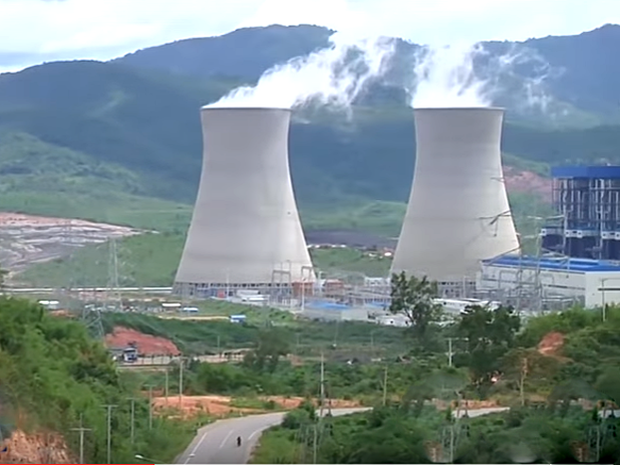
Emissions from the Hongsa Power Plant negatively impacting the health of Thailand’s Indigenous communities

by Steve Suwannarat

Located in Laos but controlled by Thai companies, the plant burns lignite to generate energy exported to Thailand. Early studies conducted on Lua populations found high levels of mercury in their bodies, confirming prior fears about the plant’s impact on the environment.


Bangkok (AsiaNews) – Thailand’s northern regions are home to a variety of ethnic groups that are only partially integrated in the country; here, several initiatives aimed at environmental sustainability have been undertaken to avoid emigration.

The Thai royal family is also involved in various laudable activities meant to convert opium plantations into profitable productions like growing coffee, flowers, tapioca, and mulberry that are economically profitable but less socially disruptive.

However, at both local and national levels, growing environmental awareness is challenged by large scale monopolistic groups and environmental damage that come outside Thailand.

One example is the use of the upper and middle course of the Mekong River for hydroelectric development, especially by China, with dams and plants in China but also in Laos. Another example is resource development in northern Myanmar, largely led by Chinese groups.

As a result, not only is the flow rate of various rivers considerably reduced or irregular to satisfy the demands of hydroelectric production, but the water itself is being contaminated directly or indirectly, including through air pollution.

A case in point is the Hongsa Mine Mouth Power Project, a coal-fired power plant in Xayaboury province, Laos, whose emissions know no border, local media have reported.

Inaugurated in 2015, it is 80 per cent controlled by Thai interests, burning 15 million tonnes of lignite annually to produce energy exported largely to Thailand.

For five months of the year, the winds carry and deposit mercury particles over a large area of Thailand's Nan province, home to the Lua people.

After warnings were issued for years, the first studies by major research institutes have confirmed the relationship between emissions from the Laotian plant and accumulation of heavy metals on the ground and the increasing soil acidity.

The concentration of mercury is of particular concern given its toxicity, with levels in living organisms up to 12,000 times greater than those normally found in the environment.

In just a few years, this level of contamination has hit humans as well. After complaining for years, residents have been finally vindicated when the authorities issued advisories warning locals to be careful about what they drink.

Respiratory diseases are also on the rise, especially among the young.

Field research found elevated levels of nitrogen dioxide and sulphur dioxide, formed by the burning of coal at the plant. This has resulted in highly acidic soil and crop diseases, affecting especially rice, coffee, and mulberry.

A World Bank 2020 report also showed that CO2 emissions in Laos grew by nearly five times in the four years after the Hongsa plant began operations.

 Kyrgyzstan Peace Hand Nation Background Banner Flag

Kyrgyzstan Added To Global Watchlist Due To Rapid Decline In Civic Freedoms – OpEd


By 

The CIVICUS Monitor has added Kyrgyzstan to its watchlist of countries experiencing rapid declines in civic freedoms as the government moves ahead with repressive laws designed to target NGOs and limit freedom of expression.

Two repressive draft laws are currently making their way through parliament. One is a Russian-style “foreign agent” law which, if adopted, would force non-governmental organisations funded from abroad to register as “foreign representatives” if they engage in broadly defined “political activities” and subject them to invasive inspections. The law passed its second reading in Parliament in February. If deputies approve the law in another, final, reading, it will be submitted to the President for signature. 

Another proposed bill threatens to expand the government’s control over the media and extend it to blogs and websites, which would further restrict internet freedom in a country where people are increasingly being prosecuted for critical posts on social networks. This bill is currently under consideration at committee level.

Both bills are directly modeled on the laws of Putin’s regime which have been used to devastating effect against Russian civil society and media. 

“So-called ‘foreign agent laws’, supposedly introduced for the sake of national security,  are a tool we often see authoritarian regimes resort to,” said Tara Petrović, Europe and Central Asia researcher at CIVICUS. “Everywhere we’ve seen these laws implemented, they have led to the mass shutdown of NGOs. When we look at their inevitable consequences, we can see their real goal is the de facto abolition of independent civil society and the suppression of critical voices.”

The latest CIVICUS Monitor Watchlist coincides with the 55th Session of the UN Human Rights Council (26 February to 5 April 2024) and spotlights five countries experiencing a notable decline in civic freedoms. This assessment is made by data compiled by the CIVICUS Monitor in collaboration with research partners worldwide. Alongside Kyrgyzstan, the latest Watchlist also includes Palestine, Pakistan, Senegal, and Venezuela.

The CIVICUS Monitor currently rates Kyrgyzstan’s civic space as “repressed”, the second worst rating a country can receive. Following the country’s downgrade from “obstructed” in December 2023, all the countries in Central Asia are rated either as “repressed” or “closed”.

“Kyrgyzstan still has the opportunity to buck the trend of repression in the region. Instead of increasingly adopting the heavy-handed tactics of its neighbours, it should recognise the invaluable contributions of its vibrant civil society and independent media,” said Petrović. 

In the midst of these legislative deliberations, the authorities have stepped up their efforts to suppress freedom of expression, using flimsy legal justifications as a pretext to obstruct the work of independent media and intimidate journalists.

In January 2024, law enforcement raided the offices of two prominent outlets, 24.KG and Temirov Live. As a result of the raids, 24.KG’s office has been sealed pending an investigation into alleged “war propaganda”, and 11 journalists affiliated with Temirov Live remain behind bars on spurious charges of “calls for mass riots”. In February, a court ordered the liquidation of Kloop Media, with government experts called to testify on the “harms” caused to Kyrgyzstani society by the outlet’s “negative reporting”, which they allege include an increase in mental illness and drug addiction.

The situation in Kyrgyzstan underscores the urgent need for reinforced and concerted international action to help protect the country’s civil society. Failure to address these alarming developments could have far-reaching implications – not only for Kyrgyzstan, but for the entire region.

“All of Kyrgyzstan’s international partners – international institutions, governments and funding agencies – must unequivocally condemn the widening crackdown on civic space in the country and put pressure on the authorities to fulfill their obligations to respect freedom of expression and association,” said Brigitte Dufour, director of the Brussels-based International Partnership for Human Rights (IPHR).

She added: ‘’As the EU seeks to strengthen its ties with Kyrgyzstan and other Central Asian countries, it should make it clear that initiatives like the draft law on ‘foreign representatives’ contradict its fundamental values and partnership priorities with Kyrgyzstan and will negatively affect mutual relations if adopted.” 


International Partnership for Human Rights (IPHR) is an independent, non-governmental organization founded in 2008. Based in Brussels, IPHR works closely together with civil society groups from different countries to raise human rights concerns at the international level and promote respect for the rights of vulnerable communities.
Ghana to lose £3 billion over anti-LGBTQ+ bill, finance ministry warns

Tuesday 5 March 2024


Ghana's is set to lose $3.8 billion (£3 billion) if the country's President signs an anti-LGBTQ+ bill in as law.

That's according to internal government documents seen by ITV News.

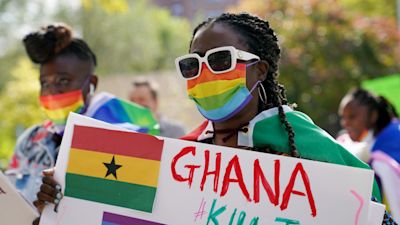
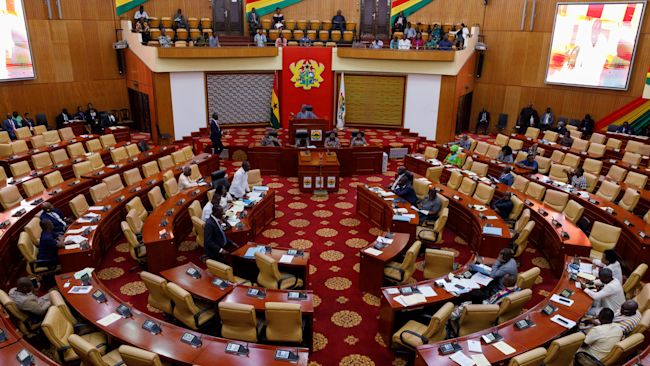
On February 28, the African nation's government unanimously passed the law, which criminalises identifying as LGBTQ+ and punishes those seen promoting or funding LGBTQ+ rights and communities.

The new bill could imprison people for more than a decade for activities including public displays of affection and promotion of LGBTQ+ activities.

Gay sex is already outlawed in Ghana, and carries a three-year prison sentence, but the anti-LGBTQ+ bill, formally called the Proper Human Sexual Rights and Ghanaian Family Values bill, is proposing much harsher punishments.

The possibility of the bill being implemented has triggered backlash from Ghana's finance sector, development partners and international financial institutions, according to an internal government memo seen by ITV News.

Many have said that current financial agreements may be suspended if the bill is passed, and the loss to the African country's economy is currently set to add up to $3.8 billion (£3 billion), the finance ministry warned.

The $3.8 billion set to vanish is from World Bank funding and would disappear over the next five to six years, the finance ministry said.

It predicts the losses in 2024 would impact Ghana's foreign exchange reserves and exchange rate stability, leaving a "financing gap" in the country's budget.

The bill has yet to be forwarded to the country's president for assent.

Ghana’s president said on Tuesday his government will wait for a Supreme Court ruling before taking action on a bill.

President Nana Akufo-Addo said he sought to reassure the diplomatic community that Ghana would not be turning its back on its longstanding human rights record.

As a result, the ministry said the government would need to significantly reduce its expenditures or increase domestic revenue.
Ghana's parliament passed a highly controversial anti-LGBTQ+ bill on Wednesday that could send some people to prison for more than a decade.


Ghana is already in dire financial straits, and requested a bailout from the International Monetary Fund (IMF) in May last year after the country's debt burden became "unsustainable".

The IMF approved a $3 billion (£2.36 billion) extended credit arrangement for the West African nation to support its economic recovery in the wake of the Covid-19 pandemic.

Those in favour of the bill say it would help to protect children and people who are victims of abuse.

There has been international criticism of the "Anti-LBGTQ" bill, with the United States saying the legislation "undermines human rights".

"The bill seeks to criminalize any person who simply identifies as LGBTQI+, as well as any friend, family, or member of the community who does not report them," a US department of state press statement said.

"The United States echoes the call by those Ghanaians who have urged a review of the constitutionality of the bill to protect the rights of all individuals in Ghana."

Religious leaders have also commented on the bill, including the Archbishop of Canterbury.

Reverend Justin Welby said in October 2021 that he was "gravely concerned" by a draft of the bill.

Human rights organisations have also made their stance on the controversial bill clear.

“The anti-LGBT rights bill is inconsistent with Ghana’s longstanding tradition of peace, tolerance, and hospitality and flies in the face of the country’s international human rights obligations,” Human Rights Watch researcher Larissa Kojoué said.