LONG READ
[By Anton L. Delgado]
On Son Island in Vietnam’s Mekong Delta, Le Trung Tin scatters fish feed into his ponds, where dozens of snakehead fish leap through the surface in synchronised bursts. “I taught them how to do that,” he says proudly, tossing another handful of feed at his fish.
The scene looks idyllic, but Le’s fish farm is a reluctant response to an escalating crisis. For decades, he made his living fishing the Hau River, a distributary of the Mekong. But in recent years, plastic waste clogged his nets and strangled the fish. “I had no choice but to stop,” he says. “Everything was tangled – trash, nets, even the fish themselves. It was hopeless.”
Now, Le relies on enclosed ponds using filtered water to keep his fish alive. “I built this ecological environment free of plastic waste, chemical spills and [protected it from] extreme weather,” he says.
(Video: Anton L. Delgado / Dialogue Earth)
Le’s experience reflects the wider challenges facing the Mekong. Stretching over 4,300 kilometres from the Tibetan Plateau to the South China Sea, the river supports nearly 70 million people and some of the world’s most biodiverse ecosystems. Yet, it is one of the most plastic-polluted rivers in the world and among the 10 rivers in Asia that carry the vast majority of plastic to the sea. The Mekong dumps – by some estimates – tens of thousands of tonnes each year into the ocean, with plastic waste accumulating along its banks, tributaries and lakes.
Plastic enters the Mekong in myriad ways – agricultural runoff, unregulated dumping and a flood of single-use packaging from upstream countries like China and Myanmar. It accumulates in hotspots like Tonle Sap Lake in Cambodia and the wetlands of Vietnam’s Mekong Delta, where this plastic waste threatens biodiversity, food security and human health.
The unchecked proliferation of single-use plastics, combined with a lack of waste management infrastructure across the region, has resulted in widespread mismanagement of plastic waste – much of which is neither recycled, incinerated nor properly disposed in landfills. Vietnam, often ranked as the world’s fourth-largest contributor of mismanaged plastic waste, also accounts for a significant share of marine plastic debris, highlighting the country’s struggle to address the crisis effectively.
Addressing the Mekong’s plastic pollution crisis will require coordinated efforts from regional governments and transboundary organisations, however experts say a lasting solution requires a bold global agreement limiting plastic use and production, combined with enforceable regional policies.
A global crisis: Will the plastics treaty deliver?
Hopes were high as national negotiators gathered in Busan, South Korea, to finalise the Global Plastics Treaty – an ambitious UN effort aimed at tackling the global plastic pollution crisis. However, the talks were adjourned earlier this month without agreement, leaving campaigners frustrated in their push for the treaty to address both ends of the crisis: limiting plastic production and improving global waste-management systems.
On Sunday 1 December, the final day of the summit, Eirik Lindebjerg, global plastics policy lead for WWF, said governments were “no closer to agreeing on a solution to the worsening plastic crisis.”
“For too long, a small minority of states have held the negotiation process hostage. It is abundantly clear that these countries have no intention of finding a meaningful solution to this crisis,” he continued in a press release. “It is unjust that those who bear the greatest burden of plastic pollution are being denied the opportunity to forge a solution among themselves by those profiteering off the unregulated production and consumption of plastic.”
Critics also point out that previous global agreements to resolve environmental crises, such as climate change and biodiversity loss, have fallen short of their goals due to weak enforcement mechanisms and the influence of powerful industry lobbying groups.
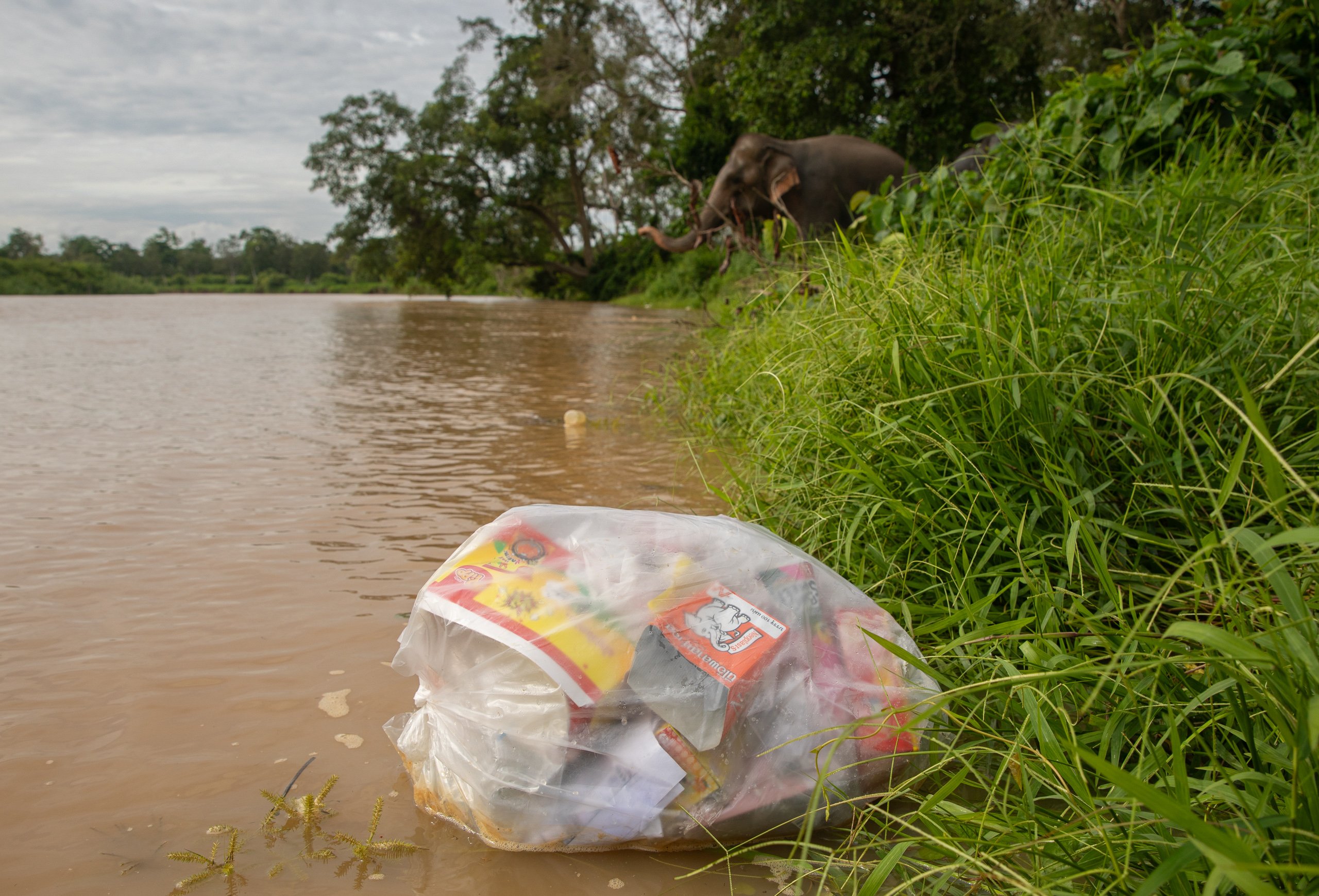 A plastic bag full of waste floats down the Ruak River, a tributary of the Mekong on the border of Myanmar and Thailand. Nearby, a rescued elephant plays in the water. The United Nations Environment Programme warns plastic pollution could triple by 2040, threatening the biodiversity of this rich ecosystem (Image: Anton L. Delgado / Dialogue Earth)
Plastic production has doubled over the past 20 years, with over 400 million tonnes produced annually. Single-use plastics, which make up half of this total, are particularly problematic, accounting for a significant portion of the waste clogging rivers like the Mekong. While technological solutions like recycling and waste-to-energy plants are often advocated by industry, their impact pales in comparison to the scale of production.
The United Nations Environment Programme (UNEP) has warned that plastic pollution could triple by 2040 without drastic action.
“The price for inaction is far greater than wasted time, it puts both planetary and human health on the line and sets us up for a scenario where ambition could diminish over time,” says Erin Simon, vice president and head of plastic waste and business with WWF. “We can’t back down on delivering a legally binding text that finally puts us on a course to eliminate plastic pollution,” he added.
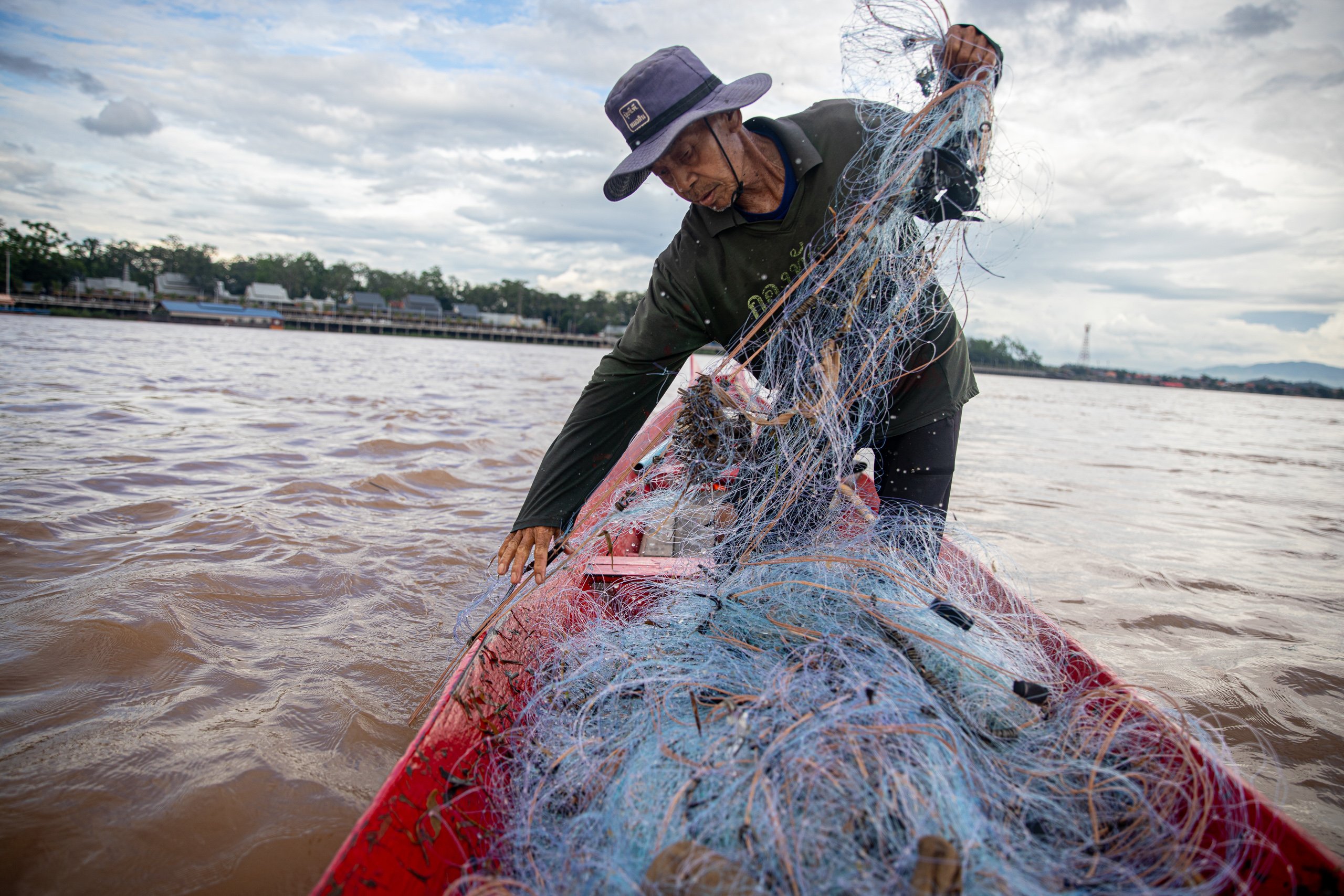 Local fisher Boonrat Chaikeaw catches a net full of trash as he plies the Mekong’s waters by Chiang Khong on the border of Thailand and Laos (Image: Anton L. Delgado / Dialogue Earth)
Dialogue Earth visited four plastic-waste hotspots along the lower reaches of the Mekong – Chiang Saen in Thailand, Phnom Penh and Tonle Sap Lake in Cambodia and Vietnam’s Mekong Delta. These sites showcase the problems the plastics treaty needs to address: waste from newly produced plastic, the damaging impact of plastic waste on local people and the transnational nature of the problem.
Chiang Saen, Thailand: Where the Mekong’s plastic problem peaks
In northern Thailand, the Mekong flows past Chiang Saen near the Golden Triangle, where Thailand, Myanmar and Laos converge. Here, plastic waste collects in growing heaps along the riverbanks. The debris – food wrappers, plastic bottles and fishing nets – has floated downstream from upstream countries like China and Myanmar, clogging tributaries like the Ruak River.
“Sometimes it feels like the waste never ends,” says Poonyawee Srisantear, who manages a local elephant camp. Mahouts (elephant keepers) at the camp regularly collect rubbish from the riverbanks to protect their elephants. “The smell of food clings to the plastic and elephants often mistake it for something to eat,” she explains. “When they swallow it, it can be life-threatening to them.”
(Video: Anton L. Delgado / Dialogue Earth)
Although plastic waste is visible along the Mekong’s banks, quantitative information remains scarce. In recent years, international organisations have tried to quantify the scale of the problem.
Thailand, like many Mekong countries, also struggles with inadequate waste management systems, which exacerbate the problem. Over 150 plastic-waste hotspots have been identified across the country. A 2023 study detected close to 1,000 official and unofficial waste sites across Southeast Asia, nearly a fifth of which were located within 200m of a waterway. Almost half of these were in the five Mekong nations of Myanmar, Cambodia, Laos, Thailand and Vietnam.
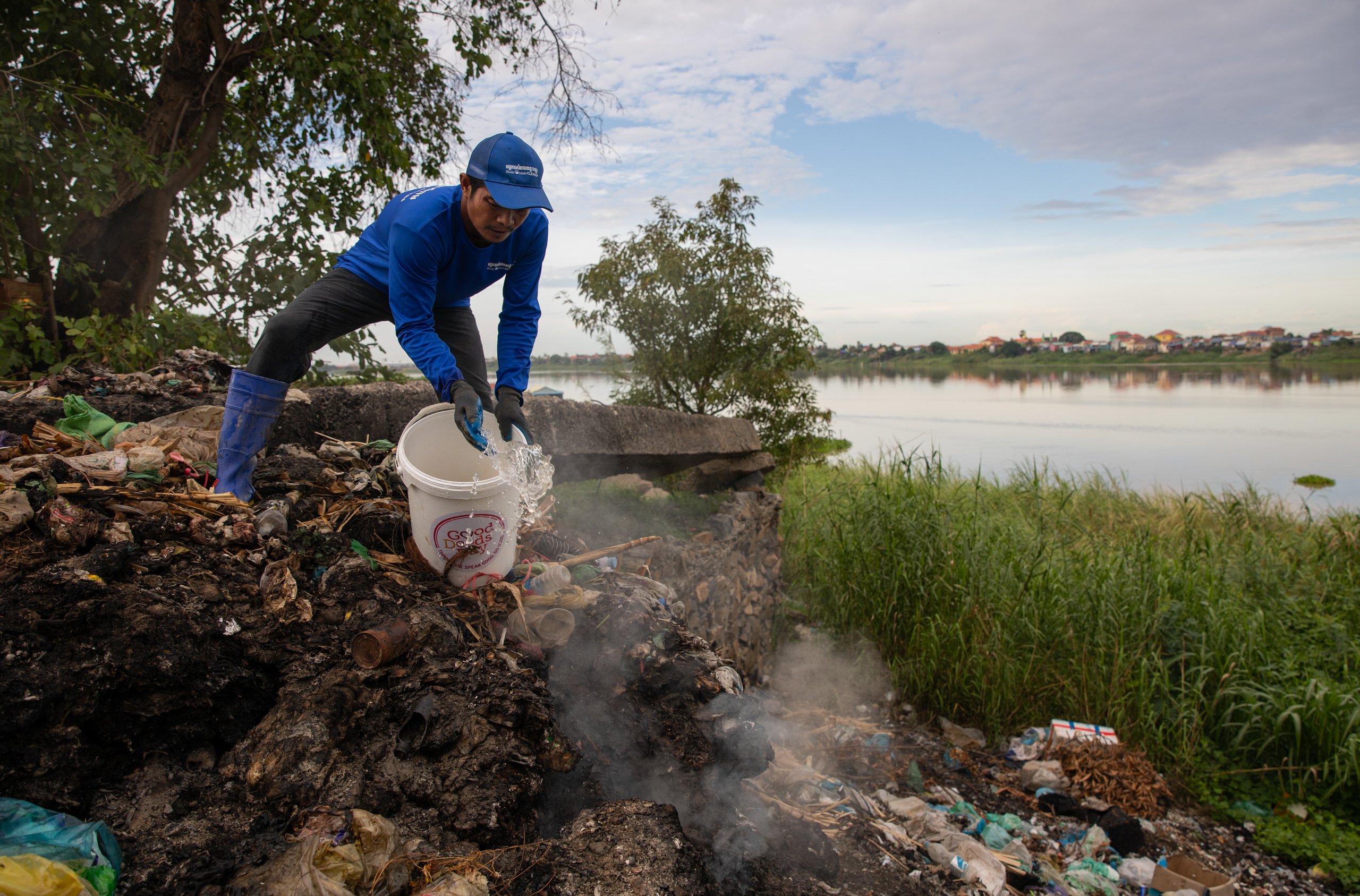 A volunteer douses a burning pile of rubbish at an unofficial dump site next to the Tonle Sap River in Cambodia. The lack of proper waste management exacerbates the problem of plastic pollution in most Mekong countries (Image: Anton L. Delgado / Dialogue Earth)
Chiang Saen is also the site of one of the Mekong River Commission’s (MRC) upcoming video monitoring stations, part of a broader initiative to track plastic flows across the basin. The MRC serves as an intergovernmental advisory body and the video monitoring system dovetails with its new protocols for riverine microplastic monitoring; the first guidelines standardising water health monitoring across the lower Mekong basin.
“We need more [and better] data to drive policy change,” says Phan Nam Long, a water quality officer with the MRC. “Without information on the scale of the problem, we cannot create effective solutions.”
Critics, however, argue that such monitoring efforts fall short of addressing the underlying problem, in part due to the MRC’s limited advisory role to the region’s governments.
“It is fine for the MRC to monitor. Yes, the more information, the better. But that can’t be the only thing the MRC or the Mekong nations do,” says Niwat Roykaew, also known as Kru Thi (teacher in Thai), an environmental activist, who founded the Mekong School. “We can see how the garbage impacts the river. We can see how the garbage impacts those dependent on the river. That is enough information for us to begin to act.”
Niwat wants to see a basin-wide accountability framework to tackle plastic pollution. But with no agreement from the UN in Busan, he questions whether the Mekong region will be able to overcome its own divisions to establish a unified approach.
“All the countries that share the Mekong River must share the responsibility,” he says. “Plastic is choking the river and the consequences affect us all – from the fish we eat to the water we drink.”
Recent studies conducted along the riverside near Niwat’s school underline his point.
“We’re addicted to plastics, now more than ever,” says Panate Manomaivibool, an assistant professor at Thailand’s Burapha University. Over the course of a year, ending in July 2022, his team collected 2,650 large waste samples from the waters around the Golden Triangle. He adds: “Compared to the scale of the problem, attempts to fix it are tiny.”
Panate’s research determined that 91% of the waste was plastic, with labels indicating around 30% originated in Myanmar and nearly 20% in China, underscoring the transboundary nature of the challenge. “Plastic pollution has already contaminated our food chain and all life in the Mekong,” he warns.
Panate tells Dialogue Earth he tries “to be optimistic that we are not yet at the irreversible turning point”, but fears the region’s addiction to plastic will be hard to break.
“We are the first generation facing this problem on this scale. Our ancestors, even our parents, were never exposed to this level of plastic pollution,” he says. “Without an alternative, our countries will always choose to use the cheapest, easiest option. For now, that remains plastic.”
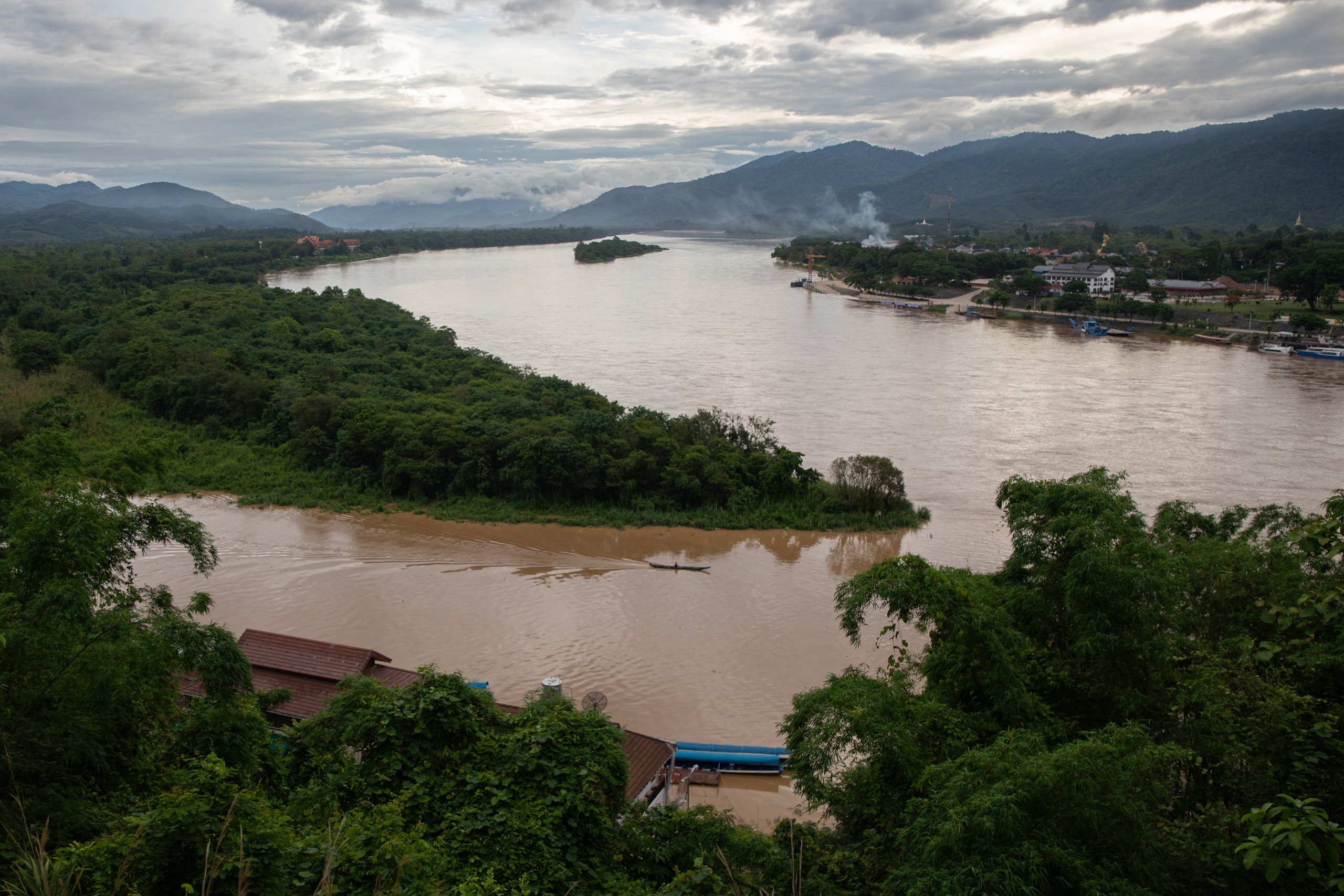 The confluence of the Ruak and Mekong rivers marks the point where Myanmar, Laos and Thailand meet, an area known as the Golden Triangle. Over 4,300 km in length, the Mekong passes through or marks the borders of six countries (Image: Anton L. Delgado / Dialogue Earth)
The Thai government has taken action by announcing a ban on plastic waste imports from 2025, a move inspired by China’s 2018 restrictions, which redirected foreign waste to countries such as Vietnam, Malaysia and Thailand itself. Yet domestic plastic consumption continues to rise.
“The more people there are, the more the city develops, the economy grows and the use of plastic increases,” says Saksan Chuamuangpan, director of Chiang Saen’s Public Health Department.
Waste production in the district has skyrocketed from two tonnes per day two decades ago to 15 tonnes today, he says, and warns a joint effort is needed.
Tonle Sap Lake: Cambodia’s beating heart
In Cambodia, Tonle Sap Lake – a vital freshwater fishery for Southeast Asia – is increasingly choked by plastic waste. Each monsoon season, the Tonle Sap River reverses flow, carrying waste upstream into the lake. This cycle has made the survival of the lake’s ecosystems ever more uncertain.
Since assuming the role of Cambodia’s environment minister last year, Eang Sophalleth has made addressing plastic pollution a priority. As part of a national anti-plastics campaign he has called on half of Cambodia’s 17 million inhabitants to reduce their use of plastics.
“Plastic is our number one enemy,” he said at the September launch of the campaign.
Cambodia also joined the Global Plastic Action Partnership last year and signed an agreement with Laos to tackle cross-border plastic pollution. But the focus has been on changing public perception and plastic habits, with little mention of plastic manufacturers or waste management improvements. Eang says only when plastic reduction targets are met, will a major clean-up of Tonle Sap Lake, the nation’s main source of protein, take place. “There’s no point in cleaning if we’re throwing away more than we clean up,” he said.
As it stands, though, much of the plastic continues to accumulate in fishing nets and along the shorelines, with little evidence of progress on waste reduction.
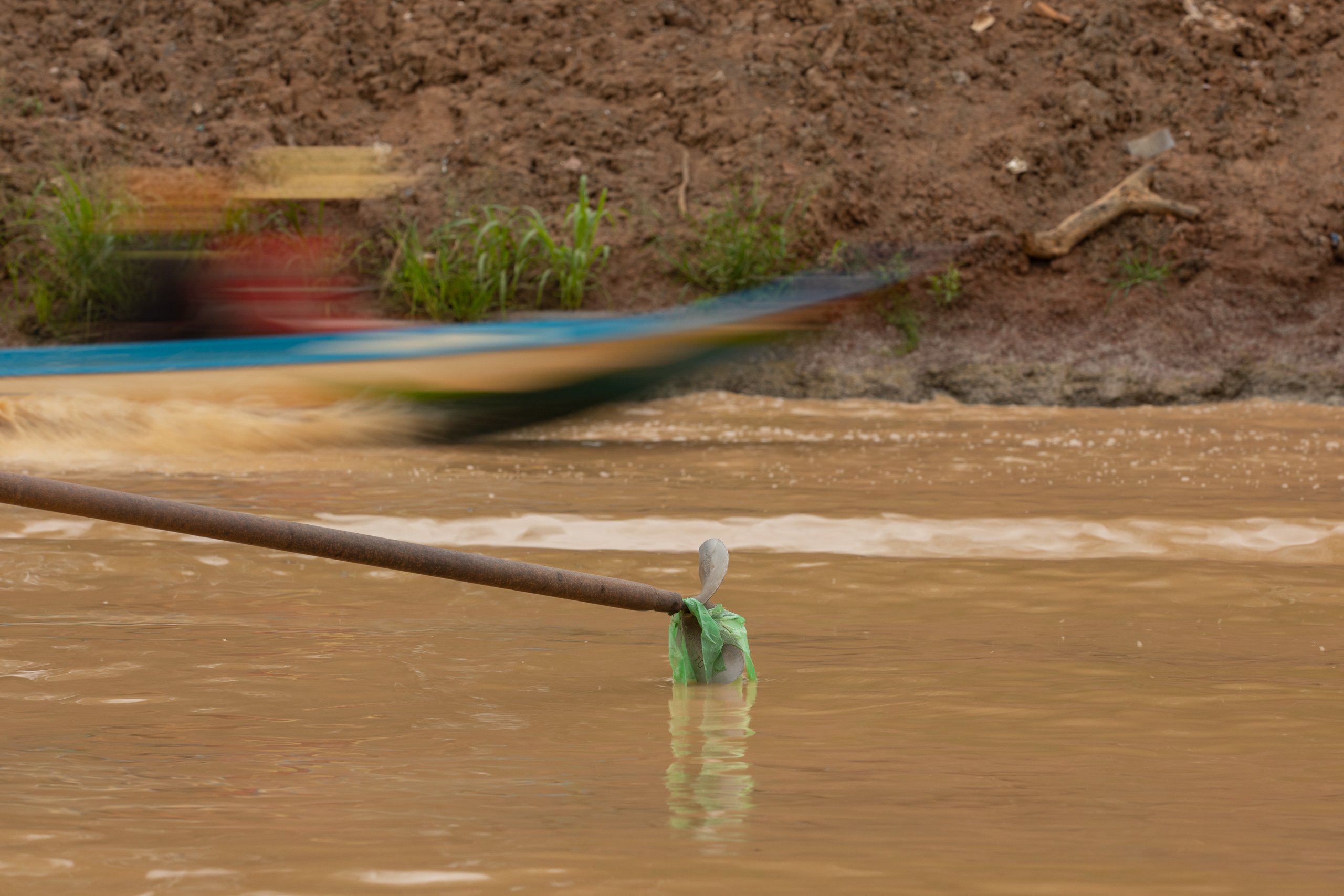 The propeller of a fishing boat on Tonle Sap Lake, jammed by a plastic bag. Fishers on the lake, and elsewhere along the Mekong, face a daily struggle with plastic waste, which breaks their motors and clogs up their nets (Image: Anton L. Delgado / Dialogue Earth)
In Kampong Phluk, a fishing village on Tonle Sap Lake, plastic waste disrupts daily life for local communities. Sophal Sea, director of the NGO Bambooshoot, says the debris is damaging livelihoods. “The nets get tangled, motors break down and fish stocks are declining,” he says.
Welcoming the government’s apparent focus on plastic, he adds: “This is the first time I’ve heard government leaders promise that kind of support.” However, he stressed the need for political support and regulations to address the systemic issues fuelling the crisis and to wean Cambodia off what he described as its “trash culture”.
Plastic disposal options are scarce in villages surrounding the lake, leading residents to dump waste directly into the water.
“Most people don’t know how to dispose of their waste properly. They just throw it everywhere,” says Srey Toch, a litter picker with River Ocean Cleanup who has joined Sophal and a group of volunteers to collect rubbish at the confluence of the Tonle Sap and Mekong rivers.
Srey Toch’s observations are corroborated by Sovann Nou, River Ocean Cleanup’s executive director, who attributes the problem to inadequate household and industrial waste management, combined with limited awareness amongst the public regarding the impact plastic waste has.
Walking along the riverbank, he stops to hold up some of the debris: plastic tarps, bottles and tyres. At one point he pauses to pick up a dead turtle lying among the waste – its death a stark reminder of the toll plastic pollution takes on wildlife.
As the Mekong flows south past Phnom Penh toward Vietnam, Eang expressed hope that other upstream nations will follow Cambodia’s lead in beginning to take steps to tackle plastic pollution. “If we clean up plastics, downstream communities like Vietnam will be grateful. We’ll all benefit,” he said.
Can Tho: Where the Mekong meets the sea
In Vietnam’s Mekong Delta, the river fans out into a vast network of tributaries and wetlands supporting millions of people through farming and fishing. Known as Vietnam’s “rice bowl”, this fertile region is also heavily impacted by plastic pollution, with much of the waste from upstream deposited in its waterways and rice fields.
By the time the Mekong reaches Vietnam’s Delta, the river carries the accumulated waste of its 4,300km journey.
“Most inland waste reaches the river through canals, especially during annual flooding,” says Nguyen Xuan Hoang, a researcher from Can Tho University’s College of Environment and Natural Resources. “Most of this plastic isn’t from Vietnam, but as the basin’s lowest point, we suffer the most.”
Back on Son Island, on the Hau River, Le has experienced this suffering firsthand, but switching to fish farming in enclosed ponds appears to have paid off. He notes a reduction in fish deaths, combined with an increase in profits compared to his previous ventures in the plastic-choked waters of the river.
“Living in harmony with nature is essential for fish farming, but it’s becoming harder in the delta,” he adds, acknowledging the additional effort required to shield his livelihood from the worsening environmental challenges.
For farmers like Trung Tin, in nearby Thoi Lai District, the pollution is impossible to ignore. Due to a lack of plastic waste disposal options, farmers often leave fertiliser and pesticide bottles in fields, fearing the release of toxins if they burn them. Rain washes these bottles and residues into the canals, polluting the delta’s waterways.
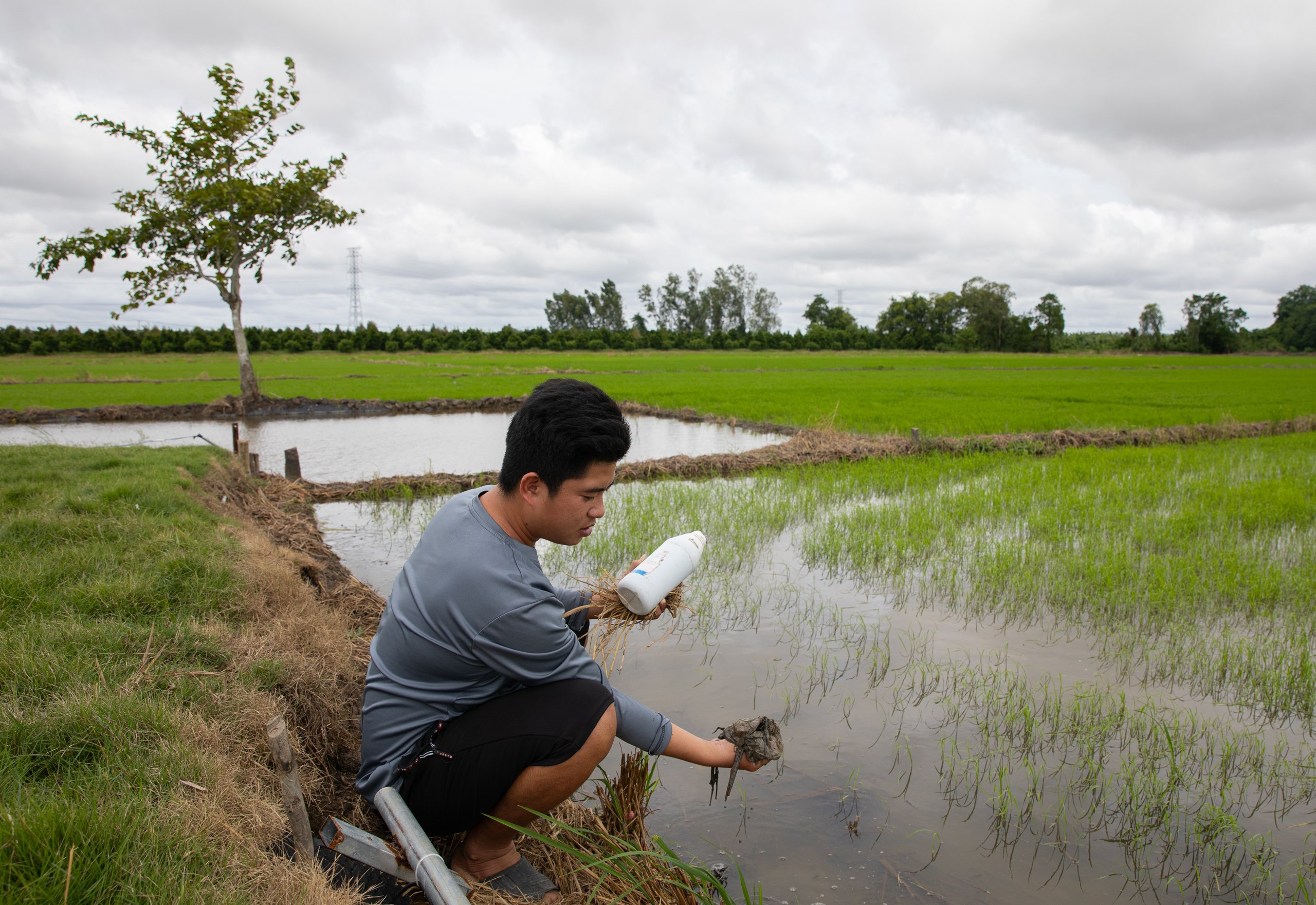 Rice farmer Trung Tin picks up plastic waste from his paddy field in Vietnam’s Mekong Delta. Lacking waste disposal infrastructure, he says farmers often have no choice but to leave used fertiliser and pesticide bottles – like the one he is carrying – in their fields (Image: Anton L. Delgado / Dialogue Earth)
According to Trung, who has farmed rice for over 20 years, “the climate now is not easy”. “The soil has less nutrition, and we must protect crops, even if it means using more chemicals.” Seeing discarded bottles in the river, he adds: “It’s scary to think about what’s in the fish we eat.”
Cong Thuan Nguyen, another researcher at Can Tho University, confirmed that agricultural waste from rice farms is a significant source of pollution. “We’re still trying to understand the full scale. The more we learn, the more the problem grows,” he tells Dialogue Earth.
In 2019, the Vietnamese government appeared to take steps to combat the plastic crisis, by announcing a ban on plastic waste imports starting in 2025. In 2022, it implemented the Extended Producer Responsibility policy, requiring companies to manage the recycling of their products and packaging to reduce waste and promote sustainability.
Despite these commitments, the country was the world’s fourth largest importer of plastic waste in 2022, adding to its waste management struggles. A significant proportion – up to 30% – of this imported plastic leaks into rivers and waterways, including the Mekong Delta, often carried by runoff or untreated wastewater.
As the 2025 deadline for plastic waste imports approaches, Vietnam’s ability to enforce the ban and transition to alternative recycling or disposal systems will be critical to reducing the plastic burden on the Mekong Delta and safeguarding the livelihoods it sustains. Among these challenges is the need for greater clarity from Vietnam, whose stance on INC-5 appears to straddle both national economic interests, particularly in the plastics industry, and broader commitments to addressing global plastic pollution. Moving forward, Vietnam will need to prioritise one over the other to demonstrate its commitment to tangible action.
Thailand, meanwhile, has expressed support for a legally binding international agreement to reduce plastic waste and mitigate its environmental and health impacts. However, its heavy reliance on single-use plastics and limited progress in addressing domestic waste management challenges raise questions about how effectively these commitments will be implemented. Similarly, while Cambodia has emphasised the importance of effective implementation mechanisms, including the establishment of national committees under Article 8 of the treaty, its capacity to deliver on these objectives remains uncertain. The country’s reliance on international collaboration, capacity-building and technical assistance underscores gaps in its existing infrastructure to tackle plastic pollution independently.
Meanwhile, grassroots efforts are working to clean the Mekong Delta despite overwhelming odds. Waste-collecting boats regularly navigate canals to remove debris and NGOs run educational campaigns to reduce dependency on single-use plastic.
The Mekong’s plastic crisis is not just a regional issue; it is emblematic of a global failure to manage waste sustainably. As the river carries tens of thousands of tonnes of plastic waste into the South China Sea each year, its plight underscores the urgency of solutions at every level – local, regional and global.
“We have not yet reached the summit of our efforts,” INC chair Luis Vayas said on Sunday, at the end of seven days of negotiation that concluded without consensus. The meeting was adjourned, with plans to reconvene next year, leaving questions about how soon tangible actions might address pressing issues like plastic pollution in the Mekong Delta.
Without intervention, the Mekong will continue offloading plastic into the South China Sea. From the first signs of plastic pollution in the Golden Triangle to the plastic-clogged canals of the delta, the river’s journey highlights the urgent need for coordinated, cross-border action to protect both the river and the millions who depend on it.
Anton L. Delgado is a multimedia journalist based in Cambodia, covering news and the environment across the region. He is also a former Pulitzer fellow.
This article appears courtesy of Dialogue Earth and may be found in its original form here.
The opinions expressed herein are the author's and not necessarily those of The Maritime Executive.