Tuesday, December 31, 2024

UK

Sycophancy Writ Large


DECEMBER 30, 2024

Pete Firmin reviews Taken As Red: How Labour Won Big and the Tories Crashed the Party, by Anushka Asthana, published by Harper North. His review is followed by some additional thoughts by Mike Phipps.

Pete Firmin writes:

The blurb on the cover says this is “the inside story of the most seismic election in a generation.” Moreover, “In a world full of political noise, rhetoric and showboating you need a voice who can cut through that storm with authority, ease, warmth and intellect. Anushka is that voice: a masterful interviewer, and an utterly brilliant storyteller.” Wow.

Yet having persuaded myself that I should read it, I found it none of those things. On the contrary, rather than cutting though the noise, this is about as superficial a look at the election and its run-up as you could get.

Its treatment of politics is at the level of manoeuvring, of parliamentary games. Only very rarely is there any examination of  issues and policies. They are seen as disposable in the quest for power.

The author – deputy political editor with ITV News – is clearly in awe of Starmer and even more of Morgan McSweeney, Starmer’s Chief of Staff, whom she sees as the architect of a brilliant election campaign.

While many pages are spent praising the “brilliant” electoral strategy of Starmer/McSweeney in concentrating their efforts on the seats they thought were winnable at the expense of larger majorities in seats already held, very little is written about the political strategy Starmer adopted since becoming leader of the party. Asthana writes: “Clearly Conservative decline was a major part of this story. But how had Starmer navigated Labour to a place which it could take such massive advantage of this political opportunity? Was his ‘Ming vase’ strategy the key?  It is certainly true that deeply restrictive fiscal rules designed to win back economic confidence prevented Labour from offering the radical edge of previous policies… But it is also clear that Starmer did what he did in order to win.”

No evidence is offered as to whether Labour would have won with those more radical policies rather than Starmer’s ‘softly, softly’ approach. It could be claimed, with much justice, that the Tories were so despised (and the SNP mired in internal difficulties) come the election that Labour would have won whatever its policies. “Winning back economic confidence” was more about winning the support of capitalists and their tame media than a strategy to tackle the multiple political crises of British society.

Quite what the ‘Ming vase strategy’ means has become clear since the election – essentially a continuation of the neo-liberal policies of the last 40 years, complete with austerity measures. While the two-child policy remains and Winter Fuel Allowance is means-tested, we are supposed to believe that the much-vaunted (and elusive) growth will eventually benefit us all, contrary to all past evidence. And, of course, Starmer’s claim to integrity rather lies in tatters after all the freebies he has received.

Asthana claims to see something very different to Ming vase caution, but rather “an obsession about winning, a steak of ruthlessness and a willingness to take on significant levels of political risk”. But there isn’t a contradiction between the Ming vase strategy and an obsession with winning if you see a requirement of winning as getting the support of those whose interests might be challenged by more radical policies. That ruthlessness and risk-taking has been solely directed at those radical policies and their supporters.

Asthana can only look in awe at the efforts  of Starmer and McSweeney to ensure that the playing of the national anthem – for the first time ever – at Labour Party conference in 2022 went without a hitch. She reports that all were comprehensively searched and warned that any shouting would mean their passes being shredded and Unite’s delegation were moved to the back of the hall in case they showed discontent. But to Asthana this blatant manoeuvring is seen as a sign of Starmer’s brilliance, nothing else.

Asthana documents the fact that Starmer was thought of as a future Labour leader from the point he became an MP in 2015, with all the networking and glad-handing involved along the way. The manoeuvrings against Corbyn within the Parliamentary Labour Party, the calculating as to whether it was better to resign from the Shadow Cabinet or stay were conducted purely in terms of long-term personal advantage. She shows the work done behind the scenes –  orchestrated by the misnamed Labour Together – to groom a successor to Corbyn, and undermine ‘Corbynite policies’, as early as 2017 when Labour under Corbyn was leading in the polls. Asthana’s own prejudices are shown when she writes of Labour Together “bringing together a wide span of credibility” shown, in her view by the ‘moderate’ Steve Reed, which is not how the left in Lambeth, where Reed was previously Council leader remember him.

The claims of antisemitism within the Party are merely mentioned in passing, with not one word spent on examining their truth. When she mentions Starmer welcoming Luciana Berger back into the Party, she simply repeats his claim that this was a sign of his “zero tolerance for antisemitism”. No questioning, no look at how little Berger’s claims of antisemitism stand up to scrutiny, just blind acceptance of Starmer’s narrative.

Asthana maps out the political career of Morgan McSweeney. “the Morganiser” in her words,  clearly seeing him as the mastermind behind Starmer becoming PM. Yet what comes though is a ruthless desire to win devoid of any politics beyond Labour tribalism. That ruthlessness and desire to be top dog has been more than illustrated by the way Sue Gray was pushed out post-election.

The ditching by Starmer of the policy pledges he made when getting elected as Labour leader  is just seen as the norm of the political game rather than something which might raise a few (!) doubts about Starmer’s integrity.

Asthana accepts people telling her what a kindly bloke Starmer is. Someone prepared to question a little more might have mentioned the failure of Starmer to give the slightest support to Apsana Begum through her troubles at the hands of her ex-husband, or how the treatment of Diane Abbott indicated the opposite. Starmer’s failure to insist that Abbott be called to speak when the Commons discussed Frank Hester’s comments about her showed just how unsupportive he is.

The Forde report and its condemnation of the behaviour of many Labour staffers towards Abbott and others and Starmer’s determination to track down those who leaked the document rather than deal with the issues it exposed are seen as irrelevant. And, following his notorious claim that Israel has the right to cut off food, electricity and water to the population of Gaza, despite his backtracking, not once has Starmer expressed his horror at what Israel is doing.

Some issues barely get a look in, so irrelevant are they to Asthana’s ‘forward march of Starmer’ view. They include the well-documented undermining of the 2017 Labour election campaign by Party staffers, the level of discipline imposed on MPs previously unheard of even under Blair, the questioning of some selection outcomes by the likes of Michael Crick, hardly a friend of the left,  the parachuting of favourite sons and daughters into safe seats with no democratic involvement from local members, and much more. An inquisitive journalist might have been tempted to ask why Starmer, who made so much of the EU issue and a second referendum (which many blame for undermining Corbyn), is reluctant to even mention the EU at a time when Brexit has been shown to be a disaster.

Asthana does mention how shallow Labour’s victory was in the general election and how Reform taking Tory votes assisted considerably. But she barely goes near the issue already shown in Council elections – that sticking to the ‘Ming vase’ strategy of not addressing real challenges can only benefit Reform further.

For those of us who see politics as more than the manoeuvrings for position in Westminster, this book is further proof of how much of the prevailing narrative we have to kick against, but also an indication of how – dangerously – out of touch the establishment is with people’s real concerns.

If this book has any value, it’s not in any insight it provides into Labour’s election victory, but rather in showing how shallow mainstream political journalism is.

Mike Phipps adds:

When she’s not desperately trying to be funny on Have I Got News For You, Anushka Asthana is co-presenter of ITN’s flagship political discussion programme Peston. He describes her book as “unmissable”. Others will reach a different conclusion.

If you can get beyond the breathless style (“As we sped towards the studio, I was almost shaking with nerves”), this book is perhaps more revealing than it intends to be. It underlines how obsessed Keir Starmer and his staff were with Jeremy Corbyn and his supporters and the extent to which they defined themselves in relation to them. Thus for them, the most important thing for them about singing “God Save the King” at Labour’s 2022 Conference was Jeremy Corbyn’s reaction to it.

Likewise Asthana lets the cat out of the bag when discussing Starmer’s factional takeover of Party bodies. The introduction of the Single Transferable Voting system in the election of the constituency section of the National Executive Committee was, she admits, entirely about fixing the vote in favour of the Party’s right, and nothing to do with improving internal democracy, as we said at the time.

The book runs to over 300 pages but has fewer than four pages of footnotes. So a lot of its assertions are not supported by anything as crude as factual references. This allows the author to peddle some clever if nasty smears, such as the suggestion that one of the motives for the attempted coup against Jeremy Corbyn’s leadership in 2016 was that it had not responded empathetically enough to the murder of Jo Cox by a far right extremist during the Brexit campaign. It seems we must take Asthana’s word  for that.

Insofar as this book of surface descriptions has one, its central thesis is that, thanks to Morgan McSweeney, Starmer won by getting Labour to focus on the central concerns of voters – as opposed to those of members or affiliated unions. Of course, McSweeney’s political instincts were not so hot when he backed Liz Kendall for the Party leadership in 2015: she came fourth out of four.

The implication is that Keir Starmer wanted to win the general election above all, whereas the left… wasn’t that bothered. Once the idea is stated as baldly as this, it can be seen for the absurdity it clearly is.

But to pursue this idea a bit further, responding to the main concerns of voters will pose some interesting dilemmas for the Party leadership. Kemi Badenoch has already attacked Keir Starmer for not making immigration one of his pledges unveiled at the government’s recent relaunch. As Phil Burton-Cartledge points out, this book writes up Morgan McSweeney’s belief that “the Tories lost because they didn’t keep their promises about immigration. McSweeney also blames this for the retreat of the centre left cross Europe and why the extreme right are on the march. Where the centre left does well, with Denmark’s Social Democrats as his poster child, it’s where there are tough entry requirements on the borders and immigration is falling.”

But the idea that there are lots of votes for Labour in cracking down on immigration is flawed. For Labour to go down this route would be electorally disastrous – as well as political unprincipled. Immigration may be the top issue for Reform and Tory voters, but it’s joint seventh for Labour voters.

Recent research from Compass suggests that Labour Together, the centre-right group that controls the Party apparatus, got it wrong when it claimed the greatest electoral threat to Labour comes from parties to its right. Polling carried out for the report said of those who voted Labour in July, more than twice as many would consider moving to a party on the left than to one on the right.

On this basis, Labour’s refusal to get rid of the two-child benefit sanction or its means-testing of winter fuel payments will be far more damaging than any perception of being ‘soft’ on immigration.

Asthana’s book doesn’t really analyse at this level. Gushing on about Keir Starmer’s “laser-like” focus, or how after a Rachel Reeves Conference speech, “the hall rose to its feet, as hands slammed together,” much of it feels as though it were written by the Labour leadership’s communications team.

This partisanship gets more serious as the 2024 general election approaches. The author sems to accept at face value the leadership’s justifications for tightening up the requirements for candidate selection but glosses over the Rochdale by-election debacle earlier this year when the Party had to disown its own candidate after a recording of him emerged saying Israel had let the 7th October attacks by Hamas go ahead as a pretext to invade Gaza. 

On the general election itself, there is some coverage of the failed attempts to block the candidacy of Diane Abbott in Hackney North, but nothing on the factionally motivated ousting of Faiza Shaheen in Chingford or sitting MP Lloyd Russell-Moyle in Brighton.

The overall vibe of this book is gossipy, which will appeal to some – but also shallow. The author seems to accept unchallenged, for example, Chancellor Rachel Reeves’ apparent shock and fury at her discovery of a £22 billion black hole in the Treasury’s finances, despite being repeatedly warned about the possibility before taking office.

The problem with such superficiality is that things can go out of date rather quickly. The book plays down the differences between Morgan McSweeney and Sue Gray at the heart of the Number Ten operation, yet within days of its publication, Gray would be very publicly ejected from the corridors of power by Starmer’s Chief of Staff.

And now? Lets’ hope the strategists around Starmer are still as ruthless about wining as Asthana thinks they are. With the Party plummeting in the polls and losing by-elections leftright and centre, it will need all the “laser-like focus” it can get.

Pete Firmin is a retired postal worker and now-expelled, former Chair, of Hampstead and Kilburn CLPMike Phipps’ book Don’t Stop Thinking About Tomorrow: The Labour Party after Jeremy Corbyn (OR Books, 2022) can be ordered here.

UK
LABOUR PARTY

A Year of Descent, Part Two

DECEMBER 29, 2024

Mike Phipps concludes his review of 2024.

July

The newly elected government’s honeymoon did not last long, either within the Party or the country. Within three weeks of the general election, seven left wing MPs were suspended from the parliamentary Party after voting against the government on the two-child benefit cap.

John McDonnell MP was joined in the rebellion by Apsana Begum MP, Richard Burgon MP, Ian Byrne MP, Imran Hussain MP, Rebecca Long-Bailey MP and Zarah Sultana MP. 42 other Labour MPs abstained.

 A few days later, Chancellor Rachel Reeves announced she was scrapping the cap on social care charges for older people and making big cuts to infrastructure projects, in an attempt to plug an apparently ‘unforeseen’ £22 bn hole in public spending inherited from the outgoing Conservative government.

But the biggest shock was the end of universal winter fuel payments to pensioners. An estimated 800,000 pensioners on low incomes would now be ineligible for the benefit. Applying for a means-tested benefit on a 50-page form already deters around 30% of pensioners eligible for pension credit from accessing it.

When the measure was forced through Parliament, half a dozen Labour MPs bravely voted against and there were dozens of abstentions. In the autumn, Labour Party Conference would also voice its opposition – all this against a backdrop of an average increase in energy bills by almost £150 after Ofgem raised the price cap by 10%.

August

The month of August saw far right riots sweep the country, the blowback from the long-standing demonisation of migrants by the previous Tory government – and a Labour Opposition that complained it was not being tough enough in dealing with ‘the problem’.

The mobilisation of thousands on the streets against the threat of fascism was not matched by any such response from the political elite. A few months later, seemingly oblivious to the use of reckless rhetoric, Keir Starmer  accused the previous government of running an “open borders” approach to immigration and announced a new crackdown.

September

The Enquiry into the Grenfell Tower fire disaster was finally published. Among the damning findings: the Government was warned 25 years before the disaster struck about the dangers of cladding, which fire tests had proved to be dangerous, but had ignored the risks; the privatisation of the Building Research Establishment, set up 100 years ago to help deliver quality standards for the construction industry,  became exposed to “unscrupulous product manufacturers.”; dangers were deliberately concealed by those who made and sold the cladding; Kensington Council showed “indifference”, with Grenfell’s refit poorly managed by contractors and the Council’s Tenant Management Organisation, leading to a breakdown in trust with residents, and showed a “persistent indifference” to fire safety.

“Grenfell is simply explained: firms chased profits, ministers sat on their hands, innocents paid with their lives,” wrote Peter Apps in the Guardian.

Meanwhile, political sleaze, one of the key factors that damaged the Conservatives, began to hit the new government. After days of criticism, Keir Starmer was forced to announce that he and senior colleagues would stop taking free gifts from wealthy donors.

Less noticed but more serious, was the revelation that Labour had received a £4 million donation from a Cayman Islands-registered hedge fund with shares worth hundreds of millions of pounds in fossil fuels, private health firms, arms manufacturers and asset managers.

October

One hundred days into his premiership, Keir Starmer’s approval ratings were in freefall, down 45 points since the general election, with only 18% of people surveyed approving of his government.

The removal of the independent-minded Sue Gray from the corridors of power by Keir Starmer’s factional staffers was the latest ‘bad look’ for a government trying desperately to control the narrative. John McDonnell MP tweeted: “We’re facing the potential of a war setting the Middle East alight, already thousands are being killed in Lebanon, and what is the focus of the boys around Keir Starmer’s office, carving up Sue Gray and grabbing her job and salary. Words fail me.”

More ‘tough decisions’ – or unnecessary unpopular choices – lay ahead. The government announced that the bus fare cap in England would rise from £2 to £3 at the end of 2024. Labour’s former Director of Policy Andrew Fisher slammed the decision as “Bad for people’s living standards. Bad for local businesses. Bad for the environment. And deeply unpopular too.” 

This was followed by Labour’s supposedly ground-breaking budget. Many at the time saw this as a missed opportunity and the subsequent flat-lining of the economy and absence of growth seemed to bear out this analysis.

November

The international picture too gave scant grounds for optimism in 2024. Israel’s genocidal war on the Palestinians was extended into Lebanon and Syria. The late withdrawal of an incoherent President Biden from the US presidential election and the failure of Kamala Harris to offer anything of substance to working class voters permitted the re-election of the extreme right Donald Trump.

As one analyst noted, “Kamala Harris didn’t have to start her campaign by distancing herself from her past support for Medicare for All. She didn’t have to answer the most obvious question of all time (how she would be different from the unpopular incumbent president) by saying that nothing came to mind. She didn’t have to end it by spending weeks bragging about being supported by a universally despised war criminal. [Dick Cheney]. And she didn’t have to hand a staggering victory to Donald Trump.”

The Russian onslaught against Ukraine ground on, with a change at the White House suggesting that the Ukrainians may be placed under increased pressure to make unacceptable concessions to its imperialist neighbour.

Among the slim rays of hope was the overthrow of the murderous Assad regime in Syria. However, the long absence of democratic pluralism in that country together with the agendas of Western powers, not least Turkey, must make one fearful for the future – particularly for the Kurds.

Back in the UK, one of the few half-radical members of the Cabinet, Transport Secretary Louise Haigh, was removed by Starmer’s factional enforcers on the spurious grounds of failing to reveal a minor conviction for fraud – accidentally reporting a mobile phone as stolen after she was  mugged, when it wasn’t – which Starmer knew about when he appointed her to the Shadow Cabinet. Many saw the sacking as a manoeuvre to replace her with someone who would be far more cautious on rail renationalisation.

December

The year ended with another spectacular but unnecessary own goal by the government. Six years after Labour MPs gave a standing ovation to a Waspi women protest in Parliament, Secretary of State Liz Kendall decided to deny compensation to up to 3.8 million women affected by changes in the women’s state pension age. The decision provoked a furious reaction. especially from Labour MPs.

Two days later, the water regulator Ofwat announced it was permitting huge hikes in water bills. Later it emerged that water companies had deliberately diverted funds earmarked for cleaning up environmental damage they had caused towards executive bonuses and shareholders’ dividends.

Conclusion

Entering office, Labour faced a threefold crisis in health, the climate emergency and  the cost of living. It is the latter which concerns most voters and on which the government is failing most miserably.

Small wonder that Labour is plummeting in the polls. Since July, Labour has lost a score of council by-election seats – and in recent weeks, the results have got shockingly worse. “No party has won such a huge parliamentary victory and seen their fortunes reverse as quickly,” noted one observer.

Top insider Simon Fletcher, who worked alongside Ed Miliband, Jermey Corbyn and Keir Starmer, noted on December  20th: “Last night in Dudley, Labour’s vote was down a massive 34.7 per cent in Brockmoor and Pensnett, pushing the party into third place behind a surging Reform – on 30.1 per cent – and the Tories who took the seat from Labour, up seven per cent to 35.4 per cent. And in Swale, Labour was down by over thirty points, smashed into third place behind Reform who took the seat from Labour with 33.9 per cent of the vote.”

Just six months after Labour won a landslide, he concluded, “there is now speculation that Labour’s poor performance may mean that Keir Starmer will not survive as Labour leader and prime minister into the next election.”

ITV pundit Robert Peston agreed: “Senior Labour figures and cabinet members are ‘talking openly’ about the prospect of Starmer not leading them into the next election.”

But the government’s woes are not fundamentally a problem with Keir Starmer’s personality. Owen Jones is completely right when he says that the government’s poor performance is not a personal failing of the Prime Minister so much as the collective bankruptcy of the narrow faction on which Keir Starmer has chosen to base himself.

If voters are dissatisfied with Labour, it’s because it has failed utterly to live up to its promise of change. Its failings on the two-child benefit limit, winter fuel payments and Waspi women are compounded by the absence of any strategy to help the 16m people living in poverty, to tackle corporate profiteering – since the pandemic, electricity and gas supply companies have increased their profit margins by 363% – or to challenge the corporate media discourse that demonises migrants, the disabled and the jobless and blames them for the country’s problems.

“In principle, Labour’s drift to the right can be checked by debate,” says Lord Prem Sikka, “but the leadership is authoritarian and has closed spaces for discussion.” With seven left wing MPs still without the whip, and internal Party bodies firmly under the domination of the leadership, it looks increasingly likely that the Party is losing the opportunity to rescue itself from the disaster it is facing.

Yet there is hope. As we have previously noted, “We can take heart from the fact that the conditions which produced the huge 2017 vote for Jeremy Corbyn’s Labour have not gone away – they have intensified. Radical ideas remain popular, precisely because of the magnitude of the crises.” Our task remains building the alliances that can promote and drive forward these ideas across the movement.

Mike Phipps’ book Don’t Stop Thinking About Tomorrow: The Labour Party after Jeremy Corbyn (OR Books, 2022) can be ordered here.

Image: https://www.flickr.com/photos/number10gov/54020189017/ Creator: Lauren Hurley / No 10 Downing St | Credit: Lauren Hurley / No 10 Downing St Copyright: Crown copyright. Licensed under the Open Government Licence Attribution-NonCommercial-NoDerivs 2.0 Generic CC BY-NC-ND 2.0 Deed


Brazil: 2025 Cultivate Resistance Festival, April 18-20

From Festival Cultive Resistência

Cultivate Resistance Festival 2025
April 18-20, 2025
Black Seed cultural space - Peruibe, Sao Paulo

Punk, Anarchism, Veganism, Music, Debates, Workshops, Presentations, Films, Camping!

The Cultive Resistance Festival is a multicultural, libertarian gathering that takes place at Seme Negra in Peruibe/SP. There will be three days of dialogues, lectures, workshops, debates, shows, dealers, moments of sharing, camping, learning, teaching, reflection and action.

We want to propose a meeting where we can think a free world!

Where we can express our outrage, our art, our politics, our culture, our bodies, freely, uncontrollably, laughable, playful and rebellious.

We want to come together in these moments, build support networks, solidarity, rebel groups, create connections and build new perspectives and realities.

Come and be a part of these 3 inspiring days!

Want to propose something?

We want to build the Festival's content collectively and as inclusively as possible. And for this we will be receiving proposals for activities (lectures, workshops, debates, bands and any other activity that will contribute to the creation of these 3 days of inspiration and conspiracy). Get to know the ideas and principles of the Festival and if what you do is to do with these ideas, send your proposal through our site. We want to access what is being done elsewhere, away from our eyes, we want these ideas to move closer to the Festival.

Submission of activity proposals by March 15, 2025!

Want to set up your distributor/publisher's table? submit your proposal !

Early Bird Tickets!

The Festival will have limited spaces available! For this reason we will be making available the purchase of tickets in advance, and with promotional values:

Values:
Batch 1 - Until 10/02/2025 - R$30.00 per day or R$70.00 for 3 days.
Batch 2 - Until 10/03/2025 - R$40.00 per day or R$100.00 for 3 days.
3rd batch and carrier - R$ 50.00 per day.

And you can camp at Black Seed.

Bus to the Festival!

We will have a bus leaving Jabaquara Terminal in São Paulo, straight to Seme Negra, the location of the festival, guarantee your spot!
To submit your proposal or purchase tickets, visit cultiveresistencia.org/festival or the link in our bio.

New Year's Eve in a German squat. Willkommen!

From No Future
December 27, 2024

From anarcho- and antifa emigrant initiatives.

Have you figured out what you're going to do for New Year's Eve? We've decided to organize a small (but fucked up) party and invite anarcho- and leftist initiatives, pankota, journalists, human rights activists and activists who had to emigrate to Germany to continue their activities and not sit down on a bottle somewhere in a snowy high-security colony.

We're meeting on December 31 in Potsdam in a cozy house-projekt (it's like a squat, only civilized, without vomit, junkies and trash raids). Antifascists from the collective “Sektor M” have been renovating and preparing a bar there for the celebration for several months. Everything will take place there. Lectures from the discussion club “Äppelwoi Komitee”, cuisine, tea ceremonies and hiking from “No Future”. But that's in general outline. More to come:

- A story of Siberian anarch about how anyone can make a house project in Germany
- Historical lecture about the similarities and differences between then and today's revolutionary emigrant activists.
- Film screening and discussion on the representation of the left in German cinema
- Hiking through the filming locations of the darkest series “Dark”
- Vegan and Meat Chili con carne
- Borscht (vegan and meat) and lard
- Former political prisoner Lev Skoryaki will read a chapter of his book about the prison New Year.
- Koryak cake. Also prison.
- Chifir and Poo Er.
- bar
- Dinner parties.
- We're thinking of getting a fucking bathhouse.
- Clear playlists from music nerds.
- A shitload more.

We also invite the self-organized anti-authoritarian anarcho- and leftist collectives that are currently active in Germany. We will talk to each other about how the year went and what we can do together in the next one. Unfortunately, there is limited space on the platform, so we are asking representatives of initiatives who want to organize their stand to fill out a five-question questionnaire. This way we will be able to better organize the space so that there is enough room.

We are looking forward to seeing you all (but not the fucking Nazis) with your salads at the New Year's Eve party on December 31, 18:00, Zeppelin Straße 29, Potsdam.

No Future
DIY media about how anarchists, antifa, punks and leftists are going through a complete mess in Russia and beyond.


Anarchist News Retrospective 2024

Dick Clark eat your heart out

"
For auld lang syne, my jo,
for auld lang syne,
we'll tak a cup o kindness yet,
for auld lang syne.
"
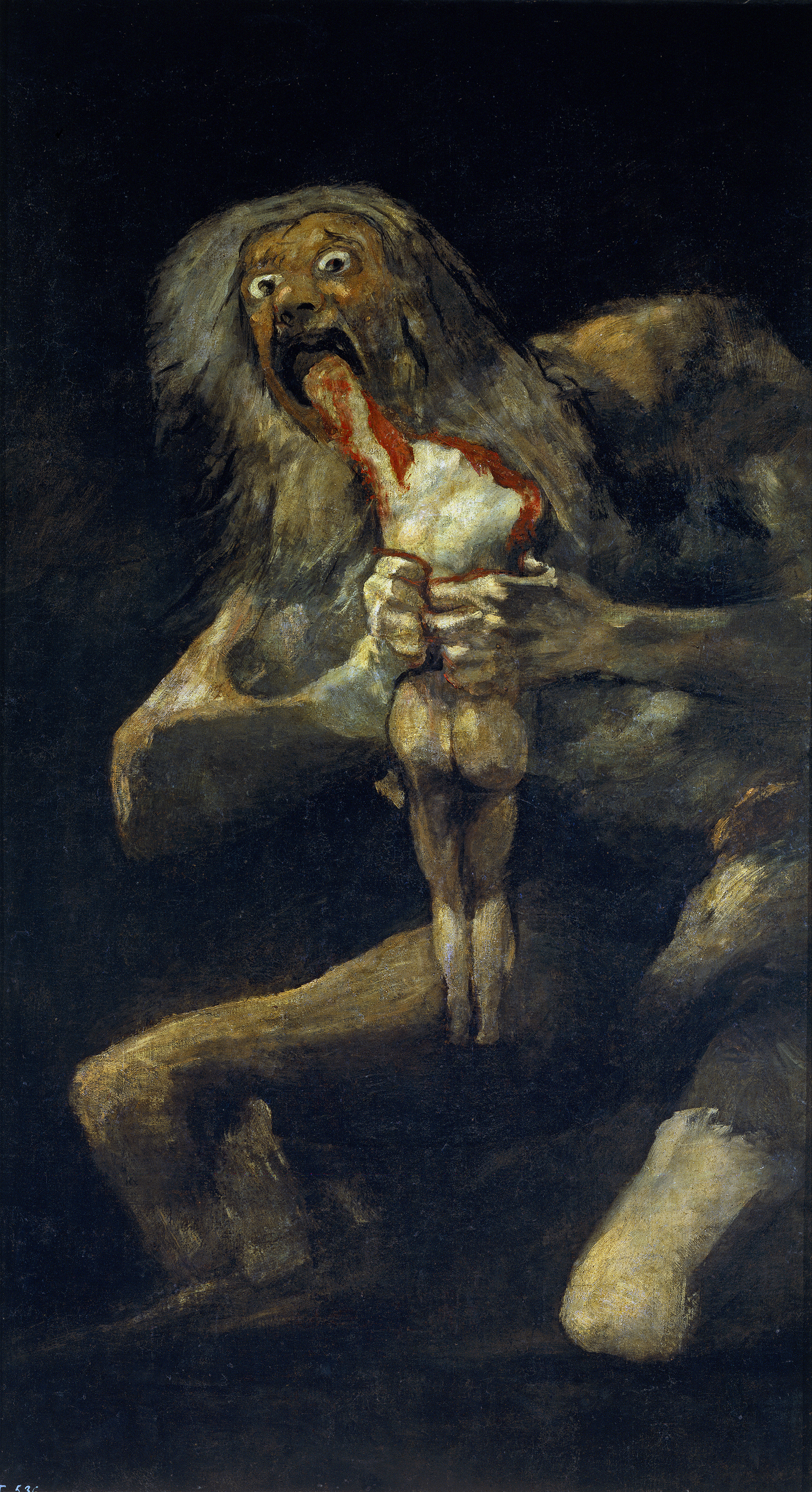
~ Father Time, before devouring Baby New Year


'Tis the season to be reminiscent! We've put together a selection of the top articles posted on Anarchist News in 2024 and we've broken it down month to month to assist you in your own looking back, reflecting, scrying, grounding techniques to shake off the flashbacks, or whatever it is you're going to do with these relics of a bygone era. We will be starting off with December of 2023 since we can't really tell how this year wraps up before it's properly done with, there's no knowing which project might call it quits one week and which might come back to life the next!

Without further ado, the 2024 Anarchist News Best In Show:


December (2023):

Anonymously submitted, "Cops Don't Wear Masks, Anarchists Must" came from Portland, Oregon, USA to make the case for wearing masks to slow the spread of covid. It also made the case for not wearing masks being tantamount to police action or practicing eugenics against the disabled. "we are breathing everyone's unvetted air!" The debate in the comments would continue through the year and across many, MANY articles.

"How Intelligence Agents Hijacked the U.S. Anarchist Movement and Steered It Into a Dead End" by Crow Qu’appelle came to us through Winter Oak, and while it did raise some very practical concerns over the intent of some actors and outlets on the Circle-A Stage, it also fit with the usual "Global Mafia" line Winter Oak tends to be known for. Whether the article was right on or veered into fedjacketing territory was at the center of the discussion in the comments.

We went back to the land with "TOTW: Anarchist Land Projects" but mostly stopped short of returning to monkey. Fun talks followed regarding the successes and failures we've seen in land projects, the nature of land and ownership, what self-sufficiency looks like in a climate-doomed world, and some out of pocket insults thrown in all directions. Anarchy!


January:

“TOTW: Harm Reduction?” was a poetic introduction to a provocative and frequently relevant question, “What is anarchistic about harm reduction?” Comments delved deep with conversation that continues to this very day.

“Easy Ways to Spot Authoritarians Within the Anarchist Milieu” from Warzone Distro provided a simple framework for identifying and addressing a problem that has plagued anarchy for ages. This article was born of a perceived decades-long ceding of ground to authoritarianism from within and spurred on by a resurgence of authoritarian activity at book fairs in the preceding months. Let’s just hope we don’t need to refer back to it too often in 2025. (Bookmark it just in case.)

Spurred on by crank callers on his radio show, “TOTW: What is Post-Left?” was a guest Topic of the Week submitted by the man - the myth - the legend - JZ himself! The topic and discussion asked, “What does post-left even mean?” and offers an anti-left position as a more meaningful one for anarchists. If you haven’t heard the discussion on the ANews Podcast, go back and check it out.


February:

Designed to kickstart the butterflies in your tummy and the skip in your heartbeat, “TOTW: L is for Love” explored what love means and how it impacts an anarchist’s thoughts and deeds. It also did whatever the opposite of “love” is by reminding us that “Days Of War, Nights of Love” is nearly 25 years old.

“Anarchists Should Not Be Spreading Putinist Propaganda” from avtonom.org didn’t open the can of worms, but it sure did coax a few more worms out of the can. This well-written article asked its readers to interrogate their sources of information and the reasons those sources might have to tell their stories in the ways they do. A valuable enough lesson for everyone excluding about half the anon commenters, apparently.

Out of Suburban Madison, Wisconsin, USA, the Middleton Hills Trans Anarchist collective published “MhTAC Announces Family Abolition Reading Group.” Cautious optimism and a surprising amount of benefits of the doubt were given in the comments section, only to be ungiven very shortly thereafter also in the comments section. A nice-ish piece of suburban resistance for what it was, but the group already appears defunct at time of this posting. A flash in the pan is a flash in the pan, for whatever it’s worth. Still, shouts out to Wisconsin for giving it the ol' college (leftist) try!


March:

Following the self-immolation of Aaron Bushnell in front of the Israeli embassy in DC, “TOTW: Martyrdom” asked “Why do we need more martyrs? Is this just self-sacrifice to no end?” It appeared that only time would tell… and now there’s been time, and your answers may still vary.

Another Topic of the Week was in the top charts this month, with guest writer Artxmis bringing us “TOTW: Is Anarchy Sufficient?” A very wide spread on responses and an interesting recorded discussion on the podcast followed, which was refreshing, and the question at the heart of it looms: “Can liberation come only from anarchy?”

Two peeps at Oak Journal, “‘Cause I See You” from Invecchiare Selvatico was a look back at “Invisible Generation” by Jason Rodgers. A nice insightful reflection on the author, the subjects of tech and individualism, and the context they came with. A good read for the individualist or the anti-civ types out there, and we'll hear more from them further down the list.


April:

A bit more fanciful than the usual, Ignited in Dark’s “Retiring an Old Anarchist Slogan” offered a hopeful plea for a spiritual understanding. The slogan in question, “No Gods, No Masters” appears to still be working its 9-5, however.

The final installment in the 4 part Freedom News series by Loukas Christodoulou, “Autism and Anarchy: The Importance of Autistic Anarchism” made a bizarre case and roused a bizarre reaction. Maybe more situated for an audience already predisposed to focusing on ability and identity, the series was at the very least interesting to consider.

Maybe the most written-on subject of the year, Gaza took center stage for “TOTW: Anarchist Participation in Free Gaza Protests.” This topic left a lot of room for conversation, decent resources were suggested in the comments, and since it was all discussed so constructively here that meant that nobody had to be super fucking unhinged about it on IRC!


May:

“June 11, 2024: No Separate Worlds” was the call from june11.org for an International Day of Solidarity with Marius Mason and all long-term anarchist prisoners. Always a thing to look forward to, but if you missed it there’s no need to wait until June 11 2025! Write to an anarchist prisoner TODAY!

In Chicago Anti Report’s 2024 “May Day Chicago” reportback, the focus was yet again on Gaza. Yet again, everyone was really normal about the whole affair, so YET AGAIN there is NO NEED to get on IRC and be a huge liability about it!

“TOTW: Relations Without Measure” took inspiration from “Killing King Abacus” to ask us what use quantifying anarchistic relations and acts could be, offering a potential answer in “A Little Mathematics of Radical Action.” The comments were really good. Why can’t you be like that more often?


June:

Amid a new wave of mainstreamization, “TOTW: Normies” pushed us to interrogate normal people. Like, in concept. It probably didn’t encourage us to, like, kidnap normal people and force them to confess their crimes. Right? Did I misremember? I remember the podcast discussion being pretty good.

“Work Worth Doing” from Radical Love Letters was a kinda fun and intimate exploration of a couple anarchists of the radical-activist variety exploring their (lack of) relationship to Marx and what the anarchist identifier means to them. It has nothing to do with shitting on people or being an incel, but that’s what the comments talked about anyway.

And for another active comments section (and mostly on topic for this one), “TOTW: Needs” asked us “How do anarchists satisfy their needs keeping in mind the principles of freedom and equality? Is freedom a need?” Check out the podcast for a great conversation!


July:

Trump was shot. It was a pretty big deal, I bet you’ve already heard all about it. While the mainstream and those pining to be a part of it rushed to give all the answers to questions that still haven’t actually been answered, “TOTW: Enemy of My Enemy” asked us if there’s anything anarchists should be concerned about with this at all.

In a surprising contrast to the larger anarchist presence on the internet, “Former Philly Anarchist Alex Chubbuck Outed as a Neo-Nazi” from Jersey Counter-Info is the only article about a specific neo-nazi that we will be focusing on. And this is all the time we’re going to spend focusing on it. Hooray!

“When the Exhaustion of Concepts Intensifies” from TŘÍDNÍ VÁLKA reminded anarchists of a viable position to take when faced with the Russian invasion of Ukraine: being against the state. Some still don’t get it in the comments, but some still don’t get it out there in the real world either, so what can you do? “Long live the betrayal of the country!” is a dope way to sign a statement!


August:

Happy birthday to us! Happy birthday to us! Happy birthday dear us! Happy birthday to us! "TOTW: 20 Years of Anarchist News" brought recollections, reflections, and real good discussion looking back on twenty years of doin' the damn thing. Next year we're buying booze for all our younger friends.

the beautifully titled “The Darkness Criticizes the Wolf for Howling at the Moon” which was submitted anonymously. This article provided a review of sorts via a passionate defense of the Contagion Press publication "Warlike, Howling, Pure" by Areïon that put the crosshairs on the article titled

"Millenarian Insurrectionary Hail Marianism" by Invecchiare Selvatico, a critical reflection on the Contagion Press publication "Warlike, Howling, Pure" by Areïon. This article provided a thorough critique that definitely ruffled a few feathers, as evidenced by

the beautifully titled “The Darkness Criticizes the Wolf for Howling at the Moon” which was submitted anonymously. This article provided a review of sorts via a passionate defense of the Contagion Press publication "Warlike, Howling, Pure" by Areïon that put the crosshairs on the article titled

"Millenarian Insurrectionary Hail Marianism" by Invecchiare Selvatico, a critical reflection on the Contagion Press publication "Warlike, Howling, Pure" by Areïon. This article provided a thorough critique that definitely ruffled a few feathers, as evidenced by


September:

The conversation was alive with "TOTW: Animism" and it seemed universal spirits diverged throughout the comments, which were also alive. Though the comments went every which-way, the comments as an extant concept have yet to weigh in.

An otherwise innocuous and low-stakes communique, "NYC Anarchist Banner Action in Solidarity With Palestinian Resistance" from Abolition Media includes the line "Let the flood of Al Aqsa drown all settler regimes!" This released a flood of comments that grew into such vitriol it makes one wonder if banner drops could always cause such a commotion by throwing in an intentionally provocative line. Maybe we'll keep that arrow in our quiver.

Wayne Price returned for another article with "The Left and the Israel/Palestine Wars." This piece compares the current leftist reactions and interactions with the middle east to the leftists of the 60s and 70s on the same subject. One thing is for sure: The comments section was way slower in the 60s.


October:

In an article that was both thoughtful and thought-provoking, CyberDandy brought us "A Response to 'Ya Ghazze Habibti—Gaza, My Love'," also titled "Abolish Rule by Ethnic Majority." In addressing and questioning the crimethinc piece, CD left us with an important reminder (or perhaps a needed introduction) to what should not be a controversial statement among anarchists: "national sovereignty itself is illegitimate: no one should be born to rule, nor born to serve."

"TOTW: Refinement" asked us to examine stereotypes, social norms, their utility, our relationships to them, and what it means to an anarchist to be "refined." Intentionally left open to encourage a wide range of interpretations, it sounded more to me like thecollective was shilling for Big Deodorant again.

In a sudden reversal (old spice checks bounced?), "TOTW: Abstractions and Embodiment" questions physicality and invokes the impact that grounding physical presences like personal scent can have. This discussion explored bodies, ideas, and where anarchists exist between the two. As a general aside: We should do more TOTWs that bring up Donna Haraway.


November:

"Some Initial Thoughts on Unity of Fields" from Puget Sound Anarchists offered some early reflections on the rebranding of Palestine Action US and digital counter-info outlets more or less broadly. The author(s) of this "Initial Thoughts" seemed to have level heads, with lines like "We are clearly not the only ones re-coloring walls, opening windows, and carrying out our little sabotages and then writing about it, though at least for now others seem to look to our collective knowledge and experience for technical guidance." A healthy consideration for us all as we move forward with our own (presumably anarchist) projects.

"Stalking The Nightmare of Control" by Invecchiare Selvatico was a reflection on "War of Dreams: A Field Guide to DIY Psy-Ops" by Jason Rodgers and a glowing review at that. Both can be found attached to Oak Journal as well as closer to the top of this very rundown. Selvatico took the tone of an old friend reminiscing with this piece which was a welcome disorientation for most, and the comments spent a lot of time on the online vs physical print availability discussion. We'll let you all know when that's settled for good.

Crimethinc makes another appearance in the Top 40 Countdown with their hit single "The Case For Resistance." This article was an exercise in divination magicks and how to foretell chaoses yet unknown - sorry, I mistyped - This article was an exploration of what we can expect from Donald Trump’s second term and how we can prepare to confront it. Hm. A good wager on "disobedience" being the solution. Betting closes 00:00EST 01/01/2025.


TOP OF THE YEAR


In order to extract only the best articles of the year, we have concocted a highly complex proprietary formula using an elaborate array of flasks and beakers. While our robust approach accounts for all scientific, spiritual, and philosophical variables in their entirety, it does take a significant amount of fine tuning (and produces an unspeakable amount of highly carcinogenic runoff) to narrow the results down to a single "winner."

Given the high monetary cost of this process, we've decided to spend your monthly ANews subscription fees a little more conservatively and leave you with a pool of 5 articles presented without any indication of ranking whatsoever. We feel it is best to help you only this far and encourage an exercise of your independence on choosing an article of the year for yourself, sharing that selection in the comments, and fighting like a small dog in a large beehive to defend your choice. To the first commenter to choose correctly, a single-use "Get Out Of Being Canceled Free" card will be awarded. Card must be redeemed by 31DEC2025 and is not valid in Portland.

Easy Ways to Spot Authoritarians Within the Anarchist Milieu from Warzone Distro
TOTW: What Is Post Left? from John Zerzan
When the Exhaustion of Concepts Intensifies from TŘÍDNÍ VÁLKA
TOTW: Anarchist Land Projects from thecollective
How Intelligence Agents Hijacked the US Anarchist Movement by Crow Qu’appelle via Winter Oak