Tuesday, January 14, 2025

ECOCIDE

German tugs towing stricken oil tanker thought part of Russia's 'shadow fleet'

Greenpeace says the fleet of 192 aging tankers carrying Russian oil around the world represent a threat to environment.


A photo made available by the Havariekommando (the German Central Command for Maritime Emergencies, or CCME) shows the oil tanker Eventin adrift off the coast of Rugen, Germany, on Friday. The Eventin was en route from Russia to Egypt when the crew lost control of the vessel in the Baltic Sea and is now drifting near the island of Rugen. Photo by Havariekommando/EPA-EFE

Jan. 11 (UPI) -- German maritime authorities said Saturday they are towing a disabled oil tanker in the Baltic Sea thought to be part of Russia's clandestine "shadow fleet" used to evade Western sanctions.

Germany's Havariekommando, or Central Command for Maritime Emergencies, told German media it is employing three tug boats to the tow the stricken tanker Eventin about 15 miles to the harbor of Sassnitz, where it is expected to arrive Sunday.

The progress was reported to be very slow due to waves of up to 13 feet and storm-force winds on the Baltic. The vessel is also very heavy, loaded with almost 100,000 tons of oil.

The Eventin lost engine and navigation power near the German island of RĂ¼gen and now needs to be brought to harbor for safety reasons, although there is currently no environmental threat from the vessel, the CCME said.

The 810-foot tanker, built in 2006, was sailing under a Panamanian flag while traveling from the Russian port of Ust-Luga to Egypt's Port Said, according to the ship tracking platform Vesselfinder.

The environmental advocacy organization Greenpeace has identified it as part of the "shadow fleet" of ships Russia is using to try to circumvent Western sanctions imposed after its invasion of Ukraine.


Greenpeace says the fleet of 192 aging tankers carrying Russian oil around the world represent a threat to environment.

"Of the 192 ships, 171 have passed through the German Baltic Sea and the area of the Kadet Channel in the Mecklenburg Bight at least once in the last two years," Greenpeace reported this year. "All the tankers are old, many have technical defects, have temporarily switched off their automatic identification systems or have transferred their cargo to other tankers at sea -- a particularly risky maneuver."


An accident in the Kadet Channel would put the entire German Baltic coast at risk, they warned, adding, "All tankers are inadequately insured against the consequences of an oil spill -- taxpayers would have to pay to repair any damage."
DOJ probe of Tulsa Race Massacre finds no one to prosecute, but chronicles tragedy


1 of 3 | Smoke is shown billowing over burning buildings in the predominantly Black Greenwood section of Tulsa, Okla., on June 1, 1921, during the Tulsa Race Massacre, when a white mob attacked the neighborhood. As many as 300 people were killed during the riots. Photo courtesy Library of Congress

Jan. 11 (UPI) -- The Justice Department has issued a report on its exhaustive probe of the 1921 Tulsa Race Massacre in which it concludes that while there is no longer any "avenue of prosecution," its findings provide a needed historic record of the tragedy.

The report, released Friday, documents the DOJ's findings made during its review and evaluation of the massacre, which it undertook under the Emmett Till Unsolved Civil Rights Crimes Act.

It examines the events of May 31 and June 1, 1921, when the uniquely prosperous Black community of Greenwood in Tulsa was subjected to a violent attack by as many as 10,000 white Tulsans -- an assault "so systematic and coordinated that it transcended mere mob violence," the DOJ said.

As many as 300 people were killed and 1,200 homes, businesses, schools and churches destroyed in the deadly attack.


"The Tulsa Race Massacre stands out as a civil rights crime unique in its magnitude, barbarity, racist hostility and its utter annihilation of a thriving Black community," Assistant Attorney General Kristen Clarke of the Justice Department's Civil Rights Division said in a statement.

"In 1921, white Tulsans murdered hundreds of residents of Greenwood, burned their homes and churches, looted their belongings, and locked the survivors in internment camps.

"Until this day, the Justice Department has not spoken publicly about this race massacre or officially accounted for the horrific events that transpired in Tulsa. This report breaks that silence by rigorous examination and a full accounting of one of the darkest episodes of our nation's past," Clarke said.

The investigation has unearthed new information showing the massacre was the result not of uncontrolled mob violence, "but of a coordinated, military-style attack on Greenwood."

The review found that the trigger for the violence was an allegation by a white man against Dick Rowland, a 19-year-old Black man, who was accused of assaulting a white woman who operated an elevator Rowland had used.

After Rowland's arrest, a local newspaper "sensationalized the story," and shortly afterwards a mob of white Tulsans gathered outside the courthouse, demanding a lynching. After Black men from Greenwood were called in the by sheriff to protect the jail, the white mob grew more agitated.


The Tulsa police force deputized hundreds of white residents, many of whom had been drinking and agitating for Rowland's murder, then helped organize these special deputies into the forces that would eventually ravage the Greenwood community, according to the report.

The next morning, the organized cadres of white men "looted, burned and destroyed 35 city blocks" while Greenwood's residents tried desperately to defend their homes. As they fled for their lives, white residents chased them across the city and took men, women, children, the elderly and the infirm into custody, looting the homes they left behind, the report found.

In the aftermath of the massacre, the few avenues for federal prosecution that were available at the time were not pursued. And now, 103 years later, the statute of limitations has expired for all federal civil rights offenses, prosecutors noted.

The DOJ team said it could find no living perpetrators or live witnesses with sufficient knowledge of the events to prove a defendant's guilt beyond a reasonable doubt -- thus foreclosing any legal action today.

However, the review "recognizes and documents the horrible events that occurred as well as the trauma and loss suffered by the residents of Greenwood," the DOJ said.

"While legal and practical limitations prevent the perpetrators of the crimes committed in 1921 from being held criminally accountable in a court of law, the historical reckoning continues." prosecutors said. "Legal limitations may have stymied the pursuit of justice, but work continues to ensure that future generations understand the scale and significance of this atrocity."


NAKBA 2.0

Illegal Israeli settlers continue West Bank violence


 Palestinians walk near the UNRWA, United Nations Relief and Works Agency, boys school in the Deheisheh Refugee Camp near Bethlehem, West Bank, on January 5, 2025. 
 Photo by Debbie Hill/UPI | License Photo

Jan. 12 (UPI) -- Illegal Israeli settlers in the West Bank are continuing to engage in violence against Palestinians in the occupied Palestinian enclave. Though violence by Israeli forces and illegal settlers in the West Bank has been ongoing for years, there has been a marked uptick in the past year.

The United Nations Office for the Coordination of Humanitarian Affairs reported last week, during the first week of the year, the illegal settlers injured 18 Palestinians as Israeli occupation authorities demolished the homes of some 50 people as punitive measures.

Between January 2023 and October 7, 2023, the day the Palestinian militia Hamas in Gaza attacked Israel, some 204 Palestinians had already been killed in the West Bank alone with just eight deaths attributed to illegal settlers, data provided by the United Nations shows.

Some 816 Palestinians have been killed in the West Bank alone since October 2023, of those, 13 have been directly attributed to illegal settlers, a sharp increase. Multiple U.S. citizens have also been killed in the West Bank.

Just 358 Israelis, excluding those killed by Hamas or attributed to Palestinians in Gaza amid the war, have been recorded by OCHA since the database began in 2008. Of those, 25 were recorded since the Israel-Gaza war began in 2023.

Last month, OCHA noted that 2024 had the highest number of incidents of Israeli violence against Palestinians in the West Bank and East Jerusalem since the office began keeping records almost two decades ago, averaging "nearly four per day" throughout the entire year.

Those incidents included violent attacks causing injury and death, arson and the destruction of fruit trees impacting Palestinian farming. Some 4,700 people were internally displaced in the West Bank last year, more than half citing Israeli violence as the cause.

Bands of violent Israeli settlers on Sunday attacked Palestinians in the village of Madama, south of Nablus, and near the village of Al-Funduq, the official Palestinian News and Information Agency, better known as WAFA, reported.

Abdullah Ziyada, head of the Madama Village Council, said that Israeli settlers came from the nearby illegal settlement of Yitzhar to attack Palestinian homes, which led to Israeli troops storming the village to safeguard them from Palestinians seeking to stop them.

In the attack near Al-Funduq, Israeli settlers under the protection of Israeli forces threw stones at passing vehicles, shattering the windows of several cars. Though no injuries were reported, such actions in the United States in the past have led to murder charges. It remains unclear if the settlers would face any punishment for their alleged violence.

The United States government, which occasionally criticizes Israel's inaction to prevent West Bank settler violence, has done little else to persuade its ally to end it apart from some minor sanctions.

Under international law, the construction of Israeli settlements on the land is illegal and has led Palestinian resistance fighters to occasionally rise up against the continued occupation of the West Bank in clashes with Israeli authorities and security forces of the Palestinian Authority, which rules much of the West Bank.

Los Angeles fires exacerbate housing crisis, experts say


 Firefighters keep a home from burning on the Pacific Coast Highway as thousands of structures were reduced to rubble by four Southern California wildfires in Los Angeles County in Los Angeles on Thursday.
 Photo by Jim Ruymen/UPI | License Photo

Jan. 12 (UPI) -- As California's seasonal Santa Ana winds are still fanning the flames of deadly wildfires that have killed at least 16 people and destroyed some 10,000 structures around Los Angeles, economists and real estate agents are warning of its effects on an already existing housing crisis.

The fires, with little containment, continued advancing toward yet more houses and other structures Sunday leading real estate agents like Jason Oppenheim, who stars in Netflix's reality series "Selling Sunset," to encourage people in the profession to "come together for the community."

"If you've lost your home in the Los Angeles fires and you need to find a place to rent until your home is rebuilt, all Oppenheim Group agents will represent you for free or credit you back any commission we receive in the transaction," Oppenheim said on social media.

Oppenheim, in comments to the BBC, alleged that one renter had been asked for thousands of dollars above the original asking price to rent a home. California has price-gouging laws that should protect against such instances.

In fact, a quick search confirmed that rental prices were on the rise in the tawny L.A. suburb of Bel Aire which, at one point, was at the epicenter of the fires, as first reported by the LAist.

The average price for a 4-bedroom rental was already pushing $20,000 a month before the blazes exploded, up 28% from 2023 prices, according to the real estate site Zumper.

Economists added in remarks to The New York Times that the fires will have a domino effect on the housing market, forcing people who have lost their homes to look for quick rentals, squeezing a housing supply in an already extremely tight and expensive real estate market, potentially devastating people from one end of the socioeconomic spectrum to the other.

"It's very possible that this event is going to cause a big increase in homelessness, even though the people who got pushed out of their homes are people of means," said Jonathan Zasloff, who lost his home in Pacific Palisades, and teaches land use and urban policy at UCLA.

California has been facing a tight market and inflated prices for well over a decade despite efforts at the state level to make housing more affordable. As recently as a month ago, the L.A. City Council voted to increase development in existing high-density residential neighborhoods and commercial corridors, but left zoning rules in single-family areas untouched.

Zasloff and others argue the fires will up the urgency, forcing policymakers to address the affordability issue head-on, potentially pushing them to make regulatory changes that allow home building to happen more quickly.

"This is such a devastating event that hopefully it rocks the system to the point where we can get real reform," Dave Rand, a land-use attorney at the firm at Rand Paster & Nelson in Los Angeles, told The New York Times.

Rand is also on the board of directors of the California Housing Partnership Coalition, focused on affordable housing.

The council has said it plans to build as many as half a million new housing units by the end of 2029. It's not clear yet how or whether fires will change the numbers, the timeline, or where some of those dwellings may be constructed.
THE LAST TRANCHE

Biden announces new student debt relief for 150,000


Jan. 13 (UPI) -- President Joe Biden on Monday approved student loan relief for more than 150,000 borrowers.

Biden said the new relief is going to 85,000 to attended schools that allegedly "cheated and defrauded" students, 61,000 borrowers with total or permanent disabilities, and 6,100 public service workers.

The president said the new student loan relief brings the total number of student borrowers receiving relief under his administration to more than five million.


"My administration has taken historic action to reduce the burden of student debt, hold bad actors accountable, and fight on behalf of students across the country," Biden said in a White House statement.

"Since Day One of my administration, I promised to ensure higher education is a ticket to the middle class, not a barrier to opportunity, and I'm proud to say we have forgiven more student loan debt than any other administration in history."

Biden has been able to do that against fierce Republican opposition. The U.S. Supreme Court blocked the president's initial COVID-19-related student debt that would have affected millions of borrowers.

Since then, Biden has gradually continued to loan forgiveness efforts by fixing and better managing the Education Department's existing debt relief program.

The latest GOP effort came last September when seven Republican-led states filed a lawsuit against the Biden administration for attempting to cancel debt. Missouri Attorney General Andrew Bailey accused the administration then of trying to skirt previous Supreme Court rulings about its past student loan relief efforts.

CAPPLETALI$M;  AGAINST THE GRAIN

Apple asks investors to keep DEI policies, among companies facing shareholder vote


The proposed DEI rollback plan "inappropriately seeks to micromanage the company's programs and policies by suggesting a specific means of legal compliance," Apple’s board of directors, which includes CEO Tim Cook (seen in August in Venice, Italy) argued. File Photo by Rune Hellestad/ UPI | License Photo

Jan. 13 (UPI) -- Tech giant Apple is asking investors to keep its diversity, equity and inclusion policies amid a sweeping reversal by other technology and business entities following President-elect Trump's November election win.

Claiming Apple's DEI efforts expose companies to "litigation, reputational and financial risks," the conservative think tank National Center for Public Policy Research called on Apple to nix its policy, but Apple leadership rejected NCPPR's proposal, according to a proxy filing.

"The proposal is unnecessary as Apple already has a well-established compliance program," the company wrote in part to investors.

It will be voted on Feb. 25 by shareholders at Apple's next annual meeting to be held virtually.

The rollback plan "inappropriately seeks to micromanage the Company's programs and policies by suggesting a specific means of legal compliance," argued Apple's board of directors.

It follows a similar effort by NCPPR at shopping conglomerate Costco, which recently reaffirmed support for its own DEI policy as it approaches a Jan. 23 shareholder vote roughly a month before Apple is set to vote on the same topic.

It's one of several other large companies -- including colleges, universities and states -- that swiftly lined up to re-examine or ditch DEI initiatives amid a cultural backlash and a 2023 U.S. Supreme Court ruling that effectively ended "affirmative action" policies.

According to Apple, its management team and board, which include CEO Tim Cook, "maintain active oversight of legal and regulatory risks and compliance for our global business."

The company added its approach to DEI "reflects careful determinations regarding our legal compliance and business practices that require complex analysis, extensive knowledge and understanding of the employment and other laws and regulations in multiple jurisdictions," the board wrote in its urge to shareholders to maintain its current policy approach.

Meanwhile, Meta, the parent company of Instagram and Facebook, announced last week it was ending its DEI programs.

"The legal and policy landscape surrounding diversity, equity and inclusion efforts in the US is changing," Janelle Gale, Meta's vice president of human resources, wrote in an internal memo.

It joined others like Amazon, McDonalds, Alphabet, Walmart, Microsoft and Zoom in a reversal of DEI policies or other changes after threats of retaliation by right-wing groups.

Last year in March, Alabama enacted a law banning state and federal funding for DEI programs in the state's public schools and universities. Florida likewise banned the use of public money for DEI programming early last year in a long-standing fight against a so-called "woke" political agenda.

It came on the heels of CEO Mark Zuckerberg's announcement on Tuesday that Meta will, among other things, end its third-party fact-checking program in order to shift to a user-generated "Community Notes" format similar to Elon Musk's X over the coming months.

Meanwhile, Home improvement chain Lowe's revealed in August its plan to end participation in Human Rights Campaign-sponsored surveys, and that it will place its diversity resource groups under one umbrella, according to a leaked internal memo.

That arrived after Lowe's recently earned a "perfect" rating by the pro-LGBTQ+ HRC, and CEO Marvin Ellison was named last June the "Ethical Leader of the Year" by the Society for Human Resource Management.


Anti-woke: With Trump returning, US firms back off on DEI

Laura Kabelka | Annika Sost both in Washington
DW
January 12, 2025

Backlash against diversity, equity and inclusion policy is surging in the US, and major companies are scaling back their efforts. Trump's second presidency is likely o intensify this trend. So why are experts hopeful?

Walmart said it will not renew a commitment to create a racial equity center, and has ended its supplier diversity goals.
Image: Scott Olson/Getty Images

In the United States, the terms diversity, equity and inclusion (DEI) have become so politicized and partisan that big corporations such as Meta, McDonald's, Walmart, Boeing and Ford are dialing down their policies.

According to experts, this doesn't necessarily mean that businesses no longer care about these issues, but it shows they're rethinking their strategies to stay out of trouble. This follows rising lawsuits and online campaigns by conservatives claiming reverse discrimination.

"Every corporate leader is now dealing with the fact that DEI in 2025 is going to be a lot more controversial, is going to be more of a risk, and is something that they have to manage," DEI strategist and author Lily Zheng told DW.
What is DEI and who benefits from it?

In recent decades — and especially since the Black Lives Matter movement protests picked up following the police killing of George Floyd in 2020 — DEI has blossomed across the US. Many companies have implemented training to identify biases, mentorship programs for underrepresented groups, diverse hiring practices or transparent promotion criteria.

DEI policies aim to create fair environments not only in workplaces, but also in education and institutions. Addressing systemic inequalities and discrimination, they encourage representation and participation of people of different genders, races, abilities, sexual orientations and other identity markers.

David Glasgow, executive director of the Meltzer Center for Diversity, Inclusion, and Belonging at NYU, emphasizes that DEI is about "creating a level playing field for everyone."

Apart from moral reasons, there is also a business case to be made for DEI policies, Glasgow told DW. Studies show that tapping into a wider range of talent leads to more innovation and creativity. Plus: it can help companies reach a more diverse consumer base.


Progress comes in waves

But far from everyone is cheering for DEI.

"Ever since the Supreme Court decision on affirmative action in June 2023, there's been a significant uptick in anti-DEI lawsuits," Glasgow said. The ruling declared race-based admissions in colleges and universities unconstitutional and had a ripple effect across sectors.

Anti-DEI activists like Robby Starbuck are attacking such initiatives around the clock. In November 2024, he even claimed credit for ending Walmart's DEI program.


Donald Trump's former policy advisor and new cabinet nominee, Stephen Miller, has already filed lawsuits, including against Meta and Amazon, alleging DEI initiatives discriminate against white people.

Some of these lawsuits have been successful. In September, the Fearless Fund agreed to permanently close its grant program for Black women entrepreneurs as part of a settlement with a conservative group led by activist Edward Blum. The lawsuit alledged the program violated the Civil Rights Act of 1866 by discriminating based on race.

When Trump takes office in January, such lawsuits could gain even stronger footing, Glasgow believes: "He's going to appoint more judges that have conservative interpretations of anti-discrimination law. So, some of the lawsuits that we're tracking, I expect to be resolved in anti-DEI ways."

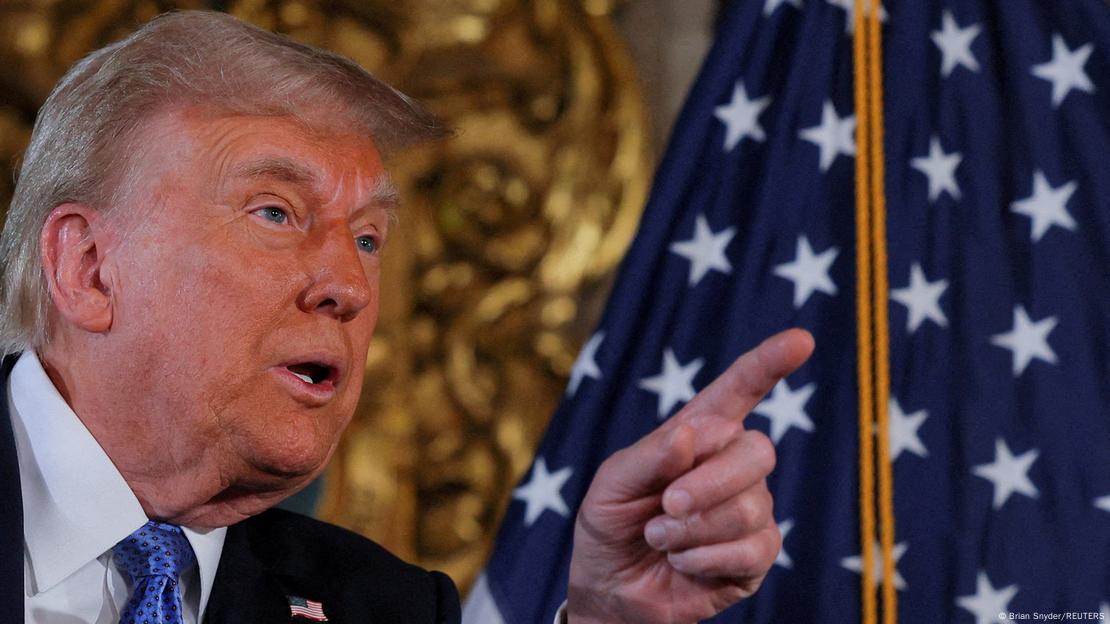
Donald Trump has pledged to 'eliminate all diversity, equity and inclusion programs across the entire federal government.'
Image: Brian Snyder/REUTERS

Glasgow acknowledges some critiques of DEI, such as approaches that rely on blame and shame, or efforts that lack rigor and effectiveness. "But I think there's also a broader backlash to progress on issues of social justice," he added.

The United States largest private employer, retailer Walmart, did not respond to DW's inquiry why they decided to phase out their racial-equity training. Another big company that took a step back from DEI said they could not comment because of the backlash they receive.

DEI strategist Zheng believes some business leaders are already scared of this riskier environment fearing "they're making decisions that unfortunately are going to have a big impact on probably their bottom line, their brand reputation, their employee retention, their morale."


A matter of rebranding?

For now, a large majority of corporate America still has DEI policies in place, a study by nonprofit business research organization The Conference Board found. And around 80% of the companies surveyed plan to maintain or increase their DEI resources over the next three years.

Experts like Lily Zheng think that even companies that are rolling back and becoming quieter about their commitments might still uphold their values. "Maybe they're calling it belonging. Maybe they're focusing on fairness. But either way, the bulk of these existing commitments doesn't seem to be changing," Zheng said.

Indeed, just weeks after Donald Trump's election win, Walmart updated its website and replaced a section it called "Belonging, diversity, Equity and Inclusion" simply with "Belonging."

Commenting on Walmart's and other companies' shifting strategies, Glasgow believes they are not saying "we no longer care about having a diverse workplace," rather they're saying: "Here are certain kinds of DEI programs that we're no longer going to adopt."

However, Lily Zheng pointed out that the absence of clear goals around DEI "might result in reduced investments," and if leaders hesitate to take a stand and express their commitment to these values, Zheng warned, "we might lose control of the narrative."

Edited by: Uwe Hessler

Laura Kabelka is a multimedia journalist with a focus on politics, digital topics and human rights.
Special counsel: Trump would have been convicted of election interference if not elected


Special counsel Jack Smith said in his final report on the case, which was submitted to Congress on Tuesday, that Donald Trump would have been convicted of election interference if he was not elected president in November. 
Pool File Photo by Charly Triballeau/UPI | License Photo

UPI
Jan. 14, 2025 

Jan. 14 (UPI) -- Donald Trump would have been convicted of attempting to overturn the 2020 election if not for his victory in the presidential election in November, Jack Smith, the special counsel who twice indicted the former and future president, said in his final report on the case, which was submitted to Congress early Tuesday.

Trump was charged by Smith with four felony counts in August 2023. However, amid litigation, the special counsel was forced to move to dismiss the case after Trump defeated Vice President Kamala Harris in November's presidential election.

In ending the election interference case, Smith cited the long-held Justice Department policy that forbids the prosecution of a sitting president.

Following litigation over the release of the final report, the 170-page document, obtained by The New York Times and NBC News, was submitted to Congress early Tuesday, meticulously detailing the case built against Trump.
Advertisement

"The Department's view that the Constitution prohibits the continued indictment and prosecution of a President is categorical and does not turn on the gravity of the crimes charged, the strength of the Government's proof or the merits of the prosecution, which the Office stands fully behind," Smith wrote in the report.

"Indeed, but for Trump's election and imminent return to the Presidency, the Office assessed that the admissible evidence was sufficient to obtain and sustain a conviction at trial."

Smith was appointed special counsel in November of 2022, and brought two indictments against the former president the following summer: one concerning election interference and the other regarding Trump's retention of classified documents.

Only one of the two volumes that make up Smith's final report was released Tuesday. The second volume, which concerns the classified documents case that was controversially dismissed this past summer, is being withheld from the public.

The report was submitted to Congress following litigation over its release, with Trump and his lawyers fighting to keep it private. On Monday, U.S District Judge Aileen Cannon, a Trump appointee who oversaw the documents case, permitted the release of Smith's report concerning the election interference case while barring the second volume for review.

Trump railed against the report on his social media platform, Truth Social, after its release early Tuesday.

"Jack is a lamebrain prosecutor who was unable to get his case before the election," he said in a statement, while incorrectly describing his election victory as a landslide. "THE VOTERS HAVE SPOKEN!!!"

In the report, Smith defends his decision to charge Trump, whom he accuses of pursuing a criminal conspiracy to maintain his hold of the White House after losing the presidential election to Biden in 2020.

Alleged illegal actions include attempting to induce state officials to ignore legitimate vote counts, manufacturing fraudulent electors in seven states he lost, pressuring Justice Department officials and Vice President Michael Pence to violate their oaths of office to support Trump's false claims and directing an angry mob to attack the Capitol on Jan. 6, 2021.

"The throughline of all of Mr. Trump's criminal efforts was deceit -- knowingly false claims of election fraud -- and the evidence shows that Mr. Trump used these lies as a weapon to defeat a federal government function foundational to the United States' democratic process," Smith said.

False claims propagated by Trump included large numbers of dead and ineligible voters had cast ballots and that voting machines had changed votes for him to Biden.

Smith said Trump's election claims -- widely referred to as The Big Lie -- "were demonstrably and, in many cases, obviously false," and that Trump knew there was no fraud in the 2020 election.

"Until Mr. Trump obstructed it, this democratic process had operated in a peaceful and orderly manner for more than 130 years," he said.

Throughout the report, Smith recounts how Trump pursued various efforts to overturn the election, despite knowing he had legitimately lost and that there was no evidence of fraud.

Smith also holds Trump responsible for the Jan. 6 insurrection, when thousands of the former president's supporters attacked Congress to prevent Biden's certification as the 46th president, resulting in five deaths and 140 police officers injured.

"Mr. Trump's words inspired his supporters to commit acts of physical violence," Smith wrote, referring to Trump's Jan. 6 speech at the Ellipse in which he directed his supporters to march on the Capitol and "fight like hell."

"The people who took Mr. Trump at his word formed a massive crowd that broke onto restricted Capitol grounds and into the building, violently attacking law enforcement officers protecting the Capitol and those inside."

Although much detailed in the report was already publicly known through the indictments, Smith, who resigned as special counsel over the weekend, stated Trump's candidacy represented "an unprecedented challenge" for both the Justice Department the courts.

He added that his office "had no interest" in affecting the election.

In a letter addressed to Attorney General Merrick Garland, included in the report, Smith emphasized that while he relied upon his team, the decision to bring changes against Trump was his alone.

"It is a decision I stand behind fully," he said. "To have done otherwise on the facts developed during our work would have been to shirk my duties as a prosecutor and a public servant.

"After nearly 30 years of public service, that is a choice I could not abide," he said.

Read More
U.S. blacklists online White supremacist group as terrorist organization


Jan. 13 (UPI) -- The United States named an online extreme right-wing group of White supremacists a designated terrorist organization on Monday, accusing it and its leaders of promoting race and ethnic-based violence.

Members of the transnational Terrorgram Collective connect via Telegram, hence its name, where they promote White supremacy and encourage racially or ethnically motivated violence.

Its users have been blamed for a number of violent attacks, including the October shooting outside a Slovakia LGBTQ+ bar that killed three people, including the gunman; a July planned attack on a New Jersey energy facility; and an August kift attack at a Turkey mosque that injured five.

"The Terrorgram Collective is being designated for having committed or attempted to commit, posing a significant risk of committing or having participated in training to commit acts of terrorism that threaten the security of United States nationals or the national security, foreign policy of economy of the United States," the State Department said in a statement.

Three leaders of the collective -- Ciro Daniel Amorim Ferreira of Brazil, Noah Licul of Croatia and Hedrik-Wahl Muller of South Africa -- were individually listed as Specially Designated Global terrorists.

With the designations, all property and interests in property of the collective as well as those named in the United States is blocked and Americans are barred from doing business with them. According to State Department officials, the terrorist designations expose and isolate those named from using the U.S. financial system.

In September, two U.S.-based leaders of the collective -- Dallas Humber of California and Matthew Allison of Idaho -- were charged in a 15-count indictment for conspiracy to provide material support to terrorists and soliciting hate crimes and the murder of federal officials.

According to the indictment, the pair spread online video and publications that provided what federal prosecutors described as "specific advice" for carrying out crimes and a hit list for assassinations.

They are accused of inciting users, including those behind the Slovakia, New Jersey and Turkey attacks.

The collective was designated as a terrorist organization in Britain following approval from its Parliament in April. The order criminalizes being a member of the collective with a potential sentence of up to 14 years in prison.
The 51st US state? How Canada might take on Donald Trump

DW
January 12, 2025

US President-elect Donald Trump threatened Canada with 25% tariffs and even quipped about a merger of the nations. The North American neighbors have strong economic links, so a trade dispute would have a heavy impact.


Canada's economy could be plunged into recession if Trump imposes 25% tariffs
Image: Valerie Macon/AFP/Getty Images


"Blame Canada!" goes the satirical song from the 1999 animated comedy film "South Park: Bigger, Longer & Uncut," in which a mother rallies her small Colorado town to confront youth degeneracy.

The song humorously shifts blame to the US's northern neighbor rather than the policies of the government of the United Statespolicies, parenting failures or media influence, declaring that "we need to form a full assault — it's Canada’s fault."

Decades later, US President-elect Donald Trump appears to be channeling a similar energy, blaming Canada for illegal migration and drug trafficking across the northern border.

Weeks after winning a second term in the White House, Trump threatened to impose 25% tariffs on all Canadian imports — including cars and automotive parts — starting on his first day in office.

He has since stepped up his rhetoric, joking that Canada could even be annexed as the 51st US state. He even mocked the Canadian Prime Minister Justin Trudeau — who resigned last week amid plummeting approval ratings — by calling him the "Governor" of the "Great State of Canada."

Trump bombast or threat to be tackled?


While some analysts believe the rhetoric is typical Trump bluster, his remarks have been widely condemned by Canadian politicians and economists as Canada wasn't a major target for the Republican candidate during the US election campaign — unlike China, Mexico, BRICS and NATO.

"It came like a bolt from the blue," Douglas Porter, chief economist of the Bank of Montreal (BMO), told DW, referring to Trump's attack. "There was no groundswell among his supporters that saw Canada as a big villain ... so I find this one a bit more unnerving."

Porter said Trump's reasoning appears to be changing as he prepares to take office on January 20.

"Initially, there were concerns about the border, which I think Canada would be happy to address. Then there was talk about the US-Canada trade imbalance. And in his press conference the other day, Trump talked about imposing economic hardship on Canada," he said.

Canada produced more than 1.5 million motor vehicles in 2023, many for the US marketImage: Chris Young/The Canadian Press/ZUMA Press/picture alliance

Despite championing and signing the United States-Mexico-Canada Agreement (USMCA), which took effect in 2020, Trump now says Washington's neighbors have failed to meet key terms in the accord, from border control to trade. The deal is up for review next year.

Trump "is known to rip up his own deals to secure even better deals," Tony Stillo, Director of Canada Economics at the economic advisory firm Oxford Economics, told DW. "Even though he helped negotiate the USMCA that replaced NAFTA (North American Free Trade Agreement), he's now calling it the worst deal ever."

The US does, however, have far worse trade imbalances with China, Mexico, Vietnam, Germany, and Japan than with Canada, which was nearly $55 billion (€53.6 billion) from January to November last year, according to the US Census Bureau.

By comparison, the US-China trade imbalance was almost five times higher during that same period, at $270.4 billion. The US-Canada trade imbalance has fallen by about a quarter over the past two years. However, it was much lower before the pandemic and the USMCA took effect.

Canada getting US subsidy, says Trump

Trump wrote on his Truth Social messaging platform this week that the imbalance is effectively a US subsidy to Canada, saying the world's largest economy "can no longer suffer the massive Trade Deficits that Canada needs to stay afloat."

US-Canada trade is one of the most extensive and integrated partnerships in the world. In the first 11 months of 2024, $699.4 billion in trade was conducted between the countries. Canada is the largest market for US exports, ahead of Mexico, Europe and China. US exports include trucks, vans, cars and auto parts, as well as fossil fuels.

The United States is also Canada's top export destination, with more than three-quarters of outbound goods and services heading across the southern border. For comparison, 53% of Germany's exports go to other European Union nations.

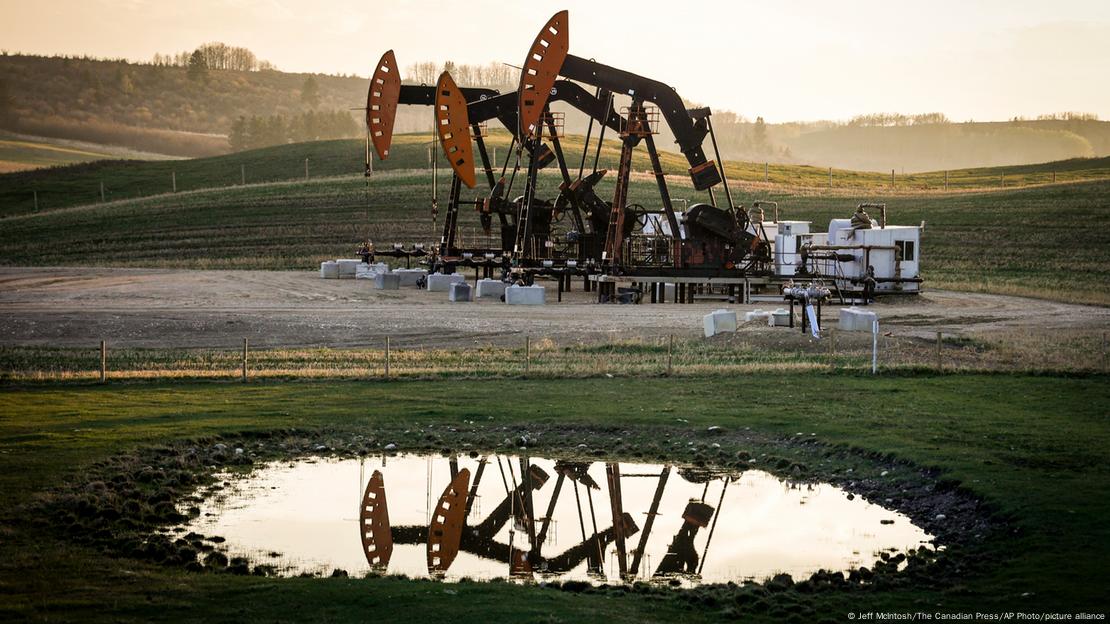
Crude oil makes up a quarter of Canada's exports southward, which in July 2024 reached a record 4.3 million barrels per day, according to the US Energy Information Administration (EIA).

Thanks to surplus US processing capacity, the US refines the crude oil into gasoline, diesel, and jet fuel for domestic use and re-export — some of it back to Canada.

Despite the US being a major oil producer, the country imports millions of barrels of crude oil from CanadaImage: Jeff McIntosh/The Canadian Press/AP Photo/picture alliance


Trouble for oil and auto sectors

Danielle Smith, the premier of the oil-rich Canadian province of Alberta, warned the US would be shooting itself in the foot if Trump makes good on his threats, writing this week on X that: "Any proposed tariffs would immediately hurt American refiners and also make consumers pay more at the pumps."


Trump's ire has also targeted Canada's automotive industry, which the president-elect says has shifted manufacturing across the northern border in recent years, resulting in layoffs for American workers.

However, North America's auto sector is deeply integrated and parts and vehicles often cross the US-Canada border multiple times during production.

Canadian auto executives have warned that tariffs could disrupt complex supply chains, leading to increased costs and inefficiencies — spiking prices for new vehicles in both countries.

"If you tariff at 25% every time it [an auto part] goes across a border, the costs become ridiculous," William Huggins, assistant professor at McMaster University's DeGroote School of Business, told DW.

Canada's BNN Bloomberg this week cited economists as saying the US tariffs could shrink Canada's gross domestic product (GDP) by 2-4% and may tip the economy into recession.

Ottawa readies tit-for-tat measures

Canada's ruling Liberal Party won't elect Trudeau's successor until March 9. While his departure leaves his country politically rudderless, Canadian policymakers have devised a list of US imports that might face retaliation if Trump proceeds with his tariff plan.

The analysts DW spoke with said Canada is likely to pursue tariffs on politically and economically sensitive US products as it did under a similar trade row with Trump in 2018 and which was resolved a year later.

The Global & Mail newspaper reported this week that Ottawa is considering tariffs on US steel, ceramics, glass, flowers and Florida orange juice, among other goods.

"They [The Canadian side] have only identified a handful of sectors because they don't want to put everything on the table yet to undermine their negotiating position," Stillo said.

But with mostly bluster and outlandish threats to go on, Canada's leaders are yet to know exactly what Trump is seeking. Are his tariff threats a negotiating tactic to improve border control, boost energy and automotive cooperation or hike Canada's contributions to NATO?

"We're not dealing with an enlightened multi-step US policy," Huggins said. "We're dealing with a bully who said, 'Give me your lunch money,' so we're probably going to give them the change in our pockets."

But despite the short-term disruption to both nations' economies, the McMaster University economist thinks policymakers in Ottawa will look to play the long game, for one obvious reason.

"30 years from now, Donald Trump won't be alive, but Canada will be," Huggins told DW.

Edited by: Uwe Hessler

Editor's note: This article was updated on January 12, 2025, to reflect that the US Census Bureau data for 2024 shows trade from January through November.
Trump withdrawing US from WHO would be a 'strategic mistake'

Matthew Ward Agius
DW
January 13, 2025

It's widely expected that the United States will leave the World Health Organization when Donald Trump becomes president. Experts say it would be a lose-lose for the US and global health.

What you need to know

Donald Trump is expected to withdraw the United States from the World Health Organization when he becomes president on January 20.

The United States is the largest financial contributor to the WHO, mostly through voluntary payments to its preferred programs.

The WHO's funding model has been criticized for being too dependent on such "strings attached" donations.


Donald Trump is set to pull the United States out of the WHO on the first day of his presidency. Experts warn that the move would be harmful for both parties.

Trump, who will be inaugurated for a second and final term as US president on January 20, also tried to withdraw from the WHO in July 2020, at the end of his first administration.

But fully cutting ties with the WHO couldn't happen overnight due to a long-standing congressional resolution requiring the president to give a year's notice and pay back any outstanding obligations.

Because of that timeline, Joe Biden's election to the presidency in 2020 just months after Trump's decree, enabled the Democrat to reverse the decision.

Trump's likely move will face no such barriers this time around. On his first day in office, he could give notice of a US withdrawal from the WHO, which would then take effect in January 2026.

The US is the biggest source of WHO funding

If the US did withdraw from the WHO, it would be a major blow to the organization's budget and its ability to coordinate international health programs and policy.

The WHO is a United Nations agency comprised of 196 member countries, which pay into the organization via "assessed contributions" — effectively a membership fee — based on GDP and population figures on a two-year funding cycle.

The US accounts for nearly a quarter of these funds, ahead of China, Japan and Germany.


Nations can also make voluntary contributions, which the US does. In the current cycle, the US has already contributed almost $1 billion to the WHO budget.

But about half of the WHO's funding comes from non-governmental organizations . For example, hundreds of millions were donated by the Bill & Melinda Gates Foundation, which makes it the second-biggest contributor overall.


Donor-directed or "specified" contributions — where the giver dictates how and where the money is used — account for more than 70% of the total budget.

That presents a deep structural problem for the operation of the WHO, according to Gian Luca Burci, a former WHO lawyer now working as a global health law specialist at the Geneva Graduate Institute.

"Donors attach a lot of strings, so the WHO becomes very donor-driven," Burci told DW. "The US gets quite a bit in terms of return for relatively little money."

"There are many issues that the US attaches a lot of importance to, regardless of who sits in the White House," Burci added, "in particular on health emergencies, on pandemics, on disease outbreaks, but also on getting data of what happens inside countries."

The loss of its top financial contributor would leave the WHO with few options to make up the shortfall. Either other member states would need to increase their funding, or its operations budget would need to be stripped back.

Leaving the WHO would also hurt the US

The relationship between the WHO and Donald Trump began to deteriorate in 2020, when he accused the WHO of being a "puppet of China” during its response to COVID-19.

"He continues to rail against China and says that WHO is in the pocket of China, that China influences it," said Lawrence Gostin, a professor of global health law and director of the WHO Collaborating Center on Public Health Law and Human Rights at Georgetown University, US.

Gostin said exiting the WHO would be an "own goal" for the US and would come at the cost of the "enormous influence" the country has in global health.

"I think it would be deeply adverse to US national security interests. It would open the door to the Russian Federation, China and others. That might also be true with the BRICS: South Africa, India, Mexico," Gostin told DW.

Leaving the WHO would increase health risks of disease outbreaks

Withdrawal would also make the world a less healthy and safe place. Isolating itself from the global health community would put the US at a protective disadvantage during disease outbreaks.

"There are many things the United States can do alone, but preventing novel pathogens from crossing our borders simply is not one of them," Gostin said.

He points to the current concerns around H5N1 avian influenza in the US: "We're not going to have access to the scientific information that we need to be able to fight this because avian influenza is a globally circulating pathogen."

"WHO has an influenza hub where it monitors all the strains around the world. [The US Centers for Disease Control and Prevention] is a very close partner and we use those data to develop vaccines and therapeutics. We'd be flying blind," Gostin said.

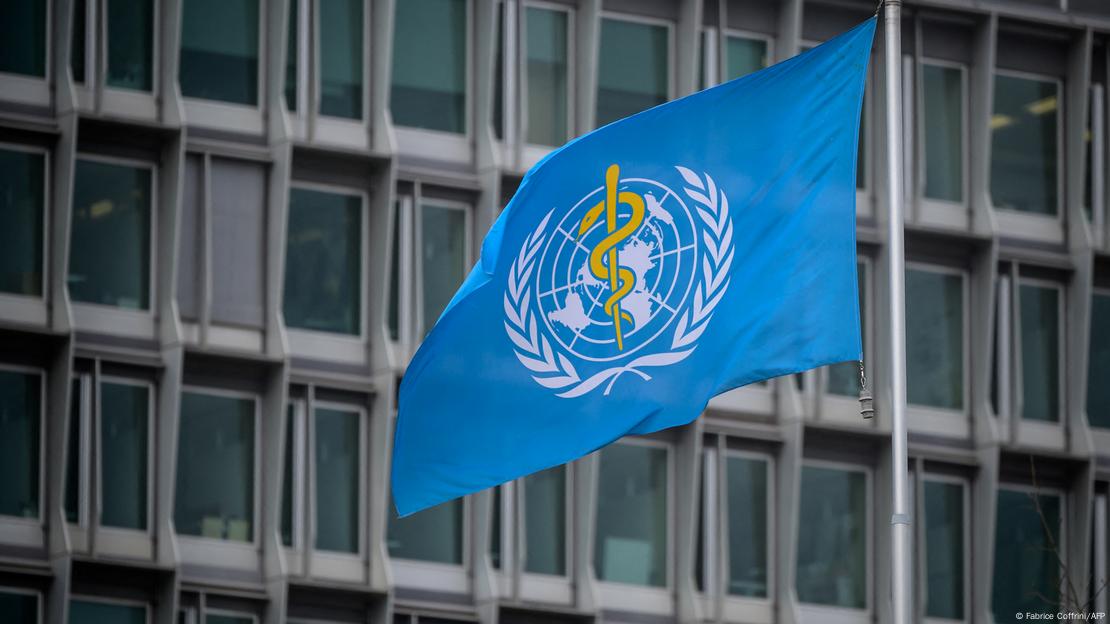
Will the WHO have to make do without US money?Image: Fabrice Coffrini/AFP


Threat could force more change, and US win

Trump's withdrawing the US from the WHO would certainly transform the US-WHO relationship, but it wouldn't necessarily end it.

Burci is open-minded about what that future relationship could look like.He suggests the US could act like non-governmental organizations and charities by making voluntary contributions to programs it ideologically supports.

"[They] may continue to fund some projects [and] activities so it's possible that the WHO would not lose the entirety of the US contribution," Burci said.

Trump also casts himself as a dealmaker president, so he could use the withdrawal as a stick to force US-endorsed reforms in Geneva.

The WHO's performance in a modern world has long been criticized, and not just by the US. However Gostin notes some reforms have begun in the wake of its handling of COVID-19.

While WHO's "transformation agenda" has also been in place for nearly eight years, Trump may be able to further strong-arm change.

Gostin would rather see Trump engage his dealmaker than isolationist persona in his WHO dealings.

"He could send a letter withdrawing, or, he could do a deal with WHO to make it a better, more resilient, more accountable and transparent organization, which would be a win-win for the United States, for WHO and the world," Gostin said.

Edited by: Fred Schwaller

Matthew Ward Agius Journalist with a background reporting on history, science, health, climate and environment.