Saturday, January 18, 2025


CHINA/AFRICA

Together despite US narrative


By STEPHEN NDEGWA | China Daily Global | Updated: 2025-01-17 
SHI YU/CHINA DAILY

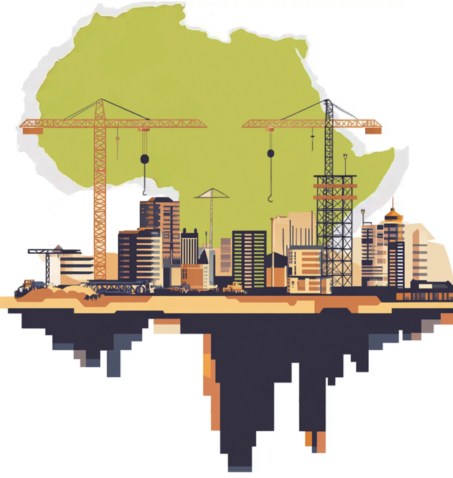
The China-Africa partnership's success will depend on its ability to transcend external interference and deliver concrete results that improve the lives of millions

As Donald Trump is to assume his second term in office on Jan 20, the global geopolitical landscape is increasingly being defined by great power competition. Africa has become a significant arena for this rivalry, particularly in the contest between the United States and China. Central to this dynamic is the enduring partnership between China and Africa — a relationship that has weathered sustained external criticism and pressure, particularly during Trump's first term. Moving forward, both China and Africa must navigate an intensified environment of competition, leveraging their shared history, comprehensive strategies and mutual benefits to strengthen their partnership and achieve common goals.

Trump's first term brought a mercantilist approach to US foreign policy, marked by sporadic engagement with Africa. His administration frequently cast China's presence on the continent in a negative light, advancing narratives of "debt-trap" diplomacy and alleged exploitation of African resources. These claims were amplified by Western media and policy circles, portraying Chinese investments as predatory rather than constructive.

However, these critiques ignore the substantial benefits that Chinese partnerships have brought to Africa. Unlike Western aid, which is often tied to conditional strings regarding governance or political reforms, China's model emphasizes respect for sovereignty and aligns with Africa's own development priorities.

Far from the "debt trap" claims, Chinese loans and investments have helped address Africa's longstanding infrastructure deficits. Projects such as Kenya's Standard Gauge Railway, Ethiopia's industrial parks and Nigeria's hydropower facilities have created vital economic lifelines. Studies by organizations such as the Jubilee Debt Campaign have debunked the idea that Chinese loans dominate African debt burdens. In most cases, African debt crises stem from Eurobond markets and domestic financial mismanagement rather than Chinese financing. Furthermore, China has shown flexibility, restructuring or forgiving loans when needed, as evidenced during the COVID-19 pandemic when it provided debt relief to several African nations.

Washington is likely to ramp up its efforts to frame Chinese influence as a challenge to Western values and African sovereignty. For African nations, this competition presents risks of polarization and external interference. Yet, it also offers an opportunity to leverage the rivalry for greater investments and favorable terms. The key lies in maintaining agency, ensuring that partnerships with either power align with Africa's long-term development goals.

China's ability to sustain its strong ties with Africa will depend on its continued focus on initiatives such as the Global Development Initiative, the Global Security Initiative and the Global Civilization Initiative. These frameworks address Africa's most pressing challenges, such as poverty eradication, peace and security, and cultural exchanges. The Global Development Initiative, for example, complements Africa's Agenda 2063 by prioritizing industrialization, food security and poverty reduction. The Global Security Initiative's focus on peacebuilding is particularly relevant in conflict-prone regions such as the Sahel region and the Horn of Africa, while the Global Civilization Initiative fosters deeper people-to-people connections, reinforcing the cultural and diplomatic foundations of partnerships.

The accusation of Chinese "debt traps" is not the only myth that needs debunking. Critics have also painted China as an economic colonizer, a narrative that fails to recognize the transformative impact of Chinese investments on local economies. For example, Chinese-funded infrastructure projects often involve significant local labor and capacity-building components, creating jobs and transferring skills to African workers. Initiatives such as the Luban Workshop, a project named after an ancient Chinese master craftsman that provides vocational skills training for African youth, exemplify China's commitment to empowering local communities.

This non-prescriptive approach to development resonates deeply with African leaders. Unlike Western models, which frequently impose governance reforms or ideological frameworks, China respects the sovereignty of its African partners. This respect is not synonymous with indifference, however. African leaders have highlighted their ability to negotiate terms that meet their national priorities, ensuring that the benefits of partnership are mutually shared. For example, Ethiopia has leveraged Chinese investments to develop industrial parks that align with its manufacturing-led development strategy, while Rwanda has utilized Chinese technology to enhance its e-governance systems.

At the same time, Africa has much to gain by replicating aspects of China's development trajectory. Over the past four decades, China has lifted over 800 million people out of abject poverty through a strategic focus on infrastructure, education and agricultural modernization. These experiences offer valuable insights for African countries seeking to address poverty, inequality and underdevelopment. Adapting these strategies to local contexts can help African nations accelerate their progress toward the United Nations Sustainable Development Goals.

Beyond infrastructure and economic development, China and Africa must collaborate on emerging challenges such as climate change, digital transformation and public health. Africa's vulnerability to climate change necessitates investments in renewable energy and sustainable agriculture — areas where China has significant expertise. Similarly, bridging the digital divide through investments in information and communications technology infrastructure can position Africa as a competitive player in the global digital economy. The COVID-19 pandemic also underscored the importance of health cooperation. China's support for vaccine distribution and the establishment of the Africa Centres for Disease Control and Prevention highlights the potential for deeper collaboration in strengthening healthcare systems.

Trump's second term poses a test for the resilience of China-Africa relations. The intensified geopolitical rivalry will require both partners to navigate external pressures while staying focused on their shared objectives. African nations must resist being drawn into binary alignments, leveraging their partnerships with China and the US to secure the best outcomes for their people. For China, the focus must continue to remain on delivering tangible benefits, addressing misconceptions, and deepening its commitment to mutual respect and shared prosperity.

The China-Africa partnership has demonstrated remarkable resilience in the face of challenges. Its foundation lies in the principles of mutual benefit, respect for sovereignty and a shared vision for development. By building on these principles, addressing emerging challenges and remaining adaptable to changing global dynamics, China and Africa can continue to strengthen their partnership, setting an example of constructive engagement in an increasingly polarized world.

In the coming years, the partnership's success will depend on its ability to transcend external narratives and deliver concrete results that improve the lives of millions. It is a strategic alliance rooted in shared aspirations and a commitment to a more equitable global order. As great power competition reshapes the international landscape, China and Africa have the opportunity to demonstrate that cooperation, not confrontation, is the path to a brighter future. By doing so, they can not only navigate the complexities of Trump's second term but also lay the groundwork for a new era of global collaboration.

The author is executive director of South-South Dialogues, a Nairobi-based communications development think tank. The author contributed this article to China Watch, a think tank powered by China Daily. The views do not necessarily reflect those of China Daily.

Contact the editor at editor@chinawatch.cn.
SPORTS CAPITALI$M

NBA tips off 14th Chinese New Year celebration

chinadaily.com.cn | Updated: 2025-01-17


The 14th NBA Chinese New Year celebration tips off today and runs through Feb 12. The celebration will feature more than 100 live game broadcasts, a new television spot, original social and digital content and a series of community and fan engagement activities featuring NBA Legend Shawn Marion.

NBA team celebrations will tip off on Jan 23 when the Golden State Warriors visit the Sacramento Kings, and the Houston Rockets host the Cleveland Cavaliers. Twenty-one NBA teams will celebrate the Year of the Snake with in-arena activations and/or social and digital content.

The campaign launched with a new television spot entitled, "Prosperity Year Adventure," featuring Minnesota Timberwolves guard Anthony Edwards and New York Knicks guard Jalen Brunson participating in a series of basketball-themed New Year activities alongside families and children celebrating the holiday. The celebration will also feature a series of NBA Cares community outreach activities attended by Marion, including an interactive basketball activity for wheelchair basketball players in Beijing and a fan activation in Hong Kong.

Throughout the multi-week celebration, fans will be able to participate in several Chinese New Year-themed social media activations, including the chance to win NBA-themed prizes and purchase special-edition NBA-themed Year of the Snake merchandise.

"Prosperity Year Adventure" Television Spot:


Brunson and Edwards star in a new television spot where the All-Star guards are transformed into several basketball-themed settings alongside family and children celebrating the holiday, including as Mahjong pieces, door gods and candy figures at an outdoor basketball competition. The spot will air on more than 25 of the league's media partner platforms in Asia, including Alipay, Astro, CCTV-5, CCTV.com, CCTV Video, CMG Mobile, China Mobile HD, China Mobile MIGU Video, Eclat, Elta, FPT, Great Sports, the iSMG App, Kuaishou, LINE, M Plus Live, Now TV, SiTV, Tencent News, Tencent Sports, Tencent Video, Truevisions, Videoland, ViuTV, WeChat Video and Weibo.

NBA Cares Community Outreach Activities:

As part of a series of NBA Cares Chinese New Year community engagement activities, Shawn Marion will participate in an interactive basketball activity for 20 wheelchair basketball players in Beijing on Jan 22, where he will share tips to help the players elevate their game and join them for calligraphy, paper-cutting and dumpling-making in celebration of Chinese New Year. Marion will then visit Hong Kong on Jan 25 to take part in a series of Chinese New Year-themed activities, including a lion dance and other activations to celebrate the Year of the Snake with local fans.

In addition, fans can participate in a variety of interactive Chinese New Year-themed social media activities and contests starting this week


Atlantic tragedy

DAWN
Editorial 
 January 18, 2025 


AS reports emerge of another migrant boat sinking — this time in the Atlantic off the coast of Western Sahara — a fresh approach to the crisis must be urged to prevent more lives from being snuffed out in distant waters.

The boat set sail earlier this month from Mauritania and was reportedly headed to the Spanish Canary Islands. It remained adrift for nearly two weeks. Most of the passengers on board were Pakistani and at least 44 are believed to have perished.

This is the second such incident after a vessel capsized off the Greek coast last month, which reportedly left scores of Pakistanis dead, while a shipwreck in the Mediterranean waters in 2023 claimed 262 Pakistani lives.


Following the December tragedy, the state sprang into action, rounding up human smugglers. But far more sustained action is needed to stop this illegal racket, while the only long-term solution lies in addressing the root causes of illegal migration: financial misery and a lack of economic opportunities at home.

According to the International Organisation for Migration, migrant arrivals from Pakistan in Europe have surged since 2023, with economic and political uncertainty fuelling the trend. The IOM says that nearly half of the migrants leaving Pakistan are men aged between 25 and 34; the vast majority hail from central Punjab.

Many migrants are choosing the North African route through Libya and Egypt. From here, they risk their lives to cross the Mediterranean or the Atlantic in rickety vessels in search of a European El Dorado. But, instead of fulfilling their dreams, many of them meet a terrifying end in the sea, or are tortured at the hands of the smugglers.

Dismantling the wide network of human smuggling and trafficking gangs that operate across borders is a challenge but Pakistan must smash these rackets, while officials who facilitate this odious trade must face the law. Better coordination with foreign LEAs is also important.

Moreover, as the IOM suggests, awareness must be created in districts with high rates of illegal migration, by “targeting tech-savvy youth”. These young men must be convinced that their risky journeys are not worth it.

Unfortunately, in their desperation, they are unlikely to heed such advice, unless the state shows that it is serious about creating job opportunities for them to live a life of dignity on their own soil.

Published in Dawn, January 18th, 2025
Integral Sufism


Ghulam Shabbir 
 January 17, 2025
DAWN


NORMATIVE Sufism is a genuine Islamic phenomenon as the Prophet Muhammad’s (PBUH) prophetic consciousness was founded upon very definite, vivid and powerful mystic experiences. From the inner unity of his spiritual experience and of his faith, the Prophet of Islam at the very outset of his prophetic mission was certain that he was to deal with global concerns. This to him was to destroy the corrupt socioeconomic structures of the world and build anew.

With dazzling certainty of purpose and risks involved he challenged the Makkan oligarchy, inspired by his religious consciousness and spiritual experience. The latter was not to be dwelt on and enjoyed for its own sake, but it was the means to an end, not an end in itself. Thus, he was uniquely poised to bend history to a definite course. It is on this touchstone that Sufism — which to Iqbal qualitatively does not differ from the experience of the Prophet — needs to be judged.

Imbued, informed and judged by the normativity of the Quran, the early Sufi movement was based on the simplicity and piety of the Prophet against the luxurious lifestyle of the ruling elites. However, being reactionary in nature it succumbed to renunciation of the world. It aligned with the Asharite doctrine of pre-determinism and assumed neutrality to social phenomena. Sufism had lost its pivot when al-Ghazali reintegrated it into Islam as a pivotal core by striking an organic link between law, theology and mysticism.

However, the cumulative force of his own temperament, his openness to Christian ideas and his concerns for the state’s interests led al-Ghazali to the doctrine of personal salvation, a far cry from the fundamental impulse of the Quran, for there is no particular salvation only success (falah) or failure (khusran) in the task of building a sociopolitical world order. Hence, al-Ghazali’s individualism took a heavy toll on Islamic positivism and collectivism. And as the Muslim philosophers had brought revelation at par with reason and were playing havoc with the metaphysical aspects of faith, al-Ghazali inspired precaution against them, which the community took as a ban on philosophy.

The early Sufis emulated the piety of the Prophet (PBUH).

However, it was Ibn al-Arabi’s overblown syncretic Sufi movement which assimilated alien ideas of every stripe and brought the idea of personal salvation to the level where religion was hardly needed. Philosophy violently reappeared in the form of ‘infallible’ Sufi intuition (kashf) as a norm, with reason denied its role. Cast in Avicennian logic, Ibn al-Arabi’s doctrine of unity of being through Persia reached India where it fertilised itself with Vedantic monism. The rapprochement culminated in Akbar’s Din-i-Ilahi. Ibn Taimiyya had already termed Ibn al-Arabi an epitome of everything ‘un-Islamic’. However, Sheikh Ahmad Sirhindi categorised him a saint in cardinal error.

Sheikh Sirhindi treated Ibn al-Arabi in sympathetic terms with Sufi rebuttals. He said monism, ie, unitary repose, is the first station of the spiritual journey and so overwhelms the subject that he deems it as final. He becomes so enamoured of God that everything seemed ‘God’ to him; in turn something from within impels him to announce hama oost (‘everything is God’). This leads him to the idea of ‘God-world identity’, ie, God is the world and the world is God. This is peculiar to the monistic state which needs to be transcended. The highest station of spiritual journey is the province of prophets which yields moral content. Mystics may have access to it with the mediacy of a prophet.

So complete was the spiritual odyssey of Sheikh Ahmad Sirhindi that after 1,000 years of Isla­mic history, normative Islam comes alive in his mystic-intellectual const­ructs, which justify his claim as ‘In­­no­vator of the millennium’. It was the richness of spiritual enterprise that swu­ng Ibn Taimiyya and Sheikh Ahmad into action on the line of the Prophet against the status quo and led Shah Wali Allah to ‘rediscover’ Islam. In Dr Fazlur Rahman’s apt remarks, Iqbal has but simply rendered in magical poetry what Sheikh Ahmad had preached as his central theme 300 years before. On this premise, Zulfikar Ali Bhutto termed Pakistan a Sufi idea.

Sufism is a fact, though the metaphysically exhausted, science-smitten Cartesian West deems it fiction. Sheikh Ahmad’s constructs have turned mysticism into a positive science of higher psychology for which modern psychology is groping in the dark. Hence, Sufism needs to be judged by the normativity of the Quran, not rescinded in the name of progressivism. Progress we want not despite Islam, nor besides Islam, but because of Islam which represents pure progress — moral and material. Sufism, which is all about inwardness of the deep sense of the moral task, to activate and put moral energies in constructive channels, is as integral to our progress as to Islam.

The writer is an academic.


Published in Dawn, January 17th, 2025
Is it time for basic income in Pakistan?
Published January 17, 2025 
DAWN

The writer teaches at the University of Bath, UK, and has led basic income pilots across South Asia.


Social assistance is everywhere conditional, and in Pakistan it is no different. Either it comes with behavioural strings attached — ‘do this and we’ll help you, don’t and we won’t’ — or it is targeted, with receipt conditional on being a specific type of person or facing a particular type of problem (think Benazir Income Support Programme [BISP] and the extreme poor).

Those who defend this approach typically offer the same justifications. First, they argue, resources are limited, which means that we should give them to those most in need and make sure they use them well. Intuitively sensible, this position quickly gives way to the troubling claim that as the poor aren’t used to having any money, we should ‘guide’ them so that they don’t waste what they get. Inside this sits the pernicious, yet sadly widespread, prejudice that the poor are feckless and do not deserve our support.

Critics of these positions abound, as they do of conditionality more broadly. First, they note, any claim that ‘resources are limited’ is contentions at best. ‘Just walk around F6 in Islamabad’, you might hear, ‘and you’ll see how much money Pakistan really has’. The important point is that we cannot uncritically accept the claim that there isn’t enough money to go around, because how much money is available to the public purse is always and everywhere an artefact of decisions made by the wealthy and the powerful about how much they will make available.

Second, the evidence is clear that conditionality is ineffective, as well as inefficient and inimical to human dignity. Targeted forms of social assistance exclude many of those most in need. Targeting also leads to waste, since it generates duplication, opens avenues for corruption, and requires burdensome bureaucracies to administer. In turn, these bureaucracies are known to be stigmatising and abusive — the poor typically have to jump through unpleasant hoops, offer bribes, and face shame to access support that should be their right.


Think of basic income like a pension, only for everyone, with the core purpose being to provide a stable floor of economic security for all.

This is why lawmakers, scholars and civil society advocates are turning to basic income as an alternative. Per the international definition, a ‘basic income’ is “a periodic cash payment unconditionally delivered to all on an individual basis, without means-test or work requirement”. Think of it like a pension, only for everyone, with the core purpose being to provide a stable floor of economic security that all people can stand on, as a replacement for the patchy social safety nets that we know millions fall through.

Supporters note not only that basic income could provide people with life-changing economic security, but that its simplicity — being transferred directly to all — eliminates the need for expensive, wasteful administrative systems that are ripe for corruption. This prospect is attractive all over the world, but perhaps nowhere more so than in the subcontinent.

Pilot research from across the region shows that basic income can be transformative. In India, a trial in rural Madhya Pradesh found that it improved people’s health, nutrition, education, and ability to invest. More recently, an experiment run by colleagues and I in Telangana showed major improvements in well-being, dignity, and people’s sense of agency. These findings have been paralleled in Bangladesh, where another experiment documented a substantial reduction in stress alongside an increase in people’s sense that they can cope with life. Nepal, it has just been announced, is set to join the wave of South Asian basic income pilots.

Advocacy is now following the research. In Bangladesh, major public figures are calling for the transitional authority to rationalise the social protection system by combining the more than 150 targeted social protection schemes into one nationwide basic income. In India, Congress included basic income in the manifesto that finally stemmed the BJP tide at the last election. While at the state level, more and more authorities are announcing something like a ‘basic income for women’; surely it is only a matter of time before one of them crosses the Rubicon to offer basic income for all?

All of which begs the question — is it not time for Pakistan to catch up? The Pakistani government’s own figures suggest that in 2023-24, over seven per cent of GDP was allocated to ‘pro-poor expenditure’, as per the national Poverty Reduction Strategy Paper. Even if these figures are highly debatable — they generously include public infrastructure and even some military spending, as if fattening the fauj feeds the poor — the important point is that the state is at least in principle committed to equity. What is more, the sums cited by the Ministry of Finance would be enough to fund a modest nationwide basic income of Rs3,000 per month. Wouldn’t this be preferable to the status quo?

Crucially, while the sceptical will still say that it can’t be done, history shows that it can — they said the same about the Nepalese pension, which launched at a measly rate in the 1990s and now sits at the equivalent of Rs8,000 a month, and they even said the same about BISP. Likewise, in India, many claimed that basic income would be impossible, before the aforementioned basic income pilots triggered a nationwide movement calling for reform. What history tells us, therefore, is that bravely beginning — either with a pilot or a policy innovation that can be scaled — opens the pathway for institutionalisation. And where benefits get institutionalised, they tend to stay, since their popularity makes them difficult for predatory authorities to roll back.

It is time for Pakistan’s policymakers and for progressive civil society to be bold and take steps towards basic security for everyone, through basic income for all.


Published in Dawn, January 17th, 2025


Geopolitics of climate change

Ali Tauqeer Sheikh 
January 16, 2025 
The writer is an Islamabad-based climate change and sustainable development expert.

DESPITE dismissing climate change as a hoax, the incoming Trump administration’s strategic interest in the Panama Canal, Greenland, and Canada suggests an implicit recognition of climate change’s geopolitical implications. President-elect Donald Trump has not ruled out the use of military force, if needed, to secure the canal and Greenland, and “economic force” in the case of Canada. This reflects a broader strategy of seizing climate opportunities while denying climate change’s existence.

The apparent contradiction is recognised by American foreign policy expert Richard Haass who has highlighted the growing recognition of climate change’s role in shaping global power dynamics, even among climate change sceptics. The US is planning to checkmate Chinese trade and investments, particularly in America’s backyard, by reincarnating the Monroe Doctrine that now seeks a US sphere of influence stretching from southern and central America to the outer reaches of the Arctic regions.

Trump has questioned the artificially drawn border lines — a global gift of colonialism and perpetuated by nationalism since the Napoleonic wars. Apart from plans to rename the Gulf of Mexico, the US has laid claim to the following three strategic assets, all driven by climate change impacts.

Panama Canal: The waterway faces significant challenges due to climate change. Severe drought in 2023, for example, has reduced daily vessel transits by 36 per cent. Washington has opposed Chinese investments to develop alternatives including a Nicaragua canal, and a rail system in Colombia or Mexico, to connect the Pacific and Atlantic Oceans. Trump’s consideration of military action to ‘reclaim’ control reflects concerns about both climate vulnerability and China’s economic presence enabled by this crucial maritime chokepoint.

Trump’s approach is a contradiction between public rhetoric and strategic planning.

Greenland: The strategic importance of this territory has increased dramatically as climate change accelerates ice melt, revealing vast deposits of rare earth elements (REE). The US Geological Survey (USGS) believes that Greenland may have the largest untapped REE reserves outside China. This also creates new shipping routes while raising US security concerns about increased accessibility to China. With Greenland’s icesheet melting, trans-Arctic shipping routes are significantly shorter than traditional ones such as the Suez Canal. China and Russia are developing the Northern Sea Route (NSR) following the Sino-Russian shipping corridor and the Arctic Express to boost their trade with Asia. The US has deployed Nato’s Arctic Strategy that contains Russia, an Arctic country, and refuses to accommodate China’s claim of being a ‘near-Arctic’ country.

Canada: The country’s vast Arctic territories contain an estimated $1trillion worth of minerals essential for clean energy technologies. The USGS reports that Canadian rare earth deposits could potentially supply 25pc of global demand. Trump’s approach to bilateral ties with Canada focuses on securing unhindered access to these resources while challenging Canadian climate policies.

Trump’s electoral promise to cut gas prices by half will hinge on Canada revisiting its climate commitments, particularly cutting carbon tax and cancelling the energy cap, and Quebec’s agre­ement with California on carbon trading. Trump’s ‘drill, baby, drill’ mission has significant implications for North American energy markets.


Geopolitical strategy to counter China: It seems that the emerging US strategy to counter Chinese influence focuses on controlling key maritime routes and resource deposits. The Pentagon’s 2024 Indo-Pacific Strategy Review emphasises the critical nature of securing strategic chokepoints and resource-rich territories. Chinese investments in Panama are said to have exceeded $10 billion over the past decade, while Arctic investments have topped $90bn according to the Centre for Strategic and International Studies.

Control over maritime routes has become increasingly critical as climate change opens new shipping lanes. The NSR could reduce shipping times between Asia and Europe by up to 40pc. Chinese shipping through Arctic waters is said to have increased by 300pc between 2018 and 2023.

Climate change paradox: While Trump has repeatedly called climate change a scam, the Department of Defence has identified it as a threat multiplier. The Pentagon’s 2024 Climate Adaptation Plan highlights the strategic importance of assets affected by climate change, including Arctic territories and maritime chokepoints.

Nato’s Strategic Concept has, for the first time, recorded China as a “systemic challenge” to Euro-Atlantic security. It addresses the need to balance collective defence with environmental security, and expresses concern at unilateral military actions affecting alliance members’ territories. The Chinese response on the other hand, has emphasised economic cooperation and scientific collaboration, while warning against the militarisation of climate-vulnerable regions.

Trump’s approach represents a complex interplay between climate denial and the pursuit of climate-affected strategic assets. It is a contradiction between public rhetoric and strategic planning. This approach has implications for the global security architecture, economic ties, and global cooperation on climate change. The aggressive posture towards securing climate-vulnerable assets will strain traditional alliances and bilateral ties.

Implications for Pakistan: Pakistan’s maritime interests are limited to its immediate proximity, but it could still be affected by uncertainties surrounding control over global shipping routes. Our maritime trade accounts for 95pc of our international trade volume; it passes through volatile regions and chokepoints in the Indian Ocean. Our position is particularly precarious given the country’s climate vulnerability.

Pakistan’s position in this evolving geopolitical landscape is complex given its strategic partnership with China. The country’s participation in China’s Belt and Road Initiative, with investments exceeding $62bn in CPEC, makes it overly sensitive to the US-China competition.

The Gwadar port, developed under CPEC with a Chinese investment of $1.1bn, has a crucial role in China’s Maritime Silk Road strategy. Any disruption to global shipping patterns or increased US control over strategic waterways could impact Pakistan’s maritime trade, valued at around $100bn annually. Can Pakistan reduce this vulnerability by boosting its transborder trade with India and other neighbours? Regional trade corridors are perhaps the cheapest insurance against the unfolding geostrategic chessboard and changing climate.

Published in Dawn, January 16th, 2025
Follow China


Mushtaq Khan 
January 18, 2025 
DAWN


A SERIES of articles in the New York Times (NYT) seems to justify protectionism. One article lists the mind-boggling statistics of China’s trade balance on goods and services: adjusted for inflation, China’s trade surplus in 2024 far exceeded any country in the past century — its trade surplus last year was $990 billion.

It doesn’t stop there. The value of China’s manufacturing output is one-third of global production and exceeds the combined production of the US, Japan, Germany, South Korea, and Britain. ‘Made in China 2025’ entails import tariffs to encourage buying Chinese products, while domestic production is incentivised by lending to expand factory capacity, subsidised export financing, and targeted grants to complement the massive state investment in physical infrastructure, basic research, and specialised education.

As a result, Chinese factories are overproducing, and since the real estate crisis has dampened domestic demand, the surplus is exported. However, this is not limited to cheap consumer goods; the Chinese government has specifically targeted sectors that will dominate the 21st century.

Another article lists the goods and related investments. From a net auto importer in 2019, China became a net exporter of 2.2 million automobiles in 2022. In the process, China is now the largest producer of EVs in the world and also has a monopoly on producing solar panels. Furthermore, it has become a global leader in commercial drones, lithium-ion batteries, industrial and interactive robots, nuclear power plants, LCD monitors/ screens, smartphones, telecom equipment, semiconductors, and has become the global supplier of rare earth minerals. China’s state-owned aircraft manufacturer specialises in single-aisle passenger aircraft, which have the highest commercial value. As they have done with autos, China will likely outcompete Boeing and Airbus in the next few years.


To compete with China, the US will have to copy it.

On the flip side, you have the US, which has been deindustrialising since the 1970s. It started exporting blue-collar jobs when its trade surplus shifted to deficits in 1971, and is now dependent on imports for most consumer goods. The US auto sector, steel, consumer durables, and electronics have collapsed in our lifetime.

When one thinks of the typical MAGA supporter, his/ her mindset is deeply rooted in America’s deindustrialisation. Donald Trump’s nationalist agenda — ‘America First’ — is an attractive solution for their worsening plight. I will not be surprised if Trump uses his inauguration speech to promote import tariffs with a slogan like ‘Be American, Buy America’. In some ways, this is the same message as ‘Made in China 2025’.

However, import tariffs alone will not do the trick. Tariffs may protect some US industries and bring back some blue-collar jobs, but the US will not be able to retain or regain its global leadership as China already has the edge in the above-mentioned sectors. In yet another NYT article, a compelling argument was made that US government funding/ contracts to improve aircraft and missile design (after World War II) gave American companies global leadership in aircraft production and armaments — an edge they still maintain. The argument was that the funding required for basic research and experimentation, which has a small probability of commercial success, would not be undertaken by purely commercial enterprises.

This creates an interesting possibility for US tech giants specialising in AI, microprocessors, self-driving vehicles, quantum computing, and robotics. Elon Musk and other tech billionaires have al­­ready cosied up to Trump, sensing that the US can only compete with China if the US adopts the Chinese model of economic development. The free-market model suited the US after World War II when most of the world’s manufacturing infrastructure was destroyed; post-war planners thought unhindered trade and American investment would fortify US dominance.

However, the Asian miracles witnessed in South Korea, Southeast Asia, Singapore, Vietnam, and China can no longer be ignored.

Policies like import substitution, protective tariffs, subsidised export finance, government grants for R&D, performance-based subsidies, and development banks should no longer be frowned upon. If xenophobia and nationalism are cultural themes of the 21st century, the entire neoliberal model of economic development will have to be discarded.

The real issue is whether the Washington Consensus — the World Bank, the IMF, and the World Trade Organisation, which have championed neoliberal ideology for decades — will survive or be forced to adapt to a completely different world order.

The writer runs an advisory.
mushtaq@doctoredpapers.com

Published in Dawn, January 18th, 2025
PAKISTAN

Against children

Faisal Bari 
 January 17, 2025 
DAWN

The writer is a senior research fellow at the Institute of Development and Economic Alternatives, and an associate professor of economics at Lums.


WHY is this country so against its own children and its own future? Are you sur-prised by this question? Look at some of the statistics and facts below and see if the question is still surprising.

Some 40 per cent of our children are said to be malnourished, that is, four out of 10 children are starving. We are not even able to give polio drops to all our children. We have had more than 70 cases of polio since last year: Afghanistan and Pakistan are the only two countries that still have polio cases.

Around 26 million five-to-16-year-olds are out of school. Most of the children who are in school receive an education of poor quality. In fact, the World Bank puts learning poverty in Pakistan at 77pc!

We are also reproducing at more than 2.5pc per annum. Given the statistics above, should we be having so many children every year? Around 6m children are born in Pakistan every year. Investments in nutrition, health and education are needed for children for the first 15 to 20 years of their life. Given where we stand, should we be producing so many children? At the moment, there is no conversation in policy circles on population control, and it is unlikely that we will have any in the near future.


Given where we stand, should we be producing so many children?

Our infant mortality rates are at 52 per 1,000 live births. The same number is around 22 in Bangladesh and six in Sri Lanka. And the rates in Pakistan have not come down a lot for quite some time now.

Birth registration is completed for only 40pc or so of children born in Pakistan. It means that we do not actually know how many children are born in the country each year, and it is only through the population census — that is carried out every 10 years or whenever we are able to have one — that we find out how many people there are in Pakistan.

Early initiation of breastfeeding is estimated to be only about 18pc in the country and less than 40pc of mothers continue to exclusively breastfeed their child for six months. If there was early initiation, exclusive breastfeeding for six months, and complementary breastfeeding for two years, these on their own could significantly reduce malnutrition and stunting among Pakistani infants. But this, again, is not really on our policymaking and policy implementation agenda.

It is not only that we are failing our children by not providing them with educational opportunities, we are not even giving them a chance to acquire skills that would be of use to them to lead a productive life. Less than a million-odd youth are trained in Pakistan by all training institutes across the country. When the population increases by some 6m individuals every year, not giving all of them an opportunity to get an education or acquire skills is a surefire way of creating problems for the country in the years ahead.

Even before children were exposed to the kind of smog levels that we saw last year, especially in Punjab, an estimated 12pc of deaths among children under the age of five years was linked to environmental pollution. In 2024, and continuing into 2025, we seem to have broken all sorts of records in terms of the levels of pollution that we hit and the length of time for which we were forced to inhale the toxic air. The government had to close down schools for a couple of weeks to reduce the exposure of children to pollution. Air pollutants have a grave impact on the developing lungs of infants and even on brain and cognitive development, while the exposure of pregnant women to air pollutants can result in premature or low-weight births. Children also have smaller lungs and they breathe faster as well so their absorption of pollutants can be greater than others’.

In any population, about 10pc to 12pc of children have special needs. Pakistan is no exception. In fact, with all the difficulties that have been mentioned in this column, it would not be a surprise if the percentage of children needing more support is actually higher. But the children of a lesser god are at best ignored in Pakistan. Given the lack of birth registration and the non-availability of early diagnostics, early interventions are not possible. This lack of intervention limits the potential of children with special needs and hampers and delays their development. Children with special needs are overrepresented in the out-of-school children population; they are at a higher risk of dropping out of school if they happen to be enrolled and are given, in general, a lot less attention in households, schools and larger society than their peers.

In a paper in 2001, William Easterly showed that Pakistan, even when compared to countries with the same level of development as itself, had always invested less in human development — health and education in particular. His data went up to 1999 or 2000. But the story has been the same or even worse since then. We had many years of good GDP growth up to 2000.

In recent years, even growth has gone away and investments, in human development, especially health and education, have become even less of a priority.

Here is a country that keeps making the argument that the youth of Pakistan are what is going to give us the ‘demographic dividend’. Yet, it is clear that we are doing our best not to invest in the children of today. We are shortchanging our children in every way possible. What sort of dividends should we expect from the young people of tomorrow?

Published in Dawn, January 17th, 2025
PAKISTAN

On death row

 January 18, 2025 
DAWN

The writer is a barrister of Lincoln’s Inn and an advocate of the high courts of Pakistan


THE judiciary in Pakistan does not have established sentencing guidelines for the application of the death penalty. Unfortunately, Pakistan has one of the world’s highest numbers of prisoners sentenced to death. By the end of 2024, the total number on death row reached 6,161 — a significant increase from 2022, when death row prisoners numbered 3,226, according to a 2024 report by Justice Project Pakistan.

This suggests heightened sentencing activity by judges at the trial court level. Even though, Pakistan amended the Control of Narcotics Substances Act in 2023 and the Sabotage of the Railways (Amendment) Act in 2022, to reduce the provision for capital punishment to a life sentence, the judicial view of the application of capital punishment has not changed. In 2024, some courts continued to impose death sentences for narcotics-related offences.

This underscores the need for continuing judicial training and awareness programmes so that legislative changes are properly implemented. Currently, 31 offences in Pakistan can lead to the death penalty. These include, among others, murder, perjury and kidnapping for ransom. This is not in line with Article 6(2) of the International Covenant on Civil and Political Rights, which states that the death penalty can only be imposed for the most serious crimes.

The outcome is irreversible injustice.

The test applicable in criminal trials, including in cases involving the death penalty, is ‘proof beyond reasonable doubt’. However, trial courts continue to apply the death penalty even where this test is not met; the outcome is irreversible injustice.

Pakistan was ranked 129th out of 142 countries on the application of the rule of law and 98th on the effectiveness of its criminal justice system by the World Justice Project in 2024. This highlights a crisis within Pakistan’s criminal justice system, marked by police reliance on torture to extract confessions, the fabrication of evidence, and inadequate legal aid services. The gap in Pakistan’s justice system underscores the prevalence of both wrongful convictions and wrongful prosecutions across the country.


The legal process for death row prisoners in Pakistan starts with sentencing in the trial courts and may advance through the high courts and the Supreme Court. At the final stage, submitting mercy petitions to the president of Pakistan serves as the last option for prisoners after their appeals are denied by the Supreme Court.

The president has the authority to pardon death row prisoners under Article 45 of the Constitution. However, there is neither an established procedure nor a mechanism in place for submitting and resolving mercy petitions, leading to prolonged delays that often span years before a decision is made.

In 2018, the Supreme Court upheld the death penalty in only three per cent of the reported capital cases, overturning the sentence or ordering a review. Generally, an accused spends an average of 10 years under the death sentence before his or her case is heard by the apex court. In 65pc of the acquittals, the Supreme Court had serious doubts about the reliability of police investigation. The most common issues with such investigations were evidence that appeared to be planted, manipulated, or doubtful, according to a report by Reprieve.

There have been no executions in Pakistan since December 2019 as per the report of the Working Group on the Universal Periodic Review in March 2023. However, the courts continue to apply the penalty. Once sentenced by the trial court, individuals are confined to death row, where they endure deplorable conditio­­ns while awaiting an execution that may never occur.

Recently, in the case of Ghulam Shabbir, the Supreme Court described the living conditions in death cells as “miserable”. It highlighted that the “space of a cell provided for each condemned prisoner is about 9 x 12 feet, with a single toilet to be used jointly by all the prisoners… . The death row prisoner is not permitted to participate in any extracurricular activities… . The convict is forced to live in such an inhuman condition. The date and time of execution of his sentence is uncertain, which in the given circumstance results in horrible feelings and creates anxiety. It is not just the prisoner who suffers, it’s the family too… .”

Now imagine that the Supreme Court only upheld the death penalty in 3pc of its reported capital cases, but by the time the case had been decided, a prisoner had spent years inside the death cell of the prison, resulting in irreversible injustice.

The Supreme Court must adopt sentencing guidelines in capital cases along with stipulating the mitigating factors that can result in a reduction in the quantum of sentences in cases involving capital punishment.

Published in Dawn, January 18th, 2025


Now what?
 January 16, 2025 
DAWN


IT is now clear even to Israel’s apologists that Israel’s war has not been undertaken against Hamas but for the creation of the ‘Greater Israel’ project. Gaza is now non-existent, except for its brave inhabitants.

The population of the West Bank is under pressure to leave. Lebanon has been silenced and is compromised for the time being, but Hezbollah is still alive and well. The monarchy in Jordan is a part of the American-European alignment.

Meanwhile, Syria’s defence arsenal has been bombed out of existence; the country has been partially occupied as well. Once again, Israel has emerged as the major Middle Eastern power. It controls the area ‘from the river to the sea’ just as Moses had gifted to the Israelites, and it has been acquired through violence.

The Israeli success has been made possible by its US-supplied air force which has remained intact and cannot be challenged by any other air force in the region. The inaction of the United Nations in the face of the Israeli genocide has been made possible by support for Israel at the UN Security Council by the American and European powers that have also provided the state with arsenal, spare parts, and finances, in violation of international law.

The US alone has committed billions of dollars to Israel for defence equipment on an annual basis. According to one study, in the first year of the war in Gaza, the US spent at least 17.9bn in military assistance for Israel. In addition, the genocide has led to questions about the US role in the Sudan famine and America’s illegal war in Iraq and Syria.

A ‘Greater Israel’ will consist of a population which is solidly against Israel.


However, the genocide has changed many other things. International law, covenants, and institutions no longer have the legitimacy that they once enjoyed. Secularism and human rights, which are the foundation of international law, have been violated, leading to a serious division in the world on a North-South basis.

It is obvious that the white world is in no position to provide leadership to the world at large. It is also obvious that antisemitism and Holocaust laws protecting the Jews and Israel against critical speech or actions are in the process of becoming myths, and are already subjects of ridicule, or at least a source of amusement for the people. It is obvious that the Western media can no longer be believed; its pro-white biases are very clear. Many allege that it is bribed to lie while its correspondents invent stories that favour the positions taken by the US and Europe. It is also obvious that Muslim countries are more interested in protecting their own national interest rather than supporting the concept of a larger Islamic world.

It is obvious to the citizens of the West that elections in the US as well as European policies are governed by large global corporations controlled by pro-Israel elements and that US policy is determined by the state of Israel. In the West, especially in America, there is public anger that the tax dollars paid by the citizens are used as economic aid for Israel and to fund arms supplies to it.

It is also clear that the majority of the youth in the North are solidly behind the anti-genocide movement; this is more than apparent in the huge demonstrations held by young people on the streets and university campuses in cities across the US and in European capitals.

Such demonstrations appear to have few parallels in the history of the West. The youth are also angry that the values they have been taught in schools and universities can no longer serve as a guide for them. There is a search for an alternative to what has been destroyed. The older generation of politicians, on the other hand, is doing everything possible to maintain the status quo with the help of the media.

For the West, the purpose of the genocidal war is the creation of a ’Greater Israel, which can control the Middle East and the immense resources that it contains.

However, a ‘Greater Israel’ will consist of a population in which the majority is solidly against Israel and the policies of the West, and in search of an alternative global order. It would also be a state surrounded by Arab states and an angry young generation, which has seen murder and has been humiliated and tortured. It has also witnessed the destruction of its education and medical infrastructure. The question is, can such a situation last? And if it cannot then what will replace it? And what will be the replacement process given the actors involved in this complex drama?

The writer is an architect.
arifhasan37@gmail.com
www.arifhasan.org


Published in Dawn, January 16th, 2025


Will the fire cease?


Aasim Sajjad Akhtar 
 January 17, 2025 
DAWN

AFTER prosecuting the most intense ethnic cleansing exercise in modern history for 15 months, Tel Aviv and Washington have finally agreed to a ceasefire with Hamas in Gaza. The pact, brokered by Qatar’s emirs, provides for temporary cessation of hostilities, alongside vague claims that a permanent settlement will be worked out.

However uncertain, the ceasefire deal has stoked celebrations amongst Gaza’s 2.5 million residents. The world’s largest concentration camp has been largely reduced to rubble, with almost 50,000 Palestinians killed and many more maimed. Even imagining a silencing of guns feels liberating.

For all of the Zionist war crimes perpetrated since October 2023, the Palestinian people continue to exist. Their struggle to survive has been supported by a wide cross-section of people globally, many of whom have been on the streets, putting up encampments and organising other solidarity protests. The ceasefire, then, is not just relief from the brutalisation inflicted by Israel, it is in fact a victory of popular resistance to Zionism and imperialism.

However, there can be no romanticising the lived reality of what remains an ongoing colonial occupation. Over the past 15 months, the Israeli war machine has taken the carte blanche it received from the ‘free world’ after Oct 7, 2023, to intensify its apartheid rule in Gaza and the West Bank, and then extend its violence to Lebanon, and most recently, post-Assad Syria. No friend of the Palestinians should harbour any delusion that Israel and its imperialist patron will relinquish the military gains they have made following the ceasefire.

No friend of the Palestinians should harbour any delusion.

Indeed, all indications are that the Netanyahu regime will do all it can to displace Hamas as the main arbiter of power in Gaza, a position the organisation has occupied for the best part of two decades. It should not be forgotten that Israel has waged war on Gaza numerous times since the turn of the century. It has repeatedly tried to cut Hamas down to size and turn it into something akin to the Palestinian Authority which meekly accedes to relentless settlement-building in the West Bank.

So while the ceasefire may bring a halt to explicit, genocidal violence, the everyday violence of the occupation will remain as exacting as ever. Check-posts to police the mobility of Palestinians litter the occupied territories. The Zionist regime continues to manipulate the supply of essential goods and services to Gaza and the West Bank alike. And huge numbers of Palestinians are still forced into dehumanising forms of labour serving Israeli capital.

Seasoned observers of Palestinian politics have understood Hamas’ actions on Oct 7, 2023, as an audacious attempt to dramatically reconfigure the relationship between the colonised subject by the colonising power. Hamas and the Palestinian resistance at large knew they could not defeat Israel and that the Netanyahu government would respond with excessive, brutal force. But thrusting the cause of Palestinian liberation back into the global consciousness was imperative.

Time will tell whether Hamas and the resistance at large will emerge stronger or weaker than the pre-Oct 7 conjuncture. Either way, the last 15 months have given a fresh lease of life to the project of Palestinian national liberation so no matter which Palestinian faction rules Gaza, it will not be the pliant puppet Israel craves.

Meanwhile the legitimacy of the so-called US-led ‘rules-based order’ now lies in tatters, with more and more people around the world opposed not only to the occu-pation of Palestine but also to their own ruling classes and increasingly bankrupt forms of representative ‘democracy’.

It is, of course, also true that the disill­u­­sionment with the international system as well as the contemporary nat­ion-state is not tra­nslating into the emergence of prog­ressive alternatives at a global scale. It is the right wing that largely benefits from the excess liberal imperialism and its lackeys. Will this change? Can the solidarity that so many people have expressed with Palestine become the lightning rod for a broader shift in the tone and tenor of politics? Could a new non-aligned movement be on the cards? Might we see the emergence of a genuine alternative to the global capitalist order?

Even if the current state of the world engenders intellectual pessimism, history can still be shaped by people’s will over and above the military-industrial-media establishments that over-determine the mainstream political sphere. In the first instance, this means recognition that the ceasefire is a temporary respite, and that we must in fact double down in support of Palestinian liberation as well as the struggle of oppressed peoples everywhere. We can still build an emancipatory future beyond the rule of capital, imperialism and ecological breakdown.

The writer teaches at Quaid-i-Azam University, Islamabad.

Published in Dawn, January 17th, 2025