Thursday, March 13, 2025

Medicine Demands Trust—Dr. Oz Has Spent His Career Undermining It

If given the reins of CMS, Dr. Mehmet Oz will not only fail to improve healthcare for our seniors but also use privately managed care to actively harm Americans. The Senate must reject his nomination.
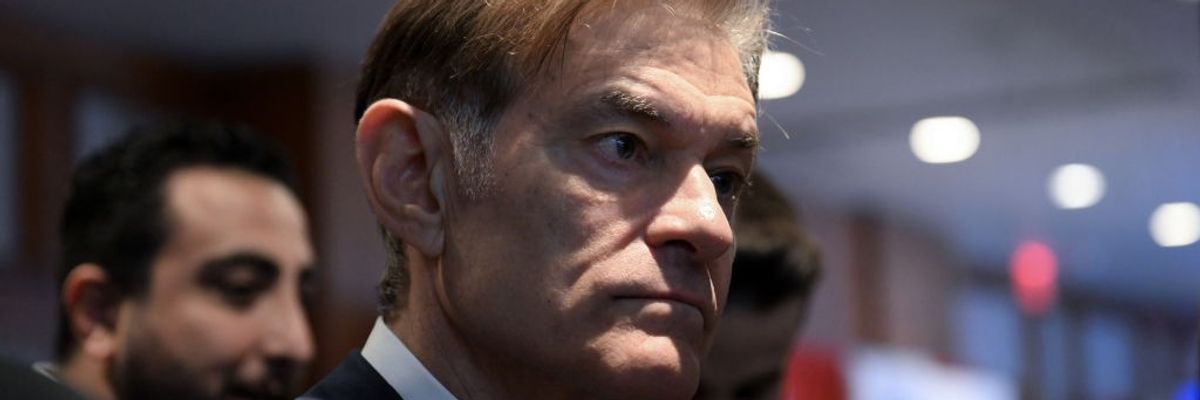


Turkish-American heart surgeon and U.S. politician Dr. Mehmet Oz attended the 51th Veith Symposium in New York, United States on November 21, 2024.
(Photo: Fatih Aktas/Anadolu via Getty Images)

Common Dreams


Medicine is about trust. As a medical student, I’ve been taught that trust in medicine is built on honesty, evidence, and a commitment to patient well-being—principles that should guide physicians and leaders in healthcare. But how can we trust a man who built a career on misleading patients to oversee healthcare for 160 million Americans?

Dr. Mehmet Oz, a former TV doctor notorious for promoting unproven “miracle cures,” has been nominated by U.S. President Donald Trump to lead the Centers for Medicare and Medicaid Services (CMS)—an agency that millions of seniors, children, and low-income families depend on for care. Yet, he promotes predatory Medicare Advantage programs and unscientific remedies that harm citizens. His nomination cannot stand.

As I take care of my own patients, I am consistently trained to practice evidence-based medicine and uphold ethical standards that prioritize patient well-being. Dr. Oz, in contrast, has used his platform to spread misinformation, undermining the very trust that medicine depends on. Formerly a well-regarded cardiothoracic surgeon, Dr. Oz began his journey toward harm over healing on the “Dr. Oz Show,” a nationally televised program on which he promoted unproven treatments that interfered with patients' appropriate medical care.

As the head of CMS, he would have direct influence over policies that could drive billions in profits for private insurers, companies that he has already aligned himself with.

Pennsylvania doctors even launched “Real Doctors Against Oz” to protest his 2022 U.S. Senate run, arguing that he was a “major threat to public health.” He skirted ethical responsibilities when he supported evidence-lacking recommendations to use hydroxychloroquine for Covid-19 while owning stock in the pharmaceutical companies that supply the drug and has been criticized by Congress for inappropriate claims he made about green-coffee extract as a weight-loss medication.

Dr. Oz will have an even more deleterious impact on seniors’ health, having expressed a clear intent to expand Medicare Advantage, privately managed Medicare. Medicare Advantage (MA) is rapidly reshaping senior healthcare at the expense of patient well-being. In Maryland, the proportion of MA enrollees to total Medicare beneficiaries has more than quintupled (5% to 27%) in the last decade. Seniors in these plans, especially those with significant medical conditions, are more likely to drop these plans and return to traditional Medicare because of increased denials of medically necessary care and delays accessing care due to narrow networks and increased bureaucracy. Becoming locked into a system where administrative bloat and corporate profits result in up to $140 billion in overpayments annually to Medicare Advantage companies would not only drain the Medicare trust fund but also harm seniors as cancer patients in Medicare Advantage face worse outcomes.

Even more concerning, Dr. Oz currently has a personal financial stake in the expansion of Medicare Advantage. His disclosure forms reveal he owns between 280,000 and 600,000 shares in UnitedHealth Group, the largest Medicare Advantage insurer. He has committed to divesting from these holdings if confirmed. Even still, as the head of CMS, he would have direct influence over policies that could drive billions in profits for private insurers, companies that he has already aligned himself with. Dr. Oz’s profiteering from these investments represents his prioritization of financial self-interest over patient well-being—and makes him uniquely unqualified to oversee public health programs.

Right now, we are pivoting sharply toward doing more harm at a time when we desperately need to pivot toward providing better healthcare for everyone. Medicare for All is supported by 69% of registered voters and provides truly universal coverage while cutting administrative overhead, reining in healthcare costs, and saving Americans thousands by removing the private insurance middleman. More importantly, it would make America healthy again; with prevention and primary care finally prioritized, Americans can enjoy better healthcare outcomes and quality of life.

As a Philadelphia anesthesiologist said in The New York Times, “I can’t believe he took the same oath that I did when we graduated… that oath is about first doing no harm.” As I prepare to take this same oath, I am appalled that someone who has so blatantly violated its principles could be entrusted with the health of millions. If given the reins of CMS, Dr. Mehmet Oz will not only fail to improve healthcare for our seniors but also use privately managed care to actively harm Americans. The Senate must reject Dr. Oz’s nomination. His long track record of misleading the public, pushing corporate interests, and prioritizing profit over patient health makes him wholly unfit to lead CMS.

Warren Urges Medicare Nominee Oz to 'Divest From Financial Conflicts of Interest'

"By making these commitments, you would increase Americans' trust in your ability to serve the public interest during your time at CMS—rather than the special interests of companies in your network."
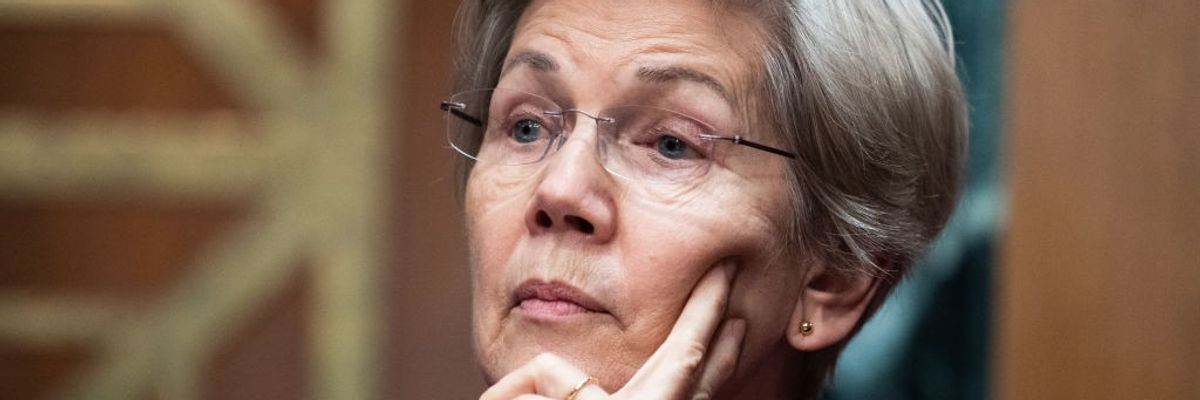


U.S. Sen. Elizabeth Warren (D-Mass.) attends a Senate Banking, Housing, and Urban Affairs Committee confirmation hearing on Capitol Hill in Washington, D.C. on February 27, 2025.
(Photo: Tom Williams/CQ-Roll Call, Inc. via Getty Images)

Brett Wilkins
Mar 12, 2025
COMMON DREAMS

U.S. Sen. Elizabeth Warren on Wednesday called on Dr. Mehmet Oz, President Donald Trump's nominee to head the federal agency in charge of Medicare, to divest all financial ties to Big Pharma and healthcare companies in order to avoid conflicts of interest and gain the public's trust.

"Congratulations on your nomination to serve as administrator of the Centers for Medicare and Medicaid Services (CMS)," Warren (D-Mass.) wrote in a letter to the celebrity heart surgeon and erstwhile purveyor of phony weight loss cures. "If confirmed, you will be expected to steward CMS' $1.5 trillion budget in the best interest of the over 140 million Americans on Medicare and Medicaid. Entering this role with financial conflicts of interest would undermine your effectiveness and the effectiveness of the programs you are slated to administer."

"To avoid this, I request that you agree to: divest any remaining financial interests in health-related companies or patents that you will have the power to influence, recuse from matters involving your former employers and clients, and, for at least four years after you leave office, not lobby CMS or join the industries that depend on CMS' work," the senator said.

"Entering this role with financial conflicts of interest would undermine your effectiveness and the effectiveness of the programs you are slated to administer."

"By making these commitments, you would increase Americans' trust in your ability to serve the public interest during your time at CMS—rather than the special interests of companies in your network," she added.

"You have deep ties to companies that could profit from your decisions at CMS," Warren noted. "You currently serve as a managing member or adviser of multiple healthcare and pharmaceutical firms with a financial stake in CMS policy, including how the agency sets payment rates and coverage determinations for Medicare and Medicaid."

Warren continued:
You also use your public platforms—including your website, TV show, TikTok, and Instagram pages—to promote drugs, such as Ozempic, produced by pharmaceutical companies that are currently seeking expanded CMS coverage approval and that are subject to government drug negotiations—which you would be responsible for conducting. You have been paid to push your show's viewers to enroll in the private alternative to Medicare, Medicare Advantage—a program run by private health insurers that overcharged CMS by at least $83 billion in 2024 alone.

Doctors have critiqued you for allegedly "promoting quack treatments and cures in the interest of personal financial gain." Furthermore, much of your financial portfolio (worth at least $98 million) is invested in healthcare and pharmaceutical companies whose value is tied to CMS' regulatory work.

Last December, the watchdog Accountable.US revealed that Oz had invested as much as $56 million in three companies with direct CMS interests. In 2022, Oz's single biggest healthcare holding was up to $26 million in Sharecare, a digital health company Oz co-founded, and which became the exclusive in-home supplemental care program for 1.5 million Medicare Advantage customers.

On Tuesday, the consumer advocacy group Public Citizen published a research brief examining the hundreds of millions of dollars spent on political lobbying by Medicare Advantage companies ahead of Oz's confirmation hearing, which is scheduled for Friday morning.

Warren and other Democratic lawmakers previously pressed Oz on his advocacy for Medicare privatization, including a 2020 call for enrolling all U.S. seniors in Medicare Advantage plans.

Last month, Oz pledged to divestfrom insurance companies and drugmakers and step down from his advisory positions if his nomination is confirmed.

"I appreciate that you have agreed to divest much of your portfolio and resign from your advisory posts," Warren wrote. "Still, given your close ties to the industry that you would regulate, if you are confirmed, the public would have reason to question your impartiality and commitment to serving the public's interest."
RFK Jr. Spreads Dangerous Lies About Measles as Texas Outbreak Tops 220 Cases

Dozens of people, mostly children, have been hospitalized in Texas due to the outbreak.

March 12, 2025
Signs point the way to measles testing in the parking lot of the Seminole Hospital District across from Wigwam Stadium on February 27, 2025, in Seminole, Texas.Jan Sonnenmair / Getty Images


Department of Health and Human Services (HHS) Secretary Robert F. Kennedy Jr. is pushing dangerous falsehoods about measles as an outbreak in western Texas and eastern New Mexico rages on.

In Texas specifically, a total of 223 people have contracted measles since the outbreak began in January, with at least 29 people, mostly children, requiring hospitalization. One child, who was unvaccinated, has died from measles, while a second unvaccinated person’s death is currently being investigated by health officials.

The outbreak doesn’t show signs of ending anytime soon, and the Texas Department of State Health Services has predicted that “additional cases are likely to occur in the outbreak area and the surrounding communities.”

Another case of measles has been identified in Maryland. That individual recently arrived in the state from an international trip, and it’s not suspected their infection is related to the Texas outbreak.

The federal response to the measles outbreak in the Lone Star State has been muddled by Kennedy repeatedly peddling disinformation regarding how to prevent and treat the virus.

Related Story

Measles Outbreak in Texas Highlights Impact of Underinvestment in Public Health
Like COVID, measles is revealing how aging infrastructure and doctor shortages leave rural communities vulnerable. By Pooja Salhotra , TheTexasTribune March 10, 2025


Late in February, Kennedy, a noted anti-vaxxer, downplayed the significance of the outbreak, claiming that such outbreaks happen “every year” — ignoring the fact that 20 years ago, before anti-vaccine sentiment gained prominence, measles were considered eliminated in the U.S. due to low case numbers. The HHS head also falsely stated that people were only hospitalized for measles in Texas for “quarantine” purposes, a claim that has been disputed by a Texas health official.

Kennedy has since said that vaccines could work to protect people in the region. However, he has continued to push disinformation about the prevention and treatment of the virus.

In an appearance on Fox News earlier this month, for example, Kennedy claimed that higher doses of Vitamin A — including cod liver oil — could help in treating measles. Vitamin A is pushed in other countries as a helpful treatment, but usually only when a person’s body is experiencing a deficiency in that vitamin. Cod liver oil contains Vitamin A, but, according to FactCheck.org, it “isn’t advised at all for measles — and would need to be consumed in a potentially dangerous amount to get the recommended dosage of the vitamin used during an infection.”

Telling viewers to consider those options could discourage them from seeking professional medical treatment if they or their family members get sick, and could also cause harms unrelated to the virus itself.

On Tuesday, Kennedy continued to promote falsehoods about the virus. In a second appearance on Fox News, in an interview with host Sean Hannity, Kennedy baselessly insinuated that contracting measles is a better protection against the virus than getting vaccinated — a claim that is both unfounded and dangerous, as the long-term effects of measles can be very detrimental.

“It used to be, when I was a kid, that everybody got measles. And the measles gave you lifetime protection against measles infection. The vaccine doesn’t do that,” Kennedy, who has no professional or educational background in health care, said on the program.

A two-dose vaccination regimen against measles generally gives lifetime protection against the virus. When “breakthrough measles” cases do occur, they are generally milder in severity and have fewer complications compared to cases in which unvaccinated people contract measles, other research has found.

According to Johns Hopkins University, exposing people to measles, especially children, is far more dangerous than vaccination.

“Measles is a dangerous disease and the vaccine is very safe. The risks of severe illness, death, or lifelong complications from measles infection far outweigh the generally mild side effects some people experience following vaccination,” the university says on its website.

Five Years After COVID’s Onset, the Republican Party Wages War Against Vaccines

Despite the ongoing spread of COVID, measles and bird flu, Trump has handed power to anti-vaxxers and vaccine skeptics.
March 11, 2025
A health worker prepares a dose of the measles vaccine at a health center in Lubbock, Texas, on February 27, 2025.Ronaldo Schemidt / AFP via Getty Images

With vaccine skeptic Robert F. Kennedy Jr. now in control of the Department of Health and Human Services, state-level anti-vax politicians believe their moment has struck to fundamentally shift the country away from mass vaccination programs. As a result, the U.S. stands on the edge of a series of cascading public health crises.

Today marks the fifth anniversary of the World Health Organization’s declaration of the global COVID-19 pandemic, and the rapid implementation of stay-at-home orders in an attempt to stem the tide of airborne sickness and death.

In the days leading up to this grave anniversary, last week Iowa Republicans moved a state bill out of subcommittee and into the full Iowa Senate Health and Human Services Committee that would make it a misdemeanor offense for Iowa doctors to give a patient an mRNA vaccine. The bill, Senate File 360, targeted what its supporters labeled “gene-based vaccines,” which it defined as those generated through using mRNA, and threatened health care providers with a $500 fine for vaccinating patients, and, even more insidiously, with a revocation of their state license to practice.

In the end, the bill didn’t make it out of the full committee and onto the Iowa Senate floor, thus killing it off for the current legislative year. But the fact that both of the Republicans on the three-person subcommittee voted to advance it, despite public comments being overwhelmingly against the measure, is indicative of how far anti-vaxxers have advanced in mainstreaming their ideas within the GOP. Legislators in Montana and Idaho have also introduced legislation this year aimed at banning mRNA vaccines.

Meanwhile, Florida Republican Gov. Ron DeSantis has asked legislators to make permanent a ban on COVID vaccine mandates at both government offices and private businesses. And state public health officials in Louisiana have stopped all promotion of COVID vaccines and Mpox vaccines, and have even stopped promoting routine flu shots as well. This follows on from Texas’s decision last year to stop promoting COVID shots.

Related Story

Don’t Forget the History of COVID in Prison: An Interview With Victoria Law
The pandemic bared the cruelty of prison in new ways. It was a lost opportunity to move away from mass incarceration. By Maya Schenwar , Truthout March 11, 2025


In recent years, a growing number of GOP voters have self-identified as vaccine skeptics. Polling last year suggested that only 26 percent of these voters believed it was “extremely important” for their children to stay up to date on their vaccines. By contrast, nearly two-thirds of Democratic voters felt this to be “extremely important.”

Many vaccine skeptics send their children to private schools so as to avoid having to comply with public school vaccine mandates, and in some school districts in places like West Texas, the epicenter of the latest measles outbreak, the numbers of unvaccinated children far exceeds the 5 percent safety threshold that allows for herd immunity to largely stymie the spread of measles.

It’s not a surprise, therefore, that five years after COVID began its rampage through the U.S. population, on the way to killing well over 1.2 million people, the U.S. is facing a series of growing public health risks.

In Texas and New Mexico, the most serious outbreak of measles in the U.S. in decades has sickened hundreds and killed at least two people, including an unvaccinated child and an unvaccinated adult.

In normal times, given the hyperinfectious nature of measles, the CDC, the NIH, and every other branch of the federal and state public health system would be firing on all cylinders to get as many unvaccinated children and adults as possible vaccinated.

But these aren’t normal times: Public health agencies are being decimated by huge personnel and spending cuts; the travel budgets of staffers are being all but frozen; vaccine advisory committees aren’t being allowed to meet, meaning that, if and when the vaccine committees resume meeting, it will still be a scramble to accurately choose which flu strains to vaccinate against for next year’s flu season in the northern hemisphere; and scientific grants are being stalled.


Public health officials in Louisiana have stopped all promotion of COVID vaccines and Mpox vaccines.

And while Robert F. Kennedy Jr. has half-heartedly come out in support of the vaccine that protects against measles, mumps and rubella, he has also preached a regimen of cod liver oil and vitamin A for at-risk kids, and continues to muse aloud about the dangers of vaccines, thus muddying the waters at a time when experts say a laser focus on vaccines ought to be the order of the day.

Making matters worse, with huge demand for measles, mumps and rubella vaccines in Texas and New Mexico at the moment, doctors’ offices and pharmacies are reportedly running out of stock of the vaccine; and with the federal government in turmoil, there does not appear to have been a coordinated effort to get extra doses into the states at the epicenter of this epidemic. In fact, while the U.S.’s worst measles outbreak in decades picks up pace, the CDC is busy setting up studies to revisit conspiracy theories about childhood vaccines causing autism — theories that have already been debunked.

Measles isn’t the only infectious disease to worry about. This season, bird flu experts worry that with hospitals seeing so many people suffering from regular flu, there’s a risk that the few patients with H5N1, or bird flu, might serve as incubators for a mutation of the bird flu that picks up genes from regular flu — hand-delivered by the large numbers of patients being admitted to hospitals — that would allow it to transmit within the human population more effectively. The World Health Organization, with which Trump recently severed U.S. ties — estimates a mortality rate as high as 50 percent for H5N1. Given the lethality of bird flu, vaccine research should be center stage. Instead, the “Department of Government Efficiency” accidentally fired many of the USDA’s bird flu experts; and while the department did try to rehire these workers once the mistake was identified, not all have returned. Meanwhile, as mentioned above, the CDC has put on hold vaccine committees that study the flu and recommend vaccines.

Meanwhile, advocates worry that distribution of the Mpox vaccine is at risk. The reason is that outreach for the vaccine has targeted the LGBTQ population, since the disease has spread furthest within that group in the U.S.; but in the new anti-DEI era, this targeted outreach may run afoul of new restrictions on what words can and can’t be used in government public health efforts.

And, with USAID programs around the world terminated, as well as contracts with UNICEF, major international efforts to eradicate polio through expanding vaccination efforts have also been thrown into reverse, leading to the very real possibility of burgeoning polio outbreaks. Given the infectiousness of the disease, it’s unlikely that large-scale outbreaks in multiple countries would be contained overseas, and it’s all too likely that wealthy countries such as the U.S. could also see polio outbreaks in consequence of these shortsighted spending cuts.

As more of Trump’s nominees get confirmed, the anti-vax leanings of the federal government will only become more pronounced. Dave Weldon, the physician nominated to head the CDC, has publicly embraced conspiracy theories about childhood vaccines and autism — despite such theories being thoroughly disprovedJay Bhattacharya, Trump’s nominee to head the NIH, is more measured in his conversation on vaccines — but he, too, appears open to funding studies to explore potential links with autism. And in his address to Congress last week, Trump himself appeared to lean into the notion that vaccines lead to autism, prompting at least one Democratic lawmaker to walk out of the speech.

The COVID pandemic, which began surging in the U.S. five years ago, should have led to more long-term investments in public health and in vaccination programs across the country. Instead, five years and well over a million deaths later, the pandemic has given way to political fissures and a federal government tilting the scales against vaccine research and distribution. It’s hard to see how this can lead to anything other than more preventable disease outbreaks and more deaths.

This article is licensed under Creative Commons (CC BY-NC-ND 4.0), and you are free to share and republish under the terms of the license.


Sasha Abramsky
Sasha Abramsky is a freelance journalist and a part-time lecturer at the University of California at Davis. His work has appeared in numerous publications, including The Nation, The Atlantic Monthly, New York Magazine, The Village Voice and Rolling Stone. He also writes a weekly political column. Originally from England, with a bachelor’s in politics, philosophy and economics from Oxford University and a master’s degree from the Columbia University Graduate School of Journalism, he now lives in Sacramento, California.


Trump’s Anti-Trans Orders Get Most Airtime on Fox News, Report Finds


The lack of coverage from other networks has allowed Fox News to shape the narrative at a crucial time for trans rights.


 Truthout
March 12, 2025


In President Donald Trump’s first month back in the White House, Fox News broadcasted more coverage of his anti-transgender executive orders than both MSNBC and CNN, according to a report by Media Matters for America — allowing the right-wing network to shape public discourse on trans people at a critical time for transgender rights.

“The shocking lack of coverage by more liberal media has allowed Fox News to push increasingly harmful narratives about transgender people,” LGBTQ legislative researcher Allison Chapman told Truthout.

In his first 31 days back in office, Trump signed a slew of anti-trans executive orders undermining the rights and protections of transgender, intersex, and nonbinary people. These policies sought to eradicate legal recognition of transgender identities, reinstate a ban on transgender people in the military, cut federal funding for hospitals providing gender-affirming care to trans people under the age of 19, withhold federal funds from schools that allow trans women to compete in women’s sports, and reverse diversity, equity, and inclusion (DEI) initiatives.

Trump’s anti-trans executive orders were covered by CNN, MSNBC and Fox News for a total of nearly nine hours during the first month of his second term, including 156 segments and 187 mentions or promotions, according to the report. Fox News alone accounted for nearly half of this coverage, broadcasting four hours and eight minutes — almost the combined total of coverage by CNN and MSNBC.

Media Matters LGBTQ Program Director Ari Drennen told The Independent that “these discriminatory policies from the Trump administration affect the lives and livelihoods of people across the United States” and emphasized that mainstream media networks “have an obligation to make sure that their viewers are aware that these are not just theoretical debates.”

Related Story

Hospitals Are Curtailing Gender-Affirming Care Beyond Scope Set by Trump’s Order
Even trans adults with private insurance are starting to face problems as hospitals indulge in anticipatory compliance By Aviva Stahl , Truthout March 4, 2025


This coverage gap is part of a larger trend of the far right dominating public discourse on trans policies. For example, in 2024, the Republican Party spent nearly $215 million on anti-trans ads, making anti-trans policies one of the bedrocks of their election campaigns. Instead of fighting back against the far right’s anti-trans push, Democrats and liberal media appear to be acquiescing — a trend that LGBTQ advocates say is compounded by the stark imbalance in coverage on anti-trans policies between Fox News and liberal-leaning networks.

“Without transgender people at the center of discourse, cisgender people are unable to see transgender rights as anything other than a political debate, thus removing our humanity from the equation,” Chapman said. “This is incredibly harmful to the fight for transgender liberation and allows right-wing media to continually gain traction while transgender people are left fearing for their lives.”

According to the Media Matters report, Fox News opinion shows played a particularly disproportionate role in covering Trump’s anti-trans executive orders, providing 28 percent of the total coverage provided by cable news networks. The gap was even greater when it came to coverage of Trump’s transgender sports ban, with Fox News opinion programs making up 35 percent of all cable news coverage.

LGBTQ advocates say that by repeatedly framing Trump’s anti-trans measures, Fox News is shifting the Overton window — the collection of ideas and policies deemed acceptable by public society — further to the right. “Transgender rights are being used as a pawn to destroy our democracy and clearly liberal media is unwilling to take a stand against it,” Chapman told Truthout.

Another primary concern raised in the report is the underrepresentation of transgender and nonbinary voices in cable news reporting on such policies. Transgender and nonbinary guests appeared in only 14 percent of guest segments covering Trump’s anti-trans executive orders, according to the report.

“Without transgender people included in their coverage, liberal media is complicit in the hostile takeover of the federal government and neutralizing their own power to stop it,” Chapman said. “Our fate is being left in the hands of those who do not understand our struggles and we are being left behind without the tools needed to shift the hearts and minds of the American people.”


WORD OF THE DAY


Op-Ed |

Prisons Are Anti-Labor Institutions. We Need an Anti-Carceral Labor Movement.


Guard unions are pushing states to expand their prison budgets while schools face mounting austerity.

March 12, 2025

New York correctional officers and sergeants strike outside the Coxsackie Correctional Facility on February 28, 2025, in New York. The strike ended with the firing of over 2,000 guards who refused a deal offered by the state.
Spencer Platt / Getty Images

Though as a child Hunter Furr saw his father and grandfather come home from prison “tired and stressed,” he became the third generation of his family to work at Caswell Correctional Center in North Carolina, a job he described in 2022 as “a good experience. In this line of work, it’s a family and a brotherhood that no other job can give you.”

In 2023, Frank Squillante followed the career path set forth by his father and grandfather, and joined the “family” of the New York City Department of Corrections. The youngest Squillante said then that he was ready to “rank up like my father did.”

In late 2024, at a Chicago panel convened to support a coalition to stop the construction of two new state “programming” prisons with a starting price tag of $900 million, Renaldo Hudson, a community leader who served 37 years inside, told the audience: “I watched three generations of families come through and work in corrections.”

Incarceration literally tears some families apart. For others, it is a source of generational economic livelihood.

The wildcat strike waged by New York state correctional guards from February 17 to March 10 of this year highlights the prison as both a site of employment and of tremendous violence. This strike, which ended with the firing of over 2,000 guards who refused a deal offered by the state, resulted in the death of at least seven incarcerated people. A pivotal strike demand was the repeal of New York’s Humane Alternatives to Long-Term Solitary Confinement (HALT) Act. Aimed at limiting the use of solitary confinement, the HALT Act had already contributed to the closure of New York’s first supermax prison, Southport Correctional Facility, and as in other Democratic states, prison closures in New York pose a growing threat to guards’ employment.

Related Story

NY’s Prison Guard Strike Has Roots in Decades of Racialized Deindustrialization
The guards’ demand for impunity is about the maintenance of violence at the core of the system, says Andrea R. Morrell. By Jarrod Shanahan , Truthout  February 28, 2025


Since the 1980s, correctional guards’ unions have used their industry’s jobs in working-class communities as a primary argument for prison construction and against prison closure. In recent weeks, in New York prisons, unionized guards responded to campaigns for decarceration and prison closure by doubling down on their efforts to channel state funds into the prison-industrial complex. At a political moment when austerity is the norm, guards’ unions clamor to maintain large claims on state budgets and represent a significant and organized obstacle to abolitionist social changes.

As two unionized educators in public universities that serve working-class communities of Democratic super majority states, we find the divestment from public education and investment in policing and prisons stark and maddening. In 2025, the California State University system, with over 450,000 students, faces a potential 7.95 percent, or $375.2 million, cut in state funding, yet California recently allocated new funding of $240 million to construct a learning and “rehabilitation” center at just one of its 34 prisons. In Illinois, state funding for post-secondary education fell 46 percent between 2000 and 2023, while budgets for the Department of Corrections increased 22 percent between 2011 and 2020, despite the fact that the incarcerated population decreased. More salt in the wound: In 2024, as public education reels from decades of budget shortfalls, almost a billion dollars is readily available in Illinois to build two new prisons with “therapeutic spaces with programming.”

While college access grows in prison, skyrocketing tuition creates higher barriers to earning a degree on the outside. Growing student debt and increasing economic precarity ensure that training for corrections and other adjacent carceral jobs are popular academic tracks for non-incarcerated working-poor people at our public universities. Is the future we want one where generations of carceral employment are celebrated for Black History Month?

Careening from crisis to crisis, our university’s unions struggle to preserve the remains of public higher education. Our unions contest perpetual budget cuts, but reflecting the wide labor movement, ours have not named growing corrections budgets as part of the problem. Our unions in higher education do take on issues that impact student learning and student well-being. Can we build on this work and recognize that challenging carceral unions has the potential to both free up state resources and create better futures all, including our students?
The Power of Correctional Unions

Thirty-eight-point-two percent of police officers, prison guards and firefighters, the occupational category of “protective services,” are unionized, among the highest levels of unionization in the U.S. Most corrections workers are, like us, in public sector unions, and prison guards are powerfully represented. Almost 100,000 prison staff in the U.S. are American Federation of State, County and Municipal Employees members, and thousands of other prison workers are represented by American Federation of Government Employees.

Created in the 1950s, carceral unions have been primary advocates of prison growth. For example, the powerful California Correctional Peace Officers Association (CCPOA), represents about 26,000 state prison guards. The CCPOA exponentially increased its own political power from a relatively small union that had just 3,200 members in 1973 by consistently advocating for pro-incarceration policies such as California’s notorious Three Strikes Law, opposing alternatives to incarceration, amplifying the voices of conservative victim’s rights groups and consistently positioning prison expansion as the only vehicle to public safety.


By devaluing incarcerated labor, prisons devalue all labor. Prisons are fundamentally anti-labor institutions, and guards’ unions are fundamentally anti-labor in their orientation.

Currently, CCPOA is a key force opposing community-led campaigns to begin closing California’s prisons. CCPOA donated $2.9 million to Gov. Gavin Newsom’s political efforts (31 percent of the union’s political spending since 2001). As a Democratic governor, Newsom has slowed prison closures despite clear recommendations from the California Legislative Analyst’s Office, invested new funds in developing a “California Model” that emphasizes rehabilitation while increasing prison spending, granted significant raises to prison guards and vetoed a bill that would have saved hundreds of millions of dollars by eliminating empty prison beds.

While guards’ unions can collaborate with organized labor (for example, in 2011, prison guards linked arms with teachers to resist the union-busting austerity measures of Scott Walker’s administration in Wisconsin), assumptions of solidarity are dangerous. Just as unionized cops suppress worker activism, unionized prison guards enforce the exploitation of incarcerated workers whose labor runs prisons.

The guards in New York, members of the powerful New York State Correctional Officers & Police Benevolent Association, Inc., have repeatedly framed their labor action around worksite safety, and invoked racist imagery of incarcerated people as inherently violent and dangerous. Yet during and just before this strike, groups of guards beat to death Messiah Nantwi and Robert Brooks, raising the question: who is actually violent and dangerous?

Without union or other representation, incarcerated people are forced to cook, clean, wash clothes, take on administrative tasks, care for the dying, provide medical support and legal advocacy, tutor, and more. If paid, they receive meager wages. For example, over 1,000 incarcerated people fought fires in Los Angeles this year for the inhumane wage of less than $11 dollars a day. (A unionized firefighter trainee in the Los Angeles Fire Department makes $85, 315 a year plus benefits.) By devaluing incarcerated labor, prisons devalue all labor. Prisons are fundamentally anti-labor institutions, and guards’ unions are fundamentally anti-labor in their orientation.
Job Crisis

Despite their unions’ power, being a prison guard is toxic work. In 2021, corrections officers quit “in droves” across the county. From guards’ unions to the U.S. Senate, the message being conveyed is one of “crisis” in U.S. prisons: staff shortages, decrepit facilities, faulty equipment, or as a journalist described the Maryland prison system “buckling under its own weight, struggling to perform its most basic functions.”

As sites of death and harm for incarcerated people, it is not surprising that research reports high rates of depression and self-harm for prison guards. Black folks in corrections continue to report racial harassment. Misogyny is rampant. In a 2024 study, 34 percent of prison guards interviewed reported experiencing post-traumatic stress disorder (compared to 14 percent of military veterans and 7 percent of the general public).

Our aim is not to mitigate or minimize the forms of violence guards perpetrate on incarcerated people and their visiting loved ones. Rather, we highlight that the toxicity of the prison-industrial complex leaches into the bodies of these workers. Laboring in corrections is not a “good job.”

The “crisis” in the field of corrections has been adroitly deployed by guards’ unions: Unsafe and harmful working conditions justify larger corrections budgets to purchase new, more lethal, weapons and technologies, to (re)build prisons, and more. The New York strike tried to circumvent the legislative process, allowing guards to dictate how prison reform, particularly solitary confinement, is or is not implemented. The crisis always requires more state dollars, and pro-prison policies and legislation that invariably equate prisons and guard work with public safety.

Addressing this “crisis” in corrections justifies incursions into other public spaces. In Illinois, after almost a year of labor action highlighting prison guards’ occupational hazards, in early 2025 the state issued a press release detailing “new partnerships” to increase the cadet or guard training class capacity by up to 300 percent by using public educational facilities — community colleges and elementary schools — as corrections officers training sites.
Building Futures

Jobs always seem to be available in the prison and punishment industry, and our students’ precarious economic realities tend to pull them toward academic tracks that offer the promise of secure employment, economic stability and health insurance.

We don’t blame our students for signing up for criminology classes or drifting into work in carceral industries: In 2025, in Illinois the starting salary for a corrections officer trainee is $57,828 per year plus full benefits. The minimum requirements, according to the Illinois Department of Corrections (IDOC) website: “Valid driver’s license; High School Diploma or GED certificate; U.S. citizen or authorized alien with proof of a permanent resident card; Speak, read, and write English.” Overtime pay is always available.


We want futures that are not about toiling on either side of prison walls.

Beyond the always available guard work in corrections, while librarians, social workers and nurses struggle to both find and retain jobs in today’s public schools (the National Education Association reports that the median starting teacher salary in Illinois in 2024 was $43,515), these positions are available with competitive wages; health, vision and dental insurance; vacation, sick and personal days; a wellness program; an upward mobility program; a deferred compensation plan, and a retirement plan at 30 locations with the IDOC.

Mainstream media’s coverage of recent attempted prison closures often fixates on the problem of job loss. Yet where are similar outcries about job loss, public safety and well-being when budget cuts close or endlessly wither schools, colleges, hospitals and libraries?

As educators, our work is to advocate for meaningful lives and work outside of violent institutions for the amazing students who attend our universities. Guard unions helped to create a flourishing market for (toxic) jobs in corrections, and our job is to imagine and demand sustainable and affirming lives and worksites for all. There are other pathways: In late 2024, Kentucky’s Appalachian Rekindling Project bought a plot of land to keep it out of the hands of a proposed new prison build and aims to support people locally to grow plants or rewild bison. A community member observed to Louisville Public Media: “If they’re going to do something with the land, this would be a much better solution.” Closed prisons can become farms, museums, sites for teaching and learning, or other kinds of anchors for multigenerational employment or community building. The money saved could build guaranteed minimum income programs, which clearly improve community wellbeing.
Anti-Carceral Union Movements

Now is the time for organized labor movements to take an anti-carceral stance. Guards’ unions remain a powerful player in state politics, yet are threatened by the successes of movements for decarceration and abolition. With wildcat strikes and job actions at prisons that explicitly aim to expand corrections, the creation of proxy carceral organizations to manage reform, and the circulation of reports humanizing prison staff and their hard working conditions, guards and other carceral unions are on the strategic offensive. Now is precisely the right time to amplify our demands: We want futures that are not about toiling on either side of prison walls.

First, we can build and strengthen demands that organized labor divest from carceral unionism: In the wake of the 2020 uprising, a handful of labor unions demanded the removal of police unions from AFL-CIO. Select campus-based unions pushed for divestments from policing: The Professional Staff Congress union, representing City University of New York workers, passed a resolution calling for the AFL-CIO to sever ties with the International Union of Police Associations; the Graduate Employees’ Organization at the University of Michigan demanded that the university “cut all ties with police.” Beyond campus-based labor unions, let us deepen and proliferate these demands, and include guards and other carceral unions.

Second, organized labor can sign on to prison closure campaigns, oppose new spending on prisons, and advocate to move public resources from corrections to institutions that sustain and support working people as nurses unions have begun to do in California. Rather than accept the lie of austerity, or that the only place a nurse or teacher can find work with good compensation or a wellness package is at a prison, let’s push our unions to engage in collective study and action so that we might demand and create more life affirming futures for all of us.

Third, build solidarity with incarcerated workers. Why is AFL-CIO banking on guards, and not the millions of working-class people who are locked up and labor under life-threatening conditions, with little or no compensation? The goal here is not simply to have better working conditions and higher compensation for incarcerated workers. Rather, it is to strengthen the organizing of a base of people inside prison and to recognize incarcerated people as central actors in working-class struggle.

Finally, let’s ensure that all unions adopt models of common good bargaining, or social justice unionism, or the push to use bargaining to build stronger communities, which clearly shapes all our worksites. With demands that exceed employee compensation or direct workplace conditions — including affordable housing and sanctuary policies — the Chicago Teachers’ Union has pushed to use collective bargaining to affirmatively shape the communities and schools we desperately need.

We don’t want our universities to prepare more laborers for carceral industries. Unions in education and other parts of the public sector are large enough, and potentially powerful enough, to challenge the power of correctional unions. Now is the time for us to do so. Together.


This article is licensed under Creative Commons (CC BY-NC-ND 4.0), and you are free to share and republish under the terms of the license.


Priya Kandaswamy
Priya Kandaswamy is faculty in women’s, gender and sexuality studies at San Diego State University. She is the author of Domestic Contradictions: Race and Gendered Citizenship from Reconstruction to Welfare Reform (Duke University Press, 2021).

Erica R. Meiners
Erica R. Meiners is a Chicago-based educator and writer. Erica’s latest book, coauthored with Angela Davis, Gina Dent and Beth Richie, is Abolition. Feminism. Now. (Haymarket Press 2021).
Kansas Satanists to defy governor with ‘therapeutic blasphemy’ in black mass at Statehouse


March 12, 2025

TOPEKA — All hail civil disobedience.

Gov. Laura Kelly intervened Wednesday in satanists’ plans to conduct a black mass on March 28 at the Statehouse by declaring they would not be allowed inside

The satanists plan to defy her undivine wisdom.

“We will be showing up on the 28th,” said Michael Stewart, founder and president of the Satanic Grotto, which organized the event. “We will be entering the building and attempting to perform the mass, and if Capitol Police want to stop us, they will need to arrest us.”

The Satanic Grotto’s plans to conduct a black mass in the Statehouse rotunda stimulated considerable attention online — and outrage from the Catholic Church.

In cheeky social media posts, Stewart describes satanists as “the scariest thing in the dark.”

But in an interview, he said he was planning a safe event, with nothing to be afraid of. His said his group has about three dozen members, primarily from Kansas City and Wichita, and is nonviolent.

“The black mass is a satanic version of the Catholic mass, meant to reflect our own pain and anger of us being subjected to religion that we never gave consent to,” Stewart said. “It was imposed upon us. So the ritual is sort of — you can think of it as therapeutic blasphemy.”

The group describes itself on its website as an independent and nondenominational church whose members are feminist, LBGTQ+ allies, and anti-racist — “Nazi Satanists can f---- off.”

The Satanic Grotto’s event listing on Facebook shows 26 plan to attend and 116 are interested in the event.

Chuck Weber, of Kansas Catholic Conference, said in a March 6 statement that such an “explicit demonstration of anti-Catholic bigotry will be an insult to not only Catholics, but all people of good will.”

“The Catholic Bishops of Kansas ask that first and foremost, we pray for the conversion of those taking part in this event, as well as each person’s own conversion of heart during this scared Season of Lent,” Weber said in the statement.

The governor entered the arena Wednesday, when she issued a statement declaring her concerns about the event. She said there are “more constructive ways to protest and express disagreements without insulting or denigrating sacred religious symbols.”

She acknowledged the right to freedom of speech and expression — “regardless of how offensive or distasteful I might find the content to be” — and that she has limited authority to respond to the planned event.

“That said, it is important to keep the Statehouse open and accessible to the public while ensuring all necessary health and safety regulations are enforced,” Kelly said in her statement. “Therefore, all events planned for March 28 will be moved outdoors to the grounds surrounding the Statehouse. Again, no protests will be allowed inside the Statehouse on March 28.”


Stewart said the governor’s office didn’t call him before issuing the public statement.

“This is a Democrat governor bowing to religious and Republican pressure,” Stewart said. “There was enough outrage that she had to do something, but she’s so chicken to actually stand up for anything, the best she could do was try to shuffle us outside and make it look like she has done something to save her own hide instead of standing up for religious and free speech.”


Kansas Reflector is part of States Newsroom, a nonprofit news network supported by grants and a coalition of donors as a 501c(3) public charity. Kansas Reflector maintains editorial independence. Contact Editor Sherman Smith for questions: info@kansasreflector.com

‘Jesus is better than a psychologist’: AZ GOP wants chaplains to be in public schools


Photo by Edward Cisneros on Unsplash
March 12, 2025

Republican politicians who accuse public school teachers of indoctrinating students with a “woke agenda” are pushing to bring religious chaplains into the same schools to provide counseling to students.

“I think Jesus is a lot better than a psychologist,” Rep. David Marshall, R-Snowflake, said during a March 11 meeting of the Arizona House of Representatives’ Education Committee.

Marshall said that he’s been a chaplain who provides counseling for 26 year

Senate Bill 1269, sponsored by Flagstaff Republican Sen. Wendy Rogers, was modeled after similar legislation passed in recent years in Texas and Florida.

The proposal would give school districts the option of allowing volunteer religious chaplains to provide counseling and programs to public school students. Districts that decide to allow chaplains would be required to provide to parents a list of the volunteer chaplains at each school and their religious affiliation, and parents would be required to give permission for their child to receive support from a chaplain.

Despite ample concerns that the proposal violates the First Amendment’s Establishment Clause and that it would open up schools to legal liability for any bad mental health advice a chaplain might provide, the bill has already passed through the Senate on a party-line vote. The House Education Committee also approved it along party lines.

Rogers told the Education Committee that the existence of any requirement for the separation of church and state in U.S. law “was a myth,” adding that she sees no harm in bringing religion into public schools.

Rogers, a far-right extremist, has embraced white nationalism, and in 2022 spoke at a white nationalist conference, calling the attendees “patriots” and advocating for the murder of her political enemies.

She has also said she is “honored” to be endorsed by a prominent antisemitic Christian nationalist and regularly trafficks in antisemitic tropes. And Rogers has advocated racist theories, appeared on antisemitic news programs and aligned herself with violent anti-government extremists.


Democrats on the committee raised the alarm that Rogers’ bill would violate the Establishment Clause by allowing chaplains with religious affiliations to counsel students, while not providing the same kinds of services to students who don’t follow a religion or who follow a less-common religion with no chaplains available to the school.

An amendment to the bill, proposed by committee Chairman Matt Gress, a Phoenix Republican, requires that the chaplains be authorized to conduct religious activities by a religious group that believes in a supernatural being. The amendment would also allow a volunteer chaplain to be denied from the list if the school’s principal believes their counsel would be contrary to the school’s teachings.

Both of these changes would allow districts to exclude chaplains from The Satanic Temple of Arizona, a group that doesn’t believe in a higher power but promotes empathy and has chapters across the country that challenge the intertwining of Christianity and government.

Oliver Spires, a minister with The Satanic Temple of Arizona, voiced his opposition to Rogers’ bill during a Feb. 5 Senate Education Committee meeting.

The legislation, Spires said, would disproportionately impact students from minority religions who see Christian chaplains providing support to their peers while no chaplains representing their religion are available.

“If a district listed a Satanist on their chaplain list, would they have your support?” he asked the committee members.

Gress’s amendment would preclude that.

Gaelle Esposito, a lobbyist for the American Civil Liberties Union of Arizona, told committee members on Tuesday that school counselors are required to undergo specialized training to prepare them to help students — requirements that religious chaplains wouldn’t have to meet, even though they’d be providing similar services.

“They will simply not be equipped to support students dealing with serious matters like anxiety, depression, eating disorders, self harm or suicidal ideation,” Esposito said. “Religious training is not a substitute for academic and professional training in counseling, health care or mental health… Even with the best intentions, chaplains may provide inappropriate responses or interventions that could harm students.”

But as Democrats on the House Education Committee argued that Arizona should provide more funding for trained counselors and social workers to help students with mental health issues, the Republicans on the panel said that students are actually struggling with mental health issues because they don’t have enough religion in their lives.

“I’ve heard that there is a mental health crisis afflicting kids,” Gress, a former school board member, said. “Now, I don’t necessarily think in many of these cases that something is medically wrong with these kids. I think, perhaps, there is a spiritual deficit that needs to be addressed.”

Rep. Justin Olson, R-Mesa, said he’s been frustrated by the federal courts’ interpretation of the First Amendment to require the separation of church and state, claiming it has made the government hostile to religion instead of protecting it.

“I heard comments here today that this is going to harm kids — harm kids by being exposed to religion? That is absolutely the opposite of what is happening here today in our society,” Olson said. “We have become a secular society, and that is damaging our society. We need to have opportunities for people to look to a higher power, and what better way than what is described here in this bill?”

Democratic Rep. Nancy Gutierrez, of Tucson, called SB1269 “outrageous” and “incredibly inappropriate.”

And Rep. Stephanie Simacek, of Phoenix, pointed out that the courts have repeatedly ruled against allowing religious leaders to be invited to share their faith with public school students. She described Rogers’ bill as indoctrination that gives preferential treatment to students who have religious beliefs over those who don’t

“No one is saying that you may not go and celebrate your God, however you see fit,” Simacek, a former teacher and school board member, said. “But this is not the place, in public education, where our students go to learn math, reading and writing and history.”

Florida’s school chaplain law, which went into effect last July and is similar to Rogers’ proposal, has received ample pushback from First Amendment advocacy groups, as well as some church groups who said that allowing untrained chaplains to provide mental health support to students would have unintended negative consequences.

The option to bring chaplains into schools in Florida has not been particularly popular, with several large school districts deciding not to implement a program allowing them.

Proposed legislation similar to SB 1269 has been introduced in red states across the country this year, including in IndianaNebraskaIowaMontana and North Dakota.

The bill will next be considered by the full House of Representatives. If it passes the chamber, it will return to the Senate for a final vote before heading to Gov. Katie Hobbs.

Arizona Mirror is part of States Newsroom, a nonprofit news network supported by grants and a coalition of donors as a 501c(3) public charity. Arizona Mirror maintains editorial independence. Contact Editor Jim Small for questions: info@azmirror.com.


Robert Morris, Texas megachurch pastor and former Trump adviser, indicted for child sex crimes


U.S. President Donald Trump is greeted by Pastor Robert Morris as he arrives for a roundtable discussion with members of the faith community, law enforcement and small business at Gateway Church Dallas Campus in Dallas, Texas, on June 11, 2020. Credit: REUTERS/Jonathan Ernst

Robert Downenand
The Texas Tribune
March 13, 2025

Robert Morris, the Dallas-area megachurch pastor who resigned last year amid sexual abuse allegations, has been indicted in Oklahoma for child sex crimes that date back to the 1980s.

Morris is a former spiritual aviser to President Donald Trump, and Gateway — one of the nation’s largest megachurches — has been particularly active in politics. In 2020, Trump held a “Roundtable on Transition to Greatness” there that was attended by then-U.S. Attorney General William Barr and other prominent Republicans.

Morris faces five counts of lewd or indecent acts with a child, the Oklahoma Attorney General’s Office said in a Wednesday evening press release.

The indictment comes less than a year after Morris resigned from Gateway Church in Southlake after an adult woman, Cindy Clemishire, said Morris repeatedly sexually assaulted her while she was a child in Oklahoma in the 1980s. Morris was at the time working as a traveling preacher.

The video player is currently playing an ad. You can skip the ad in 5 sec with a mouse or keyboard

In a Wednesday text message, Clemshire said through an attorney that she was grateful for the indictments.

“After almost 43 years, the law has finally caught up with Robert Morris for the horrific crimes he committed against me as a child,” she said. “Now, it is time for the legal system to hold him accountable. My family and I are deeply grateful to the authorities who have worked tirelessly to make this day possible and remain hopeful that justice will ultimately prevail.”

Clemshire’s disclosures last summer set off a political maelstrom in Texas and nationally, and prompted prominent Republicans to call for Morris to resign. Among those who said he should step down was Rep. Nate Schatzline, a Fort Worth Republican.

Schatzline is a pastor at Mercy Culture Church, a Tarrant County congregation that was founded with financial support from Gateway. Since then, Mercy Culture has become an epicenter of fundamentalist Christian movements and a staple of that Tarrant County GOP often hosting political events and figures.

Gateway has been similarly active in local politics: Ahead of contentious local school board elections in 2021, the church was accused of violating federal rules on political activity by churches after it displayed the names of candidates, including some church members, who were running for office.

Morris denied the allegations at the time, saying that the church was not endorsing candidates but thought the church’s roughly 71,000 members would “want to know if someone in the family and this family of churches is running.”


The Texas Tribune is a member-supported, nonpartisan newsroom informing and engaging Texans on state politics and policy. Learn more at texastribune.org